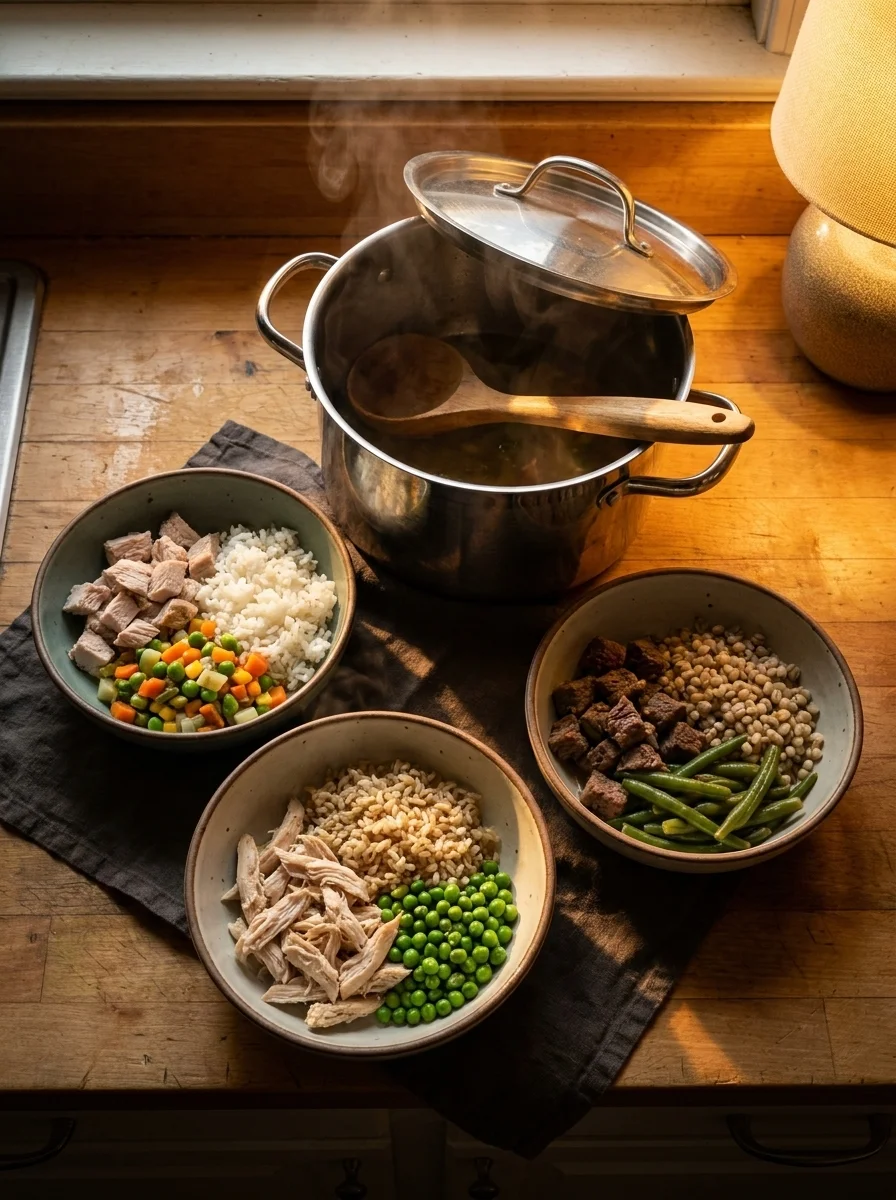
Pumpkin Dog Food Recipes: 5 Easy Homemade Meals and Toppers
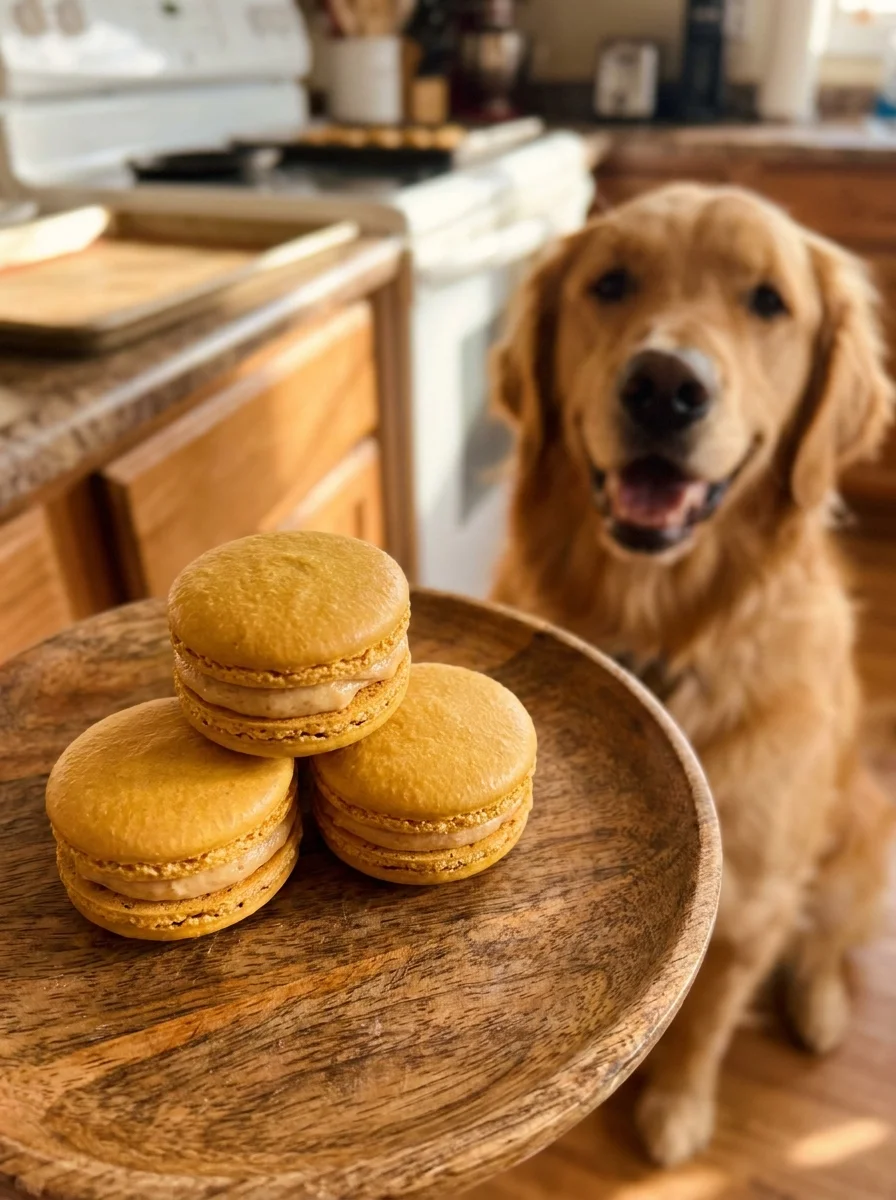
Pumpkin dog food recipes are a simple way to add moisture, fiber and fresh flavor to your dog’s bowl. Plain, cooked pumpkin is safe for most healthy dogs, and it pairs well with turkey, chicken, beef, salmon and eggs.
The key is using it the right way. These meals work best as toppers or occasional dinners, not as your dog’s only food. A complete daily diet needs carefully measured vitamins and minerals, especially calcium, and ordinary home recipes rarely get that balance right.
Below, you’ll find five recipes with exact ingredients, cooking temperatures and clear signs of doneness. There is a stovetop dinner, a slow cooker stew, a quick skillet, a fish bowl and a breakfast option.
You’ll also learn which pumpkin to buy, how much to serve and how long leftovers stay safe. If your dog has a health condition or eats a prescription diet, check with your vet before you start cooking.
Quick Overview of These Pumpkin Dog Food Recipes
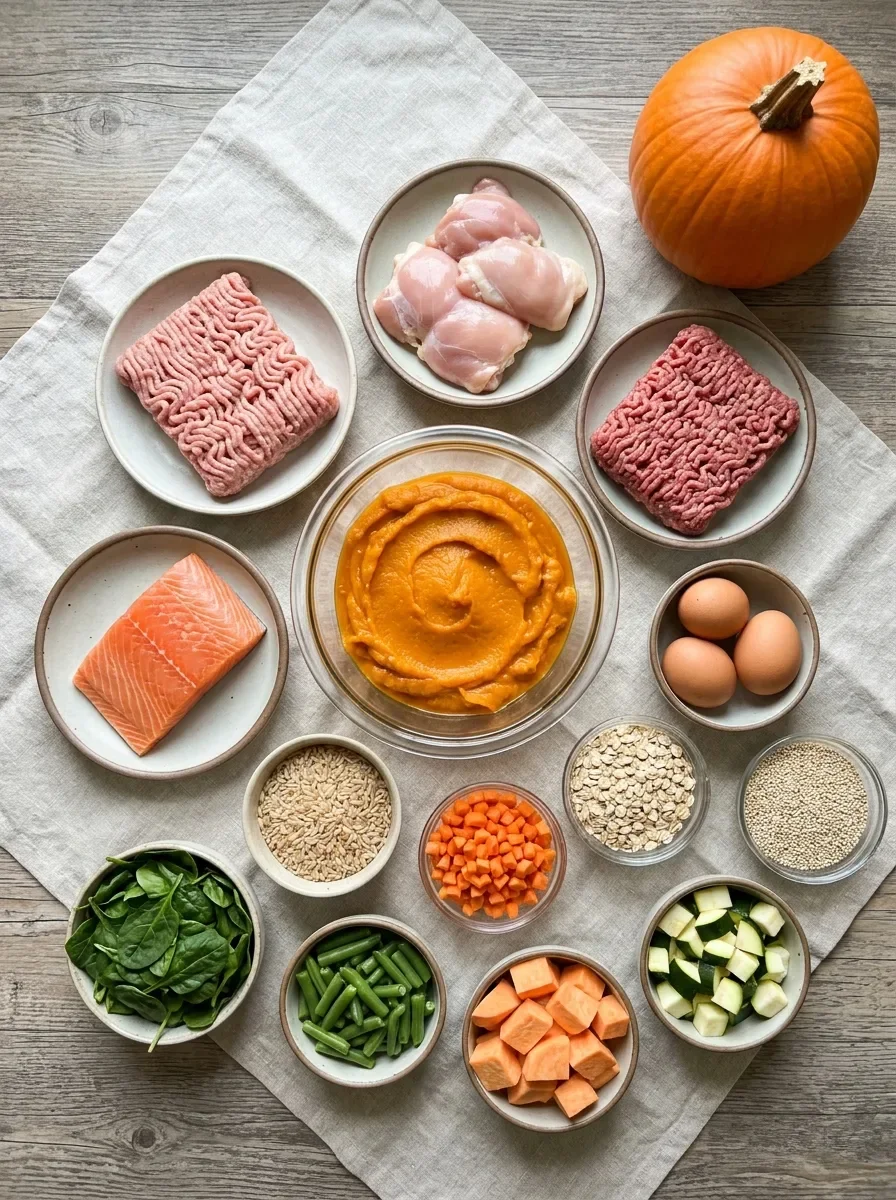
All five recipes use unseasoned ingredients, lean or moderate-fat proteins and 100% pumpkin. None contains onion, garlic or added salt. Pick by the time and protein you have:
- Turkey and brown rice: a mild stovetop batch, about 1 hour.
- Chicken: a hands-off slow cooker stew.
- Beef and sweet potato: a rich skillet meal in 45 minutes.
- Salmon and quinoa: a fish option in 35 minutes.
- Egg and oat: a small breakfast batch in 20 minutes.
Yields are estimates, since vegetables and grains vary. For more ways to dress up kibble, browse these homemade dog food toppers.
Recipe 1: Turkey and Brown Rice Pumpkin Dog Food
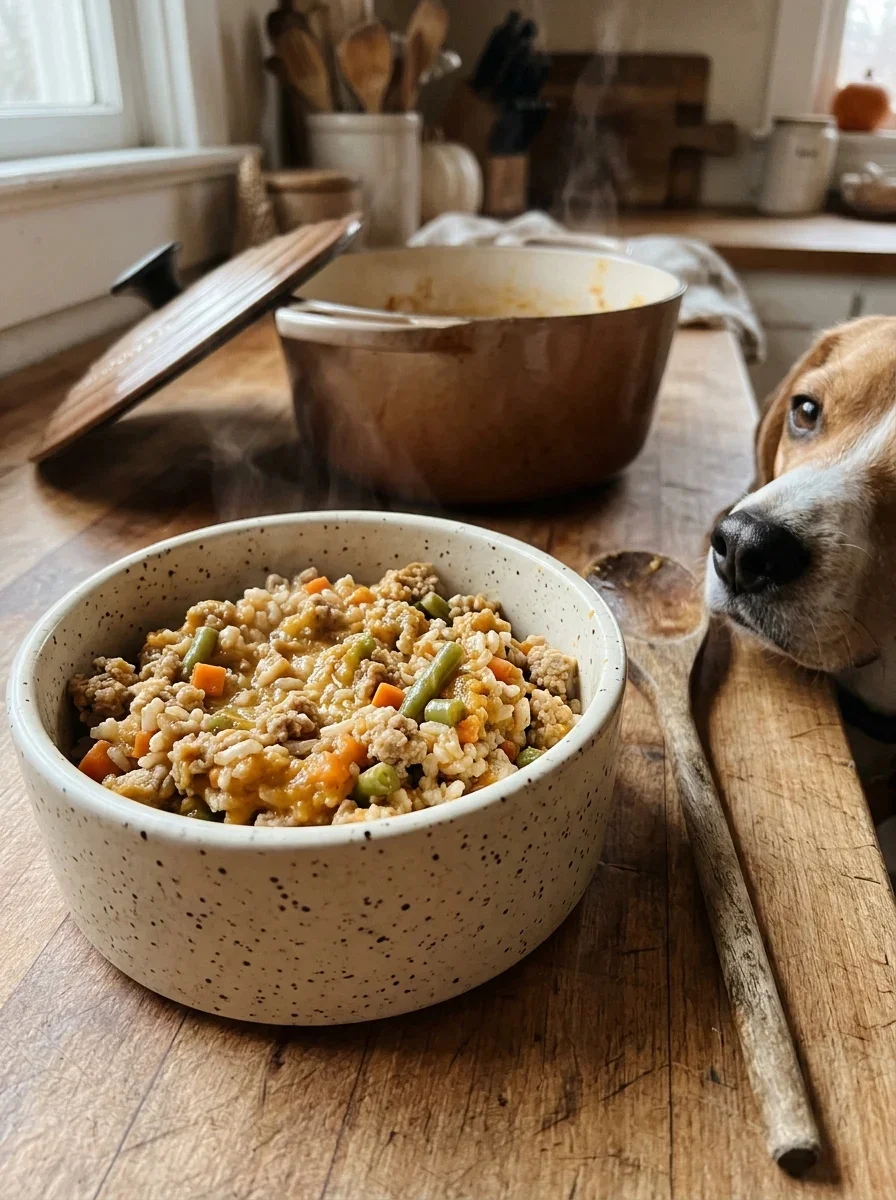
This is a soft, mild dinner with a savory smell and a texture that mixes easily into kibble. The brown rice stays slightly chewy, while the pumpkin coats everything and keeps the turkey from drying out.
It’s a good first recipe because the ingredients are familiar and the steps are forgiving. Most of the time is hands-off while the rice simmers, so you can prepare the other ingredients without rushing.
Ingredients
- 1 pound ground turkey, 93% lean
- 1 cup uncooked brown rice, rinsed
- 2¼ cups water
- 1 cup 100% pumpkin puree
- ½ cup carrot, finely diced
- ½ cup green beans, cut into ¼-inch pieces
Step-by-Step Instructions
- Start the rice. Bring the water to a boil in a medium pot over high heat. Stir in the rice, cover and lower the heat to a gentle simmer.
- Simmer until nearly tender. Cook the rice for 30 minutes without lifting the lid often. It should still be a little firm, with some water left at the bottom. If the pot looks dry, add ¼ cup of hot water.
- Add the vegetables. Scatter the carrot and green beans over the rice and cover again. Cook for 10 to 15 minutes, until the carrot mashes easily with a fork.
- Brown the turkey. While the vegetables cook, heat a nonstick skillet over medium heat. Add the turkey and break it into small crumbles as it cooks for 8 to 10 minutes.
- Check the temperature. Test the thickest crumbles with a food thermometer. The turkey must reach 165°F, and color alone is not a reliable sign.
- Drain and combine. Spoon off any fat in the skillet. Add the turkey to the rice pot and stir until evenly mixed. Break apart any large clumps so each portion gets a similar share.
- Fold in the pumpkin. Remove the pot from the heat and stir in the puree. If the mixture looks stiff, loosen it with a few spoonfuls of warm water.
- Cool before serving. Spread the food in a shallow dish so it cools quickly. Serve it only when it feels barely warm in the center.
Recipe Tips
- Cook the rice until very soft if your dog tends to pass whole grains.
- White rice cooks faster. Use about 2 cups water and simmer for 18 minutes.
- Chop vegetables small so picky dogs can’t pull them out.
Recipe 2: Slow Cooker Chicken and Pumpkin Dog Food
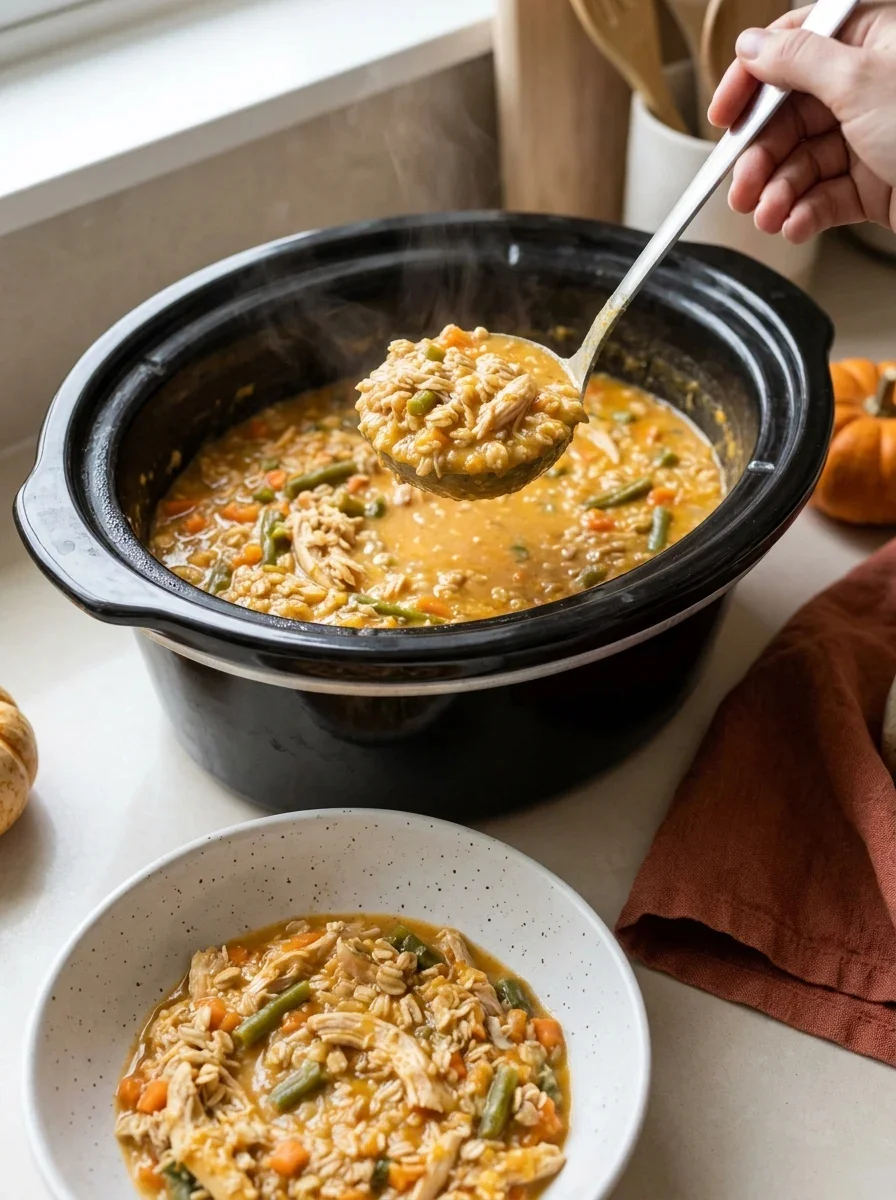
This stew turns out thick and spoonable, with tender shreds of chicken in an orange, porridge-like base. Thighs stay juicier than breast meat over a long cook.
It suits busy days, since the pot does most of the work. If you like this method, see more slow cooker dog food recipes.
Ingredients
- 2 pounds boneless, skinless chicken thighs, thawed
- 1½ cups 100% pumpkin puree
- 1 cup green beans, chopped
- ½ cup carrot, finely diced
- 1½ cups water
- 1 cup old-fashioned rolled oats
Step-by-Step Instructions
- Trim the chicken. Cut away large pieces of fat and check for stray bits of bone or cartilage. Always start with thawed meat so it heats through safely.
- Layer the vegetables. Place the carrot and green beans in the bottom of a 4- to 6-quart slow cooker. This puts the firmest foods closest to the heat.
- Add chicken and liquid. Lay the thighs on top in an even layer. Pour in the water and spoon the pumpkin over the meat.
- Cook on low. Cover and cook for 4½ hours. Keep the lid closed, because each peek lets out heat and slows the cooking. Avoid the warm setting for cooking, since it is meant only for holding food.
- Check the chicken. Insert a thermometer into the thickest thigh. It should read at least 165°F, and the meat should pull apart easily.
- Shred the meat. Move the thighs to a cutting board and shred them with two forks. Feel through the pieces for anything hard, then return the chicken to the pot. Short shreds are easier for small mouths than long strings.
- Stir in the oats. Mix the oats into the hot stew, cover and cook for 30 minutes more. The oats should be soft and the liquid mostly absorbed.
- Cool in shallow containers. Divide the stew into wide, shallow containers instead of leaving it in the crock. Refrigerate what you won’t serve within 2 hours.
Recipe Tips
- Chicken breast works too, but it can turn stringy. Check it after 3½ hours.
- Add warm water, 2 tablespoons at a time, if the stew sets too firm.
- Skip boxed broths unless the label confirms no onion, garlic or added salt.
Recipe 3: Beef, Sweet Potato and Pumpkin Dog Food
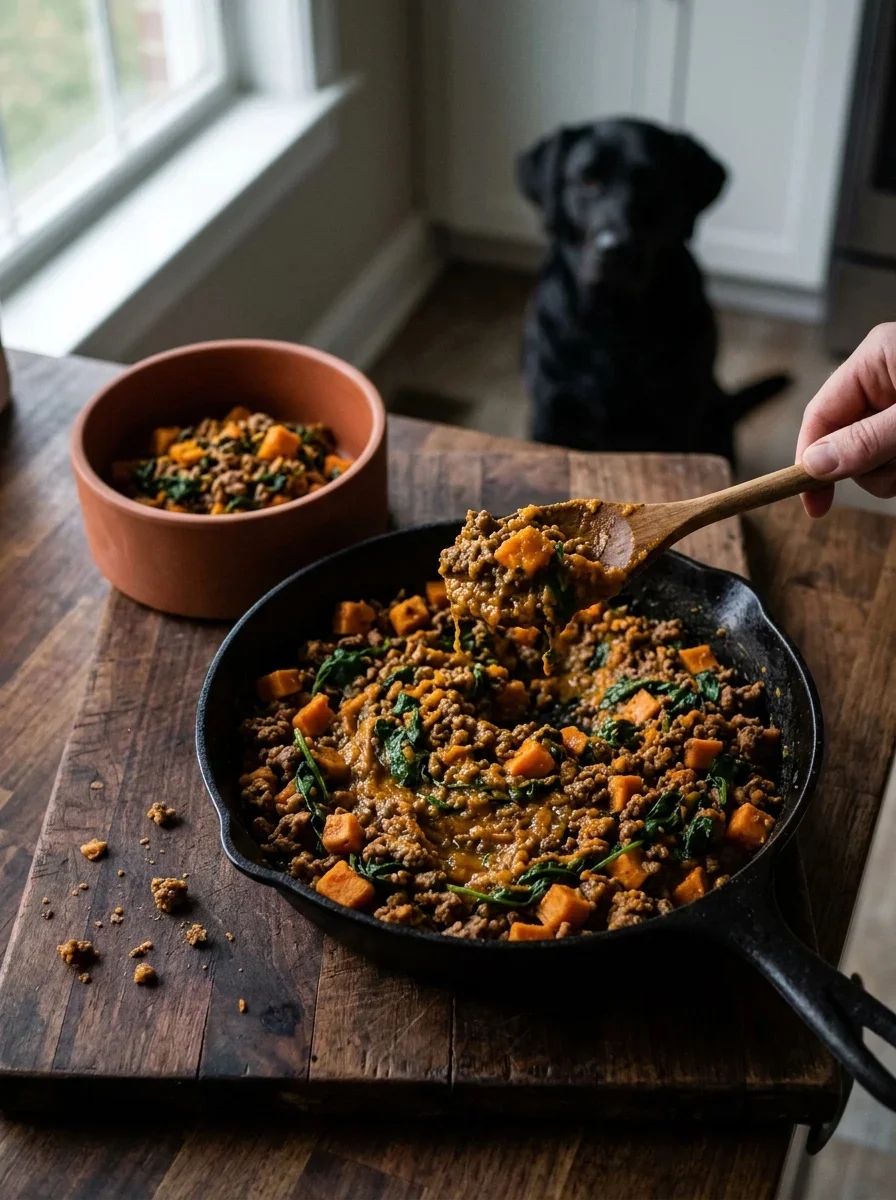
This skillet meal is the richest of the five, with a meaty aroma and soft, sweet cubes that most dogs find tempting. Pumpkin and sweet potato give it a thick, hash-like texture.
Choose lean beef to keep the fat in check. Dogs with a history of pancreatitis need vet advice first. The sweet potato softens enough to mash, so it’s easy to adjust the texture for a small dog, a senior or a fast eater.
Ingredients
- 1 pound ground beef, 90% lean or leaner
- 2 cups peeled sweet potato, cut into ½-inch cubes
- 1 cup water
- 1 cup 100% pumpkin puree
- 1 cup fresh spinach, finely chopped
Step-by-Step Instructions
- Cut the sweet potato evenly. Peel it and cut it into ½-inch cubes. Pieces of the same size soften at the same rate. Larger chunks can stay hard in the middle and are harder to chew.
- Brown the beef. Heat a large, deep skillet over medium heat. Add the beef and crumble it finely while it cooks for 8 to 10 minutes.
- Confirm it is done. Check several thick crumbles with a thermometer. Ground beef should reach 160°F.
- Drain the fat well. Tip the beef into a colander set over a bowl. Don’t pour the grease down the sink or save it for your dog. Pat the meat with a paper towel if it still looks greasy.
- Simmer the sweet potato. Return the skillet to the heat with the water and cubes. Cover and simmer for 12 to 15 minutes, until a fork slides through without resistance. Add a splash of water if the pan runs dry before the cubes are tender.
- Wilt the spinach. Stir in the chopped leaves and cook for 2 minutes. They should turn dark green and soft.
- Combine everything. Add the beef and pumpkin back to the skillet. Warm for 3 to 4 minutes, stirring so the bottom doesn’t scorch. The mixture should look moist and hold together on a spoon, without liquid pooling around it.
- Mash lightly and cool. Press the larger cubes with a fork, especially for small dogs. Let the food cool until no steam rises and the center is barely warm.
Recipe Tips
- Ground turkey can replace beef. Cook it to 165°F instead.
- Mash the whole batch for senior dogs or dogs with missing teeth.
- Never serve raw sweet potato, which is hard and difficult to chew.
Recipe 4: Salmon and Quinoa Pumpkin Dog Food
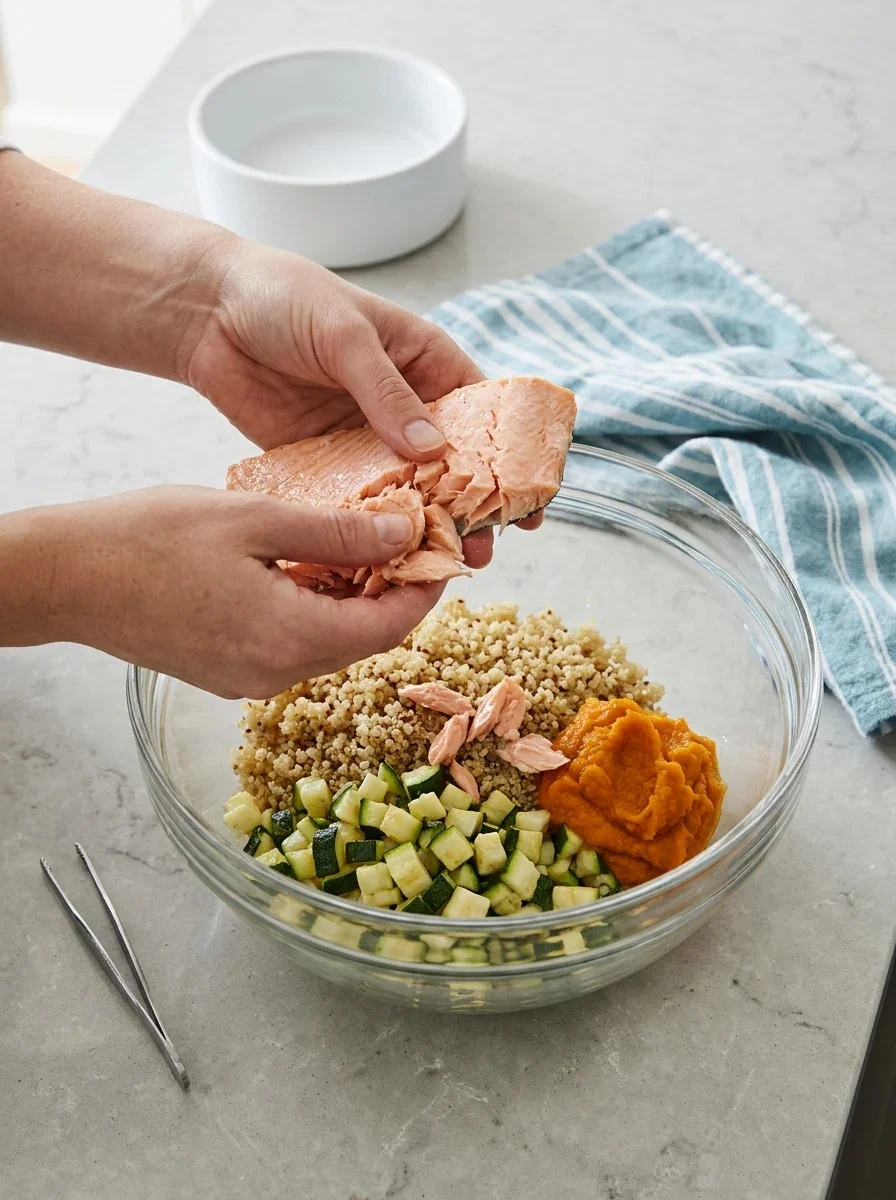
This bowl is light and flaky, with fluffy quinoa and a stronger smell that can win over a fussy eater. Salmon also brings omega-3 fats to the mix. The recipe uses simple methods, with each part cooked separately so the fish stays tender and the grain doesn’t turn to mush.
Always cook the fish fully. Raw or undercooked salmon is not safe for dogs.
Ingredients
- 1 pound skinless salmon fillet, pin bones removed
- ¾ cup quinoa, rinsed well
- 1½ cups water
- 1 cup zucchini, finely diced
- 1 cup 100% pumpkin puree
Step-by-Step Instructions
- Heat the oven. Set it to 400°F and line a small baking sheet with parchment. Run your fingers along the fillet and pull out any bones with tweezers. Pin bones are thin and easy to miss, so work slowly along the center of the fillet.
- Bake the salmon plain. Place the fish on the sheet with no oil, salt or lemon. Bake for 12 to 15 minutes, depending on thickness. A thin tail piece may finish sooner than a thick center cut, so check early.
- Test for doneness. The thickest part should reach 145°F. The flesh will look opaque and separate easily with a fork.
- Cook the quinoa. Bring the water and quinoa to a boil in a small pot. Cover and simmer for about 15 minutes, until the water is absorbed.
- Let the quinoa rest. Take the pot off the heat and leave the lid on for 5 minutes. Fluff it with a fork so it doesn’t clump. The grains should look slightly translucent, with a small curled ring around each one.
- Steam the zucchini. Cook it in a covered pan with a splash of water for 4 to 5 minutes. It should be tender but not watery. Drain off any extra liquid so the finished bowl doesn’t turn soupy.
- Flake and inspect. Break the salmon into small flakes with your fingers once it is cool enough to handle. Check every piece again for bones.
- Mix gently. Combine the quinoa, zucchini, pumpkin and salmon in a large bowl. Fold rather than stir hard, then cool completely. The food should be moist but still show distinct flakes and grains.
Recipe Tips
- Canned salmon in water saves time. Pick one with no added salt and mash it carefully.
- Brown rice can stand in for quinoa.
- Freeze extra portions early, since fish smells stronger after a few days.
Recipe 5: Egg and Oat Pumpkin Breakfast for Dogs
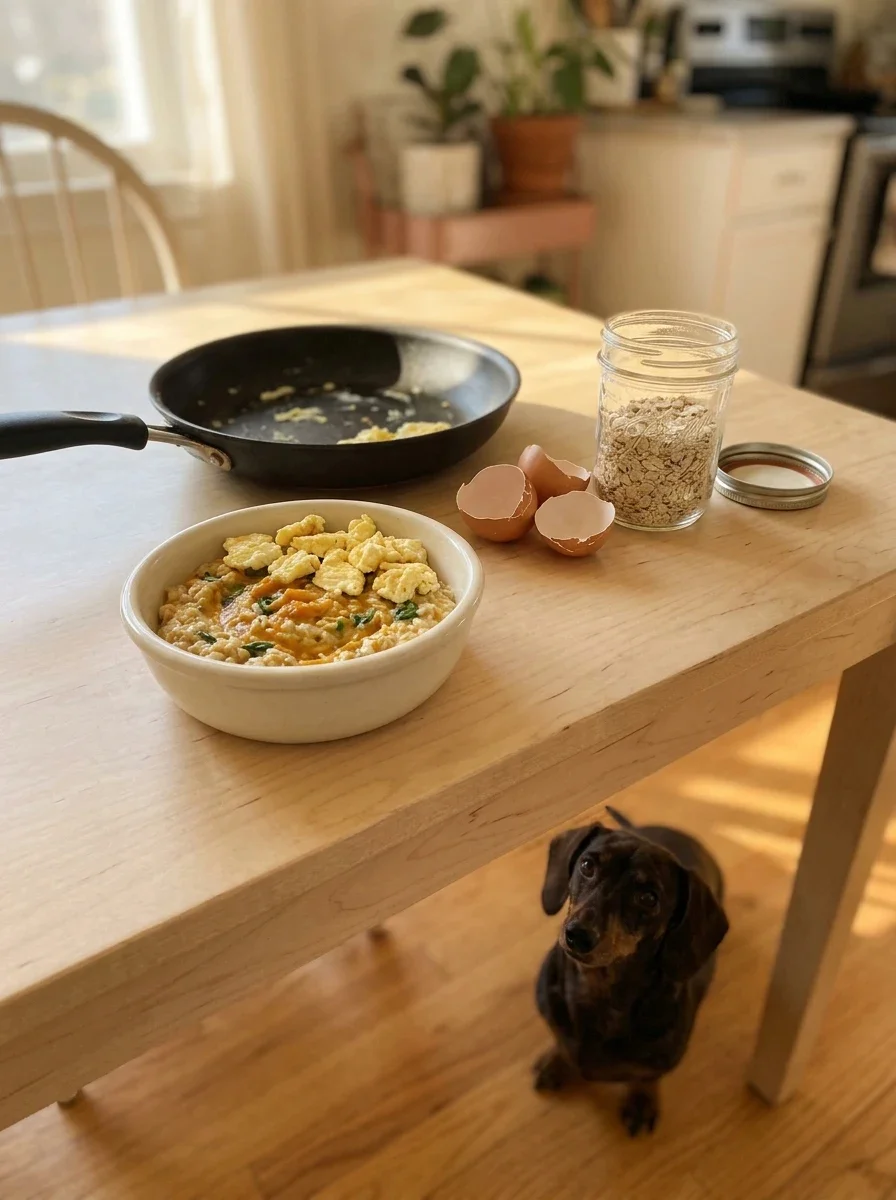
This warm breakfast has the feel of creamy oatmeal topped with soft scrambled egg. It’s quick, gentle in flavor and made in a small batch, so there is little waste. The texture is soft all the way through, which helps dogs that struggle with firm pieces. It’s also an easy way to try homemade food before you commit to a bigger batch.
Use it as a morning topper when you don’t need a full pot of food.
Ingredients
- ½ cup old-fashioned rolled oats
- 1 cup water
- ½ cup fresh spinach, finely chopped
- ½ cup 100% pumpkin puree
- 4 large eggs
Step-by-Step Instructions
- Boil the water. Bring it to a boil in a small saucepan. Stir in the oats and lower the heat right away to prevent boiling over. A pan with some extra room makes this easier to manage.
- Cook the oats. Simmer for about 5 minutes, stirring now and then. They are ready when thick and soft. A spoon dragged across the bottom should leave a short trail.
- Add greens and pumpkin. Stir in the spinach and puree and heat for 2 minutes. Take the pan off the stove and set it aside. The leftover heat will finish softening the spinach while you cook the eggs.
- Beat the eggs. Crack them into a bowl and whisk until the yolks and whites are fully blended. An even mixture cooks at the same pace, with fewer runny spots. Leave out milk, salt and pepper.
- Scramble without butter. Warm a nonstick skillet over medium-low heat and pour in the eggs. Stir gently for 3 to 4 minutes. Push the set edges toward the center so the loose egg can reach the heat.
- Cook until fully set. No wet or glossy patches should remain. A thermometer should read 160°F in the thickest curds.
- Chop and fold. Cut the eggs into small pieces and fold them into the oats. The mixture should be soft enough to spoon. If it seems pasty, stir in warm water a tablespoon at a time.
- Cool and portion. Spread it on a plate for a few minutes. Serve a small amount and refrigerate the rest promptly. Because this batch contains egg, don’t leave it sitting out on the counter or in the bowl.
Recipe Tips
- Add a spoonful of water when reheating, since oats thicken in the fridge.
- Use certified gluten-free oats if your vet has advised avoiding gluten.
- Cook eggs gently to avoid a tough, rubbery texture.
Best Pumpkin for Homemade Pumpkin Dog Food Recipes
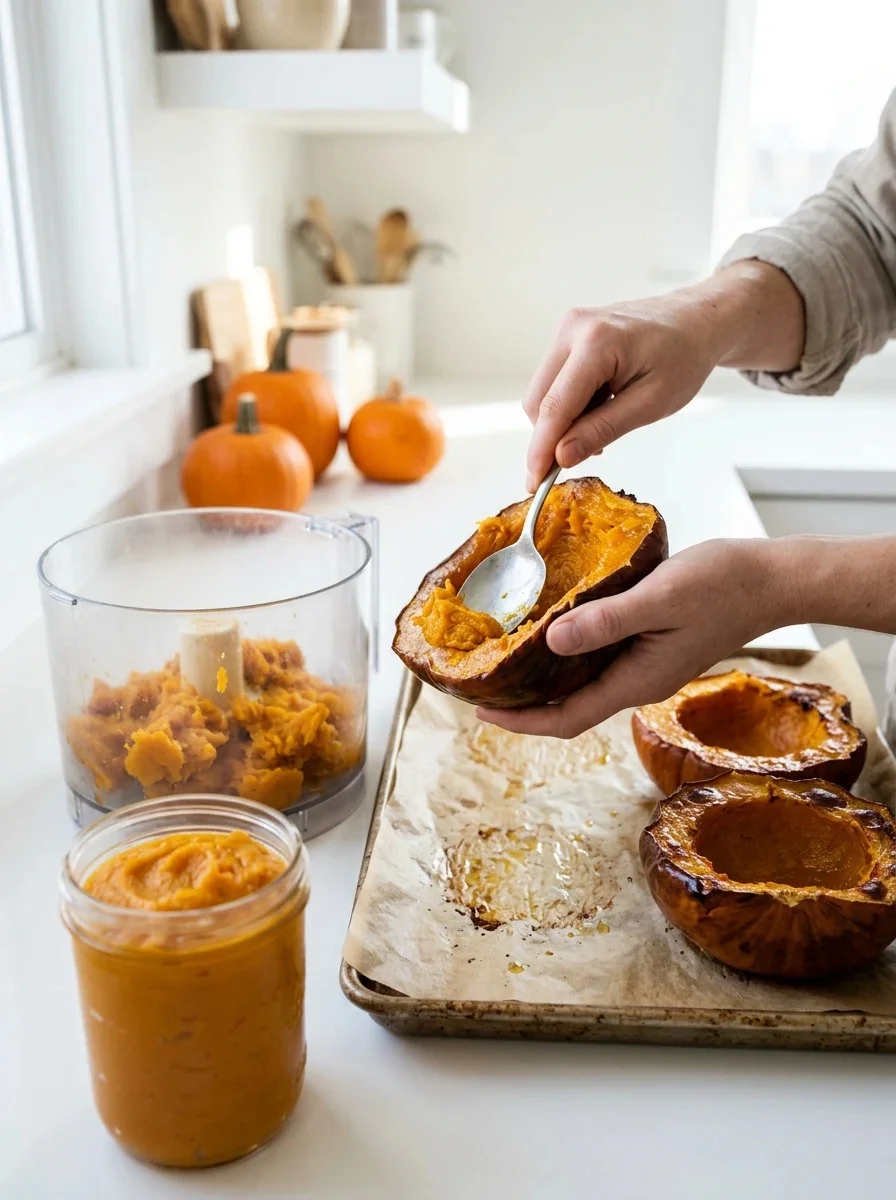
The best choice is plain canned pumpkin or fresh pumpkin you have cooked yourself. Canned puree is consistent and ready to use. Read the label: the only ingredient should be pumpkin.
Avoid pie filling. It may contain sugar, nutmeg, cloves or even xylitol, a sweetener that is highly toxic to dogs. The cans often sit side by side, so check twice.
Check for salt. Some canned brands add it, which matters for dogs with heart or kidney disease.
Cooking fresh pumpkin: Choose a small sugar or pie pumpkin. Halve it, scoop out the seeds and strings, and roast it cut side down at 400°F for 40 to 50 minutes. When a fork slides in easily, scoop the flesh from the skin and mash it. Drain watery puree in a fine strainer.
Don’t use a carved jack-o’-lantern that has been sitting out, because it can grow mold and bacteria. Raw pumpkin and tough rind are also poor choices, as they are hard to digest and may cause choking or a blockage.
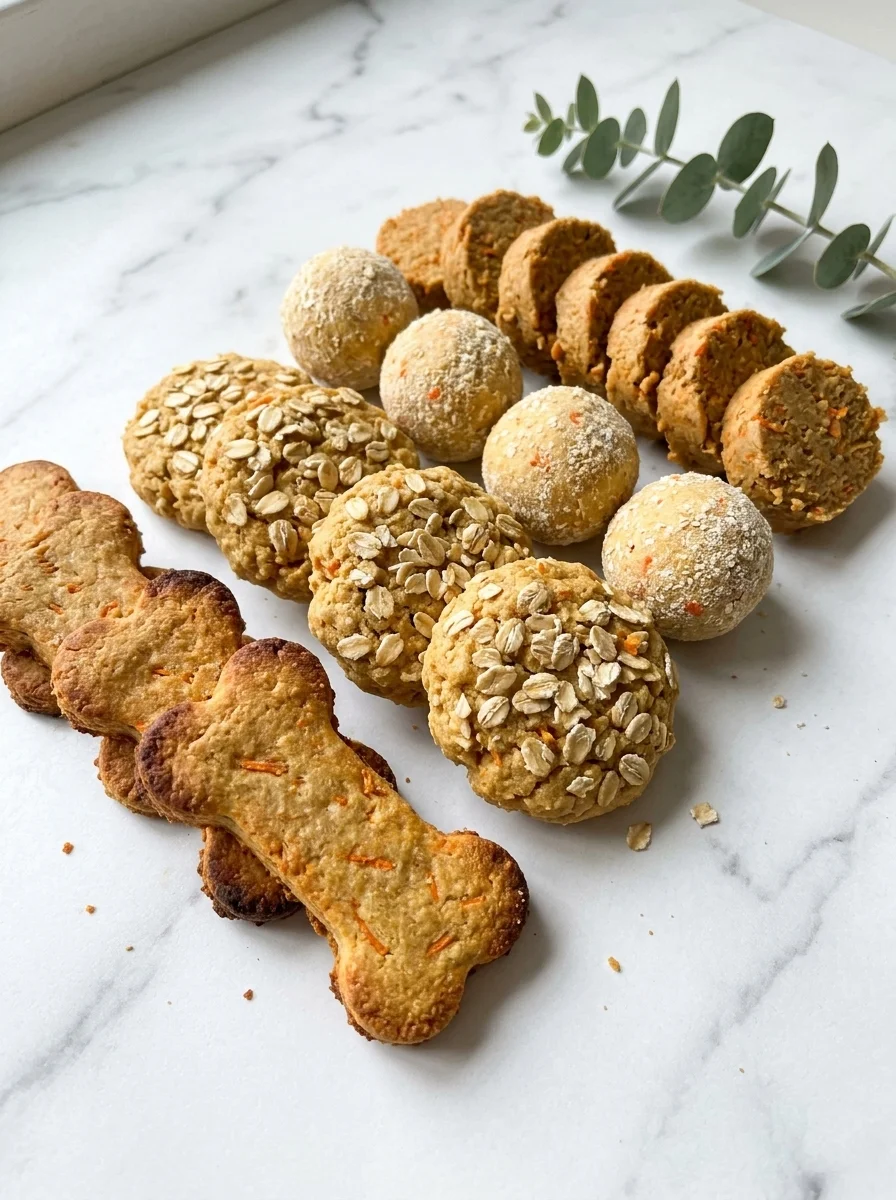
Leftover puree can go into these pumpkin dog treats or into the freezer in ice cube trays.
How Much Pumpkin Dog Food to Serve Safely
Start small and treat these recipes as extras. Toppers and treats should make up no more than about 10% of your dog’s daily calories, with the rest coming from complete and balanced dog food.
Pumpkin has its own limit. A cautious guide is about 1 teaspoon of plain pumpkin per 10 pounds of body weight each day. Since pumpkin makes up roughly one-sixth to one-fifth of these recipes, that works out to about 2 tablespoons of finished food per 10 pounds. This is an estimate, not a vet-formulated portion.
| Dog weight | Added pumpkin per day | Finished food per day, up to |
|---|---|---|
| 10 pounds | 1 teaspoon | 2 tablespoons |
| 25 pounds | 2½ teaspoons | 5 tablespoons |
| 50 pounds | 5 teaspoons | 10 tablespoons |
| 75 pounds | 7½ teaspoons | 15 tablespoons |
Reduce kibble slightly to make room. Offer a spoonful or two on the first day, then build up over 5 to 7 days while watching stool and appetite.
If you want to serve a full bowl as an occasional meal, ask your vet about the amount. For daily home cooking, ask for a veterinary nutritionist, who can set portions and the right calcium and vitamin supplements. Don’t give human multivitamins. Older dogs may have different needs, which this guide to homemade food for senior dogs explores.
Never add onion, garlic, chives, grapes, raisins, xylitol, macadamia nuts or heavy seasoning.
How to Store and Freeze Pumpkin Dog Food
Refrigerate cooked food within 2 hours and use it within 3 to 4 days. Shallow, airtight containers help it chill quickly.
For longer storage, freeze it in meal-size portions for up to 3 months. Silicone muffin cups or ice cube trays work well for toppers. Once frozen solid, move the portions to labeled freezer bags with the recipe name and date.
Thaw portions overnight in the refrigerator, not on the counter. You can serve the food cool or warm it gently. If you microwave it, stir well and test for hot spots.
Throw away anything that smells sour, looks slimy or shows mold. Discard food left in the bowl after a meal, and wash the bowl with hot, soapy water.
Frequently Asked Questions
Conclusion
Pumpkin dog food recipes give you an easy way to serve something fresh without complicated cooking. Turkey and brown rice is a mild starting point, the chicken stew saves effort, and the beef skillet suits dogs that like richer flavors. Salmon and quinoa adds variety, while the egg and oat bowl covers quick mornings.
Remember the basics. Use 100% pumpkin, never pie filling. Cook proteins to safe temperatures, remove bones, and leave out onion, garlic and salt. Keep portions modest, since too much pumpkin can upset your dog’s stomach.
Most importantly, use these meals as toppers or occasional dinners alongside complete food. Check with your vet first if your dog has diabetes, kidney or heart disease, pancreatitis, food allergies or a prescription diet.
Pick one recipe that matches the ingredients you already have, introduce it slowly and note how your dog responds. Save this page for your next batch day, and when you’re ready for more variety, explore these homemade dog food recipes.

Izzy is an experienced ranch worker who has a passion for exploring nature and getting up close to wildlife. With her connections to various animal organizations, Izzy is well-versed in animal care and rehabilitation.