Pumpkin Oatmeal Dog Chewy Sticks Your Dog Can Digest Easily
Pumpkin and oats are two of the gentlest foods you can offer a dog. Pumpkin brings soluble fiber that firms up loose stools and settles rumbly stomachs, while oats are bland, easy to digest, and kind to dogs who react badly to wheat. Put them together in a chewy stick and you get a treat that is easy on the belly and satisfying to gnaw.
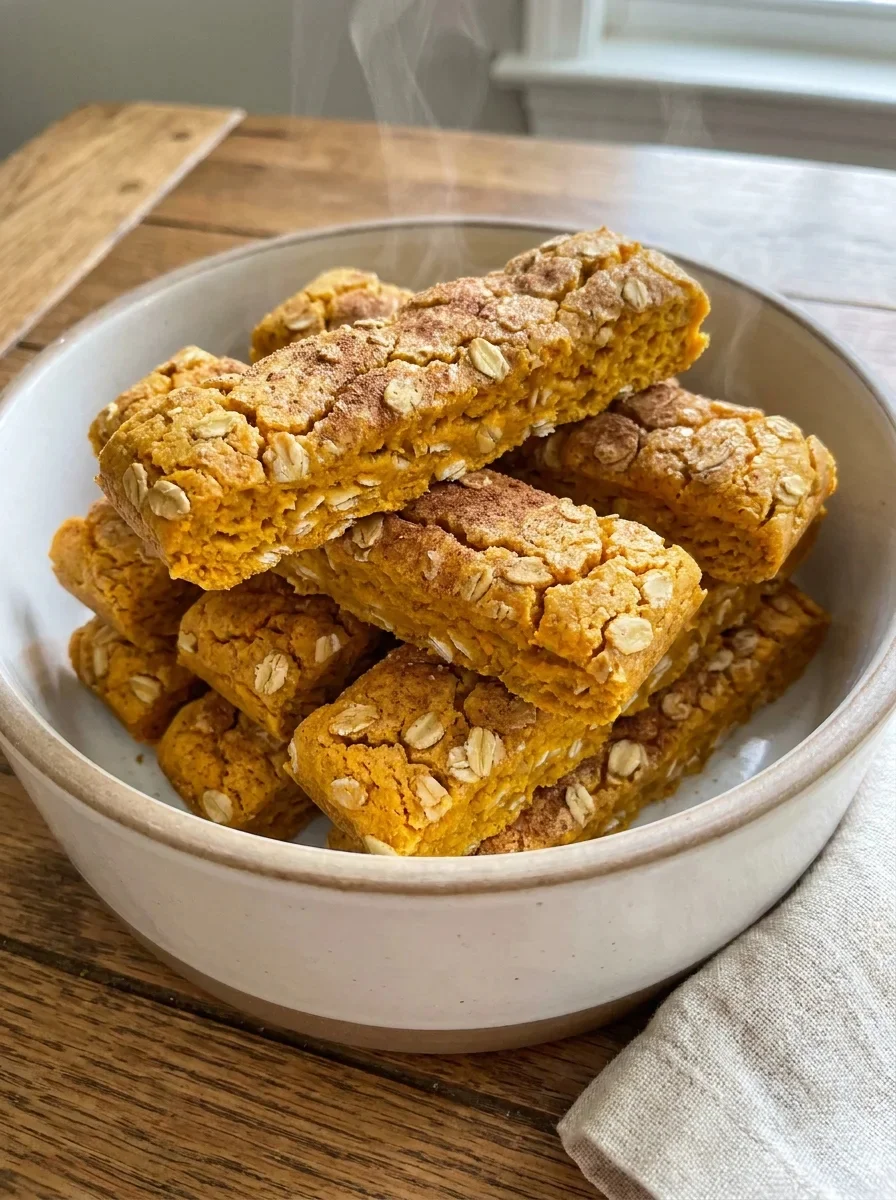
These Pumpkin Oatmeal Dog Chewy Sticks are soft enough for small and senior dogs, firm enough to keep a keen chewer busy, and made from five ingredients you probably already have. One batch makes about twenty-four sticks, and the same dough turns into four more variations — crunchy, carrot, blueberry, and peanut-free — so you can match the treat to your dog.
If pumpkin is your dog’s favorite flavor, our pumpkin dog treats collection has more ways to use it. This article starts with why the combination works, then gives you the full recipe, the texture tricks, and the storage rules that keep a batch fresh.
Why Pumpkin and Oats Settle Sensitive Stomachs
Pumpkin is the first food most vets reach for when a dog has an upset stomach, and for good reason. Its soluble fiber absorbs excess water in the gut, which firms up loose stools, and it slows digestion just enough to calm a rumbly belly. It is also low in fat and calories, so it adds bulk and comfort without adding weight. The key is plain pumpkin purée — never pumpkin pie filling, which is sweetened and spiced with ingredients dogs should not eat.
Oats are the quiet partner in this recipe. They are one of the most digestible grains for dogs, rich in beta-glucan fiber that feeds good gut bacteria, and naturally wheat-free, which helps dogs who are sensitive to wheat.
The stick shape matters too. A chewy stick takes longer to eat than a small biscuit, so your dog chews more and swallows more slowly. That slower eating is genuinely easier on a sensitive stomach than gulping down a handful of crumbs.
None of this replaces a vet visit if your dog has ongoing digestive trouble. If your dog is on a sensitive-stomach diet, our sensitive stomach recipes cover full meals built on the same gentle principles.
Pumpkin Oatmeal Dog Chewy Sticks Recipe
This is the base recipe everything else in this article builds on. Five ingredients, one bowl, no mixer needed. The dough comes together in about ten minutes, bakes in twenty, and the only real skill is knowing when the sticks are done — firm at the edges, dry on top, still a little soft in the middle.
Ingredients
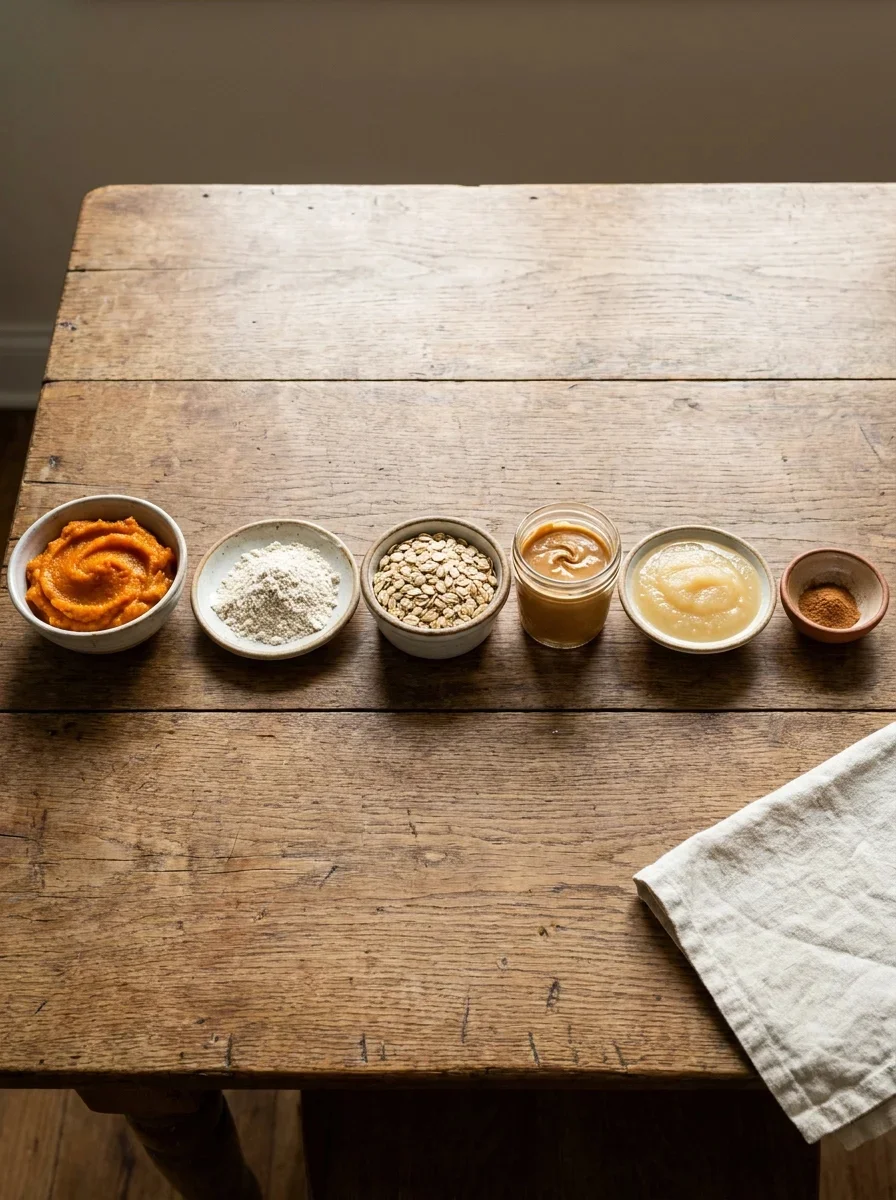
- 1 cup plain pumpkin purée (not pumpkin pie filling)
- 2 cups oat flour (or rolled oats blitzed into flour)
- ½ cup unsweetened applesauce
- 1 tablespoon xylitol-free peanut butter
- ½ teaspoon ground cinnamon
- 1 tablespoon water, only if the dough feels dry
Step-by-Step Instructions
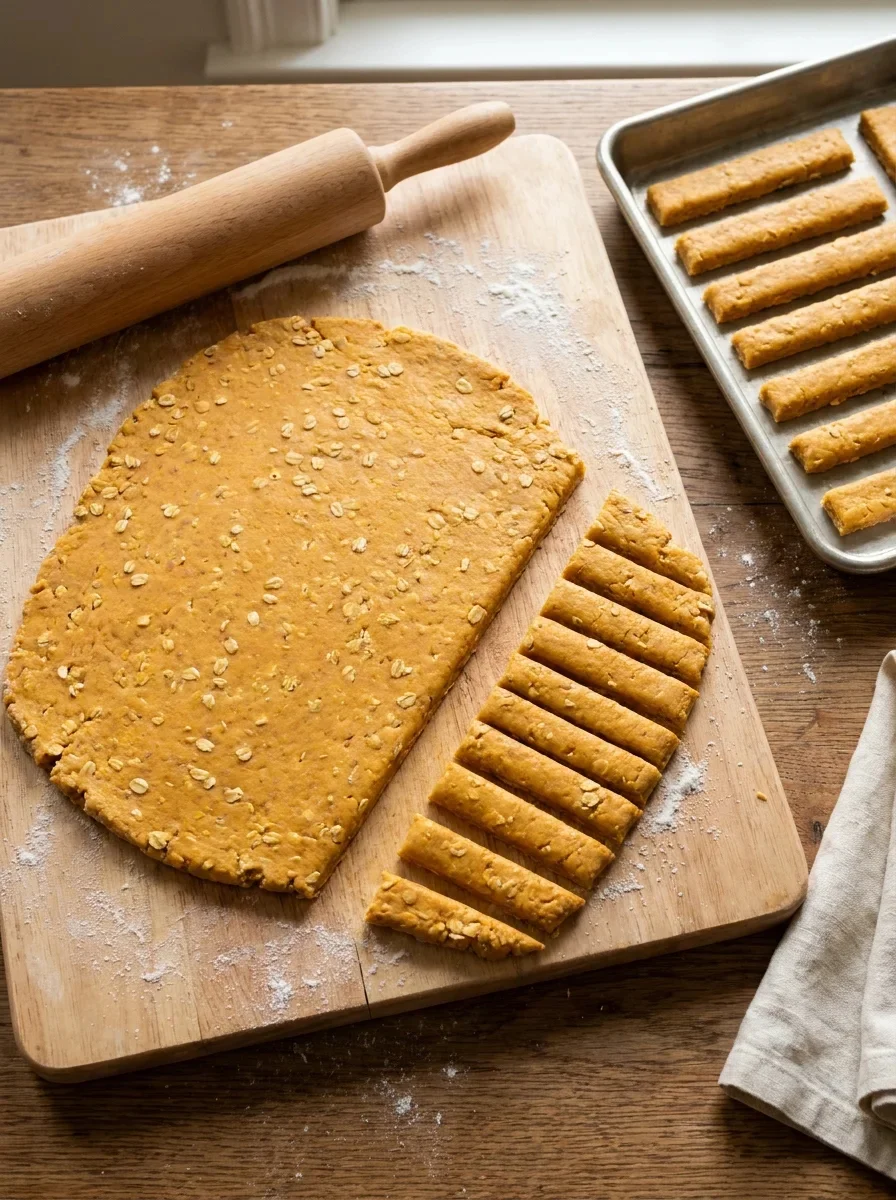
- Heat the oven and line the tray. Set the oven to 350°F (175°C) and line a baking sheet with parchment paper. Parchment matters here — oat dough sticks to a bare tray, and a stuck stick tears when you try to lift it.
- Mix the wet ingredients first. Stir the pumpkin purée, applesauce, and peanut butter together in a large bowl until smooth and evenly orange. If your peanut butter is thick from the fridge, warm the spoonful for ten seconds in the microwave so it blends in instead of sitting in lumps.
- Add the dry ingredients. Tip in the oat flour and cinnamon and stir until a soft dough forms. It should hold together when you squeeze a handful, without sticking to your fingers. If it crumbles apart, add water one teaspoon at a time — a dry dough makes crumbly sticks, but a wet dough spreads flat in the oven.
- Rest the dough for five minutes. Leave it in the bowl while the oven heats. Oat flour keeps absorbing moisture during the rest, and the dough firms up noticeably. Skipping this step is the most common reason the dough feels sticky when you roll it.
- Roll and cut the sticks. Roll the dough out on a lightly floured sheet of parchment to about ¼ inch thick. Cut into sticks roughly 4 inches long and ½ inch wide — a pizza cutter is the fastest tool, and slightly uneven sticks are fine. Thinner sticks bake crunchier; thicker sticks stay chewier.
- Bake until the edges firm up. Space the sticks on the lined tray and bake for 20–25 minutes. Check at 20 minutes: the tops should look dry and the edges should feel firm when you press them gently. They go from done to dry fast after that point, so watch the last few minutes rather than the clock.
- Set the chew in the cooling oven. For chewy sticks, turn the oven off and leave the tray inside for 10 minutes. For a firmer chew, leave it for 30 minutes. This drying step is what turns a soft-baked stick into a proper chewy stick instead of a cake-like bar.
- Cool completely before serving or storing. Move the sticks to a wire rack and let them cool for 30 minutes. Warm sticks feel soft and break easily, and sealing them away warm traps steam that turns them soggy. They firm up properly only once they are fully cool.
Tips for Getting the Chew Right
The dough test: squeeze a small handful of dough. It should hold its shape and release cleanly from your palm. If it cracks apart, it needs a teaspoon of water. If it sticks to your fingers, it needs a spoonful of oat flour.
Thickness is texture: a ¼-inch stick baked 20 minutes is chewy. Roll it to ⅛ inch and bake 25 minutes and it turns crunchy. Roll it to ⅜ inch and pull it at 18 minutes and it stays soft.
The reliable doneness cue is touch, not color — dry tops and firm edges mean done, even if the sticks still look pale. If you are unsure, pull one stick, let it cool for two minutes, and bend it. It should flex slightly before snapping.
Cooling is part of the recipe: sticks straight from the oven are soft enough to bend double. They only develop their chew as they cool. For more chew-stick ideas in a different flavor, check out this recipe for blueberry peanut butter chew sticks.
Five Chewy Stick Variations to Try
Every variation below starts from the same base method: mix wet, add dry, rest five minutes, roll, cut, bake. Only the ingredients and the bake time change. Each one gets its own full recipe so you can bake it on its own without flipping back to the main recipe.
Recipe 2: Crunchy Baked Sticks
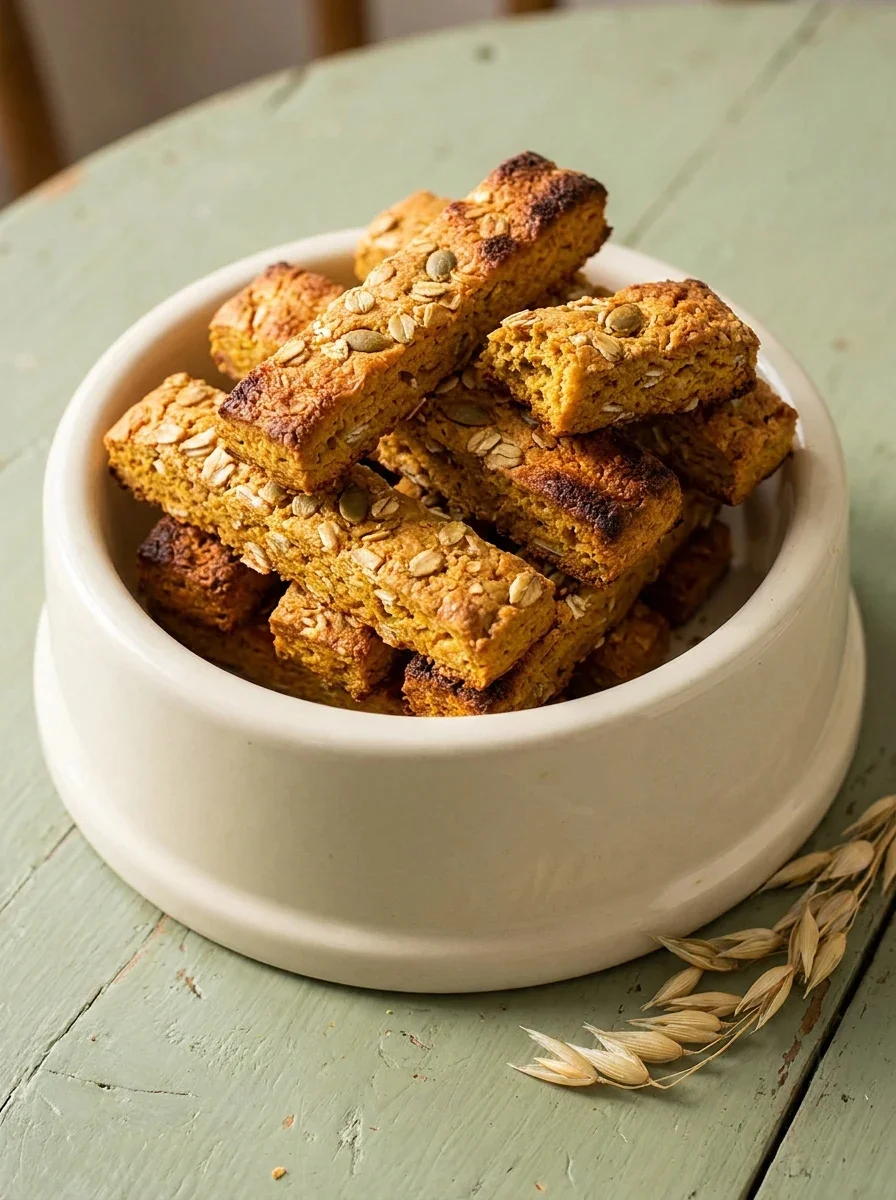
For dogs who like a proper crunch and a treat that lasts longer in the jar. Same flavors as the classic, rolled thinner and baked longer, then dried in the cooling oven until they snap.
- 1 cup plain pumpkin purée
- 2 cups oat flour
- ½ cup unsweetened applesauce
- 1 tablespoon xylitol-free peanut butter
- ½ teaspoon ground cinnamon
- Mix and rest the dough exactly as in the main recipe, then roll it to ⅛ inch thick — half the thickness of the chewy version.
- Cut into sticks 4 inches long and ½ inch wide, and space them on a parchment-lined tray.
- Bake at 350°F for 25–30 minutes until the tops are dry and the edges look lightly golden.
- Dry in the turned-off oven for 45 minutes. This is the step that makes them crunchy instead of just hard on the outside and soft inside.
- Cool on a rack for 30 minutes. A finished stick should snap cleanly when bent. If it bends, give it another 15 minutes in the cooling oven.
Recipe 3: Carrot Chewy Sticks
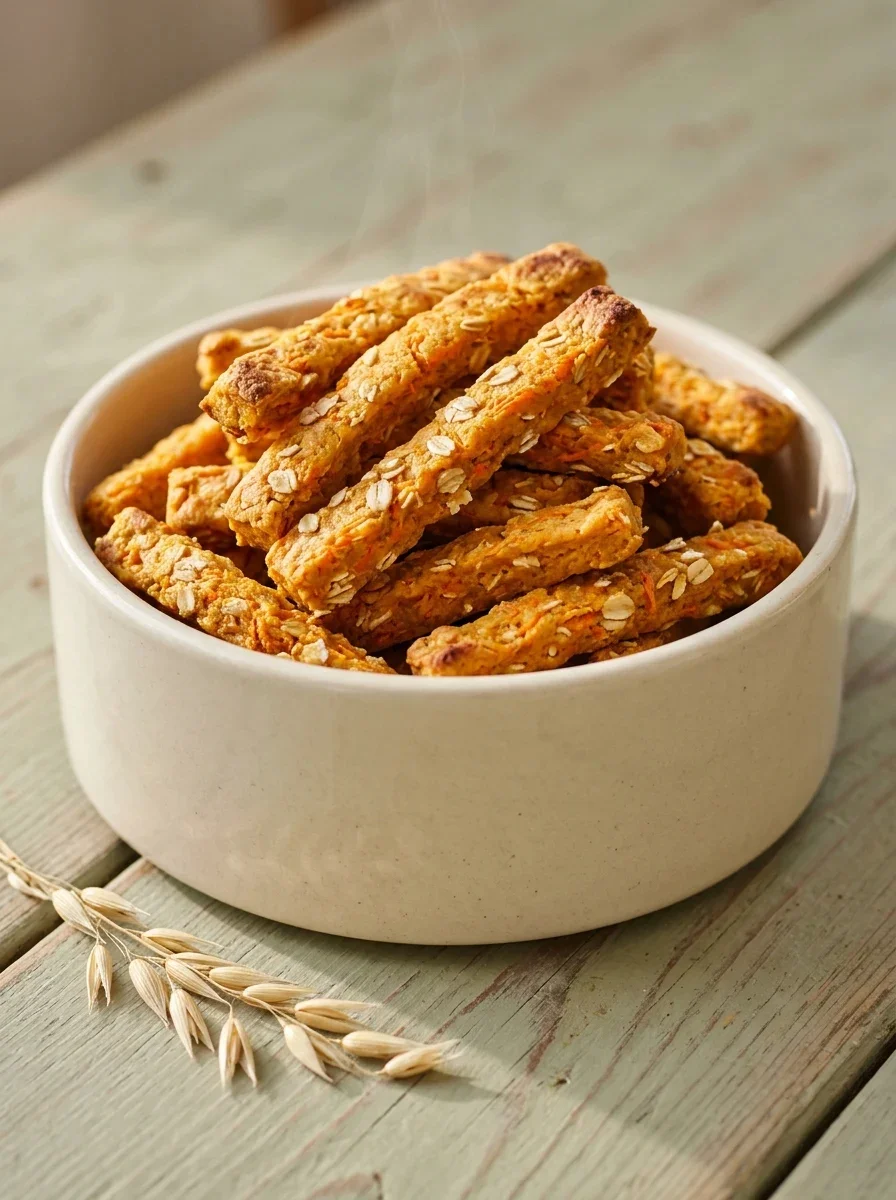
Grated carrot adds natural sweetness, extra fiber, and a little color to the sticks. The trick is blotting the carrot dry first — wet carrot makes a soggy dough that never firms up.
- 1 cup plain pumpkin purée
- 1 cup finely grated carrot, blotted dry in a clean towel
- 1½ cups oat flour
- ½ cup rolled oats
- 1 tablespoon coconut oil, melted
- ½ teaspoon ground cinnamon
- Blot the carrot first. Grate the carrot fine, wrap it in a clean kitchen towel, and squeeze hard over the sink. You should get a surprising amount of liquid out — that liquid is what makes carrot doughs soggy.
- Mix the wet ingredients: pumpkin, coconut oil, and the blotted carrot until evenly combined.
- Add the oat flour, rolled oats, and cinnamon and stir into a soft dough. Rest five minutes so the oats absorb the remaining moisture.
- Roll to ¼ inch and cut into sticks as in the main recipe.
- Bake at 300°F for 40–45 minutes. The lower temperature and longer bake drive the carrot moisture out slowly instead of steaming the sticks soft.
- Leave in the turned-off oven for 30 minutes, then cool on a rack for 30 minutes before serving.
Carrot and pumpkin are a natural pair — if your dog likes this one, our carrot pumpkin chews use the same flavors in a softer, bite-sized shape.
Recipe 4: Blueberry Oat Sticks
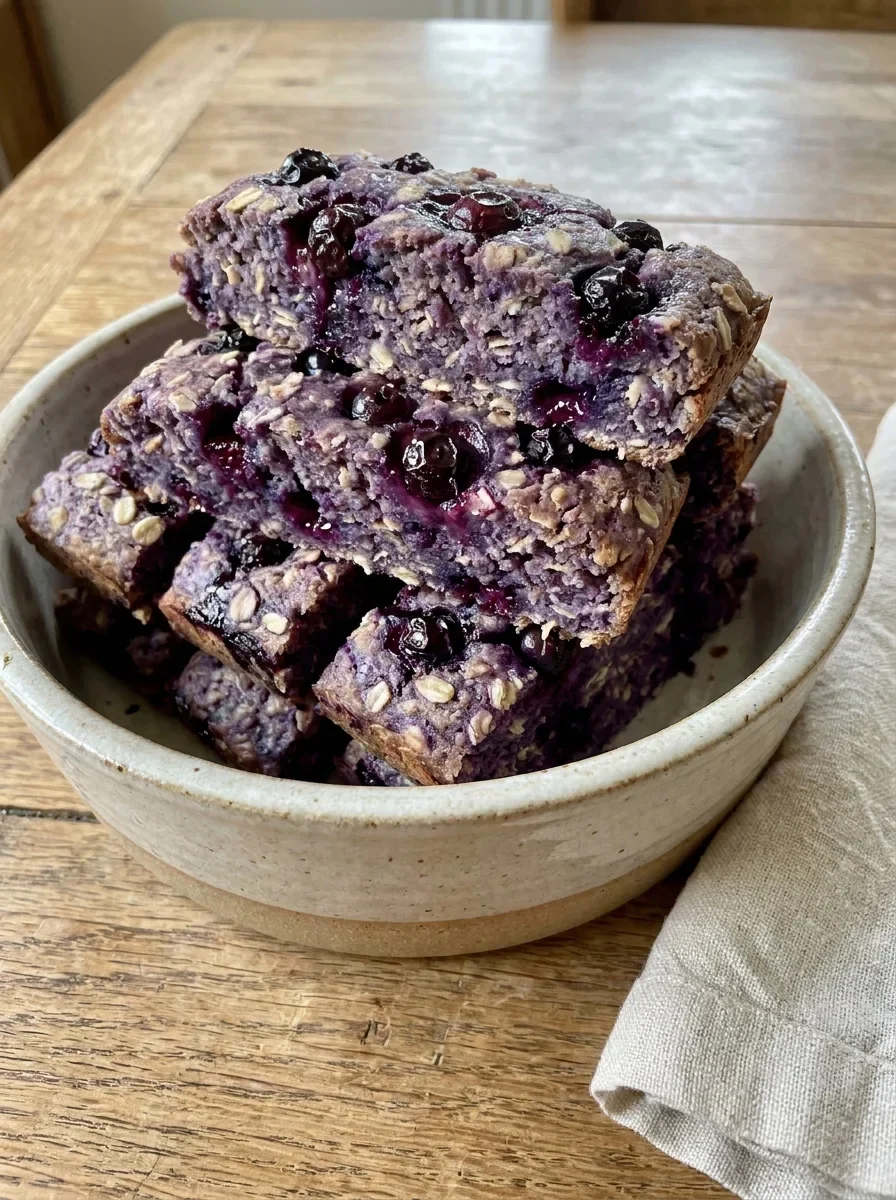
Blueberries bring antioxidants and a pop of color, and they hold up well in a baked stick. Fresh or frozen both work — if you use frozen, do not thaw them first or they bleed purple through the whole dough.
- 1 cup plain pumpkin purée
- 2 cups oat flour
- ½ cup unsweetened applesauce
- ½ cup fresh or frozen blueberries
- 1 tablespoon xylitol-free peanut butter
- ½ teaspoon ground cinnamon
- Mix the wet and dry ingredients as in the main recipe, leaving the blueberries out for now.
- Fold the blueberries in last, gently, with a spatula. Stirring hard breaks them and turns the dough grey-purple.
- Rest five minutes, then roll to ¼ inch thick and cut into sticks. Work gently so the berries stay whole.
- Bake at 350°F for 22–25 minutes until the edges are firm and the tops look dry.
- Cool on a rack for 30 minutes. The berries stay soft inside, so these sticks are best eaten within a week even in the fridge.
Recipe 5: Peanut-Free Chewy Sticks
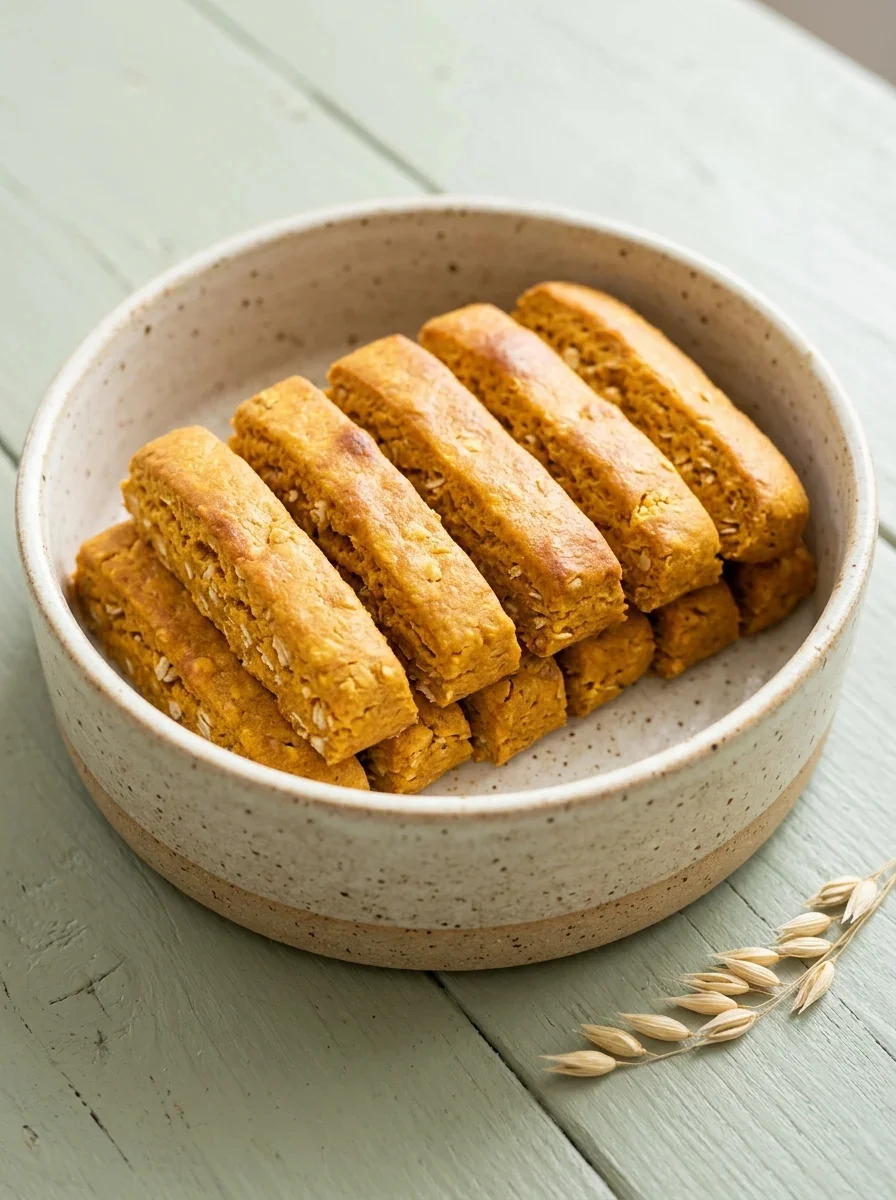
For dogs with a peanut sensitivity, or households that simply do not keep peanut butter around. Sunflower seed butter behaves almost identically in the dough, and it is safe for most dogs — just check the label for xylitol, which sometimes appears in seed butters too.
- 1 cup plain pumpkin purée
- 2 cups oat flour
- ½ cup unsweetened applesauce
- 1 tablespoon sunflower seed butter (xylitol-free), or 1 tablespoon coconut oil
- ½ teaspoon ground cinnamon
- Mix the wet ingredients: pumpkin, applesauce, and sunflower seed butter until smooth.
- Add the oat flour and cinnamon and stir into a soft dough. Rest five minutes.
- Roll to ¼ inch and cut into sticks as in the main recipe.
- Bake at 350°F for 20–25 minutes until the edges are firm and the tops look dry.
- Dry in the turned-off oven for 10 minutes for a chewy finish, then cool on a rack for 30 minutes.
Storage and Serving Guide
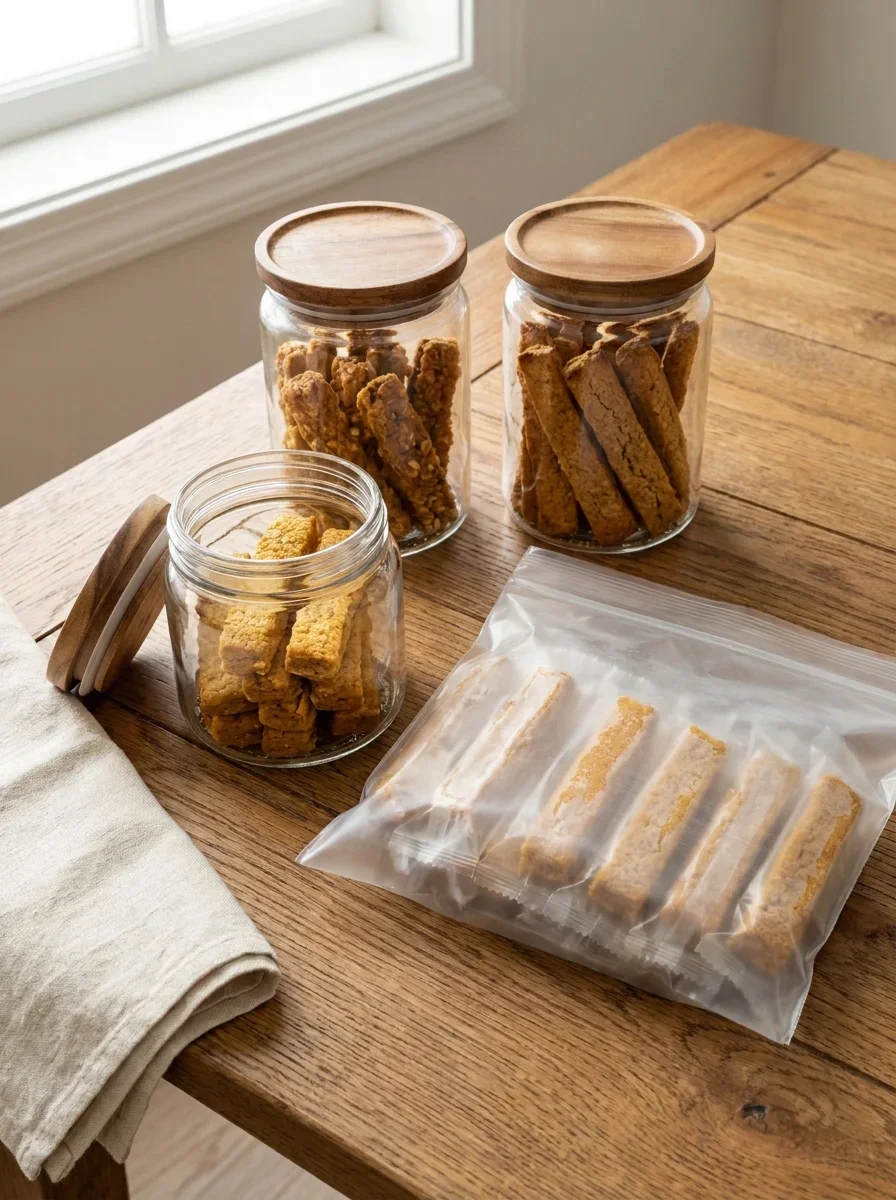
Moist, soft sticks keep 7–10 days in the fridge. Chewy sticks keep 10–14 days in the fridge. Fully crunchy sticks keep up to a month in an airtight jar at room temperature. At room temperature, any soft or chewy stick should be eaten within three days — after that, the fridge is safer. All five variations freeze well for up to three months in a sealed bag; thaw overnight in the fridge, never on the counter.
Mold spots, a sour or yeasty smell, or a slimy surface mean the batch is done — throw it out, do not just cut the bad part off. Storing sticks in a paper bag instead of a sealed container helps crunchy sticks stay crisp, but soft sticks need the sealed container to keep from drying out.
Serving is simple: small dogs get one stick a day, medium dogs one to two, large dogs two to three, and treats should stay under ten percent of daily calories. Break a stick in half for puppies over twelve weeks old, and always supervise a fast eater — a whole stick swallowed in one gulp defeats the purpose of the chew. If your dog is new to pumpkin or oats, start with half a stick for a few days and watch the stool before moving to a full serving. For more biscuit-style treats that store the same way, our homemade dog biscuits keep for weeks in an airtight jar.
FAQs
Final Thoughts
Pumpkin and oats are a forgiving pair to bake with, and these chewy sticks prove it. One bowl, five ingredients, and a dough that forgives a slightly thick roll or a minute too long in the oven. Whether you stick with the classic recipe or try the carrot, blueberry, or peanut-free versions, you are giving your dog a treat made from real food with nothing hidden in it.
The best part is how adaptable the batch is. Roll it thin for crunch, thick for softness, cut it small for training or long for serious chewers — the same dough covers all of it. Bake a batch this weekend, store it by texture, and see which version your dog reaches for first.
And if your dog has a sensitive stomach, start with half a stick and watch how they do. A treat that is gentle on the belly and fun to chew is a rare combination, and once you find the version your dog loves, it is worth keeping in regular rotation.
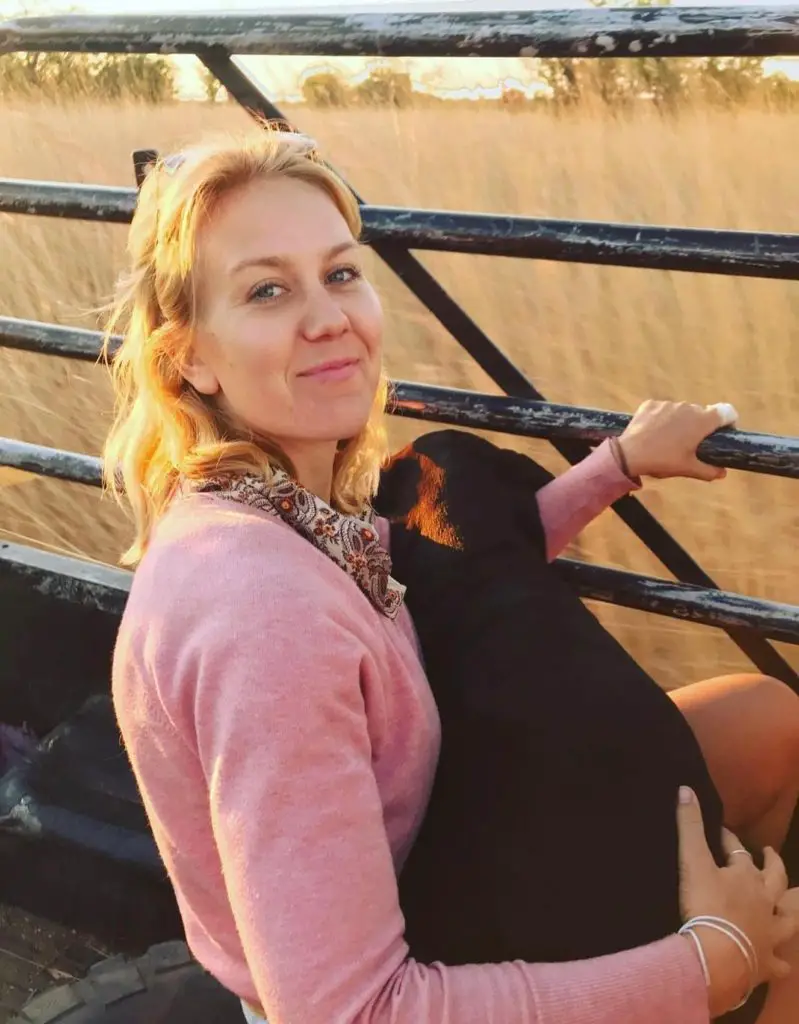
Izzy is an experienced ranch worker who has a passion for exploring nature and getting up close to wildlife. With her connections to various animal organizations, Izzy is well-versed in animal care and rehabilitation.