
Homemade Dog Food Cheaper Than Kibble (3 Budget Recipes)
Most pet owners assume that making dog food at home is a premium hobby reserved for people with extra time and money. The truth is quite different. When you treat cooking like a system rather than a daily chore, homemade dog food cheaper than kibble becomes realistic for many households. Instead of paying for processing, marketing, and packaging in every bag, you pay only for raw ingredients you control.
This shift starts with simple economics. Kibble prices never account for local sales cycles or bulk buying. By cooking in batches, you smooth out the fluctuations — a medium-sized dog can often be fed for significantly less when the menu is built around cheap proteins, seasonal produce, and grain bases.
The goal here is not to make gourmet meals. It is to build a reliable, low-cost feeding routine that keeps your dog healthy without blowing up your grocery bill. We will walk through exactly how the savings happen, show you the swaps that make the biggest impact, and provide three practical recipes you can start on Sunday. If you want a quick start before diving in, you might look at a 5-ingredient homemade dog food recipe to see how simple the foundation can be.
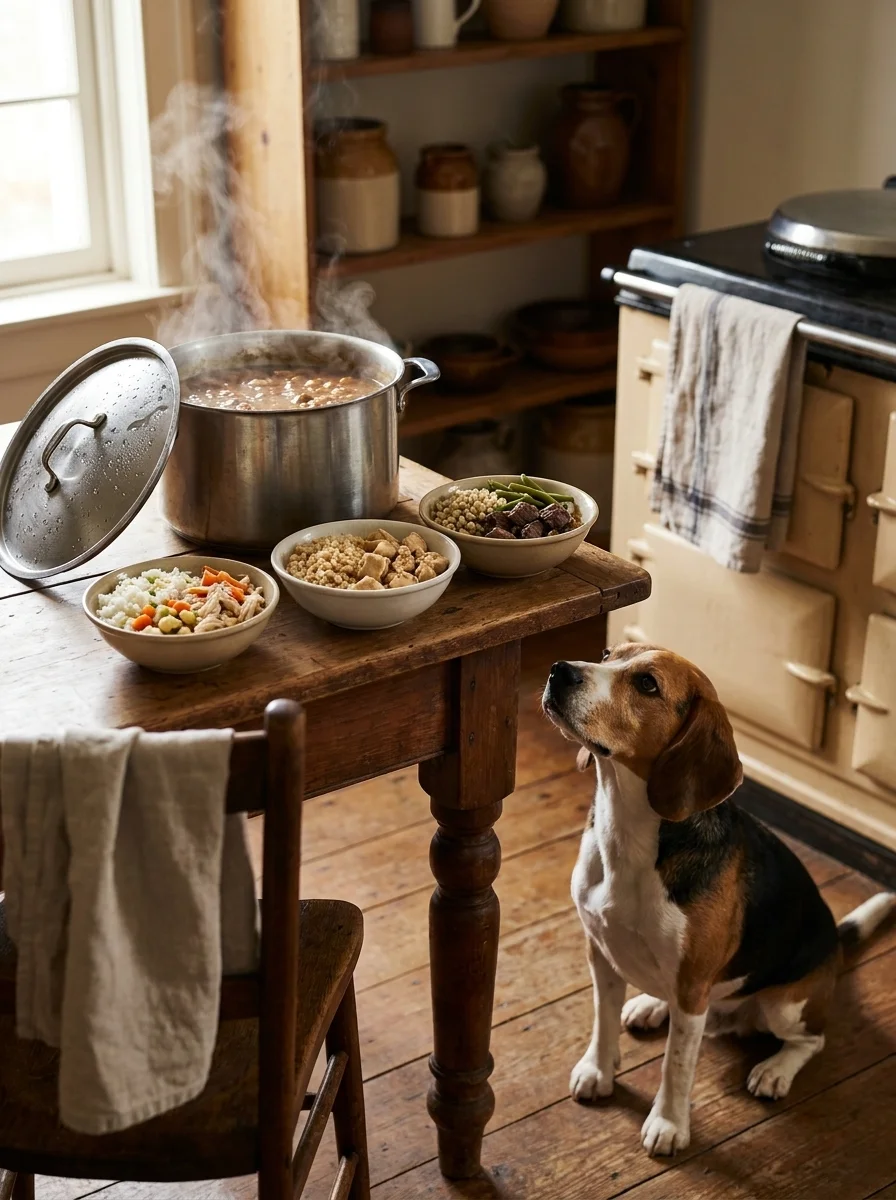
How the Savings Actually Work
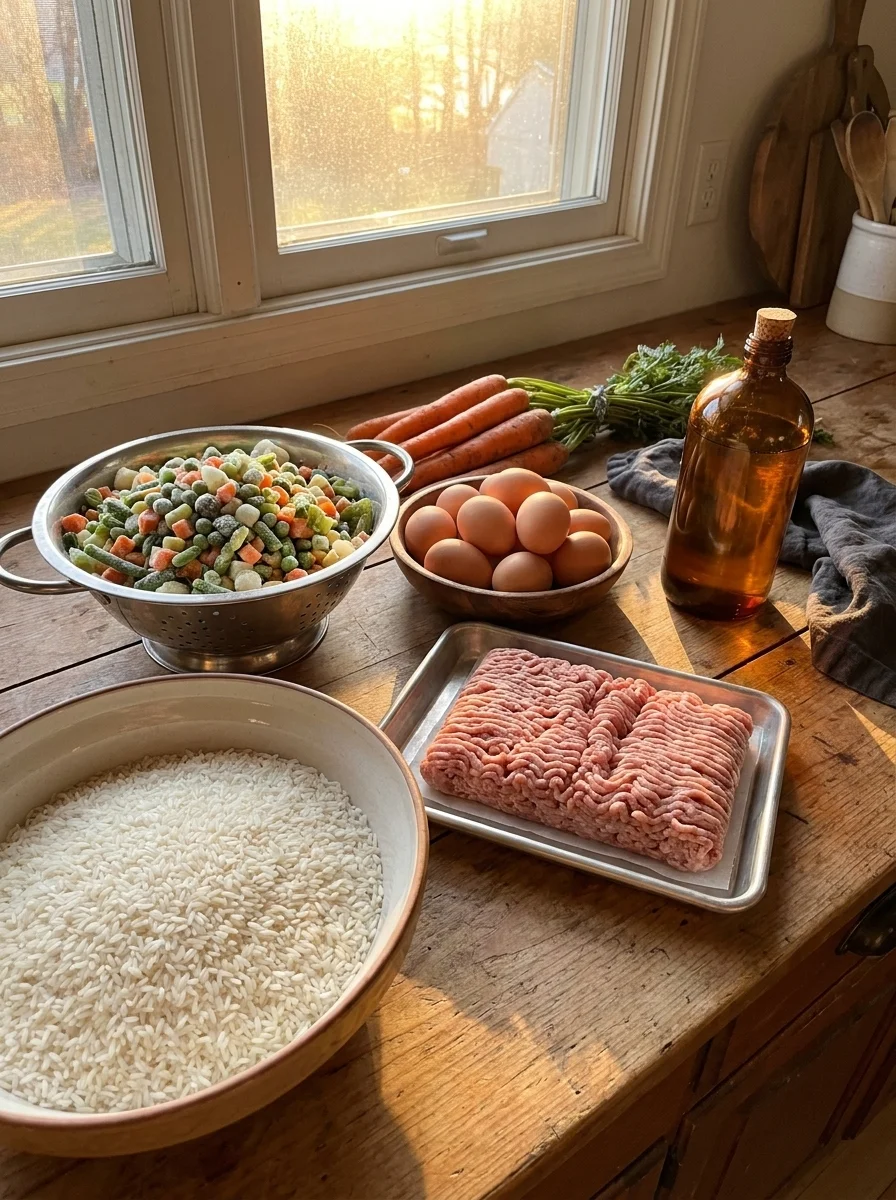
The core of any budget-friendly homemade diet is understanding where your money is going. Kibble prices are fixed by manufacturers, but ingredient prices fluctuate weekly. To make homemade dog food cheaper than kibble consistently, you have to be opportunistic with your shopping.
Buying proteins on sale and in bulk: Protein is usually the biggest line item. Instead of buying fresh meat at full price, wait for sales. When turkey or chicken is discounted, buy enough for a week of meals — and if your freezer has room, stock up. The price per pound drops dramatically in a sale week.
Choosing cheap carb bases: You do not need expensive exotic grains. White rice, oats, and barley are cheap, easy to digest, and fill out the plate. Buying them in large bags from the bulk bin or warehouse club cuts the unit price to pennies while providing the energy and bulk that makes the meal substantial.
Using frozen and seasonal vegetables: Fresh vegetables are expensive in winter and spoil quickly. Frozen mixed vegetables, green beans, and peas are pre-washed, cut, and flash-frozen at peak nutrient density — often cheaper per pound than fresh, and they keep indefinitely. Seasonal produce, like zucchini in summer, hits low price points and should be used heavily.
Batch cooking to kill waste: One big pot takes the same energy as daily small portions but a fraction of the labor. Leftovers don’t go to the landfill; they go into the freezer. This efficiency is why a medium dog can eat homemade for roughly $1.00–$1.50 a day versus $2+ for mid-range kibble.
The Swap Chart
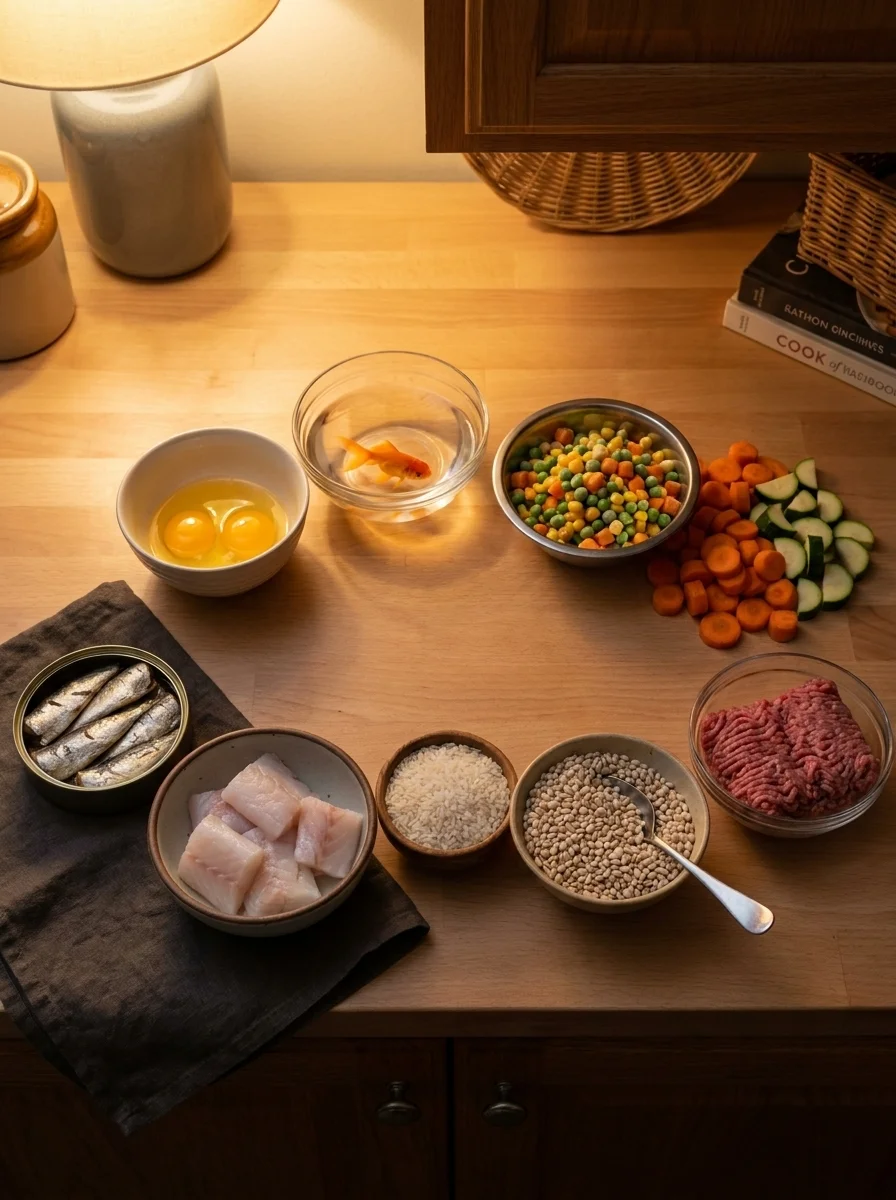
Sometimes the brand name on the box is what drives the price, not the ingredient itself. You can replace expensive items with functional equivalents that cost a fraction of the price. These swaps keep the nutrition profile similar while knocking money off the grocery bill.
Salmon → Canned sardines in water or eggs: Salmon is expensive. Canned sardines in water are cheap, packed with omega-3s, and have bones soft enough for dogs to digest. Eggs are the ultimate budget protein — a dozen often costs less than a pound of premium fish and provides complete protein.
Fresh vegetables → Frozen mixed vegetables: Fresh broccoli or spinach can cost $3 or more a pound. A bag of frozen mixed vegetables is usually under $2 — softer, which many senior dogs prefer, and zero prep time.
Brown rice → White rice or barley bought in bulk: Brown rice is often more expensive per cup. White rice cooks faster, and barley is a hearty, inexpensive alternative. Buying these in large bags ensures the cost per cup is negligible.
Lean ground beef → Ground turkey or chicken thighs on sale: Ground beef prices are volatile. Chicken thighs and ground turkey are almost always cheaper, especially on promotion. Turkey is lean and mild; chicken thighs are moist and rich.
Branded supplements → Plain basics: You don’t need a specific brand of “dog vitamin.” A basic calcium or multivitamin supplement your vet recommends does the same job for less. For a quick, no-fuss topping that adds flavor without complex ingredients, try a homemade dog food seasoning recipe to keep meals interesting.
Recipe 1: Cheaper-Than-Kibble Turkey Dinner
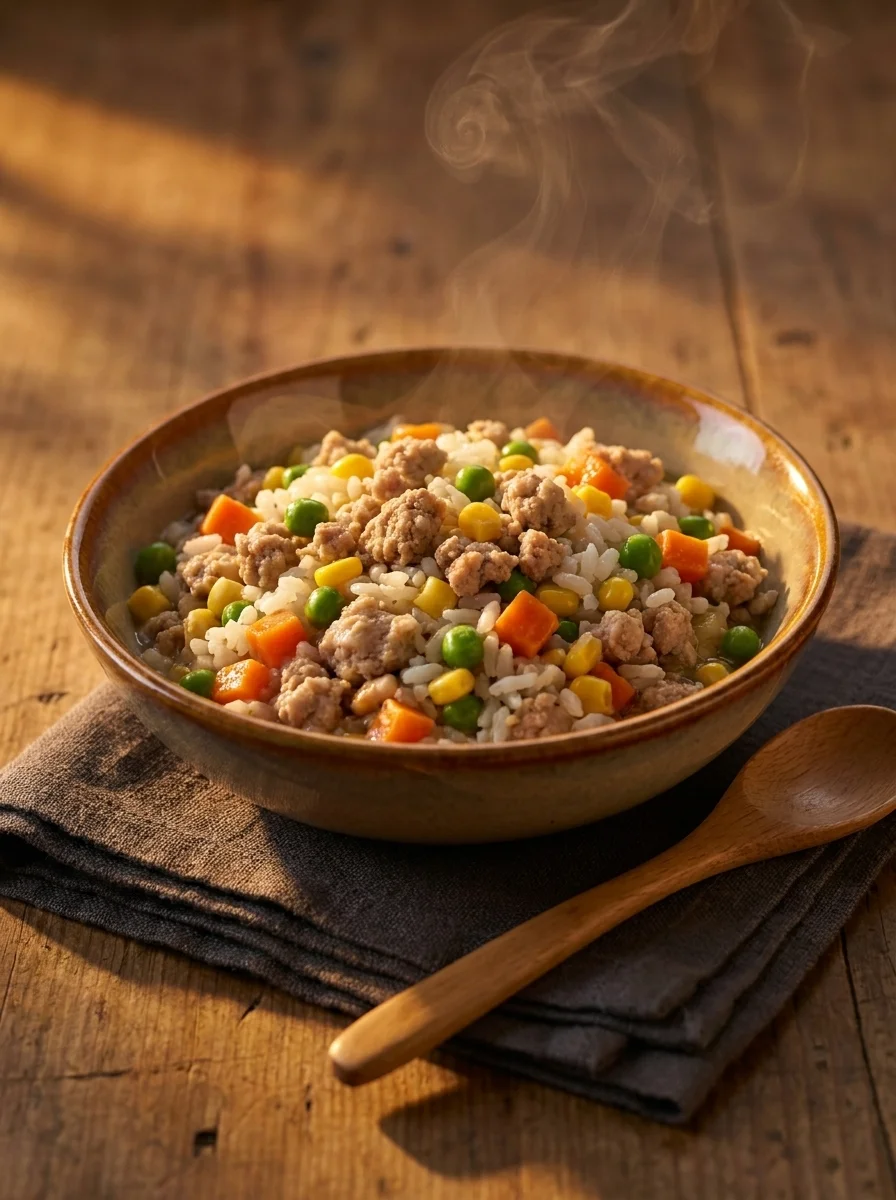
This is the ultimate “I have no time but I have a grocery list” recipe. Ground turkey is widely available and often cheap, especially on sale. It pairs with rice and frozen veggies in one simple pot.
The texture here is loose and moist, not like a patty. It resembles a dense stew. The eggs act as a binder and protein boost, making the meal more filling so your dog doesn’t beg for more. It is simple, safe, and reliably cheaper than kibble.
Ingredients
- 3 lbs ground turkey (bought on sale)
- 2 cups white rice (uncooked)
- 4 cups frozen mixed vegetables
- 3 large eggs
- 2 tablespoons sunflower oil
- Water, for cooking (free)
Step-by-Step Instructions
- Rinse the white rice thoroughly. Place it in a large pot with about 4 cups of water. Bring to a boil, reduce heat to low, and cover for 15 minutes.
- While the rice simmers, heat the sunflower oil in a large skillet over medium heat. Add the ground turkey.
- Cook the turkey, breaking it up with a spoon, until it is no longer pink. It should be crumbly and fully cooked through.
- Stir the frozen mixed vegetables into the turkey. Add just enough water to the skillet to create steam and melt the vegetables down into the meat mixture.
- Crack the three eggs into the turkey and vegetable mixture. Cook until the eggs are set and firm, stirring constantly to avoid scrambling them into clumps.
- Remove the rice from the heat and fluff with a fork. Divide the rice into six large bowls. Top each bowl with an equal portion of the turkey mixture. Serve warm.
Recipe 2: Slow-Cooker Chicken & Rice
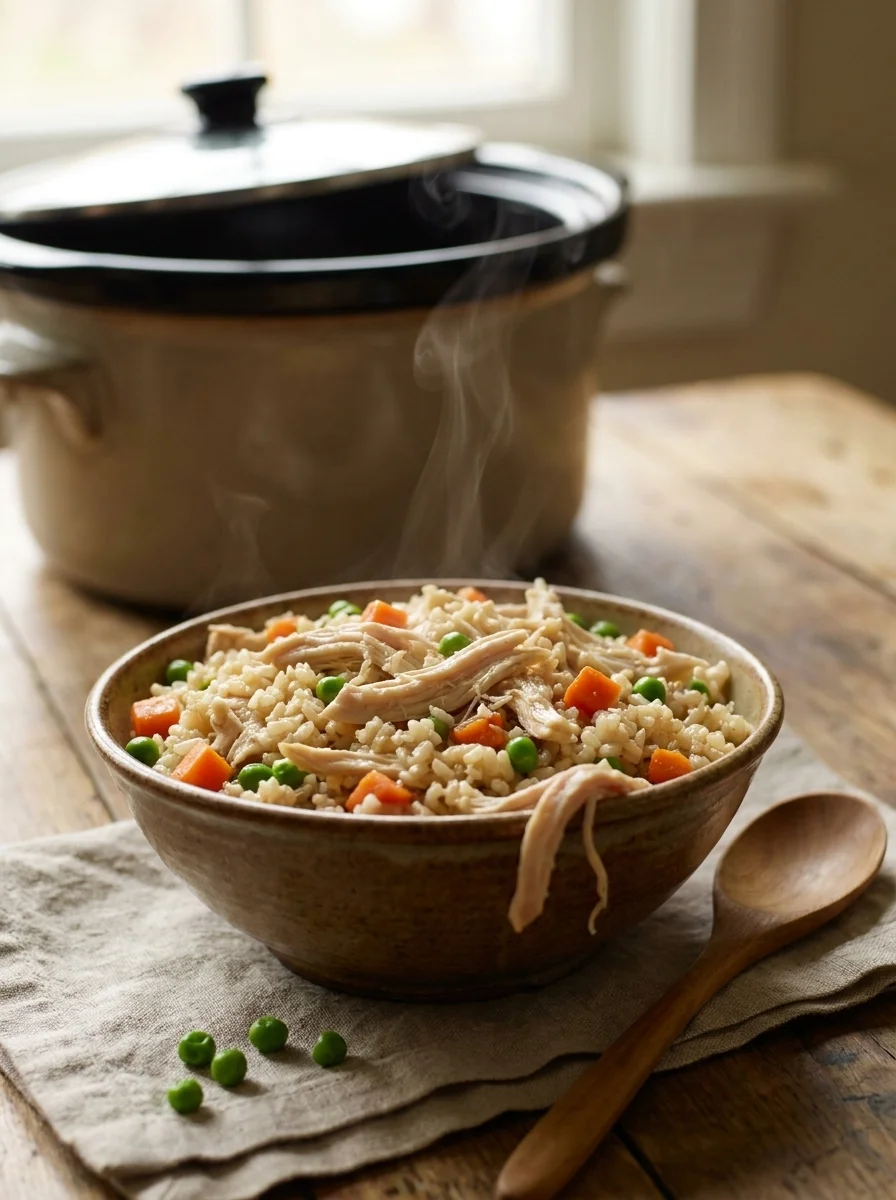
If your dog is hard to please, the slow cooker is your best friend. The low and slow method breaks down chicken thighs to a tender, pull-apart texture that most dogs find irresistible. It is a “set it and forget it” recipe that yields a very soft food, perfect for puppies or senior dogs with dental issues.
Because the cook time is passive, the result is a highly aromatic meal you can freeze in individual portions — one of the easiest ways to make homemade dog food cheaper than kibble, since you use almost no active stove time. For a similar approach with ground meat, check out a crockpot ground turkey dog food recipe.
Ingredients
- 3 lbs boneless chicken thighs
- 2 cups brown rice (uncooked)
- 3 medium carrots diced
- 2 cups frozen peas
- 2 large eggs stirred in at the end
- 4 cups water
Step-by-Step Instructions
- Place the brown rice and diced carrots in the slow cooker. Pour the 4 cups of water over the top. Do not stir yet.
- Lay the chicken thighs on top of the rice and water. The weight of the chicken will help keep the grains submerged.
- Cover and cook on LOW for 4 hours. The rice will cook through and become very tender.
- Remove the chicken and shred it into the pot using two forks. Discard any large chunks of skin if desired.
- Stir in the frozen peas. They will thaw and warm up quickly in the residual heat. Let the pot sit for 5 minutes.
- Crack the two eggs into the hot mixture. Stir vigorously until the eggs are cooked through and the mixture is uniform. Serve or portion into containers.
Recipe 3: Beef, Barley & Veg Batch
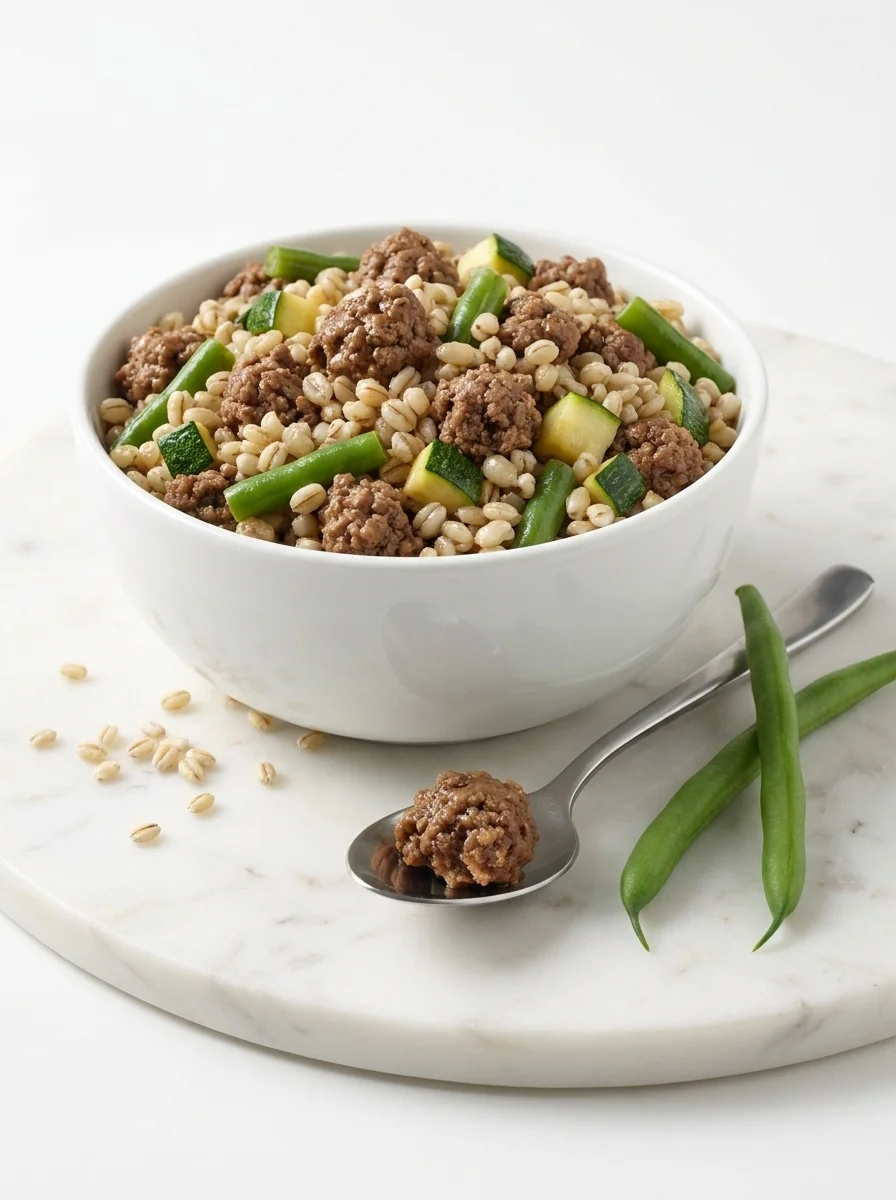
Beef is often the most expensive protein, but when you buy it on sale or in bulk, it remains a favorite for dogs who are picky about flavor. This recipe uses barley as the base, which adds a nutty flavor and good fiber. The zucchini keeps things hydrating and light.
This is a true batch recipe designed for the freezer. It is hearty enough to be a complete meal for most adult dogs, and the eggs deliver high-quality protein without expensive supplements.
Ingredients
- 2 1/2 lbs lean ground beef (sale price)
- 1 1/2 cups pearl barley (uncooked)
- 3 cups frozen green beans chopped
- 2 medium zucchini diced
- 2 large eggs
- 1 tablespoon olive oil
Step-by-Step Instructions
- Rinse the pearl barley. Add it to a large pot with 3 cups of water. Bring to a boil, reduce to a simmer, and cover for 10 minutes.
- Heat the olive oil in a separate large skillet over medium-high heat. Add the diced zucchini and let it sauté until it starts to soften.
- Add the ground beef to the skillet with the zucchini. Brown the meat completely, breaking it up as you go.
- Stir in the frozen green beans and the cooked barley. Add 1 cup of water to the skillet to create steam.
- Simmer for 10 minutes until the liquid is absorbed and the vegetables are tender.
- Remove from heat. Crack in the two eggs and stir until set. Let cool before serving or storing.
Cook Once, Feed All Week
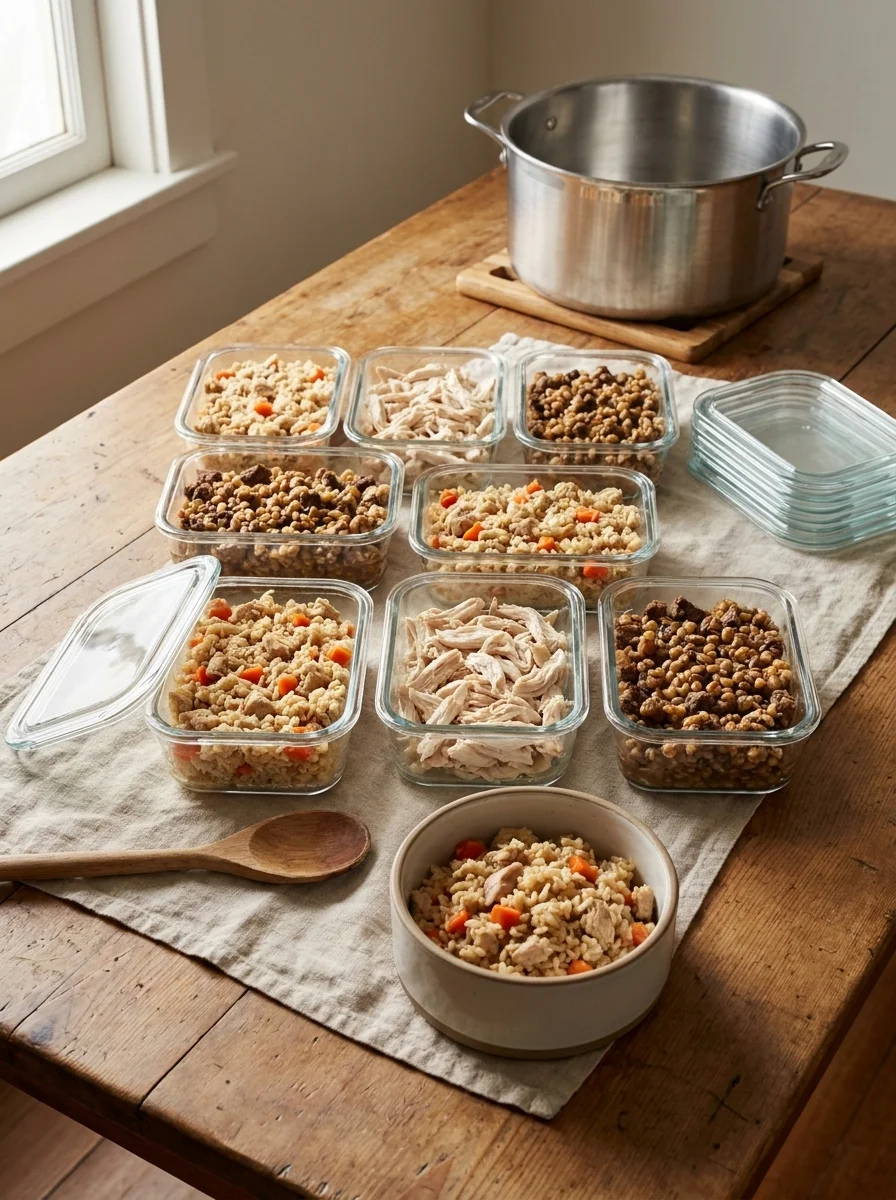
The biggest barrier to saving money is the daily effort. The solution is the Sunday batch routine. Spend two hours on Sunday cooking one or two large recipes. This single block of time creates a week’s worth of meals, dramatically reducing your “cost per meal” in terms of labor and energy.
Portioning into daily containers is key. Use clear, airtight containers, measured by weight or volume, and label each with the date. Mealtime becomes instant, with no guesswork.
Storage matters for safety and cost. Keep the next four days of meals in the refrigerator; anything beyond that goes straight into the freezer, where it keeps for up to three months. To thaw, move a portion to the fridge the night before — gentle thawing preserves texture far better than microwaving. This routine turns cooking from a daily task into a weekly one.
Frequently Asked Questions
Final Thoughts
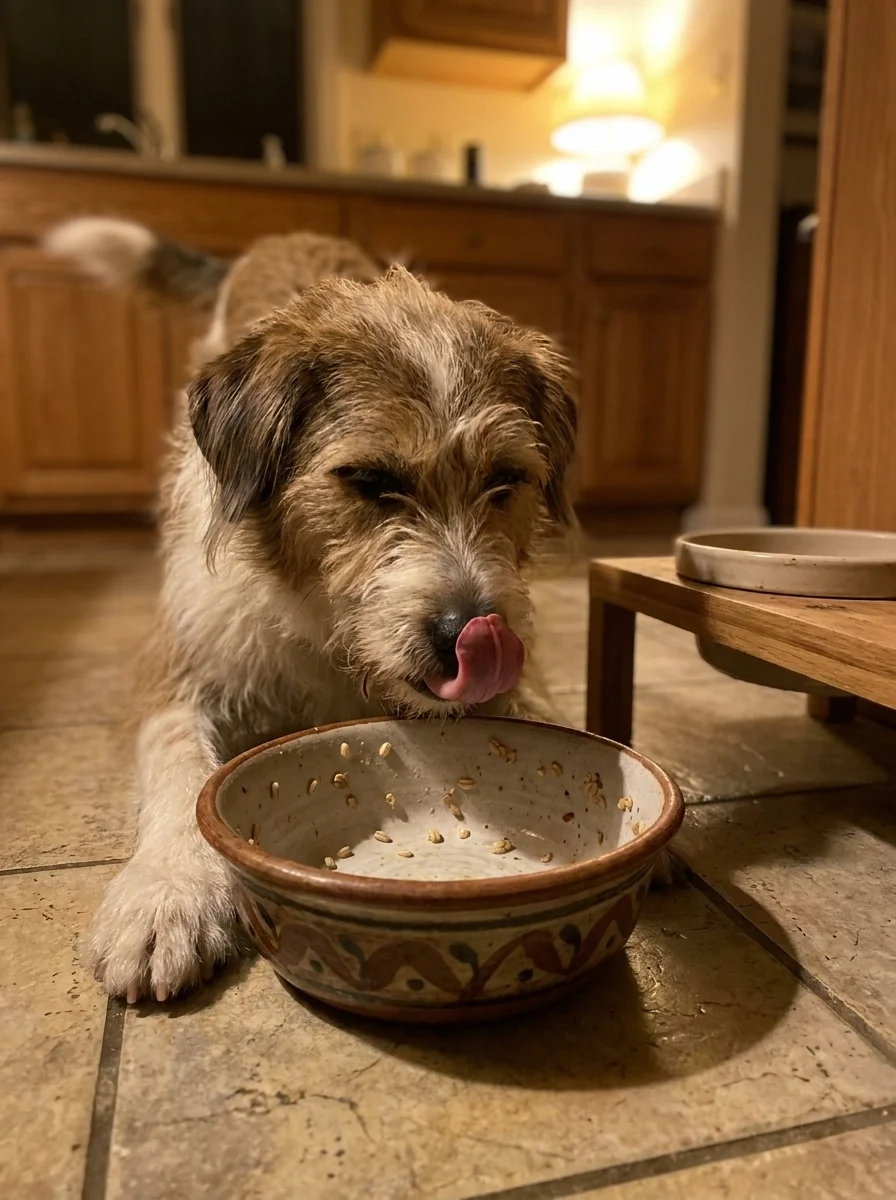
Making dog food at home does not have to be a luxury. By leaning on bulk buying, seasonal produce, and batch cooking, you can build a diet that is safer, fresher, and significantly cheaper than the bag of kibble on the shelf. The system is simple: buy smart, cook in bulk, and store properly.
Your dog will likely love the change in texture and smell. Your wallet will appreciate the drop in the grocery bill. Start with one recipe, perhaps the turkey dinner, and see how the costs compare to your current feeding routine. For a crunchy companion to these meals, try making some 4-ingredient pumpkin dog biscuits to keep their teeth clean.

Izzy is an experienced ranch worker who has a passion for exploring nature and getting up close to wildlife. With her connections to various animal organizations, Izzy is well-versed in animal care and rehabilitation.


