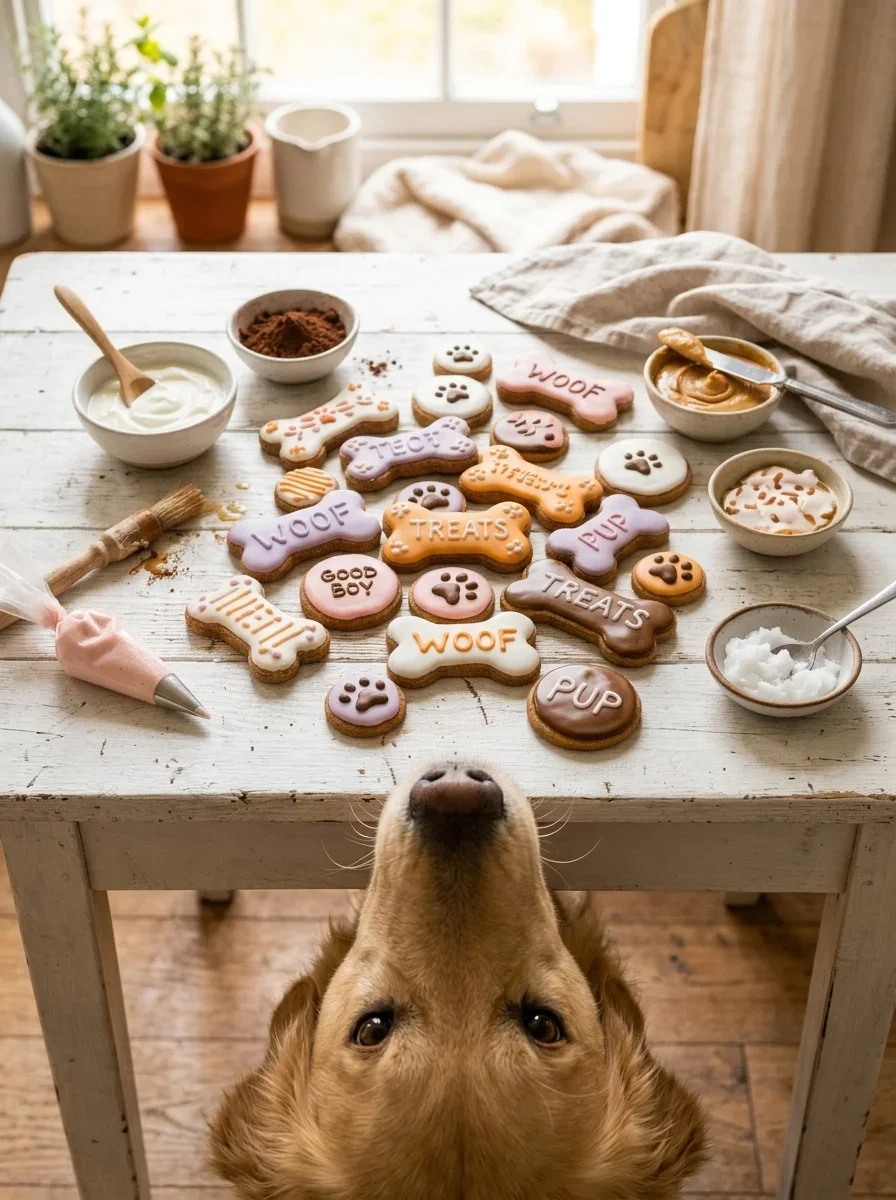
7 Homemade Dog Food Recipes for Sensitive Stomachs
If your dog’s stomach turns every meal into a gamble, you’re not alone. Loose stools, gas, and random vomiting are some of the most common reasons pet owners search for homemade dog food recipes for sensitive stomachs. The good news? You don’t need a culinary degree or a cabinet full of supplements to fix it. You just need the right combination of gentle proteins, easy-to-digest carbs, and simple cooking methods.
Below are 7 tested, vet-friendly recipes that cover every cooking style — slow cooker, stovetop, oven, Instant Pot, and freezer-prep. Each one comes with a clean, copy-ready recipe card so you can start cooking today. Ingredient swaps and background info are included too, but they’re at the bottom, because you came here for recipes, not a lecture.
Before switching your dog to a homemade diet, it’s smart to check in with your vet, especially if your pup is still young. If you haven’t already, take a look at your dog’s puppy veterinary needs to make sure a diet change lines up with their growth stage.
What Makes a Recipe “Sensitive Stomach” Safe?
Before jumping into the recipes, here’s the short version of what to avoid:
- No fatty meats (bacon, sausage, dark poultry skin) — fat is the #1 trigger for upset stomachs.
- No onion, garlic, or heavy seasoning — these are toxic or irritating to dogs, even in small amounts.
- No dairy unless your dog tolerates it well.
- No sudden switches — always transition gradually (more on that below).
Every recipe below sticks to lean proteins, gentle carbs, and minimal, dog-safe ingredients. Let’s get cooking.
1. Slow Cooker Chicken & Rice Stew
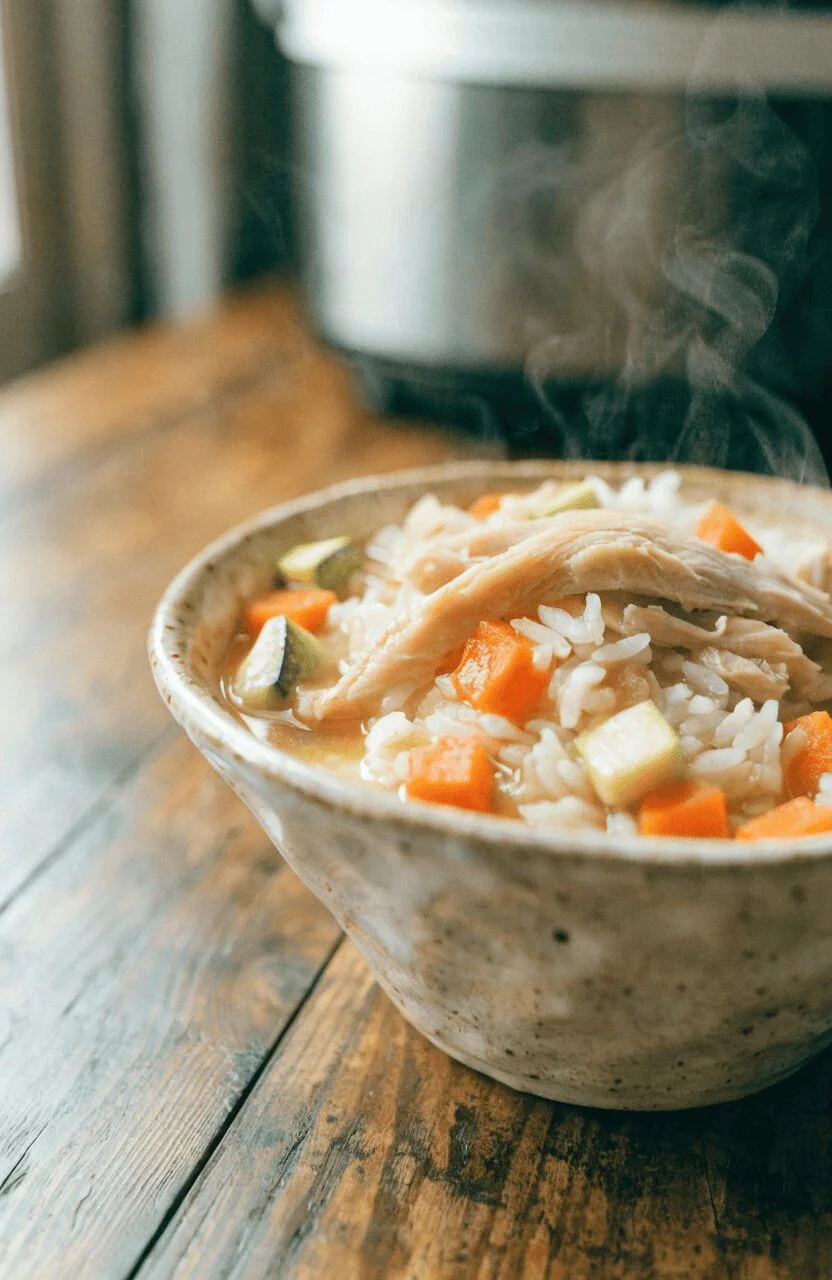
This is the classic “bland diet” stew, but made in bulk so you’re not cooking every single day. It’s soft, low-fat, and easy on inflamed stomachs.
Prep Time: 10 minutes Cook Time: 4 hours (low) or 2.5 hours (high) Freeze Time: Up to 3 months Yield: Approx. 8 cups (about 10–12 servings for a medium dog)
Ingredients:
- 2 lbs boneless, skinless chicken breast
- 1 ½ cups white rice (uncooked)
- 1 cup peeled, diced carrots
- 1 cup peeled, diced zucchini
- 5 cups low-sodium chicken broth (no onion or garlic)
- 1 tsp plain pumpkin puree (optional, for fiber)
Instructions:
- Add chicken, rice, carrots, and zucchini to the slow cooker.
- Pour broth over the top until everything is submerged.
- Cook on low for 4 hours or high for 2.5 hours, until chicken is fully cooked and shreds easily.
- Remove chicken, shred with two forks, and return to the pot.
- Stir in pumpkin puree, then let the stew cool completely before serving or freezing.
Notes: Portion into freezer-safe containers in single-meal sizes. Thaw overnight in the fridge before serving. Avoid feeding rice that’s undercooked, as it can be harder to digest.
2. Stovetop Turkey & Pumpkin Bland Diet Bowl
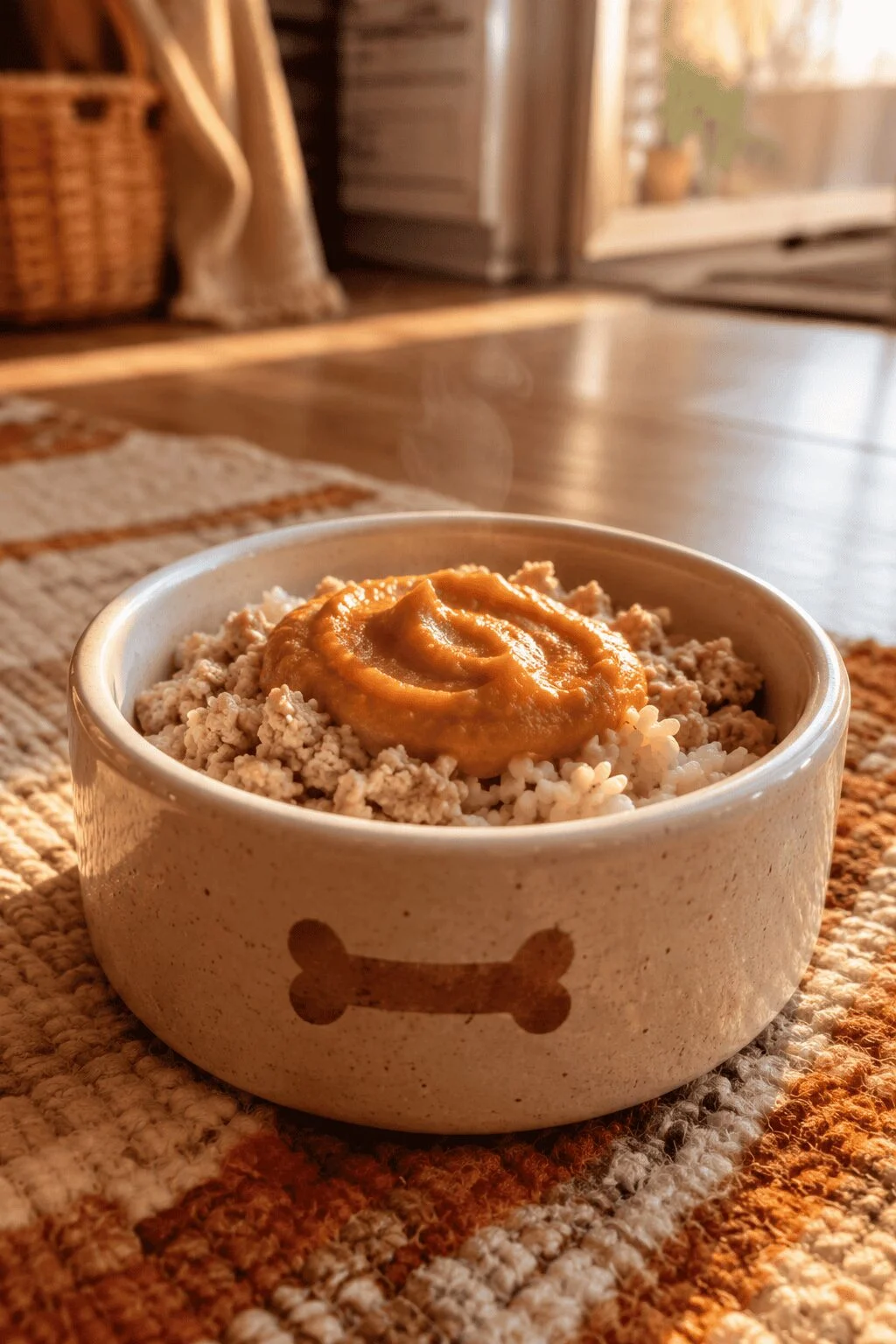
If your dog is in the middle of an active flare-up, this is the fastest, gentlest option. It takes less than 25 minutes and uses ingredients you probably already have.
Prep Time: 5 minutes Cook Time: 20 minutes Freeze Time: Not recommended (best served fresh, but leftovers keep 3 days refrigerated) Yield: Approx. 4 cups (4–5 servings for a medium dog)
Ingredients:
- 1 lb lean ground turkey (93% or leaner)
- 1 cup white rice (cooked)
- ½ cup canned plain pumpkin puree (not pie filling)
- 1 cup water
Instructions:
- In a skillet over medium heat, cook the ground turkey, breaking it into small pieces as it browns.
- Drain any excess fat thoroughly — this is the most important step for sensitive stomachs.
- Add cooked rice, pumpkin puree, and water. Stir until fully combined.
- Simmer on low for 5 minutes, then remove from heat and let cool before serving.
Notes: This bowl is often recommended as a short-term recovery meal. If symptoms don’t improve within 24–48 hours, contact your vet.
3. Instant Pot Fish & Sweet Potato Mash
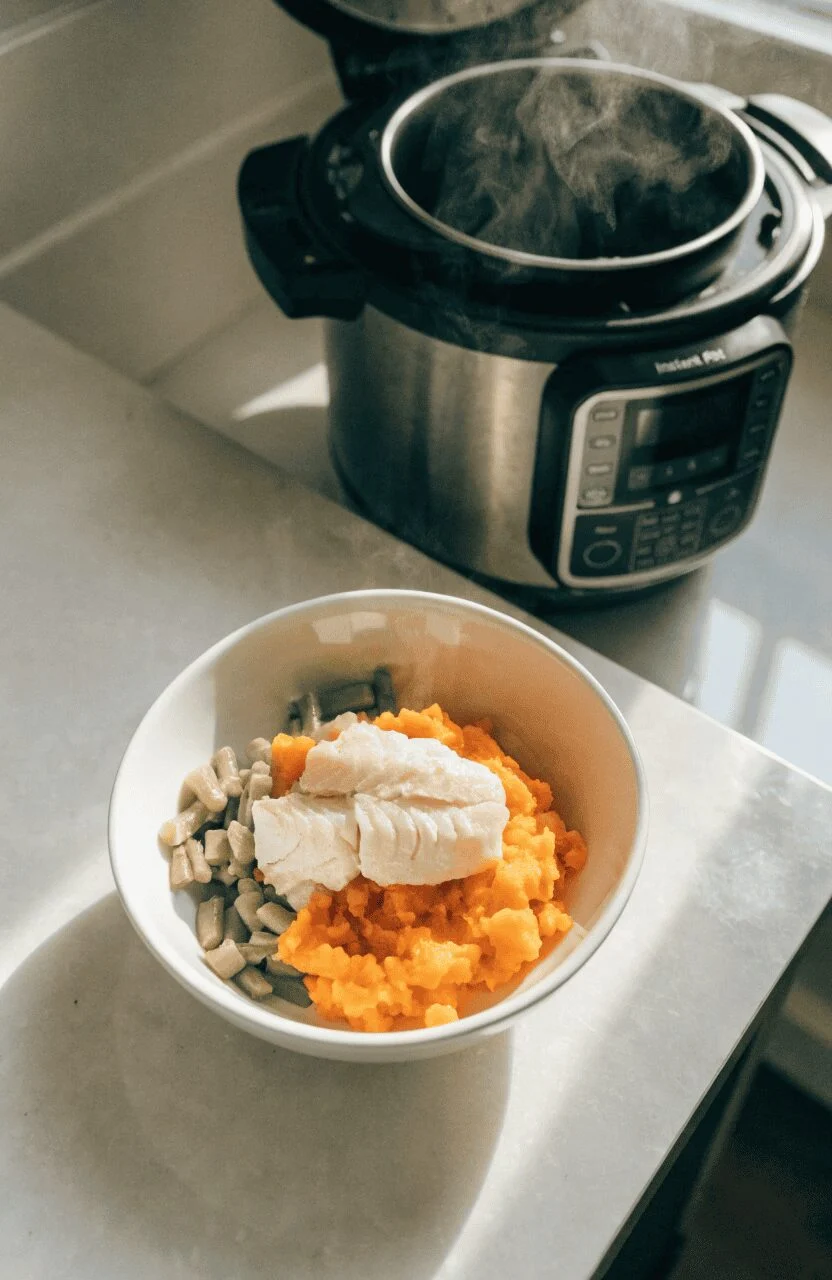
Fish is a great novel protein for dogs who react to chicken or beef. The Instant Pot makes this recipe nearly hands-off.
Prep Time: 10 minutes Cook Time: 12 minutes (plus pressure release time) Freeze Time: Up to 2 months Yield: Approx. 6 cups (7–8 servings for a medium dog)
Ingredients:
- 1.5 lbs boneless white fish fillets (cod, tilapia, or pollock)
- 2 medium sweet potatoes, peeled and cubed
- 1 cup green beans, chopped
- 2 cups water
Instructions:
- Place fish, sweet potato cubes, and green beans into the Instant Pot.
- Add water and seal the lid.
- Cook on high pressure for 12 minutes, then allow natural pressure release for 10 minutes.
- Open the lid, flake the fish apart, and mash the sweet potatoes into the mixture using a fork.
- Cool completely before portioning.
Notes: Always check fish for small bones before serving. This recipe is naturally grain-free, making it a good option for dogs sensitive to rice or oats.
4. Baked Ground Beef & Oatmeal Casserole
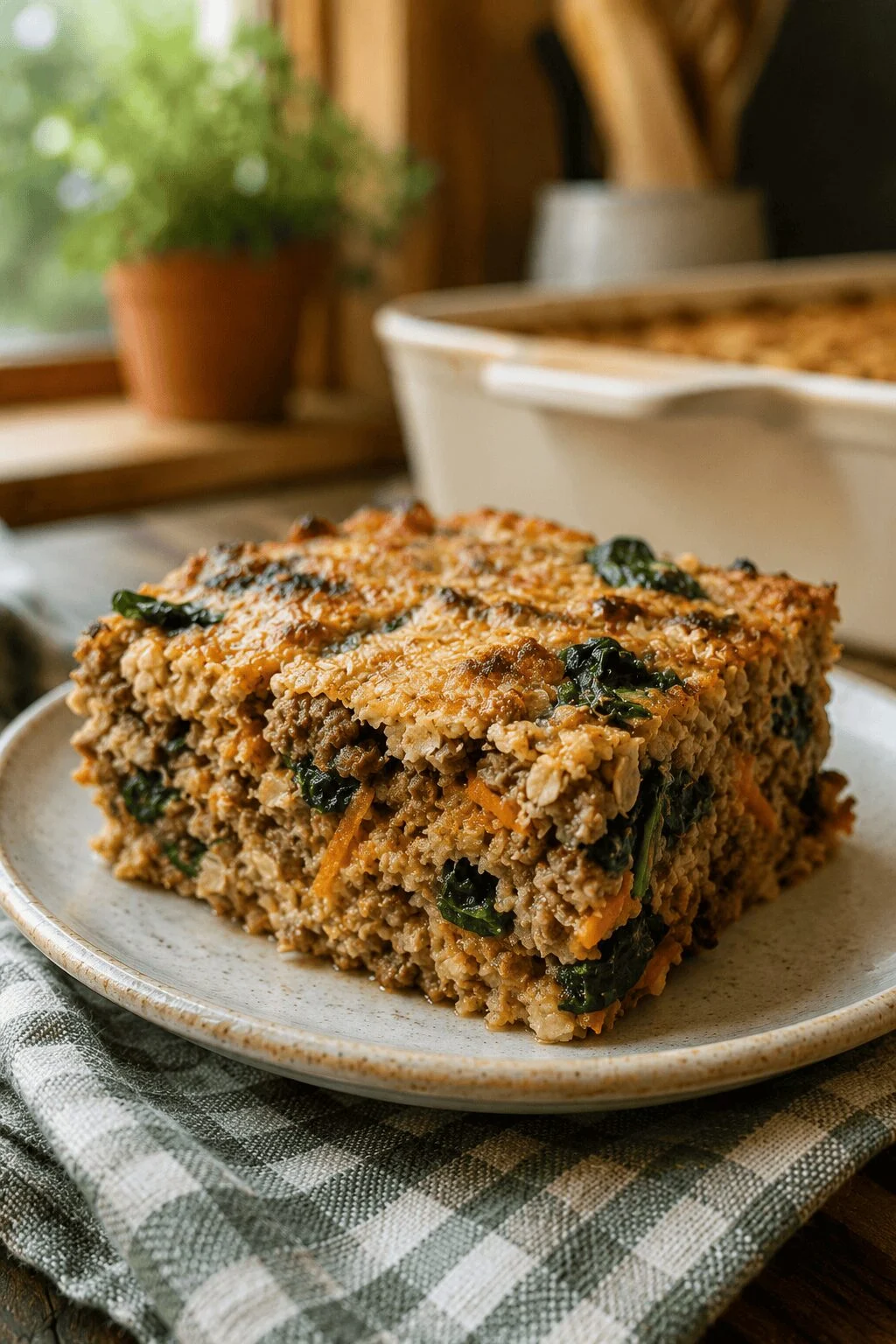
This oven-baked casserole holds its shape well, making it easy to slice into portions — great for dogs who do better with a firmer texture.
Prep Time: 15 minutes Cook Time: 35 minutes Freeze Time: Up to 3 months Yield: One 9×13 casserole (approx. 10–12 servings)
Ingredients:
- 2 lbs lean ground beef (90% or leaner)
- 2 cups rolled oats
- 2 eggs
- 1 cup shredded carrots
- 1 cup finely chopped spinach
- 1 cup water or low-sodium broth
Instructions:
- Preheat oven to 350°F (175°C).
- In a large bowl, mix ground beef, oats, eggs, carrots, and spinach until combined.
- Add water or broth gradually until the mixture is moist but holds together.
- Press the mixture evenly into a greased 9×13 baking dish.
- Bake for 35 minutes, or until fully cooked through (internal temp of 165°F).
- Let cool completely, then slice into individual portions.
Notes: This casserole freezes and reheats especially well, making it ideal for meal-prepping a week or two at a time.
5. Freezer-Portioned Turkey & Squash Cubes
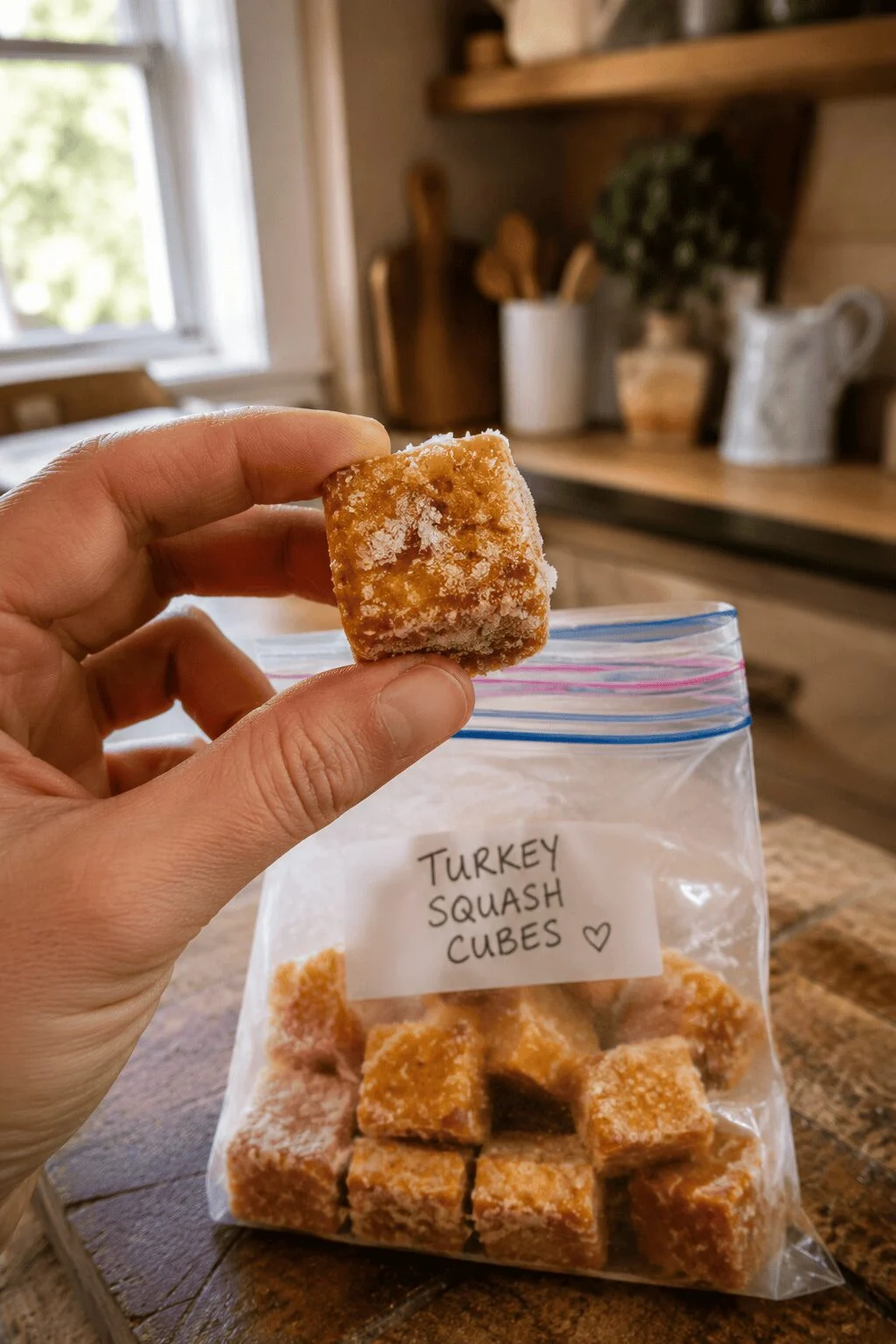
This method is built for busy pet owners — cook once, freeze in perfect single-serving cubes, and just pop one out each mealtime.
Prep Time: 15 minutes Cook Time: 25 minutes Freeze Time: Up to 4 months Yield: Approx. 24 ice-cube-sized portions
Ingredients:
- 1.5 lbs ground turkey
- 1 cup peeled, diced butternut squash
- ½ cup plain pumpkin puree
- 1 cup water
Instructions:
- Cook ground turkey in a skillet over medium heat until browned, draining excess fat.
- Steam or boil the butternut squash until soft, then mash it.
- Combine turkey, mashed squash, pumpkin puree, and water in a bowl until evenly mixed.
- Spoon the mixture into a silicone ice cube tray or muffin tin.
- Freeze for at least 4 hours, then pop out the cubes and transfer to a freezer bag.
Notes: This is a great option for small dogs or for pairing with kibble as a topper. Thaw 2–3 cubes per meal depending on your dog’s size.
6. One-Pot Egg & White Rice Recovery Meal
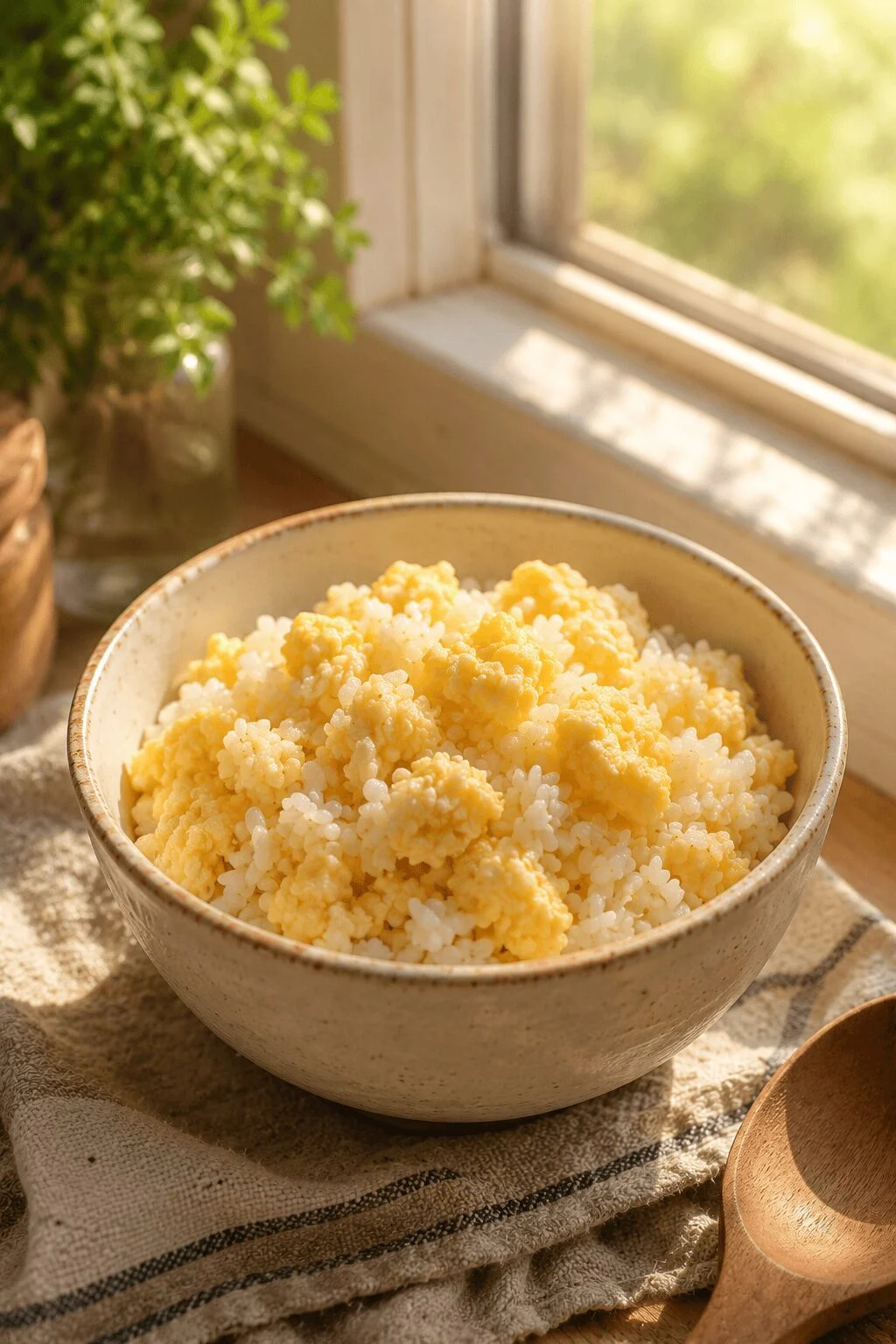
When your dog needs something extremely gentle and fast — think post-vomiting recovery — this one-pot meal is about as simple as it gets.
Prep Time: 5 minutes Cook Time: 15 minutes Freeze Time: Not recommended (fresh only) Yield: Approx. 3 cups (3–4 servings for a medium dog)
Ingredients:
- 3 large eggs
- 1 cup white rice
- 2 cups water
- 1 tsp plain pumpkin puree (optional)
Instructions:
- Bring water to a boil in a saucepan, then add rice.
- Reduce heat to low, cover, and simmer for 12–15 minutes until rice is tender.
- Crack the eggs directly into the pot and stir quickly until fully cooked (scrambled-style), about 2 minutes.
- Stir in pumpkin puree if using, then let cool before serving.
Notes: This is meant as a short-term recovery meal, not a long-term diet, since it’s low in protein variety. Use it for 1–2 days max before transitioning back to a fuller recipe.
7. Grain-Free Chicken & Butternut Squash Stew
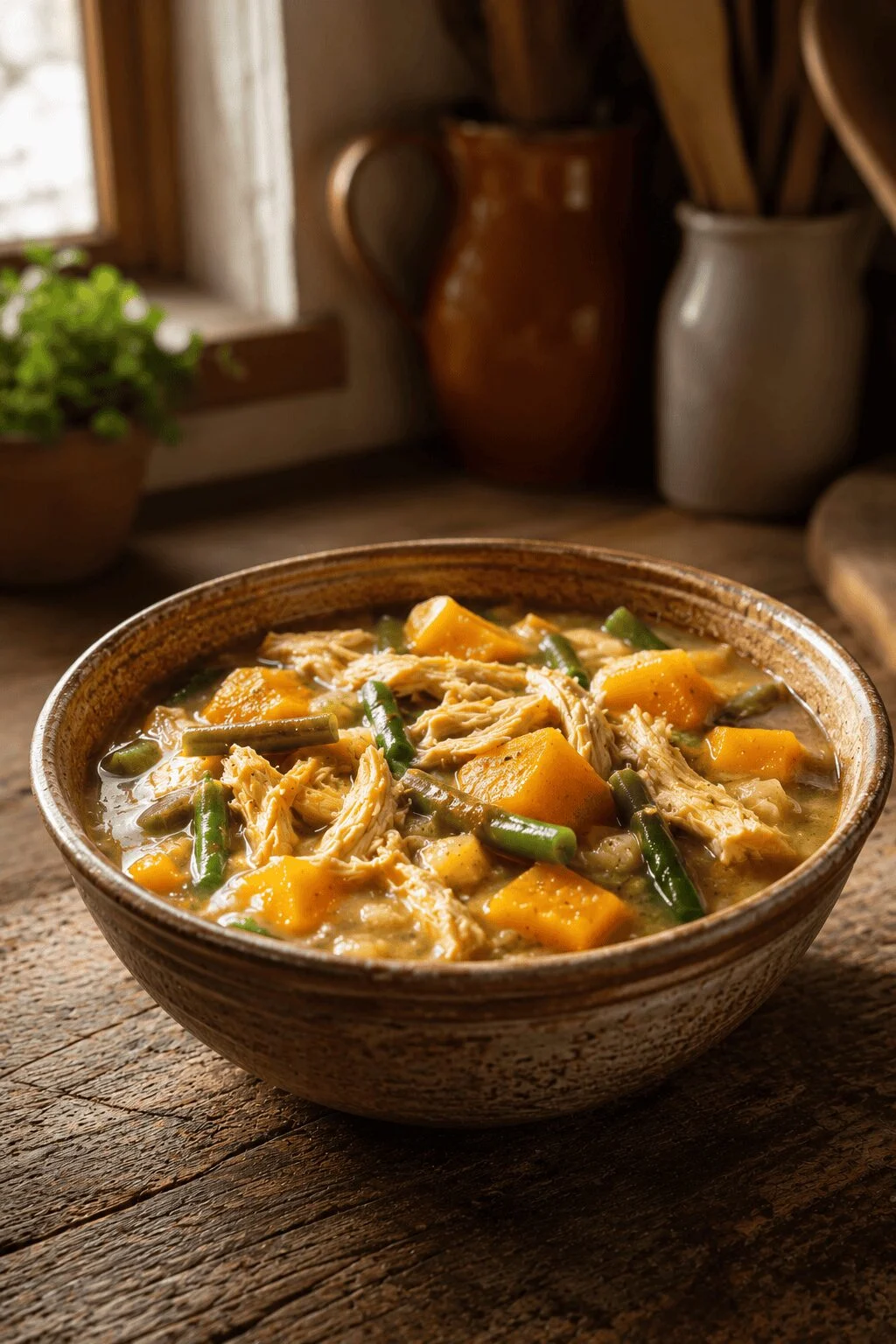
For dogs who react poorly to rice, oats, or wheat, this grain-free stew swaps starch for squash and still delivers a hearty, filling meal.
Prep Time: 10 minutes Cook Time: 30 minutes Freeze Time: Up to 3 months Yield: Approx. 7 cups (8–9 servings for a medium dog)
Ingredients:
- 2 lbs boneless, skinless chicken thighs (trimmed of visible fat)
- 2 cups peeled, cubed butternut squash
- 1 cup chopped green beans
- 4 cups low-sodium chicken broth
Instructions:
- In a large pot, combine chicken, squash, and green beans.
- Pour broth over the ingredients until fully covered.
- Bring to a boil, then reduce heat and simmer for 25–30 minutes, until chicken is fully cooked and squash is soft.
- Remove chicken, shred it, and return it to the pot.
- Mash some of the squash directly in the pot to thicken the stew slightly.
- Cool completely before serving or freezing.
Notes: This stew works well as a base for dogs on an elimination diet, since it avoids the most common grain allergens entirely.
3 Ingredient Variations Worth Trying
Once you’ve found a base recipe your dog tolerates, these variations let you rotate ingredients without upsetting their stomach again.
A. Protein Swaps If chicken doesn’t sit well, try turkey, white fish, or lean beef in the same ratios. Introduce one new protein at a time and watch for reactions over 2–3 days.
B. Carb Swaps White rice can be swapped for well-cooked oatmeal, mashed sweet potato, or plain cooked quinoa. Each has a slightly different fiber profile, so test in small amounts first.
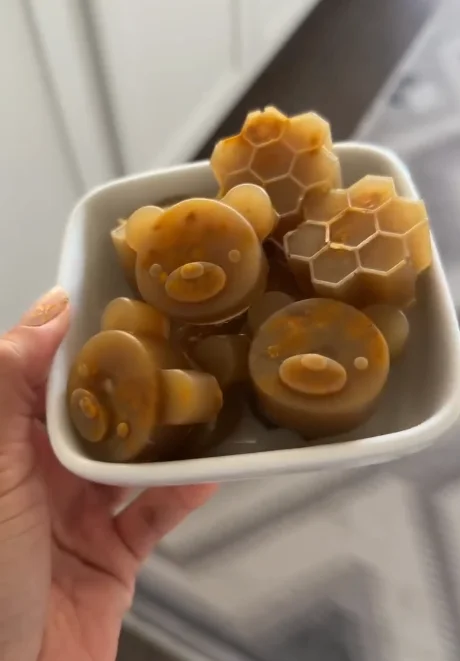
C. Gut-Soothing Add-Ins A spoonful of plain pumpkin puree, a splash of bone broth (onion- and garlic-free), or a small dollop of plain yogurt (if your dog tolerates dairy) can help settle inflammation further. For extra digestive support between meals, some owners also rotate in easy, gut-friendly homemade dog treats instead of store-bought options with unknown fillers.
Signs Your Dog Might Have a Sensitive Stomach
Not every upset tummy means a permanent sensitivity, but a few signs point to a recurring issue rather than a one-off:
- Frequent loose stools or diarrhea, not just an occasional bad day
- Regular vomiting shortly after meals
- Excessive gas or a gurgling stomach
- Low appetite or reluctance to eat
- Repeated licking of lips, paws, or the air, which can sometimes signal nausea — if this shows up alongside other symptoms, it’s worth reading more about excessive licking in dogs to rule out other causes.
If these symptoms are frequent or severe, a vet visit should come before any home recipe.
How to Transition Your Dog to Homemade Food
Switching too fast is one of the most common mistakes pet owners make, and it often causes the exact symptoms you’re trying to fix. Instead:
- Start with 25% homemade food mixed into their regular diet for 2–3 days.
- Increase to 50% for another 2–3 days, watching stool consistency closely.
- Move to 75%, then fully homemade, over the course of about 7–10 days total.
- If any stage causes loose stools, slow down and hold at that ratio a few extra days.
This slow approach gives your dog’s gut bacteria time to adjust, which matters just as much as the ingredients themselves.
Feeding & Storage Tips
A few small habits make homemade feeding much easier to stick with long-term:
- Portion consistently. Use the same measuring cup every time so your dog gets a predictable amount, which matters for sensitive digestion. A dedicated setup, like ideas from dog feeding station layouts, can help keep portions and mealtimes consistent.
- Label freezer containers with the date and recipe name so nothing sits too long.
- Reheat gently — cold food straight from the fridge can sometimes be harder on a sensitive stomach than lukewarm food.
- Rotate recipes slowly, not all at once, to avoid reintroducing symptoms.
If you want to go a step further with ingredient quality, some pet owners also look into fully human-grade dog food recipes as a long-term upgrade once their dog’s stomach has stabilized.
FAQs
Cooking for a sensitive-stomach dog takes a little patience, but once you find the recipe and rotation that works, mealtimes stop being stressful for both of you. Start with one recipe, watch how your dog responds over a few days, and build your rotation from there.

Izzy is an experienced ranch worker who has a passion for exploring nature and getting up close to wildlife. With her connections to various animal organizations, Izzy is well-versed in animal care and rehabilitation.