5 Easy 3-Ingredient Dog Food Recipes for Busy Weeknights
Weeknight dinner for a dog should not need a recipe card with twelve ingredients and an hour at the stove. Three ingredients, one pot, twenty minutes — that is the whole idea behind these 3-ingredient dog food recipes. Each recipe below uses exactly three ingredients, and every one of them is a real food you can buy at any grocery store: a lean protein, a gentle carbohydrate, and a vegetable. Nothing powdered, nothing pre-made, nothing you need to order online.
The five meals cover the proteins most dogs do well on: turkey, chicken, beef, salmon, and lamb. They all cook the same way — simmer or poach, mix, cool, serve in the bowl — so once you have made one, the other four feel familiar. Portions are by weight, storage is simple, and the transition plan at the end takes seven days, so a sensitive stomach never gets a surprise.
One honest note before the recipes: three ingredients make a simple, gentle meal, not a complete-and-balanced diet on their own. The “How to Make It Complete” section shows the two things to add — calcium and essential fats — and when to ask your vet about a supplement. Cook the first one tonight and see how fast the bowl empties.
Why Three Ingredients
The first reason is tracing. When a dog itches, gets soft stools, or turns away from the bowl, a five- or six-ingredient meal leaves you guessing which one caused it. With three ingredients, you can trace a reaction to one of three foods in a day, and a vet can read the whole diet at a glance. A three-ingredient label also makes the shopping list short: one protein, one carbohydrate, one vegetable, and you are done.
The second reason is digestion. A short ingredient list means less fiber variety, less fat variety, and less work for a sensitive gut. That is why vets reach for limited-ingredient diets first when a dog’s stomach is unsettled — and why these meals suit dogs who have struggled with richer shop-bought food. Fewer ingredients also means fewer chances of a hidden trigger like garlic powder or onion salt sneaking in.
The third reason is speed. No chopping board full of vegetables, no spice rack, no second pot. Everything cooks in one pot in under half an hour, which is the whole point on a weeknight. If you want more fresh-food ideas beyond these five, our homemade wet dog food recipes use the same one-pot method with six different proteins.
Recipe 1: Turkey, Rice & Pumpkin
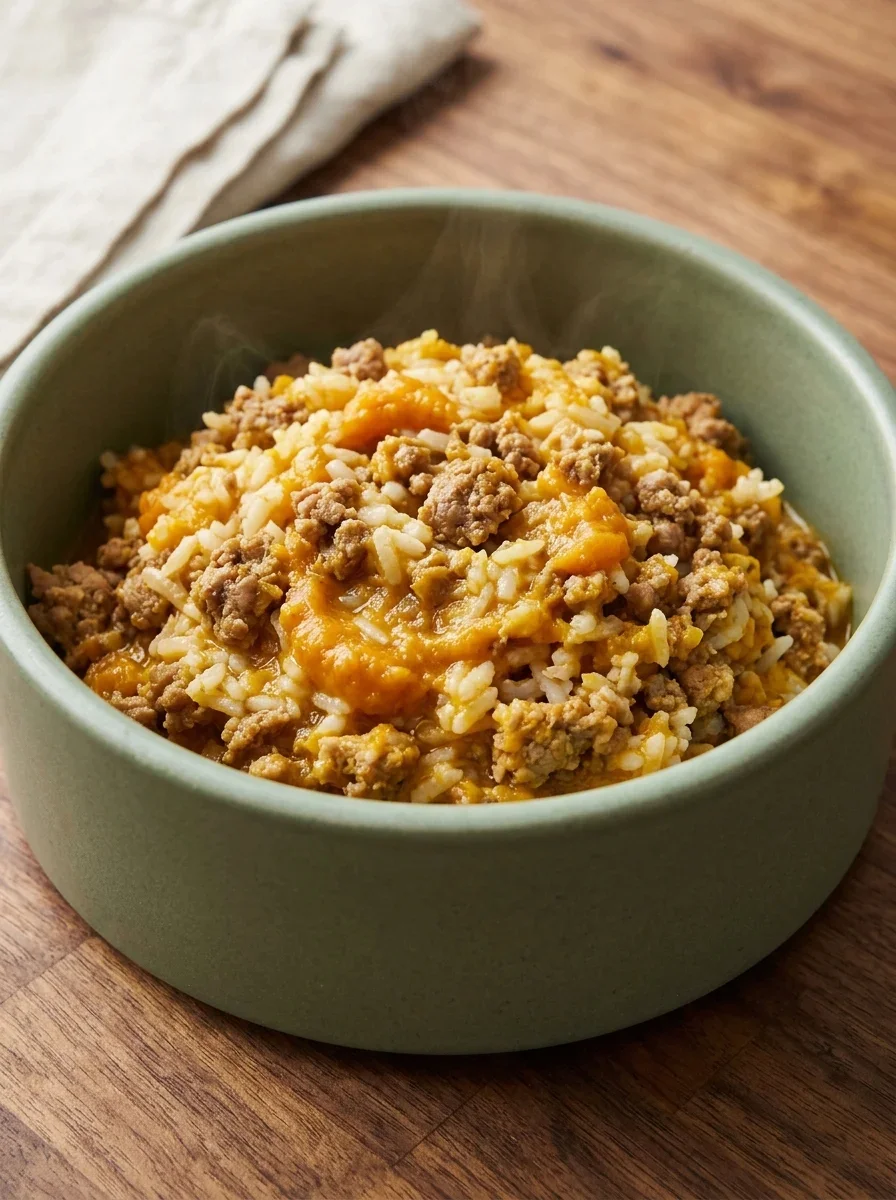
This is the gentlest meal in the set, and the one to start with. Turkey is lean and easy to digest, white rice is the kindest carbohydrate for an unsettled stomach, and pumpkin firms up loose stools. If your dog is coming off a stomach upset, this is the first bowl to serve.
Ingredients
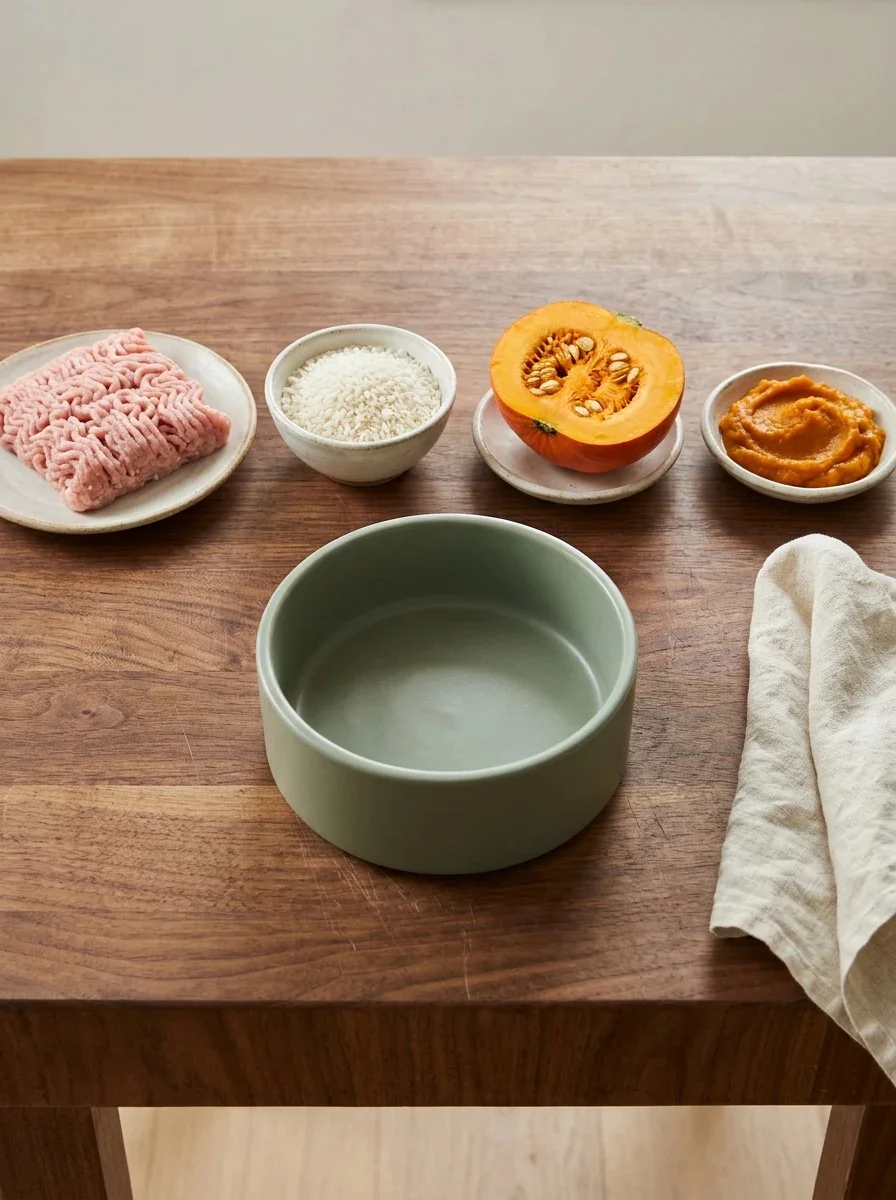
- 1 lb ground turkey (93% lean)
- 1 cup white rice, uncooked
- 1 cup plain pumpkin purée (not pumpkin pie filling)
Step-by-Step Instructions
- Cook the rice. Rinse the rice, then simmer it in 2 cups of water until tender, about 18 minutes. Water is the cooking liquid here, not a fourth ingredient. Fluff it with a fork and set it aside.
- Brown the turkey. Cook the ground turkey in a large pot over medium heat, breaking it into small crumbles, until no pink remains, about 8 minutes. Drain off any fat — a lean pot keeps the meal gentle on a sensitive stomach.
- Stir in the pumpkin. Add the pumpkin purée to the turkey and stir over low heat for 2 minutes, just until it is warmed through and mixed in. Check the can before you start: it must say plain pumpkin, not pumpkin pie filling, which has sugar and spices a dog should not eat.
- Combine. Fold the cooked rice into the pot and stir until everything is evenly mixed. The rice should be soft and the pumpkin should coat every crumble.
- Cool it right down. Spread the food on a wide plate or tray and let it cool to room temperature, about 15 minutes. Never serve it warm from the pot — a dog’s mouth burns easily, and hot food straight from the stove is the most common kitchen accident.
- Serve in the bowl. Spoon the portion into your dog’s bowl on the floor and serve at dog level. Swap the cooking water for homemade bone broth for dogs if you want more flavor and moisture — the broth adds gelatin and a little extra nutrition in place of the water.
How to Make It Complete
These meals are simple by design, and simple has a limit. A bowl of turkey, rice, and pumpkin gives your dog protein, energy, and fiber — but it does not give enough calcium or essential fatty acids on its own. That is fine for a few days, or as part of a rotation, but not as the only food for months.
The two additions that matter most are calcium and omega-3 fats. A vet-approved calcium supplement — or finely ground eggshell powder dosed by your vet — covers the bones, and a spoonful of fish oil covers the fats. Add them at serving time, not during cooking, so the heat never touches them.
If these meals become your dog’s only food long-term, ask your vet about a complete supplement. A home copycat matches the fresh ingredients, not a vet-formulated nutrient blend — our nom nom dog food copycat carries the same honesty: fresh ingredients first, plus a vet’s word on the blend.
Four More 3-Ingredient Meals
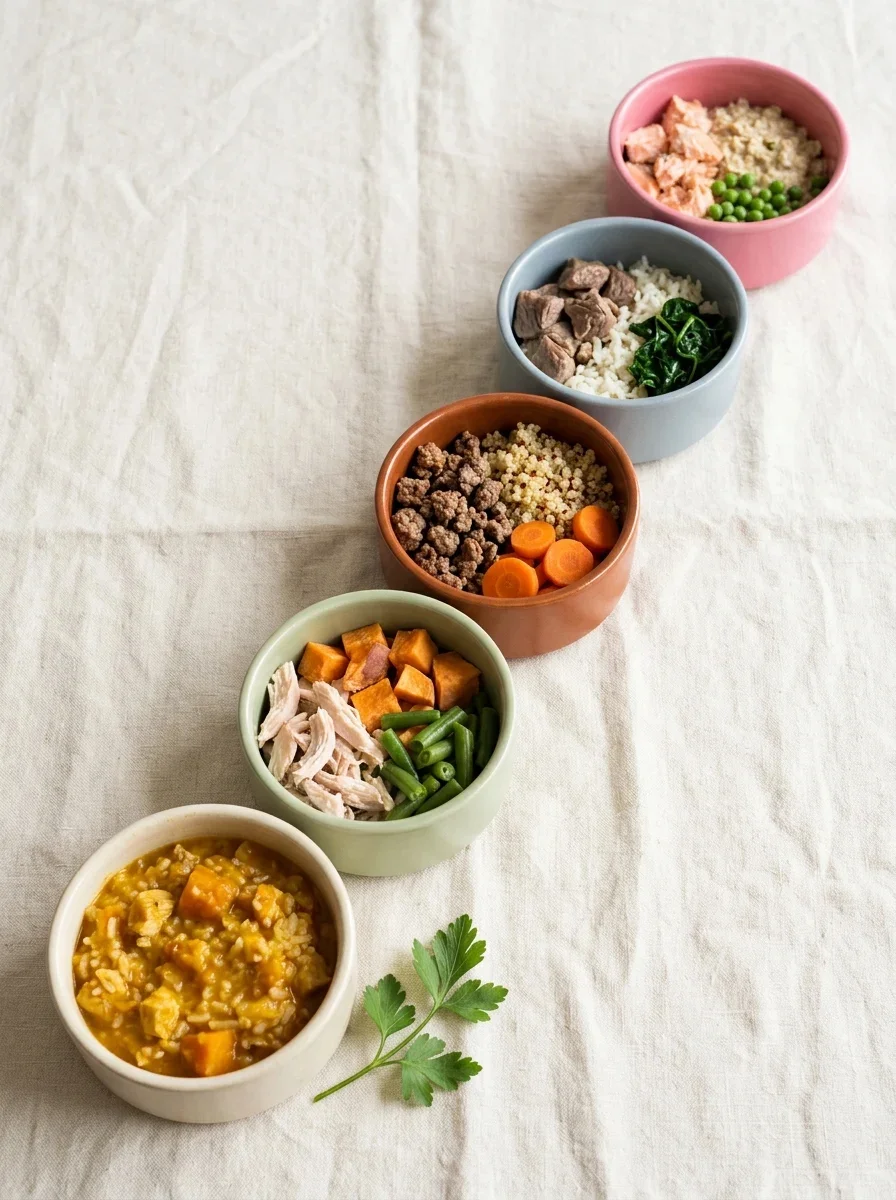
The same method, four new proteins. These four 3-ingredient dog food recipes cook in a single pot, cool the same way, and serve in the bowl on the floor.
Recipe 2: Chicken, Sweet Potato & Green Beans
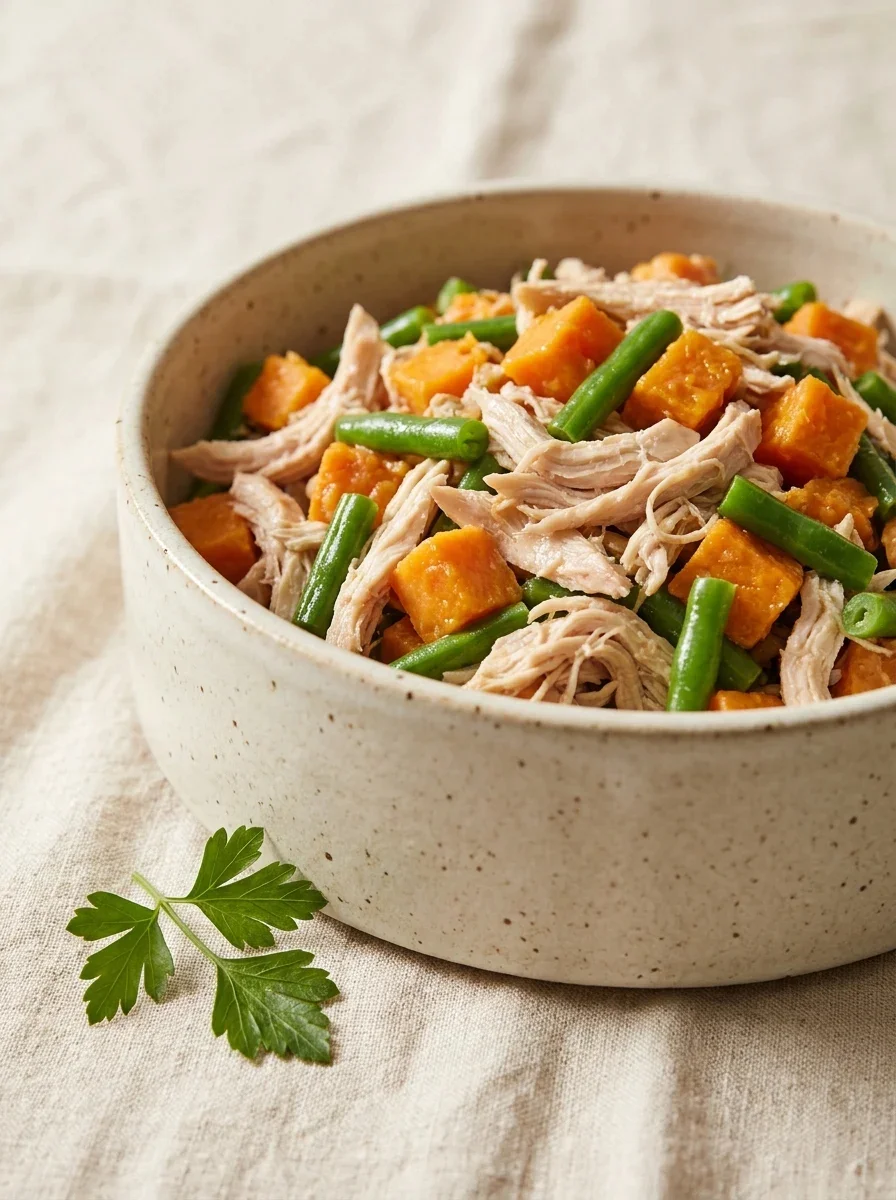
The cheapest meal in the set and the easiest to find ingredients for. Chicken thighs stay moist where breast dries out, sweet potato adds gentle fiber and vitamin A, and green beans add crunch and bulk without calories.
- 1 lb boneless, skinless chicken thighs
- 2 medium sweet potatoes, peeled and diced
- 1 cup fresh or frozen green beans
- Poach the chicken. Cover the thighs with water in a pot, bring it to a gentle simmer — never a hard boil — and cook for 20 minutes until the meat reaches 165°F and no pink remains. Lift the chicken out and keep the water.
- Cook the sweet potato in the same water. Add the diced sweet potato to the pot and simmer for 12 minutes until soft enough to mash with a fork. Cooking in the chicken water keeps the flavor in the food instead of pouring it away.
- Steam the green beans. Add the green beans for the last 5 minutes of cooking, just until they turn bright green and tender. No salt, no seasoning — plain beans only.
- Shred and dice. Shred the chicken into small pieces with two forks and dice the sweet potato into bite-size chunks. Pieces should be small enough that a small dog can eat them without struggling.
- Combine and cool. Mix everything together in the pot, then spread it out and let it cool to room temperature, about 15 minutes, before serving in the bowl.
Recipe 3: Beef, Quinoa & Carrots
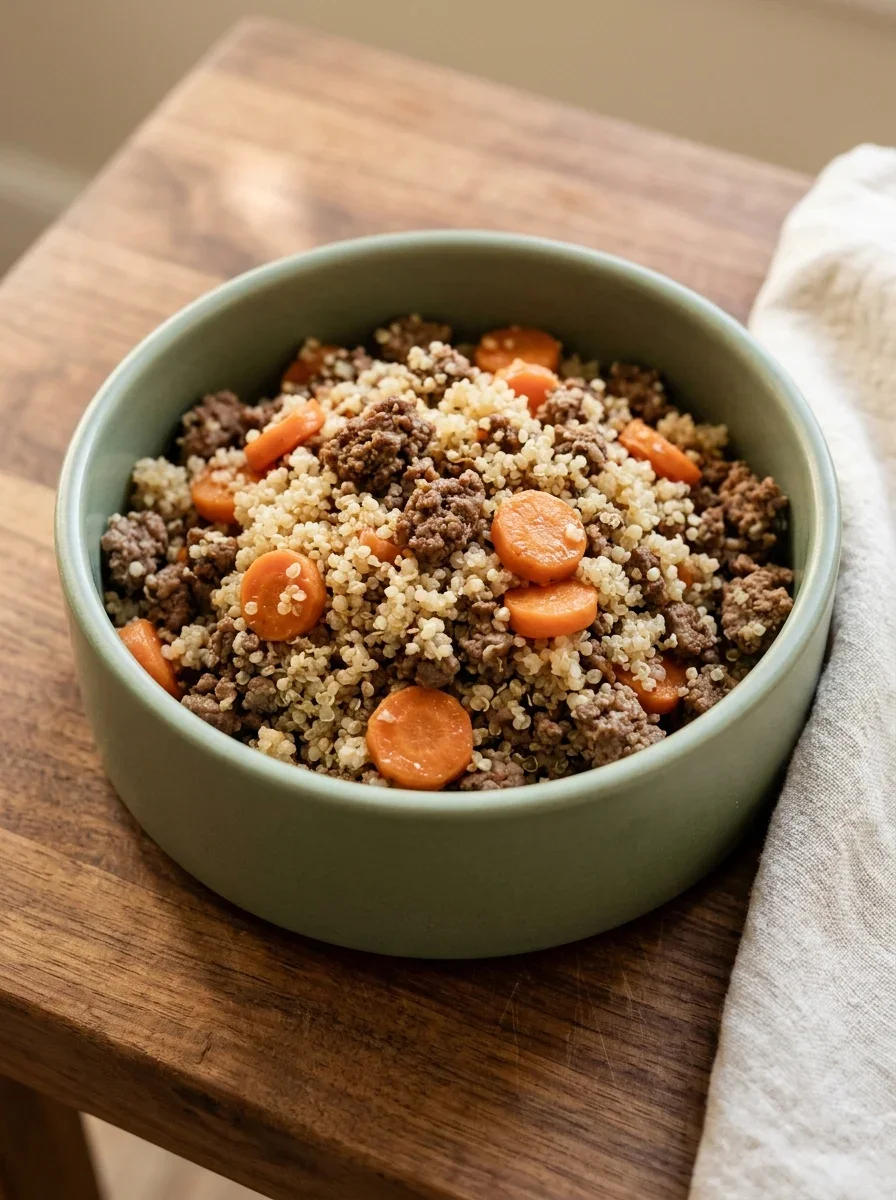
The highest-protein meal in the set. Lean beef brings iron and zinc, quinoa brings all nine essential amino acids in one grain, and carrots add crunch and beta-carotene. This is the bowl for an active dog who burns through a lighter meal too fast.
- 1 lb lean ground beef (90/10)
- 1 cup quinoa, rinsed
- 2 medium carrots, peeled and diced
- Brown the beef and drain it. Cook the ground beef in a large pot over medium-high heat, breaking it into crumbles, until it reaches 160°F and no pink remains, about 8 minutes. Drain off every drop of fat — lean beef is the point of this recipe, and the fat left in the pot is not.
- Cook the quinoa. Simmer the rinsed quinoa in 2 cups of water for 15 minutes until the grains turn translucent and the little tails curl out. Fluff it with a fork and set it aside.
- Steam the carrots. Add the diced carrots to a steamer or a pot with a little water and cook for 8 minutes until tender but not mushy. They should hold their shape in the bowl.
- Combine and cool. Fold the quinoa and carrots into the beef and stir until evenly mixed. Spread it out and let it cool to room temperature, about 15 minutes, before serving in the bowl.
- Portion the batch. Spoon the cooled food into daily portions — one container per day for your dog’s weight — and refrigerate what you will use in the next three days. Freeze the rest in sealed containers; it keeps for two to three months.
Recipe 4: Salmon, Oats & Peas
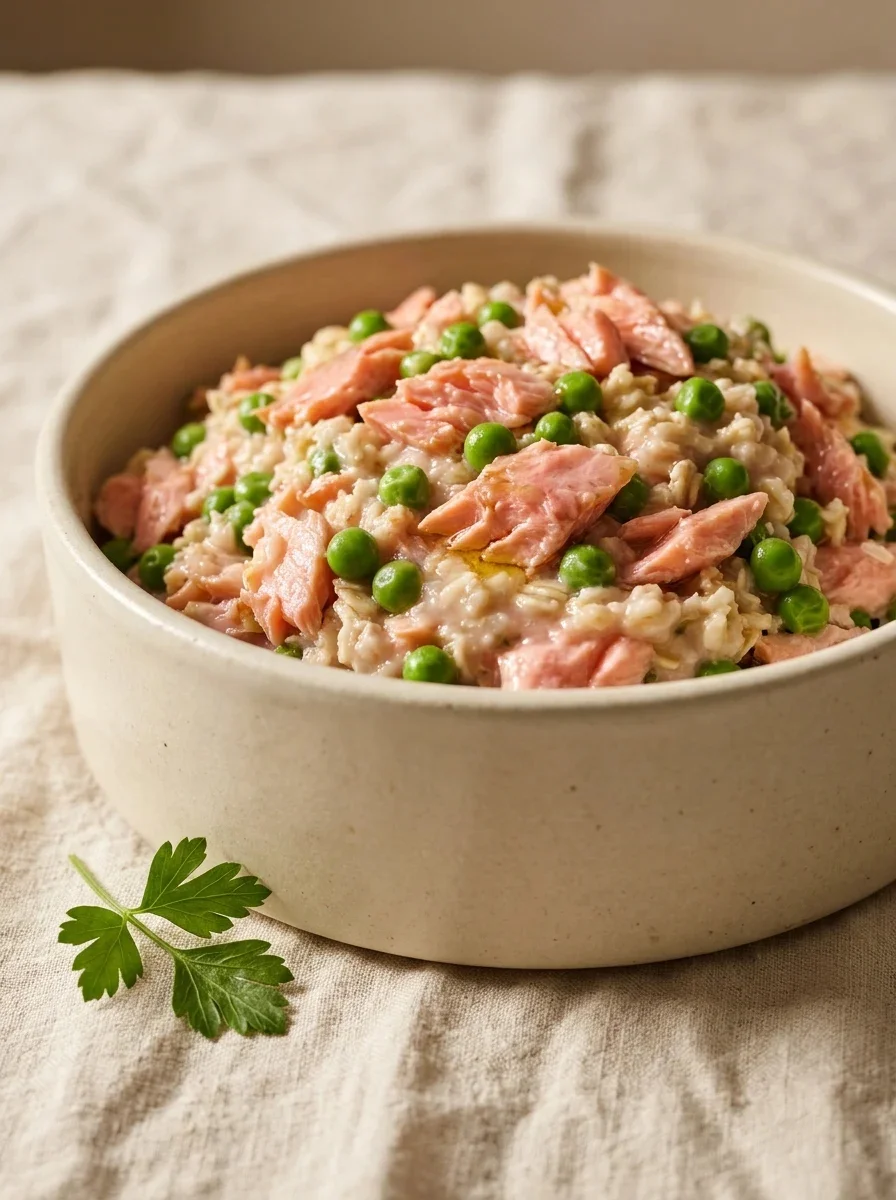
The omega-3 meal. Salmon is the richest natural source of the fats that keep a dog’s coat shiny and joints comfortable, oats are the gentlest grain for a sensitive stomach, and peas add fiber and a little sweetness dogs enjoy. This is the bowl for a dog with dry skin or a dull coat.
- 1 lb salmon fillet, skinless and boneless
- 1 cup rolled oats
- 1 cup peas
- Poach the salmon. Cover the fillet with water in a pot, bring it to a gentle simmer, and cook for 10 to 12 minutes until the fish reaches 145°F and flakes easily with a fork. Never serve salmon raw or undercooked — fully cooked only.
- Check for bones. Lift the salmon out and run your fingers through the flakes to catch any pin bones before they reach the bowl. A single small bone is the one thing that can spoil this meal.
- Cook the oats in the same water. Stir the rolled oats into the salmon water and simmer for 5 minutes until soft and creamy. Plain oats only — never flavored instant oats, which can hide sweeteners a dog should not eat.
- Steam the peas. Add the peas for the last 3 minutes of cooking, just until they turn bright green and tender.
- Flake and combine. Break the salmon into small flakes, fold in the oats and peas, and stir gently so the fish stays in pieces. Cool to room temperature, about 15 minutes, before serving in the bowl.
Recipe 5: Lamb, Rice & Spinach
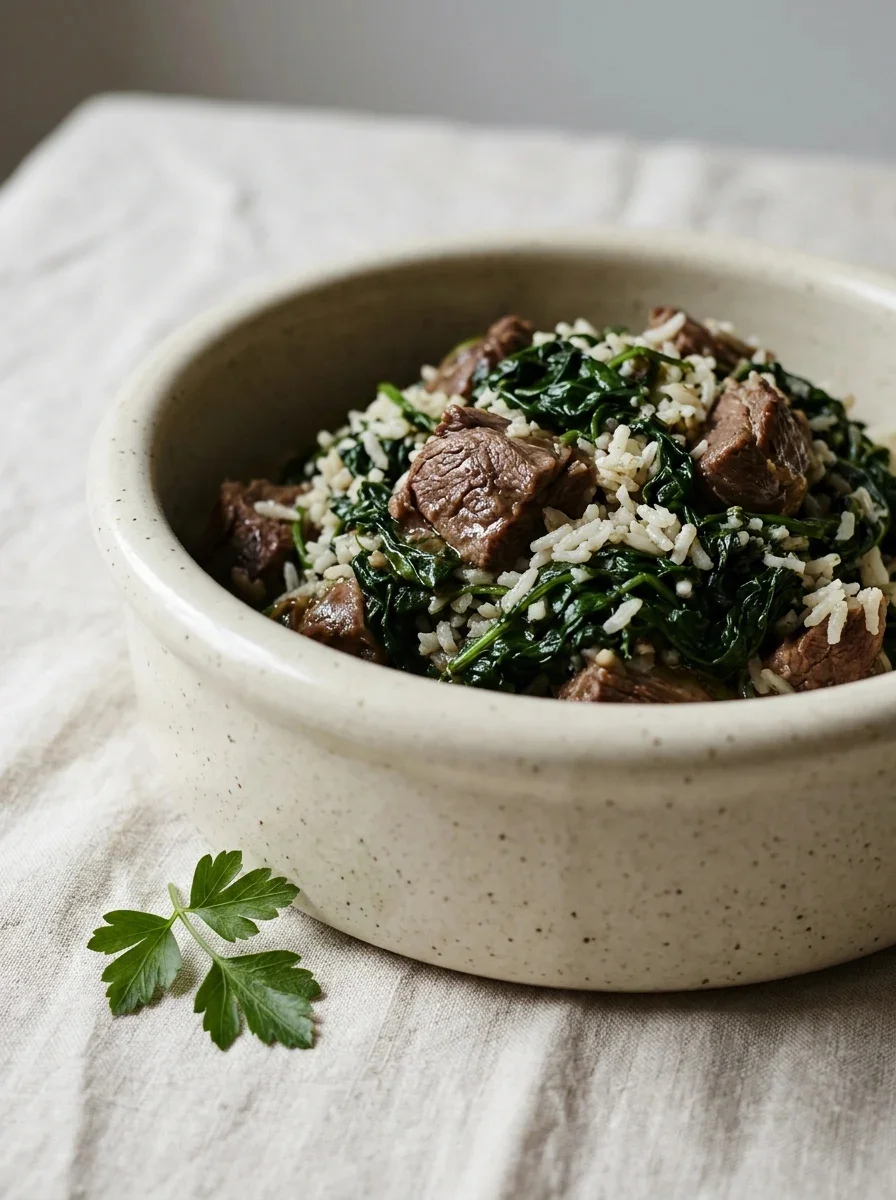
The novel-protein meal. Lamb suits dogs who have eaten chicken and beef all their lives and started reacting to them — a protein the gut has never met is often the one it tolerates best. Spinach adds iron and folate, and rice keeps the whole bowl gentle.
- 1 lb ground lamb
- 1 cup white rice, uncooked
- 2 cups fresh spinach
- Brown the lamb and drain it. Cook the ground lamb in a large pot over medium heat, breaking it into crumbles, until no pink remains, about 8 minutes. Drain off all the fat — lamb is the richest protein in this set, and the drained fat is what keeps it gentle.
- Cook the rice. Simmer the rinsed rice in 2 cups of water until tender, about 18 minutes. Fluff it with a fork and set it aside.
- Wilt the spinach. Add the spinach to the hot pot with the lamb and stir for 2 minutes until it wilts down to almost nothing. Spinach shrinks fast, so two cups looks like a lot going in and very little coming out.
- Combine and cool. Fold the rice into the pot and stir until evenly mixed. Spread it out and let it cool to room temperature, about 15 minutes. Start with a half portion for a sensitive stomach — lamb is rich, and a small first serving tells you how your dog handles it.
- Portion the batch. Spoon the cooled food into daily portions and refrigerate what you will use in the next three days. Freeze the rest in sealed containers; it keeps for two to three months and thaws overnight in the fridge.
Portions by Weight + Cost per Serving
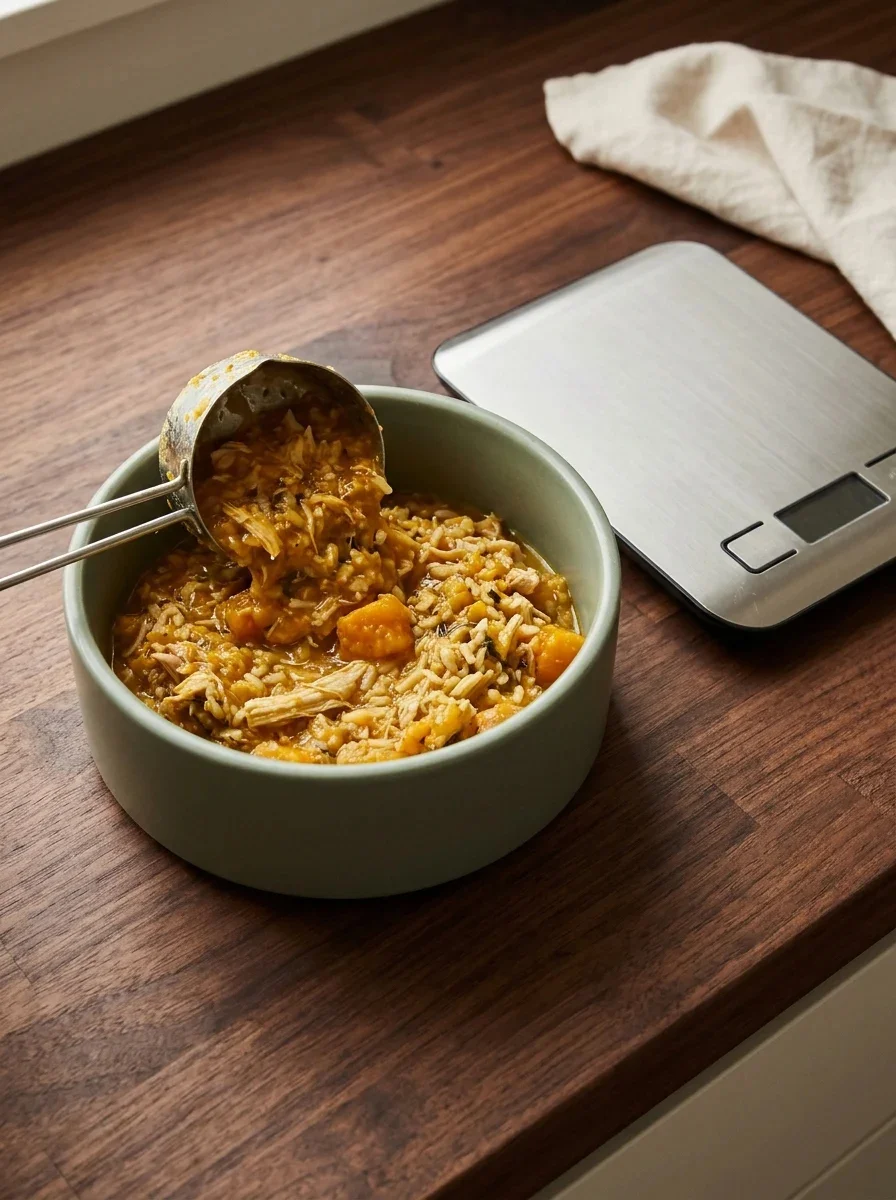
Feed 2 to 3 percent of body weight per day, split across two meals. A 20 lb dog gets about 7 to 10 ounces a day; a 50 lb dog gets about 1 to 1.5 lb. Weigh the food on a kitchen scale instead of guessing — the scale is the most useful tool in this whole article, and guessing is how portions drift.
Cost runs about $1.50 to $2.50 a day for a medium dog, depending on the protein. Turkey and chicken are the cheapest, salmon and lamb cost the most. Buying the protein in family packs and cooking a double batch brings the price down fast.
Batch cooking saves the week. Double any recipe, cool it, and freeze the extra in daily portions; see here for the one-pot method that scales best when you cook for the whole week.
Transition Plan (7 Days)
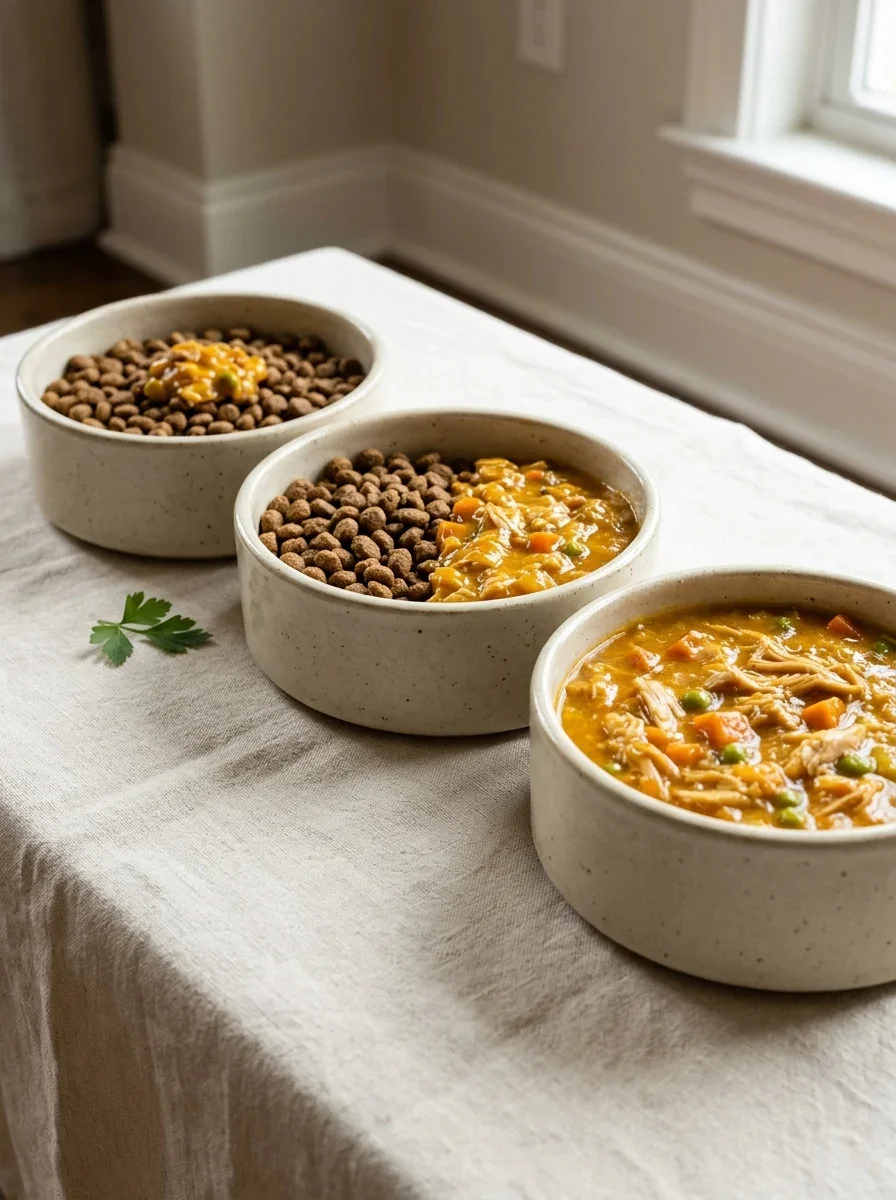
Never switch food overnight. Mix the new meal with the old food in quarters: days 1 to 2, one quarter new; days 3 to 4, half and half; days 5 to 6, three quarters new; day 7, all new. A slow switch is the difference between a smooth change and a week of loose stools.
Watch the stools as you go. A little softening on day 2 or 3 is normal; watery stools or vomiting mean you moved too fast — drop back a step for two days, then try again. The gut needs time to adjust its enzymes to a new protein.
If your dog has a known protein allergy, skip that recipe and rotate the others; learn more about building a rotation around one safe protein at a time.
Storage
Fridge: 3 to 4 days in a sealed container. Freezer: 2 to 3 months in daily portions — thaw overnight in the fridge, never on the counter, where bacteria grow fast at room temperature.
Reheat gently if your dog prefers it warm: a few seconds in the microwave or a splash of warm water, then stir and check it is only lukewarm. Serve at room temperature or slightly warm, never hot.
FAQs
Final Thoughts
Five meals, three ingredients each, one pot each. That is the whole system — pick a protein, cook it, cool it, serve it in the bowl.
Start with the turkey tonight if your dog’s stomach is sensitive, or the chicken if you want the cheapest first batch. Cook a double, freeze the extra, and the week takes care of itself.
And if these become the everyday diet, remember the one extra step: calcium, fats, and a word with your vet. The food is simple; the completeness is a conversation.

Izzy is an experienced ranch worker who has a passion for exploring nature and getting up close to wildlife. With her connections to various animal organizations, Izzy is well-versed in animal care and rehabilitation.