Peanut Butter Banana Muffins for Dogs With 5 Soft Variations
Peanut butter and banana are the rare pair that dogs love and owners can feel good about. The banana brings natural sweetness, potassium, and fiber. The peanut butter brings protein, healthy fats, and the smell that gets dogs to the kitchen before the oven even heats up. Baked into a soft muffin, they make a treat that works for birthdays, training, and ordinary Tuesday afternoons alike.
These Peanut Butter Banana Muffins for Dogs stay soft and moist for days, portion easily from mini to standard size, and take about fifteen minutes of hands-on time. One batch makes twelve standard muffins or twenty-four minis, and the same base turns into four more variations — pumpkin, apple carrot, carob, and a grain-free coconut flour version — plus three dog-safe frostings for the days you want to dress them up.
If your dog likes banana bakes, our fluffy banana pancakes are another breakfast-style favorite built on the same fruit. This article starts with why the pair works, then gives you the full recipe, the batter and baking tricks, and the storage rules that keep a batch fresh.
Why Peanut Butter and Banana Belong Together
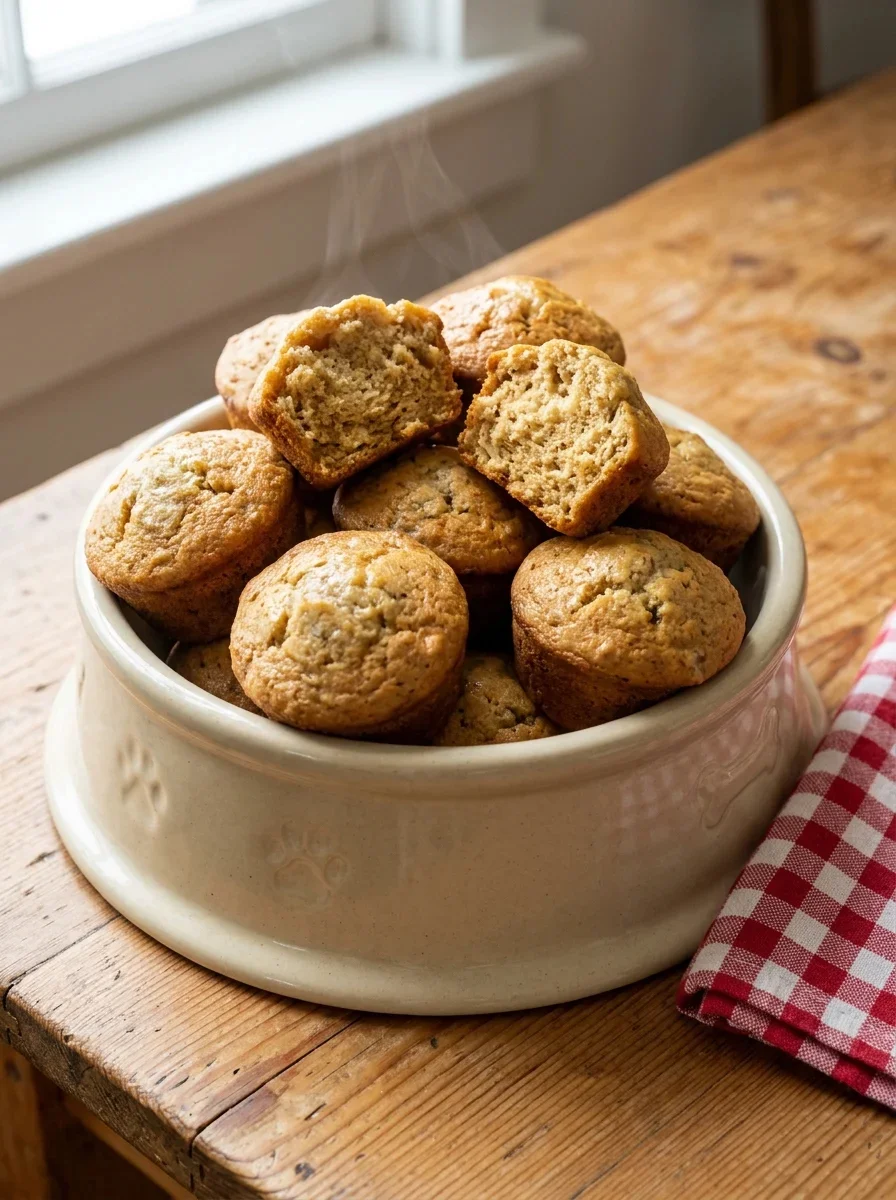
Bananas are one of the easiest fruits to bake with for dogs. They also do real work in a batter: mashed banana adds moisture and binds the crumb, so you need less fat and no refined sugar at all.
The only rule that matters is the label: the peanut butter must be xylitol-free. Xylitol, sometimes listed as birch sugar, is severely toxic to dogs even in small amounts, and it hides in some sweetened and low-sugar peanut butters. Plain, unsweetened peanut butter with two ingredients — peanuts and salt — is the safe choice, every time.
Together they cover each other’s weaknesses. Mixed, the banana keeps the crumb moist while the peanut butter gives it structure and flavor. That balance is why this pair shows up in so many dog recipes, and why it works just as well frozen — our strawberry banana dog ice cream uses the same banana base in a frozen treat.
One caution: bananas are sugary for a fruit, so these are treats, not everyday food. A dog with diabetes or weight to lose should get smaller portions, less often — and your vet is the right person to set the limit.
Peanut Butter Banana Muffins for Dogs Recipe
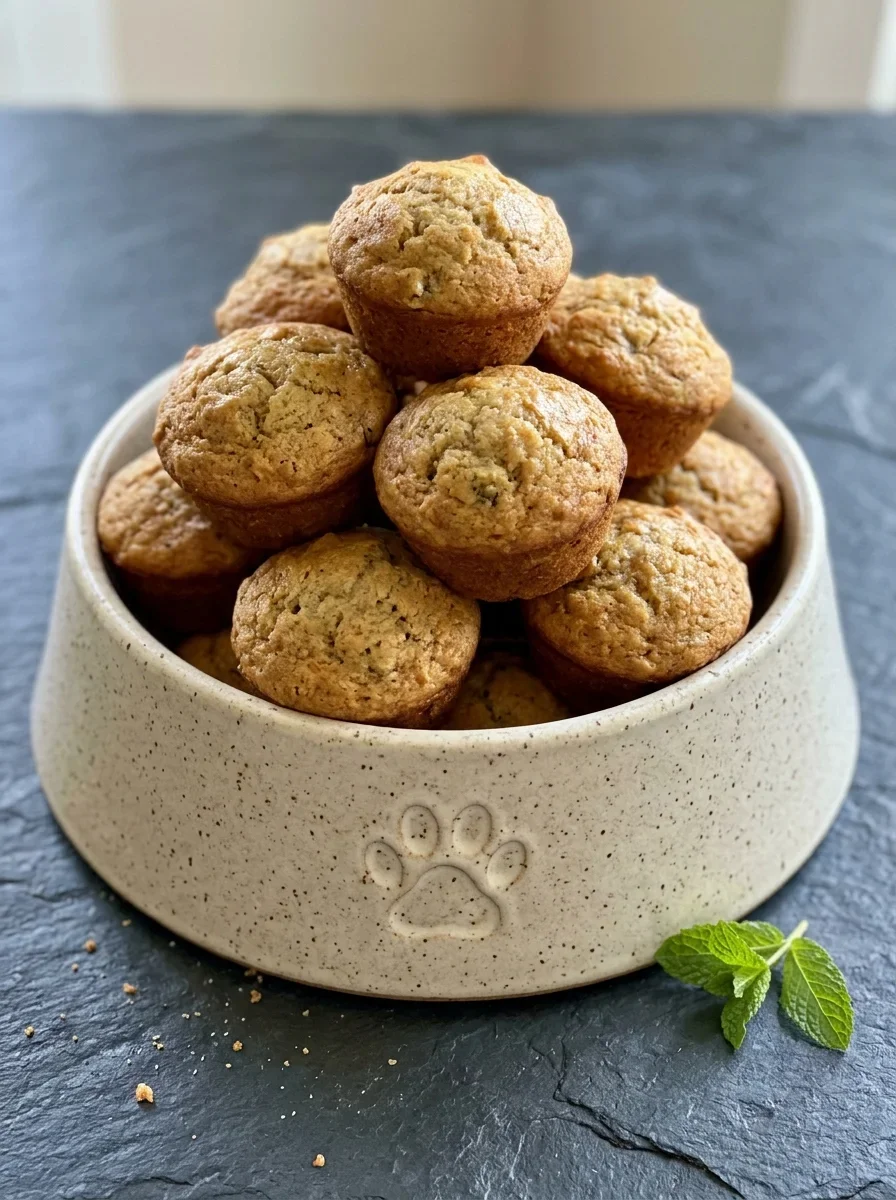
This is the base recipe everything else in this article builds on. Two ripe bananas, one bowl, no mixer needed. The batter comes together in about ten minutes, bakes in under twenty-five, and the only real skill is knowing when to stop stirring — a light hand makes a tender muffin, and overmixing makes a tough one.
Ingredients
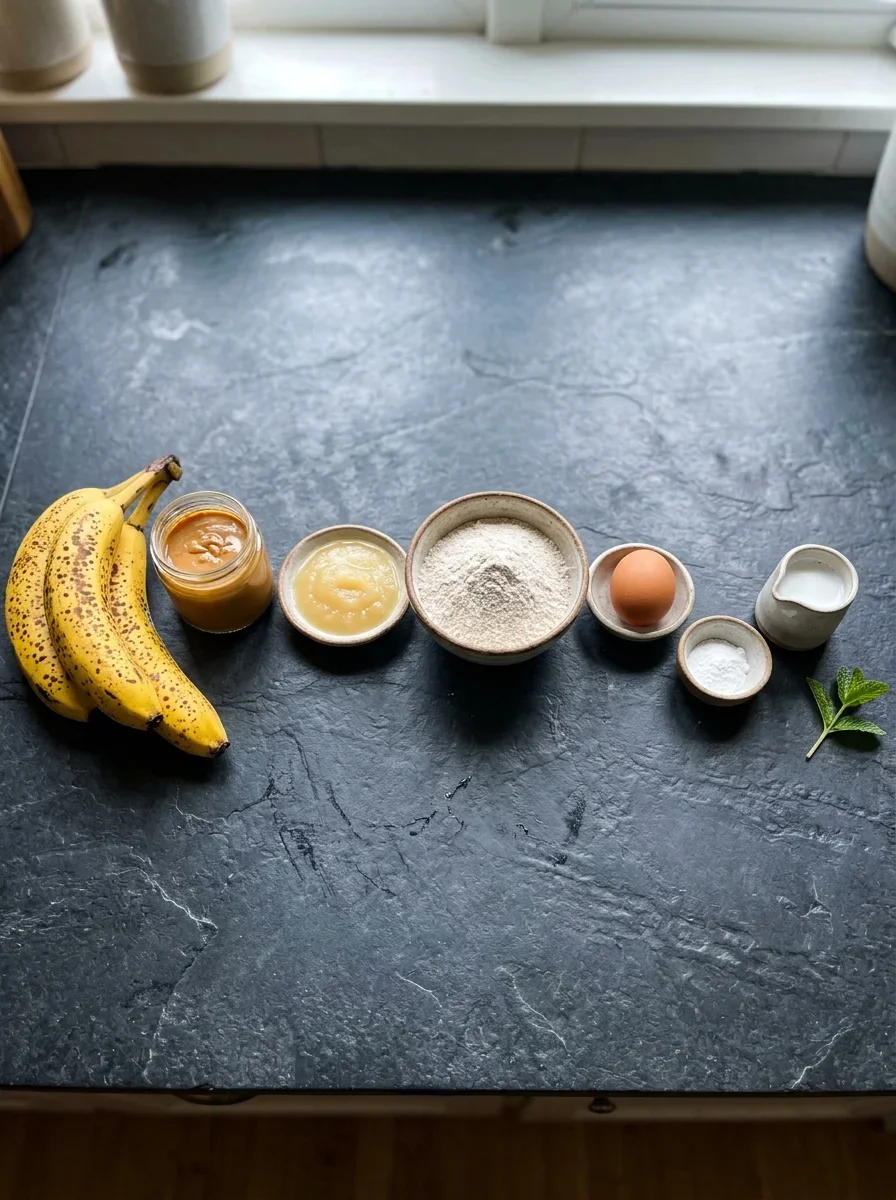
- 2 ripe bananas, black-spotted if possible
- ¼ cup xylitol-free peanut butter, smooth
- ½ cup unsweetened applesauce
- 1 large egg
- 1 cup whole wheat flour or oat flour
- ¼ cup water or coconut milk
- ½ teaspoon baking powder
Step-by-Step Instructions
- Heat the oven and prepare the tin. Set the oven to 350°F (175°C). Grease a 12-cup standard muffin tin well, or line it with paper liners. Dog batters are stickier than human ones because they have no added fat to release them — a missed spot means a torn muffin.
- Mash the bananas smooth. Mash the bananas in a large bowl with a fork until almost no lumps remain. A few small pieces are fine and add texture, but big chunks sink to the bottom of the muffin and bake into wet pockets.
- Whisk in the wet ingredients. Add the peanut butter, applesauce, and egg and whisk until smooth. If your peanut butter is thick from the fridge, warm the spoonful for ten seconds in the microwave so it blends in instead of sitting in streaks.
- Add the dry ingredients — and stop early. Tip in the flour and baking powder and stir with a spatula just until no dry flour shows. The batter should look slightly lumpy. Stirring past this point develops the gluten and turns a tender muffin dense and rubbery — this is the single most common mistake with this recipe.
- Check the consistency. The batter should be thick but spoonable, dropping slowly off the spatula. If it is stiff enough to hold its shape on the spoon, add water a tablespoon at a time. If it runs off the spoon like pancake batter, add flour a tablespoon at a time.
- Rest the batter for five minutes. Leave it in the bowl while the oven finishes heating. The flour absorbs moisture during the rest, the baking powder starts working, and the muffins rise more evenly. Skipping the rest gives you flat tops and a dense bottom.
- Fill the cups two-thirds full. Divide the batter evenly — about ¼ cup per standard cup, or a tablespoon per mini cup. Fill them no higher than two-thirds or the muffins will spill over the rim and bake into one joined sheet.
- Bake and test for doneness. Bake standard muffins for 18–22 minutes, minis for 10–12 minutes. They are done when the tops are golden, spring back when pressed lightly, and a toothpick in the center comes out clean or with a few moist crumbs. Cool in the tin for 10 minutes, then move to a rack to cool fully.
Tips for Batter, Pans, and Doneness
The batter test: a spoonful should fall off the spatula in a slow ribbon, not plop off in a lump and not pour off in a stream. One tablespoon of water or flour at a time is all it takes to fix either one.
Mini versus standard: minis are the better training treat — one bite, easy to carry, and a whole batch lasts longer. Standard muffins suit mealtimes and bigger dogs.
Leavener safety: half a teaspoon of baking powder in a batch of twelve muffins is well below any harmful level for dogs. Baking powder is safe in the small amounts used in baking; the danger comes from eating large quantities of raw leavener straight from the box.
Overmixing is the enemy: if your muffins come out dense and tough, you stirred too long — almost always the cause. Mix until the flour just disappears and then put the spatula down. Savory muffins follow the same rule, and our beef carrot dog muffins show the same batter technique with a meaty filling.
Dog-Safe Frostings to Try
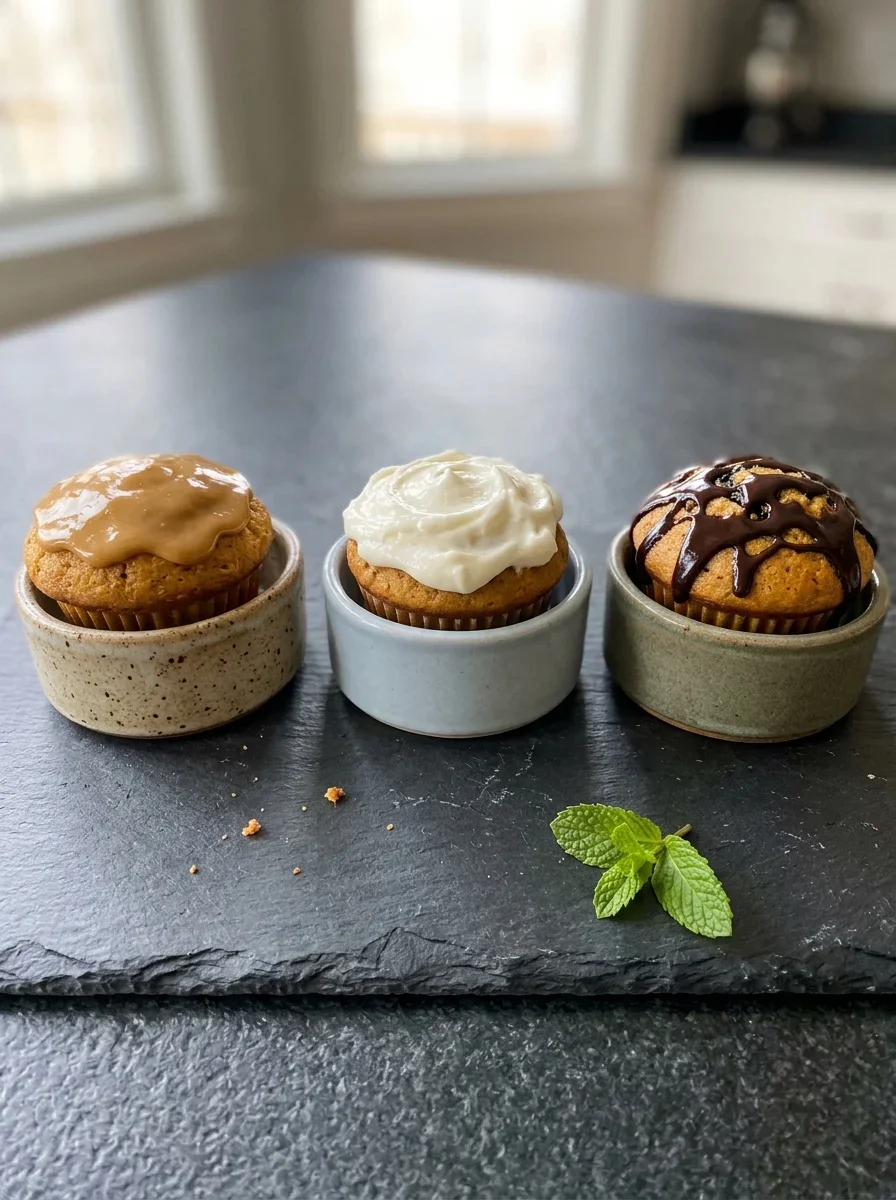
Plain muffins are perfect for everyday, but birthdays and gotcha days call for frosting. Frost only what you will serve the same day — frosted muffins belong in the fridge, and the frosting softens if it sits out warm.
Yogurt-PB swirl: stir ½ cup plain Greek yogurt with 2 tablespoons of xylitol-free peanut butter until smooth, then chill for 15 minutes so it thickens enough to spread. Spoon it on or pipe it with a zip bag with the corner snipped off.
Mashed-potato buttercream: mash one small boiled potato with 2 tablespoons of plain yogurt until completely smooth, then whip it for a minute — it turns pale, fluffy, and pipes like real buttercream. It holds its shape at room temperature for an hour, which makes it the best choice for a birthday photo.
Carob drizzle: warm 2 tablespoons of coconut oil until liquid, whisk in 1 tablespoon of carob powder until smooth, then drizzle over the muffins and chill for 20 minutes until set. Carob tastes a little like chocolate but is safe for dogs — never substitute real chocolate, cocoa powder, or chocolate chips, which are toxic. For more frosting ideas, our greek yogurt frosting recipe covers a plain version that works on any pupcake.
Five Soft Variations to Try
Every variation below starts from the same base method: mash, whisk wet, add dry, rest five minutes, fill, bake. Only the ingredients change. Each one gets its own full recipe so you can bake it on its own without flipping back to the main recipe.
Recipe 2: Pumpkin Peanut Butter Banana Muffins
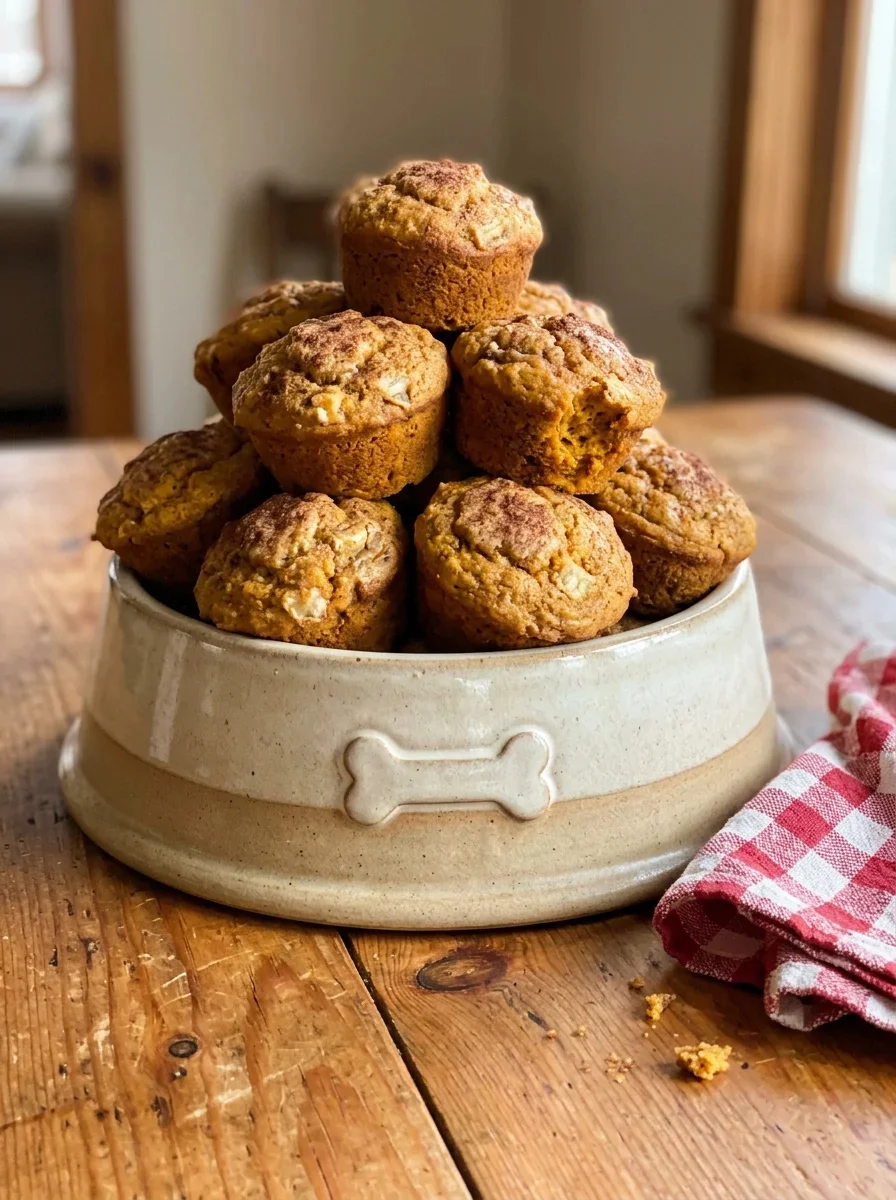
Half the banana is swapped for pumpkin purée, which adds fiber and a gentle, earthy sweetness. This is the variation to bake for dogs with sensitive stomachs — pumpkin is the classic settle-the-belly ingredient, and the muffins stay extra moist for days.
- 1 ripe banana
- ½ cup plain pumpkin purée (not pie filling)
- ¼ cup xylitol-free peanut butter
- ½ cup unsweetened applesauce
- 1 large egg
- 1 cup oat flour
- ¼ cup water or coconut milk
- ½ teaspoon baking powder
- ½ teaspoon ground cinnamon
- Mash the banana and stir in the pumpkin until the mixture is evenly orange with no streaks.
- Whisk in the peanut butter, applesauce, and egg until smooth.
- Add the oat flour, baking powder, and cinnamon and stir just until no dry flour shows. Rest five minutes.
- Fill the cups two-thirds full and bake at 350°F for 18–22 minutes (standard) or 10–12 minutes (mini), until a toothpick comes out clean.
- Cool in the tin for 10 minutes, then move to a rack to cool fully.
Recipe 3: Apple Carrot Peanut Butter Banana Muffins
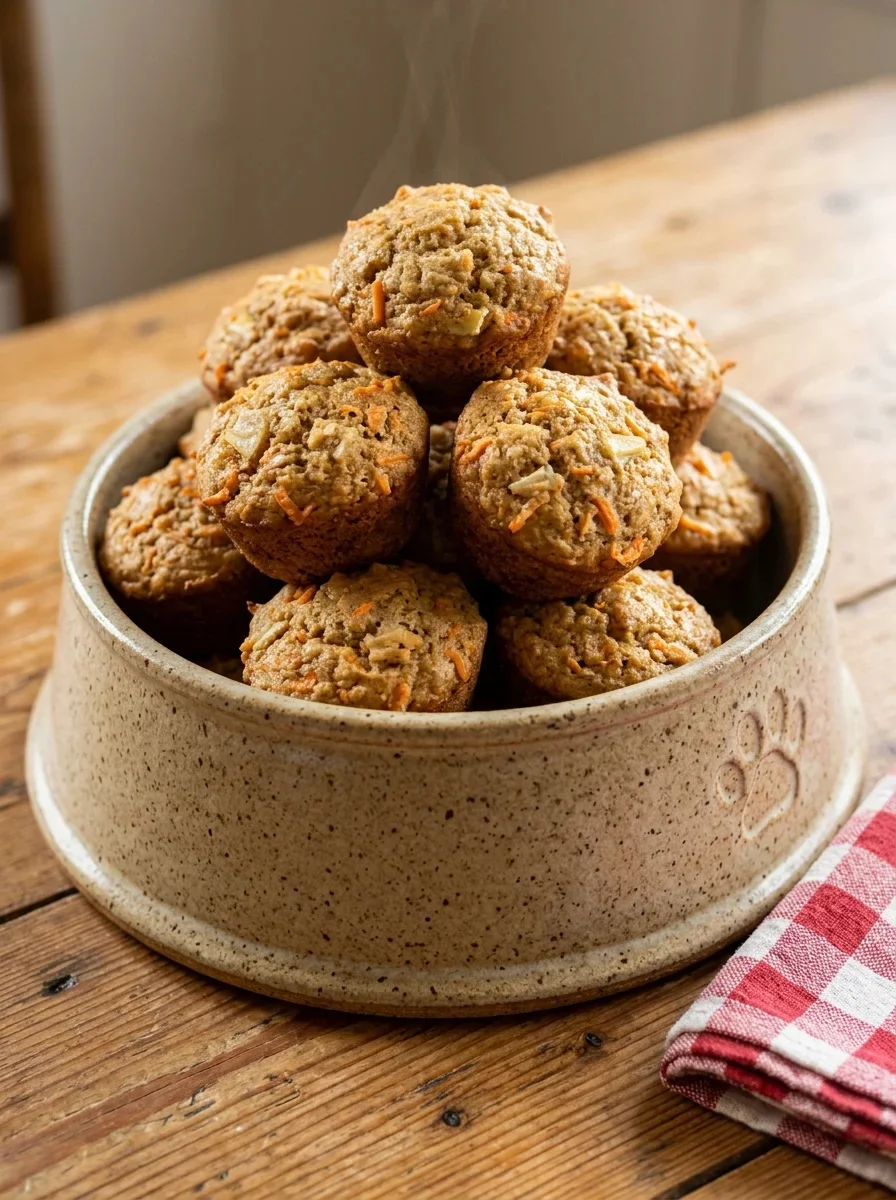
Grated apple and carrot add sweetness, crunch, and fiber. The trick is grating them fine and blotting the carrot dry — wet carrot makes the batter soggy and the muffins sink.
- 2 ripe bananas
- ½ cup finely grated apple, peeled
- ½ cup finely grated carrot, blotted dry
- ¼ cup xylitol-free peanut butter
- ½ cup unsweetened applesauce
- 1 large egg
- 1 cup oat flour
- ½ teaspoon baking powder
- ½ teaspoon ground cinnamon
- Grate and blot: grate the apple and carrot fine, then squeeze the carrot in a clean towel to remove excess water.
- Mash the bananas and whisk in the wet ingredients as in the main recipe.
- Fold in the apple and carrot with the flour and baking powder, stirring just until combined. Rest five minutes.
- Fill the cups two-thirds full and bake at 350°F for 20–24 minutes (standard) or 12–14 minutes (mini) — the extra moisture needs a couple of minutes more than the classic.
- Cool in the tin for 10 minutes, then move to a rack to cool fully.
Recipe 4: Carob Peanut Butter Banana Muffins
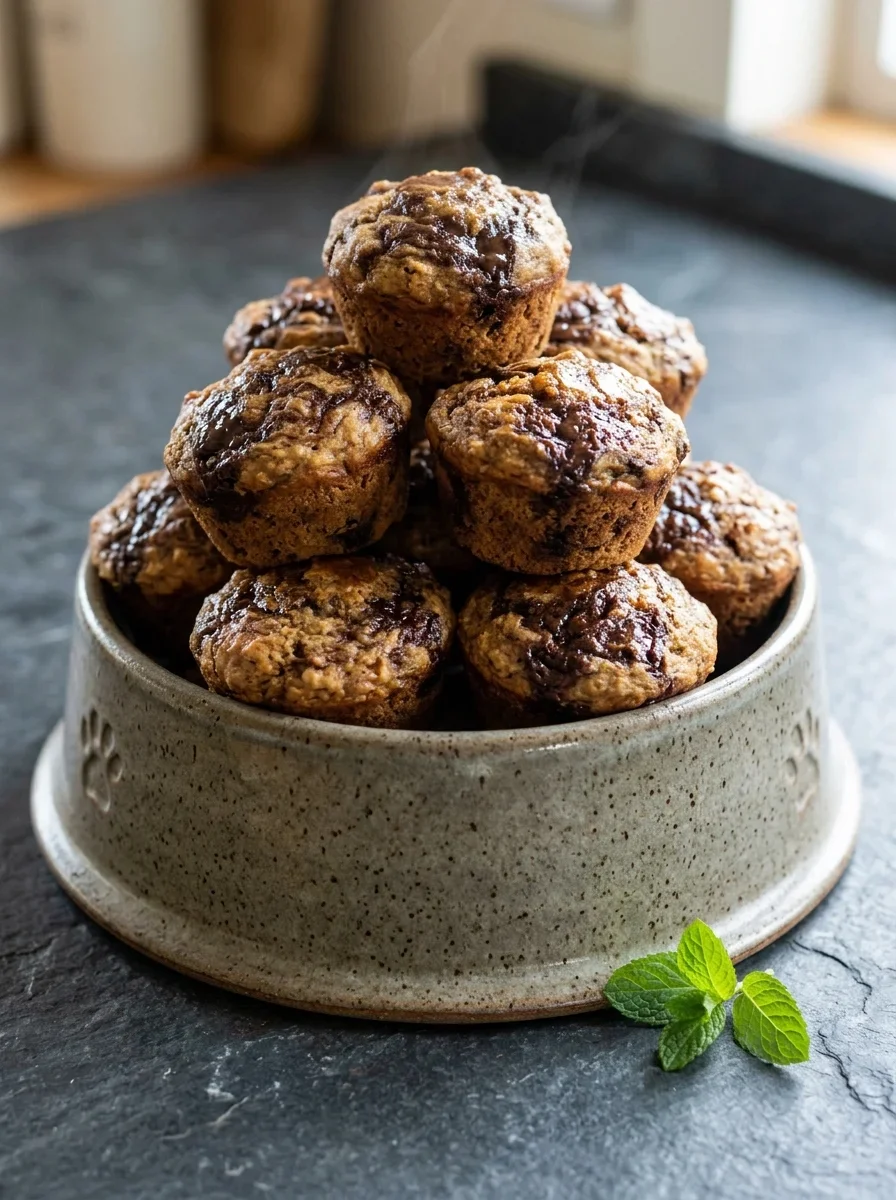
Carob gives these muffins a rich, chocolatey look and a slightly malty flavor without a trace of theobromine. Dogs who stare longingly at your brownies finally get a version of their own.
- 2 ripe bananas
- ¼ cup xylitol-free peanut butter
- ½ cup unsweetened applesauce
- 1 large egg
- ¾ cup whole wheat flour
- 2 tablespoons carob powder
- ¼ cup water or coconut milk
- ½ teaspoon baking powder
- Mash the bananas and whisk in the wet ingredients as in the main recipe.
- Whisk the carob powder into the flour before adding it to the bowl — carob clumps if it hits wet batter directly, and pre-mixing is the only way to get an even brown color.
- Add the dry ingredients and stir just until combined. Rest five minutes.
- Fill the cups two-thirds full and bake at 350°F for 18–22 minutes (standard) or 10–12 minutes (mini), until a toothpick comes out clean.
- Cool in the tin for 10 minutes, then move to a rack to cool fully. These pair beautifully with the carob drizzle from the frosting section.
Recipe 5: Coconut Flour Peanut Butter Banana Muffins
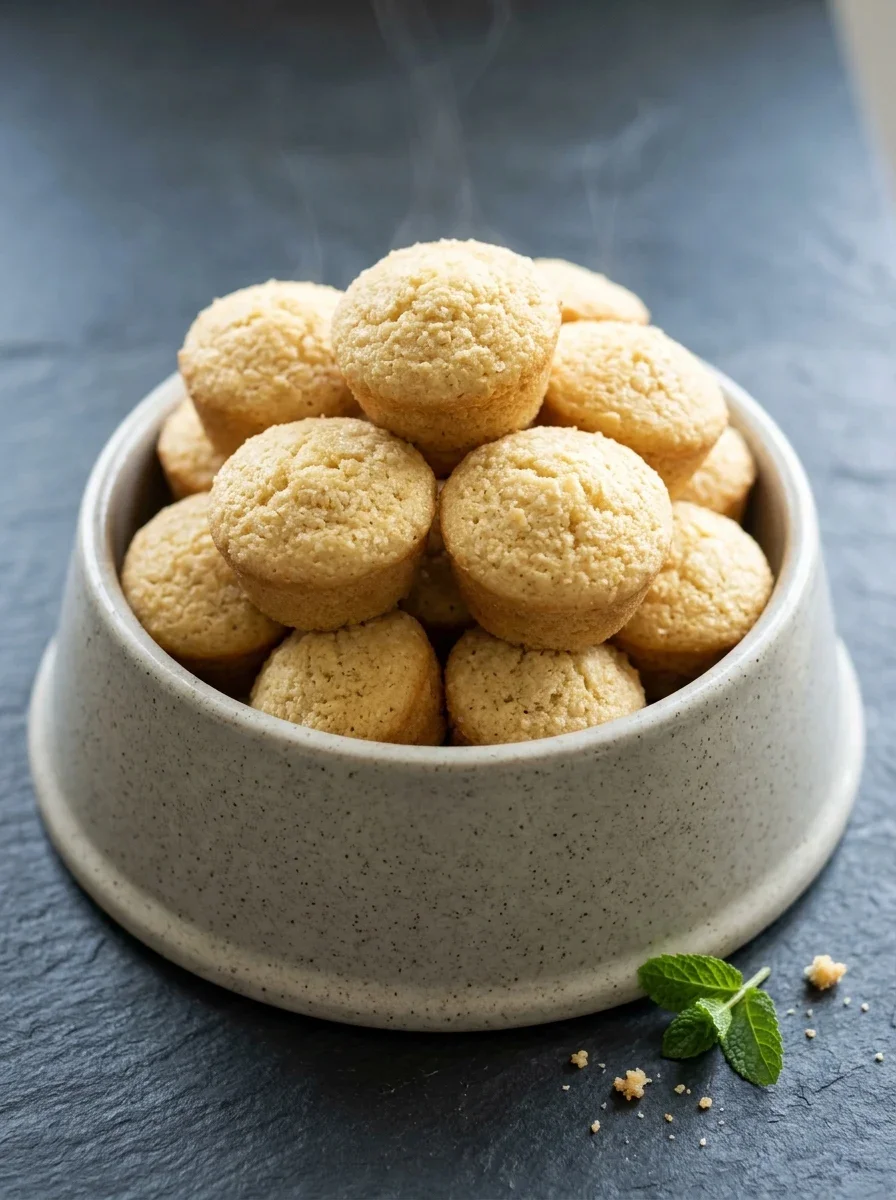
The grain-free variation. Coconut flour is not a one-to-one swap for wheat flour — it drinks up far more liquid — so this recipe uses less flour and an extra egg, and the batter will look thicker than the classic. Trust it: the muffins bake up soft and tender, with a faint coconut scent dogs seem to love.
- 2 ripe bananas
- ¼ cup xylitol-free peanut butter
- ½ cup unsweetened applesauce
- 2 large eggs
- ½ cup coconut flour
- ½ cup water or coconut milk
- ½ teaspoon baking powder
- Mash the bananas and whisk in the wet ingredients — peanut butter, applesauce, and both eggs — until smooth.
- Add the coconut flour and baking powder and stir until combined. The batter will be noticeably thicker than the classic — that is correct for coconut flour.
- Rest for ten minutes, not five. Coconut flour needs the extra time to absorb the liquid. If the batter still looks dry and crumbly after resting, add water a tablespoon at a time until it is spoonable.
- Fill the cups two-thirds full and bake at 350°F for 20–24 minutes (standard) or 12–14 minutes (mini), until the tops are set and a toothpick comes out clean.
- Cool in the tin for 10 minutes, then move to a rack to cool fully. These are a little more delicate than the wheat version, so handle them gently while warm.
Storage and Serving Guide
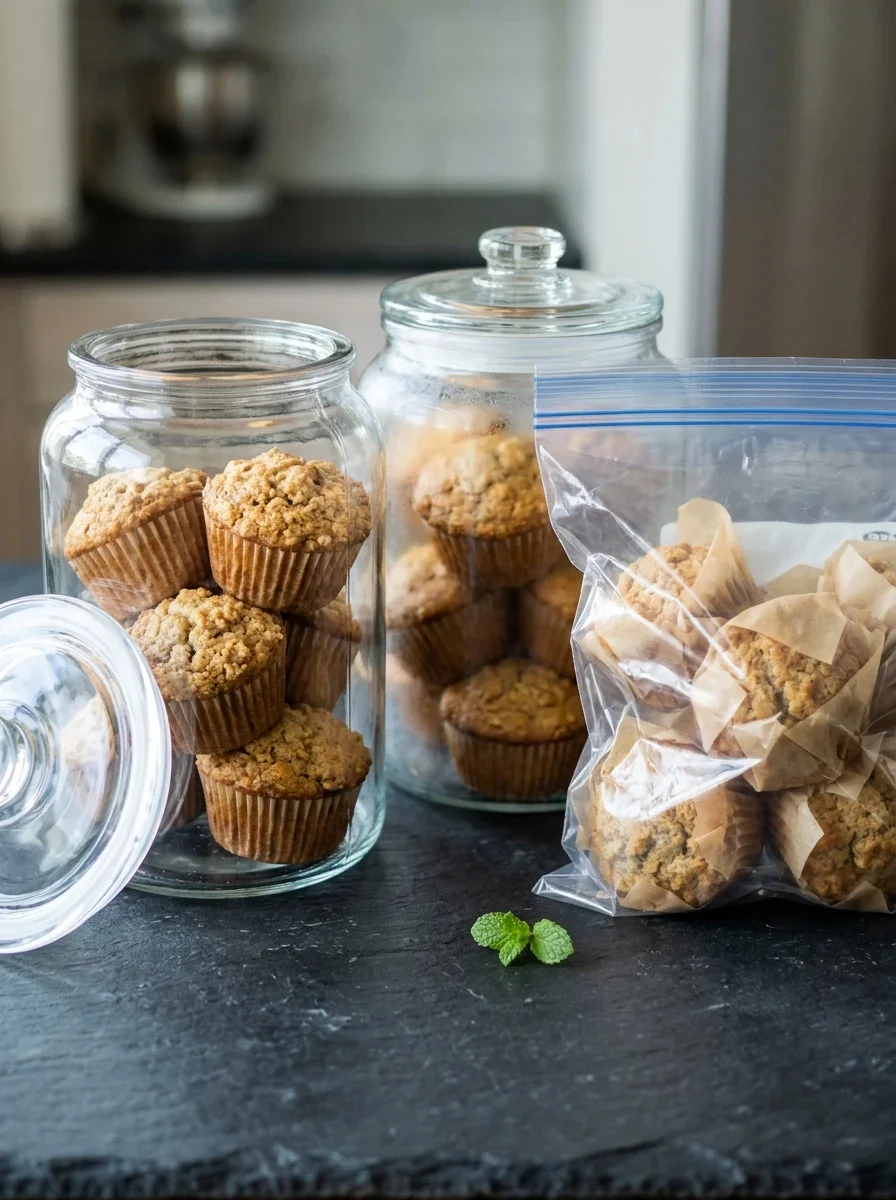
Unfrosted muffins keep 2–3 days in an airtight container at room temperature, 5–6 days in the fridge, and up to 3 months in the freezer. Frosted muffins belong in the fridge and should be eaten within 3 days — the yogurt frosting softens and the potato frosting dries out if they sit longer. Freeze muffins unfrosted in a sealed bag, thaw overnight in the fridge, and frost fresh on the day you serve them.
Do not freeze the raw batter. Baking powder loses its lift in the freezer, and thawed batter bakes flat and dense. If you want to prep ahead, mix the batter and keep it in the fridge for up to 24 hours, then bake straight from cold, adding a couple of minutes to the bake time.
Serving follows size: toy and small dogs get up to half a standard muffin a day, medium dogs one, large dogs one to two, and extra-large dogs up to two. Minis count as half a standard muffin. Puppies over twelve weeks can have half a mini to start, and any new flavor deserves a small first taste with a day of watching before it becomes a regular. Treats stay under ten percent of daily calories, and that includes the frosting — a frosted muffin counts double. For another muffin that stores the same way, check out this recipe for healthy blueberry muffin dog treats.
FAQs
Final Thoughts
Peanut butter and banana muffins are the kind of recipe that earns a permanent spot in your baking rotation. They are quick, forgiving, and made from ingredients you already have — and they work just as well as a training reward as they do dressed up with frosting for a birthday. Once you know the base batter, the variations are almost free: swap in pumpkin for a sensitive stomach, apple and carrot for crunch, carob for a chocolatey look, or coconut flour when grains are off the table.
The habit that matters most is the small one: stop stirring when the flour disappears. Everything else — the pan size, the frosting, the variation you pick — is easy to adjust next time. But an overmixed batch is dense from the first minute, and no amount of frosting fixes it. Mix light, bake until the tops spring back, and let them cool before you hand one over.
Start with the classic recipe, see which size your dog prefers, and keep a bag of minis in the freezer for the week. A homemade muffin beats a store-bought biscuit every time — not because it is fancy, but because you know exactly what went into it.
Izzy is an experienced ranch worker who has a passion for exploring nature and getting up close to wildlife. With her connections to various animal organizations, Izzy is well-versed in animal care and rehabilitation.