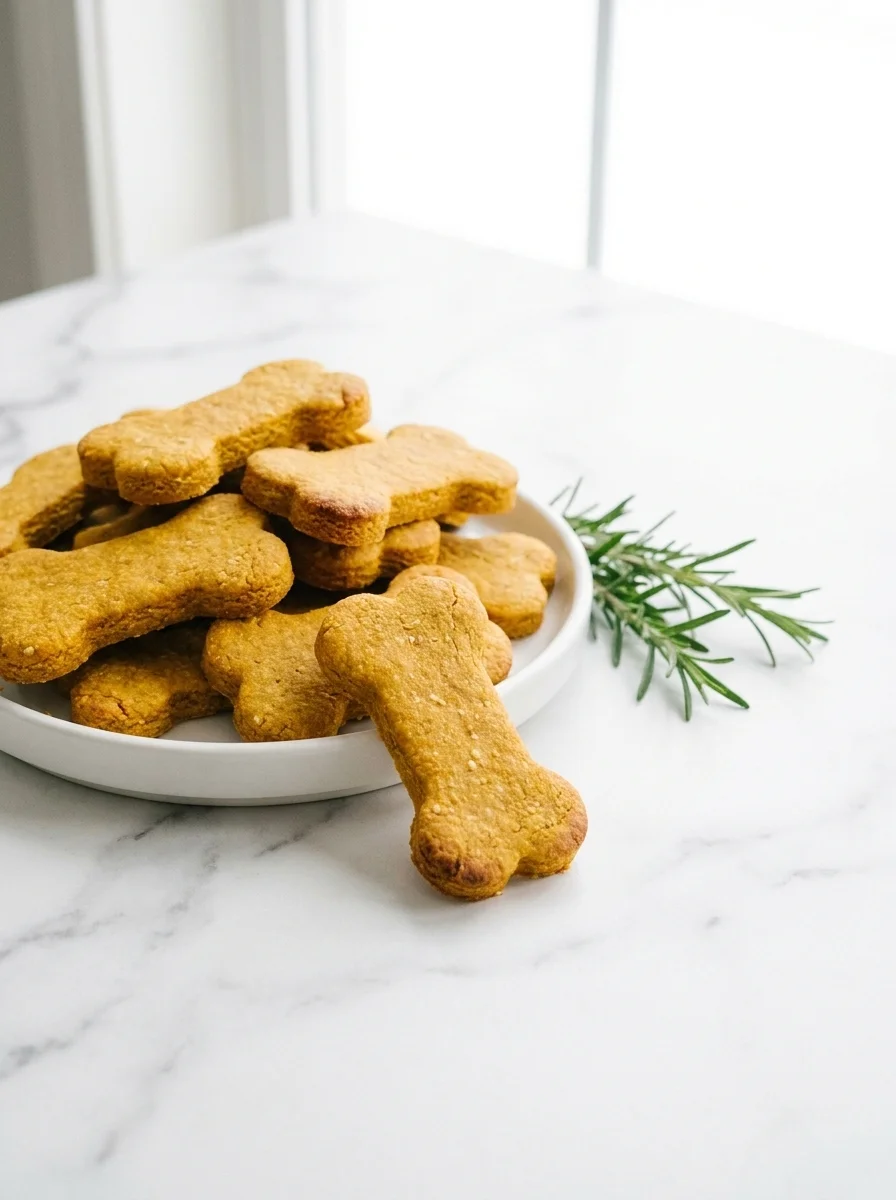
Grain-Free Peanut Butter Dog Treats With Almond Flour
Some dogs cannot eat wheat, and some dogs cannot eat a biscuit that crumbles into dust the moment they pick it up. Almond flour solves both problems at once — if you know how it behaves. These Peanut Butter Dog Treats With Almond Flour are grain-free, soft enough for small mouths and sore gums, and sturdy enough to hold together in a treat pouch.
Almond flour is simply blanched almonds ground fine, with the skins removed. There is no wheat, no gluten, and no grain of any kind in it, which makes it one of the first flours to try for a dog who itches after wheat biscuits or who needs a gentle, low-gluten treat.
This article starts with why almond flour suits sensitive dogs, then gives you the classic biscuit to master first, the know-how that stops crumbling and burnt edges, and the safety rules that matter with any nut-based treat. Four more recipes follow — apple, carrot, carob, and a training-size bite — then storage and feeding by size. If your dog’s sensitivity goes beyond treats to their main meals, this guide to sensitive-stomach dog food covers full meals built on the same gentle principles.
Why Almond Flour Suits Sensitive Dogs
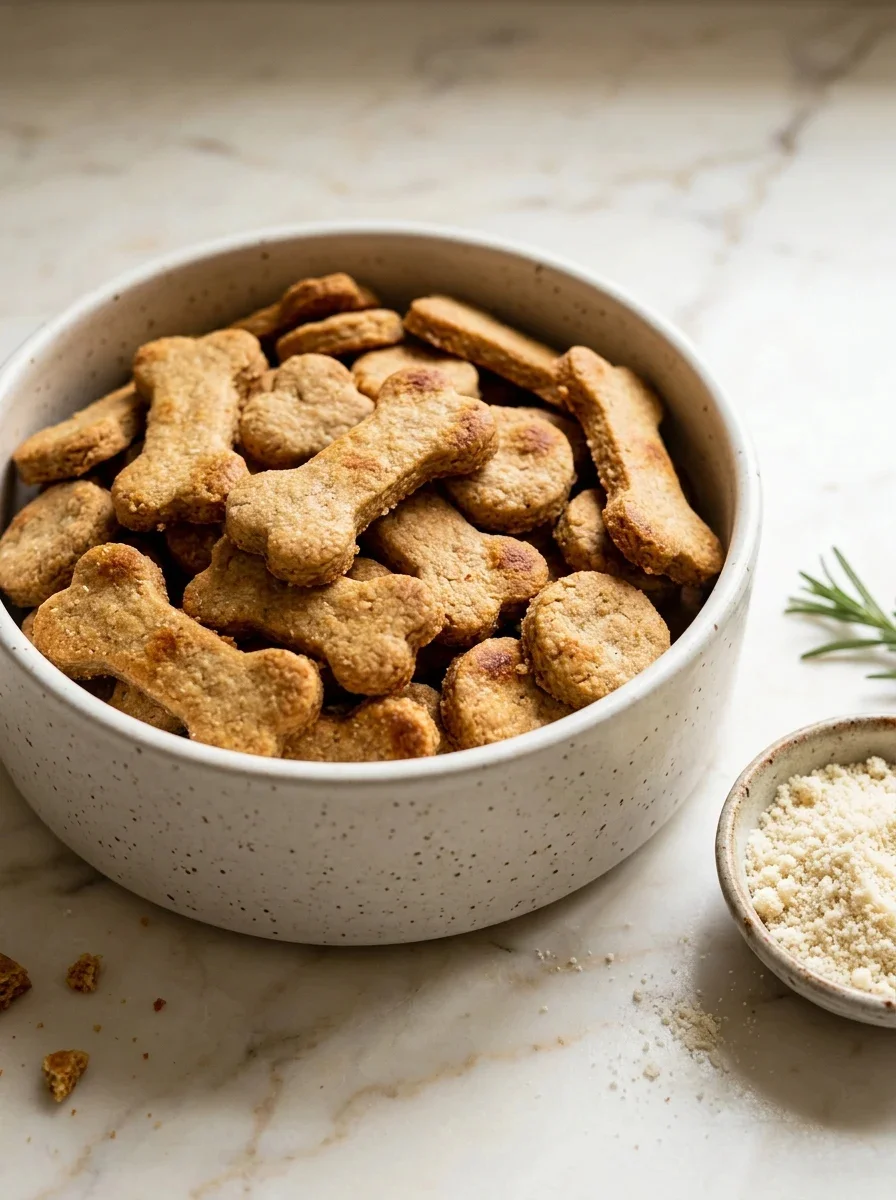
The first reason is what almond flour does not contain. Wheat is one of the most common triggers for itchy, sensitive dogs, and most shop-bought biscuits are built on it. Almond flour has no wheat and no gluten, so a dog who reacts to wheat can usually eat these treats without the itching that follows a wheat biscuit.
The second reason is texture. Almond flour bakes into a soft, tender crumb instead of a hard snap. That matters for puppies, for senior dogs with worn teeth, and for small dogs who struggle with a biscuit harder than their jaw.
The third reason is taste. Dogs love the mild, nutty flavor of almond flour, especially paired with peanut butter, and a treat your dog actually wants to eat is a treat you will actually use. The classic biscuit below is the one to bake first: it teaches you how almond flour dough feels, how fast it browns, and how long it needs to cool before it firms up. If you want a plain starting point for ordinary biscuit baking first, our homemade dog biscuits use the same rolling and cutting method with wheat flour.
Classic Almond Flour Biscuits Recipe
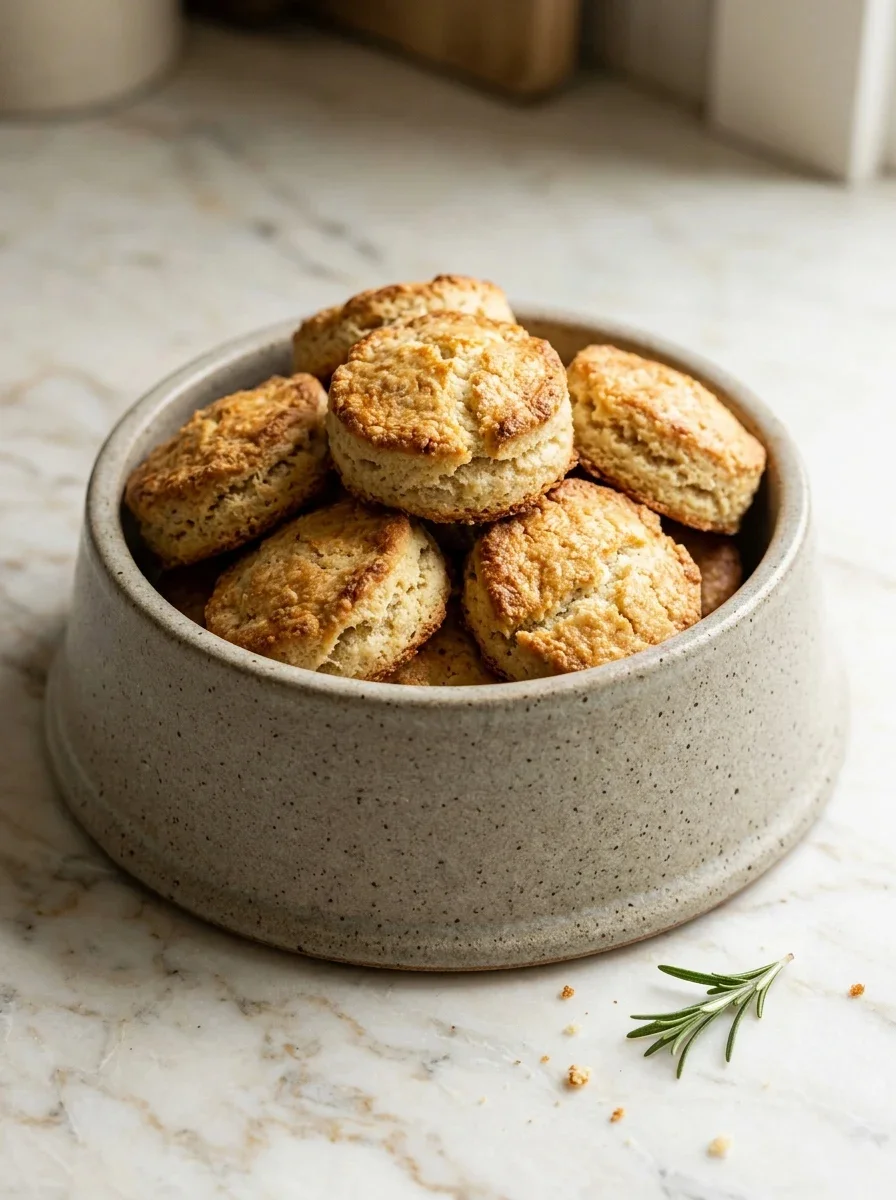
This is the recipe to master first. Two cups of almond flour, half a cup of peanut butter, one egg, and a little applesauce for moisture — nothing else. It makes a soft, golden biscuit with a buttery crumb that holds together in your hand and breaks cleanly in half. Bake this one before you try the variations, because it teaches you the two things that matter most with almond flour: the dough should feel soft and slightly sticky, never dry, and the biscuits must cool completely before you judge them, because they firm up as they cool.
Ingredients
- 2 cups fine blanched almond flour (not almond meal)
- ½ cup smooth peanut butter (xylitol-free — check the label)
- 1 large egg
- ¼ cup unsweetened applesauce
- ½ teaspoon ground cinnamon
Step-by-Step Instructions
- Heat the oven and line the tray. Set the oven to 325°F (165°C) — lower than a wheat biscuit bakes at, because almond flour browns fast — and line a baking tray with parchment paper. Almond flour dough sticks more than wheat dough, so parchment matters more than usual.
- Mix the wet ingredients first. Stir the peanut butter, egg, and applesauce together until smooth. Check the peanut butter label before you start: it must be xylitol-free, with no added sugar. Xylitol is severely toxic to dogs, and it hides in some sweetened and low-sugar jars.
- Add the almond flour and cinnamon. Stir until a soft dough forms. It should feel moist and slightly sticky, like soft playdough — if it feels dry and cracks when you press it, add applesauce a teaspoon at a time; if it sticks to your fingers, add almond flour a tablespoon at a time.
- Roll and cut. Roll the dough out to about ¼ inch thick between two sheets of parchment paper — rolling directly on the counter makes it stick — and cut into biscuits with a cookie cutter or a knife. Smaller biscuits suit small dogs and training; larger ones suit mealtimes.
- Bake for 16–18 minutes, and watch the edges. The biscuits are done when the edges are set and lightly golden and the centers still look a little soft. Almond flour goes from golden to burnt in about two minutes, so check at 15 minutes and do not walk away.
- Cool completely before serving. Let the biscuits cool on the tray for 10 minutes, then move them to a rack until fully cool. They feel soft and fragile while warm and firm up as they cool — a biscuit judged while warm will always seem under-baked, so wait. Serve one to start, and watch your dog for a day before making these a regular treat.
Almond Flour Know-How
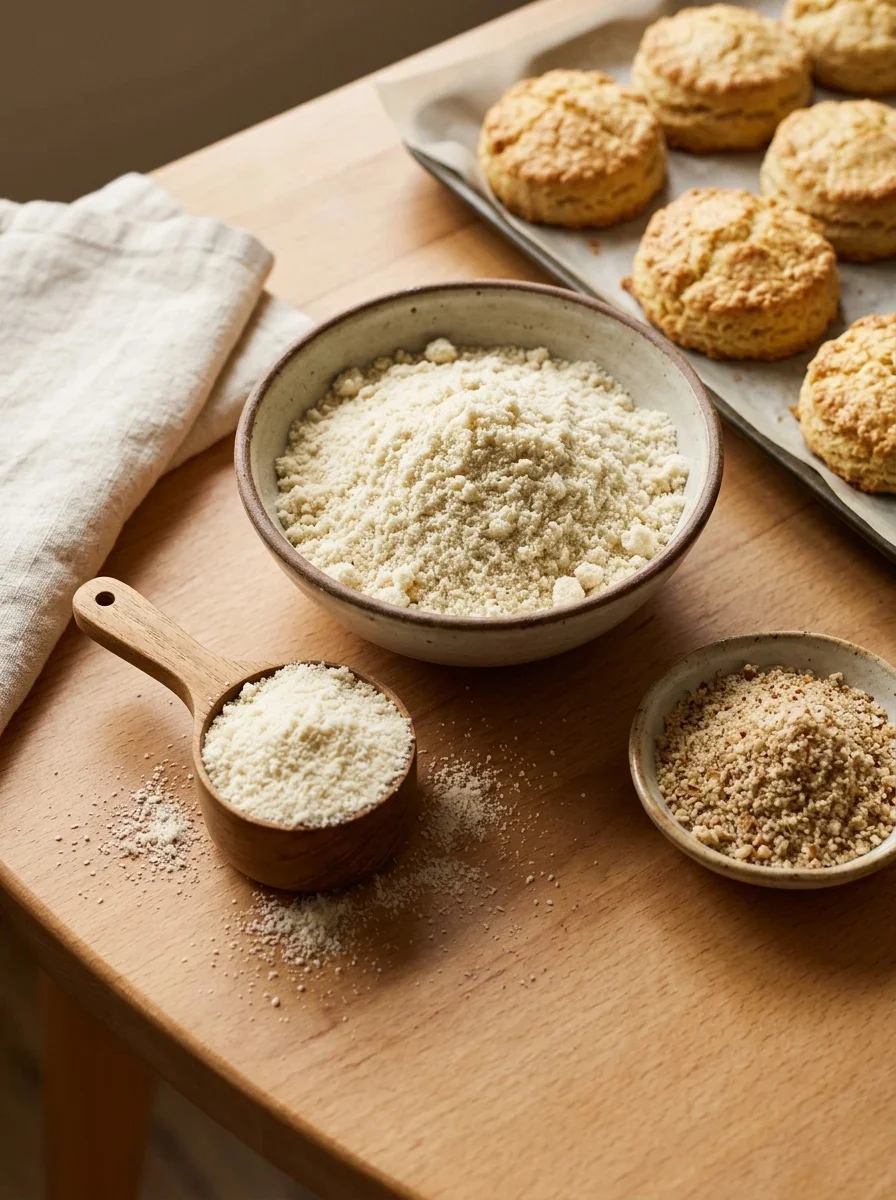
Fine flour vs meal: buy the flour. Meal makes a heavier, darker, more crumbly biscuit and absorbs liquid differently, so a recipe written for flour will not work the same with meal.
It drinks liquid slowly. Almond flour absorbs moisture more slowly than wheat flour, so a dough that looks too wet at first often firms up after five minutes of resting. Mix the dough, then let it rest for five minutes before you judge it and before you add more flour.
It browns fast, so bake low and watch. That is why every recipe here bakes at 325°F, not 350°F, and why the baking times are ranges with a check at the early end. If your oven runs hot, drop to 300°F and add two minutes.
It firms as it cools. Ten minutes on the tray and ten more on a rack turn it into a biscuit that holds together.
Safety: Xylitol, Fat, and Nut Allergies
Xylitol kills dogs — check every jar. Xylitol is a sweetener used in some peanut butters, especially sugar-free and low-sugar ones, and even a small amount can cause a dangerous drop in blood sugar and liver failure in dogs. Use only peanut butter whose label lists peanuts — and maybe salt — and nothing else.
Fat is the real limit, not the flour. Almonds are high in fat, and a dog who eats too much fat at once — especially a dog prone to pancreatitis — can become seriously ill. These treats are portion-controlled by design: one or two small biscuits a day, not a handful, and never as a meal. If your dog has had pancreatitis, or your vet has put them on a low-fat diet, ask your vet before baking with almond flour at all.
Nut allergies exist in dogs too. A dog allergic to tree nuts should not eat almond flour, and a dog who has never had almonds before should try half a biscuit first, then wait a full day before a second one. Watch for itching, a swollen face, vomiting, or loose stool — any of those means stop, and call your vet if the reaction is more than mild itching.
What never goes in: chocolate and cocoa are toxic to dogs, so the carob recipe below uses carob powder, which looks and tastes similar but is safe. Grapes, raisins, onion, and garlic never appear in any recipe here.
Four More Almond Flour Treats
Each recipe below is a small change on the classic biscuit — same base, same method, one new flavor. That is deliberate: once you know how the classic dough feels, you can judge any of these by touch, and you can bake two batches in one afternoon without learning a new method. Each one gets its own full recipe so you can bake it on its own without flipping back.
Recipe 2: Apple Almond Flour Biscuits
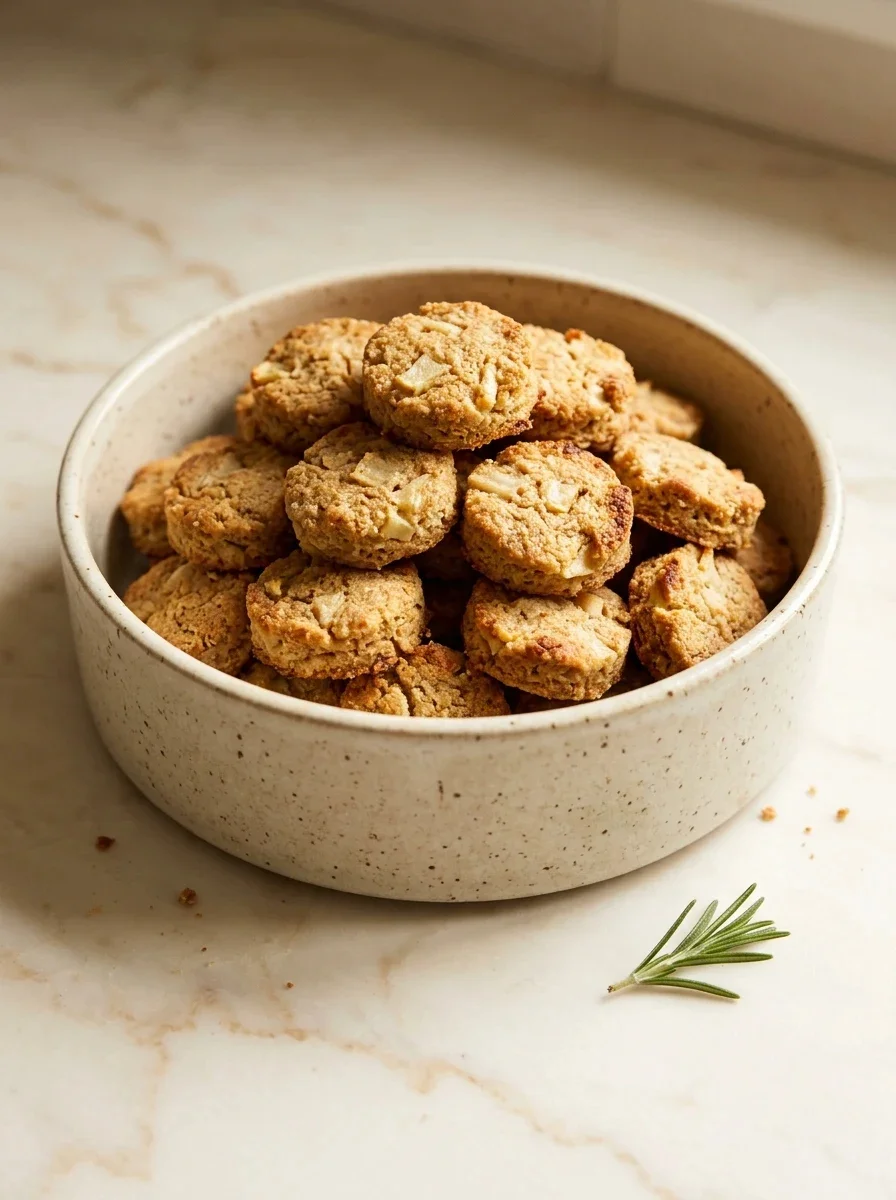
Grated apple keeps these biscuits moist inside and adds a gentle sweetness dogs love, without any added sugar. Peel the apple and grate it fine — peel and seeds stay out, because apple seeds are the one part of an apple a dog should not eat, and the peel makes the crumb uneven.
- 2 cups fine blanched almond flour
- ½ cup smooth peanut butter (xylitol-free)
- 1 large egg
- ½ cup finely grated apple, peeled (no seeds, no core)
- 1 tablespoon coconut oil, melted
- ½ teaspoon ground cinnamon
- Grate the apple fine. Peel the apple, cut away the core and seeds, and grate the flesh on the fine side of a grater. Squeeze out the extra juice with your hands — too much liquid makes the dough sticky and the biscuits soggy in the middle.
- Mix the wet ingredients. Stir the peanut butter, egg, melted coconut oil, and grated apple together until evenly mixed. The apple should be spread through the mixture, not sitting in clumps.
- Add the almond flour and cinnamon and stir into a soft dough. Let it rest for 5 minutes — almond flour absorbs liquid slowly, and the dough will firm up on its own. If it still sticks to your fingers after resting, add almond flour a tablespoon at a time.
- Roll between parchment and cut. Roll the dough to ¼ inch thick between two sheets of parchment paper and cut into biscuits. These are softer than the classic biscuits, so cut them a little thicker — closer to ⅓ inch — if your dog likes a biscuit with some bite.
- Bake at 325°F for 18–20 minutes, until the edges are set and lightly golden. Cool on the tray for 10 minutes, then on a rack until fully cool. These keep 5 days in an airtight container, or 3 months frozen — the apple makes them moister, so do not leave them at room temperature past 5 days.
For more apple baking, our apple dog treats recipes cover baked, frozen, and no-bake apple treats beyond biscuits.
Recipe 3: Carrot Almond Flour Biscuits
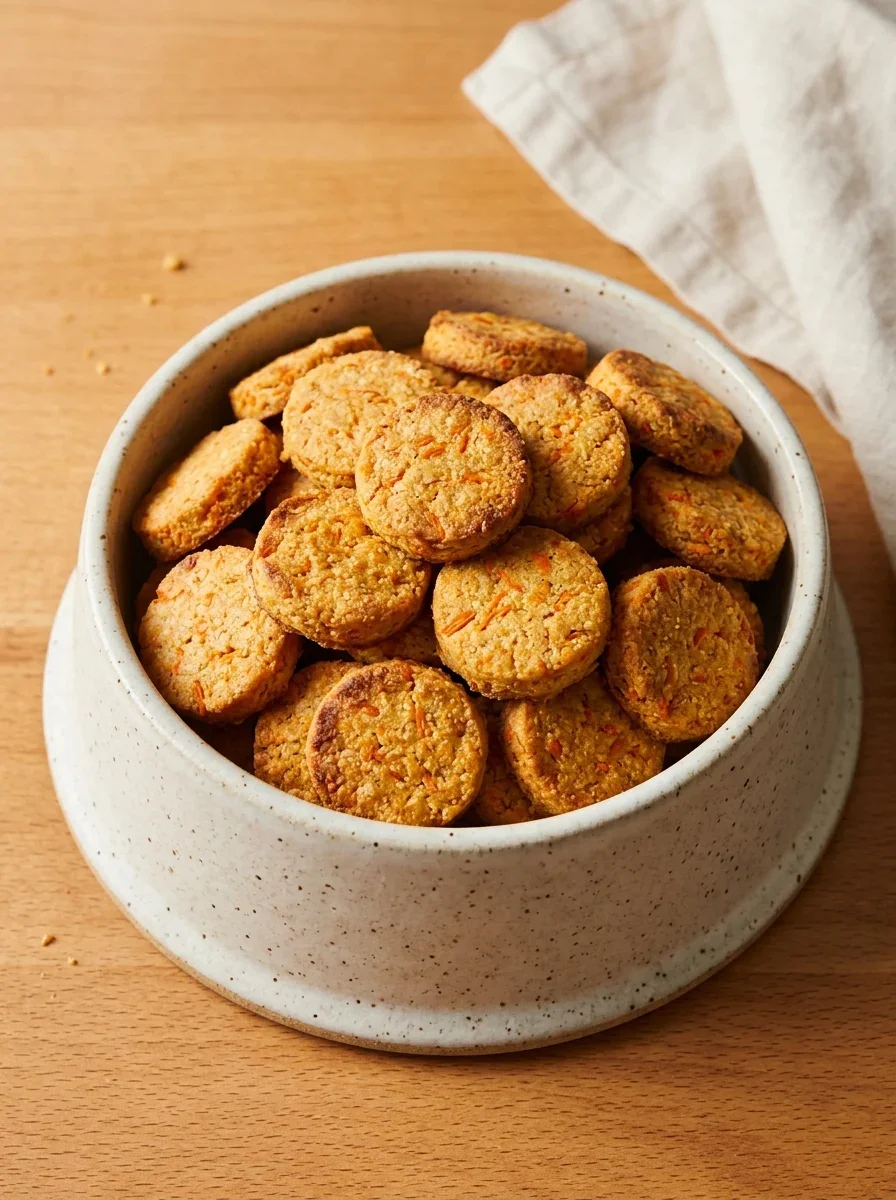
Carrot gives these biscuits a little crunch, a little sweetness, and a bright color that makes them easy to tell apart from the classic batch in the treat jar. Grate the carrot fine so it bakes through — thick shreds stay raw in the middle while the biscuit around them burns.
- 2 cups fine blanched almond flour
- ½ cup smooth peanut butter (xylitol-free)
- 1 large egg
- ½ cup finely grated carrot
- 1 tablespoon ground flaxseed
- ¼ teaspoon ground cinnamon
- Grate the carrot fine. Peel the carrot and grate it on the fine side of a grater. Fine shreds soften and sweeten in the oven; coarse shreds stay crunchy and raw in the middle of a soft biscuit.
- Mix the wet ingredients. Stir the peanut butter and egg together until smooth, then fold in the grated carrot and the ground flaxseed. The flaxseed helps bind the dough, which matters here because carrot adds moisture without adding stickiness.
- Add the almond flour and cinnamon and stir into a soft dough. Rest it for 5 minutes before judging the texture — the flaxseed and the flour both need a few minutes to absorb the moisture.
- Roll and cut. Roll the dough to ¼ inch thick between parchment sheets and cut into biscuits. Press any cracks at the edges back together with your fingers — carrot dough is a little more crumbly than the classic dough.
- Bake at 325°F for 18–20 minutes, until the edges are firm and lightly golden. Cool completely on a rack — these are the biscuits to reach for when your dog needs something with a bit of texture but nothing hard enough to challenge a sore tooth.
Carrot works in more than biscuits — our carrot dog treats recipes use the same grated-carrot method in chews and frozen treats too.
Recipe 4: Carob Almond Flour Biscuits
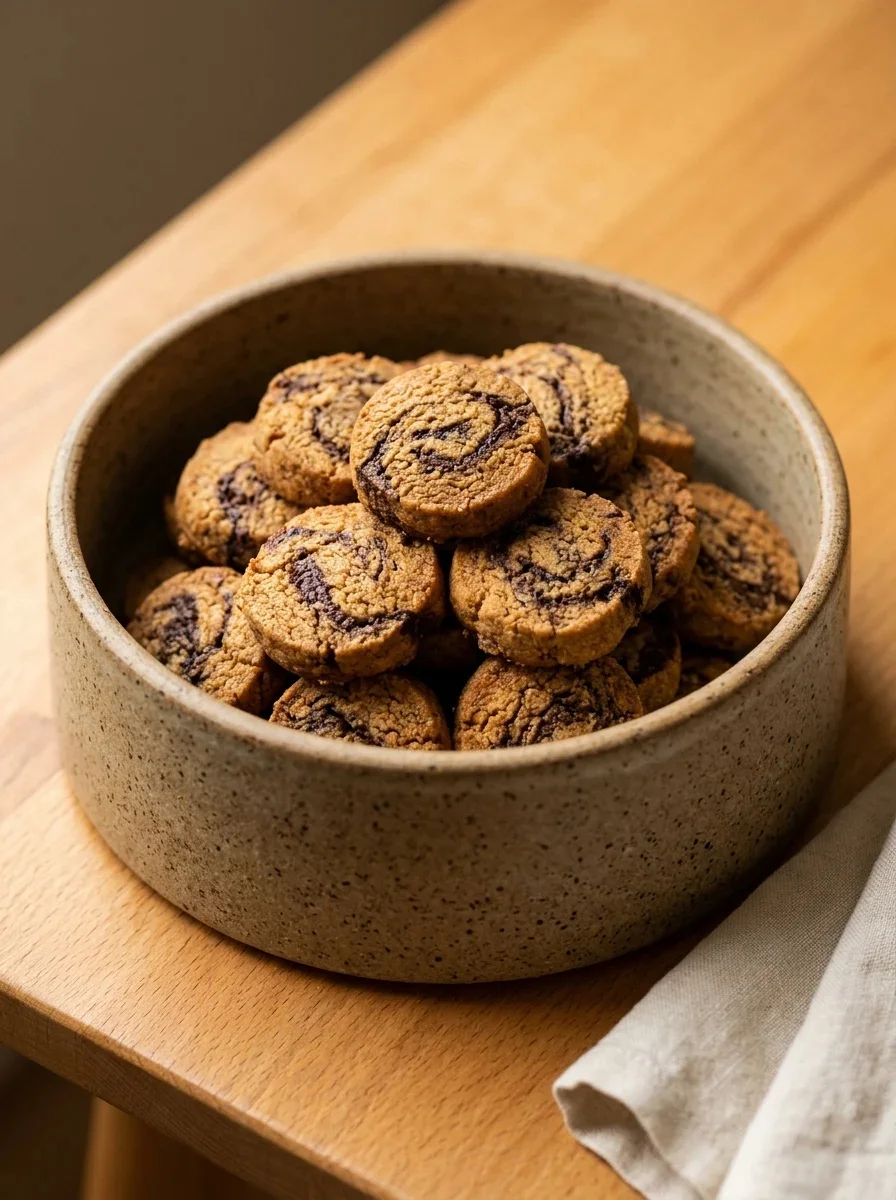
The biscuit for dogs who stare longingly at chocolate — and for owners who want to give them something that looks the part. Carob powder is naturally sweet, caffeine-free, and completely safe for dogs, and it bakes into a dark, rich biscuit that looks like a chocolate treat without a trace of cocoa. Never substitute cocoa or chocolate for carob: both are toxic to dogs.
- 2 cups fine blanched almond flour
- ½ cup smooth peanut butter (xylitol-free)
- 1 large egg
- 3 tablespoons unsweetened carob powder (not cocoa)
- 2 tablespoons water
- 1 tablespoon coconut oil, melted
- Whisk the carob into the wet ingredients. Stir the peanut butter, egg, water, and melted coconut oil together, then whisk in the carob powder until the mixture is evenly dark with no streaks. Carob clumps if you add it to dry flour, so it always goes into the wet bowl first.
- Add the almond flour and stir into a soft, dark dough. Rest it for 5 minutes — carob absorbs liquid too, and the dough will firm up. If it feels dry and cracks, add water a teaspoon at a time.
- Roll and cut. Roll the dough to ¼ inch thick between parchment sheets and cut into biscuits. Carob dough shows cracks more than pale dough does, so press the edges smooth with your fingers as you go.
- Bake at 325°F for 16–18 minutes, and check at 15. Dark dough hides browning, so judge by the edges: they should feel set and firm when you press them gently, not soft and tacky. A carob biscuit that looks done is done — do not wait for color that will never show.
- Cool completely. These firm up more than any other recipe here as they cool, and they keep the longest — 7 days in an airtight container at room temperature, or 3 months frozen.
Recipe 5: Training-Size Almond Flour Bites
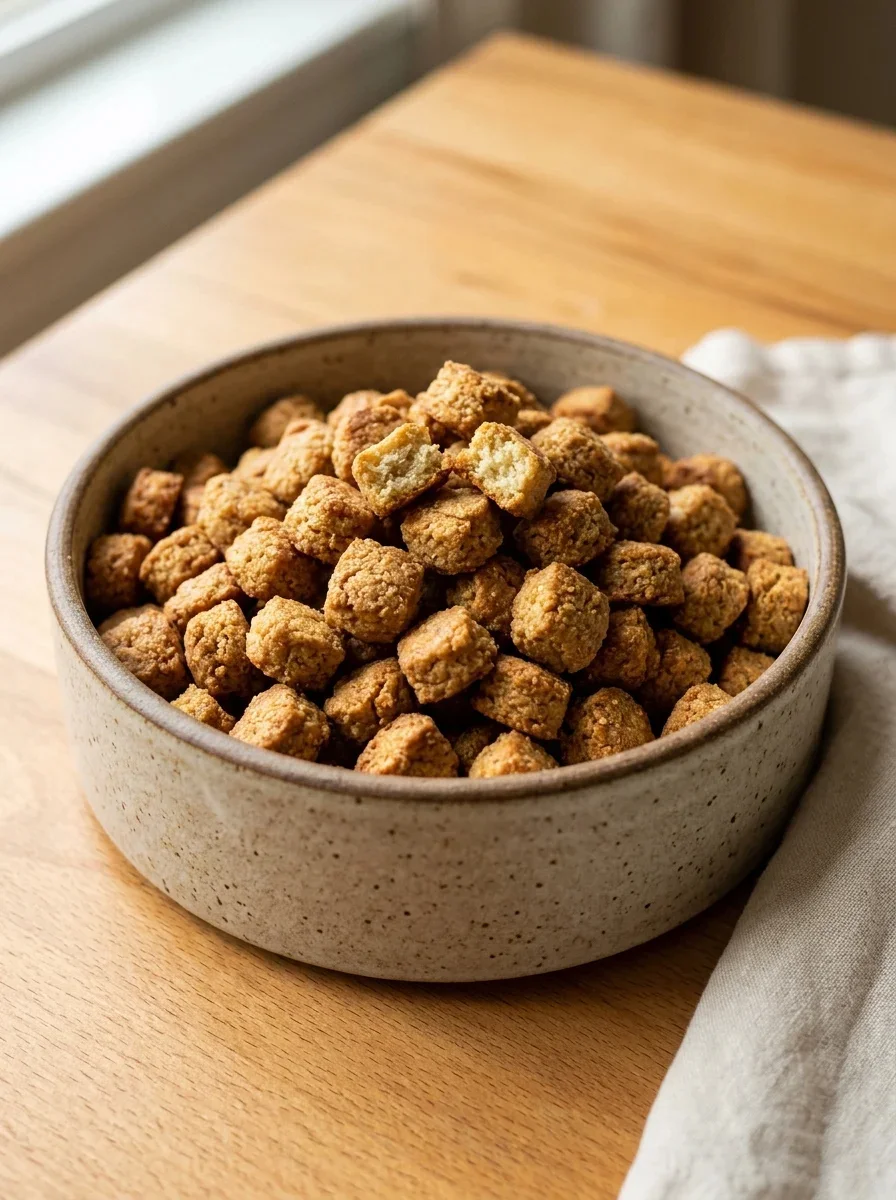
No baking, no rolling, no waiting for the oven — just mix, roll, and chill. These pea-size bites are the training treat of the set: small enough to hand out twenty times in a session without filling your dog up, soft enough to eat in one bite without crumbs, and firm enough to carry in a pocket. Make a double batch and keep half in the freezer.
- 1 cup fine blanched almond flour
- ½ cup smooth peanut butter (xylitol-free)
- 1 ripe banana, mashed smooth
- 2 tablespoons coconut flour
- ½ teaspoon ground cinnamon
- Mash the banana completely smooth. A fork works, but a few lumps are fine — they just make a softer bite. The banana is the binder here, replacing the egg, so it needs to be ripe and soft, not green and firm.
- Mix everything into a dough. Stir the peanut butter and mashed banana together, then add the almond flour, coconut flour, and cinnamon. The dough should hold together when you squeeze it — if it crumbles, add peanut butter a teaspoon at a time; if it sticks, add coconut flour a teaspoon at a time.
- Roll into pea-size balls. Roll the dough into balls about the size of a pea for small dogs, or a marble for large dogs. A training treat should be eaten in one bite, not chewed for a minute while the training moment passes.
- Chill for at least 1 hour. Place the balls on a parchment-lined tray and refrigerate until firm. They will not harden like a baked biscuit — they stay soft and chewy, which is exactly right for training.
- Store in the fridge. These keep 7 days refrigerated in a sealed container, or 2 months frozen. Take out only what you need for one session — they soften fast in a warm pocket, so keep the rest cold until you need them.
Storage and Feeding by Size
Almond flour treats do not keep like wheat biscuits, because fat is what goes off first. Baked biscuits keep 5–7 days in an airtight container at room temperature — the carob ones last the full week, the apple ones only five days because of the moisture — then 1–2 weeks in the fridge, and up to 3 months in the freezer.
Freezing is the best way to keep a batch. Lay the cooled biscuits in a single layer in a freezer bag, squeeze out the air, and label the bag with the recipe and the date. Thaw at room temperature for 20 minutes, or in the fridge overnight — never in the microwave, which makes the edges rubbery and the centers hot.
Feeding follows size, and almond flour treats are richer than wheat ones, so portions stay small. Toy and small dogs get half a biscuit or two training bites a day; medium dogs get one biscuit; large dogs one to two; extra-large dogs up to two. Puppies over twelve weeks can have half a mini biscuit. For another soft treat that stores the same way, try these soft homemade dog treats for dogs who prefer a tender bite.
FAQs
Final Thoughts
Almond flour asks for a little more attention than wheat flour — a lower oven, a five-minute rest, a full cool before you judge the batch — and it pays that attention back with a biscuit most dogs prefer: soft, buttery, and easy to eat. The five recipes here are one method with five flavors, so the second batch you bake will already feel familiar, and the fifth will feel like a habit.
Start with the classic biscuits, keep the portions small, and read the peanut butter label every single time. That is the whole system: one safe base, one careful jar, and a dog who gets a treat made for them, not adapted from a human recipe.
And if the first batch crumbles a little, do not throw it away — crumble it over your dog’s dinner as a topper and bake the next batch with a touch more applesauce. A dog does not grade your biscuits. They just eat them, and ask for another.

Izzy is an experienced ranch worker who has a passion for exploring nature and getting up close to wildlife. With her connections to various animal organizations, Izzy is well-versed in animal care and rehabilitation.