Vet-Recommended Dog Foods (With Bland Meals and Toppers)
Vet-recommended dog foods are complete and balanced diets that suit your dog’s age, size, and health. For most dogs, that means a quality commercial food chosen with a veterinarian’s help. Homemade meals can work too, but long-term feeding needs a precise recipe, the right supplement, and professional guidance.
That last point matters more than many owners expect. A University of California, Davis study reviewed 200 homemade dog food recipes and found that 95 percent lacked adequate levels of at least one essential nutrient. A bowl can look wholesome and still fall short on zinc, choline, or vitamin D.
This guide gives you six homemade options with clear labels. Two are full-meal examples that depend on a supplement. One is a short-term bland meal, and three are small extras. You’ll also learn how to judge store-bought food, how much to serve, and which ingredients to avoid. Take the recipes to your next vet visit before you change what’s in the bowl.
What Are Vet-Recommended Dog Foods?
Vet-recommended dog foods are options a veterinarian considers right for a particular dog. A good choice supplies every required nutrient, matches the dog’s life stage, and comes from a source with real nutrition expertise.
A phrase on a package is not enough. Your vet knows your dog’s history and health risks, so bring the food’s name, usual portion, and treat list.
Here is how the six homemade options in this guide compare:
| Option | Type | How to use it |
|---|---|---|
| Chicken and white rice bowl | Full meal with supplement | Daily, with vet approval |
| Chicken and sweet potato bowl | Full-meal example for one dog | Only after recalculation |
| Bland chicken and rice | Short-term meal | A few days, on vet advice |
| Pumpkin and green bean topper | Extra | Small amounts |
| Egg or white fish topper | Extra | Small amounts |
| Banana yogurt bites | Treat | Occasionally |
Recipe 1: Chicken and White Rice Dog Food Bowl
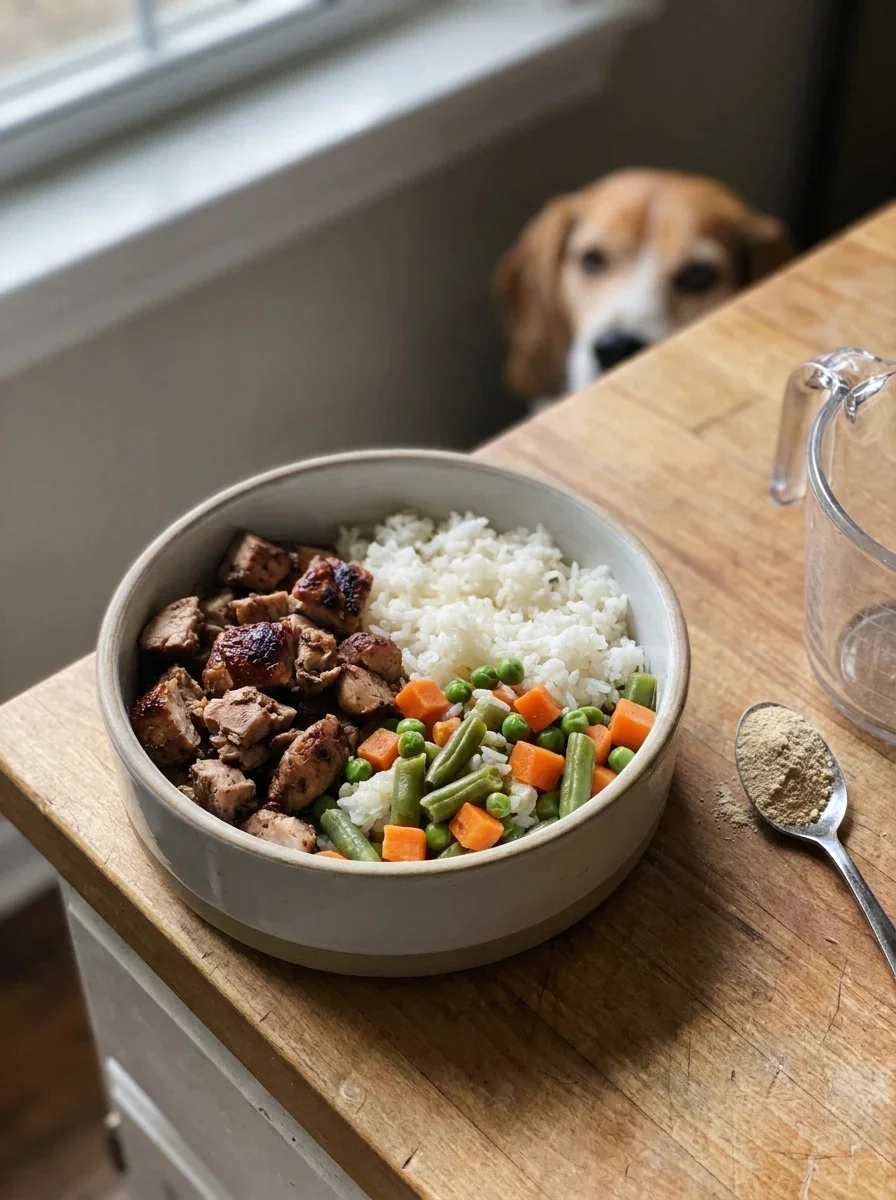
This soft, mild bowl pairs dark-meat chicken with fluffy white rice and a spoonful of vegetables. Most dogs find the flavor familiar, and the simple texture makes it easy to mix evenly.
It is based on a sample recipe credited to MSPCA-Angell Animal Medical Center and shared in a veterinarian-written article. The supplement is not optional. Without it, the meal has major nutritional gaps.
Ingredients
Choose the line that matches your adult dog’s weight.
| Ingredient | 15 lb dog | 30 lb dog | 60 lb dog |
|---|---|---|---|
| Cooked dark-meat chicken, boneless and skinless | 3 oz | 4.5 oz | 8 oz |
| Cooked white rice | 1 1/3 cups | 2 cups | 3 1/2 cups |
| Cooked mixed vegetables, no onion | 1 tbsp | 1 1/2 tbsp | 3 tbsp |
| Vegetable oil | 1 to 2 tsp | 2 to 3 tsp | 3 to 5 tsp |
| Balance IT Canine supplement | 1 1/2 scoops | 2 1/2 scoops | 4 1/2 scoops |
Step-by-Step Instructions
- Cook the chicken. Simmer or bake it without seasoning until it reaches 165°F.
- Prepare the rice and vegetables. Cook both in plain water until tender.
- Cool and measure. Let everything cool, then weigh the chicken and measure the other ingredients after cooking.
- Chop and combine. Cut the chicken into small pieces and stir it into the rice, vegetables, and oil.
- Add the supplement. Sprinkle the powder over the cooled food and mix until no dry pockets remain.
- Divide the day’s food. Split it into meals and refrigerate any portion you won’t serve right away.
Recipe Tips
- Use the scoop and the exact product your vet confirms, since supplement versions differ.
- Ask your vet where in the oil range your dog should fall.
- If your dog’s weight falls between columns, don’t guess. Request an adjusted recipe.
Recipe 2: Chicken and Sweet Potato Dog Food Bowl
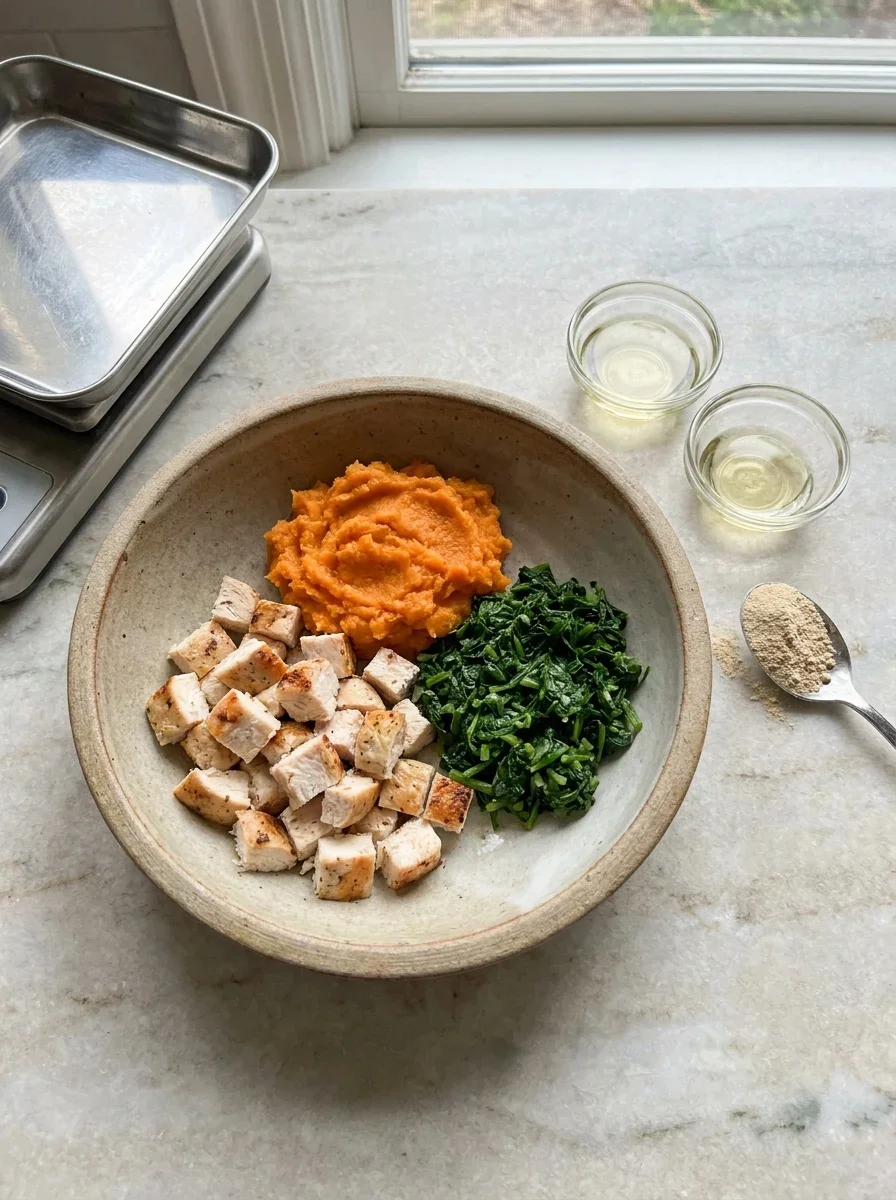
Roasted chicken breast, creamy sweet potato, and tender spinach give this bowl a naturally sweet, savory taste. It feels hearty without being greasy.
Treat it as an example, not a universal formula. It was generated with the Balance.it recipe tool for a 9-year-old spayed female dog weighing 50 pounds. Your dog needs a recipe calculated from their own details, even at a similar weight.
Ingredients
- 13 7/8 oz roasted skinless, boneless chicken breast
- 1 1/2 cups baked sweet potato flesh, unsalted, skin removed after baking
- 3/4 cup boiled, drained spinach, unsalted
- 5 1/4 tsp canola oil
- 1.3 mL Nordic Naturals Omega-3 Pet Liquid
- 11/16 tsp iodized salt (1/2 tsp plus 1/8 tsp plus 1/16 tsp)
- 5 tsp Balance IT Canine supplement
Step-by-Step Instructions
- Bake the sweet potato. Cook it in the skin until soft all the way through, then scoop out the flesh.
- Roast the chicken. Bake it plain until the thickest part reaches 165°F.
- Boil the spinach. Cook it briefly, drain well, and chop it finely.
- Cool and measure. Weigh the chicken and measure the vegetables once cooked and cooled.
- Mix the base. Combine the chicken, sweet potato, spinach, oil, and salt.
- Finish with supplements. Stir in the omega-3 liquid and powder after the food has cooled.
Recipe Tips
- Don’t drop the salt or supplements. Each one is part of the calculation.
- Ask whether spinach suits your dog, especially with a history of bladder stones or kidney trouble.
- Any swap, even turkey for chicken, calls for a new calculation. To build your dog’s own version, have current weight, age, activity level, and medical history ready, then review the result with your vet.
Recipe 3: Bland Chicken and Rice for an Upset Stomach
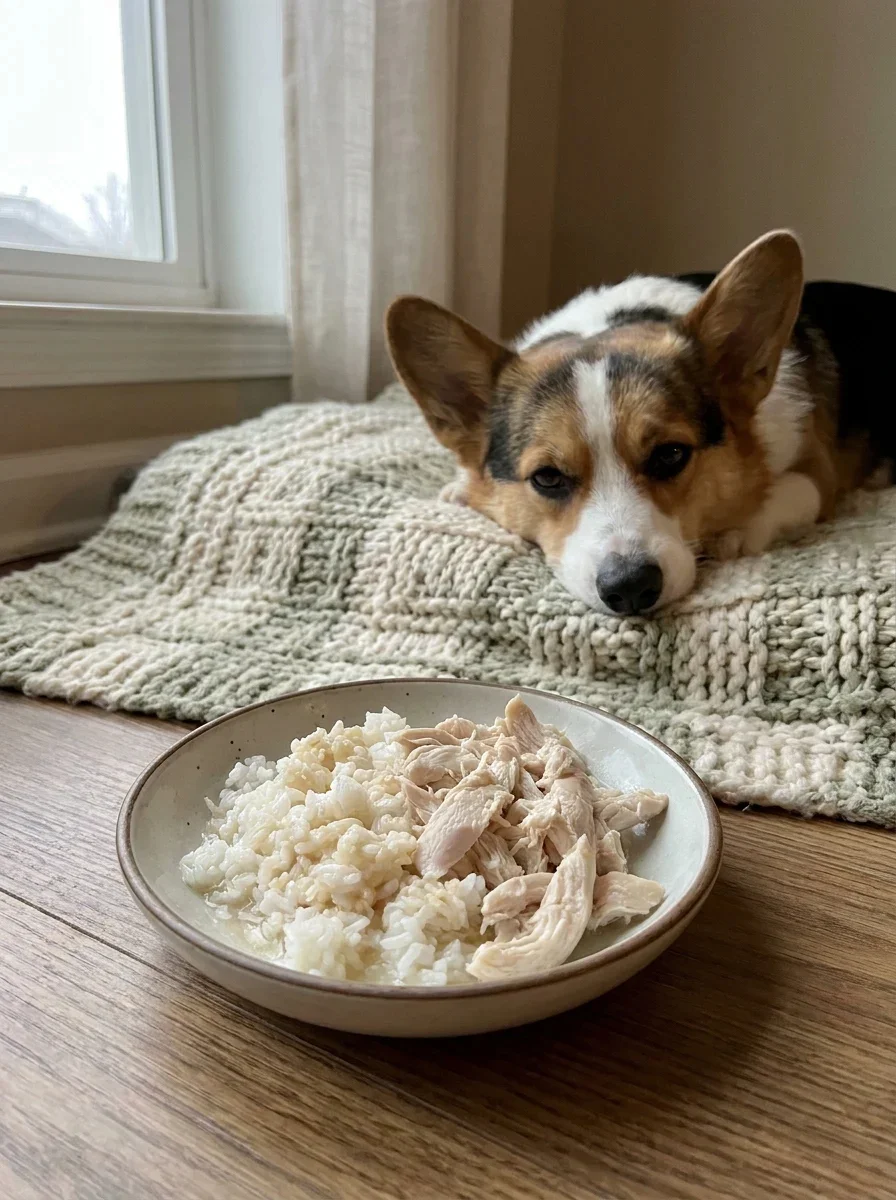
This plain, soft meal is meant for short-term digestive upset. It is low in fat and gentle in flavor, with a porridge-like texture if you add a little warm cooking water.
It uses the 2:1 ratio of cooked white rice to cooked chicken or turkey breast that Tufts veterinary nutritionists give as a low-fat example. It is not complete and balanced, so call your vet before using it. For other ideas to discuss, see these recipes for sensitive stomachs.
Ingredients
- 2 cups cooked white rice
- 1 cup cooked, shredded chicken breast or turkey breast, boneless and skinless
- 2 to 4 tbsp plain cooking water, optional
Step-by-Step Instructions
- Boil the poultry. Cover it with unsalted water and simmer until it reaches 165°F.
- Cook the rice. Use plain water with no butter, oil, or broth cubes.
- Shred finely. Pull the meat into small shreds and check carefully for bone or fat.
- Combine. Mix two parts rice with one part poultry, adding a little cooking water if you want a softer texture.
- Cool and serve. Offer small meals once the food is barely warm, following your vet’s amounts.
Recipe Tips
- Skip seasonings, especially onion and garlic powder.
- Ask your vet how long to continue and when to return to regular food.
- Get care promptly for blood in the stool, repeated vomiting, weakness, or refusal to drink. Puppies, seniors, and sick dogs should be seen early.
- Refrigerate leftovers promptly, and warm only the portion you plan to serve. Stir it well and check that there are no hot spots.
Recipe 4: Pumpkin and Green Bean Food Topper
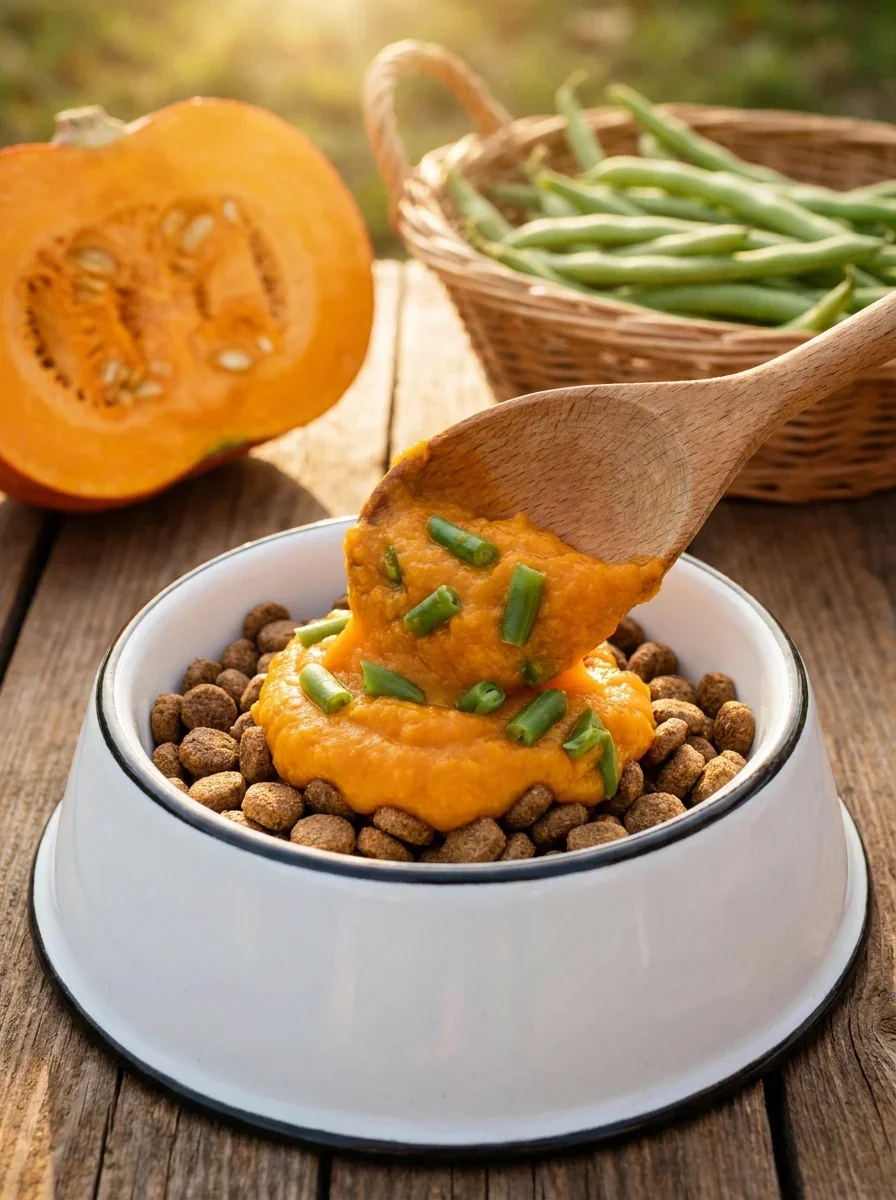
This bright topper adds moisture, color, and a mild sweetness to a regular meal. Smooth pumpkin coats the kibble, while chopped green beans give a soft bite.
It is an extra, not a meal. The proportions are our own simple mix, so keep it within your dog’s treat allowance. You can compare other dog-safe vegetables with your vet.
Ingredients
- 1 cup plain canned pumpkin (not pumpkin pie filling)
- 1 cup green beans, fresh or frozen, with no salt or sauce
Step-by-Step Instructions
- Trim the beans. Remove tough ends from fresh beans.
- Steam until tender. Cook for about 5 to 8 minutes, until a fork slides in easily.
- Chop small. Cut the beans into pieces your dog can’t choke on.
- Fold together. Stir the cooled beans into the pumpkin.
- Spoon sparingly. Start with a small amount on top of the usual food.
Recipe Tips
- The mix has roughly 4 calories per tablespoon, though brands vary.
- Freeze extra portions in an ice cube tray.
- Introduce it slowly, because a sudden load of fiber can loosen stools. Stop if your dog has gas, vomiting, or diarrhea.
Recipe 5: Egg or White Fish Food Topper
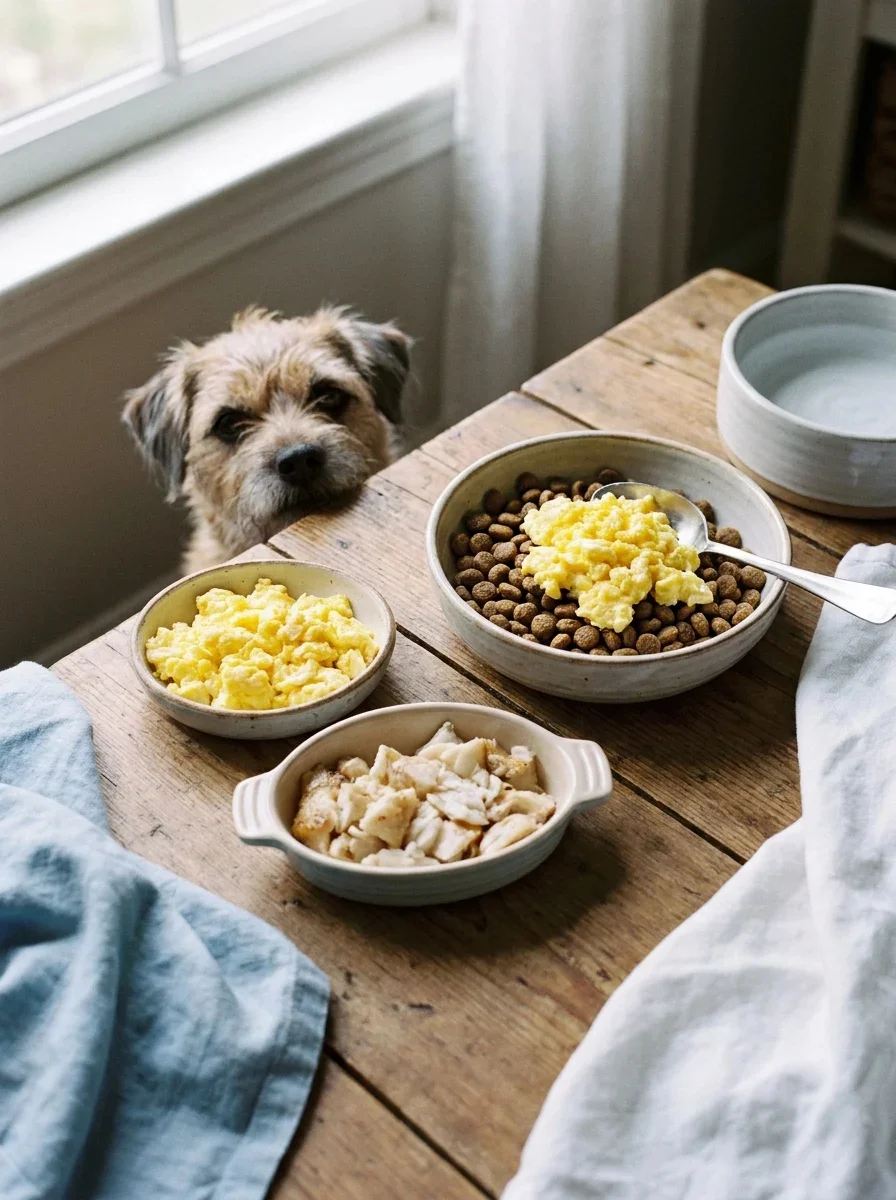
This savory topper adds protein and a rich aroma that can make dinner more interesting. Choose fluffy scrambled egg or flaky white fish, not both at the first try.
Like the pumpkin mix, it counts as an extra. If your dog enjoys eggs, you’ll find more scrambled egg food ideas to review.
Ingredients
Use one option:
- 2 large eggs, or
- 4 oz boneless, skinless cod, weighed raw
Step-by-Step Instructions
- Pick one protein. Starting with a single food makes any reaction easier to trace.
- Cook the egg. Scramble in a dry nonstick pan until fully firm and 160°F.
- Or cook the fish. Poach or bake the cod until it reaches 145°F and flakes easily.
- Check and break apart. Feel through the fish for bones, then crumble either protein.
- Cool before serving. Add a spoonful or less over the regular meal.
Recipe Tips
- Leave out milk, butter, oil, salt, and seasoning.
- A large egg has about 70 to 80 calories, which is more than a very small dog’s daily allowance for extras.
- Cooked cod has roughly 30 calories per ounce, so weigh or measure small portions.
- Refrigerate what’s left and use it within 3 days.
- Avoid this topper if your vet has your dog on a food elimination trial.
Recipe 6: Frozen Banana Yogurt Dog Bites
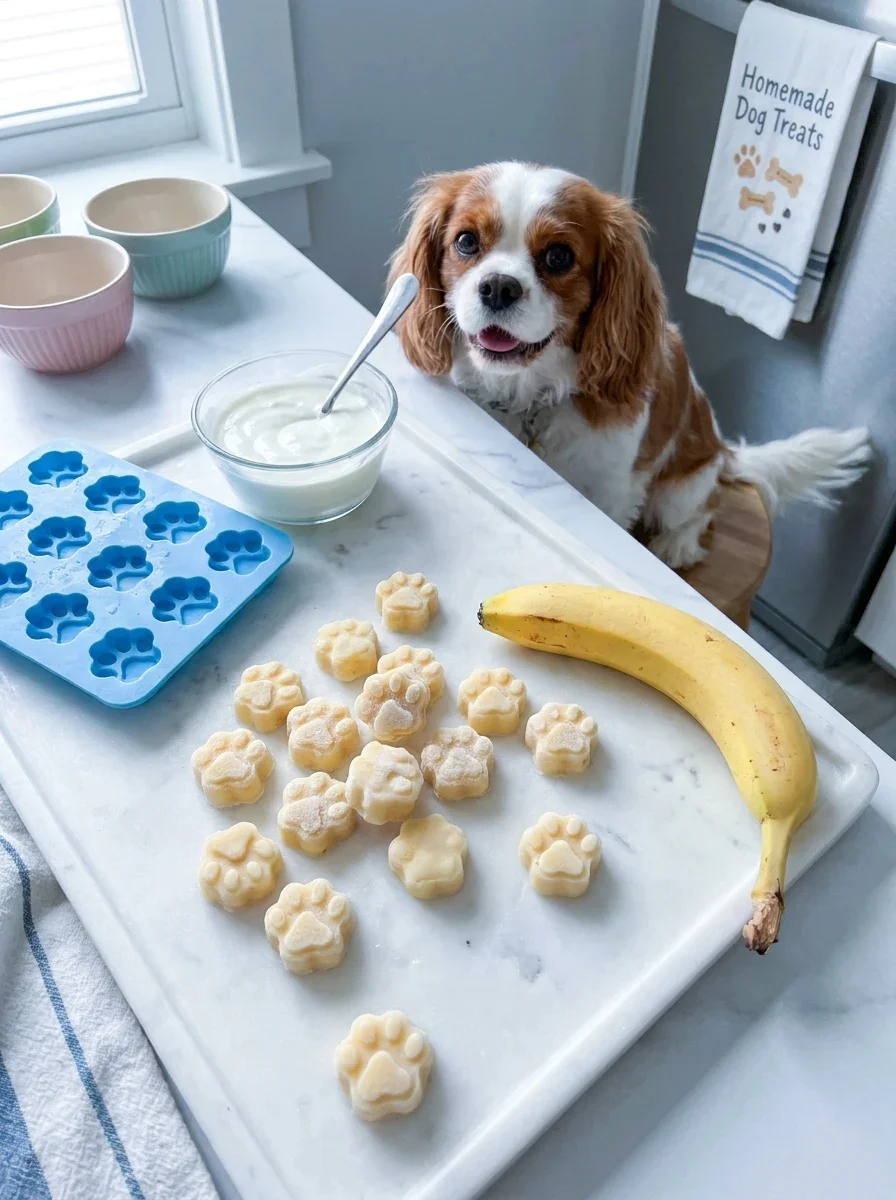
These cool, creamy bites taste like a simple frozen dessert. Ripe banana adds sweetness, so no sugar or syrup is needed.
They are treats only. Check the yogurt label closely, because the sweetener xylitol is dangerous to dogs. For a fruity change, try these frozen blueberry yogurt treats.
Ingredients
- 1 medium ripe banana, peeled
- 1 cup plain, unsweetened low-fat yogurt, xylitol-free
Step-by-Step Instructions
- Mash the banana. Use a fork until only small lumps remain.
- Whisk in yogurt. Stir until the mixture looks smooth.
- Fill the molds. Spoon it into a mini silicone mold or ice cube tray, making about 24 pieces.
- Freeze until firm. Allow at least 3 hours.
- Serve one at a time. Supervise your dog, and let very hard pieces soften for a minute.
Recipe Tips
- Each mini treat has roughly 10 to 12 calories, depending on the yogurt.
- Skip these if dairy upsets your dog’s stomach. Offer a small taste first and watch for loose stool.
- Store them in a sealed freezer container for up to 2 months.
How to Choose Vet-Recommended Dog Foods at the Store
Start with the nutritional adequacy statement on the package. In the United States, it tells you whether a food is complete and balanced and which life stage it serves. It usually refers to standards from the Association of American Feed Control Officials (AAFCO).
Check the life stage. Puppies, adults, and pregnant dogs have different needs. Large-breed puppies need particular care, so ask your vet to confirm the formula.
Read how it was tested. Some foods are formulated to meet nutrient profiles, while others pass AAFCO feeding trials, where dogs actually eat the diet under set rules.
Watch for limited-use wording. A food marked for intermittent or supplemental feeding is not meant to be the whole diet. Therapeutic diets can be an exception when a vet prescribes them.
The World Small Animal Veterinary Association (WSAVA) also suggests asking the maker some direct questions:
- Do you employ a qualified nutritionist or formulator, and what are their credentials?
- Who formulates your recipes?
- What quality control checks do ingredients and finished foods go through?
- Can you provide complete nutrient information and calories for this product?
A company that can’t or won’t answer deserves caution.
You’ll often see Hill’s, Purina Pro Plan, and Royal Canin named in veterinary roundups. That doesn’t make every product from them right for your dog, and other brands may also meet sound standards.
Dogs with kidney disease, allergies, bladder stones, pancreatitis, or other conditions may need a prescription diet. Don’t pick one on your own, since a food that helps one problem can worsen another.
Finally, judge the results. A suitable food should support a healthy weight, steady energy, a good coat, and normal stools. Report changes to your vet. Keep the label or take a photo of it, including the lot number and date. That information helps if your dog reacts badly or the product is recalled.
How Much Homemade Food and Treats to Serve
Serving size depends on calories, not on how big the bowl looks. Age, activity, body condition, and neuter status all change what a dog needs.
For full meals, follow a recipe calculated for your dog. Weigh your dog regularly and ask your vet for an adjustment if weight drifts up or down.
For extras, keep all treats and toppers combined to no more than 10 percent of daily calories. WSAVA gives these maximums for average healthy adults at an ideal body condition:
| Dog’s weight | Maximum treat calories per day |
|---|---|
| 4 kg (about 9 lb) | 24 |
| 10 kg (about 22 lb) | 47 |
| 20 kg (about 44 lb) | 79 |
| 30 kg (about 66 lb) | 108 |
The allowance covers everything extra, including chews and training rewards. Reduce regular food to make room, as your vet advises.
When your vet approves a switch to a new complete diet, go gradually over about 7 days. Move from 25 percent new food to 50 percent, then 75 percent, and finally 100 percent. Slow down if you notice stomach upset. Dogs with a sensitive stomach or a medical diet may need a different schedule.
Ingredients to Keep Out of Your Dog’s Food
Some common kitchen items can poison or injure dogs. Keep these out of every recipe, topper, and treat:
- Onions, garlic, chives, and their powders
- Grapes, raisins, and currants
- Chocolate and caffeine
- Xylitol, sometimes listed as birch sugar
- Macadamia nuts
- Alcohol and raw yeast dough
- Cooked bones and fruit pits
Hidden sources cause trouble too. Broth, deli meat, seasoning blends, sauces, and baby food may contain onion, garlic, or heavy salt. Read every label, even on products you’ve bought before, because formulas change. When you aren’t sure about an ingredient, leave it out until your vet confirms it’s safe.
Avoid raw meat, fish, and eggs as well. Raw diets can carry bacteria such as Salmonella and Listeria, which put both dogs and people at risk.
High-fat trimmings, skin, and drippings are also poor choices. Rich food can trigger digestive upset and has been linked with pancreatitis.
Don’t add a human multivitamin to homemade meals. It may contain amounts or ingredients that are unsafe for dogs.
If your dog eats something toxic, call your veterinarian or an animal poison control service right away. Don’t wait for symptoms, and don’t make your dog vomit unless a professional tells you to.
How to Store and Freeze Homemade Dog Food
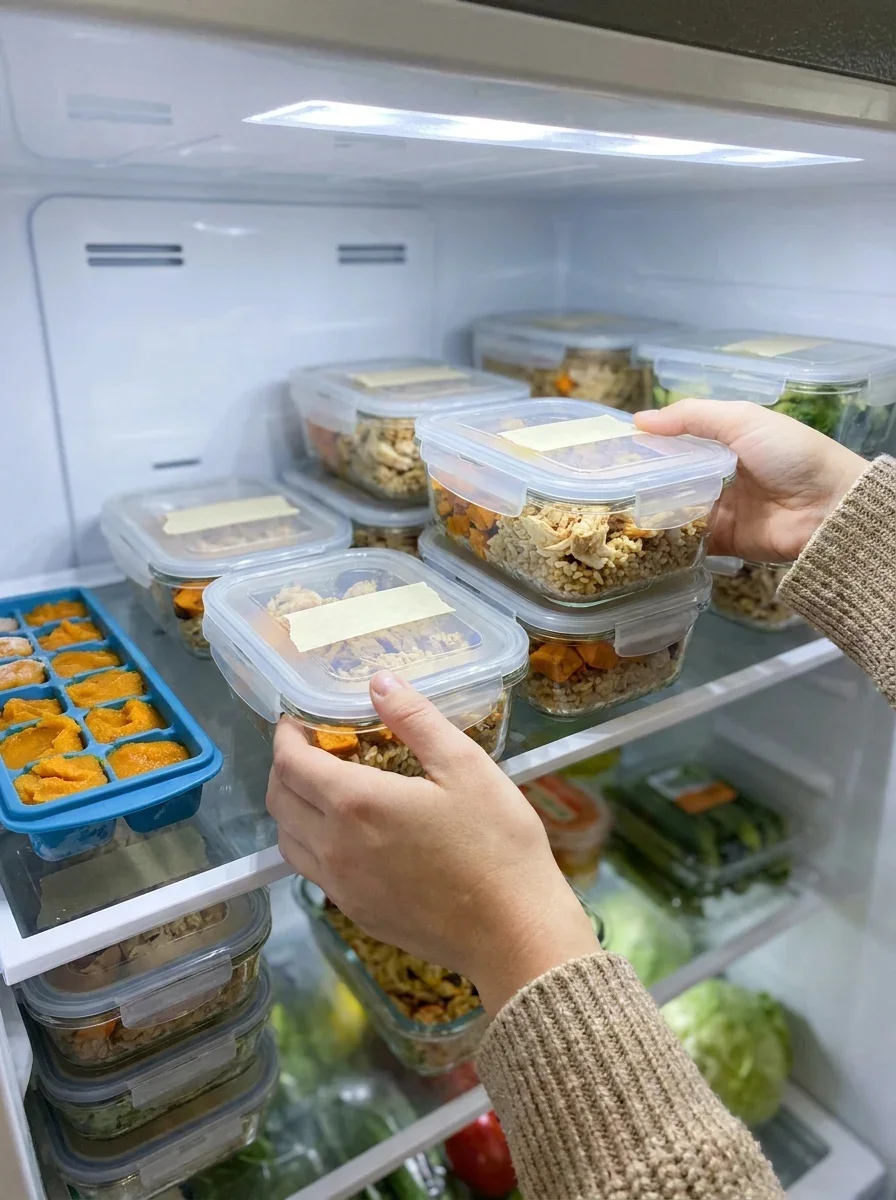
Refrigerate cooked dog food promptly and use it within 3 to 4 days. Throw out anything left at room temperature for more than 2 hours.
Refrigerator: Keep meals in shallow, covered containers at 40°F or below. Label each one with the date.
Freezer: Freeze plain cooked food in meal-size portions for up to 2 to 3 months.
Thawing: Move a portion to the refrigerator overnight, not onto the counter.
Supplements: Add powders and oils after thawing and any warming, unless the product directions say otherwise. Heat can damage some nutrients.
Wash bowls, boards, and utensils with hot, soapy water after each use. Wash your hands too, especially after handling raw ingredients. Cook batches you can realistically use in time, and discard food that smells sour, feels slimy, or shows mold. When in doubt, throw it out. For tidier pantry supplies and kibble, browse these dog food storage ideas.
Frequently Asked Questions
Conclusion
Vet-recommended dog foods are the ones that are complete, balanced, and matched to your individual dog. For many families, a well-researched commercial diet is the simplest route. Check the adequacy statement, ask the maker clear questions, and watch how your dog does over time.
If you want to cook, keep the labels straight. The two chicken bowls depend on exact amounts and supplements. Bland chicken and rice is only a short-term meal, while the pumpkin mix, egg or fish topper, and banana bites are small extras within the 10 percent limit.
Before changing your dog’s diet, show the recipe or food label to your veterinarian. This matters even more for puppies, seniors, pregnant dogs, and dogs with health conditions.
Ready for more mealtime variety? Explore these homemade dog food toppers, choose one or two that interest you, and bring them to your next appointment. A short conversation can help your dog enjoy dinner safely.

Izzy is an experienced ranch worker who has a passion for exploring nature and getting up close to wildlife. With her connections to various animal organizations, Izzy is well-versed in animal care and rehabilitation.