5 Homemade Dog Food For Senior Dogs Recipes Worth Trying
As dogs get older, their bodies start asking for something different. Digestion slows down, joints get stiffer, teeth wear down, and appetites can become unpredictable. A dog who used to inhale a bowl of kibble in thirty seconds might suddenly sniff at it and walk away, or finish it but seem sluggish an hour later. Store-bought kibble doesn’t always keep up with those changes, which is exactly why so many owners start looking into homemade dog food for senior dogs.
Cooking at home gives you full control over what goes into the bowl — the protein, the texture, the sodium level, all of it. Below are five homemade senior dog food recipes, each built around a different need: an everyday base meal, a joint-support stew, a kidney-gentle option, a soft pureed meal for dogs with fewer teeth, and a hands-off slow cooker version. Each one is written as a simple recipe card you can follow straight through, no extra reading required, and each makes enough to feed a mid-size senior dog for several days when stored properly.
Before You Start: 5 Things Every Senior Dog Recipe Needs
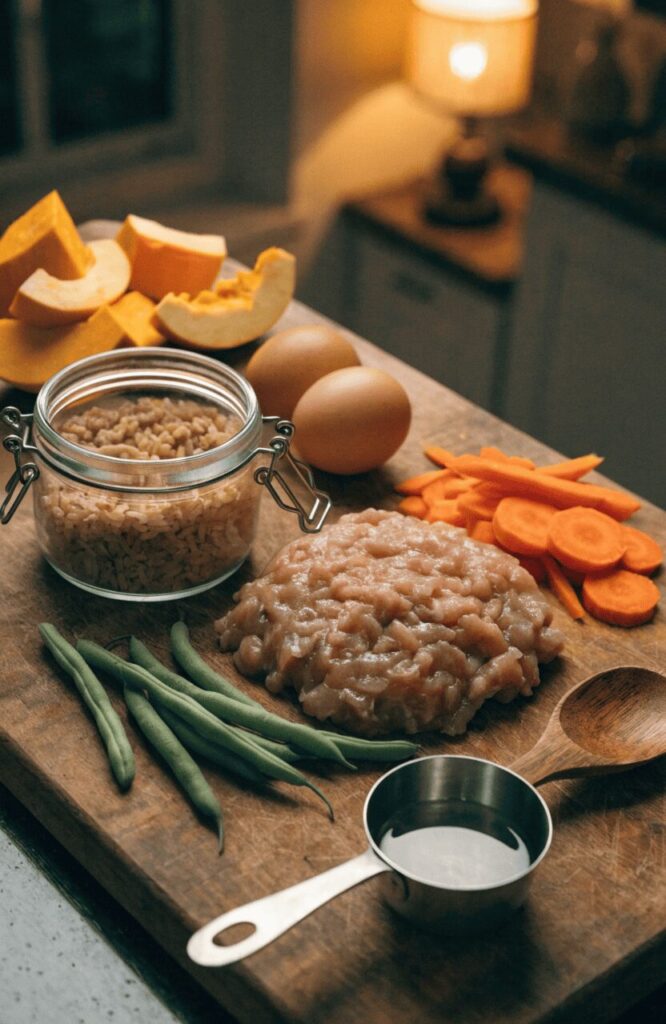
- Lean protein comes first. Skinless poultry, lean beef, or white fish are easier on an aging digestive system than fatty cuts, which can sit heavy and trigger upset stomachs or pancreas flare-ups in older dogs.
- Salt gets cut almost entirely. Senior dogs, especially those with early heart or kidney changes, do better with little to no added sodium, so skip bouillon cubes and reach for low-sodium or no-sodium broth instead.
- Some pantry items are off-limits, period. Onion, garlic, grapes, raisins, and anything containing xylitol should never go in the pot — and if you’re ever tempted to toss in a packaged snack as a topper, it’s worth checking whether cheerios are a safe choice before assuming it’s fine.
- Everything gets cooked through. Raw meat and undercooked eggs aren’t worth the risk for a dog with an already-sensitive system, even if your dog tolerated raw food fine in younger years.
- Your vet has the final say. These recipes are a strong starting point, but bloodwork and a vet’s guidance should shape long-term portions and ingredient swaps, especially if your dog already has a diagnosed condition.
Recipe #1: All-Purpose Homemade Senior Dog Food (the Base Recipe)
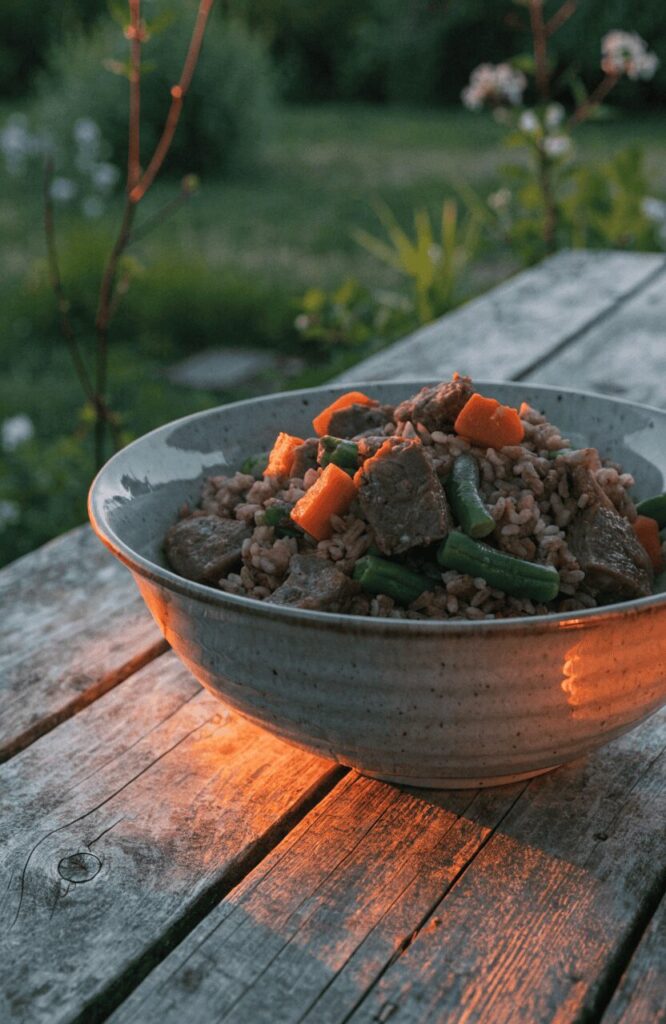
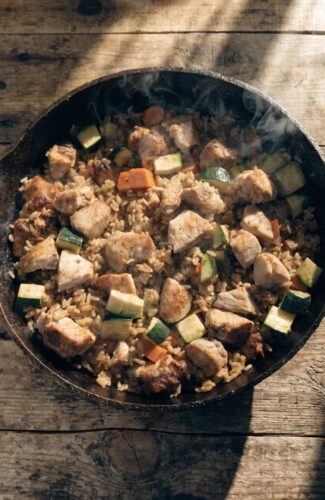
This is the recipe to start with if your senior dog is generally healthy and you just want to move away from processed kibble. It leans on lean turkey, easy-to-digest brown rice, and a few gentle vegetables that won’t upset an older stomach. Turkey is mild enough that most dogs tolerate it without issue, brown rice adds slow-digesting carbohydrates and fiber, and the pumpkin and eggs round out the meal with extra fiber and protein.
Prep Time: 15 minutes Cook Time: 35 minutes Freeze Time: Up to 3 months Yield: About 10 cups (roughly 5–7 days of food for a 40–50 lb dog; confirm portions with your vet)
Ingredients:
- 2 lbs lean ground turkey or chicken
- 2 cups brown rice, uncooked
- 1 cup carrots, finely diced
- 1 cup green beans, chopped
- 1 cup plain pumpkin puree (unsweetened)
- 2 eggs, lightly scrambled
- 1 tablespoon fish oil (added after cooking)
- 4 cups low-sodium chicken broth or water
Instructions:
- Cook the brown rice in the broth or water according to package directions, then set it aside to cool slightly while you prepare the rest of the meal.
- In a large skillet, brown the ground turkey over medium heat until fully cooked through with no pink remaining, breaking it apart with a spatula as it goes. Drain off any excess fat before moving on.
- While the turkey cooks, steam the carrots and green beans for 8–10 minutes, until they’re soft enough to mash easily with a fork — this matters more for senior dogs who may not chew thoroughly.
- In a large mixing bowl, combine the cooked rice, turkey, steamed vegetables, pumpkin puree, and scrambled eggs. Stir until everything is evenly distributed.
- Spread the mixture out in a thin layer on a sheet pan or large dish to help it cool faster, then let it sit at room temperature until fully cooled — never refrigerate or freeze warm food.
- Once cooled, stir in the fish oil. Adding it after cooking, rather than during, protects its omega-3 content from breaking down under heat.
- Portion into airtight containers or freezer bags in single-meal amounts, then refrigerate what you’ll use within four days and freeze the rest.
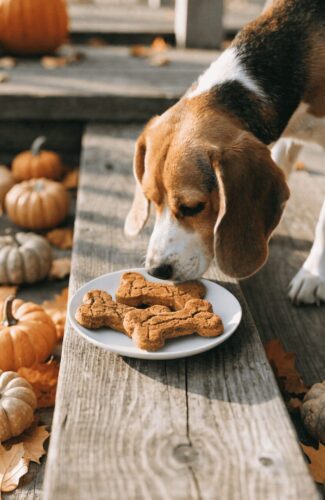
Notes: This base recipe suits most healthy senior dogs, but every dog’s needs differ slightly, so run it past your vet before making it a daily meal, particularly if your dog is on medication that interacts with diet. If you like rounding out mealtime with something extra, our homemade dog treats recipes make an easy low-effort topper or training reward alongside this base.
I. Beef & Sweet Potato Variation
Swap the ground turkey for 2 lbs of lean ground beef, and replace the brown rice with 2 cups of cooked, mashed sweet potato. Beef brings more iron and B vitamins, which can help senior dogs who seem low on energy or are recovering from illness, while sweet potato tends to sit easier on the stomach than rice for some older dogs and offers a naturally sweet flavor that can win over picky eaters. Cook the beef the same way you’d cook the turkey, fully browning it and draining the fat, then steam and mash the sweet potato in place of the rice step. Follow the rest of the base recipe exactly — cool, combine, add fish oil, and portion.
II. White Fish & Quinoa Variation
If your senior dog has a poultry sensitivity or you simply want to rotate proteins for variety, swap in 2 lbs of cooked, deboned white fish such as tilapia or cod, and use quinoa instead of brown rice. Quinoa cooks faster than rice and carries more protein per cup, while fish tends to be gentler on aging digestion and brings its own natural omega-3 content. Rinse the quinoa thoroughly under cold water before cooking to remove its naturally bitter outer coating, then simmer it the same way you would rice. Bake or poach the fish until it flakes apart easily, double-check for any stray bones, and flake it into small pieces before mixing it into the rest of the recipe.
Recipe #2: Joint & Mobility Support Stew
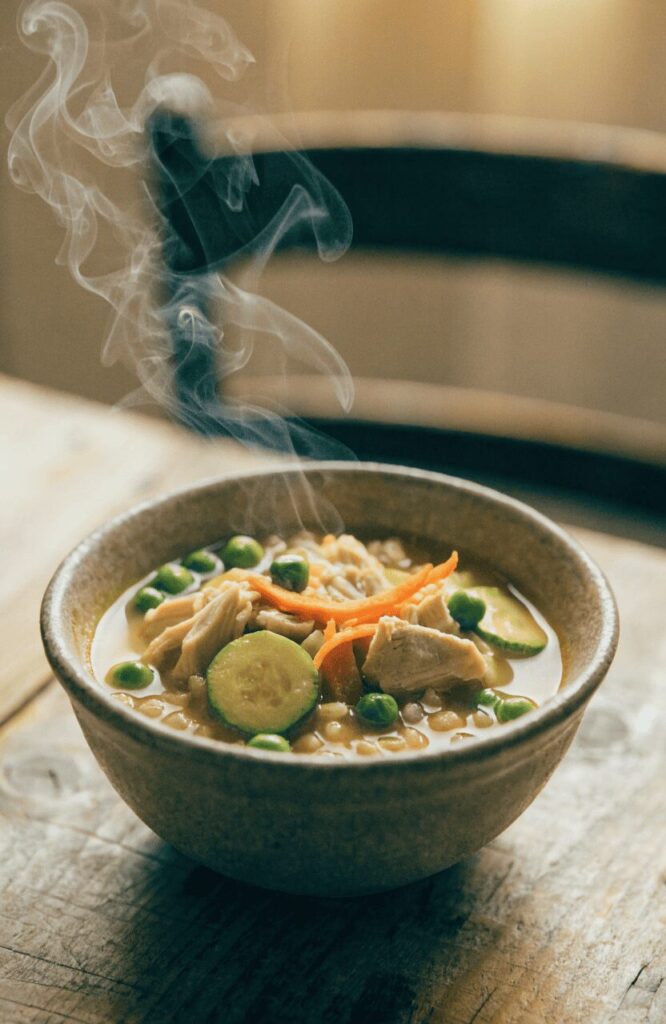
For senior dogs slowing down on walks or struggling with stairs, this stew leans on bone broth, turmeric, and omega-3s — three ingredients that show up again and again in joint-support feeding plans because of their anti-inflammatory properties. It’s also slow-cooked, which softens everything down to a texture that’s easy on tired jaws and joints that just don’t move the way they used to.
Prep Time: 10 minutes Cook Time: 6 hours (slow cooker) or 40 minutes (stovetop) Freeze Time: Up to 3 months Yield: About 8 cups
Ingredients:
- 2 lbs boneless chicken thighs or beef chunks
- 2 cups low-sodium bone broth
- 1 cup carrots, chopped
- 1 cup zucchini, chopped
- ½ cup frozen peas
- 1 cup cooked brown rice or oats
- 1 teaspoon ground turmeric
- 1 tablespoon fish oil or salmon oil (added after cooking)
Instructions:
- Place the chicken thighs or beef chunks, bone broth, carrots, and zucchini into a slow cooker, making sure the meat is mostly submerged so it cooks evenly.
- Cover and cook on low for 6 hours, or until the meat is tender enough to shred easily with two forks. If you’re short on time, the stovetop version works in about 40 minutes of gentle simmering, covered, over low heat.
- Remove the meat, shred or chop it into bite-sized pieces, and return it to the pot.
- Stir in the frozen peas, cooked rice or oats, and ground turmeric, letting the residual heat warm the peas through without overcooking them.
- Let the stew cool fully to room temperature, spreading it in a shallow dish if you want it to cool faster.
- Stir in the fish or salmon oil right before portioning, since heat breaks down its omega-3 content over time and you want those fatty acids intact.
- Divide into containers and refrigerate what you’ll use within a few days, freezing the rest in smaller batches.
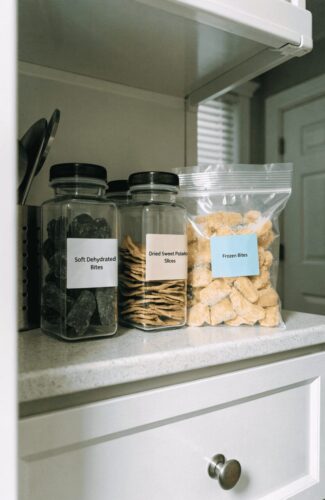
Notes: This stew freezes especially well in small, single-meal portions, since the broth keeps it from drying out in the freezer the way drier recipes sometimes do. A dedicated feeding station setup with labeled containers makes it much easier to grab the right portion without digging through the freezer every morning, especially if you’re juggling more than one recipe at a time.
Recipe #3: Kidney-Gentle, Low-Sodium Senior Dog Food
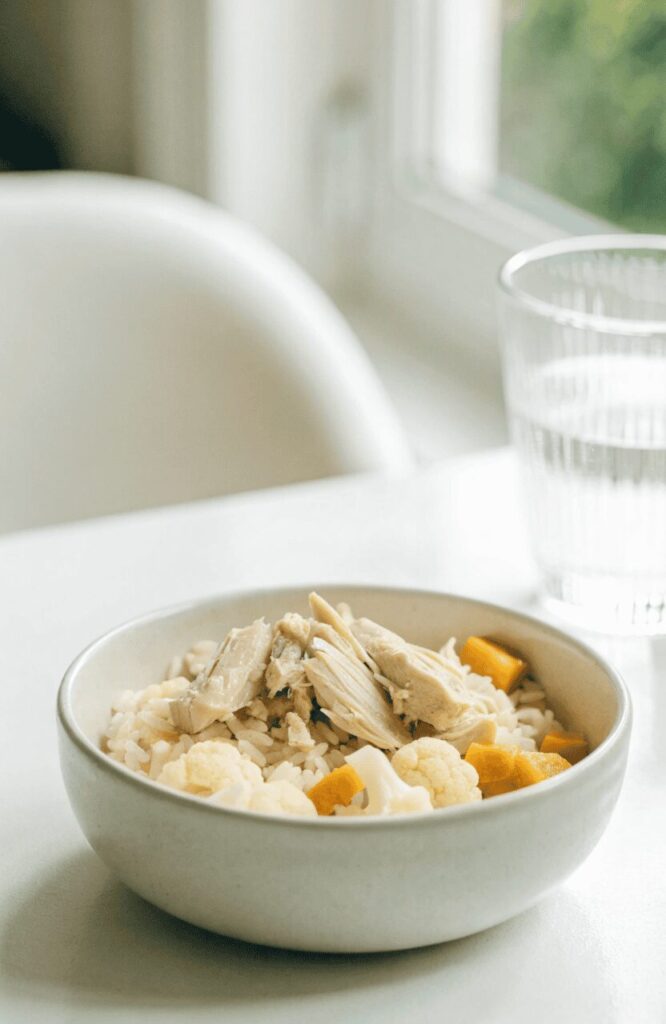
Many senior dogs start showing early kidney changes on bloodwork well before any symptoms appear at home. This recipe leans lighter on protein, sodium, and phosphorus than the base recipe, which is generally the direction vets take when kidney values start to shift, since the kidneys have a harder time filtering out the byproducts of heavier protein and mineral loads.
Prep Time: 15 minutes Cook Time: 30 minutes Freeze Time: Up to 3 months Yield: About 9 cups
Ingredients:
- 1.5 lbs lean ground chicken (lower phosphorus than red meat)
- 2 cups white rice (lower phosphorus than brown rice)
- 1 cup cooked, mashed pumpkin
- 1 cup cauliflower, steamed
- 2 egg whites only (yolks run higher in phosphorus)
- 3 cups water or no-sodium-added broth
Instructions:
- Cook the white rice in the water or broth until fully soft, then set it aside, fluffing it once with a fork.
- In a skillet, cook the ground chicken thoroughly over medium heat, breaking it apart as it browns, and drain off any fat once it’s fully cooked.
- Steam the cauliflower until very soft, about 10 minutes, then mash it with a fork until it has no large chunks left.
- Lightly scramble the egg whites in a dry, nonstick pan with no added salt, oil, or butter, cooking just until set.
- Combine the rice, chicken, cauliflower, and mashed pumpkin in a large bowl, then fold in the scrambled egg whites.
- Let everything cool completely at room temperature before portioning into airtight containers, since this mixture holds heat a bit longer due to the rice.
Notes: This recipe is intentionally lighter on protein and phosphorus than the base meal, which mirrors the general approach vets often take with early kidney concerns. It should never fully replace a prescription renal diet without your vet’s approval, especially once kidney values are confirmed abnormal on bloodwork, but it can work well as a transitional or supportive meal alongside guidance from your vet.
Recipe #4: Soft, Pureed Food for Picky Eaters or Few Teeth
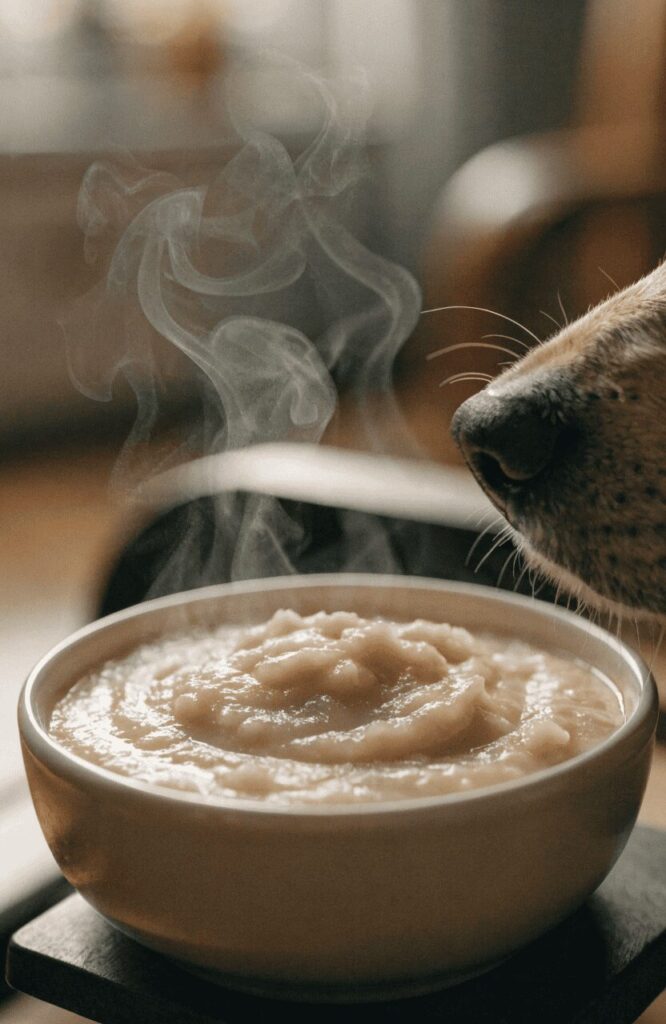
Some senior dogs lose teeth along the way, and others simply get pickier about texture as they age, sometimes pushing solid pieces around the bowl without actually eating them. This recipe blends everything down into a smooth, easy-to-swallow consistency that still delivers a full, balanced meal without asking much of a worn-down mouth.
Prep Time: 10 minutes Cook Time: 25 minutes Freeze Time: Up to 2 months (smaller batches hold their texture better) Yield: About 7 cups
Ingredients:
- 1.5 lbs ground turkey
- 1 cup cooked sweet potato
- ½ cup cooked carrots
- ½ cup plain pumpkin puree
- ½ cup low-sodium broth (for blending)
- 1 tablespoon plain Greek yogurt
Instructions:
- Cook the ground turkey thoroughly in a skillet over medium heat, draining off excess fat once it’s fully browned.
- Steam the sweet potato and carrots until very soft, almost falling apart when poked with a fork.
- Add the turkey, sweet potato, and carrots to a blender or food processor along with the pumpkin puree and broth.
- Blend until completely smooth, adding more broth a splash at a time if the mixture is too thick to blend evenly or too thin to hold its shape on a spoon.
- Let the mixture cool, then stir in the Greek yogurt once it’s no longer warm, since heat can kill off some of the beneficial bacteria.
- Spoon into ice cube trays, silicone molds, or small containers for easy single-meal portions, then freeze or refrigerate.
Notes: Freezing this one in ice cube trays makes portioning almost effortless, and the smaller size thaws faster than a full container would, which is handy on busy mornings. If your dog still enjoys something to gnaw on between meals, soft chew-friendly treats are worth keeping on hand as long as your vet says your dog’s teeth and gums can handle them.
Recipe #5: Slow Cooker, Set-and-Forget Senior Dog Food
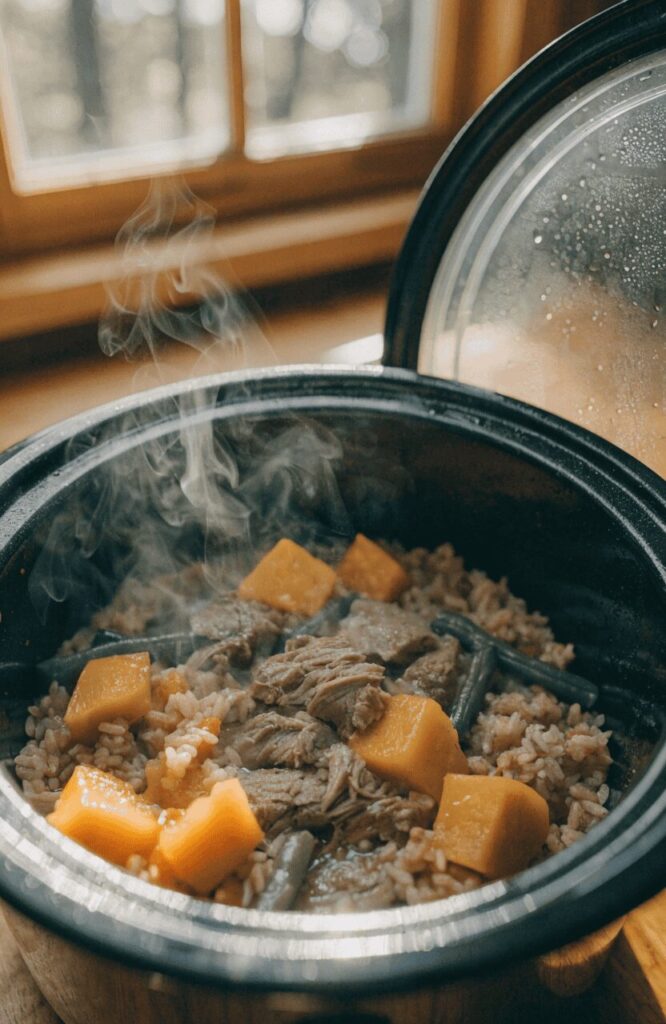
This one’s for the days you don’t have time to stand over a stove. Everything goes into the slow cooker raw, and it comes out fully cooked, soft, and ready to portion — about as hands-off as homemade dog food gets, which makes it a good option for owners who want to batch-cook once and not think about it again for a week.
Prep Time: 10 minutes Cook Time: 6–7 hours on low (or 3–4 hours on high) Freeze Time: Up to 3 months Yield: About 10 cups
Ingredients:
- 2 lbs lean ground beef or chicken
- 1.5 cups brown rice, uncooked
- 1 cup butternut squash, diced
- 1 cup green beans
- 1 cup carrots, sliced
- 4 cups water or low-sodium broth
Instructions:
- Add the raw ground meat, uncooked rice, diced squash, green beans, and sliced carrots directly into the slow cooker — there’s no need to pre-cook or brown anything first.
- Pour in the water or broth and stir once to combine everything and make sure the rice is mostly submerged.
- Cover and cook on low for 6–7 hours, stirring once around the halfway mark to break up the meat into smaller pieces as it cooks.
- Once the rice is fully tender and the meat is cooked through with no pink remaining, turn off the slow cooker and let everything cool in the pot with the lid off for faster cooling.
- Stir well to redistribute any liquid that’s settled, then portion into containers once it’s reached room temperature.
Notes: Since everything cooks together starting raw, this is about as close to true dump-and-go homemade dog food as it gets, with minimal cleanup since it’s all in one pot. It’s a good one to rotate alongside our broader homemade dog food recipes collection if you like keeping a few different meals stocked in the freezer at once.
Storing, Freezing, and Portioning Homemade Senior Dog Food
Homemade food behaves differently than kibble, so storage matters more. Refrigerated meals stay safe for 3–4 days in an airtight container, and anything you won’t use within that window should go straight into the freezer rather than sitting in the fridge “just in case.”
For longer storage, freeze portions for up to 2–3 months in freezer-safe bags or containers, laid flat if possible to save space and speed up thawing later. Thaw frozen portions overnight in the fridge rather than on the counter, since room-temperature thawing gives bacteria more time to grow.
Always let food cool to room temperature before serving — too hot or too cold can put off a senior dog’s already finicky appetite, and warming food slightly (not hot) can actually help by releasing more aroma for dogs whose sense of smell has dulled with age. Small containers or ice cube trays make portioning faster and reduce waste, especially for smaller breeds eating less per meal.
Why Homemade Food Helps Senior Dogs
Beyond convenience, homemade meals tend to carry more moisture than kibble, which helps senior dogs who are prone to dehydration as their thirst drive changes with age. Cooking at home also means you can leave out common allergens like wheat, soy, or corn, which sometimes show up as excessive licking or skin irritation in older dogs with sensitive systems.
It also makes portion control simpler, since overweight senior dogs face a higher risk of joint strain and other age-related complications. None of this replaces veterinary guidance, but it does give you a real say in what ends up in your dog’s bowl every day, one homemade meal at a time.

Izzy is an experienced ranch worker who has a passion for exploring nature and getting up close to wildlife. With her connections to various animal organizations, Izzy is well-versed in animal care and rehabilitation.