A Beginner’s Guide to Raw Dog Food Recipes and Homemade Bowls
If you’ve been scrolling through Instagram lately, you’ve probably noticed more and more dog owners sharing colorful, fresh bowls piled with meat, organs, veggies, and fruit. That’s the world of raw dog food recipes — and it’s not just a trend. More pet parents are switching to homemade raw meals because they want to know exactly what’s going into their dog’s bowl, and honestly, the bowls look pretty amazing too.
If you’re new to this style of feeding, it can feel overwhelming at first. What do you actually put in the bowl? How much meat versus veggies? Do you need supplements? This guide breaks it all down in simple terms, then walks you through seven real raw dog food recipe ideas inspired by dog owners who feed this way every single day.
Whether you’re looking for raw dog food homemade inspiration or just want fresh raw dog food bowl ideas to switch things up for your pup, you’ll find something useful here. Let’s dig in.
Contents
What Makes a Great Raw Dog Food Bowl
Before jumping into recipes, it helps to understand the basic building blocks of a balanced raw meal. Most raw feeders build their bowls around five simple categories.
I. Muscle Meat
This is the base of almost every bowl — beef, chicken, turkey, lamb, or fish. Muscle meat gives dogs protein and essential amino acids they need for strong muscles and energy.
II. Organ Meat
Organs like liver, kidney, and heart are nutritional powerhouses. Liver especially is packed with vitamin A, iron, and B vitamins. Most raw feeders aim for organs to make up a small but consistent part of the bowl.
III. Raw Meaty Bones
Bones like chicken necks, duck feet, or rabbit bones give dogs calcium and phosphorus, plus they help keep teeth clean naturally. If your dog isn’t ready for whole bones, ground eggshell is a common substitute for calcium.
IV. Fruits and Vegetables
Cucumbers, carrots, berries, pumpkin, and leafy greens add fiber, antioxidants, and hydration. They’re not essential in the same way meat is, but they add variety and nutrients dogs can’t get from meat alone.
V. Extras and Boosters
Things like fish oil, kefir, quail eggs, or herbal blends round out a bowl with omega-3s, probiotics, and extra micronutrients.
If you’re just getting started, it’s smart to also brush up on your dog’s overall puppy veterinary needs so you know what nutritional milestones to watch for as your dog grows, especially if you’re switching a puppy to raw feeding.
Seven Homemade Raw Dog Food Recipe Ideas to Try
Here are seven real-world raw dog food recipe ideas, each built around a different combination of proteins, organs, and produce. Mix, match, and rotate these to keep meals interesting for your dog.
1. Meat, Carrot & Berry BARF Bowl

This bowl keeps things simple and colorful, which makes it a great starting point if you’re new to raw dog food homemade meals. It’s built around one main protein, a couple of easy-to-find vegetables, and a handful of fresh berries, so you don’t need a long shopping list to put it together.
What’s in it:
- Ground meat base
- Sliced carrots
- Fresh raspberries
- Chopped fresh herbs (like parsley)
Carrots and raspberries add natural sweetness and fiber, while the herbs give the bowl a fresh, appetizing smell that many dogs find irresistible. Parsley in particular is often used by raw feeders as a light breath freshener, and a small sprinkle goes a long way without overpowering the meal.
This is an easy formula to repeat weekly with whatever seasonal fruit you have on hand. In summer, you could swap raspberries for chopped watermelon or blueberries, and in cooler months, thin slices of steamed sweet potato work well in place of raw carrot for dogs who prefer softer textures. Because the recipe is so flexible, it’s a good “base template” bowl to keep in rotation between richer, more complex meals — think of it as the everyday comfort meal that’s quick to prep after a long day.
For dogs transitioning from kibble, this bowl is also gentle on the stomach since it avoids heavier organs or unfamiliar proteins, making it a safe first step into raw feeding.
📸 Photo credit: Instagram @bisueberbeidepfoten
2. Veal & Organ Variety Bowl
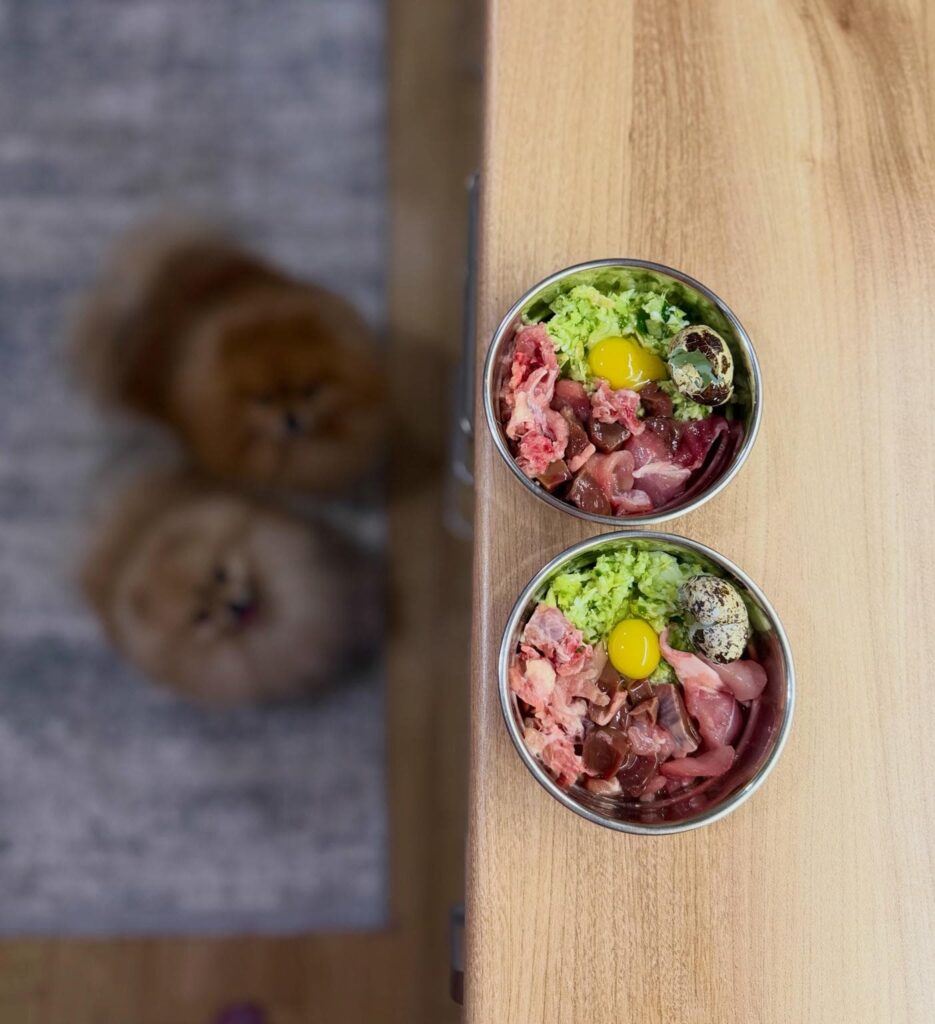
This one leans heavily into organ variety, which is great for dogs who’ve been eating raw for a while and can handle a richer meal. Instead of relying on just one organ, it combines three at once, giving a much wider nutrient spread in a single sitting.
What’s in it:
- Veal muscle meat
- Turkey necks (as the bone source)
- Veal heart
- Veal kidney
- Veal liver
- Quail egg
- Cabbage
- Cucumber
- Fresh cilantro
Rotating through veal heart, kidney, and liver in one sitting gives a wide nutrient spread without needing extra supplements. Heart is technically a muscle meat but functions almost like a supplement thanks to its high taurine and CoQ10 content, both of which support healthy heart function in dogs. Kidney adds selenium and B vitamins, while liver rounds things out with vitamin A and iron — but because liver is so nutrient-dense, it’s best kept to a smaller portion of the overall bowl rather than a main ingredient.
The cucumber and cabbage add crunch and hydration, balancing out the richness of the organs, and the quail egg contributes extra protein along with a boost of biotin. If your dog isn’t used to organ meat yet, it’s worth introducing this style of bowl gradually — start with just liver on its own for a few meals before layering in kidney and heart, since organ meat can cause loose stools if added too quickly in large amounts.
This bowl also works well as a “boost meal” once or twice a week rather than an everyday recipe, giving your dog a concentrated nutrient top-up alongside simpler muscle-meat-based bowls.
📸 Photo credit: Instagram @spitz_bublik
3. Rabbit, Duck & Sardine Adventure Bowl
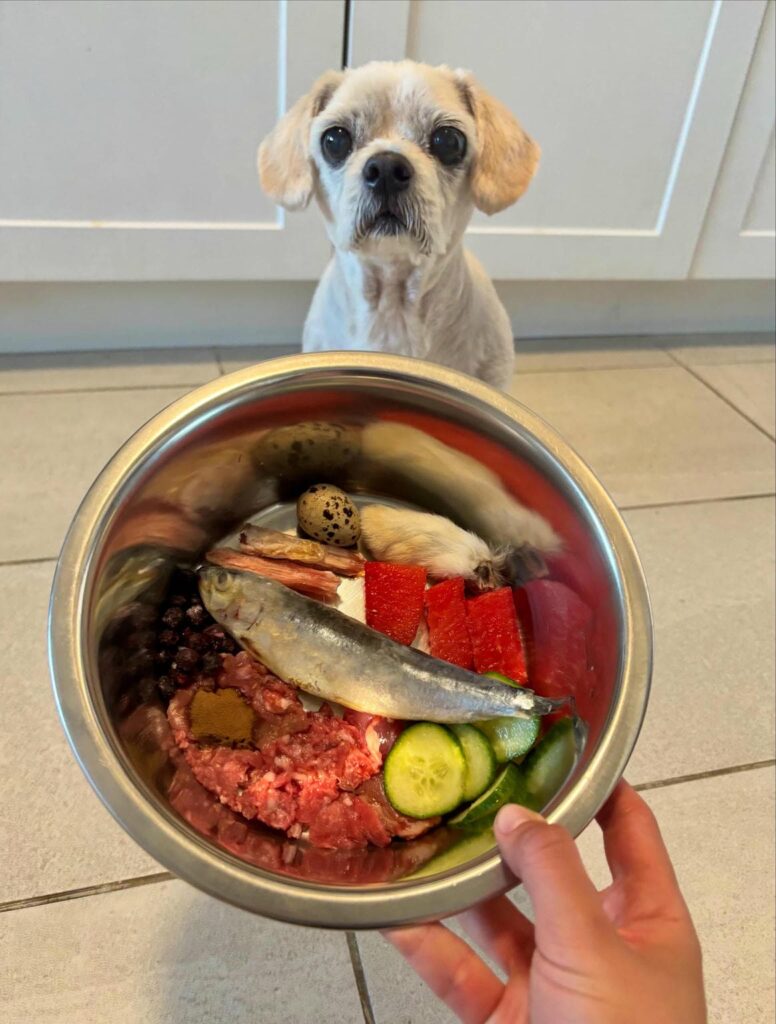
If your dog does well with novel proteins, this bowl is a fun way to introduce something different from the usual chicken and beef. It’s also a great option for dogs with known sensitivities to more common proteins, since rabbit and duck are less likely to trigger reactions in dogs who’ve had allergy issues before.
What’s in it:
- Raw rabbit
- Duck tongues
- Whole sardine
- Sliced cucumber
- Wild blueberries
- Quail egg
- Rabbit foot (as a natural bone and chew)
- Watermelon
- Turkey tail mushroom
Sardines are an excellent source of omega-3 fatty acids, and rabbit is a lean, easily digestible protein that’s great for dogs with sensitivities to more common meats. Duck tongues might sound unusual, but they’re a nutrient-dense, low-calorie addition that many raw feeders use as a novel protein topper rather than a main course.
The mix of berries and watermelon also adds hydration, which is especially helpful after a long walk or play session on a warm day — this bowl works particularly well as a post-exercise meal since the water content in the fruit helps replenish fluids lost through panting. Turkey tail mushroom is an interesting addition too; it’s commonly used by raw feeders for its potential immune-supporting properties, though it’s usually added in small, occasional amounts rather than every single meal.
The rabbit foot serves double duty as both a source of bone and a natural chew that can help keep your dog occupied and support dental health. If your dog is new to whole bones, supervise closely the first few times to make sure they’re chewing rather than trying to swallow large pieces whole.
📸 Photo credit: Instagram @_tobys_tales
4. Beef Meaty Bites with Superfood Toppings
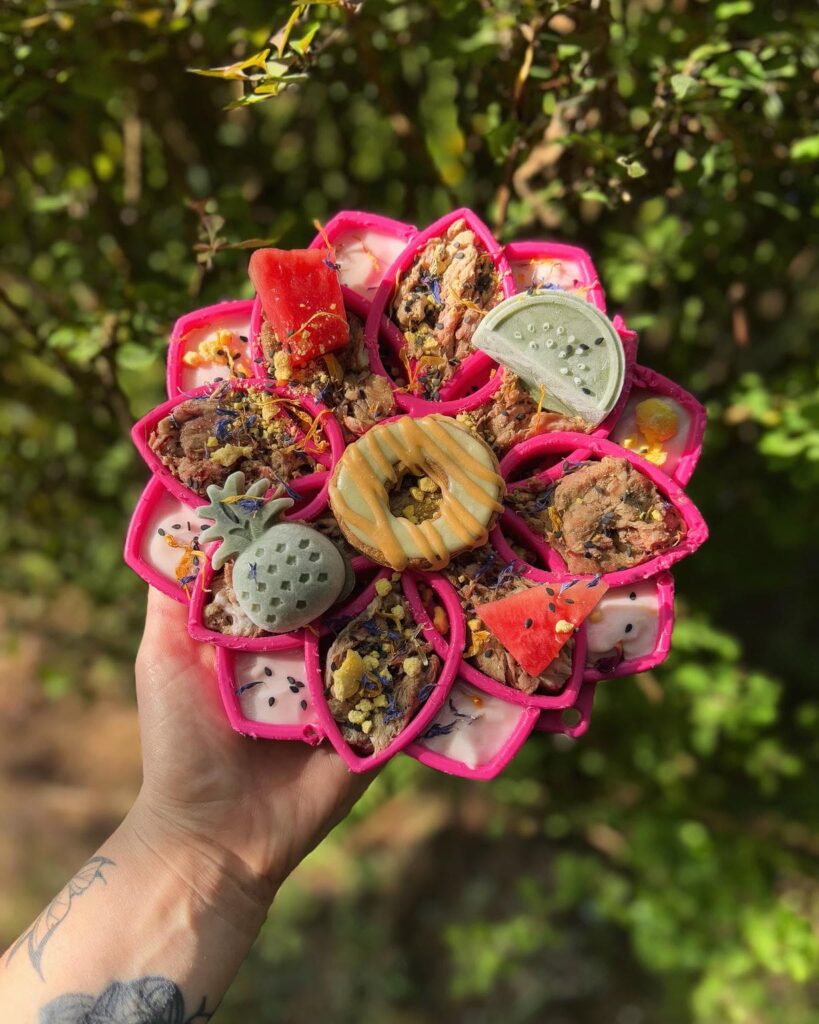
This recipe is proof that raw feeding doesn’t have to be boring — it can look like a full spread of toppings, almost like a dessert bar for dogs. It’s a fun one to prepare on weekends or for special occasions when you want mealtime to feel a little more festive.
What’s in it:
- Beef meaty bites with vegetables
- Black sesame seeds
- Freeze-dried quail eggs
- Strawberry powder mixed with Greek yogurt
- Fresh watermelon
- A frozen “doggy donut” treat
- Daily wellness powder and kefir
The beef and vegetable base handles the core nutrition, while the toppings — yogurt, kefir, freeze-dried eggs — add probiotics and extra flavor variety. Kefir in particular is popular among raw feeders because it introduces beneficial bacteria that can support gut health, and most dogs tolerate it well in small amounts even if they’re sensitive to regular dairy.
Black sesame seeds are mostly there for texture and a small mineral boost, including calcium and iron, though they should only be used in modest sprinkled amounts rather than as a main ingredient. The frozen “doggy donut” is essentially a fun-shaped frozen treat, usually made from a base like yogurt or pureed fruit, and freezing it gives dogs a satisfying, slow-melting texture that can double as enrichment on a hot day.
This is a great format to copy if you want to make raw feeding feel a little more special on hot days or celebration days, like a birthday or “gotcha day” anniversary. It’s worth noting this bowl is more of an occasional indulgence than a daily staple, since the added toppings bump up the calorie count — for everyday meals, a simpler bowl like the chicken and pumpkin combination further down this list is a better fit.
📸 Photo credit: Instagram @fuelledbyraw
5. Turkey, Beef & Tripe Power Bowl
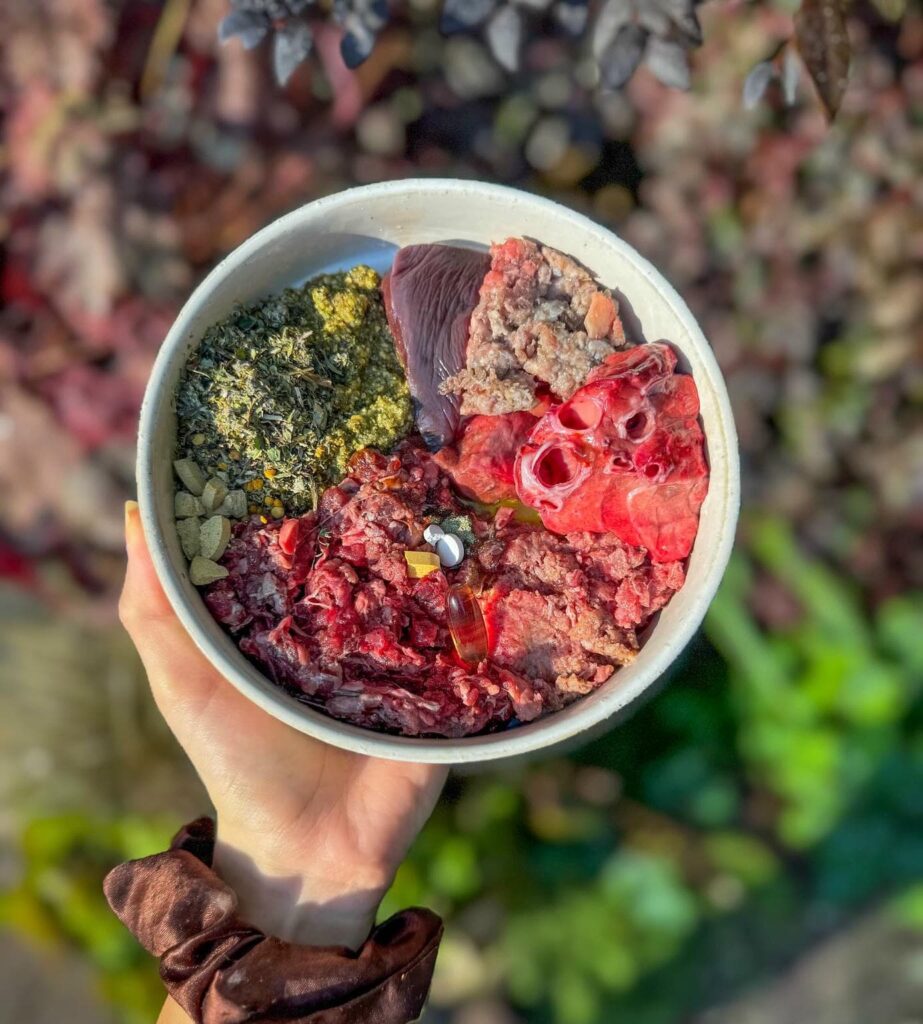
This is a heartier, protein-dense bowl for dogs who need extra calories or are very active, such as working dogs, high-energy breeds, or dogs recovering from illness who need to rebuild muscle mass.
What’s in it:
- Ground turkey
- Bovine tripe
- Beef
- Green tripe
- Deer meat
- Rehydrated dried courgettes (zucchini)
- Herbal mix
- Organic mountain flower pollen
- Nutraceutical supplement
Green tripe is often called nature’s probiotic because of its natural enzyme content, and pairing it with multiple protein sources — turkey, beef, deer — gives a wide amino acid profile in a single bowl. Green tripe has a strong smell that can be off-putting to humans, but most dogs love it, and it’s considered one of the more nutritionally complete single ingredients you can add to a raw diet.
The rehydrated courgettes add fiber without diluting the meal’s calorie density too much, since dried and rehydrated vegetables tend to be more concentrated than their fresh counterparts. Deer meat is a great lean, novel protein for dogs who need extra calories without excess fat, making this bowl particularly suitable for very active dogs who burn through energy quickly.
The addition of mountain flower pollen and a nutraceutical supplement shows how some raw feeders like to layer in extra micronutrient support, though these kinds of additions are optional and should be introduced slowly and in small amounts to check how your dog tolerates them. If your dog is less active, this bowl can easily be scaled down in portion size, or the deer and beef can be swapped for a single leaner protein to reduce the overall calorie load.
📸 Photo credit: Instagram @bornagainrawfeeders
6. Lamb, Duck & Fruit Rotation Bowl

This recipe is built around the idea that dogs, like people, benefit from variety instead of eating the exact same meal every day. It combines several proteins and textures in a single bowl, which also makes it a great “clean out the fridge” style meal once you’ve got a raw feeding routine down.
What’s in it:
- Lamb heart
- Lamb tripe and turkey mixed
- Duck foot
- A portion of fish
- Sliced banana
- Almonds (crushed, in small amounts)
- Strawberries
- Beetroot bone
- Berry blend
- Ground eggshell
- Fresh coriander
This bowl rotates through several proteins in one sitting, which mimics how a dog might eat in the wild — never the exact same prey twice. Lamb heart adds taurine and iron, while the tripe and turkey mix brings in extra texture and digestive enzymes. The duck foot works similarly to the rabbit foot in an earlier recipe, offering both a bone source and a natural chew for dental health.
The ground eggshell is a simple, affordable way to add calcium if you’re not using whole bone in every meal — it’s a popular substitute among raw feeders who want the bone-to-meat ratio right without sourcing actual bones every week. Fresh coriander is included mostly for its aroma and a small dose of antioxidants, and like most herbs in raw feeding, it’s used sparingly rather than as a bulk ingredient.
Banana and strawberries bring natural sweetness and potassium, and the “beetroot bone” mentioned here is essentially a bone-shaped treat flavored or colored with beetroot, which some owners use as a fun, naturally-tinted chew rather than a core nutritional component. Because this bowl includes so many different elements, it’s best suited for dogs who are already comfortable with raw feeding and haven’t shown sensitivities to multiple proteins at once — if you’re just starting out, introduce one new protein at a time rather than combining this many in a single meal.
📸 Photo credit: Instagram @rawboysjr
7. Chicken, Sardine & Pumpkin Balanced Bowl
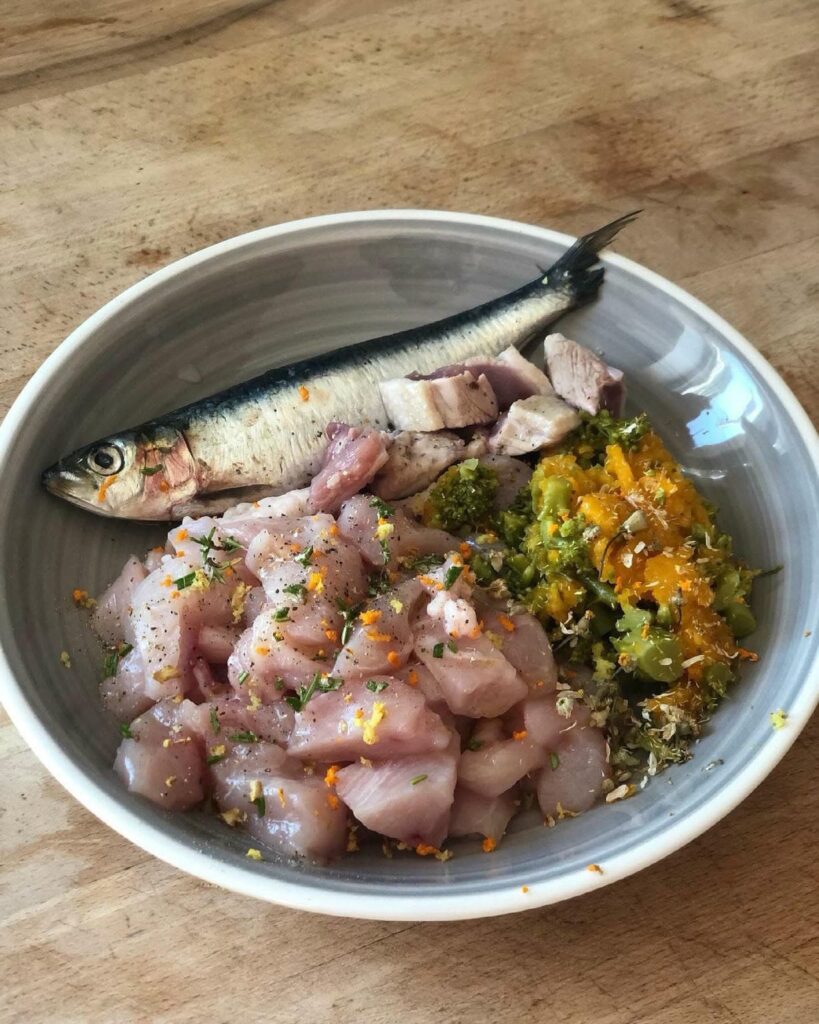
This last bowl keeps things refreshingly simple, which makes it a great everyday option if you don’t want to hunt down unusual ingredients. It’s the kind of recipe you can prep in bulk and portion out for the whole week without much fuss.
What’s in it:
- Diced raw chicken
- A whole sardine
- Steamed broccoli
- Mashed pumpkin
- A light sprinkle of fresh herbs and citrus zest
Chicken is one of the most accessible proteins for raw feeding, and pairing it with a whole sardine covers omega-3 needs without extra supplements — sardines are small enough to feed whole, bones and all, making them an easy, low-mess bone source for smaller dogs. Pumpkin is gentle on digestion and a favorite add-in for dogs prone to an upset stomach, since its soluble fiber can help firm up loose stools while still being easy to digest.
Broccoli adds fiber and antioxidants, though it’s best kept to a small portion of the bowl since large amounts can cause gas in some dogs. The light citrus zest and herb sprinkle are purely for aroma and a touch of extra vitamin C, and they’re optional if your dog seems uninterested in the added scent.
This is a great “everyday bowl” to fall back on when you don’t have time for a more elaborate recipe, and it’s flexible enough to build a whole week of variations from — swap the chicken for turkey, the sardine for mackerel, or the pumpkin for sweet potato, and you’ve essentially got a new meal without changing the overall structure of the bowl.
📸 Photo credit: Instagram @benjanosso_veterinaria
Tips for Making Raw Dog Food Homemade Safely
Feeding raw comes with some extra responsibility compared to scooping kibble into a bowl. Here’s how to do it safely.
Rotate Your Proteins
Sticking to just one protein source can lead to nutrient gaps over time. Try to rotate between at least two or three proteins across the week — like the lamb, duck, and fish combination shown above.
Portion by Body Weight
Most raw feeders start around 2–3% of a dog’s body weight per day, split into meals. Active or working dogs may need closer to 3%, while less active dogs may do fine on the lower end.
Keep Everything Clean
Raw meat carries bacteria just like it would for human cooking. Wash bowls after every meal, keep raw meat separate from other food prep areas, and wash your hands after handling.
Freeze and Thaw Properly
Freezing meat for a few weeks before feeding can help reduce parasite risk, especially with wild-caught or unfamiliar proteins. Thaw in the fridge, not on the counter.
Set Up a Dedicated Feeding Space
Raw meals can get a little messy, so having a proper setup makes cleanup much easier. If you’re redoing your dog’s eating area, these dog feeding station ideas are worth a look for keeping bowls, mats, and prep tools organized in one spot.
Fun Ways to Serve Your Raw Dog Food Bowl
Part of what makes raw feeding so popular on social media is the presentation. You don’t need fancy molds to make a raw dog food bowl look appealing, but a few small touches can make mealtime more fun for both you and your dog.
Use Shape Molds for Special Occasions
Silicone molds shaped like flowers, donuts, or fruit slices can turn a regular meal into something that feels like a celebration bowl for birthdays or holidays.
Add a Topping Bar
A sprinkle of seeds, a spoonful of kefir, or a few freeze-dried treats on top can add texture and flavor variety without changing the core nutrition of the meal.
Mix in Seasonal Fruit
Watermelon in summer, pumpkin in fall — using what’s in season keeps things fresh and can be a fun way to introduce new flavors your dog hasn’t tried before.
Try Frozen Treat Add-Ons
Frozen yogurt-based treats or fruit purees frozen into small shapes make a great topper, especially in warmer months. If you want more ideas along these lines, this collection of homemade dog treats recipes has plenty of inspiration for topping ideas or standalone snacks.
Common Mistakes to Avoid with Raw Dog Food Recipe Ideas
Even well-meaning raw feeders can make mistakes early on. Here are the most common ones to watch for.
Too Much Bone, Not Enough Meat
Bone should be a smaller portion of the bowl, not the main event. Too much bone can cause constipation, while too little can lead to calcium deficiencies over time.
Skipping Organs Entirely
Organs are where a lot of the essential vitamins live. A bowl of just muscle meat and vegetables, without any organ meat, is missing key nutrients.
Feeding Unsafe “People Foods”
Not everything found in a human kitchen is safe for dogs. Some seemingly harmless snacks are actually risky, so it’s worth checking anything you’re unsure about — for example, many owners wonder can dogs eat cheerios before tossing one over as a quick training treat.
Not Adjusting Portions as Your Dog Grows or Changes
A recipe that works for a young, active dog may be too rich for an older, less active one. Revisit portion sizes every few months, especially after any big changes in activity level or weight.
Switching Too Fast
Jumping straight from kibble to a full raw diet overnight can upset a dog’s stomach. A slow transition over one to two weeks, gradually increasing the raw portion, tends to go much smoother.
Final Thoughts
There’s no single “perfect” raw recipe — the best raw dog food recipes are the ones that rotate proteins, include organs and produce, and fit your dog’s individual needs. Start simple, like the chicken and sardine bowl, before working up to more elaborate combinations like the multi-protein power bowls.
If you’re building out a full weekly meal plan, it’s worth browsing more homemade dog food recipes or exploring human-grade dog food recipes for even more variety to rotate through.
Try one bowl from this list this week and see how your dog responds. Chances are, that eager, waiting-by-the-bowl look will tell you everything you need to know.

Izzy is an experienced ranch worker who has a passion for exploring nature and getting up close to wildlife. With her connections to various animal organizations, Izzy is well-versed in animal care and rehabilitation.