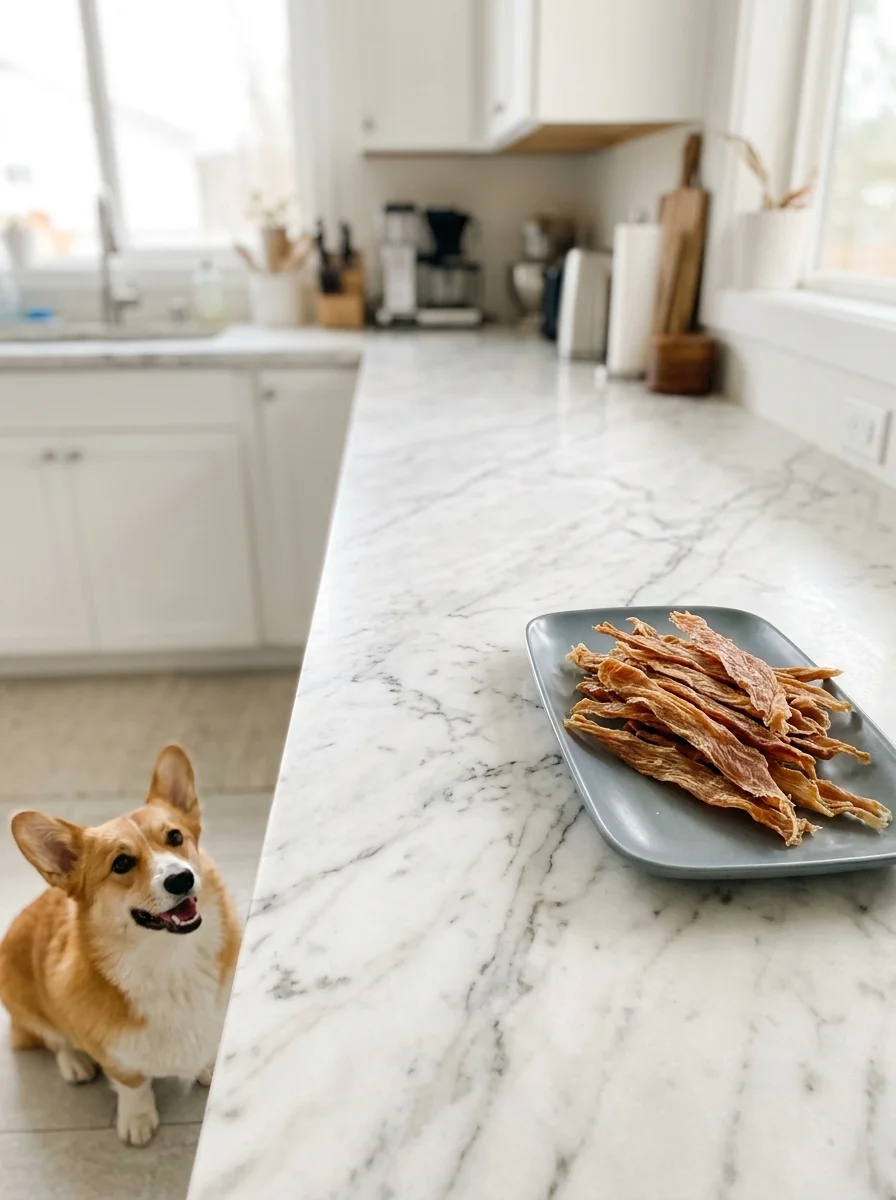
The Only 5-Ingredient Homemade Dog Food Recipe You Need
Most dog parents assume that making food at home is complicated, requiring complex chemistry and grocery lists that stretch into infinity. The truth is much simpler. A simple 5-ingredient homemade dog food recipe can provide a wholesome, digestible meal that your dog will actually love. When you strip away the commercial preservatives and mystery by-products, you are left with ingredients you can hold in your hand and trust.
This approach removes the guesswork from home cooking. Instead of trying to balance a dozen different components, you rely on a proven formula that fills the essential nutritional slots. You get a meal that is soft, nutritious, and ready in under an hour.
We will walk you through the logic behind this method, showing you how to mix and match ingredients to keep things fresh and exciting. You will get three distinct recipes to try, along with tips on storage and feeding amounts. Whether you have a senior dog or an energetic puppy, there is a version of this method that works for your companion.
The 5-Ingredient Formula
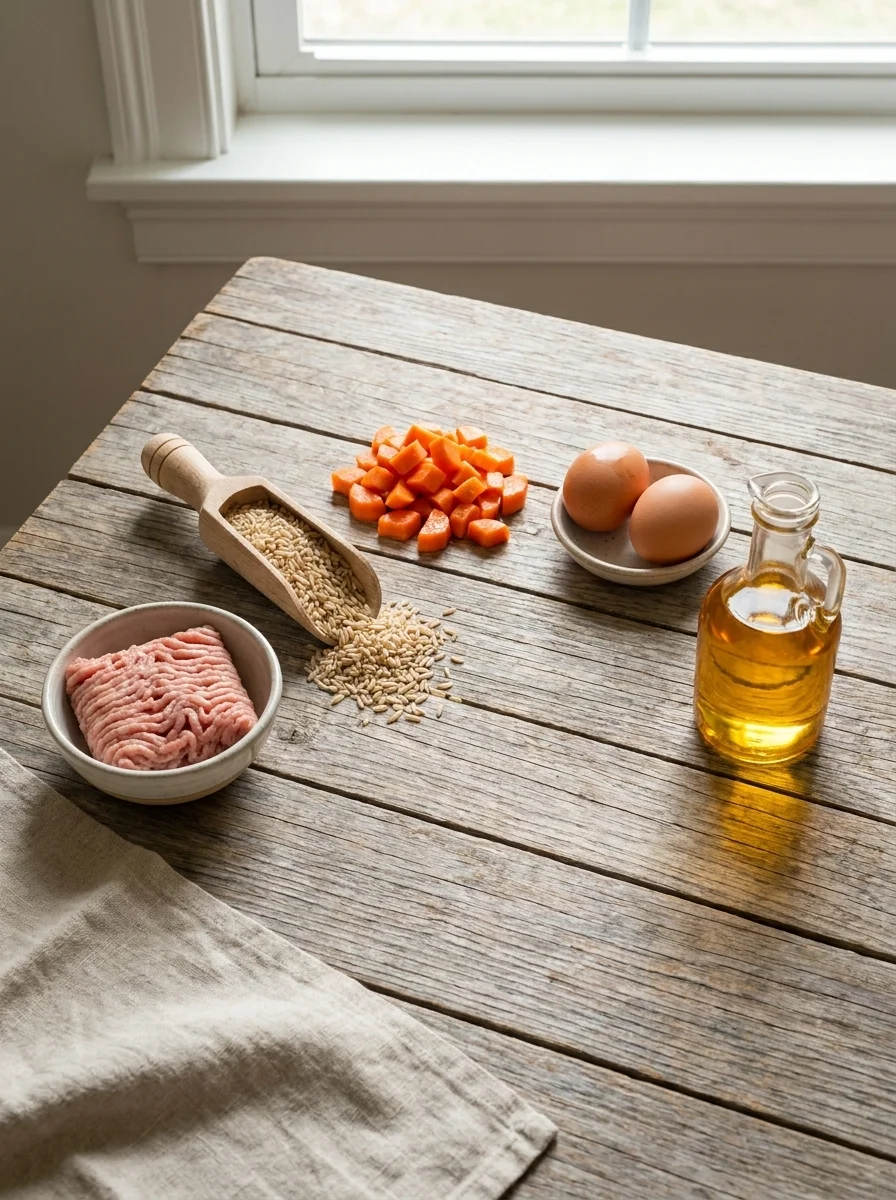
Every recipe in this guide is built from five specific slots that work together to create a balanced meal. Understanding this framework allows you to create endless variations without losing the nutritional foundation. The slots are protein, carb/base, vegetable, healthy fat, and egg.
Protein: This is the muscle builder. It can be turkey, beef, chicken, or fish. The protein source provides the amino acids your dog needs for tissue repair and energy. You want to aim for lean cuts to keep the fat content predictable, though a little natural fat is fine.
Carb/Base: This slot provides steady energy and fiber. Options include rice, oats, or potato. These ingredients act as the binder that holds the meal together. They also help with digestion, ensuring that the food moves smoothly through the gut.
Vegetable: This adds micronutrients and flavor. Carrots, green beans, zucchini, or sweet potatoes are excellent choices. The vegetable adds texture and a pop of color, making the food more appealing to picky eaters.
Healthy Fat: Fats are crucial for coat health and absorption of fat-soluble vitamins. A tablespoon of oil or the natural fat in the meat covers this. Sources like sunflower, olive, or coconut oil are ideal because they are single-ingredient and easy to dose.
Egg: The egg is the secret weapon. It acts as a binder that helps the other ingredients cohere, and it is a complete protein source on its own. The yolk adds lecithin, which supports brain health and skin integrity.
One honest note to keep in mind: if you are feeding this daily long-term, you must consult your vet. A canine calcium or multivitamin supplement may be necessary to ensure that the diet remains fully balanced over time.
Swaps That Keep It at Five
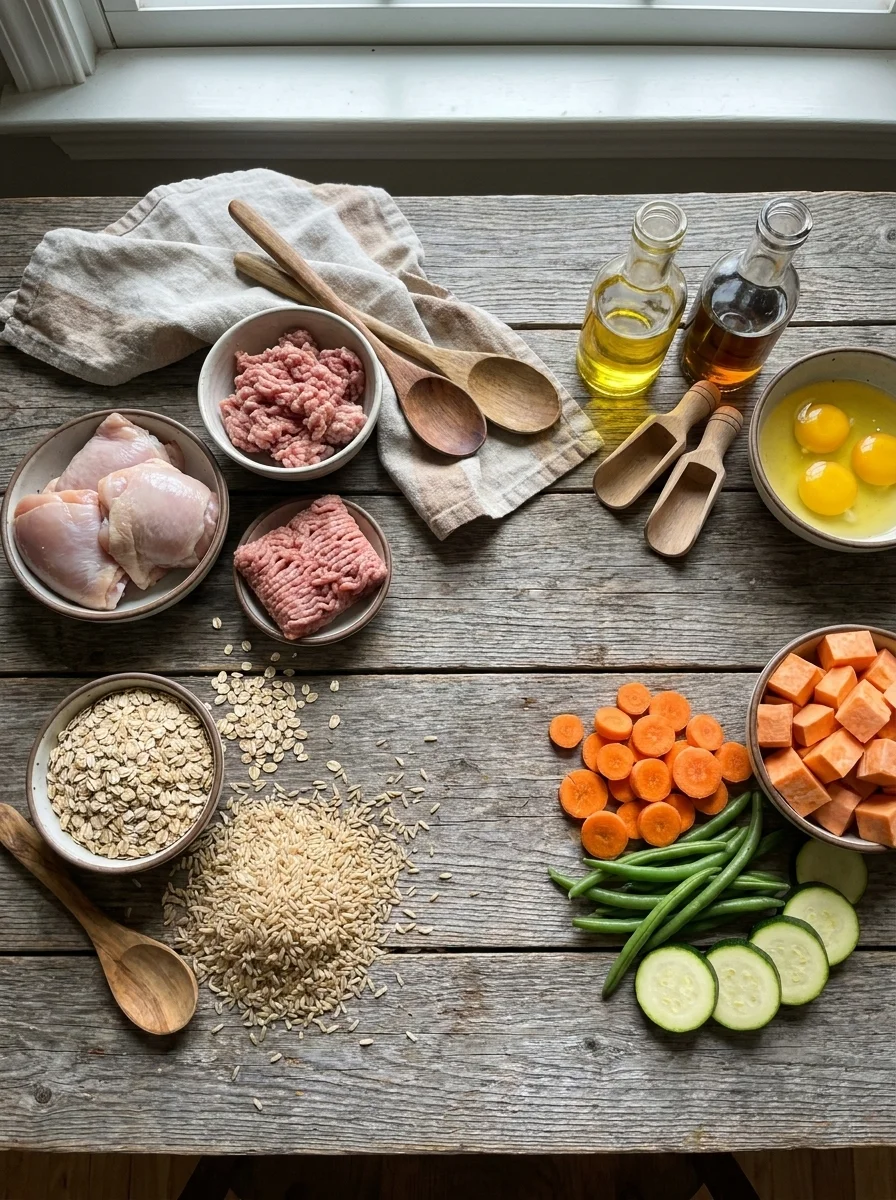
You do not have to stick to the exact ingredients listed in the recipes below. You can swap ingredients within the same slots to keep the five-ingredient count intact. This flexibility is what makes the method so durable for weeknight cooking.
Protein: Swap turkey for chicken, or fish for beef. Keep the weight consistent. For example, if you use beef instead of turkey, use the same two-pound amount.
Carb/Base: Swap rice for oats, or potato for quinoa. The goal is to use a similar volume of uncooked grains or starchy vegetables.
Vegetable: Swap carrots for peas, or zucchini for spinach. Remember to cook leafy greens well so they do not add too much bulk.
Healthy Fat: Swap sunflower oil for coconut oil, or butter for fish oil. One tablespoon is the standard measurement for a large batch.
Egg: Stick with eggs. The binder property is specific to egg white and yolk proteins. Do not try to replace them with flax or chia in this specific formula.
Recipe 1: 5-Ingredient Homemade Dog Food
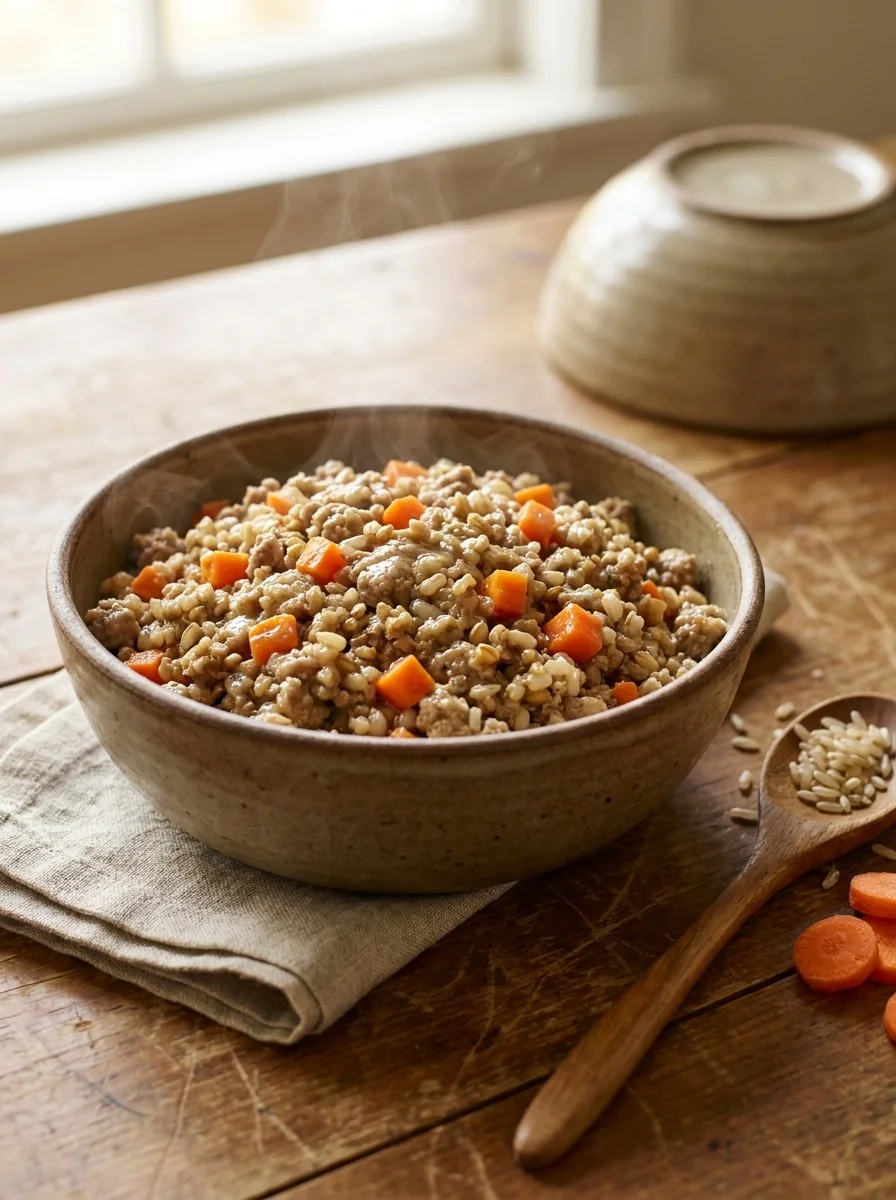
This is the foundational recipe for anyone new to home cooking. It uses turkey and rice, which are low-allergen options suitable for most dogs. The texture is soft and uniform, making it easy to scoop and serve.
Ingredients
- 2 lbs ground turkey (93% lean)
- 1 1/2 cups brown rice (uncooked)
- 3 medium carrots finely diced
- 2 large eggs
- 1 tablespoon sunflower oil
Step-by-Step Instructions
- Rinse the brown rice and cook it in a pot with water according to the package directions until tender.
- In a large skillet over medium heat, brown the ground turkey. Break it up with a spatula until no pink remains.
- Add the diced carrots to the skillet and stir for three to four minutes until they begin to soften.
- Crack the two eggs into a bowl, whisk them lightly, and pour them over the turkey and carrots.
- Scramble the eggs into the meat mixture using the spatula, stirring until the eggs are fully set.
- Remove the pan from the heat and stir the sunflower oil through the mixture to coat everything evenly.
- Stir in the cooked rice. Let the mixture cool completely in the pan or on a tray before serving.
If you are looking for a slow-cooker alternative to this method, check out this crockpot ground turkey dog food recipe.
Recipe 2: Salmon & Sweet Potato 5-Ingredient Dog Food
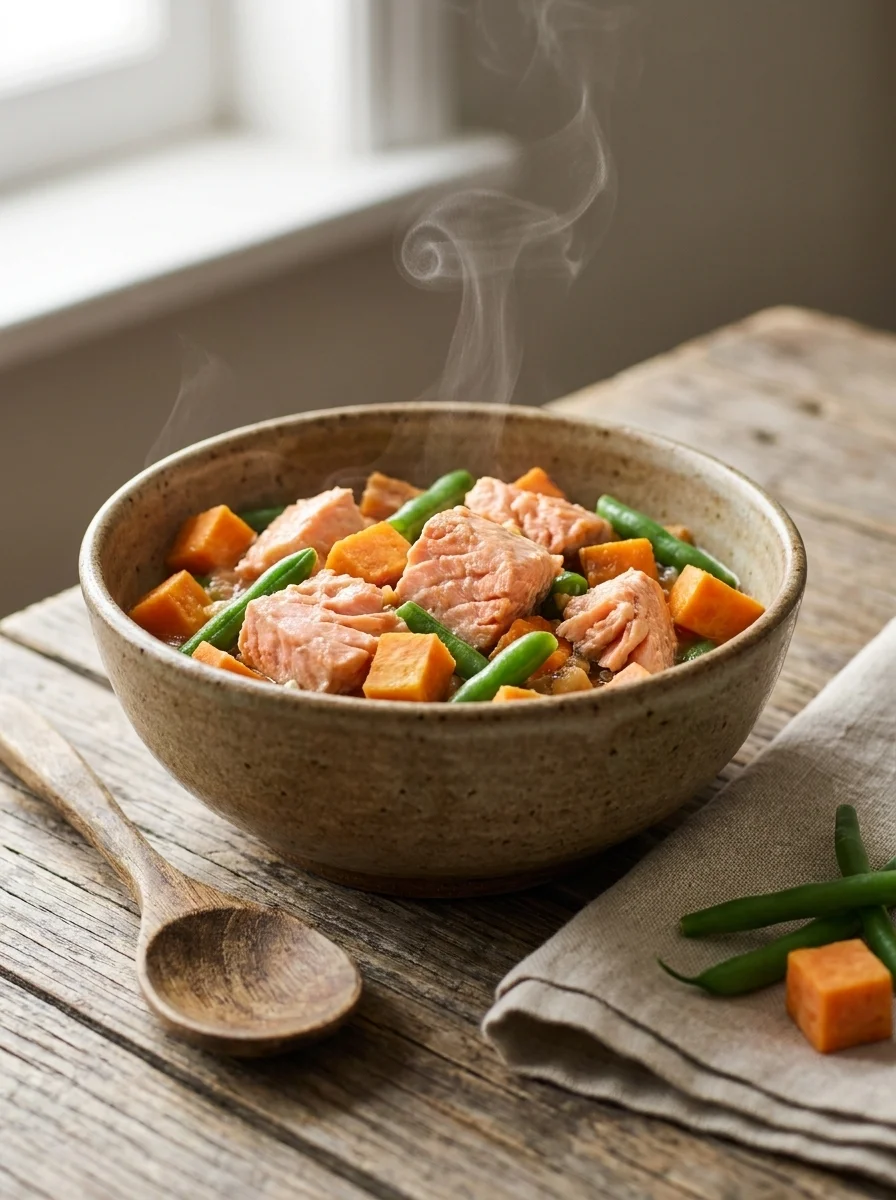
Salmon is a luxury ingredient that is easy to find and even easier to prep. It is rich in Omega-3 fatty acids, which are fantastic for joint health and shiny coats. This recipe has a slightly richer flavor profile than the turkey option.
The sweet potato adds a natural sweetness that balances the savory fish. Green beans provide a crisp texture that keeps the meal from feeling too heavy. This is a great option for dogs that need a boost in their immune system.
Ingredients
- 1 1/2 lbs salmon fillets (or canned salmon in water, drained)
- 2 medium sweet potatoes peeled and cubed
- 2 cups green beans chopped
- 2 large eggs
- 1 tablespoon olive oil
Step-by-Step Instructions
- Place the cubed sweet potatoes in a pot of boiling water and cook for ten minutes until just tender.
- Drain the potatoes and transfer them to a large bowl. Mash them slightly with a fork to create a paste.
- If using fresh salmon, flake it into the bowl. If using canned, drain it well and then flake it into the bowl.
- Add the chopped green beans to the mixture and stir until everything is combined.
- Crack the two eggs into the bowl and fold them into the salmon and vegetables.
- Drizzle the olive oil over the top and mix until the sheen disappears.
- Let the mixture cool before storing it in a container.
If you want to explore more seasoning options for your raw ingredients, see this homemade dog food seasoning recipe.
Recipe 3: Beef & Veggie 5-Ingredient Dog Food
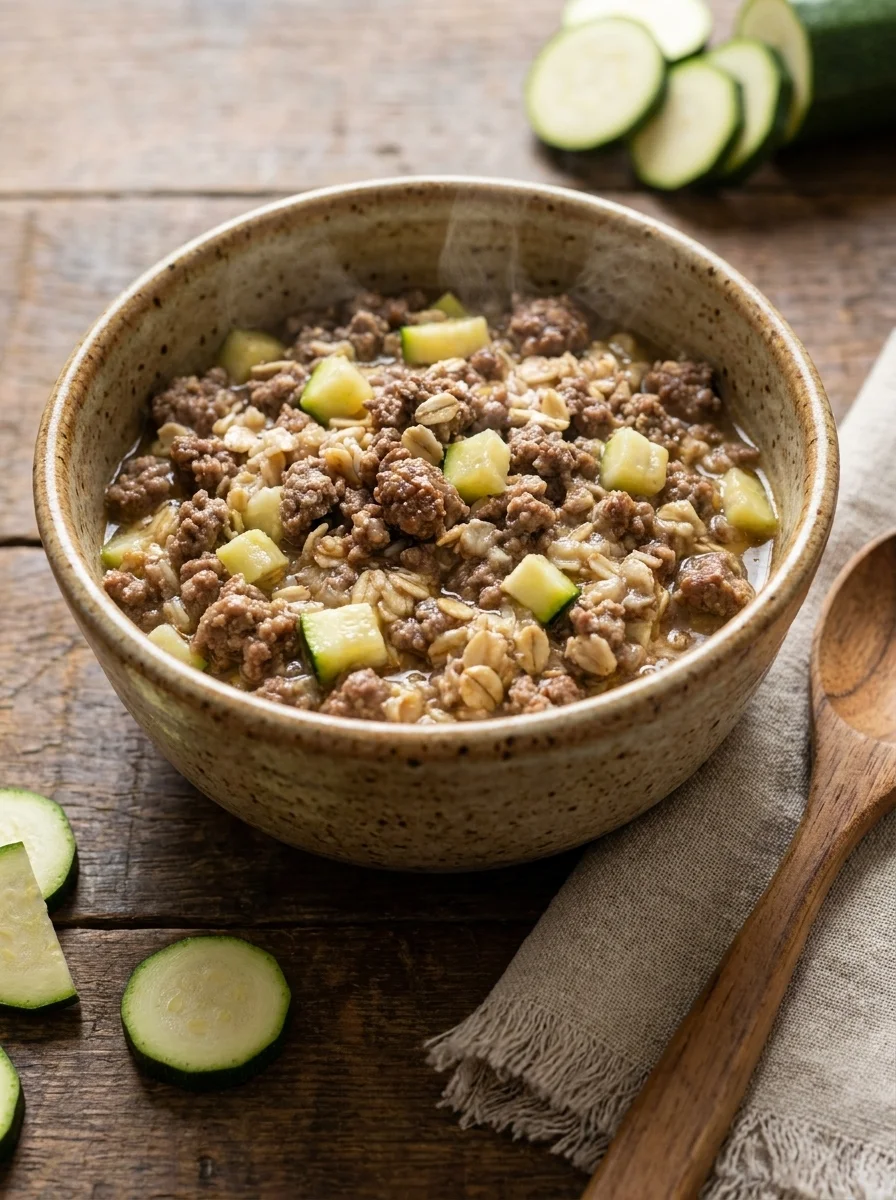
Beef is the classic choice for many dog parents because it is widely available and affordable. This recipe pairs beef with oats and zucchini for a hearty, filling meal. Oats provide slow-releasing energy, which is great for active dogs.
The zucchini adds moisture to the mix, preventing the beef from becoming too dry. Coconut oil adds a subtle flavor that many dogs find appealing. This batch is very durable and holds up well in the freezer.
Ingredients
- 2 lbs lean ground beef
- 1 cup rolled oats
- 2 medium zucchini diced
- 2 large eggs
- 1 tablespoon coconut oil
Step-by-Step Instructions
- Brown the ground beef in a large skillet over medium-high heat. Drain any excess fat if necessary, though some is okay.
- Add the diced zucchini to the beef and cook for three minutes until the liquid evaporates and the zucchini softens.
- Stir the rolled oats into the meat and vegetable mixture. Let it cook for two minutes to toast the oats slightly.
- Turn off the heat and let the pan sit for a minute so the steam can loosen the texture.
- Crack the eggs into a small bowl, beat them, and pour them over the beef mixture.
- Stir continuously until the eggs are fully cooked and integrated into the meat.
- Stir the coconut oil through the mixture and let it cool completely before serving.
For a side dish to pair with this meal, try these 4-ingredient pumpkin dog biscuits.
Batch Cooking and Storage
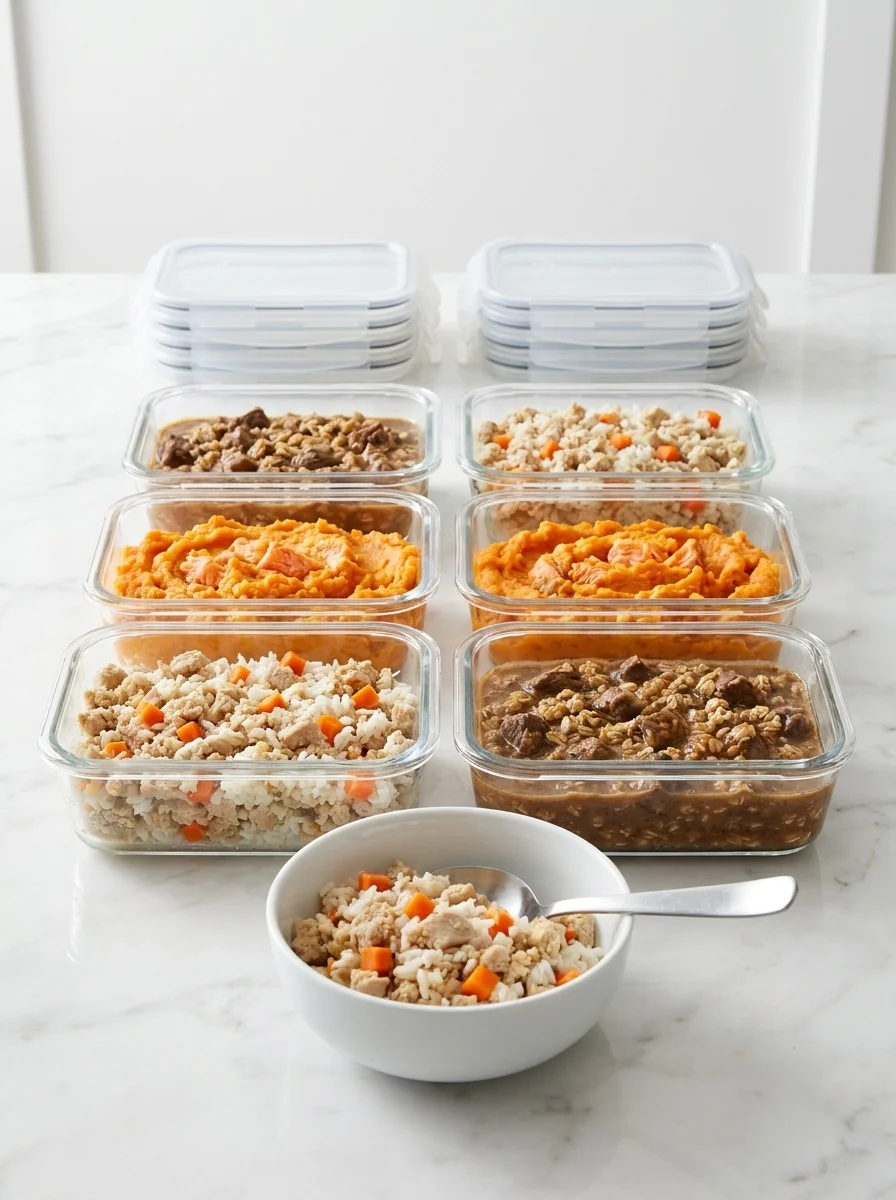
You do not have to cook a batch every single day. This method is designed for batch cooking. You can prepare a large quantity on Sunday and portion it out for the week. This saves you time and effort during the busy workweek.
Store the food in the refrigerator for up to four days. After that, it should be discarded. If you are making more than you can eat in four days, freeze the remainder.
For freezing, use airtight containers or heavy-duty freezer bags. You can freeze the food in large blocks and then break off portions as needed, or portion it into individual meal-sized containers right out of the pan. Labeled containers help you keep track of the date.
When you are ready to serve a frozen portion, move it to the refrigerator the night before to thaw slowly. Do not microwave frozen food directly, as it will create hot spots that can burn your dog’s mouth. Always let the food come to room temperature before serving it.
To make the transition smoother, you can mix in some 2-ingredient pumpkin dog treats to entice your dog to try the new texture.
Feeding Guide
Feeding amounts depend on the size and activity level of your dog. A general rule of thumb is to feed roughly 2% to 3% of your dog’s ideal body weight in food per day.
Small: A dog weighing 10 to 20 pounds needs about 200 to 600 grams of food per day. This usually translates to roughly 1 to 3 cups of the prepared mixture.
Medium: A dog weighing 30 to 50 pounds needs about 600 to 1200 grams of food per day. This is roughly 3 to 6 cups of the mixture.
Large: A dog weighing 80 to 100 pounds needs about 1600 to 2400 grams of food per day. This is roughly 8 to 12 cups of the mixture.
Do not switch your dog to this diet overnight. Transition over a period of one week. Start by mixing 25% new food with 75% of their current food, and slowly increase the new food portion every two days.
Monitor your dog’s body condition regularly. You should be able to feel their ribs without pressing hard. If they are gaining weight, reduce the portion size slightly. If they are losing weight, increase it. Keep in mind that different dogs have different metabolisms, so you may need to adjust these numbers based on your specific companion. If you are looking for a snack to add variety, try these 3-ingredient sweet potato dog cookies.
Frequently Asked Questions
Final Thoughts
Cooking for your dog does not have to be a science project. By relying on five simple slots, you can create a meal that is wholesome, affordable, and delicious. The flexibility of this method means you can use what you have in your pantry without worrying about missing a step.
Start with one batch on the weekend. Watch your dog’s eyes light up as they dig in. You will likely find that the time investment is minimal, but the peace of mind is immeasurable. Your dog will thank you with a wagging tail and a clean bowl.

Izzy is an experienced ranch worker who has a passion for exploring nature and getting up close to wildlife. With her connections to various animal organizations, Izzy is well-versed in animal care and rehabilitation.