
5 Human Grade Dog Food Recipes — Real Food, Real Results
If you’ve ever stood in your kitchen cooking chicken and vegetables and thought, “my dog would love this” — you were right.
Human grade dog food recipes are not complicated. They don’t require special ingredients, expensive equipment, or a trip to a health food store. Everything you need is already in a regular grocery store. The same chicken breast, the same brown rice, the same carrots you buy for yourself.
The best part? You know exactly what’s going in your dog’s bowl. No mystery ingredients. No unpronounceable preservatives. Just real food.
This guide gives you 5 easy human grade dog food recipes your dog will actually enjoy — plus serving sizes, storage tips, and everything you need to get started today.
Why Human Grade Dog Food Recipes Are Worth Making at Home
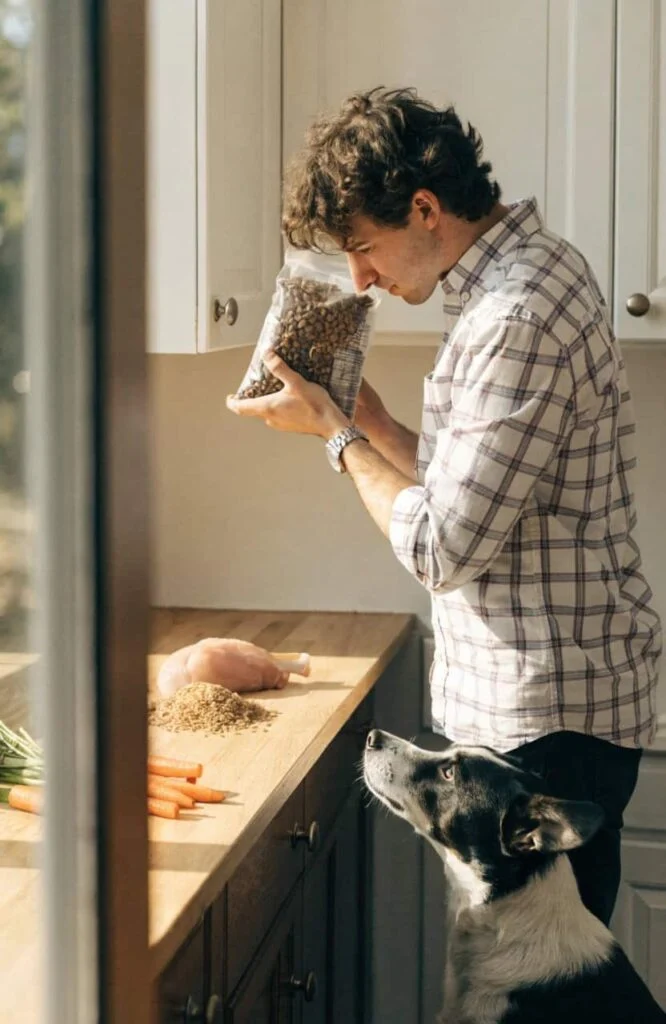
The Ingredient Difference That Changes Everything
Most commercial kibble is made from ingredients that would never pass human food inspection. Terms like “meat meal,” “by-product meal,” and “animal digest” are legal in pet food — but you’d never eat them yourself.
Human grade dog food uses the opposite approach. Every ingredient is something a person could eat. The chicken is the same chicken. The rice is the same rice. Nothing in the recipe would be rejected by a grocery store.
This matters because what goes into your dog’s food directly affects their energy, coat, digestion, and long-term health. Dogs fed on real, whole ingredients tend to have better coat shine, healthier weight, and more energy compared to dogs on heavily processed kibble.
What It Costs (And How It Compares to Premium Brands)
Fresh commercial dog food brands like The Farmer’s Dog or Ollie can cost $8–$15 per day for a medium-sized dog. Making your own human food recipes for dogs at home brings that cost down to roughly $2–$4 per day using the same quality ingredients.
A single batch of the recipes below (about 8–10 cups) costs between $7 and $12 depending on your local grocery prices. That batch can last a 20–25 lb dog almost a full week.
Before You Cook — 3 Quick Rules to Follow
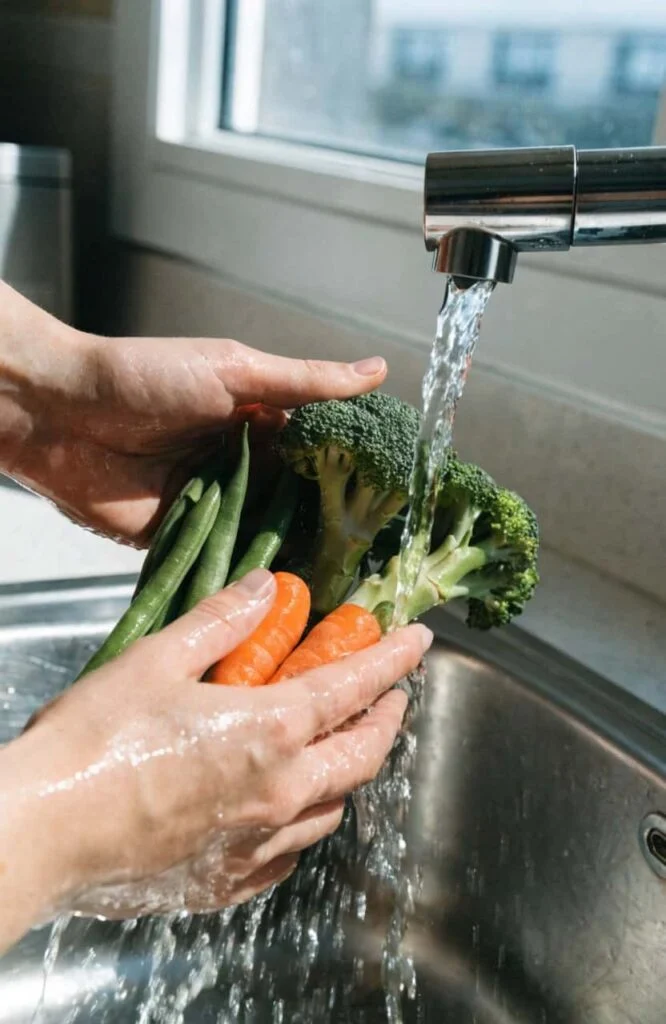
Rule 1: Never use these ingredients. Some human foods are toxic to dogs. Avoid completely: onions, garlic, grapes, raisins, chocolate, xylitol (an artificial sweetener), macadamia nuts, and avocado. Even small amounts of onion or garlic can damage a dog’s red blood cells.
Rule 2: No seasoning. Cook everything plain. No salt, no pepper, no sauces, no marinades. A dog’s kidneys are not built to handle sodium the way ours are. Plain food is not boring for a dog — it’s exactly what they want.
Rule 3: Add a calcium supplement. This is the one step most people skip, and it matters. Homemade food doesn’t naturally contain enough calcium unless you’re feeding raw bones. Add a calcium carbonate supplement to each meal based on your dog’s weight. Ask your vet for the right dosage — it varies by size and age. This single addition is what turns a good homemade meal into a nutritionally complete one.
If your dog is a puppy, the nutritional needs are different. Check with your vet before switching young dogs to a fully homemade diet. You can also learn more about puppy veterinary needs before making any diet changes.
Recipe #1 — Chicken, Brown Rice & Zucchini Skillet
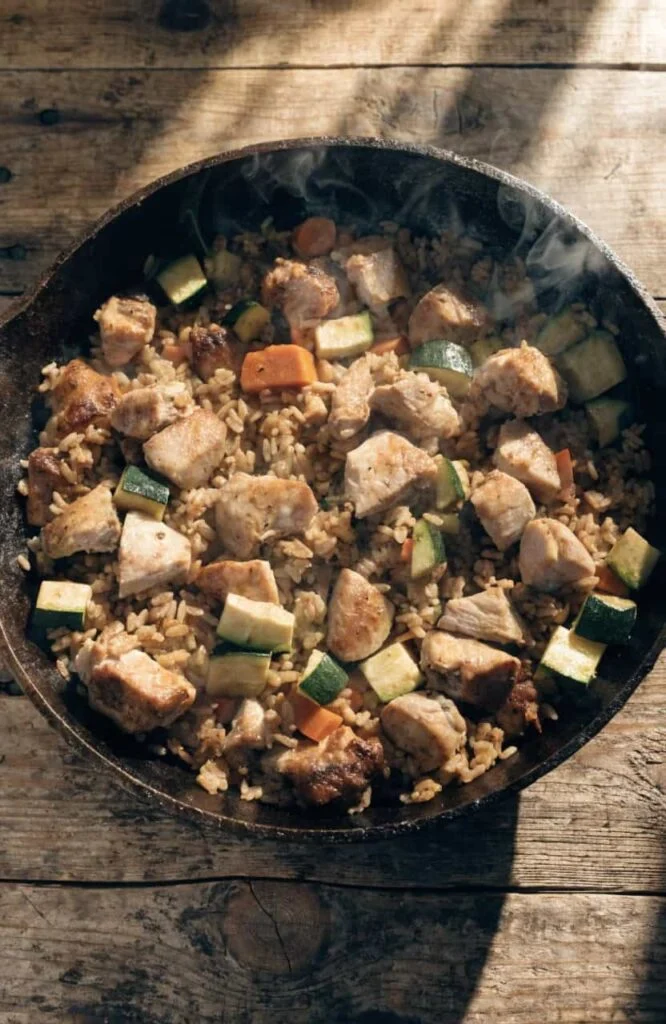
This is the best starting recipe if you’ve never cooked for your dog before. One pan, simple ingredients, done in about 35 minutes.
Ingredients:
| Ingredient | Amount |
|---|---|
| Boneless skinless chicken thighs | 1.5 lbs |
| Brown rice (uncooked) | 1 cup |
| Zucchini, diced | 1 medium |
| Carrots, diced | 2 medium |
| Coconut oil | 1 tbsp |
| Water | 2.5 cups |
| Calcium supplement | Per vet guidance |
Instructions:
- Bring 2.5 cups of water to a boil. Add brown rice, cover, and simmer on low for 25 minutes.
- While rice cooks, dice chicken into small bite-sized pieces.
- Heat coconut oil in a large skillet over medium heat. Add chicken and cook for 8–10 minutes, stirring until fully cooked through.
- Add diced carrots to the skillet. Cook for 5 minutes.
- Add zucchini. Cook another 3 minutes until soft.
- Mix cooked rice into the skillet. Stir everything together over low heat for 1 minute.
- Turn off heat. Let cool for at least 20 minutes before serving or storing.
Storage: Refrigerate up to 5 days in an airtight container. Freeze in individual portions for up to 3 months.
Serving Size:
| Dog Weight | Daily Amount |
|---|---|
| 10 lbs | 1 cup |
| 20 lbs | 1.75 cups |
| 30 lbs | 2.25 cups |
| 50 lbs | 3.25 cups |
| 70 lbs | 4.25 cups |
Recipe #2 — Ground Turkey & Sweet Potato Mash
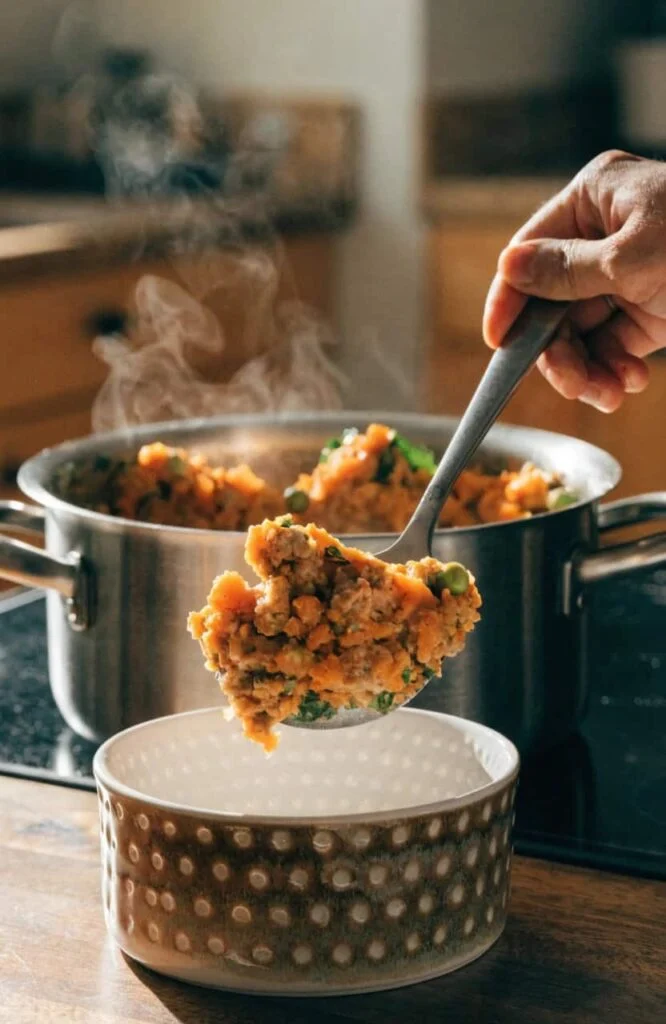
Lighter than beef, easier on digestion, and most dogs go absolutely crazy for it. This one is great for dogs with sensitive stomachs.
Ingredients:
| Ingredient | Amount |
|---|---|
| Ground turkey (85/15) | 1.5 lbs |
| Sweet potatoes | 2 medium |
| Frozen peas | ¾ cup |
| Spinach, chopped | 1 cup |
| Olive oil | 1 tbsp |
| Calcium supplement | Per vet guidance |
Instructions:
- Peel and cube sweet potatoes. Boil in plain water for 15 minutes until fork-tender. Drain and mash with a fork. No butter, no salt.
- In a large skillet over medium heat, cook ground turkey for 8–10 minutes, breaking into small crumbles. Drain excess fat if needed.
- Add frozen peas to the skillet. Stir and cook 3 minutes.
- Add spinach. Stir until wilted, about 2 minutes.
- Mix in the mashed sweet potato. Stir everything together.
- Drizzle olive oil over the finished mixture and stir once more.
- Cool completely before portioning.
Storage: Fridge for 4–5 days. Freezer for up to 3 months. Thaws well overnight in the fridge.
Serving Size:
| Dog Weight | Daily Amount |
|---|---|
| 10 lbs | 0.9 cups |
| 20 lbs | 1.5 cups |
| 30 lbs | 2 cups |
| 50 lbs | 3 cups |
| 70 lbs | 4 cups |
Recipe #3 — Beef, Potato & Green Bean Stew
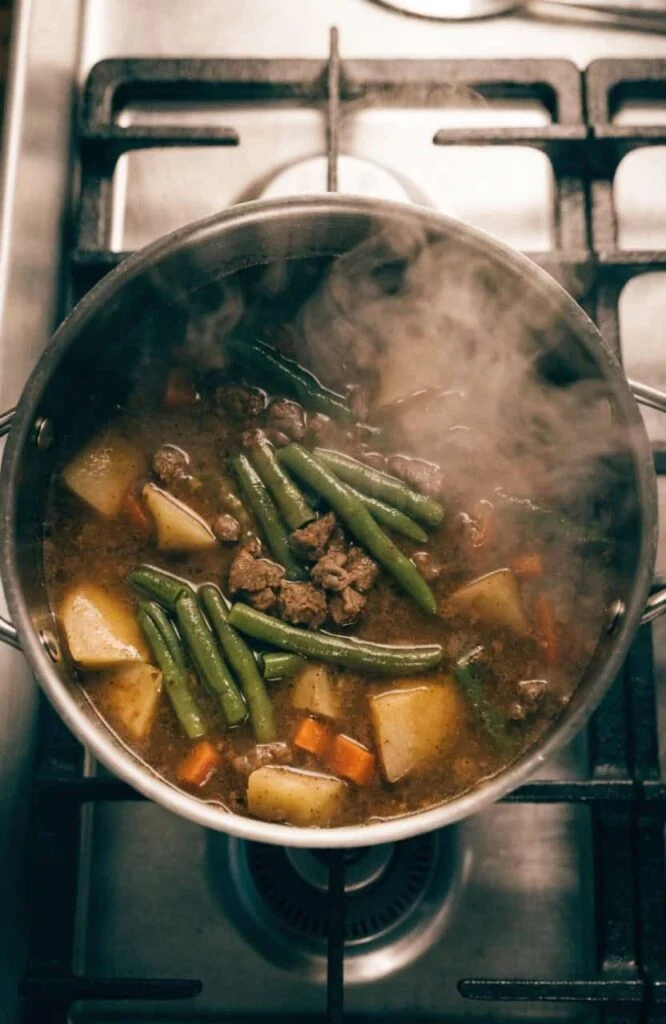
A thicker, heartier meal — good for active dogs and larger breeds. The mashed potato base creates a rich, stew-like consistency that makes it easy to serve and store.
Ingredients:
| Ingredient | Amount |
|---|---|
| Ground beef (90/10) | 1.5 lbs |
| Yukon Gold potatoes, cubed | 2 medium |
| Carrots, diced | 2 medium |
| Green beans, chopped | 1 cup |
| Water or low-sodium broth (no onion/garlic) | 3 cups |
| Olive oil | 1 tbsp |
| Fresh parsley, chopped (optional) | 1 tbsp |
| Calcium supplement | Per vet guidance |
Instructions:
- Brown ground beef in a large pot over medium heat for 7 minutes. Break into small crumbles.
- Add cubed potatoes, diced carrots, and water or broth. Bring to a boil, then lower heat and simmer covered for 20 minutes.
- Once potatoes are soft, mash about half of them against the side of the pot using the back of a spoon. This thickens the stew naturally.
- Stir in green beans and parsley. Cook another 3–4 minutes.
- Turn off heat. Drizzle olive oil in and stir.
- Let cool fully before storing or serving.
Storage: Fridge up to 5 days. Freezes exceptionally well for up to 3 months — the mashed potato holds the texture together after thawing.
Serving Size:
| Dog Weight | Daily Amount |
|---|---|
| 10 lbs | 0.75 cups |
| 20 lbs | 1.5 cups |
| 30 lbs | 2 cups |
| 50 lbs | 3 cups |
| 70 lbs | 3.75 cups |
This recipe is calorie-dense. If your dog starts gaining weight, reduce the portion by 2–3 tablespoons and monitor for two weeks. If you’re exploring what other real foods dogs can safely enjoy, the guide on homemade dog food recipes covers additional options worth bookmarking.
Recipe #4 — Salmon & Veggie Rice Bowl
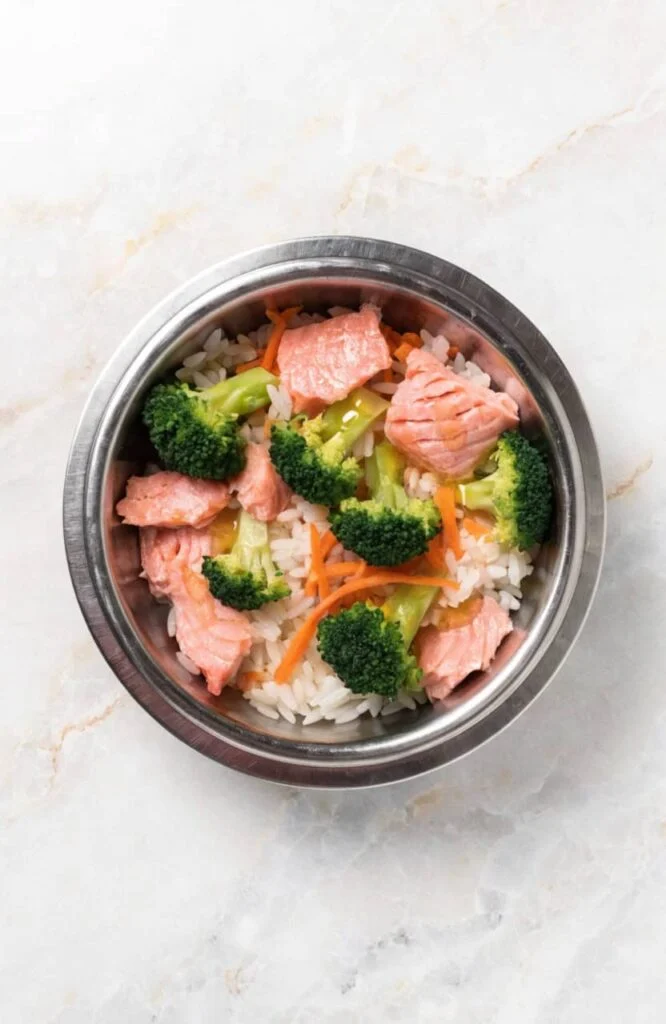
Salmon is one of the best protein sources for dogs. It’s packed with omega-3 fatty acids which directly support coat shine, joint health, and brain function. Use fresh or canned salmon — just make sure canned is in water with no added salt.
Ingredients:
| Ingredient | Amount |
|---|---|
| Salmon fillet (or canned in water, no salt) | 1.5 lbs |
| White rice (cooked) | 2 cups cooked |
| Broccoli florets, chopped small | 1 cup |
| Carrots, grated | 2 medium |
| Coconut oil | 1 tbsp |
| Calcium supplement | Per vet guidance |
Instructions:
- Cook white rice according to package directions. Set aside.
- If using fresh salmon: bake at 375°F for 15–18 minutes until fully cooked. Remove all bones. Flake into small pieces. If using canned: drain thoroughly, rinse with water, and flake.
- Steam broccoli florets for 4–5 minutes until soft. Chop into very small pieces — large chunks can cause gas in some dogs.
- In a large bowl, combine flaked salmon, cooked rice, broccoli, and grated carrots.
- Add coconut oil and mix well.
- Cool before serving.
Storage: Salmon-based meals are best used within 3–4 days in the fridge. Freeze in portions for up to 2 months.
Serving Size:
| Dog Weight | Daily Amount |
|---|---|
| 10 lbs | 0.9 cups |
| 20 lbs | 1.5 cups |
| 30 lbs | 2 cups |
| 50 lbs | 3 cups |
| 70 lbs | 4 cups |
White rice is used here because it’s easier to digest and lighter than brown rice — a good balance against the richness of salmon.
Recipe #5 — Egg & Oatmeal Morning Bowl
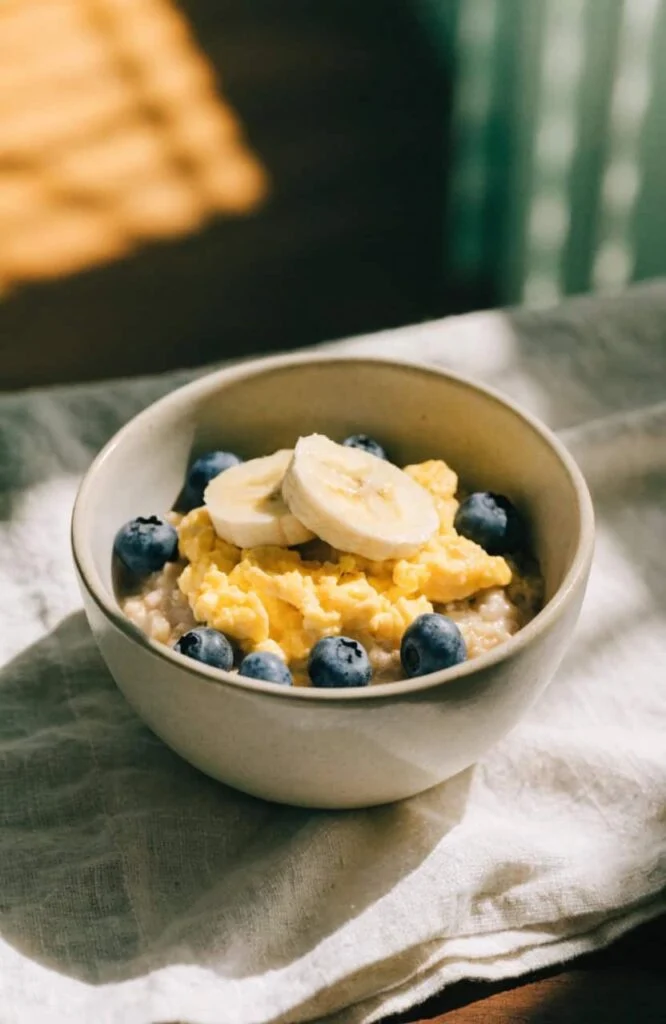
This one is perfect as a breakfast rotation or a lighter meal on days when you want to give your dog’s digestive system a break. Eggs are one of the most complete protein sources available, and plain oatmeal provides easy-to-digest fiber.
Ingredients:
| Ingredient | Amount |
|---|---|
| Eggs | 3 large |
| Plain rolled oats (not instant) | 1 cup dry |
| Blueberries | ½ cup |
| Banana, mashed | 1 small |
| Coconut oil | 1 tsp |
| Calcium supplement | Per vet guidance |
Instructions:
- Cook oats in water only (no milk) according to package directions. Let cool slightly.
- Scramble eggs in a non-stick pan with coconut oil over medium-low heat. No salt, no butter. Cook until fully set — no runny yolk.
- Combine cooked oats and scrambled eggs in a bowl.
- Gently stir in blueberries and mashed banana.
- Let cool to room temperature before serving.
Storage: Best made fresh or refrigerated for up to 3 days. Not ideal for long-term freezing — oatmeal changes texture after thawing.
Serving Size:
| Dog Weight | Daily Amount |
|---|---|
| 10 lbs | ¾ cup |
| 20 lbs | 1.25 cups |
| 30 lbs | 1.75 cups |
| 50 lbs | 2.5 cups |
| 70 lbs | 3.25 cups |
This recipe is lower in calories than the meat-based options, so it works well as a rotation day meal rather than a primary daily recipe. Dogs that love treats will often enjoy this as a special morning bowl — similar in spirit to homemade dog treats recipes but filling enough for a full meal.
Serving Sizes for All Dog Sizes (10 lbs to 80 lbs)
One of the most common mistakes with homemade dog food is guessing portions. Too much and your dog gains weight; too little and they’re not getting the nutrition they need.
A general rule for homemade food is to feed 2–3% of your dog’s body weight per day, split into two meals. Here’s a quick reference:
| Dog Weight | Daily Food Amount | Per Meal (2x/day) |
|---|---|---|
| 10 lbs | 0.75–1 cup | ~½ cup |
| 20 lbs | 1.5–1.75 cups | ~¾ cup |
| 30 lbs | 2–2.25 cups | ~1 cup |
| 50 lbs | 3–3.25 cups | ~1.5 cups |
| 70 lbs | 4–4.25 cups | ~2 cups |
| 80 lbs | 4.5–5 cups | ~2.25 cups |
Monitor your dog’s weight for the first 3–4 weeks after switching. If they’re gaining, pull back slightly. If they’re losing weight or seem hungry, add a few tablespoons more per meal. Every dog’s metabolism is different.
How to Transition From Kibble to Human Food Recipes for Dogs
Never switch your dog’s food all at once. A sudden change causes digestive upset — loose stools, gas, or vomiting. The key is a gradual transition over 7–10 days.
Days 1–3: 75% kibble, 25% homemade food Days 4–6: 50% kibble, 50% homemade food Days 7–9: 25% kibble, 75% homemade food Day 10+: 100% homemade food
Watch for signs of digestive trouble during the transition. Some mild softness in stools is normal for a day or two — that’s just the gut adjusting to more moisture and fiber. If you see blood, repeated vomiting, or your dog stops eating entirely, contact your vet.
Also, dogs with health conditions — kidney disease, diabetes, food allergies — need vet guidance before any diet change. A homemade diet is generally excellent for healthy adult dogs, but if your dog has a chronic condition, get a professional to review the recipes first. You can find helpful guidance around general dog health in the article on reverse sneezing in dogs and excessive licking in dogs — both can sometimes signal food sensitivities worth discussing with your vet.
FAQs About Human Grade Dog Food
Final Thought
Switching to human grade dog food recipes doesn’t have to be overwhelming. Start with one recipe. Make a batch this weekend. Put it in the bowl and watch how your dog reacts.
Real food made from real ingredients — that’s all this is. The same quality you’d expect for yourself, just cooked plain and portioned for your dog’s size.
Your dog can’t ask for better food. But you can give it to them.

Izzy is an experienced ranch worker who has a passion for exploring nature and getting up close to wildlife. With her connections to various animal organizations, Izzy is well-versed in animal care and rehabilitation.


