Easy Homemade Meatballs for Dogs Recipe With 5 Ingredients
Few things get a dog more excited than the smell of meat cooking in the kitchen. If your dog is already sitting at your feet with those hopeful eyes, this homemade meatballs for dogs recipe is for you.
Store-bought treats often come with long ingredient lists you can’t pronounce. When you make dog meatballs at home, you control everything that goes in. You pick the meat, the veggies, and the binder. You also leave out the salt, onions, and fillers that don’t belong in a dog’s bowl.
The good news is that this is easy. You need one bowl, one baking sheet, and about 15 minutes of hands-on time. One batch makes enough meatballs to last for weeks when you freeze them.
In this guide, you’ll learn:
- A simple base recipe you can make tonight
- Four ways to cook dog meatballs (oven, air fryer, stovetop, slow cooker)
- Three ingredient variations for picky or sensitive dogs
- Which foods are dangerous and must stay out
- How to store, freeze, and serve the meatballs safely
Let’s get cooking.
1. My Basic Homemade Meatballs for Dogs Recipe
Quick take: Lean ground meat, an egg, oats, and a few veggies. Roll, bake, cool, done.
This is the recipe I’d hand to a first-timer. It uses everyday ingredients, bakes in under 25 minutes, and gives your dog a soft, meaty bite that’s easy to chew.
The meatballs stay plain on purpose. Dogs don’t need seasoning. The meat already smells amazing to them.
What You Need Before You Start
Gather these tools first so the process goes smoothly:
- A large mixing bowl
- A baking sheet
- Parchment paper (so nothing sticks)
- A small cookie scoop or tablespoon
- A meat thermometer (the best way to be sure the meat is cooked)
- An airtight container or freezer bag for storing
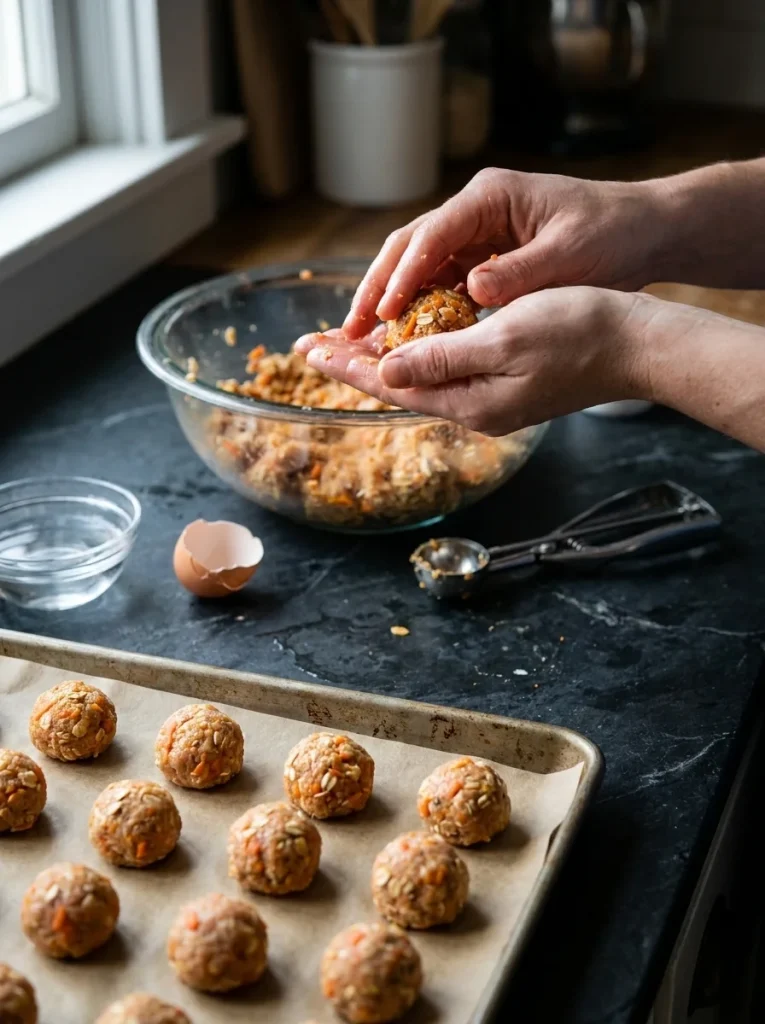
Pro tip: Wet your hands with cool water before rolling. The mixture won’t stick to your fingers, and the meatballs come out smooth.
Recipe Card
Prep Time: 15 minutes
Cook Time: 20 minutes
Cool Time: 15 minutes
Freeze Time: 1 hour (optional, for flash-freezing)
Yield: About 30 one-inch meatballs
Ingredients:
- 1 pound lean ground turkey (or 90% lean ground beef)
- 1 large egg
- ½ cup old-fashioned rolled oats (uncooked)
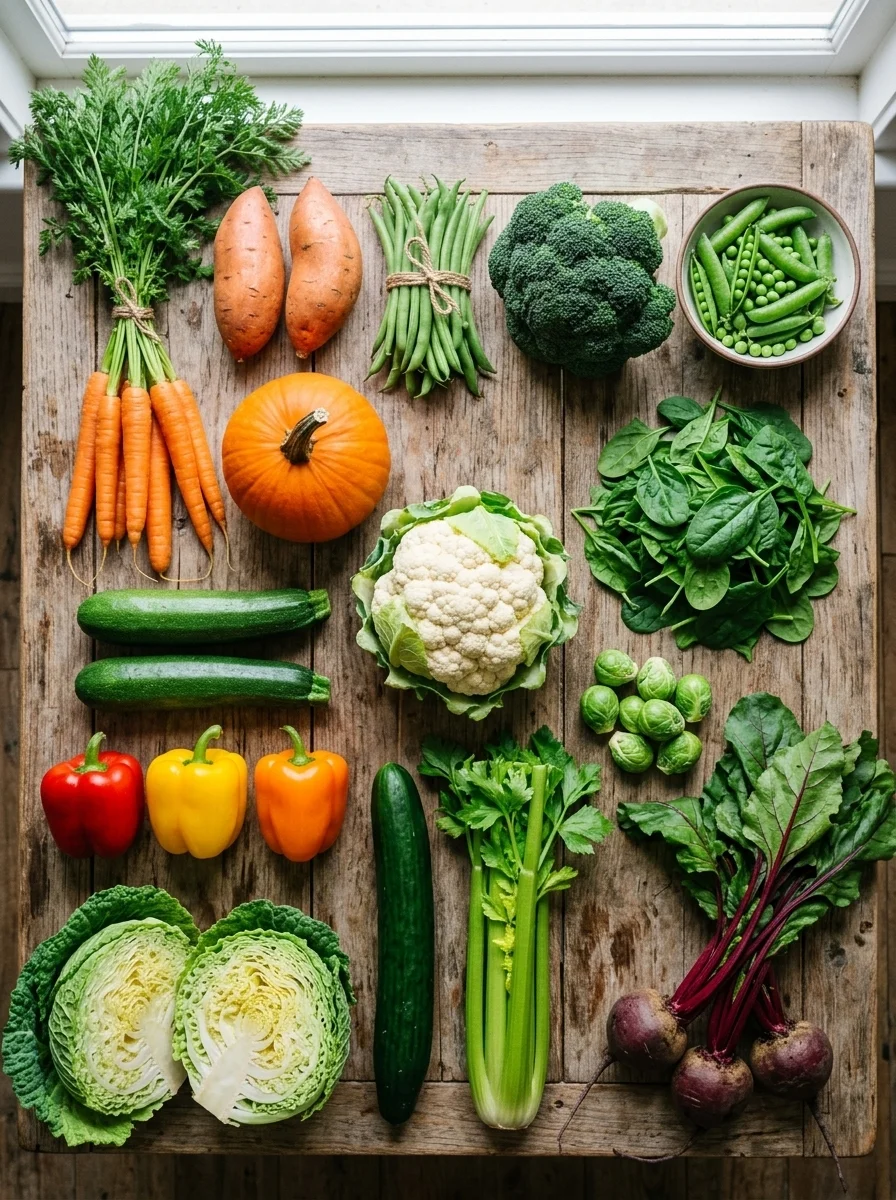
- ½ cup finely grated carrot
- ¼ cup plain canned pumpkin puree (100% pumpkin, not pie filling)
- 1 tablespoon finely chopped fresh parsley (optional)
Instructions:
- Preheat your oven to 375°F (190°C). Line a baking sheet with parchment paper.
- In a large bowl, add the ground meat, egg, oats, grated carrot, pumpkin puree, and parsley.
- Mix with clean hands until everything is evenly combined. Don’t overmix, or the meatballs can turn tough.
- Scoop about one tablespoon of the mixture and roll it into a ball. Place it on the baking sheet.
- Repeat until all the mixture is used. Leave about one inch of space between meatballs.
- Bake for 18 to 20 minutes. Cut one open to check. There should be no pink, and the inside should reach 165°F (74°C) for turkey or 160°F (71°C) for beef.
- Let the meatballs cool completely on the pan before serving or storing.
Notes:
- Cool the meatballs fully before giving one to your dog. The insides stay hot longer than you’d expect.
- For small dogs, make the meatballs half-size (about ½ inch) so they’re easier to eat.
- These are treats and toppers, not a complete meal. Keep them to about 10% of your dog’s daily calories.
- Keep the first batch plain. Introduce any new ingredient slowly to avoid an upset stomach.
2. Four Ways to Cook Dog Meatballs
Quick take: The same meatball mixture works in four different cooking methods. Pick the one that fits your kitchen and your dog.
You don’t have to use the oven every time. Each method changes the texture a little, and that matters for dogs with different needs. Here’s how they compare at a glance:
| Method | Texture | Time | Best For |
|---|---|---|---|
| Oven-baked | Firm outside, soft inside | 20 min | Everyday batches |
| Air fryer | Slightly crisp outside | 10–12 min | Quick treats |
| Stovetop | Very soft and moist | 10–15 min | Seniors, sensitive teeth |
| Slow cooker | Tender and juicy | 3–4 hrs | Hands-off cooking |
a. Oven-Baked Meatballs (The Classic)
Best for: Big batches and beginners.
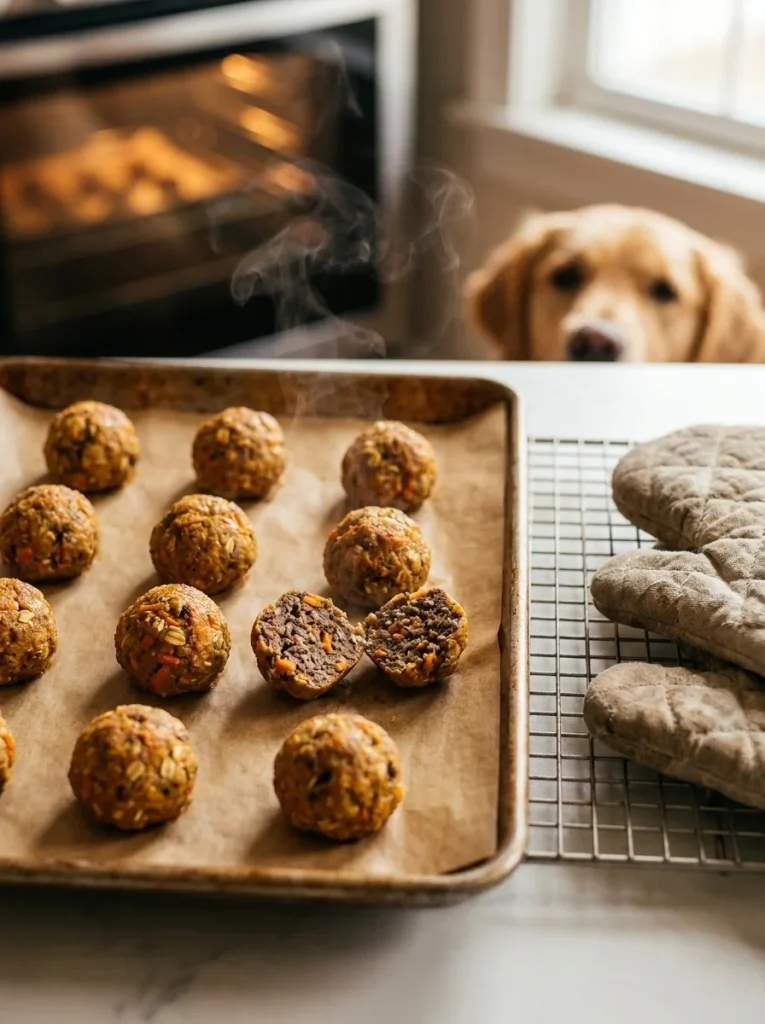
Baking is the most reliable method. The heat is even, the meatballs hold their shape, and you can cook 30 at a time on one pan.
How to do it: Follow Recipe Card #1 above. Bake at 375°F for 18 to 20 minutes.
For a slightly firmer meatball that lasts longer in a treat pouch, add two extra minutes. Just don’t let them dry out.
Pro tip: Use a wire rack set inside the baking sheet. Extra fat drips away from the meatballs, which is helpful for dogs who need a lower-fat diet.
b. Air Fryer Meatballs (Fast and Light)
Best for: Small batches and busy evenings.
An air fryer cooks meatballs quickly and needs no added oil. The outside gets a little crisp, which many picky dogs love.
How to do it:
- Preheat the air fryer to 375°F (190°C).
- Place meatballs in a single layer in the basket. Don’t crowd them.
- Cook for 10 to 12 minutes, shaking the basket halfway.
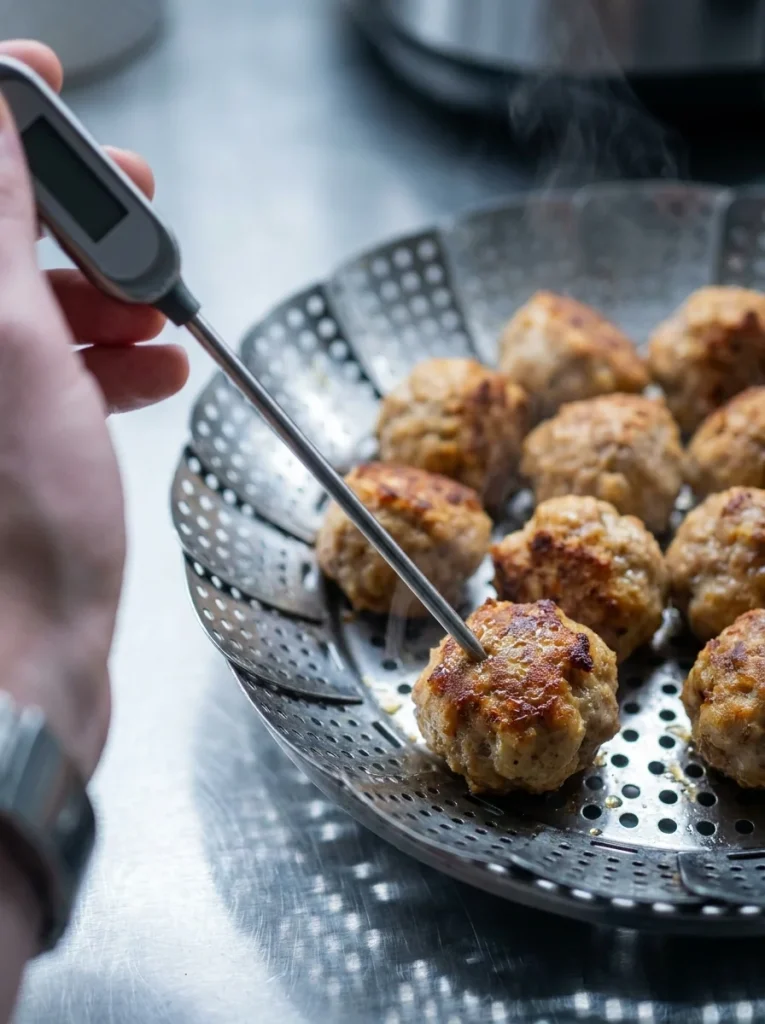
- Check the inside temperature before removing them.
You may need to cook two or three rounds, since most baskets hold only 10 to 12 meatballs.
Pro tip: Skip cooking spray. Some sprays contain additives that aren’t great for dogs. Parchment liners made for air fryers work better.
c. Stovetop Simmered Meatballs (Soft and Gentle)
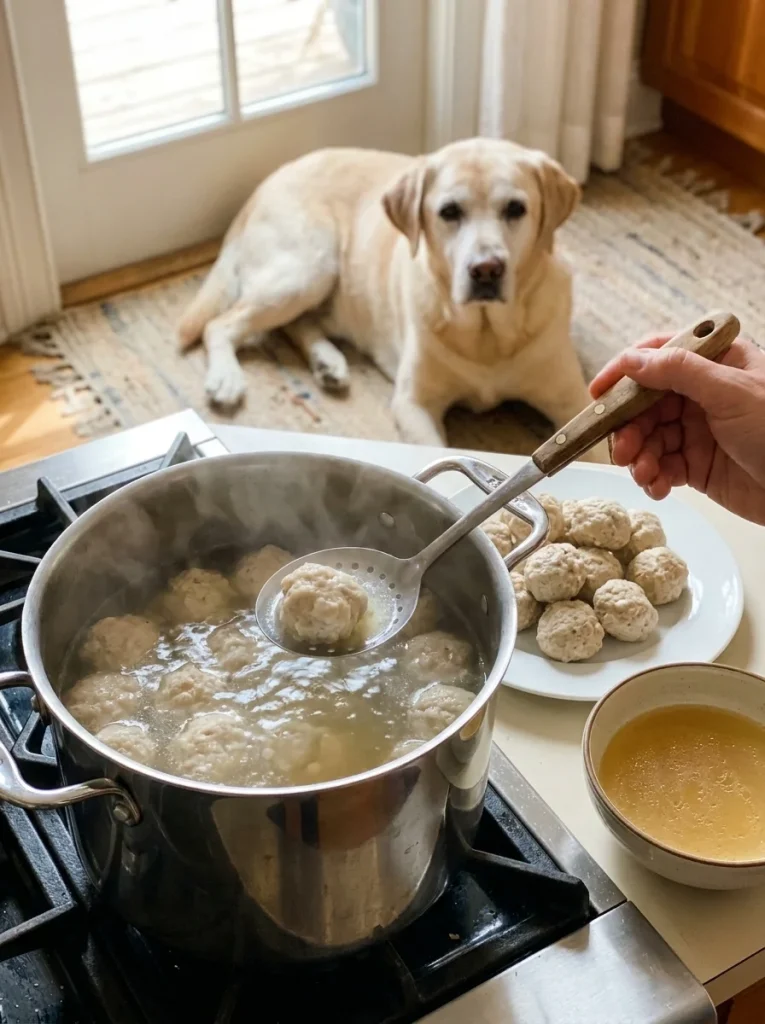
Best for: Senior dogs, dogs with dental problems, and sensitive stomachs.
Simmering in water keeps the meatballs extremely soft. They’re also lower in fat, because much of it melts into the water.
How to do it:
- Fill a wide pot with about two inches of plain water or no-salt broth.
- Bring it to a gentle simmer (small bubbles, not a hard boil).
- Carefully drop in the meatballs, a few at a time.
- Cover and cook for 10 to 15 minutes, until the inside reaches a safe temperature.
- Lift them out with a slotted spoon and cool on a plate.
The leftover cooking liquid can be cooled, skimmed of fat, and poured over your dog’s kibble as a tasty gravy. Just make sure it contains no salt, onion, or garlic.
Pro tip: Use a slightly wetter mixture for simmering. Adding an extra tablespoon of pumpkin helps the meatballs hold together in the water.
d. Slow Cooker Meatballs (Set and Forget)
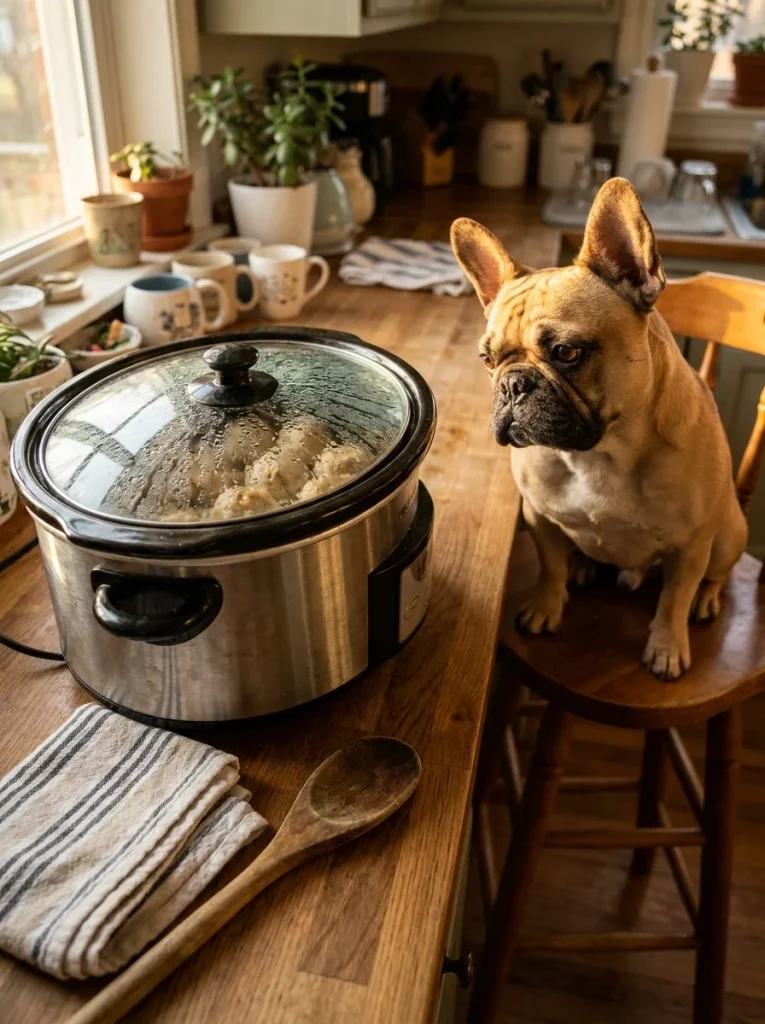
Best for: Busy days and ultra-tender meatballs.
A slow cooker turns out juicy, soft meatballs with almost no effort. You put everything in, walk away, and come home to a house that smells great.
This method has its own recipe because the ingredients are a little different. If you love slow cooking for your pup, you’ll also enjoy these slow cooker dog food recipes.
Pro tip: Don’t lift the lid often. Each peek adds 15 to 20 minutes of cooking time.
Recipe Card
Prep Time: 15 minutes
Cook Time: 3 to 4 hours on LOW
Cool Time: 20 minutes
Freeze Time: 1 hour (optional)
Yield: About 24 one-inch meatballs
Ingredients:
- 1 pound lean ground chicken
- 1 large egg
- ½ cup cooked brown rice (cooled)
- ½ cup finely chopped green beans (fresh or frozen, thawed)
- ¼ cup unsweetened applesauce (no added sugar, no xylitol)
- 1 cup no-salt chicken broth (check the label for onion and garlic)
Instructions:
- In a large bowl, combine the chicken, egg, rice, green beans, and applesauce. Mix gently until blended.
- Roll the mixture into one-inch balls.
- Pour the broth into the slow cooker.
- Carefully place the meatballs in a single layer. Stack a second layer only if needed.
- Cover and cook on LOW for 3 to 4 hours, until the center of a meatball reaches 165°F (74°C).
- Use a slotted spoon to move the meatballs to a plate. Let them cool fully.
- Save the broth for kibble toppers once it’s cooled and the fat is skimmed off.
Notes:
- Slow cooker meatballs are very soft, so handle them gently.
- They’re a great choice for senior dogs. You can also see more ideas in these crockpot recipes for senior dogs.
- Store in the fridge for up to four days, or freeze for longer.
- Always check the broth label. Many store-bought broths contain onion, garlic, or lots of salt.
3. Three Tasty Ingredient Variations
Quick take: Swap the meat and veggies to match your dog’s taste, budget, or sensitivities. The cooking steps stay the same.
Once you’ve made the base recipe, you can change it up. These three variations use the same method as Recipe Card #1. Just swap the ingredients listed below.
Rotating proteins and veggies keeps meals interesting. It can also help if your dog gets bored easily.
a. Turkey and Sweet Potato Meatballs
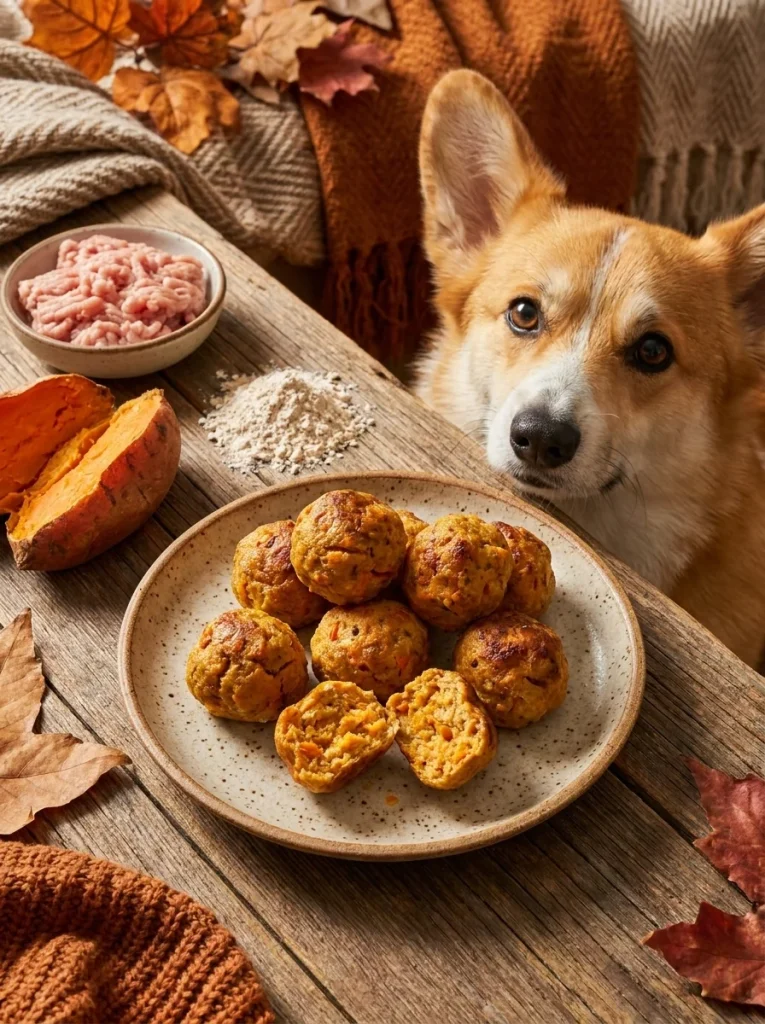
Why it works: Sweet potato adds natural sweetness, fiber, and vitamins. Dogs tend to love the taste, and the soft texture helps bind the meatballs.
What to swap in:
- 1 pound lean ground turkey
- ½ cup cooked, mashed sweet potato (no butter, no salt)
- 1 large egg
- ⅓ cup oat flour or rolled oats
How to make it: Mix, roll, and bake at 375°F for 18 to 20 minutes.
Pro tip: Let the mashed sweet potato cool first. Warm sweet potato can start cooking the egg before the meatballs reach the oven.
b. Beef and Carrot Meatballs
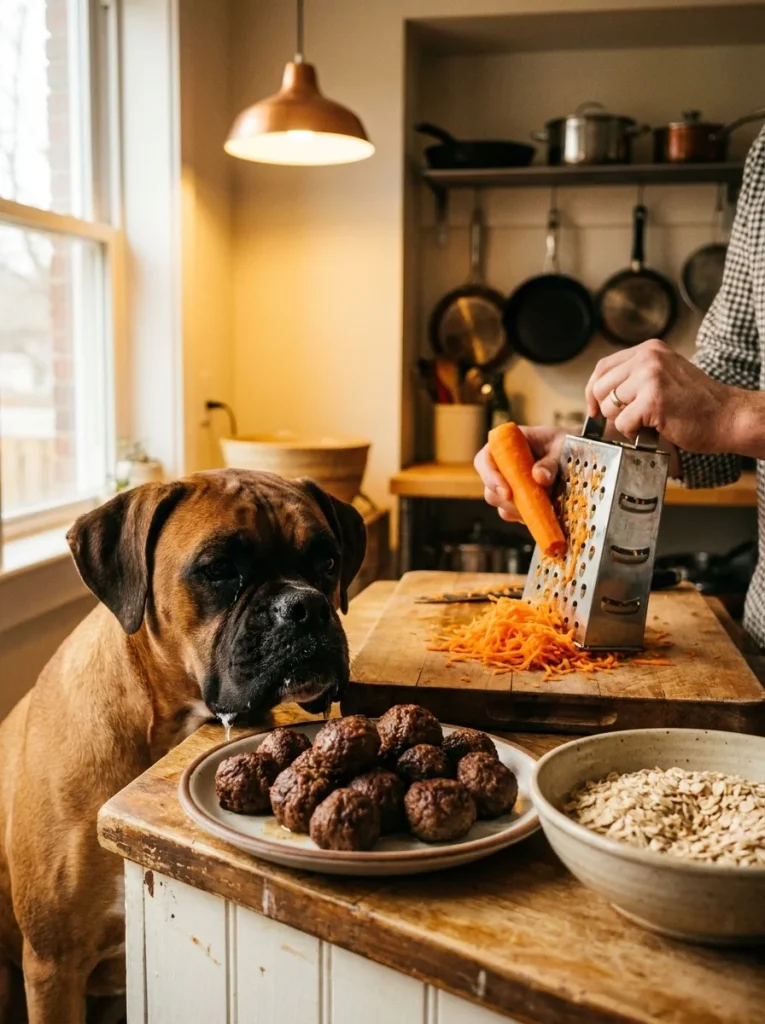
Why it works: Beef gives a rich, strong smell that picky eaters usually can’t resist. Carrots add crunch-free fiber and a touch of sweetness.
What to swap in:
- 1 pound lean ground beef (90% lean or higher)
- ¾ cup finely grated carrot
- 1 large egg
- ½ cup rolled oats
- 1 tablespoon chopped parsley
How to make it: Mix well, roll into balls, and bake at 375°F for 18 to 20 minutes. Beef should reach 160°F (71°C).
Pro tip: Choose lean beef and drain any fat on the pan after baking. Too much fat can upset a dog’s stomach and, in some dogs, may trigger pancreatitis.
c. Chicken, Pumpkin, and Oats Meatballs
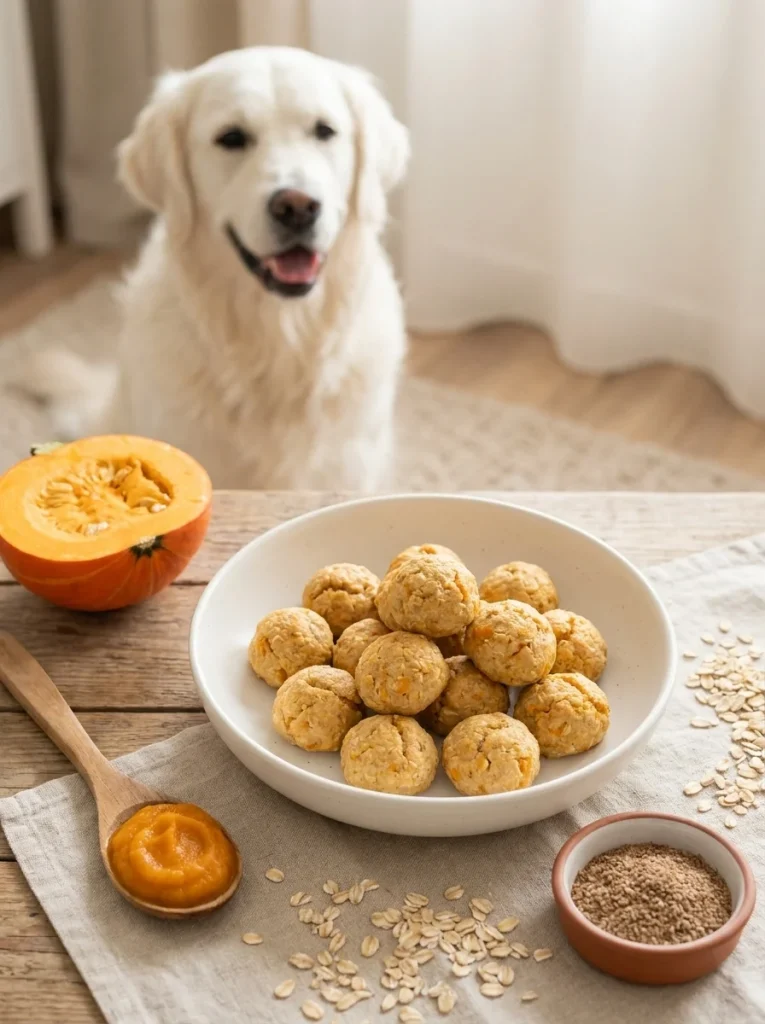
Why it works: Chicken is mild and easy to digest. Pumpkin is gentle on the tummy and adds soluble fiber. This combo is a favorite for dogs with sensitive stomachs.
What to swap in:
- 1 pound lean ground chicken
- ⅓ cup plain pumpkin puree
- ½ cup rolled oats
- 1 large egg
- 1 tablespoon ground flaxseed (optional)
How to make it: Combine, roll, and bake at 375°F for 18 to 20 minutes until the center reaches 165°F (74°C).
Pro tip: Check the pumpkin can label. Pumpkin pie filling contains sugar and spices, and some can include ingredients that are harmful to dogs.
Quick Variation Cheat Sheet
| Variation | Main Protein | Veggie/Binder | Great For |
|---|---|---|---|
| Turkey & Sweet Potato | Turkey | Sweet potato | Everyday treats |
| Beef & Carrot | Lean beef | Carrot | Picky eaters |
| Chicken, Pumpkin & Oats | Chicken | Pumpkin, oats | Sensitive tummies |
A note on allergies: Chicken and beef are two of the more common food allergens for dogs. If your dog itches a lot, has ear infections, or has loose stools, ask your vet before choosing a protein. Turkey or another novel protein might be a better fit.
4. Ingredients to Never Put in Dog Meatballs
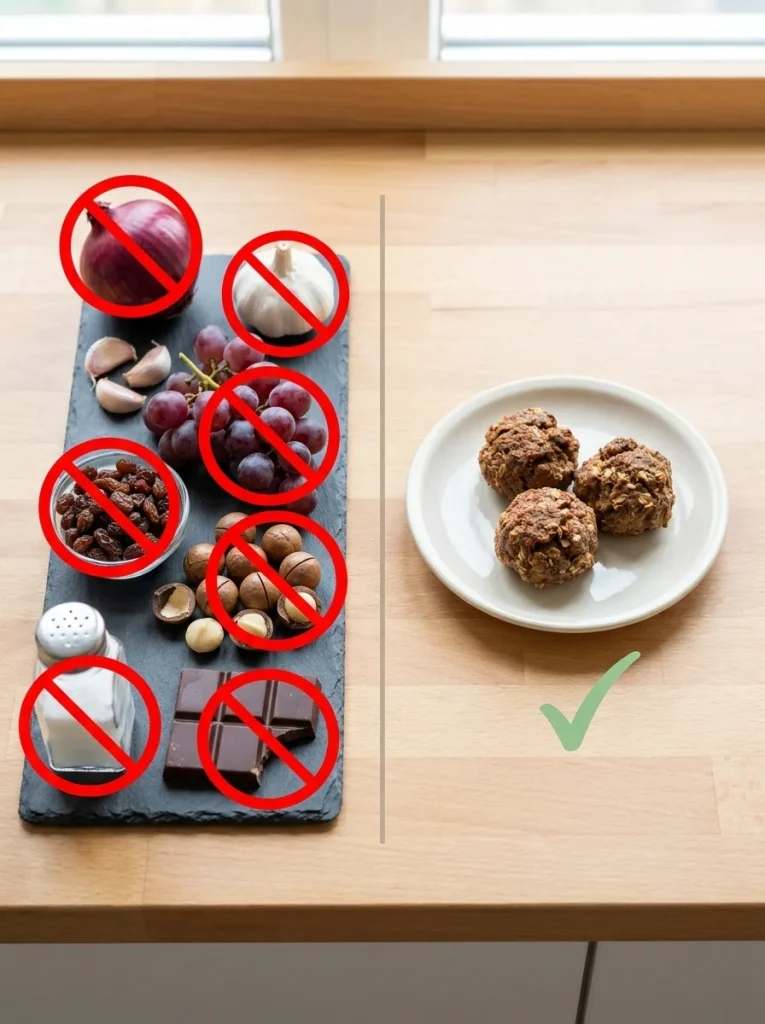
Quick take: Some “normal” kitchen ingredients are toxic to dogs. Skip every item on this list.
This is the most important section in the article. A tasty meatball is not worth a trip to the emergency vet.
a. The Never List
These ingredients should never go into your dog’s meatballs:
- Onions, garlic, chives, and leeks: They can damage a dog’s red blood cells. This includes powders and dried flakes.
- Xylitol: This sweetener is extremely toxic to dogs. It hides in some peanut butters, applesauces, and baked goods.
- Grapes and raisins: Even small amounts can cause kidney failure in some dogs.
- Macadamia nuts: They can cause weakness, vomiting, and tremors.
- Chocolate and cocoa: These are toxic to dogs.
- Salt in large amounts: Too much sodium isn’t healthy and can be dangerous.
- Nutmeg and heavy spice blends: Many seasoning mixes contain onion or garlic powder too.
- Cooked bones: They can splinter and cause choking or injuries.
Pro tip: Read every label, every time. Broths, sauces, peanut butters, and even some canned pumpkin products can include hidden ingredients.
b. Ingredients to Use With Care
Some foods aren’t toxic but can cause trouble for certain dogs:
- High-fat meats: Regular ground beef, sausage, or bacon can upset the stomach. Stick to lean cuts.
- Dairy: Many dogs are lactose intolerant. Skip cheese or milk unless your vet approves.
- Wheat flour: Some dogs are sensitive to wheat. Oats or oat flour are often easier.
- Raw eggs and raw meat: These can carry bacteria. Cook everything fully in these recipes.
c. Safe Add-Ins Dogs Usually Love
If you want to boost flavor or nutrition, these are usually safe in small amounts:
- Cooked carrots
- Green beans
- Plain pumpkin
- Cooked sweet potato
- Chopped parsley
- Blueberries (a few, chopped)
- Cooked brown rice
- Ground flaxseed
Even safe foods should be added slowly. Add one new ingredient at a time and watch for any stomach upset.
If you want more safe snack ideas beyond meatballs, check out these homemade dog treats for simple, vet-friendly options.
5. How to Store, Freeze, and Serve
Quick take: Cool them, bag them, label them. Most meatballs last four days in the fridge and up to three months in the freezer.
Making a big batch saves time and money. But you need to store the meatballs properly so they stay fresh and safe.
a. Fridge and Freezer Times
Here’s a simple guide to keep handy:
| Storage Method | How Long It Lasts | Tips |
|---|---|---|
| Refrigerator | 3–4 days | Airtight container |
| Freezer | Up to 3 months | Freezer bag, air squeezed out |
| Thawed in fridge | Use within 2 days | Don’t refreeze |
How to flash-freeze meatballs:
- Cool the meatballs completely.
- Spread them on a baking sheet in a single layer.
- Freeze for about one hour, until firm.
- Move them to a freezer bag or container.
Flash-freezing keeps the meatballs from sticking together. You can pull out just two or three at a time.
Pro tip: Write the date and recipe name on the bag with a marker. Frozen meatballs all look alike after a few weeks.
b. Thawing the Right Way
The safest way to thaw is in the refrigerator overnight. You can also place a few in a bowl at room temperature for 20 to 30 minutes if you’re serving them right away.
Avoid leaving cooked meatballs out for more than two hours. Bacteria can grow fast, especially in warm weather.
For a frozen treat, some dogs love a meatball straight from the freezer on a hot day. Small dogs may need it thawed for a minute first to protect their teeth.
c. Portion Sizes by Dog Weight
Meatballs are a treat or topper. They shouldn’t replace your dog’s balanced meals. A good rule is that treats should be no more than 10% of daily calories.
Here’s a rough starting guide for one-inch meatballs per day:
| Dog Weight | Meatballs Per Day |
|---|---|
| Under 10 lbs | 1 (or 2 half-size) |
| 10–25 lbs | 2 |
| 25–50 lbs | 3–4 |
| 50–90 lbs | 4–6 |
| Over 90 lbs | 6–8 |
These are general numbers. Your dog’s age, activity level, and health matter. Ask your vet for a personal portion if your dog has weight or health concerns.
d. Easy Ways to Serve
- As a treat: Give one meatball as a reward.
- As a kibble topper: Crumble one or two over dry food to make mealtime exciting.
- As a training reward: Make half-inch mini meatballs and keep them in a pouch.
- As a pill pocket: Press a medication tablet into the center of a meatball and roll it closed.
- As a frozen snack: Serve straight from the freezer on warm days.
Want a handy spot to keep everything organized? A simple treat station in your kitchen makes grabbing a snack quick and tidy.
Pro tip: For training, cut your meatballs into tiny pea-sized pieces. Your dog still feels rewarded, and you won’t overfeed.
6. Why Homemade Meatballs Are Good for Dogs
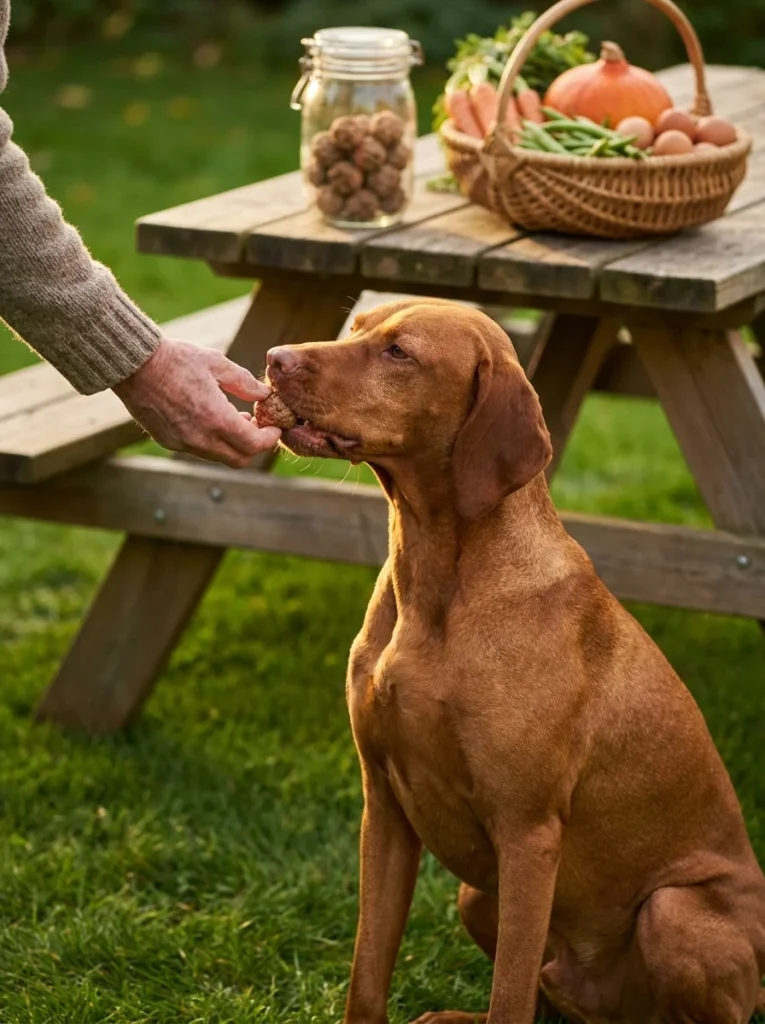
Quick take: You control the ingredients, the quality, and the portions.
Here’s the short version of why so many dog owners make their own meatballs.
You know exactly what’s inside. There are no mystery fillers, artificial colors, or heavy preservatives. You choose real meat and simple veggies.
They can help with picky eating. The smell and soft texture of fresh meatballs tempt even fussy eaters. A crumbled meatball on top of kibble can turn a skipped meal into a clean bowl.
They’re flexible. Allergic to chicken? Use turkey. Dog needs fewer calories? Choose leaner meat and bake on a rack. You can adjust the recipe to fit your dog.
They save money. A pound of ground turkey makes around 30 meatballs. That often costs much less than the same amount of store-bought treats.
Remember, though, that homemade treats aren’t a complete diet. If you want to cook full meals, learn how to balance nutrients first. These homemade dog food recipes are a good starting point, and your vet can help check that the diet is complete.
7. Quick Safety Tips and When to Call Your Vet
Quick take: Cook the meat fully, introduce new foods slowly, and watch your dog after the first serving.
Homemade doesn’t always mean risk-free. A few simple habits keep every batch safe.
a. Safe Cooking Checklist
- Wash your hands, bowls, and counters after handling raw meat.
- Use a meat thermometer. Poultry should reach 165°F (74°C), and beef should reach 160°F (71°C).
- Cool the meatballs completely before serving.
- Cut meatballs smaller for small dogs and fast eaters to prevent choking.
- Never add salt, onion, garlic, or sugar substitutes.
b. Watch for Signs of Trouble
Introduce meatballs slowly. Start with one small meatball and wait 24 hours. If all is well, you can offer the normal portion.
Call your vet if your dog shows any of these signs after eating:
- Repeated vomiting or diarrhea
- A swollen belly or obvious discomfort
- Extreme tiredness or weakness
- Itching, hives, or swelling of the face
- Refusing food or water for more than a day
Pro tip: If you think your dog ate something toxic, call your vet or an animal poison control hotline right away. Don’t wait to see if symptoms appear.
c. Special Cases: Puppies and Health Conditions
Puppies have sensitive stomachs and special nutritional needs. If you plan to share meatballs with a young pup, keep portions tiny and check with your vet first. This guide on puppy vet needs covers what to ask at those early appointments.
Dogs with these conditions should only get new foods after a vet’s okay:
- Pancreatitis or a history of it
- Kidney disease
- Diabetes
- Food allergies
- Heart conditions (sodium matters a lot)
Your vet knows your dog’s full health picture. A quick call can save you worry later.
Conclusion: Your Dog Will Thank You
You now have everything you need to make a great homemade meatballs for dogs recipe. Start with the easy oven-baked base. Try the slow cooker version when you want something extra soft. Then switch up the flavors with turkey and sweet potato, beef and carrot, or chicken, pumpkin, and oats.
Keep the safety basics in mind. Skip onions, garlic, salt, and xylitol. Cook the meat fully, cool the meatballs, and keep portions reasonable. Freeze extras so you always have a healthy reward ready.
The best part is the moment your dog catches that first bite and does a happy little dance. A bowl, a baking sheet, and a few simple ingredients are all it takes to make that happen.
Grab your apron and give it a try this weekend. Your dog will be waiting by the kitchen door.

Izzy is an experienced ranch worker who has a passion for exploring nature and getting up close to wildlife. With her connections to various animal organizations, Izzy is well-versed in animal care and rehabilitation.