Ground Pork Dog Food Recipes That Make Pork the Gentle Protein
Pork is the protein most dog owners skip, and it is the one their dogs may need most. Chicken and beef fill nearly every bowl, and for a dog that has eaten the same two proteins for years, that sameness shows up as boredom at the bowl, itchy skin, or a stomach that has simply had enough. Ground pork breaks that pattern. It is a novel protein for most dogs, rich in B vitamins and thiamine, and gentle on sensitive stomachs when it is bought lean, cooked through, and drained properly.
This article gives you four real meals built on ground pork, not one skillet with four names. A sweet potato skillet for everyday dinners, a rice medley for batch cooking, baked oat meatballs for training, and a quinoa bowl for allergy rotation.
Why Ground Pork Works for Dogs
Pork earns its place in a dog’s bowl for three reasons, and none of them is novelty for its own sake. First, it is a true novel protein. Most dogs eat chicken and beef every day, and a dog that reacts to one of those — itchy ears, a red belly, loose stool that never quite settles — often does fine on a protein it has rarely met. Pork is the easiest novel protein to buy, because it sits in every supermarket next to the chicken.
Second, pork is rich in the nutrients dogs actually use.
Third, pork is gentle when it is handled right. Lean ground pork, cooked through and drained, digests easily — easier than beef for many sensitive stomachs, because the fat is the problem, not the meat.
The Lean-Pork Rules: Buy Lean, Cook Through, Drain the Fat
Buying lean: read the label before you buy anything. You want 90/10 or leaner — 93/7 is ideal — and the number on the package is the whole story. Unlabeled ground pork is often around 70/30, which means nearly a third of what you paid for is fat your dog should never eat. If the package does not say lean, do not buy it.
Cooking through: ground pork must reach 160F all the way through, with no pink anywhere. Ground meat is not a steak — the grinding spreads bacteria through the whole batch, so a pink center is never safe. Use a meat thermometer and check the thickest part.
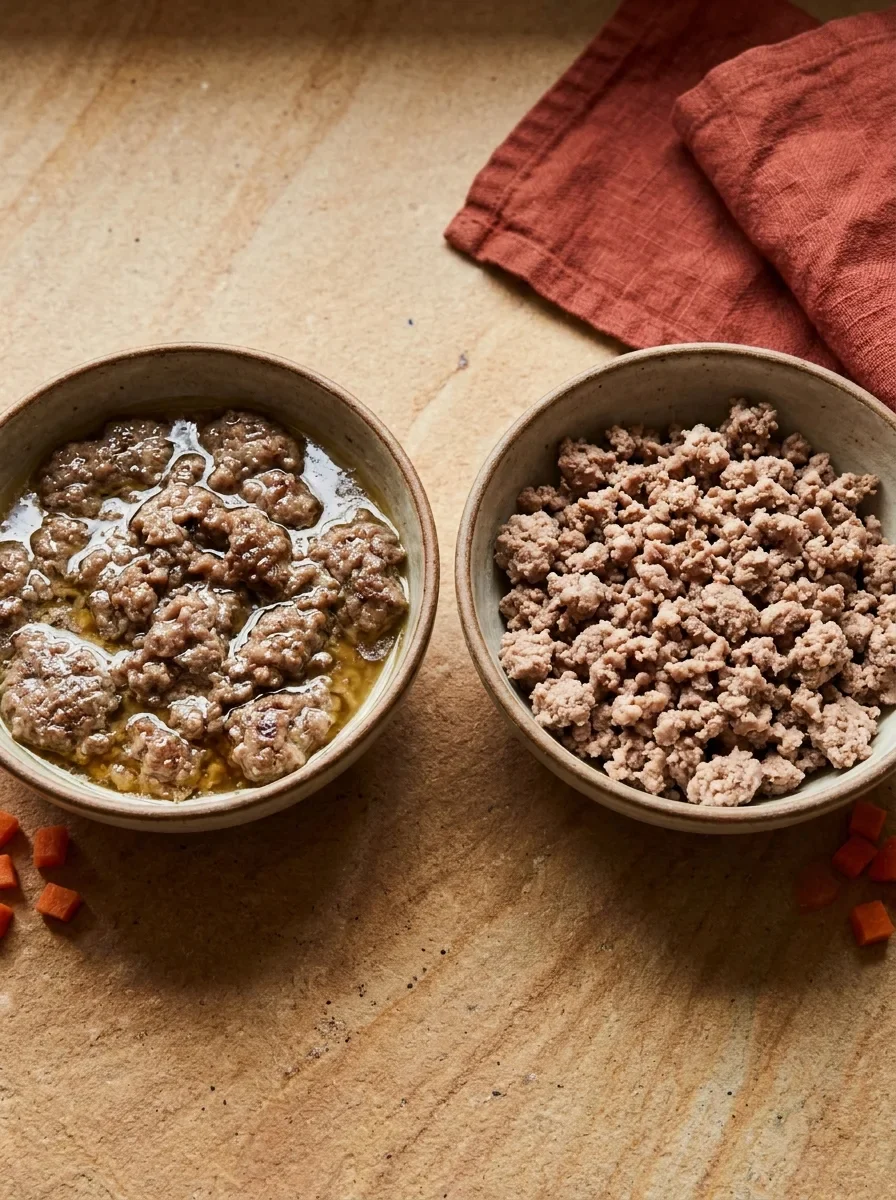
Draining the fat: this is the step most recipes skip, and it is the step that makes pork safe. Brown the pork in a dry skillet, break it into small crumbles, then tip the whole pan into a colander and let every drop of fat run off. Press the meat gently with a spoon, let it rest for two minutes, and drain it again. The fat you pour away is the part that causes upset stomachs and, in fat-sensitive dogs, pancreatitis. What stays in the pan is lean meat — that is the food. If you are comparing proteins, this guide shows how the same buy-lean, drain-the-fat discipline works with beef, and the rule is identical: the fat is waste, never an ingredient.
Plain, always: no salt, no seasoning, no garlic, no onion — including garlic powder and onion powder, which are toxic to dogs. No nutmeg, no barbecue sauce, no marinades. And no processed pork: bacon, ham, sausage, and pork rinds are high in salt and fat and are excluded from every recipe in this article. Plain ground pork, a plain base, plain vegetables.
The pancreatitis line: pork fat is hard for dogs to digest, and a sudden fatty meal is one of the most common pancreatitis triggers vets see. A dog with pancreatitis, or a history of it, should skip pork entirely or eat it only on vet advice.
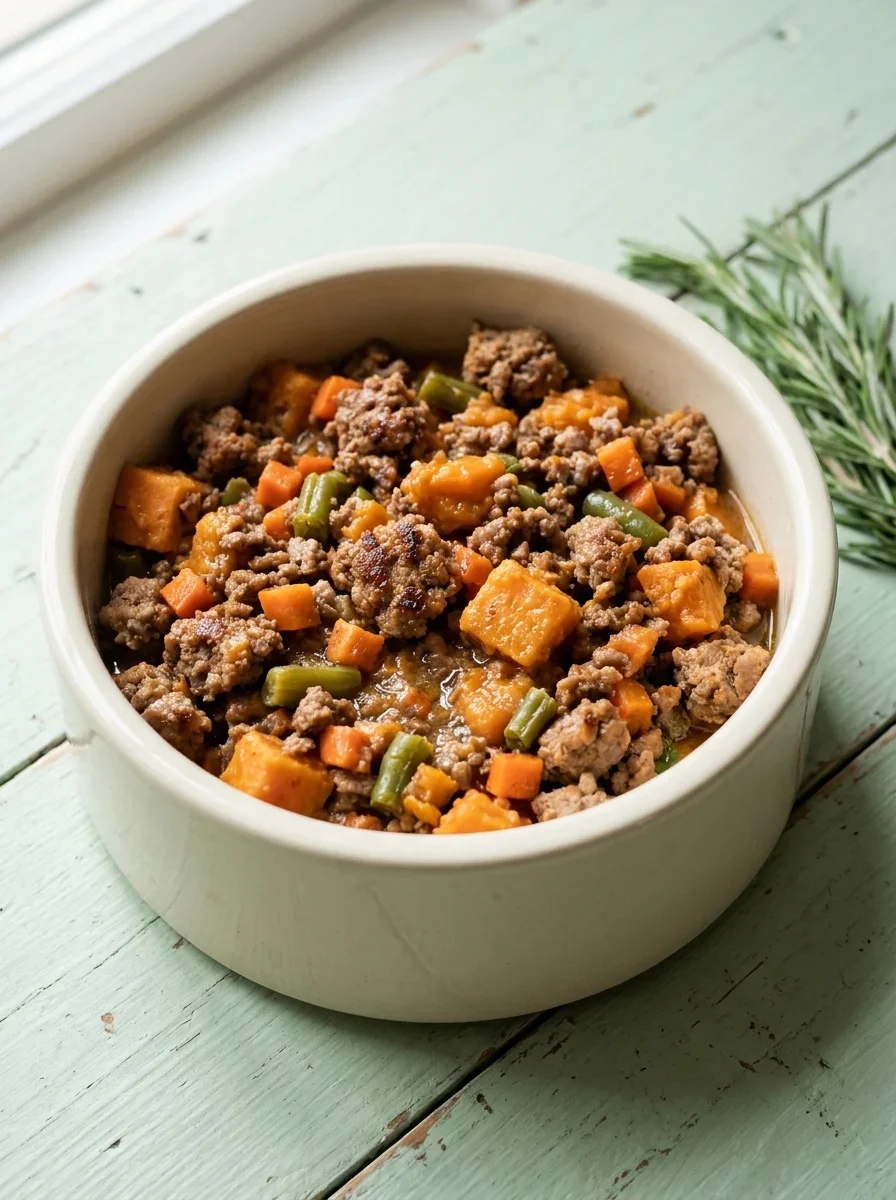
Recipe 1: Pork and Sweet Potato Skillet
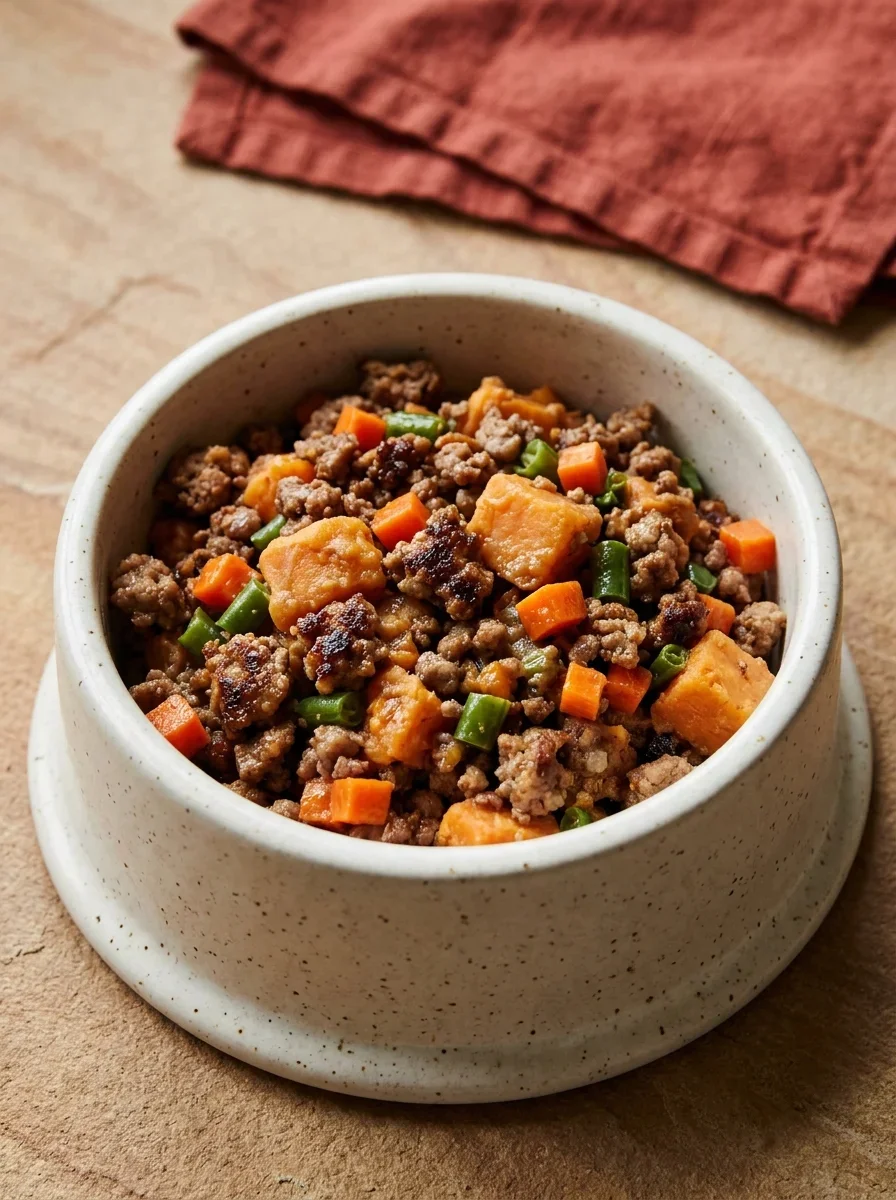
This is the canonical pork meal, and the one to start with. Sweet potato gives the skillet a soft, sweet base that most dogs love, carrots add fiber and crunch that softens in the pan, and green beans add bulk without calories.
Ingredients
- 1 lb lean ground pork, 90/10 or leaner
- 1 large sweet potato, peeled and diced small
- 1 cup carrots, diced
- 1 cup green beans, chopped
- 1 tablespoon olive oil
- 1/2 cup water or low-sodium, onion- and garlic-free broth
Step-by-Step Instructions
- Dice the sweet potato into small, even cubes — about half an inch — so it cooks through in the same time as the pork, and set it aside.
- Heat the olive oil in a large skillet over medium-high heat until it shimmers, about 1 minute, then add the ground pork and break it into small crumbles with a wooden spoon.
- Cook the pork for 8 to 10 minutes, stirring often, until no pink remains anywhere and the crumbles are lightly browned at the edges.
- Tip the pork into a colander and drain every drop of fat, pressing gently with the spoon, then let it rest 2 minutes and drain again — the fat is waste, never an ingredient.
- Return the drained pork to the skillet, add the sweet potato, carrots, green beans, and water or broth, and stir to combine.
- Cover, reduce the heat to low, and simmer 10 minutes until the sweet potato is soft enough to mash with a fork and the carrots bend without snapping.
- Check the pork with a meat thermometer — it must read 160F — then remove from the heat and cool completely before serving in a dog bowl on the floor at dog level.
Sweet potato makes this skillet a natural partner for other sweet-potato meals, and if your dog already loves the beef and sweet potato dog chews on this site, this skillet will taste familiar in the best way.
Recipe 2: Pork and Rice Medley
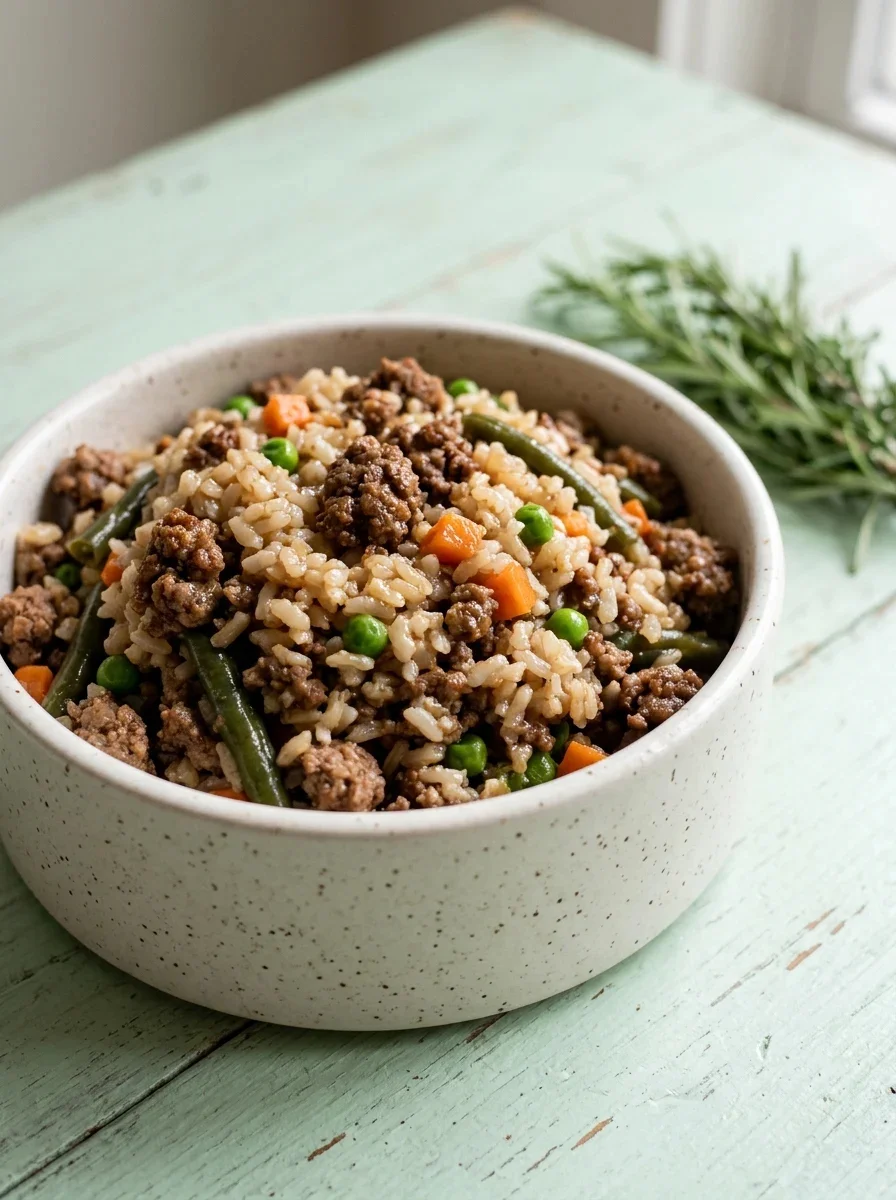
This is the batch-cook meal. Brown rice stretches one pound of pork into five cups of food, the peas and green beans cook in the same pan, and the whole batch freezes in neat portions.
Ingredients
- 1 lb lean ground pork, 90/10 or leaner
- 1 cup brown rice, cooked
- 1 cup green beans, chopped
- 1 cup peas
- 1 cup carrots, diced
- 1 tablespoon olive oil
Step-by-Step Instructions
- Start the brown rice first, following the package directions, and let it cook while you work — it needs about 25 minutes and should be fully soft, never firm.
- Heat the olive oil in a large skillet over medium-high heat, add the ground pork, and break it into small crumbles.
- Cook the pork for 8 to 10 minutes, stirring often, until no pink remains and the crumbles are lightly browned.
- Tip the pork into a colander, drain all the fat, press gently with a spoon, rest 2 minutes, and drain again.
- Return the drained pork to the skillet, add the cooked rice, green beans, peas, and carrots, and stir over medium heat for 5 minutes until the vegetables are tender and everything is evenly mixed.
- Check the pork with a meat thermometer — 160F, no exceptions — then cool completely and serve in a dog bowl on the floor at dog level.
If you rotate proteins across the week, this is the pork day that pairs naturally with a chicken and pumpkin dog food recipe on another day — same one-pan method, different protein, and your dog never eats the same thing twice in a row.
Recipe 3: Baked Pork and Oat Meatballs
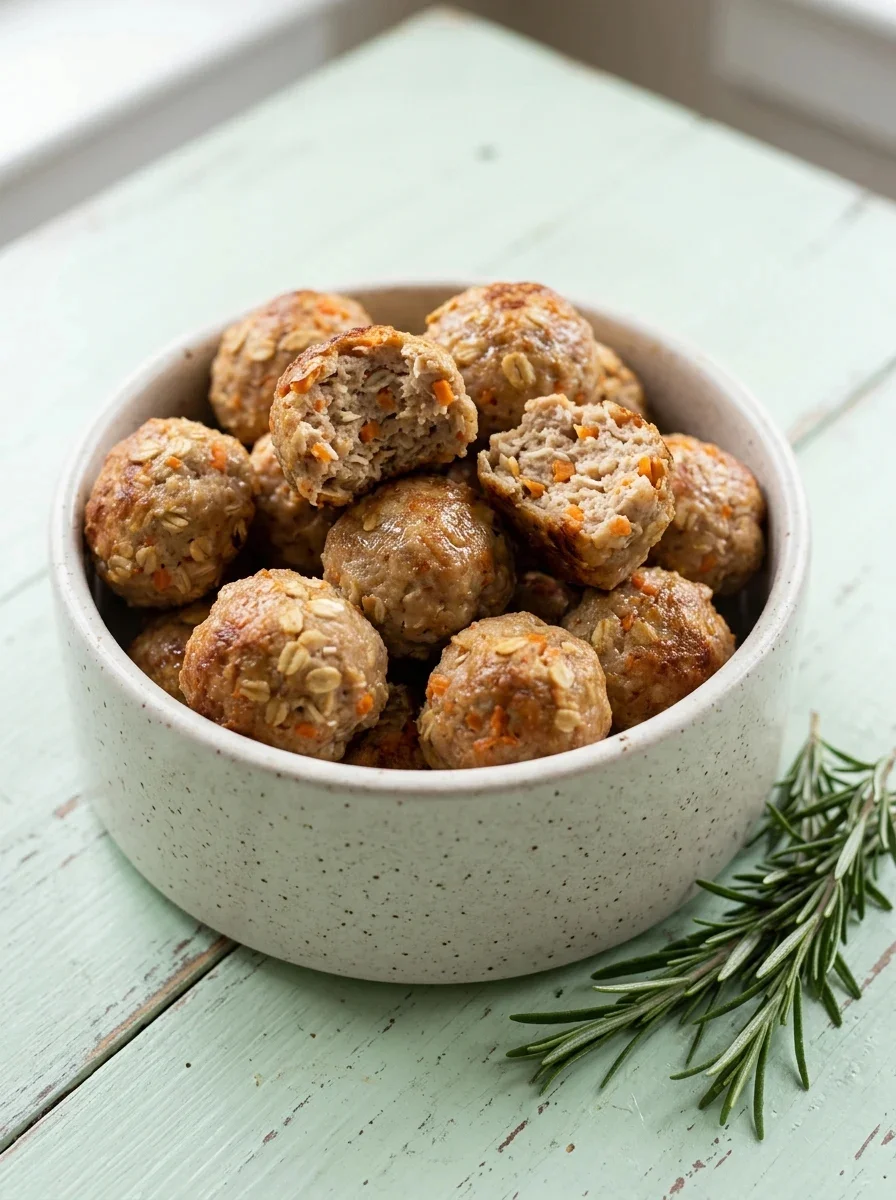
Meatballs are the only shaped format in this article, and they earn their place. Rolled oats bind the pork without flour, the egg holds the shape, and the carrots disappear into the mix so even a picky dog eats them.
Ingredients
- 1 lb lean ground pork, 90/10 or leaner
- 1 cup rolled oats
- 1 large egg
- 1/2 cup carrots, finely chopped
- 1/4 cup water
Step-by-Step Instructions
- Heat the oven to 375F and line a baking sheet with parchment paper so the meatballs release cleanly.
- Put the ground pork, rolled oats, egg, finely chopped carrots, and water in a large bowl and mix with your hands just until combined — overmixing makes tough meatballs.
- Roll the mixture into 24 balls about 1 inch across, wetting your hands lightly so the mix does not stick, and space them an inch apart on the sheet.
- Bake for 16 to 18 minutes until the outside is lightly browned and a meatball cut open shows no pink at all.
- Check the center of the largest meatball with a meat thermometer — it must read 160F — and bake 3 more minutes if it does not.
- Let the meatballs rest on the pan for 5 minutes so the juices settle, then move them to a plate.
- Cool completely, then serve broken up in a dog bowl on the floor at dog level — never serve a whole meatball to a small dog.
These freeze better than any other recipe in this article. Freeze them flat on the sheet first, then bag them; they keep 3 months, and a frozen meatball thaws in the fridge overnight.
Recipe 4: Pork, Quinoa and Veggie Bowl
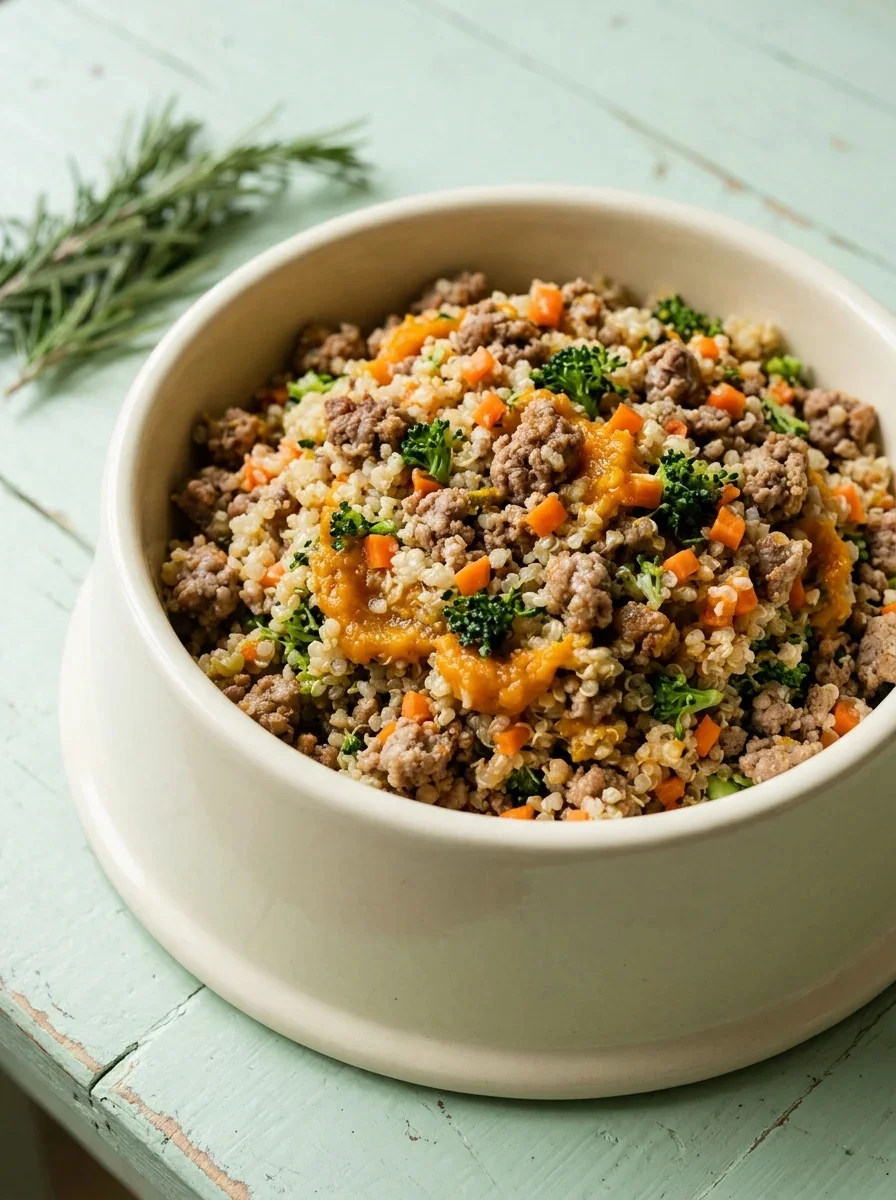
This is the allergy-rotation bowl. Quinoa is a complete protein on its own, it is naturally gluten-free, and it pairs with pork the way rice pairs with chicken — a neutral base that lets the meat do the work. This is the recipe for the dog rotating off chicken and beef.
Ingredients
- 1 lb lean ground pork, 90/10 or leaner
- 1 cup quinoa, cooked
- 1 cup carrots, diced
- 1 cup broccoli florets, chopped small
- 1/2 cup plain pumpkin puree
Step-by-Step Instructions
- Cook the quinoa first, following the package directions, and fluff it with a fork — it should be soft and separate, never gummy.
- Heat a large skillet over medium-high heat with no oil — the pork has enough fat of its own — and add the ground pork, breaking it into small crumbles.
- Cook the pork for 8 to 10 minutes, stirring often, until no pink remains and the crumbles are lightly browned.
- Tip the pork into a colander, drain all the fat, press gently, rest 2 minutes, and drain again.
- Return the drained pork to the skillet, add the cooked quinoa, carrots, broccoli, and pumpkin puree, and stir over medium heat for 5 minutes until the broccoli is bright green and tender.
- Check the pork with a meat thermometer — 160F — then cool completely and serve in a dog bowl on the floor at dog level.
This bowl is not a complete and balanced diet on its own, and no home-cooked meal in this article claims to be — if you feed homemade meals as your dog’s only food long-term, ask your vet or a veterinary nutritionist about a supplement to balance them.
Which Recipe for Which Dog
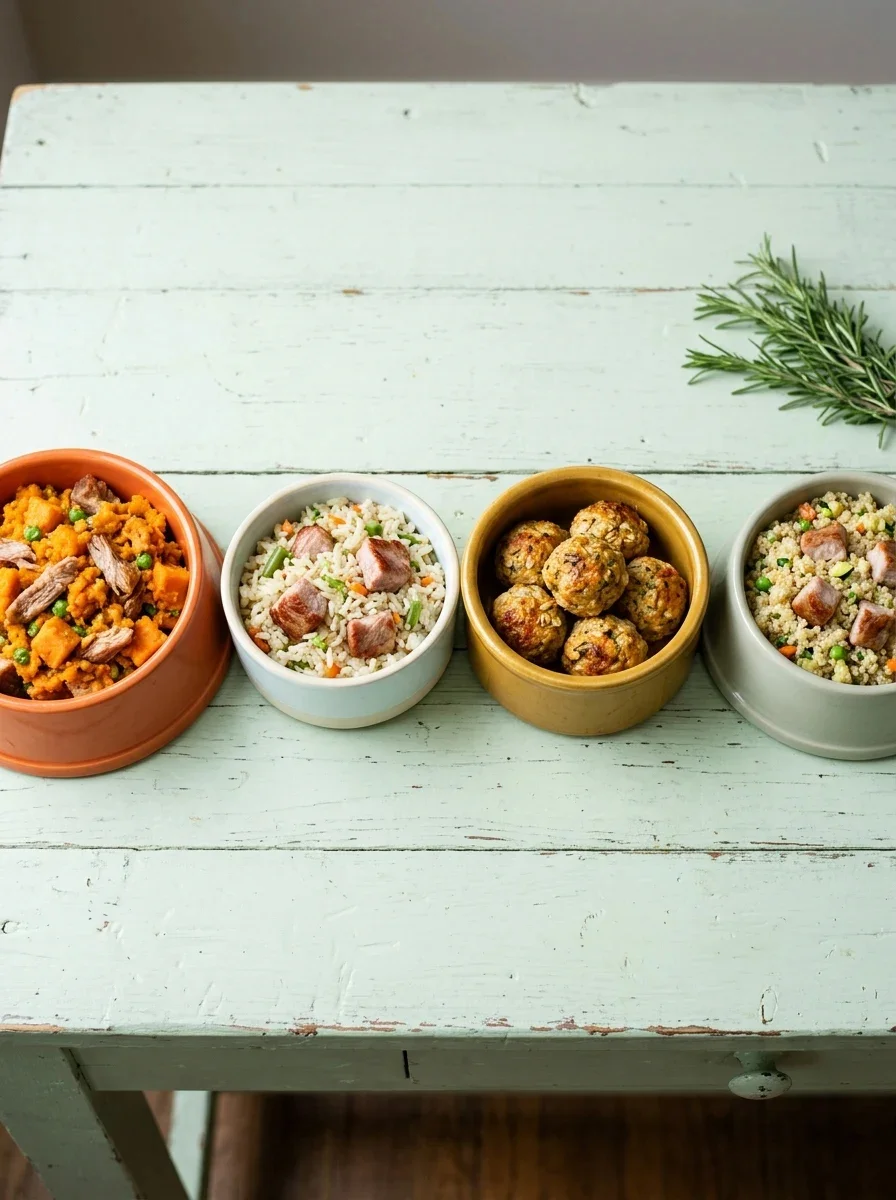
The everyday dog: start with the Sweet Potato Skillet. It is the fastest, the most forgiving, and the one most dogs finish first. Grain-free, one pan, thirty minutes.
The batch cooker: the Rice Medley. Five cups from one pound of pork, and it freezes in meal-size portions without losing texture. Cook a double batch on Sunday and the week’s pork days are done.
The trainee: the Baked Oat Meatballs. One batch makes twenty-four rewards, they freeze flat, and a broken meatball is the highest-value reward you can carry in a pocket.
The itchy or sensitive dog: the Quinoa Veggie Bowl. A novel protein on a gluten-free base, with pumpkin to settle the stomach. This is the rotation meal, not the everyday meal — feed it two or three times a week and rotate back to chicken or turkey on the other days.
The senior or the dog with few teeth: any of the four, served warm and mashed. The skillet and the rice medley mash easily with a fork; the meatballs break up by hand. Soft food is not a compromise — it is the right texture for a dog that cannot chew well.
Portion Guide: How Much Pork Is Too Much
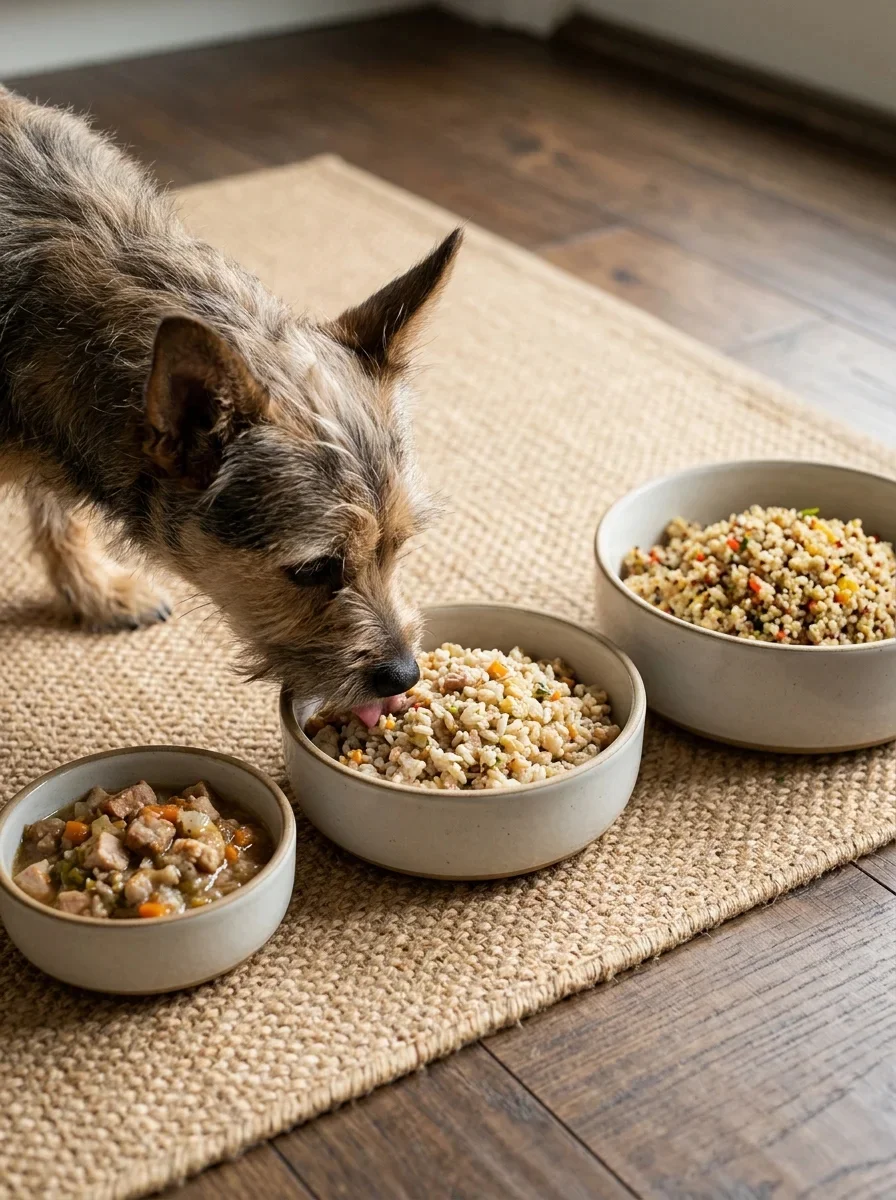
Pork runs richer than chicken or turkey, so the portions run smaller. As a starting point, a 10 lb dog gets about 3/4 cup a day, a 30 lb dog gets about 2 to 2 and a half cups, a 60 lb dog gets about 4 to 5 cups, and an 80 lb dog gets about 5 to 6 cups — split into 2 meals. Watch the waist, not the bowl: if you cannot feel the ribs under a thin layer of fat, cut the portion by a quarter and weigh again in two weeks.
The 10% treat rule does not apply here, because these are meals, not treats — but the spirit of it does. Pork is a rich protein, so it should not be the only protein your dog eats. Rotate it with chicken, turkey, or beef across the week, and if you want a reference point for how other home-cooked meals handle portions, the nom nom dog food copycat recipe on this site follows the same by-weight logic.
Storage and Freezing
Every recipe in this article keeps 3 days in the fridge in an airtight container, and 3 months in the freezer in meal-size portions. Cool the food completely before it goes into a container — warm food in a sealed box makes condensation, and condensation makes spoilage.
To serve from the freezer, thaw overnight in the fridge, never on the counter. Reheat gently in a pan or in the microwave until just warm, stir well so there are no hot spots, and let it cool to room temperature before serving.
Troubleshooting
My dog left the vegetables behind. Dice them smaller next time — half an inch or less — and stir them through the meat while it is still warm so the juices coat them. A dog that picks out carrots will eat carrots it cannot see.
The pork came out greasy. You did not drain it twice. The first drain gets the loose fat; the second drain, after a two-minute rest, gets the fat that was still trapped in the crumbles. If the pan still looks shiny after draining, your pork was not lean enough — check the label next time and buy 90/10 or leaner.
My dog had loose stool after the first pork meal. Pork is richer than chicken, and a new protein needs a slow introduction. Mix a quarter pork meal with three quarters of the old food for three days, then half and half for three days, then a full pork meal. If the loose stool lasts more than two days on a full pork meal, stop the pork and ask your vet. Dogs with a history of pancreatitis should not eat pork at all without vet approval — and if you want the full picture on fat-sensitive feeding, the low-fat dog food recipes on this site are built around exactly that problem.
The meatballs fell apart. The mix was too dry or the oats were too coarse. Add the water a tablespoon at a time until the mix holds together when squeezed, and use rolled oats, not steel-cut — steel-cut oats never soften enough to bind. Wet hands help too; dry hands tear the balls apart as you roll them.
Final Thoughts
Ground pork is not a complicated protein. Buy it lean, cook it to 160F, drain all the fat, and serve it plain in a dog bowl on the floor.
Start with the skillet. It is the fastest way to learn whether your dog likes pork, and the fastest way to learn whether your kitchen is ready for it.
Izzy is an experienced ranch worker who has a passion for exploring nature and getting up close to wildlife. With her connections to various animal organizations, Izzy is well-versed in animal care and rehabilitation.