
Watermelon & Blueberry Frozen Bites: The Easy 3-Ingredient Dog Treat Recipe
Summer heat can make even the laziest dog restless. If your pup keeps flopping onto the cool tile floor or begging for the AC vent, it’s time to whip up Watermelon & Blueberry Frozen Bites. This simple, no-bake treat takes minutes to prep and gives your dog a cold, juicy snack that’s packed with hydration.
Unlike store-bought frozen treats loaded with sugar and mystery additives, these bites use just a handful of real, dog-safe ingredients. You control exactly what goes in, which means fewer stomach upsets and more tail wags. Below, you’ll find the full recipe card first, followed by four different ways other dog owners shape and serve these bites, plus a few tasty ingredient twists to try once you’ve mastered the basics.
Let’s get into the kitchen.
The Main Watermelon & Blueberry Frozen Bites Recipe
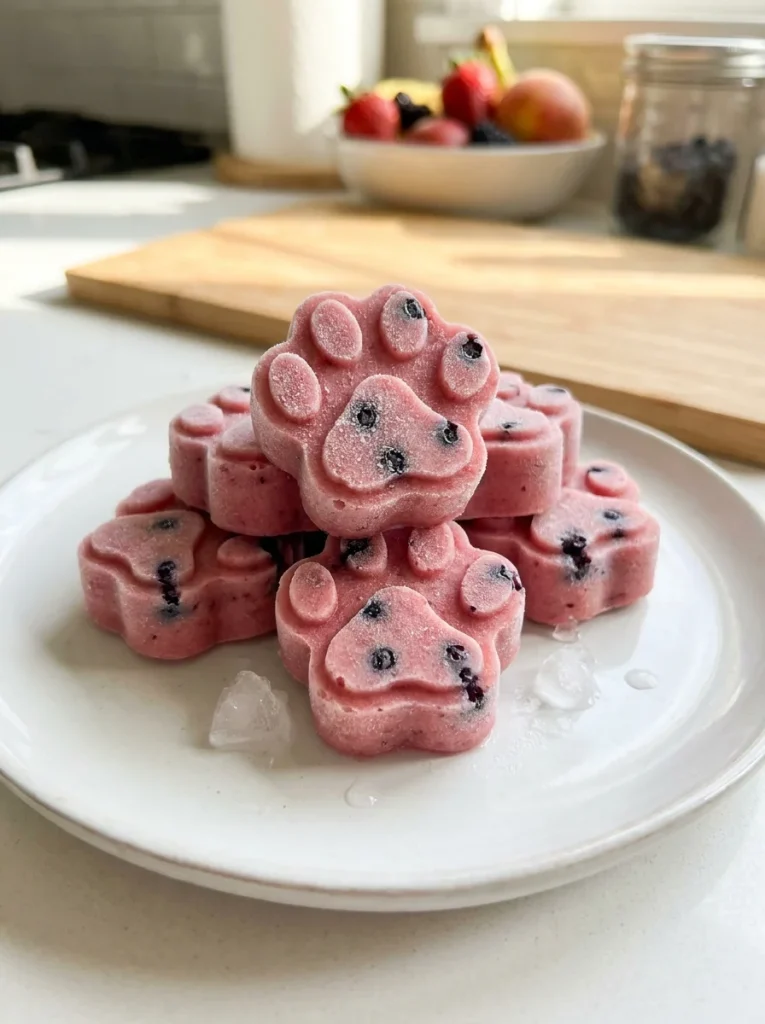
This is the simplest, most foolproof version of the recipe — a smooth watermelon-blueberry blend poured into a mold and frozen solid. It’s the base you’ll build every other variation from, so it’s worth getting comfortable with this one first.
Prep Time: 10 minutes
Freeze Time: 3–4 hours (or overnight for best results)
Yield: 20–24 bite-sized treats (depending on mold size)
Ingredients:
- 2 cups seedless watermelon, cubed
- 1/2 cup fresh or frozen blueberries
- 2 tablespoons water (only if needed to thin the blend)
Instructions:
- Cut the watermelon into small cubes, making sure every seed is removed.
- Add the watermelon cubes and blueberries to a blender or food processor.
- Blend until smooth. If the mixture is too thick to pour, add water one tablespoon at a time.
- Pour the mixture into a silicone mold, ice cube tray, or small paper cups.
- Tap the mold gently on the counter to remove air bubbles.
- Place the mold flat in the freezer for 3–4 hours, or until completely solid.
- Pop the bites out of the mold and serve immediately, or store for later.
Notes:
- Always remove watermelon seeds and rind before blending — both can cause choking or digestive blockages.
- Use fresh blueberries if you can. Frozen ones work too, but they add slightly more water to the mix, so blend a little longer.
- Small mold shapes freeze faster and are easier to portion for smaller dogs.
Getting the Right Consistency (Troubleshooting)
Even with just three ingredients, it’s easy to end up with a mixture that’s too watery, too thick, or that separates in the freezer. Here’s how to fix the most common issues.
If your mixture is too watery: This usually happens with very ripe or juicy watermelon. Add a few extra blueberries to thicken it up, or strain off a small amount of excess liquid before pouring into the mold.
If your mixture is too thick to pour: Add water one tablespoon at a time, blending briefly between each addition, until it reaches a pourable consistency similar to juice.
If the layers separate in the freezer: This can happen if the mixture sits at room temperature too long before freezing. Pour it into the mold as soon as it’s blended, and freeze right away rather than letting it sit on the counter.
If the color looks dull instead of vibrant pink: This is usually just a sign of an underripe watermelon. Taste-test a small piece before blending — a sweeter, deeper-colored watermelon gives you a brighter, more appealing final treat.
If bites won’t release from the mold: Run the bottom of the mold under warm water for a few seconds, or let it sit at room temperature for one to two minutes before trying again.
Four Other Ways to Make Watermelon & Blueberry Frozen Bites
The blended version above is the fastest way to make this treat, but it’s far from the only way. Dog owners have come up with several distinct methods over the years, each with a different texture, look, and level of effort. Here are four genuinely different approaches worth trying.
A. Layered Yogurt Bites
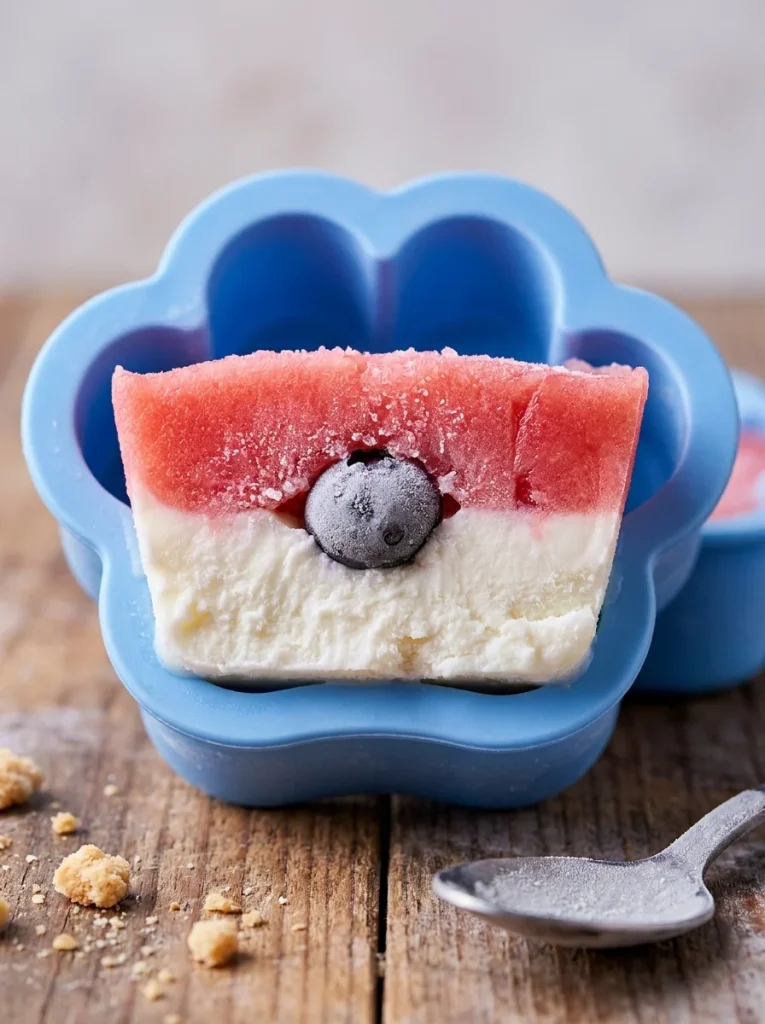
This is probably the most popular variation you’ll find, and for good reason — it looks impressive and adds a creamy, probiotic-rich layer to the treat.
Instead of blending everything together, you build the bite in layers inside a mold:
- Spoon a small amount of plain, unsweetened yogurt into the bottom of each mold cavity.
- Freeze for 15–20 minutes, just until the yogurt firms up.
- Drop one or two whole blueberries on top of the yogurt layer.
- Pour blended watermelon puree over the top, filling the mold the rest of the way.
- Freeze for 3–4 hours until solid.
The result is a treat with three distinct textures in every bite — creamy yogurt, a burst of blueberry, and juicy watermelon. Paw-print or bone-shaped silicone molds work especially well here since the layers show through the sides.
B. Watermelon-Blueberry Swirl Bites
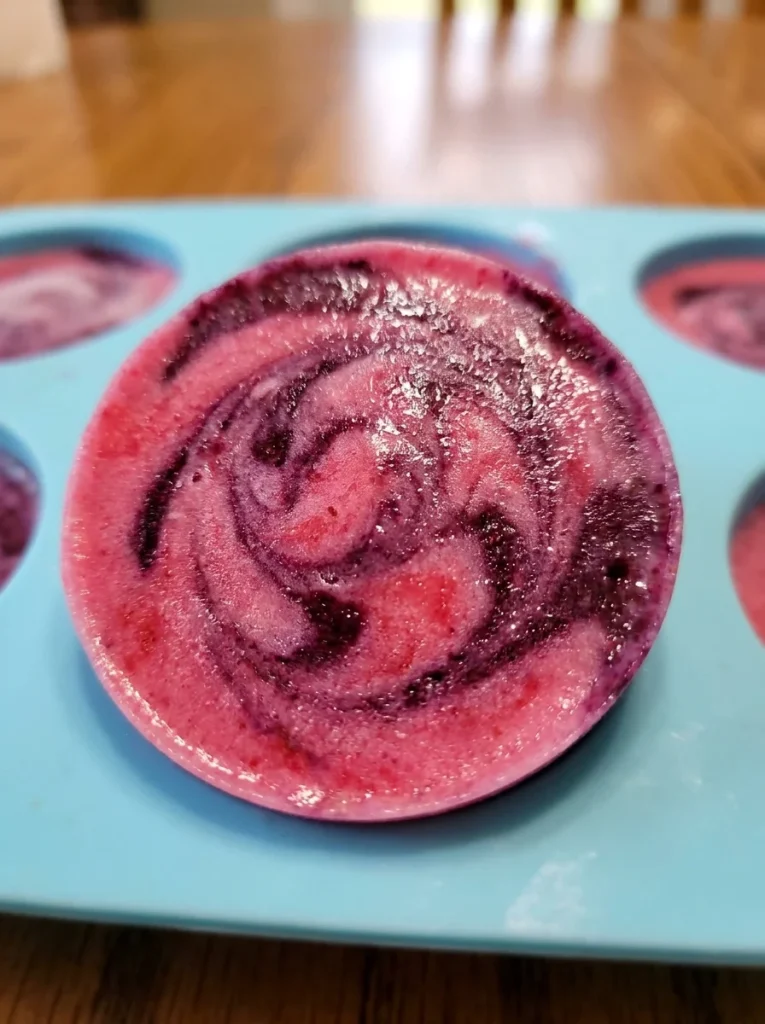
If you want something that looks a little more eye-catching (and honestly, more photogenic), try the swirl method instead of clean layers.
To make swirl bites, blend the watermelon and blueberries separately rather than together. Pour a small amount of watermelon puree into the mold, then add a spoonful of blueberry puree on top. Use a toothpick or skewer to gently drag through the two purees in a circular motion, creating a marbled effect. Freeze as usual.
This method takes a couple of extra minutes but doesn’t require any additional ingredients. It’s a nice option if you’re making a batch for a dog’s birthday or a summer get-together and want the treats to look a little more special.
C. Frozen Pupsicles on a Stick
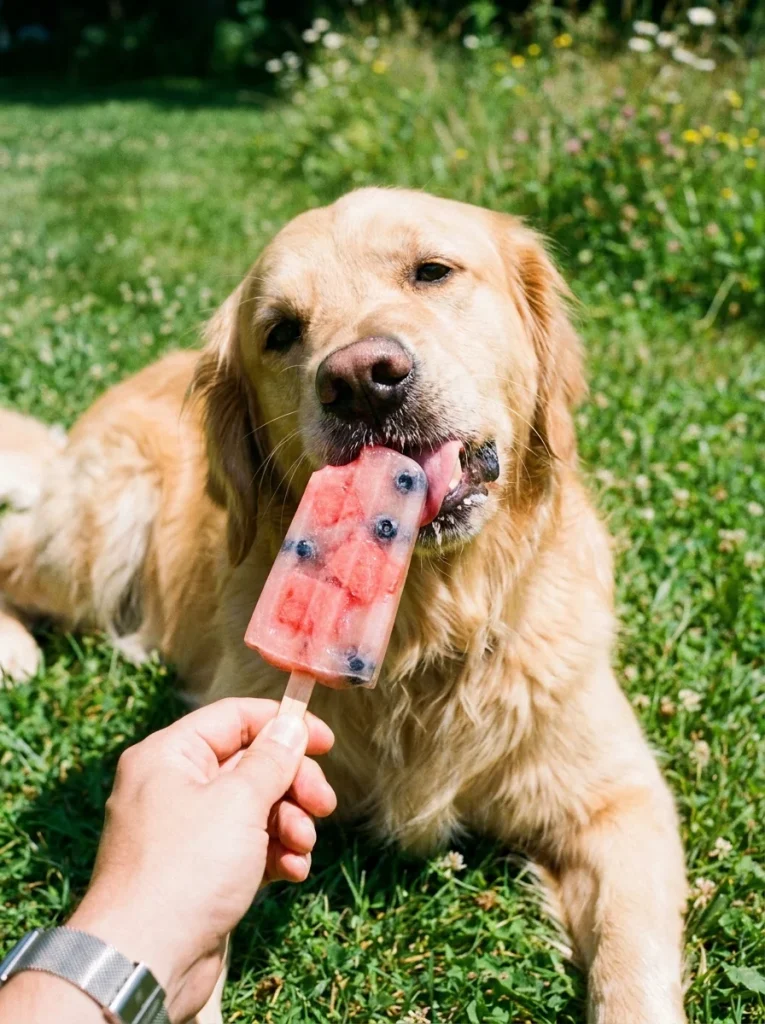
Not everyone owns silicone dog-treat molds, and that’s perfectly fine — the popsicle method solves that problem entirely.
Instead of a mold, use small paper cups (like the kind used for bathroom rinsing) or a standard popsicle tray. Fill each cup about two-thirds full with the blended watermelon-blueberry mixture. Freeze for about an hour, just until the mixture is slushy but not solid, then insert a popsicle stick or a large wooden craft stick into the center. Freeze for another 2–3 hours until fully solid.
To serve, peel away the paper cup or pop the popsicle out of its tray. This format is great for larger dogs who can hold and lick a treat rather than needing bite-sized chunks. It also stretches your ingredients further, since each pupsicle uses more of the mixture per treat.
D. Simple Ice-Cube-Tray Method
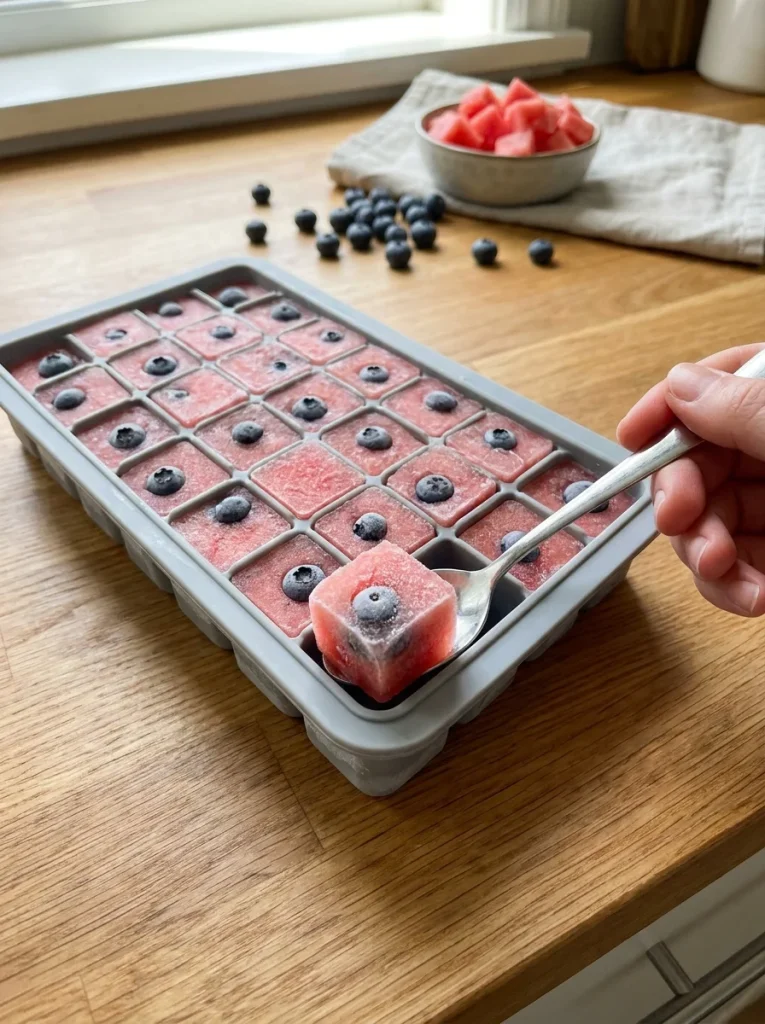
If you don’t want to buy any special equipment at all, a regular ice cube tray does the job just as well as a fancy dog-shaped silicone mold.
This method is identical to the main recipe — blend, pour, freeze — but it swaps the mold for something you likely already own. Standard ice cube trays make smaller, more uniform bites that are perfect for training rewards or for giving to small dogs who can’t handle a large piece at once.
The only downside is that ice cube trays can be a little harder to pop treats out of compared to flexible silicone. Running the bottom of the tray under warm water for a few seconds usually loosens them right up.
Tasty Ingredient Variations to Try
Once you’ve made the base recipe a few times, you might want to switch things up. These three ingredient twists keep the same basic method but change the flavor, texture, or nutritional profile of the treat.
A. Dairy-Free Coconut Milk Bites
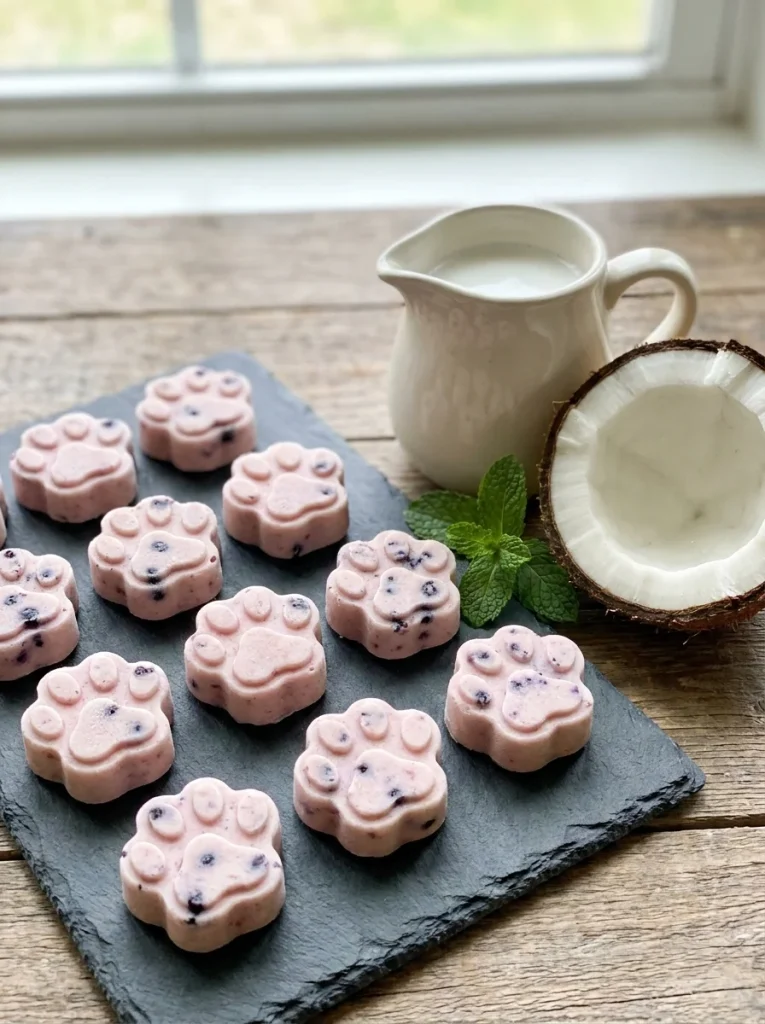
Some dogs are sensitive to dairy, even in small amounts. If your pup tends to get an upset stomach from yogurt, swap it out for full-fat coconut milk instead.
Simply replace the yogurt layer (or blend a splash of coconut milk directly into the watermelon-blueberry mixture) to add a subtle richness without any dairy at all. Coconut milk also adds a small amount of healthy fat, which can help your dog’s coat stay shiny. Just make sure to choose an unsweetened variety with no added flavorings.
B. Banana-Boosted Bites
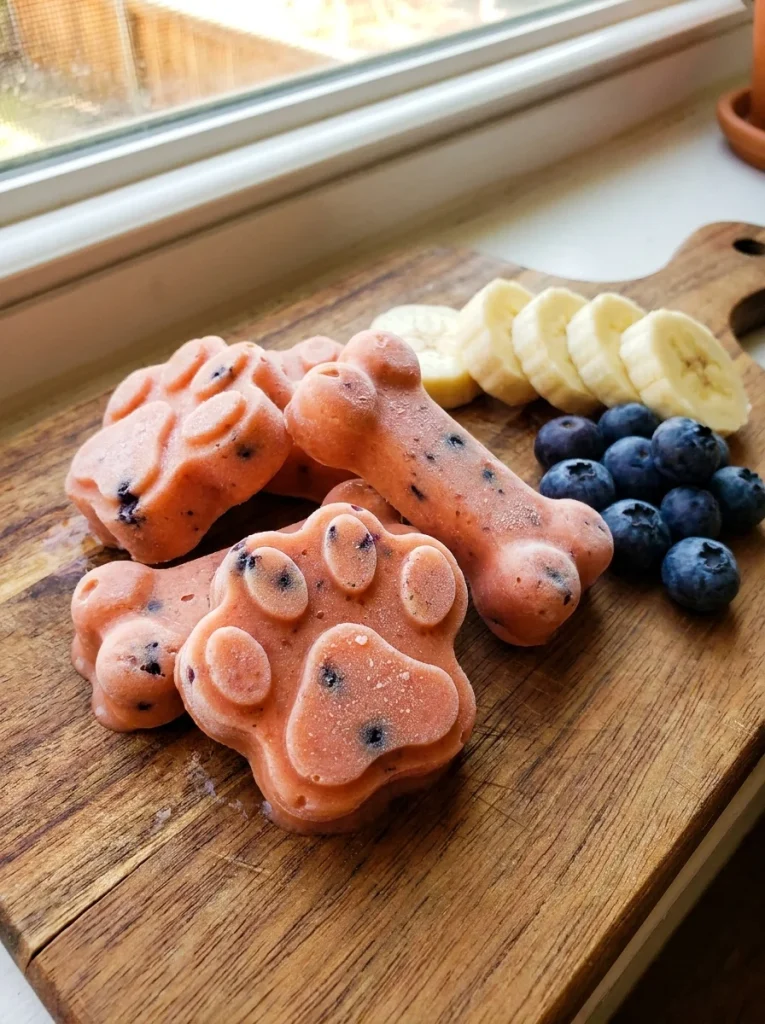
Adding half a ripe banana to the blender gives the treat a naturally sweeter taste and a thicker, creamier texture once frozen. This variation is especially popular with picky eaters who might turn their nose up at plain fruit but go wild for banana.
Mash or blend the banana in with the watermelon and blueberries as usual. Because banana is higher in natural sugar than watermelon or blueberries, this version is best saved as an occasional treat rather than a daily one, especially for dogs managing their weight.
C. Probiotic Kefir Bites
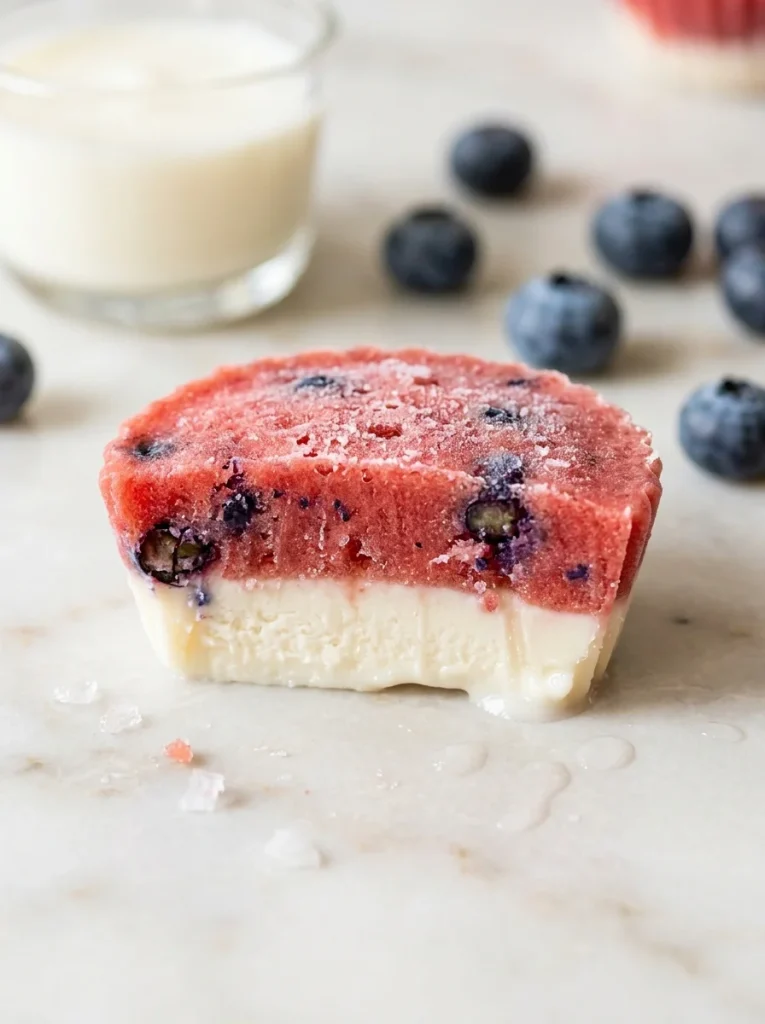
Kefir is a fermented dairy product similar to yogurt but with a thinner consistency and a higher concentration of beneficial bacteria. If your dog already tolerates dairy well, swapping yogurt for plain, unsweetened kefir in the layered version can give the treat an extra probiotic boost, which may support digestive health.
Use kefir exactly as you would yogurt in the layered recipe above — a spoonful on the bottom, then blueberries and watermelon puree on top. The texture will be slightly softer once frozen, but the flavor and process stay nearly identical.
Tips for the Best Frozen Bites Every Time
A few small adjustments can make a noticeable difference in how these treats turn out. Keep these tips in mind as you experiment with different molds and mix-ins.
Chop watermelon small before blending. Large chunks take longer to break down and can leave your blender working harder than it needs to.
Don’t overfill silicone molds. The mixture expands slightly as it freezes, so leave a small gap at the top of each cavity to avoid overflow.
Use ripe, sweet watermelon. A bland, underripe watermelon makes for a bland treat. Taste a small piece before you blend — if it’s sweet to you, your dog will enjoy it even more.
Freeze on a flat, stable shelf. A wobbly or tilted mold leads to uneven treats and messy spills.
Portion based on your dog’s size. A large dog can handle a bigger bite, but smaller dogs and puppies should get smaller pieces to prevent choking. If you’re prepping treats for a growing puppy, it’s worth reviewing your puppy’s overall care checklist to make sure treats fit into a balanced routine.
Storage & Serving Guidelines
Once your Watermelon & Blueberry Frozen Bites are fully frozen, transfer them to an airtight, freezer-safe container or a resealable freezer bag. Press out as much air as possible before sealing to prevent freezer burn.
Stored properly, these treats stay fresh in the freezer for up to two months. There’s no need to thaw them before serving — dogs generally enjoy the treats straight from frozen, especially on a hot day.
If you plan on making frozen treats a regular part of your dog’s routine, it might be worth setting up a small dedicated space for storing and serving them. Some owners like to organize a proper treat and snack station in their kitchen or laundry room to keep frozen treats, bowls, and other supplies all in one place.
When it comes to serving size, treat frozen bites the same way you would any other snack: they shouldn’t make up more than about 10% of your dog’s daily calorie intake. One or two bites after a walk or during a hot afternoon is plenty for most dogs.
Are Watermelon and Blueberries Safe for Dogs?
Generally, yes — both watermelon and blueberries are considered safe, dog-friendly fruits in moderation. Watermelon is mostly water, which makes it a naturally hydrating snack, and it contains small amounts of vitamins A, B6, and C. Blueberries are often called a “superfood” for dogs because they’re rich in antioxidants and fiber while being relatively low in sugar compared to other fruits.
That said, a few precautions matter. Always remove watermelon seeds and rind, since both can cause choking or an intestinal blockage, especially in smaller dogs. Introduce any new fruit gradually and watch for signs of an upset stomach, since every dog’s tolerance is a little different.
If your dog has a sensitive stomach, diabetes, or any other health condition, it’s worth checking with your veterinarian before adding new fruits to their diet. And if you’re generally curious about which everyday foods are safe or risky for dogs, it’s worth reading up on other common snacks — for example, many owners are surprised to learn whether cereal-based snacks like Cheerios are actually okay to share.
Frozen fruit treats like these also pair well with a broader homemade approach to feeding. If you enjoyed making this recipe, you might like browsing a wider collection of homemade dog treat recipes for more no-bake and baked options to rotate through the week.
Final Thoughts
Watermelon & Blueberry Frozen Bites are about as simple as dog treats get — three ingredients, one blender, and a freezer do most of the work. Whether you stick with the classic blended version, try the layered yogurt style, swirl two purees together for a prettier finish, or skip the mold altogether with a popsicle stick, there’s a method here to match whatever equipment and time you have on hand.
The ingredient variations are worth exploring too, especially if your dog has a sensitive stomach or you’re just looking to switch up the flavor now and then. A splash of coconut milk, a bit of mashed banana, or a spoonful of kefir can turn the same basic recipe into something a little different each time.
Frozen treats like these are also a great addition to birthdays, hot summer afternoons, or just as a regular reward — and if you’re planning a celebration, this same freezing method pairs nicely with a homemade dog birthday cake recipe for a full treat spread.
However you make them, the goal is the same: a cool, hydrating snack made from real ingredients that your dog will come running for every single time.

Izzy is an experienced ranch worker who has a passion for exploring nature and getting up close to wildlife. With her connections to various animal organizations, Izzy is well-versed in animal care and rehabilitation.


