Homemade Wet Dog Food: Chicken, Beef, Turkey, Pork, Fish, and Lamb
Canned wet food smells like dinner to a dog, but the label rarely tells the whole story. Homemade wet dog food fixes both problems at once: you pick the protein, you pick the carb, you control the moisture, and you know exactly what went into the bowl.
What "Wet Dog Food" Actually Means at Home
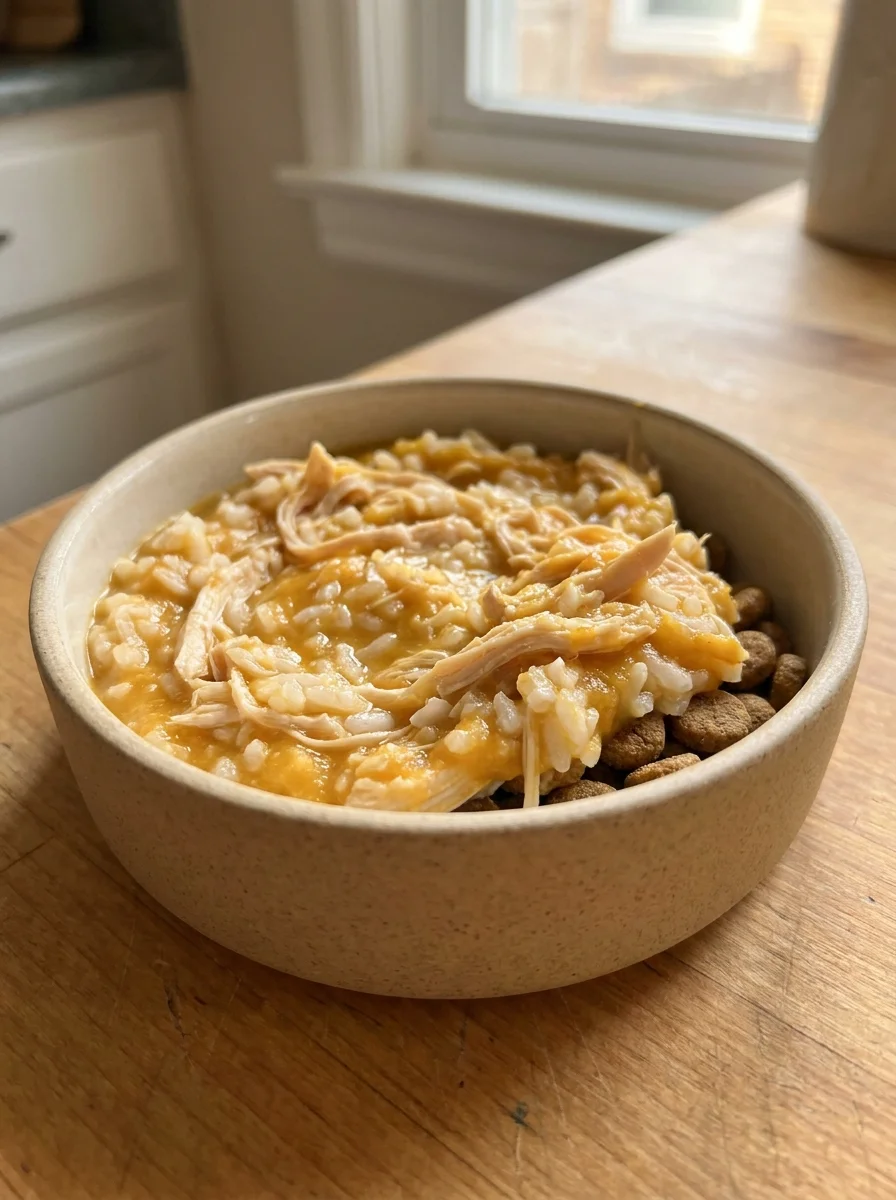
Wet food is not soup, and it is not dry kibble with water poured over it. Real wet food is spoonable: soft enough to eat without crunching, moist enough to smell like food from across the room, and thick enough to sit in a mound in the bowl instead of running to the edges. That texture is the whole point. If your dog is one of the fussy ones, the best dog foods for picky eaters roundup explains why texture and smell matter more than flavor variety, and these six recipes put that idea into practice.
The moisture also does quiet work behind the scenes. Dogs that do not drink enough get a good share of their daily fluid from wet food, which helps kidneys and digestion, and soft food is easier on sore mouths, missing teeth, and jaws that ache after dental work.
What “wet” does not mean is sloppy. Too much liquid and the meal turns into a thin broth with bits floating in it, which most dogs lap at and leave half the solids behind. Too little and it dries into a stiff paste that sticks to the bowl. The recipes below aim for the middle: a soft stew, mash, or porridge that holds a spoon mark and slides off the spoon in one soft dollop.
The Wet Food Formula: Protein + Soft Carb + Veg + Broth
Every recipe in this article follows the same four-part formula, and once you see it, you can build your own wet food without a recipe at all. Protein first: one plain, unseasoned meat or fish, cooked thoroughly. Then liquid: plain water, or a homemade dog-safe broth — and the broth is where most homemade recipes go wrong, so read this part twice.
Store-bought broth is almost never safe for dogs. Most cartons list onion and garlic in the ingredients, and both are toxic to dogs even in small amounts cooked into a meal. Salt is the other problem: a carton of human broth can carry more sodium than a dog should eat in a day. The safe move is simple — cook with plain water. If you want a richer broth, make it yourself: simmer meat scraps in plain water with no onion, no garlic, and no salt, strain it well, and freeze it in portions. A jug of homemade bone broth for dogs in the freezer is the single most useful thing a wet-food cook can keep on hand, and it doubles as a topper for kibble on lazy days.
The formula also sets the ratios. Aim for roughly half protein, a quarter soft carb, and a quarter vegetables by volume once everything is cooked — that is the balance that keeps the meal satisfying without overloading any one nutrient. Fat stays low on purpose: drain the fat from browned ground meat, skim the surface of the pot, and never add butter or pan drippings.
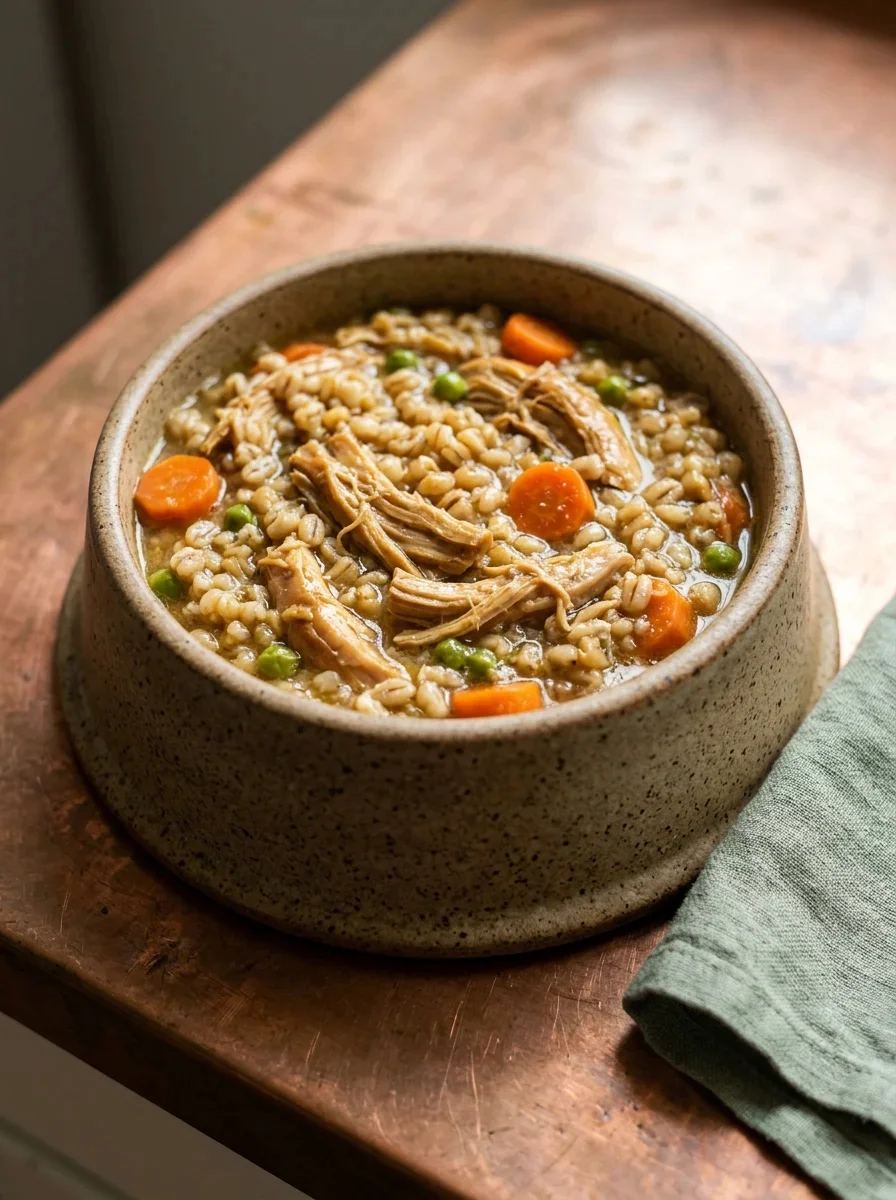
Recipe 1: Chicken & Barley Stew
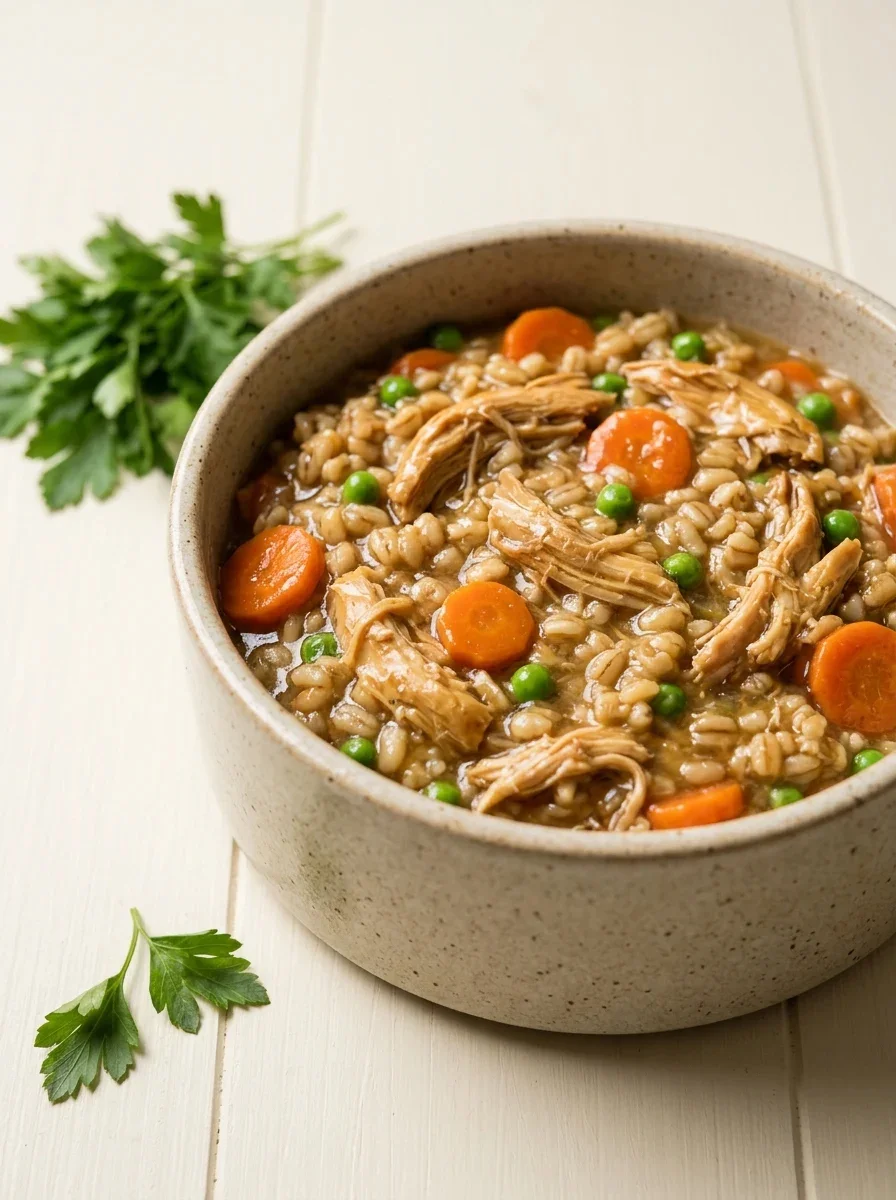
Chicken and barley is the gentlest recipe in this set, and the one to start with if your dog has a sensitive stomach or you are cooking wet food for the first time. Cook the chicken to 165F with no pink, and use boneless meat only — cooked bones splinter and must never be served.
Ingredients
- 1 lb boneless skinless chicken thighs
- 3/4 cup pearl barley, rinsed
- 2 carrots, peeled and diced
- 1 cup frozen peas
- 4 cups plain water
- 1 tablespoon olive oil
Step-by-Step Instructions
- Warm the olive oil in a large pot over medium heat and brown the chicken thighs lightly on both sides, about 4 minutes.
- Pour in the water, bring the pot to a gentle boil, and skim off any foam that rises.
- Stir in the rinsed barley and diced carrots, then lower the heat until the pot barely simmers.
- Cover and cook for 35 minutes, stirring once halfway, until the barley is tender and the chicken shreds easily with a fork.
- Stir in the peas and cook 5 more minutes, until bright green and soft.
- Take the pot off the heat and shred the chicken into small pieces with two forks, stirring it back through the barley.
- Let the stew cool completely to room temperature before serving, and store leftovers in airtight containers.
Fridge 3 to 4 days, freezer up to 3 months.
Recipe 2: Beef & Sweet Potato Mash
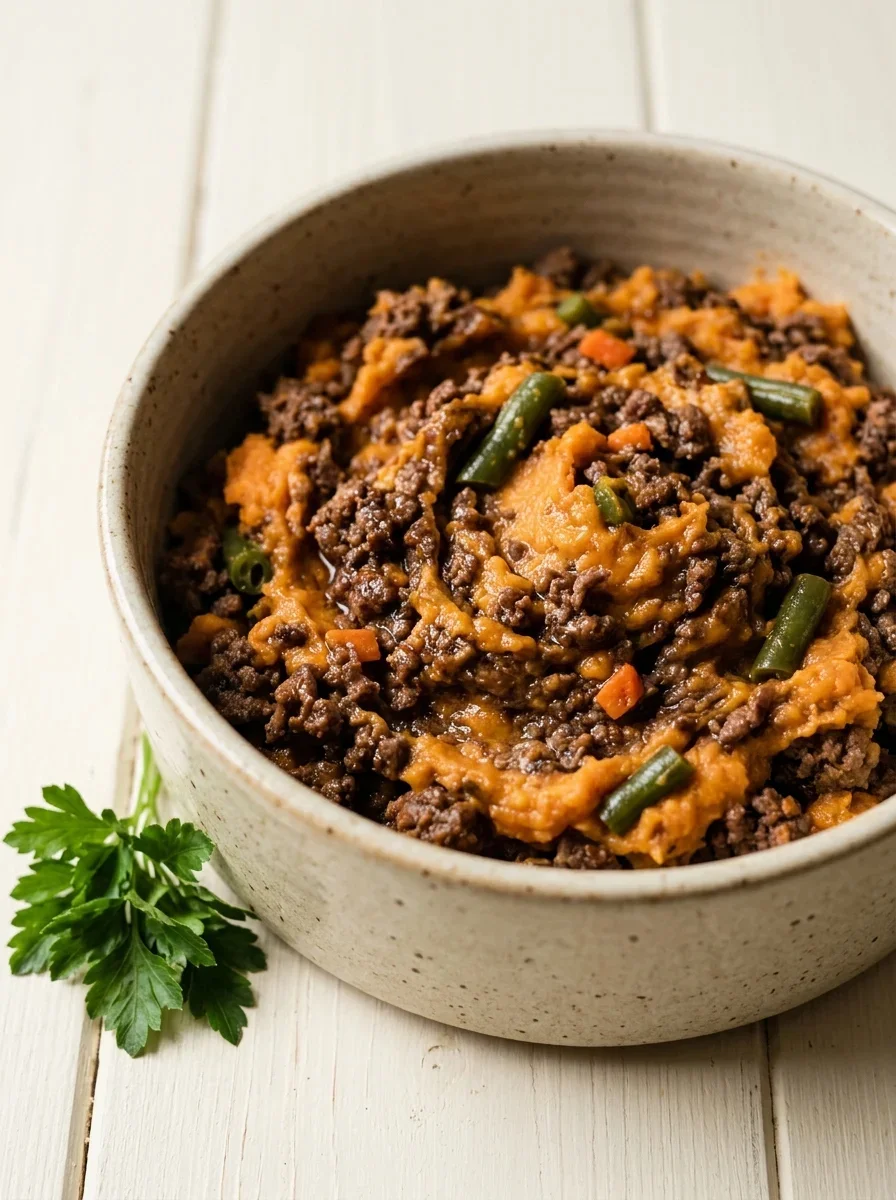
Beef and sweet potato is the workhorse of this set: iron-rich, calorie-dense, and the recipe active dogs do best on. A beef apple dog meal is the closest cousin on this site if your dog likes the beef-and-fruit combination, but this mash keeps it simpler, with no fruit at all.
Ingredients
- 1 lb lean ground beef
- 2 medium sweet potatoes, peeled and cubed
- 1 cup green beans, chopped
- 2 carrots, peeled and diced
- 3 cups plain water
Step-by-Step Instructions
- Brown the ground beef in a large pot over medium-high heat, breaking it into small crumbles, about 6 minutes.
- Drain off every drop of fat and discard it — never pour cooking fat into the dog’s food.
- Add the sweet potato, green beans, carrots, and water, and bring the pot to a simmer.
- Cover and cook for 20 minutes, until the sweet potato is soft enough to crush with a spoon.
- Mash the sweet potato roughly in the pot, leaving some texture, and stir everything together.
- Take the pot off the heat and let the mash cool completely to room temperature before serving.
Fridge 3 to 4 days, freezer up to 3 months. This is the thickest recipe in the set, closer to a mash than a stew, so add a splash of warm water when you reheat a portion if your dog prefers it looser.
Recipe 3: Turkey & Oat Porridge
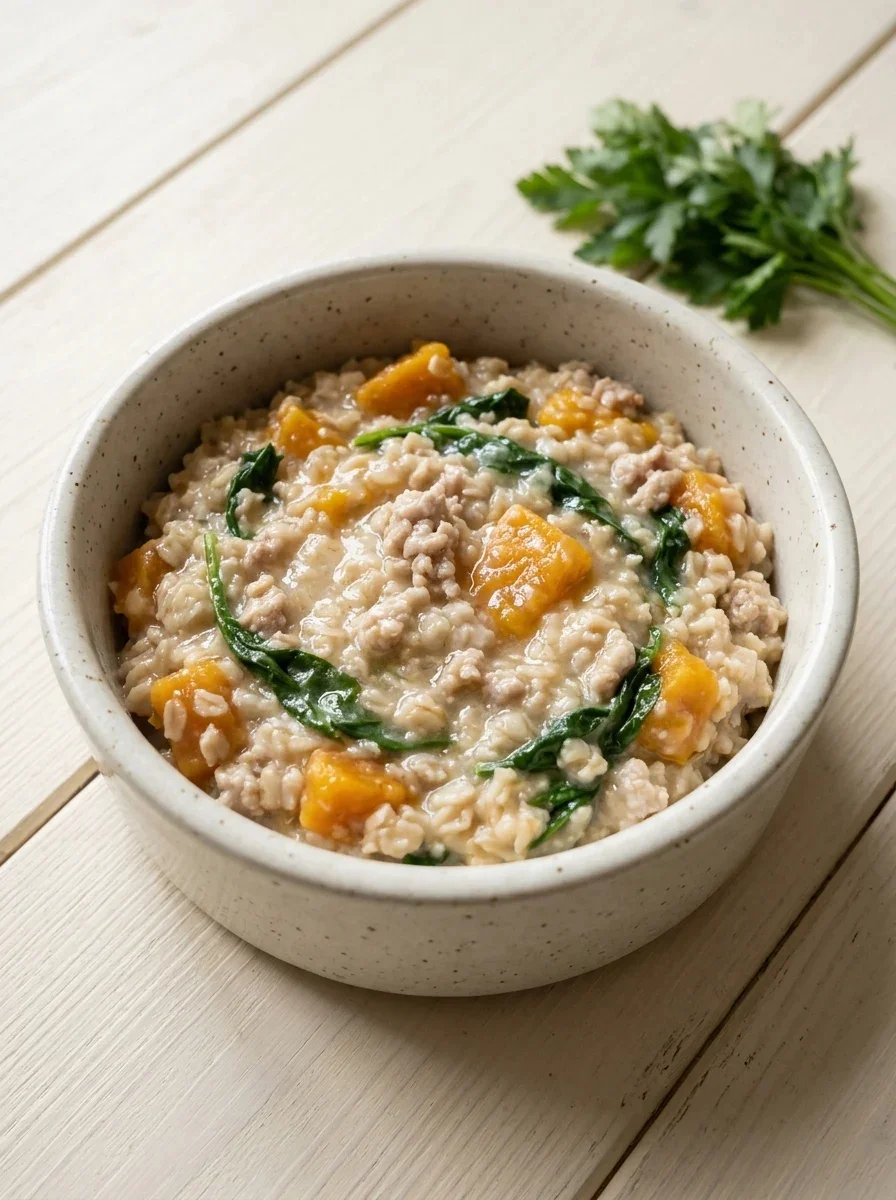
Turkey and oat porridge is the softest recipe here, and the one to cook for puppies, seniors, and dogs recovering from a dental procedure.
Ingredients
- 1 lb ground turkey
- 1 cup rolled oats
- 1 cup pumpkin puree, plain with no spices
- 1 cup fresh spinach, chopped
- 3 cups plain water
Step-by-Step Instructions
- Add the ground turkey and water to a large pot and break the turkey into small pieces with a spoon.
- Bring to a gentle simmer over medium heat and cook for 10 minutes, skimming off any foam.
- Stir in the rolled oats and pumpkin puree, then lower the heat until the pot barely bubbles.
- Cover and cook for 12 minutes, stirring twice, until the oats have softened into a thick porridge.
- Stir in the chopped spinach and cook 3 more minutes, until wilted completely.
- Take the pot off the heat and let the porridge cool completely to room temperature before serving.
Fridge 3 to 4 days, freezer up to 3 months. Use plain pumpkin puree only — never pumpkin pie filling, which is spiced and sweetened and unsafe for dogs.
Recipe 4: Pork & Pumpkin Stew
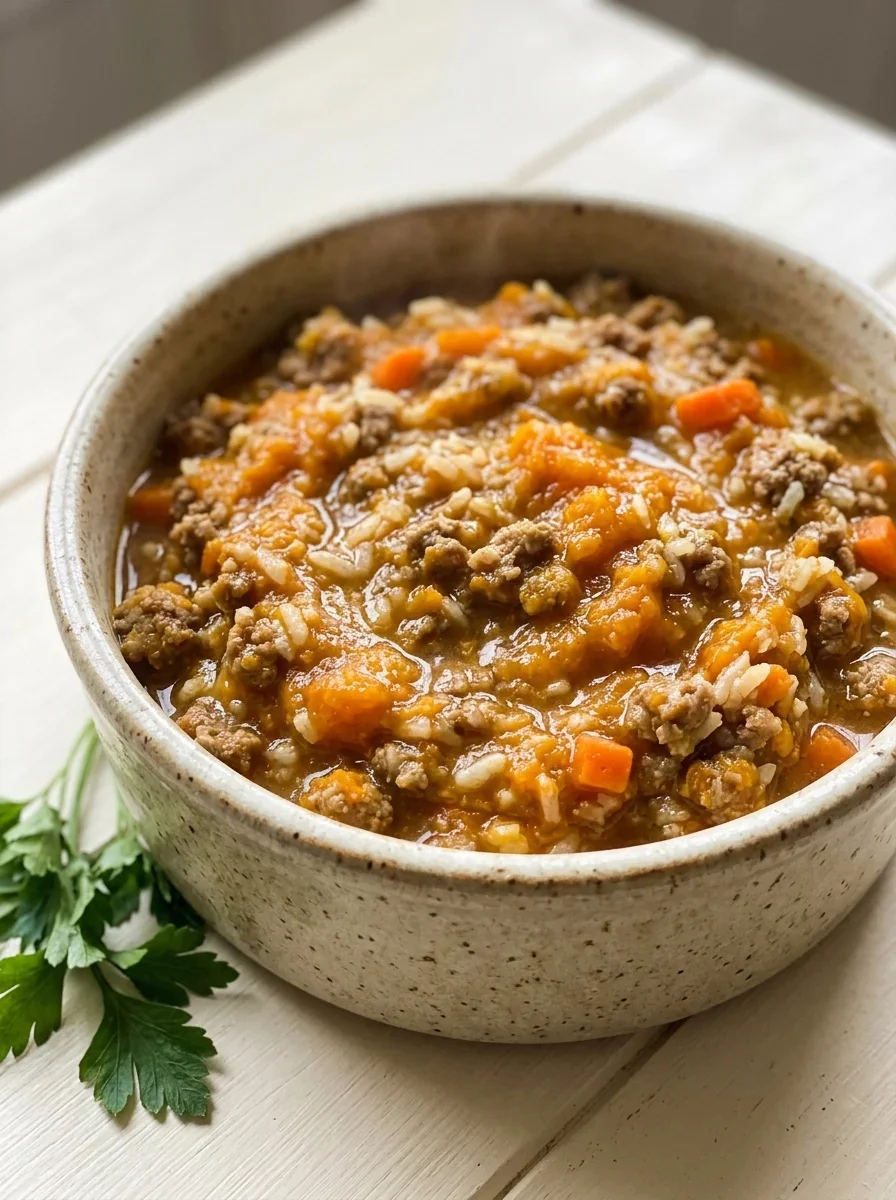
Pork and pumpkin is the novel-protein recipe in this set, and a good choice for dogs that have eaten chicken and beef for years and need a change. Cook the pork thoroughly — ground pork must reach 160F with no pink anywhere — and drain the fat after browning, the same as with beef.
Ingredients
- 1 lb ground pork
- 1 cup pumpkin puree, plain with no spices
- 1 cup cooked white rice
- 2 carrots, peeled and diced
- 3 cups plain water
Step-by-Step Instructions
- Brown the ground pork in a large pot over medium-high heat, breaking it into small crumbles, about 6 minutes.
- Drain off every drop of fat and discard it, then return the pot to the heat.
- Add the water, diced carrots, and pumpkin puree, and bring to a simmer.
- Cover and cook for 20 minutes, until the carrots are soft and the stew has thickened.
- Stir in the cooked rice and cook 5 more minutes, until heated through and the stew is uniform.
- Take the pot off the heat and let the stew cool completely to room temperature before serving.
Fridge 3 to 4 days, freezer up to 3 months. If your dog has never had pork before, introduce it like any new protein: a half portion mixed into the usual food for two or three days, watching stools before you go to a full serving.
Recipe 5: Fish & Potato Mash
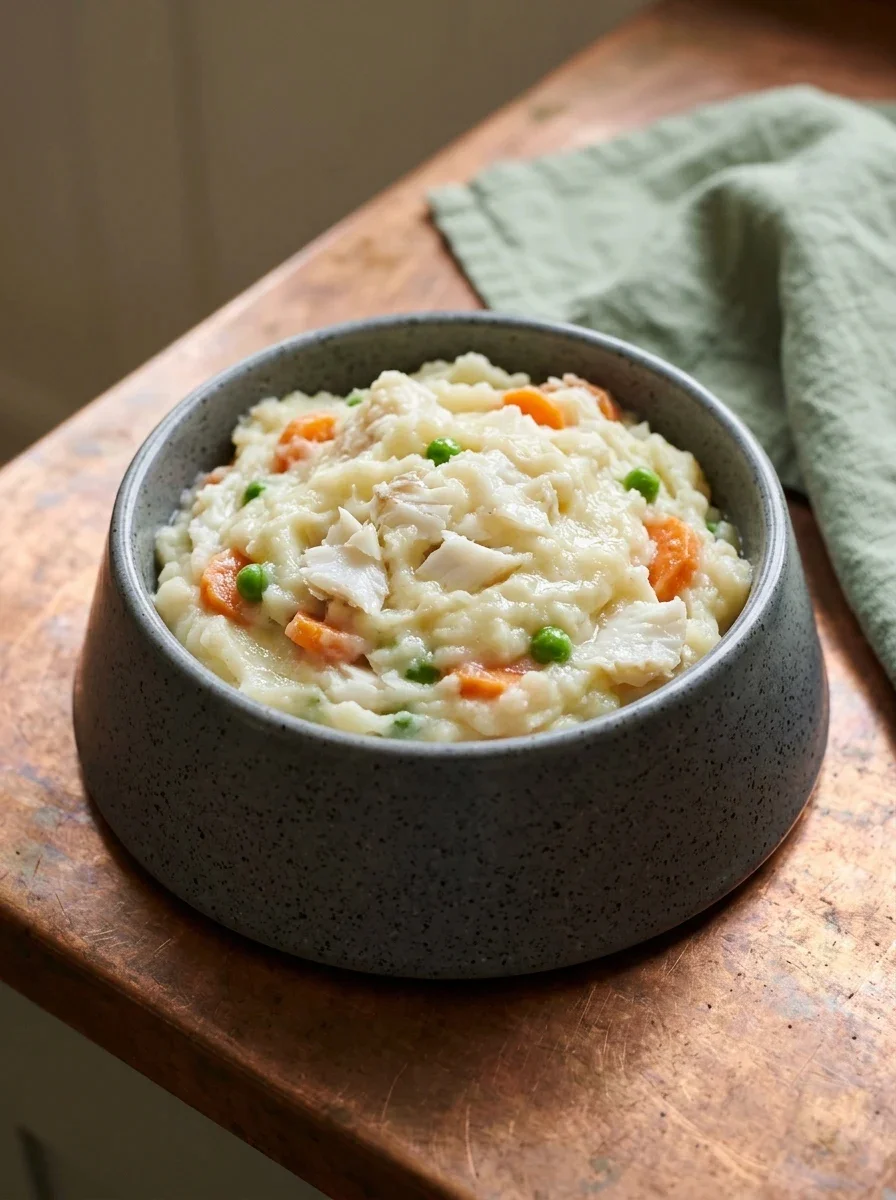
Fish and potato is the leanest recipe in this set and the one with the shortest shelf life, so read the storage note twice. The trade-off is the fridge window: fish spoils faster than any other protein here, so this recipe keeps 2 to 3 days in the fridge only, and the freezer window is 2 months instead of 3.
Ingredients
- 1 lb boneless cod fillets
- 2 medium potatoes, peeled and cubed
- 1 cup frozen peas
- 1 cup carrots, peeled and diced
- 2 cups plain water
Step-by-Step Instructions
- Boil the potatoes and carrots in the water in a large pot for 15 minutes, until both are soft enough to mash.
- While the vegetables cook, poach the cod in a separate pan of plain simmering water for 8 to 10 minutes, until the fish flakes easily and reaches 145F.
- Lift the fish out with a slotted spoon and flake it into small pieces, checking every flake by hand for pin bones.
- Drain the vegetables, reserving half a cup of the cooking water, and mash them roughly in the pot.
- Fold the flaked fish and the peas into the mash, adding a splash of the reserved water until the texture is soft and spoonable.
- Let the mash cool completely before serving.
Fridge 2 to 3 days ONLY, freezer up to 2 months. Never serve raw fish, and avoid high-mercury fish entirely: no shark, swordfish, king mackerel, or tilefish, ever.
Recipe 6: Lamb & Pumpkin-Barley Stew
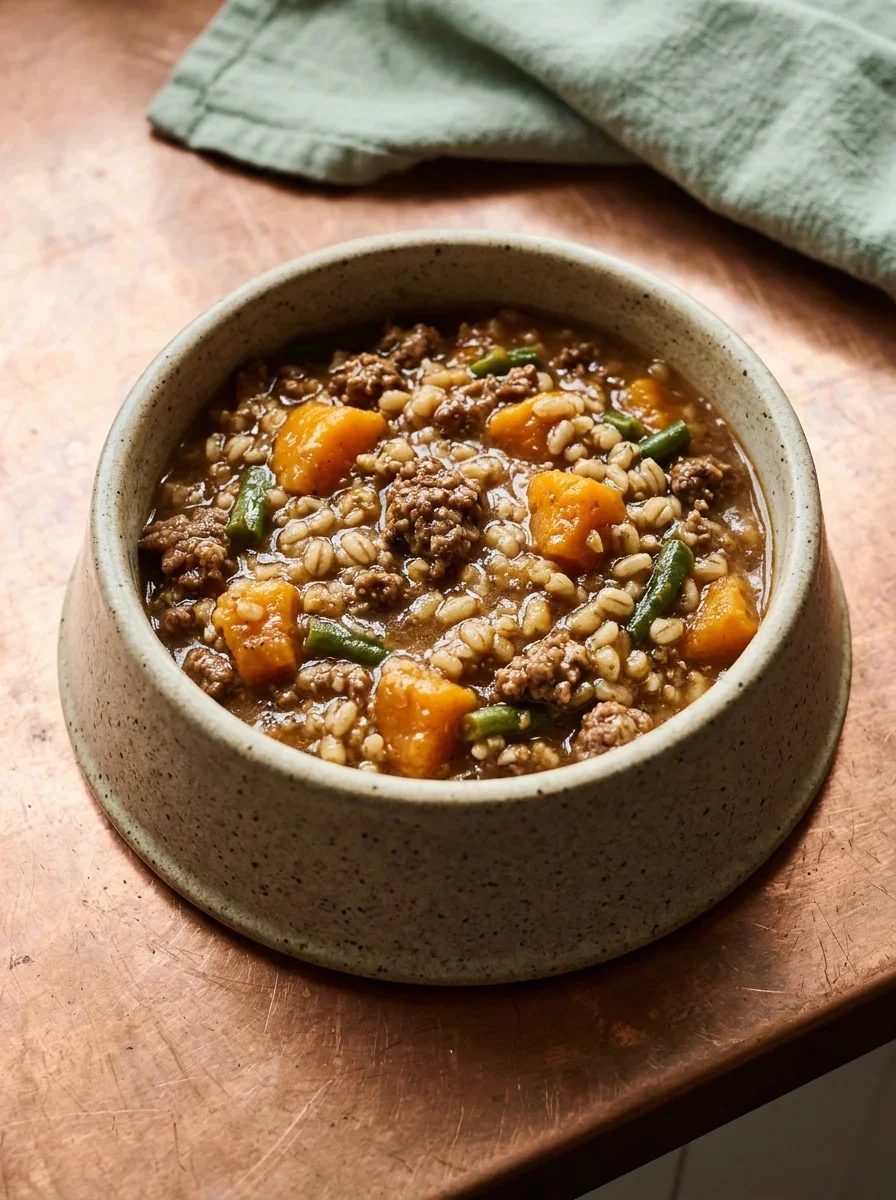
Lamb and pumpkin-barley is the heartiest recipe in this set and the second novel protein, which makes it the natural pick for allergy rotation — dogs that have eaten the same proteins for years sometimes do better on a protein they have rarely met.
Ingredients
- 1 lb ground lamb
- 3/4 cup pearl barley, rinsed
- 1 cup pumpkin puree, plain with no spices
- 1 cup green beans, chopped
- 4 cups plain water
Step-by-Step Instructions
- Brown the ground lamb in a large pot over medium-high heat, breaking it into small crumbles, about 6 minutes.
- Drain off every drop of fat and discard it, then return the pot to the heat.
- Add the water, rinsed barley, and pumpkin puree, and bring to a gentle simmer.
- Cover and cook for 35 minutes, stirring once halfway, until the barley is tender.
- Stir in the chopped green beans and cook 10 more minutes, until soft.
- Take the pot off the heat and let the stew cool completely to room temperature before serving.
Fridge 3 to 4 days, freezer up to 3 months.
How Much to Serve: Portions by Dog Size
A meal is not a treat, and the 10 percent treat rule does not apply here. These recipes are food, so the portion is the meal itself, and the starting guideline is about 1 cup per 10 lbs of body weight per day, split into 2 to 3 meals. Serve every meal in a dog bowl on the floor at dog level, and let it cool completely before serving — never serve hot food. A 30 lb dog gets about 3 cups a day; a 60 lb dog, about 6. If you can feel the ribs easily under a thin layer of fat and see a waist from above, the portion is right.
Adjust by recipe, too. The beef mash is calorie-dense, so serve about 20 percent less of it than you would of the chicken stew for the same dog. The same goes for large-breed puppies, where calcium mistakes during growth can cause real problems. If you want a deeper comparison of fresh-food approaches before you commit, this guide walks through a brand-name fresh-food copycat with the same honest cost and balance caveats this article gives.
Storage and Freezing: The Windows That Matter
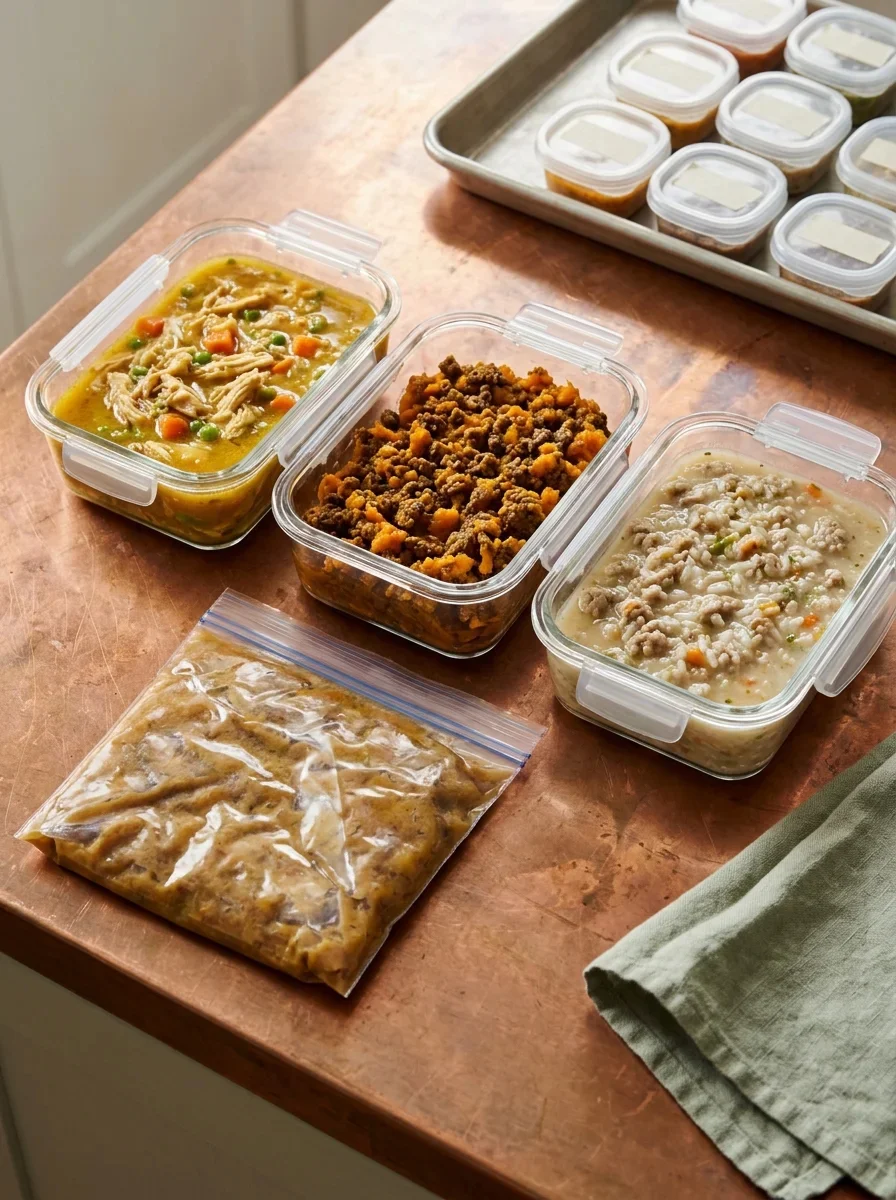
Wet food spoils faster than dry food, so storage is not an afterthought — it is half the recipe. The honest windows are: fridge 3 to 4 days in airtight containers, fish 2 to 3 days only, freezer up to 3 months in portioned containers. Cool food within 2 hours of cooking — 1 hour if the kitchen is very warm — and get it into the fridge while it is still slightly warm, not after it has sat on the counter all afternoon. Thaw frozen portions overnight in the fridge, never at room temperature, never refreeze thawed food, and eat thawed portions within 2 days.
Portion before you freeze. Ladle the cooled stew into single-meal containers or freezer bags laid flat, label each one with the recipe name and the date, and stack them. Reheat gently: warm a portion in a pan or in the microwave until just warm to the touch, stir well so there are no hot spots, and let it cool to room temperature before it goes into the bowl.
The fish recipe deserves its own warning, because it is the one people stretch. Two to three days in the fridge is the whole window. On day four, throw it out, even if it smells fine. Freezer storage for fish is 2 months, not 3.
The 7-Day Switch: Moving to Homemade
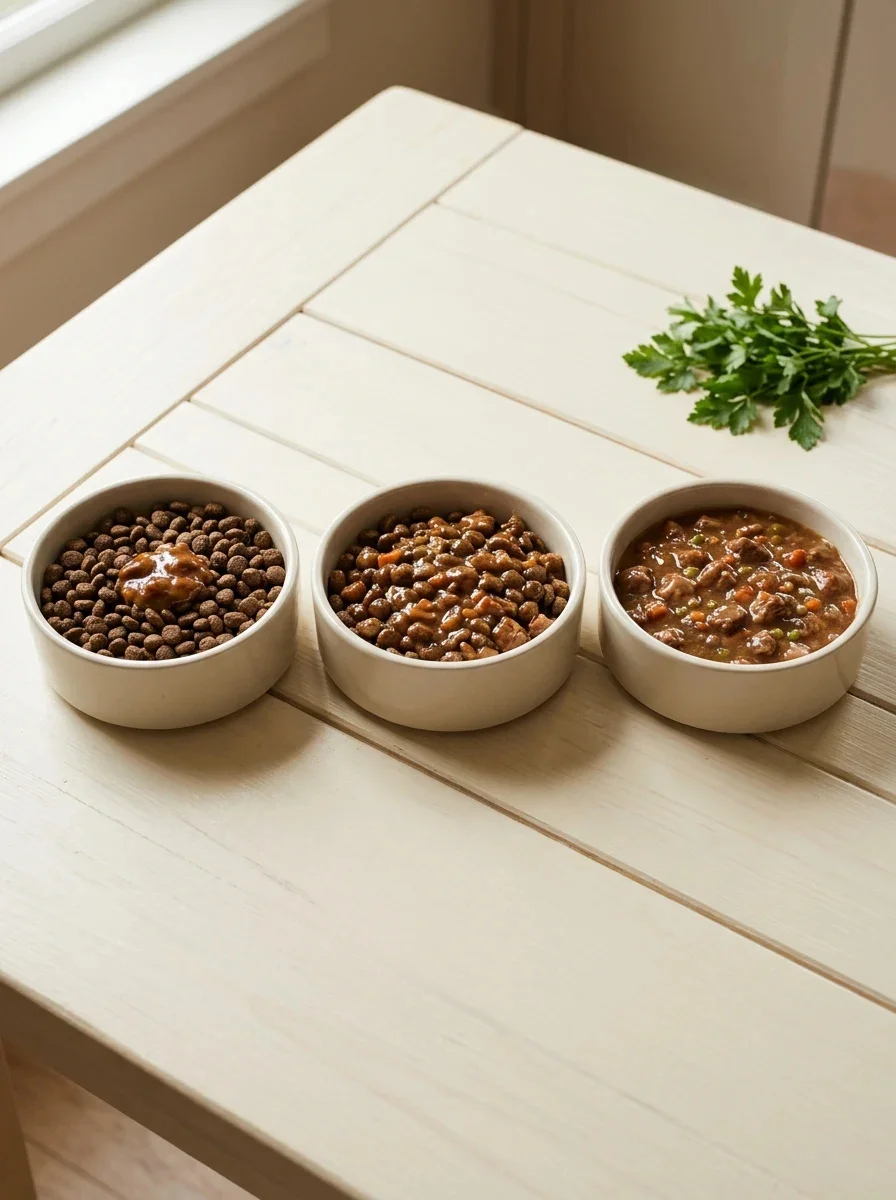
Never switch a dog’s food overnight. A sudden change from kibble to homemade wet food is the fastest way to a week of loose stools, and the fix is a slow, boring, 7-day transition. Days 1 to 3: 25 percent new food, 75 percent old food. Days 4 to 6: half and half. Days 7 to 9: 75 percent new, 25 percent old. Day 10: 100 percent new, if stools have stayed firm the whole way. Sensitive dogs may need 10 to 14 days instead of 7, and that is fine — slow down at any sign of loose stool and hold at the current ratio for two extra days before moving on.
During the switch, watch three things: stool firmness, appetite, and energy. Loose stools mean slow down, not stop — go back one step in the ratio and hold there.
Troubleshooting
Too thin: the stew looks like soup with bits floating in it. Fix it by simmering with the lid off for 5 to 10 minutes to reduce the liquid, or stir in a spoonful of mashed potato or cooked rice, which absorbs the extra moisture without changing the flavor.
Too thick: the mash sets into a stiff paste that sticks to the bowl. Fix it with a splash of warm water or plain homemade broth, stirred in a spoonful at a time until it turns spoonable again.
Dog will not eat it: first check the temperature — food straight from the fridge is too cold, and food still warm from the pot can be too hot. If temperature is not the problem, try a different protein from the six — some dogs simply do not like fish, or lamb, and that is a preference, not a problem.
Loose stool after switching: the most common cause is switching too fast. Go back one step in the 7-day transition and hold there for two extra days. The second most common cause is too much fat — check that you drained the fat after browning and did not add butter, oil, or pan drippings. If loose stool lasts more than two days at a stable ratio, stop the new food and call your vet. And if you are comparing recipes because one protein suits a sensitive stomach better than another, the chicken pumpkin dog food recipe on this site is a gentle single-recipe dinner built for exactly that situation.
Final Thoughts
Six proteins, six textures, one formula, and a pot you already own. That is the whole secret of homemade wet dog food: it is not a project, it is a habit, and once you have cooked two or three of these recipes, the fourth practically cooks itself. Start with the chicken and barley stew if your dog has a sensitive stomach, or the turkey porridge if you are feeding a puppy or a senior.
And keep the honesty in the habit. These recipes are real food made from real ingredients, and that is worth a lot — but they are not a complete diet on their own, and no article should pretend otherwise. Rotate them, supplement them on your vet’s advice, and watch your dog.

Izzy is an experienced ranch worker who has a passion for exploring nature and getting up close to wildlife. With her connections to various animal organizations, Izzy is well-versed in animal care and rehabilitation.