Strawberry Oat Dog Treats With the Berry Flavor Dogs Can Actually Taste
Strawberries are one of the few fruits dogs actively seek out, and pairing them with oats — a gentle, fiber-rich grain most dogs tolerate beautifully — creates a combination that actually tastes like something to a dog. These Strawberry Oat Dog Treats work because the strawberry juice becomes part of the dough’s liquid, not just a flavored add-in, which is exactly why so many homemade fruit treats fall flat. In this guide, I’ll walk you through the simple prep that makes strawberries work in dog treat dough, then give you three distinct recipes built on the exact same two ingredients: fresh strawberries and oats. Before you start, remember that strawberries themselves are not the concern: moderation is. Sweetened syrups, jams, or sauces are unnecessary and introduce sugar your dog does not need. Use fresh or properly prepared frozen berries, keep the portion modest, and these Strawberry Oat Dog Treats earn a regular place in your rotation. And as with every treat in this article, there is no chocolate, no grapes, no raisins, no onion, and no garlic anywhere in these recipes.
The Method: Mash, Mix, and Mind the Moisture
The core technique that makes every recipe in this article work is simple: strawberry juice becomes the liquid in the dough, and for a second fruit bake to compare, this guide walks through apple pie for dogs. If the dough comes out wet and sticky, the strawberries were especially juicy or the air is humid — fold in another tablespoon of oat flour and test again before adding more. If the dough feels dry and crumbly, fold in an extra spoonful of mashed strawberry until it comes back together. The difference between rolled oats and oat flour in these recipes is worth understanding: rolled oats absorb moisture more slowly and keep their structure through baking, which is why they create a chewier interior and a crisp edge in the biscuits. Oat flour blends completely into the dough, creating a softer, more uniform crumb. This moisture balance is the one variable that changes from batch to batch because strawberries themselves vary in size and juiciness.
Getting the Strawberry Right: Hull, Wash, Chop
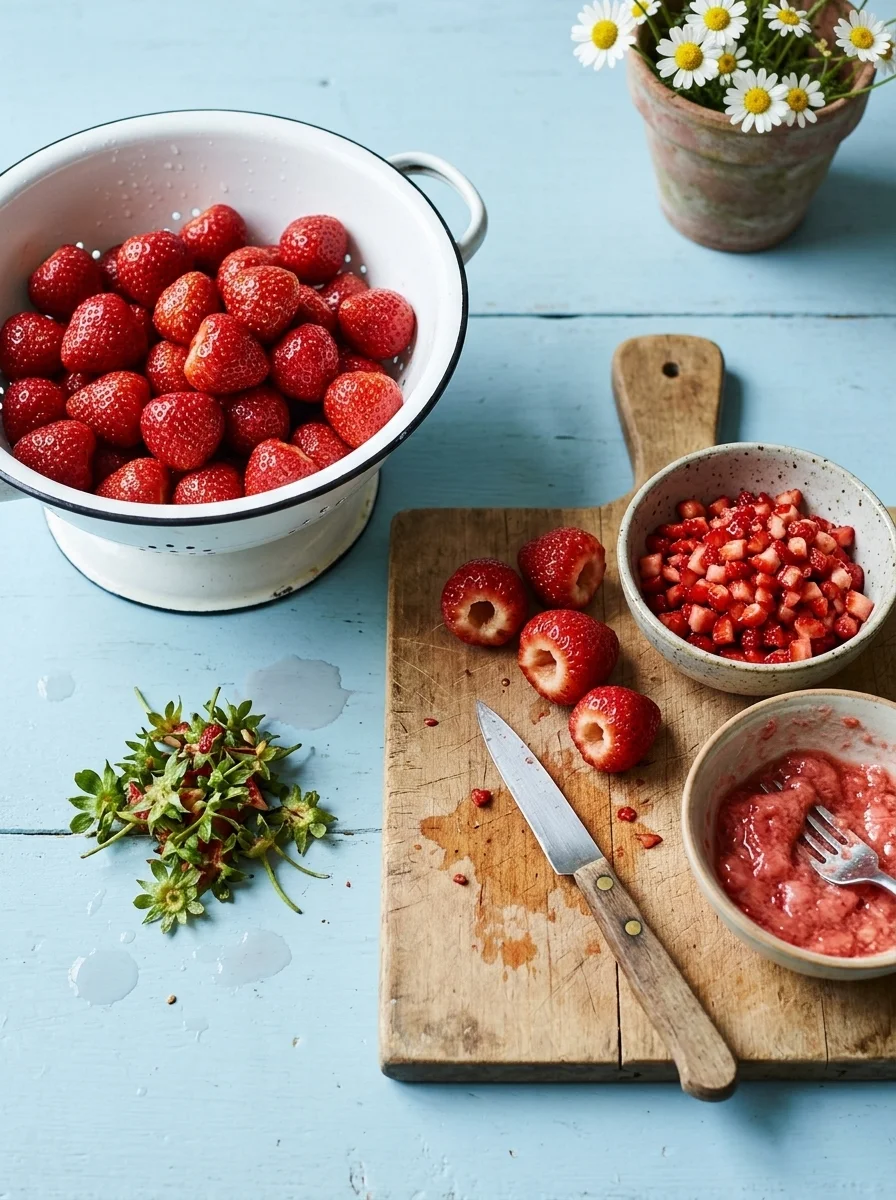
The prep work on the strawberries determines whether the dough cooperates. Wash them thoroughly under cool running water, hull every berry by slicing off the green stem end and the pale white core beneath it. Hulling is not optional. For the classic biscuits, mash the berries with a fork until mostly smooth with a few small pieces left; that partial mash releases enough juice for the dough while keeping some fruit texture throughout, much like the raspberry dog muffins recipe does with its own berry mash. For the peanut butter balls, chop the strawberries finely by hand so the pieces distribute evenly and the balls hold together without soggy spots. For the frozen yogurt sticks, blend everything fully so the final texture is smooth and creamy rather than icy and grainy. Frozen strawberries work in all three recipes if you thaw them completely first and drain off the liquid they release — squeeze them in a clean kitchen towel if needed to remove excess moisture, because frozen berries hold more water than fresh and that extra water goes straight into your dough. Freeze-dried strawberries are a secret weapon for these treats: they carry the most concentrated strawberry flavor and add zero water to the mix.
Three Textures From One Pair of Ingredients
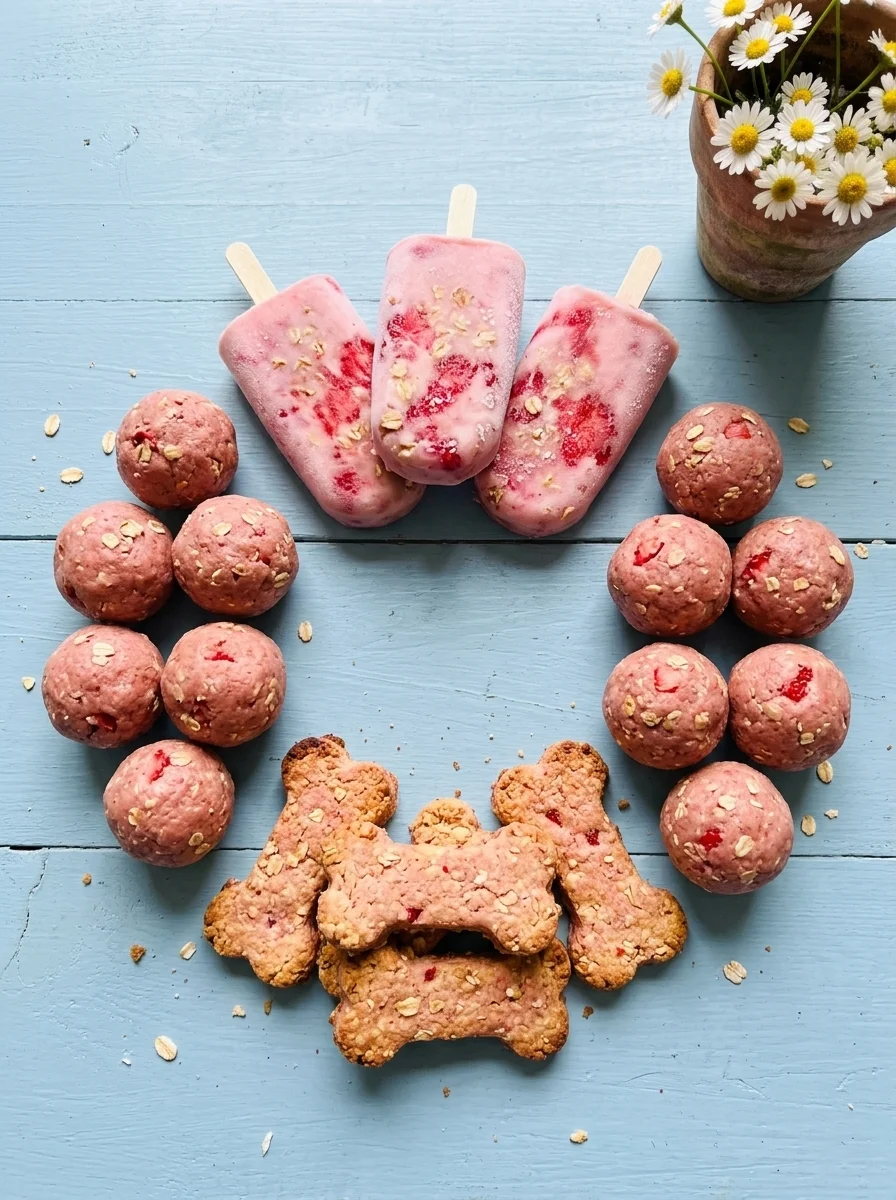
The reason these three recipes feel like three completely different treats is that the same two ingredients — oats and strawberries — behave differently depending on how you process and set them. The no-bake peanut butter oat balls take a completely different route: peanut butter replaces the egg and oil as the binder, ground flaxseed adds structure, and the chilling time in the fridge sets the whole mixture into a soft, dense ball that holds its shape at cold temperatures. The frozen yogurt oat smoothie sticks go in a third direction entirely: the yogurt and blended strawberries form a creamy liquid that freezes solid, creating a cold, slow-melting stick that is as much about cooling down as it is about eating.
Recipe 1: Classic Crunchy Strawberry Oat Biscuits
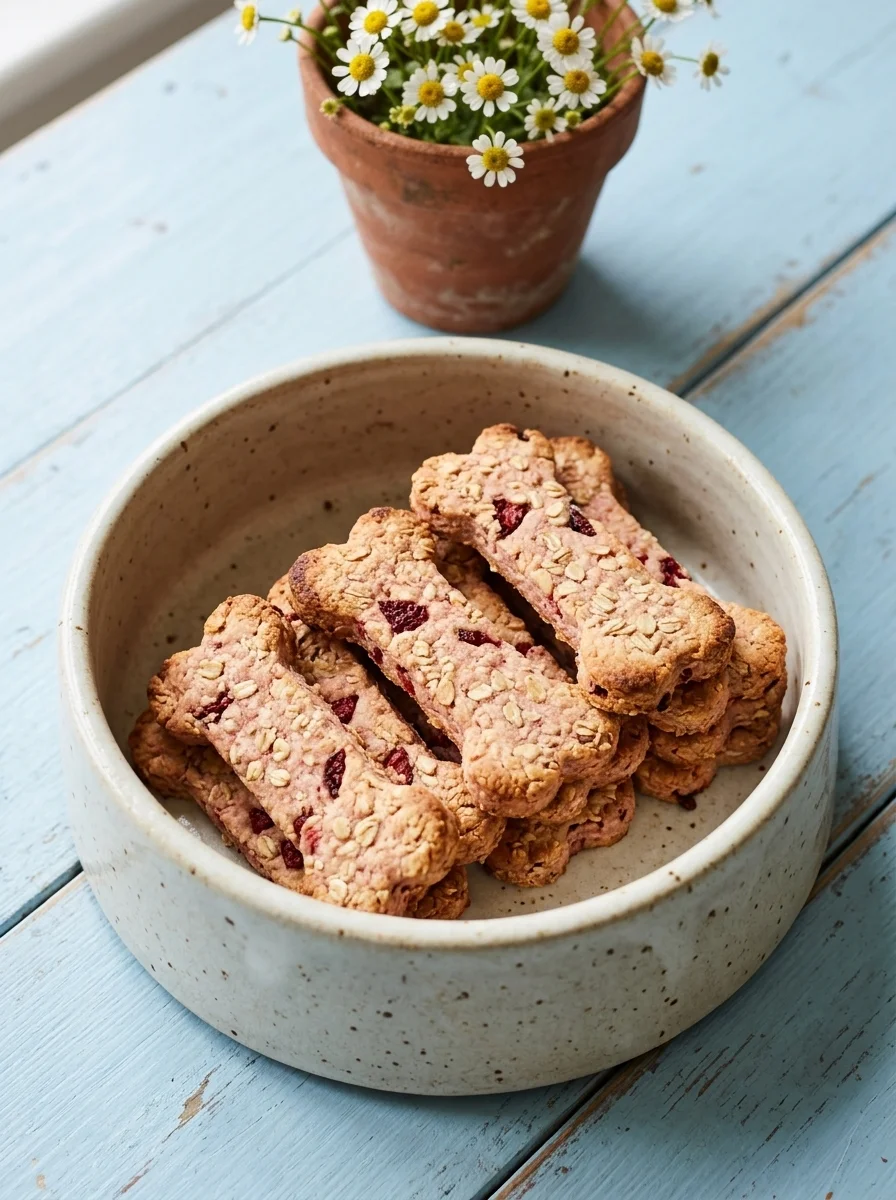
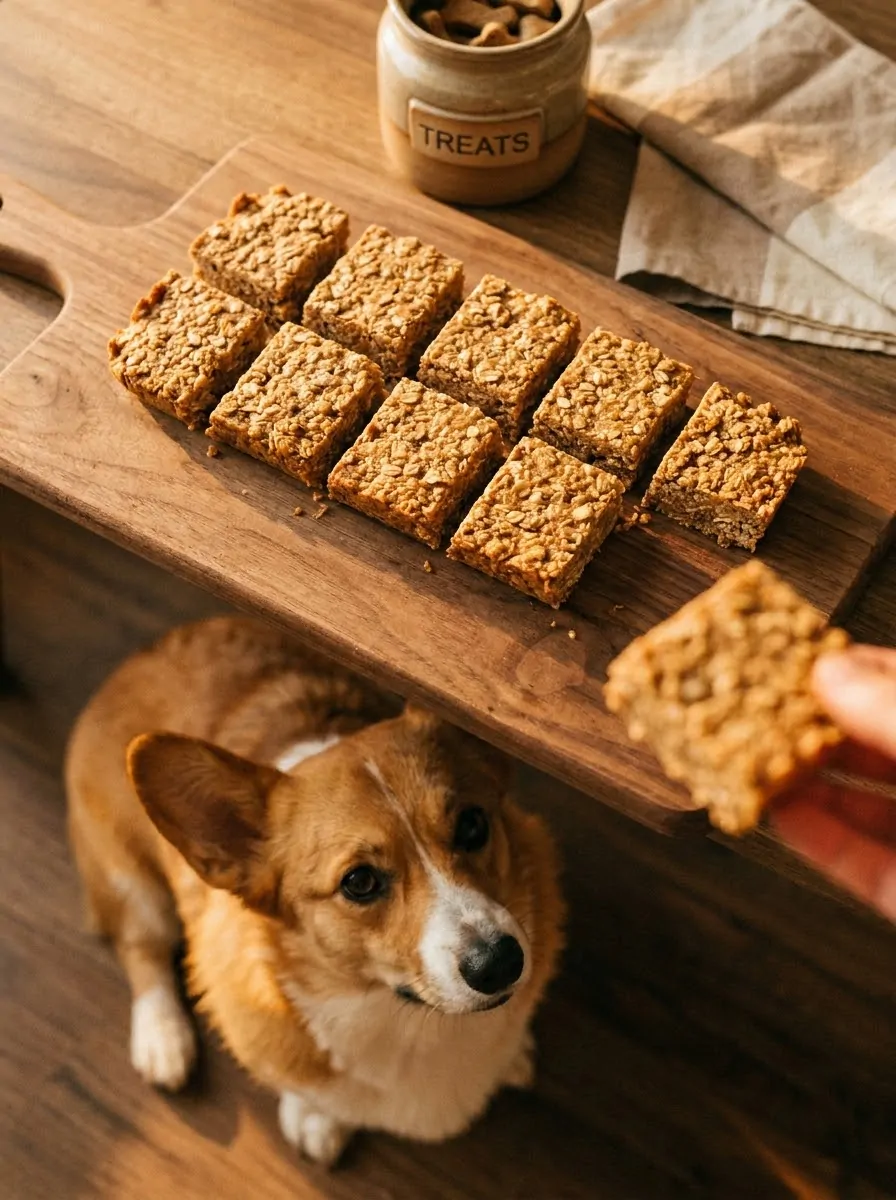
The classic crunchy biscuit is the format most people picture when they think of homemade dog treats, and this version earns that place. The oat flour creates a tender, crumbly interior that holds together cleanly in a treat jar, the rolled oats keep their shape through the bake and add a pleasant chew between the teeth, and the strawberries bring natural sweetness and a soft pink color that dogs seem to recognize. I always reach for these first, and they are the one recipe in this collection most people come back to again and once they find the bone-shaped cutter they like.
Ingredients
- 1 cup mashed fresh strawberries
- 1 1/2 cups oat flour
- 1/2 cup rolled oats
- 1 large egg
- 2 tablespoons coconut oil, melted
Step-by-Step Instructions
- Mash the fresh strawberries in a bowl until mostly smooth with a few small pieces left for texture.
- Stir in the egg and the melted coconut oil until combined.
- Fold in the oat flour and the rolled oats until a firm, rollable dough forms — if it feels wet and sticky, add oat flour a tablespoon at a time.
- Turn the dough onto a lightly floured surface and roll it to about 1/4 inch thick.
- Cut into bone shapes with a cookie cutter and place on a parchment-lined baking sheet.
- Bake at 350°F for 20 to 25 minutes until firm and lightly golden at the edges.
- Cool completely on a wire rack before serving or storing.
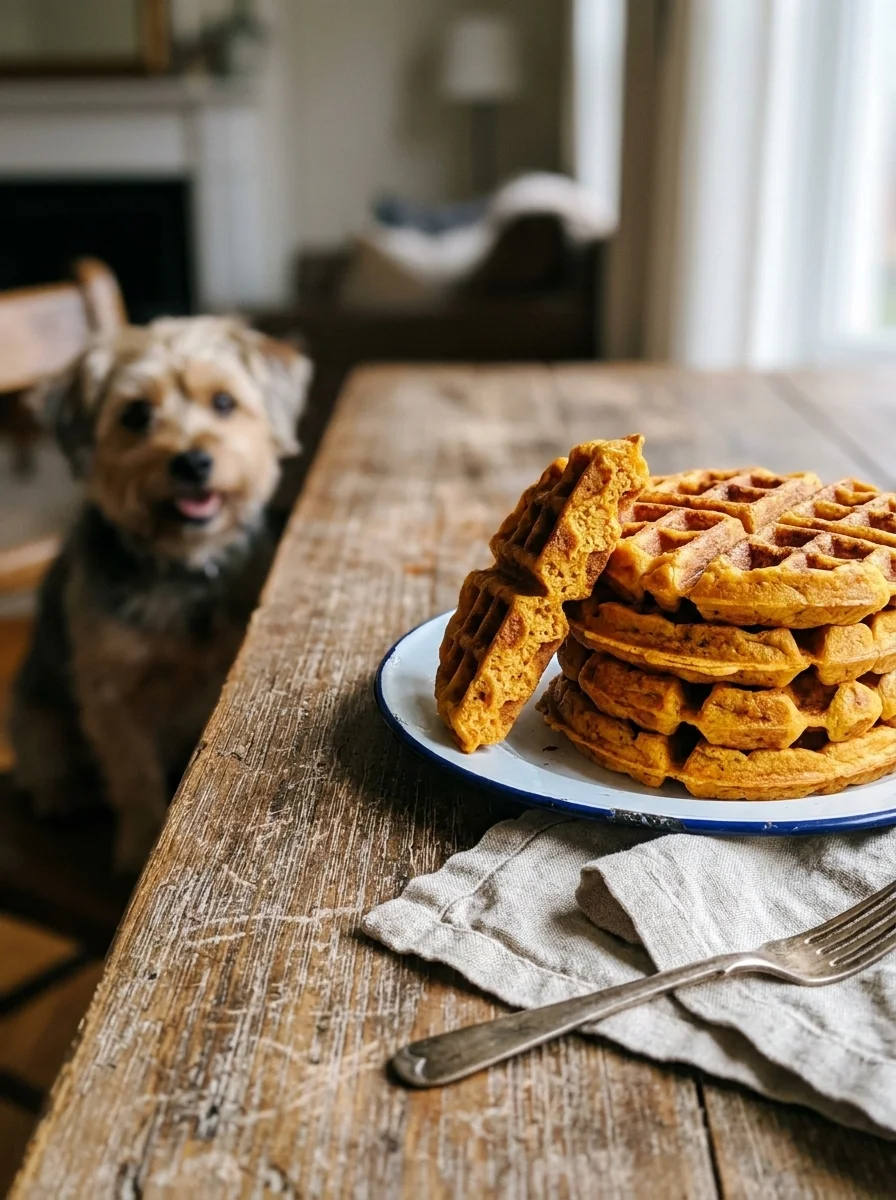
The cooling step matters more than it sounds: a biscuit that goes into storage while still warm will steam inside its container and turn soft rather than staying crunchy. Let them cool fully on the wire rack — this usually takes about twenty minutes — and they will develop the right texture as they come to room temperature. These pair beautifully with sweet potato dog waffles if you are looking for another baked format to rotate through your treat jar.
Recipe 2: No-Bake Strawberry Peanut Butter Oat Balls
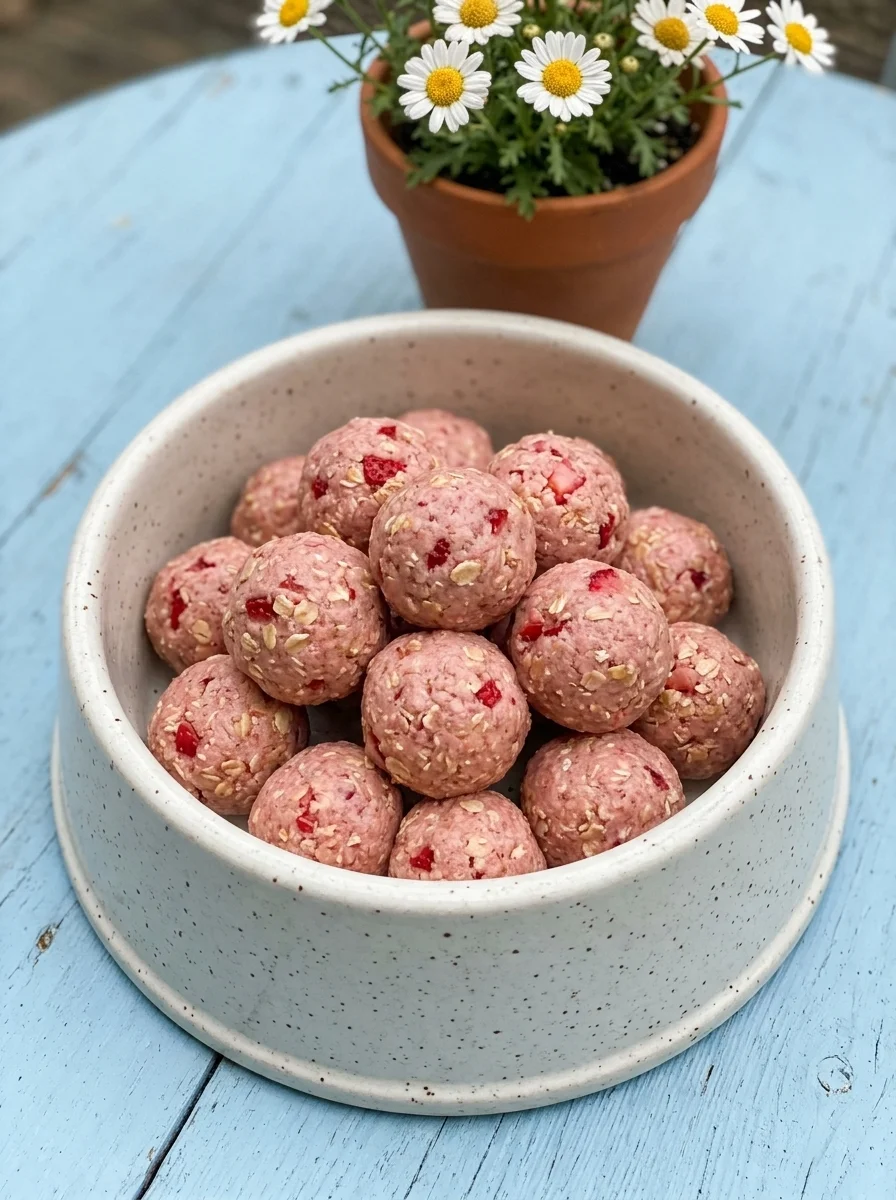
No-bake peanut butter oat balls are the recipe I recommend most to people who are new to making dog treats, mainly because there is no oven to manage and no window of doneness to read. The peanut butter brings richness that most dogs find irresistible, the rolled oats give the balls a satisfying chew, and the ground flaxseed holds everything together while adding a nutritional boost. The tradeoff is that these are fridge treats: they soften at room temperature, so plan to serve them straight from the refrigerator and keep any leftovers chilled.
Ingredients
- 1 cup rolled oats
- 1/2 cup xylitol-free peanut butter
- 1/2 cup finely chopped fresh strawberries
- 2 tablespoons ground flaxseed
Step-by-Step Instructions
- Stir the xylitol-free peanut butter and the finely chopped fresh strawberries together in a medium bowl until evenly mixed.
- Fold in the rolled oats and the ground flaxseed until the mixture is thick enough to roll — it should hold its shape without sticking to your hands.
- Roll into balls about the size of a marble for small dogs or a walnut for large dogs.
- Place the balls on a parchment-lined tray and chill in the fridge for 1 hour until firm.
- Serve straight from the fridge in a dog bowl.
The xylitol warning here is not negotiable. Check the ingredient list on every jar of peanut butter before you buy it, and check it again before you open it. Xylitol — also sold as birch sugar — is deadly to dogs even in small amounts, and it appears in some brands of peanut butter marketed as low-sugar or diet versions. Use only peanut butter whose only ingredients are peanuts and salt, or peanuts alone. This keeps the portion proportional and reduces the risk of a dog trying to wolf down something that is too large to chew properly.
Recipe 3: Frozen Strawberry Yogurt Oat Smoothie Sticks
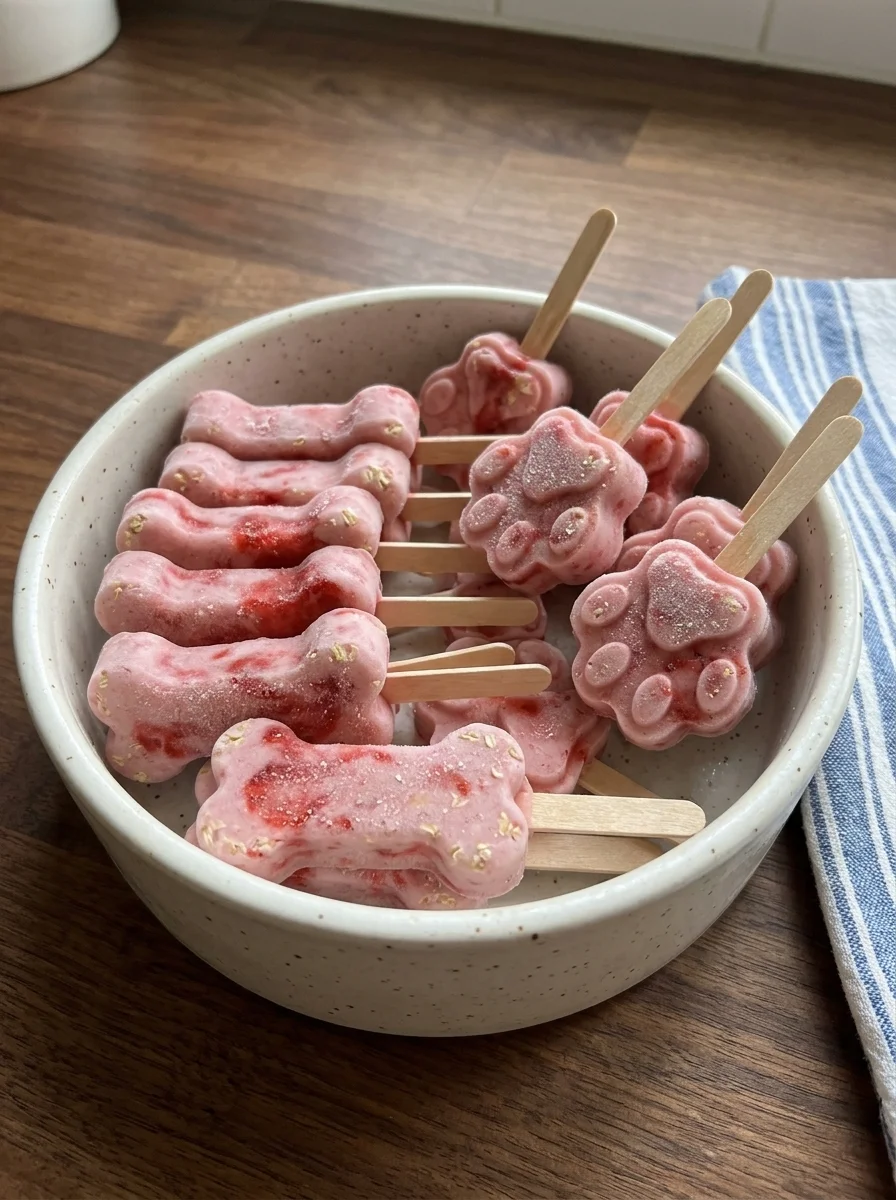
The frozen smoothie stick is the summer recipe in this collection, designed for hot afternoons when a dog needs something to cool down while they work on it. The yogurt provides protein and a creamy base that freezes into a solid but yielding texture, the strawberries bring the fruit flavor, the rolled oats add a little chew so the stick is not just frozen liquid, and the ground flaxseed helps bind the mixture and thicken it slightly so it does not freeze into something that is too hard to chew. These melt at room temperature, so the serving ritual is simple: pull a stick from the freezer and hand it over, or place it in the dog’s bowl. For small dogs, break the stick into three or four pieces before serving so the portion is manageable and the melting pace is slower.
Ingredients
- 1 cup fresh strawberries, hulled
- 1 cup plain unsweetened Greek yogurt
- 1/2 cup rolled oats
- 1 tablespoon ground flaxseed
Step-by-Step Instructions
- Blend the hulled fresh strawberries, the plain Greek yogurt, the rolled oats, and the ground flaxseed together until smooth.
- Pour the mixture into silicone molds or ice pop molds, filling each about three-quarters full.
- Freeze for at least 3 hours until completely solid.
- Pop the sticks out of the molds and serve one at a time straight from the freezer in a dog bowl.
Use plain, unsweetened Greek yogurt — nothing with added sugar, artificial sweeteners, or fruit flavorings. Full-fat Greek yogurt works best for texture; low-fat versions can freeze a little icier. The blend time should be long enough to break down the rolled oats into small pieces so they are not a rough surprise in the frozen stick, but short enough to keep some texture rather than turning the whole mixture into a uniform paste. For a fun variation on the frozen treat format, homemade cheesecake for dogs uses a similar yogurt-and-freeze approach with a different flavor profile if you want to rotate through options.
Serving by Dog Size
Portion control matters as much as ingredient quality when it comes to treats, and the right serving size changes with the dog’s weight. For a dog under twenty pounds, a single small classic crunchy biscuit or half a peanut butter oat ball is a solid reward. For a medium dog in the forty-pound range, one full classic biscuit or one peanut butter oat ball fits comfortably, and a full frozen yogurt stick served in the bowl works well on a warm day. For a dog over seventy pounds, two classic biscuits or one full peanut butter oat ball keeps the portion proportional without leaving the dog hanging. The frozen yogurt stick should be served whole to a large dog, though you can break it in half if the dog prefers to work more slowly. As a general reference for what appropriate portions look like across different treat formats, apple cinnamon dog treats lays out portion sizes by dog weight that apply here as well. The golden rule across every size and every treat in this article: keep all treats, including these Strawberry Oat Dog Treats, under 10 percent of your dog’s total daily calories.
Storage and Freezing
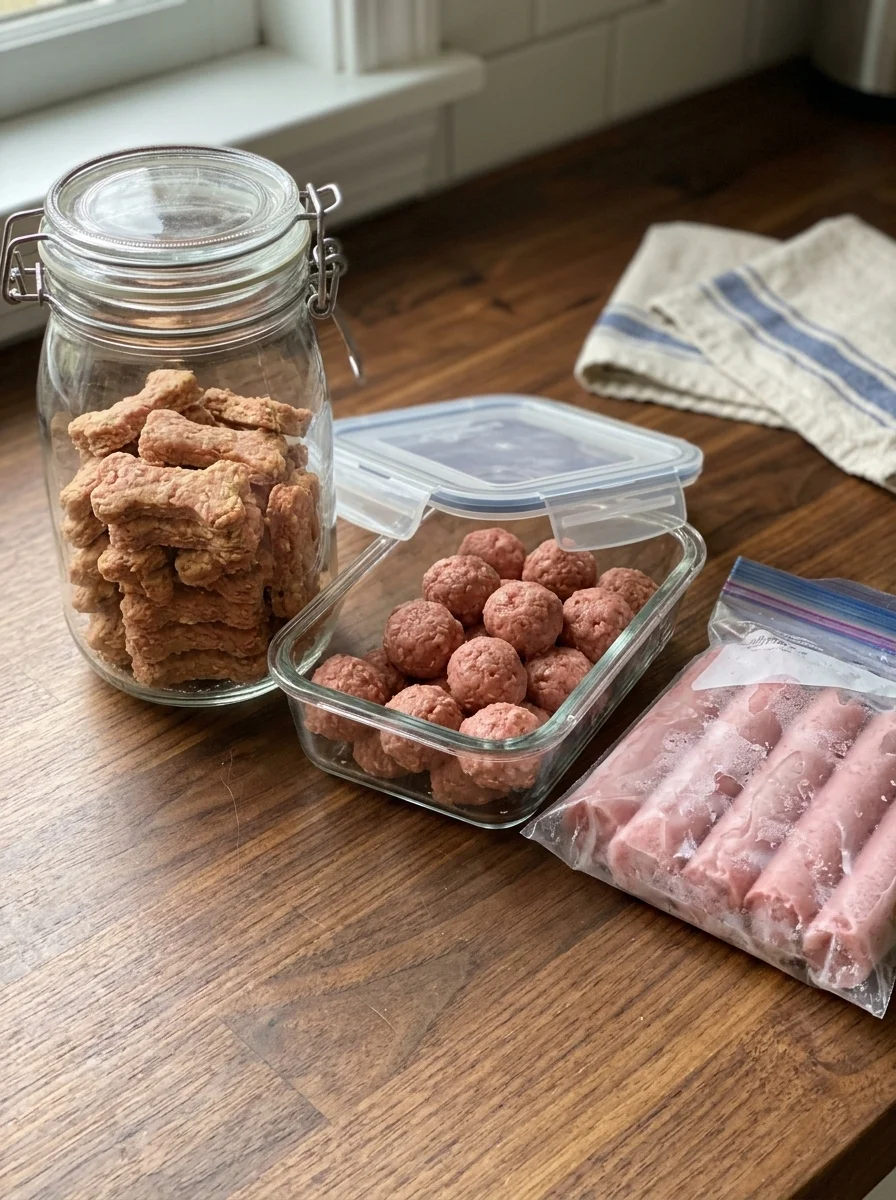
How you store these treats depends entirely on which one you made, because each format has a different shelf life at different temperatures. The classic crunchy biscuits are the most forgiving: store them in an airtight container at room temperature for up to one week, or in the refrigerator for up to two weeks if your kitchen is warm or humid. For longer storage, freeze them for up to two months in a freezer bag or airtight container, and thaw them on the counter for thirty minutes before serving — they keep their crunch well through freezing and thawing. The no-bake peanut butter oat balls must stay in the refrigerator. They are soft at room temperature and will lose their shape within a couple of hours if the weather is warm. Store them in an airtight container in the fridge for up to one week. The frozen yogurt oat smoothie sticks belong in the freezer at all times until the moment you serve them. They keep for up to one month in the freezer in an airtight container or freezer bag.
Troubleshooting
Most problems with these recipes come down to moisture, and knowing what to do when the dough does not behave saves a batch rather than scrapping it. Dough that is too wet and sticky is almost always the result of extra juice from the strawberries — fresh berries vary more than you would expect in water content, and humid days make oat flour absorb differently. If the classic crunchy biscuits spread too much while baking — losing their bone shape and flattening into puddles — the cause is either dough that was too wet before it went into the oven or dough that was rolled too thin. Chill the shaped dough on the baking sheet for fifteen minutes before putting it in the oven; the cold fat in the coconut oil slows the spread and gives you a cleaner edge. If the no-bake peanut butter oat balls will not hold together when you roll them, the mixture is too loose. Fold in a little more ground flaxseed — one teaspoon at a time — until the mixture clings to itself cleanly. If the frozen yogurt smoothie sticks come out of the freezer with an icy, crunchy texture rather than the creamy, yielding bite you want, the yogurt-to-fruit ratio was probably off.
Frequently Asked Questions
Final Thoughts
Making homemade Strawberry Oat Dog Treats is one of the most straightforward ways to add something genuinely good to your dog’s day while knowing exactly what is in it. The ingredients are simple, the techniques are forgiving, and the three formats mean you can adapt to the weather, the dog’s age, and the occasion without buying anything specialty or running multiple recipes at once. The one practice that matters more than any specific technique is checking your peanut butter for xylitol every single time you open a new jar. It takes ten seconds, it costs nothing, and it is the single most important safety step in this entire article.

Izzy is an experienced ranch worker who has a passion for exploring nature and getting up close to wildlife. With her connections to various animal organizations, Izzy is well-versed in animal care and rehabilitation.