Instant Pot Dog Food Recipes: 6 Fresh Meals in Under an Hour
Two hours of simmering, a sink full of pots, and a stove you cannot walk away from — that is what homemade dog food used to cost. The Instant Pot changes the deal. You load one pot, seal the lid, and walk away while pressure does the work that a slow simmer used to take all afternoon. What comes out is tender, spoonable food your dog can actually eat: soft rice, shredded meat, vegetables cooked through but not to mush. This article gives you six full Instant Pot dog food recipes, one for each protein your dog is most likely to do well on.
Why the Instant Pot Is the Easiest Way to Feed Fresh
The hardest part of feeding fresh is not the cooking. It is the time. The Instant Pot cuts that down to about 30 to 45 minutes from sealing the lid to opening it, and most of that time is hands-free. That is the difference between feeding fresh once in a while and feeding fresh every week.
Pressure cooking is also kinder to the food itself. The sealed pot keeps moisture in, so chicken breast comes out tender instead of stringy, rice cooks evenly instead of catching on the bottom, and vegetables soften all the way through without turning to paste.
Consistency is the other reason the Instant Pot earns its place. It cooks at the same pressure every time, so the chicken is done the same way on Tuesday as it was on Sunday. The guidance in this guide on low-fat feeding follows the same principle: steady, plain food in measured portions beats rich food served by guesswork.
The Instant Pot Formula: Protein + Base + Veg + Liquid
Every recipe in this article follows the same formula, and once you know it you can read any of the six without relearning the method. Protein + base + veg + liquid. About 2 pounds of protein, 1 cup of dry base, 2 to 3 cups of vegetables, and 4 cups of liquid. That ratio works in every recipe below, and it is the reason the six meals feel like a set rather than six separate ideas.
The base is what makes the meal spoonable. Brown rice, quinoa, lentils, and sweet potato all do the same job in different ways: they absorb liquid, soften fully, and hold the meal together in the bowl.
The liquid is what makes pressure cooking work at all. An Instant Pot needs liquid to build steam, and four cups is the right amount for these batch sizes. Use water, or use a broth that is labelled onion- and garlic-free and low in sodium. Never use a seasoned stock, a bouillon cube, or a broth with garlic in it.
The release rule: natural release for meat and rice, quick release only for fish. A natural release means leaving the pot alone for 10 minutes after the timer ends so the pressure falls on its own. Meat stays moist, rice finishes cooking gently, and nothing sputters out of the valve. Never quick-release a full starchy pot. The hot liquid sputters, the valve clogs, and the food comes out uneven.
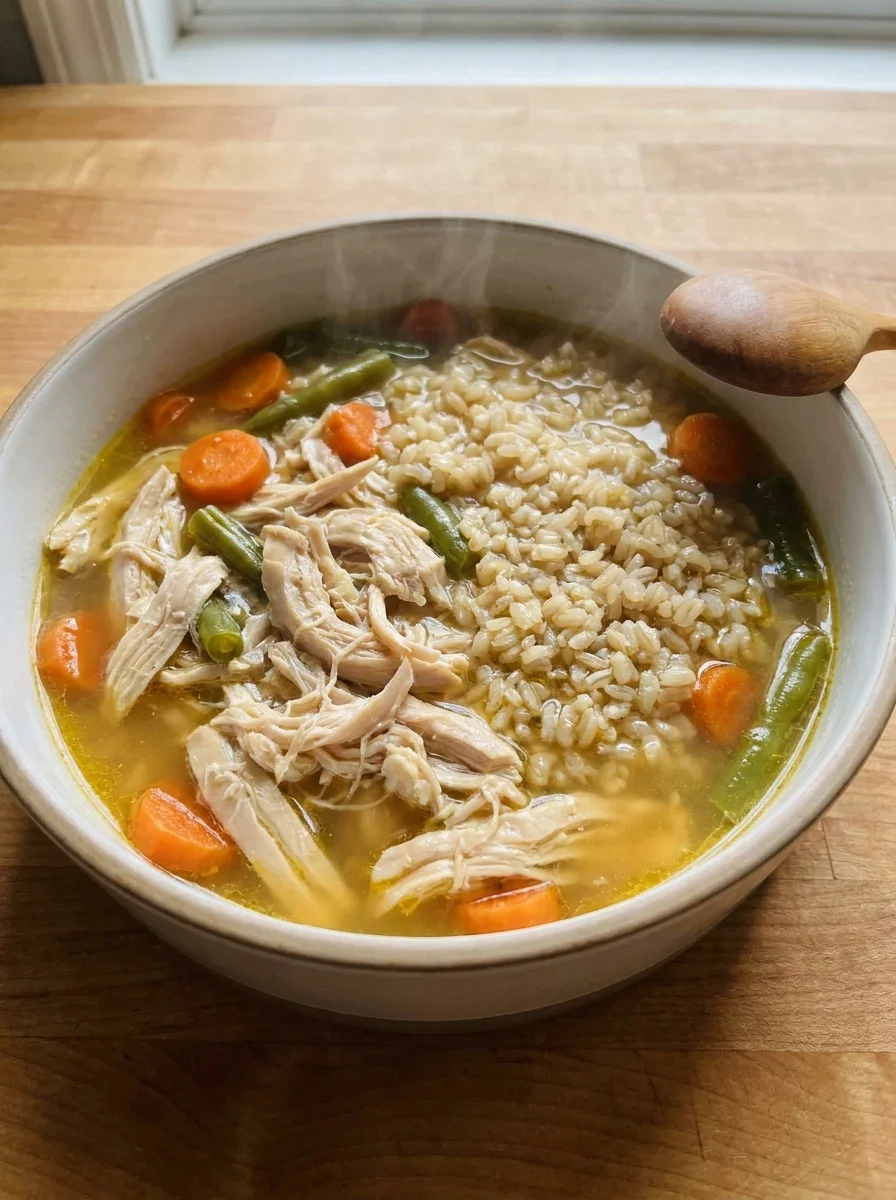
Recipe 1: Classic Chicken & Brown Rice
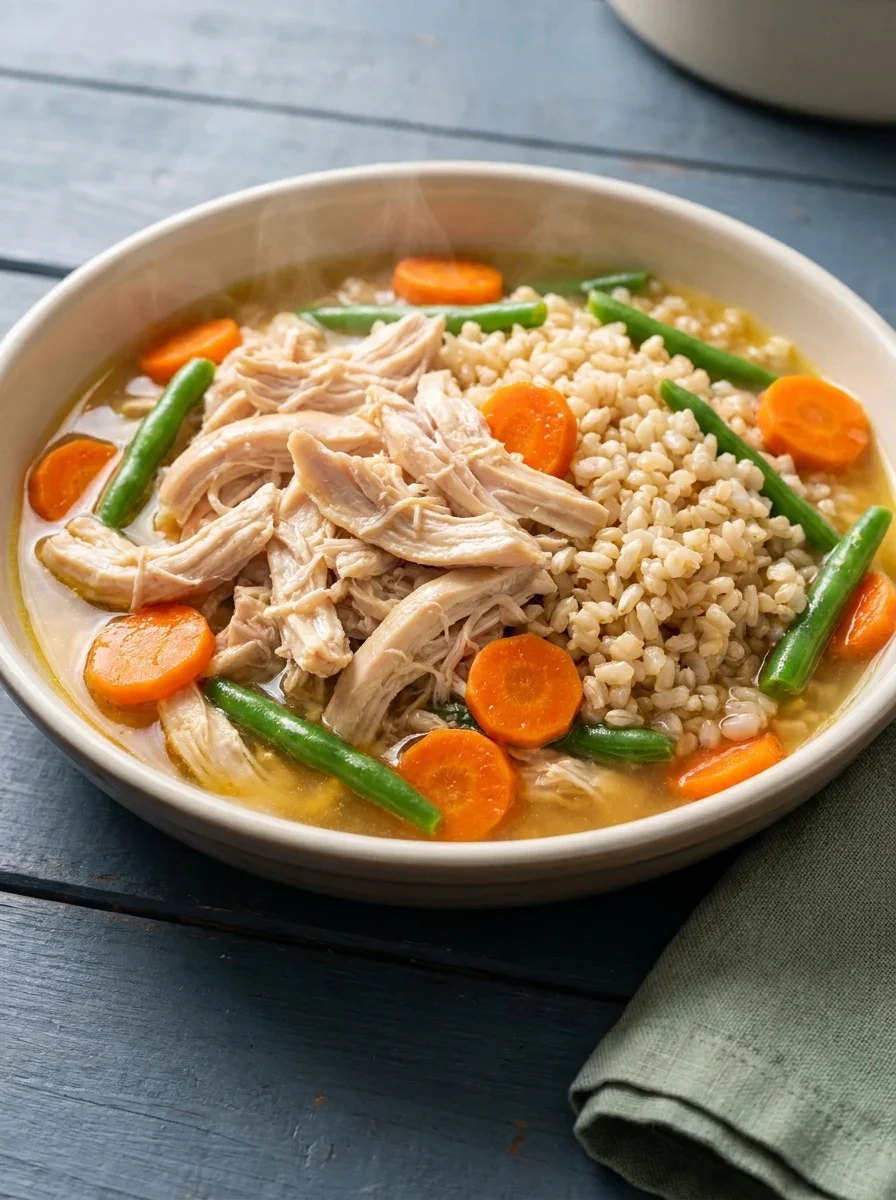
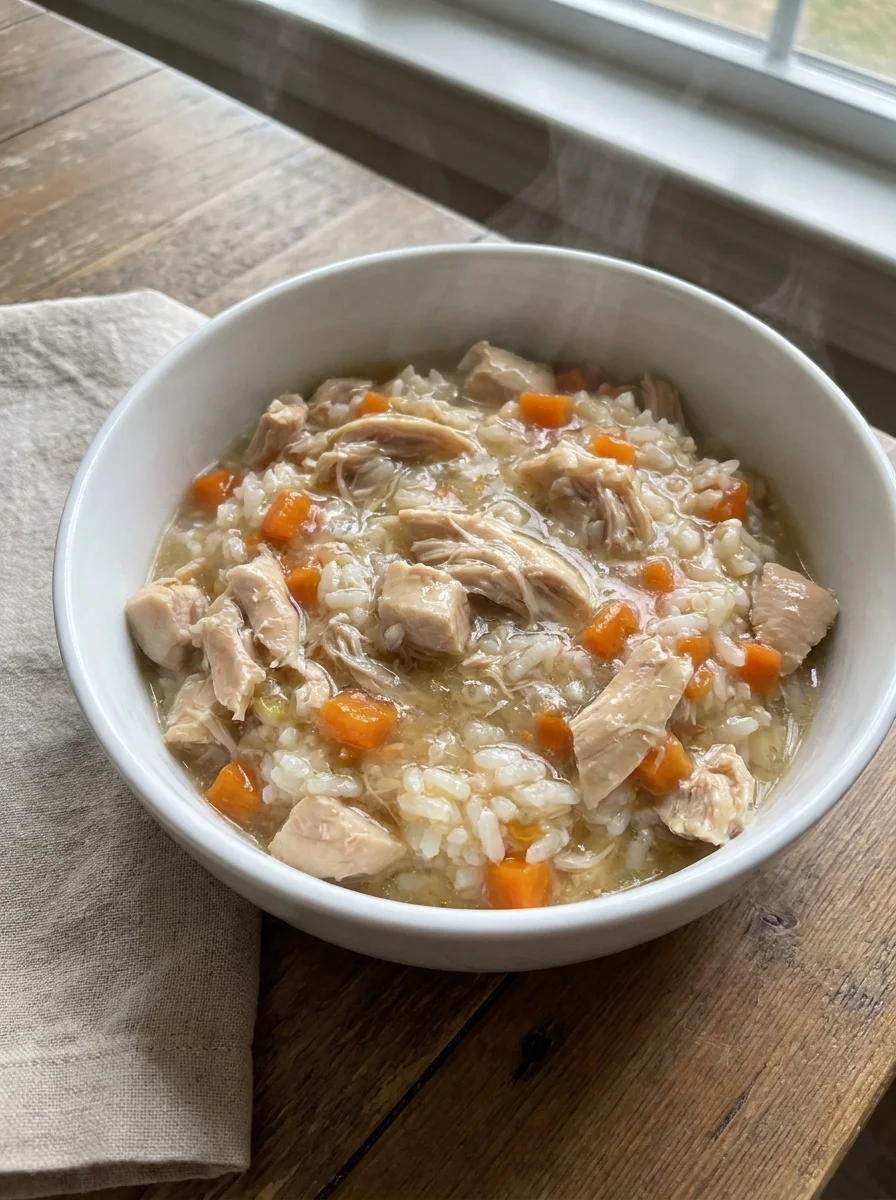
Chicken and brown rice is the gentle-stomach starter of this article, and it is the recipe to cook first if your dog has never eaten homemade food. There is nothing fancy in it, and that is the point. A dog with a sensitive stomach needs plain food it can digest easily, and this is the plainest meal of the six.
Ingredients
- 2 pounds boneless skinless chicken breast
- 1 cup brown rice, rinsed
- 2 carrots, chopped
- 1 cup green beans, trimmed and cut into 1-inch pieces
- 4 cups onion- and garlic-free low-sodium chicken broth
Step-by-Step Instructions
- Pour the broth into the Instant Pot and stir in the brown rice.
- Lay the chicken breasts on top of the rice, then scatter the carrots and green beans over and around them.
- Seal the lid, set the valve to sealing, and cook on high pressure for 15 minutes.
- When the cook time ends, let the pressure release naturally for 10 minutes, then turn the valve to venting to release any remaining steam.
- Open the lid away from your face.
- Lift the chicken out onto a board and shred it with two forks, checking that it is cooked through with no pink left.
- Stir the shredded chicken back into the rice and vegetables and let the pot sit open for 10 minutes so the mixture cools to warm.
The chicken in this recipe is boneless only, always — cooked bones splinter and must never be served to a dog, and every bone that goes into a pot for broth is strained out and discarded, never served. For a chicken-led meal with a different shape, the chicken pumpkin dog food recipe on this site is a stovetop alternative worth knowing about.
Recipe 2: Beef & Sweet Potato Stew
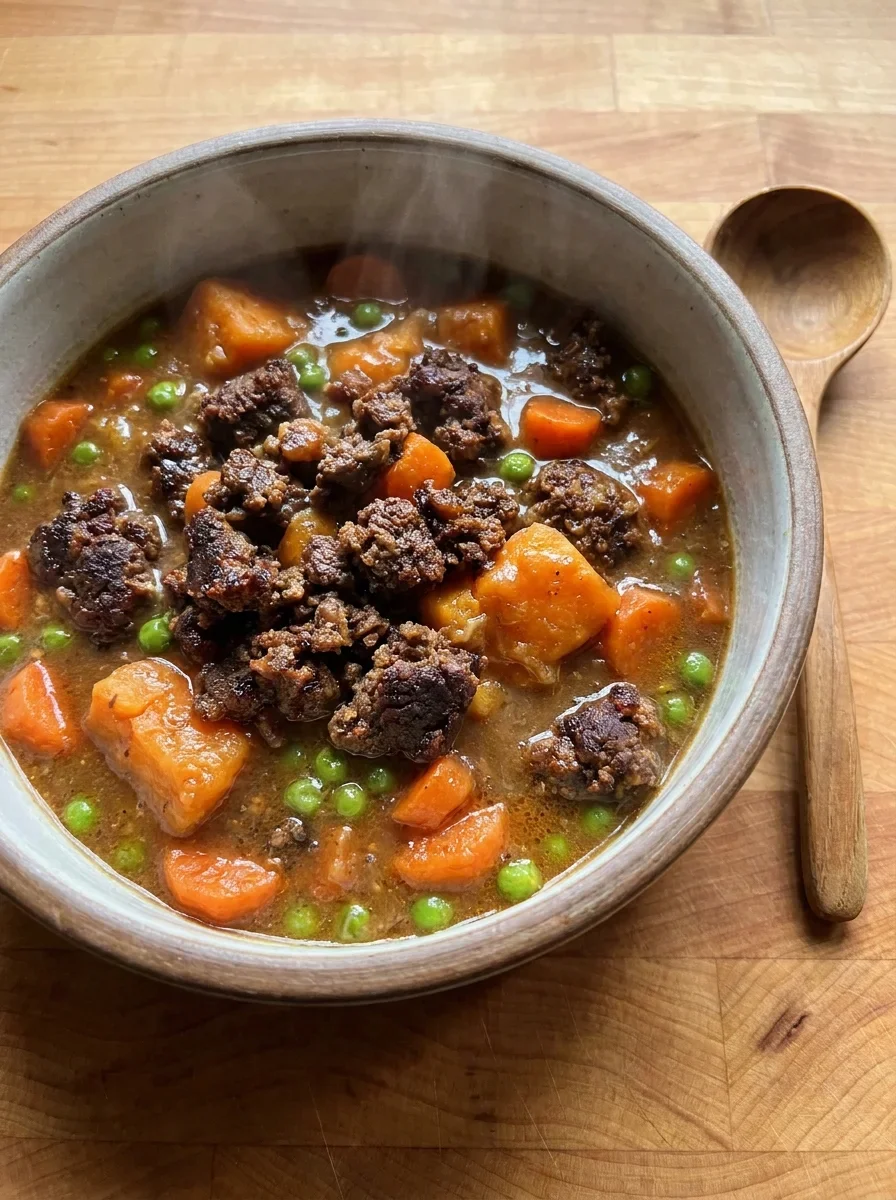
Beef and sweet potato is the iron-rich fuel of this article, the one for active dogs, working dogs, and dogs that burn through their food and ask for more.
Ingredients
- 1 pound lean ground beef
- 1 large sweet potato, peeled and cubed
- 2 carrots, chopped
- 1 cup frozen peas
- 4 cups onion- and garlic-free low-sodium beef broth
Step-by-Step Instructions
- Set the Instant Pot to sauté and brown the ground beef, breaking it up with a spoon, until no pink remains.
- Drain off all the fat and discard it — never pour cooking fat over a dog’s food.
- Add the sweet potato, carrots, and broth, and scrape the bottom of the pot well so nothing sticks and triggers a burn notice.
- Seal the lid, set the valve to sealing, and cook on high pressure for 12 minutes.
- When the cook time ends, turn the valve to venting for a quick release and wait until the pin drops before opening the lid.
- Stir in the frozen peas and let the stew sit open for 10 minutes so the peas warm through and the stew cools to warm.
Sautéing and draining the beef first is what keeps this stew lean. Skipping the drain leaves a greasy meal that can upset a sensitive stomach, and a dog with a history of pancreatitis should not be eating undrained beef fat at all. Beef pairs well with apple in a lighter meal too, and the beef apple dog meal recipe on this site shows that combination in a stovetop form.
Recipe 3: Turkey & Quinoa Power Bowl
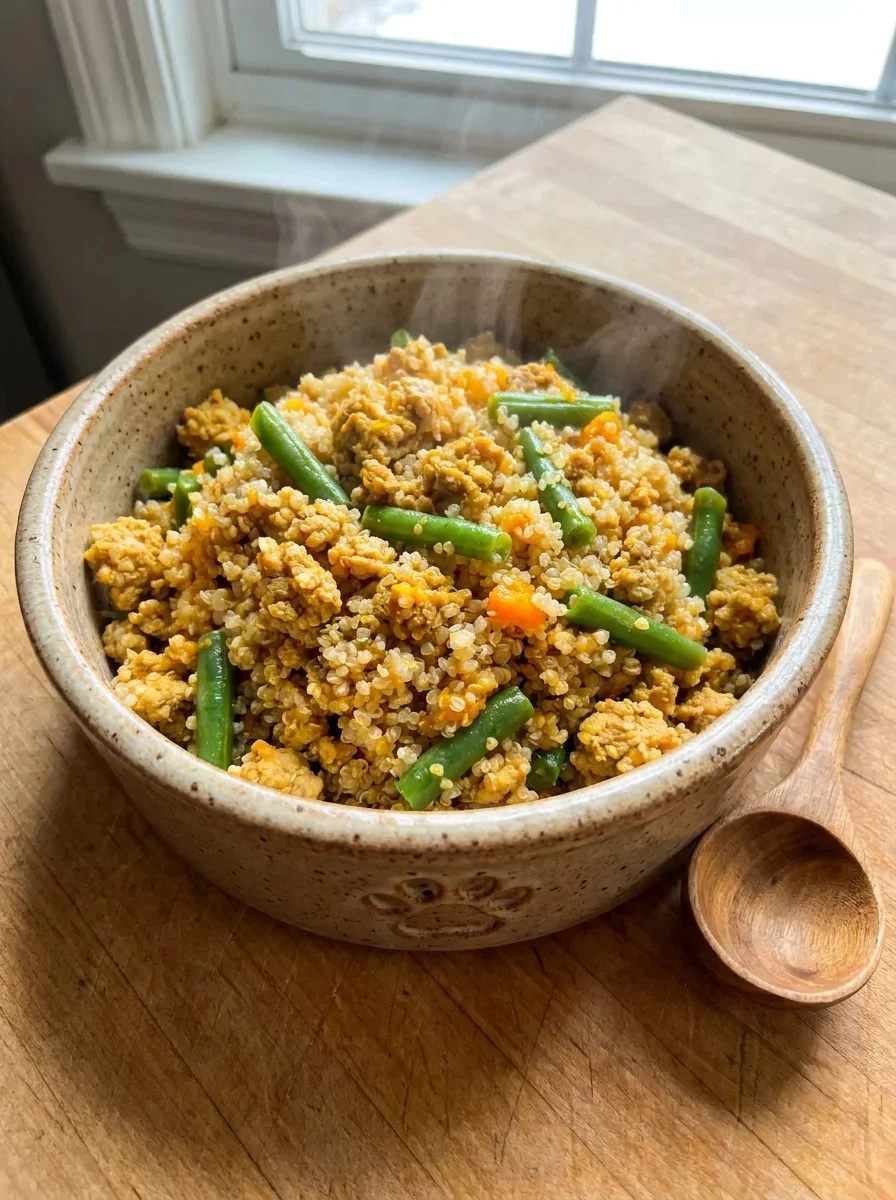
Turkey and quinoa is the leanest grain-based meal in this article, and the one to reach for when chicken does not agree with your dog.
Ingredients
- 1 pound ground turkey
- 1 cup quinoa, rinsed
- 1 cup green beans, trimmed and cut into 1-inch pieces
- 1 cup plain pumpkin purée
- 4 cups water or onion- and garlic-free low-sodium broth
Step-by-Step Instructions
- Set the Instant Pot to sauté and brown the ground turkey, breaking it up with a spoon, until no pink remains, then drain off any fat.
- Add the rinsed quinoa, green beans, pumpkin purée, and water or broth, and stir once so the quinoa is under the liquid.
- Seal the lid, set the valve to sealing, and cook on high pressure for 8 minutes.
- When the cook time ends, turn the valve to venting for a quick release and wait until the pin drops.
- Fluff the quinoa with a fork and let the bowl sit open for 10 minutes to cool to warm.
Rinse the quinoa well before it goes in, or it can taste bitter, and make sure it sits under the liquid or the top layer stays crunchy. The pumpkin here is plain purée, never pie filling — pie filling has sugar and spices a dog should not eat.
Recipe 4: Salmon & Sweet Potato
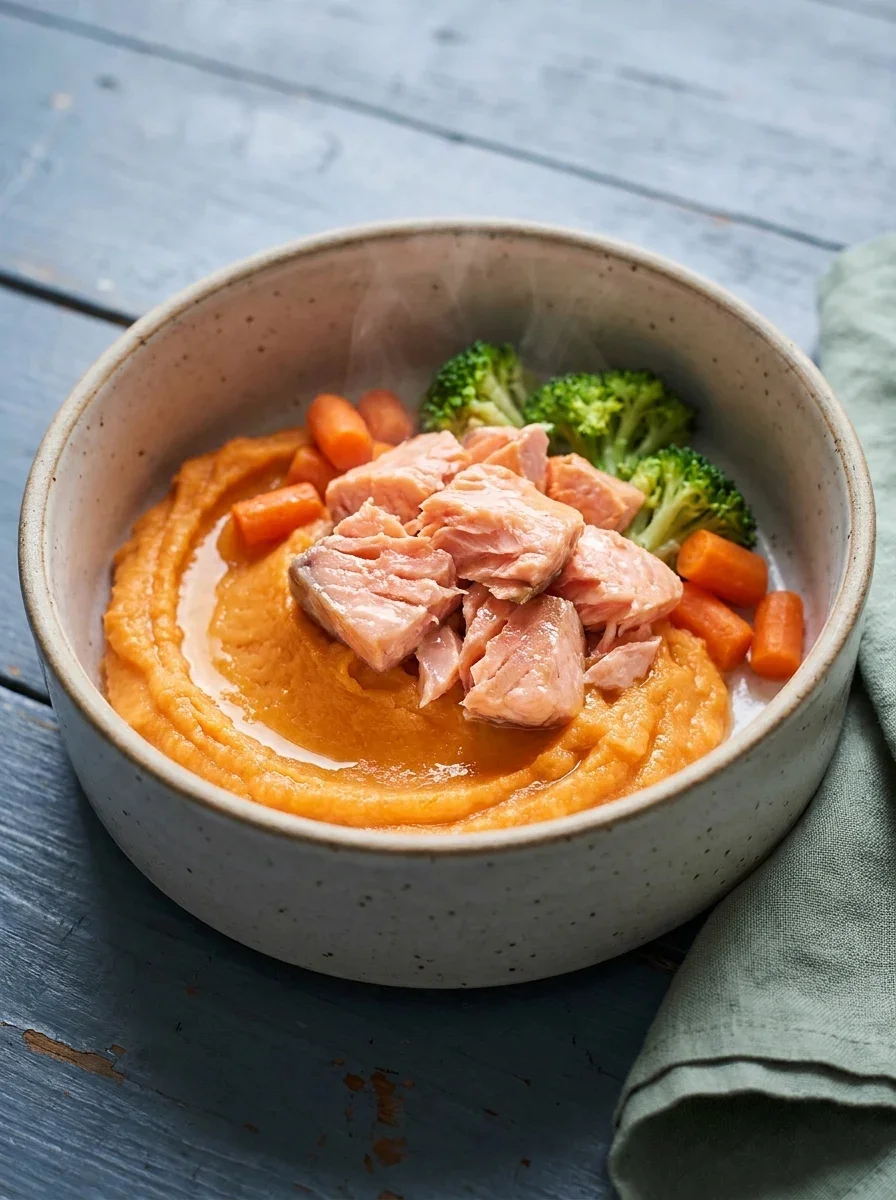
Salmon and sweet potato is the omega-3 recipe of this article, the one for skin, coat, and joints.
Ingredients
- 1 pound boneless salmon fillets, skin removed
- 1 large sweet potato, peeled and cubed
- 2 carrots, chopped
- 1 cup broccoli florets
- 2 cups water
Step-by-Step Instructions
- Pour the water into the Instant Pot and add the sweet potato, carrots, and broccoli.
- Lay the salmon fillets on top of the vegetables in a single layer.
- Seal the lid, set the valve to sealing, and cook on high pressure for 5 minutes — no longer, or the fish will overcook and dry out.
- When the cook time ends, turn the valve to venting for a quick release right away and wait until the pin drops.
- Lift the salmon out and flake it with a fork, checking carefully for pin bones as you go and removing any you find.
- Stir the flaked salmon back into the vegetables and let the pot sit open for 10 minutes to cool to warm.
Fish cooks faster than any other protein in this article, which is why it is the only recipe that always gets a quick release — five extra minutes under pressure would turn the salmon dry and chalky. Check for pin bones every time, even when the fillets are sold as boneless, and never serve raw or undercooked fish.
Recipe 5: Pork & Pumpkin
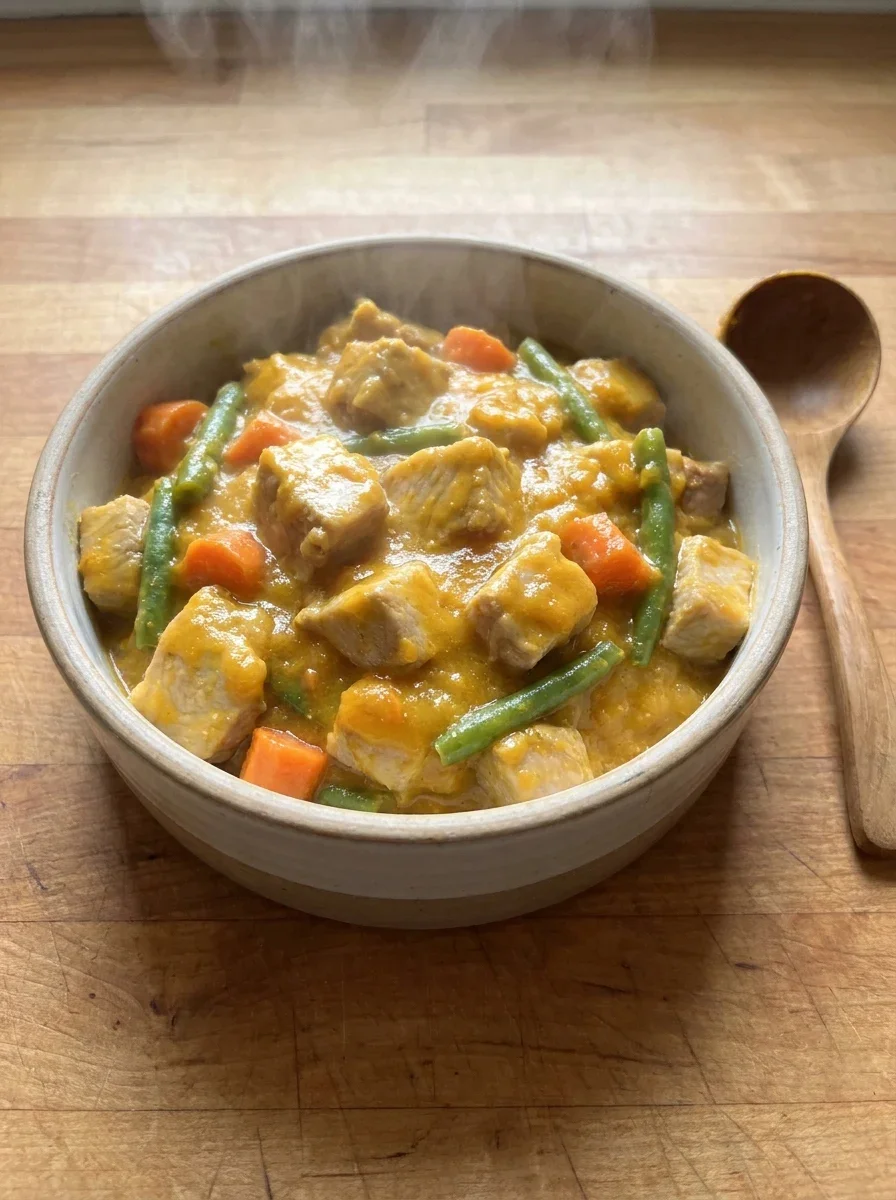
Pork and pumpkin is the gentle-digestion meal of this article, the one for dogs that do well on a novel protein and need something plain.
Ingredients
- 1 pound boneless pork loin, cut into 1-inch chunks
- 1 cup plain pumpkin purée
- 2 carrots, chopped
- 1 cup green beans, trimmed and cut into 1-inch pieces
- 4 cups onion- and garlic-free low-sodium broth or water
Step-by-Step Instructions
- Set the Instant Pot to sauté and brown the pork chunks lightly on two sides, working in one layer so they sear instead of steaming.
- Add the pumpkin purée, carrots, green beans, and broth or water, and scrape the bottom of the pot well.
- Seal the lid, set the valve to sealing, and cook on high pressure for 15 to 20 minutes, until the pork is tender all the way through with no pink left.
- When the cook time ends, let the pressure release naturally for 10 minutes, then turn the valve to venting to release any remaining steam.
- Shred or chop the pork into small pieces and stir everything together, then let the pot sit open for 10 minutes to cool to warm.
Pork must be cooked all the way through and served plain and unseasoned — no sauces, no rubs, no marinades, and never processed pork like ham or sausage. For a fresh-food meal built around a different idea of gentle feeding, the nom nom dog food copycat recipe on this site shows how a commercial fresh-food formula translates into a home kitchen.
Recipe 6: Lamb & Lentil
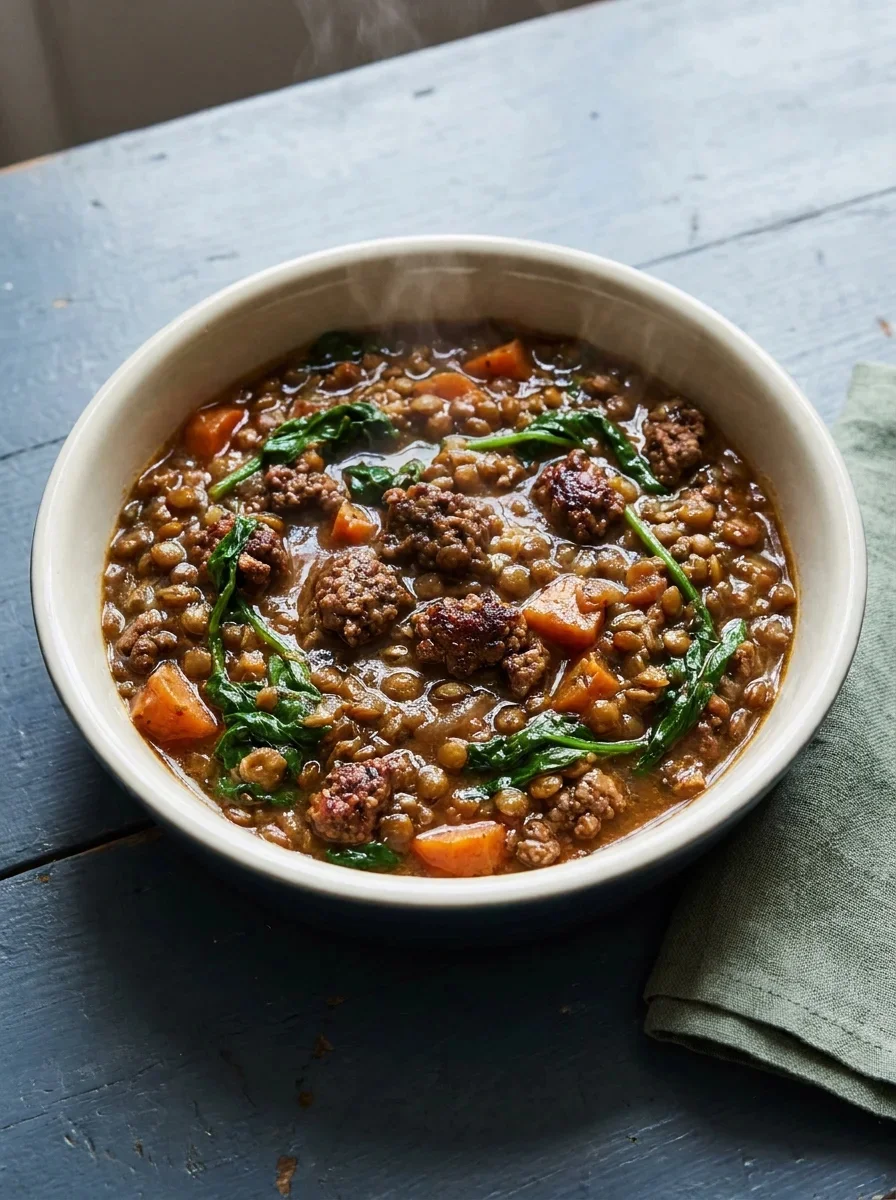
Lamb and lentil is the novel-protein meal of this article, the one to try when chicken and beef both cause trouble.
Ingredients
- 1 pound ground lamb
- 1 cup brown lentils, rinsed
- 2 carrots, chopped
- 2 cups fresh spinach
- 4 cups water or onion- and garlic-free low-sodium broth
Step-by-Step Instructions
- Set the Instant Pot to sauté and brown the ground lamb, breaking it up with a spoon, until no pink remains, then drain off all the fat.
- Add the rinsed lentils, carrots, and water or broth, and stir once so the lentils are under the liquid.
- Seal the lid, set the valve to sealing, and cook on high pressure for 15 minutes.
- When the cook time ends, let the pressure release naturally for 10 minutes, then turn the valve to venting to release any remaining steam.
- Stir in the fresh spinach and let the pot sit open for 10 minutes — the spinach wilts in the heat and the stew cools to warm.
Drain the lamb fat every time — lamb runs fattier than turkey, and the drain is what keeps this meal from being too rich for a sensitive stomach.
Pick Your Protein: Which Recipe for Which Dog
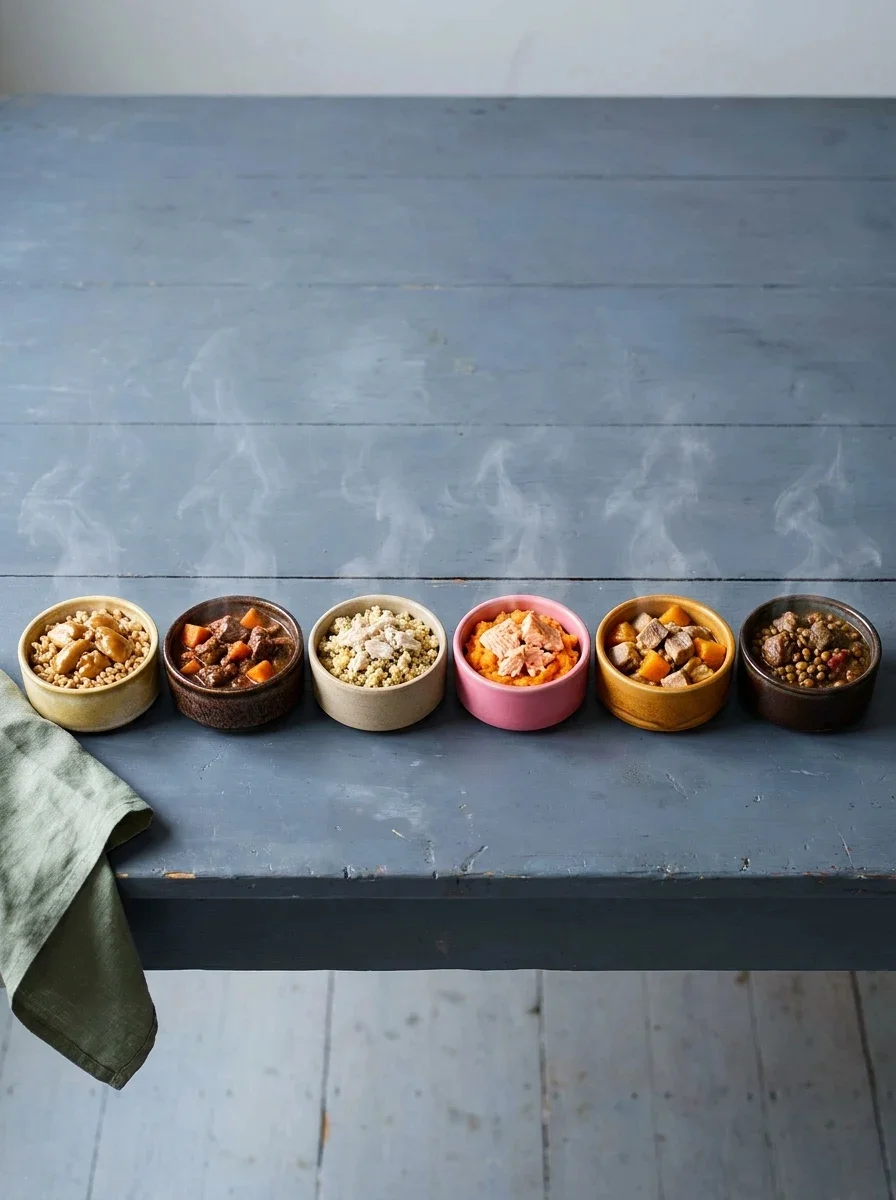
Six proteins is a choice, not a burden, and the right pick depends on your dog. Here is the head-to-head, so you can stop guessing and start with the recipe that fits.
The sensitive stomach: start with chicken and brown rice. If chicken itself is the problem, switch to turkey and quinoa — same gentle idea, different protein, and the pumpkin adds fiber that steadies loose stools.
The chicken allergy: turkey and quinoa is the first move, because turkey is a different bird with a different protein profile. Lamb and lentil is the second move, a true novel protein that most allergic dogs have never eaten.
The skin and coat: salmon and sweet potato, without question. The omega-3 fats in salmon support skin and coat over weeks, and the sweet potato adds vitamin A on top.
The weight management: turkey and quinoa again, because it is the leanest grain-based meal here, with high fiber and enough bulk to fill a bowl without filling a waistline.
The active dog: beef and sweet potato stew. It is the most calorie-dense meal of the six, with the iron and slow-burning energy a working dog needs.
The picky eater: pork and pumpkin. It is mild, slightly sweet from the pumpkin, and different enough from kibble to interest a dog that has gone off its food.
Serving by Dog Size
The base rule is about 1 cup of food per 10 pounds of body weight per day, split across two or three meals. A 10-pound dog gets about 1 cup a day. A 20-pound dog gets about 2 cups. A 50-pound dog gets about 5 cups. An 80-pound dog gets about 8 cups, which is one full batch per day.
Serve the food cooled to warm, never hot, in a dog bowl on the floor. Never serve from a human bowl or a cup, and never hand a dog a hot pot to eat from.
Transition gradually when you switch foods. Start with one part new food to four parts old food for two days, then half and half for two days, then three parts new to one part old, and then the full switch. A week of transition prevents most of the loose stools that people blame on homemade food.
Small dogs need the food chopped finer. For training rewards, spoon a little of the finished meal into a silicone mold and freeze it — frozen food in a dog bowl makes a long-lasting chew that keeps a dog busy. The beef sweet potato dog chews on this site show the same idea in a baked form, and they pair well with these meals as a training reward.
Storage and Freezing
Fridge life is 3 to 4 days for five of the six recipes. The salmon recipe is the exception: fish keeps only about 3 days in the fridge, so cook it when you plan to serve it within three days and freeze the rest the same day. Cool it, portion it, and get it into the fridge.
Freezer life is up to 3 months for all six recipes. Portion the food into containers before freezing, not after — a frozen block of stew is hard to divide, and thawing and refreezing is never a good idea.
Batch cooking is the whole point of this article. Cook one recipe on Sunday, portion it into five containers, and you have the week covered.
Troubleshooting
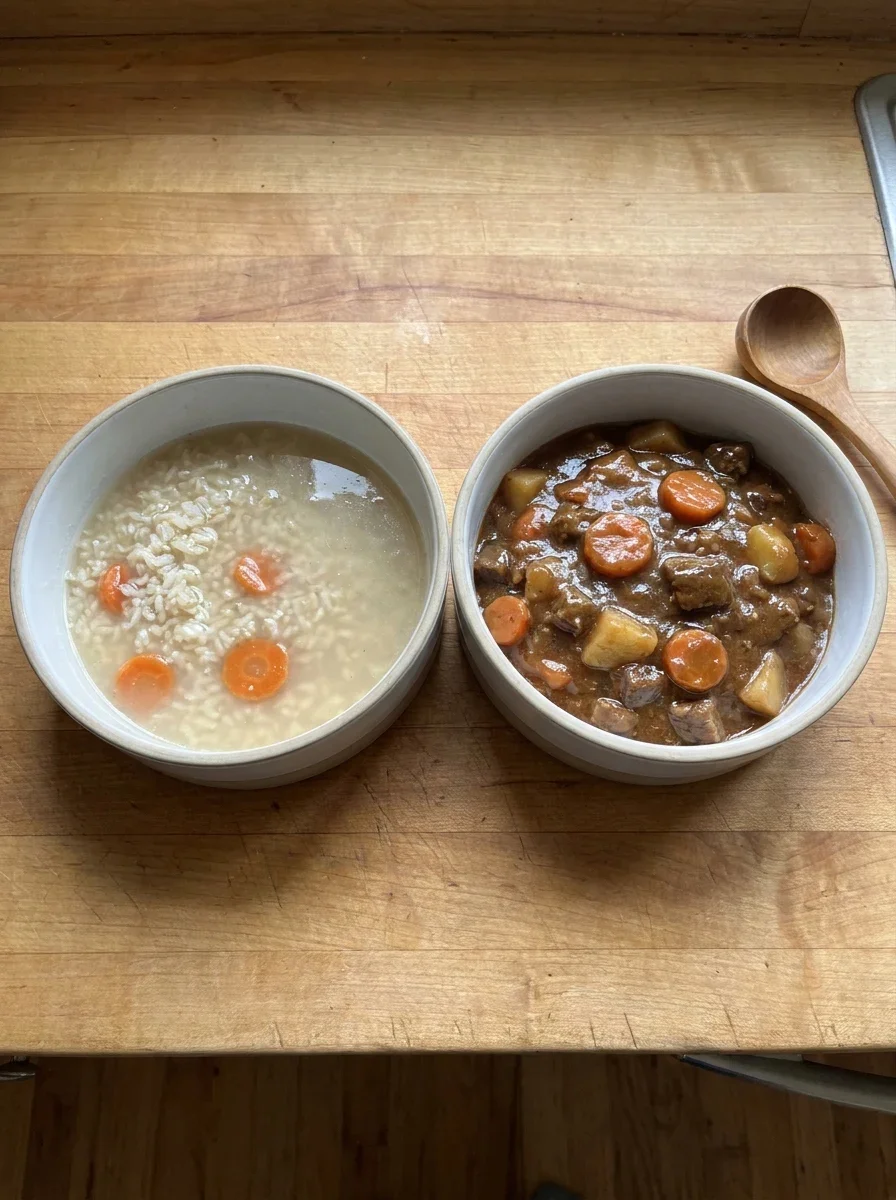
The burn notice: the pot flashes BURN and stops cooking.
The rice is mushy: too much liquid, or the natural release ran too long. Brown rice needs its full 15 minutes under pressure, but it does not need an extra 20 minutes sitting in a sealed pot.
The meat is dry or tough: it cooked too long, or it got a quick release when it needed a natural one.
The dog will not eat it: warm it slightly, mix it into the kibble, and start small. Warm the portion to just above room temperature, spoon it over the kibble so the smell draws the dog in, and give it three days before you decide the dog dislikes the recipe.
Frequently Asked Questions
Final Thoughts
Six recipes, one pot, and a week of fresh food. That is the whole promise of this article, and it holds up in a real kitchen. Start with the chicken and brown rice, because it is the gentlest and the most forgiving. Then rotate. Turkey one week, salmon the next, lamb when you want a change. The Instant Pot does not ask you to become a different kind of cook. It asks you to load one pot and walk away, and it gives you back food you can trust, in portions you can measure, at a price that beats most fresh-food delivery by a wide margin. Your dog will tell you the rest.

Izzy is an experienced ranch worker who has a passion for exploring nature and getting up close to wildlife. With her connections to various animal organizations, Izzy is well-versed in animal care and rehabilitation.