3-Ingredient Sweet Potato Dog Cookies: Simple Homemade Treats
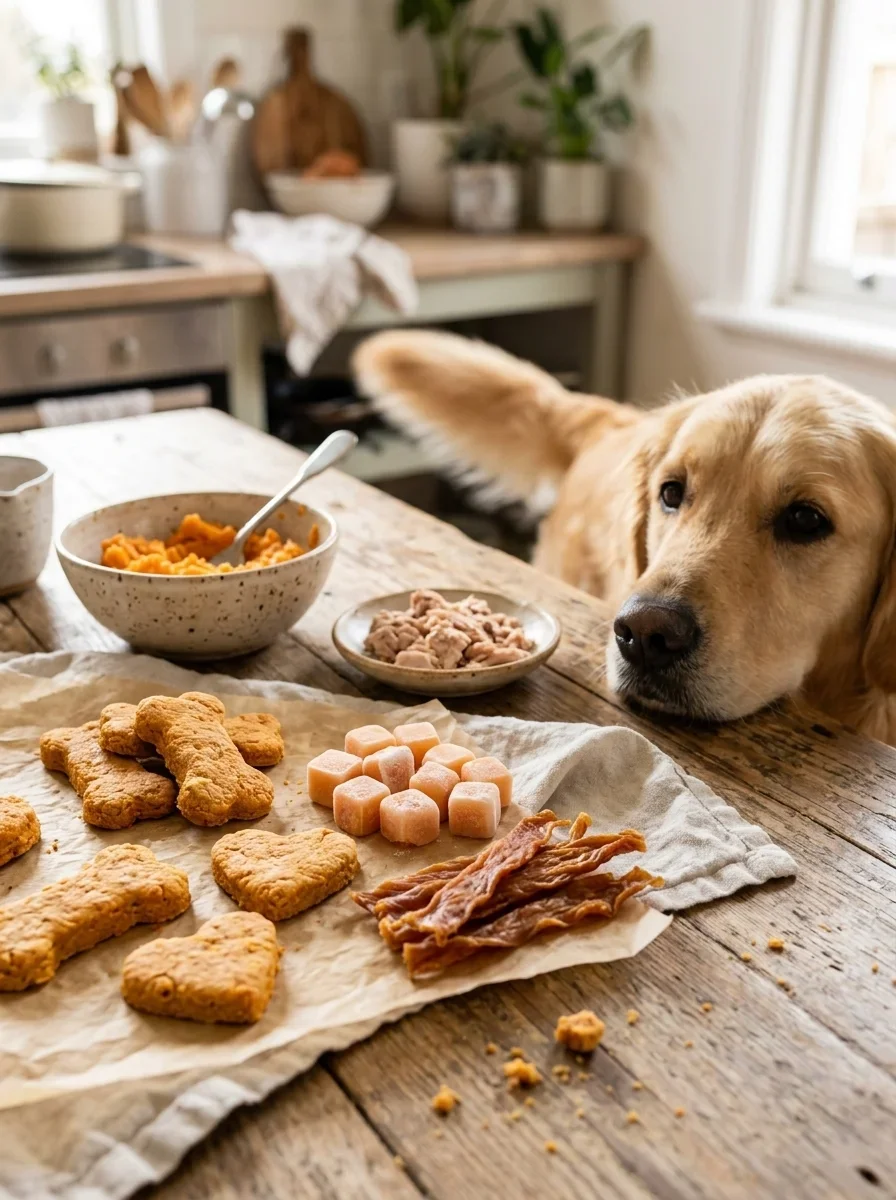
Some of the best dog treats come from the shortest ingredient lists. These 3-ingredient sweet potato dog cookies need nothing more than sweet potato, oat flour, and an egg — no preservatives, no mystery powders, no twenty-step method. If you can mash, stir, and roll, you can make them. And because the list is so short, every ingredient earns its place: sweet potato brings natural sweetness and fiber, oat flour gives structure without wheat, and egg binds it all into a dough that bakes up crisp and golden. Dogs go genuinely wild for them — the smell alone brings mine running from the other room.
Why Three Ingredients Are Enough
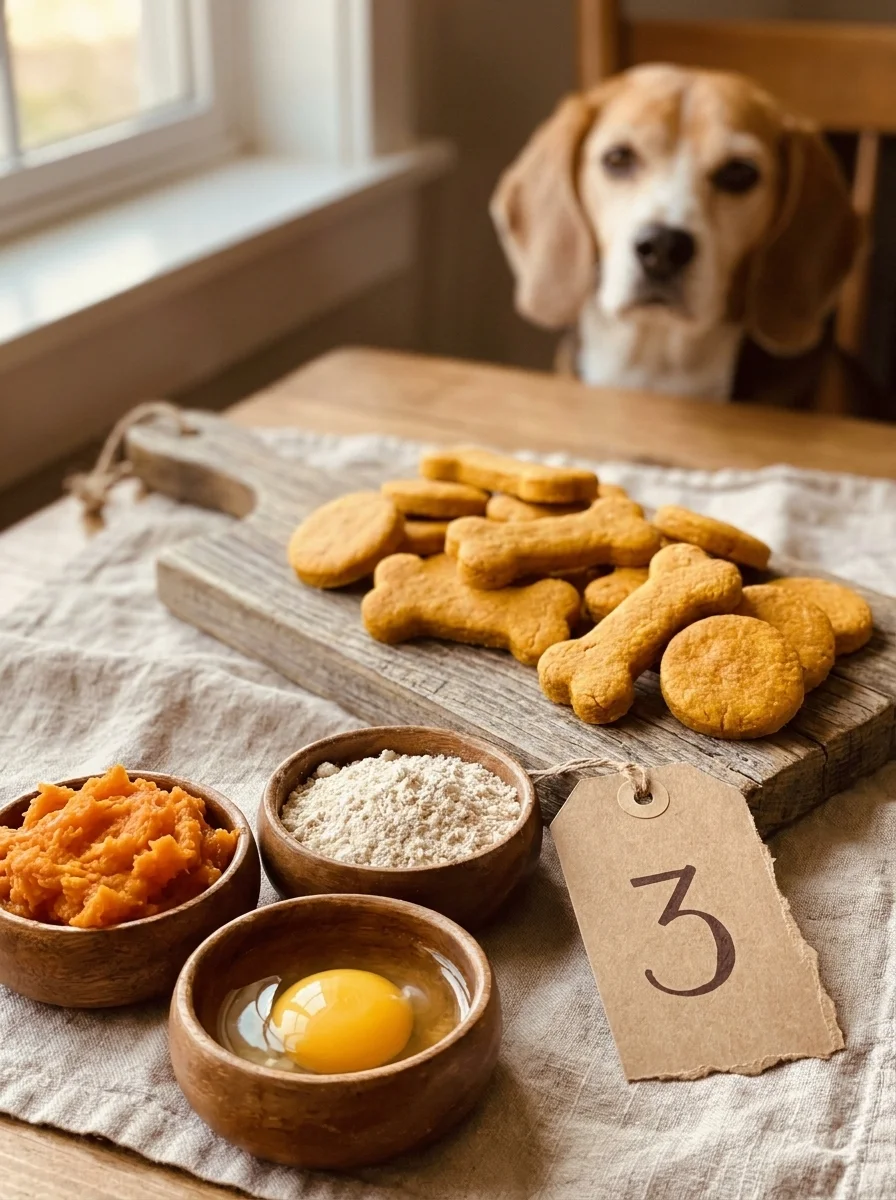
Most commercial dog biscuits read like a chemistry exam. The longer the list, the more room for fillers, artificial flavors, and things your dog simply does not need. A short list does the opposite: it forces every ingredient to work hard, and it makes the treats safer for dogs with sensitive stomachs or food intolerances. When there are only three ingredients, you know exactly what your dog is eating.
Sweet potato does the heavy lifting: it is naturally sweet, packed with fiber, beta-carotene, and vitamins A and C, and most dogs find the taste irresistible. Cooked and mashed, it also provides moisture, so the dough comes together without added oils or water.
Oat flour keeps it gentle: many dogs handle oats better than wheat, and oat flour gives the cookies a sturdy, dunkable crunch. You can buy it ready-made or blitz rolled oats in a blender for ten seconds — same thing, lower cost.
Egg holds it together: one egg is the entire binder. It adds protein and helps the cookies set firmly in the oven so they hold their shape instead of crumbling into dust.
Choosing Your Sweet Potatoes
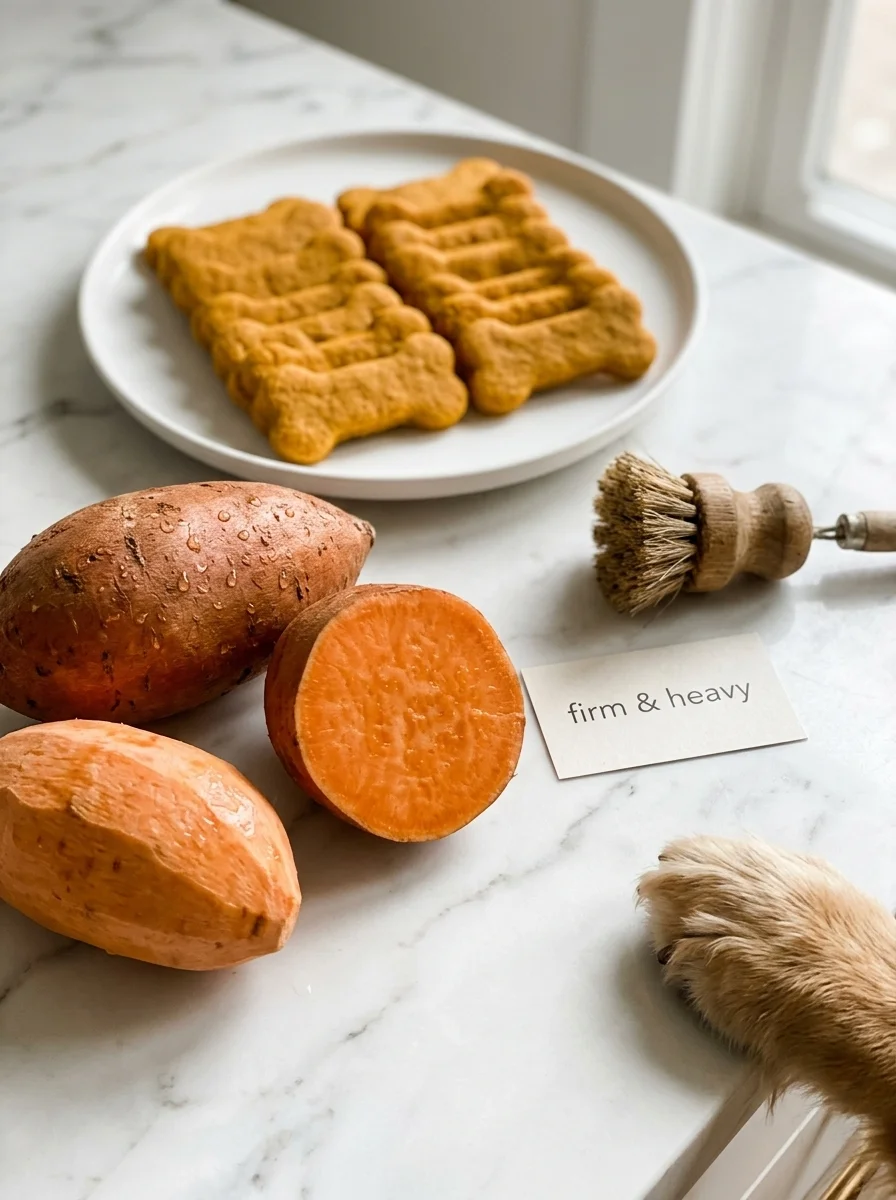
Not all sweet potatoes behave the same in baking. Pick firm, heavy ones: dense flesh means less water, which means a dough that rolls cleanly instead of sticking to everything. Avoid any with soft spots or sprouting eyes — cut those parts away generously or pick another potato.
Orange-fleshed varieties (often sold as garnet or jewel) are the sweetest and give the cookies their gorgeous golden color. White or purple sweet potatoes work too, but the flavor is milder and the color less striking.
Cook them soft: bake at 400°F (200°C) for 45–60 minutes, microwave for 8–10 minutes, or boil peeled chunks until completely tender. The flesh should mash smooth with a fork — any lumps become weak spots in the dough. Let it cool before mixing so the egg does not scramble on contact.
3-Ingredient Sweet Potato Dog Cookies
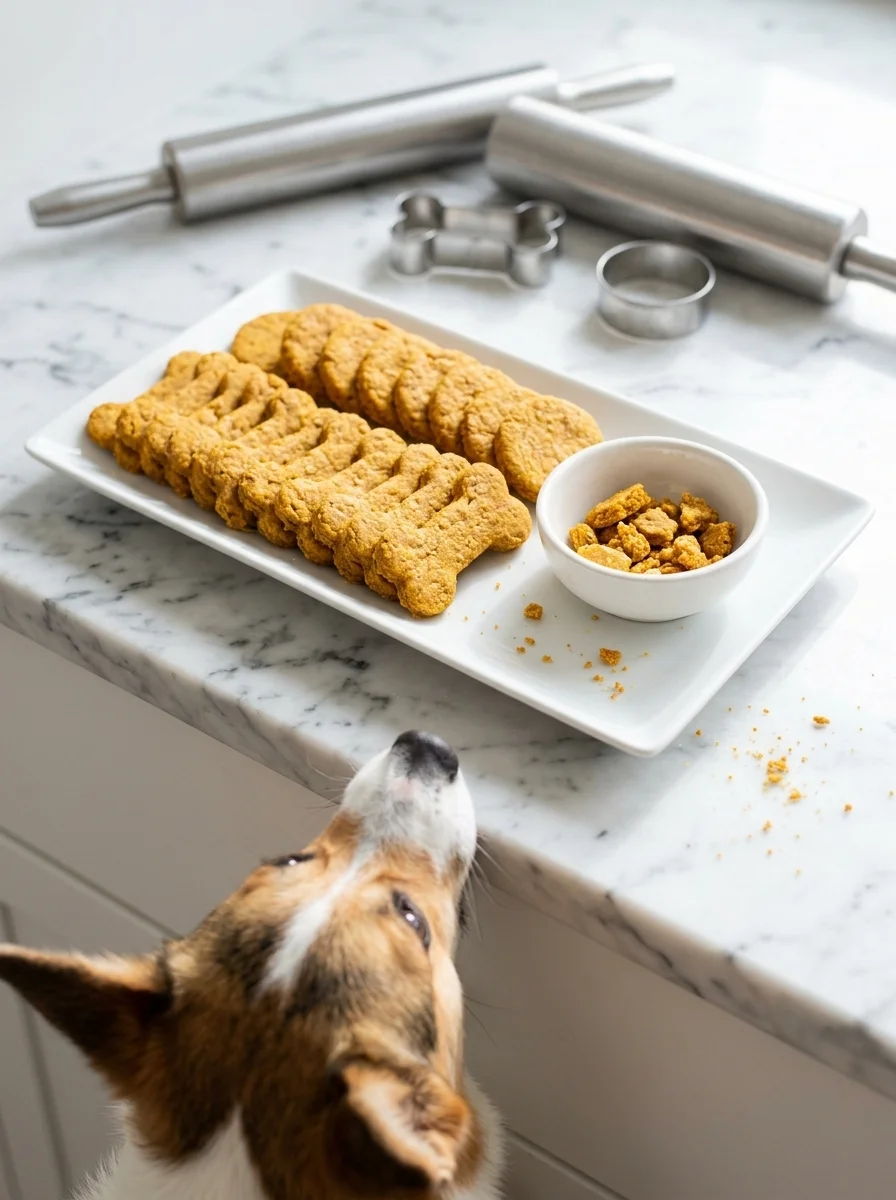
This is the whole recipe — one bowl, one baking sheet, about 40 minutes start to finish. The dough should feel like firm playdough: smooth, slightly tacky, and easy to roll. If it sticks to your hands, add oat flour a tablespoon at a time; if it cracks when rolled, work in a teaspoon of water.
Ingredients
- 1 cup mashed cooked sweet potato (about 1 large), cooled
- 1 1/2 cups oat flour, plus extra for dusting
- 1 large egg, beaten
Instructions
- Heat the oven to 350°F (175°C). Line a baking sheet with parchment paper.
- Stir the mashed sweet potato and beaten egg together in a large bowl until smooth and uniform.
- Add the oat flour and mix with a spoon until a soft dough forms, then knead briefly in the bowl until smooth.
- Turn the dough onto a lightly floured surface and roll to about 1/4 inch thick. Thinner rolls bake crisper; thicker rolls stay chewier in the center.
- Cut into shapes with cookie cutters or a knife — bones, circles, and squares all work. Gather and re-roll scraps once.
- Arrange on the prepared sheet with a little space between cookies. They barely spread.
- Bake 22–28 minutes, until firm to the touch and lightly golden at the edges. For extra crunch, turn off the oven and leave them inside for 30 minutes to dry out.
- Cool completely on the sheet before serving. The cookies firm up as they cool.
Make Your Own Oat Flour in Seconds
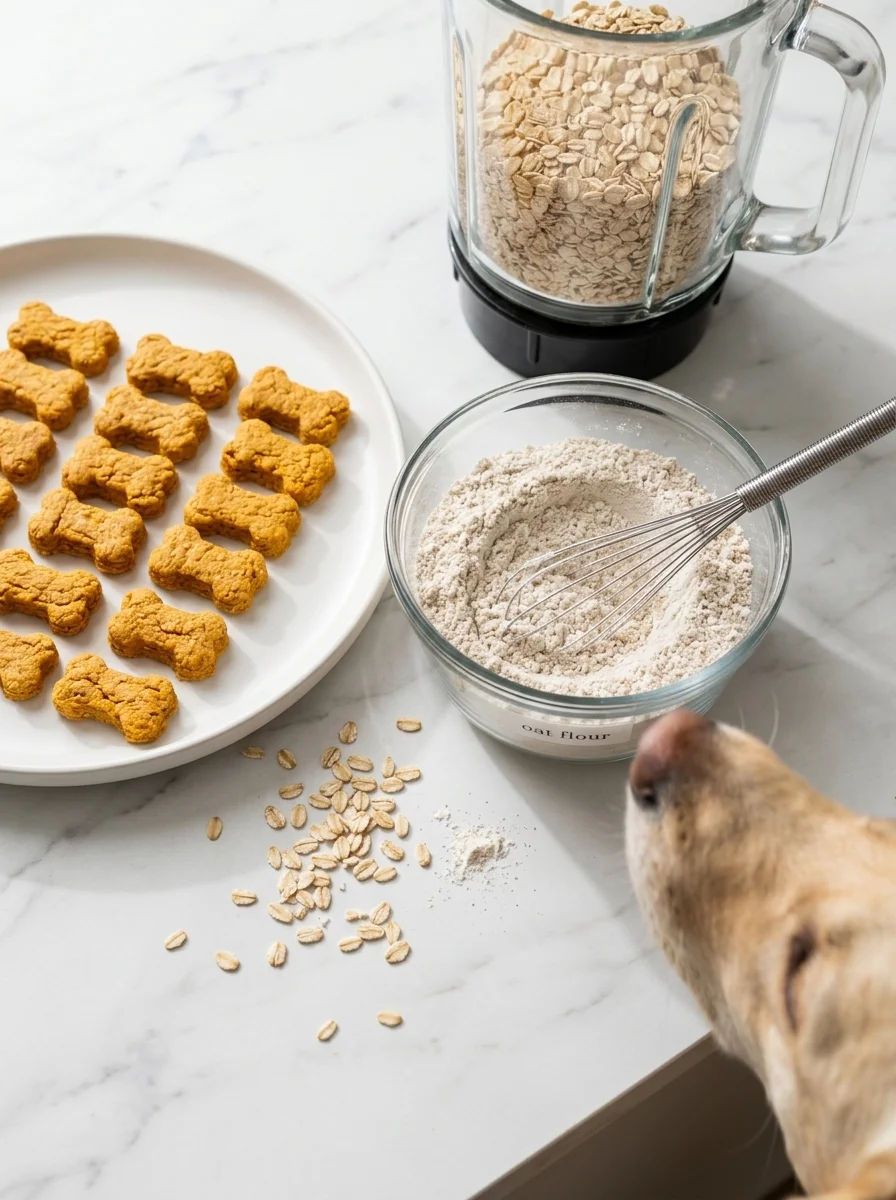
You do not need to buy oat flour. Pour rolled oats into a blender or food processor and blitz for 10–15 seconds until they look like fine flour. One cup of rolled oats makes roughly one cup of oat flour. Sift out any coarse bits if your blender leaves them — large flakes create weak spots in the dough.
Use plain rolled oats only: instant oatmeal packets often contain added sugar, flavorings, or salt that dogs do not need. Old-fashioned rolled oats are the cheapest and cleanest option.
Store it like flour: homemade oat flour keeps for about a month in an airtight jar at room temperature, or three months in the freezer. Make a big batch once and you are set for months of cookie baking.
Baking Tips for the Perfect Crunch
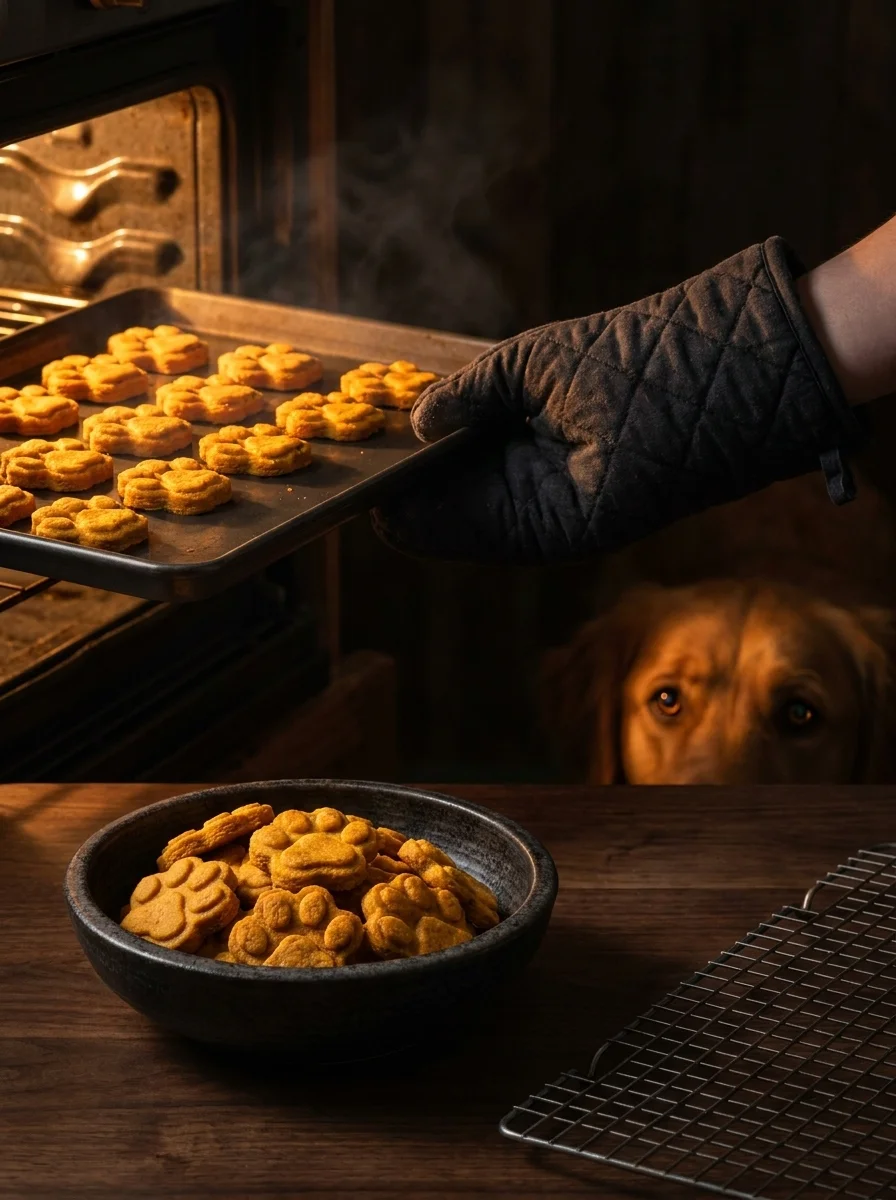
Roll evenly: uneven thickness means uneven baking — thin spots burn while thick centers stay soft. A rolling pin with guide rings takes the guesswork out.
Don’t skip the cooling: these cookies go from soft to snappy as they cool. Judge doneness by firmness at the edges, not by color alone.
Size them for your dog: small dogs do better with dime-sized minis (reduce bake time to 15–18 minutes); big dogs can handle full bone shapes. Match the cookie to the mouth.
Watch the first batch: ovens vary, and sweet potato’s natural sugars can go from golden to dark fast in the last five minutes. Check early until you know your oven.
Troubleshooting Common Problems
Dough too sticky: the sweet potato was probably too wet. Add oat flour one tablespoon at a time until the dough releases cleanly from your hands. Next time, drain boiled sweet potato well or bake it instead.
Dough too crumbly: add water one teaspoon at a time and knead gently. Crumbly dough usually means the flour-to-moisture ratio tipped too far toward flour — common when measuring flour by scooping instead of spooning it into the cup.
Cookies spread in the oven: the dough was too warm or too wet. Chill the cut shapes for 15 minutes before baking, and make sure the sweet potato was fully cooled before mixing.
Bottoms browning too fast: move the rack to the upper third of the oven and check whether your baking sheet is dark-colored — dark pans brown bottoms faster. A light-colored sheet or a second sheet stacked underneath helps.
Storage and Shelf Life
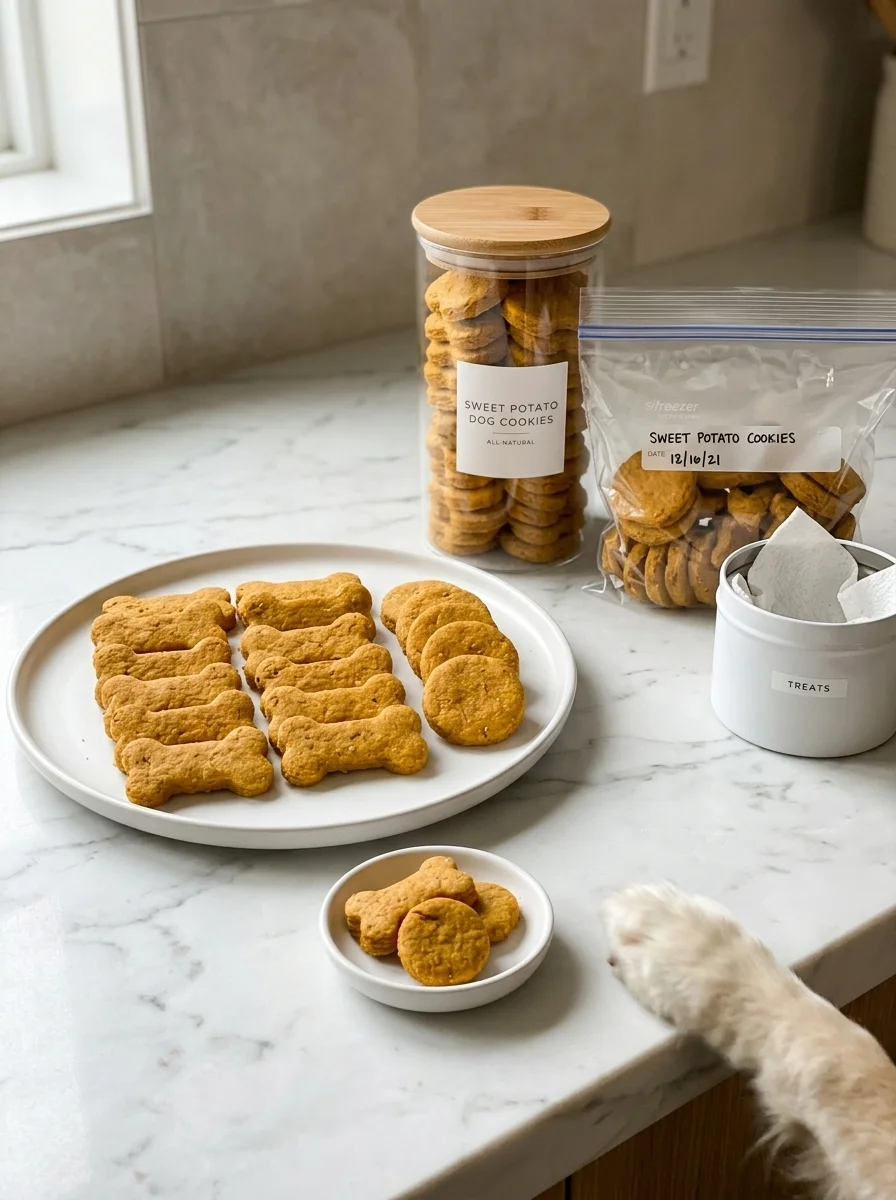
Room temperature: keep in an airtight container for up to 5 days. A paper towel in the container absorbs stray moisture and keeps the crunch.
Refrigerator: up to 2 weeks in a sealed container — good insurance in humid kitchens.
Freezer: up to 3 months in a freezer bag with the air pressed out. Thaw at room temperature; they bounce back crisp.
Because these cookies contain no preservatives, trust your nose: any off smell or soft spots mean it is time for a fresh batch.
Serving These Cookies
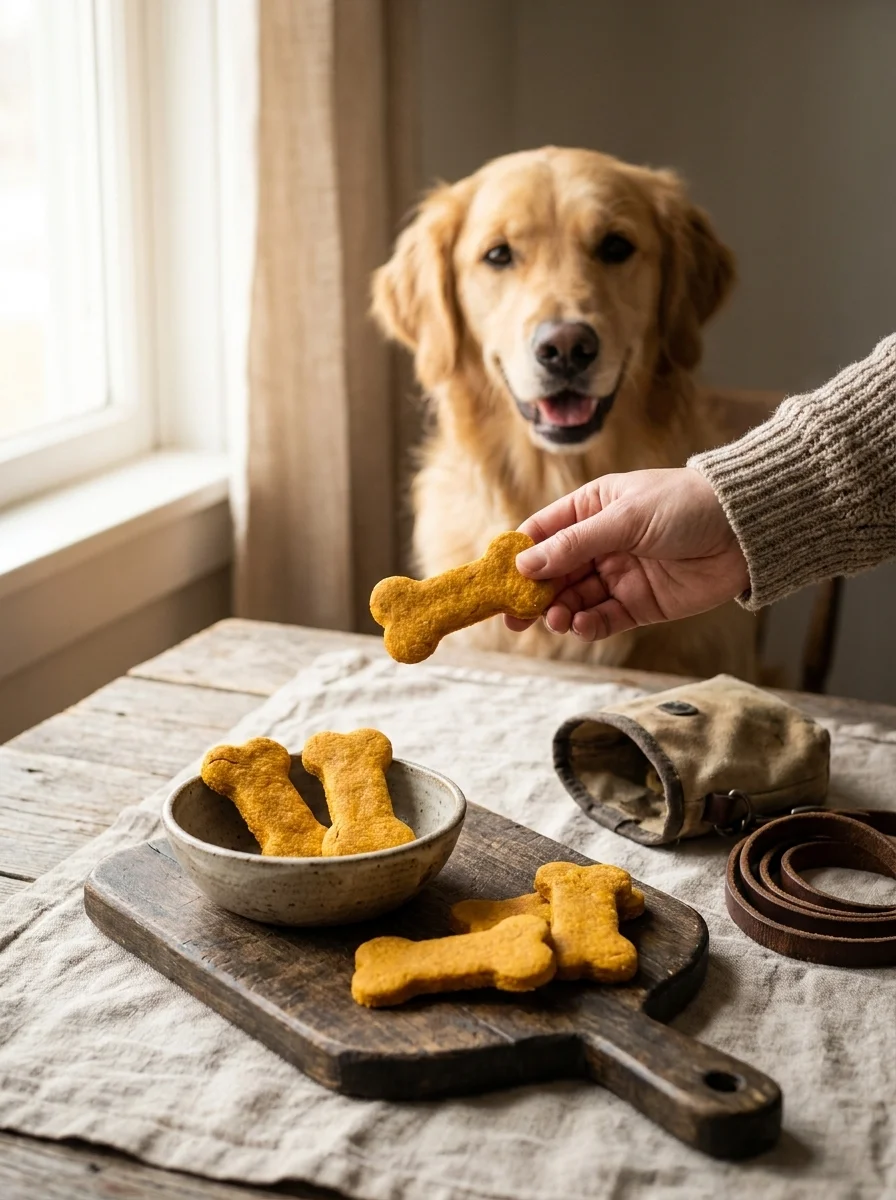
Treats should make up no more than 10% of your dog’s daily calories — for most dogs that means one or two of these cookies a day, fewer for small breeds. They work beautifully as training rewards when cut small, as a bedtime snack, or crumbled over kibble to tempt a picky eater. If your dog has a medical condition or follows a restricted diet, check with your vet before adding homemade treats — even simple ones. For more everyday baking ideas, try our 4-ingredient pumpkin dog biscuits or the homemade brownies for dogs; slow-cooker fans will like the crockpot ground turkey dog food, and our homemade dog food seasoning recipe adds flavor to any meal.
Frequently Asked Questions
Final Thoughts
Three ingredients, one bowl, and a dog who will hear the treat jar from three rooms away. These sweet potato dog cookies prove that simple baking is often the best baking — fewer ingredients mean fewer worries and more of what dogs actually love. Bake a batch this weekend; your dog’s tail will do the reviewing.

Izzy is an experienced ranch worker who has a passion for exploring nature and getting up close to wildlife. With her connections to various animal organizations, Izzy is well-versed in animal care and rehabilitation.