
Big Batch Dog Food Recipes for Large Breeds You Can Freeze and Forget
If you own a big dog, you already know feeding time is a bigger job than it looks. Large breed dogs need more calories, more protein, and more joint support than smaller dogs — and most store-bought bags don’t make that easy on your wallet.
That’s where homemade dog food recipes for large breeds come in. Cooking in big batches means you control exactly what goes into the bowl, you save money over time, and you can tailor meals to your dog’s weight, age, and energy level.
Large breed dog food recipes are a little different from regular homemade meals. Bigger dogs need higher calorie density per cup, more calcium and phosphorus balance for joint and bone health, and portions that scale up without falling apart nutritionally. Below are 6 tested, big batch dog food recipes built specifically with large dogs in mind — from stovetop meals to freezer-ready loaves.
Recipe #1 — Big Batch Chicken & Rice Dinner
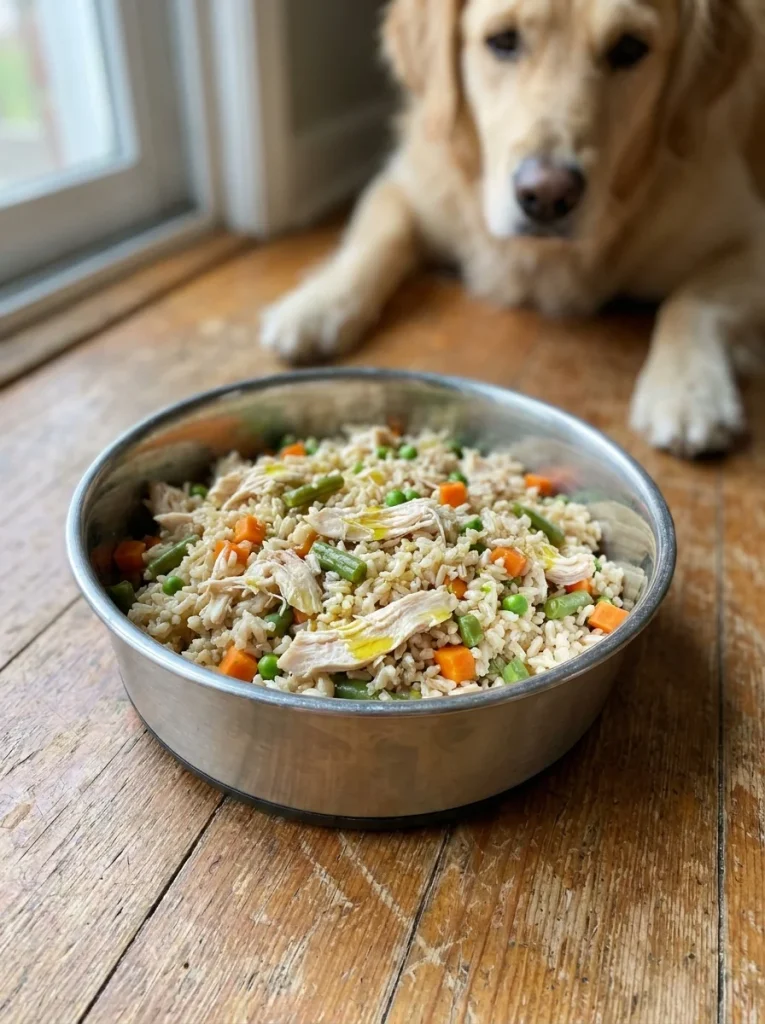
This is the recipe most large breed owners start with. It’s simple, gentle on the stomach, and easy to make in bulk on a Sunday afternoon. Because chicken and rice are widely available and affordable, this recipe is also one of the cheapest to make in large quantities, which matters a lot when you’re feeding a dog that eats several cups a day.
Why it works: Chicken is a lean protein that’s easy to digest, and brown rice gives your dog long-lasting energy without upsetting a sensitive stomach. This combination is often the first one vets recommend when transitioning a large breed dog from kibble to homemade meals, since it rarely causes digestive upset even in dogs with sensitive stomachs.
Prep Time: 15 minutes Cook Time: 35 minutes Yield: About 10 cups (roughly 5-7 days of food for a 60-70 lb dog, feeding twice daily)
Ingredients:
- 3 lbs boneless, skinless chicken thighs or breasts
- 3 cups brown rice, uncooked
- 2 cups carrots, diced
- 2 cups green beans, chopped
- 1 cup peas
- 2 tbsp olive oil
- 1 tbsp ground eggshell or a vet-approved calcium supplement
- 6 cups water or low-sodium chicken broth
Instructions:
- Rinse the brown rice under cold water until the water runs clear, then cook it in a large pot with water or broth until soft, about 35-40 minutes. Rinsing removes excess starch and helps the rice cook up fluffier instead of clumping together in the final mix.
- While the rice cooks, boil or bake the chicken until fully cooked through, with no pink remaining. Shred or dice it into bite-sized pieces once it’s cool enough to handle — smaller pieces are easier for dogs to chew and digest, especially older dogs.
- Steam the carrots, green beans, and peas until just tender — don’t overcook, or you’ll lose nutrients. A quick steam of 5-7 minutes is usually enough; the vegetables should still have a slight bite to them.
- In a large mixing bowl, combine the cooked rice, chicken, and vegetables, stirring gently so the ingredients distribute evenly rather than clumping in pockets.
- Stir in the olive oil and calcium supplement, mixing thoroughly so it’s evenly distributed through the batch. Uneven mixing means your dog might get more or less calcium in different servings, so take an extra minute here.
- Let the mixture cool completely before portioning into containers. Cooling fully before sealing containers also helps prevent condensation, which can lead to spoilage faster.
Notes: Store in the fridge for up to 4 days or freeze in daily portions for up to 3 months. This recipe scales easily — just double or triple the ingredients for multiple large dogs. If your dog is new to homemade food, introduce this recipe gradually over 5-7 days by mixing it with their current food, increasing the ratio a little each day.
Recipe #2 — Beef & Sweet Potato Stovetop Batch
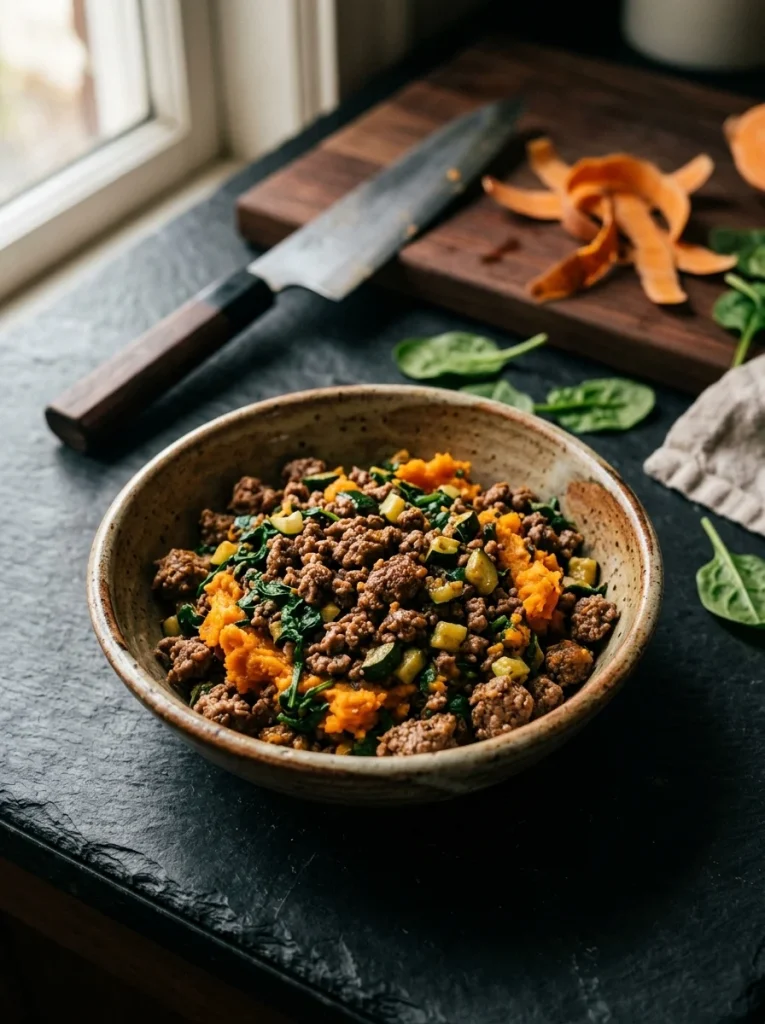
Beef brings a heavier, richer flavor that many large breeds love, and sweet potato adds fiber plus a natural dose of beta-carotene for skin and coat health. This recipe tends to be a favorite among dogs that are picky eaters or that have gone off kibble entirely, since the smell and richness of beef is usually enough to win them back over.
Why it works: This recipe is higher in iron than the chicken version, which makes it a good rotation option for active or working dogs that burn through calories fast. Iron plays a key role in oxygen delivery to muscles, so dogs that hike, run, or work throughout the day often do well with a beef-based meal in their weekly rotation.
Prep Time: 20 minutes Cook Time: 40 minutes Yield: About 9 cups (roughly 4-6 days of food for a 60-70 lb dog)
Ingredients:
- 2.5 lbs lean ground beef
- 3 medium sweet potatoes, peeled and cubed
- 2 cups spinach, chopped
- 1 cup zucchini, diced
- 1 tbsp fish oil
- 1 tbsp ground eggshell or calcium supplement
- 4 cups water
Instructions:
- Brown the ground beef in a large pot over medium heat, breaking it into small crumbles with a spatula as it cooks. Drain excess fat, but leave a small amount for flavor and calories, since large breeds benefit from a bit more fat than smaller dogs.
- Add the cubed sweet potatoes and water to the pot. Cover and simmer for 20-25 minutes, until the potatoes are fork-tender and starting to break down slightly around the edges.
- Stir in the spinach and zucchini during the last 5 minutes of cooking so they soften without turning mushy. Adding them too early can cause them to lose most of their nutritional value and turn the batch watery.
- Remove from heat and mash the sweet potato slightly with a spoon — this helps bind the mixture together and makes it easier for large dogs to eat quickly without picking around pieces.
- Stir in the fish oil and calcium supplement once the mixture has cooled slightly, since adding oil to a piping-hot batch can cause it to separate.
- Let the batch cool fully before storing, ideally spreading it out in a wide shallow container first to speed up the cooling process.
Notes: This recipe is naturally grain-free, which makes it a good option for large breeds with grain sensitivities. Portion and freeze the same way as Recipe #1. Some owners like to swap the zucchini for green beans depending on what’s in season or on sale that week — either works well nutritionally.
Recipe #3 — Slow Cooker Turkey & Lentil Meal
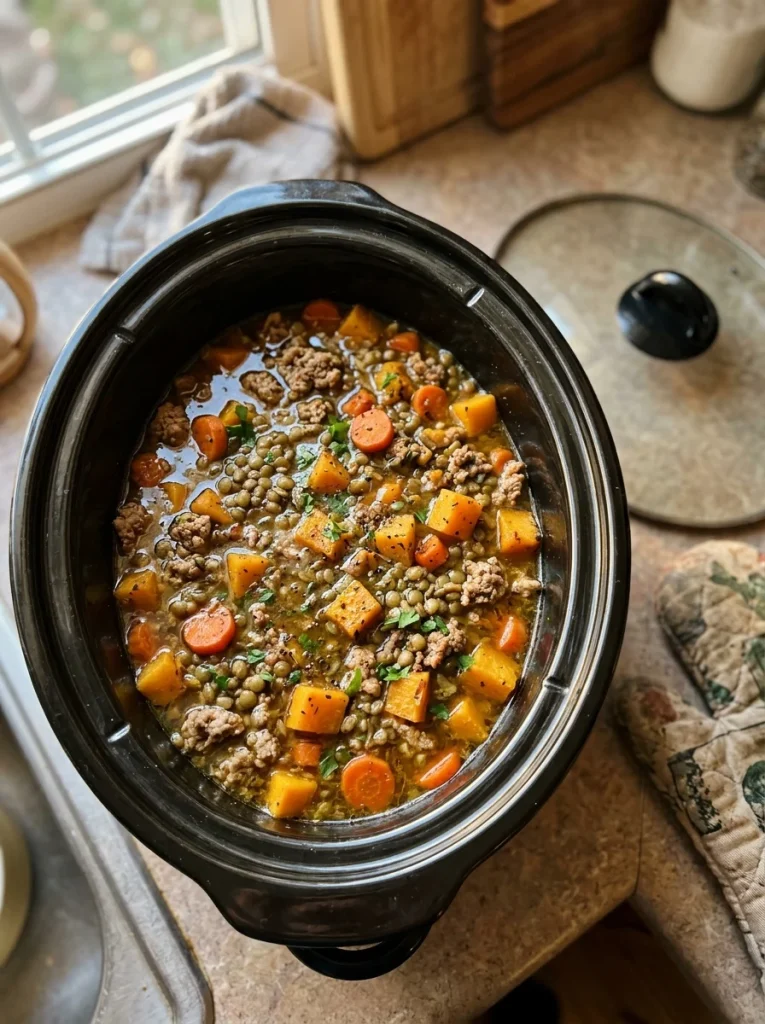
If you don’t want to babysit a pot on the stove, the slow cooker method is the easiest way to batch cook for a big dog. You dump everything in and walk away, which makes this one of the most practical options for owners juggling a full work schedule alongside feeding a large breed.
Why it works: Lentils add plant-based protein and fiber, stretching your meat budget further while still delivering a complete, filling meal. The slow, low cooking process also breaks down the lentils and vegetables until they’re soft enough for easy digestion, which is especially helpful for large breed dogs prone to sensitive stomachs. If you like set-it-and-forget-it cooking, you’ll want to bookmark more crockpot dinners built for dogs once you try this one.
Prep Time: 10 minutes Cook Time: 6 hours (low) or 3 hours (high) Yield: About 10 cups
Ingredients:
- 2 lbs ground turkey
- 1 cup dried lentils, rinsed
- 2 cups butternut squash, cubed
- 1 cup carrots, sliced
- 1 cup green beans
- 5 cups water or low-sodium broth
- 1 tbsp ground eggshell or calcium supplement
Instructions:
- Add the ground turkey directly to the slow cooker — no need to pre-cook it, which is one of the biggest time-savers of this recipe.
- Layer in the lentils, squash, carrots, and green beans on top of the turkey, spreading them evenly so nothing sits in one clump at the bottom.
- Pour in the water or broth until everything is just covered. If your slow cooker runs hot, check partway through and add a splash more liquid if it looks like it’s drying out.
- Cover and cook on low for 6 hours, or high for 3 hours, until the turkey is fully cooked and the lentils are soft enough to mash easily between two fingers.
- Break up the turkey with a spoon and stir everything together so the lentils and vegetables blend evenly with the meat.
- Stir in the calcium supplement once the mixture has cooled to room temperature, since slow cooker meals hold heat for a long time after the lid comes off.
Notes: This batch freezes exceptionally well because the lentils help hold moisture, keeping the texture from turning dry or crumbly after thawing. Great option for owners who meal-prep once a week and want something they can start before leaving for work and finish when they get home.
Recipe #4 — No-Cook Beef & Pumpkin Mix
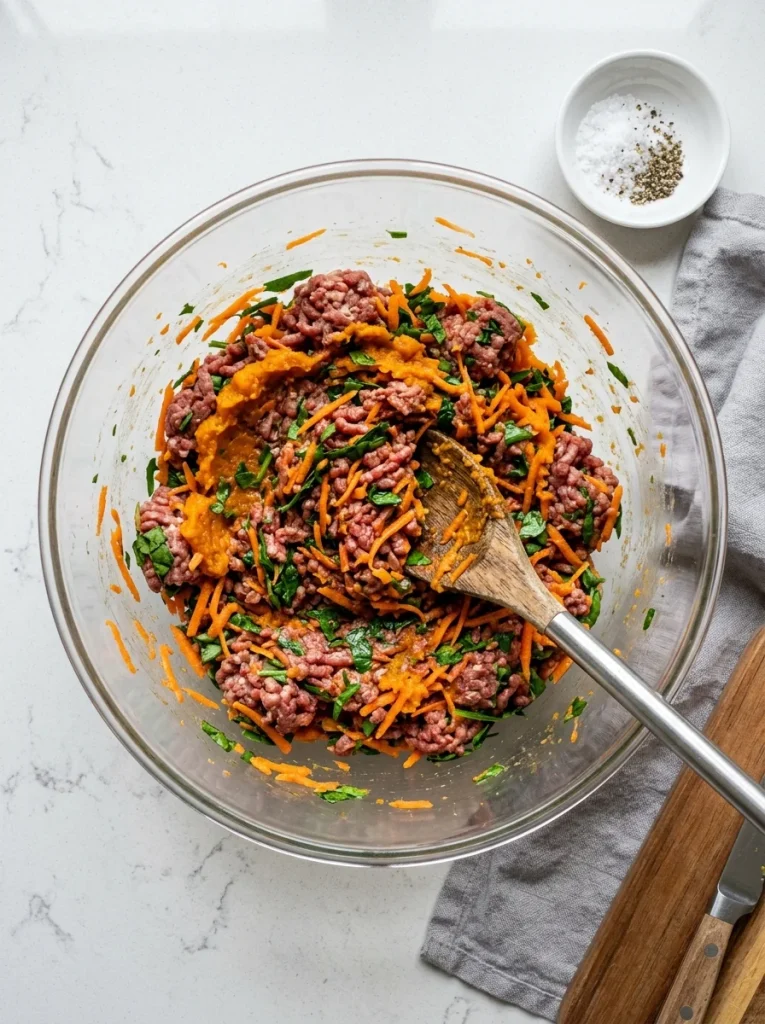
This one’s for hot days, quick prep, or owners who are curious about a raw-style diet but want to start light. No stove, no oven — just fresh, cold ingredients mixed together in a matter of minutes.
Why it works: Pumpkin is naturally gentle on digestion, and this recipe keeps more of the raw nutrients intact since nothing is cooked. Some large breed owners rotate a no-cook meal like this into their weekly routine specifically during summer months, when standing over a hot stove isn’t appealing and dogs may already be eating a bit less due to the heat.
Prep Time: 15 minutes Cook Time: None (no-cook recipe) Yield: About 7 cups
Ingredients:
- 2 lbs raw lean ground beef (from a trusted, human-grade source)
- 1 cup canned pumpkin puree (plain, not pie filling)
- 1 cup finely grated carrots
- 1/2 cup finely chopped spinach
- 1 tbsp flaxseed oil
- 1 tbsp ground eggshell or calcium supplement
Instructions:
- Place the raw ground beef in a large mixing bowl, working quickly to keep it cold and reduce the time it spends at room temperature.
- Add the pumpkin puree, grated carrots, and chopped spinach. Grating the carrots finely rather than dicing them makes them easier to digest raw, since dogs don’t chew plant matter as thoroughly as they chew meat.
- Mix thoroughly with a spoon or clean hands until everything is evenly combined, making sure the pumpkin coats the meat rather than sitting in separate pockets.
- Stir in the flaxseed oil and calcium supplement, blending well so every portion gets a fair share of both.
- Portion immediately into airtight containers rather than letting the mixed batch sit out on the counter while you clean up.
Notes: Because this recipe is raw, food safety matters more than usual. Use fresh ingredients, keep everything refrigerated, and don’t leave it out at room temperature for more than 30 minutes. Wash your hands, bowls, and utensils thoroughly after handling raw meat, the same way you would when cooking for yourself. Talk to your vet before switching to a raw-style diet, especially for puppies or dogs with health conditions, since raw feeding isn’t the right fit for every dog.
Recipe #5 — Once-a-Month Freezer Loaf
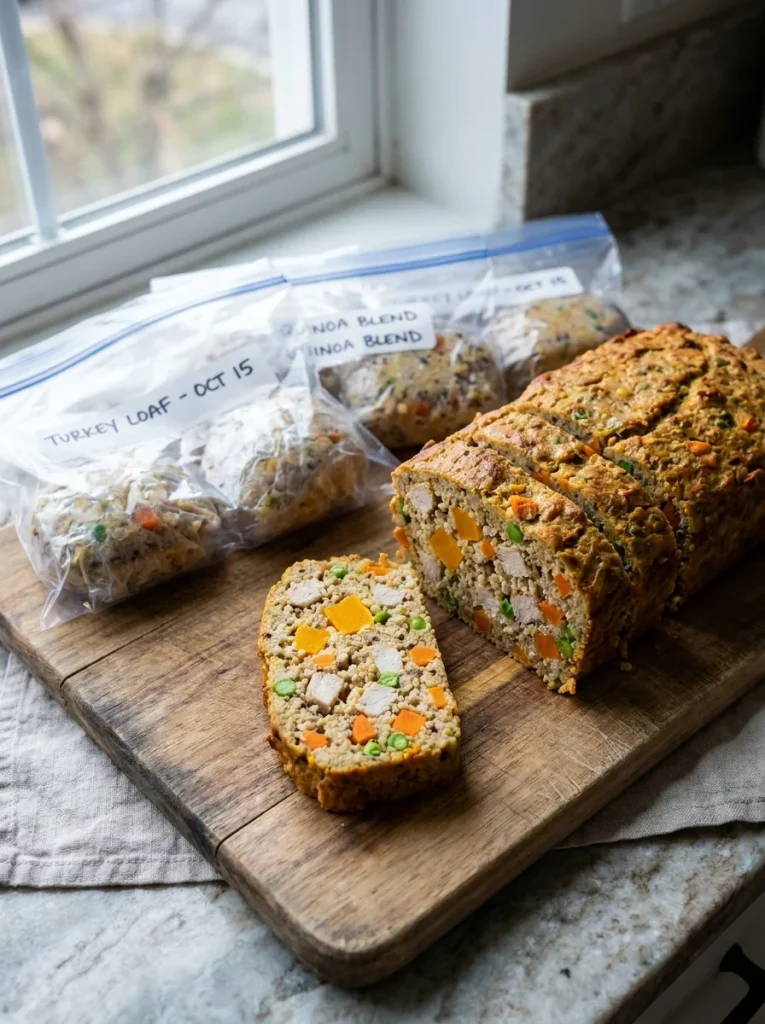
This recipe is built for busy owners. You cook once, portion it into a loaf pan or muffin tins, freeze, and pull out a “puck” of food whenever you need it. It’s one of the most popular big batch dog food recipes for large breeds because it stretches a single cooking session across weeks, cutting down on both prep time and cleanup for the rest of the month.
Why it works: The loaf format holds its shape well, thaws evenly, and is easy to portion by weight, which takes a lot of the guesswork out of daily feeding. Because everything is baked together into one dense block, the nutrients also stay locked in place rather than settling or separating the way looser, stew-style recipes sometimes do in the freezer. Pair it with a proper set-up for feeding time so mealtime stays clean and consistent, especially if you’re feeding more than one dog.
Prep Time: 20 minutes Cook Time: 45 minutes Freeze Time: At least 4 hours before removing from molds Yield: About 12 cups, portioned into individual servings
Ingredients:
- 3 lbs ground chicken or turkey
- 2 cups quinoa, cooked
- 2 cups pumpkin puree
- 1 cup carrots, finely chopped
- 1 cup peas
- 2 eggs
- 2 tbsp fish oil
- 1.5 tbsp ground eggshell or calcium supplement
Instructions:
- Preheat your oven to 350°F (175°C) and lightly grease your loaf pan or muffin tin so the finished portions release cleanly once frozen.
- In a large bowl, mix the raw ground meat, cooked quinoa, pumpkin puree, carrots, peas, eggs, fish oil, and calcium supplement until fully combined. The mixture should feel thick and slightly sticky, similar to a meatloaf batter.
- Press the mixture into a greased loaf pan or divide evenly into a muffin tin for individual portions, pressing down firmly so there are no air pockets that could lead to uneven cooking.
- Bake for 40-45 minutes, or until the internal temperature reaches 165°F (74°C), checking with a meat thermometer in the thickest part of the loaf.
- Let the loaf cool completely at room temperature before handling it further — cutting or unmolding it too early can cause it to fall apart.
- Freeze in the pan for at least 4 hours, then pop out the portions and transfer them to freezer bags or containers, pressing out as much air as possible to prevent freezer burn.
Notes: Label each bag with the date. Frozen portions stay fresh for up to 3 months. Thaw a portion in the fridge overnight before serving, and avoid microwaving frozen portions straight from the freezer, since uneven heating can create hot spots.
Recipe #6 — Joint-Support Turkey & Fish Oil Meal for Seniors
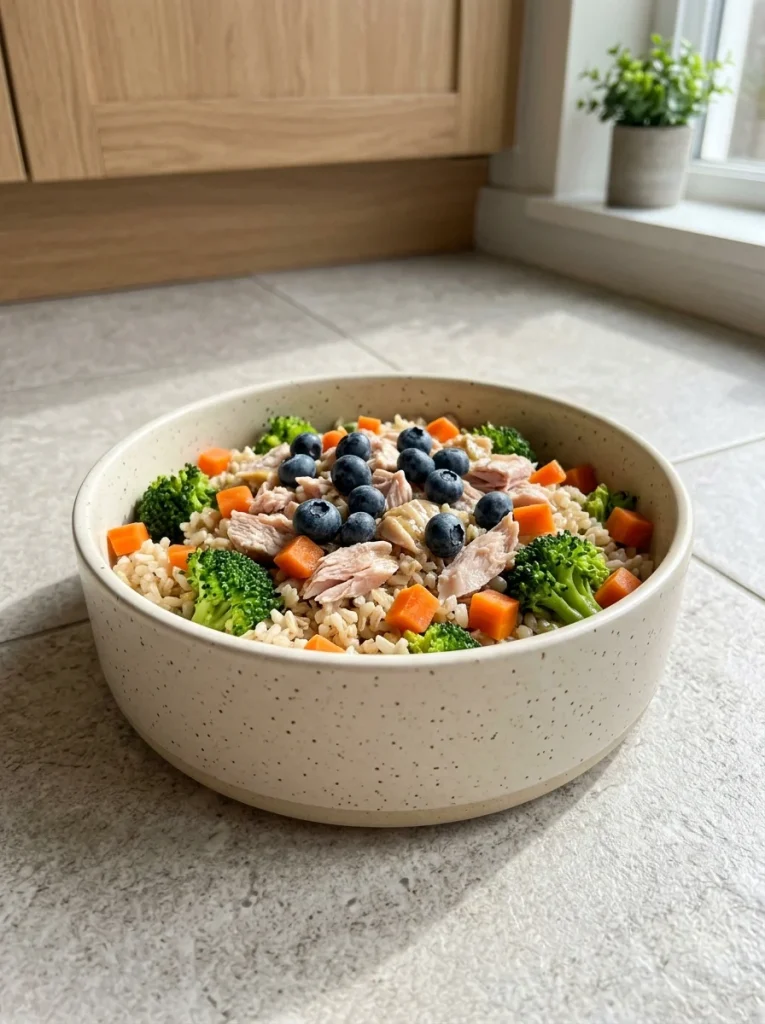
Older large breed dogs carry a lot of wear on their joints from years of extra body weight. This recipe is lighter on calories but higher in the nutrients that support joint comfort and mobility, making it a good option to rotate in a few times a week once your dog starts slowing down.
Why it works: Turkey is lean, fish oil delivers omega-3s for joint and skin health, and the lower calorie count helps senior dogs maintain a healthy weight without losing muscle. Large breeds are especially prone to arthritis and joint stiffness as they age, since their bigger frames put more pressure on hips, knees, and elbows over time, so a lighter but nutrient-dense meal like this one can make a real difference in day-to-day comfort. For more ideas built around aging joints and slower metabolisms, check out these meals designed for older, less active dogs.
Prep Time: 15 minutes Cook Time: 35 minutes Yield: About 9 cups
Ingredients:
- 2 lbs ground turkey (lean)
- 2 cups brown rice, cooked
- 1 cup broccoli, steamed and chopped
- 1 cup carrots, diced
- 1/2 cup blueberries (for antioxidants)
- 1 tbsp fish oil
- 1 tsp turmeric (optional, for inflammation support)
- 1 tbsp ground eggshell or calcium supplement
Instructions:
- Cook the ground turkey in a skillet over medium heat until fully browned, breaking it into small, soft pieces that will be easy for an older dog to chew. Drain excess fat, since senior dogs generally need less fat than younger, more active dogs.
- Steam the broccoli and carrots separately until tender, then chop into small pieces — smaller than you’d use for a younger dog, since senior dogs often have worn or missing teeth.
- In a large bowl, combine the cooked turkey, rice, broccoli, and carrots, stirring gently so the softer ingredients don’t turn to mush.
- Gently fold in the blueberries so they don’t get crushed, keeping them mostly whole for a bit of texture and natural sweetness.
- Stir in the fish oil, turmeric, and calcium supplement, mixing well since these smaller-quantity ingredients need even distribution to be effective.
- Let the mixture cool before portioning into smaller-than-usual servings, since senior dogs typically need fewer calories than adult dogs in their prime.
Notes: If your senior dog has kidney concerns, ask your vet before adding extra protein or supplements to their diet. This recipe works well mixed with a small amount of warm water or broth to make it easier to eat, especially for dogs with dental issues or a reduced appetite.
How Much to Feed a Large Breed Dog
Portion size depends on your dog’s weight, age, and activity level. As a general starting point, most adult large breed dogs need about 2-3% of their body weight in food per day, split into two meals.
| Dog’s Weight | Daily Food Amount (approx.) | Per Meal (2x daily) |
|---|---|---|
| 50 lbs | 2.5 – 3 cups | 1.25 – 1.5 cups |
| 70 lbs | 3.5 – 4 cups | 1.75 – 2 cups |
| 90 lbs | 4.5 – 5 cups | 2.25 – 2.5 cups |
| 110+ lbs | 5.5 – 6.5 cups | 2.75 – 3.25 cups |
These numbers are a starting point, not a strict rule. Active working dogs may need more, while less active or senior dogs may need less. Watch your dog’s body condition — you should be able to feel their ribs easily without seeing them sharply, and they should have a visible waist when viewed from above.
Puppies of large breeds have their own separate feeding needs, since overfeeding during growth can actually contribute to joint problems later in life. If you have a growing large breed puppy at home, it’s worth reviewing what their routine vet visits should look like as they grow, since a vet can help you fine-tune portions as your puppy’s weight changes month to month.
Storage, Batch-Cooking & Meal Prep Tips
Since these are big batch dog food recipes, storage matters just as much as the cooking itself. Here’s how to keep everything fresh and safe:
- Refrigerator: Cooked homemade dog food stays fresh in the fridge for 3-4 days in an airtight container.
- Freezer: Most recipes freeze well for up to 3 months. Portion before freezing so you’re not thawing more than your dog needs at once.
- Thawing: Always thaw frozen portions in the refrigerator overnight rather than at room temperature, to reduce the risk of bacterial growth.
- Labeling: Write the date on every container. It’s easy to lose track when you’re cooking multiple batches at once.
- Batch size: Cook enough for 4-7 days at a time. Cooking further ahead than that increases the risk of nutrient loss and spoilage, even in the freezer.
- Rotation: Rotating between 2-3 of these recipes throughout the month helps make sure your dog gets a wider range of nutrients, rather than relying on a single protein source long-term.
If you’re setting up a proper prep routine, it also helps to have the right tools and space ready — the same kind of thinking that goes into good dog feeding accessories and setup applies just as much to meal prep as it does to food and water bowls.
Do You Need to Add Supplements?
Homemade dog food, even when made carefully, can fall short on certain nutrients unless you’re intentional about it. This is especially true for large breeds, where bone and joint health depend on getting the calcium-to-phosphorus ratio right.
Calcium is the biggest one to watch. Meat is naturally high in phosphorus but low in calcium, so without an added source — like ground eggshell or a vet-approved supplement — your dog’s diet can become unbalanced over time. Most of the recipes above already include a calcium source, but don’t skip that step if you’re adjusting quantities or swapping ingredients.
Fish oil or flaxseed oil rounds out the fatty acids that support skin, coat, and joint health, especially in large breeds that carry more weight on their joints.
Multivitamins are worth discussing with your vet if homemade food makes up more than 25-30% of your dog’s overall diet. A simple vet-formulated multivitamin can close any nutritional gaps that recipes alone might miss.
If you’re serious about building out a longer-term homemade feeding plan, it’s worth exploring a wider range of human-grade dog food recipes so you’re not relying on the same six meals indefinitely. And if your dog does well on homemade meals, you might want to round things out with some homemade dog treats made from the same simple, whole-food approach.
Wrap Up
Feeding a large breed dog homemade meals doesn’t have to be complicated or expensive once you have a few reliable recipes in rotation. The six recipes above cover the most useful cooking methods — stovetop, slow cooker, no-cook, oven-baked freezer loaf, and a lighter option built for senior dogs — so you can pick whichever fits your schedule that week.
Start with one recipe, watch how your dog responds over a week or two, and adjust portions based on their weight and energy level. Rotating between a few of these big batch dog food recipes will help make sure your large breed gets a well-rounded diet, without you spending every night in the kitchen.

Izzy is an experienced ranch worker who has a passion for exploring nature and getting up close to wildlife. With her connections to various animal organizations, Izzy is well-versed in animal care and rehabilitation.


