How to Make Calming Dog Treats for Anxiety in 7 Ways
If your dog paces during storms, shakes at the vet, or howls when you leave the house, you’ve probably searched for calming dog treats for anxiety more than once. Maybe you’ve already scrolled through a shelf of expensive bags at the pet store, squinting at ingredient lists full of words you can’t pronounce, wondering if any of it actually works. The good news is you don’t need a fancy store-bought bag to help your dog feel a little steadier.
With a handful of simple, vet-safe ingredients you probably already have in your kitchen, you can make anxiety dog treats at home that are cheaper, fresher, and tailored to your dog’s exact taste and size. Homemade treats also mean no mystery fillers, no artificial flavoring, and no guessing about what’s actually inside each bite.
Below are seven different recipes, in seven different styles, so you can pick whatever fits your kitchen, your schedule, and your dog’s personality best. Some dogs prefer a crunchy biscuit they can carry around and gnaw on slowly. Others do better with something soft and cold that they can lick, which naturally slows their breathing and heart rate. A few dogs respond best to a treat they can chew for a while, since chewing itself helps release calming hormones. That’s why this list mixes baked biscuits, no-bake balls, frozen pupsicles, slow chews, and muffins instead of giving you seven versions of the same cookie.
Each recipe below is written as a ready-to-follow calming dog treats card with prep time, ingredients, and instructions clearly laid out, so you can copy it, print it, or just scroll straight to whichever one catches your eye. Let’s get baking (and freezing, and no-baking).
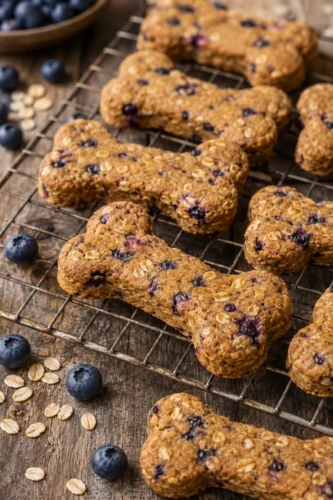
1. Chamomile Peanut Butter Calming Biscuits
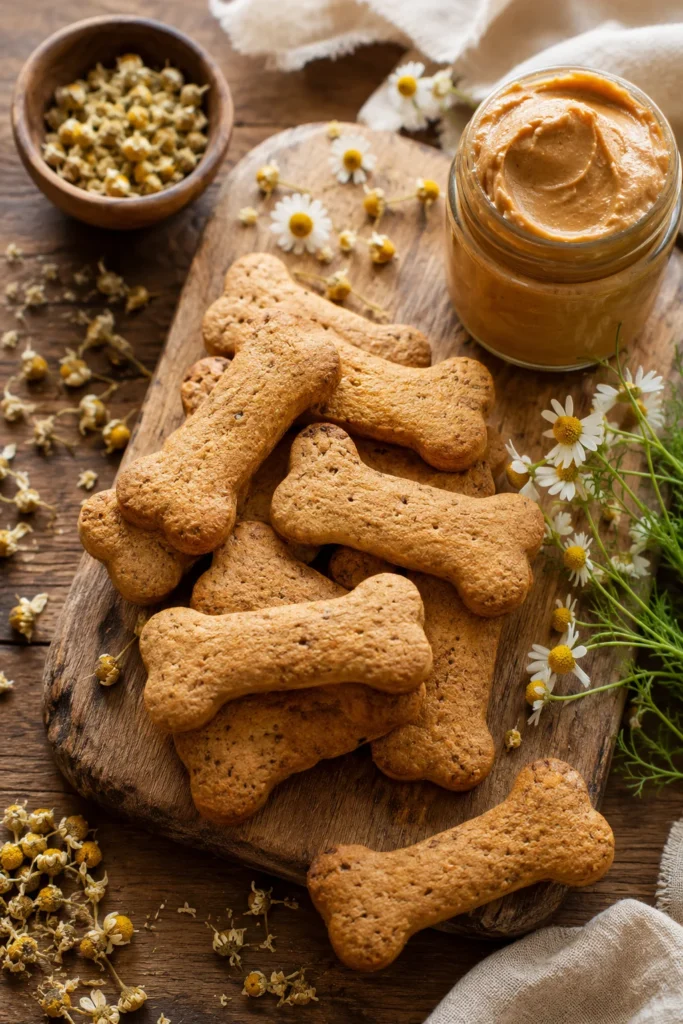
This is the classic starting point for homemade calming treats, and for good reason. Chamomile has a light, natural soothing effect that many dogs respond well to, especially when paired with a strong, comforting smell like peanut butter. Peanut butter makes almost any dog forget they were ever nervous in the first place, which is exactly why it shows up in so many calming recipes.
These biscuits are rolled, cut into shapes, and baked until firm, so they’re sturdy enough to carry in a bag, toss in your car for road trips, or keep stocked in a dog treat station in your kitchen for whenever a stressful moment comes up. Because they’re baked hard rather than soft, they also hold up well if your dog is the type to carry a treat around the house before finally settling down to eat it.
Chamomile Peanut Butter Calming Biscuits
Prep Time: 15 minutes Bake Time: 25 minutes Yield: About 24 small biscuits
Ingredients:
- 2 cups oat flour (or whole wheat flour)
- 1/2 cup natural peanut butter (xylitol-free)
- 1 large egg
- 1/2 cup brewed chamomile tea, cooled
- 1 tablespoon coconut oil, melted
Instructions:
- Preheat your oven to 350°F and line a baking sheet with parchment paper.
- In a large bowl, mix the peanut butter, egg, cooled chamomile tea, and coconut oil until smooth.
- Slowly add the flour, stirring until a thick dough forms. The dough should hold together when pressed but not feel sticky to the touch.
- Roll the dough out to about 1/4 inch thick on a floured surface, using a rolling pin or even a clean glass jar if that’s what you have handy.
- Cut into shapes with a cookie cutter and place on the baking sheet, leaving space between each one so they bake evenly.
- Bake for 22–25 minutes, until firm and lightly golden around the edges.
- Let cool completely on a wire rack before serving or storing, since they’ll continue to firm up as they cool.
Notes: Store in an airtight container for up to a week, or freeze for up to 3 months. Always use weak, food-grade chamomile tea, not essential oil, since essential oils are far too concentrated and potentially harmful for dogs. If you want a slightly softer biscuit, pull them from the oven a couple of minutes early and let them finish firming up as they cool on the rack.
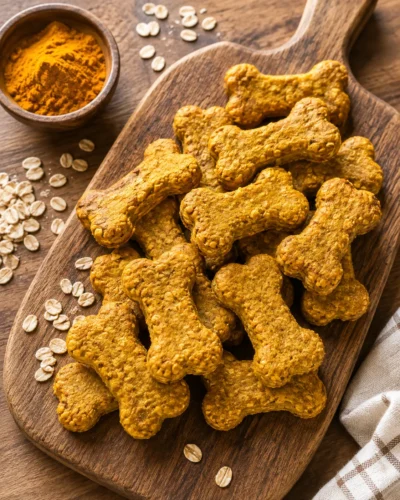
2. Pumpkin Lavender Bone Bites
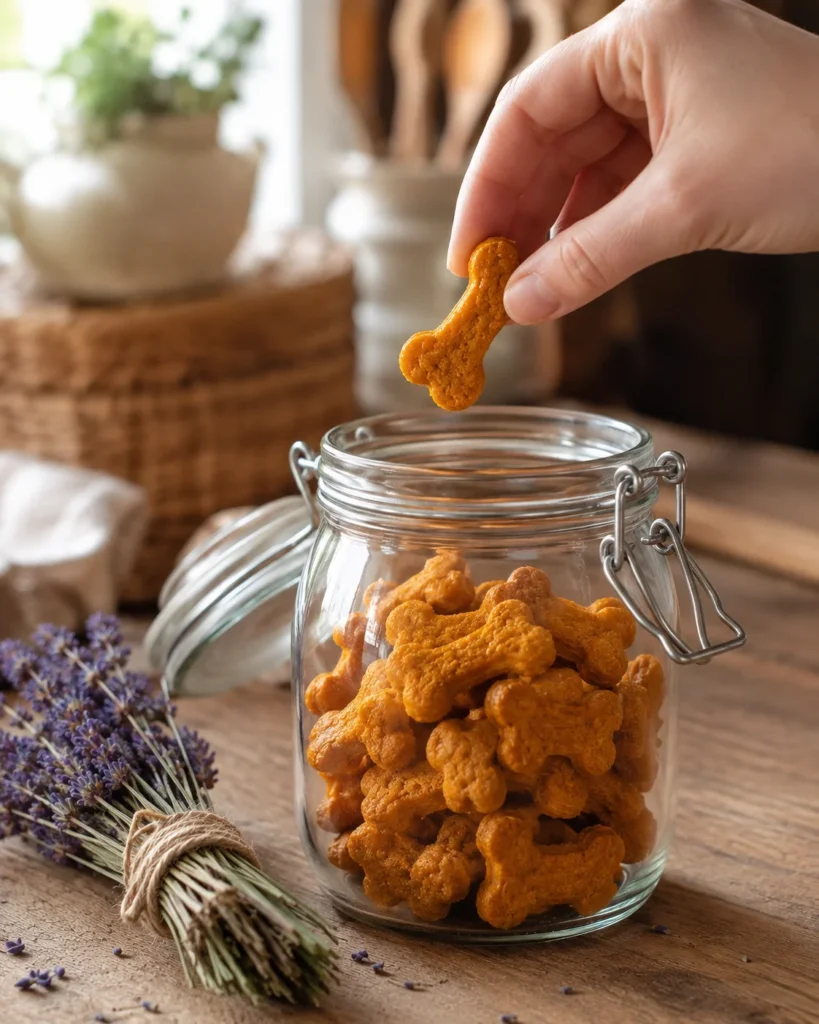
If your dog does better with small, soft bites instead of crunchy biscuits, this recipe swaps the rolling pin for a silicone mold, which makes cleanup easier and gives you a more consistent, professional-looking treat every time. Pumpkin is gentle on digestion, which matters a lot for anxious dogs, since stress and upset stomachs tend to go hand in hand. A small amount of food-grade lavender adds a quiet, calming scent that many anxious dogs respond well to, almost like a lavender-scented candle, except it’s edible and safe.
This particular format works well for dogs who gulp their food instead of chewing it slowly, since the bite-sized bone shape naturally limits how much they can grab in one mouthful. It’s also a good option if you’re introducing calming treats to a puppy for the first time, since the pieces are small enough not to overwhelm a smaller mouth.
Pumpkin Lavender Bone Bites
Prep Time: 10 minutes Bake Time: 40 minutes Yield: About 20 small bites
Ingredients:
- 1 cup canned pumpkin puree (plain, not pie filling)
- 1 1/2 cups oat flour
- 1 egg
- 1 teaspoon dried food-grade lavender buds
- 2 tablespoons coconut oil, melted
Instructions:
- Preheat oven to 300°F. Lightly grease a silicone bone-shaped mold with a light spray of coconut oil so the bites release easily once baked.
- Whisk together the pumpkin, egg, and melted coconut oil in a bowl until fully combined and smooth.
- Stir in the oat flour and lavender buds until a thick, slightly sticky dough forms. Don’t worry if it looks a bit wetter than a rolled biscuit dough, that’s normal for this format.
- Press the dough firmly into each mold cavity, smoothing the top with the back of a spoon so the bites bake evenly.
- Bake for 35–40 minutes, until firm to the touch and slightly pulling away from the edges of the mold.
- Let cool in the mold for 10 minutes, then pop out onto a cooling rack to finish cooling completely.
Notes: This dough is stickier than a rolled biscuit dough, so a mold works much better here than trying to roll and cut it by hand. Skip the lavender the first time you make this if your dog has never had it before, and introduce it in a small test batch so you can watch how your dog reacts before making it a regular addition.
3. No-Bake Turkey & Oat Calm Balls
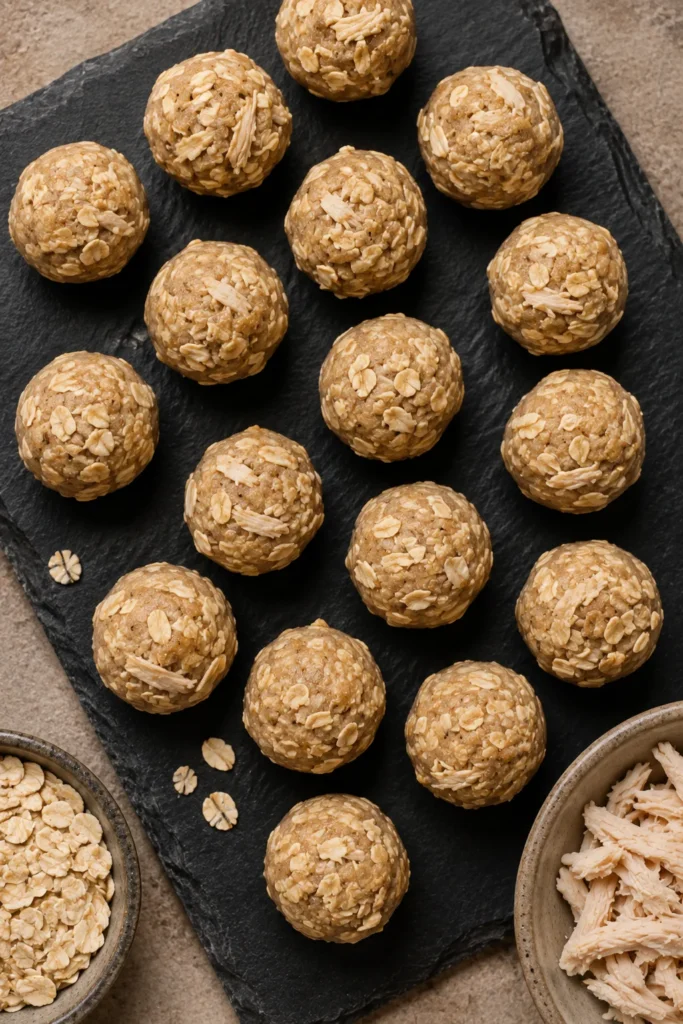
Some days you just don’t want to turn the oven on, especially in the summer, or when you’re short on time and your dog needs a treat right now. This recipe skips baking entirely, which also means it comes together faster than almost anything else on this list. Lean turkey is naturally rich in tryptophan, the same amino acid people associate with feeling sleepy after Thanksgiving dinner, and it supports a relaxed mood in dogs the same way. Rolled oats give the balls a soft, chewable texture that’s gentle on the jaw.
Because there’s no oven involved, this is also a good recipe to make with kids, since there’s no hot baking sheet to worry about, just mixing and rolling with clean hands.
No-Bake Turkey & Oat Calm Balls
Prep Time: 15 minutes Chill Time: 30 minutes Yield: About 18 balls
Ingredients:
- 1 cup cooked, finely shredded turkey (no skin, no seasoning)
- 1 cup rolled oats, blended into a coarse flour
- 2 tablespoons plain Greek yogurt
- 1 tablespoon natural peanut butter
Instructions:
- In a food processor or by hand, mix the shredded turkey, oat flour, yogurt, and peanut butter into a thick, workable dough.
- If the mixture is too dry to hold together, add yogurt one teaspoon at a time until it comes together without feeling wet or sticky.
- Roll into small, bite-sized balls between your palms, about the size of a large marble.
- Place the balls on a plate lined with parchment paper so they don’t stick.
- Chill in the refrigerator for at least 30 minutes to firm up before serving.
Notes: These are soft treats, so they’re a great option for older dogs, puppies with smaller teeth, or dogs recovering from dental work who need something easy to chew. Store in the fridge for up to 5 days, or freeze individually on a tray before transferring to a bag if you want them to last longer.
4. Blueberry Chamomile Frozen Pupsicles
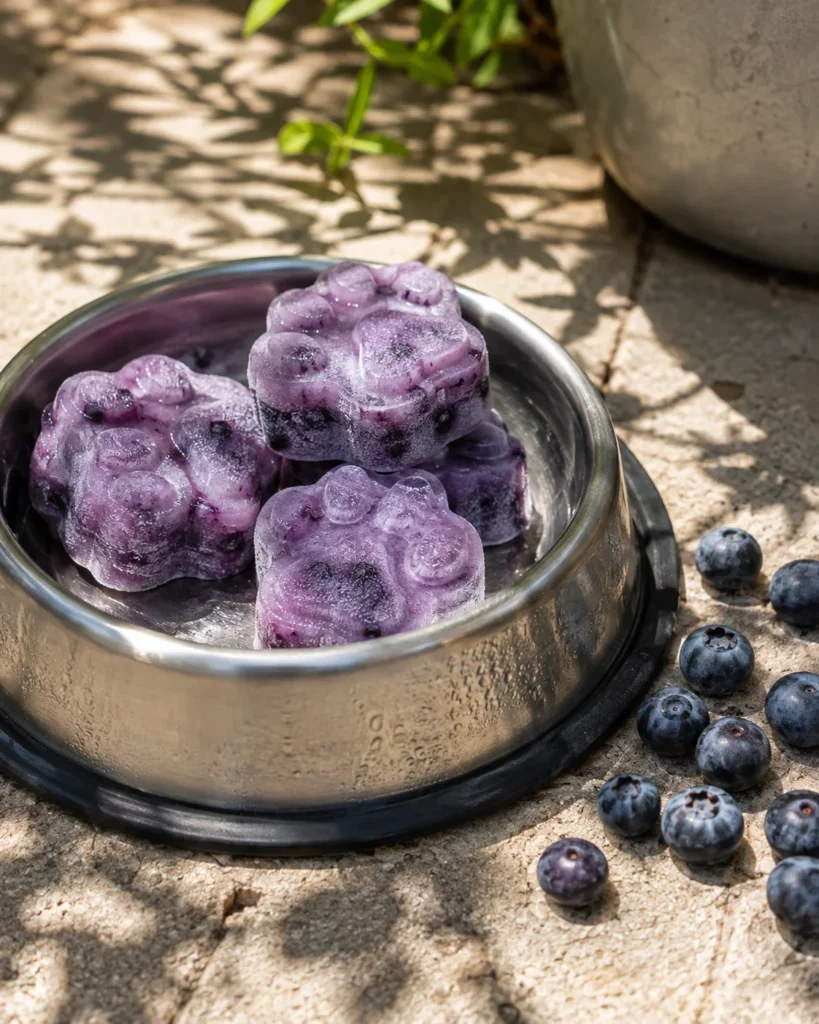
For dogs who get anxious in hot weather, during car rides, or right before a stressful event like a vet visit, a frozen treat can slow them down and give them something soothing to focus on. There’s something naturally calming about the steady, repetitive licking a frozen treat requires, almost like a moving meditation for dogs. This one uses an ice cube tray, so it’s about as simple as homemade treats get, and it doesn’t require any baking, mixing dough, or cleanup beyond a bowl and a whisk.
This format also works especially well before something you know is coming, like fireworks on a holiday weekend or a scheduled grooming appointment, since you can prep a batch ahead of time and have it ready in the freezer.
Blueberry Chamomile Frozen Pupsicles
Prep Time: 10 minutes Freeze Time: 4 hours Yield: About 12 small pupsicles
Ingredients:
- 1/2 cup fresh or frozen blueberries
- 1 cup brewed chamomile tea, cooled
- 1/2 cup plain Greek yogurt
Instructions:
- Divide the blueberries evenly among the cavities of an ice cube tray or silicone mold.
- Whisk the cooled chamomile tea and yogurt together in a bowl until smooth and fully combined.
- Pour the mixture over the blueberries, filling each cavity about 3/4 full to leave room for expansion as it freezes.
- Tap the tray gently on the counter to release any air bubbles trapped in the mixture.
- Freeze for at least 4 hours, or until completely solid.
- Pop out and serve one or two at a time, depending on your dog’s size and how quickly they eat.
Notes: For small dogs, break the frozen cubes into smaller pieces to avoid gulping or brain freeze from eating too fast. Keep the chamomile tea weak so it flavors the treat without being overwhelming, and always let it cool completely before mixing it with the yogurt.
5. Banana Yogurt Calm Bites
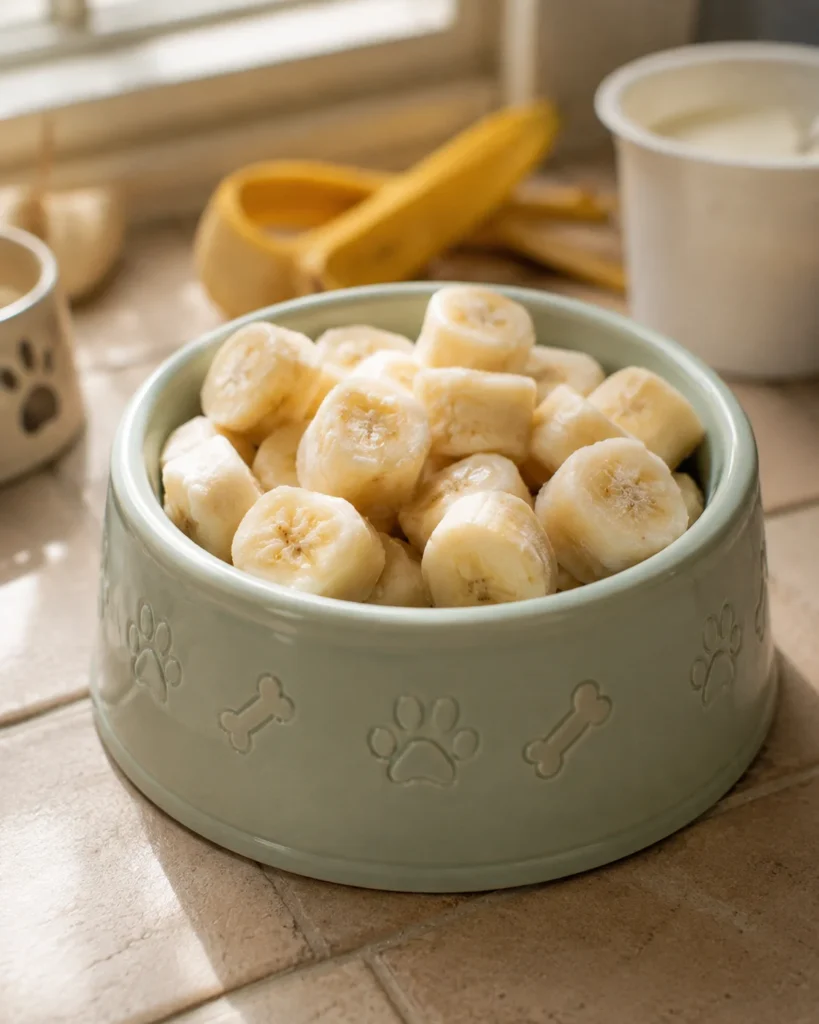
This is the easiest recipe on this list, and it works well as a starter recipe if you’ve never made dog treats before or just want something you can throw together in five minutes flat. Bananas are naturally high in potassium and magnesium, both of which support relaxed muscles and nerves, which is part of why they show up so often in calming dog treat recipes across the board.
Because this recipe only uses three ingredients, it’s also a good one to keep in rotation if your dog has a sensitive stomach and you want to rule out any single ingredient as a trigger. Fewer ingredients means fewer variables to worry about.
Banana Yogurt Calm Bites
Prep Time: 5 minutes Freeze Time: 3 hours Yield: About 12 bites
Ingredients:
- 1 ripe banana, mashed
- 1 cup plain Greek yogurt
- 1 tablespoon ground flaxseed (optional)
Instructions:
- Mash the banana in a bowl until smooth, with no large chunks remaining.
- Stir in the yogurt and flaxseed until fully combined into a thick, even mixture.
- Spoon the mixture into a silicone mold or small paper cups, filling each about 3/4 of the way.
- Freeze for at least 3 hours, until completely firm.
- Pop out of the mold and store in a freezer bag or airtight container.
Notes: This recipe is a good option for dogs with sensitive stomachs, since it skips grains and added fats entirely. If your dog has never had flaxseed before, leave it out the first time and add it in on a second batch once you know it agrees with them.
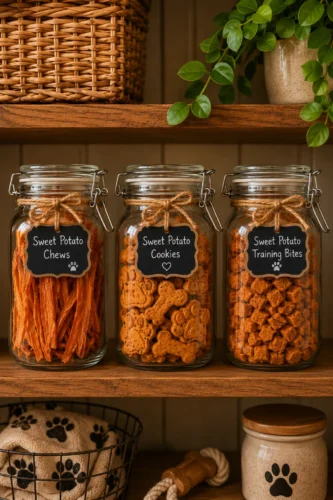
6. Sweet Potato Calming Chews

If your dog is more of a chewer than a swallower, jerky-style chews give them something to work on slowly instead of finishing a treat in one bite. That slow, repetitive chewing itself can help take the edge off nervous energy, similar to how some dogs work through excessive licking habits when they’re anxious. Giving that same instinct a healthy outlet, in the form of a long-lasting chew, can redirect nervous energy somewhere productive instead of onto furniture, paws, or your favorite shoes.
This recipe also happens to be one of the simplest on the list in terms of ingredients, since it’s really just sweet potato and time. The oven does most of the work here, slowly drying the slices out into a firm, chewy texture without any added sugar, salt, or preservatives.
Sweet Potato Calming Chews
Prep Time: 10 minutes Bake Time: 2.5–3 hours Yield: About 20 chews
Ingredients:
- 2 medium sweet potatoes
- 1 teaspoon ground cinnamon (optional, dog-safe amount)
Instructions:
- Preheat your oven to 250°F and line a baking sheet with parchment paper.
- Wash the sweet potatoes thoroughly and slice them lengthwise into 1/4-inch strips, trying to keep the thickness as even as possible.
- Lightly sprinkle both sides with cinnamon, if using, for a bit of extra flavor.
- Arrange the slices on the baking sheet without overlapping, so air can circulate evenly around each piece.
- Bake for 2.5 to 3 hours, flipping halfway through, until the chews are dried out but still slightly bendable rather than brittle.
- Let cool completely before serving, since they will firm up further as they cool and reach their final chewy texture.
Notes: Baking low and slow is what turns these into chews instead of soft slices, so resist the urge to raise the oven temperature to speed things up, as that will dry them out unevenly or burn the edges. Store in an airtight container for up to two weeks, and check on thicker slices toward the end of baking since they may need a little extra time.
7. Valerian-Pumpkin Mini Muffins

This last recipe is best saved for dogs with more serious anxiety triggers, like fireworks or thunderstorms, since it uses valerian root, a stronger natural calming herb than chamomile or lavender. Valerian has been used for generations as a calming aid, and while it can be effective, it’s also more potent, which is exactly why it deserves a little extra caution. Always check with your vet before using valerian root, especially if your dog takes any medication, has any existing health conditions, or is pregnant.
The muffin format also makes portion control easy, since each mini muffin is naturally pre-measured, so you don’t have to guess how much you’re giving your dog the way you might with a powder or tincture.
Valerian-Pumpkin Mini Muffins
Prep Time: 15 minutes Bake Time: 18 minutes Yield: About 24 mini muffins
Ingredients:
- 1 cup canned pumpkin puree
- 1 1/2 cups oat flour
- 1 egg
- 1/4 teaspoon powdered valerian root (vet-approved dose)
- 2 tablespoons unsweetened applesauce
Instructions:
- Preheat oven to 325°F and lightly grease a mini muffin tin, or line it with small paper liners.
- In a bowl, whisk together the pumpkin, egg, and applesauce until smooth.
- Stir in the oat flour and valerian root until just combined, being careful not to overmix.
- Spoon the batter into the mini muffin tin, filling each cup about 2/3 full to leave room for rising.
- Bake for 16–18 minutes, until a toothpick inserted into the center comes out clean.
- Cool completely on a wire rack before serving.
Notes: Valerian has a strong smell that some dogs love and others avoid entirely, so offer one muffin first to test your dog’s reaction before making a full batch a regular part of their routine. If your dog turns their nose up at the smell, that’s a completely normal reaction, and you can fall back on one of the milder chamomile or lavender recipes instead.
3 Ingredient-Based Variations of the Base Recipe
Once you’ve tried the Chamomile Peanut Butter Biscuits above, you can adjust the base recipe without changing the format at all. These three swaps keep the same rolling and baking method described in Recipe 1, just with a different ingredient twist, so you can experiment without learning a whole new process.
Variation 1: Grain-Free Version
Replace the oat flour with almond flour or coconut flour in equal amounts. This works well for dogs with grain sensitivities or mild food allergies, though the dough will be slightly more crumbly, so handle it gently when rolling and cutting. You may also need a touch more coconut oil to help the dough hold together, since almond and coconut flour absorb moisture differently than oat flour does.
Variation 2: Lavender Instead of Chamomile
Swap the brewed chamomile tea for 1/2 cup water plus 1/2 teaspoon dried food-grade lavender buds mixed directly into the dough. This gives the same biscuit format a different calming aroma, which some dogs respond to more strongly than chamomile. It’s worth trying both versions side by side to see which scent your dog seems to settle down around more easily, since every dog responds a little differently to herbal scents.
Variation 3: Added L-Theanine Boost
For dogs with more persistent anxiety, mix in a vet-approved amount of L-theanine powder, commonly found in calming supplements, along with the chamomile tea. This doesn’t change the recipe’s texture or bake time at all, just its calming strength, which makes it an easy upgrade once you know the base recipe works well for your dog. As always, confirm the correct dosage with your vet before adding any supplement powder to a homemade treat.
Why These Calming Dog Treats Work
The ingredients across these seven recipes aren’t random, and once you notice the pattern, it’s easy to mix and match them on your own. Chamomile and lavender both have mild, natural sedative properties that have been studied in humans and are commonly recommended by vets in small, food-grade amounts for dogs. Pumpkin and sweet potato are gentle on digestion, which matters because nervous dogs often deal with upset stomachs too, and a treat that’s hard to digest can end up adding stress instead of relieving it.
Turkey and peanut butter both support steady blood sugar and contain tryptophan, an amino acid tied to relaxed mood and, in some cases, better sleep. Bananas and yogurt bring potassium, magnesium, and probiotics into the mix, which support both nerve function and gut health, two things that are more connected than most people realize.
That’s also why texture matters just as much as ingredients when it comes to choosing the right treat for your dog. A frozen pupsicle slows a dog down and encourages licking, which is naturally calming and mimics the kind of self-soothing behavior you’d see in a dog working through stress on their own. A chewy treat gives nervous energy somewhere physical to go, which can be especially helpful for dogs who tend to pace or chew on things they shouldn’t when they’re anxious. A soft, no-bake ball works well for older dogs who need less crunch, while a firm biscuit gives high-energy dogs something to work at for longer.
Pairing these treats with positive reinforcement training during stressful moments, like storms or car rides, can help your dog build a positive association over time instead of just masking the anxiety in the moment. Over weeks and months, this kind of consistent pairing can genuinely shift how your dog responds to triggers, rather than only offering short-term relief each time.
Safety Tips for Giving Anxiety Dog Treats
Before you start handing out calming dog treats for anxiety, a few ground rules will keep the experience safe for your dog, no matter which recipe you choose to make first.
Always use food-grade herbs like chamomile and lavender, never essential oils or craft-store dried flowers, since those are formulated for scent, not for eating, and can be genuinely harmful in concentrated form. Check with your vet before using valerian root or any herbal supplement, especially for pregnant dogs, puppies, or dogs on medication, since herbal ingredients can sometimes interact with other treatments in ways that aren’t obvious.
Avoid xylitol in peanut butter, and skip added sugar, salt, or artificial sweeteners entirely, since these can undo the calming benefit by adding an energy spike or upsetting your dog’s stomach. Introduce any new treat in a small amount first, then watch for 24 hours before making it a regular part of your dog’s routine, so you can catch any reaction early before it becomes a bigger problem.
Treats should stay a small part of your dog’s daily food, not a replacement for balanced meals or actual anxiety management. If you’re building out a full routine around your dog’s health and comfort, our guide to puppy veterinary needs covers what else to check with your vet along the way, from vaccinations to general wellness checks that can catch underlying issues contributing to anxiety in the first place.
Homemade treats also give you more control than most store-bought bags, since you know exactly what’s going into every batch, down to the last teaspoon. If you want more ideas beyond these seven, our roundup of homemade dog treats recipes has plenty of other bases to build from, and it pairs well with a proper dog bones and treat rotation so your dog always has something safe and familiar on hand, whether that’s for calming purposes or just everyday rewards.
Final Thoughts
None of these seven recipes will cure anxiety on their own, and it’s worth being honest about that from the start. But they can genuinely help take the edge off during stressful moments, whether that’s a thunderstorm rolling through at midnight, a long car ride to somewhere unfamiliar, or a few hours home alone while you’re at work. Food alone won’t solve a deeper behavioral issue, but as one piece of a larger routine that includes training, exercise, and a predictable environment, these treats can make a real difference.
Start with whichever format fits your schedule best, whether that’s baking a batch of biscuits on a lazy Sunday afternoon, freezing a quick tray of pupsicles before a hot day, or rolling no-bake balls in ten minutes flat before you head out the door. There’s no wrong place to begin, and you may find your dog has a clear favorite once you’ve tried a few.
Once you find the one your dog loves most, you’ll have a go-to anxiety dog treats recipe ready whenever they need it, made with ingredients you trust, in a kitchen your dog already knows and feels safe in. That familiarity alone, treat aside, is often half the comfort your dog is really looking for.

Izzy is an experienced ranch worker who has a passion for exploring nature and getting up close to wildlife. With her connections to various animal organizations, Izzy is well-versed in animal care and rehabilitation.