
8 Nutritious Crockpot Dog Food Recipes Your Dog Will Beg For
If you’ve ever flipped over a bag of commercial dog food and struggled to read the ingredients, you’re not alone. More dog owners today are choosing to make their own dog food at home — and the crockpot makes it easier than ever.
You toss in the ingredients in the morning, go about your day, and come home to a fresh, wholesome batch of food your dog will absolutely love. No mystery fillers. No artificial preservatives. Just real food, slow-cooked to perfection.
In this guide, you’ll find 8 nutritious crockpot dog food recipes — from beginner-friendly chicken and rice to a senior dog special — along with everything you need to know to do it safely and confidently.
Why Crockpot Dog Food Is a Game-Changer
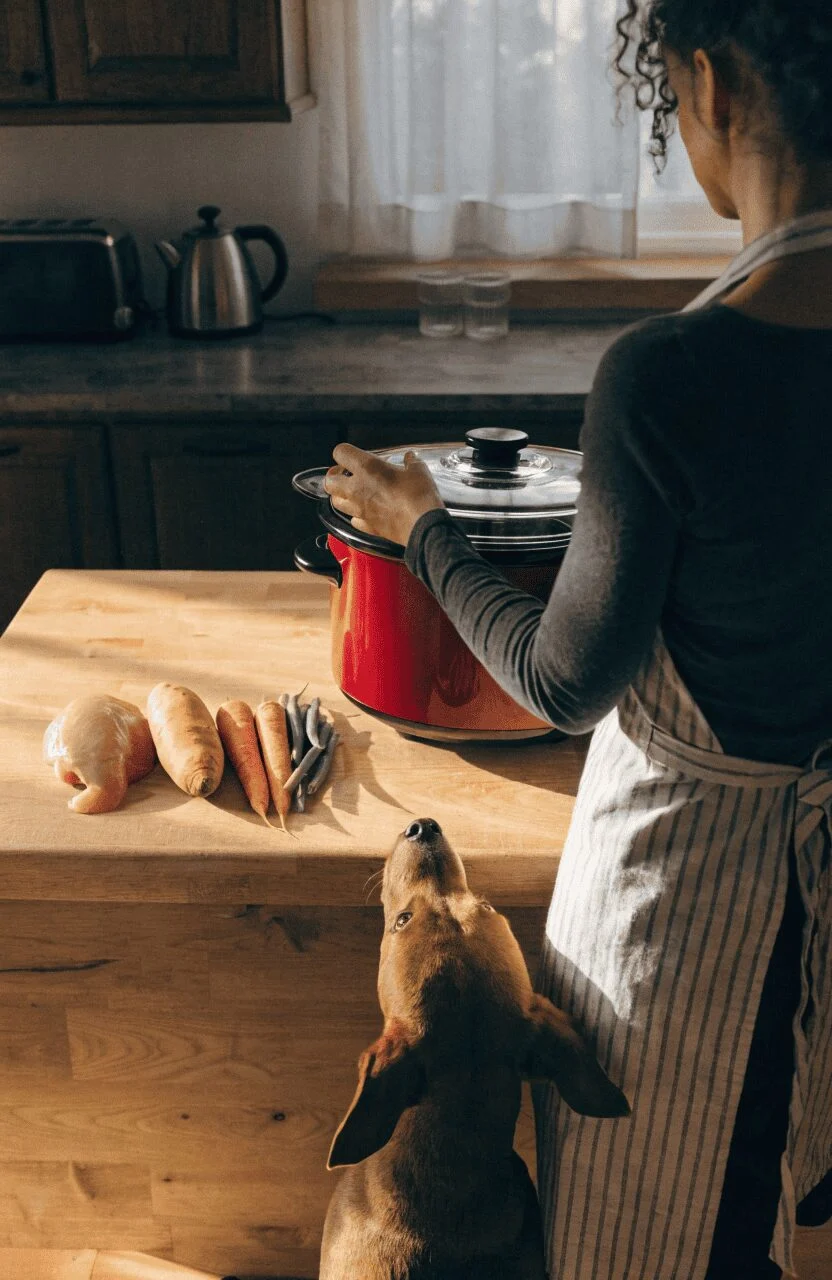
Making your dog’s food doesn’t have to be complicated or time-consuming. That’s exactly where the crockpot wins.
Slow cooking at low heat helps preserve more nutrients compared to high-heat stovetop methods. The gentle cooking process also breaks down proteins and vegetables into a texture that’s much easier for dogs to digest — which is especially helpful for dogs with sensitive stomachs.
Here’s why dog owners are switching:
- It’s cheaper than premium subscription dog food brands
- You control every ingredient — no hidden additives or fillers
- It’s hands-off — set it, walk away, come back to a full batch
- It works for picky eaters — real food smells and tastes better to most dogs
For more ideas on what goes into a healthy dog diet, check out these homemade dog food recipes to pair alongside your crockpot meals.
What to Know Before You Start Cooking

Before you throw anything into the slow cooker, there are a few things every dog owner needs to know. This section could save your dog’s life — so don’t skip it.
Ingredients That Are Toxic to Dogs
This is the most important section in this entire article. Several everyday kitchen ingredients are seriously dangerous for dogs.
Never put these in your crockpot dog food:
- 🚫 Onions and garlic — damage red blood cells and cause anemia
- 🚫 Grapes and raisins — can cause sudden kidney failure
- 🚫 Xylitol (found in some broths and peanut butters) — extremely toxic, even in tiny amounts
- 🚫 Macadamia nuts — cause weakness, tremors, and vomiting
- 🚫 Avocado — contains persin, which is toxic to dogs
- 🚫 Chocolate and caffeine — affect the heart and nervous system
- 🚫 Cooked bones — splinter easily and can cause internal injuries
- 🚫 Nutmeg and other baking spices — toxic in even small doses
Always check broth labels carefully. Many store-bought broths contain onion or garlic powder. Use only low-sodium, onion-free, garlic-free broth in any of these recipes.
Basic Nutritional Ratios to Aim For
A healthy homemade dog meal generally follows this rough balance:
- 40–50% protein (meat: chicken, turkey, beef, fish)
- 25–30% vegetables (carrots, sweet potato, green beans, pumpkin)
- 20–25% carbohydrates (brown rice, oats, lentils)
These aren’t rigid rules, but they give you a helpful starting framework. Dogs also need calcium, omega-3 fatty acids, and trace minerals that are hard to get from food alone — which is why a canine multivitamin is strongly recommended when feeding homemade meals regularly.
Always Talk to Your Vet First
Before making any major change to your dog’s diet, have a conversation with your vet. This is especially important if your dog has a health condition, is a puppy, or is pregnant.
Your vet can recommend the right supplements, flag any ingredient concerns based on your dog’s history, and help you figure out the right portion sizes. For a helpful overview of what your puppy specifically needs, this guide on puppy veterinary needs is a great starting point.
8 Crockpot Dog Food Recipes
These healthy crockpot dog food recipes are designed to be simple, balanced, and adaptable. Each one takes about 10–15 minutes of prep and handles the rest on its own.
Recipe 1 — Classic Chicken & Rice ⭐ Best for Beginners
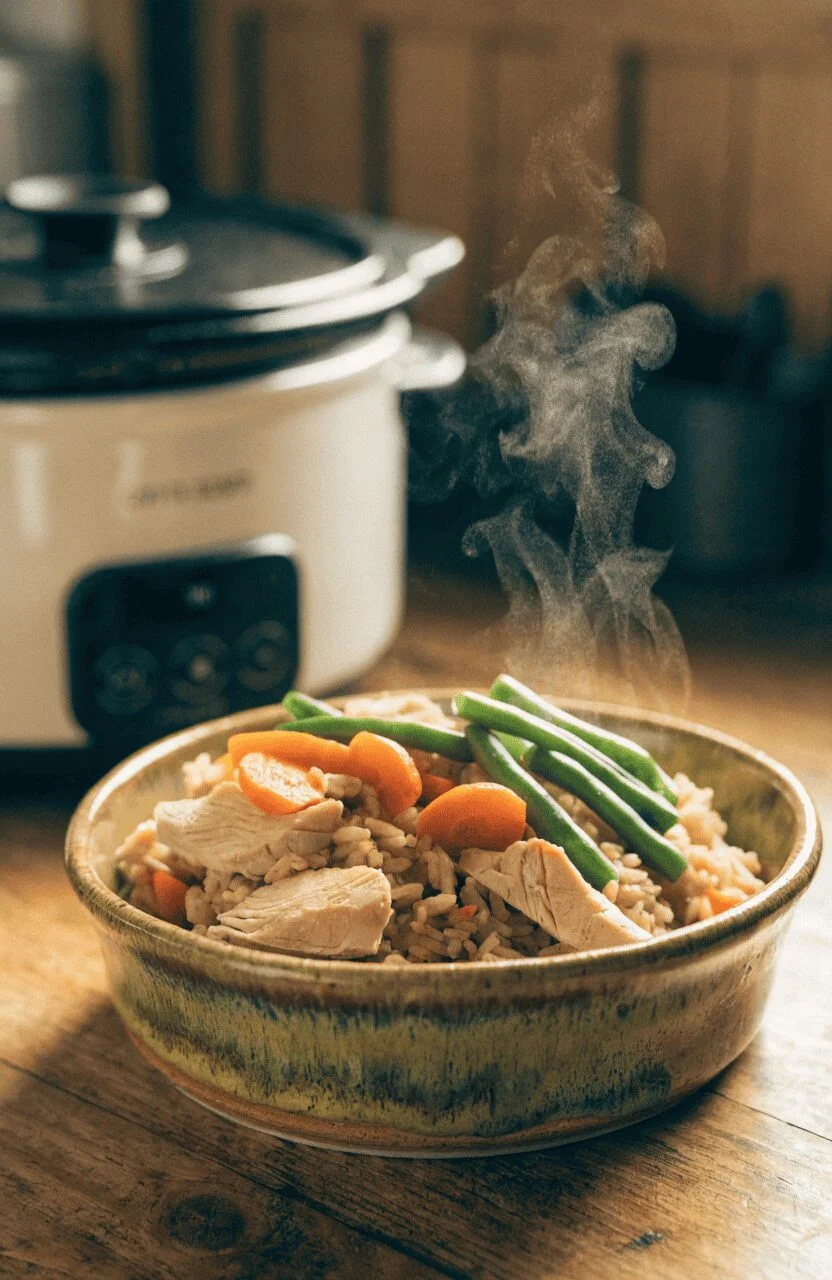
This is the go-to starter recipe for anyone new to homemade dog food. It’s mild, easy to digest, and almost universally loved by dogs of all sizes.
Ingredients:
- 2 lbs boneless, skinless chicken thighs
- 1½ cups brown rice (uncooked)
- 1 cup carrots, sliced
- 1 cup green beans, chopped
- ½ cup plain pumpkin puree
- 3 cups low-sodium, onion-free chicken broth
- 1 cup water
Cook time: Low for 6–8 hours / High for 3–4 hours
Instructions: Add all ingredients except pumpkin puree to the crockpot. Stir in pumpkin during the last 15 minutes. Shred chicken with two forks before serving. Cool completely before portioning.
Why it’s great: Chicken thighs are higher in taurine than breast meat, which supports heart health. Pumpkin adds soluble fiber that helps with both loose stools and constipation.
Recipe 2 — Ground Turkey & Sweet Potato
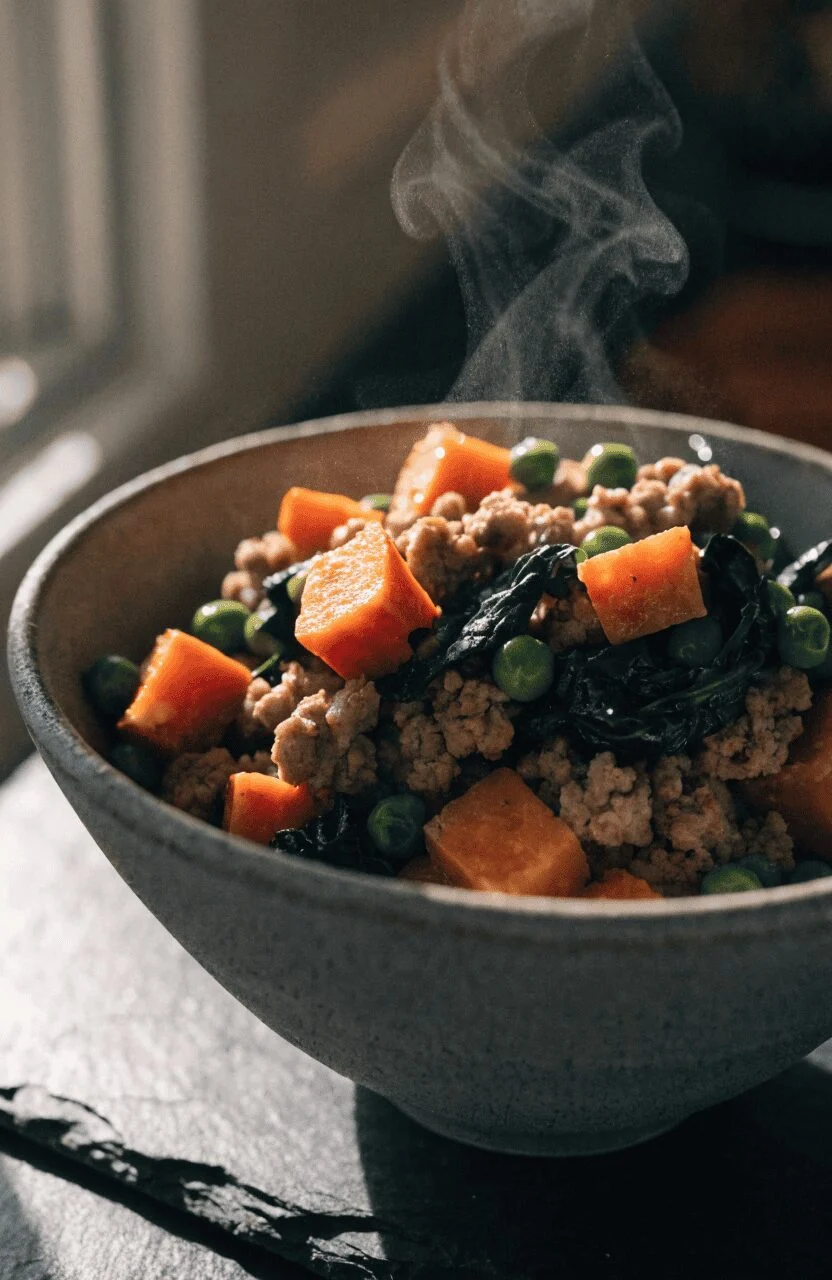
A lean, nutrient-rich option that’s perfect for dogs who need to manage their weight without sacrificing flavor.
Ingredients:
- 2 lbs lean ground turkey (93/7)
- 1½ cups sweet potato, cubed
- 1 cup frozen peas
- 1 cup frozen spinach
- 1½ cups brown rice (uncooked)
- 3 cups water
Cook time: Low for 6 hours / High for 3–4 hours
Instructions: Break up turkey before adding to the crockpot. Add all remaining ingredients and stir. Cook until turkey is fully cooked and rice is tender. Cool before serving.
Why it’s great: Sweet potato provides slow-release energy and beta-carotene for eye health. Ground turkey is one of the most digestible proteins available for dogs.
Recipe 3 — Beef Stew for Dogs 🥩 Most Satisfying
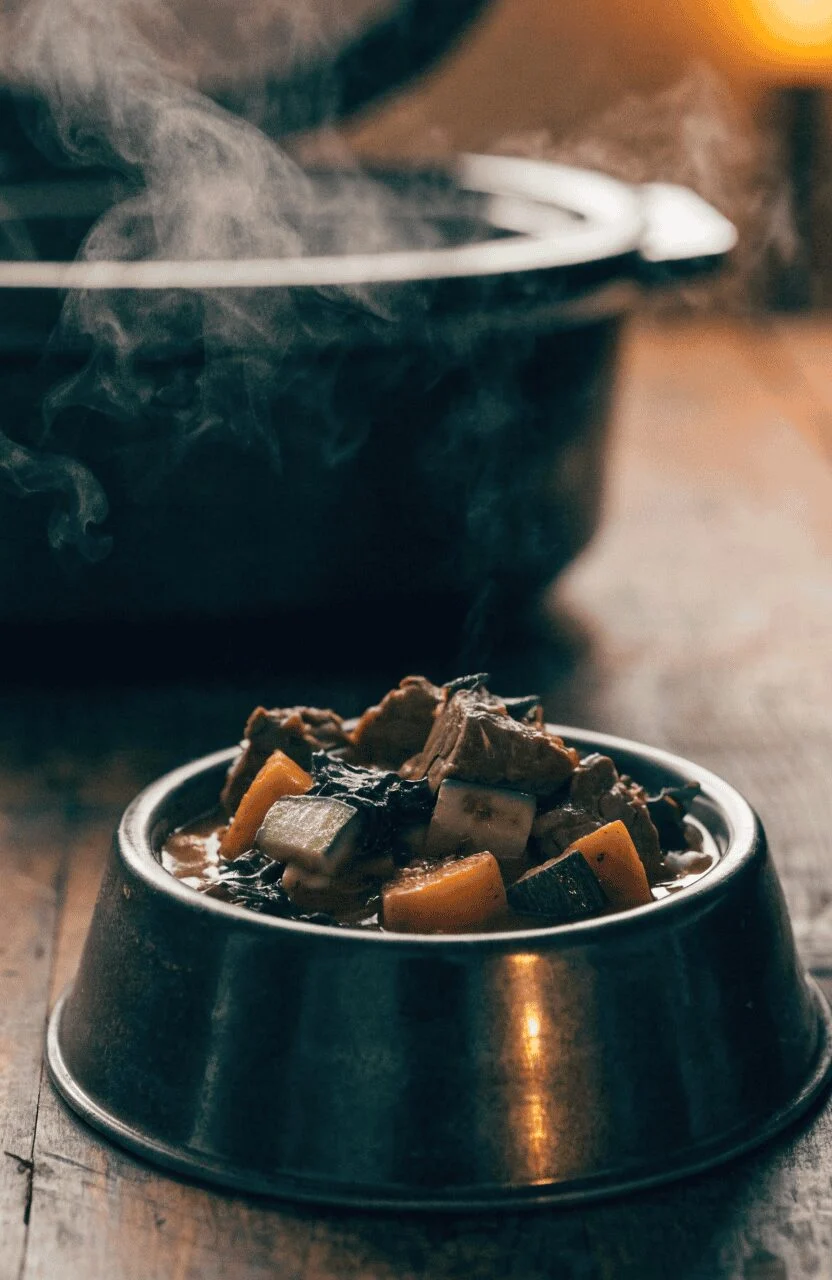
This hearty, thick stew is perfect for larger, more active dogs. The slow-cooked beef becomes incredibly tender and easy to digest.
Ingredients:
- 2 lbs beef stew meat, cut into small pieces
- 1½ cups sweet potato, cubed
- 1 cup zucchini, diced
- ½ cup carrots, sliced
- 1 cup spinach (added in last 10 minutes)
- 2 cups low-sodium beef broth (onion-free)
Cook time: Low for 7–8 hours
Instructions: Add beef, sweet potato, carrots, and zucchini to crockpot. Pour broth over everything. Cook on low. Stir in spinach during final 10 minutes. Break beef into smaller pieces before serving. Cool completely.
Why it’s great: Slow-cooked beef is rich in collagen, which supports joint health and mobility. Great for high-energy breeds or dogs showing early signs of joint stiffness.
Recipe 4 — Salmon & Vegetable Omega Bowl 🐟 Best for Skin & Coat
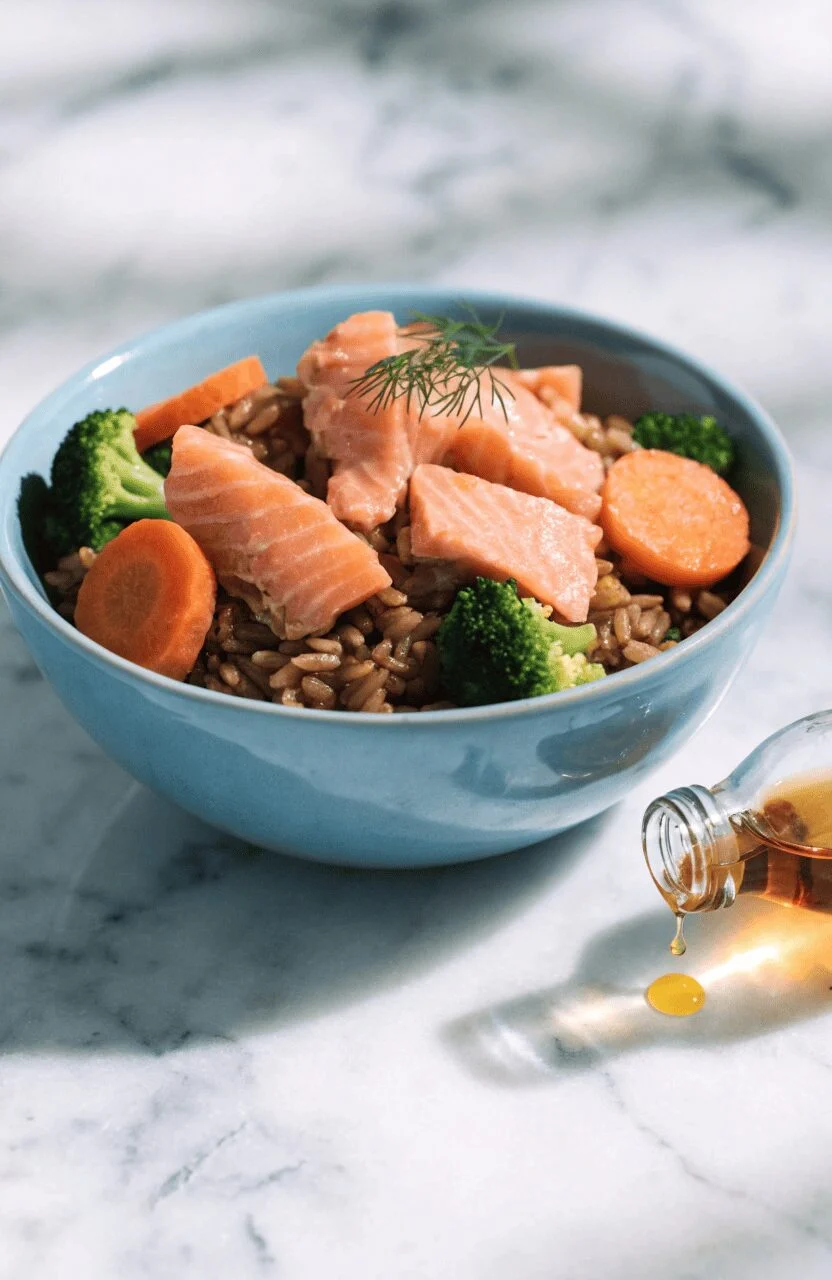
This recipe is a favorite for dogs with dull coats, dry skin, or allergy-related scratching. The omega-3 content is hard to beat.
Ingredients:
- 1.5 lbs boneless salmon fillets (or canned salmon, no salt added)
- 1 cup sweet potato, cubed
- 1 cup broccoli florets
- ½ cup carrots, sliced
- 1 cup brown rice (uncooked)
- 2 cups water
- 2 tbsp fish oil (add after cooking, per serving)
Cook time: Low for 4–5 hours (salmon cooks faster than red meat)
Instructions: Add all ingredients except fish oil to the crockpot. Cook on low. Flake salmon gently before serving. Add fish oil directly to each portion at serving time — never cook it, as heat destroys the omega-3 benefits.
Why it’s great: Omega-3 fatty acids from salmon and fish oil dramatically improve coat shine, reduce skin inflammation, and support brain health — especially in older dogs. If you’ve noticed excessive scratching or licking in your dog, a diet shift like this combined with a vet visit can make a real difference. Learn more about excessive licking in dogs and what it may signal.
Recipe 5 — Lamb & Root Vegetable Stew 🌿 Allergy-Friendly
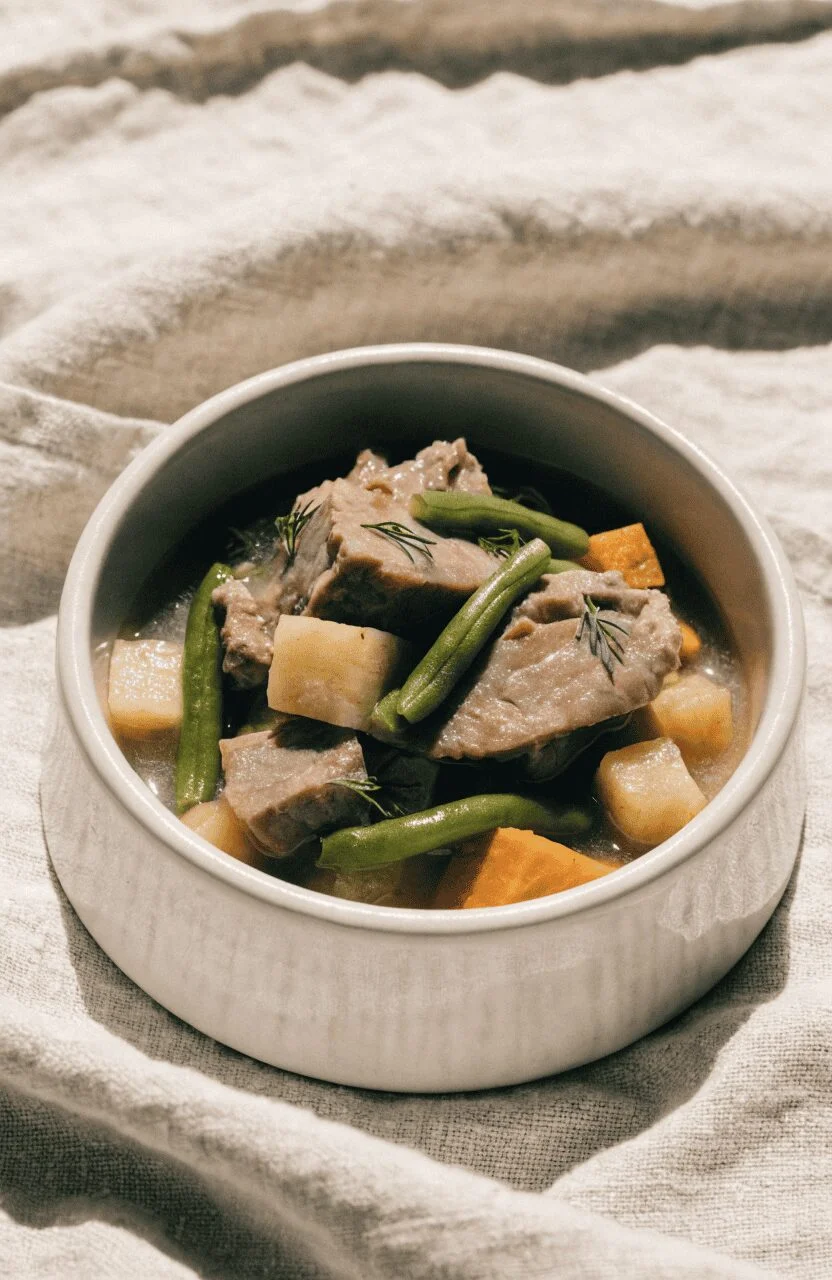
If your dog reacts to chicken or beef, lamb is a novel protein that many allergy-prone dogs tolerate very well. This is one of the best healthy crockpot dog food recipes for dogs with food sensitivities.
Ingredients:
- 2 lbs lamb stew meat, trimmed
- 1 cup parsnips, diced
- 1 cup sweet potato, cubed
- ½ cup carrots, sliced
- 1 cup green beans, chopped
- 2 cups low-sodium, onion-free broth
Cook time: Low for 7–8 hours
Instructions: Combine all ingredients in the crockpot. Cook on low until lamb is completely tender. Shred meat and mix well. Cool before serving.
Why it’s great: Lamb is rich in zinc and B vitamins, which support immune function and a healthy coat. Root vegetables provide fiber and slow-burn energy — ideal for dogs who need sustained activity levels.
Recipe 6 — Turkey & Pumpkin Gut-Health Bowl 🎃 Best for Sensitive Stomachs
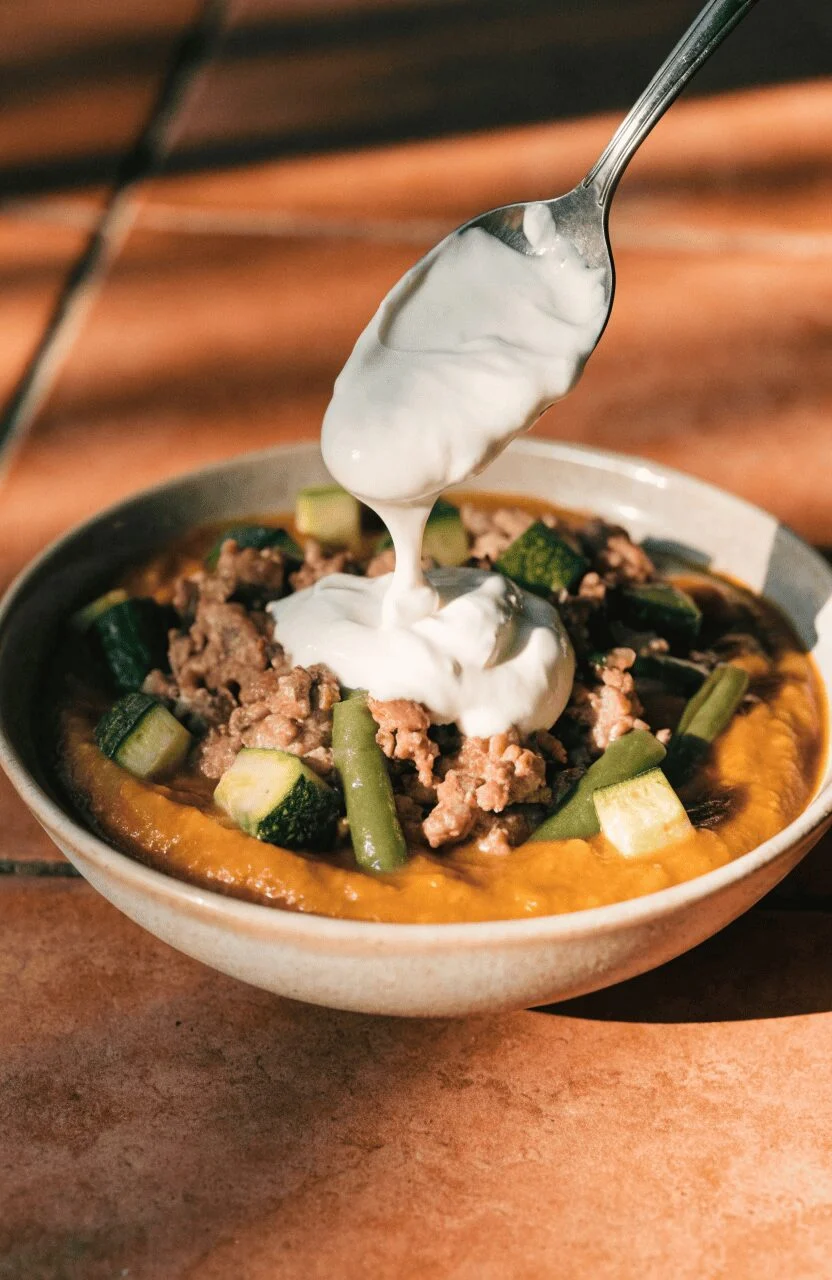
This crock pot dog food recipe was specifically built around digestive wellness. It’s gentle, easy to break down, and great for dogs that deal with frequent digestive upset.
Ingredients:
- 2 lbs lean ground turkey
- 1 cup plain pumpkin puree (NOT pumpkin pie filling)
- 1 cup zucchini, diced
- 1 cup green beans, chopped
- ½ cup plain Greek yogurt (added after cooling)
- 1½ cups low-sodium chicken broth
Cook time: Low for 5–6 hours
Instructions: Lightly brown turkey in a pan first to prevent clumping. Add turkey, pumpkin, zucchini, green beans, and broth to crockpot. Cook on low. Once cooled completely, stir in Greek yogurt — never add it while the food is hot, as heat kills the beneficial probiotic cultures.
Why it’s great: Pumpkin fiber works both ways — it firms up loose stools and relieves constipation. The Greek yogurt introduces live probiotics that promote healthy gut bacteria. Freeze this recipe without the yogurt and add it fresh at serving time.
Recipe 7 — Senior Dog Chicken & Quinoa 🐾 Gentle & Joint-Supportive
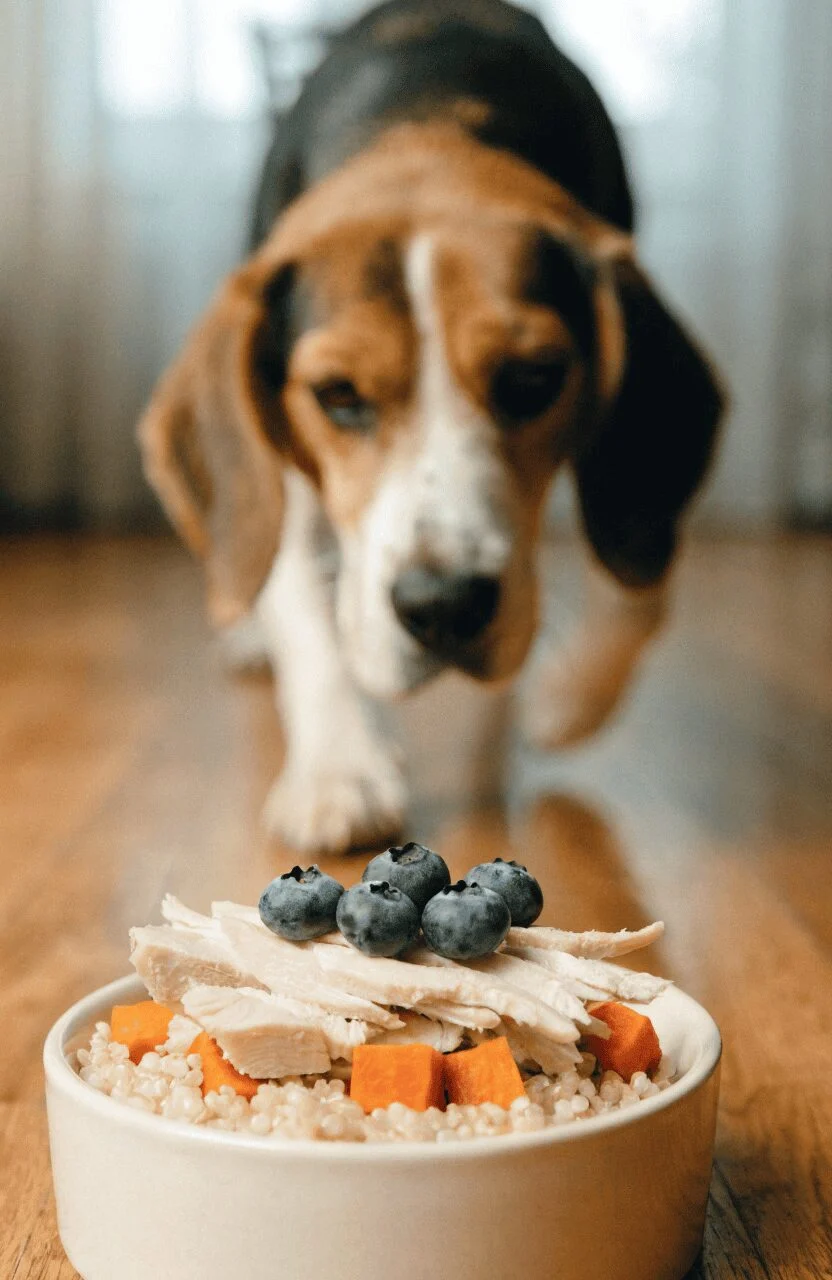
Older dogs have different needs. They need easier-to-digest proteins, joint-supporting nutrients, and lower calories to avoid weight gain from reduced activity.
Ingredients:
- 1.5 lbs boneless chicken breast or thighs
- ¾ cup quinoa (uncooked — rinse well before adding)
- 1 cup sweet potato, cubed
- ½ cup carrots, sliced
- ½ cup blueberries (added after cooking)
- 2 cups low-sodium chicken broth
- 2 tbsp fish oil (per serving, added after cooking)
Cook time: Low for 5–6 hours
Instructions: Add chicken, quinoa, sweet potato, carrots, and broth to the crockpot. Cook on low until quinoa is fluffy and chicken shreds easily. Add blueberries and fish oil per serving at mealtime.
Why it’s great: Quinoa is a complete protein and easier on older digestive systems than red meat. Blueberries are packed with antioxidants that fight cellular aging. Fish oil supports joint mobility and cognitive function in senior dogs. This kind of thoughtful nutrition pairs well with regular check-ups — especially if you want to stay on top of your dog’s overall health as they age.
Recipe 8 — High-Protein Beef Liver Boost ⚡ Occasional Use Only

This is not an everyday recipe — and that’s important. Beef liver is incredibly nutrient-dense and very high in iron and Vitamin A. Too much can actually cause toxicity. Use this once or twice a week as a supplement to regular meals, or during recovery from illness.
Ingredients:
- 1 lb beef liver, rinsed and cut into small pieces
- 1 cup brown rice (uncooked)
- 1 cup carrots, sliced
- ½ cup green beans
- 2 cups water
Cook time: Low for 5–6 hours
Instructions: Add all ingredients to the crockpot and cook on low. Liver will release liquid as it cooks — this is normal. Mash or break up liver pieces before cooling and serving.
Why it’s great: Beef liver is one of the most iron-dense foods available and a powerful immune booster. It’s excellent during recovery from illness, post-surgery, or for anemic dogs. Limit to no more than 10% of your dog’s total weekly food intake.
How Much to Feed Your Dog
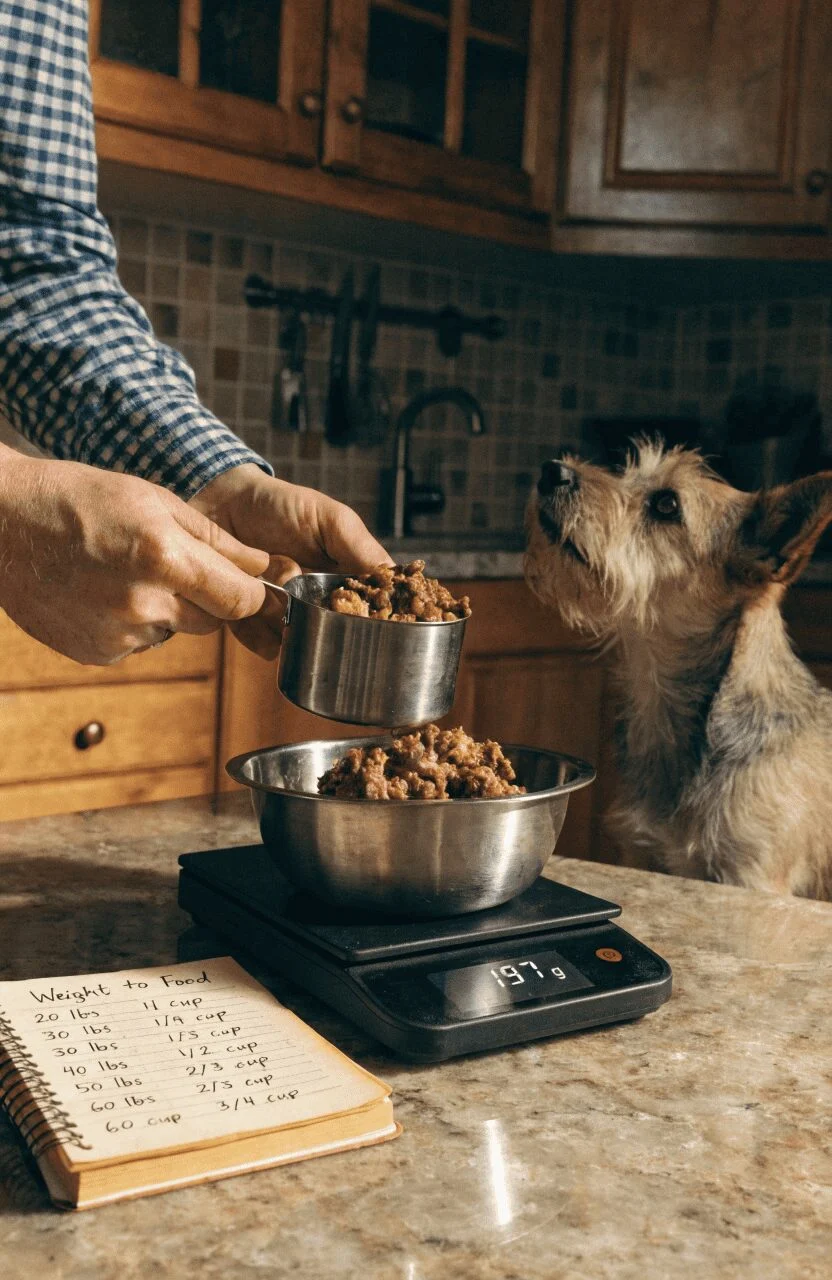
Portion sizes depend on your dog’s weight, age, and activity level. Here’s a general starting guide:
| Dog Weight | Daily Amount (approx.) |
|---|---|
| Under 10 lbs | ½ – ¾ cup |
| 10–25 lbs | ¾ – 1½ cups |
| 25–50 lbs | 1½ – 2½ cups |
| 50–75 lbs | 2½ – 3½ cups |
| 75+ lbs | 3½ – 4½ cups |
Split the daily amount across two meals. Always adjust based on your dog’s weight trends — if they’re gaining or losing unexpectedly, tweak the portion and check in with your vet.
Puppies and pregnant dogs have significantly higher caloric needs. Senior dogs often need 20–30% fewer calories. And active working dogs may need considerably more. These are estimates — your vet’s guidance always takes priority.
Storage & Batch Cooking Tips
One of the best things about crockpot dog food recipes is how well they batch-cook and store. Here’s how to manage it efficiently.
In the refrigerator:
- Store in an airtight container for up to 4–5 days
- Let the food cool completely before sealing and refrigerating
In the freezer:
- Portion into individual serving sizes using zip-lock bags or silicone molds
- Freeze for up to 3 months
- Label each portion with the recipe name and date
- Thaw overnight in the fridge — never use the microwave for large portions
Batch cooking strategy: Cook one large batch every Sunday. Refrigerate enough for 4–5 days and freeze the rest. This gives you a full week of meals ready to go with almost no daily effort.
Don’t add fish oil, Greek yogurt, or supplements to the batch before freezing. Add those fresh at serving time for maximum nutritional value.
For inspiration on setting up a dedicated feeding space at home, these dog feeding station ideas are worth a look.
Transitioning From Kibble to Homemade Food
Don’t switch your dog’s food cold turkey — it can cause digestive upset, loose stools, or refusal to eat. A gradual transition works much better.
Week-by-week plan:
- Week 1: 75% kibble + 25% homemade
- Week 2: 50% kibble + 50% homemade
- Week 3: 25% kibble + 75% homemade
- Week 4: 100% homemade (if all is going well)
Signs the transition is going smoothly: ✅ Firm, regular stools ✅ Consistent energy levels ✅ Healthy appetite ✅ Shiny coat
Signs to slow down or pause: ⚠️ Loose or very soft stools ⚠️ Vomiting ⚠️ Loss of appetite lasting more than 2 days ⚠️ Lethargy
If any of those warning signs appear, go back to the previous ratio and hold for an extra week. If symptoms persist, contact your vet. You can also pair the transition with smart treat choices — here’s a helpful guide on safe dog bones and treats to complement a fresh food diet.
Final Thoughts
Making your own crockpot dog food recipes doesn’t require a culinary degree or hours in the kitchen. It requires a good slow cooker, a handful of real ingredients, and about 15 minutes of prep.
The recipes in this guide cover dogs at every stage — from active adults to sensitive stomachs, aging seniors to allergy-prone pups. Start with one recipe that fits your dog’s needs, nail the batch cooking routine, and go from there.
Your dog can’t tell you what they want for dinner. But the way they clean that bowl? That says it all.
Reminder: Always consult your veterinarian before switching to a fully homemade diet. Add a canine multivitamin and calcium supplement to any long-term homemade feeding plan. Monitor weight, energy, and stool quality throughout the transition.

Izzy is an experienced ranch worker who has a passion for exploring nature and getting up close to wildlife. With her connections to various animal organizations, Izzy is well-versed in animal care and rehabilitation.


