How to Make Sweet Potato Frosting for Dogs (10-Minute Recipe)
If you’ve ever tried to decorate a dog cake with a swipe of peanut butter only to watch it slide off the sides, you know the struggle. Frosting for dogs has to do three things at once: hold its shape, taste good enough to earn a tail wag, and — ideally — not load your dog up on sugar. Most of what’s sold in the baking aisle fails at least two of those.
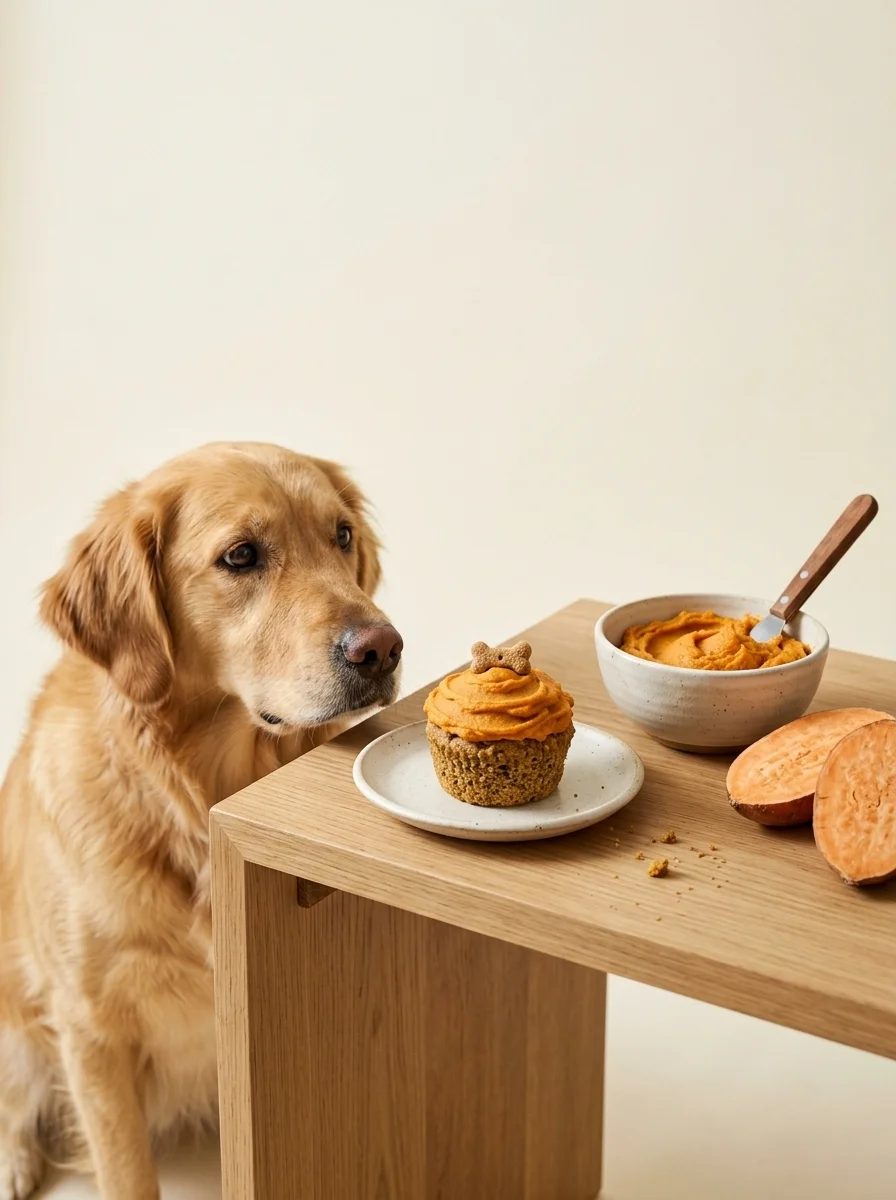
Sweet potato frosting for dogs solves all three. It’s naturally sweet, naturally thick, and made from a single ingredient that most dogs already love. No powdered sugar, no corn syrup, no artificial colors. Just a vegetable that happens to whip into something that looks and behaves like real frosting.
The best part? It takes about ten minutes, uses ingredients you probably already have, and works equally well on pupcakes, a birthday cake, or a lick mat. Whether you’re celebrating a gotcha day or just want to make a Tuesday feel special, this is the frosting to keep in your back pocket.
What’s Wrong with Regular Frosting for Dogs
Human frosting is built on two things dogs shouldn’t have much of: sugar and fat. A standard buttercream can contain 3 to 4 grams of sugar per teaspoon. For a ten-pound dog, a modest frosted pupcake can deliver a sugar load roughly equivalent to a person eating a slice of birthday cake — and that’s before you count the butter. The occasional tiny taste isn’t a crisis, but the digestive fallout (loose stools, an upset stomach, a very wired dog at 2 a.m.) usually isn’t worth it.
The bigger concern is what’s sometimes hiding in the frosting itself. Xylitol, a sugar alcohol used in sugar-free and “diet” frostings, is highly toxic to dogs. Even small amounts can trigger a dangerous drop in blood sugar and, in higher doses, liver failure. It shows up in sugar-free chewing gum, some peanut butters, and low-calorie baked goods — so if you’re frosting anything for your dog, read the label on every jar you touch. If xylitol appears anywhere on the ingredient list, that product stays out of the kitchen.
Artificial colors and flavors are the third issue, though a milder one. Dogs don’t care whether their frosting is bright blue, and synthetic dyes add nothing but a trip to the vet if your dog is sensitive to them. Natural color and flavor come free with real ingredients — sweet potato gives you a gorgeous orange all on its own.
None of this means you need to panic about the frosting your dog licked off the floor at a birthday party. It means that when you’re the one doing the baking, you get to skip the problem entirely.
Sweet Potato Frosting for Dogs Recipe
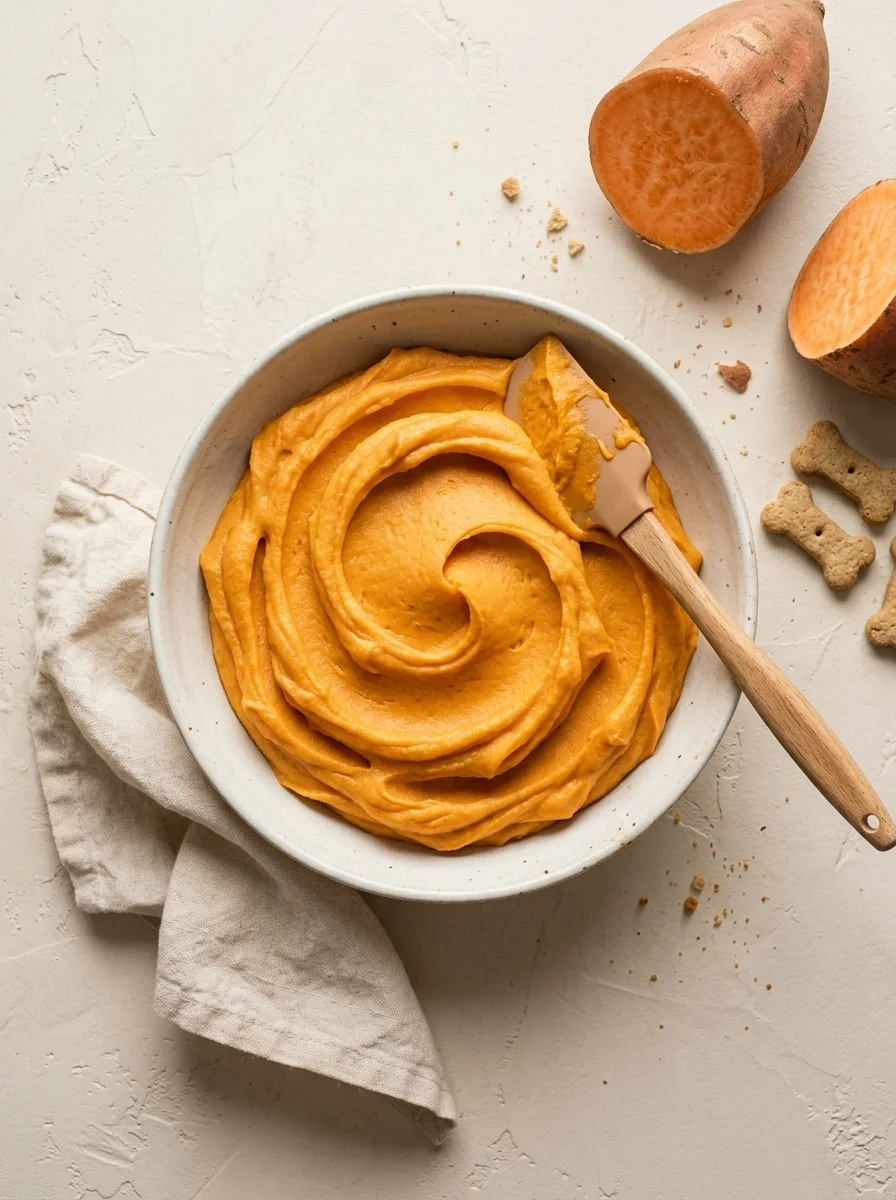
This frosting comes together in one bowl with four ingredients and no cooking — provided you start with already-cooked sweet potato. Roast, steam, or microwave a sweet potato ahead of time, then let it cool completely before you begin. Warm potato won’t whip properly, and it can turn the texture gluey.
Yields about 1 cup, enough to generously frost 12 pupcakes or one small dog cake.
Ingredients
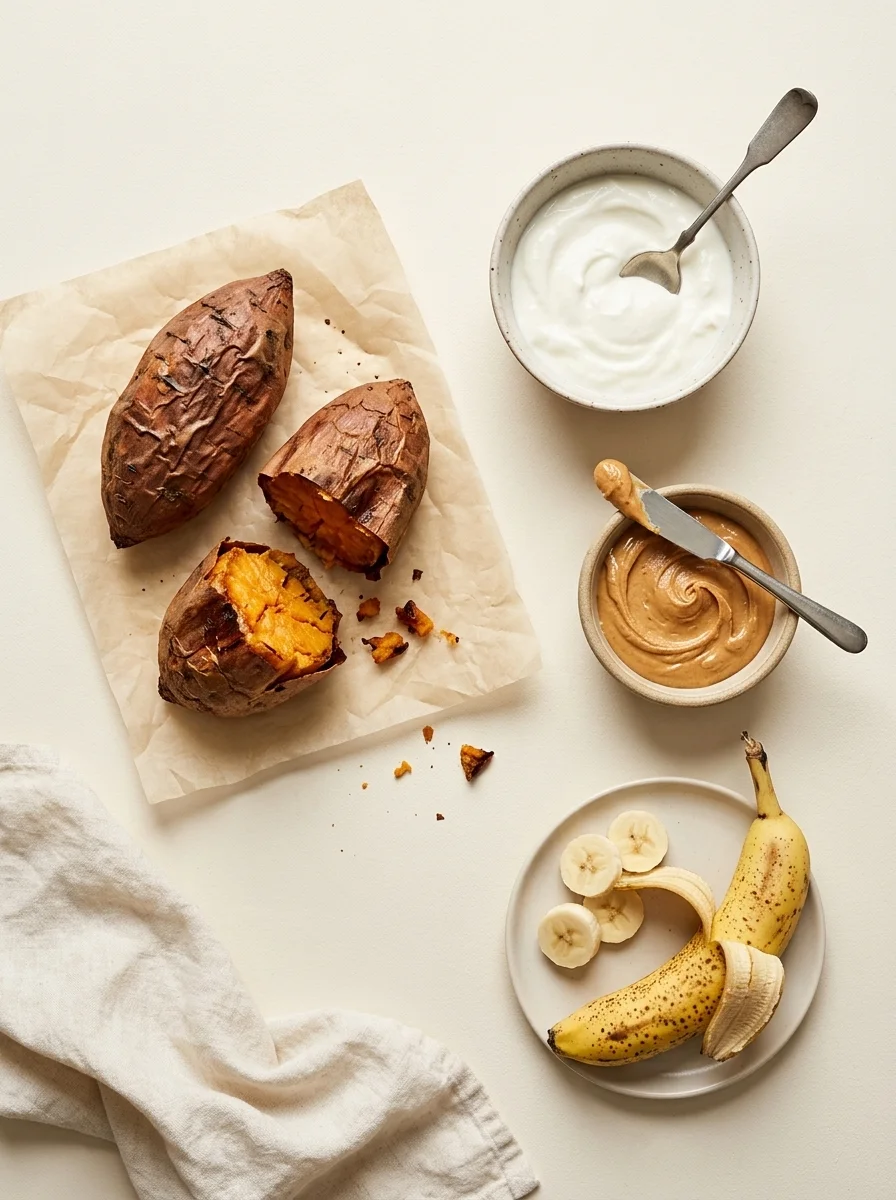
- 1 cup cooked sweet potato, mashed and cooled (roasted is best for flavor, steamed works fine)
- 1/4 cup plain Greek yogurt or unsweetened coconut yogurt for a dairy-free version
- 2 tablespoons unsweetened peanut butter — check the label for xylitol, and make sure it’s just peanuts and salt
- 1 to 2 tablespoons coconut flour, or as needed to thicken
- 1 tablespoon honey (optional, for dogs over one year — skip entirely for puppies or diabetic dogs)
Step-by-Step Instructions
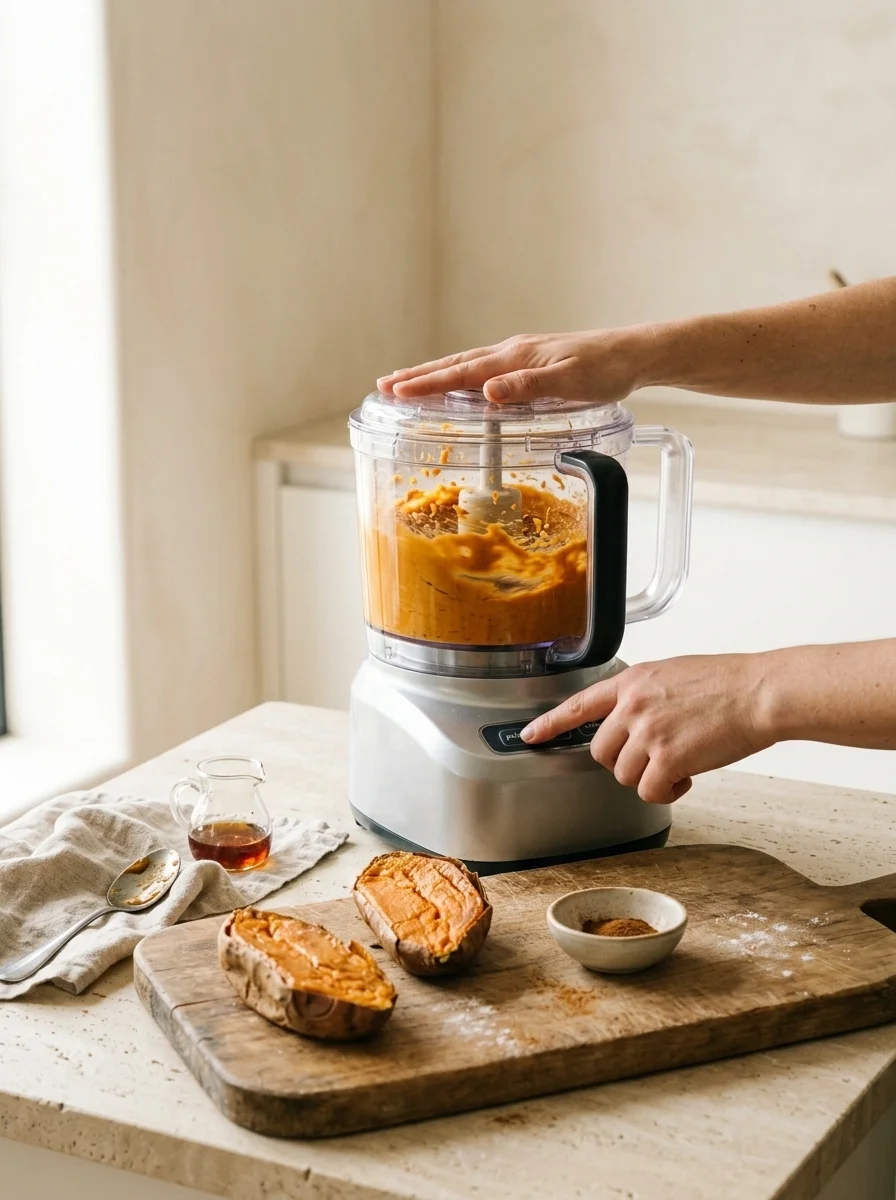
- Mash the sweet potato until completely smooth. Any lumps will show up in your piping, so take an extra minute here. A fork works, but a potato ricer or food processor gives you a silkier base.
- Blend in the yogurt and peanut butter. Stir until the mixture is uniform and glossy. It should look like thick hummus at this stage.
- Add the honey, if using. Taste-test with a finger — the frosting should be gently sweet, not candy-sweet. Remember, your dog’s palate is far more sensitive to sweetness than yours.
- Sprinkle in the coconut flour one teaspoon at a time. Stir after each addition and stop when the frosting holds a soft peak on the spoon. You may need slightly more or less depending on how wet your sweet potato was.
- Chill for 20 to 30 minutes. This firms the frosting up and makes it far easier to spread or pipe. Don’t skip this step — it’s the difference between a clean swirl and a puddle.
- Frost and serve. Use a spatula for spreading or a piping bag with a star tip for swirls. Any frosted treats should be served the same day or refrigerated promptly.
Getting the Texture Right
Texture is where most homemade dog frosting goes wrong, and it almost always comes down to moisture. Sweet potatoes vary enormously — a roasted one can be dry and fluffy, while a boiled one can be almost watery. That’s why the coconut flour goes in gradually rather than all at once.
For piping: You want a stiff, thick consistency that holds a sharp edge when you pull the spoon away. Add coconut flour until the frosting stands up on its own, then chill it thoroughly before loading your piping bag. Cold frosting pipes cleanly; room-temperature frosting slumps. If it still feels loose, a tablespoon of mashed banana or a spoonful of powdered goat milk will firm it up without changing the flavor much.
For smooth spreading: Thin it out slightly by adding an extra teaspoon of yogurt at a time until it spreads like soft cream cheese. This version is perfect for coating the sides of a cake or swirling onto a lick mat, where precise edges don’t matter.
If it’s too thin: Add coconut flour or oat flour, one teaspoon at a time, and chill for ten minutes before reassessing. If it’s too thick: A splash of yogurt, applesauce, or even a little water will loosen it. If it looks grainy: Your sweet potato wasn’t fully mashed. Push the frosting through a fine sieve or give it a quick blitz in the food processor.
Flavor Variations to Try
Once you’ve nailed the base recipe, the variations are endless. Each of these swaps into the same method with minimal fuss.
Banana
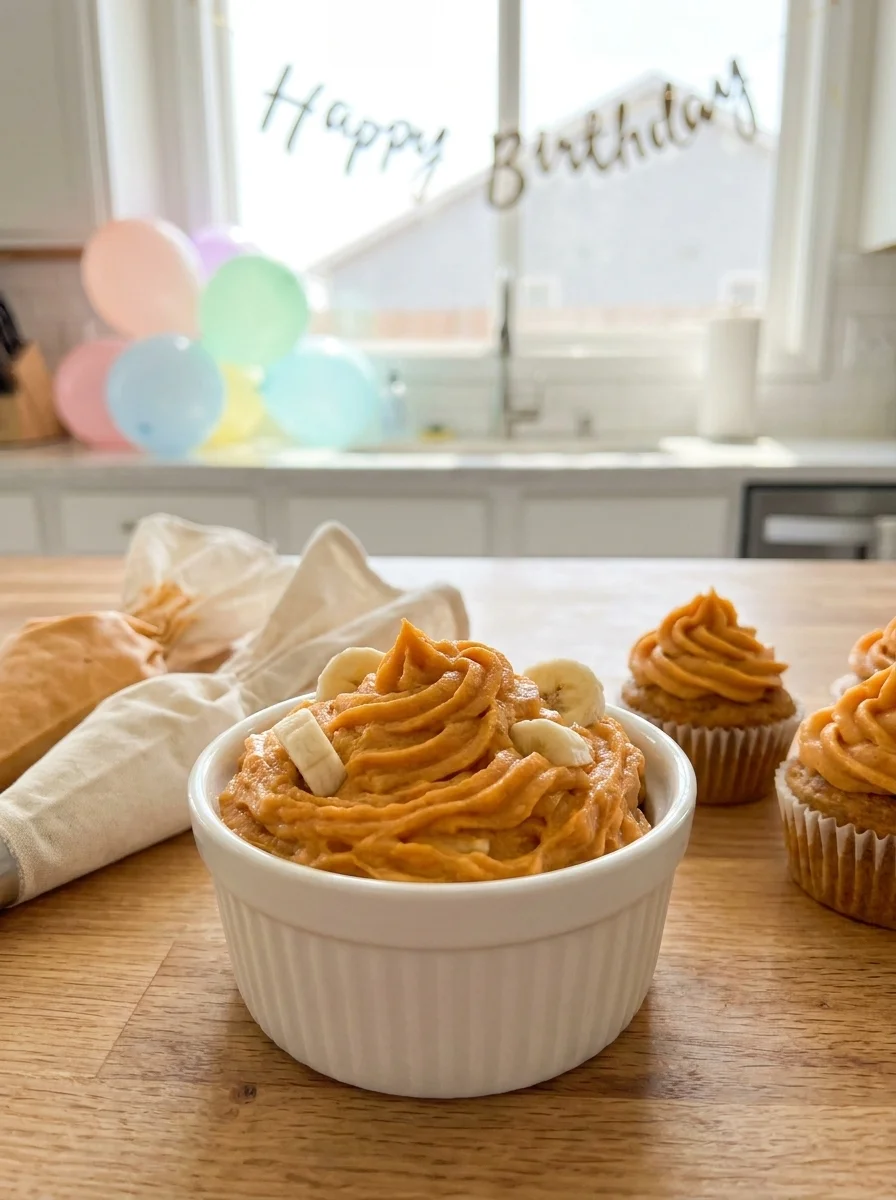
Replace half the sweet potato with a very ripe mashed banana. Bananas add natural sweetness and a creamy texture, so you can usually drop the honey entirely. Use bananas with brown spots — they mash smoother and taste sweeter. This version is a favorite for puppies and older dogs with sensitive teeth because it stays beautifully soft.
Apple Cinnamon
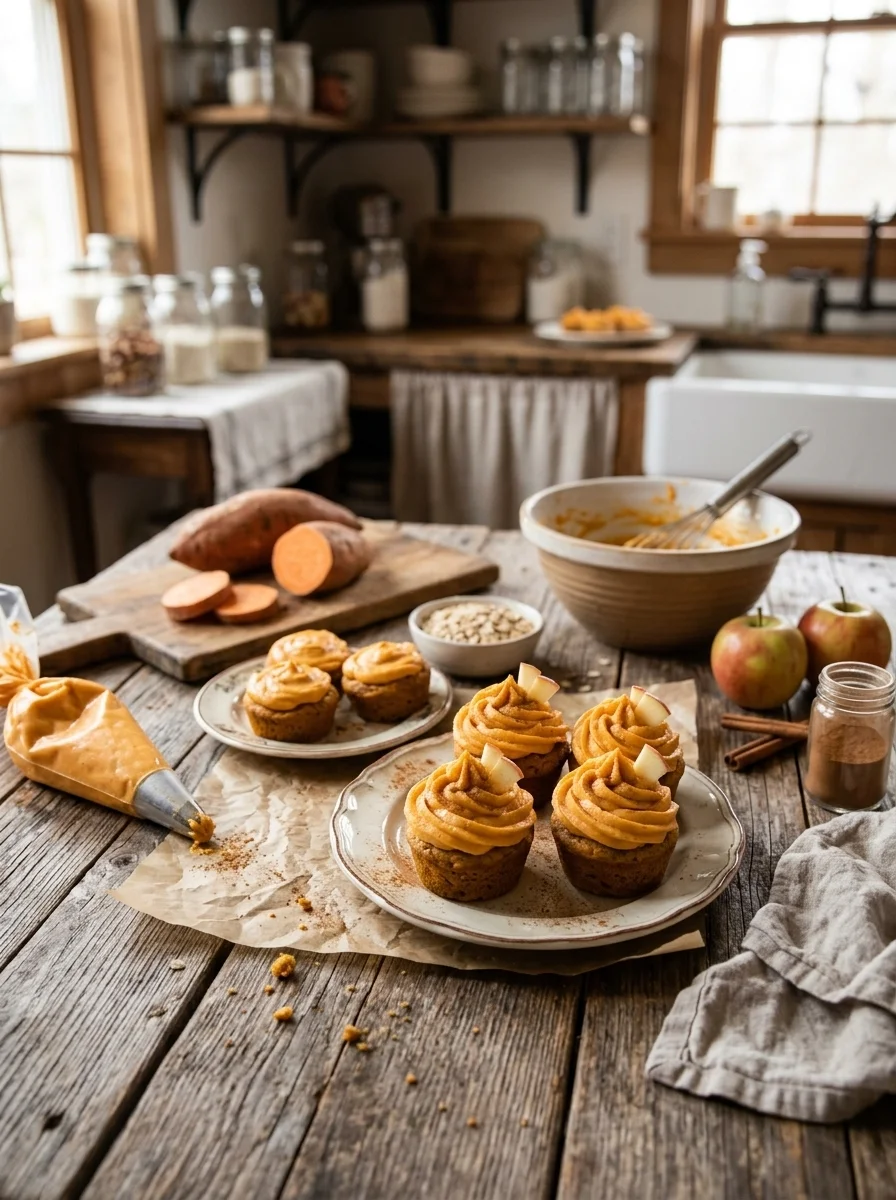
Stir 2 tablespoons of unsweetened applesauce and a pinch of ground cinnamon into the finished frosting. Cinnamon is safe for dogs in small culinary amounts and pairs beautifully with sweet potato. Make sure you’re using plain applesauce with no added sugar or cinnamon already blended in — “sweetened” varieties can carry a surprising amount of sugar.
Carrot
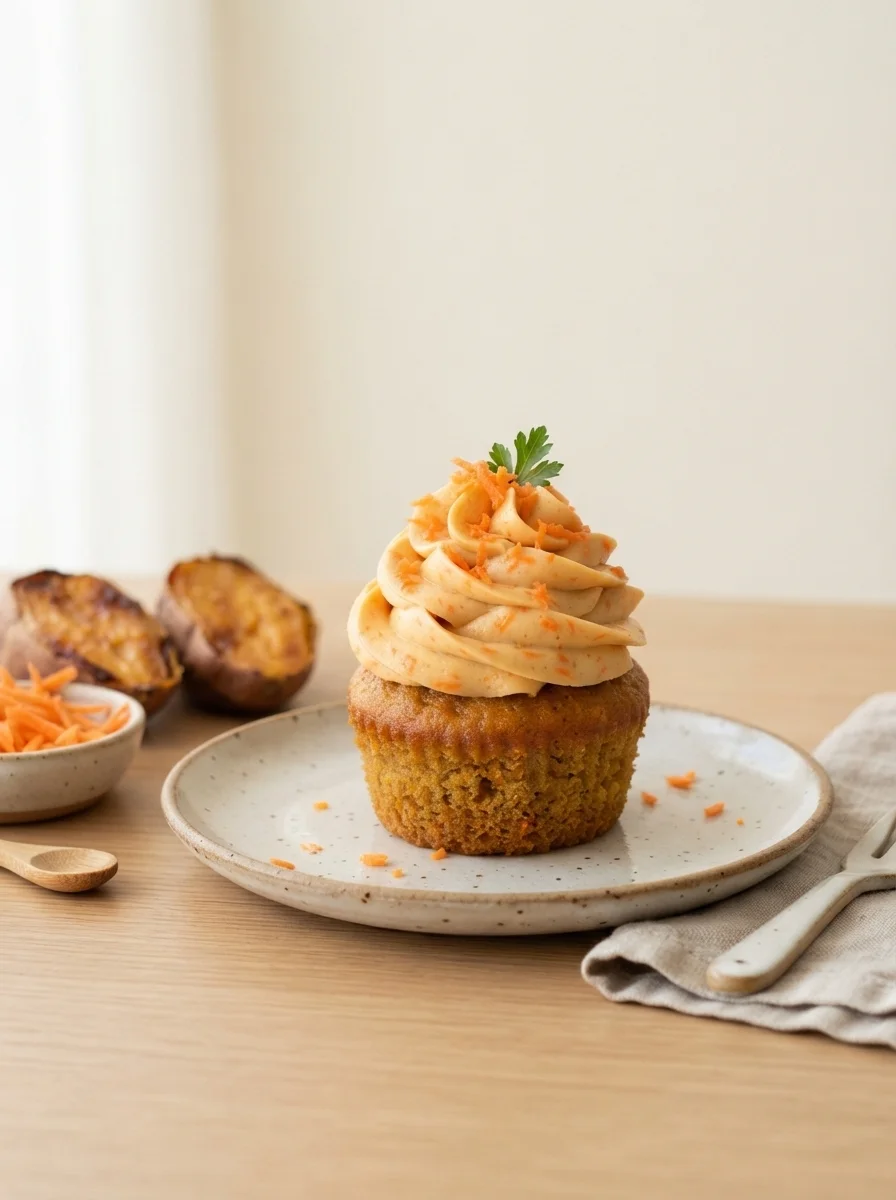
Swap in 1/2 cup cooked, mashed carrot for half the sweet potato. The result is slightly earthier and a little less sweet, which some dogs actually prefer. Carrot frosting also gives you a lovely warm-orange color and a bit of extra fiber, making it a good choice for dogs who need a little digestive support.
Yogurt-Based
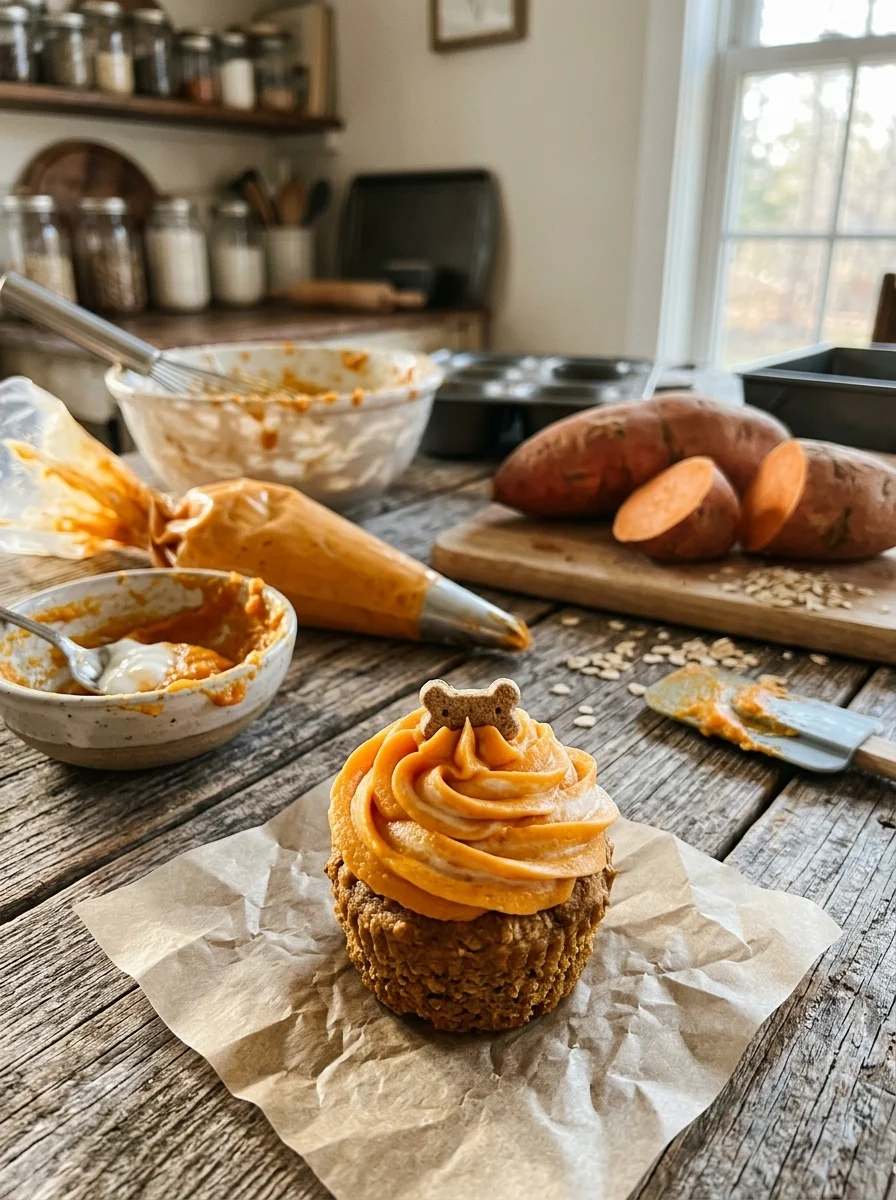
For a lighter, tangier frosting, increase the yogurt to 1/2 cup and reduce the sweet potato to 3/4 cup. This version is closer to a cream cheese frosting in texture — bright, fluffy, and ideal for spreading rather than piping. Because it’s dairy-heavy, keep servings small and store it in the fridge, where it will hold for about three days.
Frozen Pup-sicle Version
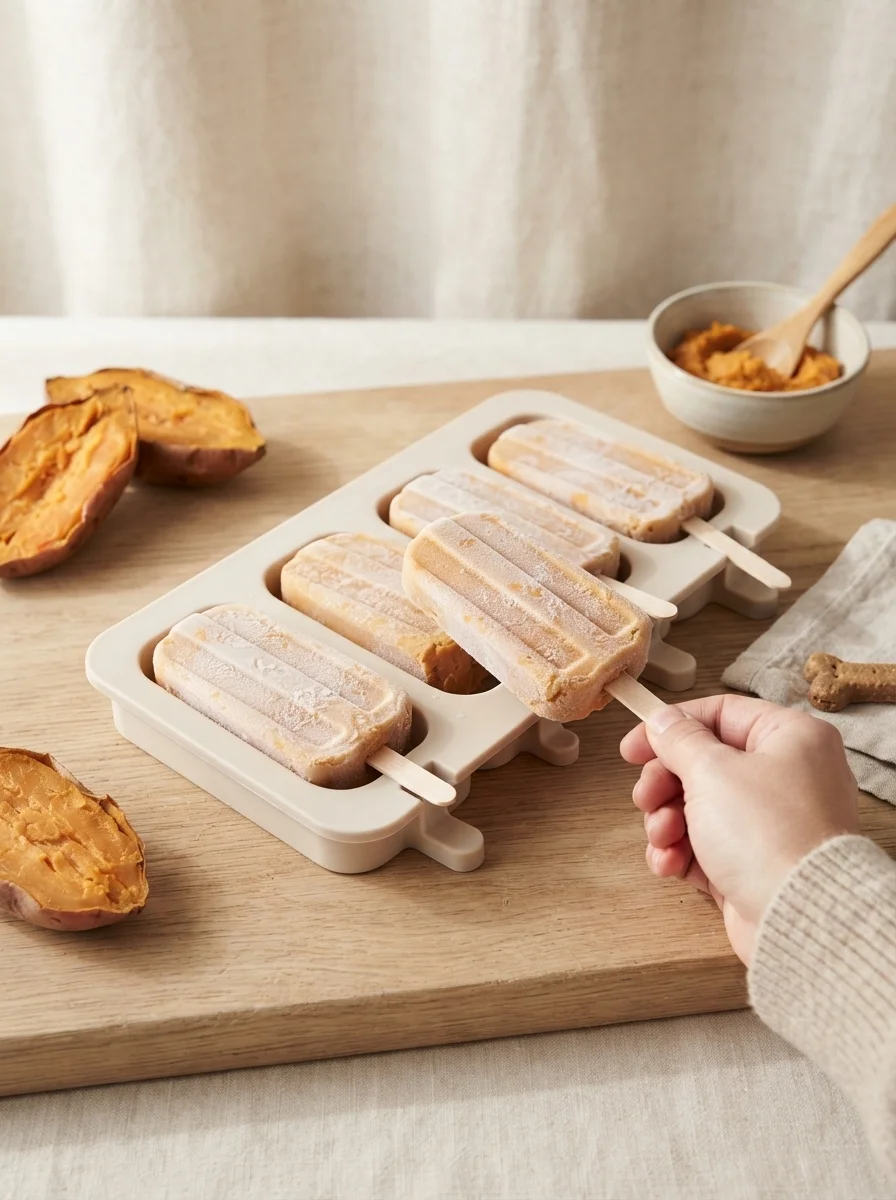
Spoon the frosting into silicone molds or ice cube trays, freeze for four hours, and you have a cooling summer treat. Thin the base slightly with extra yogurt so it pours cleanly. These frozen bites are perfect for hot days, teething puppies, or dogs who need to slow down and savor something. Pop one into a lick mat on a warm afternoon and you’ve bought yourself twenty peaceful minutes.
Storage, Shelf Life & Serving Ideas
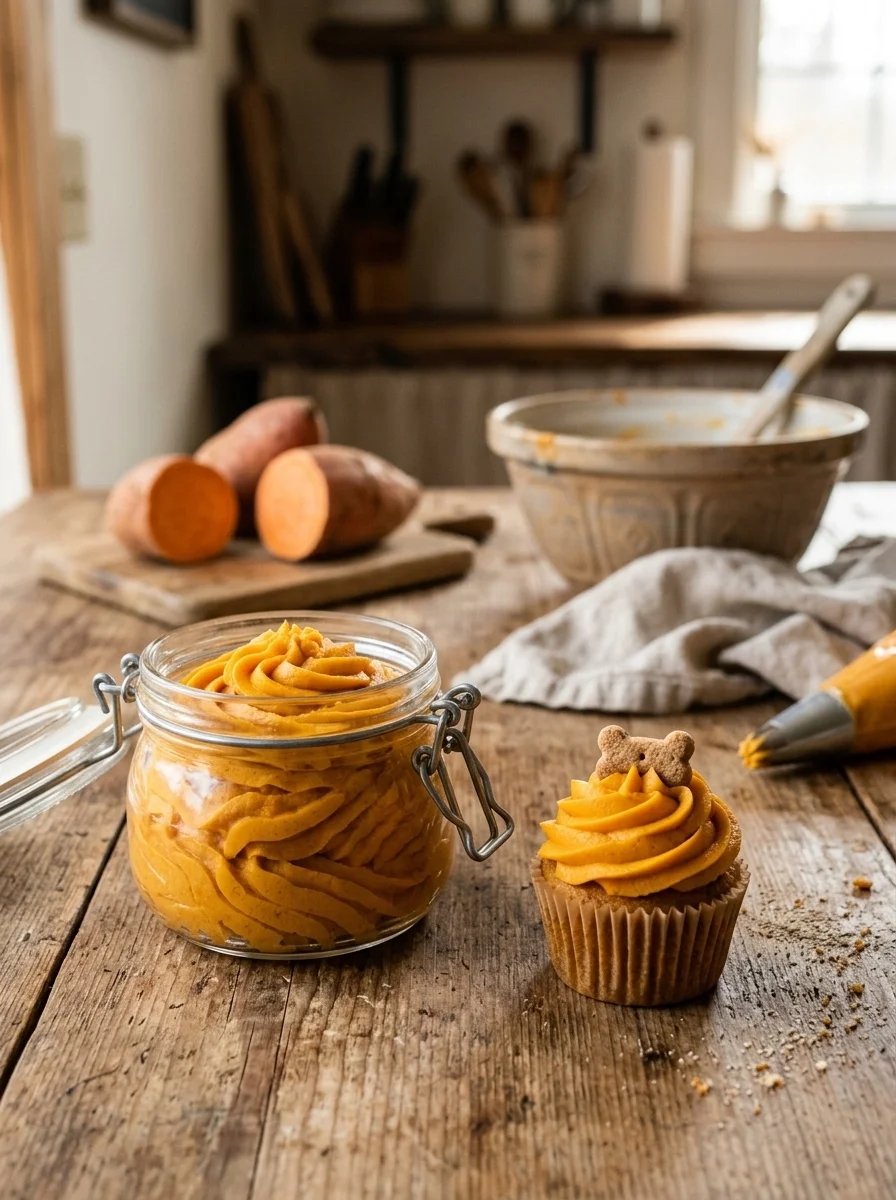
Because this frosting contains no preservatives, it lives in the refrigerator. Store it in an airtight container for up to three days. If you made a dairy-free version with coconut yogurt, it may hold a day or two longer. Freezing works beautifully too — portion it into small containers and it will keep for up to two months. Thaw overnight in the fridge and stir well before using.
As for what to frost, the possibilities are wider than you’d think. Pupcakes are the classic choice, and this recipe covers a batch of twelve. A dog cake — even a simple single-layer round — becomes a genuine celebration with a swirl of orange frosting on top. Lick mats are the everyday application: spread the frosting into the grooves, freeze, and hand it over. You can also use it to top dog biscuits, sandwich two treats together, or decorate a frozen yogurt bark.
One serving note: keep frosted treats to 1 to 2 tablespoons of frosting per day for a medium-sized dog, and scale down for smaller pups. Treats should never exceed ten percent of your dog’s daily calories.
FAQs
Final Thoughts
Making frosting your dog can actually eat is one of those small acts of care that pays off in a big, wagging way. Sweet potato frosting for dogs takes ten minutes, costs almost nothing, and turns an ordinary afternoon into a celebration — no sugar crash required. Start with the base recipe, find the variation your dog goes wild for, and keep a batch in the fridge for the days that deserve a little something extra.

Izzy is an experienced ranch worker who has a passion for exploring nature and getting up close to wildlife. With her connections to various animal organizations, Izzy is well-versed in animal care and rehabilitation.