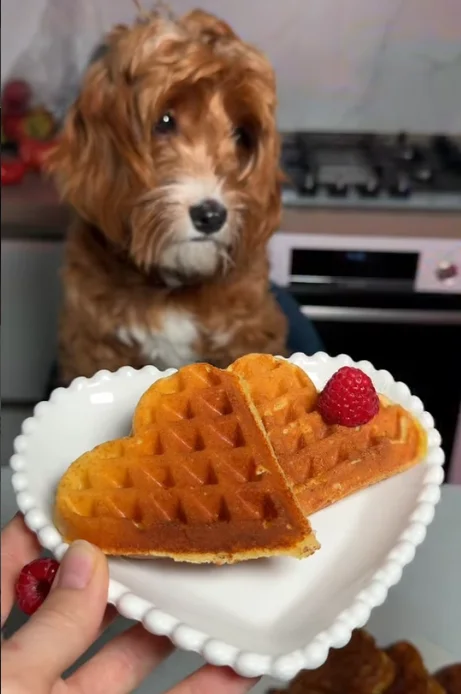
12 Super Foods for Senior Dogs for Joints, Brain and Gut
Your old buddy still wags at the sound of the food bin. But the walk to the bowl is slower now, and dinner doesn’t always get finished.
That is normal as dogs age. Their joints get stiff, their stomachs get pickier, and their bodies burn fewer calories. The right foods can help with all of it.
This guide covers 12 super foods for senior dogs, grouped by the problem each one helps with. You’ll also get four copy-and-paste recipe cards, ingredient swaps, and simple safety rules.
Quick note before we start: Super foods are add-ons, not meals. They go on top of a complete, balanced dog food. Always check with your vet first, especially if your dog has kidney disease, diabetes, heart disease, or pancreatitis.
Quick Pick Table: Match Your Dog’s Problem to the Right Food
Short on time? Find your dog’s biggest issue below, then jump to that section.
| Your Dog’s Problem | Best Foods | Recipe in This Guide |
|---|---|---|
| Stiff joints, slow on stairs | Sardines, salmon, green beans | Sardine and Green Bean Joint Bowl |
| Confusion, forgetfulness | Blueberries, eggs, chia seeds | Blueberry Brain Bites |
| Upset stomach, loose or hard stool | Pumpkin, plain yogurt, oats | Pumpkin Yogurt Frozen Cubes |
| Weight changes, picky eating | Sweet potato, carrots, bone broth | Slow Cooker Senior Stew |
How to use this guide:
- Pick one problem to tackle first.
- Add one new food at a time.
- Wait three days before adding another.
Slow and steady keeps sensitive tummies happy.
Super Foods for Senior Dogs With Stiff Joints
Arthritis is one of the most common problems in older dogs. Signs include limping, trouble jumping on the couch, and getting up slowly.
Food will not cure arthritis. But some foods carry nutrients that may help calm inflammation and keep a dog at a healthy weight. Less weight means less pressure on sore joints.
1. Sardines
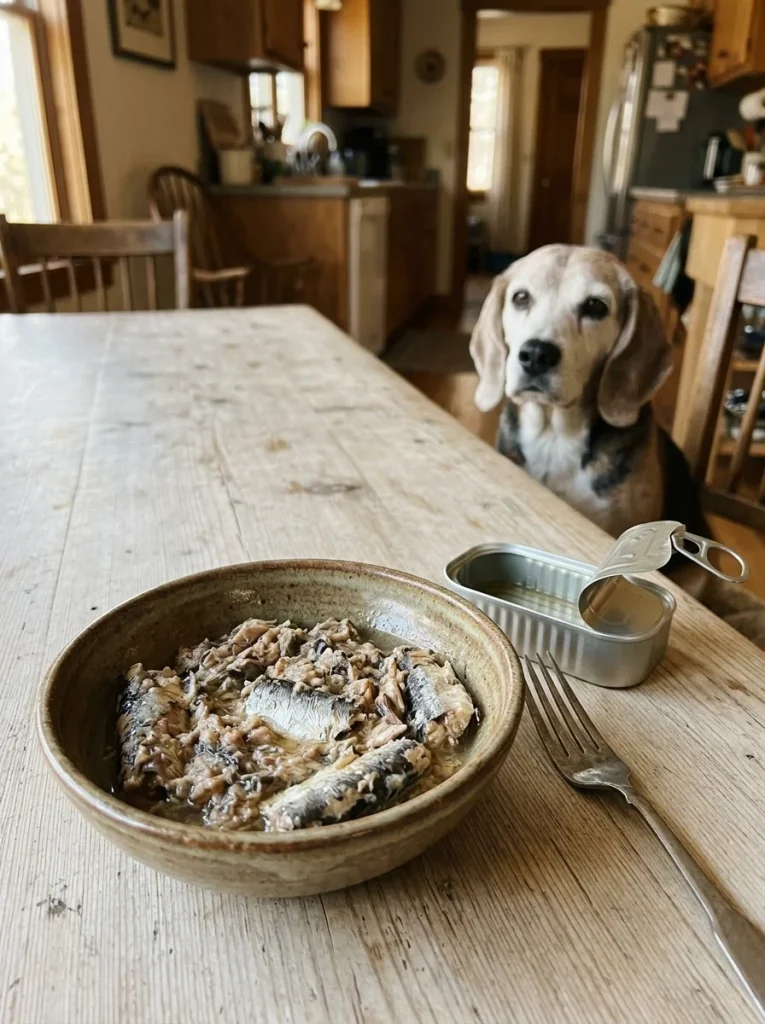
Why it helps: Sardines are packed with omega-3 fatty acids called EPA and DHA. These are the kind of omega-3s most linked to joint comfort.
How to serve: Buy sardines packed in water with no salt added. Drain them and mash them well, bones and all, since the bones are soft.
Watch out: Never use sardines packed in oil with spices, or in tomato sauce. Offer them once or twice a week, not daily, because they are rich.
2. Salmon
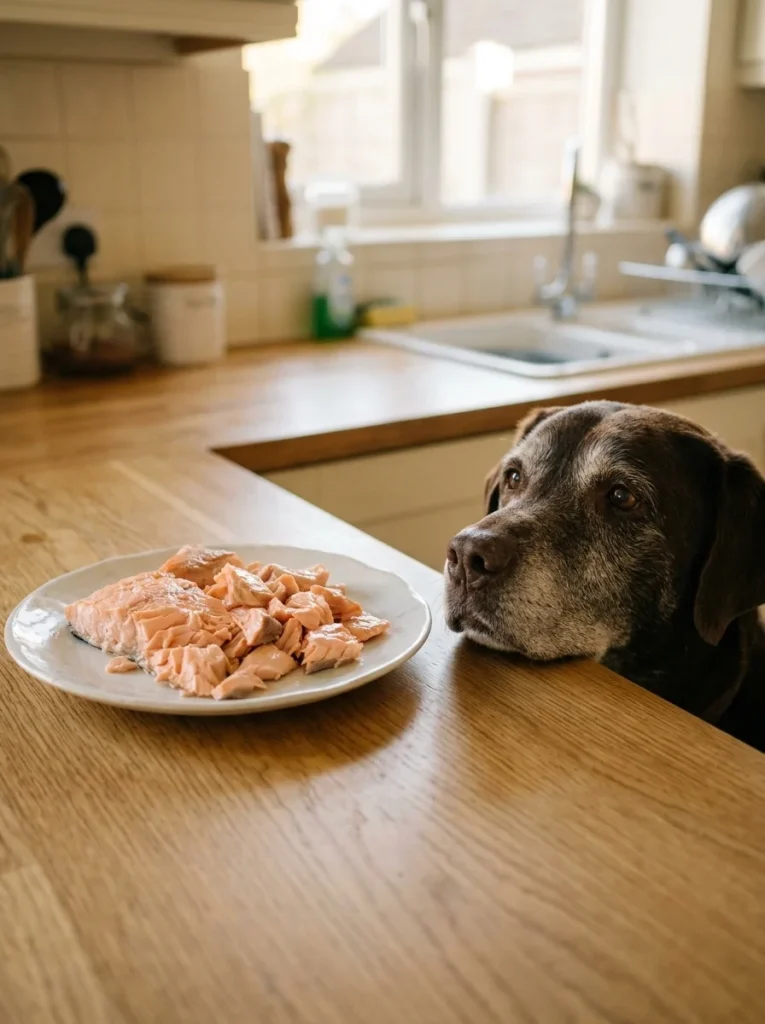
Why it helps: Salmon is another strong source of EPA and DHA. It also adds lean protein, which helps older dogs keep their muscle.
How to serve: Bake or steam it until fully cooked. Remove the skin and every bone, then flake it over the food.
Watch out: Never feed raw or undercooked salmon. It can carry a parasite that causes a dangerous illness called salmon poisoning disease. Skip added salt, butter, and seasoning.
3. Green Beans
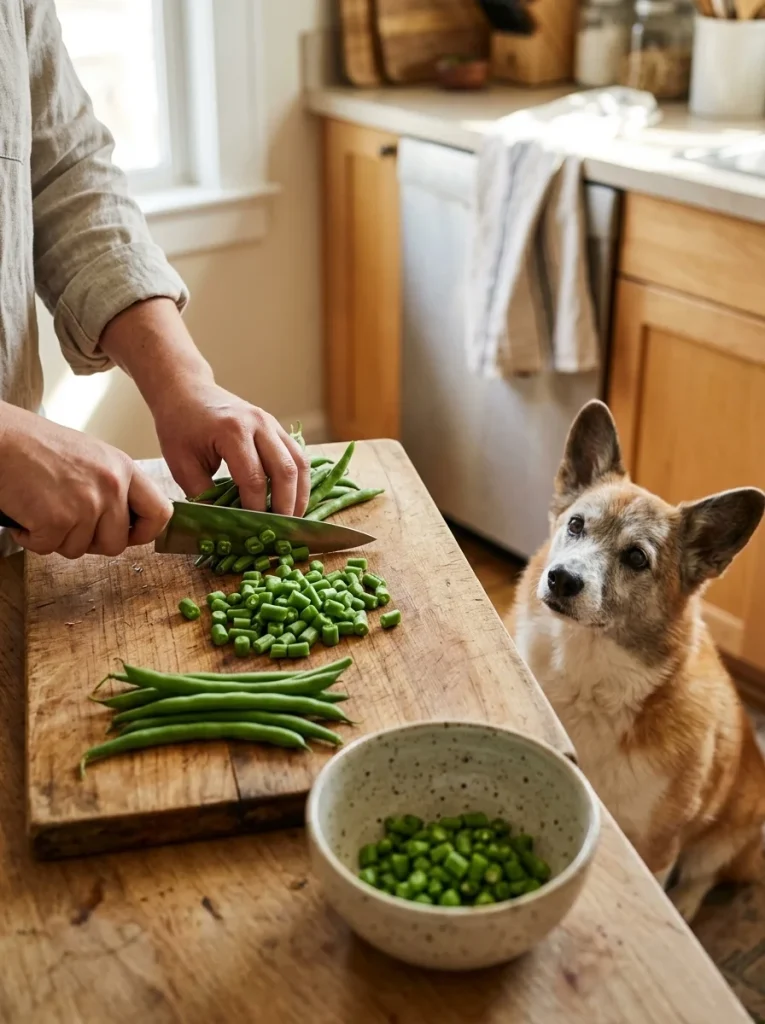
Why it helps: Green beans are low in calories and high in fiber. They help a dog feel full without adding weight, which protects tired joints.
How to serve: Use fresh, steamed, or plain canned beans with no salt. Chop them small so they are easy to chew.
Watch out: Rinse canned beans well to wash off extra sodium. Skip beans cooked with onion, garlic, or bacon.
Recipe Card: Sardine and Green Bean Joint Bowl
A quick topper that turns plain kibble into a joint-friendly meal.
- Prep Time: 10 minutes
- Cook Time: 0 minutes (if beans and sweet potato are already cooked)
- Freeze Time: None
- Yield: About 1½ cups (6 small, 4 medium, or 3 large servings)
Ingredients:
- 1 can (3.75 oz) sardines in water, no salt added, drained
- 1 cup cooked green beans, finely chopped
- ½ cup cooked sweet potato, mashed
- 2 tablespoons water or low-sodium broth (no onion or garlic)
Instructions:
- Add the drained sardines to a bowl and mash them with a fork until smooth.
- Stir in the chopped green beans and mashed sweet potato.
- Add the water or broth a little at a time until the mix is spoonable.
- Spoon the right amount over your dog’s regular food and mix it in.
- Store leftovers in a sealed container in the fridge.
Notes:
- Serving size: 1 tablespoon for small dogs, 2 to 3 tablespoons for medium dogs, and ¼ cup for large dogs.
- Storage: Keeps up to 3 days in the fridge. You can freeze it in small portions for up to 2 months.
- How often: Once or twice a week.
- Skip or ask your vet first if your dog has pancreatitis or kidney disease.
Ingredient variation: Salmon Swap. Replace the sardines with ½ cup of cooked, flaked, boneless, skinless salmon. This is great for dogs that dislike the strong sardine smell.
Brain-Boosting Super Foods for Senior Dogs
Dogs can develop something like dementia as they age. It is called canine cognitive dysfunction. Signs include staring at walls, getting lost in familiar rooms, and waking up at night.
Food is not a cure here either. But some foods deliver antioxidants and healthy fats that support a healthy brain. Pair them with daily walks, gentle play, and new smells to keep the mind active.
4. Blueberries
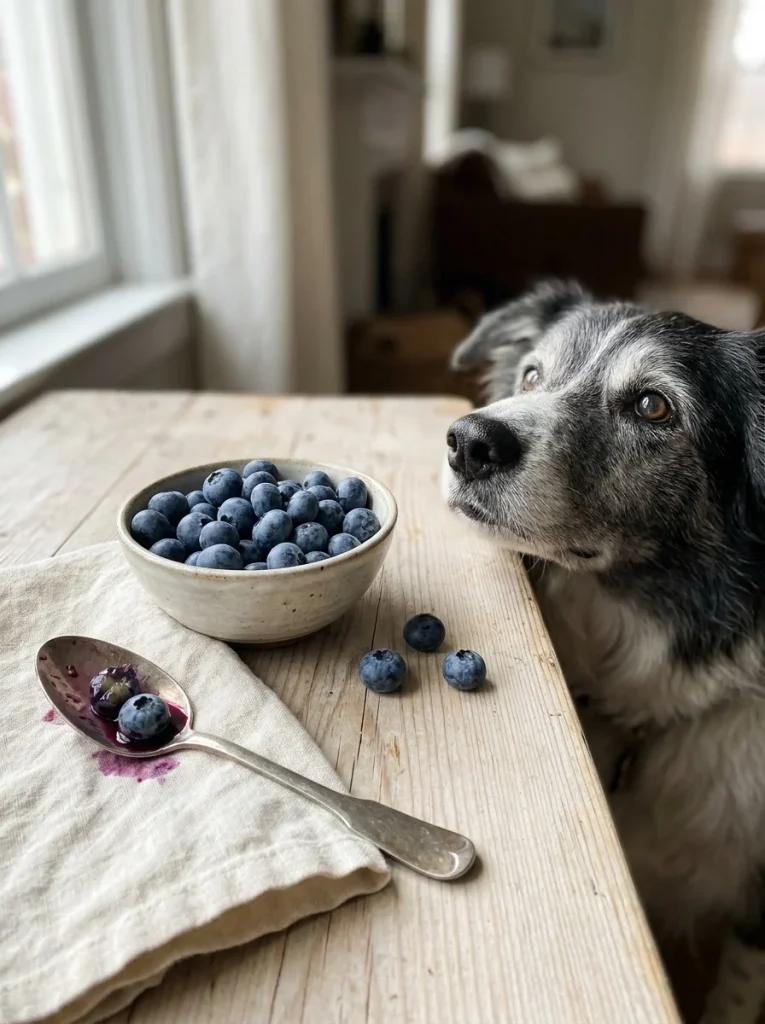
Why it helps: Blueberries are full of antioxidants. These help protect cells from the damage that builds up with age.
How to serve: Serve them fresh, frozen, or lightly mashed. A few berries is plenty.
Watch out: Berries have natural sugar, so keep portions small, especially for diabetic dogs. Whole berries can be a choking risk for tiny dogs, so mash them.
5. Eggs
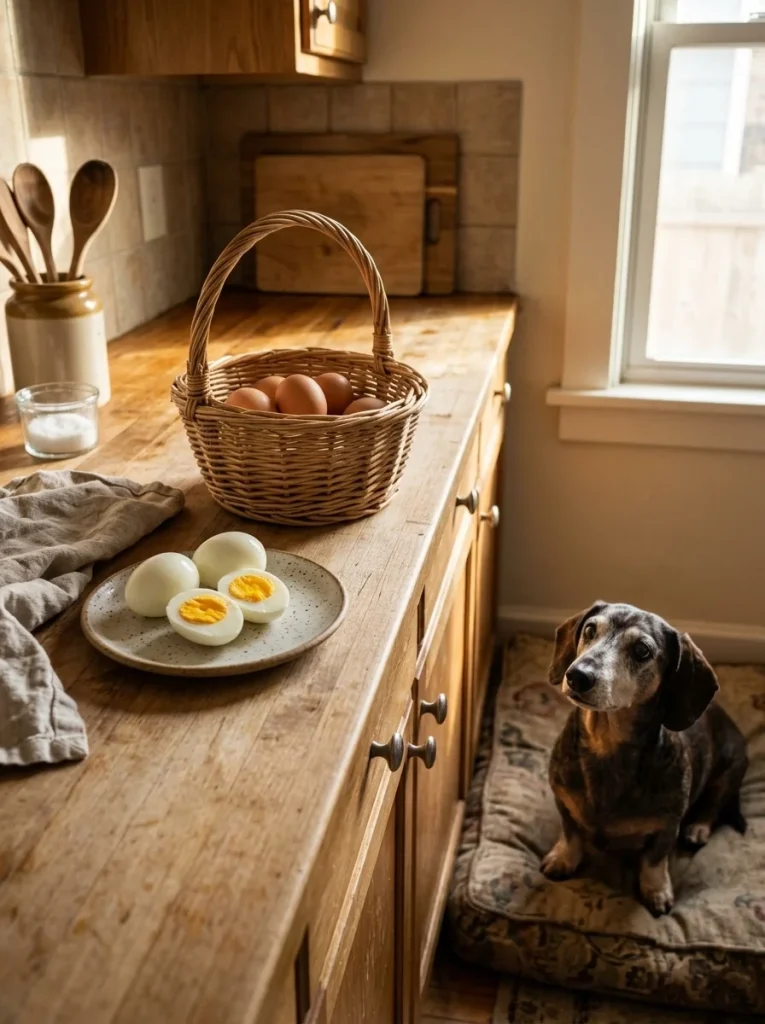
Why it helps: Eggs are an easy source of protein, vitamins, and a nutrient called choline. Choline plays a part in brain and nerve function.
How to serve: Boil or scramble them plain, with no oil, salt, or butter. Chop or mash before serving.
Watch out: Always cook eggs fully. Limit portions to about one egg per week for small dogs and up to a few per week for large dogs.
6. Chia Seeds
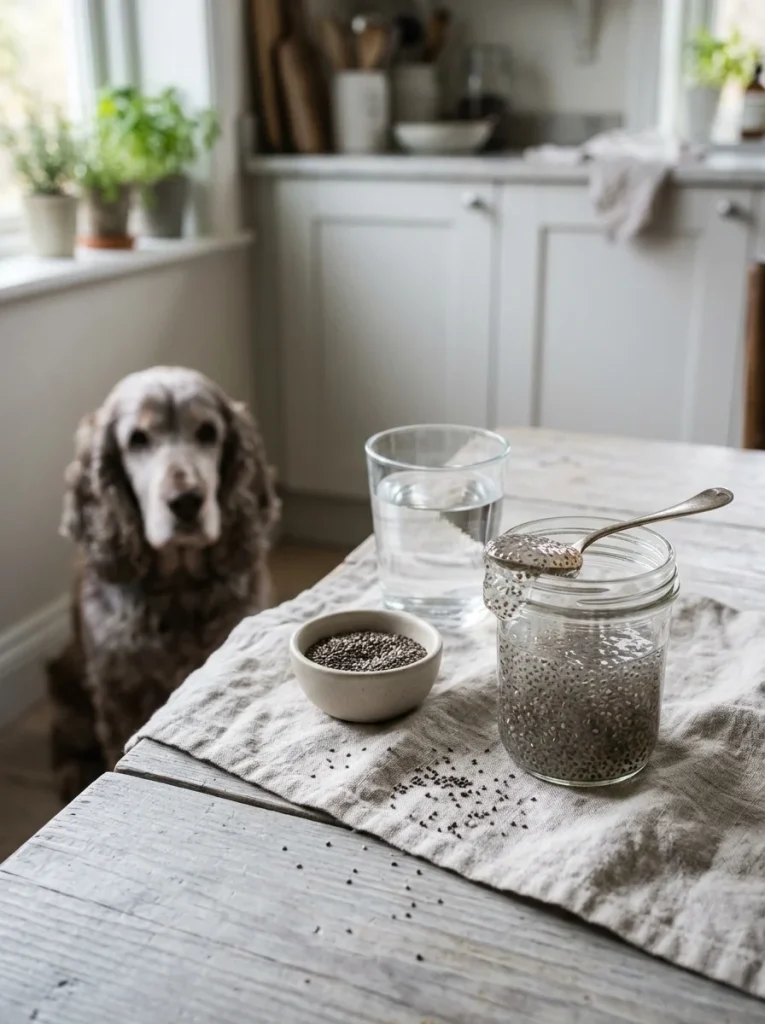
Why it helps: Chia seeds add fiber and plant-based omega-3s. They also swell up and hold water, which helps digestion.
How to serve: Soak 1 teaspoon of seeds in 3 tablespoons of water for 10 minutes until they form a gel. Stir the gel into food.
Watch out: Chia gives plant-based omega-3s (ALA), and dogs turn only a small amount of that into the EPA and DHA found in fish. Think of chia as a nice extra, not a replacement for fish. Always soak the seeds first, and start with a tiny amount.
Recipe Card: Blueberry Brain Bites
Cool, bite-size treats that are soft enough for sore teeth.
- Prep Time: 15 minutes
- Cook Time: 5 minutes (to cook the oatmeal)
- Freeze Time: 2 hours
- Yield: About 12 bites
Ingredients:
- 1 cup cooked plain oatmeal, cooled (cooked with water only)
- ½ cup plain unsweetened yogurt (no xylitol)
- ½ cup blueberries, mashed
- 1 tablespoon chia seeds
- 3 tablespoons water
Instructions:
- Stir the chia seeds into the water and let them sit for 10 minutes until gel-like.
- In a bowl, mix the cooled oatmeal, yogurt, and mashed blueberries.
- Fold in the chia gel until everything is evenly combined.
- Spoon the mixture into a small silicone mold or mini muffin tin.
- Freeze for at least 2 hours, then pop the bites out.
Notes:
- Serving size: 1 bite for small dogs, 2 for medium dogs, and 3 for large dogs, per day at most.
- Storage: Keep in a freezer bag for up to 2 months.
- Texture tip: Let a bite soften for 2 minutes if your dog has sensitive teeth.
- Check the label: Make sure the yogurt has no xylitol or added sugar.
Ingredient variation: Egg Boost. Mash 1 hard-boiled egg and mix it into the batter. You get extra protein and a firmer bite.
Gentle Gut Super Foods for Older Dogs With Sensitive Tummies
Digestion slows down with age. Many senior dogs get gas, constipation, or loose stool more often than they did as pups.
Fiber and friendly bacteria can help. The foods below are gentle, cheap, and easy to find at any grocery store.
7. Pumpkin
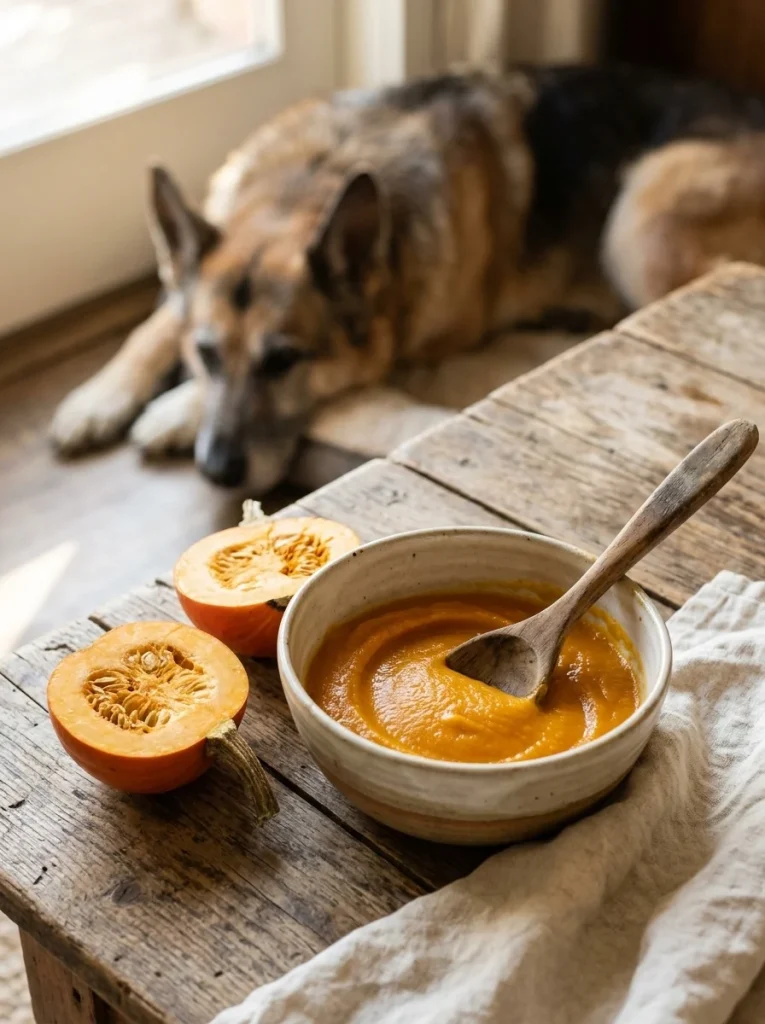
Why it helps: Plain pumpkin is rich in fiber. It can help firm up loose stool and ease constipation, depending on how much your dog gets.
How to serve: Use 100% plain pumpkin puree. Mix it into food or serve a spoonful on its own.
Watch out: Do not buy pumpkin pie filling. It has sugar and spices that can upset your dog’s stomach. Too much pumpkin can cause loose stool, so start small.
8. Plain Yogurt
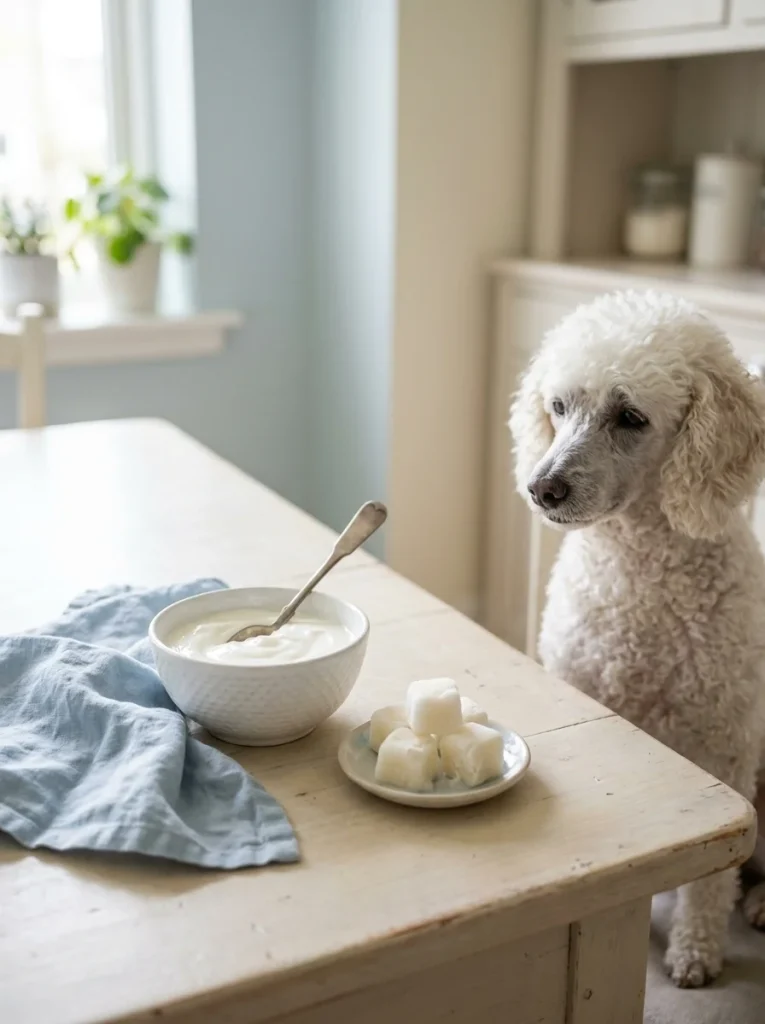
Why it helps: Yogurt with live cultures contains probiotics, which are friendly bacteria that support gut health. It also adds calcium and protein.
How to serve: Choose plain, unsweetened yogurt. Add a spoonful to meals or freeze it as a treat.
Watch out: Never use yogurt with xylitol, which is poisonous to dogs. Skip it entirely if your dog gets gas or diarrhea from dairy. Many older dogs handle lactose less well.
9. Oats
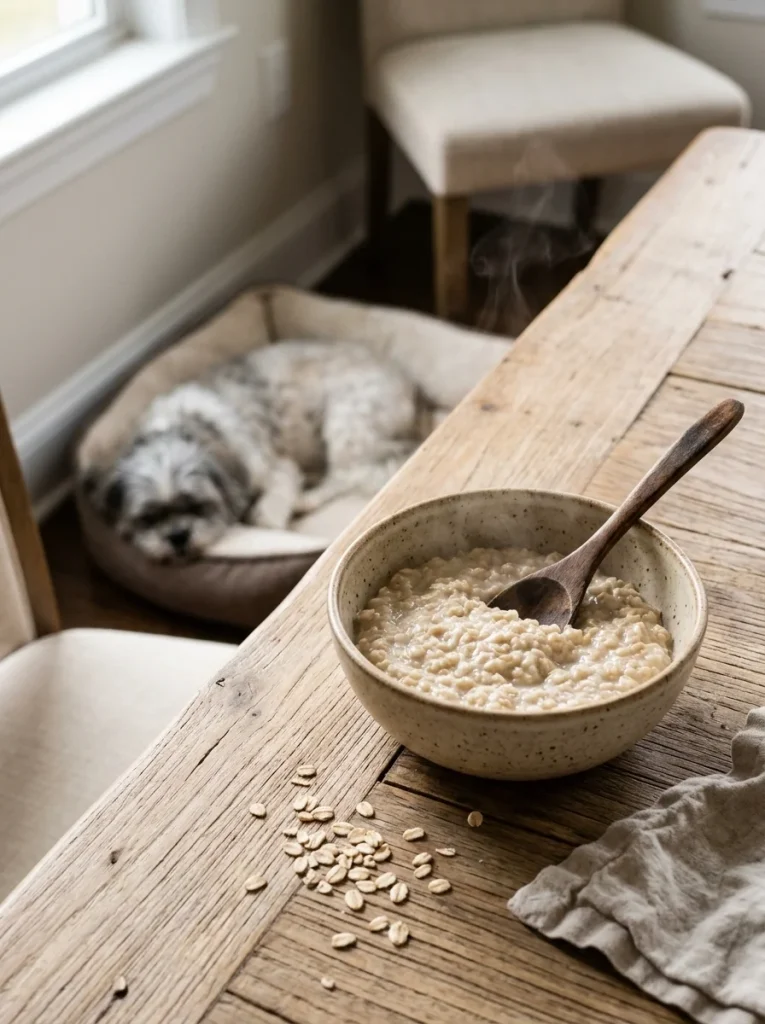
Why it helps: Oats are a good source of soluble fiber. This type of fiber helps a dog feel full and supports steady digestion.
How to serve: Cook plain oats in water until soft, then let them cool. Add a spoonful on top of food.
Watch out: No sugar, honey, raisins, or flavor packets. Oats also add calories, so go light with overweight dogs.
Recipe Card: Pumpkin Yogurt Frozen Cubes
A cooling snack that doubles as a tummy helper.
- Prep Time: 10 minutes
- Cook Time: 0 minutes
- Freeze Time: 4 hours
- Yield: About 24 small cubes
Ingredients:
- 1 cup 100% plain pumpkin puree
- 1 cup plain unsweetened yogurt (no xylitol)
- ¼ cup cooked plain oatmeal, cooled
- ¼ cup water
Instructions:
- Add the pumpkin, yogurt, and oatmeal to a bowl and stir until smooth.
- Stir in the water to loosen the mixture.
- Spoon the mixture into an ice cube tray or silicone mold.
- Freeze for at least 4 hours, until solid.
- Pop the cubes out and store them in a freezer bag.
Notes:
- Serving size: 1 cube for small dogs, 2 for medium dogs, and 3 for large dogs, once a day at most.
- Storage: Keeps for up to 2 months in the freezer.
- If stool gets loose: Cut back to half the amount.
- Warm weather bonus: These make a great cool-down treat on hot days.
Ingredient variation: Dairy-Free Cubes. Skip the yogurt. Use 1 cup of pumpkin and ½ cup of cooled, low-sodium bone broth (no onion or garlic). It works well for dogs that cannot handle dairy.
For more treat ideas you can make at home, try these homemade treat recipes.
Super Foods for Senior Dogs to Help With Weight and Picky Eating
Some seniors gain weight because they move less. Others lose weight because their sense of smell fades and food stops smelling good.
The foods below cover both cases. They are low in calories, tasty, and easy to chew. They also make a good base for warm, smelly meals that tempt a picky eater.
10. Sweet Potato
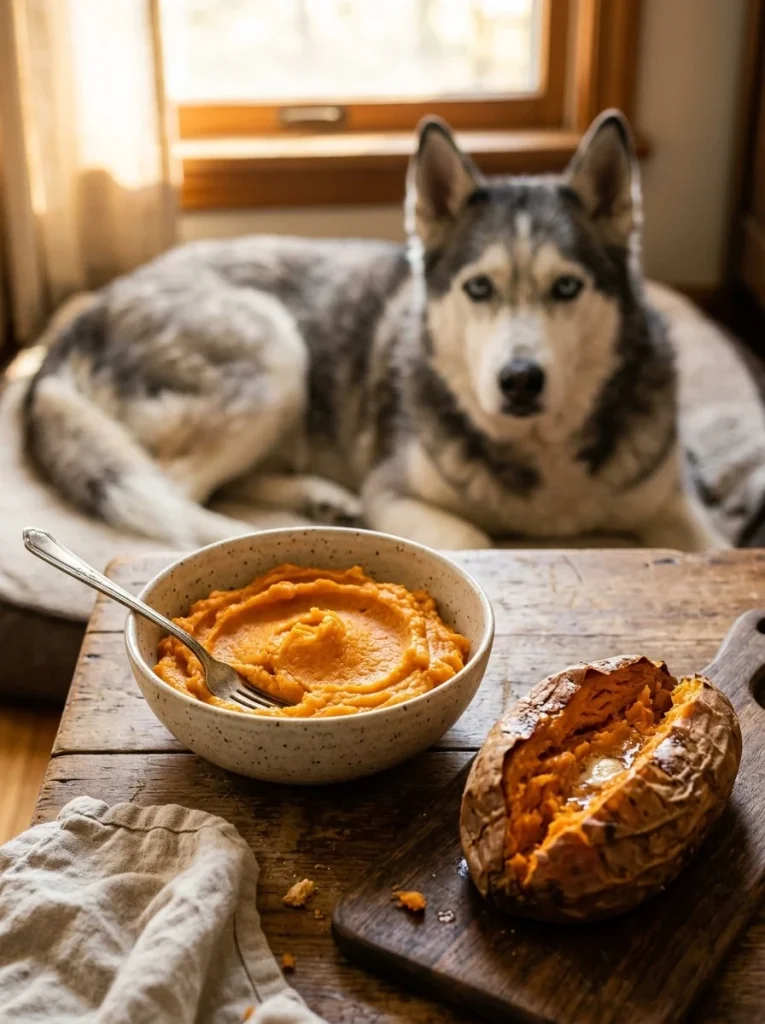
Why it helps: Sweet potato is full of fiber and vitamins A and C. Its natural sweetness makes plain food more appealing.
How to serve: Bake or steam it until soft. Remove the skin and mash it.
Watch out: Never serve it raw. Skip butter, sugar, marshmallows, and salt. Sweet potato is higher in carbs, so use small amounts for diabetic dogs.
11. Carrots
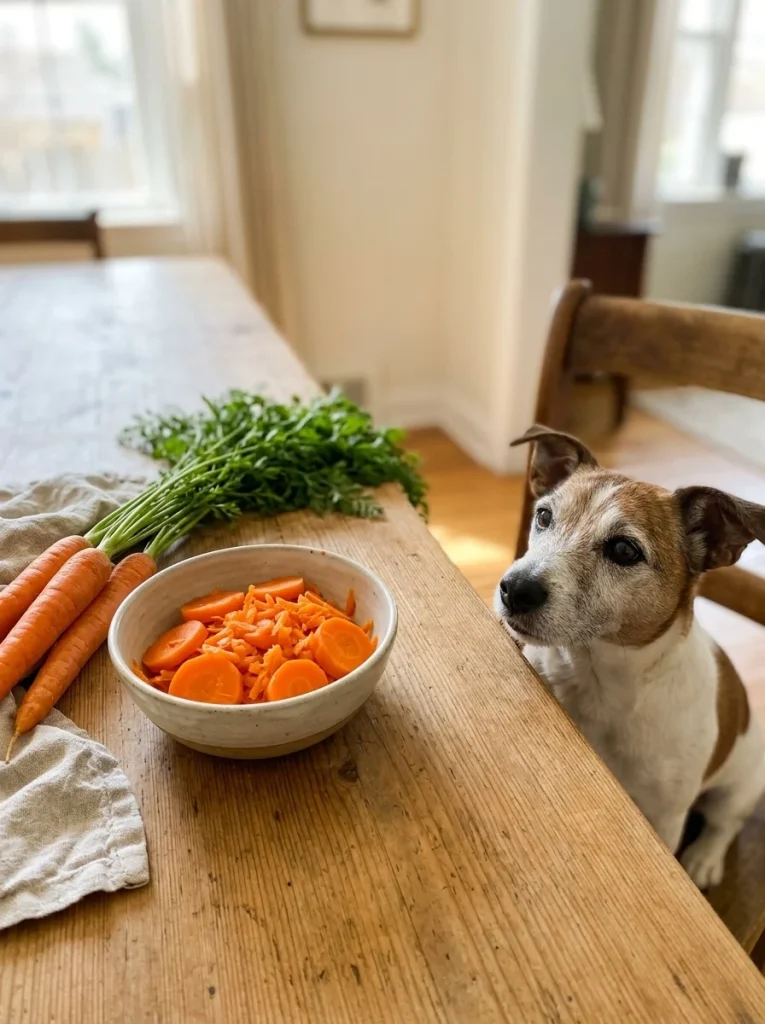
Why it helps: Carrots are low in calories and rich in beta-carotene. They add crunch and fiber for dogs that need to slim down.
How to serve: Serve them raw and grated, or steamed until soft. Cooked carrots are easier on aging teeth.
Watch out: Cut raw carrots small to avoid choking. Hard raw sticks can be tough on sore teeth.
12. Bone Broth
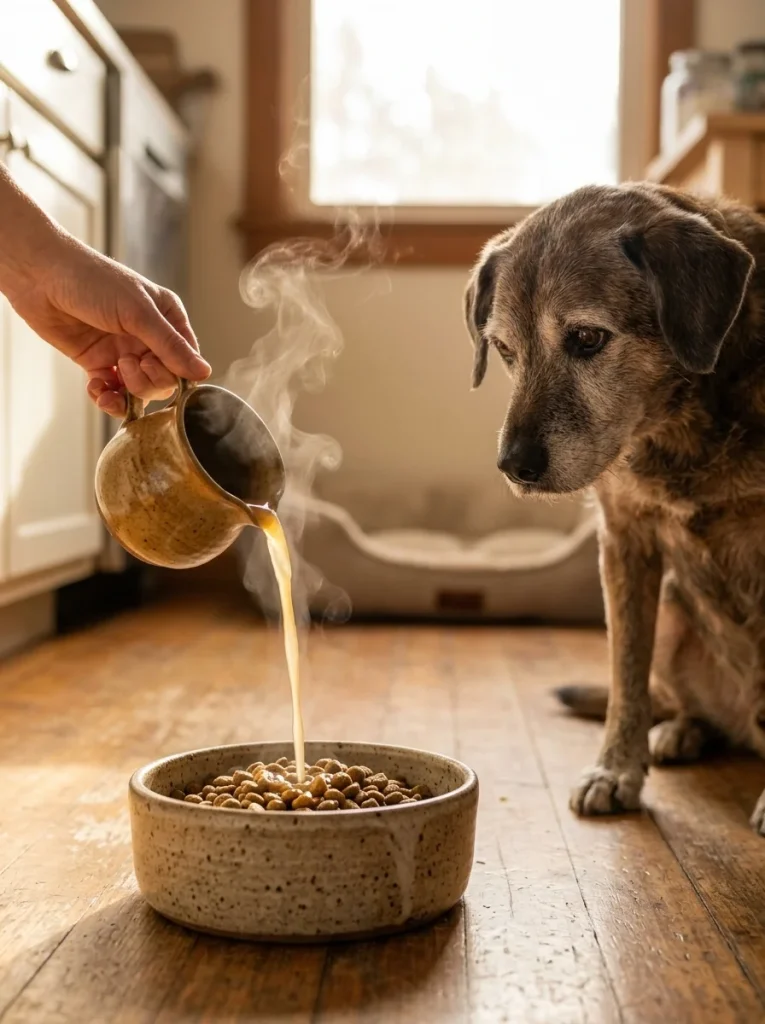
Why it helps: Warm broth smells wonderful, which wakes up a sleepy appetite. It also adds water, which helps dogs that don’t drink much.
How to serve: Use a low-sodium broth made without onion or garlic. Warm it slightly, then pour a little over dry food.
Watch out: Many store-bought broths have onion, garlic, and lots of salt. Always read the label, or make your own at home.
Recipe Card: Slow Cooker Senior Stew
A hearty, soft meal booster you can cook once and use all week.
- Prep Time: 15 minutes
- Cook Time: 4 hours on high, or 6 to 7 hours on low
- Freeze Time: None (optional for storage)
- Yield: About 6 cups
Ingredients:
- 1 pound lean ground turkey
- 1 cup sweet potato, peeled and diced small
- 1 cup carrots, diced small
- 1 cup green beans, chopped
- ½ cup rolled oats
- 3 cups water or low-sodium broth (no onion or garlic)
Instructions:
- Add the turkey, sweet potato, carrots, and green beans to the slow cooker.
- Sprinkle the oats on top.
- Pour in the water or broth.
- Cover and cook on high for 4 hours or low for 6 to 7 hours.
- Stir and break up the turkey as the stew finishes.
- Let it cool completely, then mash or blend it for a softer texture.
Notes:
- Serving size: 2 tablespoons for small dogs, ¼ cup for medium dogs, and ½ cup for large dogs, mixed into regular food.
- Storage: Keeps up to 4 days in the fridge, or 3 months in the freezer in small portions.
- Important: This is a meal booster, not a complete diet. Ask your vet if you want to use it as a full meal.
- Weight loss option: Use more green beans and carrots and less sweet potato.
Ingredient variation: Chicken and Pumpkin Stew. Swap the turkey for boneless, skinless chicken thighs with the fat trimmed. Replace the sweet potato with 1 cup of plain pumpkin puree, added in the last hour.
Want more slow cooker meals? Browse these crockpot recipes for senior dogs or these slow cooker dog food ideas.
Two Quick Serving Styles for Picky Seniors
Sometimes the food is fine and the format is the problem. These two quick methods need no recipe card.
Quick Method: Warm Broth Pour-Over
- Warm ¼ cup of low-sodium broth until it is slightly warm, not hot.
- Pour it over your dog’s kibble.
- Let it sit for 5 minutes so the kibble softens.
- Mix and serve.
The warmth releases more smell, which helps dogs with a weak sense of smell.
Quick Method: Smooth Mash for Sore Teeth
- Cook sweet potato, carrots, or green beans until very soft.
- Mash or blend with a little water until smooth.
- Stir into your dog’s food or serve on a lick mat.
This works well for dogs with painful teeth or missing teeth.
Feeding Rules That Keep Super Foods Safe
Good food can still cause problems if the portions are off. Follow these simple rules to keep your dog safe.
How Much to Serve
Super foods and extras should make up no more than 10% of your dog’s daily calories. The rest should come from a complete and balanced dog food.
Use this size guide as a starting point:
| Dog Size | Weight | Starting Portion per Day |
|---|---|---|
| Small | Under 20 lb | 1 to 2 tablespoons total |
| Medium | 20 to 50 lb | 2 to 4 tablespoons total |
| Large | Over 50 lb | ¼ to ⅓ cup total |
This is the total for all extras combined, not for each food. Ask your vet for exact amounts for your dog.
How to Add New Foods
Follow these steps every time:
- Add one new food at a time.
- Start with a quarter of the normal portion.
- Watch for gas, loose stool, vomiting, or itching for 3 days.
- Slowly build up to the full portion.
Foods to Skip Completely
These are unsafe for dogs. Never add them to meals:
- Onions, garlic, and chives
- Grapes and raisins
- Chocolate
- Macadamia nuts
- Anything with xylitol
- Cooked bones
- Heavily salted, fried, or fatty foods
Extra Care for Dogs With Health Conditions
Some seniors need special rules. Always ask your vet first if your dog has any of these:
- Kidney disease: Fish, eggs, and some other foods are high in phosphorus and may not be right.
- Diabetes: Sweet potato, fruit, and oats can raise blood sugar.
- Pancreatitis: Fatty foods like salmon and sardines can trigger flare-ups.
- Heart disease: Salty foods, including broth and canned fish, can be a problem.
- Allergies: Introduce new proteins very slowly.
Call Your Vet If You See These Signs
- Vomiting or diarrhea lasting more than a day
- Refusing food for more than 24 hours
- Sudden weight loss or gain
- Heavy panting, drooling, or a swollen belly
- Any sign of pain
Food can help, but it cannot replace a checkup. Senior dogs should see the vet at least twice a year.
Make Meal Time Easier
Older dogs often struggle with low bowls and slippery floors. A raised bowl, a non-slip mat, and a quiet spot can make eating easier on stiff joints. These dog feeding station ideas offer simple setups to try.
Why These Super Foods Work (The Short Version)
You have the recipes. Here is the quick background on why these foods earn a place in your dog’s bowl.
- Omega-3 fats (sardines, salmon): Help calm inflammation and support joint comfort.
- Antioxidants (blueberries): Help protect cells from age-related wear.
- Choline and protein (eggs, salmon): Support the brain and keep muscles strong.
- Fiber (pumpkin, oats, green beans, carrots): Keeps digestion steady and helps dogs feel full.
- Probiotics (yogurt): Support the good bacteria in the gut.
- Water and aroma (bone broth): Boost hydration and wake up the appetite.
No single food does it all. A little variety, in the right amounts, works better than a lot of one thing.
For bigger meal ideas beyond toppers, browse these homemade dog food recipes.
Final Thoughts on Super Foods for Senior Dogs
Your dog gave you years of loyalty. Now small changes at mealtime can give back comfort and joy.
Here is the simple plan:
- Pick your dog’s biggest problem from the quick pick table.
- Choose one food or recipe from that section.
- Start with a small portion and add it to regular food.
- Watch your dog for a few days, then adjust.
You do not need to make everything at once. Start with the Sardine and Green Bean Joint Bowl or the Pumpkin Yogurt Frozen Cubes, and see how your dog responds.
The best super foods for senior dogs are the ones your dog enjoys, digests well, and eats in the right amounts. Check in with your vet, keep portions modest, and enjoy the extra tail wags.
Izzy is an experienced ranch worker who has a passion for exploring nature and getting up close to wildlife. With her connections to various animal organizations, Izzy is well-versed in animal care and rehabilitation.