Dog Daycare Ideas & Layout Ideas: 14 Inspiring Setups to Copy
If you’re planning to open a dog daycare, or you just want to upgrade the one you already run, the way you lay out your space matters more than you might think. A good layout keeps dogs safe, keeps staff sane, and makes pet parents trust you the second they walk through the door. That’s exactly why so many daycare owners search for fresh dog daycare ideas and dog daycare layout ideas before they start building or renovating.
Layout isn’t just about looking nice for photos, although that certainly helps. It’s about how dogs move through a space, how staff can supervise multiple groups at once, and how easily messes can be cleaned. A poorly planned daycare leads to overcrowding, stressed dogs, and exhausted staff. A well-planned one runs smoothly, feels calm even when it’s busy, and keeps every dog engaged without chaos.
The good news is you don’t have to guess what works. Real daycares around the world have already tested different room designs, yard setups, and themes, and some of them are genuinely brilliant. In this article, we’ve pulled together 14 real dog daycare ideas and layout ideas, each one based on an actual space that’s already up and running. You’ll see indoor lounges, outdoor obstacle yards, swim pools, boarding suites, and more.
Each idea below includes what makes it work, who it’s best suited for, and a few practical notes if you’re thinking about recreating something similar. Let’s get straight into the ideas.
14 Dog Daycare Ideas and Layout Ideas Worth Copying
1. Cozy Indoor Lounge with Mural Wall and Cot Beds
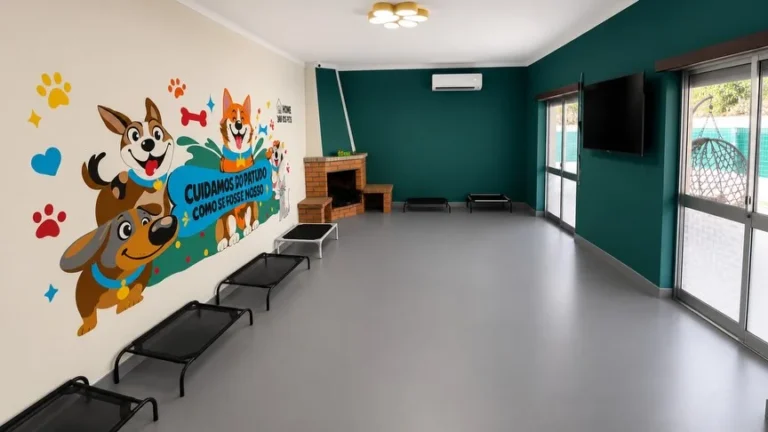
This layout turns a plain indoor room into a warm, welcoming lounge. A hand-painted cartoon mural covers one wall, showing playful dogs and a friendly slogan that immediately sets a happy tone for the room. Rows of raised cot beds line the floor so every dog has its own resting spot, off the cold tile and away from drafts.
Raised cot beds are a small detail that makes a big difference. They keep dogs elevated off hard flooring, which is more comfortable for their joints and easier to clean underneath. Lining them up in neat rows also gives each dog a bit of personal space, which helps reduce tension between dogs that don’t know each other well.
A wall-mounted TV and air conditioning unit add comfort, while sliding glass doors connect the room to an outdoor play area. This means dogs can move between indoor rest time and outdoor activity without staff needing to walk them through hallways or separate rooms. That kind of flow matters a lot when you’re managing a full daycare of dogs with different energy levels.
This setup works well as a calm-down zone between play sessions, which is something a lot of daycares forget to plan for. Dogs, just like people, need breaks. Without a proper rest space, overstimulated dogs can become snappy or anxious by the afternoon, even if they were fine in the morning.
If you’re designing rest zones like this, it helps to also think about how you’ll style each dog’s individual space. Our guide on smart room ideas for dogs has more layout inspiration you can borrow, especially if you want to bring some of this same cozy energy into a smaller home setup too.
📸 Photo credit: Instagram @homedospetspt
2. Dedicated Dog Fitness and Gym Room
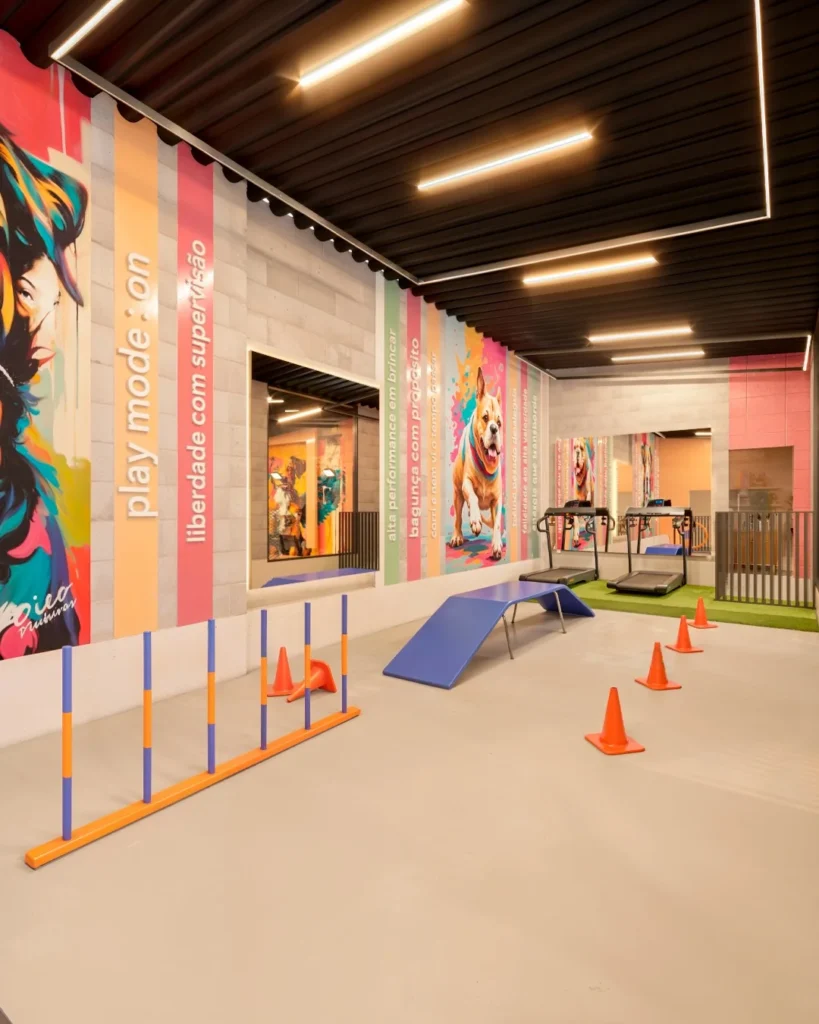
This is one of the more unique dog daycare layout ideas on this list. Instead of just open play space, this facility built an actual gym room for dogs. It includes treadmills, agility poles, cones, and a bold graffiti-style wall that reads “play mode: on,” giving the whole room a high-energy, motivating feel.
A gym room like this is perfect for active breeds that need structured exercise, not just free-for-all play. Working dogs, high-drive breeds, and dogs recovering from minor injuries can all benefit from a controlled space where staff decide the pace and intensity, rather than letting a whole group run wild together.
It also gives staff a controlled space to work one-on-one with dogs that need extra energy burned off before joining the group. This is especially useful for new arrivals who are still nervous or overexcited. A few minutes on a treadmill or weaving through agility poles can take the edge off before a dog is introduced to the main play group.
Having a separate fitness room also protects lower-energy or older dogs from being overwhelmed. Instead of mixing every dog into one space and hoping for the best, a gym room lets daycares match activities to individual needs, which is safer and more thoughtful.
If you’re building a fitness-focused space, it’s worth pairing it with good training habits too. Our article on proactive vs passive dog training explains how structured activity supports better behavior, and it’s a useful read if you want your gym room to actually improve manners, not just burn energy.
📸 Photo credit: Instagram @pinkdog_bemestarcanino
3. Modern Minimalist Reception-Meets-Playroom
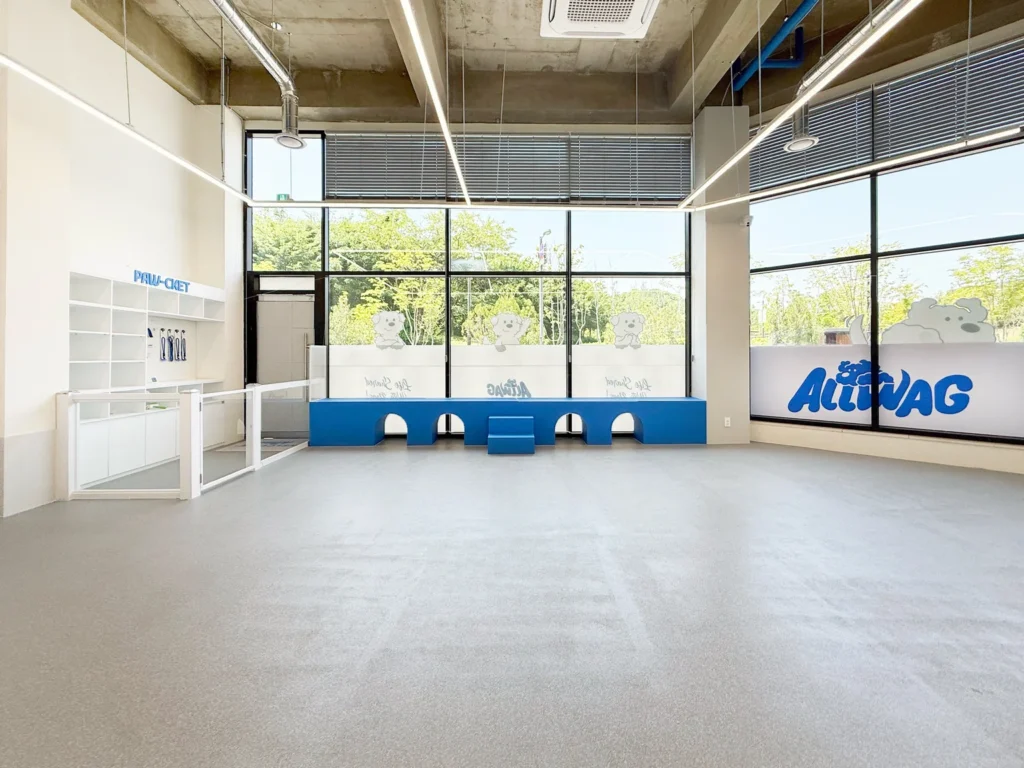
This design blends the front desk area with the play space, so the two don’t feel disconnected. Floor-to-ceiling windows bring in natural light, while a blue arched bridge-and-tunnel structure gives dogs something to explore right in the reception zone, turning what’s usually a boring waiting area into part of the fun.
Combining reception and play space also has a practical benefit: it makes drop-off and pick-up feel smoother. Pet parents can actually see their dog interacting happily in the space, rather than being led through a closed-off hallway. That visibility builds trust fast, especially with first-time clients who are nervous about leaving their dog somewhere new.
A branded retail wall displays leashes and accessories for sale, turning idle waiting time into a small revenue opportunity. While clients wait for their dog to be brought out, they’re naturally browsing products, which is a smart, low-pressure way to boost sales without a hard pitch.
This layout is ideal for daycares that also want a boutique, upscale feel from the moment clients walk in. The clean lines, big windows, and open sightlines give the impression of a well-run, professional space, which matters a lot when you’re trying to stand out from competitors in a crowded market.
📸 Photo credit: Instagram @hm.design_official
4. Outdoor Grooming and Drying Station
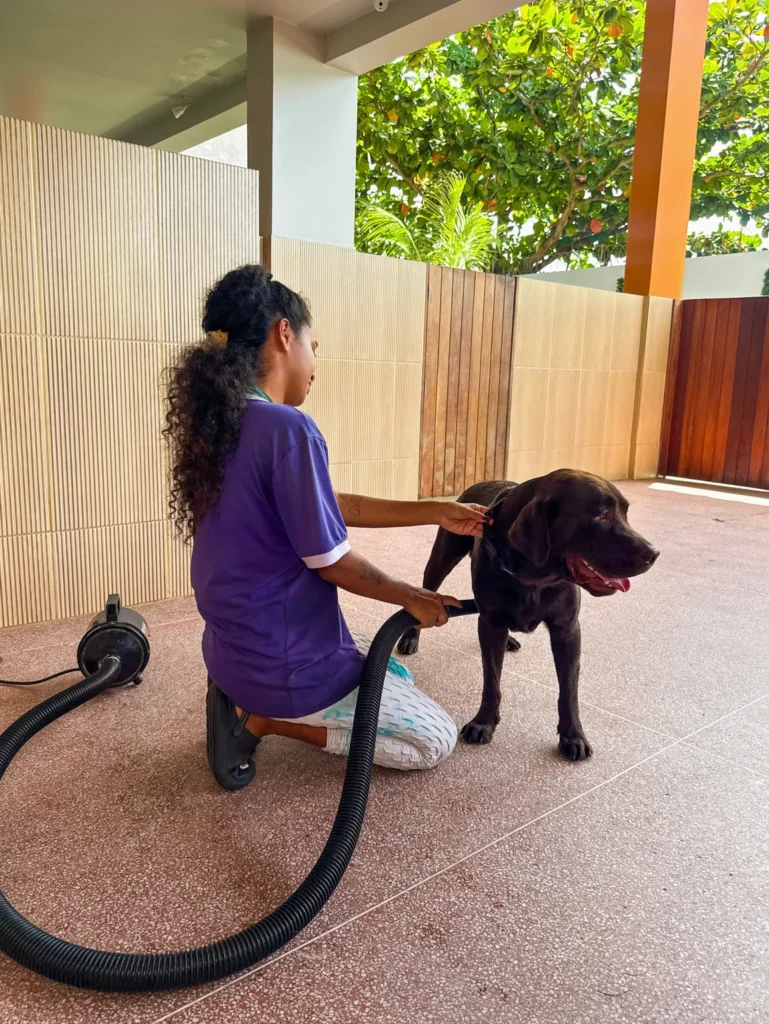
Every daycare needs a place to clean dogs up after a muddy play session, and this idea keeps it simple and functional. A covered outdoor patio houses a forced-air dryer setup, letting staff towel off and dry dogs right after a bath or a wet play session, without dragging mud and water through the rest of the facility.
Keeping this station outdoors, but covered, means less mess indoors and better airflow. Wet dog smell and moisture buildup are common complaints in daycares that don’t plan for this properly, so having a dedicated outdoor drying zone solves both problems at once.
It’s a smart, low-cost addition that pet parents genuinely appreciate when they pick up a clean, dry dog instead of a damp one. Nobody wants to load a soaking wet, muddy dog into their car after work, and a quick dry-off before pickup can be the difference between a five-star review and a frustrated client.
This kind of station also doesn’t require much space or a huge investment. A hose connection, a good drying tool, and a covered patio area are often enough to get started, which makes it a realistic upgrade even for smaller daycares working with a tighter budget.
For daycares that want to build out a full grooming setup, our guide to dog grooming salon ideas covers more layout options worth considering, including ideas for indoor grooming stations if you eventually want to expand this service.
📸 Photo credit: Instagram @socializacaopet
5. Beach-Themed Indoor Swim Pool
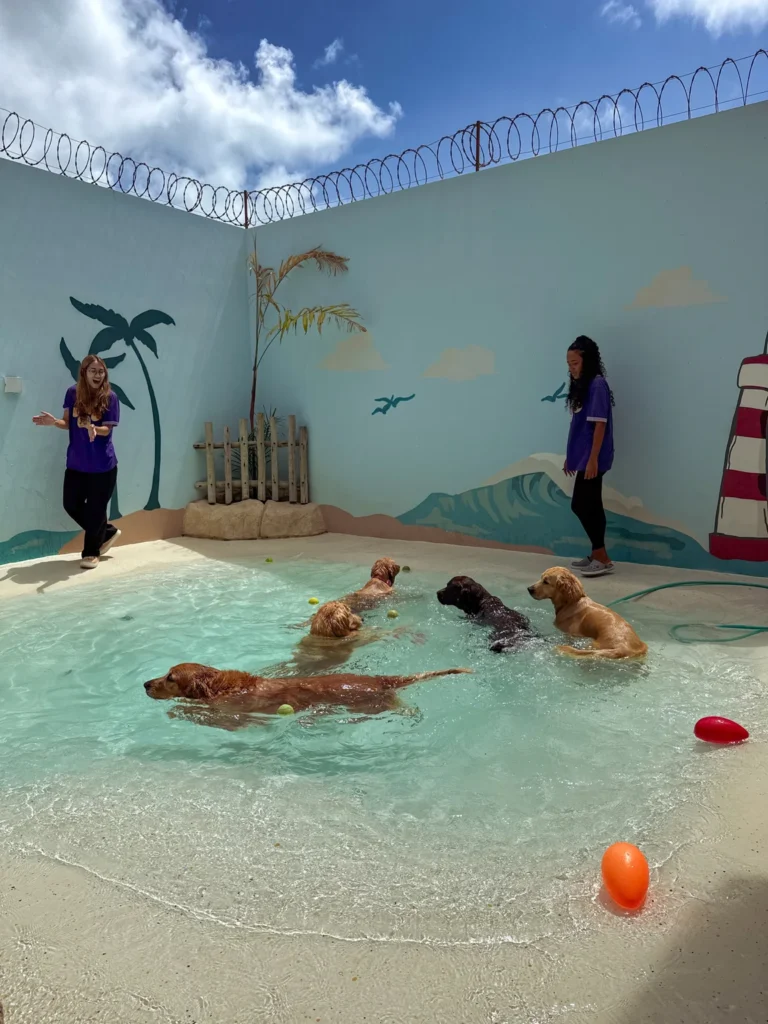
Swimming is one of the best low-impact exercises for dogs, and this daycare leaned all the way into it with a full beach-themed pool room. Painted palm trees, a lighthouse mural, and a wave-patterned wall turn a simple in-ground pool into an immersive experience that feels more like a resort than a daycare.
Swim sessions are especially useful for senior dogs, dogs recovering from injury, or overweight dogs who need exercise without straining their joints. A pool room like this gives daycares a way to offer that kind of low-impact activity as a premium service, which can also become an extra revenue stream separate from standard daycare pricing.
Staff members supervise closely from the pool’s edge, tossing balls and floating toys to keep dogs engaged. Close supervision is non-negotiable here, since water activities carry more risk than dry play, but the payoff is worth it: dogs get tired out fast, and swimming is genuinely one of the most enjoyable activities for water-loving breeds.
This idea works especially well in warmer climates or as a seasonal offering, and it photographs beautifully for social media too. Splashing dogs mid-swim make for some of the most shareable daycare content out there, which is a nice side benefit when you’re trying to grow your online following and attract new clients.
📸 Photo credit: Instagram @socializacaopet
6. Colorful Outdoor Obstacle Yard with Mural Messaging
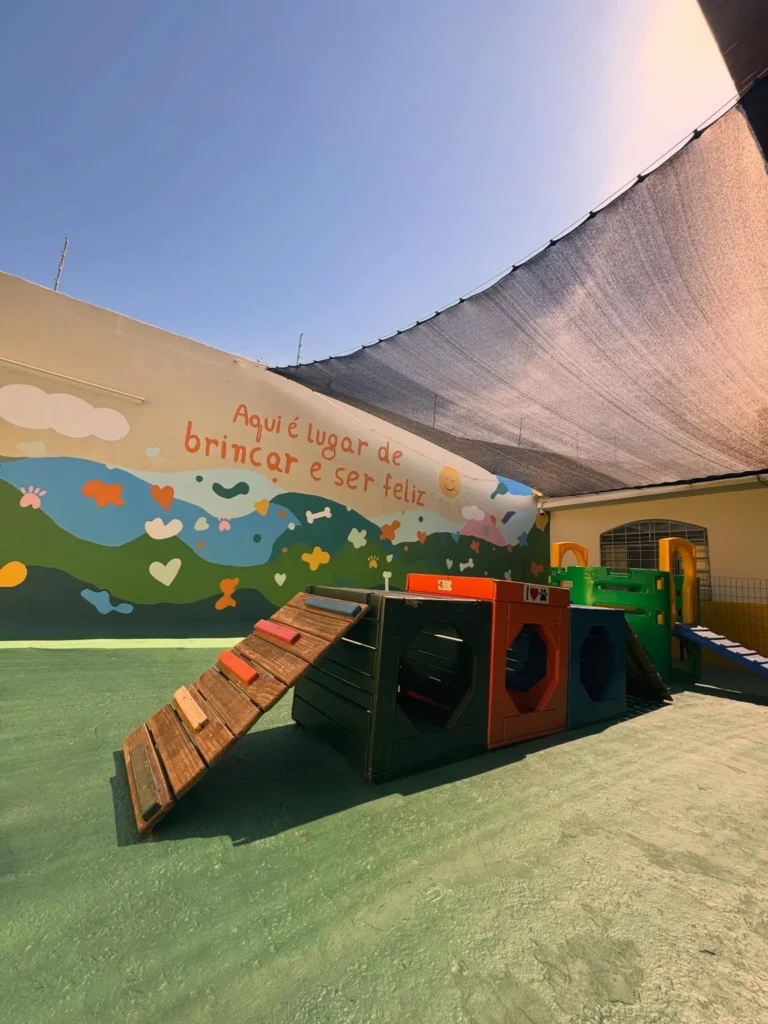
This outdoor space combines a wooden ramp, painted cube tunnels, and a shaded cover, all set against a mural that reads “Aqui é lugar de brincar e ser feliz” (this is a place to play and be happy). The message alone sets the tone for the entire yard, and it’s a small branding touch that sticks with visitors.
Obstacle courses like this keep dogs mentally stimulated, not just physically tired. Climbing over ramps, weaving through tunnels, and navigating different textures engages a dog’s brain in a way that simple open-space running doesn’t. That mental stimulation often leads to calmer, better-behaved dogs by the end of the day.
Rotating a few pieces of equipment around the yard also stops the space from feeling repetitive to dogs who visit daily. Regulars can get bored of the same layout week after week, so moving a ramp or swapping out a tunnel every so often keeps things fresh without requiring a full renovation.
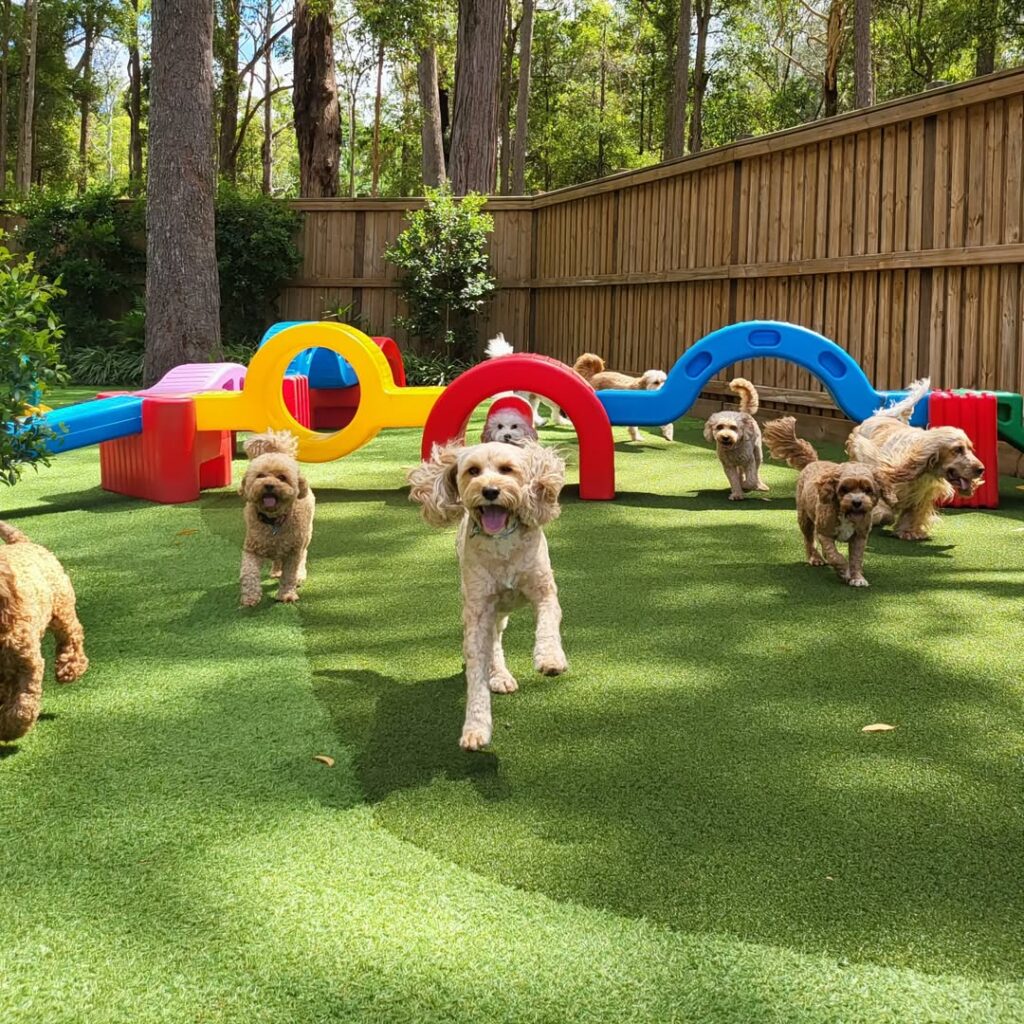
Some daycares expand this concept into a full playground setup with arches, tunnels, and ramps spread across a larger grass yard, a layout also seen at facilities like the ones run by @pawseasonsresortdaycare and @thedawghousedaycareandboarding, both of which use similar obstacle-heavy yards for group play. Seeing multiple daycares land on similar layouts independently is usually a sign the design genuinely works.
📸 Photo credit: Instagram @cabana.pet, @pawseasonsresortdaycare, @thedawghousedaycareandboarding
7. Simple Fenced Turf Yard with Kiddie Pools
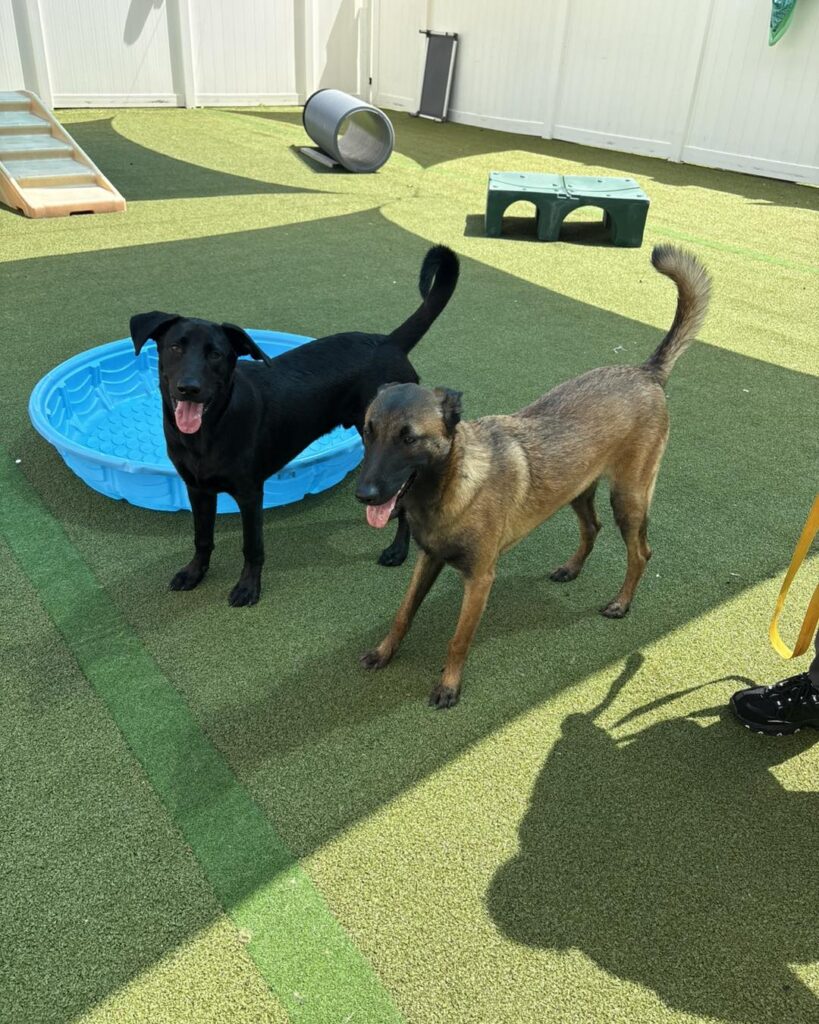
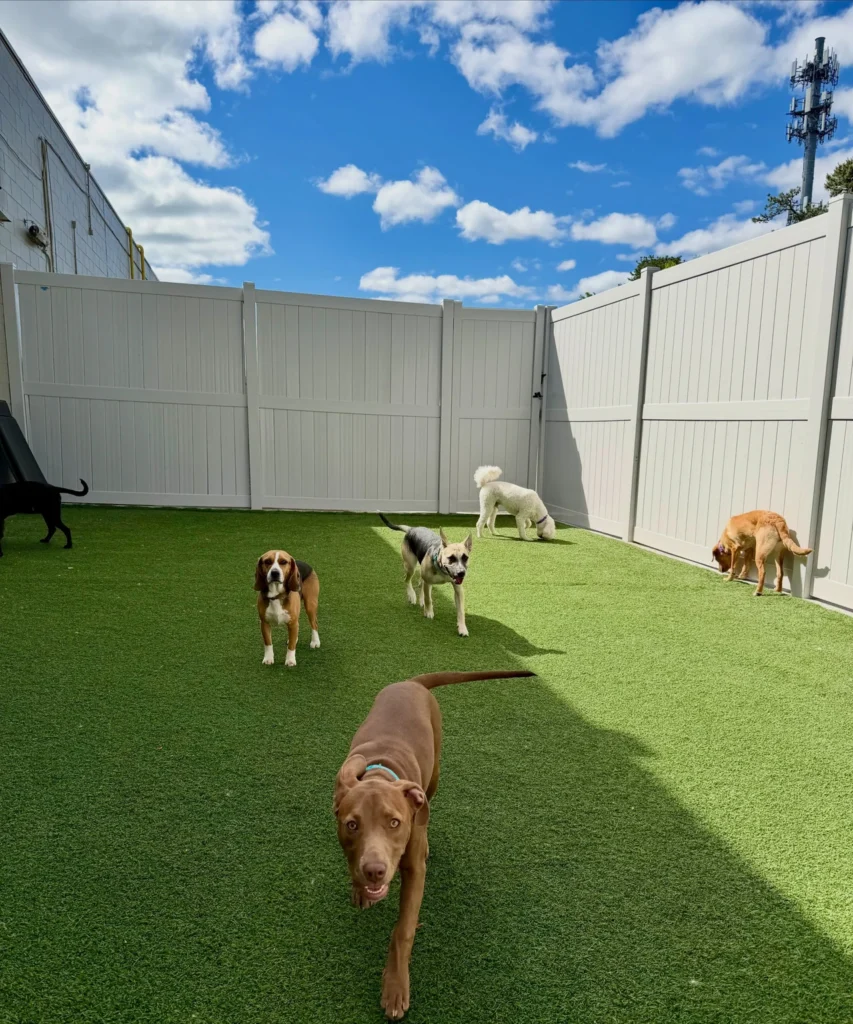
Not every daycare needs elaborate theming, and this idea proves that. A fenced turf yard with a couple of plastic kiddie pools for drinking and cooling off is enough to keep dogs happy, especially on hot days when a quick dip matters more than fancy decor.
This layout is budget-friendly and easy to maintain, making it a great starting point for smaller or newer daycares. There’s no mural to repaint, no custom furniture to build, and no complicated equipment to source. Just a safe, enclosed space with good footing and access to water.
The turf also drains well and is gentler on paws than concrete, which matters over long play sessions. Concrete can get uncomfortably hot in direct sun and is harder on joints over time, so turf is often the smarter flooring choice for outdoor daycare yards.
A similar minimal-but-effective yard setup can be seen at @dogtopia_brick, which uses the same open turf-and-fence approach with great results. It’s proof that you don’t need a big budget to run a safe, functional, and genuinely enjoyable outdoor space for dogs.
📸 Photo credit: Instagram @innthedhlakeworth, @dogtopia.brick
8. Built-In Wooden Dog Den Wall
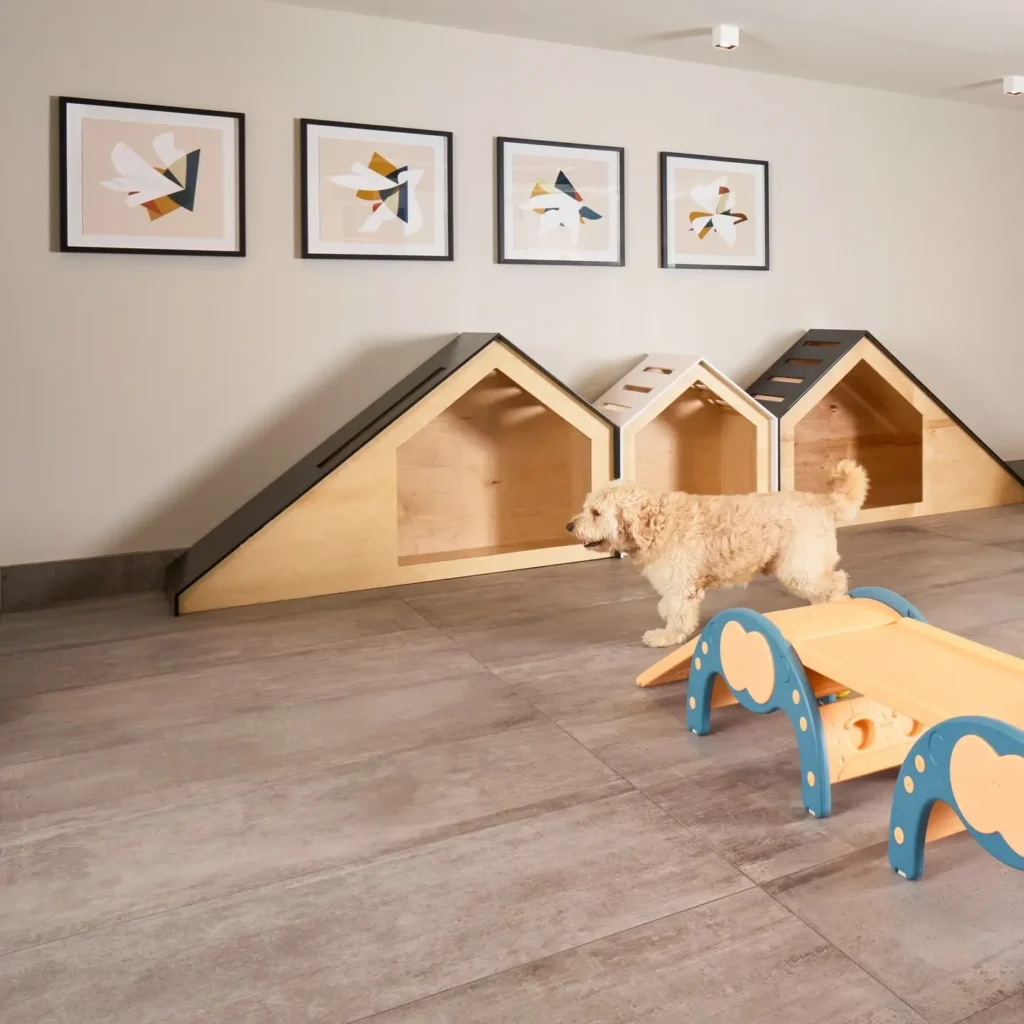
This is one of the most design-forward ideas in this list. Triangular wooden dens are built directly into the wall, almost like furniture, giving dogs a cozy hideaway spot without taking up floor space. Framed art hangs above the dens, adding a boutique, residential feel rather than a typical kennel look.
Built-in dens like this are a great solution for daycares with limited square footage. Because the dens are recessed into the wall rather than sitting as separate structures on the floor, you save valuable play space while still giving dogs private resting spots whenever they need one.
This layout works especially well for daycares that want to feel more like a stylish home than a commercial facility. The combination of natural wood tones, framed artwork, and thoughtful lighting makes the space feel intentional and high-end, which can justify premium pricing for boarding or daycare packages.
It also gives anxious or overstimulated dogs a quiet spot to retreat to during busy play hours. Not every dog wants to be in the middle of the action all day, and having a low-key den to duck into gives more nervous dogs a sense of control over their environment, which reduces stress significantly.
If you like this idea, you might also enjoy browsing luxury dog kennel ideas for more upscale inspiration, particularly if you’re aiming to position your daycare as a premium option in your area.
📸 Photo credit: Instagram @skymarkreston
9. Nature-Themed Indoor Play Room
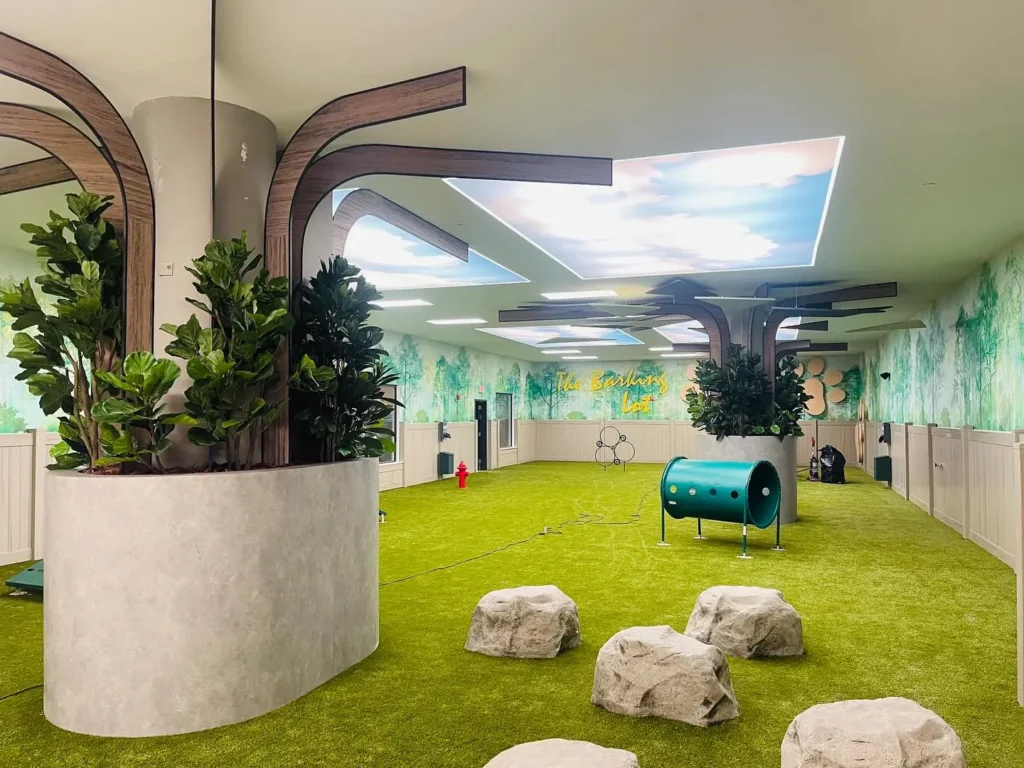
Branded “The Barking Lot,” this indoor room uses a tree-branch ceiling structure, faux greenery, sky-painted ceiling panels, and turf flooring to create a forest-like atmosphere indoors. Large planters filled with real or artificial plants double as visual dividers around the room, breaking up the open floor into smaller, more manageable zones.
This kind of biophilic design, which basically means bringing nature indoors, has become popular in human offices and gyms, and it works just as well for dog daycares. Being surrounded by greenery and sky-like ceiling panels can make an indoor space feel far less clinical and far more calming for both dogs and staff.
It keeps the space feeling fresh and calming, even without any windows. This is a big advantage for daycares located in commercial buildings or basements where natural light isn’t an option. A well-designed nature theme can trick the brain into feeling like it’s outdoors, even in a fully enclosed room.
The planters also serve a functional purpose beyond decoration. By breaking the room into smaller visual sections, they naturally guide dog groups into different areas without needing physical barriers everywhere, which keeps the space feeling open while still offering some separation.
📸 Photo credit: Instagram @interiorplantscapes
10. Indoor Trampoline Play Feature
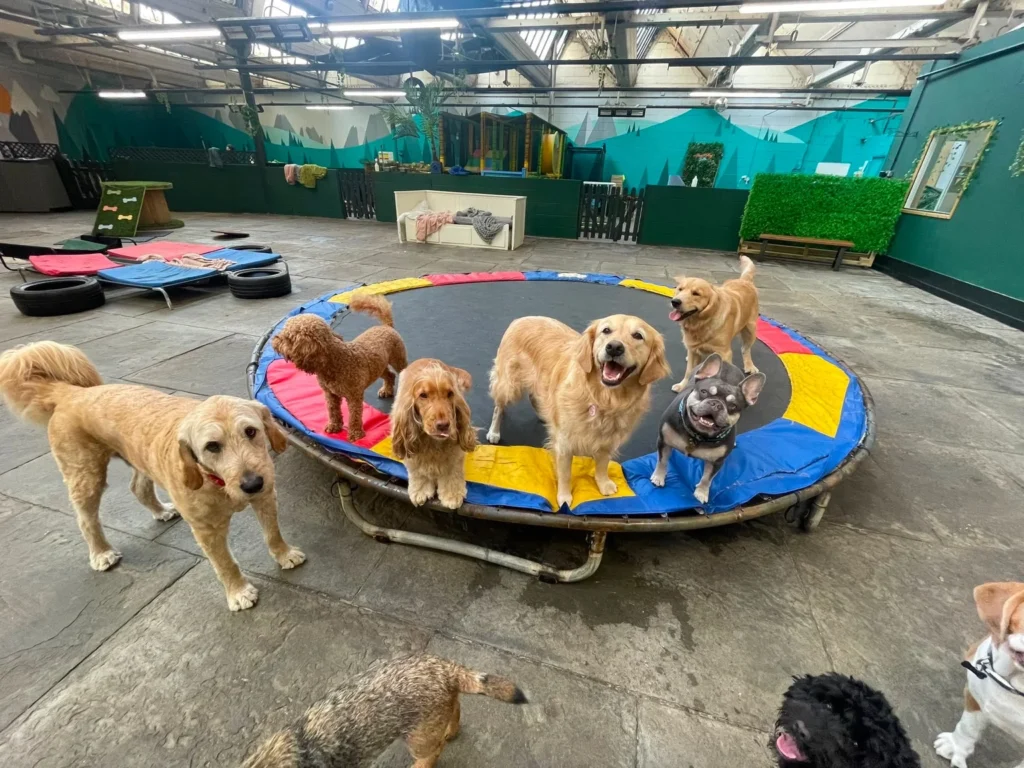
This daycare added something you don’t see often: an indoor trampoline as a group play feature. Set against a mountain-mural backdrop with stone flooring, the trampoline becomes a natural gathering spot where dogs pile on together, often resulting in some genuinely joyful group moments.
While a trampoline isn’t necessary for every daycare, it’s a fun, low-cost way to add variety to an indoor play room. Dogs are naturally curious about new textures and surfaces, and a trampoline gives them something novel to interact with beyond standard ramps and tunnels.
It also creates great photo and video content for social media, which helps with marketing. A group of happy dogs bouncing together is the kind of content that gets shared, tagged, and remembered, which is valuable free promotion for any daycare trying to grow its client base organically.
That said, a feature like this does require some supervision to make sure smaller or more delicate dogs aren’t overwhelmed by bigger dogs jumping around. Grouping by size and temperament, as always, helps keep a fun feature like this safe for everyone involved.
📸 Photo credit: Instagram @pawsandplaybolton
11. Rainbow Picket-Fence Yard with Mini Dog Houses
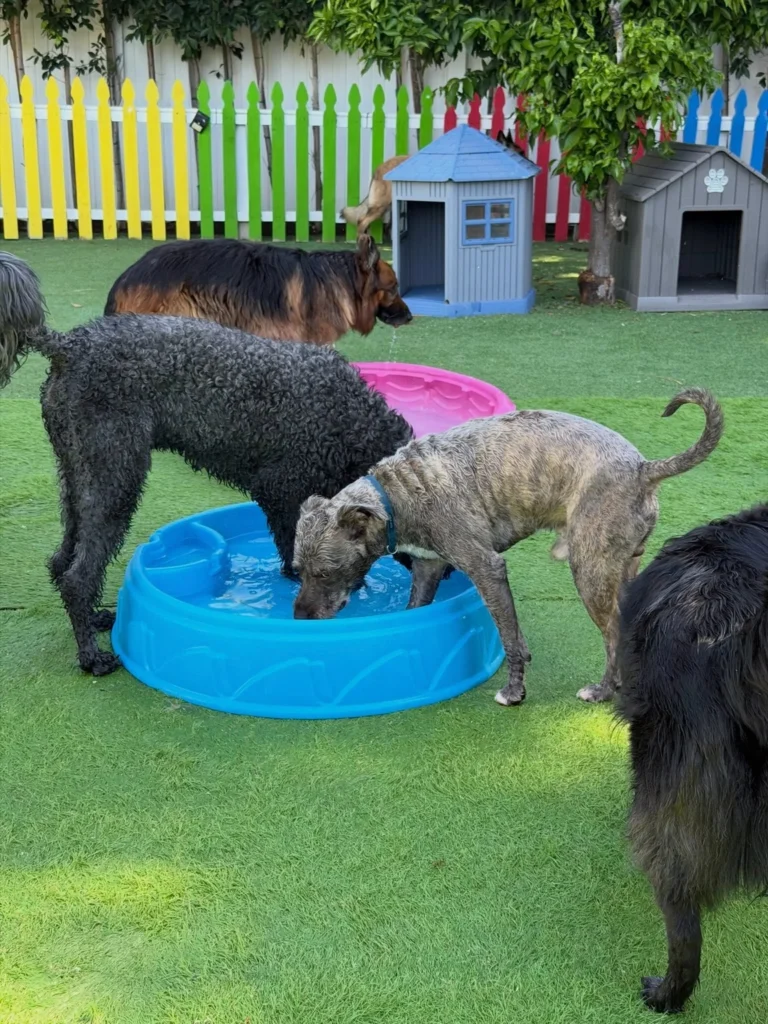
This outdoor yard uses a colorful picket fence in yellow, green, and red, paired with small individual dog houses scattered around the grass. The bright colors make the space feel playful and cheerful, while the dog houses give dogs a place to nap or cool off in the shade whenever they want a break from running around.
This is a great layout for daycares with a larger outdoor footprint, since it gives dogs both open running space and quiet nook options. Not every dog wants to be running the entire time they’re outside, so having small shelters scattered throughout the yard lets dogs self-regulate their activity levels naturally.
A similar approach, using mini dog houses tucked into a play yard, can also be seen at @thedawghousedaycareandboarding. Multiple daycares using this same combination of open space plus small shelter houses suggests it’s a layout that genuinely holds up in day-to-day use, not just in photos.
If you’re planning a similar setup, check out our outdoor dog kennel ideas for more inspiration on structuring outdoor shelters, especially if you want to explore different materials and styles beyond the classic plastic playhouse look.
📸 Photo credit: Instagram @4pawsn1tail
12. Small-Dog Bridge and Tunnel Play Zone
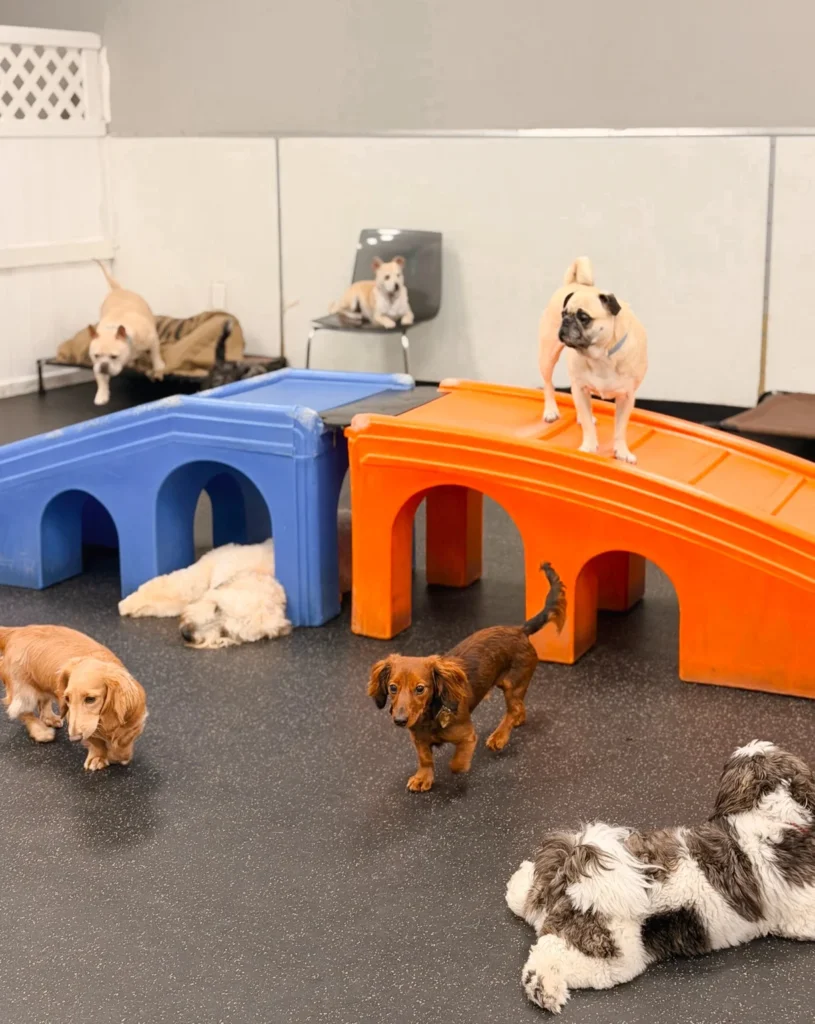
Scaled specifically for smaller breeds, this indoor setup uses blue and orange arched bridge-tunnel structures that dogs can climb over or hide under. Cushioned beds and a chair nearby give tired pups a place to rest between bursts of play, which matters a lot for smaller dogs that tire out faster than big breeds.
This layout is especially useful for daycares that separate dogs by size, since small breeds often get overwhelmed in large open play areas. A toy breed can easily get knocked over or intimidated in a room full of large, high-energy dogs, even if the bigger dogs mean no harm.
Giving small dogs their own scaled-down obstacle features keeps play safe and appropriately paced. The bridges and tunnels here are sized so that small dogs can comfortably climb and explore without the equipment feeling too big or too dangerous for their size.
This kind of zone also tends to be popular with pet parents of toy and small breeds specifically, since it shows that the daycare has actually thought about their dog’s unique needs rather than treating every dog the same regardless of size.
📸 Photo credit: Instagram @dogcoralgables
13. Boarding-Plus-Play Combo Facility
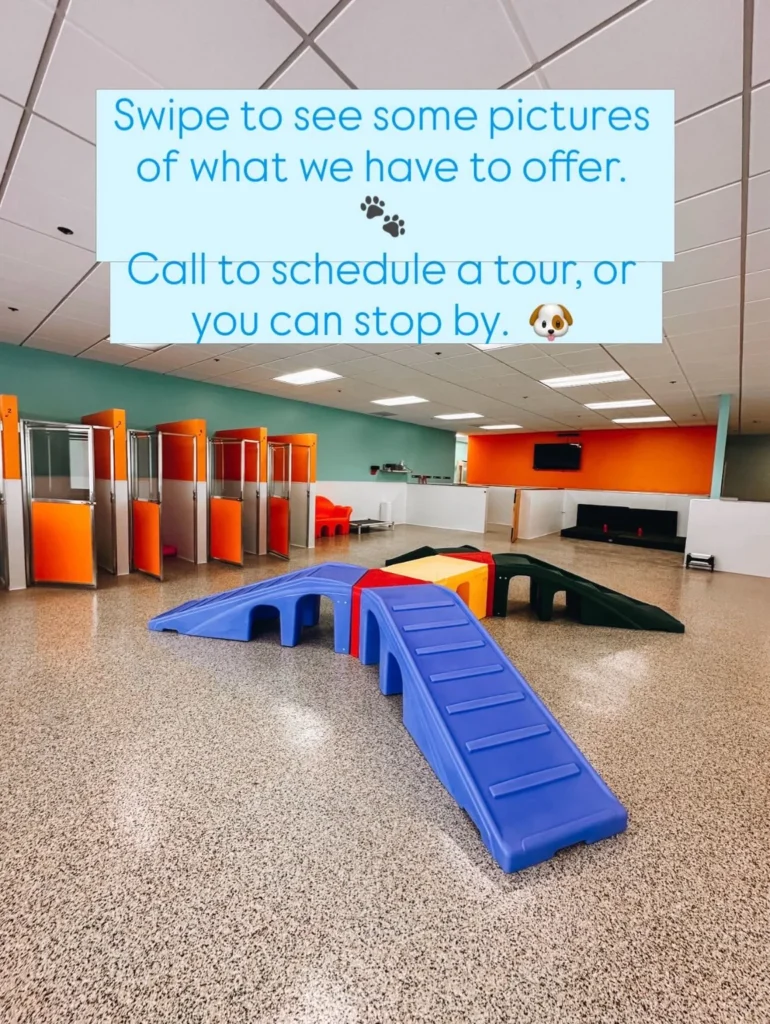
This layout combines boarding kennels with an open play area in the same large room. Orange-doored kennel suites line one wall, while a colorful obstacle course of ramps and tunnels sits in the open floor space, along with a wall-mounted TV for entertainment during quieter hours.
Combining boarding and daycare in one visible space helps staff supervise both functions at once, and it reassures boarding clients that their dog isn’t just sitting in a kennel all day. Seeing the play equipment right next to the kennels sends a clear message: dogs here get real activity, not just a place to sleep.
This setup is particularly efficient for smaller teams, since one staff member can keep an eye on both boarding dogs and daycare dogs without constantly moving between separate rooms. That kind of efficiency matters a lot for daycares trying to run smoothly without over-hiring staff.
For daycares building out boarding suites, our guide to indoor dog kennel ideas offers more layout direction, particularly around door styles, ventilation, and how to keep kennel areas from feeling too sterile or cage-like.
📸 Photo credit: Instagram @mm_doggydreamland
14. Individual Dog Suites with a Photo Gallery Wall
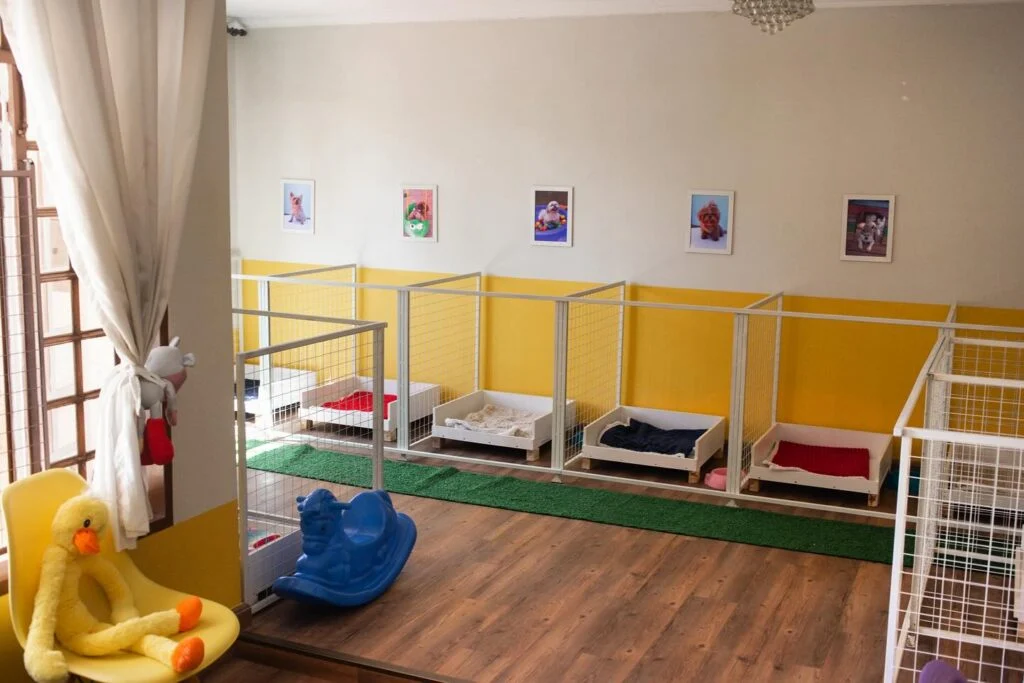
This layout takes boarding suites and gives them a warm, personal touch. Each suite has its own bed and space, separated by wire panel dividers, while a yellow accent wall and a gallery of framed photos, each showing a different dog, hang above the suites like a proper photo wall in someone’s home.
This small design choice, displaying real dog photos above the suites, makes the space feel personal rather than clinical. Instead of walking past rows of identical kennels, visitors see individual personalities represented on the wall, which softens the whole atmosphere of the boarding area.
It’s a simple, low-cost idea that any daycare or boarding facility can copy to make their space feel more welcoming. All it really takes is a camera, some frames, and a willingness to update the gallery regularly as new dogs come and go.
Beyond the visual appeal, this kind of personal touch also builds trust with pet parents. When people see that a facility takes the time to photograph and display individual dogs, it signals genuine care rather than a purely transactional boarding service.
📸 Photo credit: Instagram @crecherecreacao
Tips for Choosing the Right Dog Daycare Layout
Not every idea on this list will fit every daycare, and that’s okay. Here’s how to figure out what actually makes sense for your space and budget.
Start with your available square footage. If you’re working with a small indoor room, ideas like the built-in wooden den wall or the small-dog bridge and tunnel zone will fit better than a full obstacle yard. Trying to force a large-scale layout into a small space usually backfires, leaving dogs cramped and staff struggling to supervise properly.
Think about your climate. Outdoor pools and shaded obstacle yards work best in warmer regions, while indoor nature-themed rooms or fitness gyms make more sense in places with harsh winters. A beautiful outdoor pool setup does you no good for six months of the year if you’re somewhere with long, cold winters, so plan around your actual weather patterns.
Separate by size and energy level early. Several of the ideas above, like the small-dog bridge zone, exist specifically because mixing tiny breeds with large, high-energy dogs can be risky. Planning separate zones from the start saves you headaches later, both in terms of safety incidents and in terms of client trust.
Budget-friendly doesn’t mean boring. The simple turf yard with kiddie pools proves that you don’t need murals or custom-built furniture to create a space dogs love. Sometimes clean, safe, and open is exactly what’s needed, and you can always add themed decor later once the business is more established.
Don’t skip the calm zones. Every layout on this list that includes a lounge, den wall, or rest area exists for a reason. Dogs need downtime, even during a full day of play. A daycare that’s 100% high-energy space all day will exhaust both the dogs and your staff, and it can actually lead to more behavioral issues rather than fewer.
Photos matter for marketing. Notice how many of these daycares clearly design with Instagram in mind, using bright colors, murals, and themed rooms throughout their spaces. A well-designed space isn’t just good for the dogs, it’s good for filling your appointment book too, since word of mouth and social sharing often start with a great-looking facility.
Plan for cleaning and maintenance from day one. Murals, turf, and themed decor all look great in photos, but they also need upkeep. Before committing to an elaborate design, think through how easy it will be to clean, repaint, or replace over time, especially in high-traffic areas like play rooms and pool spaces.
Final Thoughts
There’s no single “correct” way to lay out a dog daycare. The best facilities usually mix a few of these ideas together: a calm lounge, an active play zone, a safe outdoor yard, and maybe a themed room that makes the space memorable. Layering a few of these concepts, rather than picking just one, tends to create the most well-rounded experience for the dogs in your care.
Whether you’re working with a tight budget or planning a full custom build, start with what your dogs actually need: safety, comfort, and enough variety to stay engaged throughout the day. The design details, like a mural or a trampoline, are the fun part that comes after you’ve got the basics right. Getting the fundamentals in place first will always serve you better than jumping straight to the flashiest features.
Take a few of the 14 ideas above, adapt them to your space, and you’ll already be ahead of most daycares out there. Every layout on this list started as someone’s simple decision to make their space just a little better for the dogs who spend their days there, and that same mindset is really all it takes to get started on your own.

Izzy is an experienced ranch worker who has a passion for exploring nature and getting up close to wildlife. With her connections to various animal organizations, Izzy is well-versed in animal care and rehabilitation.