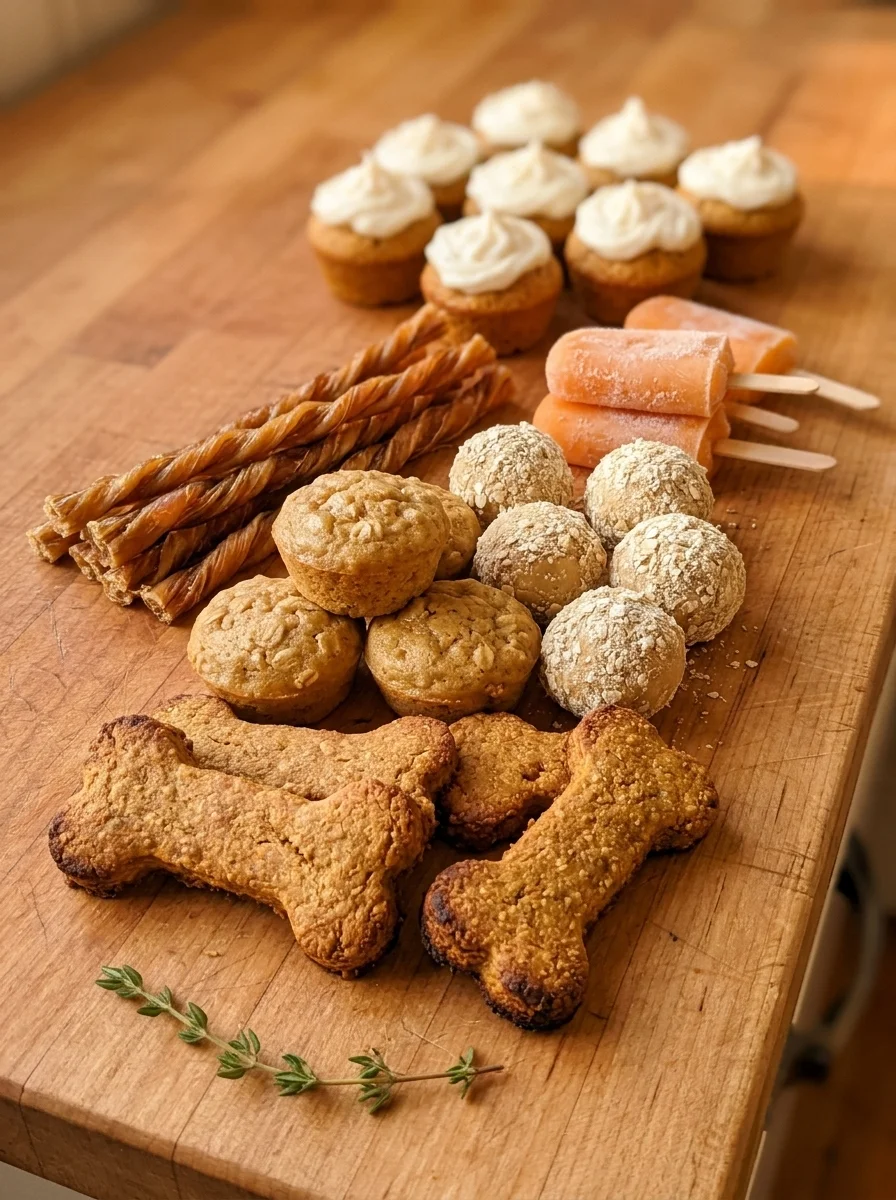
Homemade Dog Treats for Allergies: Recipes by Trigger
An itchy dog is a miserable dog — and a frustrating one for the owner watching them scratch. When the culprit is food, the fix is not a fancier bag of kibble. It is knowing exactly what goes into every treat your dog eats, and building a small set of recipes around ingredients their body tolerates.
The most common food allergens in dogs are a short, familiar list: beef, chicken, dairy, egg, wheat, soy, and corn. A dog allergic to chicken cannot eat a chicken treat, no matter how small the piece. A dog allergic to wheat cannot eat a wheat biscuit, no matter how “natural” the bag says it is. Homemade treats work because you control every ingredient — there is no hidden chicken fat in the flavoring, no wheat flour hiding in a “grain-free” recipe that was made on shared equipment.
This article gives you the method first — how allergy treats actually work — then six recipes, one per trigger, then a swap guide and a kitchen protocol so you can adapt any recipe to your own dog. If your dog’s allergies go beyond treats to their main meals, our homemade dog food for allergies covers full meals built on the same principles.
How Allergy Treats Work
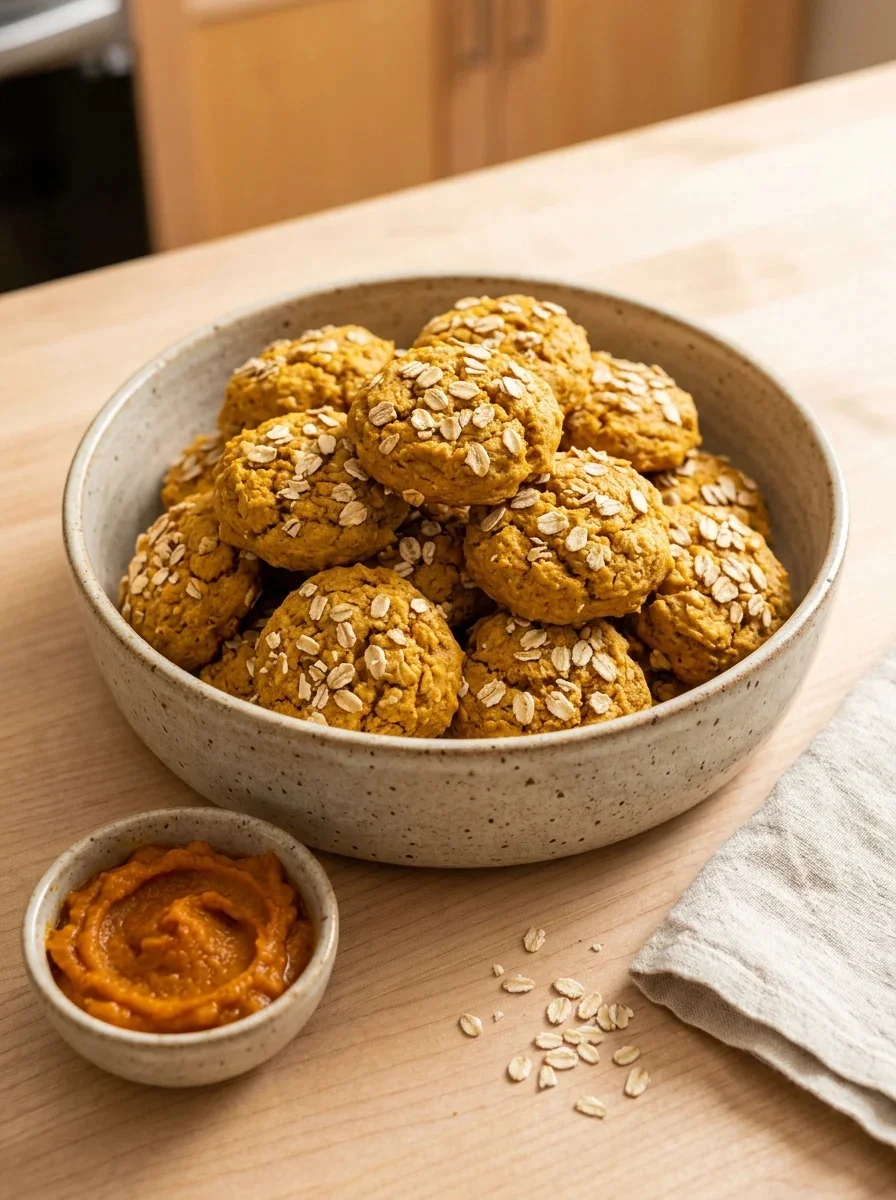
Food allergies in dogs work differently from a simple upset stomach. A food allergy is an immune reaction: the body mistakes a protein — usually beef, chicken, or dairy — for a threat and responds with itching, ear infections, hot spots, and digestive trouble. An intolerance, by contrast, is a digestive problem without the immune response.
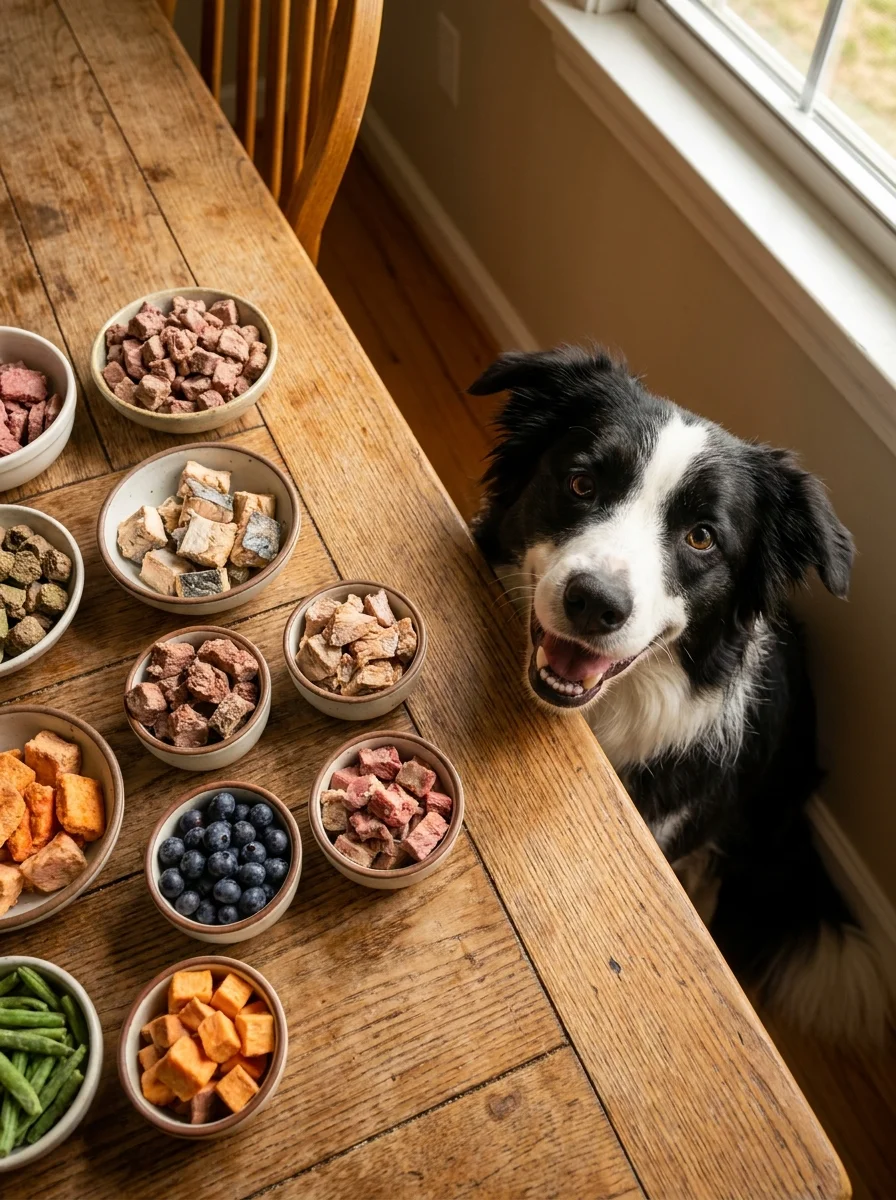
The gold standard for finding a trigger is the elimination diet. You feed your dog a diet of ingredients they have never eaten before — a novel protein like venison or duck, plus one carbohydrate — for eight to twelve weeks, with nothing else passing their lips. Then you reintroduce one ingredient at a time and watch for symptoms. It is slow, and it is the only method vets trust, because blood and saliva tests for food allergies in dogs are unreliable.
That is where these treats fit. During an elimination trial, most dogs get no treats at all — which is hard on everyone.
One rule above all the others: introduce one new treat at a time, and wait a full day before judging it. One treat, one day, one clear answer. Our homemade dog biscuits are a good starting point for the same slow-introduction habit with ordinary dogs.
The Safe-Ingredient Rules
Rule one: every ingredient must earn its place. If a recipe calls for an ingredient your dog has never had, ask whether it is doing real work. Flour binds, egg binds, pumpkin soothes — each one has a job.
Rule two: no hidden allergens. Peanut butter must be xylitol-free — xylitol is severely toxic to dogs, and it hides in some sweetened and low-sugar jars. Coconut yogurt must be unsweetened, with no xylitol and no added sugar. Sunflower seed butter must be plain, with no added oils or sweeteners.
Rule three: one protein per recipe. Each recipe here uses exactly one protein — or none at all — so a reaction points straight at the cause.
Rule four: the trigger stays out of the kitchen, not just the bowl. A wheat-free biscuit baked on a tray still dusty with wheat flour is not wheat-free. Oat flour is a useful safe base for most dogs, and our homemade oatmeal dog treats show how far it goes in ordinary baking too.
Pumpkin Oat Biscuits Recipe
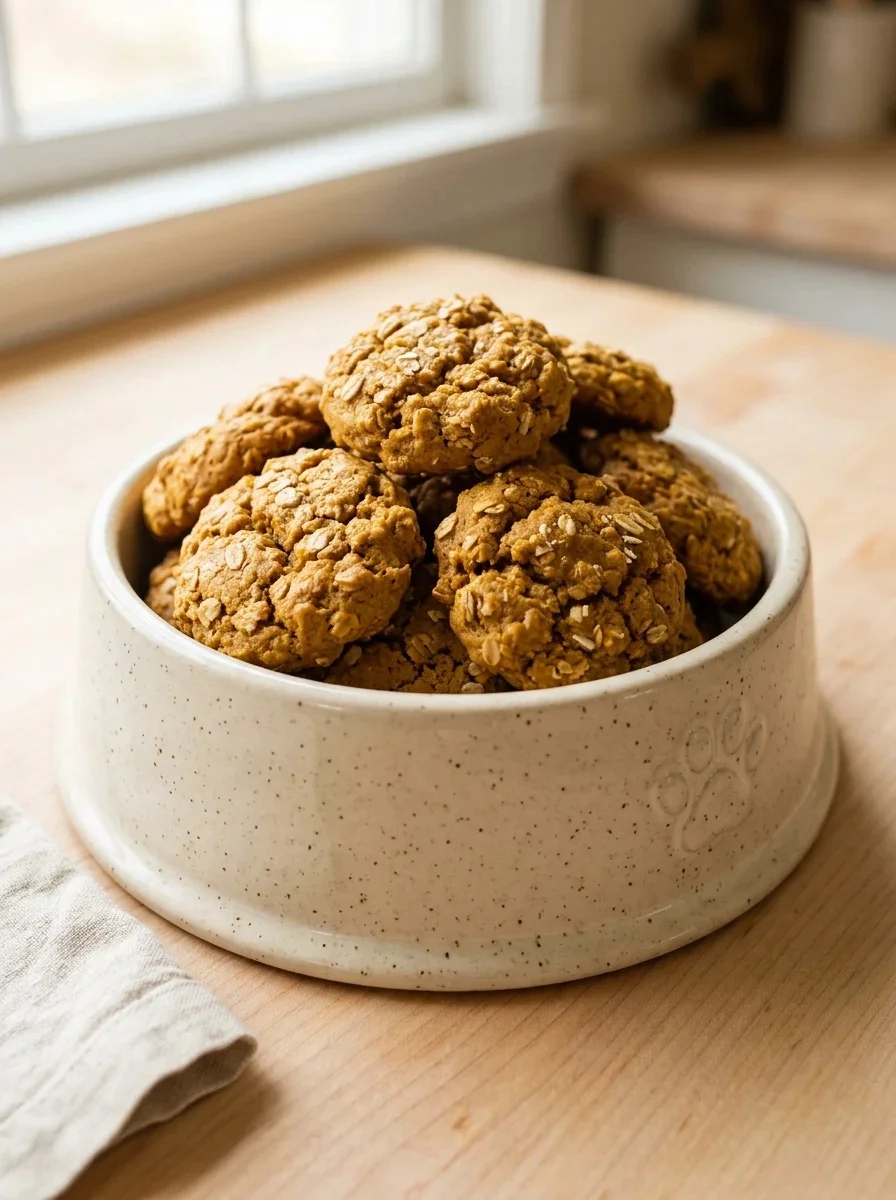
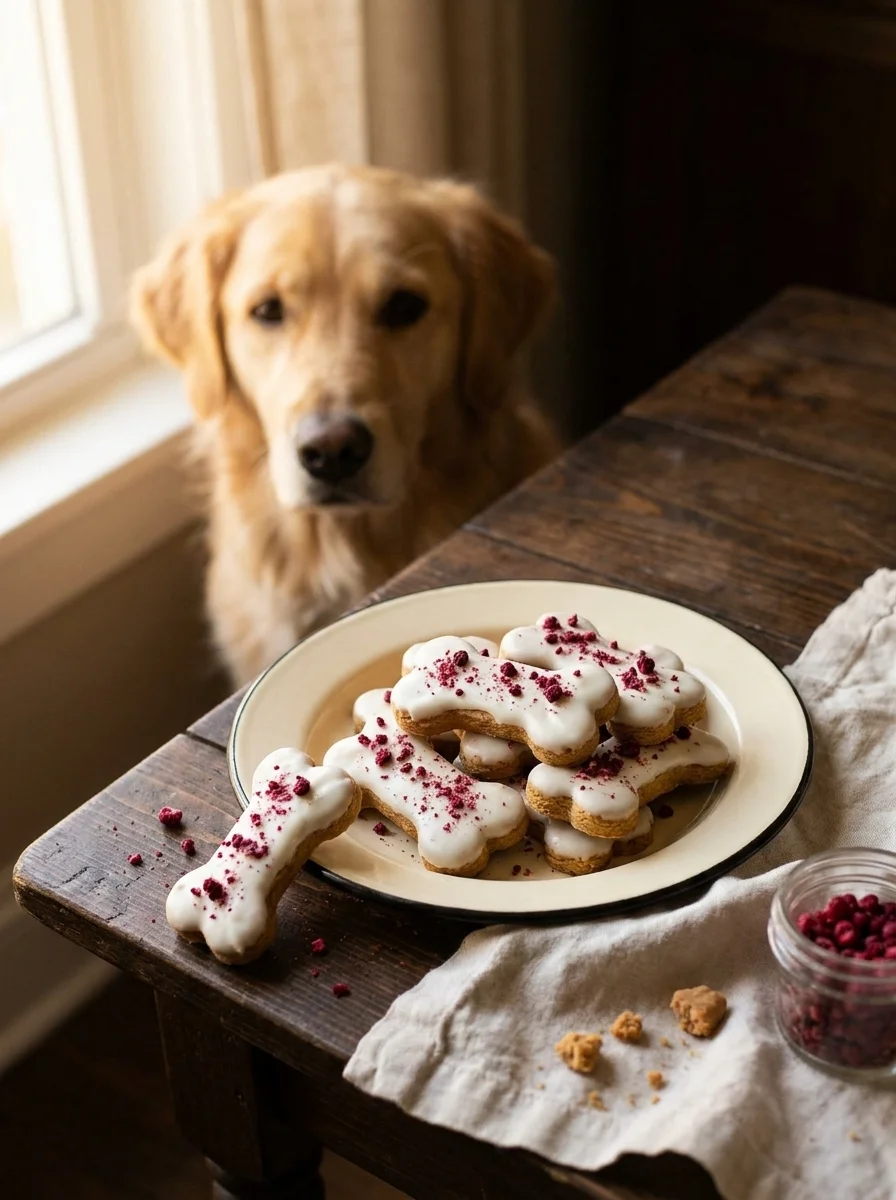
This is the safest recipe in the article — the one to bake first when you do not yet know what your dog reacts to. Pumpkin purée and oat flour, bound with a chia-seed egg instead of a real one, and nothing else. It avoids all seven of the top allergens: no wheat, no dairy, no egg, no chicken, no beef, no soy, and no peanut. If your dog tolerates these biscuits, you have a baseline treat you can always fall back on.
Ingredients
- 1 cup plain pumpkin purée (not pie filling)
- 2 cups oat flour
- 1 tablespoon ground chia seeds mixed with 3 tablespoons water (chia egg)
- 1 tablespoon coconut oil, melted
- ½ teaspoon ground cinnamon
Step-by-Step Instructions
- Make the chia egg first. Stir the ground chia seeds into the water and let it sit for 10 minutes until it turns into a thick gel. This is what holds the biscuits together in place of a real egg — skip the wait and the dough will crumble.
- Heat the oven and prepare the tray. Set the oven to 325°F (165°C) and line a baking tray with parchment paper. These biscuits are stickier than wheat ones, so parchment matters more than usual.
- Mix the dough. Stir the pumpkin purée, chia egg, and melted coconut oil together, then add the oat flour and cinnamon. Mix until a firm dough forms. If it is sticky, add oat flour a tablespoon at a time; if it cracks when you press it, add water a teaspoon at a time.
- Roll and cut. Roll the dough out to about ¼ inch thick on a lightly floured surface and cut into biscuits with a cookie cutter or a knife. Smaller biscuits suit small dogs and training; larger ones suit mealtimes.
- Bake until firm. Bake for 22–25 minutes, until the edges are set and the bottoms are lightly golden. These biscuits stay softer than wheat ones — that is normal, and dogs with sore gums prefer it.
- Cool completely before serving. Let the biscuits cool on the tray for 10 minutes, then move them to a rack. Serve one to start, and watch your dog for a day before making these a regular treat.
Five More Recipes by Trigger
Each recipe below is built around one trigger to avoid. The claim is in the heading, and the ingredients honor it — no egg in the chicken-free drops, no dairy or egg in the frozen bites, no wheat in the chickpea crunchies. Each one gets its own full recipe so you can bake it on its own without flipping back.
Recipe 2: Salmon & Sweet Potato Drops (Chicken-Free)
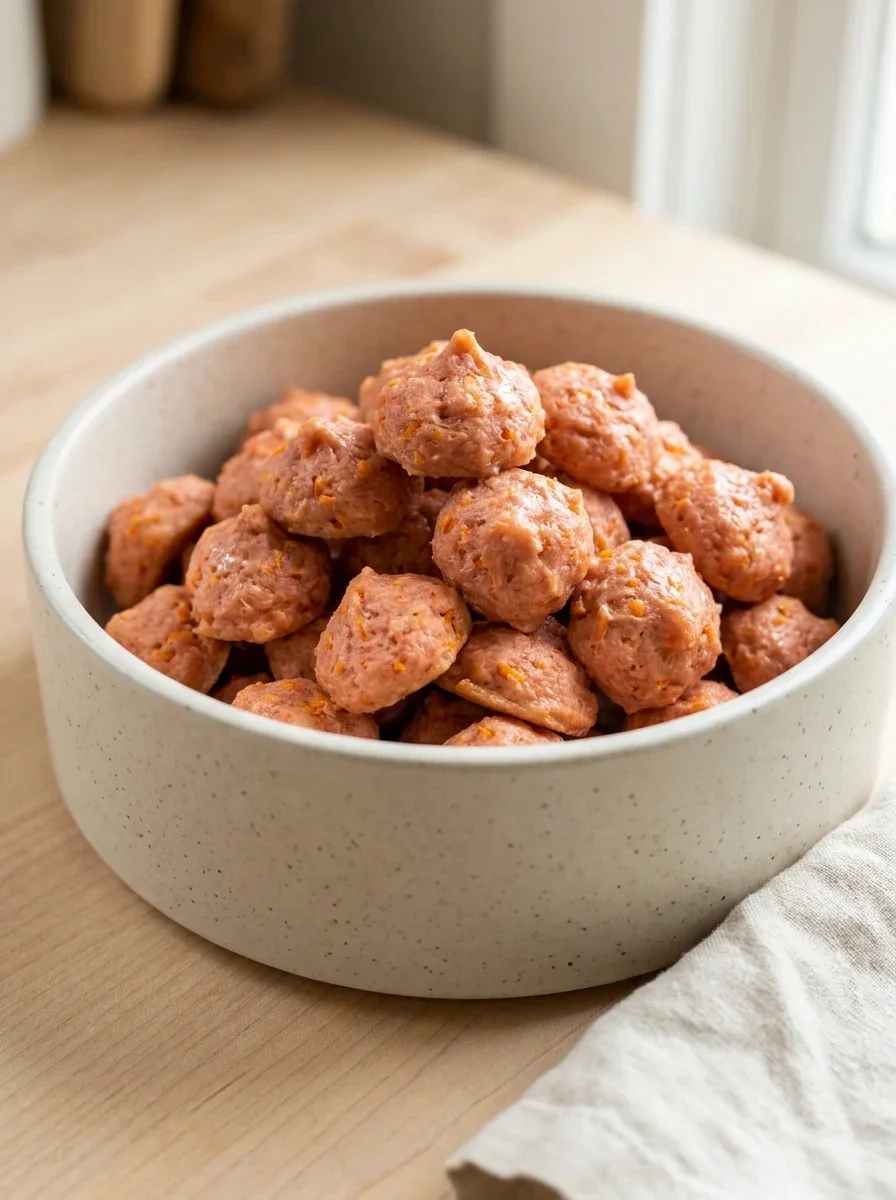
For dogs who cannot have chicken — the most common protein allergy of all. These drops use salmon as the protein and sweet potato as the binder, with flaxseed instead of egg, because dogs allergic to chicken can also react to eggs. They bake up soft and fishy, and most dogs go straight for them.
- 1 cup cooked salmon, flaked (no bones, no skin, no seasoning)
- 1 cup mashed sweet potato
- 1 cup oat flour
- 2 tablespoons ground flaxseed
- 1 tablespoon chopped fresh parsley
- Flake the salmon fine. Cooked salmon should flake into small pieces with a fork. Pick through it carefully for any pin bones — one missed bone in a soft treat is a real hazard.
- Mix the dough. Stir the salmon, mashed sweet potato, oat flour, flaxseed, and parsley together until a soft dough forms. It will feel wetter than a biscuit dough; that is correct for a drop treat.
- Drop by spoonfuls. Drop rounded spoonfuls onto a parchment-lined tray, about an inch apart, and flatten each one slightly with the back of the spoon.
- Bake at 350°F for 18–20 minutes, until the edges are set and the tops feel firm. Cool on the tray for 10 minutes, then move to a rack.
- Store in the fridge. These are moist treats and keep 5 days refrigerated, or 3 months frozen. Do not leave them at room temperature overnight.
Recipe 3: Venison Jerky Strips (Novel Protein)
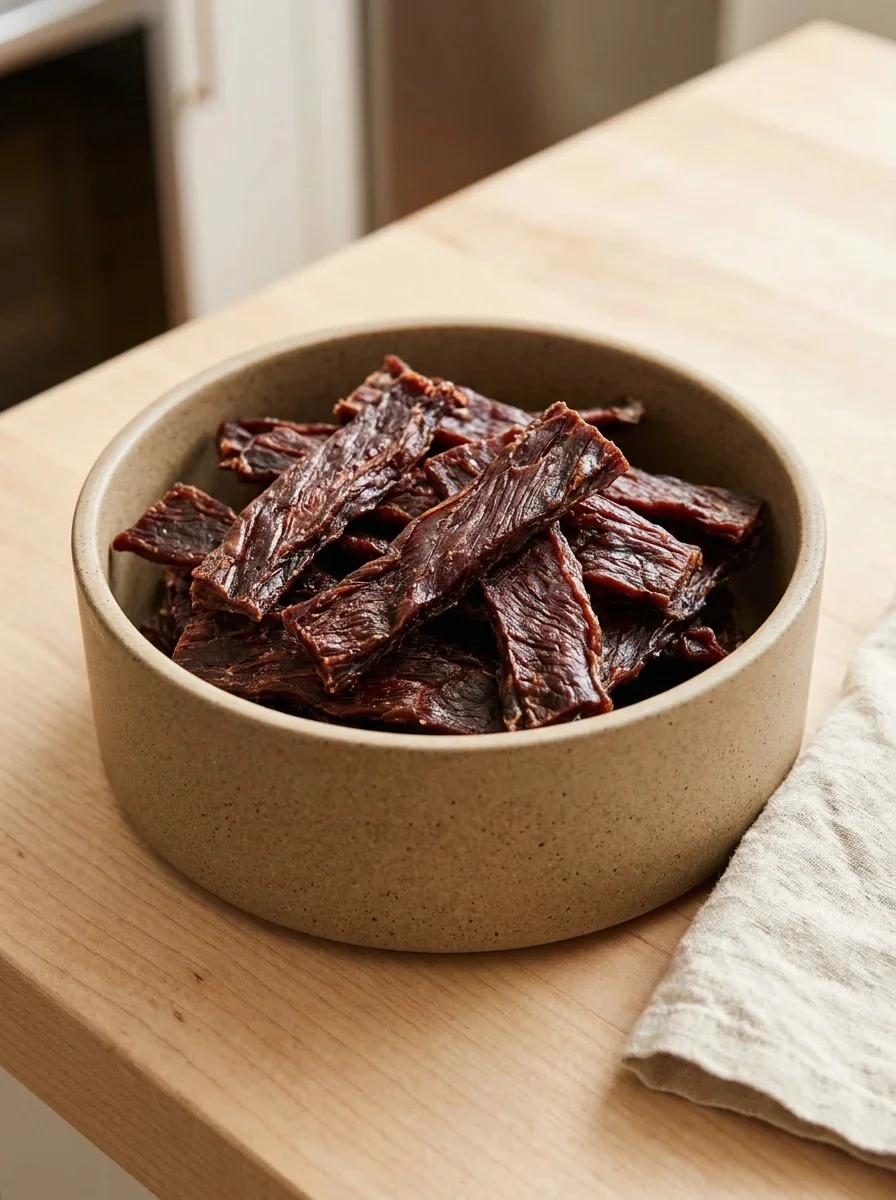
Venison is the classic novel protein — a meat most dogs have never eaten, which makes it the go-to for elimination diets. This recipe is a single ingredient: venison, sliced thin and dried low and slow until it bends without breaking. Nothing else goes in, so there is nothing else to react to.
- 1 pound venison steak, partially frozen for easier slicing
- 1 teaspoon dried rosemary (optional — skip it during a strict elimination trial)
- Slice it thin, against the grain. Partially freeze the venison for about an hour so it firms up, then slice it into strips about ⅛ inch thick, cutting against the grain. Thin, even slices dry evenly; thick pieces stay raw in the middle.
- Season lightly or not at all. If your dog is not in a strict elimination trial, sprinkle the rosemary over the strips. During a trial, skip it — one ingredient only.
- Dry low and slow. Lay the strips in a single layer on a wire rack over a baking tray and bake at 200°F (95°C) for 2–3 hours, flipping once halfway through. They are done when they bend without snapping and feel dry to the touch, with no soft or damp spots.
- Cool and cut to size. Let the strips cool completely, then cut them into dog-sized pieces. A strip that is too long becomes a choking risk for a fast eater — cut them short.
- Store in the fridge. Jerky keeps 2 weeks refrigerated in a sealed container. If any strip feels damp or smells off, throw the batch out — partially dried meat spoils fast.
Recipe 4: Pear Coconut Frozen Bites (Dairy- and Egg-Free)
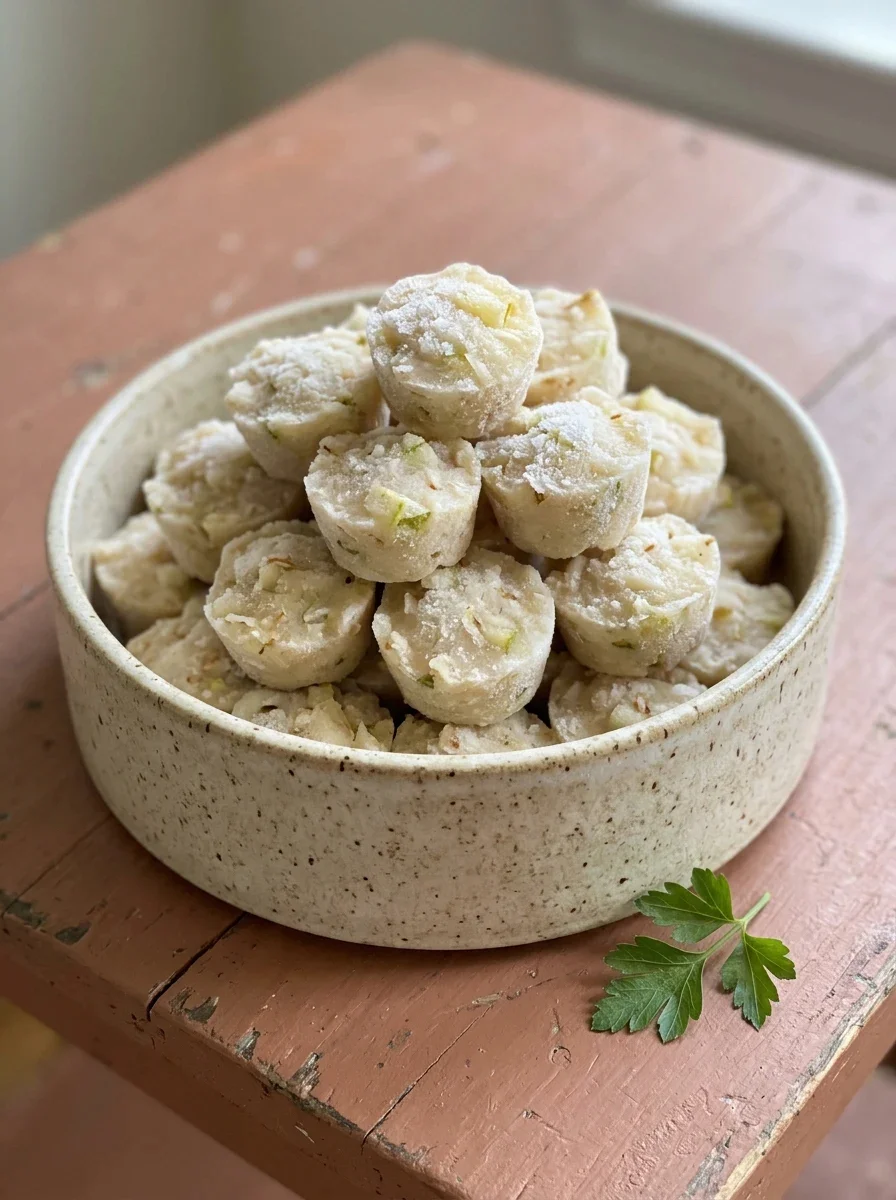
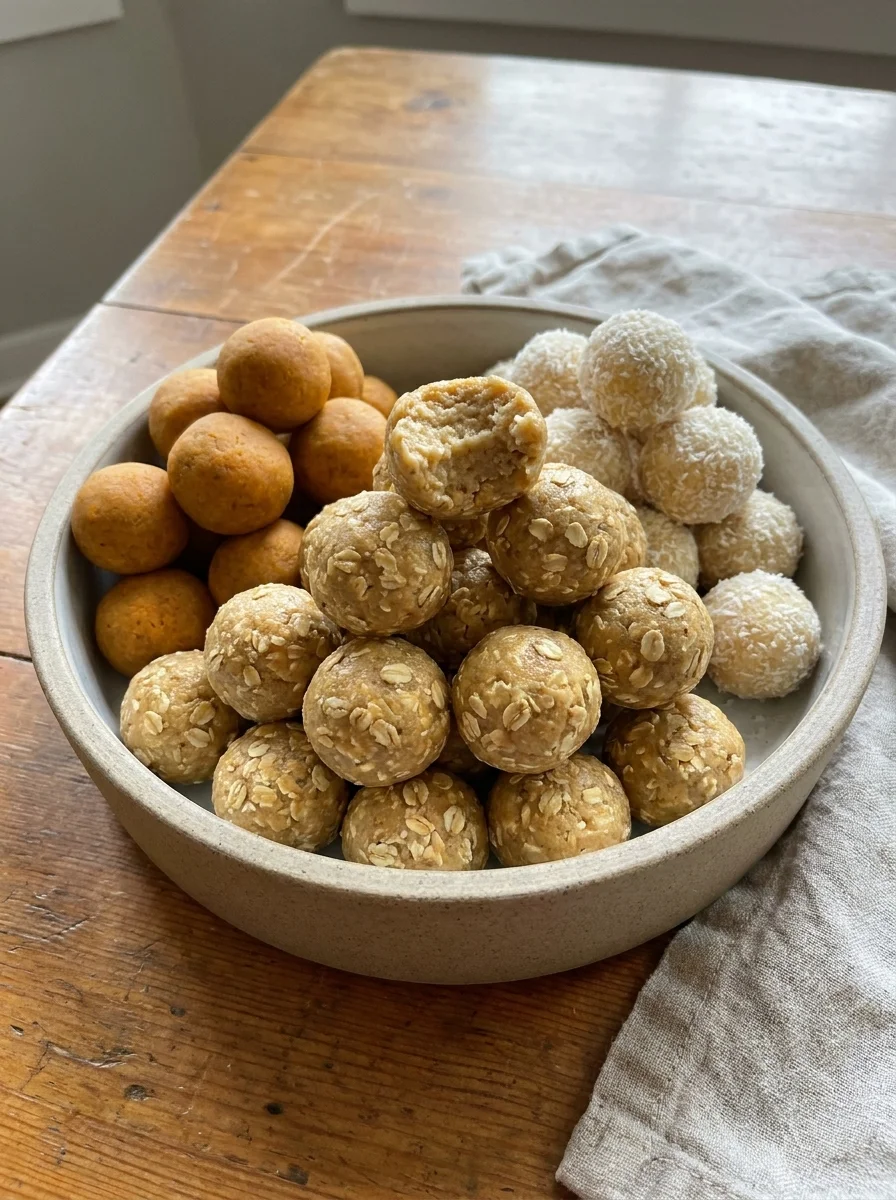
For dogs who cannot have dairy or egg, and for hot days when a baked treat is the last thing anyone wants. Pear and coconut yogurt freeze into soft, creamy bites with no milk, no egg, and no baking at all. Serve them in a dog bowl on the floor at dog level, and let each bite soften for a minute before your dog eats it — frozen treats straight from the freezer can crack a tooth.
- 1 ripe pear, peeled and diced
- 1 cup plain unsweetened coconut yogurt (no xylitol, no added sugar)
- 2 tablespoons coconut flour
- 2 tablespoons water
- Blend the pear smooth. Blend the diced pear with the water until completely smooth. Pear skins and chunks do not freeze well — they turn into hard, icy bits.
- Whisk in the yogurt and coconut flour. Stir until the mixture is evenly pale with no streaks. The coconut flour thickens it slightly so the bites hold their shape when frozen.
- Fill silicone molds. Spoon the mixture into small silicone molds or an ice cube tray, tapping the tray on the counter to settle it and pop any air bubbles.
- Freeze for at least 4 hours, until completely solid. Larger molds need longer — test one before serving the rest.
- Serve in a bowl, never in a human cup or glass. Pop the bites out of the molds into your dog’s bowl on the floor, and let them sit for a minute to soften slightly before your dog eats them.
For another frozen treat built the same way, our frozen blueberry yogurt dog treats use the same mold-and-freeze method with a different fruit.
Recipe 5: Chickpea Flour Crunchies (Wheat-Free)
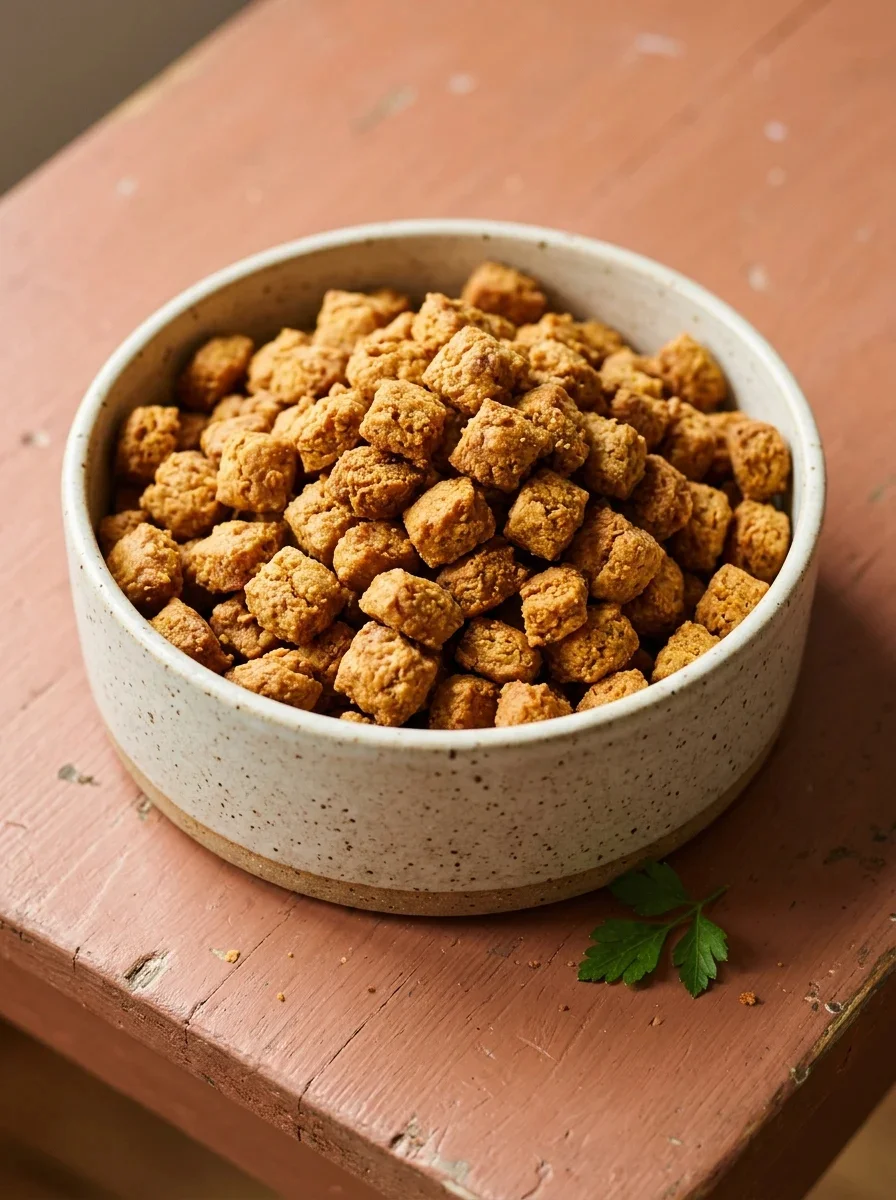
For dogs who cannot have wheat. Chickpea flour replaces it entirely — it is high in protein, binds well, and bakes into a genuinely crunchy biscuit. The pumpkin and sunflower seed butter keep them moist inside, and the egg is fine here because the claim is wheat-free, not egg-free.
- 1 cup pumpkin purée (not pie filling)
- 1½ cups chickpea flour
- 1 large egg
- 2 tablespoons plain sunflower seed butter (no xylitol, no added sugar)
- ½ teaspoon ground cinnamon
- Whisk the wet ingredients. Stir the pumpkin purée, egg, and sunflower seed butter together until smooth. Check the seed butter label first — it must be plain, with no xylitol and no added sugar.
- Add the chickpea flour and cinnamon and mix into a firm dough. Chickpea flour absorbs liquid more slowly than wheat flour, so let the dough rest for 5 minutes before judging the texture.
- Roll and cut. Roll out to ¼ inch thick and cut into biscuits. Chickpea dough is a little more crumbly than wheat dough — press any cracks back together with your fingers.
- Bake at 325°F for 20–22 minutes, until the edges are firm and the bottoms are lightly golden. For extra crunch, turn the oven off after baking and leave the biscuits inside for 30 minutes to dry out.
- Cool completely. These keep 5–7 days in an airtight container at room temperature, or 3 months frozen.
Recipe 6: Duck & Sweet Potato Chews (Single Protein)
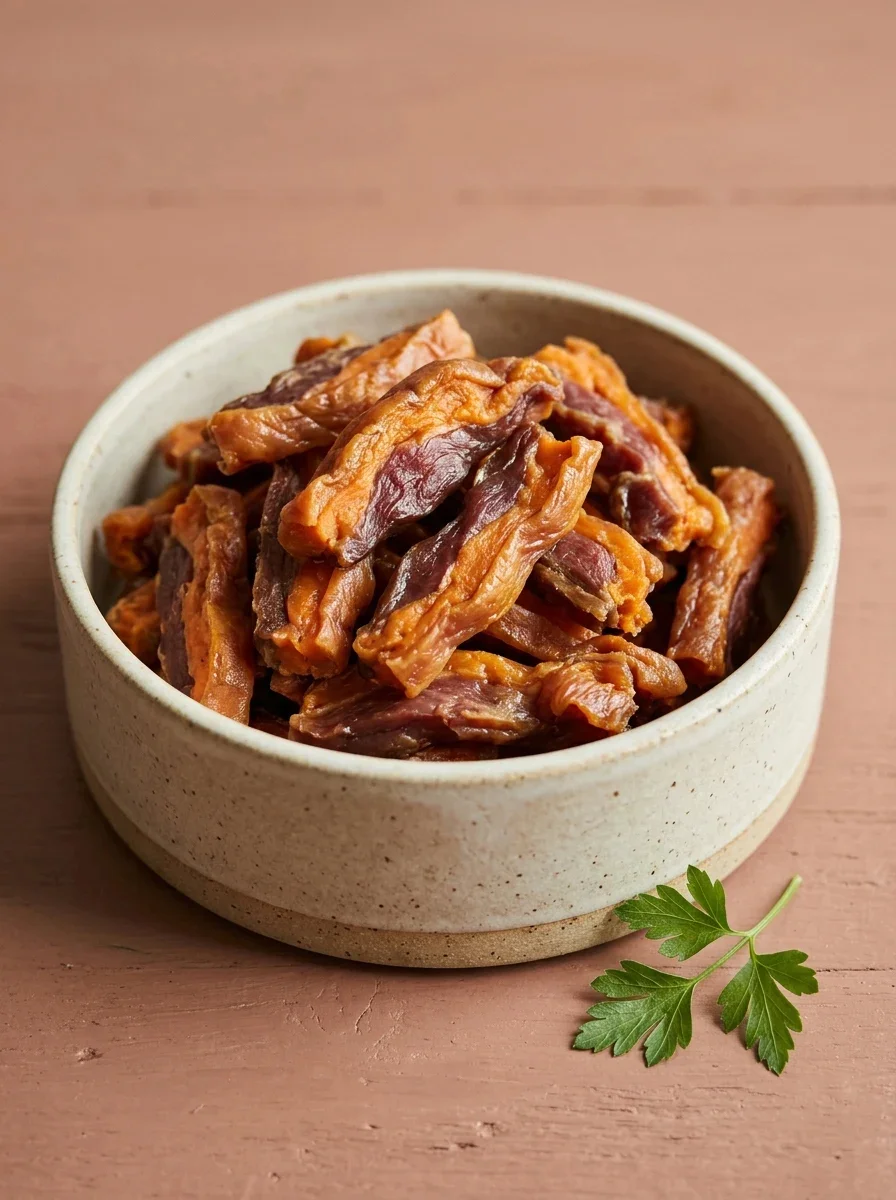
One protein, one carbohydrate, nothing else. Duck is another novel protein most dogs have never eaten, and sweet potato is one of the gentlest carbohydrates there is. These chews are the recipe to reach for when you need a treat you can trust completely — during an elimination trial, or for a dog with several known allergies at once.
- 1 pound duck breast, skin removed
- 1 large sweet potato, peeled and sliced into ¼-inch rounds
- Slice the duck thin. Cut the duck breast into strips about ¼ inch thick, cutting against the grain so the chews are easy to bite through.
- Wrap or layer. Wrap each duck strip around a sweet potato round, or lay the strips flat on top of the rounds — either way works, and wrapping makes a neater chew.
- Bake at 350°F for 28–30 minutes, until the duck is cooked through and the sweet potato is tender. The duck should reach 165°F inside — check with a meat thermometer if you are unsure.
- Cool and cut to size. Let the chews cool completely, then cut them into dog-sized pieces. A whole chew is too much for a small dog in one go.
- Store in the fridge. These keep 5 days refrigerated, or 3 months frozen. Do not leave them at room temperature — cooked duck spoils quickly.
If This Allergen Is the Trigger
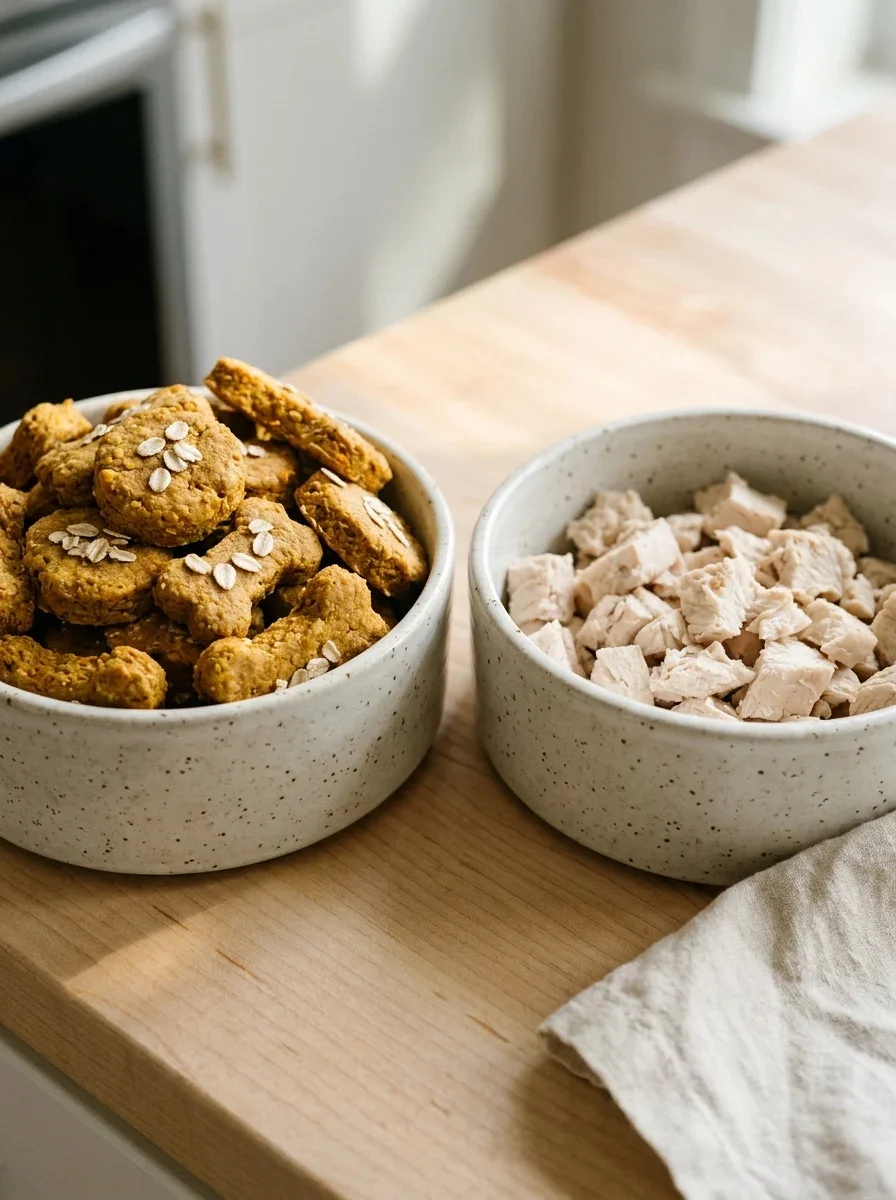
Chicken is the trigger: swap chicken for turkey, duck, salmon, or venison. Never swap chicken for egg — dogs allergic to chicken can react to eggs too, since both come from the same bird. Use a chia or flax egg instead: 1 tablespoon of ground chia or flaxseed stirred into 3 tablespoons of water, left for 10 minutes until gelled.
Beef is the trigger: swap beef for lamb, venison, or turkey. Beef fat and beef broth count as beef — check labels for “beef flavor” and “beef fat” in treats and toppers, not just the meat itself.
Wheat is the trigger: swap wheat flour for oat flour, chickpea flour, or coconut flour. Oat flour is the closest one-to-one swap. Coconut flour is not — it drinks up far more liquid, so use about half as much and add an extra egg or more water.
Egg is the trigger: swap one egg for a chia egg or flax egg, as above. Never swap egg for applesauce alone in a biscuit — it will not hold together.
Dairy is the trigger: swap yogurt and milk for plain unsweetened coconut yogurt. Check the label for xylitol and added sugar every time.
Peanut butter is the trigger: swap it for plain sunflower seed butter, in the same amount. It must be plain — no xylitol, no added sugar, no palm oil.
Kitchen Protocol
Bake the allergy treats first. On baking day, make the allergy treats before anything else, while the oven, trays, and counters are clean.
One board, one knife, one set of hands. Use a dedicated cutting board and knife for the allergy treats, and wash your hands between handling different proteins.
Wash everything hot. Baking trays, mixing bowls, measuring cups, and silicone molds all get washed in hot soapy water — not just rinsed — before the allergy batch.
Label and store separately. Store allergy treats in their own labeled, sealed container, on a different shelf from other treats.
Keep a treat log. Write down what your dog ate, when, and how they reacted — itching, ears, stool, energy — for the first two weeks of any new treat.
Storage and Serving by Size
Baked biscuits and crunchies keep 5–7 days in an airtight container at room temperature, 1–2 weeks in the fridge, and up to 3 months in the freezer. The salmon drops and duck chews are moist treats and belong in the fridge — 5 days, no more — or the freezer for 3 months. The venison jerky keeps 2 weeks refrigerated in a sealed container. The frozen pear bites keep 2 months in the freezer; thaw them for a minute in the bowl before serving, never in the microwave.
Serving follows size, and allergic dogs deserve smaller first tastes than other dogs. Toy and small dogs get half a biscuit or one small drop a day to start; medium dogs get one; large dogs one to two; extra-large dogs up to two. Puppies over twelve weeks can have half a mini biscuit. For another simple treat that stores the same way, check out this recipe for dog treats without flour.
FAQs
Final Thoughts
Living with an allergic dog is mostly a matter of attention, not effort. The recipes in this article are simple on purpose — a handful of ingredients, one protein each, nothing hidden — because the hard part was never the baking. It was knowing what to leave out, and trusting that what is left is enough. It is. A pumpkin oat biscuit made from five ingredients you can name is a better treat for an allergic dog than any bag of biscuits with a forty-item label.
Start with the pumpkin oat biscuits, introduce one new recipe at a time, and keep the log. The first time your dog goes a full week without scratching, you will know the system works — and you will have six recipes to rotate through, each one safe for a different trigger, each one made in your own kitchen.
And if the trial ever feels slow, remember what it is for: a dog who can eat a treat without paying for it later. That is worth eight weeks of patience, and worth every biscuit you bake along the way.

Izzy is an experienced ranch worker who has a passion for exploring nature and getting up close to wildlife. With her connections to various animal organizations, Izzy is well-versed in animal care and rehabilitation.