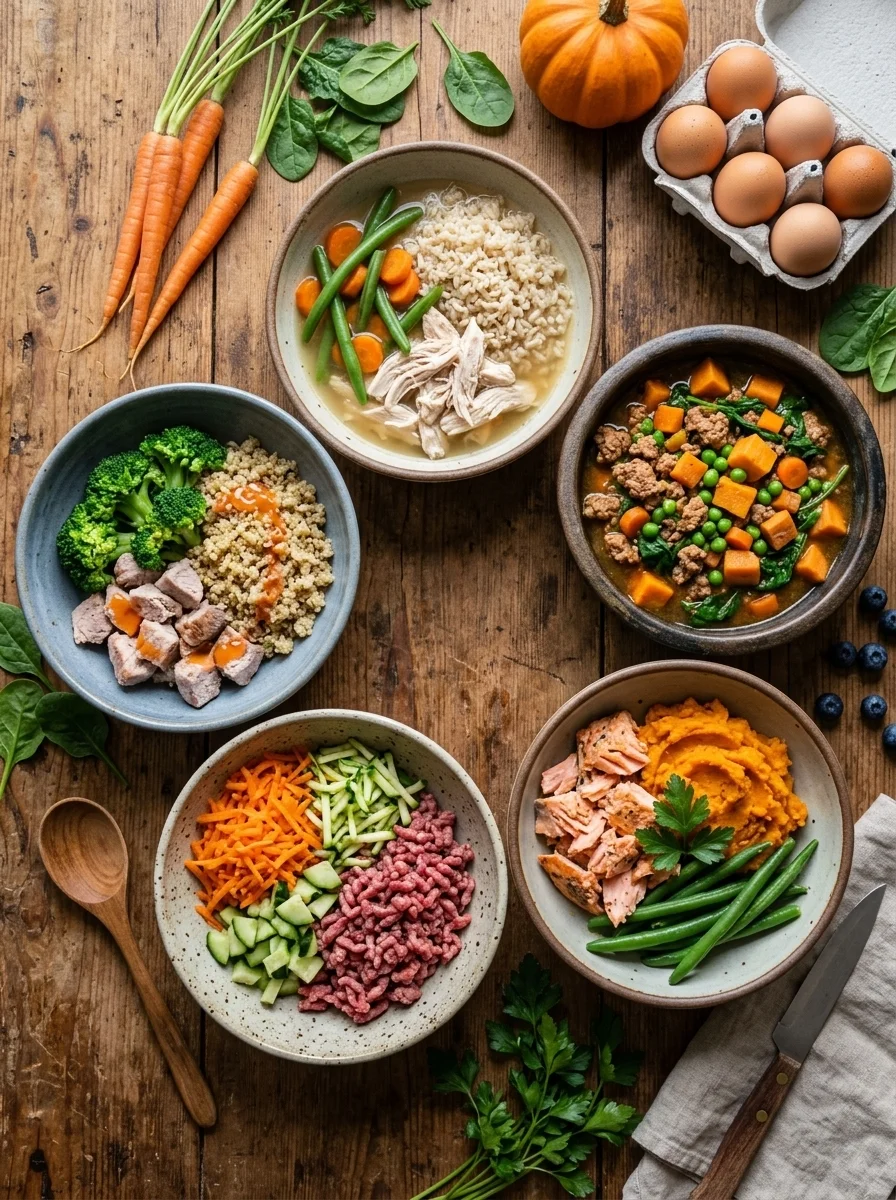
Chicken Dog Food Recipes That Turn One Protein Into a Week of Dinners
Chicken is the protein most dogs meet first, and for good reason: it is mild, easy to digest, and easy to cook well. One protein can still become a boring week, though, if every dinner is the same chicken-and-rice bowl. This article fixes that with five genuinely different chicken meals — a classic stew, a quinoa bowl, a kibble topper, baked meatballs, and a 15-minute scramble — so one protein turns into a week of dinners your dog actually looks forward to.
Cook them, rotate them, and let the method fit the night.
Why Chicken Is the Safest First Protein
Chicken is mild on the stomach, low in fat when the skin is removed, and familiar to almost every dog.
A bland starting point: When a dog has an upset stomach, vets reach for boiled chicken and rice first, and that instinct is sound. The stew in this article is built on exactly that idea, then the other four recipes build outward from it.
Protein dogs can use: Chicken gives dogs the amino acids they need for muscle, skin, and coat without the heavy fat load of richer meats.
The allergy watch: Chicken is also the protein some dogs react to, so watch for itching, ear redness, or loose stools in the first week of feeding chicken regularly. Those signs mean stop and check with your vet before continuing.
One protein, five jobs: The point of this article is not five versions of the same bowl. Each recipe below has a different base, a different method, and a different job: a bland stew for bad days, a quinoa bowl for variety, a topper for kibble dogs, meatballs for portion control, and a scramble for busy nights.
The Chicken Formula: Protein + Base + Veg + Broth
Every recipe in this article follows one formula: a boneless chicken protein, a cooked base, a dog-safe vegetable, and plain water or onion- and garlic-free broth.
The protein, always boneless: Use boneless chicken breast or thigh, skin removed, in every recipe. Cooked bones splinter and can cause choking or internal injury, so bones never appear as an ingredient here — if a recipe starts from bone-in cuts, every bone is removed and discarded before serving, never served. The chicken-and-pumpkin approach in this guide follows the same boneless rule, and it is the rule that never bends.
The base, cooked soft: Rice, quinoa, and barley each cook soft enough for a dog to digest, and each brings a different texture. Rinse quinoa before cooking or it tastes bitter, and cook barley until it is fully tender — a crunchy grain is a wasted grain. No onion and no garlic anywhere, including in the broth — both are toxic to dogs and cause anemia, and that includes onion and garlic powders, which hide in seasoning blends and stock cubes.
The broth, optional and honest: Broth is an optional serving liquid only — a spoonful over a finished meal — never a recipe on its own. A good homemade bone broth for dogs adds aroma and moisture, but read the label or make it yourself: store-bought broth is often salted and seasoned with onion and garlic.
Recipe 1: Classic Chicken, Rice & Veggie Stew
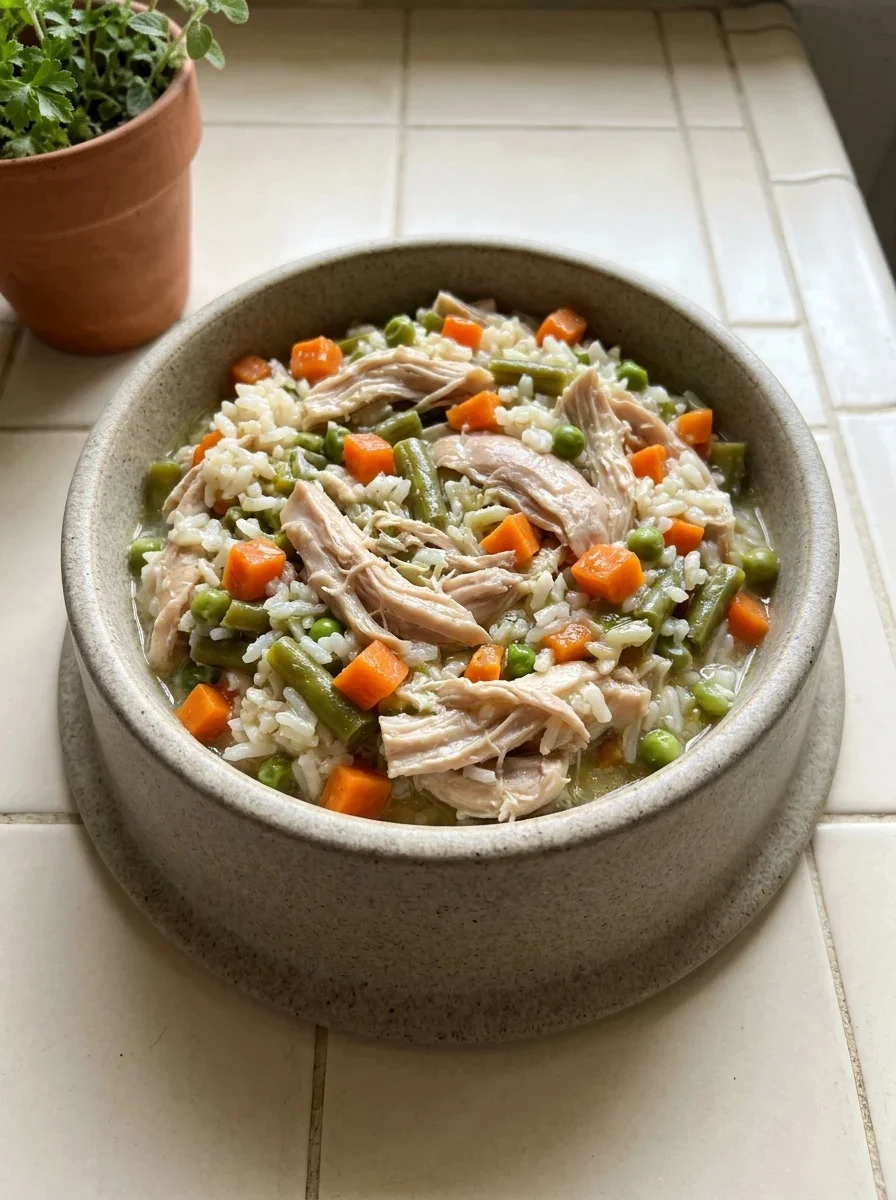
This is the canonical recipe readers expect: boneless chicken thighs simmered with white rice, carrots, green beans, and peas in plain water until tender, then shredded and cooled. It is a stovetop / Dutch oven simmer — the classic method, never pressure-cooker and never slow cooker.
Ingredients
- 1 1/2 lbs boneless skinless chicken thighs
- 1 cup white rice, rinsed
- 2 carrots, peeled and diced small
- 1 cup green beans, chopped into 1/2-inch pieces
- 1 cup frozen peas
- 6 cups plain water or onion- and garlic-free broth
Step-by-Step Instructions
- Place the chicken thighs in a large pot or Dutch oven and cover with the water or broth, then bring to a gentle boil over medium-high heat and skim off any foam that rises.
- Reduce the heat to low, cover, and simmer for 25 minutes until the chicken is cooked through with no pink meat and an internal temperature of 165F.
- Lift the chicken out with tongs onto a plate, keep the pot simmering, and stir the rice into the hot liquid so it cooks in the chicken-flavored water.
- Add the carrots and green beans, cover, and simmer for 20 minutes until the rice is soft and the vegetables are tender, stirring once halfway so the rice does not stick.
- Stir in the peas and cook for 3 more minutes until they turn bright green, then remove the pot from the heat.
- Shred the chicken with two forks into bite-size pieces, checking every piece for bones as you go, and stir the shredded chicken back into the pot.
- Let the stew cool to room temperature, about 20 minutes, stirring once, then serve in a dog bowl on the floor at dog level.
Recipe 2: Chicken & Quinoa Bowl with Green Beans & Pumpkin
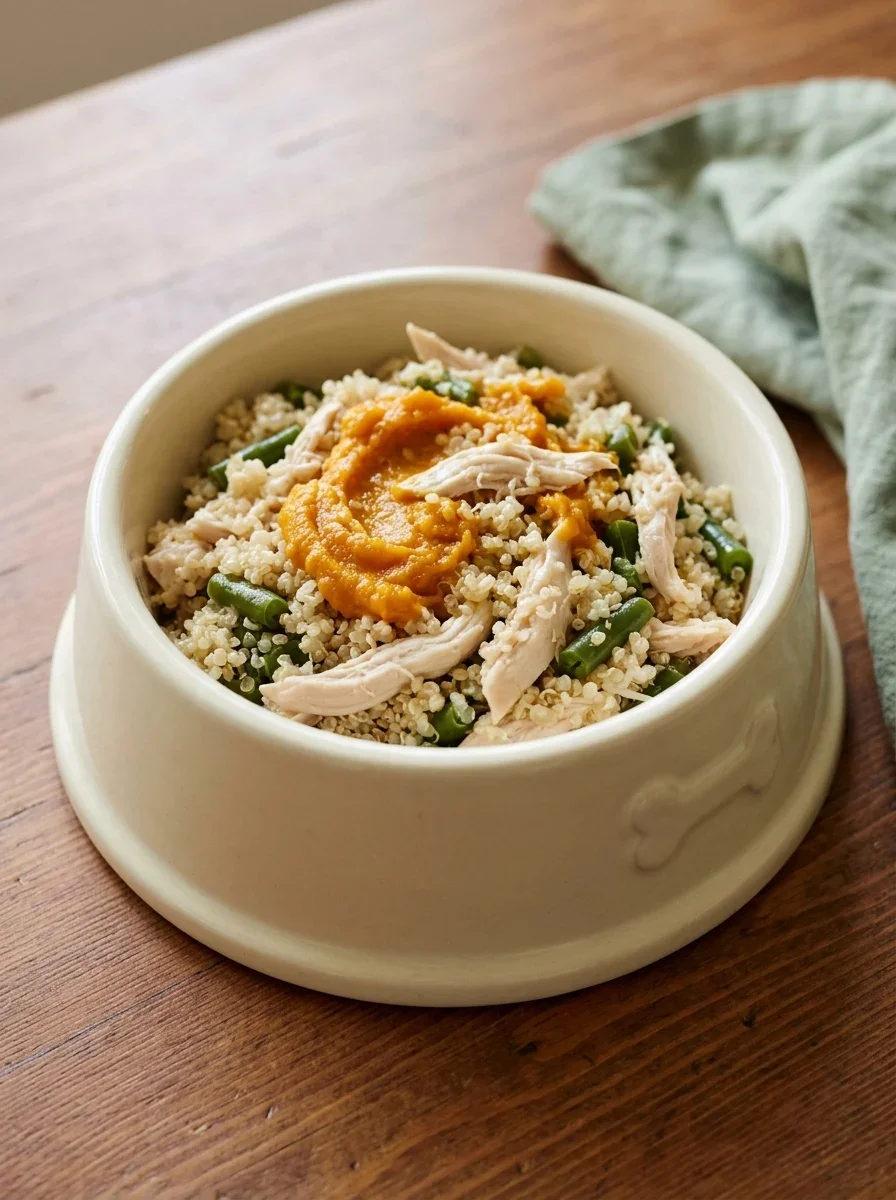
Quinoa is a genuinely different grain base from rice — a complete protein with a lighter, fluffier texture — and this bowl is built around it. The pumpkin here is a side ingredient only, one spoonful folded through for fiber and color; the bowl is quinoa-led, not pumpkin-led.
Ingredients
- 1 lb boneless skinless chicken breast
- 1 cup quinoa, rinsed well
- 2 cups plain water
- 1 cup green beans, chopped into 1/2-inch pieces
- 1/2 cup plain pumpkin puree (not pie filling)
- 1 tablespoon olive oil
Step-by-Step Instructions
- Rinse the quinoa in a fine sieve under cold water for 30 seconds until the water runs clear, or the finished bowl will taste bitter.
- Place the chicken breast in a saucepan, cover with the 2 cups of water, and bring to a gentle boil, then reduce the heat and simmer for 15 minutes until the chicken reaches 165F with no pink meat.
- Lift the chicken out onto a plate, keep the cooking water simmering, and stir the rinsed quinoa into the same water so it absorbs the chicken flavor as it cooks.
- Cover and simmer the quinoa for 15 minutes until the grains turn translucent and the little tails uncurl, then remove from the heat and let it stand, covered, for 5 minutes.
- While the quinoa stands, steam the green beans for 5 minutes until bright green and tender, then chop them small if your dog is small.
- Shred the chicken with two forks into bite-size pieces, checking for bones, and fold the chicken, green beans, pumpkin puree, and olive oil through the fluffed quinoa.
- Let the bowl cool to room temperature, about 15 minutes, then serve in a dog bowl on the floor at dog level.
Recipe 3: Chicken & Barley Meal Topper
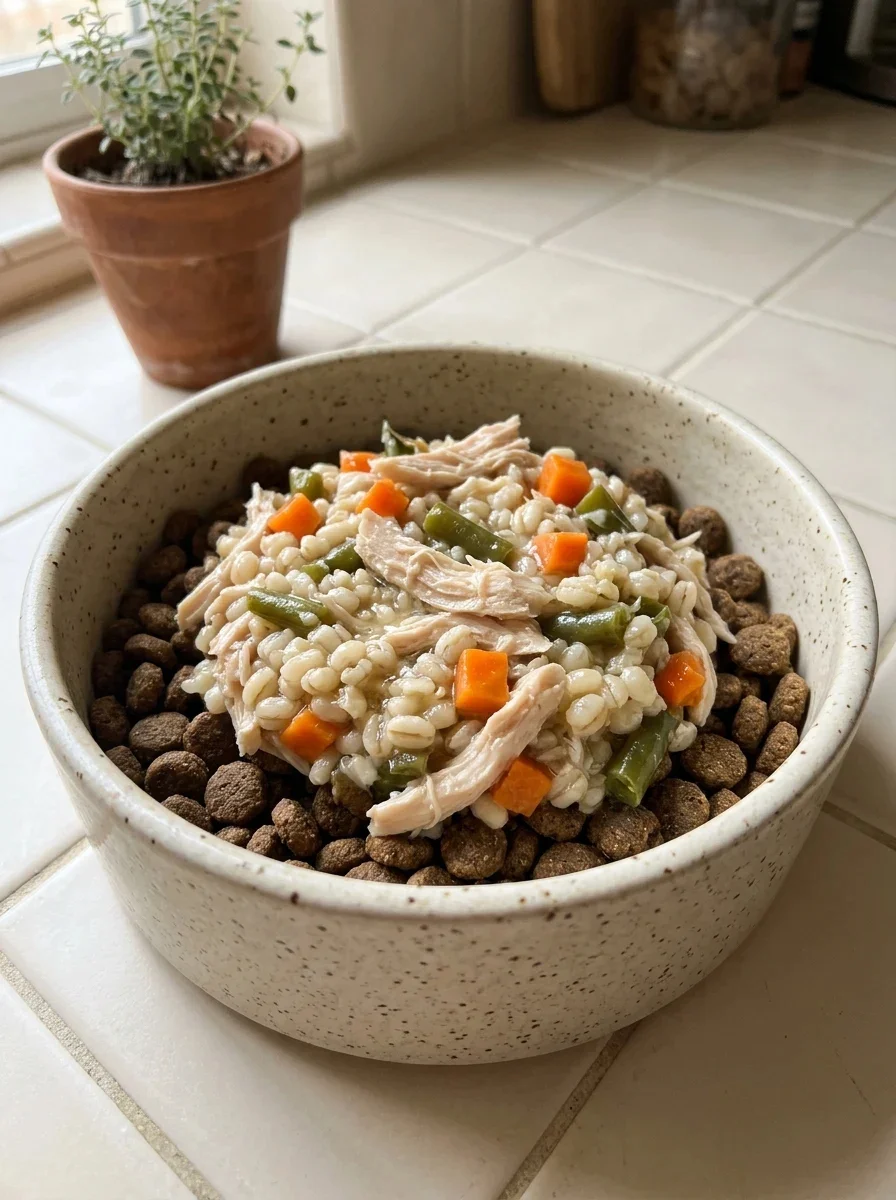
This is a topper, not a full meal — the only recipe in the set that does not replace a meal.
Ingredients
- 1/2 lb boneless skinless chicken breast
- 1 cup pearl barley, rinsed
- 3 cups plain water or onion- and garlic-free broth
- 1 carrot, peeled and diced small
- 1/2 cup green beans, chopped small
Step-by-Step Instructions
- Place the chicken breast in a saucepan, cover with the water or broth, and bring to a gentle boil, then reduce the heat and simmer for 15 minutes until the chicken reaches 165F.
- Lift the chicken out onto a plate and stir the rinsed barley into the same simmering liquid so it cooks in the chicken flavor.
- Add the carrot and green beans, cover, and simmer for 35 minutes until the barley is fully tender, stirring once halfway so it does not catch on the bottom.
- Shred the chicken with two forks into very small pieces, checking for bones, and stir it back into the barley.
- Cook for 2 more minutes so the chicken warms through, then remove from the heat and let the topper cool to room temperature, about 15 minutes.
- Spoon about 2 tablespoons over a cup of your dog’s regular kibble, add a splash of warm water, and serve in a dog bowl on the floor at dog level.
A topper, not a meal: This recipe never replaces a meal, and that is its strength — a kibble dog gets warm food and real chicken without changing the diet that already works.
Recipe 4: Baked Chicken & Veggie Meatballs
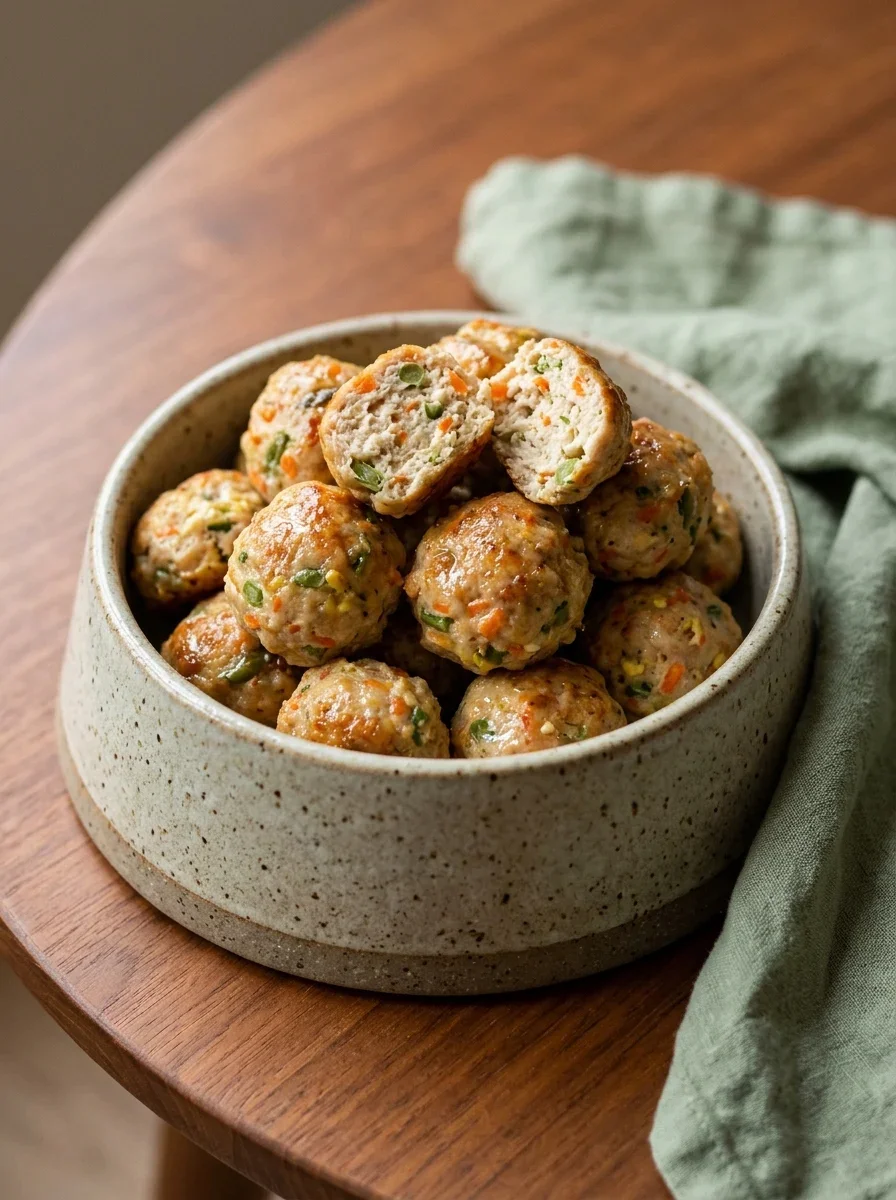
No oats anywhere — the egg and vegetables are the binder, so this recipe stays clear of the oatmeal angle entirely.
Ingredients
- 1 lb ground chicken
- 1 large egg, beaten
- 1 carrot, peeled and finely chopped
- 1/2 cup green beans, finely chopped
- 1/4 cup plain water
Step-by-Step Instructions
- Heat the oven to 375F and line a baking sheet with parchment paper so the meatballs release cleanly.
- Mix the ground chicken, beaten egg, carrot, green beans, and water in a large bowl with your hands until just combined, then stop — overmixing makes tough meatballs.
- Roll the mixture into 24 small meatballs, about 1 inch across, wetting your hands first so the mixture does not stick.
- Place the meatballs on the lined sheet with a little space between them and bake for 20 minutes until they are firm, lightly browned, and 165F at the center with no pink meat.
- Let the meatballs rest on the sheet for 5 minutes so the juices settle, then move them to a plate.
- Cool completely to room temperature, about 15 minutes, then serve whole for a large dog or break into halves for a small dog, in a dog bowl on the floor at dog level.
- Store the rest in an airtight container in the fridge for up to 4 days, or freeze in a single layer and thaw overnight in the fridge.
Meatballs that hold together: The egg sets as it bakes and the vegetables keep the inside moist, so these hold their shape without any grain binder.
Recipe 5: Chicken, Egg & Spinach Skillet Scramble
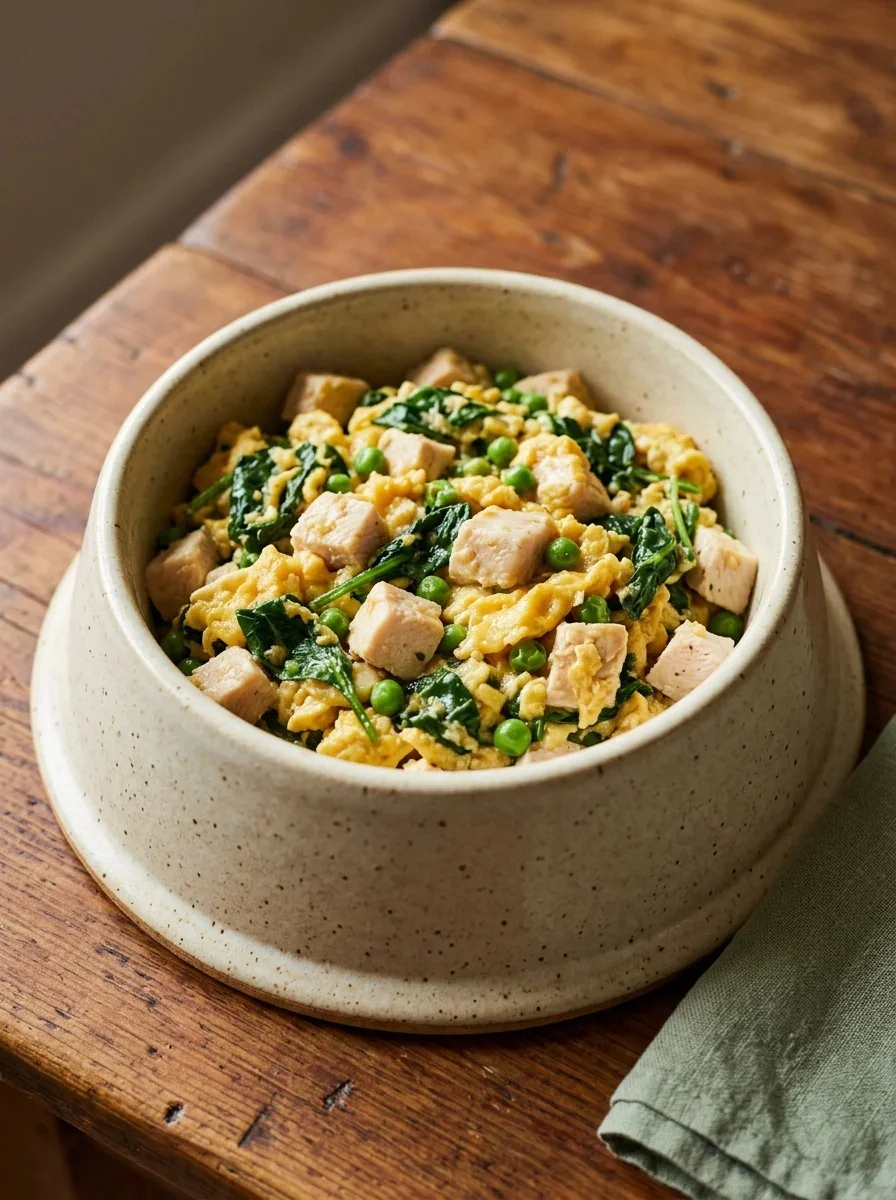
The quick weeknight format: diced boneless chicken cooked in a skillet, egg scrambled in and cooked fully through, spinach wilted through, peas stirred in, cooled.
Ingredients
- 1 lb boneless skinless chicken breast, diced small
- 2 large eggs, beaten
- 1 cup fresh spinach, chopped
- 1/2 cup frozen peas
- 1 tablespoon olive oil
Step-by-Step Instructions
- Heat the olive oil in a large skillet over medium heat until it shimmers, then add the diced chicken in a single layer.
- Cook the chicken for 7 minutes, turning the pieces once, until it is white all the way through with no pink meat and an internal temperature of 165F.
- Push the chicken to one side of the pan, pour the beaten eggs into the empty side, and scramble gently for 2 minutes until the eggs are fully set with no runny parts.
- Stir the chicken and egg together, add the spinach, and cook for 2 minutes until the spinach wilts down completely.
- Stir in the peas and cook for 1 more minute until they turn bright green, then remove the pan from the heat.
- Let the scramble cool to room temperature, about 10 minutes, stirring once, then serve in a dog bowl on the floor at dog level.
The fastest dinner in the set: The egg cooks in the same pan as the chicken, so there is one pan to wash and no waiting for a pot to simmer.
Which Recipe for Which Night: A Method Map
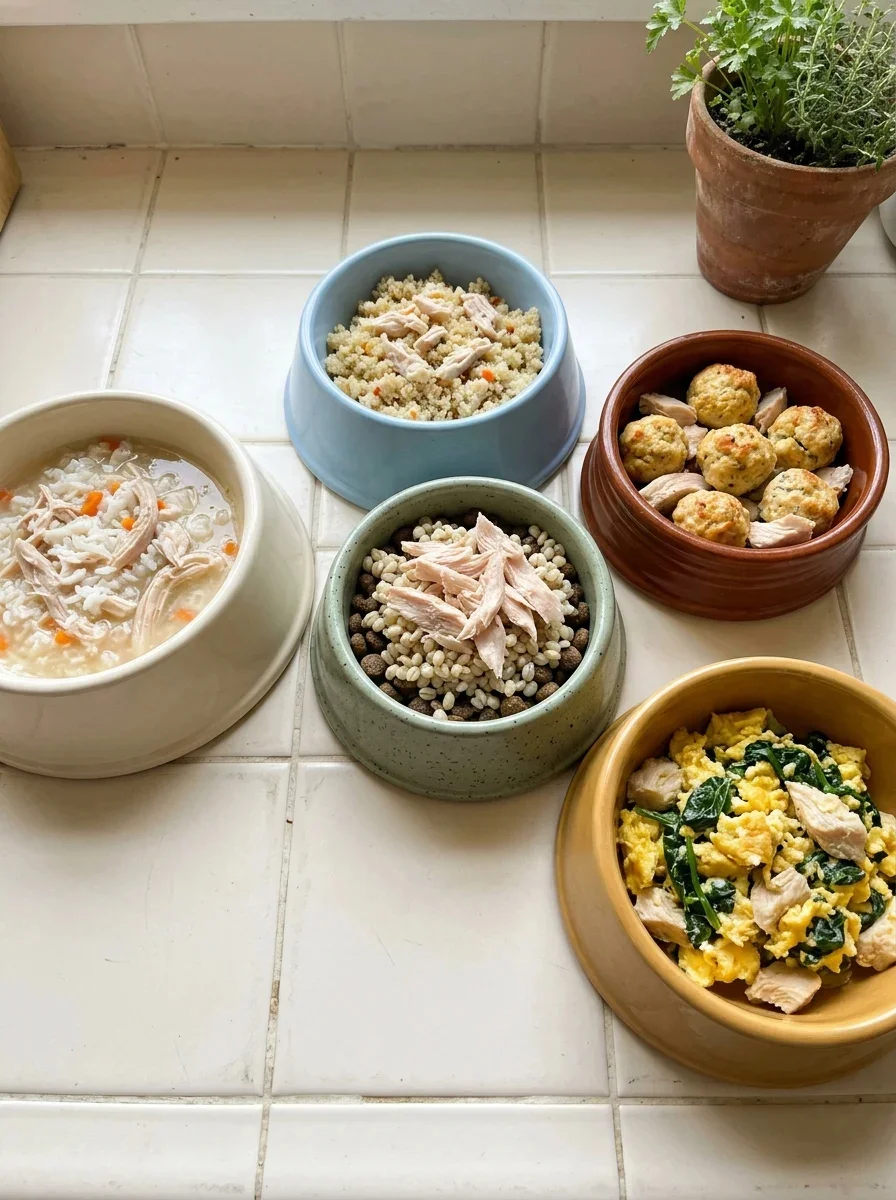
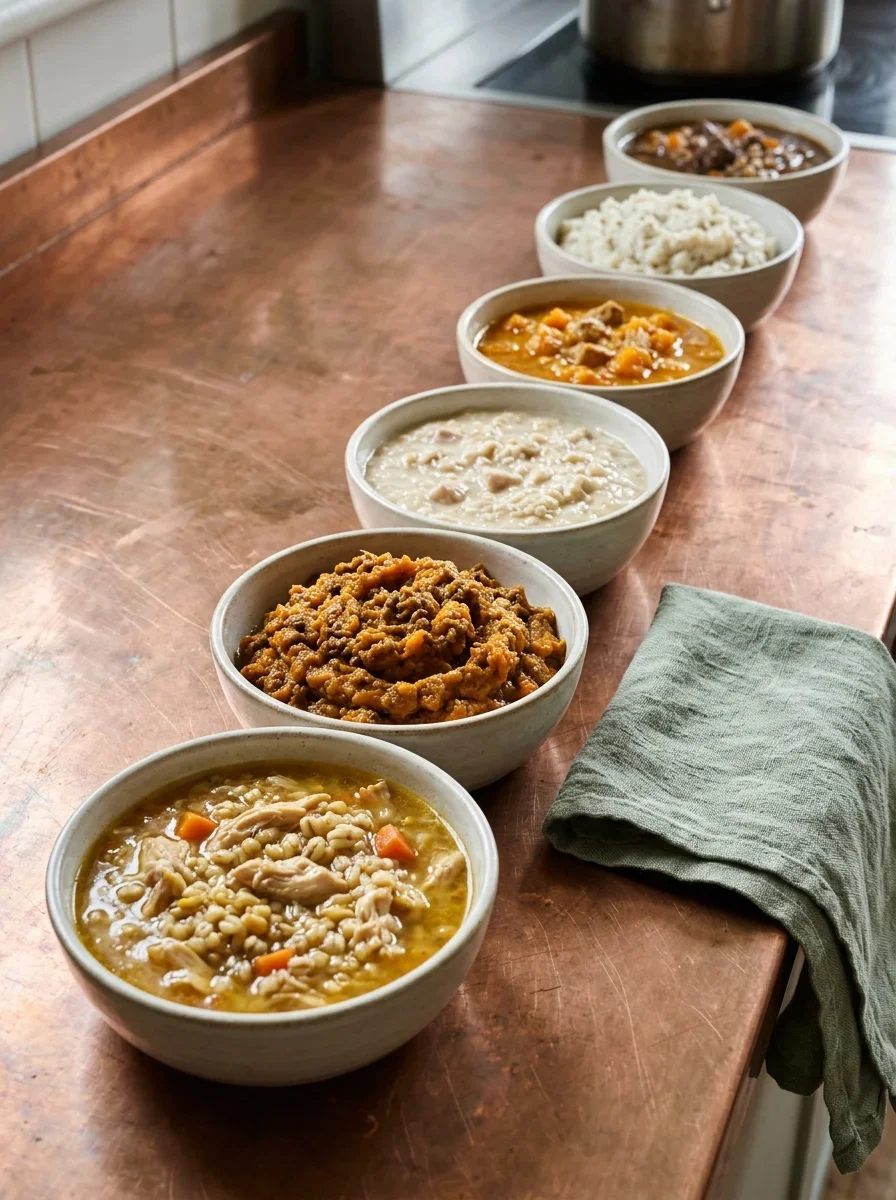
One protein, five ways to cook it: The stew simmers, the quinoa bowl steams, the topper enriches kibble, the meatballs bake, and the scramble fries.
The bland day: When a dog has an upset stomach or is coming back from a skipped meal, make the stew. It is the blandest recipe here, the easiest to digest, and the one a vet would recognize.
The kibble dog: If your dog eats kibble happily and you only want to add something warm and real, make the topper. A beef and apple dog meal recipe can play the same topper role on a different protein, if you rotate proteins across the month.
The batch cooker: If you cook once and feed all week, make the meatballs. They freeze in a single layer, thaw overnight, and portion themselves — count out the meatballs instead of weighing a stew.
The busy night: If dinner is late and the dog is already circling the kitchen, make the scramble. Fifteen minutes, one pan, and the egg adds protein the other recipes do not have.
The rotation: Rotate the five across a week so the dog never eats the same chicken meal two days running: stew on Monday, quinoa bowl on Tuesday, topper on Wednesday, meatballs on Thursday, scramble on Friday, then repeat the favorites at the weekend.
The sensitive-stomach ladder: Start a sensitive dog on the stew, move to the quinoa bowl when the stomach settles, then try the topper, the meatballs, and finally the scramble.
Portion Guide: How Much Chicken Is Too Much
Portions by size: A small dog under 20 lbs needs about 1/2 to 3/4 cup of a full meal per serving; a medium dog of 20 to 50 lbs needs about 1 to 1 1/2 cups; a large dog over 50 lbs needs about 2 to 2 1/2 cups. These are starting points — an active dog needs more, a couch dog needs less, and the waistline is the real judge.
The topper rule: The barley topper follows a different rule: about 2 tablespoons per cup of kibble, and the topper is an extra, not a meal. The 10% treat rule does NOT apply to full meals — a full meal replaces the kibble, it does not sit on top of it. The 10% rule applies only to toppers and extras, and a nom nom dog food copycat recipe shows the same split: full meals replace, toppers add.
Watch the waistline: Chicken is lean, but a homemade meal still has calories, and a dog that gains weight on homemade food is being over-served, not under-exercised.
Puppies and seniors: Puppies need more food per pound than adults and more meals per day — three to four small meals instead of two. Seniors need fewer calories but the same protein, so keep the chicken and cut the base.
Storage and Freezing
Fridge life: Cooked chicken meals keep 3 to 4 days in the fridge in airtight containers.
Freezer life: Freeze for up to 3 months in single-meal portions. Thaw overnight in the fridge, never on the counter, and reheat gently until just warm, then cool again before serving.
Reheating: Warm a portion in the microwave or a small pan until it is just warm to the touch, not hot.
Never leave it out: Never leave cooked chicken meals out over 2 hours. Bacteria grow fast at room temperature, and a bowl left out all afternoon is a vet visit waiting to happen.
Troubleshooting
My dog left the vegetables behind: Chop the vegetables smaller and mix them through the base while it is still warm, so they pick up the chicken flavor.
The stew came out too watery: Simmer it uncovered for 5 more minutes to reduce the liquid, or stir in an extra 1/4 cup of rice and cook until it absorbs.
The quinoa is still crunchy: The quinoa was not rinsed, or the pot ran dry. Add 1/4 cup of hot water, cover, and cook for 5 more minutes, then let it stand covered for 5 minutes.
The meatballs fell apart: The mixture was too wet or the egg was skipped. Add the egg back, mix only until combined, and chill the rolled meatballs for 15 minutes before baking so they hold their shape.
My dog had loose stool after the first chicken meal: Switch to the stew for a few days, feed smaller portions, and follow the 7-day transition — mix 25% new food with 75% old food for two days, then 50/50, then 75/25, then all new. If it continues past a few days, stop and check with the vet — some dogs are chicken-sensitive, and a low-fat dog food recipes approach with a different protein may suit them better.
Final Thoughts
Five meals, one protein, and a week that never repeats itself. That is the whole idea here: chicken is the gentlest protein for dogs, and when you give it five different methods, it stops being boring and starts being a system.
Start with the stew. It is the easiest recipe here, the one a sensitive stomach trusts, and the one that teaches you the formula in a single pot.
Cook for your dog the way you would want someone to cook for you: plain, fresh, and with attention.
Izzy is an experienced ranch worker who has a passion for exploring nature and getting up close to wildlife. With her connections to various animal organizations, Izzy is well-versed in animal care and rehabilitation.