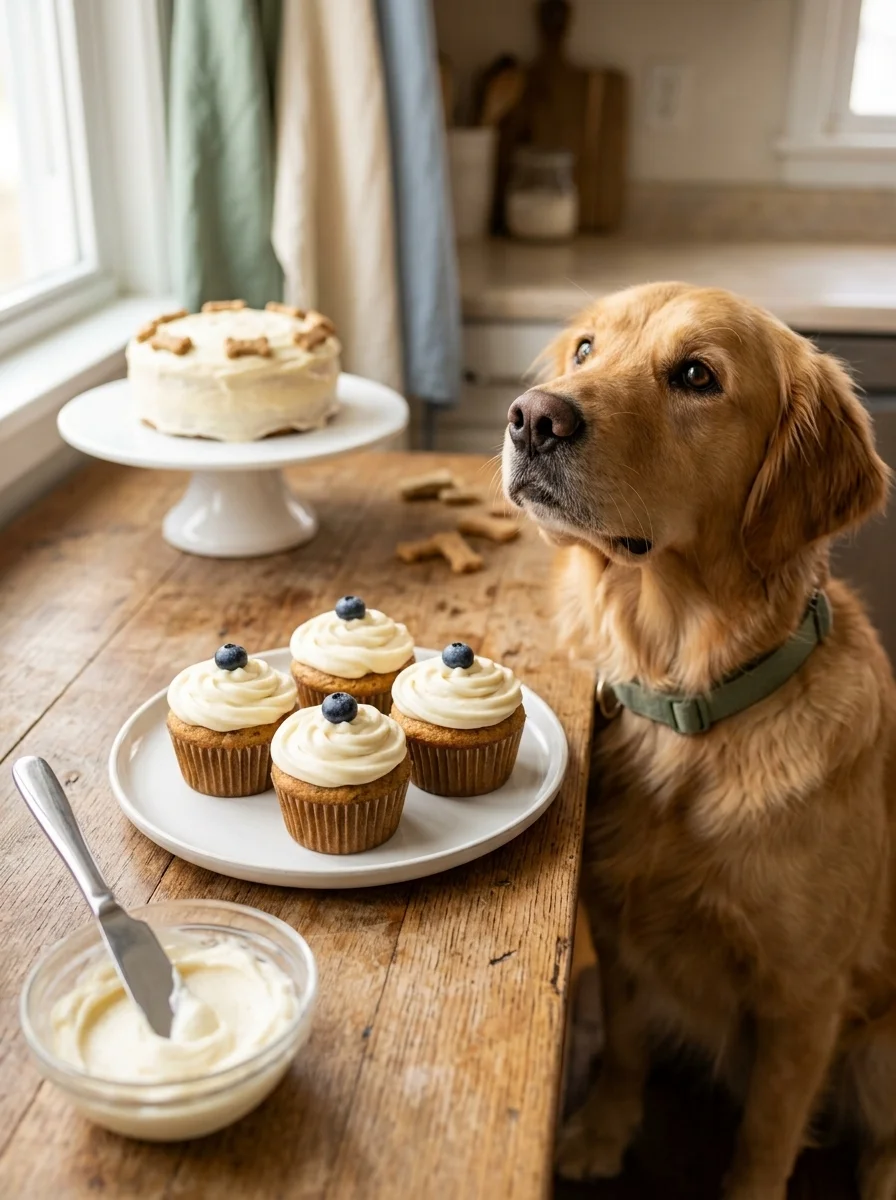
Homemade Dog Food for Diabetic Dogs: 10 Balanced Recipes
If your dog was just diagnosed with diabetes, you’re probably staring at the kibble aisle wondering if you’ll ever feel confident about mealtime again. The good news is that homemade dog food for diabetic dogs gives you something commercial bags can’t: total control over exactly what goes into every bowl.
Below are 10 real, tested recipe formats — not 10 versions of the same chicken-and-rice bowl with different names. You’ll find stovetop bowls, slow cooker batches, baked loaves, patties, and even a soft congee-style meal for picky or older dogs. Each one is built around lean protein, low-glycemic carbs, and fiber, which is the combination vets consistently point to for steadier blood sugar.
One quick note before you start cooking: always run any new diet past your veterinarian, especially if your dog is on insulin. Portion sizes and ingredient choices often need to be adjusted around your dog’s specific insulin schedule.
What Makes a Recipe “Diabetic-Friendly Dog Food”?
Not every “healthy” dog food recipe is actually safe for a diabetic dog. A recipe only counts as diabetic friendly dog food if it hits these four marks:
- Low-glycemic carbs — think lentils, green beans, and barley instead of white rice or potatoes, which spike blood sugar fast.
- Lean, high-quality protein — chicken breast, turkey, white fish, and lean beef help maintain muscle without adding excess fat.
- Real fiber — fiber slows down how quickly sugar hits the bloodstream after a meal, which helps prevent post-meal spikes.
- Consistent portions — the same amount of food, at the same times each day, matters just as much as the ingredients themselves.
Keep these four traits in mind as you read through the recipes below — every single one was built around them.
10 Homemade Dog Food Recipes for Diabetic Dogs
Here’s the full lineup. Recipe 1 is your go-to base recipe with the complete breakdown. Recipes 2 through 10 give you real format and protein variety, so you’re never stuck making the same bowl every night.
1. Chicken, Lentil & Green Bean Bowl (Base Recipe)
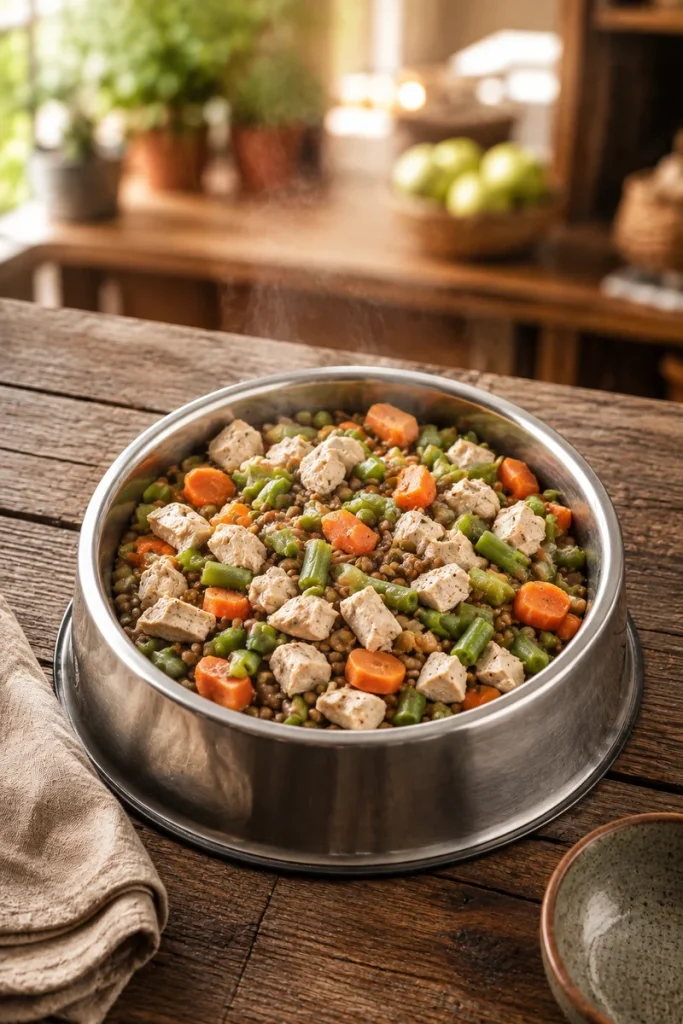
This is the recipe to bookmark. It’s simple, affordable, and hits every mark for diabetic friendly dog food: lean protein, a low-glycemic carb, and a fiber-rich vegetable.
Prep Time: 10 minutes Cook Time: 25 minutes Total Time: 35 minutes Yield: About 6 cups (roughly 5–6 servings for a 30–40 lb dog) Freezer Life: Up to 3 months
Ingredients:
- 1 ½ lbs boneless, skinless chicken breast, diced
- 1 cup dried lentils, rinsed
- 1 ½ cups fresh green beans, chopped
- 1 medium carrot, finely chopped
- 2 ½ cups low-sodium chicken broth (no onion or garlic)
- 1 tsp ground turmeric (optional, for inflammation support)
Instructions:
- Add the lentils and chicken broth to a large pot and bring to a boil.
- Reduce to a simmer and cook for 15 minutes, stirring occasionally.
- Add the diced chicken, green beans, and carrot to the pot.
- Simmer for another 10–12 minutes, until the chicken is fully cooked and the lentils are soft.
- Stir in turmeric if using, then let the mixture cool completely before serving.
- Portion into individual containers and refrigerate or freeze.
Notes: Lentils are the star here — they have a much lower glycemic index than rice or potatoes, meaning they release sugar into the bloodstream more slowly. If your dog has never had lentils, introduce this recipe gradually over 3–4 days to avoid digestive upset. This base recipe also freezes exceptionally well, so it’s worth doubling the batch.
2. Turkey & Pumpkin Comfort Bowl
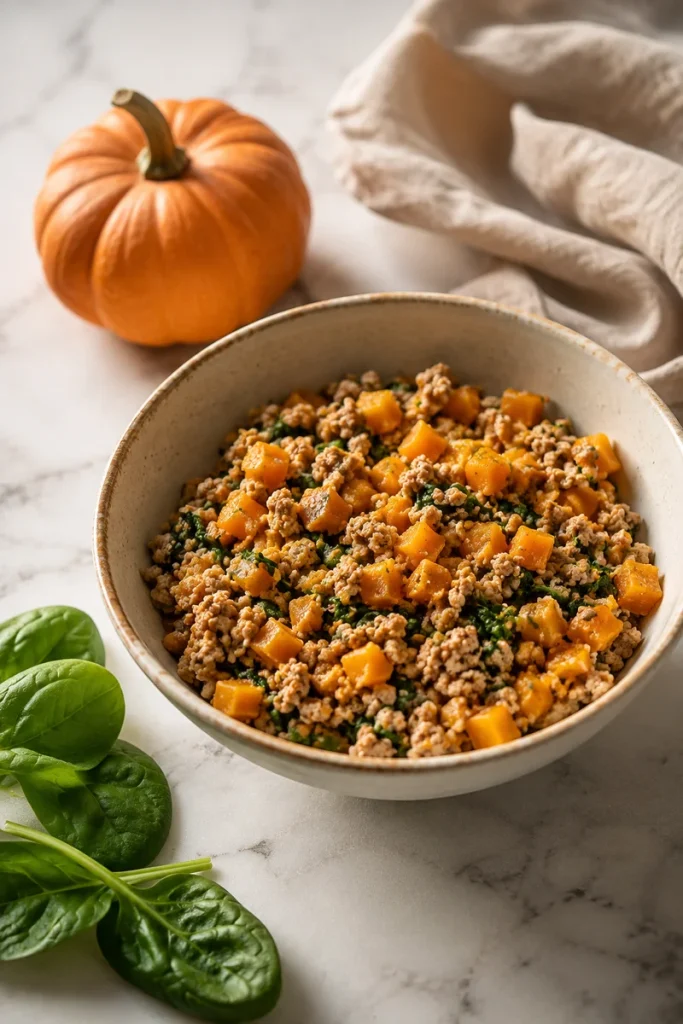
Prep Time: 10 minutes Cook Time: 20 minutes Yield: About 5 cups
Ingredients:
- 1 lb ground turkey (93% lean)
- 1 cup plain canned pumpkin (not pie filling)
- 1 cup chopped zucchini
- ½ cup chopped spinach
- 1 tbsp ground flaxseed
Instructions:
- Brown the ground turkey in a skillet over medium heat, breaking it apart as it cooks.
- Once fully cooked, drain any excess fat.
- Stir in the pumpkin, zucchini, and spinach, and cook for 5 more minutes until the vegetables soften.
- Remove from heat and mix in the flaxseed.
- Cool completely before serving or storing.
Notes: Pumpkin adds soluble fiber without the sugar spike of sweeter squashes, and it’s gentle on sensitive stomachs — a nice option if your diabetic dog also deals with occasional loose stools.
3. Baked Salmon & Cauliflower Rice Bowl
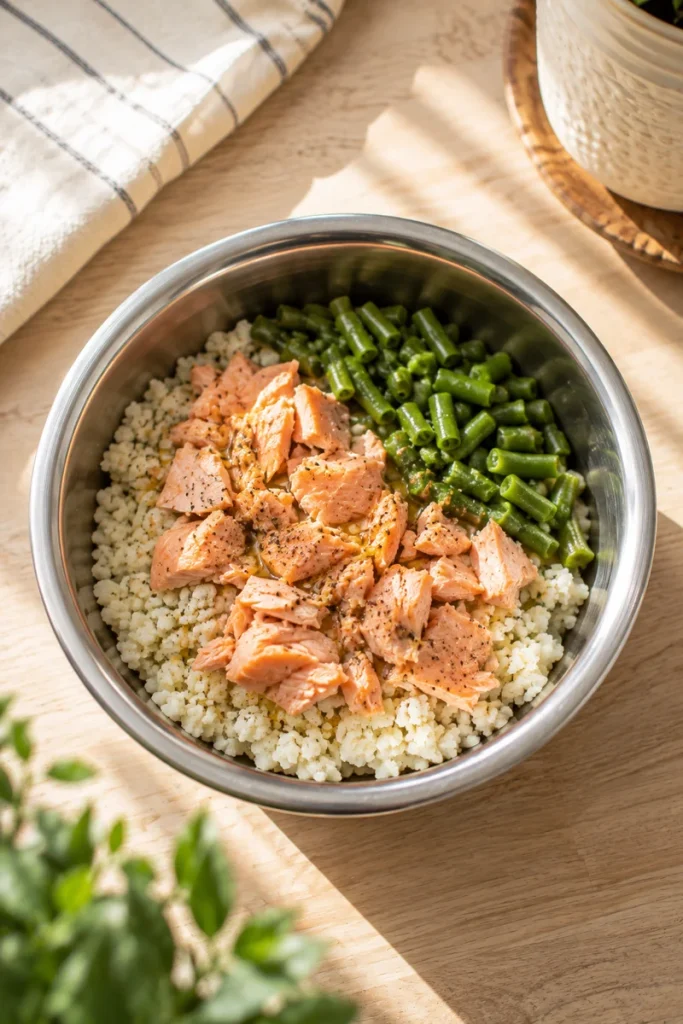
Prep Time: 10 minutes Cook Time: 20 minutes Yield: About 4 cups
Ingredients:
- 1 lb fresh salmon fillet, skin removed
- 2 cups riced cauliflower
- ½ cup chopped green beans
- 1 tsp fish oil
Instructions:
- Bake the salmon at 375°F for 15 minutes, or until it flakes easily.
- While the salmon bakes, steam the riced cauliflower and green beans until soft.
- Flake the cooked salmon into small pieces, removing any bones.
- Combine the salmon with the cauliflower rice and green beans.
- Drizzle with fish oil and cool before serving.
Notes: Swapping rice for riced cauliflower cuts carbs dramatically, and the omega-3s in salmon support skin and coat health, which can take a hit when a dog’s blood sugar is unstable.
4. Beef & Barley Low-Glycemic Mix
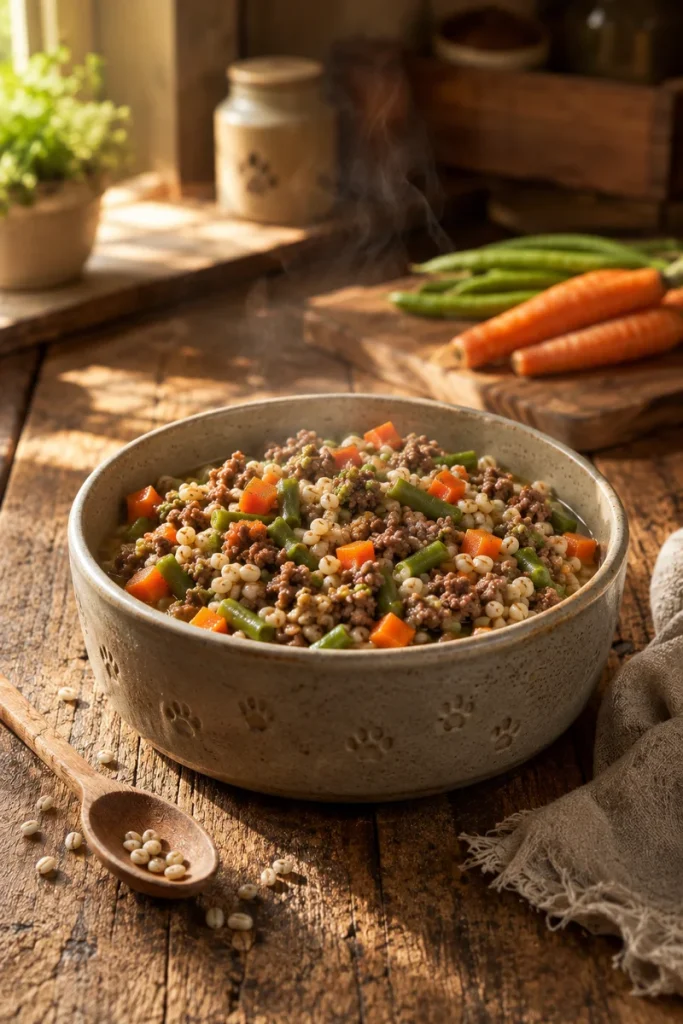
Prep Time: 10 minutes Cook Time: 35 minutes Yield: About 6 cups
Ingredients:
- 1 ½ lbs lean ground beef (90% lean or higher)
- ¾ cup pearl barley
- 1 cup chopped carrots
- 1 cup chopped green beans
- 3 cups low-sodium beef broth
Instructions:
- Brown the ground beef in a large pot, then drain excess fat.
- Add the barley and broth, and bring to a boil.
- Reduce heat and simmer for 25 minutes, stirring occasionally.
- Add the carrots and green beans, and cook for another 8–10 minutes until everything is tender.
- Cool completely before portioning.
Notes: Barley has a moderate glycemic index and a good dose of fiber, making it a solid rotation option so your dog isn’t eating chicken every single day.
5. Slow Cooker Turkey & Vegetable Batch Meal
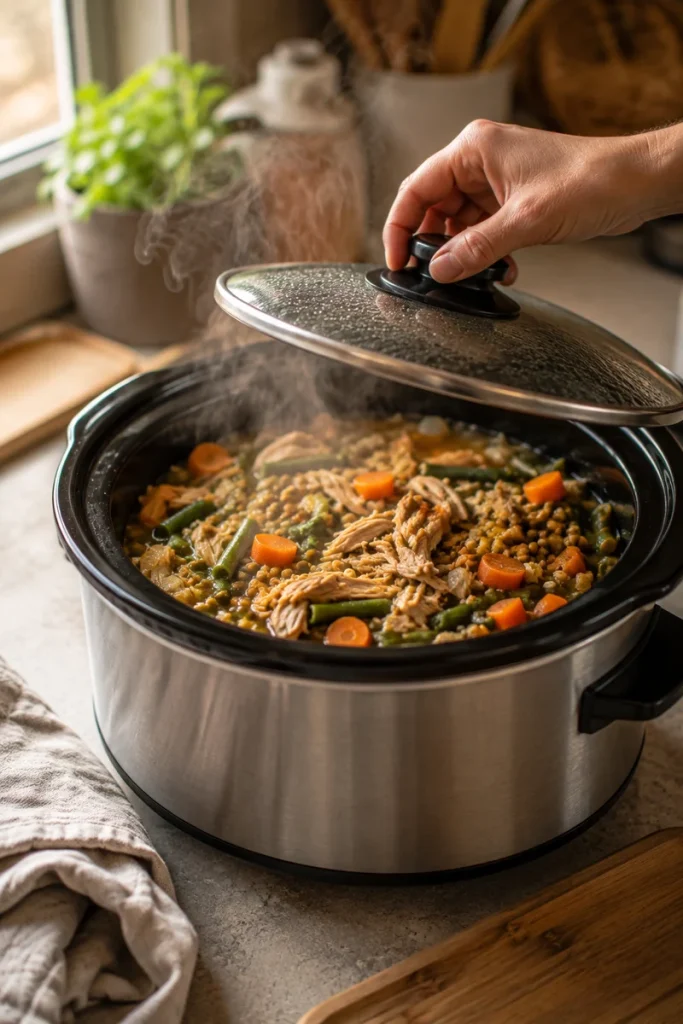
If weeknight cooking isn’t realistic for you, this is where a set of slow cooker dog food recipes becomes genuinely useful — you load it once and walk away.
Prep Time: 15 minutes Cook Time: 6 hours (low) Yield: About 10 cups
Ingredients:
- 2 lbs ground turkey
- 1 ½ cups dried lentils, rinsed
- 2 cups chopped green beans
- 1 cup chopped carrots
- 1 cup chopped spinach
- 5 cups low-sodium chicken broth
Instructions:
- Add the raw turkey and broth to the slow cooker, breaking the meat apart with a spoon.
- Add the lentils, carrots, and green beans.
- Cover and cook on low for 6 hours, stirring once halfway through.
- Stir in the spinach during the last 15 minutes of cooking.
- Let cool completely, then portion into freezer bags.
Notes: This batch is designed to last — portion it into single-meal containers so you’re not measuring from a giant tub every night.
6. Crockpot Beef & Lentil Stew
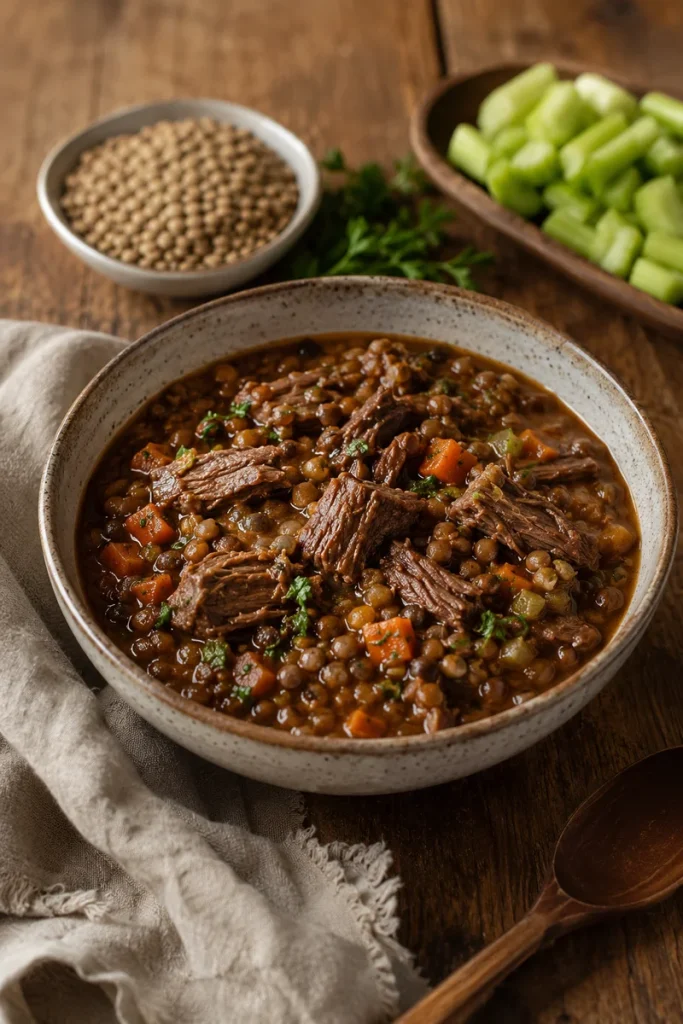
For anyone who wants more nutritious crockpot dog food recipes in their weekly rotation, this stew-style meal is an easy one to add.
Prep Time: 15 minutes Cook Time: 5 hours (low) Yield: About 8 cups
Ingredients:
- 1 ½ lbs lean beef stew meat, cubed
- 1 cup dried lentils, rinsed
- 1 cup chopped celery
- 1 cup chopped carrots
- 4 cups low-sodium beef broth
Instructions:
- Combine all ingredients in the slow cooker.
- Cover and cook on low for 5 hours, or until the beef is fork-tender.
- Break the beef into smaller shreds using two forks.
- Stir everything together and let cool completely before serving.
Notes: The long, slow cook time makes this a great option for tougher, cheaper cuts of beef, which keeps the cost of homemade feeding down without sacrificing nutrition.
7. Baked Turkey & Spinach Loaf
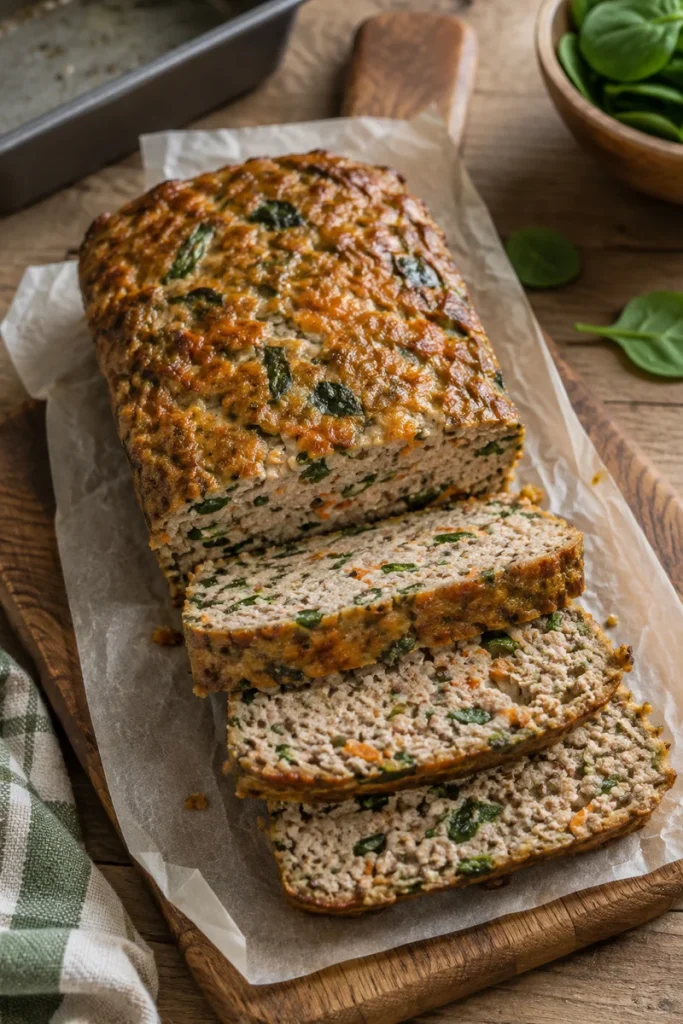
Prep Time: 10 minutes Cook Time: 45 minutes Yield: One 9×5 loaf, about 8 servings
Ingredients:
- 2 lbs ground turkey
- 1 cup finely chopped spinach
- ½ cup grated carrot
- 2 large eggs
- ¼ cup ground flaxseed
Instructions:
- Preheat the oven to 350°F and line a loaf pan with parchment paper.
- In a large bowl, combine the turkey, spinach, carrot, eggs, and flaxseed.
- Mix until just combined, then press into the loaf pan.
- Bake for 45 minutes, or until the internal temperature reaches 165°F.
- Let cool completely, then slice into portions.
Notes: The loaf format is one of the easiest ways to portion consistently — just slice and weigh, no scooping or guessing required.
8. Chicken & Vegetable Patties (Portion-Control Format)
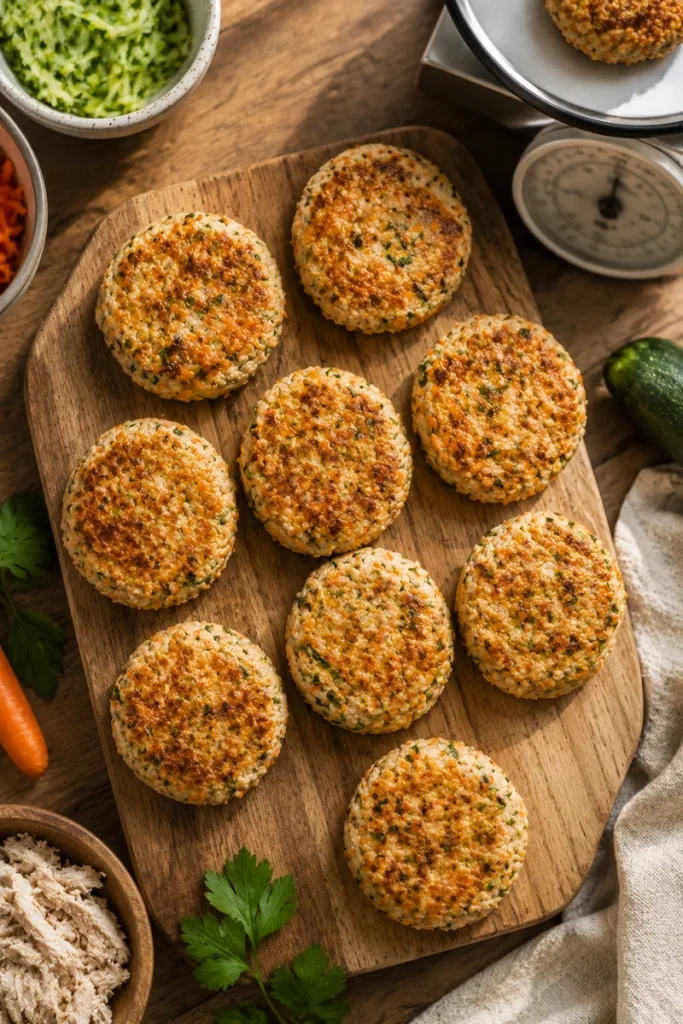
Prep Time: 15 minutes Cook Time: 15 minutes Yield: About 12 patties
Ingredients:
- 1 ½ lbs ground chicken
- ½ cup finely grated zucchini
- ¼ cup finely grated carrot
- 1 large egg
- 2 tbsp oat flour (or ground oats)
Instructions:
- Combine all ingredients in a bowl and mix well.
- Shape into small, evenly sized patties.
- Cook in a lightly oiled skillet over medium heat, about 4–5 minutes per side.
- Let cool completely before serving.
Notes: Patties are ideal if your vet has you measuring insulin doses against food amounts — each patty is a known, repeatable portion, so there’s no daily guesswork.
9. Fish & Vegetable Congee (Soft-Food Format)
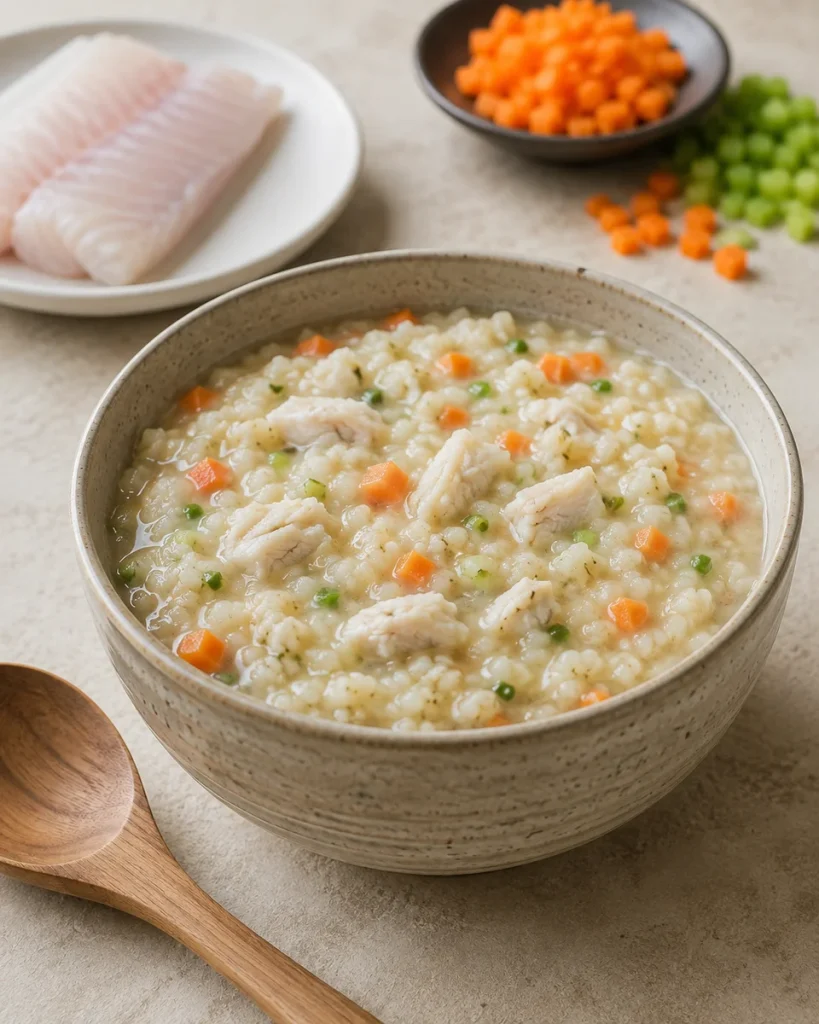
Congee-style meals — rice or grain slow-simmered into a soft, porridge-like consistency — are popular in a lot of homemade dog food recipes for senior dogs or dogs with dental issues, and they work well here too.
Prep Time: 10 minutes Cook Time: 40 minutes Yield: About 6 cups
Ingredients:
- 1 lb white fish (cod or tilapia), diced
- ½ cup pearl barley
- 1 cup chopped carrots
- 5 cups water or low-sodium broth
Instructions:
- Combine the barley and water in a pot and bring to a boil.
- Reduce heat and simmer for 25 minutes, stirring occasionally, until it starts to break down.
- Add the fish and carrots, and continue simmering for another 12–15 minutes.
- Stir well — the mixture should be soft and porridge-like.
- Cool completely before serving.
Notes: This soft texture is easier on dogs with weaker teeth or reduced appetite, which is common in older diabetic dogs.
10. Egg, Cottage Cheese & Veggie Bowl (No-Cook-Protein Format)
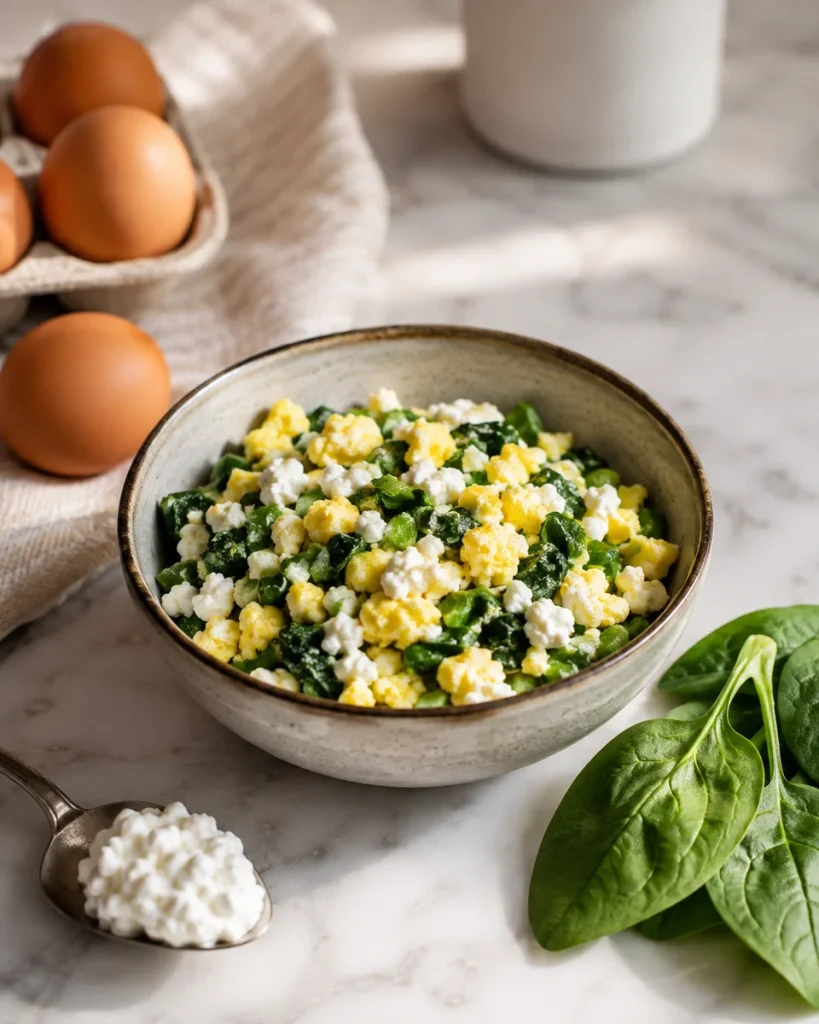
Prep Time: 10 minutes Cook Time: 10 minutes Yield: About 3 cups (best made fresh, not frozen)
Ingredients:
- 4 large eggs, scrambled
- 1 cup low-fat cottage cheese
- ½ cup chopped green beans, steamed
- ¼ cup chopped spinach
Instructions:
- Scramble the eggs in a lightly oiled pan without added salt or butter.
- Steam the green beans until tender.
- Combine the scrambled eggs, cottage cheese, green beans, and spinach in a bowl.
- Let cool to room temperature before serving.
Notes: This one isn’t freezer-friendly because of the cottage cheese and eggs, but it’s a fast, no-batch-cooking option for days when you’re short on time.
Balanced Meals for Diabetic Dogs: Portioning & Feeding Tips
A perfectly formulated recipe can still cause blood sugar swings if it’s fed the wrong way. Building truly balanced meals for diabetic dogs is as much about timing and portion control as it is about ingredients.
Feed at the same times every day. Most diabetic dogs do best with two meals, spaced 10–12 hours apart, timed around their insulin injections. Talk to your vet about the exact window that works with your dog’s insulin type.
Weigh portions instead of eyeballing them. A kitchen scale takes the guesswork out of feeding and keeps calorie intake — and therefore blood sugar response — consistent day to day.
Set up a consistent feeding routine. Some owners find it helps to have a dedicated feeding station with pre-portioned containers lined up, especially in multi-dog households where mix-ups can throw off a diabetic dog’s meal.
Diabetes is more common in senior dogs, so if your diabetic dog is also getting up there in age, it’s worth browsing recipes built with senior dogs in mind — many overlap nicely with diabetic-friendly ingredients, since both diets favor lean protein and easy digestion.
Stick with human-grade ingredients whenever possible. Fresh, human-grade dog food ingredients tend to have fewer hidden fillers and additives than lower-quality meat and produce, which matters more for a diabetic dog than a healthy one.
Track how your dog responds. Keep a simple log of meals, blood glucose readings (if you’re monitoring at home), and energy levels. Patterns often show up within 1–2 weeks of switching to homemade food.
Diabetic-Friendly Dog Food Ingredients to Avoid
Just as important as what goes into the bowl is what stays out of it. Steer clear of these when cooking diabetic friendly dog food:
- White rice, white potatoes, and white bread — all spike blood sugar quickly due to their high glycemic index.
- Added sugars, honey, or syrups — even small amounts can cause noticeable spikes.
- Corn syrup or high-fructose fillers — common in cheap treats, not homemade meals, but worth checking labels on anything store-bought you’re still feeding alongside homemade food.
- Onions, garlic, and chives — toxic to dogs regardless of diabetes status, but worth repeating since they show up in a lot of human recipes.
- High-fat cuts of meat — fattier meats can worsen insulin resistance and raise the risk of pancreatitis, which is already a higher risk for diabetic dogs.
- Grapes and raisins — toxic to dogs and never appropriate in any recipe.
- Salty broths or bouillon cubes — excess sodium adds unnecessary strain on the kidneys, which diabetic dogs are already more vulnerable to over time.
If you’re ever unsure whether an ingredient is safe, it’s worth a quick check before adding it to the pot — a lot of “healthy” human ingredients aren’t actually dog-safe.
Storage & Freezing Tips
Homemade food doesn’t have the preservatives that keep bagged kibble shelf-stable for months, so storage matters more than people expect.
Refrigerate for up to 4 days. Cooked homemade meals should be used within 3–4 days if kept in the fridge in an airtight container.
Freeze in individual portions. Freezer bags or small containers portioned to a single meal make thawing quick and prevent you from refreezing leftovers, which isn’t recommended.
Thaw in the fridge overnight, not on the counter, to reduce bacterial growth risk — this matters even more with lean, low-fat recipes since they don’t have preservative fat content.
Label everything with the date. It’s easy to lose track of which batch is which when you’re rotating through several of the recipes above. A simple label with the recipe name and freeze date keeps things organized.
Most recipes above freeze well for up to 3 months, with the exception of the egg and cottage cheese bowl, which is best made fresh. If you want a wider rotation of freezer-friendly options to pull from, this collection of homemade dog food recipes is a good place to keep building out your dog’s meal plan beyond diabetes-specific needs.
Final Thoughts
Cooking for a diabetic dog can feel overwhelming at first, but once you have a rotation of go-to recipes, it becomes just another part of the routine — not something you have to think hard about every day. Start with the base chicken, lentil, and green bean bowl, get comfortable with portioning, and slowly work in a few of the other formats above based on what fits your schedule and your dog’s preferences.
Every dog responds a little differently, so keep your vet in the loop as you make the switch, especially around insulin dosing. With the right ingredients and a consistent routine, homemade meals can genuinely make managing your dog’s diabetes feel more manageable too.

Izzy is an experienced ranch worker who has a passion for exploring nature and getting up close to wildlife. With her connections to various animal organizations, Izzy is well-versed in animal care and rehabilitation.