
Dog Hotel Ideas: Room, Design and Interior Inspiration
Dogs deserve more than a cold cage and a food bowl when their owners travel. Over the last few years, dog hotels have turned into something closer to real hotels — with private suites, play yards, gyms, and even TV rooms. If you’re planning to open a boarding facility, redesign an existing one, or just want inspiration for a home boarding setup, these dog hotel ideas will help you picture exactly what’s possible.
This list covers everything from luxury glass suites to cozy nap rooms, based on real spaces that dog hotels around the world are already using. Each idea below focuses on a different part of dog hotel design — some are about private dog hotel rooms, others are about shared play areas, and a few focus purely on dog hotel interior styling and comfort. Whether you’re designing for small breeds, big packs, or a mix of both, there’s something here to borrow.
Let’s start with the rooms — because for most dogs (and their owners), the room is what makes or breaks the stay.
12 Dog Hotel Ideas Worth Copying for Your Next Boarding Space
1. Gold-Trim Glass Luxury Suites
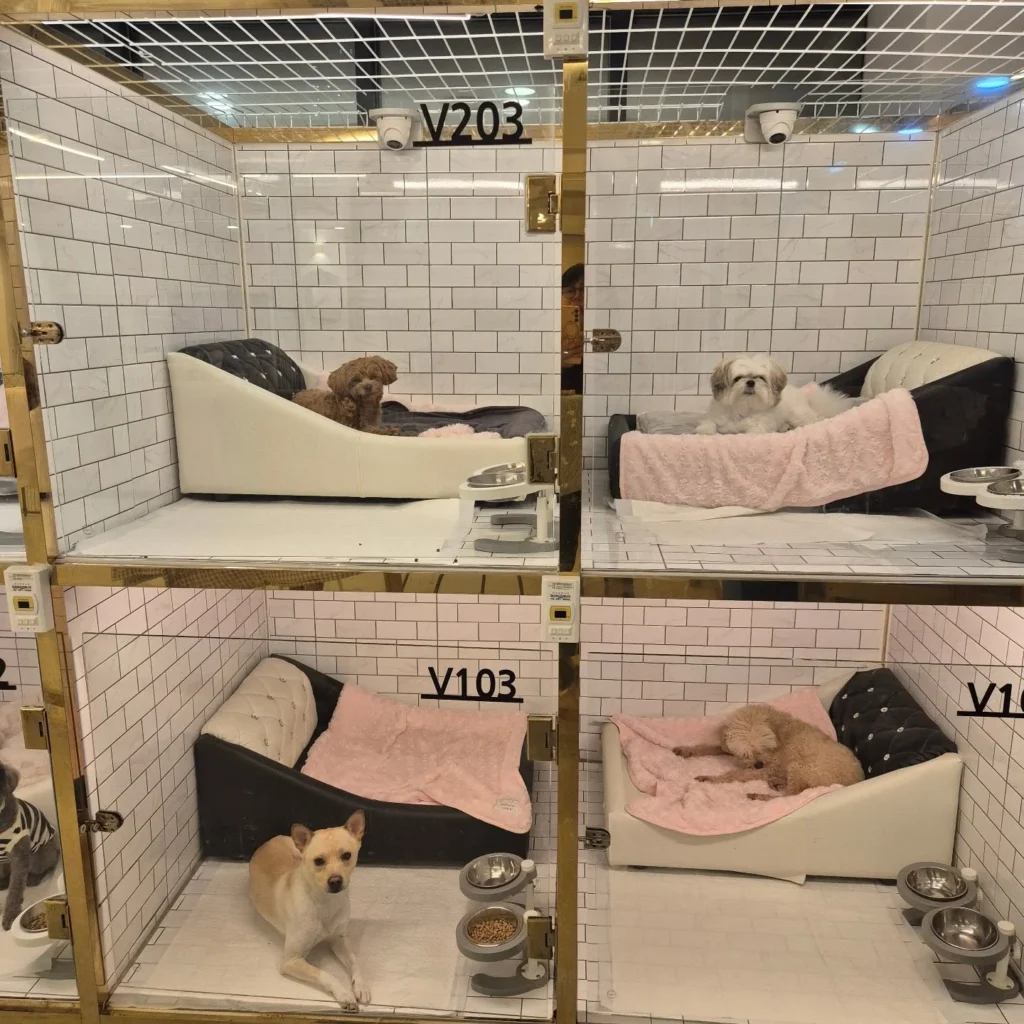
If you want your dog hotel rooms to feel like a five-star stay, this is the idea to study. Picture individual glass-walled suites with gold metal trim, white subway tile walls, and sofa-style dog beds with tufted cushions. Each suite even has its own name or number displayed outside the door, just like a real hotel room.
This style works especially well for boutique boarding facilities that want to charge premium rates. The glass front lets staff (and sometimes owners through a livestream) keep an eye on the dog without making the space feel like a cage. Small personal touches, like matching bowls and blankets, make each suite feel custom-built for the pet inside.
If you’re short on space, this concept can be scaled down using stacked suites — one on top of another — without losing the luxury feel. Pair this with ideas from our guide on luxury dog kennels ideas if you want more inspiration on premium builds.
📸 Photo credit: Instagram @bbododog
2. All-Glass Tiled Boarding Cubbies
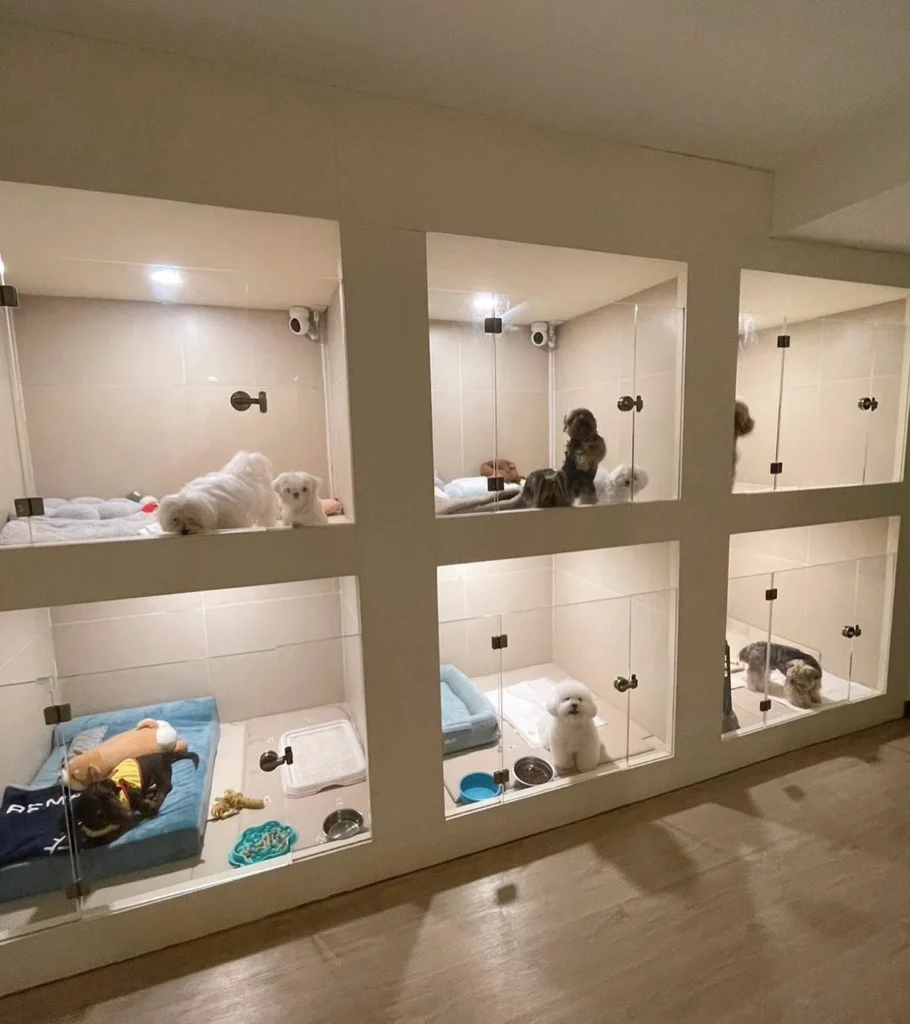
This idea takes the glass-front suite concept and simplifies it. Instead of ornate furniture, these rooms use clean white tile, a soft bed on the floor, and full glass doors with simple black handles. The result feels more like a modern spa than a kennel.
What makes this layout stand out is the stacked, grid-style arrangement — multiple small suites built side by side and on top of each other, almost like storage lockers, but designed for comfort. Each cubby has its own small water bowl and a single toy, keeping things minimal but functional.
This is a great option if you’re working with a narrow hallway or an awkward interior space, since the stacked design saves floor space while still giving each dog privacy. It also makes cleaning easier since every unit is sealed off from the next.
📸 Photo credit: Instagram @doggo_bkk
3. Branded Numbered Private Rooms
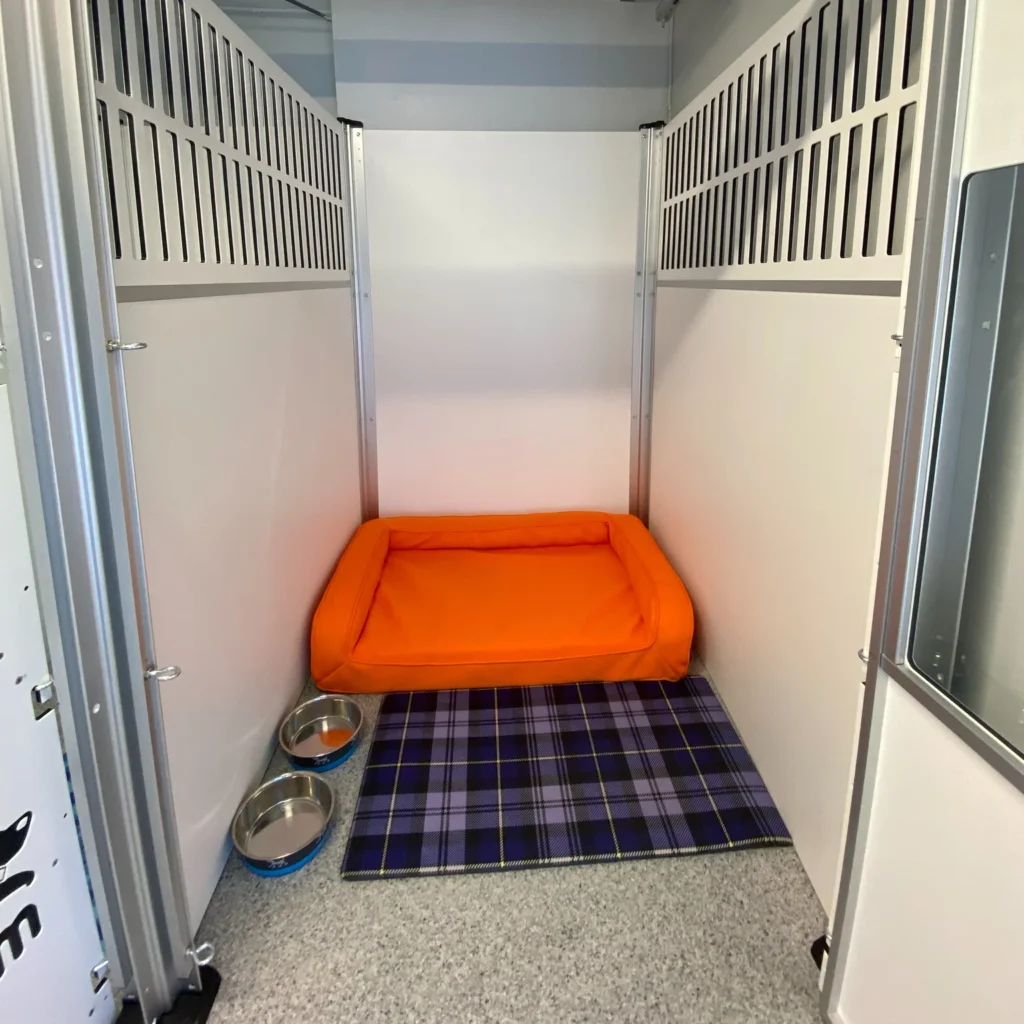
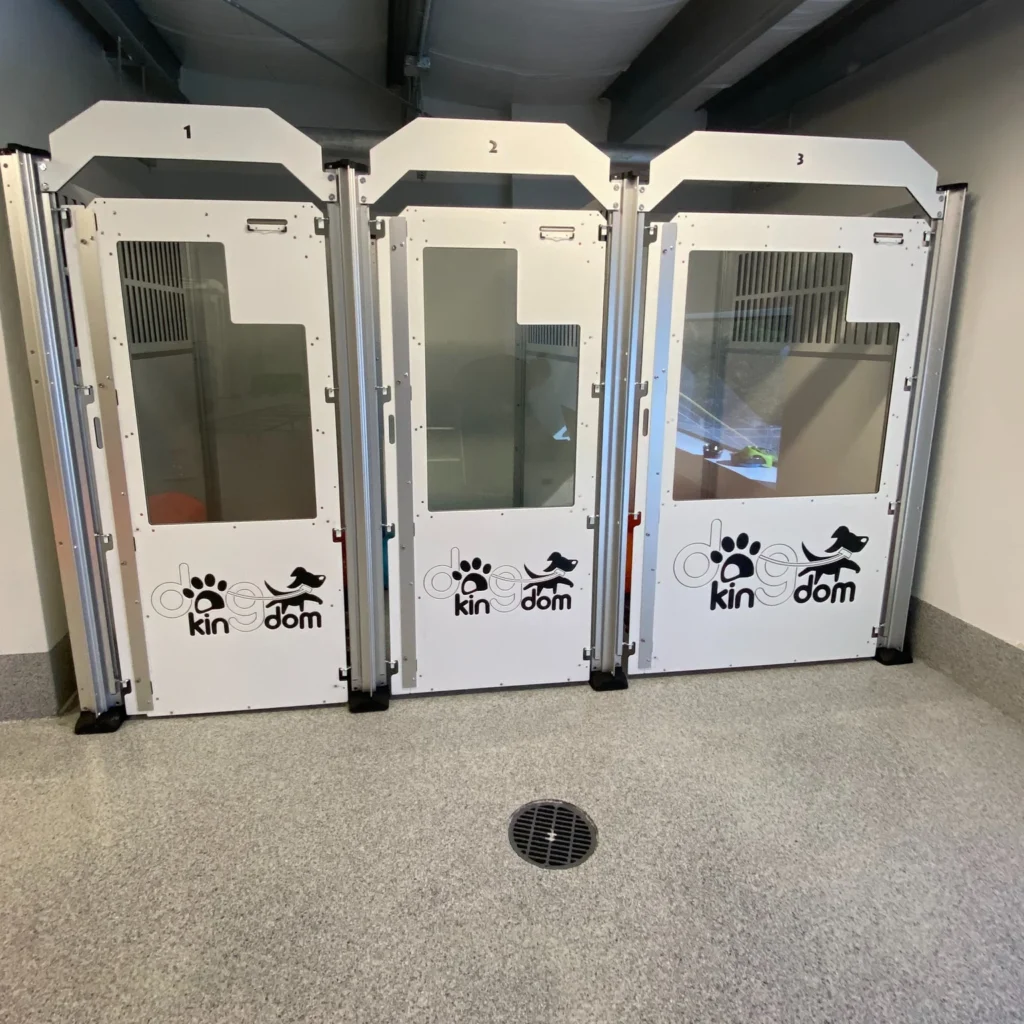
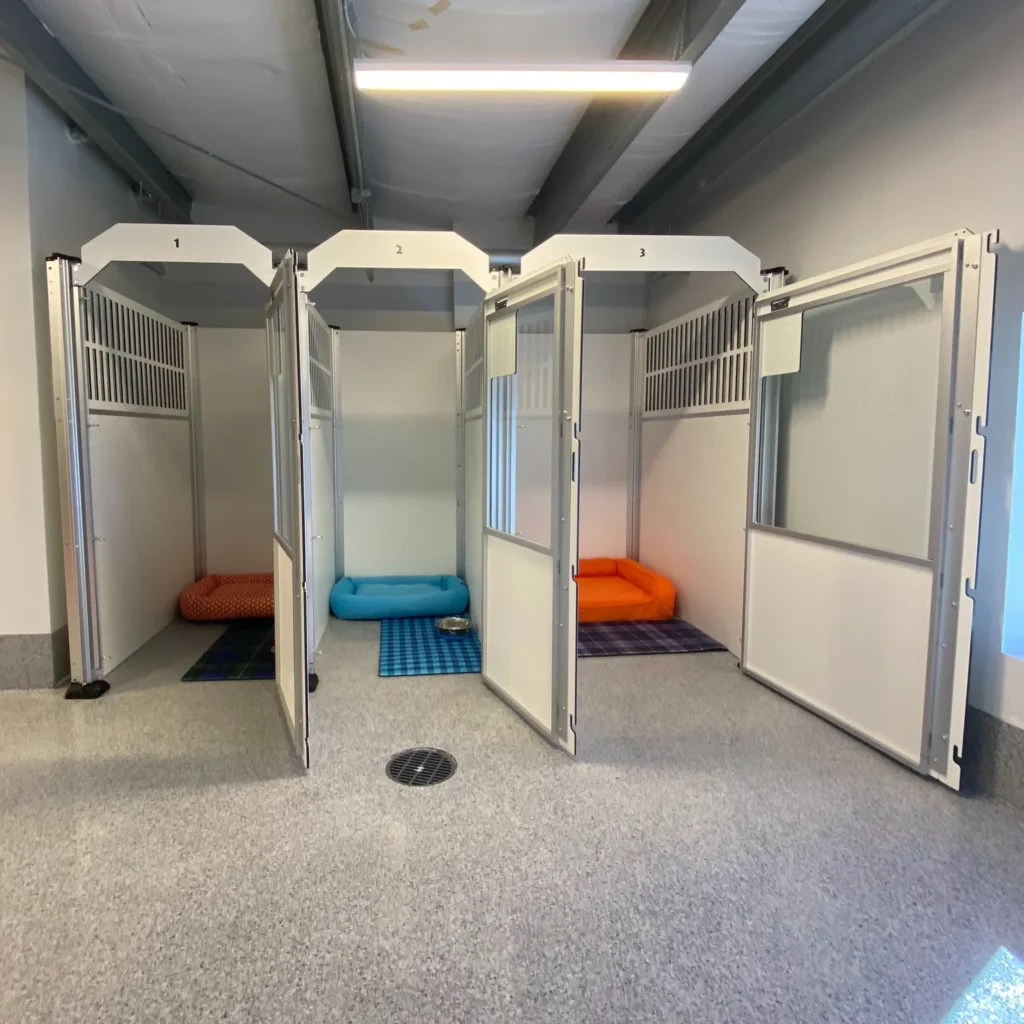
Branding matters in a competitive boarding market, and this idea shows how to do it well. Each private room has a numbered sign above the door, along with the hotel’s logo printed directly on the panel. Inside, colorful beds — orange, blue, teal — sit on plaid mats, giving each room a distinct personality while still matching the overall theme.
This setup is practical too. The doors have a mesh top section for airflow and a solid bottom panel for privacy and noise control, which is ideal for anxious dogs. Numbered rooms also make it much easier for staff to track feeding schedules, medications, and pickup times without confusion.
If you’re building a facility that needs to scale quickly — think ten, twenty, or more rooms — this modular, branded approach keeps costs predictable while still looking professional.
📸 Photo credit: Instagram @dogkingdom_miami
4. Pastel Dutch-Door Suites
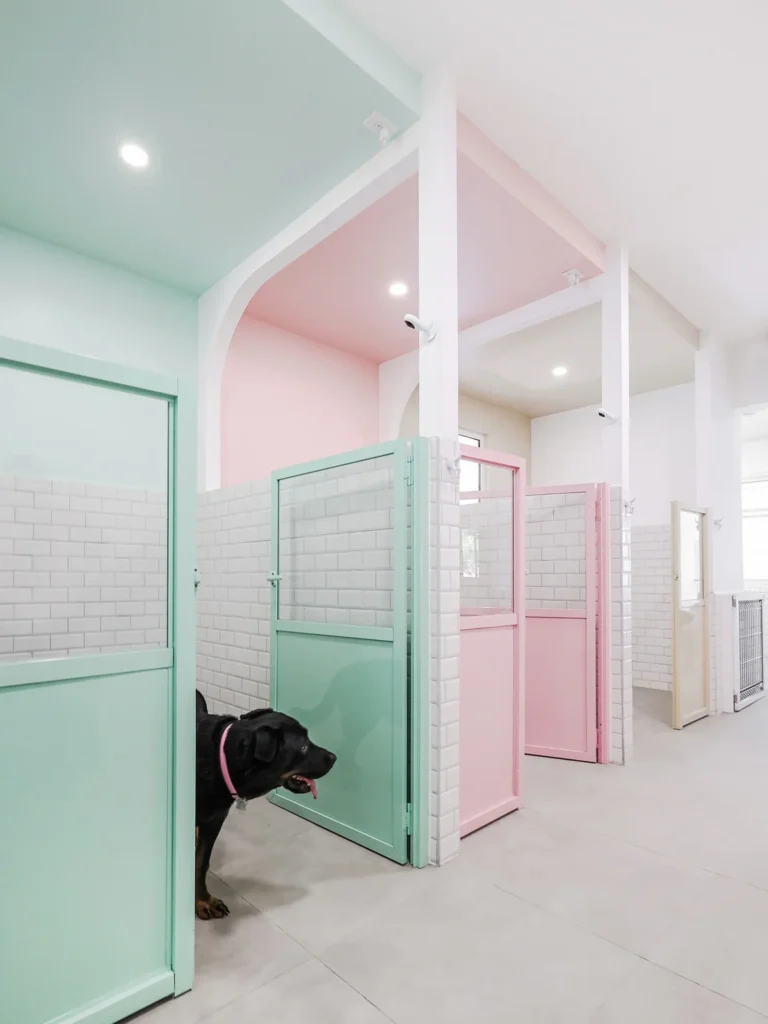
For a softer, more playful dog hotel interior, pastel dutch-door suites are hard to beat. Think mint green, blush pink, and cream-colored doors set against white subway tile — almost like a candy shop, but for dogs. The dutch-door style (split horizontally so the top can open separately) allows extra ventilation and lets dogs see out while staff walk by.
Each suite is arched at the top, adding a soft architectural detail that makes the hallway feel less clinical and more like a boutique hotel corridor. This kind of design photographs beautifully, which matters if you’re hoping to grow your business through social media.
Pastel suites work particularly well for facilities that cater to small and toy breeds, since the soft colors and rounded shapes feel less intimidating than metal cages. For more room styling ideas at this scale, check out our post on dog bedroom ideas.
📸 Photo credit: Instagram @dogaholicpty
5. Dorm-Style Bunk Room with Personal Photos
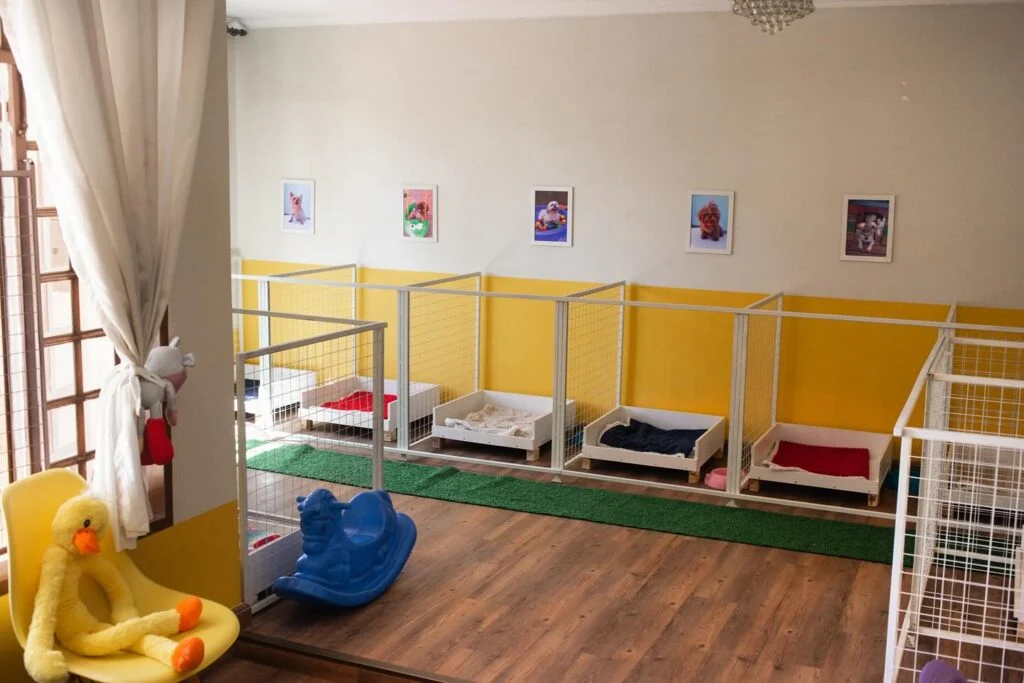
Not every dog hotel needs to look like a five-star resort — sometimes a warm, dorm-style room works just as well, especially for daycare-style stays. This idea uses raised wooden platform beds inside wire-mesh partitioned bays, with turf runners lining the walkway in front of each spot.
The standout detail here is personalization. Above each sleeping bay, there’s a framed photo of the dog who stays there, turning a simple room into something that feels genuinely cared for. A bright yellow accent wall and soft toys (like the plush duck on a chair) keep the space feeling cheerful rather than institutional.
This layout is budget-friendly compared to full glass suites, making it a smart choice for smaller boarding businesses or home-based dog sitters who still want their space to feel intentional and organized. It pairs well with tips from our smart dog room ideas guide.
📸 Photo credit: Instagram @crecherecreacao
6. Open-Air Turf Playground Yard
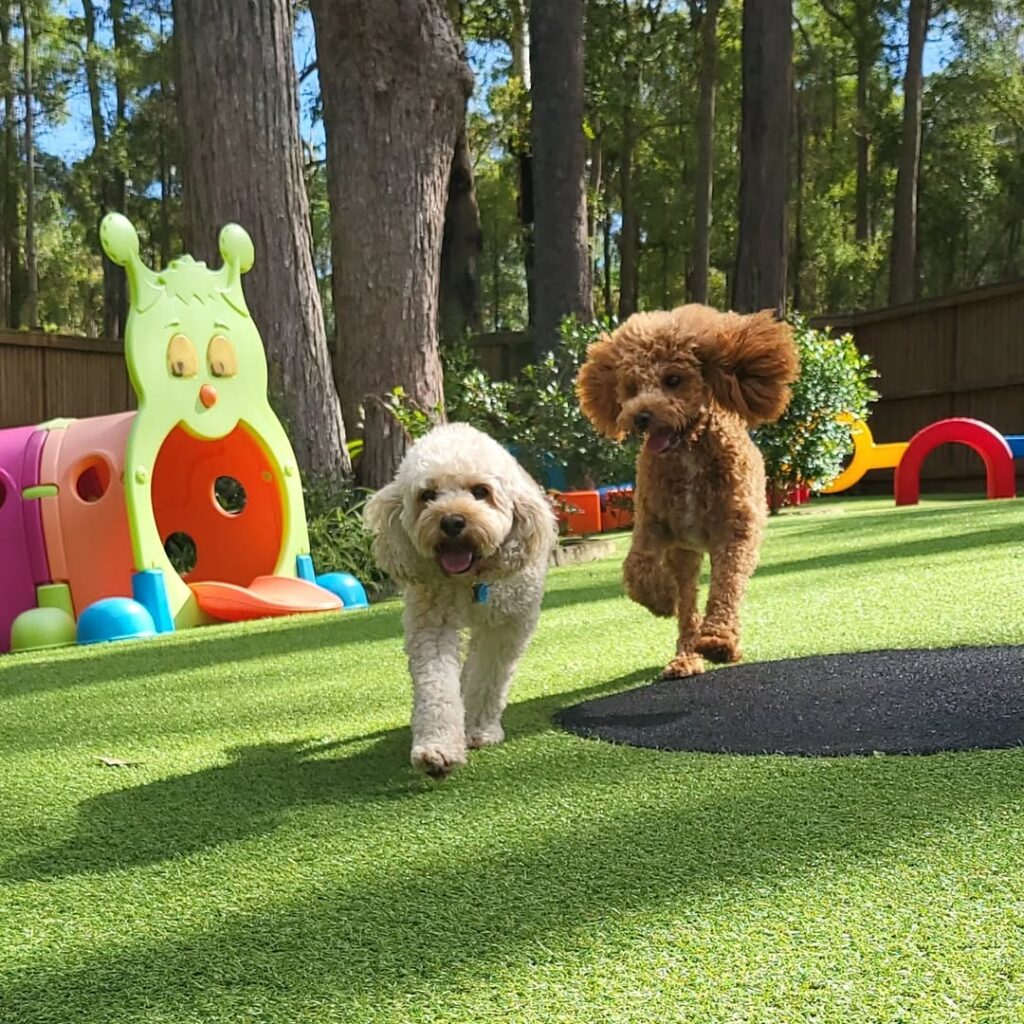
Now let’s move outside. This idea transforms a backyard into a full playground using artificial turf and repurposed kids’ playground equipment — tunnels, ramps, and soft rubber rest pads scattered across the grass. Mature trees provide natural shade, and the equipment is scaled just right for small to medium dogs to climb and explore.
What makes this idea work so well is that it doesn’t require expensive, dog-specific equipment. Standard playground pieces, painted in bright colors, keep dogs mentally stimulated while they burn off energy. The soft artificial turf is also easier to clean and maintain than real grass, especially with multiple dogs using the space daily.
If you have outdoor space available, this is one of the most cost-effective ways to add real play value to your facility. See our best outdoor dog kennel ideas for more layout inspiration.
📸 Photo credit: Instagram @pawseasonsresortdaycare
7. Covered Turf Play Area with Ceiling Fan
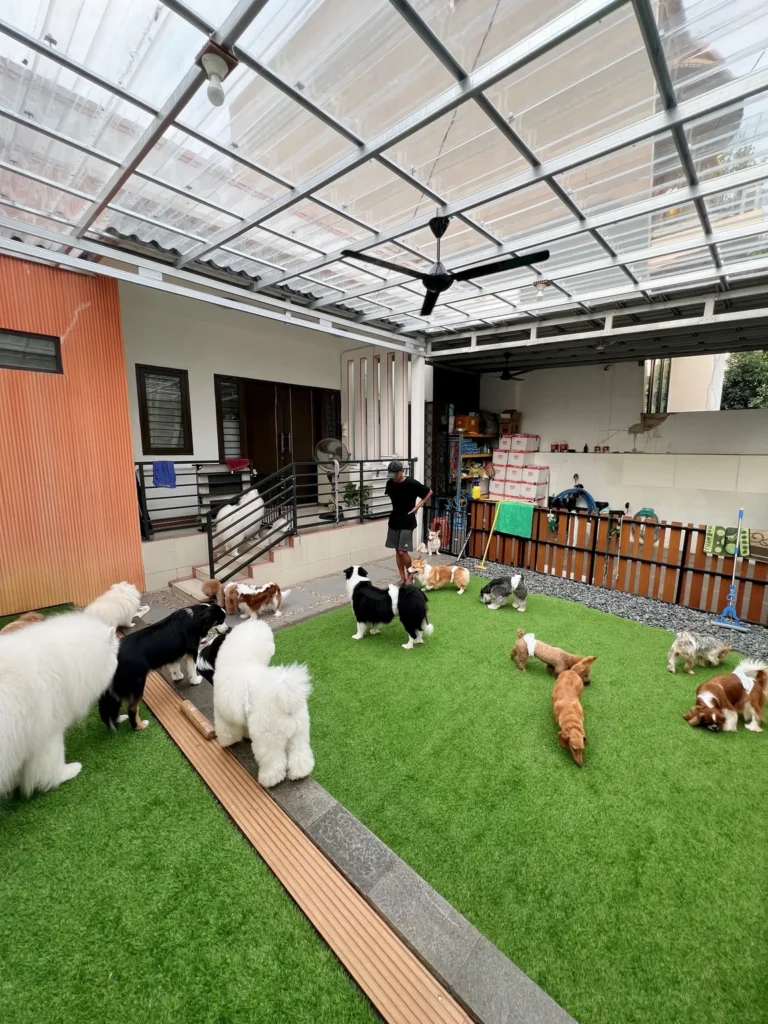
This idea builds on the outdoor playground concept but solves one major problem: weather. A clear corrugated roof covers the entire play yard, and a ceiling fan keeps air moving so dogs stay comfortable even on hot days. The turf floor and wooden decking pathway stay usable rain or shine.
This setup is especially useful in climates with heavy sun, rain, or humidity, where an open-air yard would be unusable for part of the year. Storage shelving and supplies are kept along one side, keeping the play area itself clutter-free.
Multiple dogs of different sizes — from tiny Pomeranians to Border Collies — can be seen playing together comfortably in this kind of space, which shows how well a covered yard supports mixed-breed group play. It’s a smart middle ground between a fully outdoor yard and an indoor-only facility.
📸 Photo credit: Instagram @summerwinter_doghotel
8. Open-Plan Group Play Hall
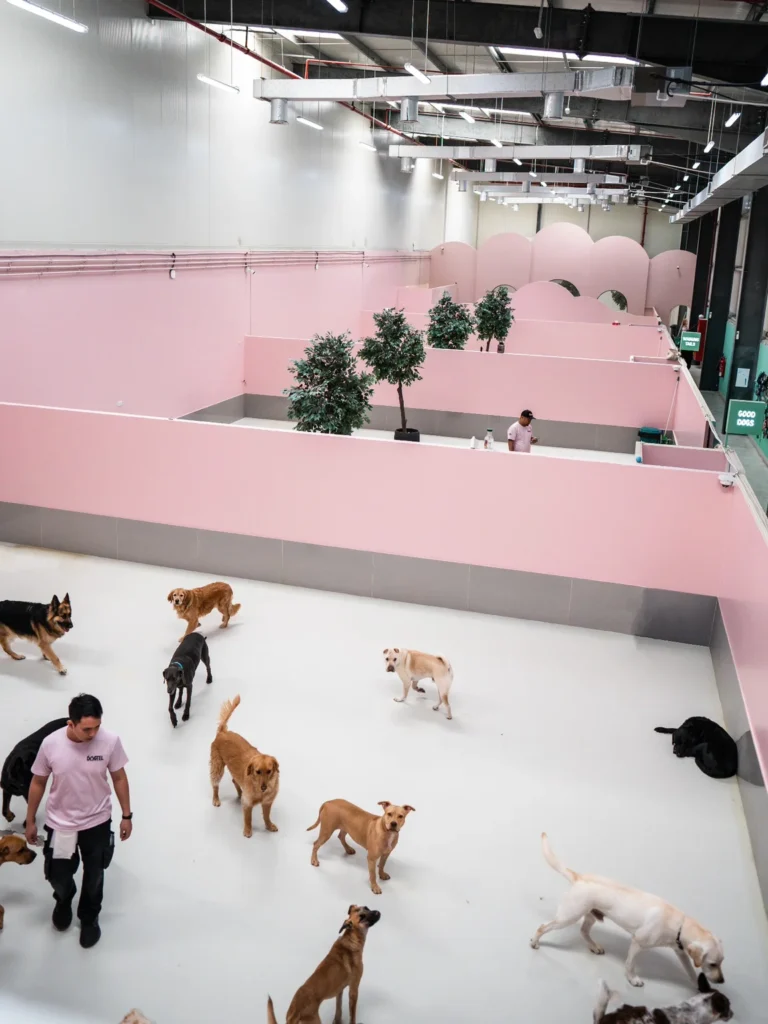
For larger facilities, a big open hall gives dogs room to run, sniff, and socialize freely. This idea uses a warehouse-style space with soft pink walls, scalloped arch partitions, and potted trees for a bit of greenery. Staff walk through the space in matching branded shirts, actively supervising the group.
The scale here is the real selling point — this kind of open hall can comfortably hold a dozen or more dogs of different sizes at once, from German Shepherds to Golden Retrievers to small terriers. Soft flooring throughout keeps the space safe for running and prevents injuries from repeated play.
This idea works best for daycare-focused businesses rather than overnight boarding, since it prioritizes group interaction over private rest. Good sightlines throughout the hall also make it easier for a small staff team to supervise a large number of dogs at once.
📸 Photo credit: Instagram @mydogtel
9. Small-Breed Living Room Lounge
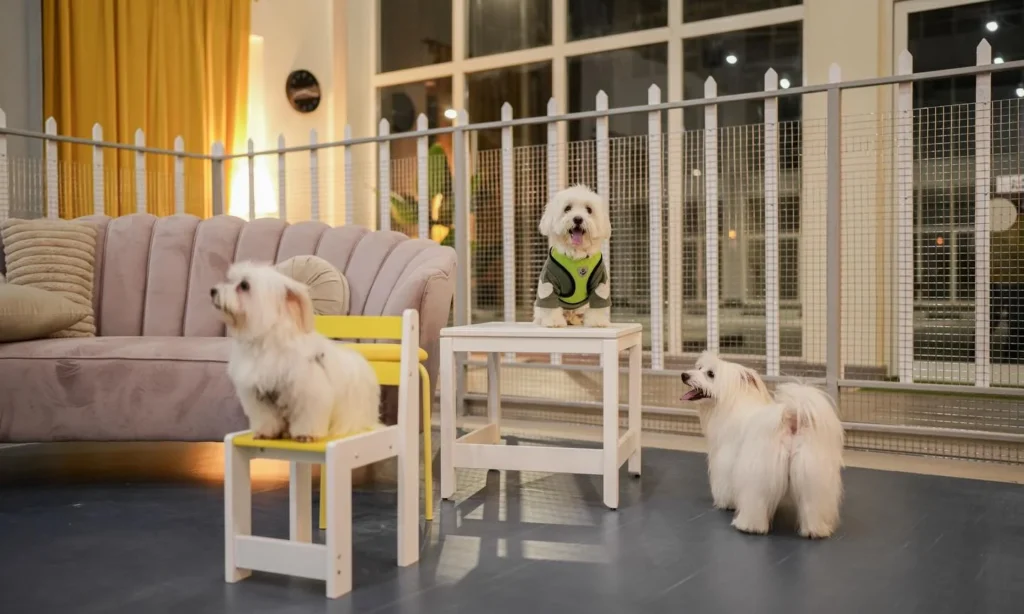
This idea skips the typical kennel look entirely and styles the space like an actual living room. Dogs are shown posed on a real armchair, a small side table, and a plush sofa, set against warm lighting and a fenced backdrop. It feels more like a photoshoot set than a boarding facility — which is exactly the point.
This kind of styled lounge is ideal for boutique grooming salons or small-breed daycares that want strong visual branding for social media. The furniture doesn’t need to be functional 24/7 — it can double as a photo area for owners to see their dog looking pampered and happy.
If your business caters to toy and small breeds, this idea shows how a little interior design effort can make your space memorable. For more on combining grooming and boarding spaces, take a look at our dog grooming salon ideas.
📸 Photo credit: Instagram @propets_mobile_petgrooming
10. Cozy Nap Room with TV
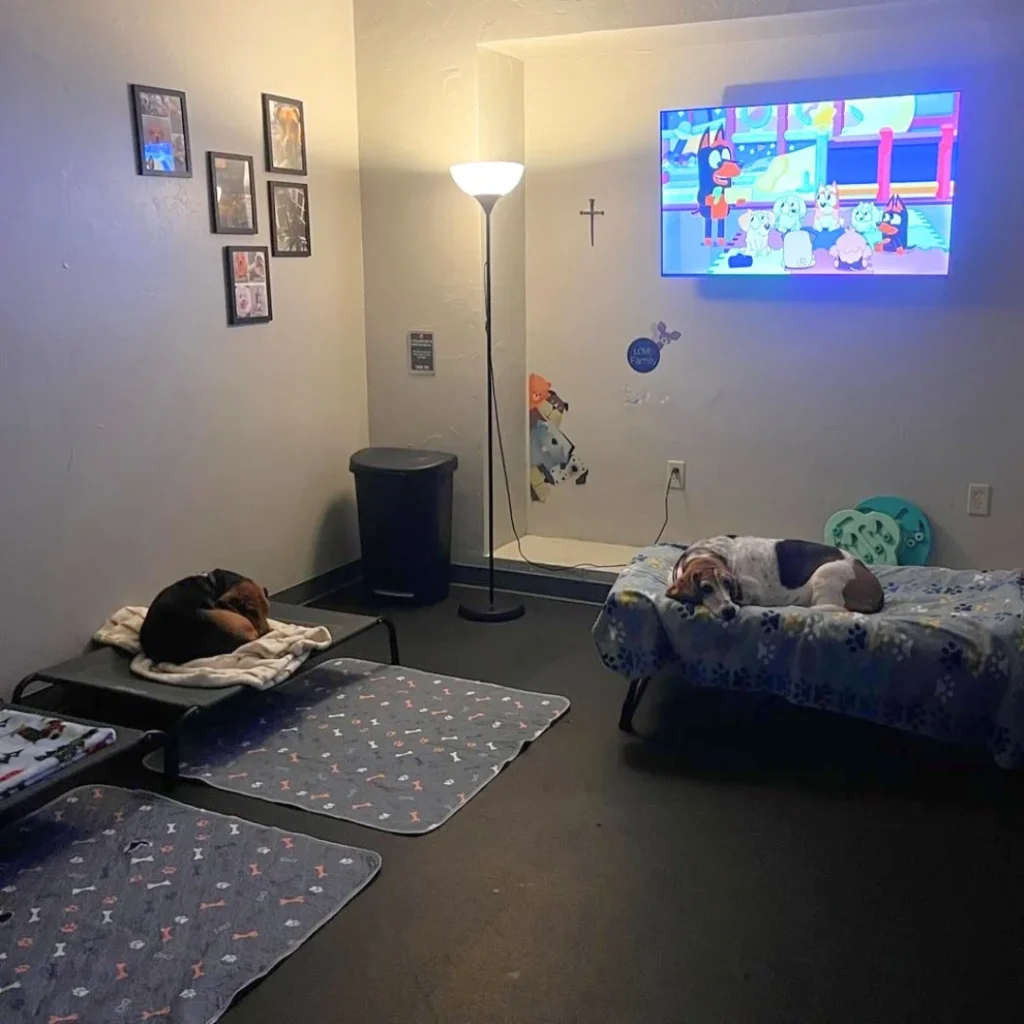
Some dogs need quiet time, not constant play, and this idea is built entirely around rest. Raised cots with soft blankets are arranged in a dim, homey room, and a wall-mounted TV plays a cartoon in the background — giving the space a calm, familiar feeling, almost like a family den.
A wall of framed photos adds a personal touch, showing past guests who’ve stayed in the room. This kind of detail builds trust with owners, since it signals that dogs are treated as individuals, not just numbers on a schedule.
This idea is especially useful for senior dogs, anxious dogs, or breeds that get overstimulated in group play settings. Offering a dedicated quiet space alongside your play areas gives your facility more flexibility to handle different temperaments. Our indoor dog kennel ideas post has more layouts for calm, indoor-only setups.
📸 Photo credit: Instagram @workingforwags
11. Dog Gym and Agility Room
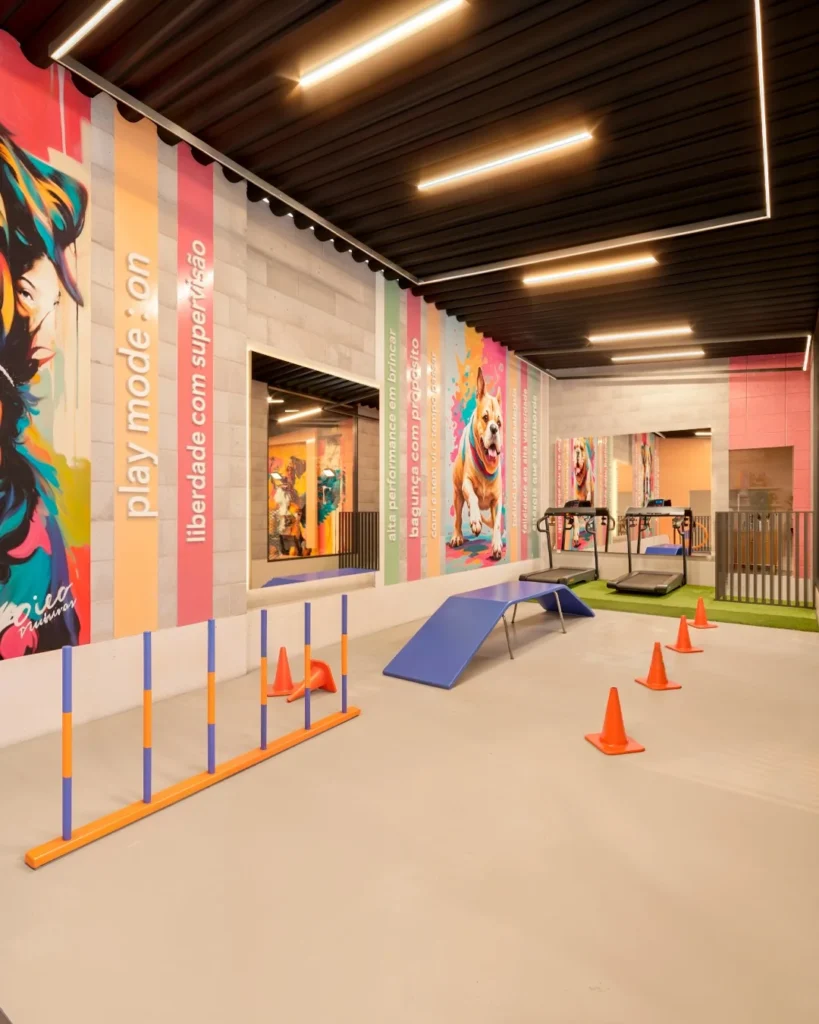
For high-energy dogs, a dedicated fitness room can be a major selling point. This idea features treadmills, agility poles, cones, and a padded ramp, all set against bold, colorful graffiti-style murals with motivational phrases painted right on the walls.
The design does double duty — it’s functional for real exercise and structured training, but it’s also visually striking enough to be a marketing tool on its own. Photos and videos from a space like this stand out immediately on social media, which helps attract new clients.
This idea works well as an add-on service for boarding facilities that want to offer structured exercise sessions, not just free play. It’s also a great space to highlight for working or sporting breeds that need more mental and physical stimulation than a yard alone provides.
📸 Photo credit: Instagram @pinkdog_bemestarcanino
12. Themed Mural Group Lounge
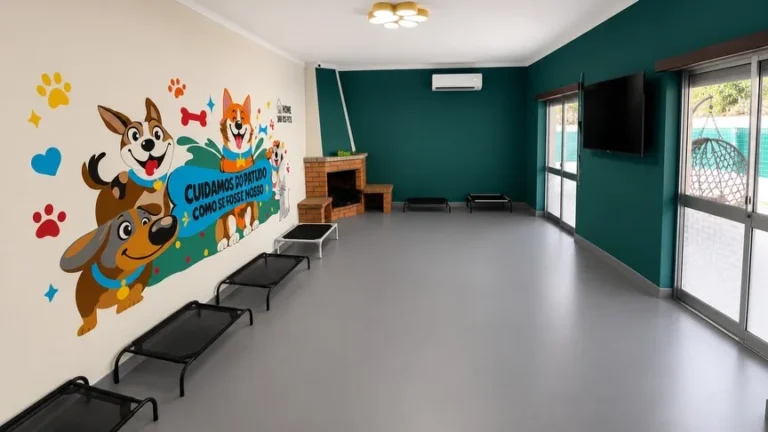
The last idea on this list combines function with storytelling. A teal-walled lounge features a large cartoon mural of smiling dogs and a bold tagline, paired with simple raised cot beds lined along the wall and a mounted TV. Big glass doors let in natural light and open views to an outdoor area.
This kind of themed space works well as a shared lounge for dogs waiting to be picked up, or as a calm transition area between play sessions. The mural does more than decorate — it reinforces brand identity and gives owners something memorable to photograph at drop-off and pickup.
If you’re building out a full facility, a themed lounge like this is a great final touch that ties everything together. Pair it with practical finishing details from our dog kennel entertainment center ideas if you want to add more comfort features like this TV setup.
📸 Photo credit: Instagram @homedospetspt
Tips for Designing Your Own Dog Hotel Interior
Before you start building, keep a few practical things in mind. Good dog hotel design isn’t just about looking nice in photos — it needs to hold up to daily use.
Flooring matters more than most people expect. Non-slip, easy-to-clean surfaces prevent injuries and make daily cleanup faster. If you’re unsure where to start, our guide on dog kennel flooring ideas breaks down the best options for high-traffic spaces.
Mix private and shared spaces. Not every dog wants to play all day, and not every dog wants to be alone. The best facilities, like several shown above, offer both private suites and open group areas so dogs can choose (or be guided toward) what suits them.
Personal touches build trust. Photos, named suites, and matching decor might seem like small details, but they reassure owners that their dog is being treated as an individual, not just another guest.
Plan for airflow and light. Whether it’s a ceiling fan in a covered yard or glass doors in a suite, good airflow and natural light keep dogs comfortable and make staff supervision easier.
Final Thoughts
There’s no single “right” way to design a dog hotel. Some of the best facilities combine several of these ideas — luxury suites for overnight boarding, open play halls for daycare, and quiet nap rooms for dogs who need a break from the group. What matters most is that the space feels safe, clean, and genuinely comfortable for the dogs staying there.
Use these 12 ideas as a starting point, mix and match what fits your space and budget, and don’t be afraid to add personal touches that make your facility stand out. A well-designed dog hotel doesn’t just keep dogs safe — it gives owners peace of mind, and that’s what keeps them coming back.

Izzy is an experienced ranch worker who has a passion for exploring nature and getting up close to wildlife. With her connections to various animal organizations, Izzy is well-versed in animal care and rehabilitation.


