Homemade Bone Broth for Dogs That Turns Plain Kibble Into a Healing Meal
A bowl of dry kibble can get stale, uninteresting, and unloved fast, especially for a dog with sensitive joints, a delicate gut, or a nose that has lost its enthusiasm for the same brown pellets every day. Homemade Bone Broth for Dogs changes that. This slow-simmered liquid pulls gelatin, collagen, and flavor directly into the water, turning a plain meal into something your dog leans into with its nose. It is a topper, not a full meal: it adds moisture, ease to drinking, and the kind of soft, rich texture that makes food feel like food again. The bones you simmer are never fed back to the dog — they are strained out and tossed, because cooked bones splinter. Each recipe below uses dog-safe ingredients only: no onion, no garlic, no added salt.
Why Bone Broth Helps Your Dog's Joints
Stiffness in older dogs is a story of cartilage, synovial fluid, and the proteins that hold them together. When you simmer bones for long enough, especially knuckle bones, feet, and joints, the connective tissue breaks down into gelatin, which dissolves into the broth. That broth becomes a direct source of the amino acids glycine, proline, and hydroxyproline that are the raw materials for maintaining cartilage, ligaments, and the joint lining.
It is important to be precise here: bone broth supports joint health. It does not cure arthritis, it does not reverse joint disease, and it is not a substitute for the vet, the joint supplement, or the prescribed anti-inflammatory if your dog has been diagnosed with arthritis. If you are already feeding a high-quality complete dog food, broth is a topper, not a replacement. A good companion to the broth is a well-balanced base diet, and you can find a full example in our nom nom dog food copycat recipe if you want to build a homemade staple around the broth rather than relying on commercial kibble alone.
Why It Helps Digestion and Hydration
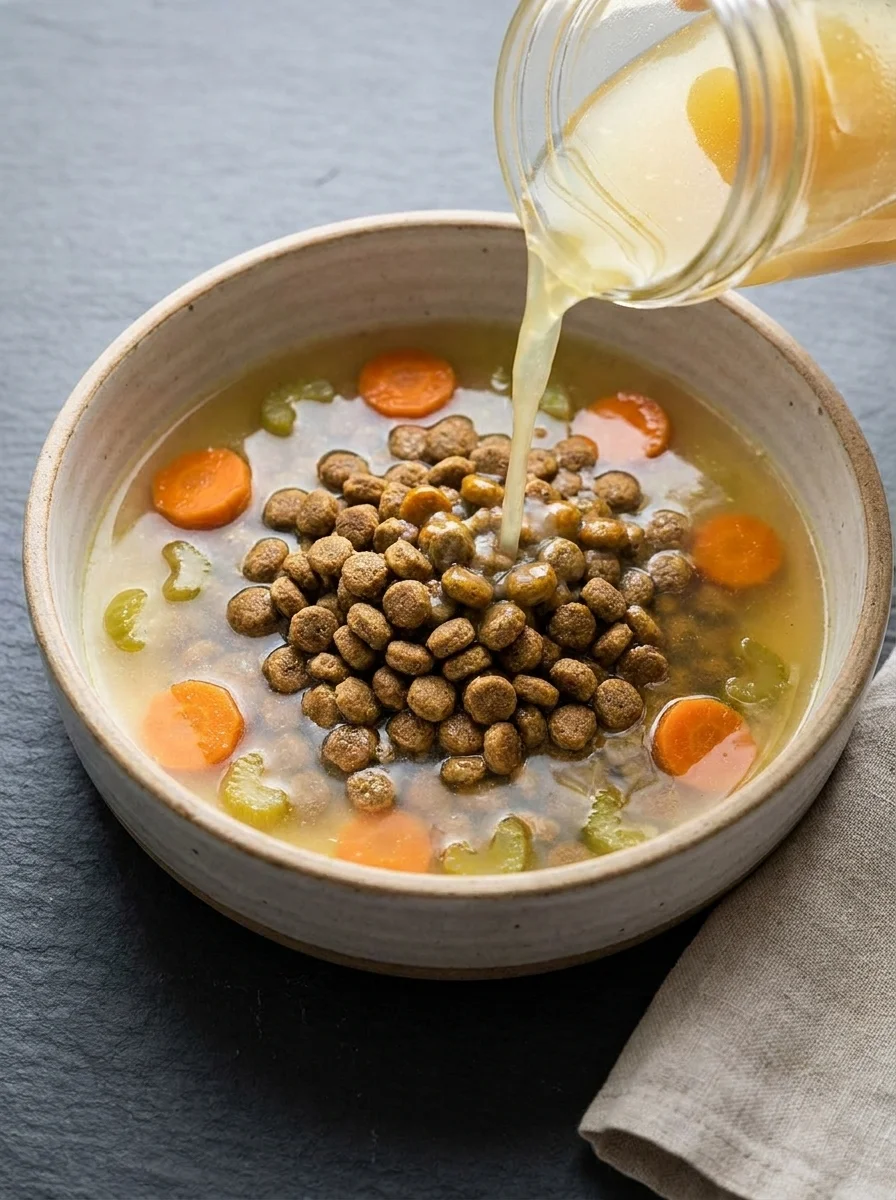
The gut lining of a dog is constantly being renewed. For a dog with a sensitive stomach, the broth is also one of the easiest things to digest: it is warm, liquid, and free of the fiber and particle load that a full meal carries.
Hydration is the other half of the story. Many dogs, especially older ones or dogs that have not been drinking well, will ignore a bowl of plain water but will lap at broth poured over their food. That is not a trick; it is just how the nose and the thirst drive work. It is not a meal. It is a topper that adds moisture, ease, and flavor to a complete meal. If your dog is on a therapeutic or restricted diet, this is a good place to check with your vet, and our this guide covers the broader context of low-fat and restricted feeding with dog-safe ingredients.
The Broth Formula: Bones + Water + Time
Every recipe in this article shares the same core: bones, enough water to cover the bones, a small amount of apple cider vinegar, a long low simmer, straining, and an overnight chill. The long, slow simmer is what breaks down the connective tissue into gelatin.
What changes between recipes is the protein and the clock. Beef marrow and knuckle bones need 24 to 48 hours because they are dense and the gelatin is locked in tight. Chicken feet and necks are lighter and faster, at 8 to 12 hours. Turkey falls in between at 12 to 24. Pork trotters and knuckles are the most collagen-dense of the four, and they set the firmest gel after chilling.
Recipe 1: Classic Beef Bone Broth
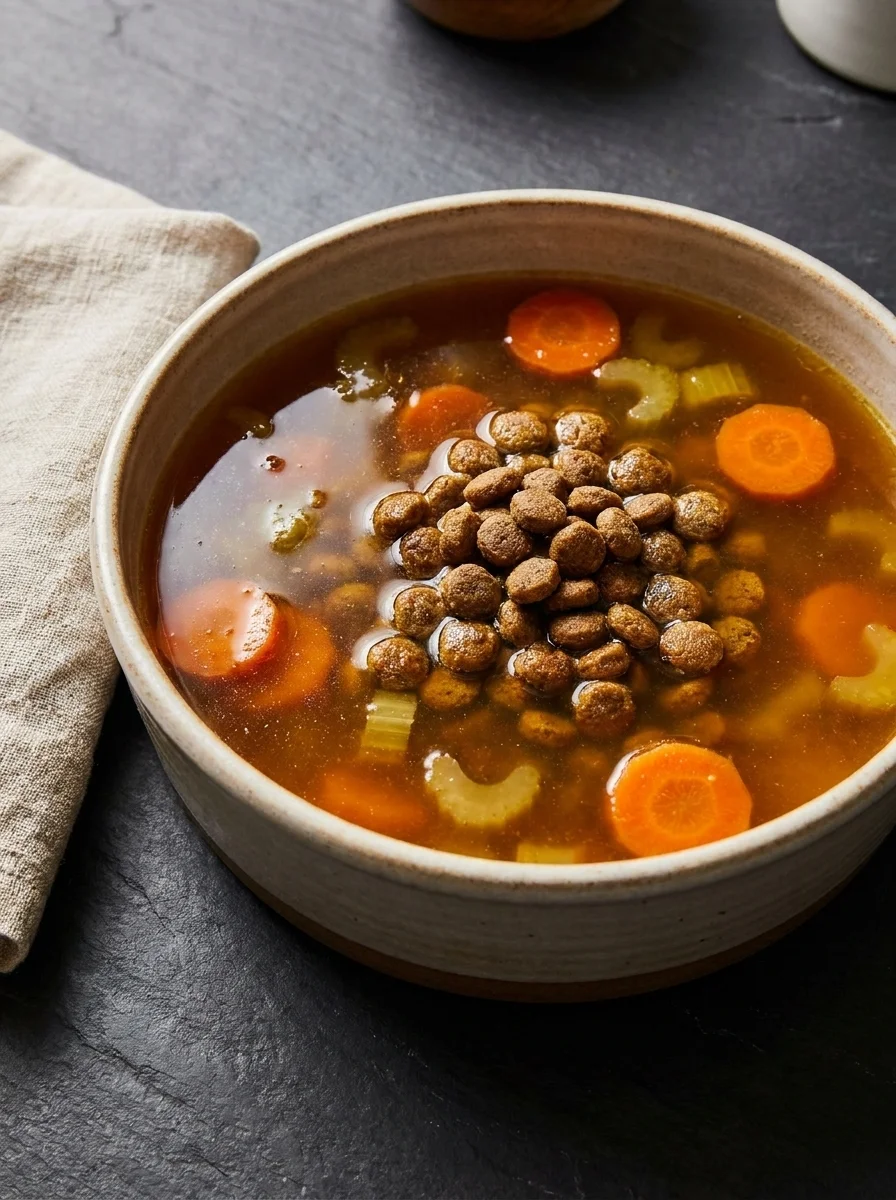
Beef is the traditional go-to for a rich, deep golden broth that gels well after chilling. The combination of marrow bones and knuckle bones is the classic: the marrow gives flavor and body, and the knuckles give the gelatin. This is the recipe to start with if you want the most forgiving, reliably rich result.
Ingredients
- 3 pounds beef marrow bones
- 2 pounds beef knuckle bones
- 12 cups cold water
- 2 tablespoons apple cider vinegar
- 2 carrots, chopped
- 2 celery stalks, chopped
- 1/4 cup fresh parsley, chopped
Step-by-Step Instructions
- Rinse the marrow bones and knuckle bones under cold water and place them in a large slow cooker.
- Pour in the cold water so the bones are fully covered, then stir in the apple cider vinegar and let the pot sit for 30 minutes so the vinegar can start drawing minerals from the bones.
- Add the chopped carrots, celery, and parsley.
- Cover and cook on LOW for 24 to 48 hours, checking the water level once or twice and topping up with hot water if the bones start to peek out.
- Skim off any foam or scum that rises in the first few hours.
- When the broth is deep golden and the bones feel light and crumbly, strain it through a fine-mesh strainer into a large bowl or pot, then strain once more through cheesecloth if you want it extra clear.
- Discard all the cooked bones and vegetables — cooked bones splinter and must never be served to a dog.
- Let the broth cool to room temperature, then chill it overnight in the fridge.
- The next day, lift off the solid fat layer on top and discard it, or save a spoonful for cooking if you wish.
It can be paired with a complete beef-based meal for a dog that does well on that protein, and our beef apple dog meal recipe is a good companion if you want a full homemade plate rather than kibble.
Recipe 2: Chicken Bone Broth
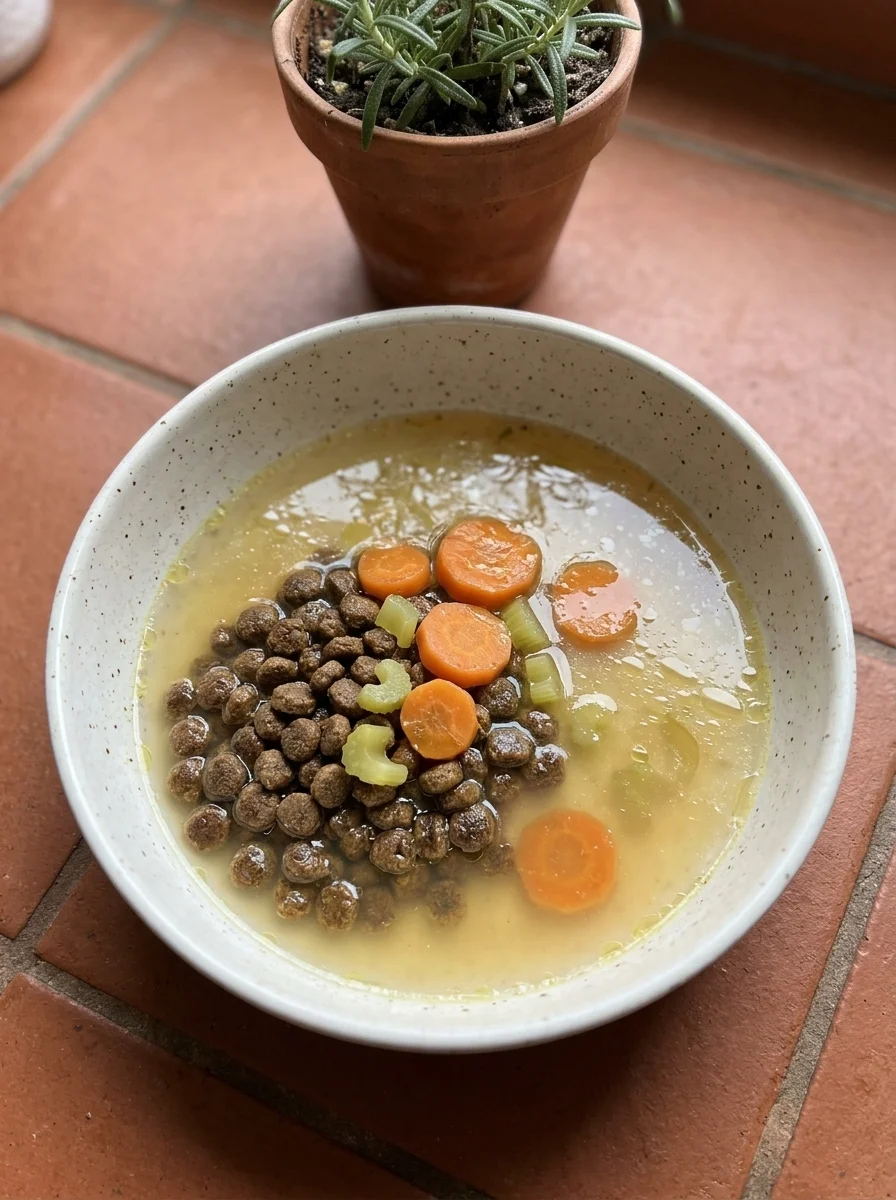
Chicken is the lightest, fastest, and most flexible broth in this article. The chicken feet are the secret: they are packed with Type II collagen, the same type that is found in the lining of the gut, which is why this broth is a good fit for dogs with sensitive digestion. The cook time is the shortest of the four, which makes it the easiest to get into the habit.
Ingredients
- 2 pounds chicken feet
- 1 pound chicken necks
- 1 chicken carcass or backs
- 10 cups cold water
- 2 tablespoons apple cider vinegar
- 1 teaspoon ground turmeric
- 1 sprig fresh rosemary
- 2 carrots, chopped
- 2 celery stalks, chopped
Step-by-Step Instructions
- Rinse the chicken feet, necks, and carcass under cold water and place them in a large slow cooker.
- Pour in the cold water, stir in the apple cider vinegar, and let the pot sit for 30 minutes.
- Add the turmeric, rosemary, carrots, and celery.
- Cover and cook on LOW for 8 to 12 hours, or cook in an Instant Pot on high pressure for 90 minutes with a natural release.
- Skim off any foam that rises early on.
- Strain the broth through a fine-mesh strainer, then strain once more through cheesecloth for a clear finish.
- Discard all the cooked bones and vegetables — cooked chicken bones splinter easily and must never be served.
- Cool the broth to room temperature, then chill it overnight in the fridge and skim off the fat layer the next day.
This is the broth to reach for when your dog is on a restricted diet or has a sensitive gut. A good companion plate is a chicken-based homemade meal, and our chicken pumpkin dog food recipe is one that works well when you want to keep the protein family consistent across the bowl.
Recipe 3: Turkey Bone Broth
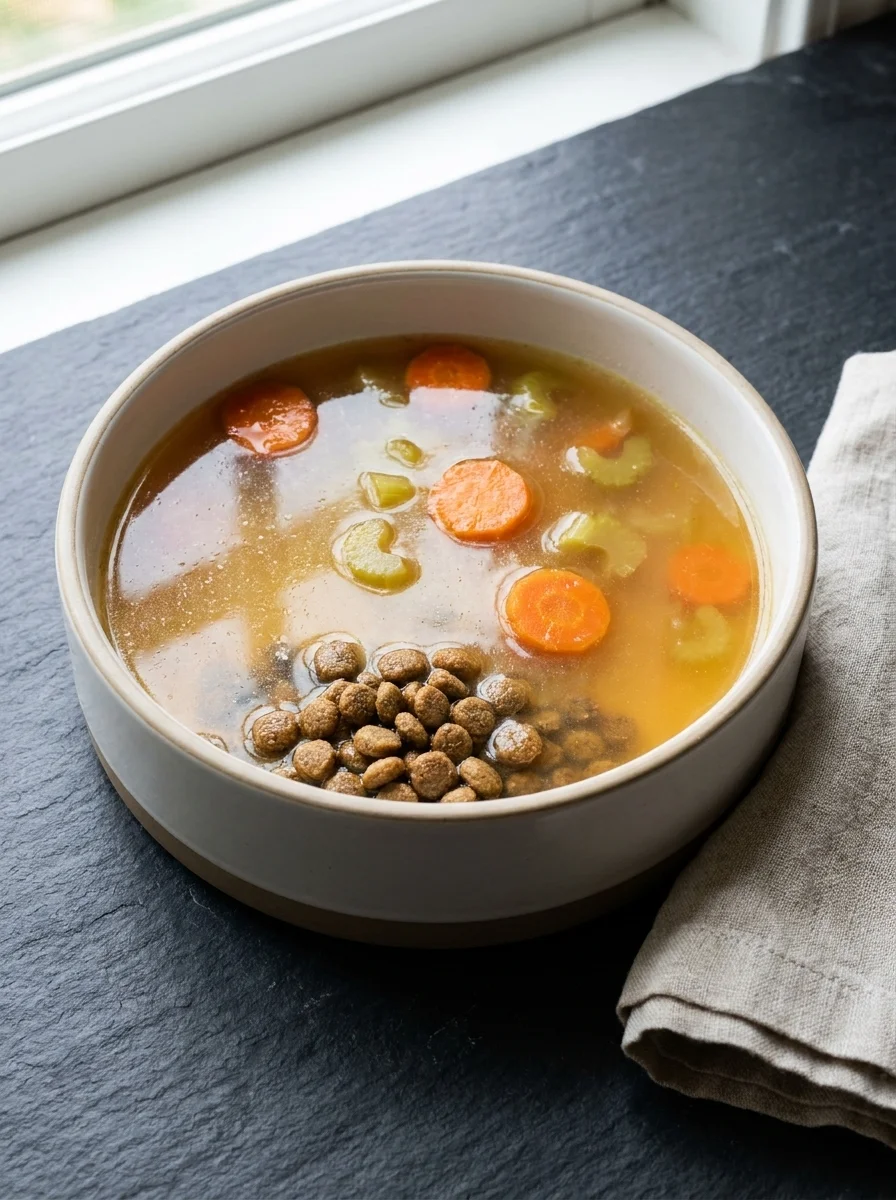
Turkey is the in-between option: slower than chicken but faster than beef, and a good fit for dogs that have done well on turkey in their kibble or in a home-cooked meal. The necks and wings are the workhorses here because they carry both the flavor and the connective tissue. If you have a leftover roast turkey from a holiday, the carcass can stand in for the necks and wings, but only if the bird was never seasoned with onion or garlic.
Ingredients
- 2 pounds turkey necks and wings, or 1 leftover roast turkey carcass
- 10 cups cold water
- 2 tablespoons apple cider vinegar
- 2 carrots, chopped
- 2 celery stalks, chopped
- 1/4 cup fresh parsley, chopped
Step-by-Step Instructions
- Rinse the turkey necks and wings, or break the leftover roast carcass into pieces that fit your slow cooker, and place them in the pot.
- Pour in the cold water, stir in the apple cider vinegar, and let the pot sit for 30 minutes.
- Add the carrots, celery, and parsley.
- Cover and cook on LOW for 12 to 24 hours, topping up with hot water if the bones start to show.
- Skim off any foam early on.
- Strain the broth through a fine-mesh strainer and then through cheesecloth if you want it clear.
- Discard all the cooked bones and vegetables — never serve cooked bones to a dog.
- Cool to room temperature, chill overnight in the fridge, and skim off the fat layer the next day.
If you use a leftover roast carcass, check it carefully: no onion, no garlic, no seasoned skin. Pick off any skin that looks seasoned before the bones go in the pot.
Recipe 4: Pork Bone Broth
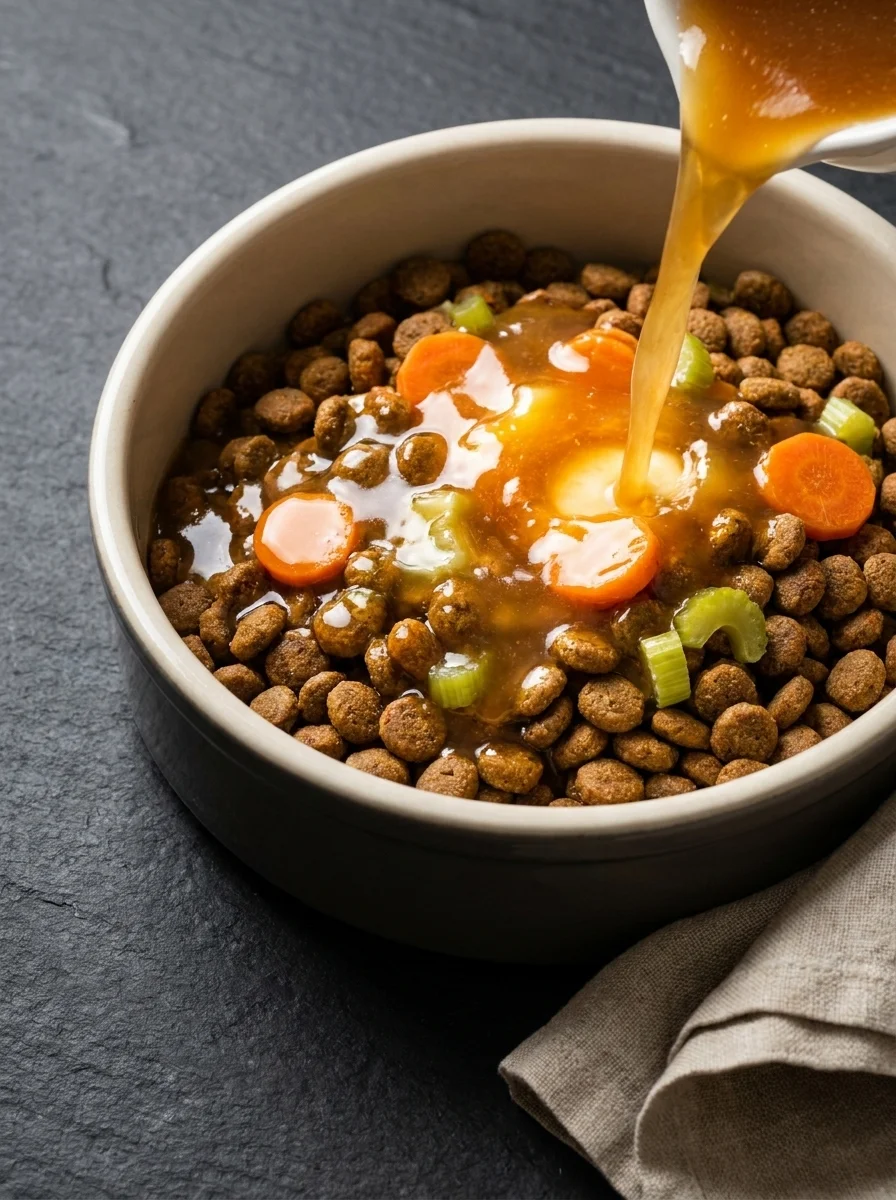
Pork is the fattiest of the four broths, and it is also the one that sets the firmest gel after chilling. That is because pork trotters and knuckles are the most collagen-dense bones in this article.
Ingredients
- 2 pounds pork knuckles or trotters
- 1 pound pork rib bones
- 10 cups cold water
- 2 tablespoons apple cider vinegar
- 2 carrots, chopped
- 2 celery stalks, chopped
Step-by-Step Instructions
- Rinse the pork knuckles or trotters and the rib bones under cold water and place them in a large slow cooker.
- Pour in the cold water, stir in the apple cider vinegar, and let the pot sit for 30 minutes.
- Add the carrots and celery.
- Cover and cook on LOW for 24 to 36 hours, topping up with hot water if needed and skimming off foam in the first few hours.
- Strain the broth through a fine-mesh strainer and then through cheesecloth for a clear finish.
- Discard all the cooked bones and vegetables — cooked bones splinter and must never be served.
- Cool to room temperature, chill overnight in the fridge, and skim off the fat layer the next day; pork runs the fattiest of the four broths, so skim carefully.
For a dog that does well on pork protein, this is the broth to pair with a pork-based meal. The firm gel after chilling is a sign of a successful long cook; if it does not gel, see the troubleshooting section.
Recipe 5: Gelatin Bone Broth Cubes
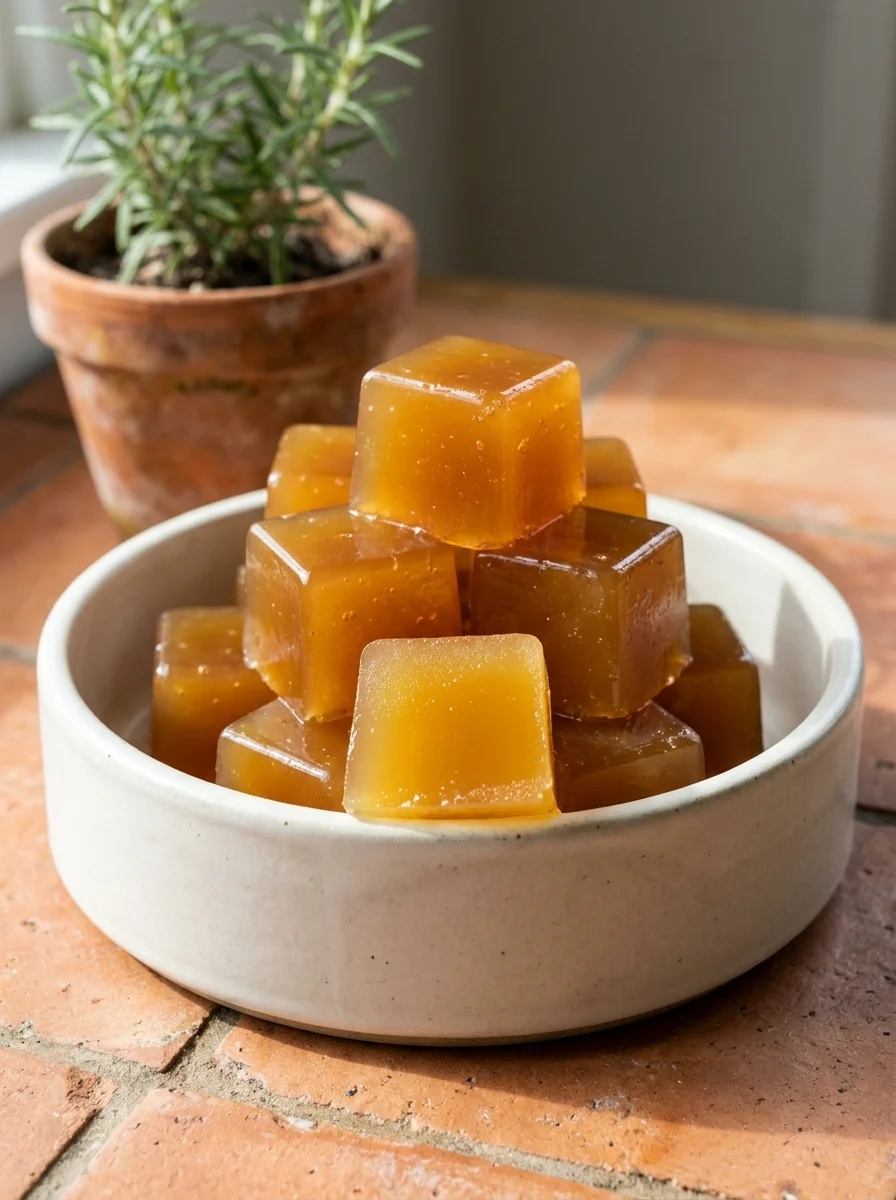
This is not a new broth. It is a way to portion, store, and serve a finished broth from any of the first four recipes in dog-scale doses. You warm the broth, bloom the gelatin, pour it into silicone molds, and let it set. The result is a stack of cubes that you keep in the fridge and dose by body weight.
Ingredients
- 4 cups finished bone broth, from any of Recipes 1-4
- 4 tablespoons unflavored gelatin powder
Step-by-Step Instructions
- Warm the finished bone broth in a saucepan over low heat until it is hot but not boiling.
- Sprinkle the gelatin powder over the surface and let it sit for 2 minutes to bloom, then whisk gently until every granule has dissolved and the broth is completely smooth.
- Pour the mixture into silicone molds and set them on a tray so they stay level.
- Chill in the fridge for at least 4 hours, until the cubes are fully set and pop cleanly out of the molds.
- Store the cubes in a sealed container in the fridge and dose them by body weight, about 1 cube per 10 pounds of dog per day.
Do not boil the broth after the gelatin is in; boiling breaks the gelatin down and the cubes will not set. Once they are set, the cubes keep for the same 3 to 4 days in the fridge as the liquid, and you can freeze them for up to 6 months.
Serving by Dog Size
The base rule is 2 tablespoons of finished, skimmed, warm broth per 20 pounds of body weight, per day. That is the starting dose. For a 10-pound dog, that is one tablespoon; for a 40-pound dog, that is four tablespoons. For a 80-pound dog, that is eight tablespoons, or half a cup.
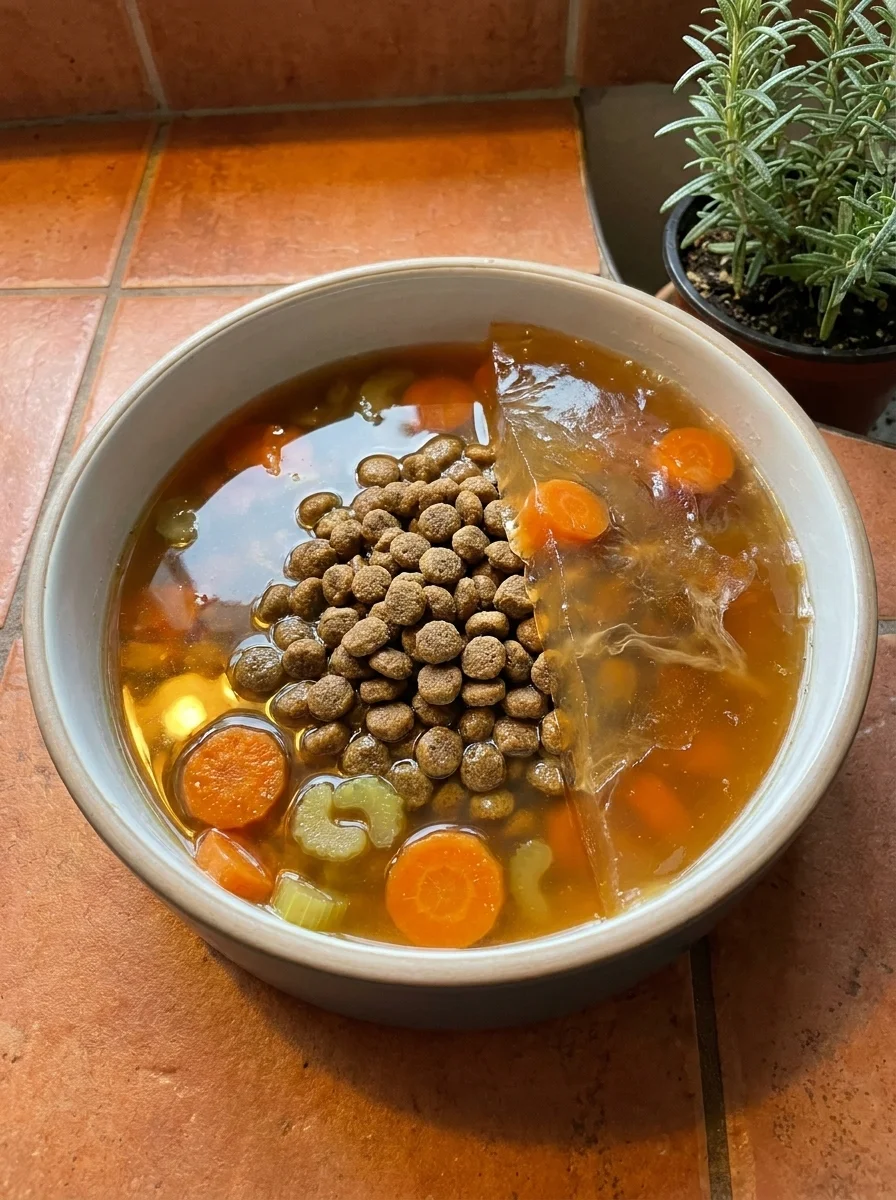
Serve the broth warm, never hot, in a dog bowl. Pour it over the kibble so it soaks in and softens the pellets, or serve it straight in a dog bowl as a topper.
Introduce the broth gradually. Start with a small amount on top of the regular meal for a day or two, then work up to the full dose over a week. This keeps the gut adjusting and gives you a window to see how your dog takes it. A good companion to a broth topper is a chew that the dog can work on while the broth does its work, and our beef sweet potato dog chews are a solid, dog-safe option that pairs well with the beef broth in particular.
Storage and Freezing
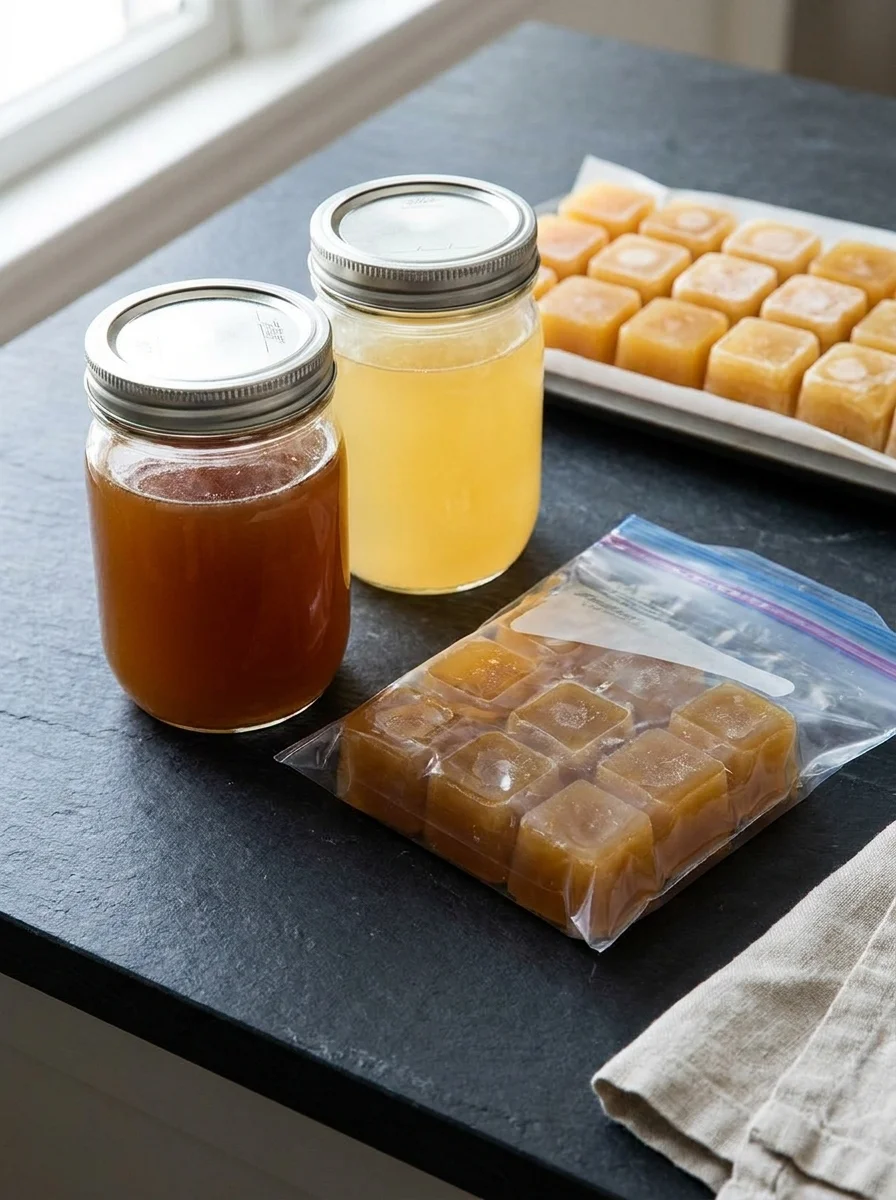
Fridge: 3 to 4 days. Freezer: up to 6 months. The fat layer that forms on top of the broth after chilling is normal; it is part of the recipe, and it is what you skim. Skim it before you serve or store the broth.
Label every container with the protein and the date. A small piece of masking tape on a glass jar is enough. The gelatin cubes from Recipe 5 freeze cleanly; lay them on a tray in the freezer until they are solid, then move them to a labeled bag.
The gel test is your quality check: a spoonful of cooled broth should set into a firm but wobbly gel. If it does not, the broth is still nutritious, but it is a sign the gelatin did not convert fully. See the troubleshooting section for what to do.
Troubleshooting
The broth did not gel: the most common cause is too much water relative to the bones. Cover the bones with water, not an inch or more above them. The second common cause is too few joint or knuckle bones; those are where the gelatin lives. The third is a cook that was too short. A broth that does not gel is still nutritious and still fine to serve; it just has less of the collagen-to-gelatin conversion.
The broth is cloudy: this is usually a sign it boiled too hard. Slow cookers on low should not boil; if the broth was simmering at a rolling boil, the gelatin and proteins have broken into smaller pieces and the broth goes cloudy.
The broth is too fatty: skim more carefully after the overnight chill. Pork broth in particular can run fat.
The dog will not drink it: warm it to just above room temperature, not hot. Mix it into the kibble so the dog is eating it rather than lapping it. Start with a small amount and work up.
The broth smells off: discard it. Do not serve it. A good bone broth smells savory, meaty, and clean. If it smells sour, rancid, or like anything else, something went wrong with the storage or the cook, and it is not worth the risk.
Frequently Asked Questions
Final Thoughts
Homemade Bone Broth for Dogs is a small investment of time that changes how your dog eats and drinks. The broth is a topper, not a meal. It adds moisture, flavor, and the building blocks that support joints and the gut lining. It is a layer on top of what your dog is already eating, and it works best when that base is a solid, complete meal.
The recipes here are five ways to make the same idea: beef for the classic rich result, chicken for the lightest and fastest broth, turkey for the in-between, pork for the firmest gel, and the cubes for portioned, ready-to-serve doses. Every one of them shares the same safety rules: no onion, no garlic, no salt; cooked bones are strained out and discarded; the broth is chilled overnight and skimmed of fat; and it is served warm, never hot, in a dog bowl.

Izzy is an experienced ranch worker who has a passion for exploring nature and getting up close to wildlife. With her connections to various animal organizations, Izzy is well-versed in animal care and rehabilitation.