Chicken Broccoli Dog Treats for Sensitive Stomachs and Picky Eaters
Chicken and broccoli sound like a dinner plate, not a dog treat — and that is exactly why they work. Plain cooked chicken is the protein most dogs already know and digest easily, and broccoli brings fiber, vitamin C, and a mild crunch that survives baking. Together they make a savory treat that smells like real food, which matters more than anything when your dog is a picky eater or has a sensitive stomach.
This article gives you five chicken broccoli dog treats, each built for a different need: a grain-free ball for sensitive stomachs, a soft pupcake for small mouths, a pocket-sized bite for training, a parmesan muffin for picky eaters, and a crunchy biscuit for heavy chewers. Every recipe uses plain, unseasoned chicken cooked to 165°F and broccoli in moderation, and every one fits in a dog bowl, on a mat, or crumbled over dinner as a topper.
No recipe here needs special equipment beyond a baking sheet, a muffin tin, or a silicone mold, and none of them hides garlic, onion, or seasoning in the mix. Pick the recipe that matches your dog, bake one batch, and watch which texture disappears first — that tells you what to make next time.

Chicken and Broccoli for Sensitive Dogs
Chicken earns its place in sensitive-stomach recipes because it is lean, mild, and easy to digest cooked plain. Skip the skin and the seasoning, and cook every piece to 165°F so it stays safe and soft enough to chop fine. If your dog has a known chicken allergy, these recipes are not the right fit — but for most dogs, plain chicken is the gentlest protein you can start with.
Broccoli plays a smaller role on purpose. It brings fiber, vitamins A, C, and K, and antioxidants, but too much causes gas and stomach upset, so it stays a supporting ingredient here, never the main event. Steam it soft and chop it fine so it blends into the dough instead of sitting in chunks.
The rest of the rules are simple: low-sodium broth only, no garlic and no onion in any form, and treats kept under 10% of your dog’s daily calories. Introduce any new treat slowly, one piece at a time, and check with your vet first if your dog has pancreatitis, a food allergy, or a condition limiting fat or fiber. If your dog already eats chicken, chicken dog food recipes built on the same plain, unseasoned protein are an easy next step.
Recipe 1: Grain-Free Cheddar Chicken-Broccoli Balls
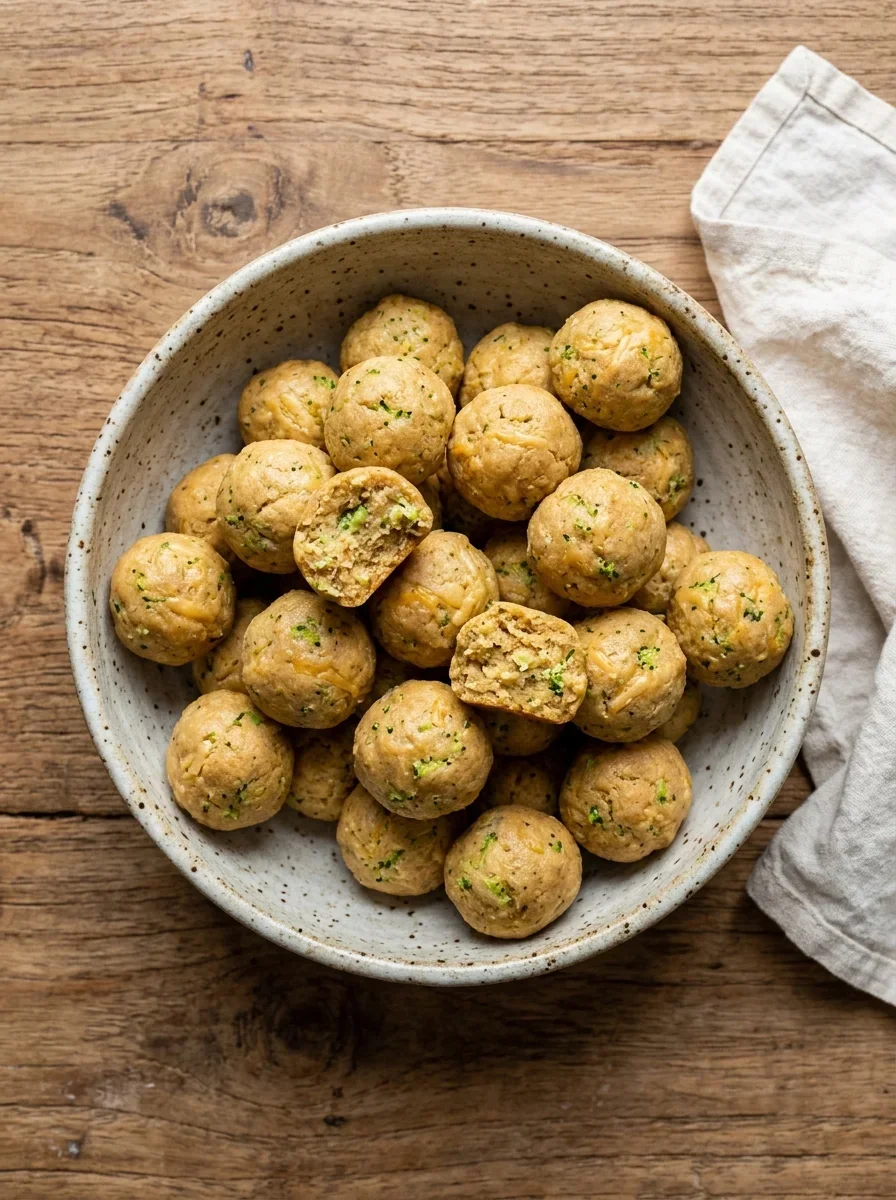
These grain-free balls are the gentlest recipe in this article, and the one to start with if your dog’s stomach is easily upset. Coconut flour replaces wheat entirely, cheddar gives the balls a smell that pulls dogs in, and the soft, moist center suits dogs who chew carefully. Keep the pieces small — a tablespoon of dough makes a ball a small dog can finish in one bite.
Coconut flour drinks up moisture, so the dough can look dry before it is ready. Add the broth one tablespoon at a time and stop as soon as the mixture holds together when you squeeze it; too much liquid turns the balls flat in the oven. The cheddar amount is deliberately small — enough to smell and taste, not enough to upset a lactose-sensitive stomach — and you can leave it out entirely if your dog has had trouble with dairy before; the balls hold together fine without it.
Ingredients
- 1 cup cooked chicken, finely chopped
- 1/2 cup broccoli, steamed and finely chopped
- 1/3 cup shredded cheddar cheese
- 1/2 cup coconut flour
- 1 large egg
- 1/2 tablespoon coconut oil, melted (optional)
- 2–3 tablespoons low-sodium chicken broth or water, as needed
Step-by-Step Instructions
- Preheat the oven to 350°F and line a baking sheet with parchment paper.
- In a large bowl, beat the egg lightly, then add the chopped chicken, steamed broccoli, shredded cheddar, and melted coconut oil if you are using it.
- Stir in the coconut flour a little at a time until the mixture thickens into a soft dough.
- Add the broth one tablespoon at a time, mixing after each spoonful, until the dough holds together when squeezed.
- Scoop tablespoon-sized portions and roll them into small balls with your palms.
- Place the balls on the prepared baking sheet and bake for 18–22 minutes, until lightly golden around the edges and firm when pressed gently.
- Let the balls cool completely on the baking sheet before serving or storing.
Serve one ball to a small dog and two or three to a large dog, and store the rest in an airtight container in the refrigerator for up to one week.
Recipe 2: Soft Pumpkin Pupcakes for Small Mouths
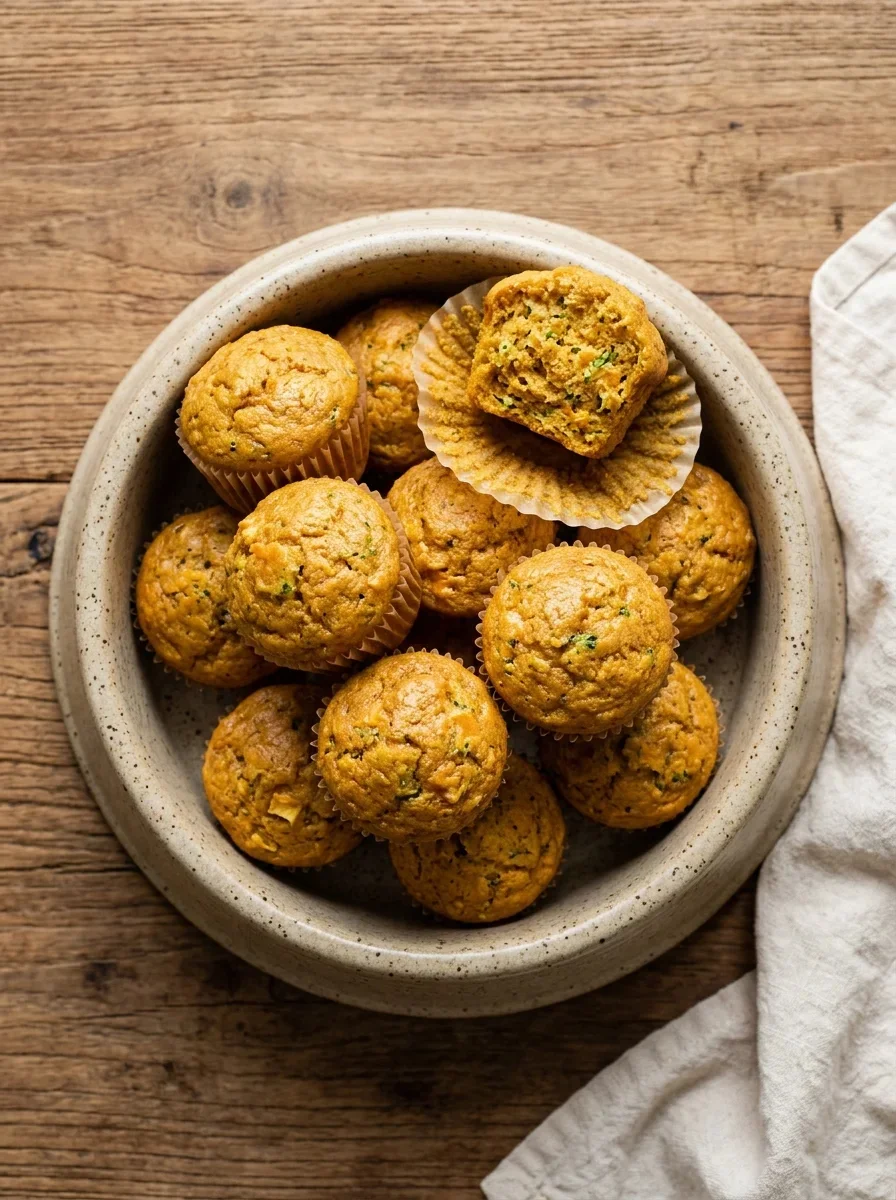
These pupcakes are the softest recipe here, built for puppies, seniors, and small dogs who struggle with hard biscuits. Pumpkin puree and applesauce keep the crumb moist for days, the broccoli stays finely chopped so it never fights the texture, and the muffin shape makes portioning automatic — one pupcake, one serving.
The batter should look thick and spoonable, not runny. If it seems too stiff to divide evenly, add broth one tablespoon at a time; if it seems too wet, add a spoonful of oat flour and stir it in before filling the cups. Paper liners make the pupcakes easy to lift out and carry, and they keep the soft crumb from sticking to the tin; if you bake without liners, grease each cup well and let the pupcakes cool fully before you try to remove them.
Ingredients
- 1 cup cooked chicken, shredded
- 1 cup broccoli florets, finely chopped
- 1 1/4 cups oat flour
- 1/2 cup plain pumpkin puree (not pie filling)
- 1/4 cup unsweetened applesauce
- 1/4 cup low-sodium chicken broth
- 1 egg
- 1 tablespoon flaxseed meal (optional)
Step-by-Step Instructions
- Preheat the oven to 350°F and line a muffin tin with paper liners or grease it lightly.
- In a large bowl, whisk the pumpkin puree, applesauce, chicken broth, and egg until smooth.
- Fold in the shredded chicken and chopped broccoli until they are spread evenly through the wet mixture.
- Stir in the oat flour and the flaxseed meal if you are using it, mixing until no dry streaks remain.
- Divide the batter among the muffin cups, filling each about three-quarters full.
- Bake for 20–25 minutes, until the tops are golden and a toothpick inserted in the center comes out clean.
- Let the pupcakes cool in the tin for 10 minutes, then move them to a wire rack to cool completely.
For dogs who prefer soft food most days, homemade wet dog food recipes use the same gentle approach in a bowl instead of a muffin tin. Keep pupcakes refrigerated in an airtight container for up to one week, or freeze them for up to three months and thaw one at a time before serving.
Recipe 3: Brown-Rice Bites for Training Pockets
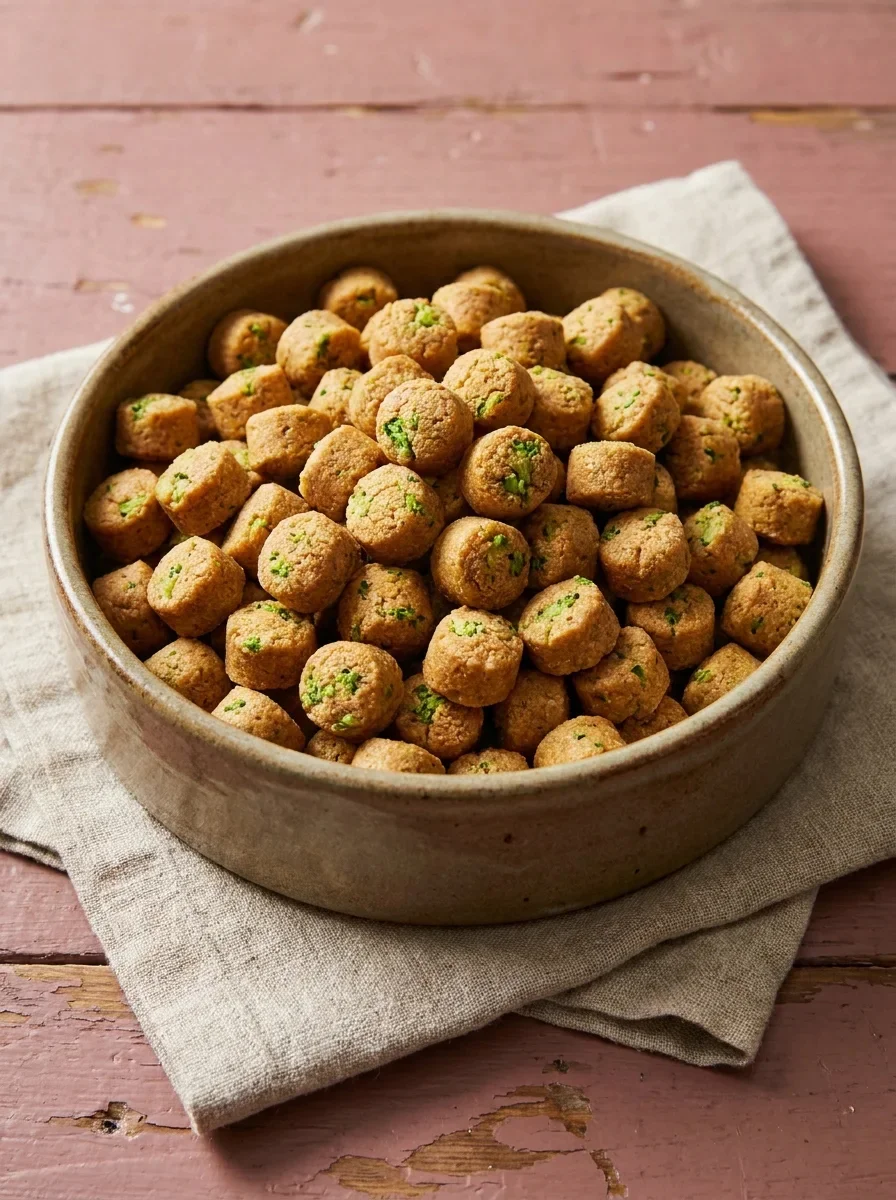
These are the training treats of the set: small, firm, and dry enough to carry in a pocket without crumbling. The food processor does the work — chicken, brown rice, flour, and egg blend into a base that holds together, and the broccoli is stirred in last so its green flecks stay visible. Silicone molds give every bite the same size, which makes rewarding consistent.
Use cooked brown rice that has cooled fully; warm rice makes the mixture sticky and hard to spoon. If your dog is very small, fill the molds halfway so each bite is a single quick reward instead of a mouthful that slows the session down. Pulse in short bursts and stop as soon as the mixture comes together — over-processing turns it into a paste that bakes dense and heavy instead of light and bite-sized.
Ingredients
- 1/2 cup cooked chicken
- 1/2 cup cooked brown rice
- 1/4 cup oat flour
- 1 egg
- 1/2 cup steamed broccoli, cut into small pieces
Step-by-Step Instructions
- Preheat the oven to 350°F and set silicone molds on a baking sheet for stability.
- Place the cooked chicken, cooked brown rice, oat flour, and egg in a food processor and pulse until just combined.
- Transfer the mixture to a bowl and stir in the steamed broccoli until it is spread evenly through.
- Spoon the mixture into the molds, pressing it down lightly so each bite holds its shape.
- Bake for 18–20 minutes, until the bites are set and lightly golden on top.
- Let the bites cool completely in the molds before popping them out and serving.
These bites keep in an airtight container in the refrigerator for up to 5 days, so bake a batch at the start of the week and grab a handful before each training session. For longer storage, freeze them in a single layer first, then move them to a bag once they are solid.
Recipe 4: Parmesan Mini Muffins for Picky Eaters
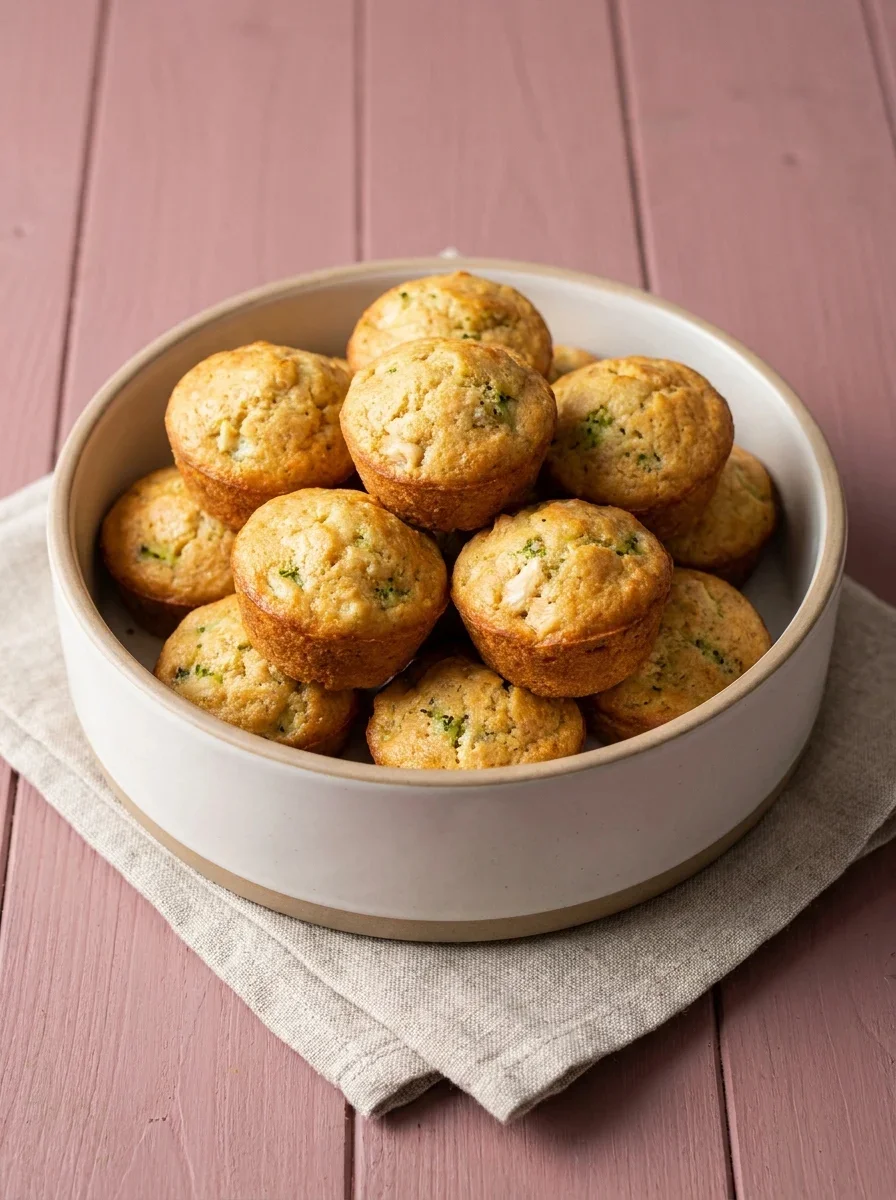
Parmesan is the trick in this recipe: its sharp, salty smell reaches a picky dog before the muffin does, and the small size means a hesitant dog only has to commit to one bite. The brown rice keeps the muffins soft inside, and pressing the tops down before baking packs the mixture so the muffins hold together when a dog carries one off.
If your dog turns away from plain chicken treats, this is the recipe to try first. The cheese smell does the persuading, and once a picky eater accepts one muffin, the same base works with the other recipes in this article. A regular muffin tin works too if you do not own a mini one, but bake the larger muffins a few minutes longer and cut each one in half for small dogs, since a full-size muffin is a lot of food for a small mouth.
Ingredients
- 1 cooked chicken breast, chopped
- 1 cup cooked brown rice
- 1 cup chopped broccoli
- 1/4 cup grated parmesan cheese
- 2 eggs, lightly beaten
Step-by-Step Instructions
- Preheat the oven to 350°F and grease a metal mini-muffin pan.
- In a large bowl, combine the chopped chicken, cooked brown rice, chopped broccoli, grated parmesan, and beaten eggs.
- Stir until everything is mixed well and the egg coats the mixture evenly.
- Spoon the mixture into the prepared muffin pan and press the tops down so each muffin is well packed.
- Bake for 20–25 minutes, until the muffins are browned at the edges and firm in the center.
- Allow the muffins to cool in the pan for 10 minutes, then turn them out onto a wire rack to cool completely.
Picky eaters who like the parmesan smell here often go for this recipe next, a chicken and pumpkin dinner built for fussy dogs. Store the muffins in an airtight container in the refrigerator for up to one week.
Recipe 5: Crunchy Whole-Wheat Biscuits for Heavy Chewers
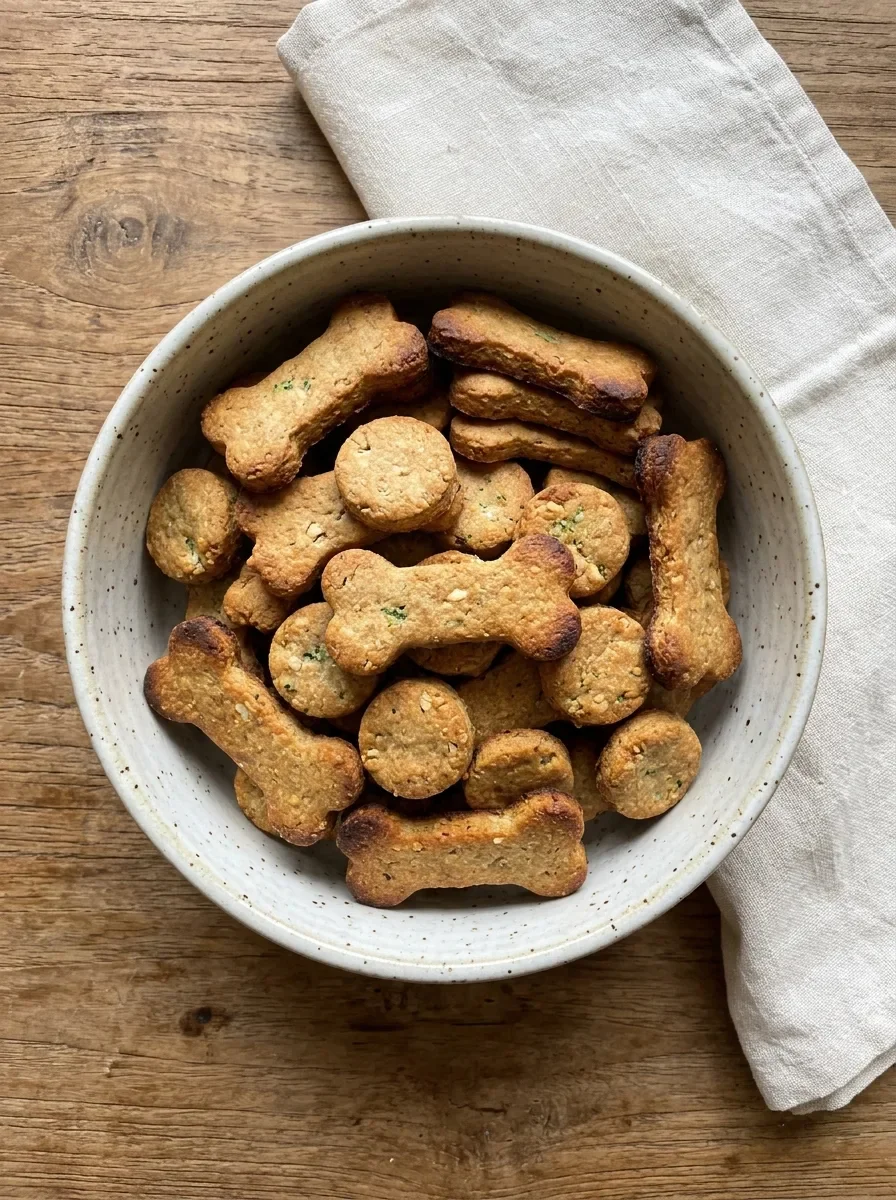
These biscuits are the only crunchy recipe in the set, made for dogs who chew hard and swallow soft treats whole. The dough rolls out and cuts into shapes, the whole wheat flour gives the biscuits a firm snap, and the chicken and broccoli stay finely chopped so the dough holds together cleanly under the cutter.
Roll the dough to an even quarter inch — thin spots burn while thick spots stay soft in the middle. For extra crunch, turn the oven off after baking and leave the biscuits inside with the door slightly open for 10 minutes so they dry out instead of steaming. Dust the cutter in flour between shapes so the dough releases cleanly, and re-roll the scraps once — a second re-roll still bakes fine, but the dough gets tougher each time you work it.
Ingredients
- 1 cup cooked chicken, shredded
- 1 cup broccoli, finely chopped
- 1 egg
- 2 cups whole wheat flour
- 1/4 cup low-sodium chicken broth
- 1 tablespoon olive oil
Step-by-Step Instructions
- Preheat the oven to 350°F and line a baking sheet with parchment paper.
- In a large bowl, combine the shredded chicken, chopped broccoli, egg, chicken broth, and olive oil, and mix until well combined.
- Add the whole wheat flour gradually, mixing until a dough forms, and add a little more flour if the dough is too sticky to handle.
- On a floured surface, roll the dough out to about 1/4 inch thick.
- Cut the dough into shapes with cookie cutters and place them on the prepared baking sheet.
- Bake for 20–25 minutes, until the biscuits are golden brown and firm to the touch.
- Transfer the biscuits to a wire rack and let them cool completely before serving.
Whole wheat flour is the one ingredient here that some sensitive dogs cannot handle, so if your dog does better grain-free, start with the cheddar balls in Recipe 1 instead. These biscuits keep at room temperature in an airtight container for up to one week.
Serving by Size
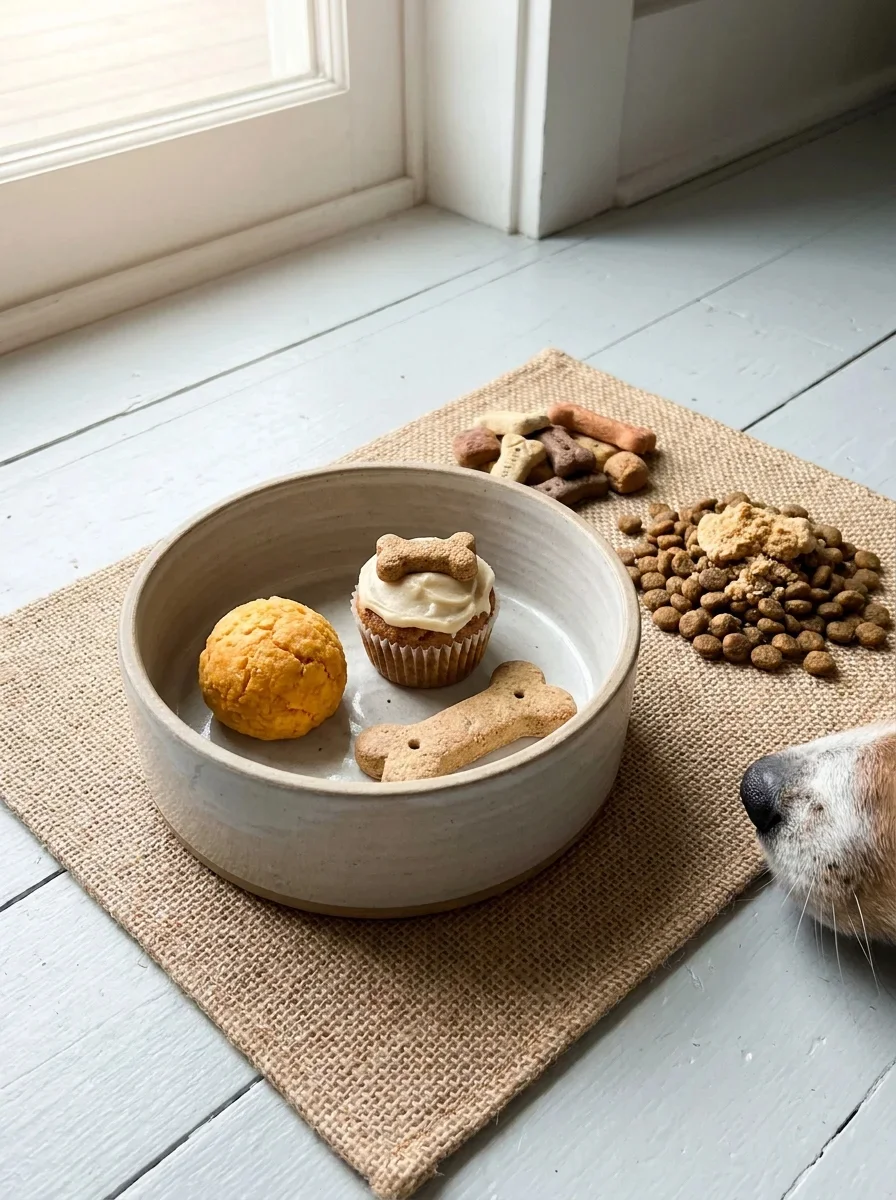
Serving size matters more than the recipe, because even a gentle treat can upset a sensitive stomach in a large portion. A general guide: small dogs under 20 pounds get 1 treat, medium dogs from 20 to 50 pounds get 1 to 2, and large dogs over 50 pounds get 2 to 3. Start at the low end with a new recipe and watch your dog for a day before offering more. Keep fresh water nearby whenever you offer treats, since dry biscuits especially make dogs thirsty.
**Portion rule:** all treats combined should stay under 10% of your dog’s daily calories, and a treat is a reward or a training tool, never a meal replacement. Portion rules work the same across homemade meals — this guide shows how another gentle protein is portioned by dog size. Serve the treats in your dog’s bowl on the floor at dog level, or crumble one over dinner as a topper.
Storage
Let every batch cool completely before it goes into a container, or trapped steam will soften the crunchy biscuits and spoil the soft recipes faster. Store the balls, pupcakes, muffins, and bites in airtight containers in the refrigerator, where they keep for up to one week — the brown-rice bites keep for 5 days, so bake those fresh more often. Label each container with the bake date so the 5-day bites never get mixed up with the week-long ones.
**Freezer rule:** the pupcakes and the cheddar balls freeze best; cool them fully, freeze in a single layer, then move them to a bag for up to three months and thaw one serving at a time in the refrigerator. For bigger batches that freeze well, instant pot dog food recipes are worth a look — the same cool-and-freeze routine keeps them fresh for weeks. Throw out any treat that smells sour or feels slimy, no matter how recently you baked it.
Frequently Asked Questions
Final Thoughts
Five recipes, one pair of ingredients, and a treat for almost every dog in the house. The grain-free balls suit the sensitive stomachs, the pupcakes suit the small mouths, the brown-rice bites suit the training sessions, the parmesan muffins suit the picky eaters, and the crunchy biscuits suit the heavy chewers.
Start with the recipe that matches your dog’s need, keep the portions small, and let your dog tell you which texture wins. Bake a batch this week, store the rest properly, and keep the broccoli modest — your dog gets a savory treat made from real food, and you get to skip the guesswork in the treat aisle.

Izzy is an experienced ranch worker who has a passion for exploring nature and getting up close to wildlife. With her connections to various animal organizations, Izzy is well-versed in animal care and rehabilitation.