Nom Nom Dog Food Copycat Recipe: Fresh Meals at Home for Less
Nom Nom Dog Food Copycat Recipe is more than a trend; it is a practical way to bring the freshness of human-grade ingredients to your dog’s bowl without the premium price tag that often comes with commercially prepared fresh diets. Many owners love the concept of Nom Nom because it promises real meat, wholesome carbohydrates, and vibrant vegetables, but the cost can quickly add up when feeding multiple dogs or maintaining a larger lifestyle at home. This approach allows you to tailor the texture and warmth to your specific dog’s preferences, whether they prefer a warm mash or a cool, firm consistency. The beauty of a copycat version lies in its transparency. You know exactly what goes into the bowl, avoiding the hidden additives or processing agents that can sometimes appear in long-shelf-life commercial products.
The goal of this article is to provide a definitive Nom Nom Dog Food Copycat Recipe that mirrors the quality of the original while remaining accessible for the average home cook. We will explore the specific ingredients, the technique of cooking separately to preserve nutrients, and the proper methods for storing and serving these meals. You do not need to be a professional chef to succeed with this. A standard stovetop, a few pots, and an hour of your time are all you need to create a batch that lasts for several days. The result is a diet that is richer, more digestible, and often more palatable for dogs who have lost their appetite for dry kibble.
The Cook-Separately Method
The heart of a high-quality fresh diet is the cook-separately method. Instead of throwing all ingredients into one large pot and boiling them together, this technique involves preparing the protein, starch, and vegetables in distinct vessels. This separation is critical for two main reasons: texture and nutrient retention. By steaming vegetables on their own, they retain their individual shape and crispness, providing a textural contrast to the soft protein.
Furthermore, cooking separately allows you to control the cooking times for each component precisely. Potatoes and rice require a specific amount of time to become tender enough for a dog to digest, while vegetables like carrots need to be softened but not disintegrated. If you cook everything together, you risk overcooking the vegetables into a mush or undercooking the starches, leaving them hard and difficult to digest. The protein, usually ground beef or turkey, needs to be browned or simmered to ensure it is fully safe to eat and to develop a rich flavor.
The Copycat Formula: Protein + Starch + Veg + Egg + Oil
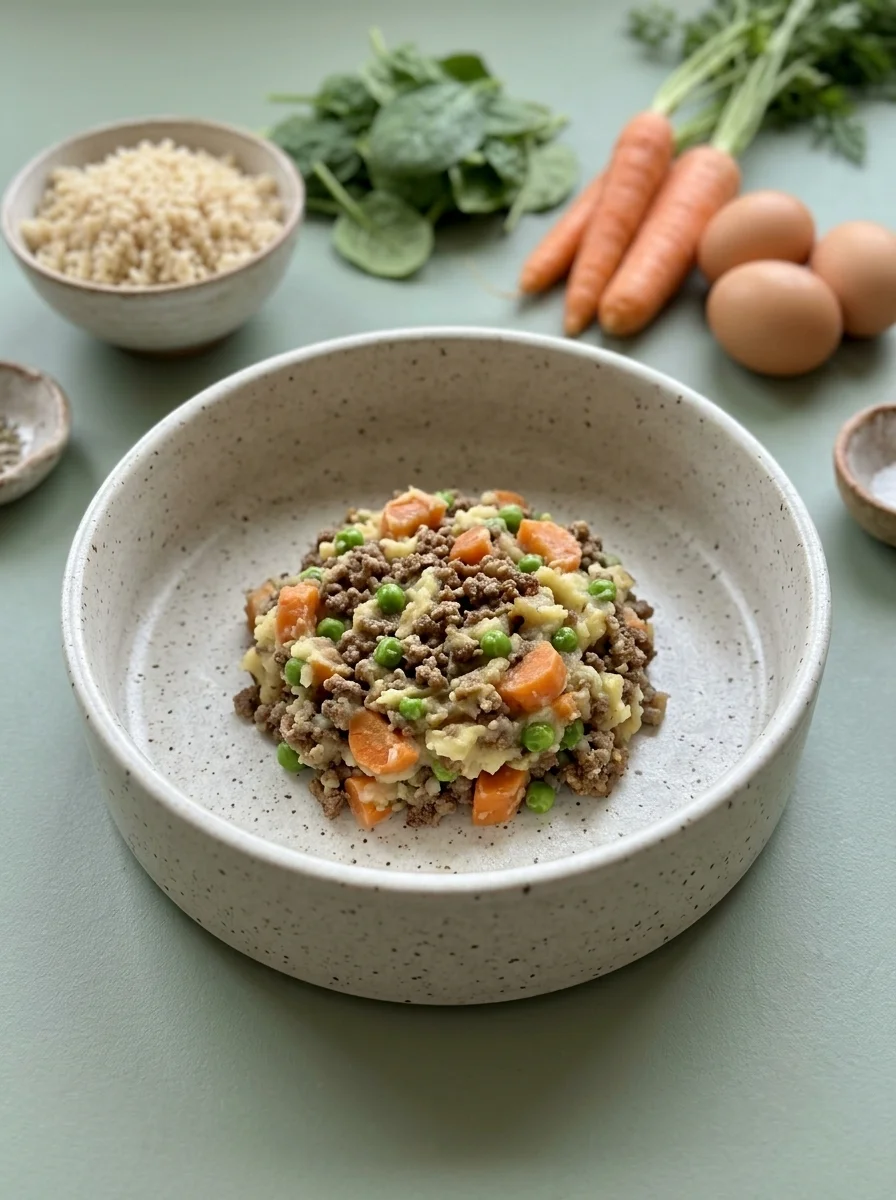
The foundation of a balanced Nom Nom Dog Food Copycat Recipe relies on a specific formula: high-quality protein, a digestible starch, nutrient-dense vegetables, a whole egg for binding and yolk vitamins, and a source of omega fatty acids. This structure mimics the nutritional profile of commercial fresh foods. Protein provides the essential amino acids for muscle maintenance, while starch offers the carbohydrates needed for daily energy. Finally, the addition of fish oil or another omega-3 source supports skin, coat health, and joint function. Never add onion or garlic to any of these meals — both are toxic to dogs, and they hide in many seasoning blends and stocks.
It is vital to understand the limits of a homemade copycat diet. While a Nom Nom Dog Food Copycat Recipe matches the fresh ingredients found in the commercial brand, it does not include the proprietary vet-formulated nutrient blend that Nom Nom adds to their pouches. A homemade meal is excellent as a primary food for short-to-medium terms, but if you intend to feed this exclusively for the dog’s entire life, you must consult your veterinarian. They may recommend a specific supplement to bridge the gap between fresh ingredients and complete nutritional needs. This honesty is the most important part of the formula. For a different approach to combining these core elements, you can look at a beef and apple dog meal recipe to see how fruit blends into this matrix.
Recipe 1: Beef Mash Copycat
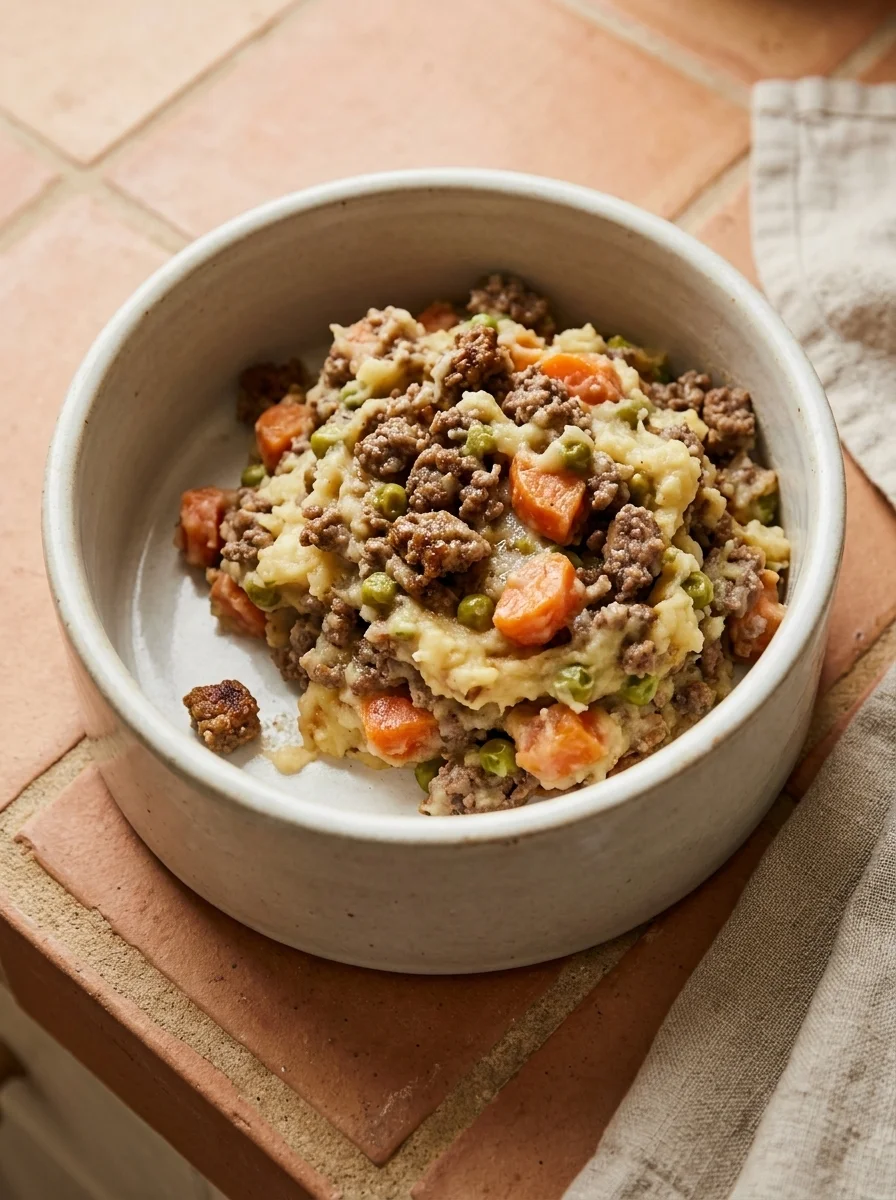
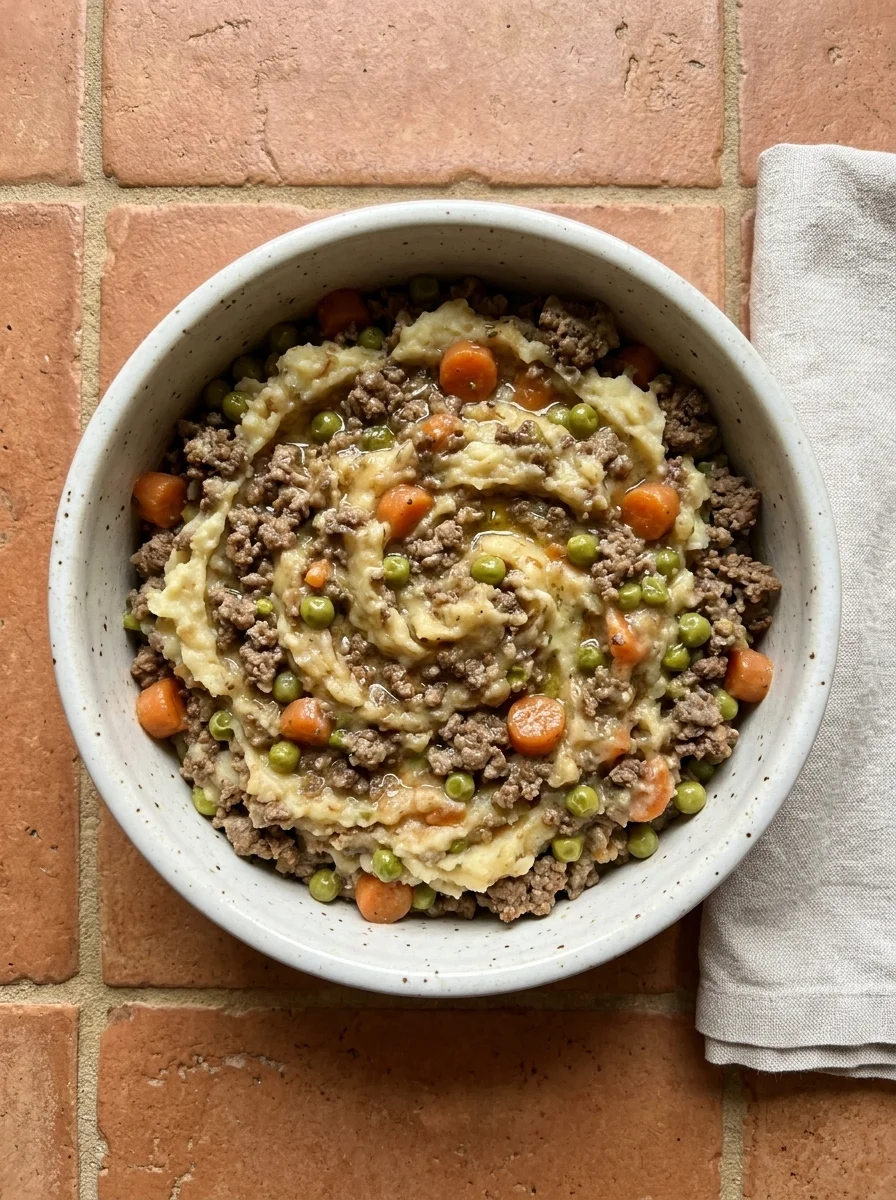
This recipe is the closest approximation to the popular beef and vegetable profile found in commercial fresh food. The use of russet potatoes creates a thick, mash-like consistency that most dogs enjoy, while the lean ground beef provides a robust flavor. The addition of green peas and carrots adds sweetness and fiber, and the egg binds the mixture so it holds together when scooped into a bowl.
Ingredients
- 1.5 lbs lean ground beef
- 2 medium russet potatoes, peeled and cubed
- 2 large eggs
- 1 cup carrots, chopped
- 1 cup green peas, frozen or fresh
- 1 tbsp fish oil
Step-by-Step Instructions
- Bring a large pot of water to a boil for the potatoes. Add the cubed russet potatoes and cook for 15 to 20 minutes until they are tender when pierced with a fork. Drain and mash them thoroughly with a potato masher or fork until smooth.
- In a separate large skillet, cook the ground beef over medium-high heat. Break it up with a spatula as it cooks. Simmer until all pinkness is gone and the juices are clear, which takes about 8 to 10 minutes.
- While the beef is browning, steam the carrots and peas in a steamer basket over a small pot of water for 5 to 7 minutes. The vegetables should be tender-crisp, not mushy.
- Scramble the two eggs in the skillet until just set, then add them to a large mixing bowl with the mashed potatoes, cooked ground beef, and steamed vegetables.
- Stir the mixture vigorously for two minutes to ensure the egg is fully integrated and the ingredients are evenly distributed.
- Let the mixture cool for 10 minutes, then stir in the fish oil. Divide into containers for storage.
The result is a dense, nutrient-rich meal that looks and smells like a high-end fresh food product. For dogs with dietary restrictions or weight management goals, refer to this guide to understand how to adjust macronutrients in similar recipes.
More Nom Nom Copycats
Once you have mastered the beef mash, you can easily swap the protein source to keep your dog interested and to accommodate specific allergies or preferences. The framework remains the same: cook the protein, prepare the starch, steam the vegetables, and combine with egg and oil where the recipe calls for it. This flexibility is one of the greatest advantages of cooking at home.
Variation 1: Turkey Fare Copycat
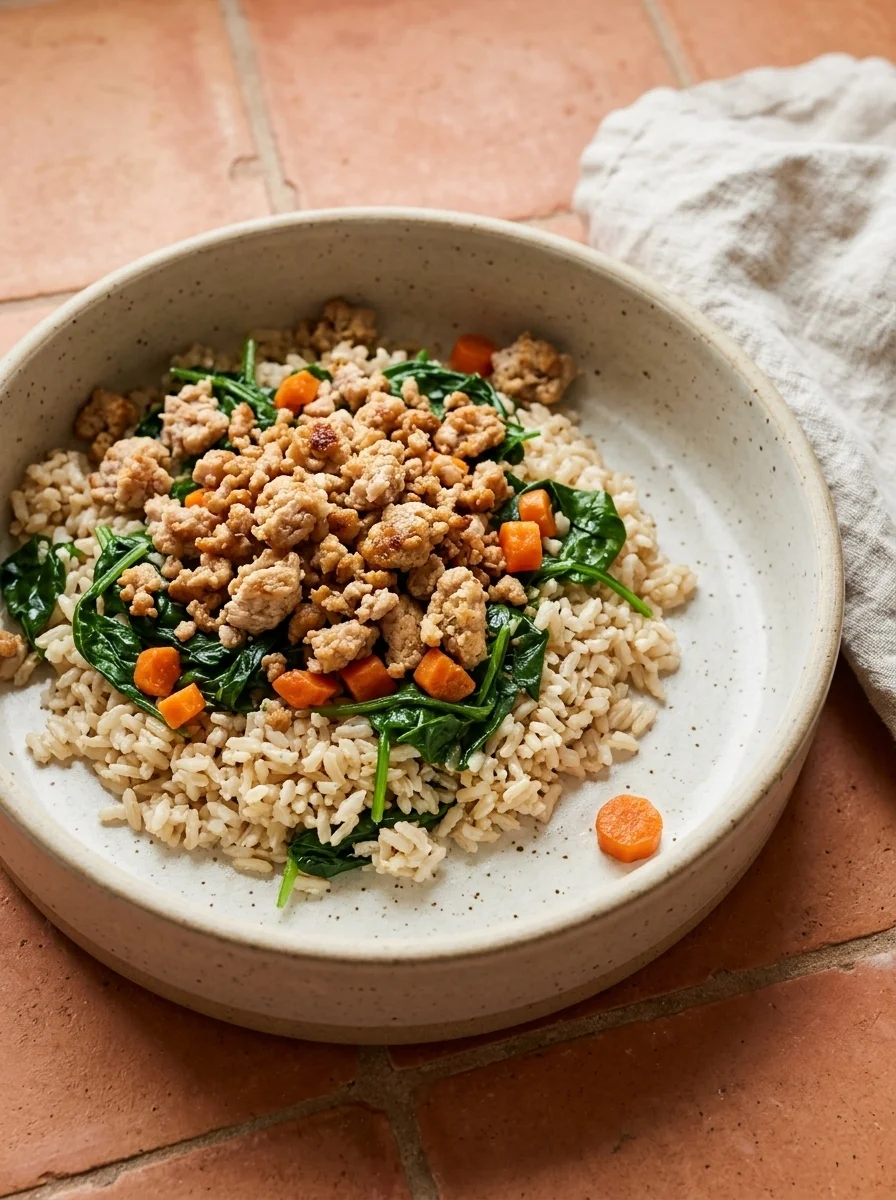
Turkey is a lean, easily digestible protein that is ideal for dogs with sensitive stomachs or those who are prone to weight gain. The addition of spinach provides a boost of iron and folate, while brown rice offers a slower-digesting carbohydrate that helps maintain steady energy levels. This recipe has a lighter color and a slightly firmer texture than the beef version, which some dogs prefer. The earthy taste of the turkey pairs well with the sweetness of the carrots.
Ingredients
- 1.5 lbs ground turkey
- 1.5 cups brown rice
- 2 large eggs
- 1 cup carrots, chopped
- 1 cup spinach, roughly chopped
- 1 tbsp fish oil
Step-by-Step Instructions
- Rinse the brown rice and cook it according to the package instructions, which usually takes 40 to 45 minutes. Fluff with a fork and let it cool slightly.
- In a skillet, cook the ground turkey over medium heat until no pink remains. Drain excess fat if necessary.
- Steam the carrots for 5 minutes. Add the spinach to the steamer for the last minute, just until it wilts. Do not overcook the spinach, as it loses nutrients quickly.
- Combine the cooked brown rice, turkey, carrots, and spinach in a large bowl.
- Scramble the two eggs in the skillet until just set, then add them and mix until uniform.
- Allow to cool for 10 minutes, then mix in the fish oil.
For owners who struggle to get their dog to accept new flavors, check out the best dog foods for picky eaters to understand which textures are most likely to succeed.
Variation 2: Chicken Cuisine Copycat
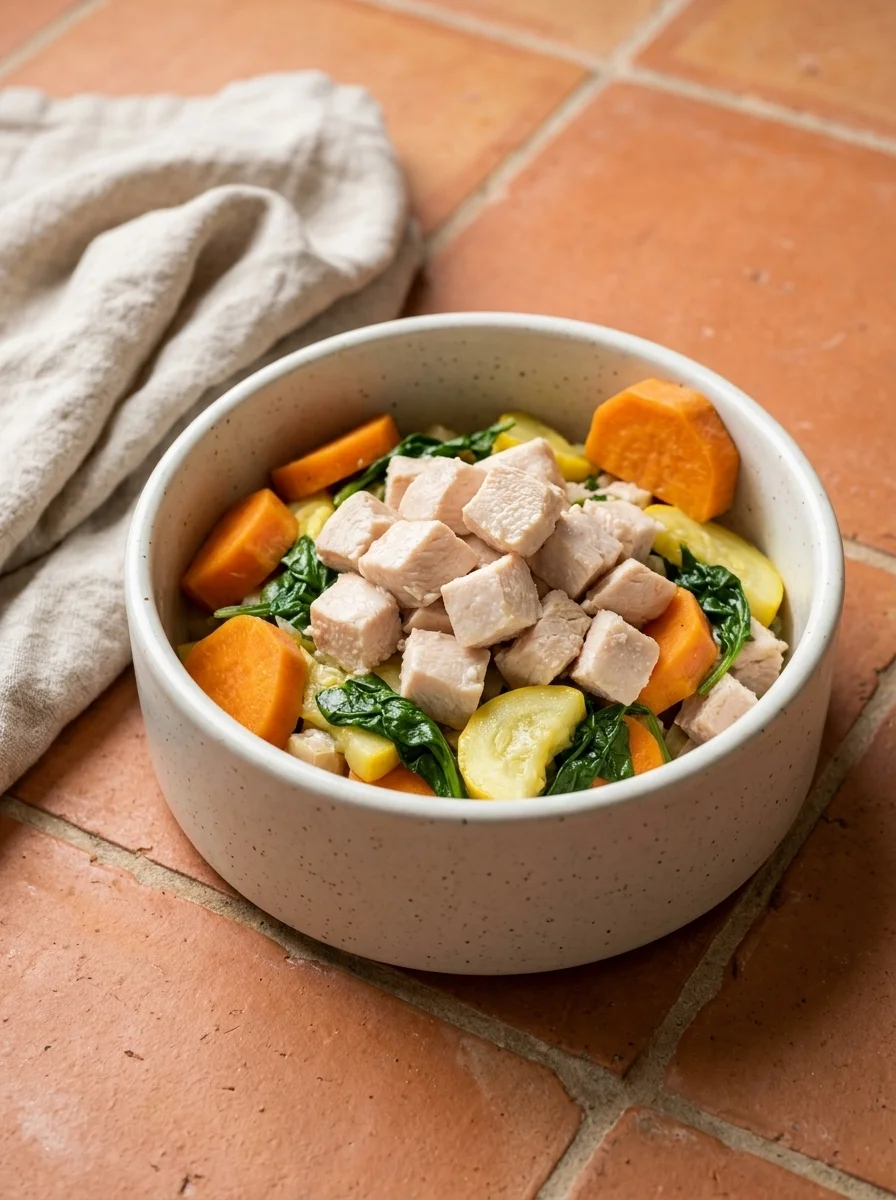
Chicken is the most common protein in commercial dog foods, but a fresh, whole-chicken version offers a significantly different nutritional profile. This recipe uses sweet potatoes and yellow squash, which are excellent sources of beta-carotene and fiber. The texture is lighter and airier than the beef mash, making it a great option for older dogs or those with dental issues who need softer food. The sweetness of the squash complements the mild flavor of the chicken.
Ingredients
- 1.5 lbs diced chicken breast or thigh
- 2 cups sweet potatoes, peeled and cubed
- 2 cups yellow squash, chopped
- 2 cups spinach, roughly chopped
- 1 tbsp fish oil
Step-by-Step Instructions
- Boil the sweet potatoes for 15 to 20 minutes until tender. Drain and mash or slice into smaller pieces.
- Cook the diced chicken in a pot or skillet until the internal temperature reaches 165 degrees Fahrenheit and the meat is no longer pink.
- Steam the yellow squash for 4 to 5 minutes. It should still have some bite to it.
- Combine the sweet potatoes, chicken, and squash in a large bowl.
- Add the spinach and stir until it just wilts, then mix thoroughly.
- Cool for 10 minutes, then add the fish oil.
This recipe is slightly more time-intensive due to the sweet potato cooking time, but the result is a deeply satisfying meal.
Batch Cooking and Freezing
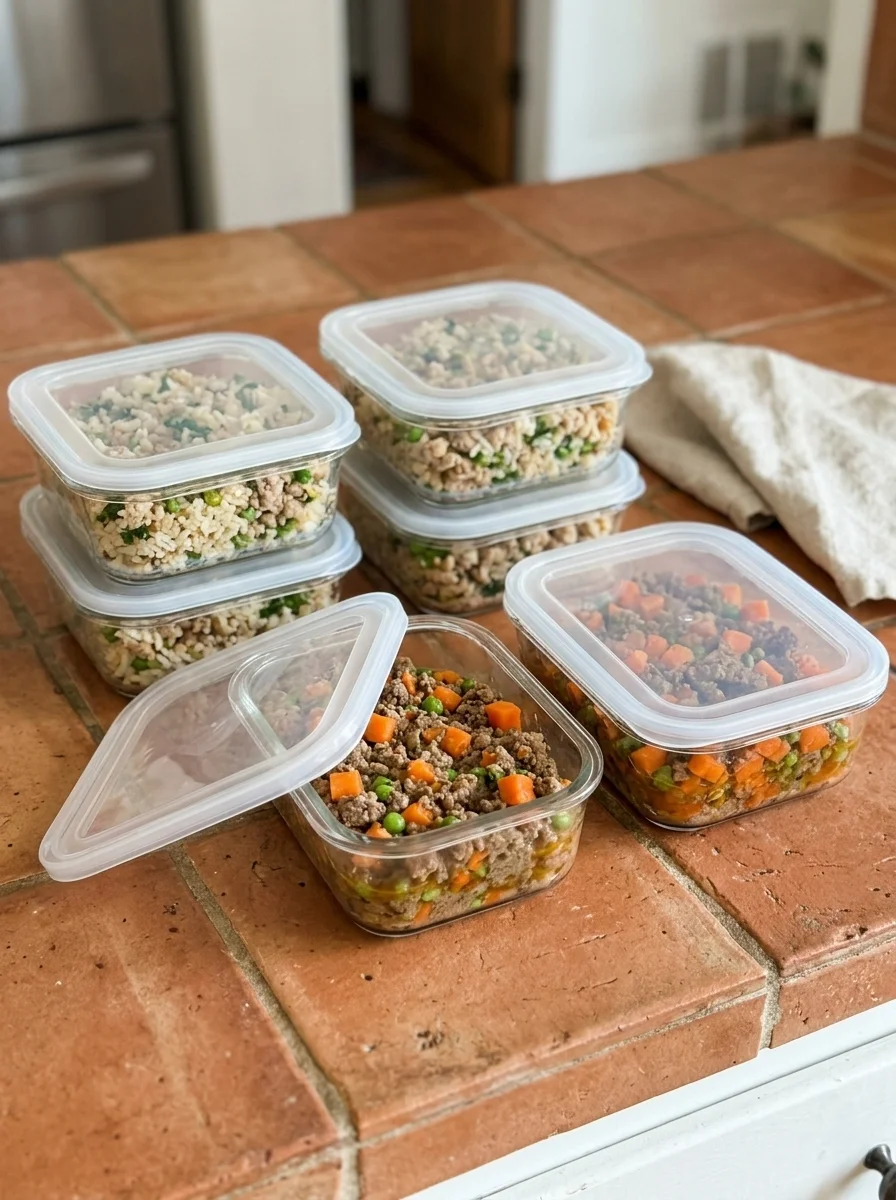
Efficiency is key when feeding fresh food daily. You can cook multiple recipes at once to save time. The most effective way to store these meals is to portion them immediately after cooking. Use silicone molds or small storage containers that match your dog’s daily serving size. This prevents waste and makes morning preparation effortless.
You can freeze these meals for up to two months. Freeze them flat in a single layer on a baking sheet before transferring them to freezer bags to save space. When you need a meal, thaw it in the refrigerator overnight or under cold water for a few hours. Avoid using the microwave to thaw, as it creates hot spots that can harm the dog’s mouth. For a different approach to preserving ingredients, look at beef and sweet potato dog chews, which offer a crunchy alternative to the soft mash.
Serving and Portions
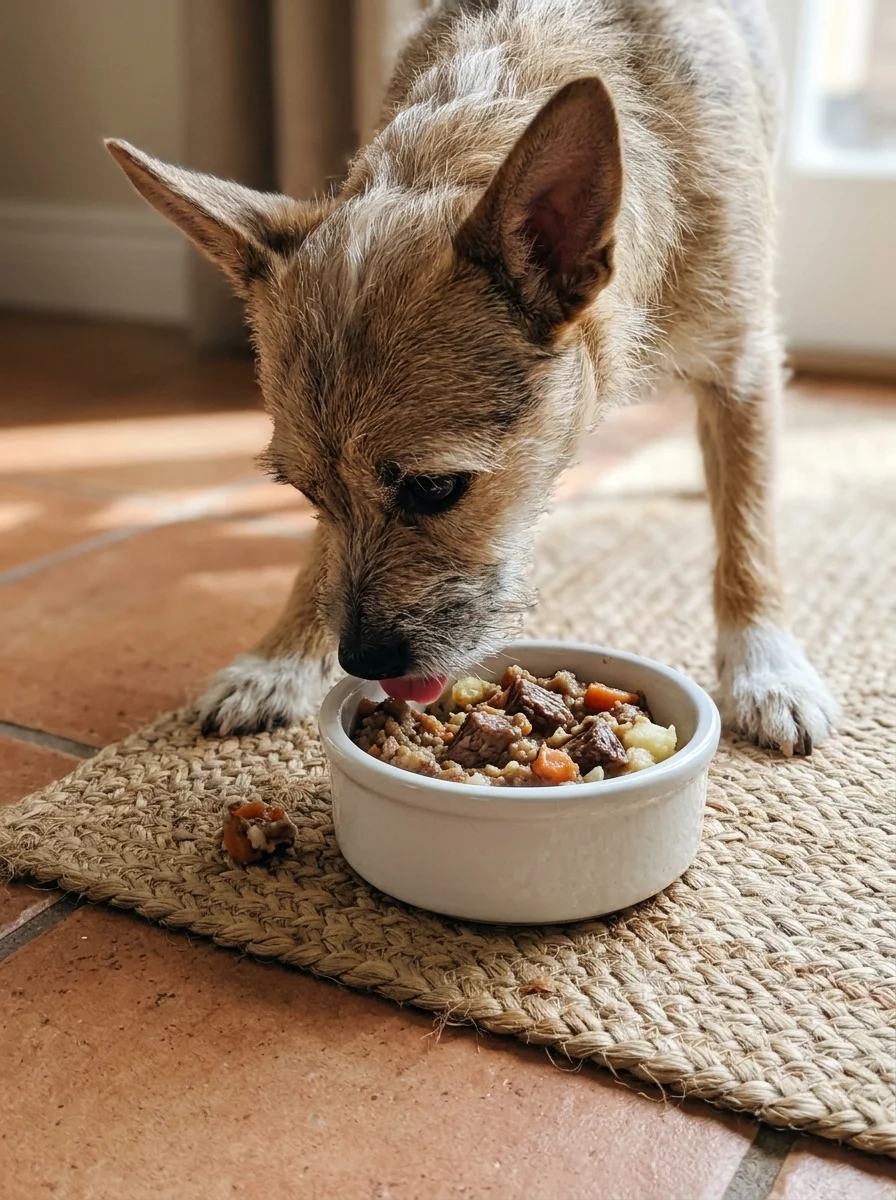
Serving size depends on your dog’s weight, age, and activity level. A general rule of thumb is to feed a fresh diet at 2 to 3 percent of your dog’s body weight daily. For a 10-pound small dog, that is roughly 1.5 to 2.5 cups of mash per day. For a 50-pound medium dog, it is about 8 to 10 cups. For a 90-pound large dog, it is 15 to 25 cups. You should split this into two meals, morning and evening.
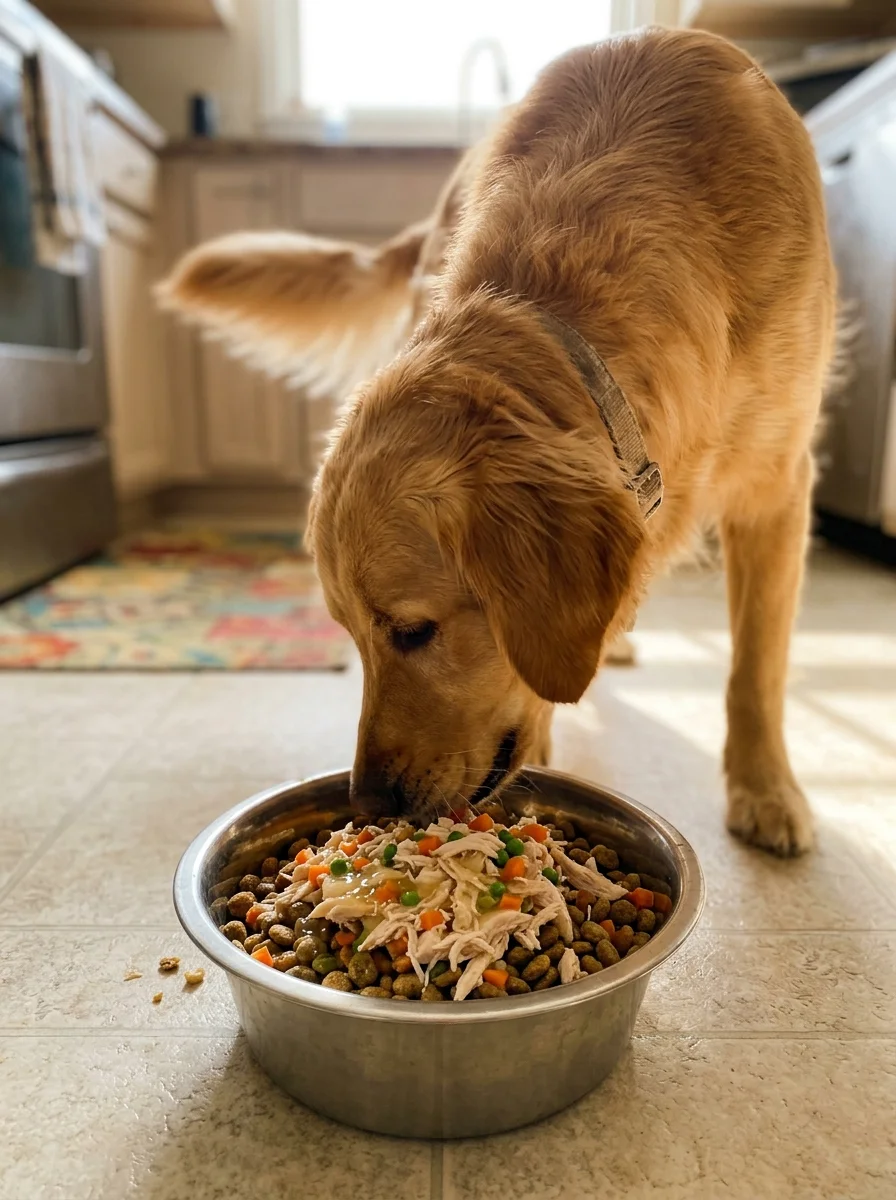
When serving, warm the food slightly if your dog prefers it. Fresh food served cold can be off-putting to some dogs. If they are eating slowly, ensure the bowl is stable on the floor. If your dog is transitioning from kibble, you may need to mix in a small amount of their old food initially, though most dogs will eat the fresh version readily. To keep mealtime engaging, try this method of hiding small pieces of the fresh food in the bowl to encourage sniffing and slower eating.
Troubleshooting
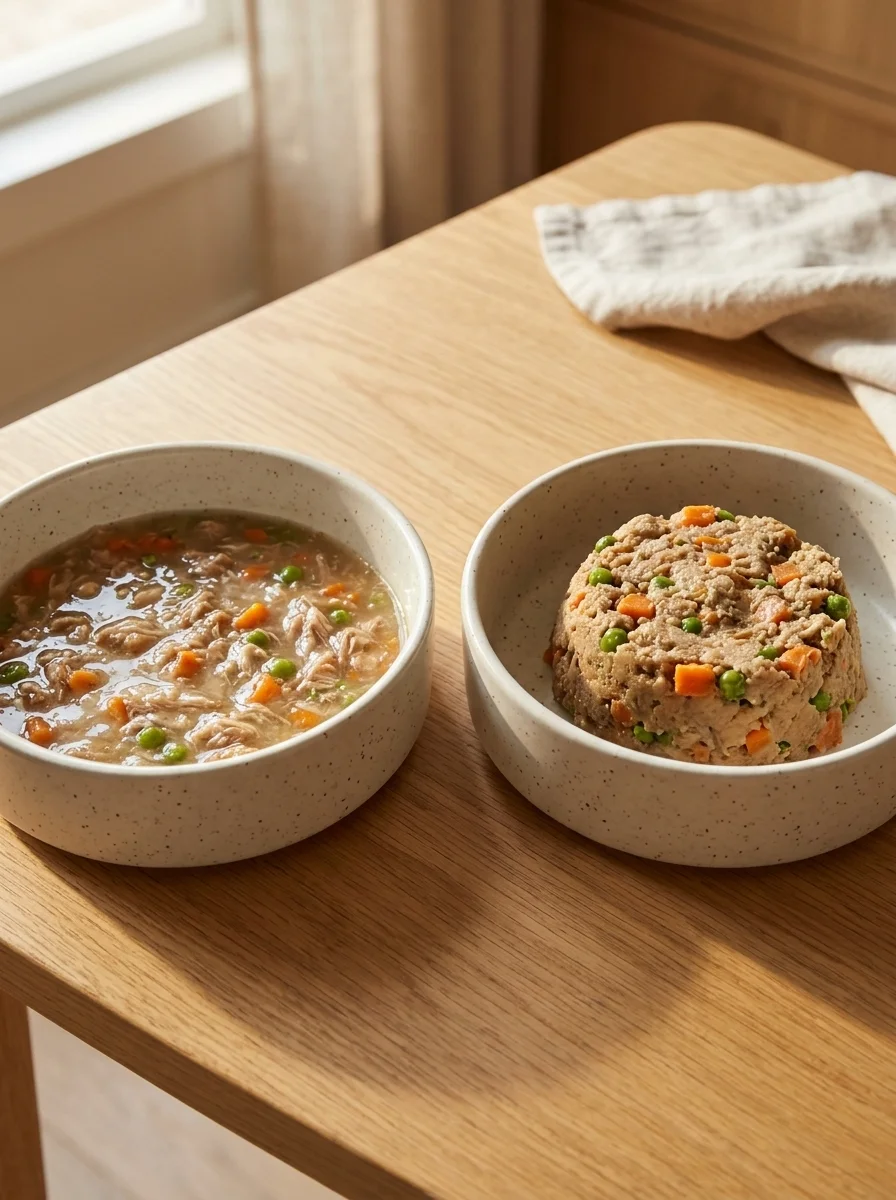
If your dog refuses to eat the fresh food, it is usually a texture issue rather than a flavor one. Some dogs are accustomed to the crumble of kibble and find the smoothness of a mash difficult to chew. Try roughing up the ingredients more. Instead of mashing the potatoes completely, leave them in large, bite-sized chunks. If the dog is still not eating, check the temperature.
Another common issue is soft stool during the transition period. Switch over seven days: 25 percent fresh food for the first two days, 50 percent for the next two, 75 percent for two more, then fully fresh on day seven. If the stool remains loose after a week, reduce the amount of starch (rice or potatoes) and increase the vegetables slightly. Fiber helps firm up the stool. Ensure that all eggs are fully cooked, as raw yolk can sometimes cause digestive upset in sensitive dogs. If the food smells rancid, do not feed it. Fresh food spoils faster than kibble, so if you are not freezing the batch, it should be consumed within 4 days when kept in the refrigerator.
Frequently Asked Questions
Final Thoughts
Creating a Nom Nom Dog Food Copycat Recipe at home is a rewarding way to provide your dog with a diet that is both nutritious and enjoyable. The cook-separately method ensures that every ingredient retains its specific value, and the batch cooking process makes it a sustainable routine for busy households. Remember that this is a fresh meal that complements your dog’s health, but it is not a substitute for professional veterinary advice regarding long-term feeding. By monitoring your dog’s response and adjusting the textures and portions to their individual needs, you can build a feeding routine that they love.

Izzy is an experienced ranch worker who has a passion for exploring nature and getting up close to wildlife. With her connections to various animal organizations, Izzy is well-versed in animal care and rehabilitation.