Beef & Apple Dog Meal Recipe: A Hearty Stew Dogs Love
Beef & Apple Dog Meal Recipe is more than a combination of pantry staples; it is a structured, nutrient-dense approach to feeding your canine companion a genuine, hearty meal. This recipe moves beyond the idea of a treat and positions itself as a full dietary component. If you are just beginning to explore DIY nutrition, you will find that this method aligns well with the principles found in this recipe, focusing on low-fat, high-quality sources that provide sustained energy without the bloat of processed fillers.
The beauty of preparing food for dogs lies in the control you have over every single element. You know exactly where the beef came from, how the vegetables were washed, and that not a single pinch of salt or dangerous seasoning has touched the pot. The addition of fruit, specifically apple, introduces a subtle sweetness that most dogs find irresistible, acting as a natural bridge for picky eaters who might refuse bland meals. This article will walk you through the precise technique of slow-cooking, ensuring that the meat remains tender while the vegetables retain their essential vitamins. It is a complete system for creating a bowl of food that looks, smells, and tastes like a proper dinner, not a snack.
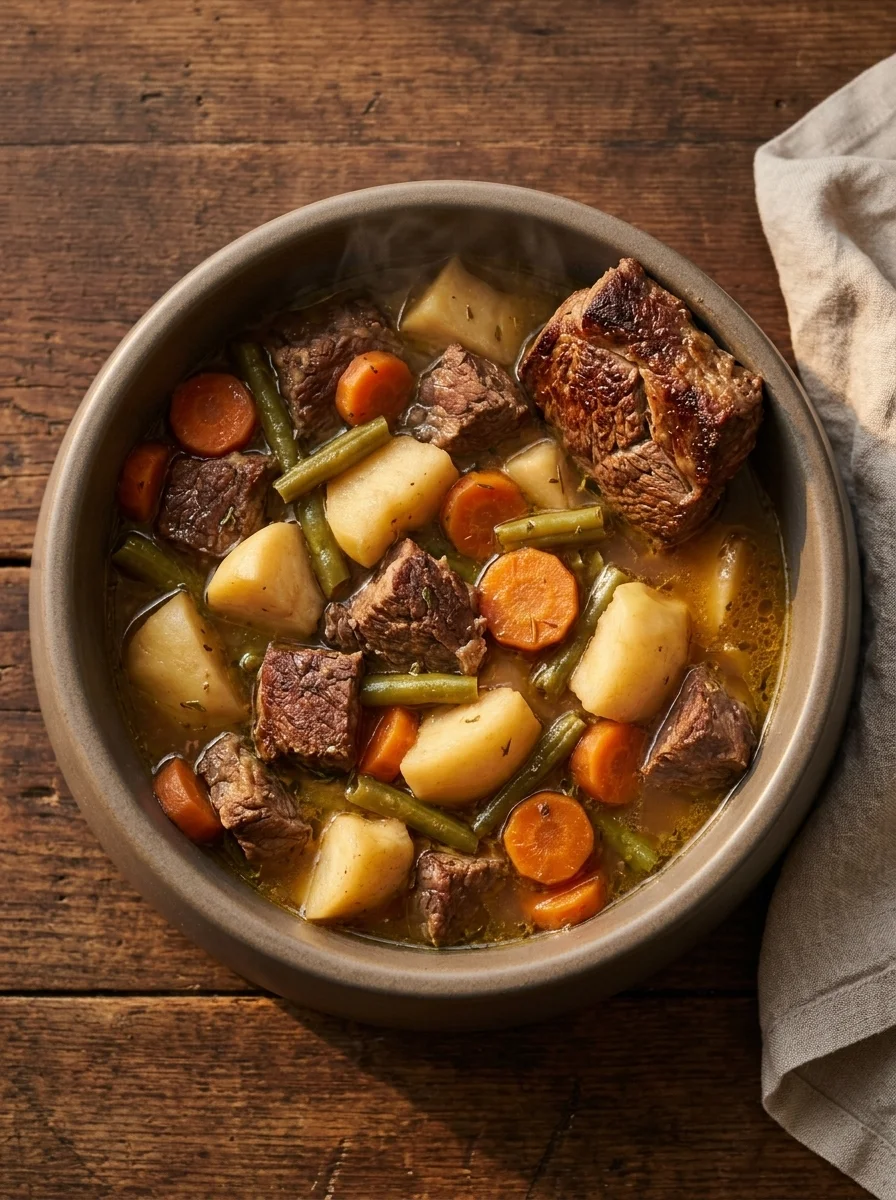
The Slow-Cook Method
The heart of this entire approach is the slow-cook technique. Slow cooking is a thermal process that breaks down connective tissue in the beef without stripping away the protein structure. After the initial sear, the meat is placed in a pot with water and allowed to simmer at a very low temperature for a significant period. This long, gentle heat ensures that the collagen in the beef turns into gelatin, making the meal moist and highly palatable.
For picky eaters, the texture of the protein is often the deciding factor between eating and leaving the bowl behind. By understanding the principles behind the best dog foods for picky eaters, you can see why texture modification through slow cooking is so effective. Specifically, the apples must be added only in the last twenty minutes of the cooking process. If you add them at the beginning, the pectin will break down completely, and the apple will disappear into the broth, leaving behind only a sweet flavor with no texture.
This method also allows for the integration of other root vegetables, such as carrots and sweet potatoes, which benefit from the long simmer. The result is a meal that is uniform in temperature and texture, reducing the risk of the dog swallowing large chunks of meat or vegetables. It is a technique that prioritizes the dog’s physiology over human convenience, ensuring that the final product is safe, digestible, and deeply satisfying.
Recipe 1: Classic Beef & Apple Stew
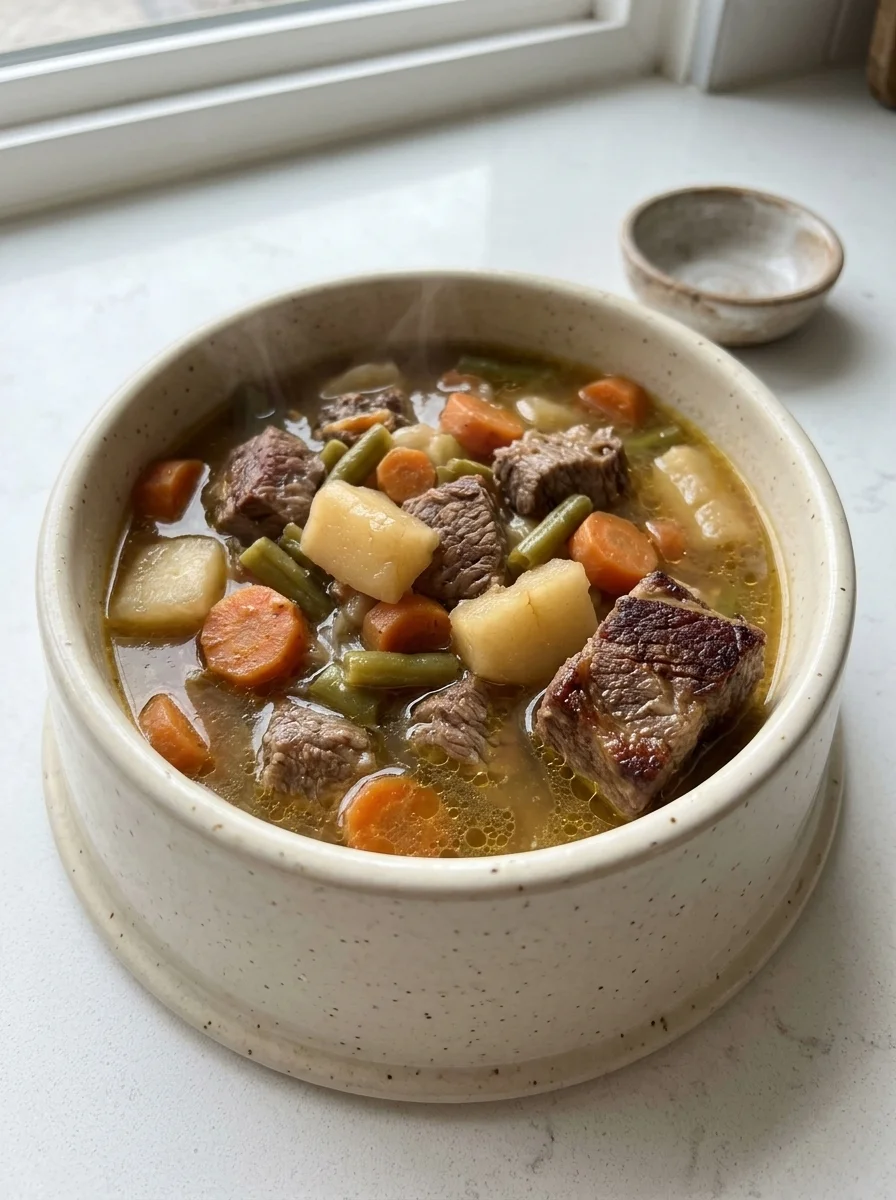
This is the foundational meal of the Beef & Apple Dog Meal Recipe. The inclusion of apples adds a fruit-based fiber that aids in digestion, while the carrots and green beans provide a wide range of vitamins and minerals. It is a comforting, warm meal that is particularly enjoyable during cooler months or for older dogs who may find dry kibble difficult to manage.
Ingredients
- 1.5 lbs lean beef stew meat, cut into 1-inch cubes
- 2 medium apples, cored, seeded, and diced into small pieces
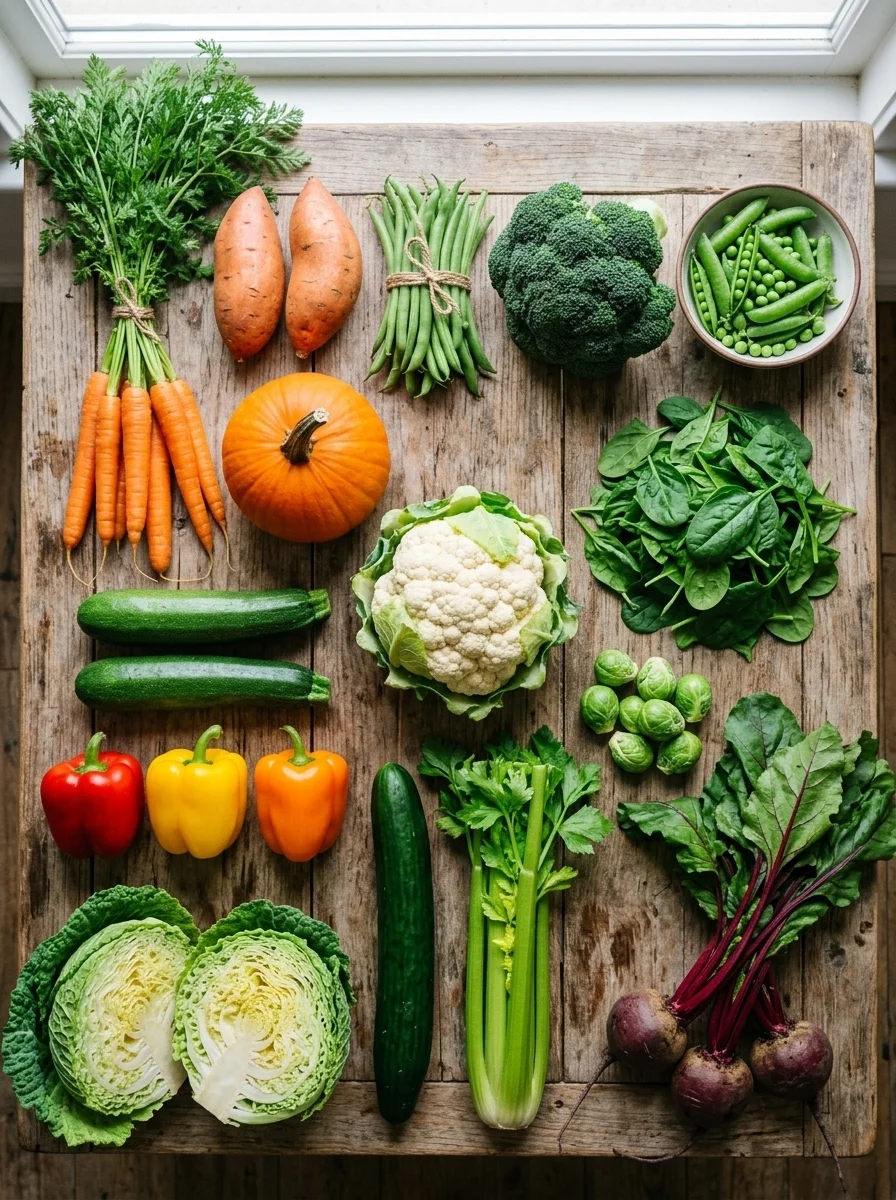
- 1 medium carrot, peeled and chopped into coins
- 1 small sweet potato, peeled and diced into small cubes
- 1 cup green beans, trimmed and cut into 1-inch segments
- 4 cups filtered water
- 1 teaspoon olive oil
Step-by-Step Instructions
- Heat the olive oil in a large heavy-bottomed pot or Dutch oven over medium heat until it just begins to shimmer.
- Add the beef cubes to the pot, ensuring they are in a single layer if possible, and sear them until they are brown on all sides.
- Remove the beef with a slotted spoon and place it in a bowl, allowing the excess fat to drain away.
- Pour the water into the pot with the seared beef, return it to a medium-low heat, and bring it to a gentle simmer.
- Add the carrots, sweet potato, and green beans to the pot, stirring to submerge them in the liquid.
- Reduce the heat to the lowest possible setting that keeps the liquid moving slightly, and let it simmer uncovered for 1 hour and 30 minutes.
- After the long simmer, check the sweet potato with a fork; it should be very soft and easy to mash.
- Add the diced apples to the pot and gently stir them into the stew, letting them cook for exactly 20 more minutes.
- Remove the pot from the heat and let the stew cool completely to room temperature before serving or storing.
- Serve one serving per medium dog, or adjust the quantity based on your dog’s specific weight and activity level.
This classic version is the benchmark for the Beef & Apple Dog Meal Recipe. The cooling step is critical; serving hot food can scald a dog’s sensitive palate. If you want to add another fruity dimension to your dog’s diet, you might also be interested in exploring a homemade apple pie for dogs, which uses similar fruit principles but in a baked format. The longer the initial simmer, the richer the broth becomes.
Beef & Apple Variations
Once you have mastered the base technique, you can start to shift the texture and the vegetable profile to keep your dog’s interest high. The two variations below use the same core principles of dog-safe ingredients but alter the cooking method and the vegetable mix. The Green Bean Skillet focuses on a quicker stovetop method, while the Spinach & Rice Bowl adds a grain component for a different energy profile.
Variation 1: Green Bean Skillet
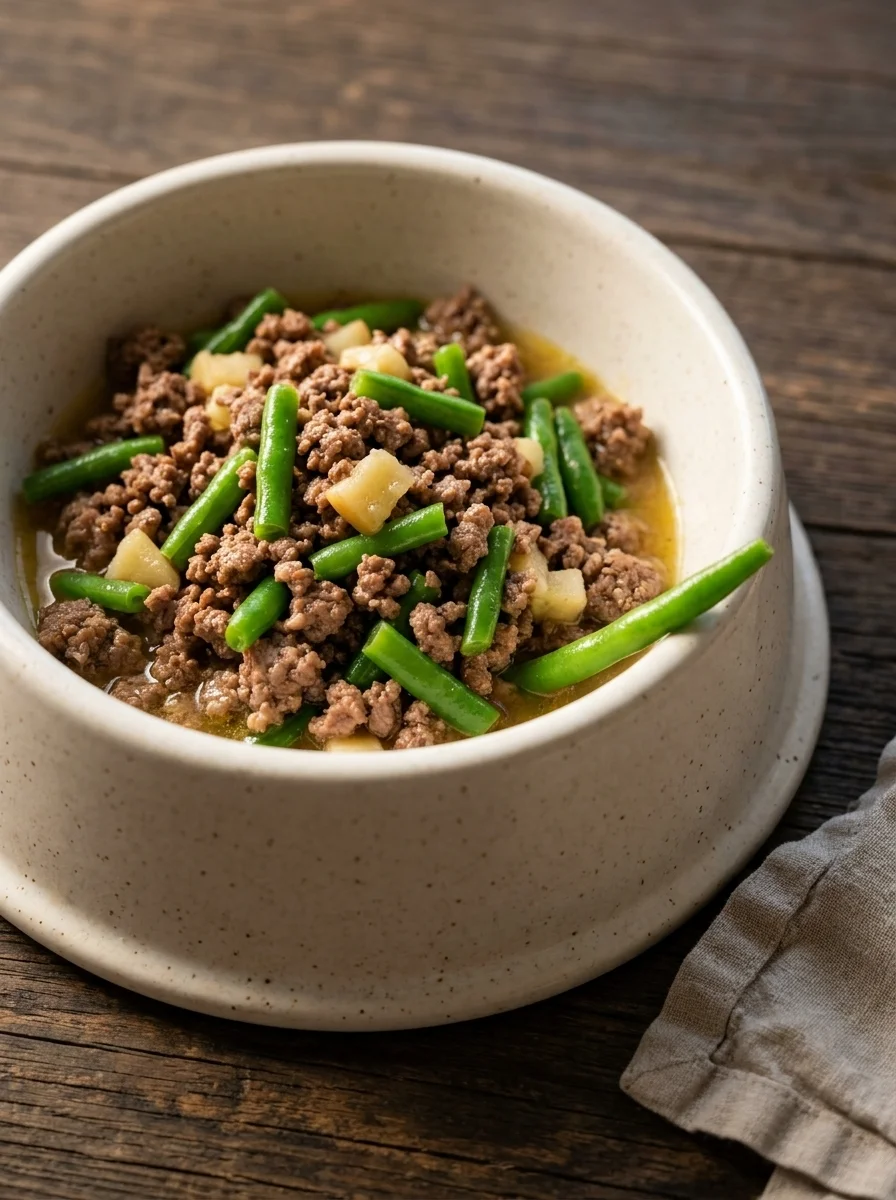
This variation is for owners who prefer a slightly faster cooking time without sacrificing the quality of the protein. The increased amount of green beans provides a bulkier, more substantial texture that can help dogs who need more volume in their bowl to feel full.
Ingredients
- 1.2 lbs lean ground beef, 90% lean
- 2 cups green beans, trimmed and cut into 1-inch segments
- 1 medium apple, cored, seeded, and diced
- 2 cups filtered water
- 1 teaspoon olive oil
Step-by-Step Instructions
- Heat the olive oil in a large skillet over medium-high heat.
- Add the ground beef and break it apart with a wooden spoon, cooking until it is no longer pink.
- Drain any excess fat from the skillet, being careful to keep the flavor juices.
- Add the water and the green beans to the skillet, and stir to combine.
- Reduce the heat to low and cover the skillet with a lid.
- Simmer for 45 minutes, allowing the beans to become tender and the beef to absorb the liquid.
- Uncover and add the diced apples to the mixture.
- Continue cooking for an additional 15 minutes, stirring occasionally, until the apples are soft but still hold their shape.
- Let the skillet sit off the heat for 10 minutes to cool before serving.
- Divide into three bowls for medium-sized dogs, adjusting portions for larger or smaller breeds.
The Green Bean Skillet is a robust option that can be easily modified. If you are looking for more creative ways to use root vegetables, you might enjoy trying sweet potato dog waffles, which utilize similar baking principles but in a portable form.
Variation 2: Spinach & Rice Bowl
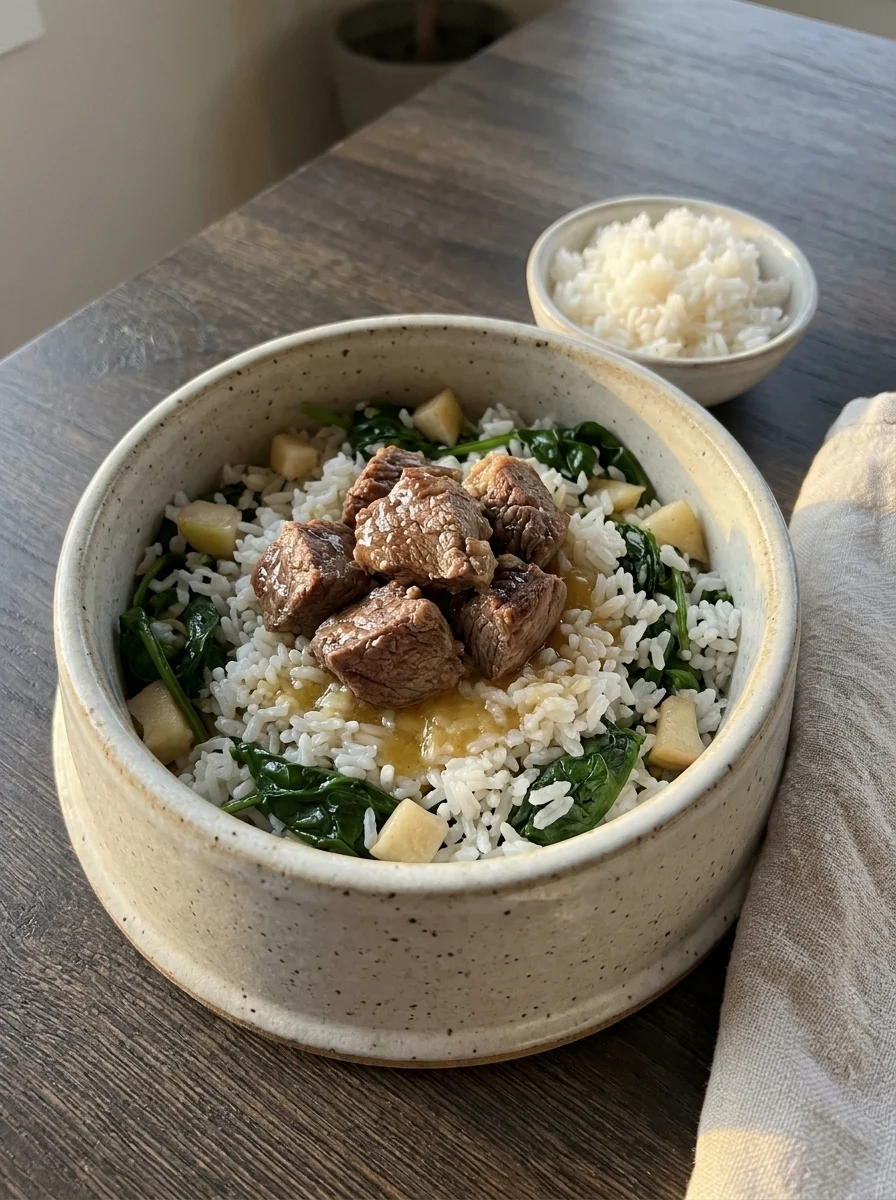
This version introduces a grain-based component and a leafy green, shifting the meal toward a “bowl” format. Rice provides a stable energy source, while fresh spinach adds iron and folate.
Ingredients
- 1.5 lbs lean beef stew meat, cut into cubes
- 1 cup cooked plain rice
- 1 cup fresh spinach, washed and chopped
- 2 medium apples, cored, seeded, and diced
- 4 cups filtered water
- 1 teaspoon olive oil
Step-by-Step Instructions
- Follow the slow-cook method from the classic recipe to brown the beef and simmer it with water for 1 hour.
- After the first hour, stir in the cooked rice, ensuring it is fully submerged in the broth.
- Continue to simmer for 30 more minutes, allowing the rice to absorb the flavorful beef broth.
- Add the chopped spinach and the diced apples to the pot.
- Cook for a final 20 minutes, just until the spinach has wilted and the apples have softened.
- Remove from heat and let the bowl cool completely.
- Serve four portions, mixing the rice and beef together to ensure each bowl has an even distribution of ingredients.
The Spinach & Rice Bowl is a nutritional powerhouse. This variation is particularly good for high-energy dogs who need that extra carbohydrate boost.
Choosing the Right Cut of Beef
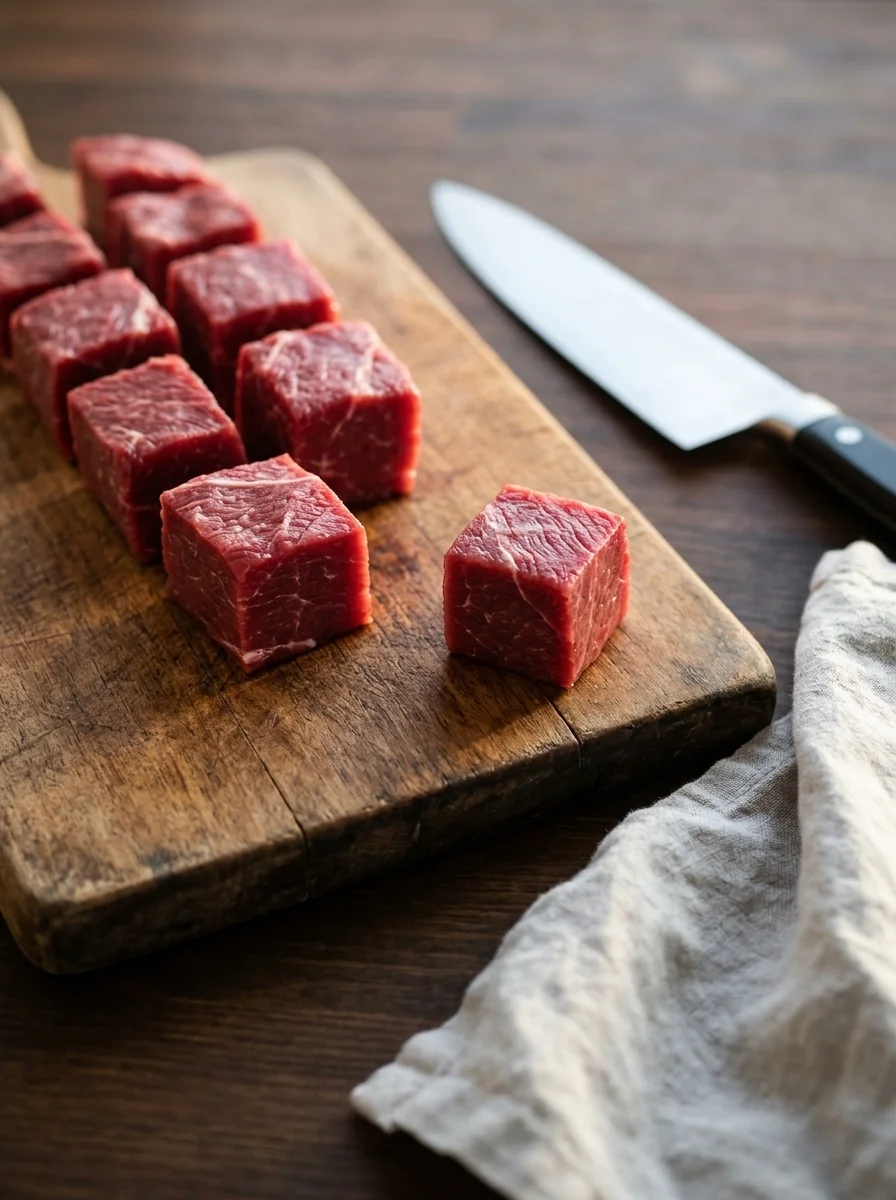
The success of any Beef & Apple Dog Meal Recipe relies heavily on the quality and type of beef you select. Never add onion or garlic to the pot — both are toxic to dogs, and they hide in many seasoning blends and stocks. You want to prioritize lean cuts to avoid excessive fat, which can lead to pancreatitis in susceptible dogs.
Freshness is also paramount. The meat should smell clean and mild, not sour or ammonia-like. You are looking for pure muscle meat. The size of the cut matters for the cooking process; if you are using stew meat, cubes should be roughly the size of a quarter to ensure they cook evenly. Consistency in cut size is what guarantees a uniform texture throughout the meal, which is critical for a dog that is accustomed to a certain mouthfeel.
Serving
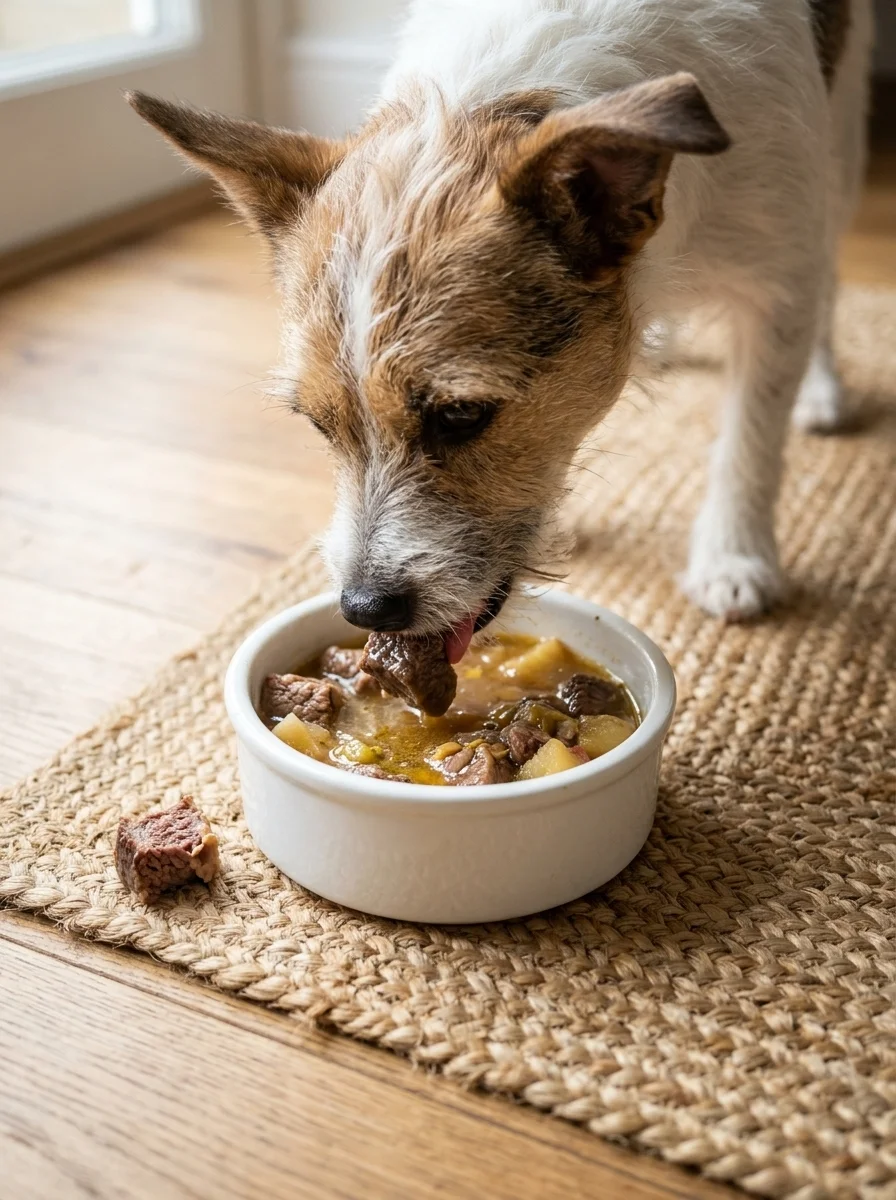
When serving the meal, remember that this is a hot item that must be cooled completely. Serve it at room temperature or slightly warm, never hot from the pot. For a medium dog, around 40 to 50 pounds, you might serve two servings, or one serving of the classic stew plus one serving of a variation.
If you are transitioning your dog to this type of feeding, introduce it gradually. Start by mixing a small amount of the homemade meal with their regular kibble, then slowly increase the ratio over the course of a week. If you are looking for a complementary snack to serve alongside this main meal, you might try 2-ingredient pumpkin dog treats, which are gentle on the stomach and easy to prepare.
Storage
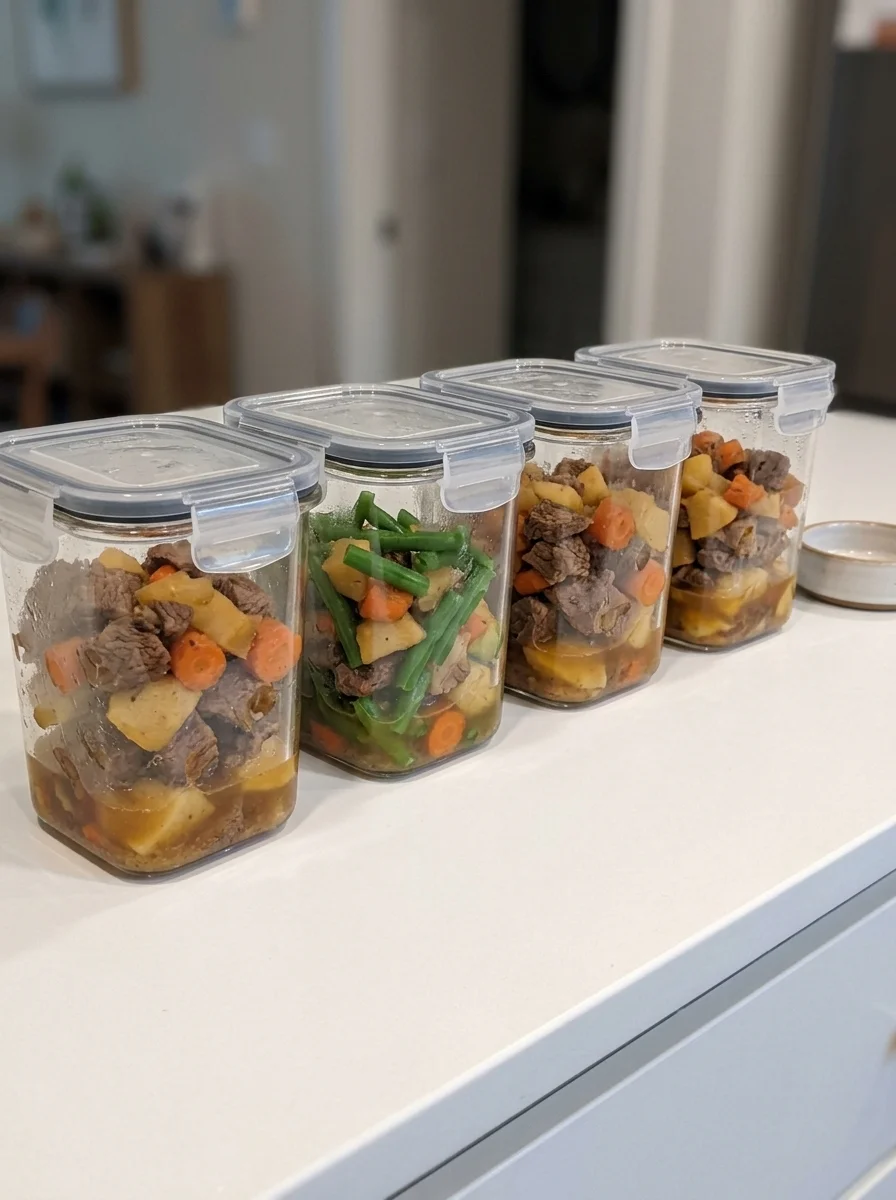
Because this meal contains no preservatives, it must be handled with care regarding storage. Allow the food to cool to room temperature, but do not leave it out for more than two hours. Once cooled, transfer the portions into airtight containers or freezer-safe bags. In the refrigerator, the Beef & Apple Dog Meal Recipe will keep for up to three days. For longer-term storage, you can freeze the meals in individual dog-sized portions. Thaw them in the refrigerator overnight before serving.
Frequently Asked Questions
Final Thoughts
Creating a Beef & Apple Dog Meal Recipe is an act of care that goes beyond simple nutrition. Whether you stick to the classic stew or rotate in the skillet and bowl variations, you are giving your dog a choice of texture and flavor that commercial food simply cannot match. Take the time to prep, the time to simmer, and the time to cool. Your dog will feel the difference in every bite, and you will feel the peace of mind that comes from knowing exactly what is going into their bowl.

Izzy is an experienced ranch worker who has a passion for exploring nature and getting up close to wildlife. With her connections to various animal organizations, Izzy is well-versed in animal care and rehabilitation.