Homemade Dog Food for Pancreatitis: 6 Easy Recipes to Try
If your dog has been diagnosed with pancreatitis, you already know how scary those first few days can feel. The vomiting, the hunched posture, the refusal to eat — it’s frightening for any pet owner, and it often leaves you wondering exactly what you’re supposed to feed your dog once the worst has passed. The good news is that homemade dog food for pancreatitis is one of the most effective tools you have to help your dog heal and stay comfortable long-term.
Unlike a lot of commercial prescription diets, homemade meals let you control exactly what goes into the bowl. You know there’s no hidden fat, no mystery flavoring, and no ingredients your dog reacts poorly to. That kind of control matters a lot when you’re managing a condition that’s almost entirely diet-driven.
Below, you’ll find six different recipes — from simple bland-diet bowls for flare-ups to balanced everyday meals and time-saving cooking methods. Each recipe is presented as a clean, printable card so you can jump straight to cooking without wading through paragraphs of theory first. Portion guides, ingredients to avoid, and a quick explainer on pancreatitis itself are further down the page, in case you want the background info too.
One quick note before you start: always run any new diet by your vet before switching your dog over completely, especially during an active flare-up. Every dog’s case is a little different, and your vet may want to adjust fat levels or calorie counts based on bloodwork.
1. Boiled Chicken & Pumpkin Recipe (The Classic Bland-Diet Base)
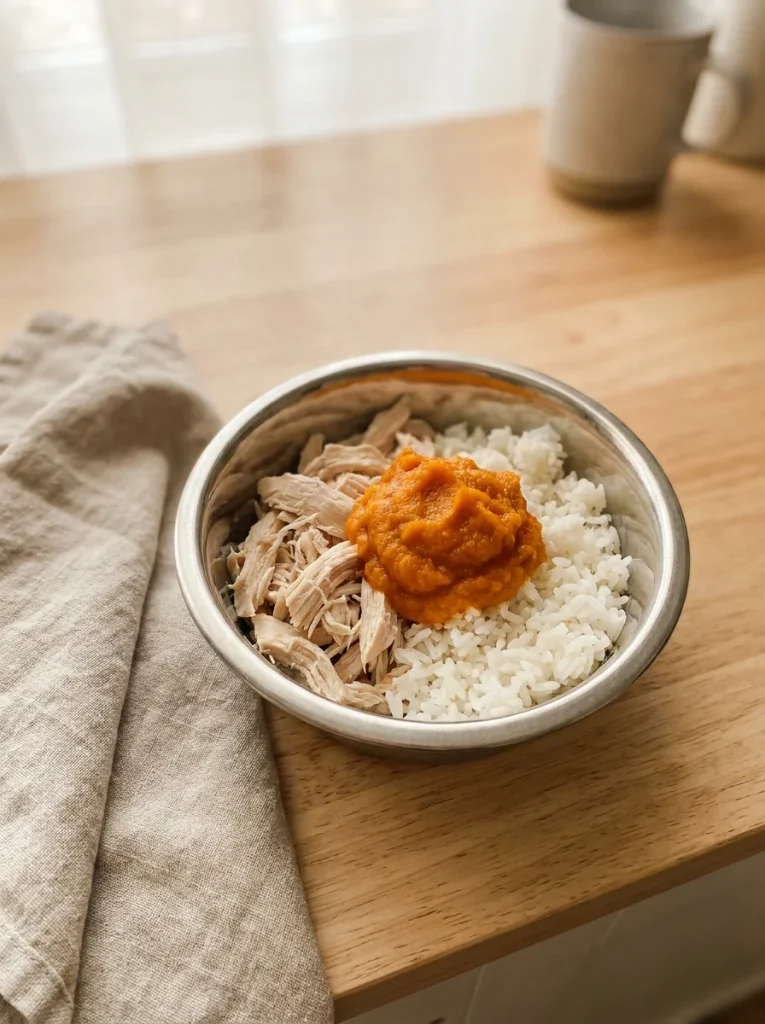
This is the recipe most vets recommend first, and for good reason. It’s soft, extremely low in fat, and gentle enough for a dog who just came out of a pancreatitis flare-up and whose digestive system is still recovering.
Chicken breast is naturally lean once you remove the skin and trim any visible fat, which makes it one of the safest proteins you can offer a dog with an inflamed pancreas. Pumpkin adds soluble fiber that helps firm up loose stools and soothes an upset stomach without adding a single gram of unnecessary fat. Together, they create a meal that’s about as gentle on the digestive system as dog food gets.
Many owners keep this recipe on hand even after their dog recovers, simply because it’s so reliable during any future stomach upset — not just pancreatitis flare-ups.
Recipe Card: Boiled Chicken & Pumpkin
Prep Time: 10 minutes Cook Time: 25 minutes Freeze Time: N/A (best served fresh or refrigerated) Yield: About 3 cups (roughly 2-3 days of food for a 20-25 lb dog)
Ingredients:
- 2 boneless, skinless chicken breasts (about 1 lb total)
- 1 cup canned plain pumpkin (not pumpkin pie filling)
- 1 cup plain white rice, cooked
- Water, as needed
Instructions:
- Trim any visible fat from the chicken breasts before cooking — even small pockets of fat can be too rich for a recovering pancreas.
- Place the chicken in a pot and cover with plain water, no oil, salt, or seasoning of any kind.
- Bring to a gentle boil, then reduce to a simmer and cook for 20-25 minutes, until the chicken is fully cooked through with no pink remaining.
- Remove the chicken from the water and set the cooking liquid aside — you’ll use a bit of it later to adjust texture.
- Let the chicken cool for about 10 minutes, then shred or chop it into small, bite-sized pieces your dog can chew comfortably.
- Cook the white rice separately according to the package directions, using no butter, oil, or added salt.
- In a large mixing bowl, combine the shredded chicken, cooked rice, and pumpkin.
- Stir in a splash of the reserved chicken cooking water if the mixture seems dry or clumpy — you want a soft, moist consistency, not a paste.
- Spread the mixture out on a plate or tray for a few minutes to help it cool faster, then let it cool completely before serving.
Notes: This recipe is meant as a short-term recovery meal, not a permanent diet, since it isn’t nutritionally balanced for long-term feeding on its own. Use it for the first few days after a flare-up, then start rotating in the other recipes below once your dog is stable and eating normally again. Store covered in the fridge for up to 4 days, and always serve it at room temperature rather than cold from the fridge, since cold food can be less appealing to a dog with a reduced appetite.
2. Turkey & Brown Rice Recipe (Everyday Maintenance Meal)
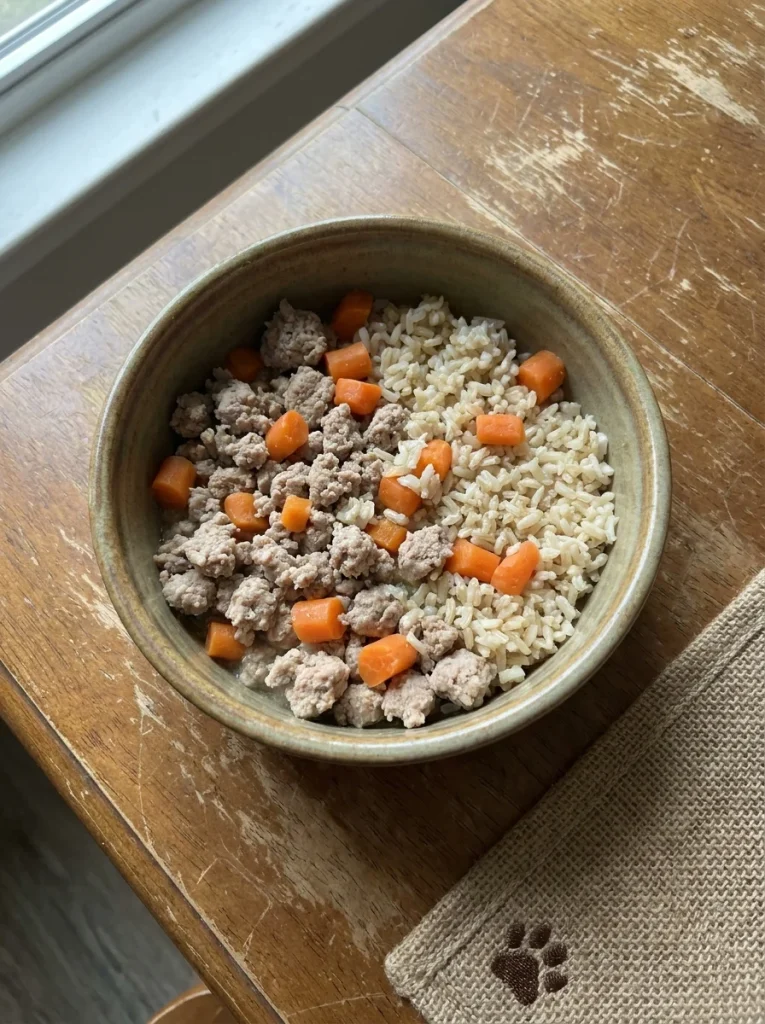
Once your dog is past the acute stage, you’ll want a recipe with a bit more nutritional variety for daily feeding, rather than repeating the same bland bowl indefinitely. Ground turkey breast is a great option here because it’s naturally low in fat, especially compared to beef or pork, while still being an affordable, easy-to-find protein at most grocery stores.
Brown rice adds more fiber, B vitamins, and minerals than white rice, which is helpful for long-term digestive health once your dog’s stomach has settled — just introduce it slowly, since some dogs need a little time to adjust to the extra fiber without gas or loose stool. Carrots and a touch of pumpkin round the meal out with additional fiber and beta-carotene, which supports healthy digestion and coat condition without adding fat.
This recipe works especially well as a rotating weekday staple, since it holds up well in the fridge and freezer and reheats without losing much texture.
Recipe Card: Turkey & Brown Rice
Prep Time: 10 minutes Cook Time: 35 minutes Freeze Time: Up to 3 months Yield: About 4 cups
Ingredients:
- 1 lb ground turkey breast (93% lean or higher)
- 1 cup brown rice, cooked
- 1/2 cup finely chopped carrots, steamed
- 1/4 cup plain pumpkin
Instructions:
- Heat a nonstick skillet over medium heat — you shouldn’t need any oil, since ground turkey releases a small amount of moisture on its own.
- Add the ground turkey and break it apart with a spatula as it cooks, stirring occasionally so it browns evenly.
- Cook for about 8-10 minutes, until no pink remains and the turkey is fully cooked through.
- Drain any excess fat thoroughly using a paper towel-lined colander, pressing gently to remove as much liquid fat as possible — this step matters more than it seems, since even lean turkey can release some fat during cooking.
- While the turkey cooks, peel and finely chop the carrots, then steam them until fork-tender, about 8-10 minutes.
- Cook the brown rice separately according to the package directions, which typically takes 35-45 minutes depending on the brand.
- In a large bowl, combine the cooked turkey, brown rice, steamed carrots, and pumpkin.
- Mix everything together thoroughly so the pumpkin coats the rice and turkey evenly.
- Cool the mixture completely before serving, or portion it into containers for storage once it’s reached room temperature.
Notes: This recipe works well as a rotating staple once your dog’s pancreatitis is under control and they’re eating regular meals again without issues. Freeze individual portions in small containers or freezer bags for easy weekday meals — just thaw overnight in the fridge before serving. If your dog handles brown rice well after a week or two, you can gradually increase the rice-to-protein ratio slightly for more filling meals.
3. White Fish & Sweet Potato Recipe (Novel Protein Option)
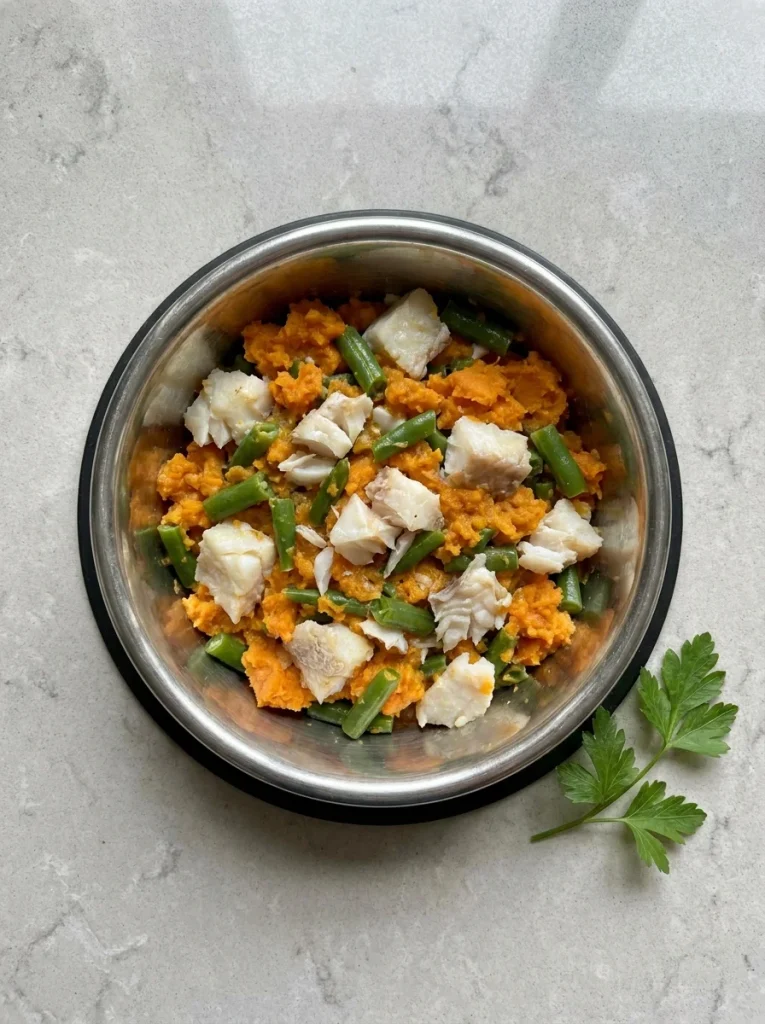
Some dogs do better on fish than poultry, especially if they’ve had food sensitivities or allergies to chicken or turkey in the past. White fish like cod or tilapia is extremely low in fat and easy to digest, making it a smart rotation option for dogs who need variety without extra richness.
Fish also brings a different amino acid profile to the table compared to poultry, which can be useful if you’re trying to avoid feeding the exact same protein meal after meal. Sweet potato brings in beta-carotene, potassium, and fiber, and most dogs find its natural sweetness appealing, even ones who tend to be picky eaters during recovery.
Green beans round out the recipe with extra fiber and volume without adding meaningful calories, which helps a recovering dog feel satisfied on a lower-calorie meal.
Recipe Card: White Fish & Sweet Potato
Prep Time: 10 minutes Cook Time: 20 minutes Freeze Time: Up to 2 months Yield: About 3.5 cups
Ingredients:
- 1 lb white fish fillet (cod or tilapia), boneless
- 1 cup sweet potato, peeled and cubed
- 1/2 cup green beans, steamed and chopped
- Water, as needed for poaching
Instructions:
- Fill a shallow pan with about an inch of water and bring it to a gentle simmer — you’re poaching, not boiling, so keep the heat moderate.
- Add the fish fillets to the simmering water and poach for 10-12 minutes, until the fish is opaque and flakes easily with a fork.
- While the fish poaches, peel and cube the sweet potato into small, even pieces so they cook at the same rate.
- Boil or steam the sweet potato cubes for about 15 minutes, until fork-tender, then mash lightly with a fork, leaving some texture.
- Steam the green beans separately for 5-6 minutes, then chop them into small, dog-friendly pieces once cooled slightly.
- Once the fish is done, remove it from the water and let it cool for a few minutes.
- Flake the cooked fish apart with a fork, checking carefully and thoroughly for any small bones that may have been missed during filleting.
- In a large bowl, combine the flaked fish, mashed sweet potato, and chopped green beans.
- Mix gently so the fish doesn’t break down into mush, then let the mixture cool fully before serving.
Notes: Double-check fish for bones before serving, even with fillets labeled “boneless,” since small bones can occasionally be missed during processing. This recipe is a good option if your dog seems bored with chicken or turkey-based meals, or if your vet has recommended rotating proteins to reduce the risk of developing a new food sensitivity. Fish-based meals tend to have a shorter freezer life than poultry, so try to use frozen portions within 2 months for the best texture and smell.
4. Egg White & Zucchini Recipe (Low-Fat, High-Digestibility Option)
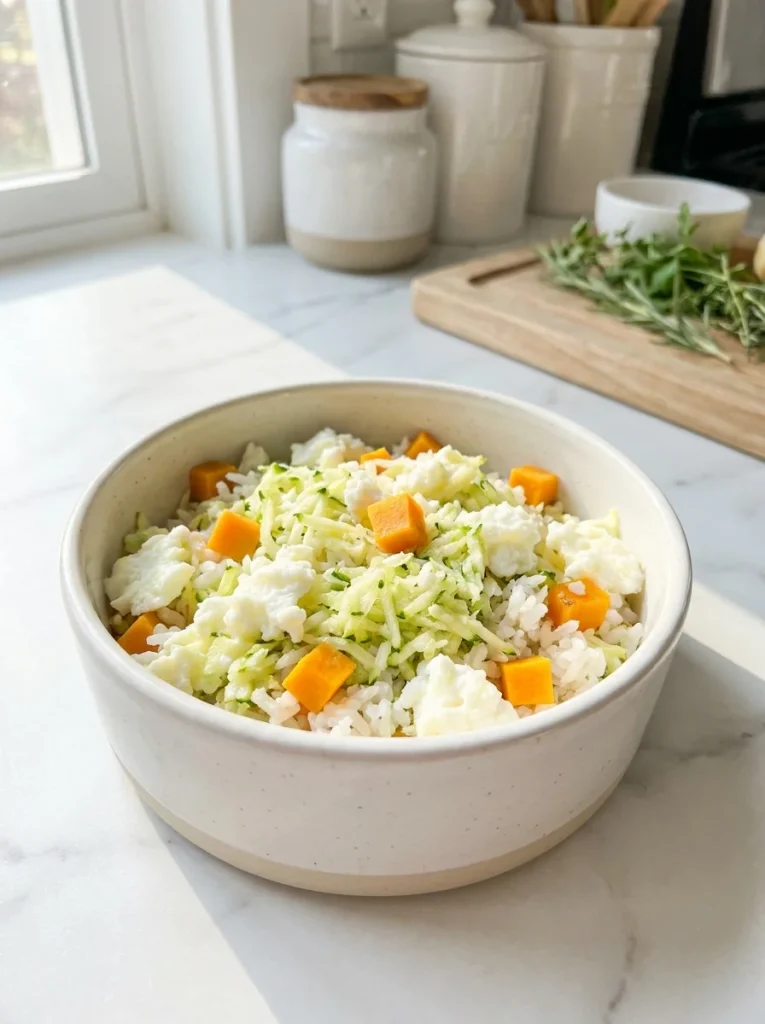
Egg whites are almost pure protein with essentially no fat, which makes them a smart addition for dogs recovering from pancreatitis or dogs who need an extra-gentle meal after a rough flare-up. Just skip the yolk entirely, since that’s where nearly all of an egg’s fat and cholesterol live — the yolk alone can undo the benefit of an otherwise low-fat meal.
Zucchini is gentle, hydrating, and low in calories, so it pairs well without adding richness to the meal, and its high water content can help keep a recovering dog hydrated through their food. A small amount of rice and pumpkin round the meal out with enough carbohydrates and fiber to keep it filling.
This recipe tends to be one of the lightest options on this list, which makes it especially useful right after a flare-up when your dog’s appetite may still be a little shaky.
Recipe Card: Egg White & Zucchini
Prep Time: 8 minutes Cook Time: 15 minutes Freeze Time: Up to 6 weeks Yield: About 2.5 cups
Ingredients:
- 6 large egg whites (yolks removed)
- 1 cup zucchini, grated or finely diced
- 1 cup cooked white rice
- 1 tbsp plain, unsweetened pumpkin
Instructions:
- Crack the eggs and carefully separate the whites from the yolks, discarding the yolks or saving them for another use — they should not go into this recipe.
- Heat a nonstick pan over medium-low heat with no oil or butter added.
- Pour the egg whites into the pan and scramble them gently, stirring frequently until fully cooked with no runny texture remaining, about 4-5 minutes.
- While the eggs cook, grate or finely dice the zucchini, leaving the skin on for extra fiber if your dog tolerates it well.
- In a separate small pan, lightly sauté the zucchini in a splash of water (not oil) until softened, about 5 minutes, stirring occasionally so it doesn’t stick.
- Cook the rice separately according to package directions if you don’t already have leftover cooked rice on hand.
- In a large bowl, combine the scrambled egg whites, softened zucchini, cooked rice, and pumpkin.
- Mix everything together well, breaking up any large clumps of egg white so the texture is easy for your dog to eat.
- Let the mixture cool completely before serving, and stir once more before portioning to make sure the pumpkin is evenly distributed.
Notes: This is a great short-term rotation recipe for dogs who need a break from meat-based proteins, or for dogs recovering from a second or third flare-up who may benefit from an especially light meal. It’s not intended as a sole long-term diet without a vet’s nutrition plan, since egg whites alone don’t provide the full range of nutrients dogs need over time. Because this recipe has a shorter freezer life than the others, try to use it within about six weeks for the best quality.
5. Slow Cooker Low-Fat Stew (Hands-Off Cooking Method)
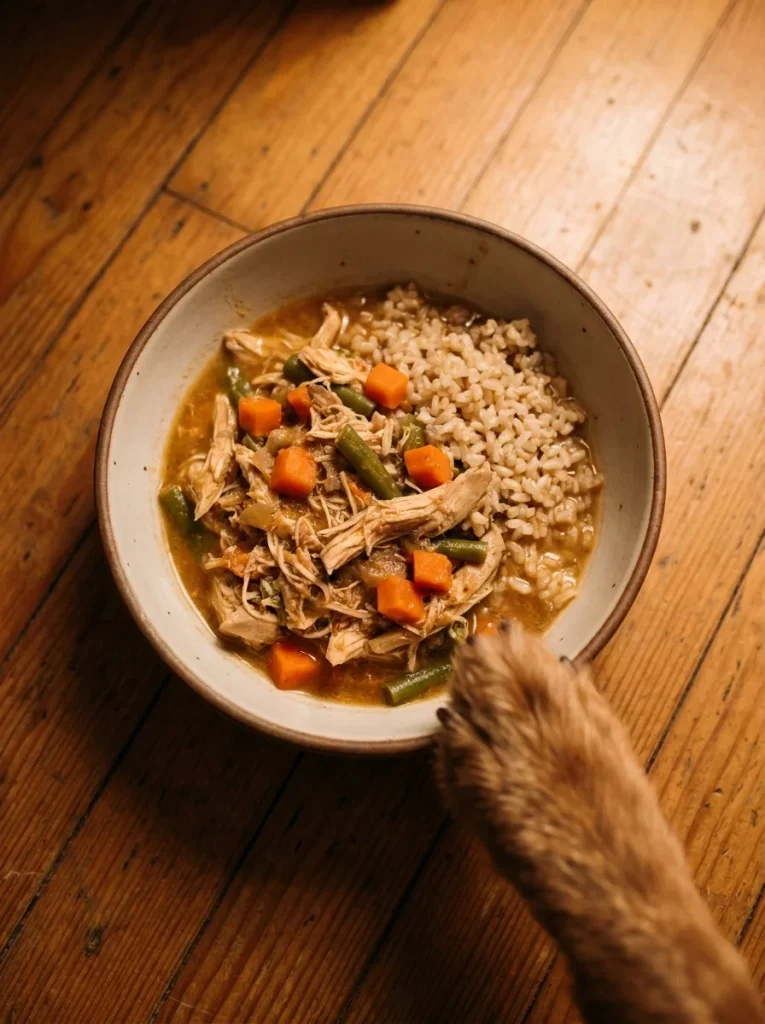
If you’d rather set it and forget it, a slow cooker is one of the easiest ways to batch-cook pancreatitis-friendly meals without babysitting the stove for hours. The low, steady heat also keeps meat extra tender, which is easy on a sensitive stomach and makes shredding the finished chicken almost effortless.
This method is especially useful for owners juggling work schedules, since you can start the slow cooker before leaving for the day and come home to a finished batch of food ready to portion and store. It also produces a slightly different texture than boiling — the meat tends to be softer and more broth-infused, which some dogs with reduced appetites find more appealing.
This method works well if you already use a slow cooker for other dog meals — check out our full slow cooker dog food guide for more ideas you can adapt to a low-fat pancreatitis-friendly version.
Recipe Card: Slow Cooker Low-Fat Stew
Prep Time: 10 minutes Cook Time: 4 hours on low Freeze Time: Up to 3 months Yield: About 6 cups
Ingredients:
- 1.5 lbs boneless, skinless chicken breast
- 1 cup brown rice, uncooked
- 1 cup carrots, chopped
- 1/2 cup green beans, chopped
- 4 cups low-sodium chicken broth (no onion or garlic)
Instructions:
- Trim any visible fat from the chicken breasts and place them in the bottom of the slow cooker in a single layer.
- Add the uncooked brown rice on top of the chicken, spreading it out evenly so it cooks consistently.
- Layer the chopped carrots and green beans over the rice.
- Pour the low-sodium broth over everything until the ingredients are mostly covered, adding plain water if you need a bit more liquid.
- Cover and cook on low for 4 hours, checking around the 3-hour mark to make sure there’s still enough liquid in the pot.
- Once the chicken is fully cooked and shreds easily with a fork, remove it briefly to shred it into smaller pieces.
- Return the shredded chicken to the slow cooker and stir everything together so the rice and vegetables absorb the remaining broth.
- Let the stew sit uncovered for about 15-20 minutes to cool slightly before serving or portioning.
- Skim off any excess fat that may have risen to the surface before serving, since even lean chicken can release a small amount during long, slow cooking.
Notes: Always check the broth label for hidden fat, onion, or garlic — these are common in store-bought broths and unsafe for dogs, even in small concentrations. Look for options labeled specifically as low-sodium and free of aromatics, or make your own plain broth at home. This recipe is easy to double for multi-dog households, and the extended cook time makes the chicken so tender that it’s a good option for older dogs or dogs with dental issues.
6. Freezer-Batch Bland Recovery Bowls (For Flare-Up Emergencies)
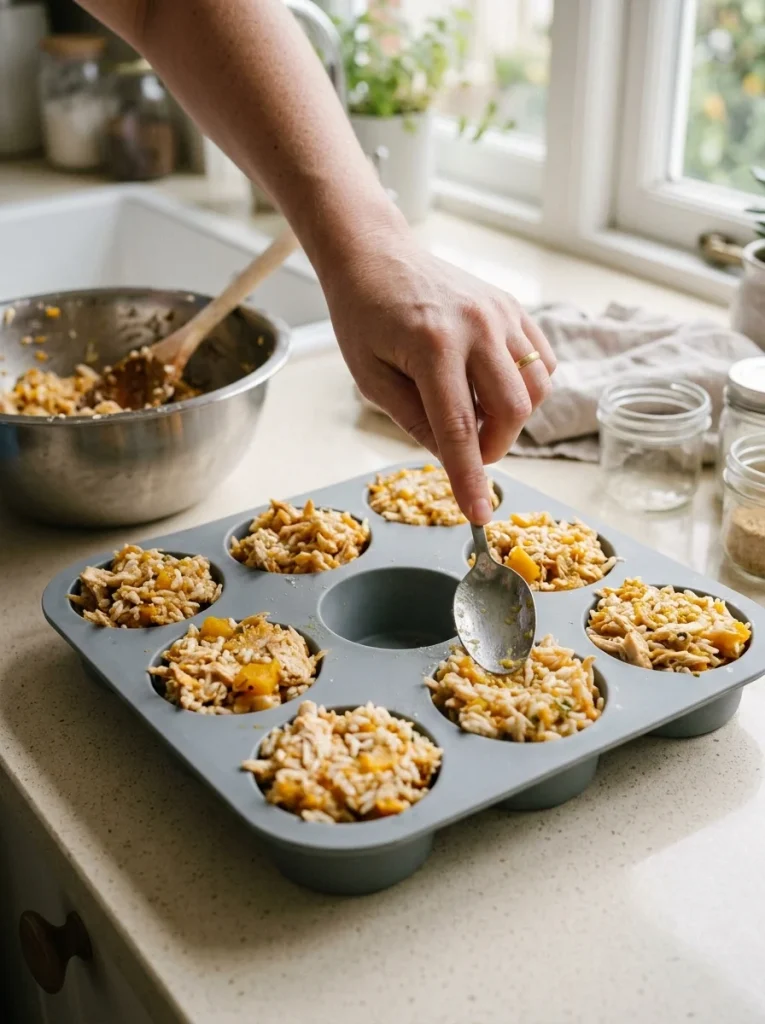
Pancreatitis flare-ups often happen without warning, and the last thing you want is to scramble for safe food while your dog is uncomfortable and refusing to eat. This method solves that problem by having ready-made bland bowls waiting in the freezer at all times, so you’re never caught without a safe meal on hand.
Because pancreatitis can recur, keeping a stash of pre-portioned recovery meals in the freezer is one of the most practical things you can do as an owner. It also takes the guesswork out of portioning during a stressful moment, since everything is already measured out and ready to thaw.
Recipe Card: Freezer-Batch Bland Recovery Bowls
Prep Time: 15 minutes Cook Time: 30 minutes Freeze Time: Up to 3 months (thaw 24 hours before use) Yield: 12 individual portions (using an ice cube tray or muffin tin)
Ingredients:
- 2 lbs boneless, skinless chicken breast
- 2 cups plain white rice, cooked
- 1 cup plain pumpkin
- Water, as needed
Instructions:
- Trim any visible fat from the chicken breasts before cooking.
- Boil the chicken in plain water until fully cooked through, about 25 minutes, then remove from the pot and let it cool slightly.
- Shred the chicken finely using two forks or your hands, since smaller pieces portion more evenly into individual servings.
- Cook the white rice according to package directions, with no added butter, oil, or salt.
- In a large bowl, mix the shredded chicken, cooked rice, and pumpkin together thoroughly.
- Add a small amount of water if the mixture is too thick to portion easily into a tray.
- Spoon the mixture into a silicone muffin tin or large ice cube tray, pressing down gently to remove air pockets.
- Freeze the tray flat for at least 6 hours, or until the portions are completely solid.
- Once frozen, pop the portions out and transfer them into a labeled freezer bag or airtight container.
Notes: Thaw one portion in the fridge overnight before a flare-up meal — never microwave straight from frozen, since uneven heating can create hot spots that scald your dog’s mouth. Label the bag with the date so you always use the oldest batch first, and try to replace your freezer stash every three months even if it hasn’t all been used, to keep quality fresh. Many owners keep a small dry-erase note on the freezer door listing how many portions remain, so they know when it’s time to cook a new batch.
Easy Dog Food Recipe for Pancreatitis: Prep Shortcuts
Cooking from scratch every day isn’t realistic for most households, especially with work, kids, or other pets to manage. These shortcuts make it much easier to stick with an easy dog food recipe for pancreatitis on a busy schedule without burning out on meal prep.
1. Cook in Bulk Once a Week
Pick one day to cook a double or triple batch of whichever recipe your dog is currently rotating through. Portion it into daily servings right away, so mealtime becomes a simple grab-and-go task instead of a full cooking session every single day. Many owners find that dedicating a couple of hours on a Sunday to batch-cook two different recipes gives their dog enough variety for the whole week while keeping total prep time low.
Investing in a set of stackable, labeled containers can make this process even smoother, since you can clearly track which recipe is which and how old each batch is at a glance.
2. Use a Rice Cooker for Hands-Free Grains
A basic rice cooker can handle the rice or grain portion of any recipe above while you prep the protein and vegetables separately on the stove. It also frees up stove space and cuts your total prep time by several minutes per batch, since you can start the rice cooking and walk away without checking on it. Some rice cookers even have a “keep warm” setting, which is handy if your protein takes a little longer than expected.
If you’re setting up a more permanent home cooking routine, it also helps to organize where meals get prepped and served — some owners find a dedicated feeding station setup keeps portioned meals, bowls, and prep tools from cluttering the kitchen, especially if you’re managing multiple recipes in rotation.
How Much Homemade Dog Food to Feed a Dog with Pancreatitis
Portion sizes depend on your dog’s weight, activity level, and how far along they are in recovery, so treat the numbers below as a starting point rather than an exact prescription. As a general guide:
| Dog’s Weight | Approximate Daily Amount | Feedings Per Day |
|---|---|---|
| 10-20 lbs | 3/4 to 1.5 cups | 3-4 small meals |
| 21-40 lbs | 1.5 to 2.5 cups | 2-3 meals |
| 41-60 lbs | 2.5 to 3.5 cups | 2 meals |
| 61-90 lbs | 3.5 to 5 cups | 2 meals |
During an active flare-up, smaller, more frequent meals are usually easier on the digestive system than two large ones, since they reduce the workload on the pancreas at any given time. Some vets recommend starting with four small meals a day right after a flare-up, then gradually consolidating back down to two meals over one to two weeks as your dog’s appetite and energy return to normal.
As your dog stabilizes, you can shift back to a standard two-meals-a-day routine, though some owners choose to stick with three smaller meals long-term simply because their dog does better on it. Watch your dog’s weight over the following weeks, too — homemade diets can sometimes lead to weight changes if portions aren’t adjusted as your dog’s activity level shifts during recovery.
Ask your vet to confirm the right calorie target for your dog’s exact weight and condition, since these numbers are only a general starting point and don’t account for individual factors like age, breed, or other health conditions.
Ingredients to Avoid When Cooking for a Dog with Pancreatitis
Getting the “safe” ingredients right matters, but knowing what to leave out is just as important, since a single high-fat ingredient can undo days of careful low-fat cooking.
1. High-Fat Ingredients
Skip anything with visible fat or oil, including fatty cuts of beef, pork, bacon, sausage, dark meat with skin, butter, and cooking oils of any kind, even ones marketed as “healthy” like olive or coconut oil. Even small amounts can trigger another flare-up in a dog with a sensitive pancreas, so it’s worth being strict here rather than making exceptions for special occasions.
Nuts and nut butters are another hidden source of fat that many owners overlook, since peanut butter in particular is often used as a treat or pill-hiding trick but is far too rich for a dog managing pancreatitis. The same goes for fatty fish like salmon, which — while healthy for most dogs — carries more fat than the lean white fish options recommended in the recipes above.
2. Seasonings, Bones, and Extras
Never add onion, garlic, salt, or seasoning blends of any kind — these can be harmful to dogs even in small amounts, regardless of whether your dog has pancreatitis. Skip bones entirely, including the kind found in many store-bought dog treat bones, since bone fragments and marrow fat can both irritate the pancreas and pose a choking or intestinal blockage risk on top of that.
Also avoid dairy products like cheese and milk, which are higher in fat than most owners realize, along with processed deli meats, which often contain hidden fats, sodium, and preservatives that offer no benefit to a recovering dog. When in doubt about any new ingredient, it’s always safer to leave it out or check with your vet before adding it to a batch.
Acute vs. Long-Term Pancreatitis: Does the Recipe Change?
Yes, and this is one of the most overlooked parts of feeding a dog with pancreatitis, since many owners assume one recipe should work for every stage of recovery.
During an acute flare-up, stick to the simplest, blandest recipes — like the Boiled Chicken & Pumpkin or Freezer-Batch Bland Bowls above. The goal at this stage is to give the pancreas as little work as possible while your dog heals, usually for 3-5 days, and to keep meals extremely simple so there’s nothing new for the digestive system to process.
Once your dog is stable and eating normally again, you can rotate in the more varied recipes, like the Turkey & Brown Rice or White Fish & Sweet Potato options. This stage is about long-term nutritional balance, not just resting the pancreas, since a dog can’t stay on a bare-bones bland diet forever without missing out on important nutrients.
If pancreatitis becomes a recurring issue for your dog, ask your vet about a formal home-cooked diet plan, ideally one reviewed by a board-certified veterinary nutritionist. This ensures your dog is getting complete and balanced nutrition, not just low-fat meals, over months and years of feeding — something none of the individual recipes above are designed to guarantee on their own.
What Is Pancreatitis in Dogs? A Quick Overview
Pancreatitis happens when a dog’s pancreas becomes inflamed, causing digestive enzymes to leak out and irritate nearby organs instead of staying safely contained where they belong. It’s uncomfortable and, in severe cases, can become life-threatening if left untreated, which is why quick action and a proper diet matter so much.
Common signs include vomiting, a hunched or painful posture, loss of appetite, and lethargy that doesn’t seem to improve on its own. Some dogs also show subtler symptoms first, like restlessness or excessive licking, which owners sometimes miss in the early stages before more obvious symptoms appear.
Fat is the main dietary trigger, since it forces the pancreas to work harder to produce digestive enzymes needed for digestion. That’s exactly why every recipe above avoids added fats and sticks to lean proteins, gentle vegetables, and simple carbohydrates that don’t demand much from an already-stressed organ.
Certain dogs are also more prone to pancreatitis than others, including overweight dogs, older dogs, and certain breeds with a known predisposition, so ongoing weight management plays a role in prevention as much as diet does. Routine checkups also matter here — staying on top of your dog’s general veterinary care needs makes it easier to catch pancreatitis early or manage flare-ups before they become severe enough to require emergency treatment.
Final Thoughts
Feeding a dog with pancreatitis doesn’t have to mean a boring, repetitive diet stuck on repeat for months. With six different recipes — covering flare-up recovery, everyday maintenance, and hands-off cooking methods — you have enough variety to keep meals interesting while staying safely low in fat throughout every stage of recovery.
Start with the bland recipes if your dog is in an active flare-up, then rotate through the others once things stabilize and your dog is back to a normal appetite. Keep a few freezer-batch portions on hand at all times for future flare-ups, since pancreatitis can be unpredictable even in dogs who’ve been stable for months. And when in doubt, loop your vet in before making any big diet changes, especially if pancreatitis becomes a recurring pattern rather than a one-time event.

Izzy is an experienced ranch worker who has a passion for exploring nature and getting up close to wildlife. With her connections to various animal organizations, Izzy is well-versed in animal care and rehabilitation.