Essential Low-Maintenance Trail Camera Gear for Female Hunters
More women are entering the hunting community than ever before. Whether hunting independently, with family, or as part of a hunting group, female hunters are bringing new perspectives and priorities to the field. While the fundamentals of hunting remain the same regardless of gender, many women face practical challenges that make efficiency, safety, and simplicity especially valuable.
This is where trail cameras can make a meaningful difference.
Modern trail cameras are no longer just tools for scouting game. When chosen carefully, they can help reduce time spent checking locations, minimize unnecessary trips into the field, improve situational awareness, and make hunting preparation more manageable. For female hunters who want reliable information without constant maintenance, investing in the right trail camera setup can make the entire experience more enjoyable and productive.
Understanding the Challenges Female Hunters Often Face
Every hunter deals with changing weather, unpredictable animal movement, and limited time. However, many female hunters also encounter challenges related to solo hunting, balancing hunting with work and family responsibilities, or managing large properties without additional help.
Scouting is one of the most time-consuming parts of hunting. Regularly walking trails, checking feeding areas, and retrieving SD cards from multiple camera locations can require significant time and energy. Frequent visits also increase human scent in hunting areas, potentially affecting animal behavior.
Safety can be another consideration, particularly for hunters who spend time alone in remote locations. Visiting camera sites before dawn, after dark, or during poor weather conditions may not always be ideal.
For newer hunters, uncertainty can also affect confidence. Questions such as where animals are traveling, when they are most active, and whether a hunting strategy is working can be difficult to answer without reliable information.
A well-designed trail camera system helps address all of these concerns by providing consistent data while reducing the amount of physical effort required to gather it.
How Trail Cameras Help Female Hunters Hunt Smarter
One of the biggest advantages of trail cameras is the ability to gather information without constantly being present in the field.
Instead of visiting every camera location each week to retrieve memory cards, cellular and WiFi-enabled cameras allow hunters to view photos and videos remotely. This saves time, reduces fuel costs, and limits unnecessary disturbance in hunting areas.
For female hunters managing hunting properties independently, remote access can also improve safety. Rather than walking through unfamiliar terrain in darkness or poor weather conditions, important scouting information can be reviewed from home, a vehicle, or camp.
Trail cameras also provide valuable insights into animal movement patterns. Knowing when deer are entering a food plot, which trails they prefer, or how frequently they visit a particular location allows hunters to make decisions based on evidence rather than guesswork.
This information often leads to greater confidence. Instead of wondering whether an area is active, hunters can see actual movement data and adjust their plans accordingly. The result is a more informed and independent hunting experience.
Choosing Trail Cameras That Require Less Maintenance
Not all trail cameras are equally convenient to own. Some require frequent battery changes, regular card retrieval, or constant adjustments. For hunters looking to simplify their scouting routine, low-maintenance features should be a priority.
Battery life is one of the most important considerations. Cameras that can operate for months without requiring new batteries reduce the number of trips needed for maintenance. Models equipped with large-capacity rechargeable batteries or support for lithium batteries tend to perform particularly well, especially during cold-weather seasons.
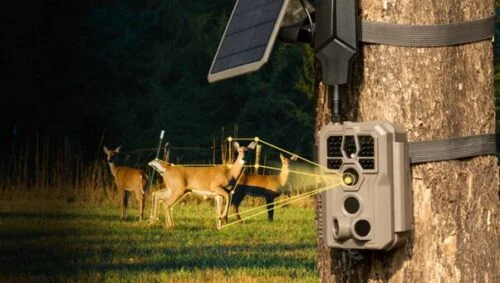
Solar compatibility can further reduce maintenance requirements. A properly positioned solar panel can extend operating time significantly, allowing cameras to remain active for extended periods with minimal attention. For hunters managing multiple camera locations, this can be a major advantage.
Durability is equally important. A trail camera that requires frequent troubleshooting ultimately creates more work rather than less. Cameras with strong weather resistance, quality seals, and dependable construction are better suited for year-round deployment. Reliable waterproofing helps protect against rain, snow, humidity, and seasonal temperature fluctuations that commonly affect outdoor electronics.
Ease of installation should not be overlooked either. Lightweight cameras are easier to carry and position, especially when setting up multiple locations in a single trip. Adjustable mounting systems, tree straps, and simple setup interfaces make deployment faster and less physically demanding.
Why Remote Viewing Matters More Than Ever
Remote viewing technology has transformed how many hunters use trail cameras.
Traditionally, checking camera images required physically retrieving an SD card from every location. While effective, this approach can become time-consuming, particularly on larger properties.
Today, many hunters prefer cellular or WiFi trail cameras because they provide access to images without requiring frequent site visits. This capability is particularly valuable for hunters who have limited time available for scouting or who prefer to minimize disturbance in hunting areas.
For female hunters, remote viewing can offer an additional layer of convenience and security. Instead of making unnecessary trips into isolated locations, important information can be reviewed whenever needed. The ability to monitor activity remotely allows hunters to stay informed while maintaining flexibility in their schedules.
The Importance of Reliable Night Vision
Many of the most valuable trail camera images are captured during low-light conditions.
Deer and other game animals are often most active at dawn, dusk, and throughout the night. As a result, night vision performance plays a significant role in determining how useful a trail camera will be.
Poor night vision can produce blurry images, excessive motion blur, or overexposed subjects that are difficult to identify. Reliable infrared systems, combined with quality sensors and lenses, help create clearer nighttime images and videos.
The goal is not necessarily to achieve the highest advertised resolution, but rather to consistently capture usable information. Being able to identify animal size, direction of travel, and behavior after dark is often more valuable than simply having larger image files.
Reducing False Triggers and Unnecessary Maintenance
One of the less obvious challenges of using trail cameras is managing the large number of images they can generate. Wind-blown grass, moving branches, changing light conditions, and other environmental factors can still trigger cameras, even when no target wildlife is present.
Let’s be honest: nothing kills the excitement of checking your camera faster than scrolling through 300 photos of wind-blown grass. Instead of wasting time, you can now let AI do the heavy lifting. Innovative setups—like the Smart Capture technology built into GardePro X66Pro Max AI camera—process every image before it even hits your phone. With advanced species recognition, you can instantly filter your feed to show only ‘Bucks,’ ‘Turkeys,’ or ‘People.’ It transforms your camera from a simple motion-detector into a dedicated scouting assistant, giving female hunters back their most valuable asset: time.
Certain cellular cameras also offer smart capture features that allow users to decide which photos or videos are uploaded through the cellular network. For example, hunters may choose to receive only deer, turkey, or other target species, while non-target images remain stored locally on the SD card. This approach helps reduce the number of unnecessary notifications and can significantly lower cellular data usage by filtering out a large percentage of blank or low-value captures.
For hunters who prefer a low-maintenance setup, these technologies can save time not only in the field, but also when reviewing camera footage. Instead of scrolling through thousands of images, users can focus on the activity that is most relevant to their hunting goals.
Building a Trail Camera Setup That Works for You
There is no single trail camera that fits every hunter’s needs.
Some female hunters prioritize remote monitoring because they have limited time available for scouting. Others may focus on long battery life for remote properties or exceptional night vision for monitoring heavily wooded areas.
The best approach is to identify the challenges that consume the most time or effort and choose equipment that addresses those specific needs. A camera with long battery life, dependable weather resistance, remote viewing capability, and accurate motion detection will often provide the most practical value over time.
The goal is not to own the most advanced equipment available, but rather to create a system that works consistently and requires minimal intervention.
Final Thoughts
Trail cameras have become far more than simple scouting tools. For female hunters, they can help reduce the physical demands of scouting, improve safety by limiting unnecessary trips into remote areas, and provide valuable information that supports better hunting decisions.
A low-maintenance trail camera setup saves time, increases confidence, and allows hunters to focus more on the experience itself rather than constantly managing equipment.
As more women continue to shape the future of hunting, choosing reliable gear that supports independence and efficiency can make a meaningful difference. Whether you’re just getting started or refining an existing setup, the right trail camera system can help you spend less time maintaining equipment and more time enjoying the hunt.

Izzy is an experienced ranch worker who has a passion for exploring nature and getting up close to wildlife. With her connections to various animal organizations, Izzy is well-versed in animal care and rehabilitation.