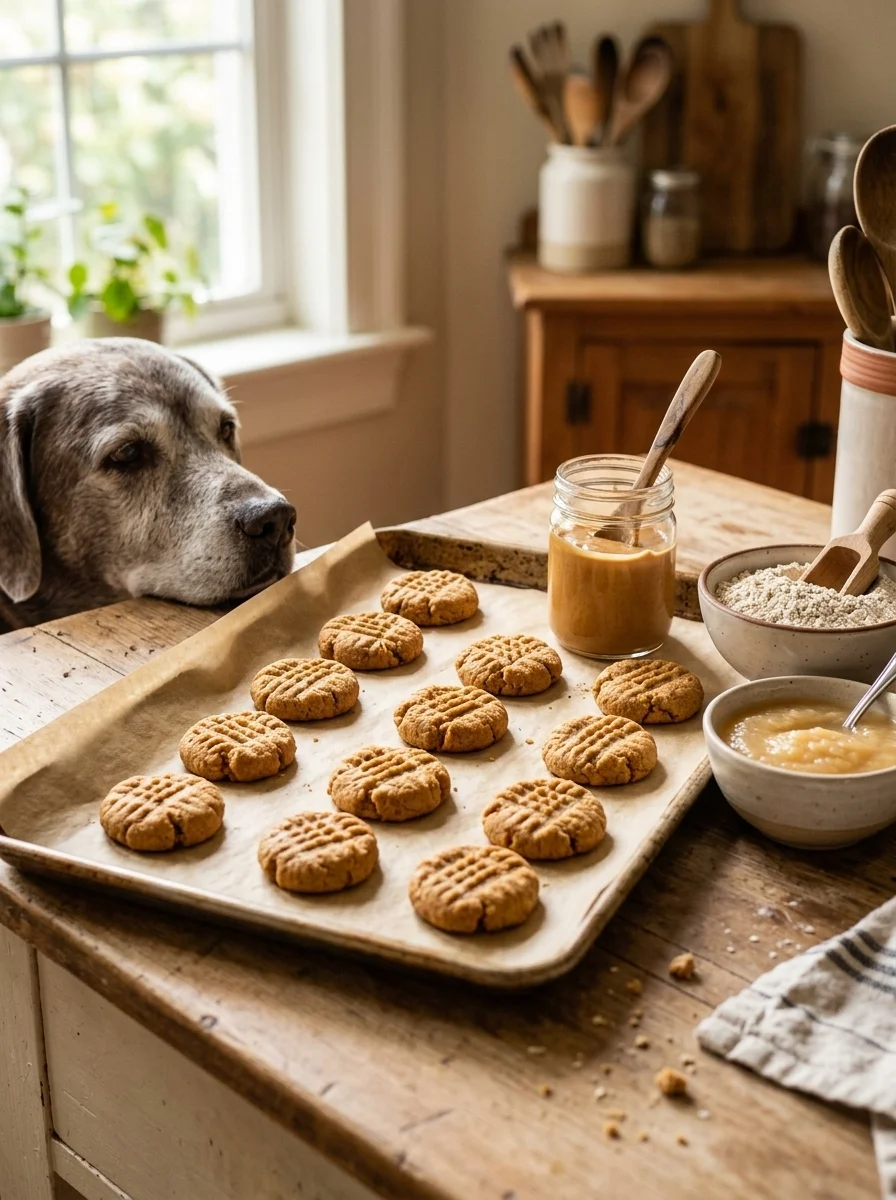
Homemade Carrot and Sweet Potato Chews for Dogs (Frozen, Baked, Dehydrated)
If your dog gives you those big, hopeful eyes every time you open the fridge, this guide is for you. Homemade carrot and sweet potato chews for dogs are cheap, simple, and made from just a couple of whole ingredients. You control everything that goes in, so there are no mystery fillers, no added sugar, and no long ingredient labels to decode.
Store-bought chews can cost a lot, and some are packed with things your dog doesn’t need. A bag of carrots and a couple of sweet potatoes can turn into dozens of treats for a few dollars. Even better, you can make them soft, crunchy, frozen, or shaped like bones.
In this guide you’ll find four full recipe cards, three flavor boosts, a troubleshooting section, and a safety and storage guide. Every section follows the same pattern: who it’s best for, the steps, and a quick tip. That way you can skim, pick a method, and start cooking.
Let’s get chewing.
1. Homemade Carrot and Sweet Potato Chews for Dogs: Pick Your Style
There isn’t one “right” way to make these chews. The best method depends on your dog’s age, teeth, chewing style, and how much time you have.
Use this table to choose fast.
| Style | Total Time | Texture | Best For |
|---|---|---|---|
| Frozen puree chews | 15 min + 4 hrs freezing | Cold, smooth, lickable | Hot days, teething puppies, picky eaters |
| Chewy baked strips | About 2.5 hrs | Soft and bendy | Seniors, small dogs, training treats |
| Dehydrator jerky-style chews | 6 to 10 hrs | Firm and leathery | Heavy chewers, long-lasting treats |
| Air fryer quick chews | About 30 min | Slightly crisp outside, soft inside | Busy days, last-minute treats |
| Baked bone-shaped chews | About 45 min | Crunchy, biscuit-like | Gift bags, dog parties, cute shapes |
A. Match the Chew to Your Dog
Think about how your dog eats. A gulper needs a treat that can’t be swallowed whole. A gentle nibbler will love soft strips. A puppy with sore gums often loves something cold.
B. Match the Chew to Your Schedule
No time? The air fryer is your friend. Have a whole weekend afternoon? Start the dehydrator and forget about it. Want to prep a month of treats at once? Baked strips and dehydrated chews store best.
Quick tip: Not sure where to start? Make the frozen base recipe first. It’s nearly foolproof and needs no special equipment.
2. Our Go-To Base Recipe: Frozen Carrot and Sweet Potato Chews
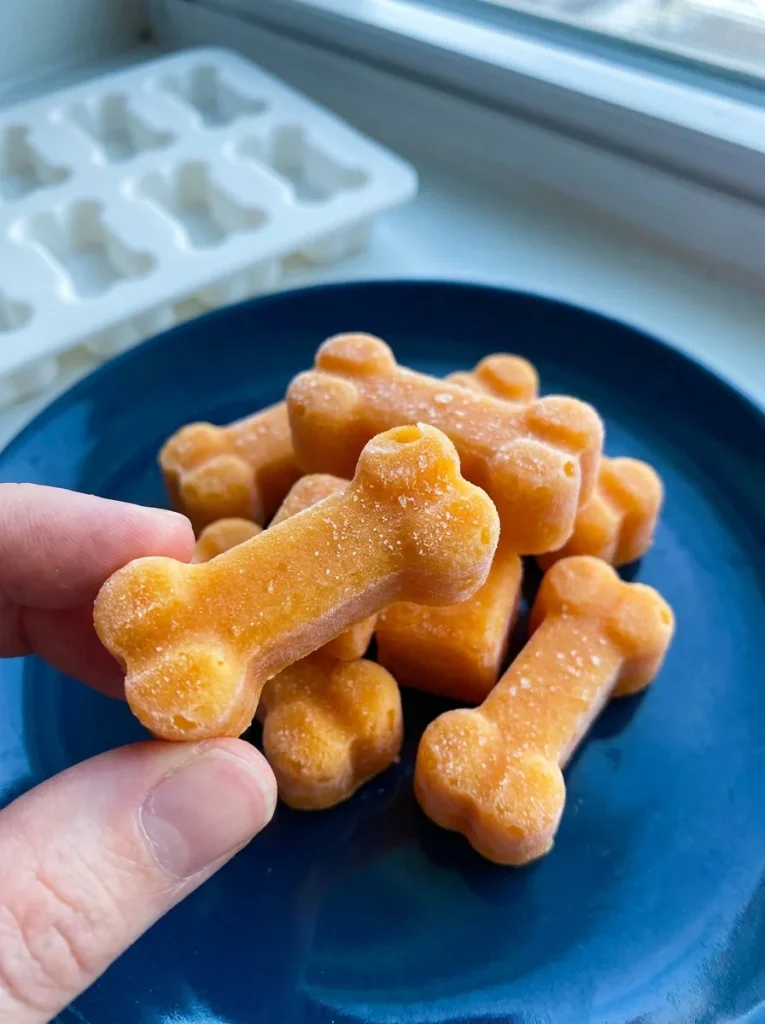
This is the recipe to master first. It uses simple pantry ingredients, and you’ll reuse the cooked carrot and sweet potato in later recipes too.
Best for: Hot days, teething puppies, and dogs who love licking and slow chewing.
Frozen Carrot and Sweet Potato Chews
Prep Time: 20 minutes
Cook Time: 20 minutes (to soften the vegetables)
Freeze Time: 4 hours
Yield: About 20 small chews (or 10 large ones)
Ingredients:
- 1 medium sweet potato, peeled and cubed
- 2 medium carrots, peeled and chopped
- ½ cup water or unsalted, onion-free broth
- 2 tablespoons plain unsweetened yogurt (optional, no xylitol)
Instructions:
- Boil or steam the sweet potato and carrots for 15 to 20 minutes, until a fork slides in easily.
- Drain and let them cool for 10 minutes.
- Add the vegetables and water (or broth) to a blender or food processor.
- Blend until smooth. Add a splash more liquid if it’s too thick.
- Stir in the yogurt if you’re using it.
- Spoon the mixture into silicone molds. Bone shapes and small squares work well.
- Freeze for at least 4 hours, until solid.
- Pop the chews out and store them in a freezer bag.
Notes:
- Always cook the sweet potato. Raw sweet potato is hard to digest and can be a choking risk.
- Use unsalted broth only. Store-bought broth often contains onion or garlic, which are unsafe for dogs.
- Serve one chew at a time, and stay nearby while your dog enjoys it.
A. Why This Recipe Works
Cooked sweet potato makes the puree naturally sweet and thick. Carrots add color and a little texture. Together they freeze into a smooth, sturdy chew that lasts longer than plain ice.
B. Ways to Serve It
Set a frozen chew on a snuffle mat or in a rubber toy for extra fun. You can also crumble one over regular meals as a cooling topper in summer.
Quick tip: Fill your molds only three-quarters full. The mixture expands slightly as it freezes, and overfilled molds are hard to pop out.
3. Chewy Baked Strips (Recipe Card)
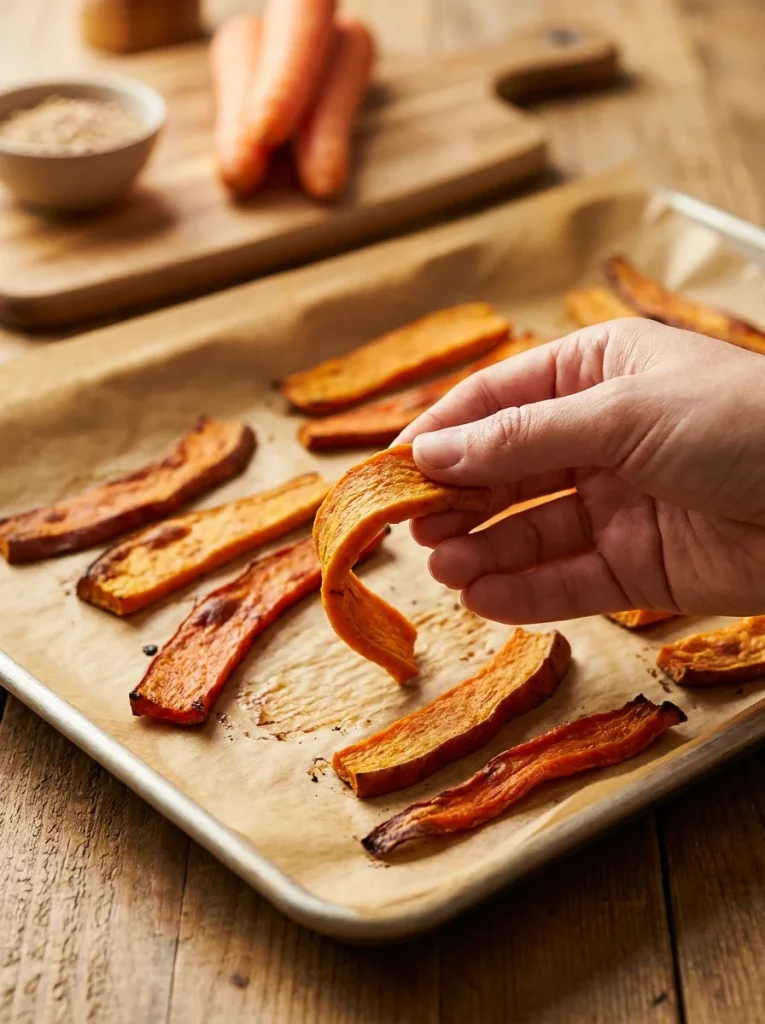
These are the soft, bendy treats that look a bit like sweet potato fries. They’re a favorite with senior dogs and small breeds because they’re easy on the teeth.
Best for: Seniors, small dogs, training sessions, and dogs who prefer soft treats.
Chewy Baked Carrot and Sweet Potato Strips
Prep Time: 15 minutes
Bake Time: 2 to 2.5 hours
Freeze Time: None (optional, for long-term storage)
Yield: About 30 strips
Ingredients:
- 2 medium sweet potatoes, scrubbed
- 3 large carrots, peeled
- 1 teaspoon olive or coconut oil (optional)
Instructions:
- Preheat your oven to 250°F (120°C). Line two baking sheets with parchment paper.
- Slice the sweet potatoes lengthwise into strips about ¼ inch thick.
- Slice the carrots lengthwise into thin, flat strips or sticks of the same thickness.
- Lightly brush the pieces with oil if you like, or leave them plain.
- Lay everything in a single layer with space between pieces.
- Bake for 1 hour, then flip each piece.
- Bake another 60 to 90 minutes, until the strips are chewy and bendy but not wet.
- Turn off the oven and let the strips cool inside for 30 minutes.
Notes:
- Thicker strips take longer. Check them often after the 2-hour mark.
- Sweet potato strips stay softer than carrot strips. That’s normal.
- Cool completely before storing to prevent mold.
A. Slicing Tips for Even Chews
Uniform thickness is the secret. A mandoline slicer makes this easy, but a sharp knife works fine. If some pieces are thicker, pull the thinner ones out early.
Leaving the sweet potato skin on adds fiber and chew. Just scrub it well first.
B. Oven Timing and How to Check Doneness
Ovens vary, so use your eyes and fingers. A finished strip should bend without snapping and feel dry to the touch. It shouldn’t leave moisture on your fingers.
If a strip feels sticky, give it 15 more minutes. If it snaps like a chip, it’s too dry for small teeth, and you can soften it with the tip in Section 7.
Quick tip: Rotate your baking sheets halfway through. Most ovens have hot spots, and this keeps everything evenly chewy.
4. Dehydrator Jerky-Style Chews (Recipe Card)
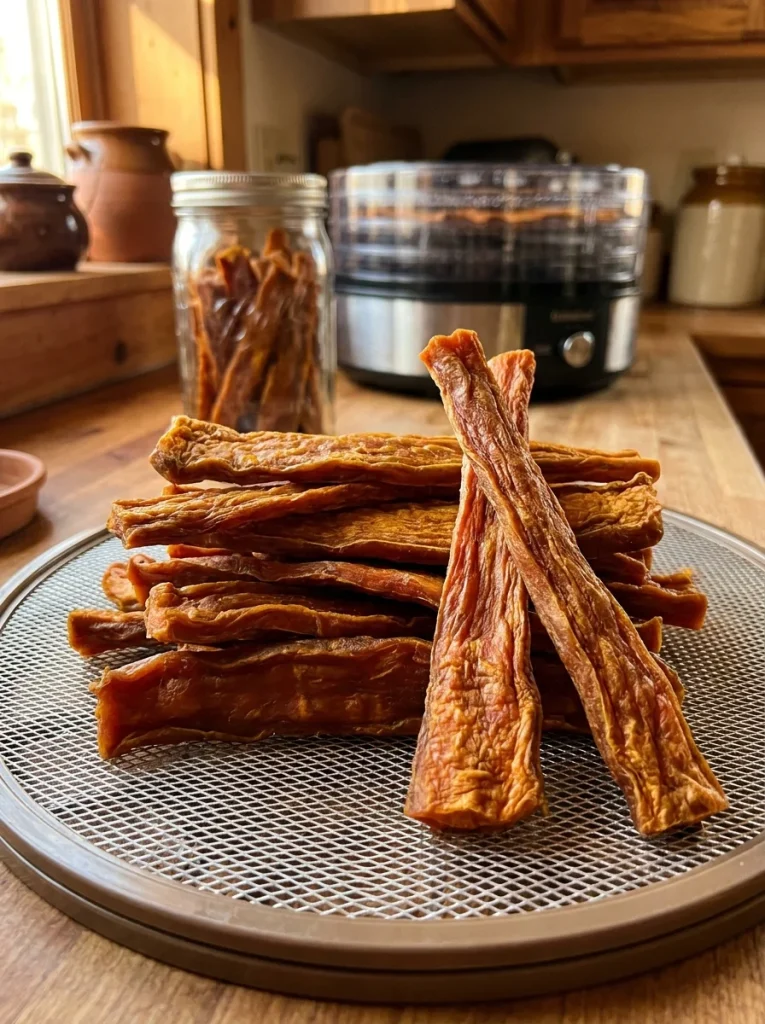
If your dog destroys soft treats in two seconds, this recipe is for you. Dehydrating removes moisture slowly, leaving a firm, leathery chew that takes real effort to finish.
Best for: Heavy chewers, medium and large dogs, and anyone who wants a long shelf life.
Dehydrated Carrot and Sweet Potato Jerky Chews
Prep Time: 20 minutes
Dehydrate Time: 6 to 10 hours
Freeze Time: None (optional, for bulk storage)
Yield: About 40 chews
Ingredients:
- 3 medium sweet potatoes, scrubbed
- 4 large carrots, peeled
Instructions:
- Slice the sweet potatoes lengthwise into strips ¼ inch thick. For a firmer chew, go up to ⅜ inch.
- Cut the carrots lengthwise into flat strips or halves.
- Arrange the pieces on dehydrator trays without overlapping.
- Set the dehydrator to 135°F to 145°F (57°C to 63°C).
- Dry the sweet potato for 6 to 10 hours, and the carrots for 8 to 10 hours.
- Test a piece. It should be tough and leathery with no wet spots.
- Let the chews cool on the tray for 30 minutes before storing.
Notes:
- Times depend on slice thickness and your machine. Check hourly near the end.
- No dehydrator? Use your oven at its lowest setting with the door slightly open.
- Watch your dog closely with these. Firm chews can break into pieces that need careful chewing.
A. Temperature and Drying Time
Low and slow wins here. High heat dries the outside too fast and traps moisture inside, which can lead to mold later. Stick to the recommended range and let time do the work.
B. Making Them Softer or Firmer
Want a bendy, jerky-like texture? Stop drying at about 6 hours. Want a hard, long-lasting chew? Go the full 10 hours or slice thicker.
You can also mix both vegetables on the same tray, but check the carrots later since they often need more time.
Quick tip: Break one open after cooling. If it’s cool and dry inside with no damp spots, it’s ready to store.
5. Air Fryer and Baked Bone-Shaped Chews (Two Recipe Cards)
These two methods are for fast results and fun shapes. One saves time. The other makes your treats look bakery-worthy.
A. Air Fryer Quick Chews (Recipe Card)
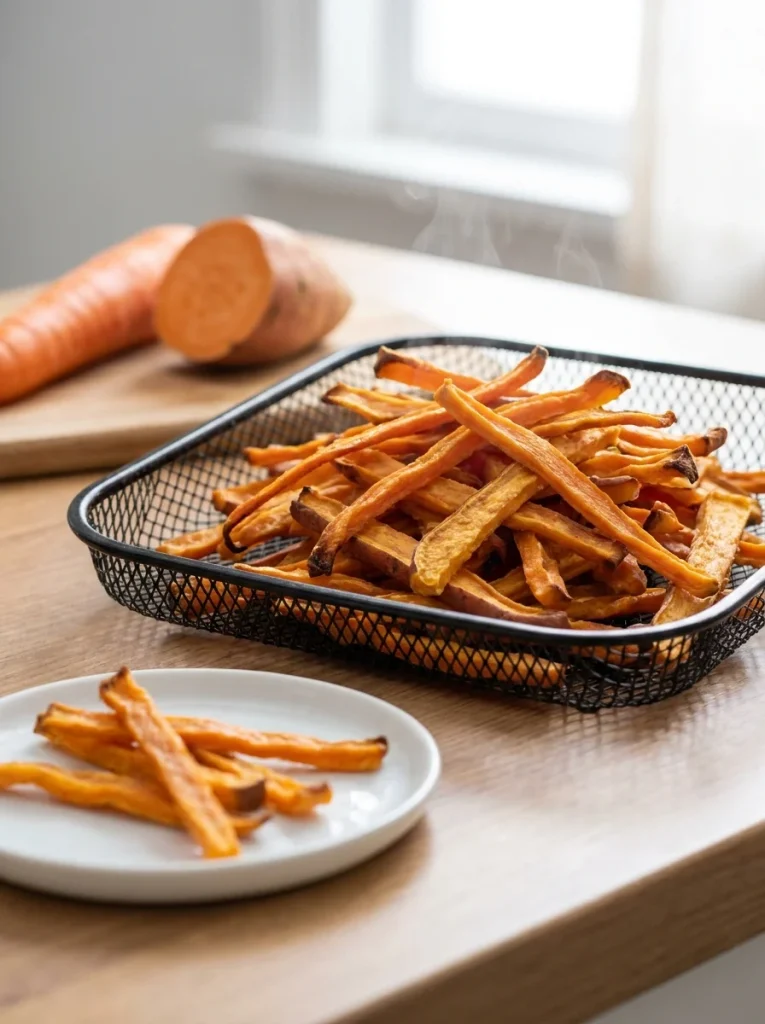
Best for: Busy days and small batches.
Air Fryer Carrot and Sweet Potato Chews
Prep Time: 10 minutes
Cook Time: 20 to 25 minutes
Freeze Time: None
Yield: About 20 chews
Ingredients:
- 1 large sweet potato, scrubbed
- 2 large carrots, peeled
Instructions:
- Preheat the air fryer to 300°F (150°C).
- Cut the sweet potato and carrots into thin sticks, about ¼ inch thick.
- Place in the basket in a single layer. Work in batches if needed.
- Cook for 10 minutes, then shake the basket.
- Cook another 10 to 15 minutes, checking often, until chewy with slightly crisp edges.
- Cool completely before serving.
Notes:
- Crowding the basket steams the vegetables instead of drying them.
- Air fryers run hot. If edges brown too fast, lower the heat to 275°F.
- These are best served within a week because they’re softer than dehydrated chews.
B. Baked Bone-Shaped Chews (Recipe Card)
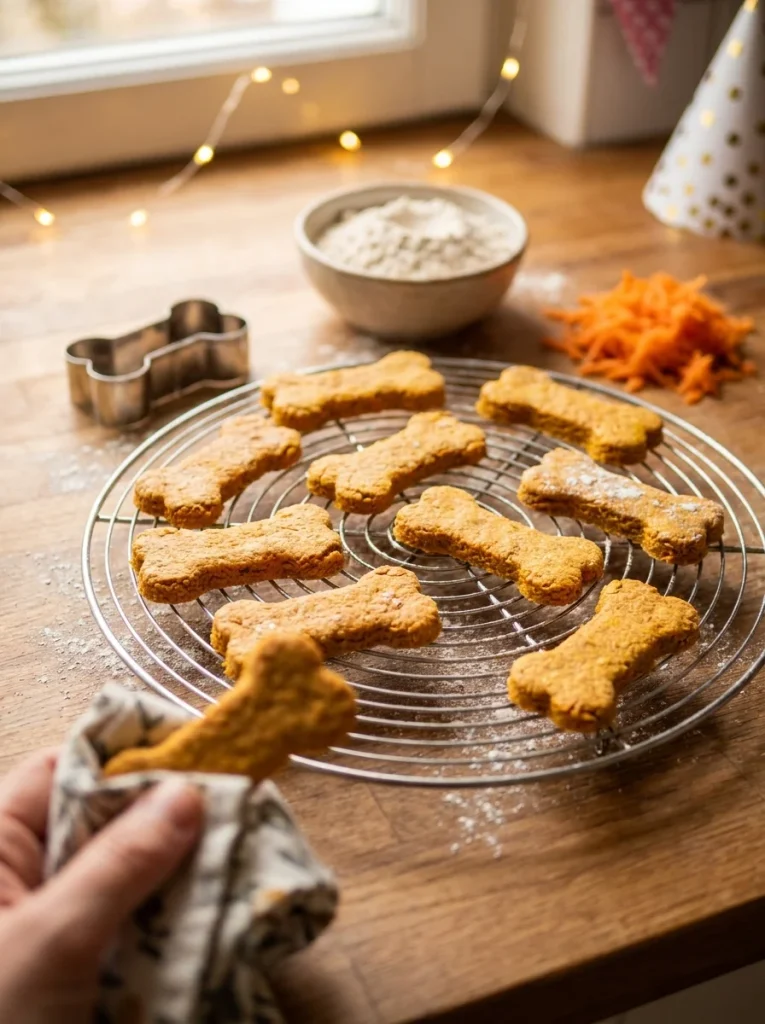
Best for: Dog birthday parties, gift bags, and treat jars.
Baked Carrot and Sweet Potato Bone Chews
Prep Time: 25 minutes
Bake Time: 25 to 30 minutes
Freeze Time: None (optional, for storage)
Yield: About 24 small bones
Ingredients:
- 1 cup cooked, mashed sweet potato
- ½ cup finely grated carrot
- 1½ cups oat flour (or whole wheat flour, if your dog tolerates wheat)
- 1 egg
- 2 to 4 tablespoons water, as needed
Instructions:
- Preheat the oven to 350°F (175°C). Line a baking sheet with parchment paper.
- Mix the sweet potato, carrot, and egg in a large bowl.
- Stir in the flour a little at a time until a firm dough forms.
- Add water a tablespoon at a time only if the dough is too crumbly.
- Roll the dough out to ½ inch thick on a floured surface.
- Cut out shapes with a bone-shaped cookie cutter.
- Bake for 25 to 30 minutes, until the edges are golden and firm.
- Cool fully on a wire rack. They’ll harden more as they cool.
Notes:
- Oat flour is easy to make by blitzing plain rolled oats in a blender.
- For a crunchier biscuit, turn the oven off after baking and leave them inside for an hour.
- Since these contain egg, keep them refrigerated.
Looking for more baking ideas? Our roundup of homemade dog treat recipes has plenty of options to try next. And if your dog loves bone shapes, see how the dog bones treat guide compares.
Quick tip: Dip your cookie cutter in flour between cuts. It stops the sticky dough from clinging.
6. 3 Flavor Boosts for Any Recipe
Once you’ve got the basics down, small changes keep things interesting. Each of these ingredient swaps works with the frozen, baked, or bone-shaped recipes.
Best for: Picky eaters and dogs who get bored easily.
A. The Peanut Butter Twist
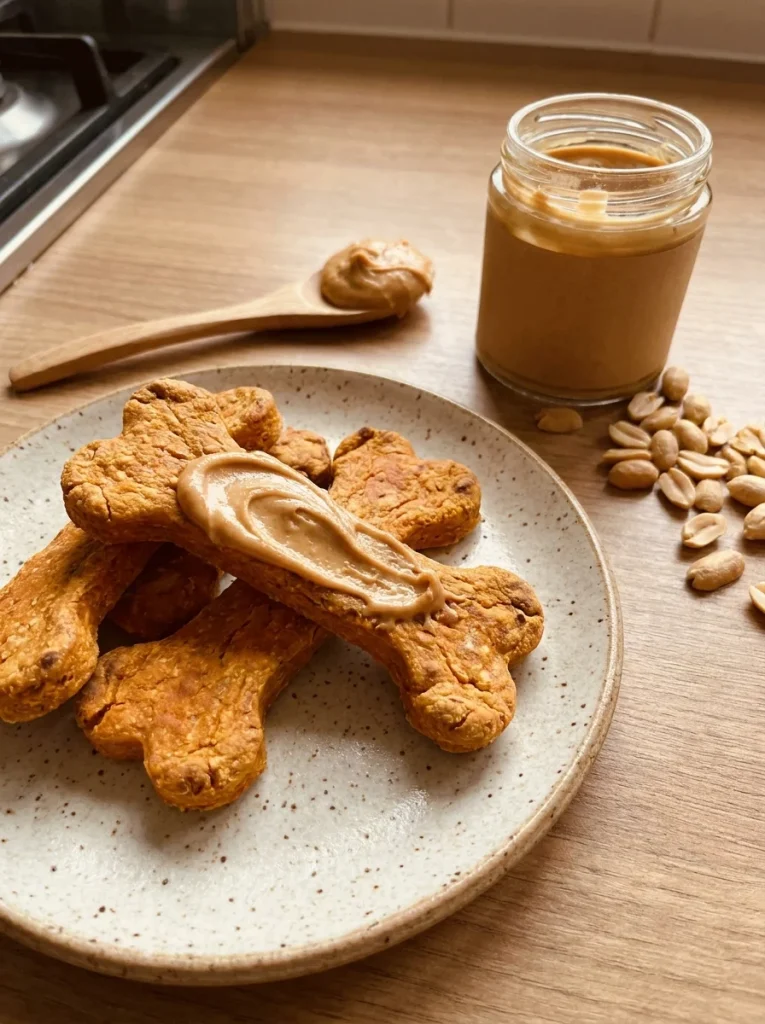
Stir 2 tablespoons of natural peanut butter into the puree or dough. Peanut butter adds richness that most dogs adore.
Safety check: Read the label carefully. Xylitol, a sweetener sometimes found in peanut butter, is highly toxic to dogs. Choose a brand with only peanuts, or peanuts and salt.
B. The Apple-Cinnamon Twist
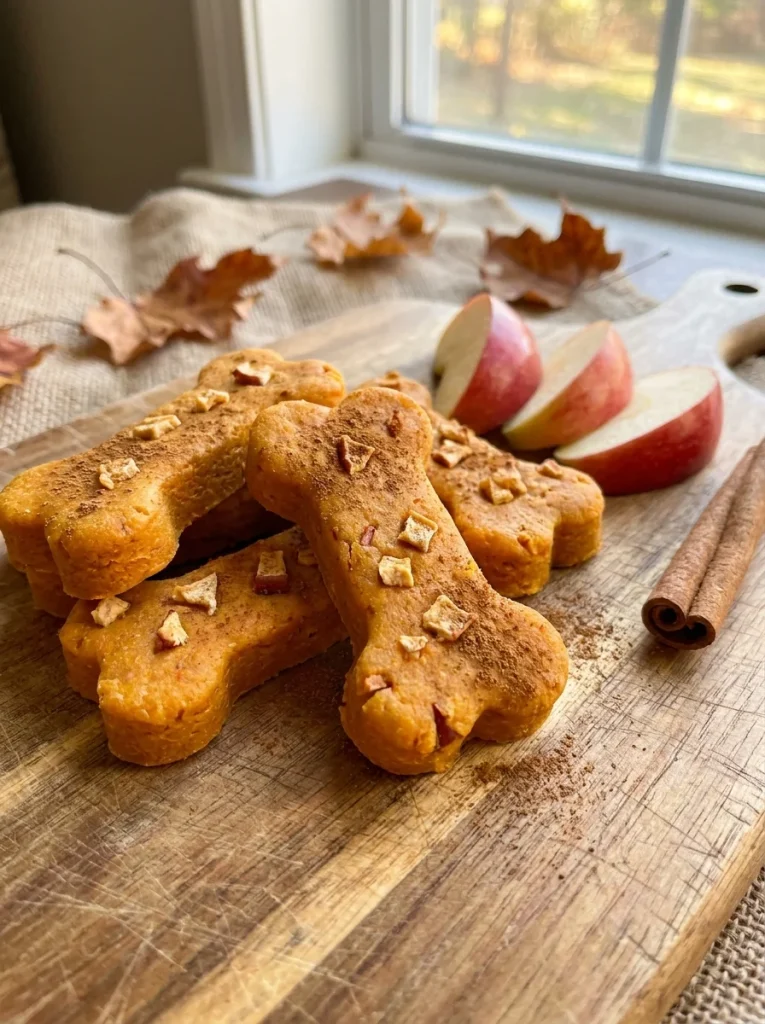
Add ¼ cup of finely grated apple (no seeds, no core) and a small pinch of ground cinnamon. It gives the treats a warm, dessert-like smell that dogs enjoy.
Safety check: Use only a tiny pinch of true cinnamon. Never use nutmeg, which is toxic to dogs. Skip cinnamon entirely if your dog has a sensitive stomach.
C. The Pumpkin-Oat Twist
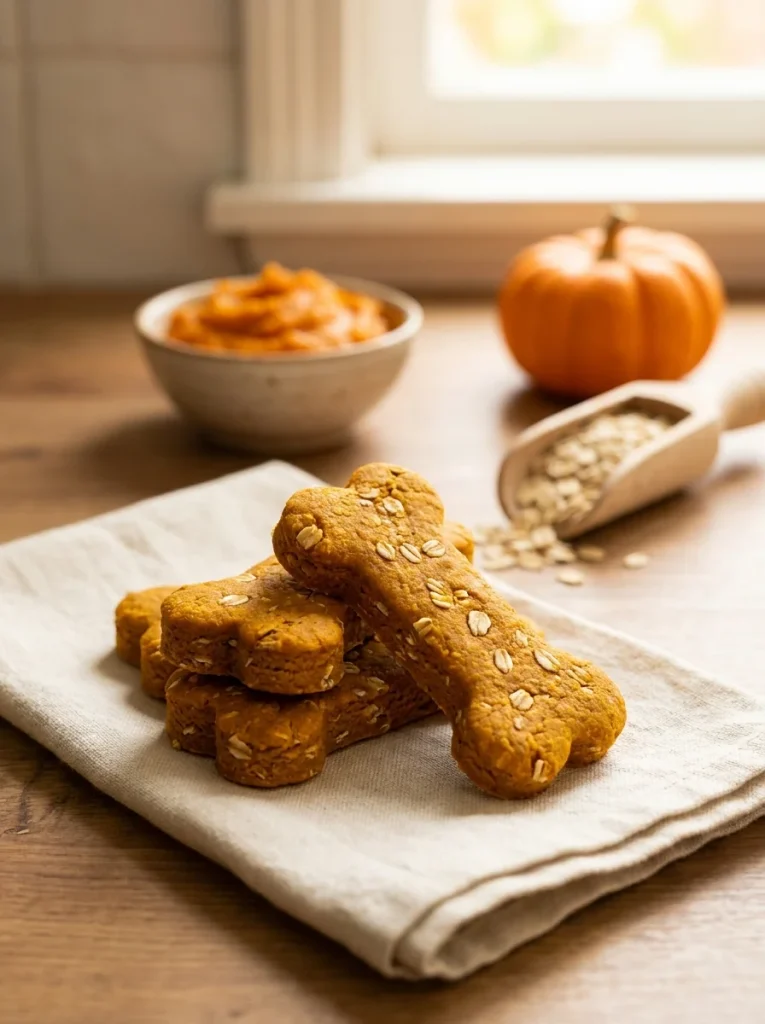
Mix in ¼ cup of plain canned pumpkin (not pie filling) and 2 tablespoons of rolled oats. This adds fiber and a softer texture, and it’s gentle on many dogs’ tummies.
Safety check: Check the can. It should say 100% pumpkin, with no added sugar or spices.
Bonus: Fresh Parsley for Breath
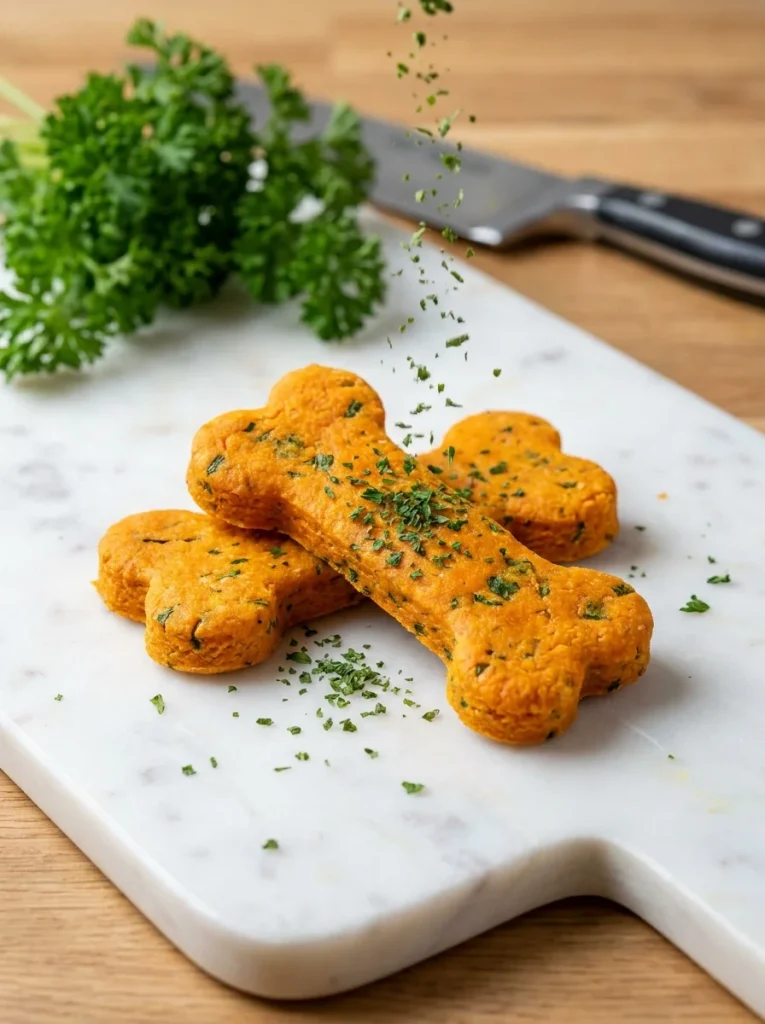
Want fresher breath? Mix in 1 teaspoon of finely chopped curly parsley per batch. Use small amounts only, since large quantities aren’t good for dogs.
Quick tip: Change only one ingredient at a time. If your dog has an upset stomach, you’ll know exactly what caused it.
7. Troubleshooting Common Problems
Even simple recipes go sideways sometimes. Here’s how to fix the most common issues without wasting a batch.
Best for: Anyone whose chews didn’t turn out quite right.
A. Too Sticky
Why it happens: Sweet potatoes hold a lot of water, and the puree or dough is too wet.
The fix:
- For puree, cook the vegetables a little longer and drain them well.
- For dough, add flour one tablespoon at a time.
- For strips, bake longer at low heat and spread pieces farther apart.
B. Too Hard for Small Teeth
Why it happens: Over-drying, or slices that are too thin.
The fix:
- Place hard chews in a sealed container with a slice of apple overnight. They absorb moisture and soften slightly.
- Next time, pull them from the oven or dehydrator earlier.
- For tiny dogs, cut chews into smaller, bite-safe pieces.
C. Moldy or Soggy Chews
Why it happens: Moisture was left inside, or the chews were stored while still warm.
The fix:
- Always cool completely before sealing a container.
- Throw away any chew with fuzzy spots, a sour smell, or a slimy feel. Don’t try to rescue it.
- Dry chews for longer next time, or store them in the freezer instead.
D. Bland or Boring Flavor
Why it happens: Plain vegetables are mild.
The fix: Try one of the flavor boosts in Section 6. A small amount of peanut butter or pumpkin makes a big difference.
Quick tip: Keep a small notebook of what you changed each time. In a few batches, you’ll know your perfect recipe by heart.
8. Safe Serving and Storage Guide
Homemade doesn’t mean risk-free. A few simple habits keep treats safe and fresh.
Best for: Every dog owner, before serving the first chew.
A. How Much Is Too Much?
Treats should make up no more than 10% of your dog’s daily calories. Sweet potatoes are high in natural sugar and carbs, so small servings matter.
Here’s a rough guide:
| Dog Size | Weight | Chews Per Day |
|---|---|---|
| Toy | Under 10 lbs | 1 small chew |
| Small | 10 to 25 lbs | 1 to 2 small chews |
| Medium | 25 to 50 lbs | 2 to 3 chews |
| Large | 50+ lbs | 3 to 4 chews |
Start with less if your dog has never had these ingredients. Too much fiber too fast can cause gas or loose stools. Dogs with diabetes, weight problems, or kidney issues should only get new treats after your vet approves. Our puppy veterinary needs guide is a good place to see what to ask at your next visit.
B. Supervision and Choking Risks
Always watch your dog while they chew. Follow these rules:
- Cook sweet potatoes before serving. Never give raw sweet potato.
- Cut chews to a size that suits your dog. Bigger dogs can still gulp small pieces.
- Take away small leftover pieces that could be swallowed whole.
- Never give rock-hard frozen chews to dogs with dental problems.
Raw carrots are generally safe, but large hard chunks can still be a choking hazard for small dogs.
C. Storage and Shelf Life
Here’s how long each type stays fresh:
| Chew Type | Room Temp | Fridge | Freezer |
|---|---|---|---|
| Frozen puree chews | Not suitable | 2 to 3 days | Up to 3 months |
| Baked strips | 3 to 5 days | 2 weeks | Up to 3 months |
| Dehydrated chews | 1 to 2 weeks | 3 to 4 weeks | Up to 6 months |
| Air fryer chews | 2 to 3 days | 1 week | Up to 2 months |
| Bone-shaped (with egg) | Not recommended | 5 to 7 days | Up to 3 months |
Use airtight containers or freezer bags. Label each with the date. If you keep treats within reach at home, a dog treat station keeps everything neat and easy to grab.
D. Use Treats to Build Good Habits
These chews make great rewards. Small strips are perfect for training because they’re soft and quick to eat. If you’re curious how rewards fit into a training plan, read about positive reinforcement versus traditional training.
Quick tip: Treats are a bonus, not a meal. If your dog eats homemade chews regularly, keep their main diet balanced. Our homemade dog food recipes can help.
9. Why Carrots and Sweet Potatoes? (The Short Version)
You don’t need a science degree to see why these two ingredients are popular. Here’s the quick rundown.
A. What Carrots Bring
Carrots are low in calories and rich in fiber. They also contain beta-carotene, which the body turns into vitamin A. Crunching on them can also help scrape the surface of your dog’s teeth.
B. What Sweet Potatoes Bring
Sweet potatoes provide fiber, vitamins, and a naturally sweet taste dogs love. Fiber can support healthy digestion when given in moderation. They’re also filling without being heavy.
C. A Reminder About Balance
These are healthy extras, not a complete diet. Feed them in small amounts alongside your dog’s regular food. Every dog is different, so talk to your vet if your dog has special health needs.
Quick tip: Buy organic if it fits your budget, and always wash and peel vegetables well before cooking.
Conclusion: Start With One Batch Today
Making homemade carrot and sweet potato chews for dogs is easier than most people think. You need only two main ingredients, basic kitchen tools, and a little patience. Whether you go with frozen chews for summer, baked strips for seniors, dehydrated jerky for power chewers, or bone shapes for a party, there’s a style to fit every dog.
Here’s a simple game plan:
- Start with the frozen base recipe from Section 2.
- Try one flavor boost from Section 6.
- Store your chews using the guide in Section 8.
- Watch how your dog reacts, and adjust from there.
Your dog will thank you with a wagging tail, and you’ll know exactly what’s in every bite. Grab a sweet potato, put on your apron, and give it a try this weekend.

Izzy is an experienced ranch worker who has a passion for exploring nature and getting up close to wildlife. With her connections to various animal organizations, Izzy is well-versed in animal care and rehabilitation.