Peanut Butter Honey Dog Treats That Skip the Oven — No-Bake Balls in Minutes
Peanut butter honey dog treats are one of the most reliably accepted snacks in the canine world because the scent is powerful and the texture is satisfying. This guide focuses on making Peanut Butter Honey Dog Treats that are sturdy, safe, and scaled for actual dog consumption rather than human baking standards. The recipes here prioritize xylitol-free ingredients, strict honey limits, and textures that do not dissolve in the mouth. The method is designed for kitchen counters and cooling racks, not for human dining tables, ensuring the final product is safe, durable, and easy to portion for dogs of various sizes.
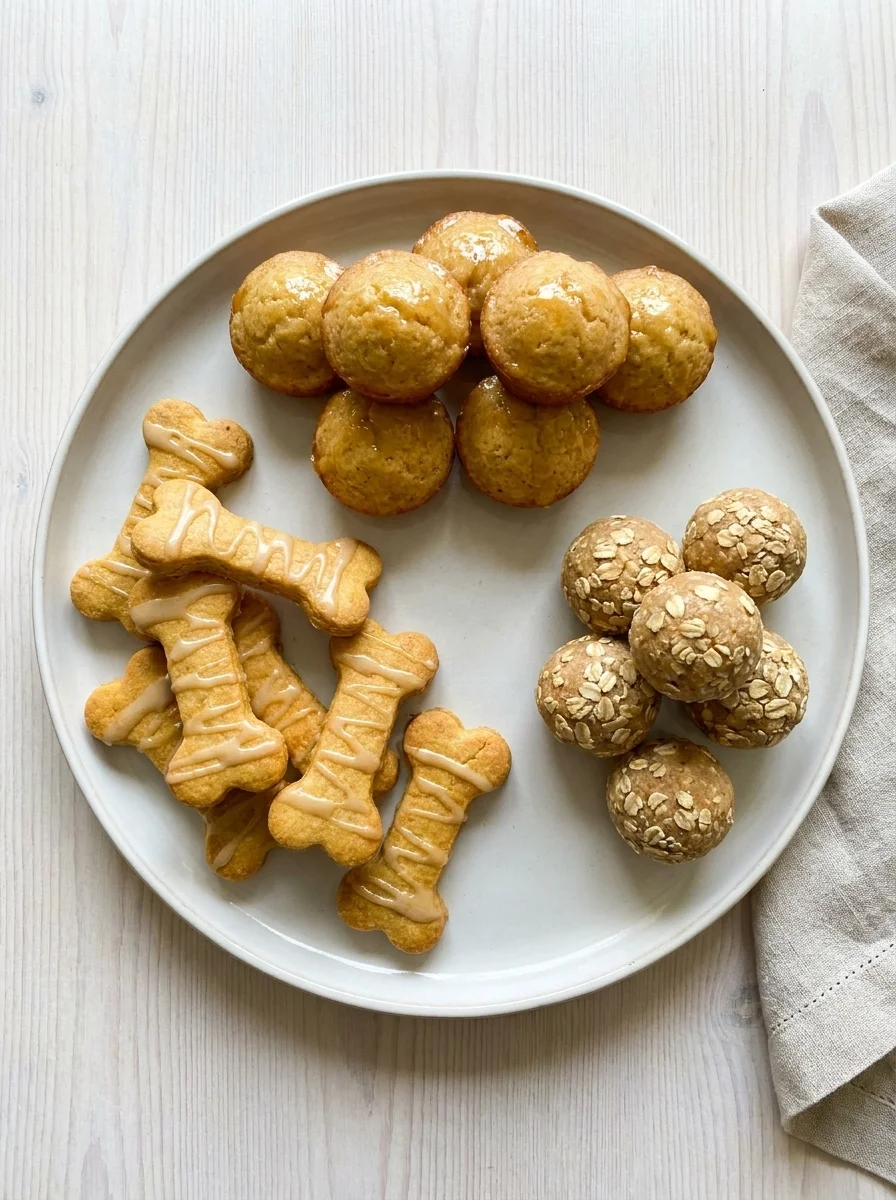
The Method: Mix, Roll, Bake — or Skip the Oven
The foundation of good dog treats is the ratio of binder to filler. Peanut butter acts as a high-fat binder that creates a dense crumb, while honey adds moisture and a mild adhesive quality. In baked applications, you are looking for a dough that is moist enough to knead but dry enough to hold a shape on parchment paper. The key is patience. If you want a quicker alternative that requires no mixing or rolling, check out our guide on 3-ingredient no-bake peanut butter dog treats for a simpler baseline. The method section here assumes you are ready to commit to the full batch process for longer shelf stability.
Getting the Honey Right: Sweetness Without Stickiness
Honey is not just a sweetener in dog treats; it is a hygroscopic agent that pulls moisture into the crumb. In this guide, the maximum honey amount is strictly capped at two tablespoons per batch. Honey is not suitable for puppies under one year of age because the risk of botulism spores in raw honey is a concern for developing immune systems. It is also not appropriate for immunocompromised dogs. If you have a young dog or a senior with a compromised immune system, you should substitute the honey with a small amount of unsweetened applesauce or pumpkin puree. For a similar sticky texture without the sugar risk, see this recipe which uses yogurt as the binding agent.
Recipe 1: Classic Peanut Butter Honey Biscuits
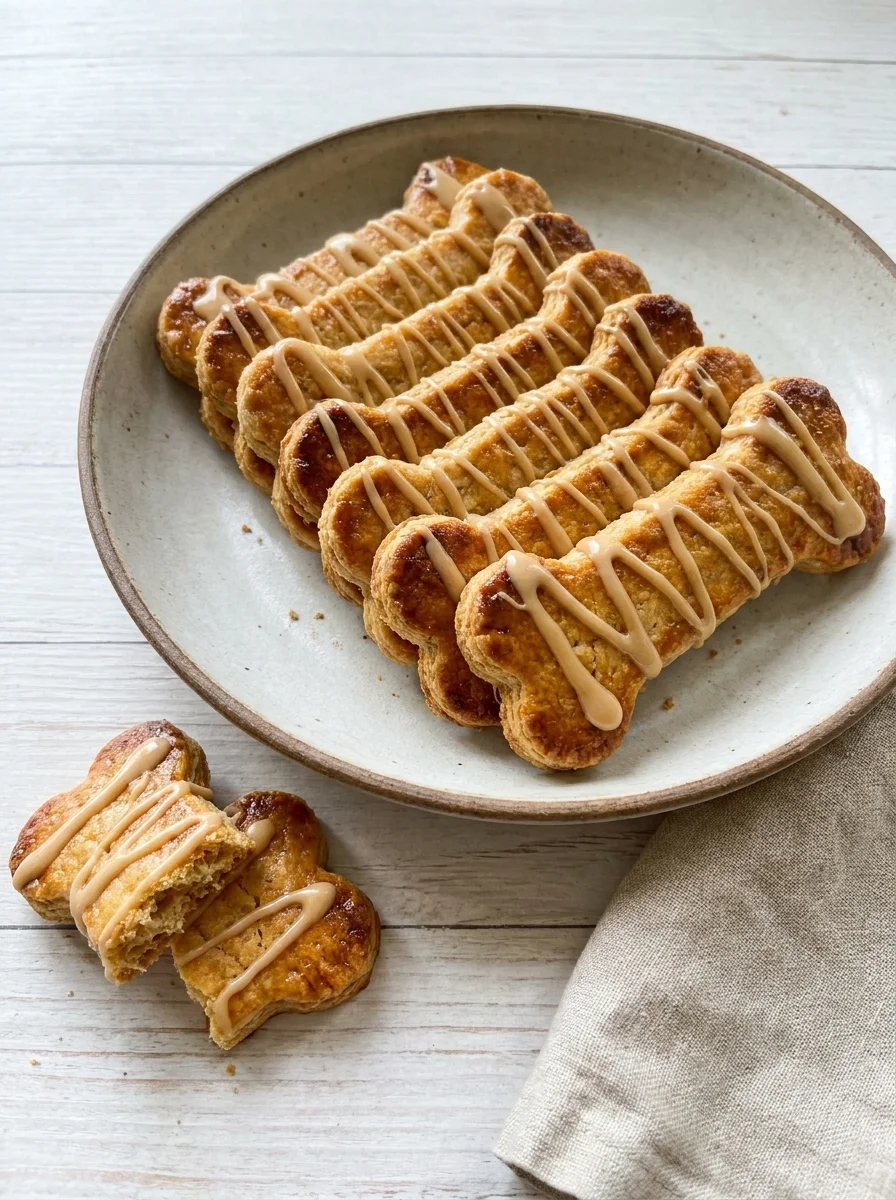
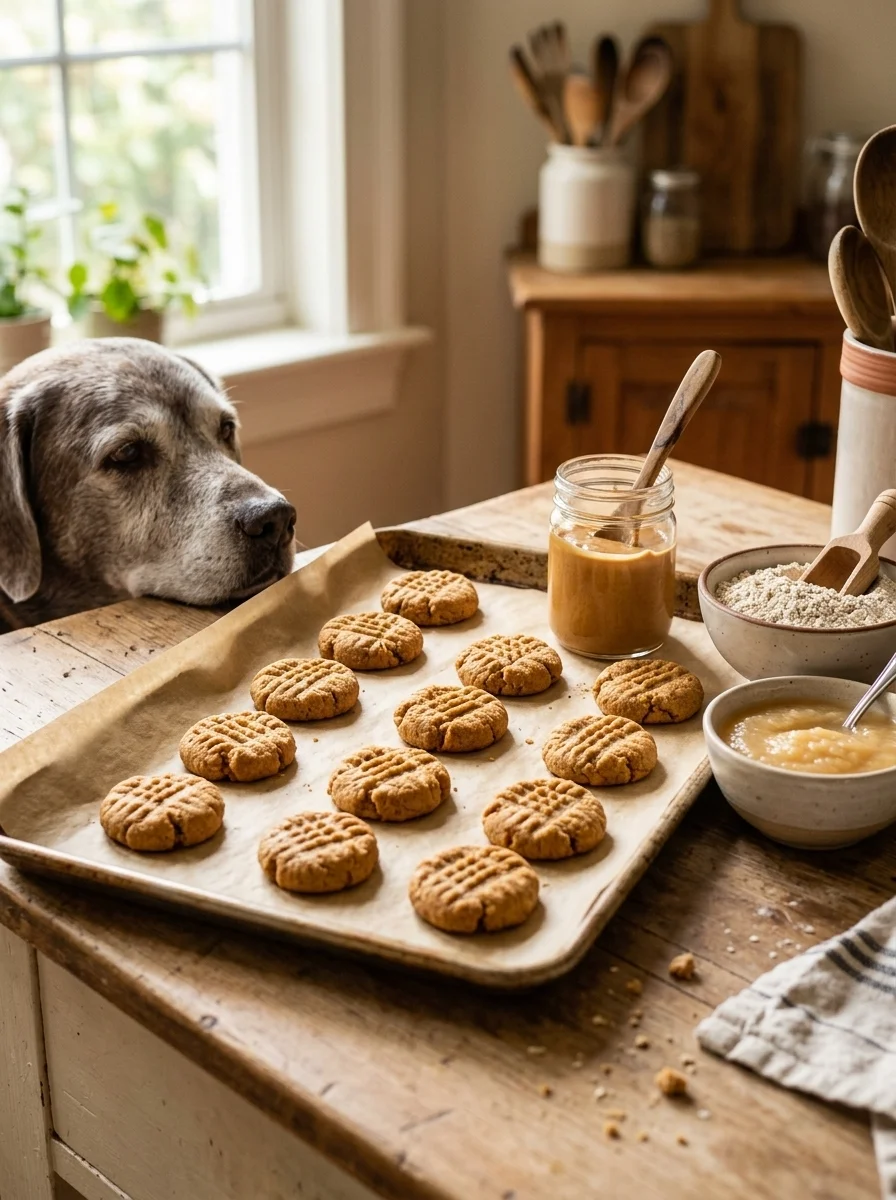
This is the benchmark recipe for Peanut Butter Honey Dog Treats that require a firmer texture suitable for training or for dogs who chew slowly. The biscuits are dense, which means they last longer in the mouth and provide a satisfying chew.
Ingredients
- 2 1/2 cups whole wheat flour
- 1 large egg
- 1 cup natural peanut butter (xylitol-free only)
- 1 cup water
- 2 tablespoons pure honey
- Frosting (PB-honey drizzle)
- 2 tablespoons natural peanut butter (xylitol-free only)
- 1 tablespoon pure honey
- 1/3 cup cornstarch
- 4 tablespoons hot water
Step-by-Step Instructions
- Preheat the oven to 350 degrees F and line two baking sheets with parchment paper, ensuring the sheets are placed on the lower racks to avoid excessive browning on the top surfaces.
- In a large mixing bowl, combine the 1 cup of natural peanut butter (verify the label has no xylitol or birch sugar listed), 1 cup of water, 1 large egg, and 2 tablespoons of pure honey, mixing with a whisk until the mixture is completely smooth and no peanut butter clumps remain.
- Add the 2 1/2 cups of whole wheat flour to the wet mixture and use a wooden spoon or sturdy spatula to fold the ingredients together until a shaggy, stiff dough forms that pulls away from the sides of the bowl.
- Turn the dough onto a lightly floured surface and knead for exactly one minute, adding small pinches of flour if the dough is too sticky, until it forms a cohesive ball that is firm but not crumbly.
- Roll the dough out to a uniform thickness of 1/2 inch and use a 2-inch round cookie cutter or the rim of a small glass to stamp out 24 biscuits, returning the scraps to the rolling process to maximize yield.
- Place the biscuits on the prepared baking sheets with 1 inch of space between each to allow for air circulation and even heat distribution during the baking process.
- Bake for 18 to 20 minutes, checking for doneness by pressing the center of a biscuit with a finger; it should feel firm and springy, not soft, and the edges should be lightly golden brown.
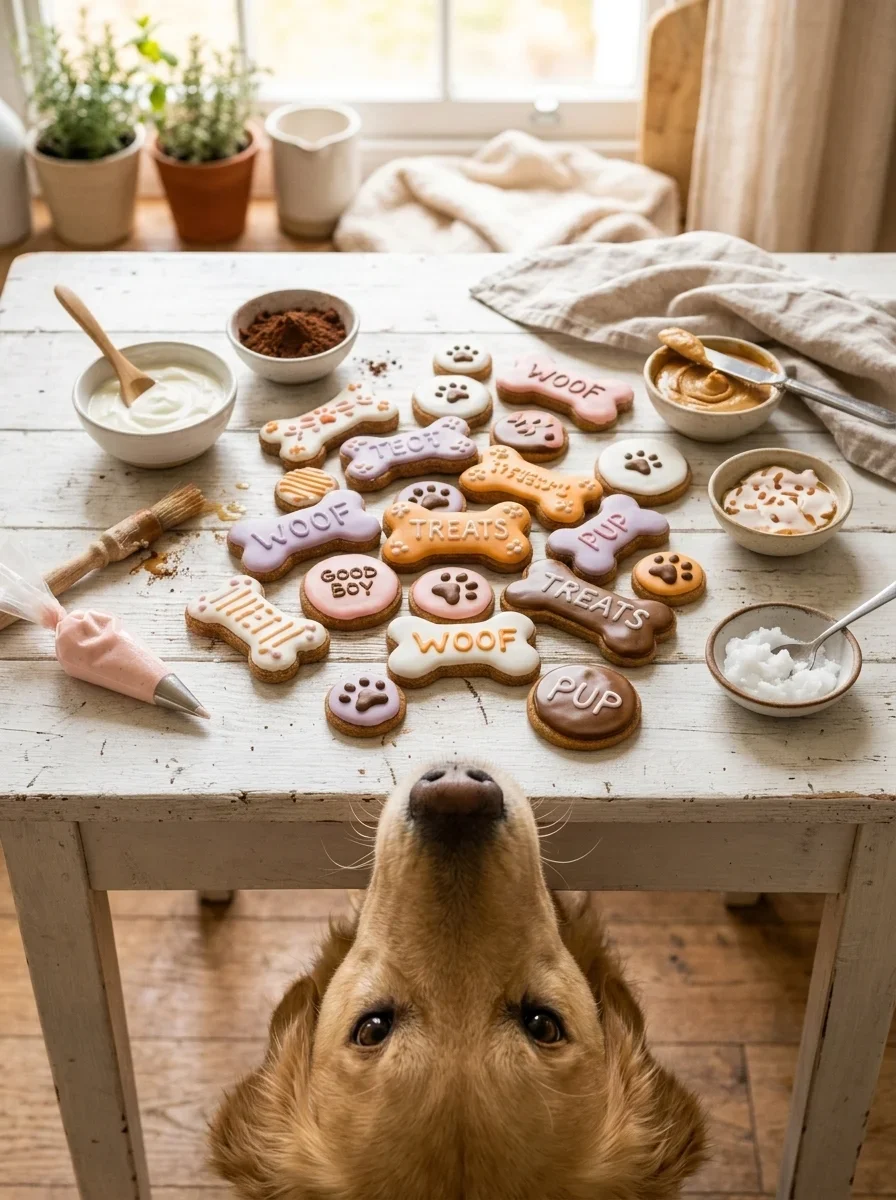
- Transfer the biscuits to the pan for the drizzle immediately after baking, where you will mix 2 tablespoons of xylitol-free peanut butter, 1 tablespoon of pure honey, 1/3 cup of cornstarch, and 4 tablespoons of hot water, whisking vigorously until the cornstarch is fully dissolved and the mixture is smooth.
- Drizzle the warm frosting mixture over the hot biscuits, letting it soak into the surface before moving the treats to a wire rack to cool for 15 minutes until they are completely hard to the touch.
The final product should be crisp on the outside but chewy in the center. If the biscuits are too soft after cooling, they may have been under-baked. You can serve these in a dog bowl or hand them directly as a high-value reward. For a more festive presentation that is still entirely dog-safe, try our peanut butter dog cake with bacon for special occasions, but these biscuits remain the daily standard.
More Peanut Butter Honey Dog Treats
Sometimes the goal is not a long-lasting chew but a quick, high-energy reward for fast-moving dogs or as a “lure” during fetch or agility training. Both recipes maintain the critical safety parameters: no xylitol, limited honey, and no toxic ingredients like onion or garlic.
Variation 1: No-Bake Peanut Butter Honey Balls
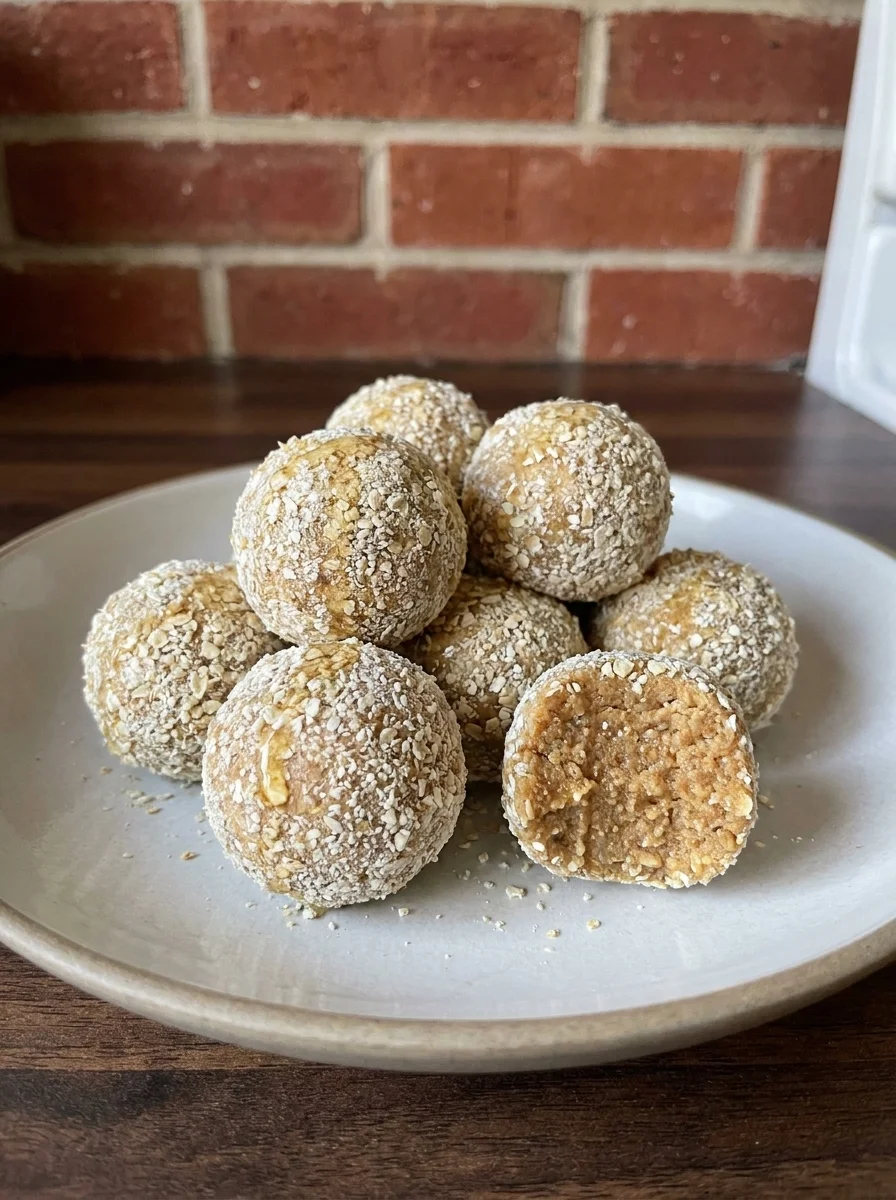
This method is ideal for hot days or when the oven is occupied. Instead, the mixture hardens as the fats in the peanut butter and coconut oil cool to room temperature. Because of this density, the portion size is significantly smaller than the baked biscuits. The chilling time is non-negotiable; if the balls are served warm, they will crumble or become too soft to handle.
Ingredients
- 1 cup rolled oats, finely ground
- 1/2 cup natural peanut butter (xylitol-free only)
- 1/4 cup pure honey
- 1/4 cup plain unsweetened applesauce
- 1 teaspoon coconut oil, melted
Step-by-Step Instructions
- Pulse the 1 cup of rolled oats in a food processor for 30 seconds until they reach a coarse, sand-like texture that is not a fine powder but is significantly smaller than whole flakes.
- Combine the ground oats with 1/2 cup of xylitol-free natural peanut butter, 1/4 cup of pure honey, 1/4 cup of plain unsweetened applesauce, and 1 teaspoon of melted coconut oil in a medium mixing bowl.
- Use a heavy-duty spoon or a silicone spatula to mix the ingredients until they form a uniform, thick paste that clumps together when pressed.
- Use wet hands or a spoon to scoop 1.5-tablespoon portions of the mixture and roll them between your palms into tight, smooth spheres, aiming for a consistent grape-sized diameter to ensure even chilling.
- Place the formed balls on a parchment-lined tray with space between them and transfer the tray to the refrigerator.
- Chill the balls for a minimum of 30 minutes, or until the outer shell is hard to the touch and the center no longer feels cool and soft to a gentle press.
The finish should be matte and firm, not glossy or tacky. If the surface feels sticky after 30 minutes, chill for another 15. For other quick fixes that do not require any chilling, look at our list of 5 minute dog treats which are designed to be eaten immediately upon mixing.
Variation 2: Banana Peanut Butter Honey Biscuits
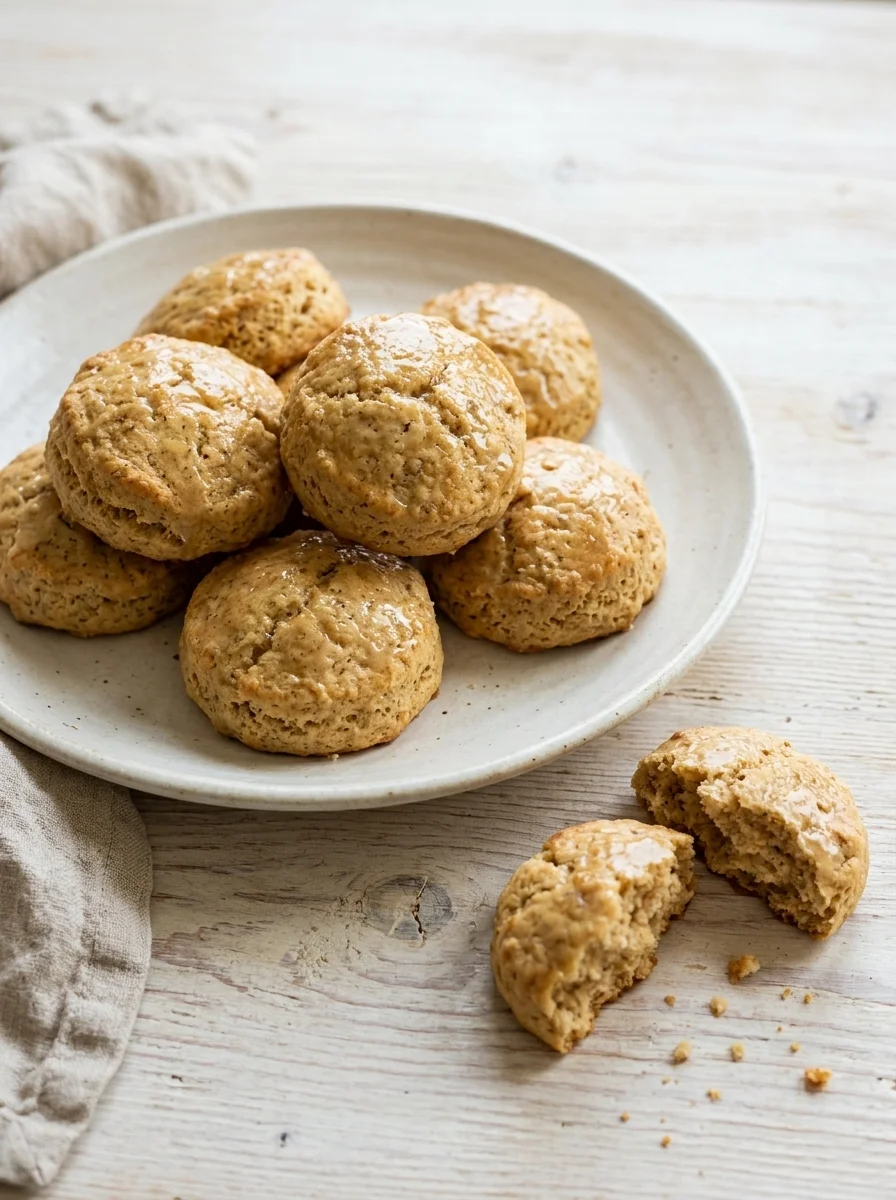
This recipe uses oat flour to create a gluten-free option that is softer and moister than the classic wheat version. The mashed banana adds its own natural sweetness and pectin, which helps the dough hold together with less mechanical kneading. The honey here is strictly a flavor enhancer, and its quantity is small enough to keep the sugar load manageable. The baking time is slightly shorter because oat flour burns faster than wheat flour at the same temperature. The result is a biscuit that is tender but sturdy, perfect for older dogs with dental issues who cannot manage the crisper texture of the classic biscuits.
Ingredients
- 2 1/2 cups oat flour
- 1/2 teaspoon baking powder
- 1 ripe banana, mashed
- 1 large egg
- 2 tablespoons natural peanut butter (xylitol-free only)
- 2 tablespoons pure honey
Step-by-Step Instructions
- Preheat the oven to 350 degrees F and place a rack in the center, lining a baking sheet with parchment paper.
- Mash 1 ripe banana until it is completely smooth with no large chunks, then stir in 2 tablespoons of xylitol-free natural peanut butter and 2 tablespoons of pure honey until the mixture is uniform.
- Whisk 1 large egg into the banana-peanut butter mixture, ensuring it is fully incorporated and the color is consistent throughout the wet base.
- In a separate bowl, combine 2 1/2 cups of oat flour and 1/2 teaspoon of baking powder, stirring to distribute the leavening agent evenly.
- Pour the wet mixture into the dry ingredients and mix with a fork or sturdy spoon until a wet, sticky dough forms, which will be more fluid than the classic biscuit dough.
- Drop spoonfuls of the dough onto the prepared baking sheet, spacing them 2 inches apart, and use the back of a spoon to gently flatten each into a 1.5-inch round.
- Bake for 15 to 18 minutes, watching for the edges to turn a light golden brown; the biscuits are done when they feel firm to a gentle tap but still have a slight center give.
- Allow the biscuits to rest on the pan for 5 minutes before transferring to a cooling rack to set their shape completely.
These biscuits will shatter more easily than the wheat version, so store them in a rigid container. If you need a softer alternative for very senior dogs, see our banana oatmeal dog treats recipe which is designed to be soaked in warm water before serving.
Serving by Dog Size
For a small dog under 15 pounds, the whole grape-sized no-bake ball is the maximum appropriate size. For medium dogs (15 to 50 pounds), the classic biscuits are ideally sized, but they should be broken in half to prevent accidental swallowing of the whole piece. For large dogs over 50 pounds, the whole classic biscuit is a reasonable single serving, but because the calorie density is high, you should limit them to two per day. Always serve treats in a stable, non-slip bowl placed on a mat on the floor.
Storage and Freezing
At room temperature, these treats should be stored in an airtight container in a cool, dark pantry for no more than two weeks. For longer storage, freeze the treats. Place them in a single layer on a parchment-lined baking sheet and freeze for 30 minutes to prevent them from sticking together. Then, transfer the frozen treats to a heavy-duty freezer bag, removing as much air as possible. They will keep for three months in the freezer. Thaw them on the counter for 10 minutes before serving; do not microwave them, as this will make the exterior hard and the center moist.
Troubleshooting
The most common issue with these recipes is a sticky dough that will not hold its shape. This is almost always a sign that the peanut butter used contains too much oil separation. If your natural peanut butter has a thick layer of oil on top, you must stir the entire jar and measure the ingredients carefully, using the packed solid peanut butter and not the liquid oil for the binding. If the dough is still too wet, add one tablespoon of flour at a time, kneading in between each addition. Another problem is biscuits that are too hard. This happens if you bake them past the 20-minute mark. The goal is golden brown, not dark brown. If the no-bake balls are falling apart, the oats were not ground fine enough. Use a finer, almost powder-like grind for the no-bake version to ensure the balls bind together properly.
Frequently Asked Questions
Final Thoughts
Making Peanut Butter Honey Dog Treats at home gives you complete control over the ingredient list, eliminating the risk of accidental xylitol ingestion. Stick to the honey limits to protect your dog’s metabolic health, and scale the portions to match your dog’s size and activity level. These treats are a high-value reward that should be used strategically, not as a substitute for a balanced diet.

Izzy is an experienced ranch worker who has a passion for exploring nature and getting up close to wildlife. With her connections to various animal organizations, Izzy is well-versed in animal care and rehabilitation.