
Canned Salmon Dog Food Recipes Explained: Formats, Variations & Tips
If your dog turns their nose up at dry kibble but goes wild for anything fishy, canned salmon dog food recipes might be exactly what your kitchen has been missing. Canned salmon is affordable, already cooked, easy to store, and packed with the kind of protein and healthy fats that dogs actually crave. Best of all, you don’t need to be a professional chef or spend hours in the kitchen to make it work.
This guide walks you through everything you need to start cooking canned salmon dog food recipes today. You’ll get a reliable base recipe, five different ways to serve it depending on your schedule and your dog’s preferences, three tasty ingredient variations, and practical tips to keep meals balanced and safe. Recipe content comes first because that’s what you’re really here for — the background information is saved for the end, in case you want it.
Let’s get your dog’s bowl filled with something they’ll actually be excited about.
The Base Canned Salmon Dog Food Recipe
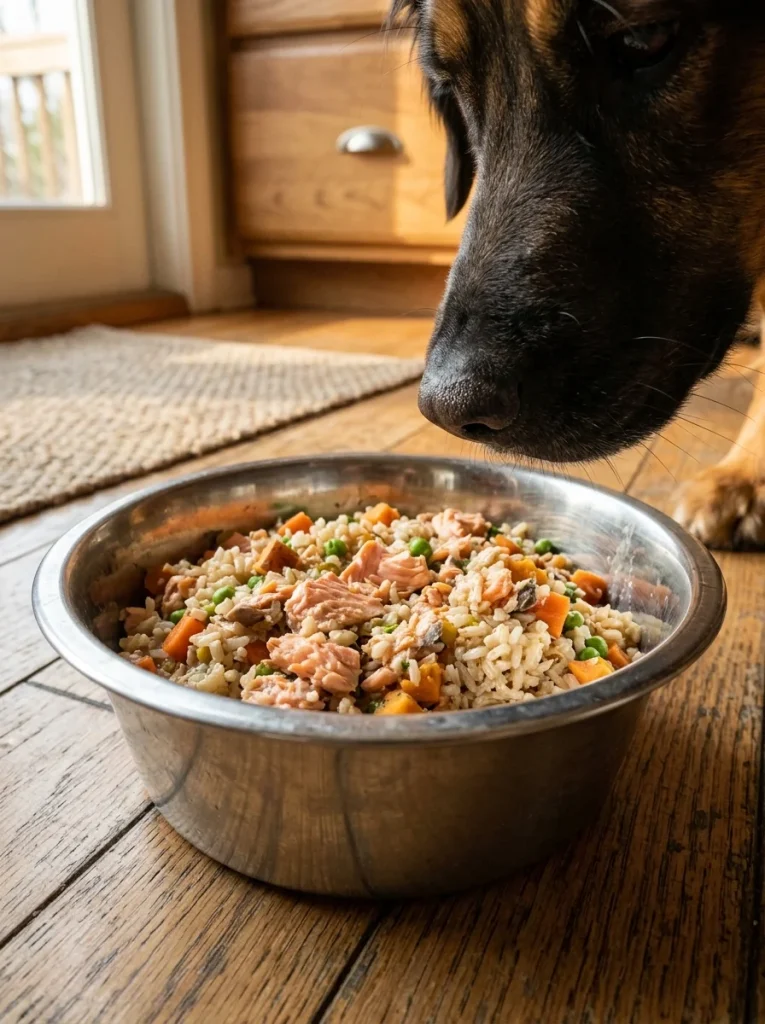
This is the recipe to start with. It’s simple, uses ingredients you probably already have, and takes less than 30 minutes from start to finish. Once you’ve made it a couple of times, you’ll be able to whip it up without even glancing at the instructions.
1. Ingredients You’ll Need
The beauty of this recipe is how few ingredients it calls for. Every item plays a role, whether that’s protein, fiber, or binding the mixture together.
- 1 can (14.75 oz) of salmon, packed in water, undrained
- 1 cup cooked white or brown rice
- 1/2 cup cooked, mashed sweet potato
- 1/2 cup steamed green beans, chopped
- 1 large egg, beaten
- 1 tablespoon olive oil or fish oil
Skip canned salmon that’s packed in oil, brine, or seasoned varieties made for human snacking. Plain, water-packed salmon is the safest option because it avoids added salt and spices that dogs don’t need.
2. Step-by-Step Instructions
Cooking this dish is mostly about combining ingredients rather than actual cooking, since the salmon and rice are already prepared.
- Drain excess liquid from the canned salmon, but don’t rinse it completely — a little moisture helps bind the mixture.
- Flake the salmon with a fork, removing any large bones if you prefer (small, soft canned salmon bones are generally safe and full of calcium, but you can remove them if your dog is sensitive).
- In a large mixing bowl, combine the flaked salmon, cooked rice, mashed sweet potato, and chopped green beans.
- Stir in the beaten egg and olive oil until everything is evenly coated.
- Let the mixture cool to room temperature before serving.
- Portion according to your dog’s size and store the rest in the refrigerator or freezer.
That’s the whole process. No stovetop cooking is required unless you want to lightly warm the mixture for extra aroma, which can help entice picky eaters.
3. Storage & Freezing Tips
Homemade dog food doesn’t have the preservatives that keep store-bought food shelf-stable, so storage matters more than you might think.
Refrigerate the finished mixture in an airtight container for up to 3 days. For longer storage, portion it into freezer-safe containers or silicone molds and freeze for up to 2 months. Thaw overnight in the refrigerator before serving, and never leave portions sitting out at room temperature for more than an hour.
If you’re setting up a regular home-cooking routine, it also helps to organize a dedicated spot for your dog’s meals and supplies — some ideas for a dog feeding station can make daily prep and cleanup a lot smoother.
RECIPE CARD: Base Canned Salmon Dog Food
Prep Time: 15 minutes Cook Time: None (assembly only) Freeze Time: Up to 2 months Yield: Approximately 4 cups (8-10 servings, depending on dog size)
Ingredients:
- 1 can (14.75 oz) salmon, packed in water, undrained
- 1 cup cooked white or brown rice
- 1/2 cup cooked, mashed sweet potato
- 1/2 cup steamed green beans, chopped
- 1 large egg, beaten
- 1 tablespoon olive oil or fish oil
Instructions:
- Drain excess liquid from the salmon, leaving a small amount of moisture.
- Flake the salmon with a fork; remove large bones if desired.
- Combine salmon, rice, sweet potato, and green beans in a large bowl.
- Mix in the beaten egg and olive oil until fully combined.
- Cool to room temperature before serving.
- Portion and store immediately.
Notes: Use plain, unseasoned canned salmon only. Adjust portion size based on your dog’s weight — a general guideline is 2-3% of body weight per day, split across meals.
5 Ways to Serve Canned Salmon Dog Food
Once you’ve mastered the base recipe, you can adapt the format to match your schedule, your dog’s chewing habits, or the season. Below are five genuinely different formats, each solving a different problem — some are quick, some are make-ahead, and some double as treats.
A. Baked Salmon Patties

Patties are perfect for dogs who prefer something they can pick up and chew, and they’re a great way to portion meals in advance. This format shows up often in salmon recipes because it holds together well and freezes beautifully.
To make patties, combine the base recipe ingredients but reduce the liquid slightly (skip the extra olive oil) so the mixture holds its shape. Add 1/2 cup of breadcrumbs or oat flour as a binder. Shape into small patties about the size of a golf ball, flattened slightly. Place them on a parchment-lined baking sheet and bake at 375°F for 20 minutes, flipping halfway through.
RECIPE CARD: Baked Salmon Patties
Prep Time: 15 minutes Cook Time: 20 minutes Freeze Time: Up to 2 months Yield: 10-12 small patties
Ingredients:
- 1 can (14.75 oz) salmon, drained
- 1 cup cooked rice
- 1/2 cup mashed sweet potato
- 1/2 cup oat flour or breadcrumbs
- 1 large egg, beaten
Instructions:
- Preheat oven to 375°F and line a baking sheet with parchment paper.
- Combine all ingredients in a bowl and mix until a moldable dough forms.
- Shape into small, flattened patties.
- Bake for 20 minutes, flipping halfway through.
- Cool completely before serving or storing.
Notes: Patties can be broken into smaller pieces for small dogs or puppies. Freeze individually on a tray before transferring to a bag to prevent sticking.
B. Slow Cooker Salmon Stew
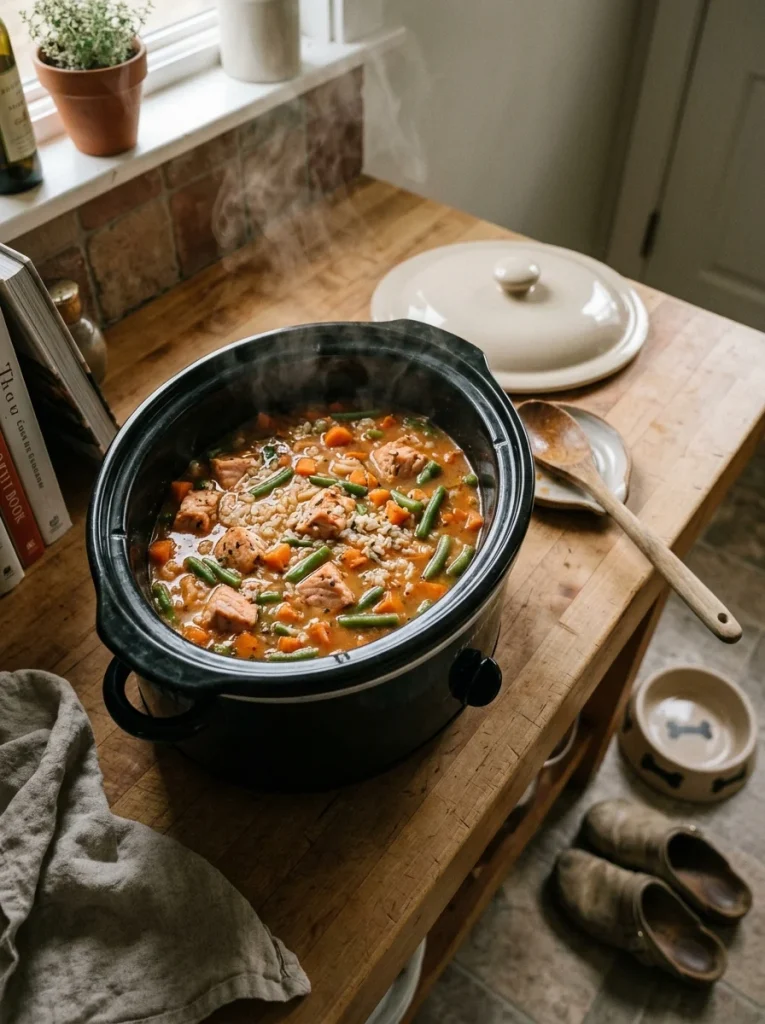
If you’d rather set it and forget it, a slow cooker version turns this into a hands-off meal that produces a soft, stew-like texture dogs with dental issues or seniors often prefer. This method is popular because it requires almost no active effort, and you can double or triple the batch for a week’s worth of meals.
Combine 2 cans of salmon (undrained), 2 cups of chopped vegetables (carrots, green beans, zucchini), 1 cup of rice or oats, and enough water or low-sodium broth to cover everything by an inch. Cook on low for 4 hours, stirring occasionally, then let cool before portioning.
For more ideas on this cooking method, our guide to slow cooker recipes for dogs covers other protein combinations worth trying.
RECIPE CARD: Slow Cooker Salmon Stew
Prep Time: 10 minutes Cook Time: 4 hours (low setting) Freeze Time: Up to 2 months Yield: Approximately 8 cups
Ingredients:
- 2 cans (14.75 oz each) salmon, undrained
- 2 cups chopped carrots, green beans, and zucchini
- 1 cup rice or rolled oats
- 2-3 cups water or low-sodium broth
Instructions:
- Add all ingredients to the slow cooker and stir gently.
- Cook on low for 4 hours, stirring once or twice.
- Let cool completely before serving.
- Portion into containers and refrigerate or freeze.
Notes: This stew has a soft texture that works well for senior dogs or dogs recovering from dental procedures.
C. No-Bake Mix Bowl

For days when you have zero time, a no-bake mix bowl is the fastest option available. It’s not meant for long-term storage, but it’s ideal for a quick, fresh meal.
Simply flake one can of salmon into a bowl, mix in a scoop of plain pumpkin puree, a spoonful of plain yogurt, and a handful of cooked rice. Stir and serve immediately. This format works best as an occasional topper or single-meal solution rather than a batch-prep option.
RECIPE CARD: No-Bake Salmon Mix Bowl
Prep Time: 5 minutes Cook Time: None Freeze Time: Not recommended (serve fresh) Yield: 1-2 servings
Ingredients:
- 1 can (14.75 oz) salmon, drained
- 2 tablespoons plain pumpkin puree
- 1 tablespoon plain yogurt
- 1/4 cup cooked rice
Instructions:
- Flake the salmon into a mixing bowl.
- Add pumpkin puree, yogurt, and rice.
- Stir until combined.
- Serve immediately at room temperature.
Notes: Best used the same day it’s made. Not intended for freezing due to the yogurt content.
D. Frozen Salmon Cubes
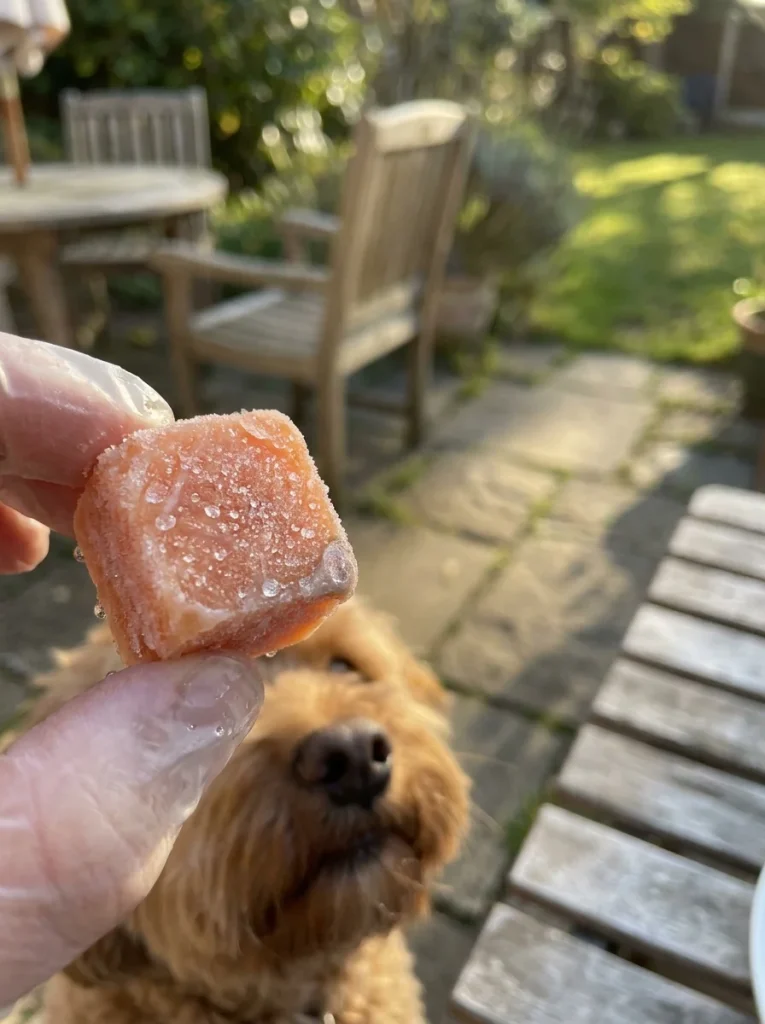
Frozen cubes are especially useful during warmer months, doubling as a cooling treat and a portioned meal topper. This format also works well for puzzle feeders and slow-feeding tools.
Blend one can of salmon (undrained) with 1/2 cup of plain yogurt or bone broth until smooth. Pour the mixture into an ice cube tray and freeze for at least 4 hours. Pop out cubes as needed.
RECIPE CARD: Frozen Salmon Cubes
Prep Time: 5 minutes Cook Time: None Freeze Time: 4 hours minimum Yield: 12-14 cubes (standard ice cube tray)
Ingredients:
- 1 can (14.75 oz) salmon, undrained
- 1/2 cup plain yogurt or low-sodium bone broth
Instructions:
- Blend salmon and yogurt or broth until smooth.
- Pour into an ice cube tray.
- Freeze for at least 4 hours or until solid.
- Pop out and serve one or two cubes as a treat or topper.
Notes: Great for hot weather or as a lick-mat filler. Store frozen cubes in a freezer bag for up to 2 months.
E. Oven-Baked Salmon Dog Biscuits
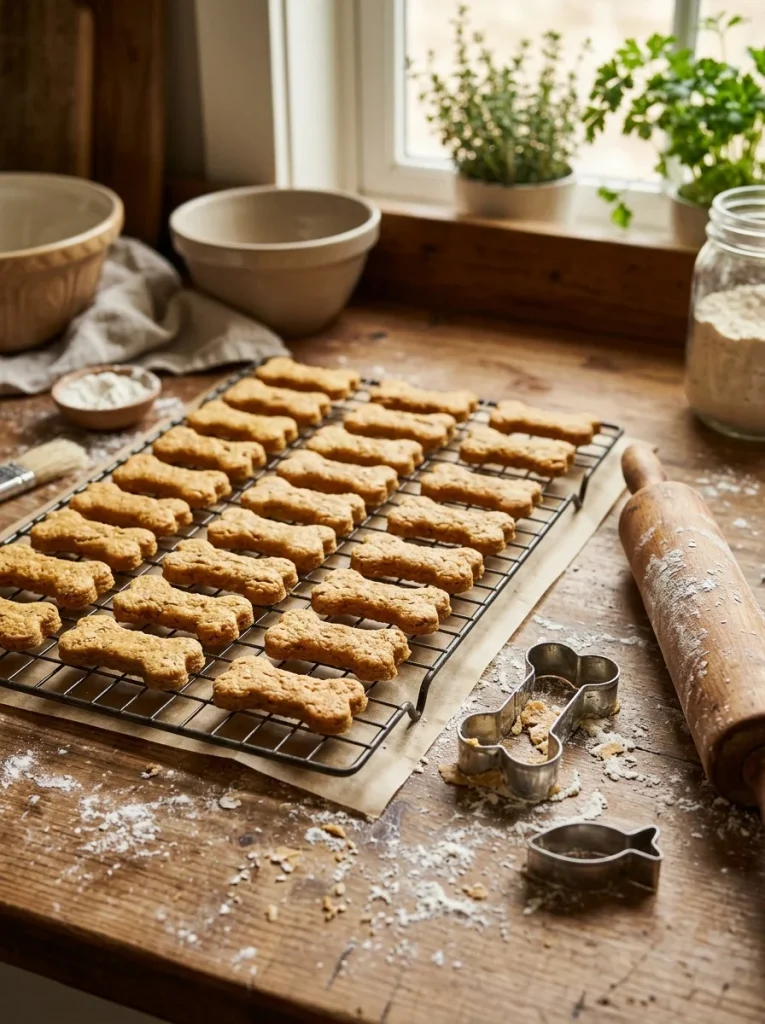
If your dog is more into crunchy treats than soft meals, turning canned salmon into biscuits gives you a long-lasting, shelf-stable option that works well for training or special occasions.
Pulse one can of drained salmon in a food processor until finely chopped. Mix with 2 cups of whole wheat flour and 1 beaten egg until a dough forms, adding a splash of water if needed. Roll the dough to about 1/4-inch thickness, cut into shapes, and bake at 350°F for 20 minutes until firm and lightly browned.
If you enjoy making treats like this regularly, check out more homemade treat recipes for dogs for other flavors and formats to rotate through.
RECIPE CARD: Oven-Baked Salmon Dog Biscuits
Prep Time: 15 minutes Cook Time: 20 minutes Freeze Time: Not required (store at room temperature) Yield: 20-24 small biscuits
Ingredients:
- 1 can (14.75 oz) salmon, drained
- 2 cups whole wheat flour
- 1 large egg, beaten
- Water, as needed
Instructions:
- Preheat oven to 350°F and line a baking sheet with parchment paper.
- Pulse salmon in a food processor until finely chopped.
- Combine salmon, flour, and egg in a bowl; add water gradually until a dough forms.
- Roll dough to 1/4-inch thickness and cut into shapes.
- Bake for 20 minutes, or until firm and lightly golden.
- Cool completely before storing.
Notes: Store in an airtight container at room temperature for up to 2 weeks, or freeze for longer shelf life.
3 Ingredient-Based Variations of Homemade Salmon Dog Food Recipes
Beyond changing the format, you can also change what goes into the base recipe. These variations swap out or add ingredients for dogs with specific needs or preferences, while keeping the same basic method.
i. Salmon & Sweet Potato
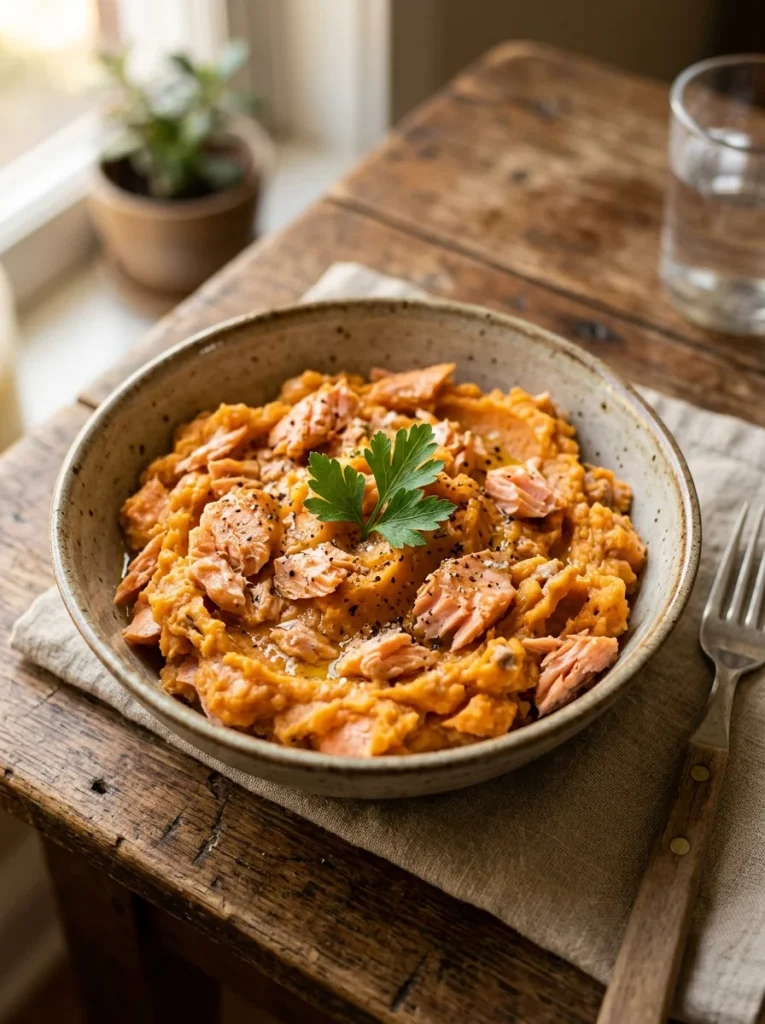
This variation leans heavily into sweet potato, which is gentle on digestion and naturally sweet enough to appeal to picky eaters. Increase the sweet potato to 1 full cup and reduce the rice to 1/2 cup. This version is especially good for dogs who do better with lower grain content, though it’s not entirely grain-free since the base still includes a small amount of rice unless you omit it completely.
ii. Salmon & Rice Dinner
For dogs who need extra calories or are highly active, a rice-forward version increases the carbohydrate content to fuel energy needs. Use 1.5 cups of cooked rice and reduce the vegetables slightly. This makes a filling, calorie-dense salmon dinner for dog recipes that works well for working dogs or dogs recovering from illness who need to regain weight.
iii. Salmon, Egg & Veggie Mix

This variation boosts protein and adds variety with a wider mix of vegetables. Add a second beaten egg to the base recipe and swap the green beans for a mix of diced carrots, peas, and spinach. The extra egg adds protein and healthy fat, while the vegetable variety introduces more vitamins and minerals than the standard recipe alone.
Each of these variations uses the same core method from the base recipe — you’re just adjusting ratios, not reinventing the process. That makes it easy to rotate between them without extra planning.
Tips for Balanced Salmon Dinner for Dog Recipes
Homemade meals are only as good as the balance behind them. A few practical habits will help keep your dog’s diet on track over time.
Rotate proteins occasionally rather than feeding salmon exclusively every day. While salmon is nutritious, variety helps prevent nutrient gaps that can develop from single-protein diets over time.
Watch portion sizes closely, especially with calorie-dense variations like the rice-forward recipe. Overfeeding homemade food is a common mistake since it’s easy to misjudge portions compared to a bag with a feeding chart printed on it.
Introduce new recipes gradually. Mix a small amount of the new food with your dog’s regular diet for the first few days to avoid digestive upset.
If your dog has ongoing health conditions, allergies, or is very young, it’s worth having your recipes reviewed. A quick check-in during routine veterinary visits can confirm that a homemade rotation is meeting your dog’s specific nutritional needs, especially for growing puppies.
Why Canned Salmon Works So Well for Dogs
Canned salmon has become a favorite base for homemade dog food, and it’s not by accident. It’s rich in omega-3 fatty acids, which support skin, coat, and joint health. It’s also a complete protein source, meaning it contains the essential amino acids dogs need for muscle maintenance and repair.
Because it’s already cooked during the canning process, it’s convenient and safe to use straight from the can, unlike raw fish, which carries a higher risk of parasites and bacteria. Canned salmon is also shelf-stable, making it easy to keep a few cans on hand for whenever you want to whip up a quick batch.
Compared to fresh salmon, the canned version is typically more affordable and just as nutritious, since the canning process preserves most of the beneficial fats and nutrients. If you’re building a broader routine of cooking meals at home for your dog, canned salmon is one of the easiest proteins to keep in steady rotation.
Bringing It All Together
Canned salmon dog food recipes give you a flexible, budget-friendly way to feed your dog something fresher than what comes out of a bag. Whether you stick with the base recipe, bake a batch of patties, set the slow cooker going for a soft stew, or turn leftovers into frozen treats, you’ve now got five solid formats and three ingredient variations to rotate through.
Start with the base recipe to get a feel for the process, then experiment with the format and ingredient variations based on what your dog responds to best. With a little planning and a few cans of salmon in the pantry, mealtime becomes something your dog genuinely looks forward to — and that’s really the whole point.

Izzy is an experienced ranch worker who has a passion for exploring nature and getting up close to wildlife. With her connections to various animal organizations, Izzy is well-versed in animal care and rehabilitation.


