18 Dog Park Ideas: Creative Dog Park Design Ideas for Every Space
If you’re planning a play space for dogs, you already know that a boring patch of grass just doesn’t cut it anymore. Dogs need room to run, climb, dig, splash, and explore. That’s why finding the right Dog Park ideas matters so much, whether you’re building a backyard play area, a daycare facility, an apartment complex dog run, or a full commercial dog park.
This guide is packed with 18 real-world Dog Park Design ideas, pulled straight from actual dog parks, daycares, and pet-friendly properties around the world. Each idea includes a simple explanation of what it is, why it works, and how you can use it in your own space. Whether you have a huge open field or a small rooftop corner, there’s something here for you.
Let’s jump right into the ideas.
1. Agility & Obstacle Course Dog Park Ideas
Obstacle courses are one of the best ways to keep dogs mentally and physically busy. They’re not just for training facilities anymore — even casual dog parks are adding agility features because dogs genuinely love them. Obstacle-based play also burns off far more energy than open running alone, since dogs have to think about where to place their paws, how to balance, and how to move their bodies through tight spaces.
Idea 1: Circular Cutout Hurdles
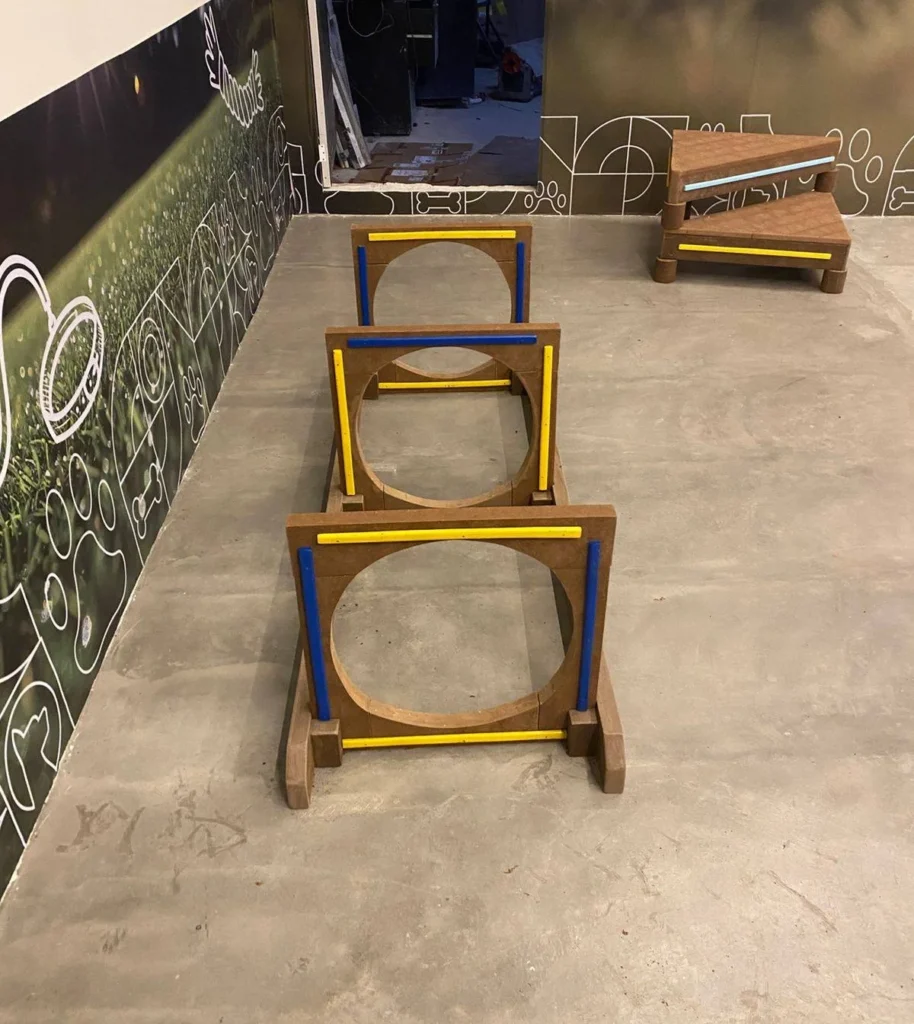
These wooden frames with large circular holes let dogs jump or walk through them like a hoop. They’re often color-coded with blue and yellow bars, which makes them easy to spot and fun to look at. Because they come in different heights, you can line up several in a row to create a mini obstacle path that challenges dogs of different sizes.
This idea works great for training-focused dog daycares or backyard agility setups. It’s simple to build, doesn’t take up much space, and adds a playful visual element to any yard.
You can also stagger the hurdles at slightly different heights so smaller dogs can walk through the lower circles while larger, more athletic dogs jump the taller ones. Painting the frames in bright colors isn’t just for looks either — it helps dogs visually track the obstacle from a distance, which makes training sessions faster and more effective. Many facilities use these hurdles as part of a rotating “course of the week” to keep things fresh for regular visitors.
📸 Photo credit: Instagram @outdog_playpets
Idea 2: Fabric Agility Tunnels
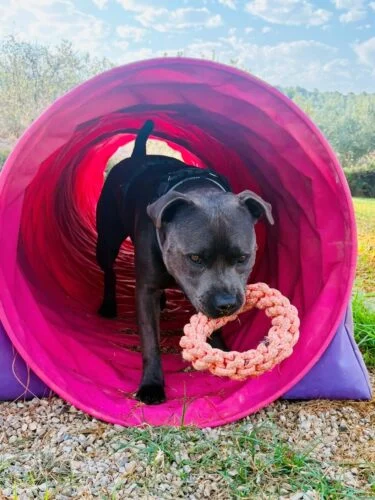
A classic agility tunnel is soft, collapsible, and instantly recognizable. Dogs crawl through the pink or purple fabric tube while chasing a toy or a treat, which builds confidence and coordination. These tunnels are lightweight, easy to store, and perfect for outdoor grassy or gravel areas.
If you want a low-cost way to add excitement to a dog park, a fabric tunnel is one of the cheapest and most effective Dog Park Design ideas you can try.
Tunnels are especially useful for shy or nervous dogs because they can be introduced slowly, starting with a short, straight tunnel before moving on to curved ones that hide what’s on the other side. Since they fold flat, they’re also one of the easiest features to rotate in and out of a play area, which keeps the space feeling new even without adding permanent structures. Weighted stakes or sandbags at the ends help keep the tunnel from shifting during enthusiastic play.
📸 Photo credit: Instagram @theolivefields
Idea 3: A-Frame Balance Ramps
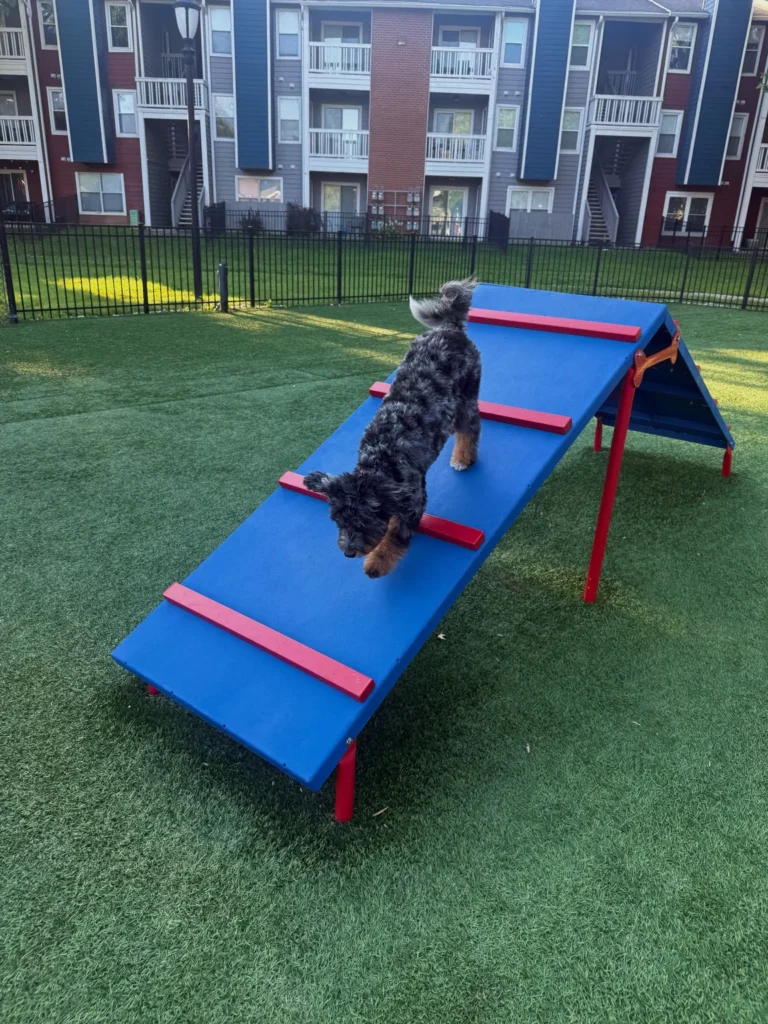
An A-frame ramp is a sloped structure that dogs climb up one side and down the other. The bright blue and red design shown here uses raised grip bars so paws don’t slip. This obstacle helps build balance, leg strength, and confidence, especially for smaller or younger dogs learning to navigate height.
A-frames are a staple in almost every professional dog park because they’re safe, durable, and endlessly reusable.
The raised traction bars matter more than they might seem. Without them, ramps can become slippery, especially when wet from rain, dew, or splashes from a nearby water feature. A lower incline angle is best for puppies, senior dogs, or breeds with shorter legs, while a steeper A-frame gives more athletic dogs a real challenge. Placing the ramp on a soft turf or rubber mulch surface underneath adds an extra layer of safety in case a dog slips off the side.
📸 Photo credit: Instagram @keeping_up_with_stormi
Idea 4: Giant Tire Crawl-Throughs
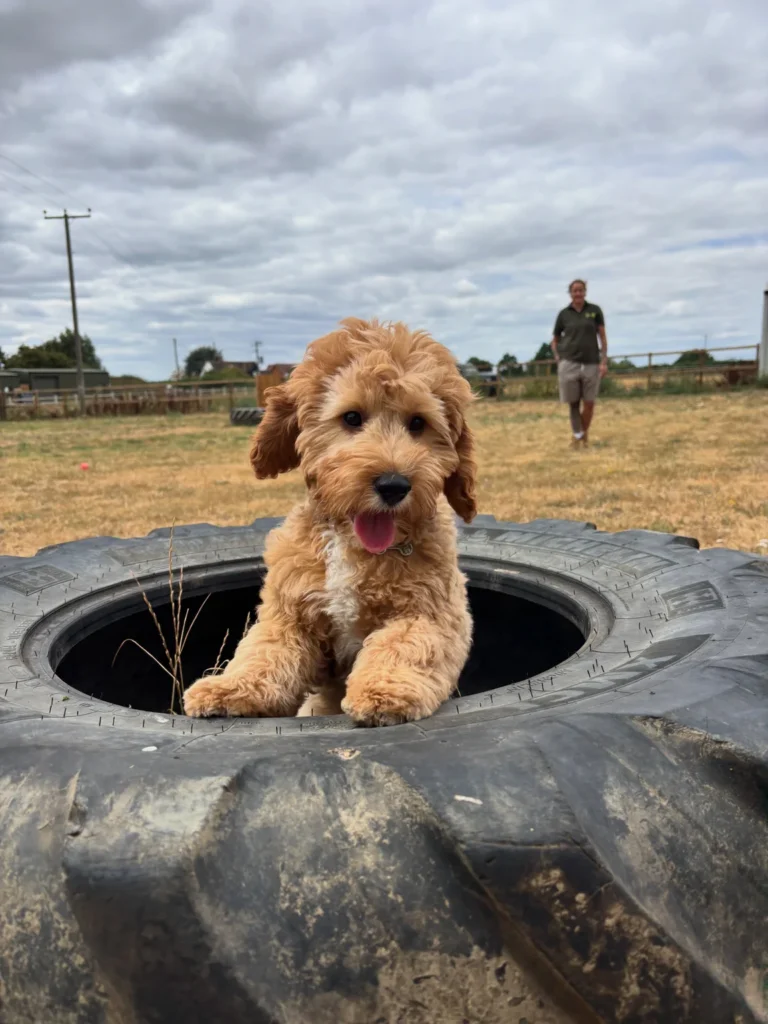
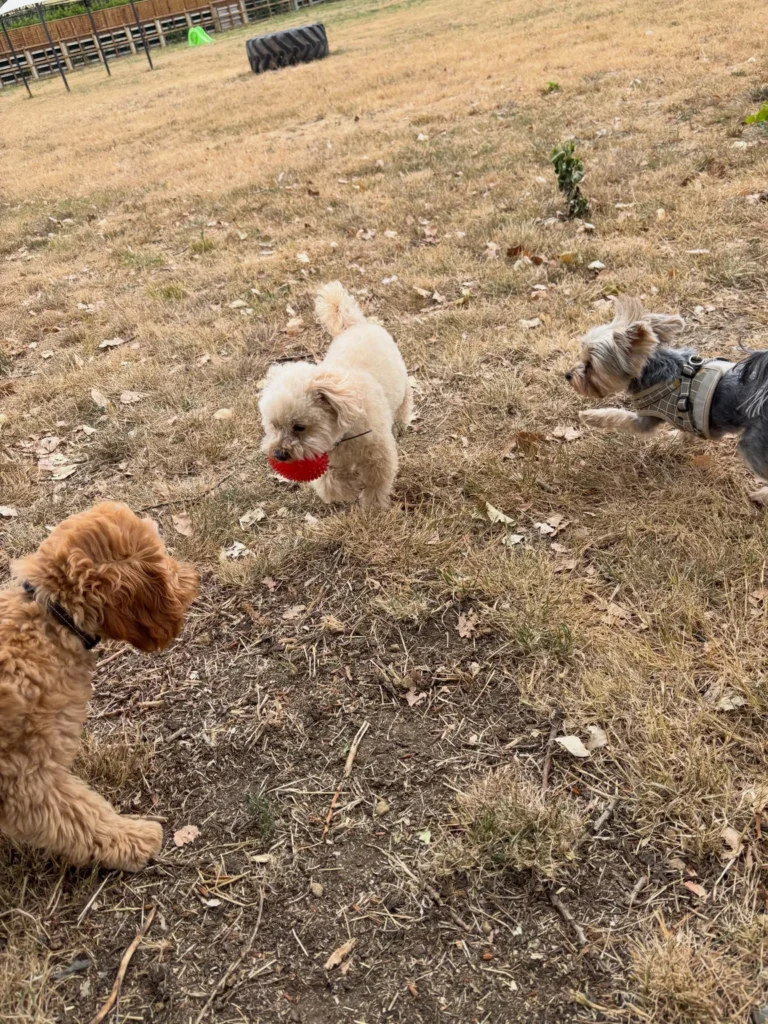
Nothing says “adventure course” like a massive tractor tire turned into a tunnel. Dogs can walk through the center hole or climb over the top, and it holds up incredibly well outdoors since tires are naturally weatherproof. This is one of the most budget-friendly Dog Park ideas because tractor tires are often free or very cheap to source secondhand.
It’s rugged, low-maintenance, and adds a fun rustic look to open fields.
Because tires are made from thick rubber, they hold up against sun exposure, rain, and constant chewing far better than wood or plastic. Many facilities half-bury the tire into the ground so there’s no gap underneath for a dog’s leg to get stuck, which is an important safety detail to keep in mind. You can also paint the tire in bright colors to make it stand out on a green field, turning a recycled item into an intentional design feature rather than something that looks leftover.
📸 Photo credit: Instagram @thek9paddocks
Idea 5: All-in-One Combined Obstacle Circuits
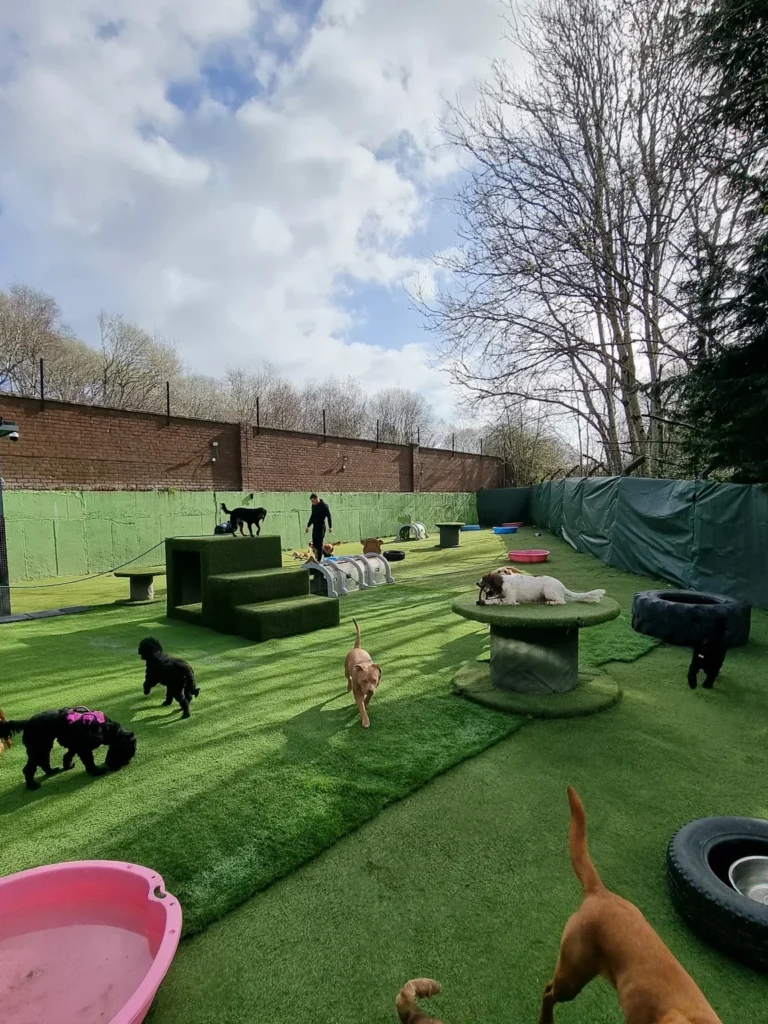
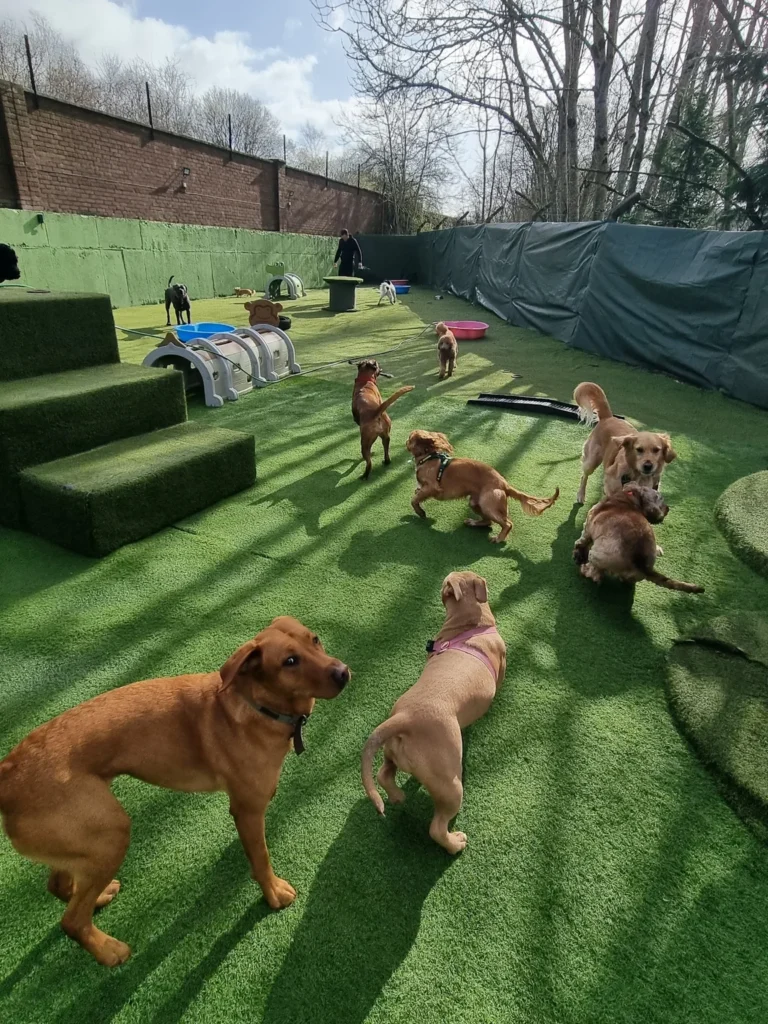
Why choose just one obstacle when you can combine several? This design mixes turf-covered steps, a large wooden cable spool used as a lookout table, a tire tunnel, and small wading pools into one connected play zone. It gives dogs multiple activities in a single space without needing separate sections.
This is ideal for larger commercial dog daycares that want to maximize a big outdoor yard.
The key to a good combined circuit is variety in texture and height. Turf steps give dogs something soft to climb, the wooden spool acts as a raised lookout point, and the tire tunnel adds a crawling challenge, all within a few feet of each other. This layout also naturally encourages group play, since multiple dogs can use different parts of the circuit at the same time without crowding one single obstacle. Staff at daycares often say combined circuits reduce boredom-related barking because dogs always have something new to investigate.
📸 Photo credit: Instagram @woofthiswaydogcare
2. Elevated & Multi-Level Play Structures
Dogs love height. Giving them somewhere to climb up, look around, and survey their surroundings taps into natural instincts. Elevated structures also make a dog park visually impressive, and they’re often the feature that photographs best for marketing or social media.
Idea 6: Multi-Tier Wooden Playhouses
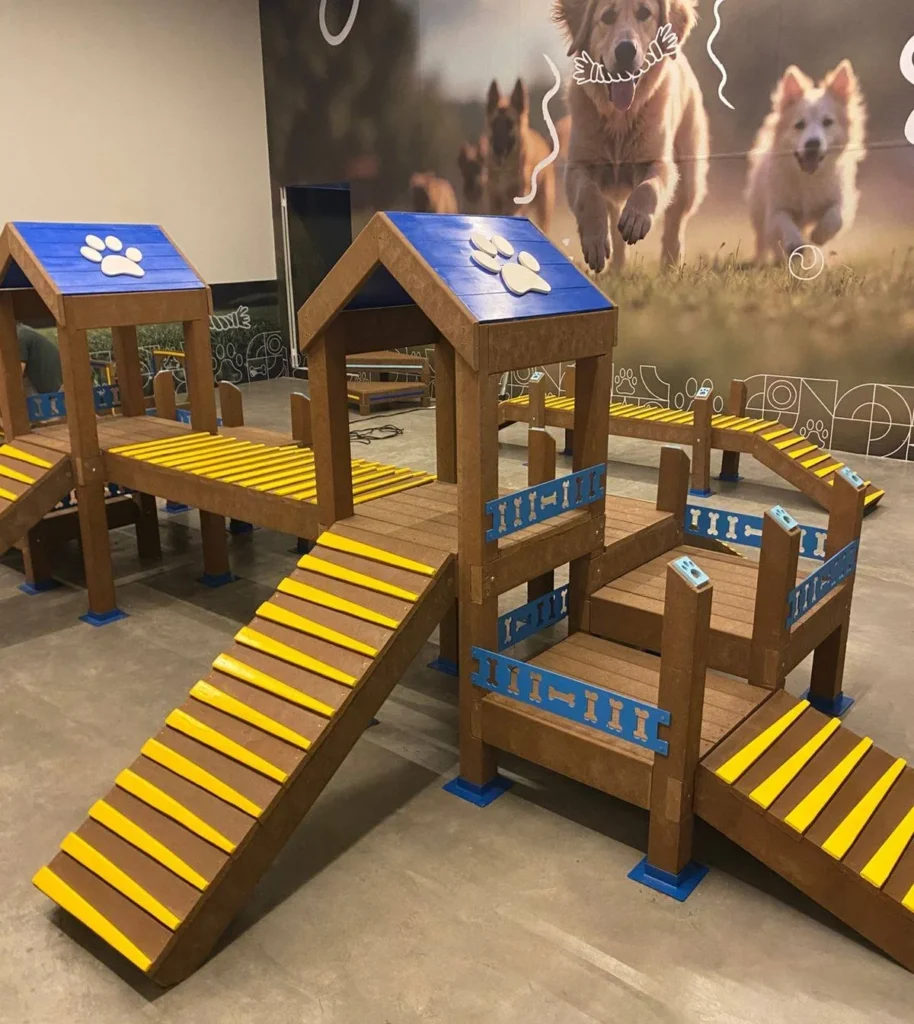
This design features connected wooden platforms with triangle rooftops, ramps, and railings decorated with paw prints and bones. Dogs can climb ramps to reach upper decks, walk across connecting bridges, and peek out from little “houses.” It looks like a playground built specifically for dogs.
This is a bigger investment, but it becomes the centerpiece of any dog park and gives dogs constant new paths to explore.
Because these structures involve multiple levels, it’s important to use non-slip decking material and add short side rails along any elevated walkway. Ramps should have a gentle enough slope that smaller or older dogs can climb comfortably without straining. Many facilities paint the roofs in bold colors like navy blue so the structure is easy to see from a distance, and add paw print or bone-shaped decor to reinforce the dog-park theme throughout the whole space. This kind of structure also gives staff a clear vantage point to keep an eye on multiple dogs at once.
📸 Photo credit: Instagram @outdog_playpets
Idea 7: Wooden Lookout Gazebos
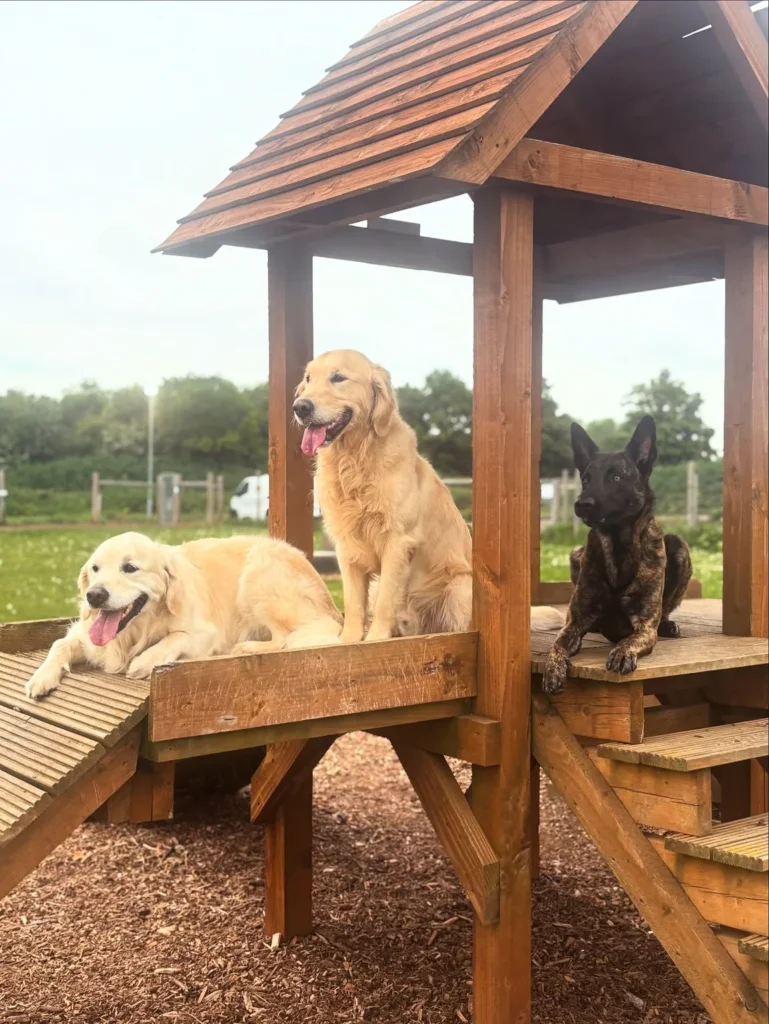
A gazebo-style structure with a peaked roof and open platforms gives dogs a shaded spot to relax while still being elevated. In the picture, three dogs are calmly resting on the wooden platform under the roof, watching the yard below. It works as both a rest area and a lookout point.
This idea blends comfort with design, making it perfect for parks that want a shaded resting zone that still feels like part of the play area.
Unlike open shade canopies, a wooden gazebo adds a permanent architectural feature that holds up in all weather conditions. The elevated platform keeps dogs off damp ground after rain and gives them a slightly cooler surface to lie on during hot days, since the roof blocks direct sun. Adding a small ramp on one side, rather than steps, makes the structure accessible to dogs of all ages, including seniors or dogs recovering from injury. Because it doubles as a social spot, gazebos often become the place where multiple dogs naturally gather to rest together between bursts of play.
📸 Photo credit: Instagram @the__adventures_of_dukeandjax
Idea 8: Miniature Bridges for Small Breeds
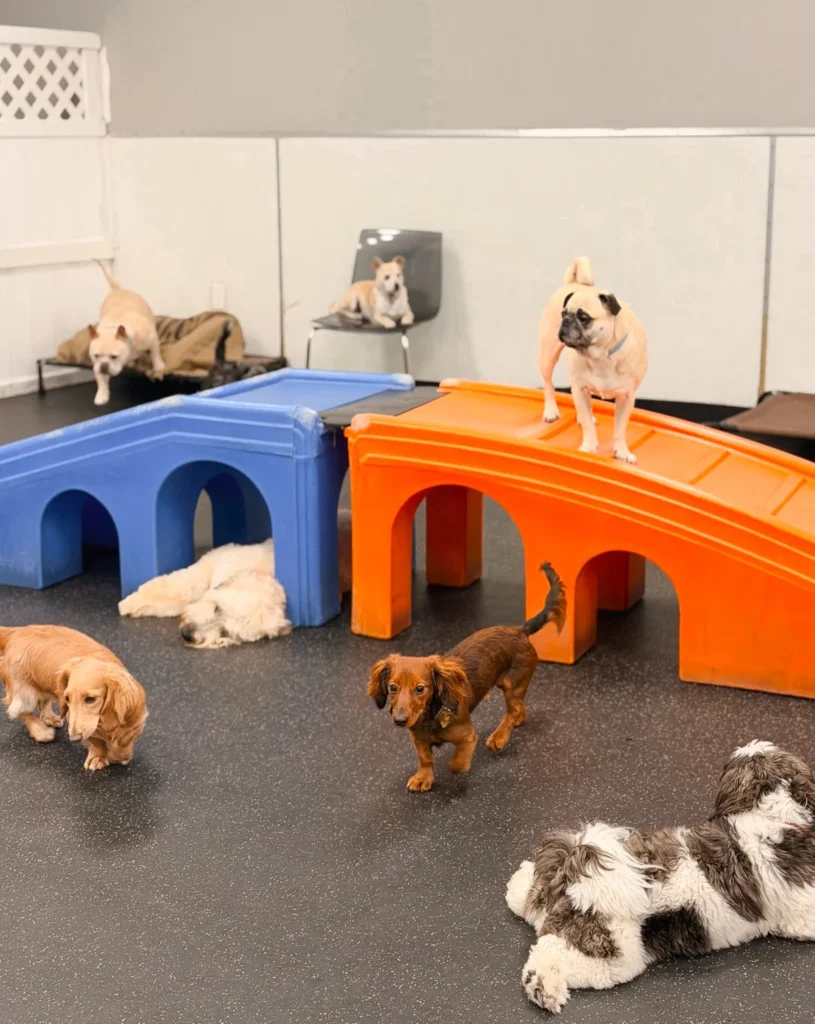
Small dogs need play structures sized just for them. This colorful blue and orange arched bridge design is scaled down so tiny breeds like dachshunds and toy poodles can walk through the arches or over the bridge without it feeling oversized or scary.
If your dog park serves a lot of small breeds, having size-appropriate furniture like this makes a huge difference in how confident and comfortable they feel.
Standard dog park equipment is often built with medium and large breeds in mind, which can leave small dogs feeling intimidated or simply unable to use it. A mini bridge solves that by giving toy and small breeds their own scaled version of the same climbing and exploring experience. The archways underneath also double as cozy hiding spots, which many small dogs enjoy using as a quiet retreat during busy play sessions. Facilities that mix large and small dog play areas often place several of these mini bridges together to create a dedicated small-breed zone.
📸 Photo credit: Instagram @dogcoralgables
Idea 9: Repurposed Kids’ Playground Equipment
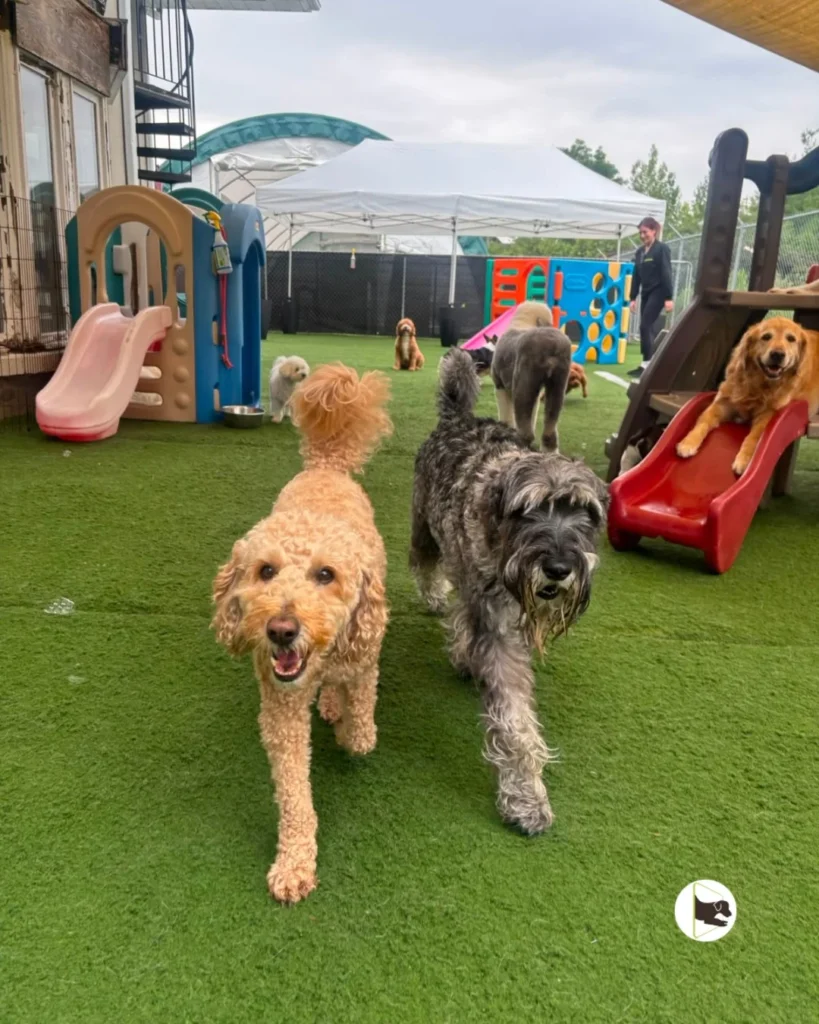
You don’t always need custom-built dog furniture. This backyard-style setup reuses a plastic kids’ slide and a climbing cube with cutout holes, both items that are widely available and affordable. Dogs happily use the pink slide and the colorful cube just as much as they would custom-made dog equipment.
This is one of the smartest Dog Park ideas for anyone on a budget who still wants a fun, varied play area.
Secondhand or discounted kids’ playground equipment can often be found for a fraction of the cost of purpose-built dog structures, making this one of the most accessible ideas on this list. Just make sure any equipment is sturdy enough to handle a dog’s weight and movement, since it wasn’t originally designed with paws and claws in mind. Smoothing out any sharp edges and checking for loose bolts regularly will keep it safe for long-term use. This approach also proves that a fun, engaging dog park doesn’t require a huge design budget to feel special.
📸 Photo credit: Instagram @doggielandcanada
3. Water Feature Dog Park Design Ideas
Water features cool dogs down, encourage play, and give high-energy breeds a fun way to burn off extra energy, especially in hot weather. They also add movement and sound to a dog park, which keeps things interesting even for dogs who aren’t actively climbing or running.
Idea 10: Painted Concrete Splash Pads
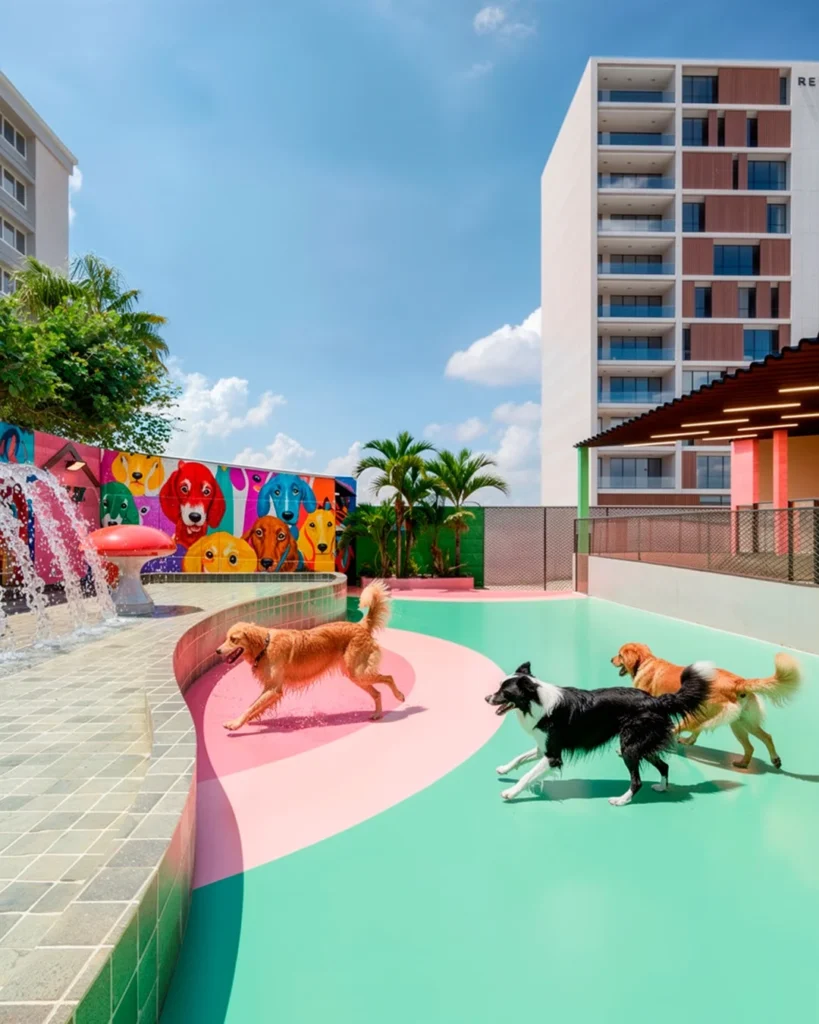
This design takes water play to the next level with a painted concrete splash pad in pink and mint green, complete with a mushroom-shaped fountain. It’s part of a larger, upscale rooftop dog park with mural walls and palm trees in the background. Dogs can run through flowing water instead of just standing in a pool.
This is a higher-end option best suited for upscale apartment complexes, hotels, or premium dog daycare facilities that want a standout amenity.
Splash pads work well because the water constantly drains away rather than pooling, which keeps the surface cleaner and reduces bacteria buildup compared to standing water. The painted concrete also adds a permanent pop of color that ties the whole space together, especially when paired with matching mural walls. Because this option involves plumbing and drainage work, it’s best planned early in the design process rather than added later. For properties trying to stand out, a splash pad like this often becomes the single most photographed feature in the entire space.
📸 Photo credit: Instagram @pinkdog_bemestarcanino
Idea 11: Simple Kiddie Pool Water Stations
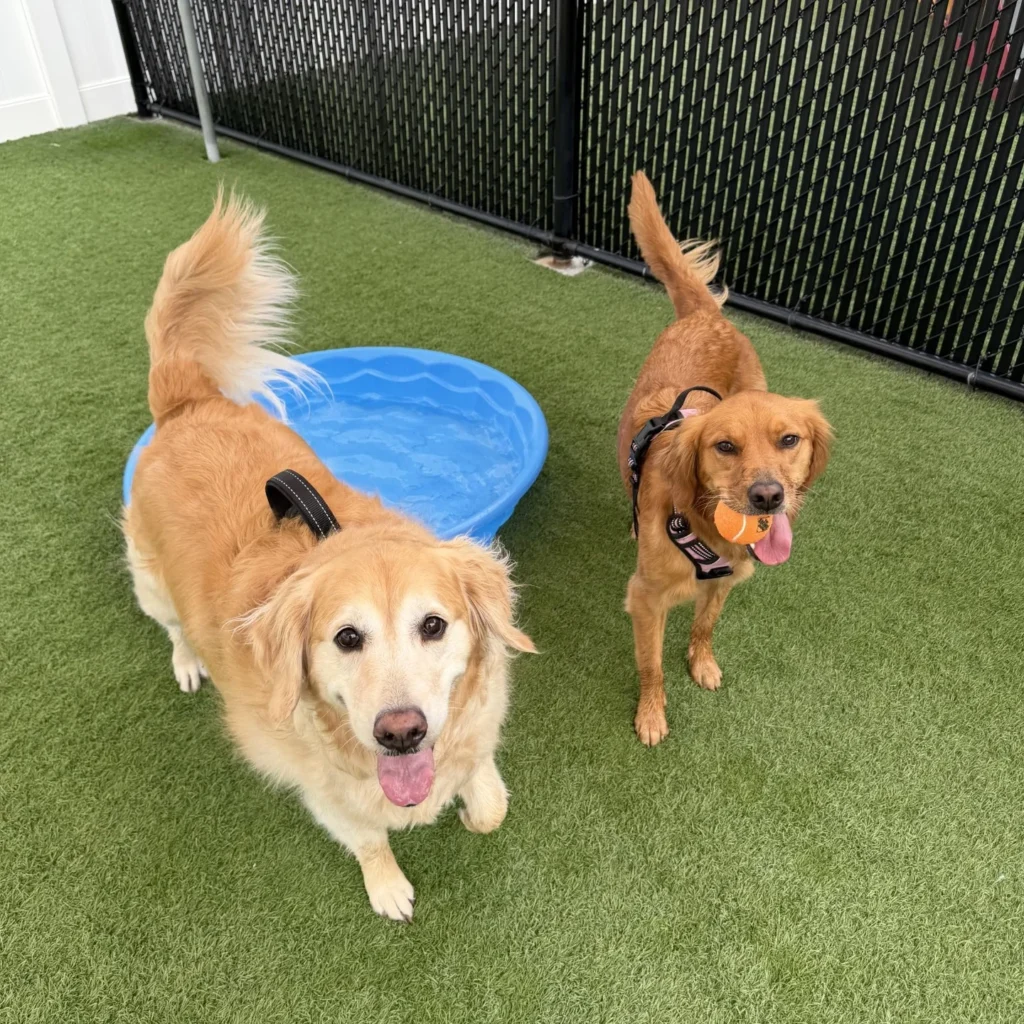
Sometimes the simplest idea works best. A basic plastic kiddie pool filled with water gives dogs a place to cool off, splash, or just lie in on a hot day. In this photo, pink pools are scattered around a large turf play yard, easy to move, refill, and clean.
This is the most affordable water feature on this list and works in almost any outdoor dog park setup, big or small.
Kiddie pools require zero installation, which makes them the fastest way to add a water feature to any existing dog park. Placing a few pools around the yard, rather than just one, prevents crowding and gives multiple dogs their own space to cool off at the same time. Emptying and refilling them daily keeps the water fresh and helps prevent algae or bacteria from building up in warm weather. Because they’re inexpensive and replaceable, kiddie pools are also a smart choice for facilities that are still testing out how much dogs actually use a water feature before investing in something more permanent.
📸 Photo credit: Instagram @cedar_bend_humane_society
4. Comfort & Amenity Dog Park Ideas
A great dog park isn’t just about play. Dogs also need places to rest, cool down, and take a break. Comfort features are what turn a good dog park into a great one, and they tie in closely with good dog feeding station ideas and dog leash station ideas if you’re designing a full facility.
Idea 12: Elevated Rest Cots
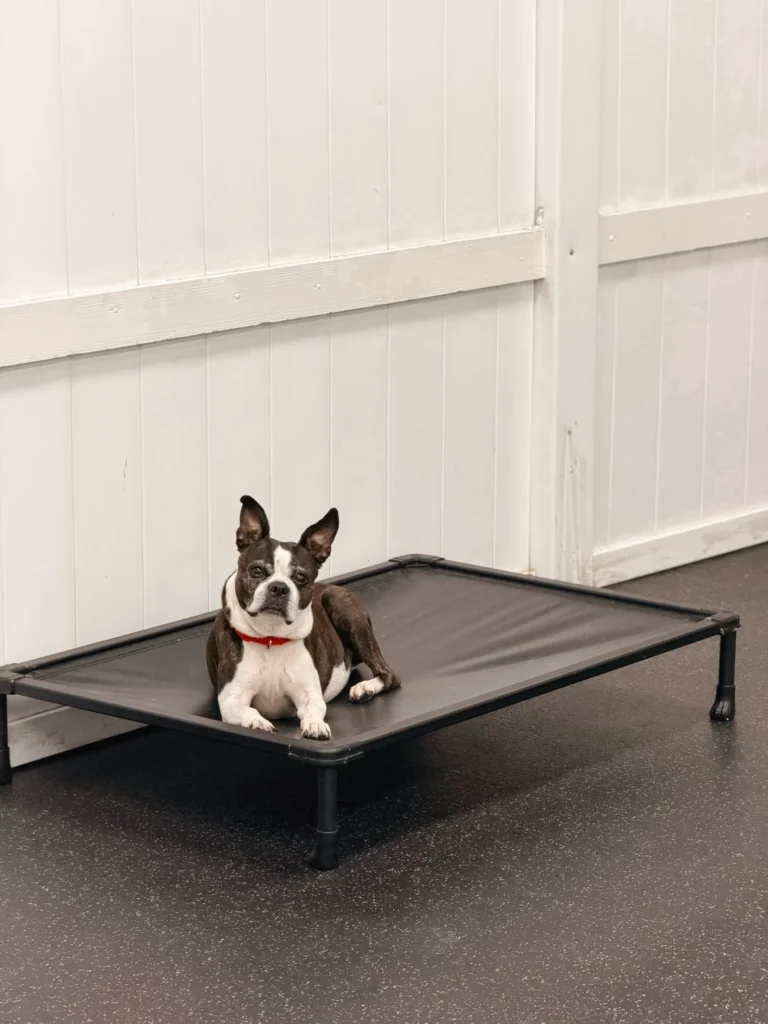
An elevated mesh cot keeps dogs off the cold or hot ground and allows air to circulate underneath them. In the picture, a small Boston Terrier is relaxing comfortably on a raised black cot. These cots are durable, easy to hose down, and give dogs a designated resting spot away from the main play area.
They’re especially useful in daycare settings where dogs need a spot to nap between play sessions.
The raised mesh design does more than just add comfort. It keeps dogs off surfaces that can get uncomfortably hot in direct sunlight or damp after rain, which helps regulate their body temperature naturally. Because the material is breathable and quick-drying, cleanup between uses only takes a quick wipe down or rinse. Placing a few of these cots in shaded corners of the yard gives dogs a clear signal that it’s a resting zone, separate from the higher-energy play areas nearby.
📸 Photo credit: Instagram @dogcoralgables
Idea 13: Fun Fire Hydrant Decor Props
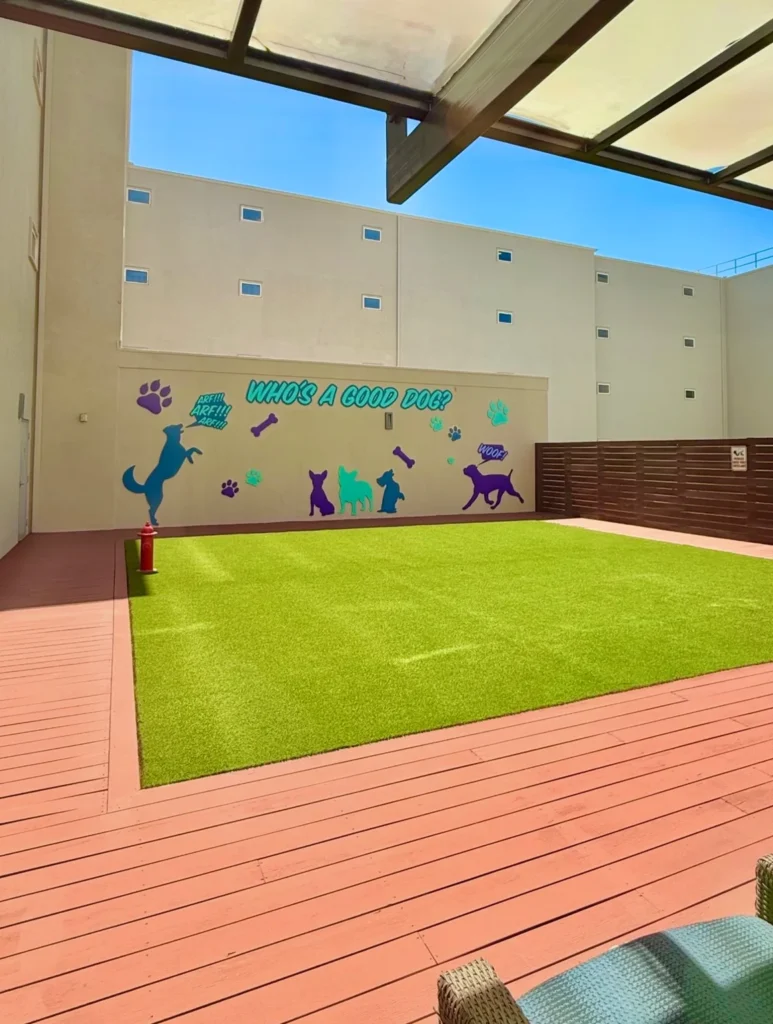
It’s a classic symbol for a reason. A small red fire hydrant placed in the corner of a turf yard adds personality and a playful nod to dog culture. While it’s mostly decorative, some dogs do enjoy sniffing or marking near it, and it makes for a cute photo backdrop for pet parents.
This is a low-cost, high-charm detail that instantly makes a space feel dog-themed.
Decor props like this might seem purely cosmetic, but they play a real role in making a space feel intentional and welcoming rather than just a fenced patch of turf. A fire hydrant, paw print decals, or bone-shaped signage all reinforce the same friendly, playful theme without costing much or taking up valuable play space. These small touches are often what pet owners remember and mention when recommending a daycare or apartment complex to friends.
📸 Photo credit: Instagram @thestandardatdomainnorthside
5. Fun & Novelty Dog Park Features
These features aren’t strictly necessary, but they add a wow factor that makes your dog park memorable and shareable on social media. They’re also a great way to give regular visitors something to look forward to beyond the standard run-and-play routine.
Idea 14: Colorful Ball Pits
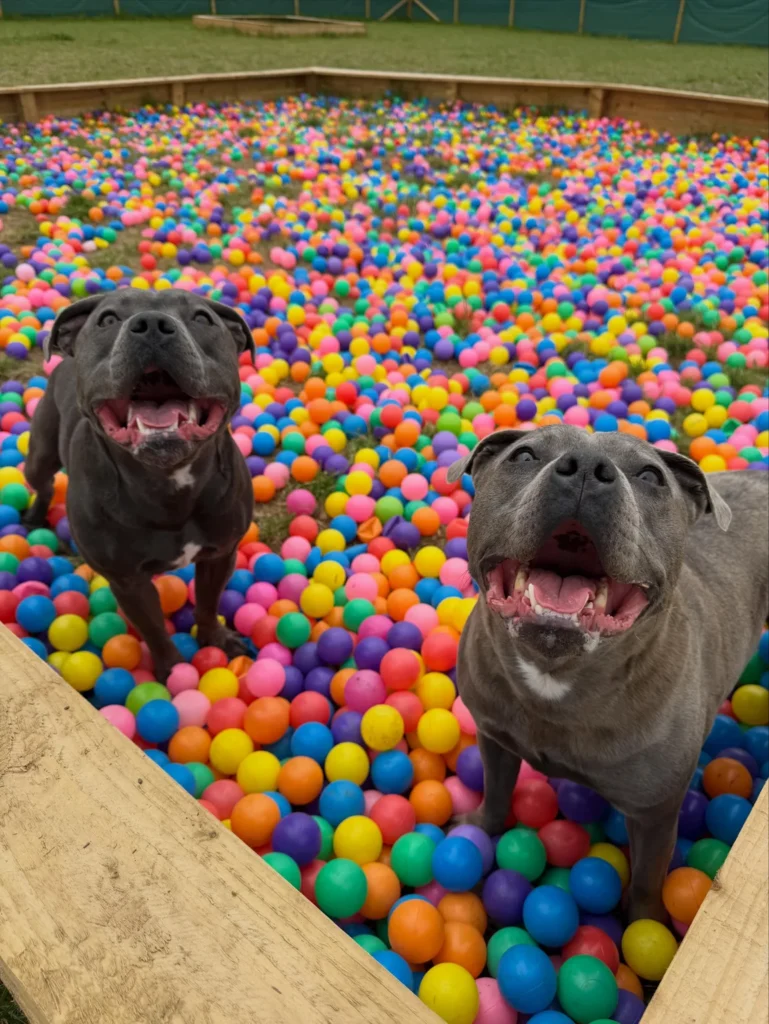
A ball pit filled with hundreds of colorful plastic balls turns a plain wooden platform into an exciting sensory experience. In the photo, two dogs are joyfully jumping through the balls with huge smiles on their faces. This feature is a guaranteed hit for photos and videos, and dogs seem to genuinely love digging through it.
It does require some upkeep to keep the balls clean, but the payoff in engagement and fun is well worth it.
Ball pits tap into a dog’s natural instinct to dig and forage, since balls shift and move unpredictably underfoot, which keeps dogs mentally engaged rather than just physically active. Hiding treats or toys under the balls can turn the pit into a scent-based game as well. Regular cleaning, rinsing the balls and checking for cracked or chewed pieces, keeps the feature safe and sanitary over time. Because it’s such a visually striking feature, many facilities use their ball pit as a signature photo spot for marketing and social media content.
📸 Photo credit: Instagram @willow_the_blue_22
Idea 15: Basket or Nest Swings
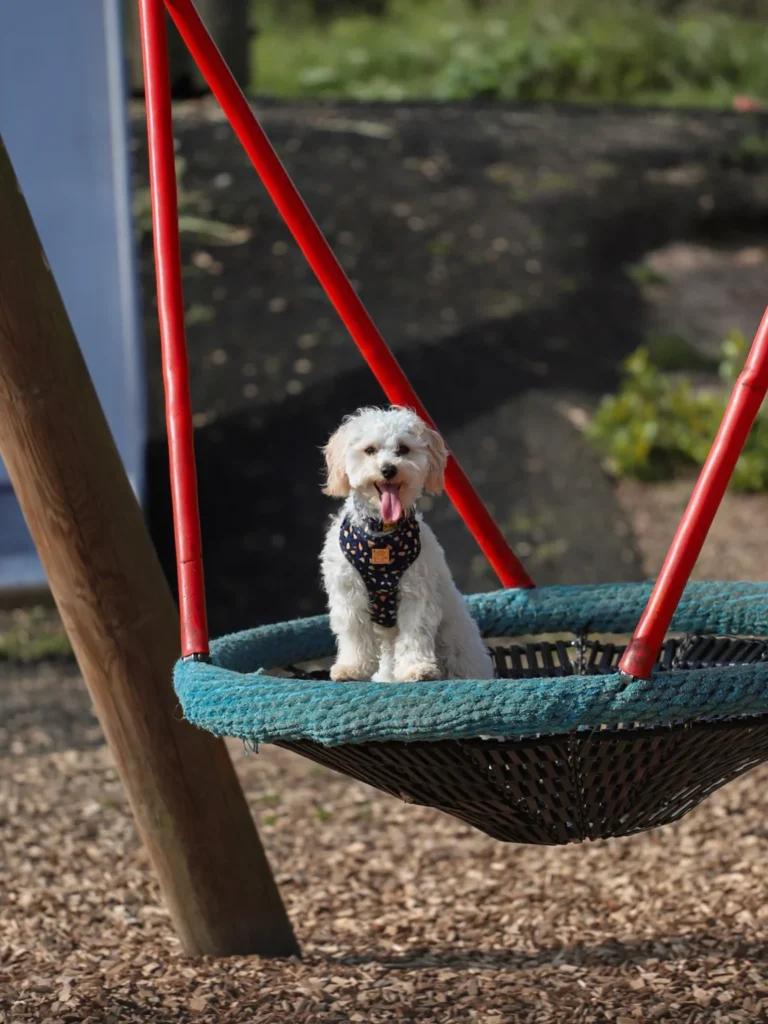
A woven basket swing, similar to what you’d see on a human playground, gives dogs a totally different kind of sensory experience. The small dog in this photo looks completely relaxed sitting in the swaying nest. This isn’t for every dog, since some pups may find swinging unsettling, but confident and curious dogs tend to enjoy it.
It’s a unique feature that sets a dog park apart from more standard designs.
Introducing a swing slowly, letting the dog sniff and step in and out at their own pace before any actual swinging happens, makes for a much smoother experience. Smaller, lighter breeds tend to adapt to this feature more easily than larger dogs, simply because the motion feels less intense at their size and weight. Since it’s such an unusual feature for a dog park, a basket swing often becomes a talking point for visitors and a strong differentiator for facilities trying to stand out from nearby competitors.
📸 Photo credit: Instagram @milo.my.mini.maltipoo_
6. Landscaping, Branding & Aesthetic Dog Park Design Ideas
How a dog park looks matters just as much as how it functions. Good landscaping and branding make a space feel welcoming, professional, and Instagram-worthy, which is especially important for daycares and apartment complexes trying to attract new customers. These design choices pair well with broader dog kennel decor ideas if you’re branding an entire pet facility.
Idea 16: Flower Bed Garden Walking Paths
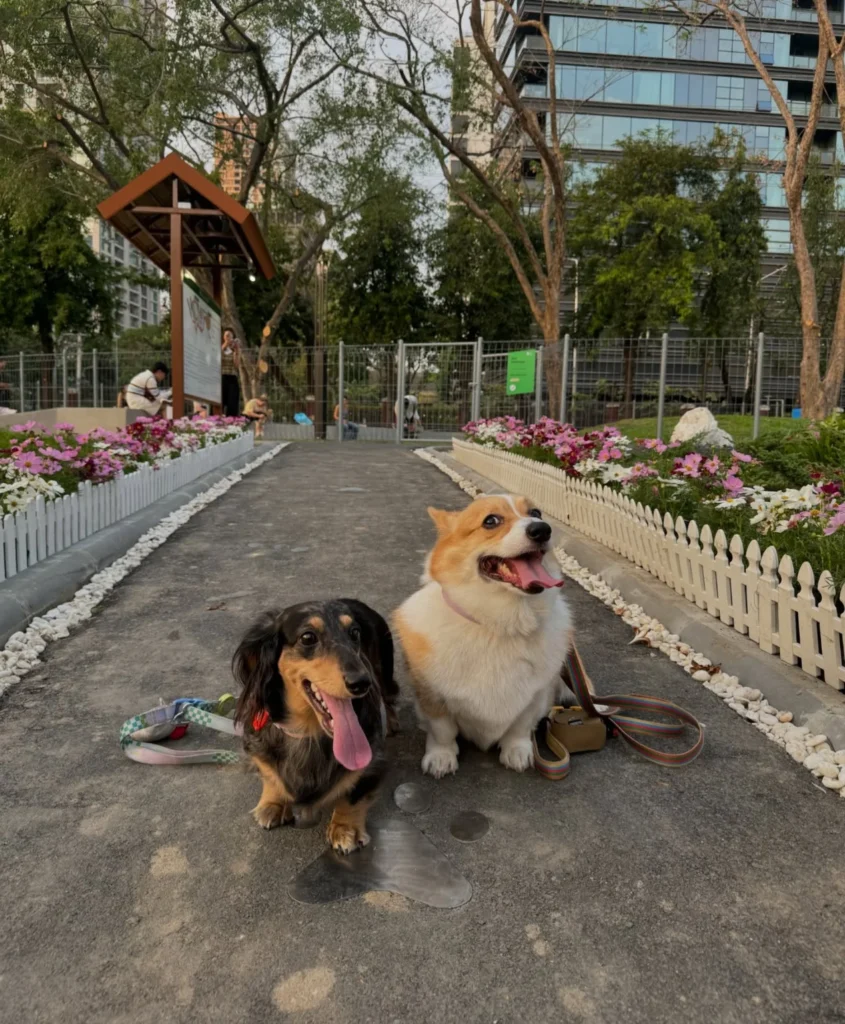
Not every dog space needs to be all turf and equipment. This design uses a paved walking path lined with white picket fencing and colorful flower beds on both sides. It creates a calmer, more scenic area for dogs to walk and sniff, which is great for lower-energy activities or older dogs.
This idea works beautifully in park-style settings or larger properties with room for landscaping.
Sniffing is an important, often underrated form of mental exercise for dogs, and a garden path filled with different plants and textures gives them plenty to explore at a slower pace. Choosing dog-safe, non-toxic flowers and plants is essential here, since curious dogs are likely to sniff or occasionally nibble along the way. This kind of layout also works well as a transition zone between a busy play area and a quieter parking or entrance space, giving dogs a calming buffer before or after high-energy play.
📸 Photo credit: Instagram @kana_thecorgi
7. Indoor Dog Play Area Ideas
Not every dog park needs to be outdoors. Indoor play spaces are especially useful for daycares in cold climates or facilities that operate year-round regardless of weather. These indoor setups can work alongside general smart dog room ideas if you’re designing a full indoor pet facility.
Idea 17: Padded Soft-Play Courses
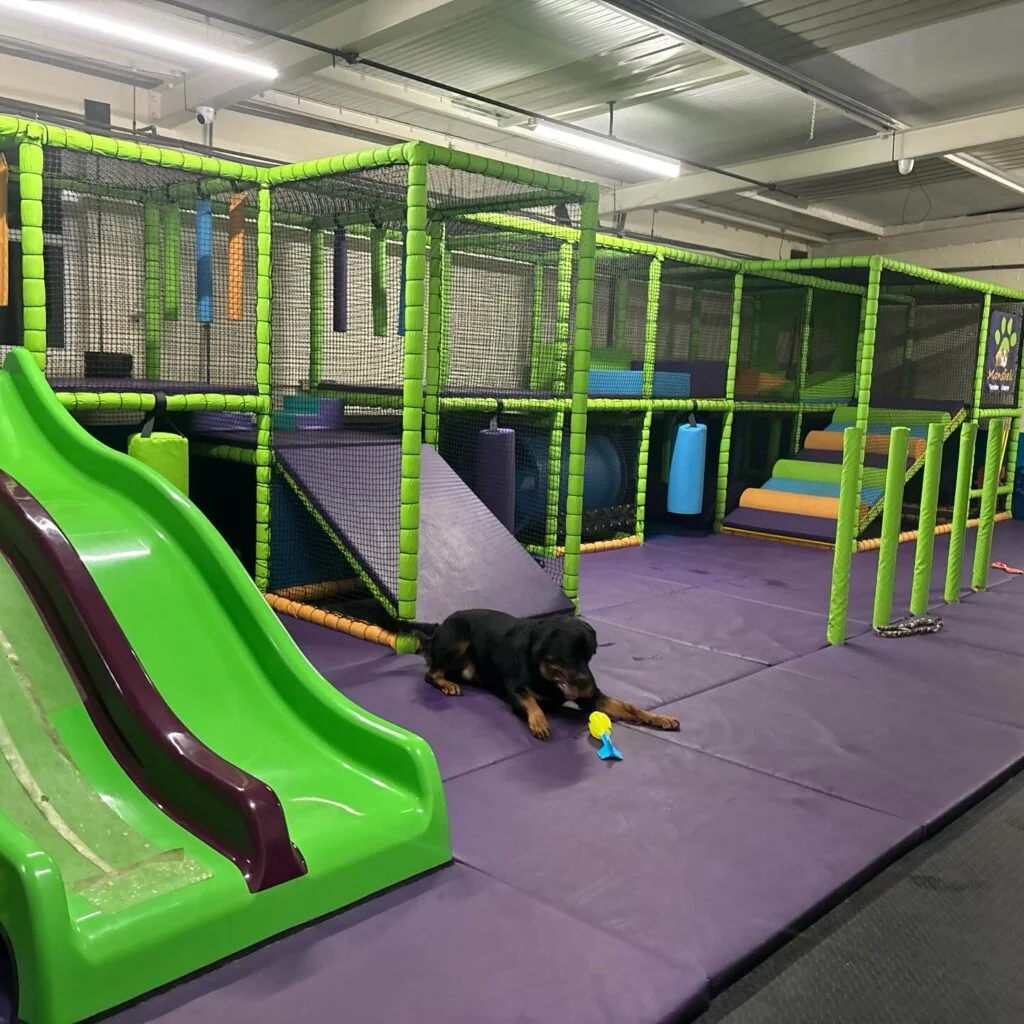
This indoor space uses bright green padded structures with netting, a slide, and connected platforms, almost like an indoor jungle gym built just for dogs. The soft padded flooring makes it safe for dogs to jump, climb, and play without risk of injury on hard surfaces.
This type of setup works incredibly well for daycares that want to offer active play regardless of outdoor weather conditions.
Padded flooring absorbs impact far better than standard flooring, which matters a lot when multiple dogs are running, jumping, and wrestling in the same space. Netting sections allow staff to keep a full view of the play area from any angle, which is important for supervision in a busy indoor facility. Because this setup doesn’t depend on weather at all, it gives daycares a reliable way to offer consistent exercise and enrichment every single day of the year, something outdoor-only facilities simply can’t guarantee.
📸 Photo credit: Instagram @_bear_the_rottie
Idea 18: Indoor Turf Corners with Photo-Wall Decor
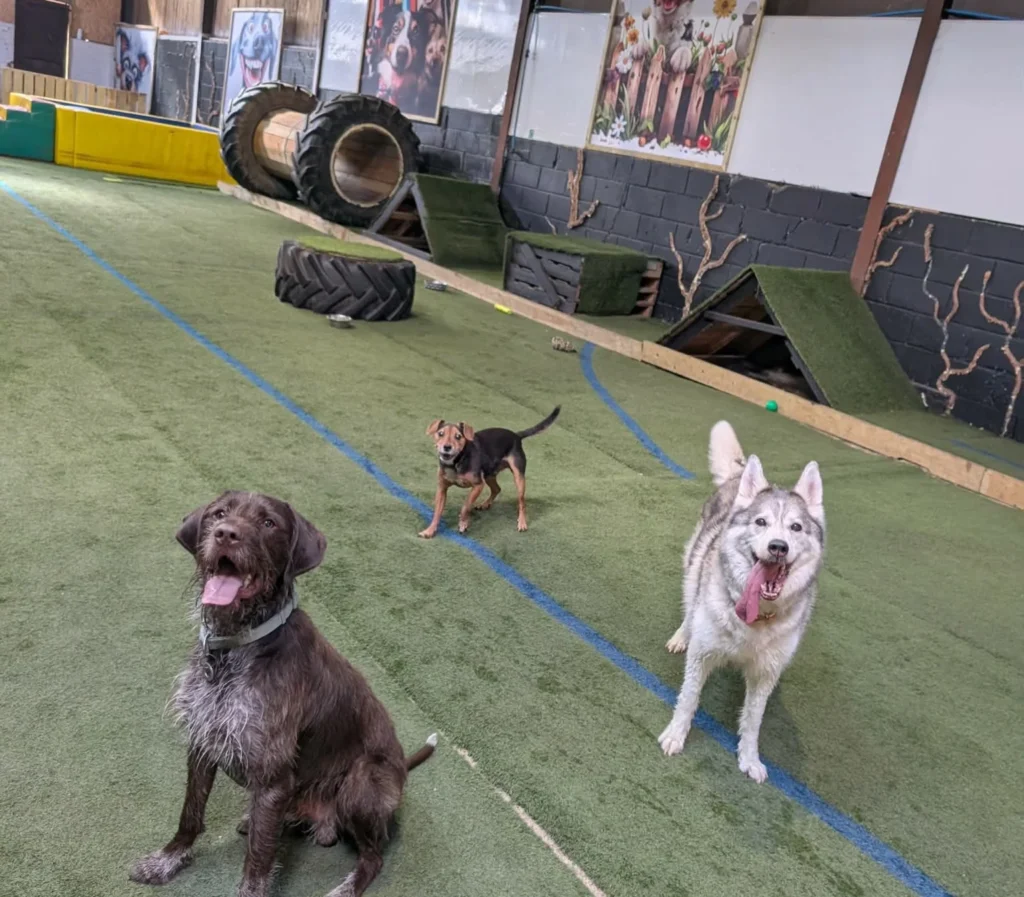
This design brings the outdoors in by using real or artificial turf indoors, paired with a tire tunnel obstacle and a wall covered in playful dog-themed artwork. It gives dogs a familiar grassy texture to play on while staying protected from rain, heat, or cold.
Combining turf, obstacles, and decorative walls creates an indoor space that still feels lively and dog-friendly rather than sterile.
Using turf indoors gives dogs a texture under their paws that feels closer to a natural outdoor environment, which can be especially comforting for dogs who spend most of their time in a facility. Pairing it with a familiar obstacle, like a tire tunnel, keeps the same variety of play available indoors that you’d normally only find outside. The decorative wall art ties the whole space together, making it feel like a genuine extension of the dog park rather than a plain indoor holding area.
📸 Photo credit: Instagram @centre_barks_
Why Good Dog Park Design Ideas Matter
You might be wondering why any of this matters beyond just looking nice. The truth is, thoughtful Dog Park Design ideas directly affect how dogs behave, how safe they are, and how much they enjoy their time outdoors.
A well-designed dog park reduces boredom, which in turn reduces destructive behaviors like excessive digging or chewing. It also gives dogs a safe outlet for their energy, which supports better behavior at home. If you’re also working on behavior alongside physical space, these essential puppy training tips pair nicely with a well-designed play area.
Good design also matters for safety. Features like proper fencing, shaded rest areas, and non-slip surfaces prevent injuries and keep dogs comfortable in different weather conditions. And from a business perspective, if you run a daycare or manage a pet-friendly property, an attractive dog park becomes a major selling point that customers notice and talk about.
Tips for Choosing the Right Dog Park Ideas for Your Space
Before you start building, it helps to think through a few practical questions.
Consider your available space. Large open fields can handle bigger structures like playhouses or obstacle circuits, while smaller urban spaces do better with compact ideas like turf corners or minimalist runs.
Think about the size of dogs using the park. If small breeds will be using the space regularly, scaled-down furniture like mini bridges makes a big difference in comfort and confidence.
Factor in your climate. Hot regions benefit heavily from splash pads or kiddie pools, while colder or rainy climates may lean more toward indoor play areas.
Set a realistic budget. Not every idea needs to be expensive. Simple additions like fabric tunnels, kiddie pools, or repurposed playground equipment can deliver huge value without a huge price tag.
Mix functional and fun elements. The best dog parks combine practical features, like shade and rest areas, with playful extras like ball pits or murals that keep the space exciting.
Final Thoughts
There’s no single “correct” way to design a dog park. The best space is one that fits your dogs, your budget, and your available room. Whether you go with a rugged tire obstacle course, a colorful splash pad, or a simple turf corner with a few toys, what matters most is giving dogs room to move, explore, and be dogs.
Use this list of 18 Dog Park ideas as a starting point, mix and match the features that make sense for your space, and don’t be afraid to add your own personal touches along the way. A well-planned dog park isn’t just good for dogs, it’s good for the people who love them too.

Izzy is an experienced ranch worker who has a passion for exploring nature and getting up close to wildlife. With her connections to various animal organizations, Izzy is well-versed in animal care and rehabilitation.