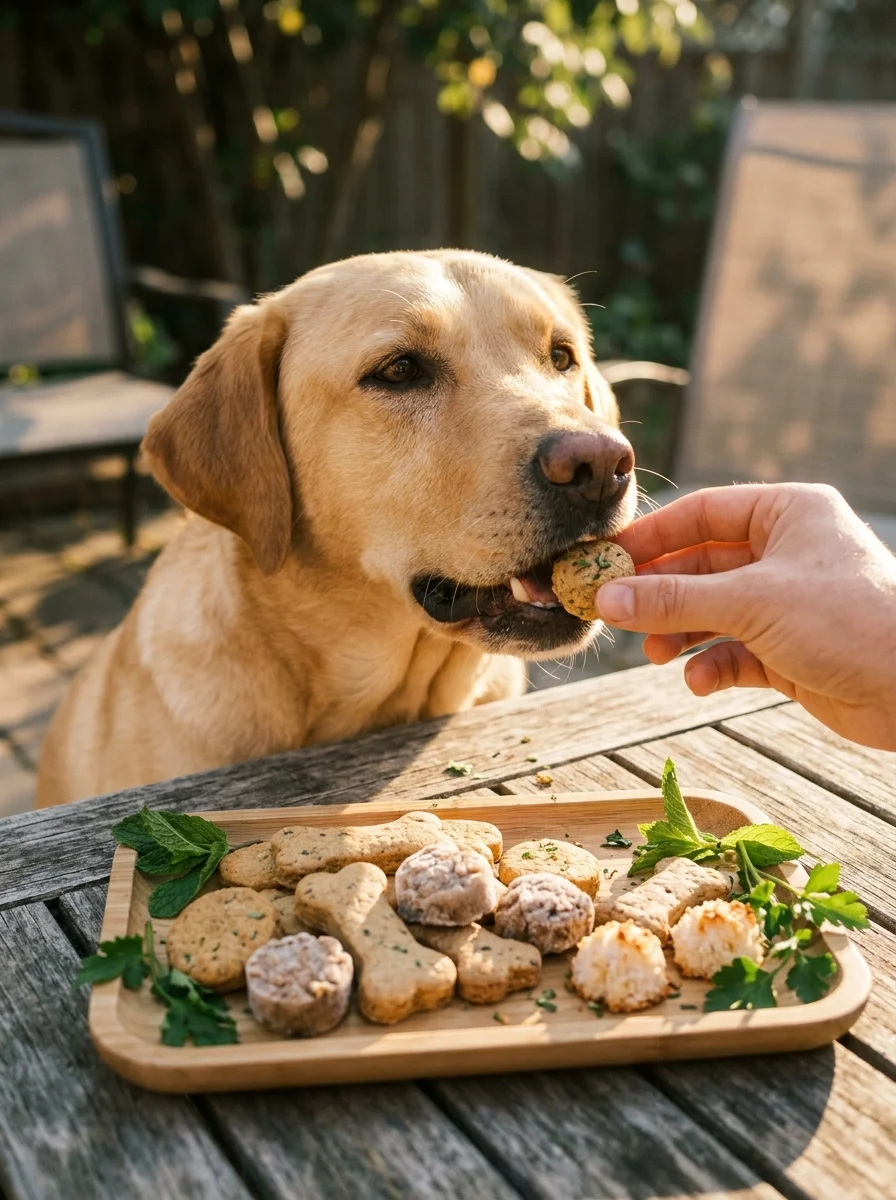
Cottage Cheese Dog Treat Recipes: Protein-Packed & Pup-Loved
Cottage cheese dog treat recipes turn a soft, mild dairy food into chewy, protein-rich bites that most dogs welcome with enthusiasm. These homemade options replace store-bought snacks with something you control completely, keeping the ingredient list short and the flavor simple. The base is gentle enough for dogs that tolerate small dairy amounts, yet substantial enough to feel like a real reward.
What makes this base attractive is its texture. Cottage cheese holds together slightly when mixed with dry ingredients, giving you a dough that rolls, cuts, or spoons into small portions without crumbling apart. It also spreads easily, so you can crumble it over other foods or fold it into batter quickly. For owners who want an occasional high-protein treat without a long baking window, that flexibility is the main draw.
You should still think of these as treat food. A few small bites for one dog is enough; these are not meant to become a daily staple or replace a balanced meal. If your dog shows sensitivity to dairy, you can shrink the portion, make a batch for another pet, or skip the recipe entirely. This guide keeps portions on the dog scale, with simple serving cues and safe storage, so you can make a batch and hand out only what your dog actually needs. Try this easy 4-ingredient puppuccino recipe for dogs when your pup likes a gentle, drinkable reward between solid treats.
Why Cottage Cheese Works for Dogs

High protein: Cottage cheese is packed with protein, and protein supports healthy muscle maintenance in active dogs. It gives treats more staying power than pure-fat snacks, and it can make a small reward feel more satisfying without a large volume.
Lower lactose than most cheeses: Compared with many aged or high-fat cheeses, cottage cheese tends to contain less lactose because it is made from curds and whey. That does not make it lactose-free, so dogs with dairy sensitivity should still receive smaller portions or skip it. If you serve it regularly, plain, unsweetened, low-sodium cottage cheese is the safer choice.
Soft texture that mixes easily: The curds break apart in the bowl, so the recipe comes together quickly and can be portioned with a spoon, a rolling pin, or your hand. You can press it into small bites, flatten it into pucks, or crumble it over a dog-safe topper. Because it blends smoothly with oat flour and egg, the finished bites stay soft when fresh and firm enough to hold their shape after cooling.
Moderation rule: These treats are occasional rewards, not a meal. For a small dog, one or two small bites is plenty; for a large dog, up to four is a reasonable limit when served once or twice a week. Watch for loose stool, gas, or reluctance to finish, and reduce portions if your dog reacts. For owners who want another simple protein snack, see these homemade cheese dog treats for a firmer, longer-lasting option.
Recipe 1: Cottage Cheese Oat Bites

These bites are the easiest starting point: they bake into small, firm pucks that hold their shape, making them easy to store and portion. The flavor is mild, the texture is slightly dense, and the protein from cottage cheese makes them a solid reward for training or quiet evenings. Most dogs take to them quickly, especially when served at room temperature.
Ingredients
- cottage cheese
- oat flour
- egg
- baking powder
- ground flaxseed
Step-by-Step Instructions
- Preheat your oven to 350 degrees Fahrenheit and line a small baking sheet with parchment paper.
- In a medium bowl, combine the cottage cheese, oat flour, egg, baking powder, and ground flaxseed, stirring until the mixture forms a thick, slightly sticky dough.
- Let the dough rest for five minutes so it firms enough to roll, then turn it out onto a lightly floured surface.
- Roll the dough to about one-eighth inch thick, then use a small cookie cutter or the edge of a glass to cut 24 tiny rounds.
- Place the rounds on the prepared sheet, leaving a little space between them, and bake for 20 minutes until golden and no longer sticky in the center.
- Let the bites cool on the pan for ten minutes, then transfer them to a wire rack until fully cool before storing.
These bites can be served whole or crumbled into a topper, and they hold their protein without becoming chewy. If you want a different seasonal twist, try pairing them with fruit in the next section. For owners who enjoy sweet-tasting waffle-style snacks, these sweet potato dog waffles are a low-lactose alternative you can make ahead.
Cottage Cheese Variations
The base recipe is simple, but two small swaps change the texture, the flavor, and the serving style. Both variations keep the ingredient list at five items, so you can make them in a single session or save them for a different week. Choose the frozen version for warm weather and the parsley version for a fresh, herbal finish.
Variation 1: Frozen Peach Bites

This no-bake version is ideal for hot days. The peaches add natural sweetness and moisture, while the Greek yogurt helps the mixture hold its shape in the freezer. The bites come out soft when thawed and firm when served cold, so you can give them straight from the freezer as a cooling snack.
Ingredients
- cottage cheese
- diced peaches (fresh or thawed frozen, pits removed)
- plain Greek yogurt
- oat flour
- ground flaxseed
Step-by-Step Instructions
- In a medium bowl, mix the cottage cheese, diced peaches, Greek yogurt, oat flour, and ground flaxseed until the mixture is uniform and slightly thick.
- Portion the mixture into twelve small mounds on a parchment-lined tray or in a silicone mold, keeping each portion the size of a small kibble or a bit larger.
- Cover the tray and freeze for four hours, or until the bites are firm enough to handle.
- Transfer the frozen bites to a freezer-safe bag or container, labeling the date, and serve them cold as a treat.
Thaw these bites slightly before serving if your dog prefers a softer texture, or let a small portion soften in a bowl for a minute. This version is also a good way to use up thawed frozen peaches without waste.
Variation 2: Parsley Crunch

This baked version has a fresher, herbier finish that many dogs like when mixed into a bowl. The parsley is used in small food-safe amounts, and the oat flour gives the bites enough structure to stay crisp after cooling. It is a good option if you want a more savory profile than the plain oat bites.
Ingredients
- cottage cheese
- oat flour
- egg
- fresh parsley (chopped)
- baking powder
Step-by-Step Instructions
- Preheat your oven to 350 degrees Fahrenheit and line a small baking sheet with parchment paper.
- Chop the fresh parsley finely, then stir it into the cottage cheese, oat flour, egg, and baking powder until the mixture forms a soft dough.
- Let the dough rest for five minutes, then roll it out to about one-eighth inch thick on a lightly floured surface.
- Cut the dough into 24 small rounds and place them on the prepared baking sheet.
- Bake for 22 minutes, until the edges are dry and the center is no longer tacky.
- Cool completely on the pan before storing, or serve while still slightly warm if your dog likes a softer texture.
These bites pair well with other simple snacks, and the herbal note can make a plain kibble bowl more interesting. If you want another fruit-forward treat to rotate, these carrot and apple waffles for dogs add a mild sweetness without dairy.
Serving by Dog Size
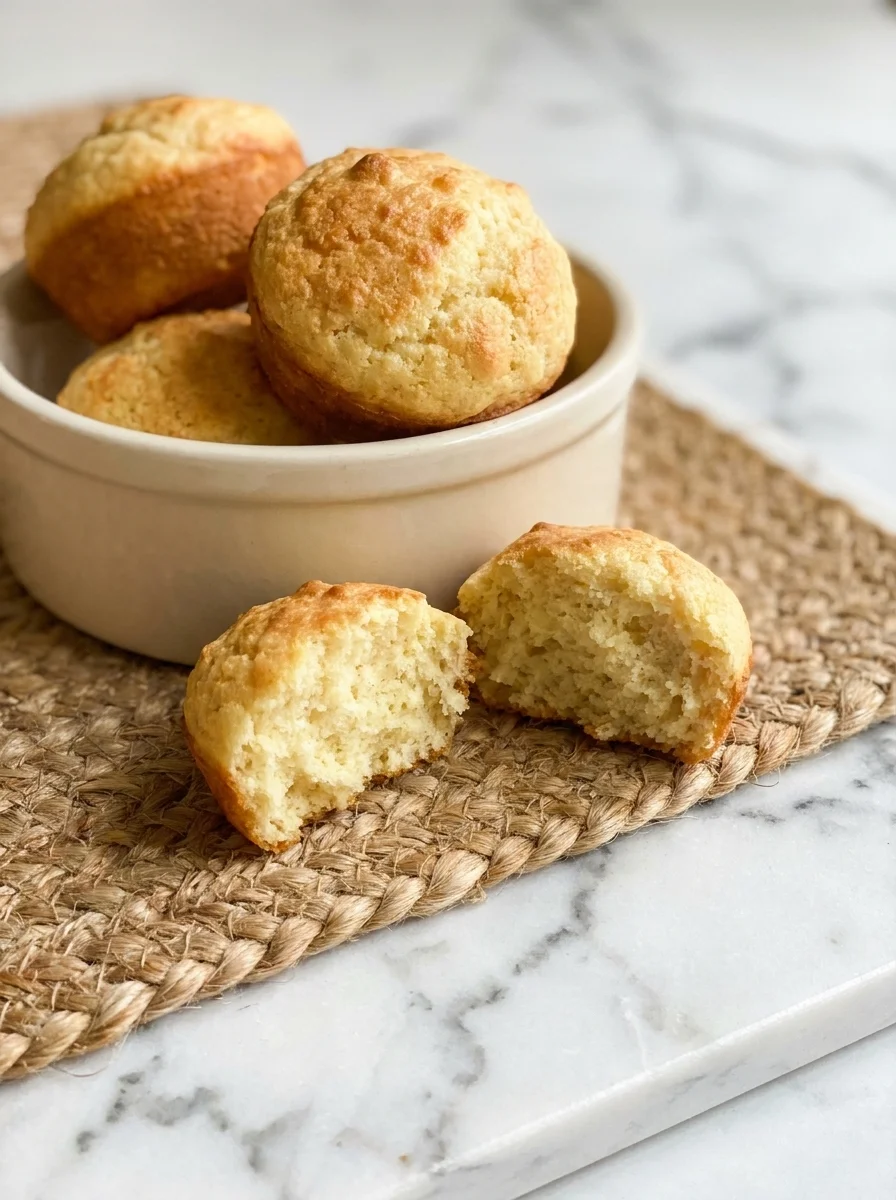
Small dogs: Offer one or two small bites as an occasional treat. If you are using the recipes above, a “small bite” is roughly the size of a large kibble, not a whole cookie. Serve them on a mat or in a shallow bowl so your dog can eat them comfortably, and remove any uneaten portions after a few minutes.
Medium dogs: You can serve up to three small bites, still as an occasional reward rather than a daily snack. If your dog is sensitive to dairy, stick to one or two and watch for signs of discomfort. You can also crumble the baked bites over a regular meal to make them feel like a topper instead of a separate treat.
Large dogs: Up to four small bites is a reasonable upper limit for a treat, but only if the rest of the diet is balanced and your dog does not have a weight goal. Serve them after a walk or during training, not in place of a meal. Crumbling them over kibble or a dog-safe bowl food is an easy way to keep portions small and digestible.
When to serve: Use these treats for positive moments, such as after a walk, during training sessions, or as a quiet evening snack. Do not serve them right before a long car ride or before a period when your dog needs to hold, and avoid giving them when your dog is already showing digestive upset.
Storage
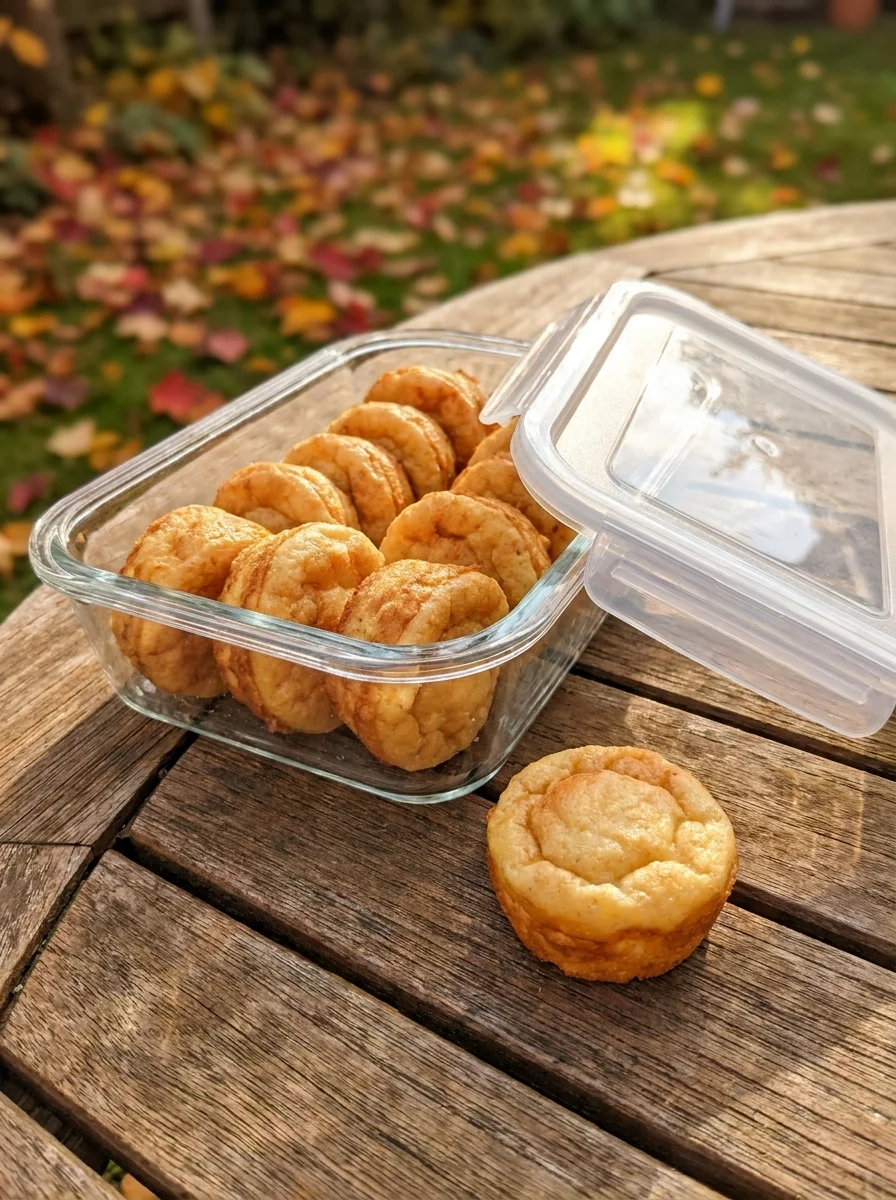
Fridge: Store baked bites in an airtight container in the refrigerator for up to five days. Keep them dry; if the container develops condensation, place a paper towel inside to absorb moisture. Frozen peach bites can also be kept in the fridge for a day or two after thawing, but they are best served cold or freshly frozen.
Freezer: Both baked and frozen bites can be stored in the freezer for up to two months. Place the bites in a single layer on a tray until firm, then transfer them to a freezer-safe bag or container to prevent sticking. Label the bag with the date and the recipe name so you can rotate batches.
Thawing: For frozen peach bites, transfer a few pieces to the counter for ten to fifteen minutes if your dog prefers a softer texture. Do not microwave them, as the heat can make the cottage cheese rubbery. Serve thawed bites within a day or two and keep any remaining portions frozen.
If you have a large batch, portion it into single-serve bags so you can grab one without opening the whole container. For owners who enjoy making a variety of snacks, this homemade apple pie for dogs recipe is a good seasonal option to rotate alongside cottage cheese treats.
Frequently Asked Questions
Final Thoughts
Cottage cheese dog treat recipes are one of the simplest ways to make a high-protein, dog-scale snack at home. They come together quickly, store well, and can be served whole or crumbled over other foods. Because the ingredient list is short, you can adjust the flavor by swapping in a fruit or an herb without adding complicated steps.
The key is moderation. These treats are not a staple, and they should not replace a complete diet. A few small bites for one dog, once or twice a week, is a realistic serving for most healthy adults. If your dog shows any sensitivity to dairy, reduce the portion or skip the recipe entirely.
Keep the batch small, serve it on a mat or in a bowl, and watch how your dog responds. Rotate these cottage cheese bites with other safe snacks to keep mealtime interesting, and always prioritize your dog’s individual tolerance over a recipe’s convenience.

Izzy is an experienced ranch worker who has a passion for exploring nature and getting up close to wildlife. With her connections to various animal organizations, Izzy is well-versed in animal care and rehabilitation.