The Pallet Dog House Trend Every Dog Owner Needs to See
If you’ve ever priced out a store-bought dog kennel, you already know the sticker shock. Solid wood houses for medium and large dogs can easily run into hundreds of dollars — and many of them still don’t look good in your backyard.
That’s exactly why more pet owners are turning to a pallet dog house. It’s affordable, it’s surprisingly sturdy, and it can be shaped into almost any style you like — rustic, modern, farmhouse, or even boutique-chic.
A pallet dog house is built from repurposed wooden shipping pallets instead of buying fresh lumber. The wood is free or nearly free, the build is simple enough for a weekend project, and the finished result can look just as good as anything you’d find in a pet store — sometimes better.
In this article, we’re breaking down 9 pallet dog house ideas, each based on real builds so you can see exactly how the finished product looks before you pick up a hammer. Whether you want a rough, natural-wood shelter or a polished, painted mini-cabin, there’s an idea here for you.
Let’s get into it.
Why Choose a Pallet Dog House?
Before jumping into the ideas, it helps to understand why pallet wood has become such a popular material for dog houses in the first place.
Affordability of Reclaimed Pallet Wood
Pallets are often available for free or very cheap from warehouses, hardware stores, and shipping companies. Since the wood is already cut into usable planks, you’re saving both money and time compared to buying raw lumber.
This makes a pallet dog house one of the most budget-friendly ways to give your dog a proper outdoor shelter, especially if you’re also setting up a full outdoor dog kennel and want to save money on the housing part.
Eco-Friendly and Sustainable Choice
Every pallet you reuse is one less pallet sitting in a landfill. Building with reclaimed wood is a small, practical way to reduce waste while still creating something functional. If sustainability matters to you, this is a simple way to put it into practice in your own backyard.
Easy to Customize for Any Dog Size
Pallets come in fairly standard plank sizes, which makes it easy to resize a design up or down. Small breeds need less than 3 feet of interior space, while larger dogs may need a house closer to 4–5 feet wide. Because you’re working with individual planks rather than a fixed kit, adjusting the dimensions is straightforward.
This flexibility is one of the biggest reasons pallet builds work so well for DIY dog kennel projects — you’re not locked into someone else’s measurements.
9 Pallet Dog House Ideas to Try
Here are nine different pallet dog house styles, ranging from simple raw builds to professionally finished showpieces. Each one is based on a real, photographed build so you know exactly what to expect.
1. Classic Raw Pallet Dog House
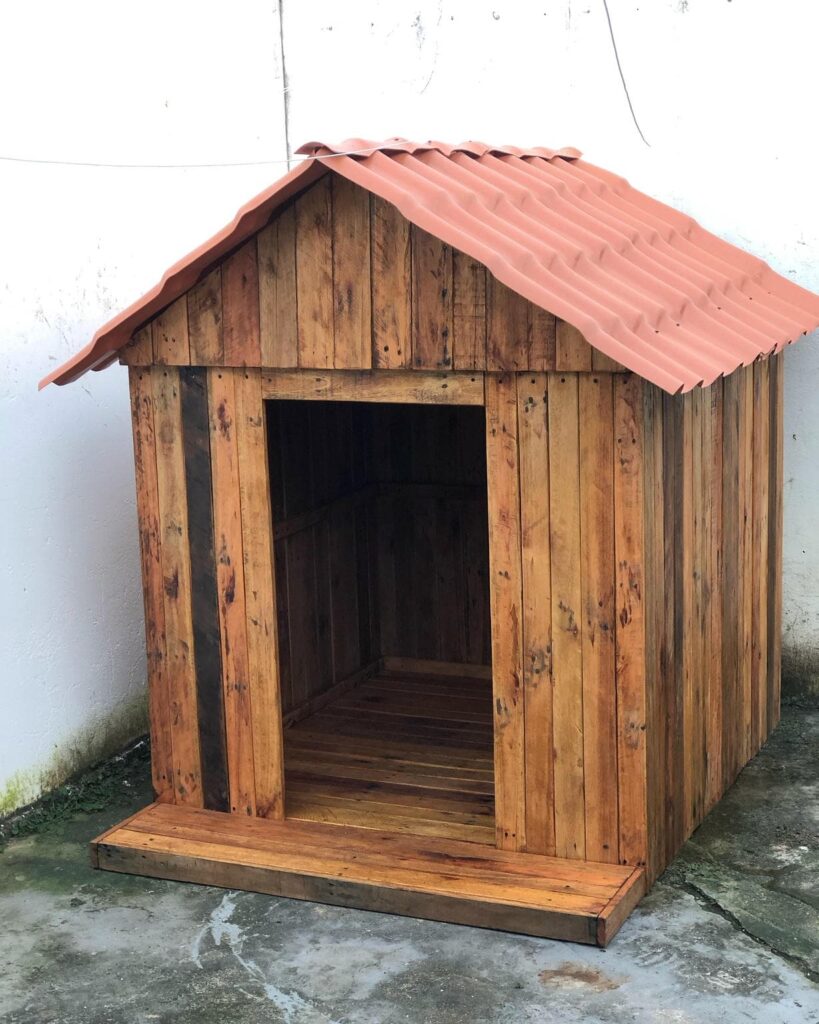
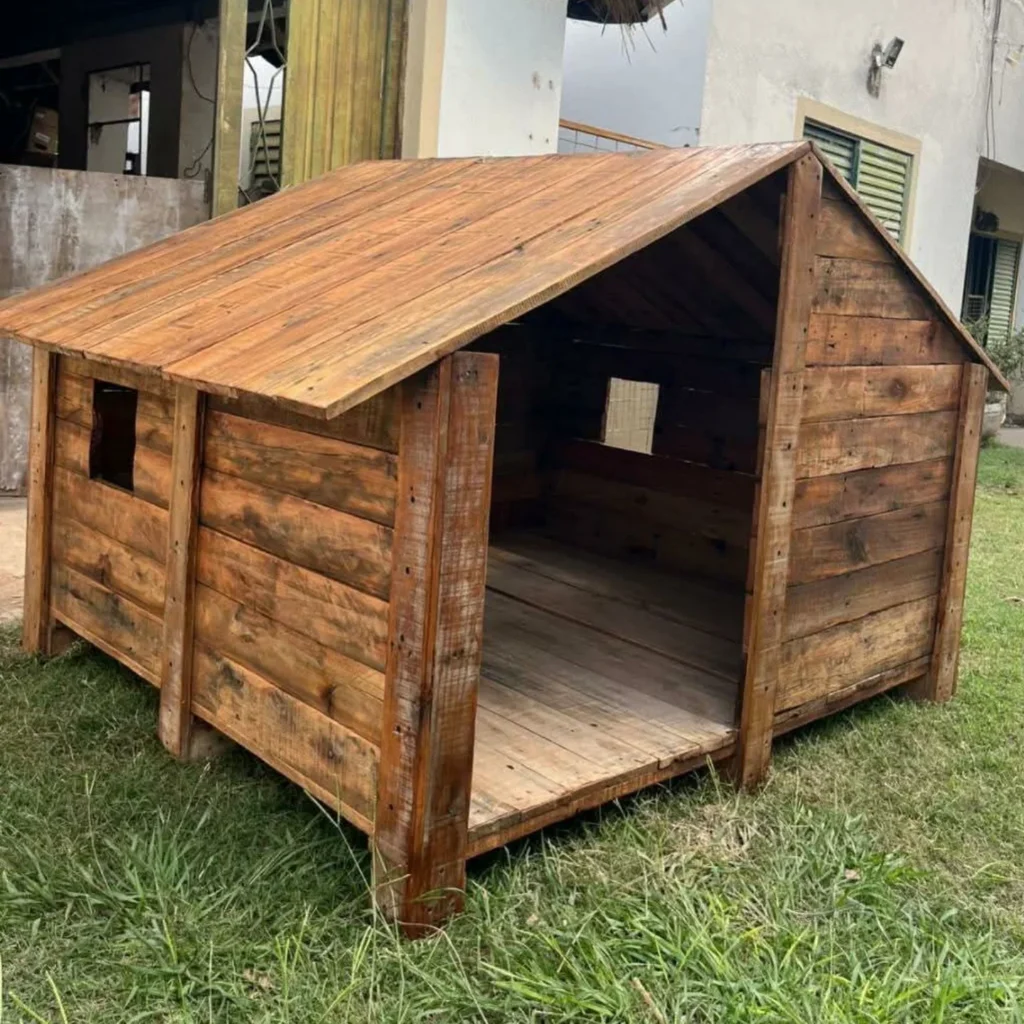
This is the most beginner-friendly version of a pallet dog house, and it’s a great starting point if this is your first build.
The design keeps things simple: a rectangular base, a peaked gable roof, and an open front doorway. The wood is left mostly unfinished or lightly sealed, so you can still see the natural grain, knots, and even the occasional nail hole from the pallet’s former life. Some versions add a small covered porch section at the front for extra weather protection.
Why this style works:
- It’s the cheapest and fastest version to build
- No painting or staining skills required
- The natural wood tone blends into almost any backyard setting
- Great for practicing basic carpentry before attempting a fancier design
Who it’s best for: Dog owners who want a functional shelter fast, without spending time or money on finishing touches. It also works well as a starter project if you’re new to woodworking.
Build tip: Even if you skip staining, at least apply a clear wood sealant to the roof and base. These two areas take the most weather damage, and a simple sealant can add years to the house’s lifespan. If you’re setting the house directly on grass or dirt, consider adding a raised base — pairing this idea with a solid dog kennel flooring approach will keep the interior dry during rain.
📸 Photo credit: Instagram @mdrartesanatos, @estilopalet.st
2. Rustic Stained Cottage-Style Pallet House
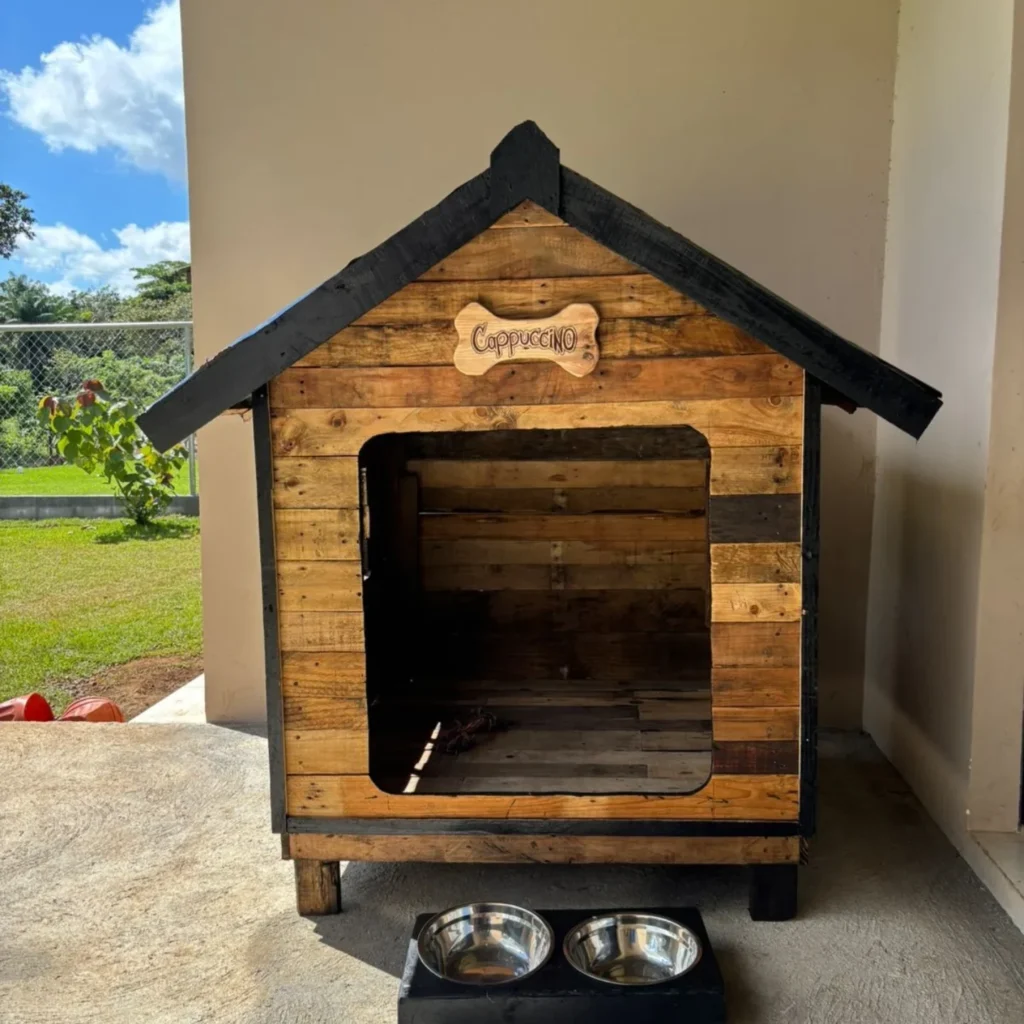
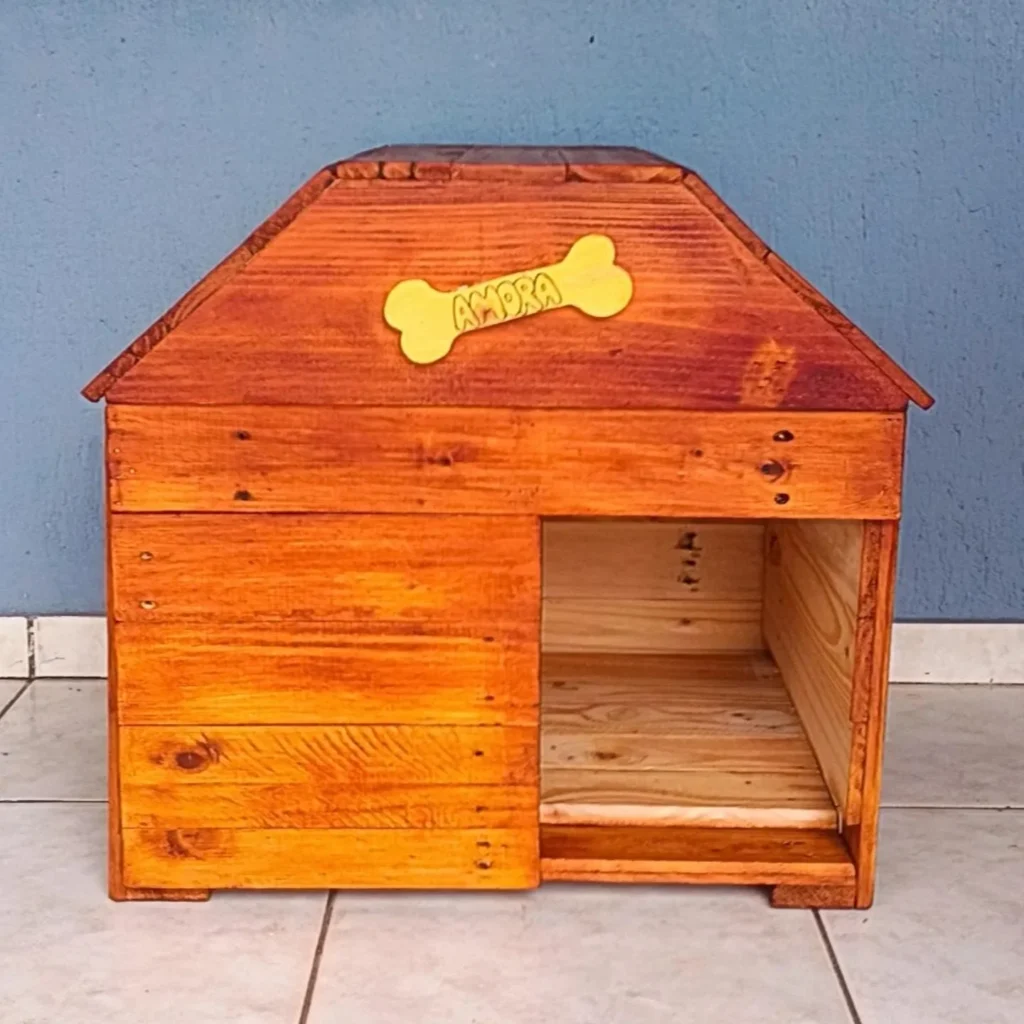
If you like the idea of a pallet dog house but want something with a bit more warmth and personality, the stained cottage style is a great next step up.
This version uses a wood stain — usually a reddish-brown or deep walnut tone — to give the pallet planks a richer, more finished look. Many builders in this style add a personalized touch, like a wooden bone-shaped sign with the dog’s name carved or painted on it. The overall effect feels less like a “shelter” and more like a proper little cottage.
Why this style works:
- Staining is inexpensive but makes a big visual difference
- The color hides pallet imperfections better than raw wood does
- Personalized details (name signs, painted accents) make it feel custom-made
- Stained wood tends to resist moisture slightly better than untreated wood
Who it’s best for: Owners who want their dog’s house to double as a charming backyard feature, not just a functional box. This style also photographs well if you like sharing your yard setup online.
Build tip: Choose an oil-based exterior wood stain rather than an interior product — it holds up much better against rain and sun exposure. Apply at least two coats, and let each coat dry fully before adding the next. If you want to go a step further, this is also a great point to add a small raised feeding area nearby; check out these dog feeding station ideas for inspiration on pairing the two.
📸 Photo credit: Instagram @oficina_bugigangas, @recreopallets_andmore
3. Covered Porch Pallet Dog House with Feeding Station
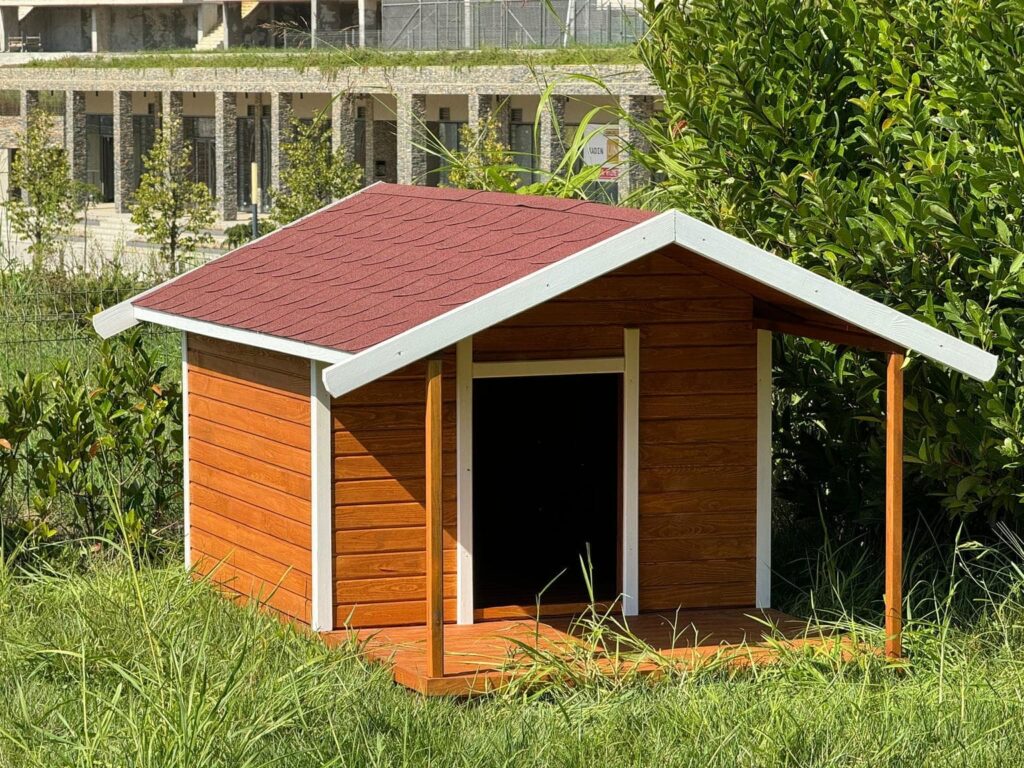
This idea takes the basic pallet dog house and adds a covered porch section out front — essentially turning it into a two-zone structure. The back half is the enclosed sleeping area, while the front half is a shaded, semi-open porch where food and water bowls can sit protected from rain.
Some versions use wooden railings along the porch edge, while others add support posts and a wider overhang. The roofing material also gets more attention here — corrugated metal panels or asphalt shingles are common upgrades that make the structure look closer to a real mini house.
Why this style works:
- Keeps food and water bowls dry and out of direct sun
- Gives your dog a shaded spot to relax without going fully outside or fully inside
- The porch structure adds visual interest and makes the house look larger
- Upgraded roofing (metal or shingles) improves weather resistance significantly
Who it’s best for: Owners in areas with frequent rain or strong sun, and anyone who wants their dog to have both a private den and an open lounging spot.
Build tip: If you add a porch, make sure the roof overhang extends far enough to actually keep rain off the bowls — usually at least 12–15 inches of overhang is needed. Painting the trim a contrasting white or cream color (like seen in several porch-style builds) also helps the structure stand out and look more polished without much extra effort.
📸 Photo credit: Instagram @arvenwoodtr
4. Painted Modern Minimalist Pallet House
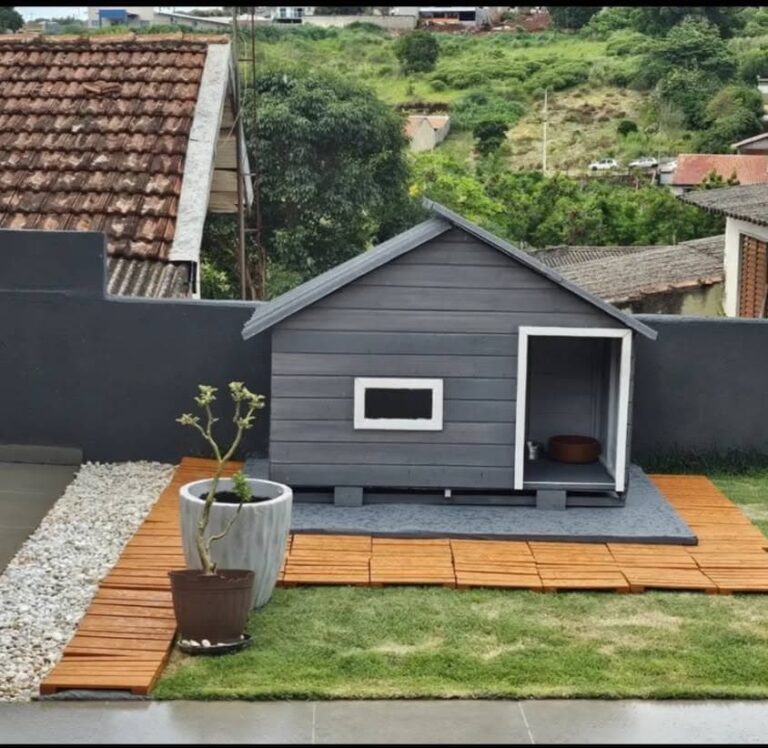
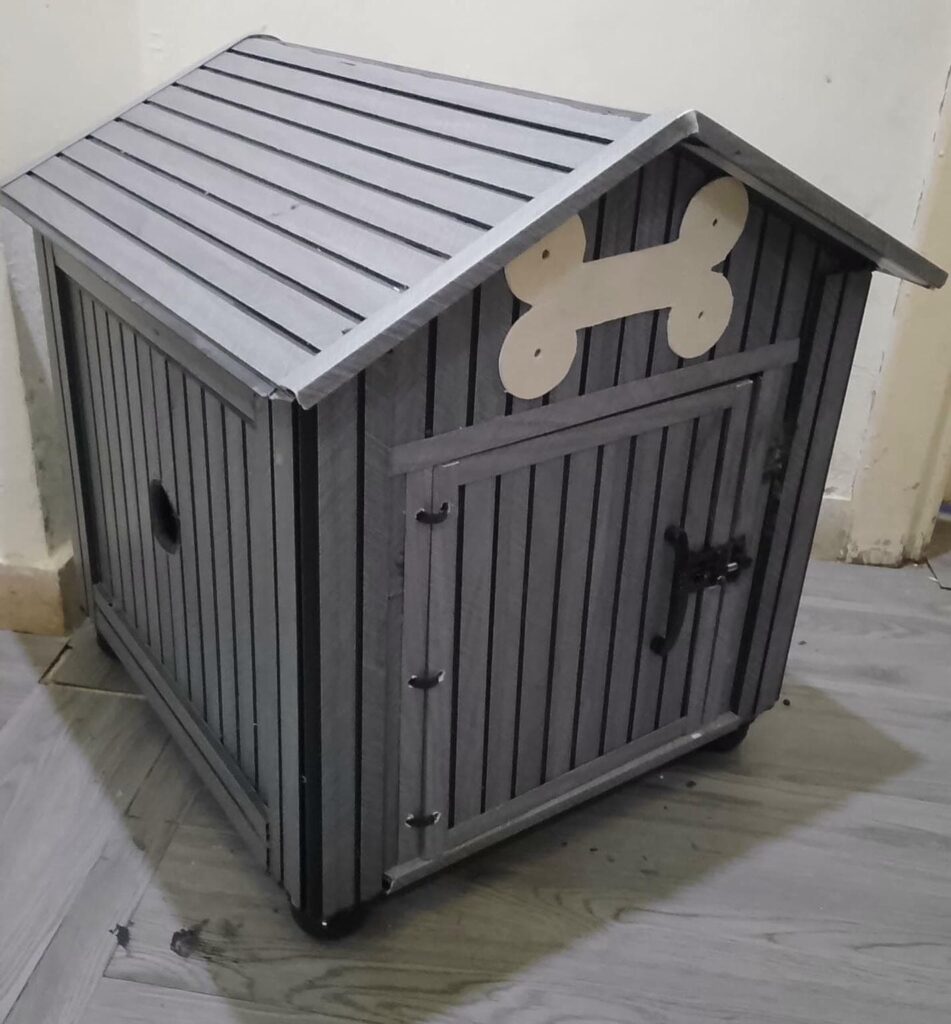
Not every pallet dog house needs to look “rustic.” This idea proves that pallet wood can also be dressed up into a clean, modern design using paint instead of stain.
The look typically involves a solid, muted paint color — soft grey is especially popular — combined with crisp white trim around windows, doors, and roof edges. Some versions include a small square window cutout, giving the house a real “tiny home” feel rather than a traditional doghouse shape. Others use a slatted panel design with black trim accents for an even more contemporary finish.
Why this style works:
- Paint fully hides pallet wood imperfections, knots, and mismatched planks
- Neutral color palettes (grey, white, black) match modern landscaping and patios
- Small window details make the house feel more like a real building
- Easier to touch up over time compared to natural wood finishes
Who it’s best for: Homeowners with a modern backyard aesthetic who don’t want their dog’s house to clash with the rest of their outdoor design.
Build tip: Always prime bare pallet wood before painting — pallet lumber tends to be rougher and more porous than standard lumber, and skipping primer usually means you’ll need three or four coats of paint instead of two. A quality exterior primer will save you time and paint in the long run.
📸 Photo credit: Instagram @jfartigosemmadeira, @ziaradesign
Sizing, Placement, and Comfort Considerations
Before we continue with the remaining ideas, it’s worth pausing on something just as important as style: making sure the house actually fits your dog properly.
A dog house that’s too large won’t retain body heat well in cold weather, while one that’s too small will feel cramped and may discourage your dog from using it at all. As a general guideline, your dog should be able to stand up, turn around, and lie down comfortably inside — but shouldn’t have so much extra space that a cold night feels drafty.
This matters just as much with a pallet build as it does with any luxury dog kennel setup, since comfort and insulation are what actually keep your dog using the space year-round.
Now, back to the remaining five ideas.
5. A-Frame Pallet Dog House with Lighting
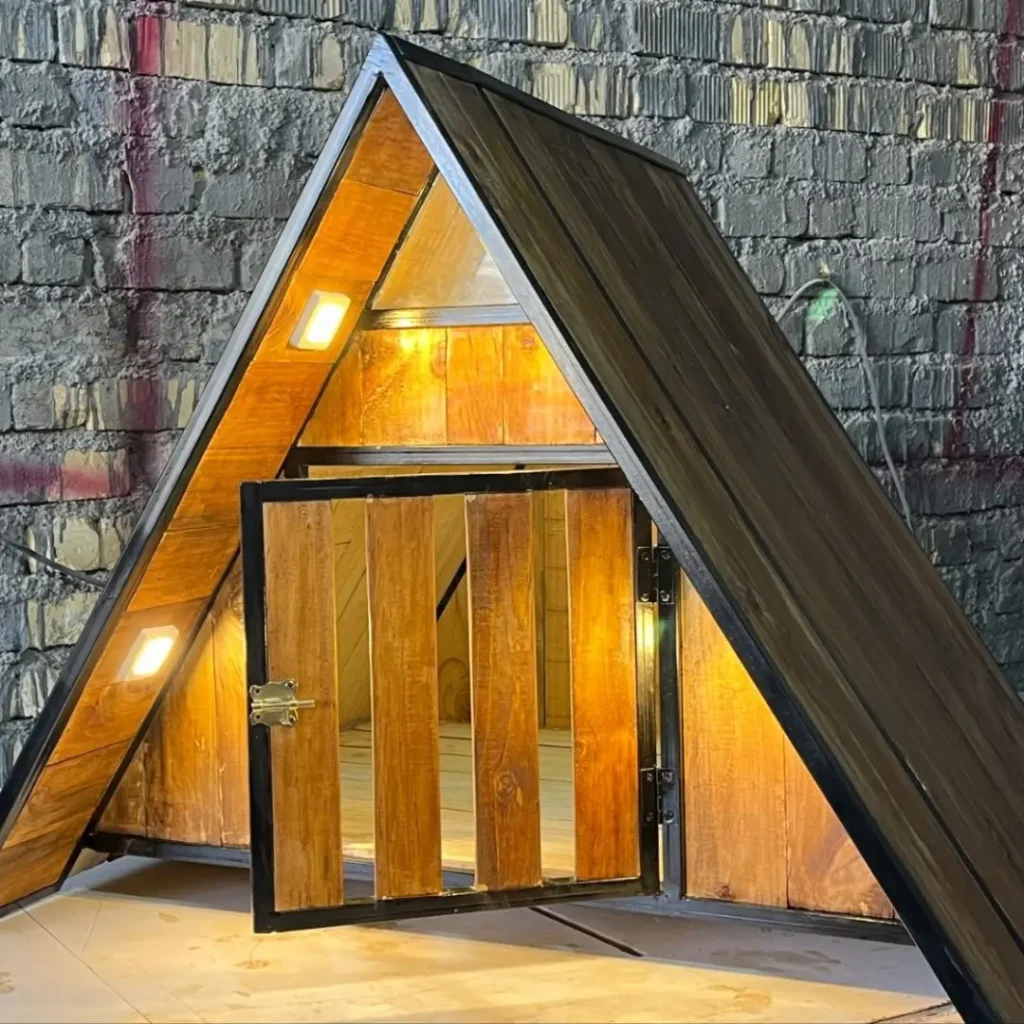
This is one of the more architecturally striking pallet dog house ideas on this list. Instead of the typical rectangular base with a peaked roof, the entire structure is built as a triangle — an A-frame — where the roof and walls are essentially the same surface.
What makes this version stand out even more is the addition of small interior lighting fixtures along the inside walls, plus a black metal-framed door with a real latch. The combination of dark wood tones, black trim, and warm interior lighting gives the whole thing a cabin-in-the-woods feel, almost like a tiny vacation lodge for your dog.
Why this style works:
- The A-frame shape sheds rain and snow very efficiently
- Requires slightly less material than a traditional box-and-roof design
- Interior lighting adds a unique, eye-catching detail
- The metal door frame adds durability and a secure closure option
Who it’s best for: Owners who want their pallet dog house to be a genuine design statement in the yard, not just a functional shelter. This style also works well if you want to fully enclose the house at night for security or weather protection.
Build tip: If you add lighting, use low-voltage, weatherproof LED fixtures rated for outdoor or damp locations, and keep all wiring tucked inside the wall cavity where your dog can’t chew on it. Battery-powered puck lights are a safer and simpler alternative if you’d rather avoid running electrical wiring altogether.
📸 Photo credit: Instagram @ahora_chooob
6. Compact Elevated Pallet Cabin
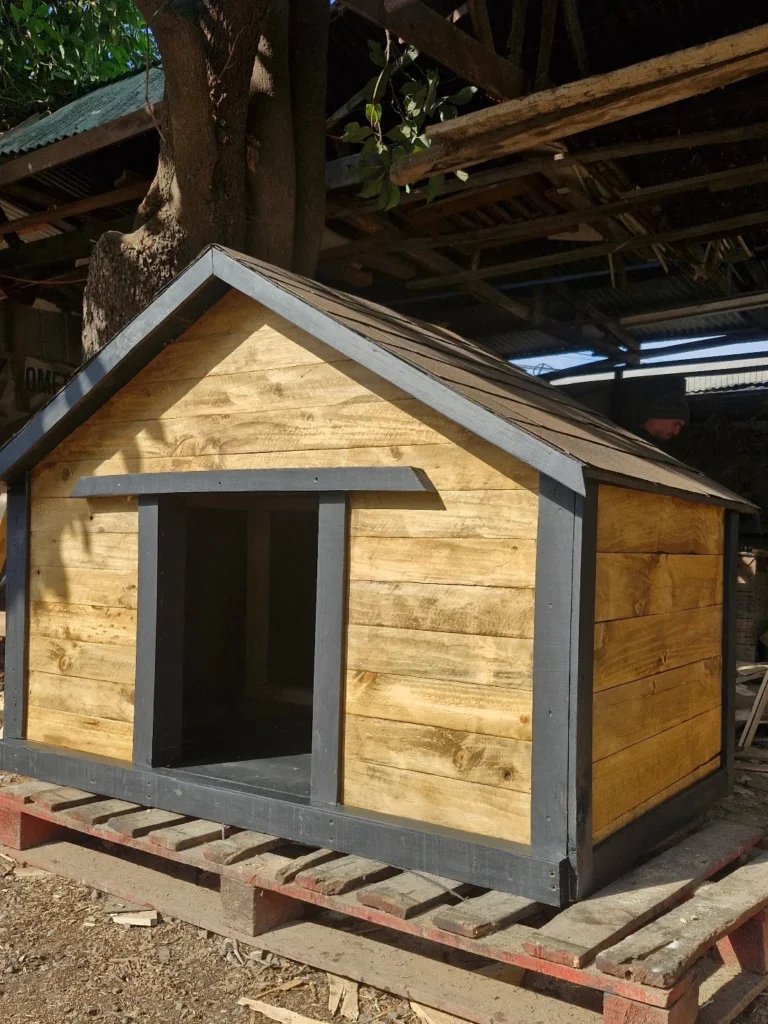
This idea focuses on practicality: a smaller, tightly built pallet house raised up off the ground on a wooden pallet base or support blocks. The elevation keeps the interior floor away from wet ground, mud, and cold surface temperatures.
The design usually features a simple gable roof with a two-tone color scheme — natural wood panels combined with a painted grey or charcoal trim around the doorway, corners, and roofline. Asphalt shingles are a common roofing choice here, adding a slightly more “finished building” look compared to plain wood or metal roofing.
Why this style works:
- Elevation protects against ground moisture and cold
- Compact footprint fits well in smaller yards or patios
- Two-tone trim gives a clean, professional appearance without full painting
- Shingled roofing improves water resistance significantly
Who it’s best for: Owners with smaller outdoor spaces, or anyone dealing with a yard that tends to get muddy or waterlogged after rain.
Build tip: When elevating a pallet dog house, use pressure-treated wood or a spare pallet as the base support — this is the part most exposed to ground moisture, so it needs the most protection. Leave a small gap between the base and the ground for airflow, which helps prevent rot over time.
📸 Photo credit: Instagram @casas.popet
7. Boutique-Style Decorative Pallet House
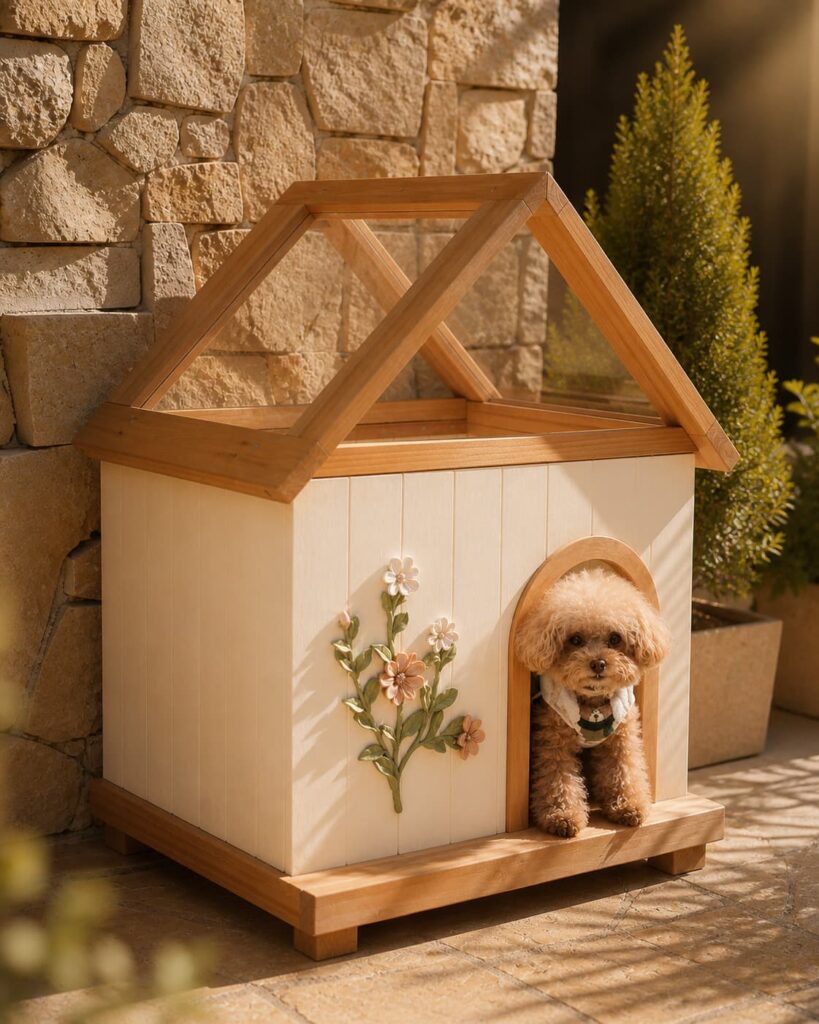
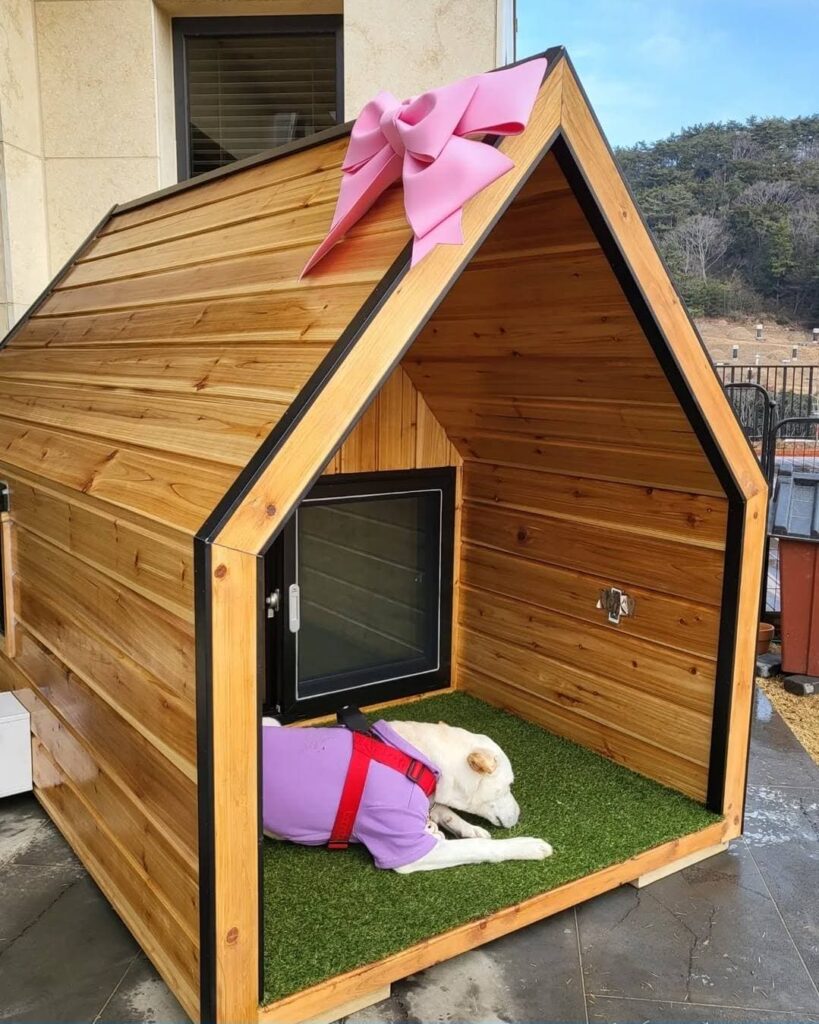
Not every pallet dog house has to look “handmade.” This idea shows how far you can take the finishing work — resulting in a house that looks like it came from a high-end pet boutique, even though it started as reclaimed pallet wood.
Common features in this style include smooth, whitewashed or light cedar-toned panels, an arched doorway (sometimes trimmed in a contrasting wood tone), and decorative touches like painted floral accents or fabric bows. Some versions also add a partially glazed roof section using framed glass panels, letting in natural light. The overall look feels closer to a small greenhouse or garden accent piece than a traditional doghouse.
Why this style works:
- Decorative details make the house a genuine backyard centerpiece
- Light color palettes look clean and elegant on patios and porches
- Arched doorways and glass roof panels add architectural charm
- Works especially well for small dog breeds
Who it’s best for: Owners of small or toy breed dogs who want a house that matches a more curated, aesthetic backyard or patio setup — think garden parties, not rugged outdoor camping.
Build tip: If you’re adding glass or acrylic panels to the roof, make sure they’re positioned so they don’t create excessive heat buildup inside during sunny afternoons. A partial glass section combined with solid wood coverage over the sleeping area gives you natural light without turning the house into a greenhouse.
📸 Photo credit: Instagram @lumicedar, @jeong_gyu_heon
8. Dual-Compartment Pallet House for Two Dogs
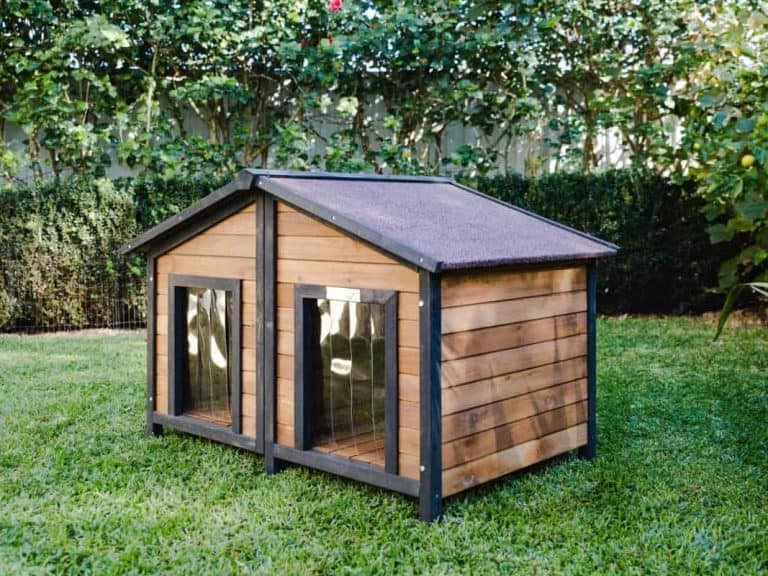
If you have more than one dog, building two separate houses isn’t your only option. This idea combines two enclosed sleeping compartments under a single shared roof, each with its own arched entrance.
The design keeps the two spaces fully separated by an interior wall, so each dog gets a private den, while the shared roof and base structure saves on material and space compared to building two completely separate houses. Clear plastic door flaps are sometimes added over each entrance to block wind and rain while still allowing easy in-and-out access.
Why this style works:
- Efficient use of space and material for multi-dog households
- Each dog gets a private, individual sleeping area
- Shared construction means less material and labor than two separate builds
- Flap-covered doorways add extra weather protection
Who it’s best for: Households with two dogs, especially if the dogs don’t always want to share the same sleeping space, or if you simply want to save yard space with a single combined structure.
Build tip: Keep the interior dividing wall solid, not just a partial barrier — this gives each dog a proper sense of privacy and helps retain body heat separately in each compartment. If your dogs are close in size, keep both compartments equal in dimensions to avoid one feeling more cramped than the other.
📸 Photo credit: Instagram @coopsandcages
9. Polished Retail-Finish Pallet House with Side Porch
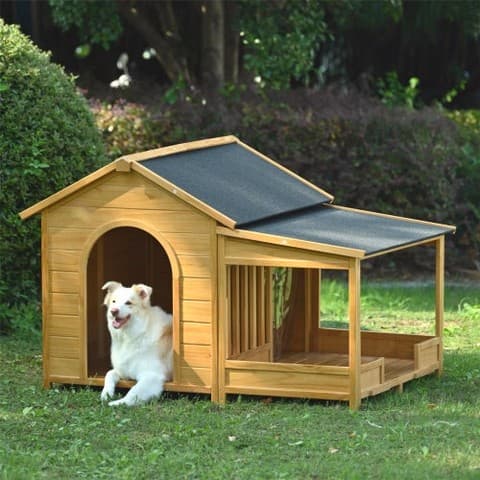
The final idea on this list shows just how refined a pallet dog house can look with the right finishing techniques. This design features a smooth, evenly stained wood finish, a rounded arch doorway, and a side porch section with a slatted wood railing — closely resembling a professionally manufactured kennel, despite being built from reclaimed pallets.
The roofline typically uses a soft, dark fabric or rubberized roofing material rather than exposed wood or metal, which gives the structure a slightly more premium, store-bought appearance. The added porch section provides a shaded outdoor spot separate from the enclosed sleeping area.
Why this style works:
- Smooth, even staining creates a professional, retail-quality look
- The arched doorway softens the overall structure visually
- Side porch adds functional outdoor space without enlarging the sleeping den
- Rubberized or fabric roofing improves waterproofing compared to raw wood
Who it’s best for: Owners who want the affordability of a pallet build but the polished look of a store-bought dog house — a nice middle ground between budget and presentation.
Build tip: To get this smooth, even stain finish, sand the pallet wood down thoroughly first — this step matters more than the stain itself. Rough, splintery pallet wood will never take stain evenly, no matter how many coats you apply, so don’t skip the sanding stage even though it’s tedious.
📸 Photo credit: Instagram @purrfectpethaven
Tips for Building Your Own Pallet Dog House
Now that you’ve seen nine different directions you can take a pallet dog house, here are some practical tips to keep in mind no matter which style you choose.
Choosing the Right Pallets
Not all pallets are created equal. Look for pallets stamped with “HT” (heat-treated), and avoid ones marked “MB” (methyl bromide), since that chemical treatment isn’t safe for projects your dog will be living in or chewing on. Heat-treated pallets are the safest option for any pet-related build.
Also inspect the wood for rot, mold, or heavy staining before using it — pallets that have been stored outside for a long time may already be weakened.
Sanding and Treating Wood Safely
Pallet wood is rougher than standard lumber, so sanding is not optional if your dog will be in direct contact with the surfaces. Focus extra attention on the interior floor and any spot your dog might chew or scratch at.
If you plan to stain or seal the wood, always choose pet-safe, non-toxic products. Many stains and sealants are formulated specifically for outdoor furniture and are safe once fully cured — just make sure to let the finish dry completely (usually 48–72 hours) before letting your dog near it.
Weatherproofing and Roofing Options
The roof takes the most weather damage of any part of the structure, so it’s worth investing a little extra effort here even on a raw or budget build. Options range from simple tarps and corrugated plastic sheeting to asphalt shingles and metal roofing panels, depending on your budget and the style you’re going for.
If you live somewhere with heavy rain or snow, consider covering the whole structure seasonally — a fitted dog kennel cover can add an extra layer of protection during the harshest months without requiring a full rebuild.
Sizing the House to Your Dog
As mentioned earlier, proper sizing matters more than most people expect. A good rule of thumb: measure your dog from nose to tail, then add about 25% to determine the minimum interior length. Height should allow your dog to stand fully upright without ducking.
For multiple dogs, either size up generously or consider the dual-compartment idea covered above, which keeps each dog’s space appropriately sized instead of forcing them to share one oversized box.
Where to Place Your Pallet Dog House
Even the best-built pallet dog house won’t perform well if it’s placed in the wrong spot. Here’s what to keep in mind:
- Shade matters most in summer. Position the house where it gets some afternoon shade, either from trees, a fence, or your home’s shadow, to prevent it from overheating.
- Avoid low-lying areas. Water naturally pools in low spots after rain, so place the house on slightly elevated or well-draining ground.
- Face the entrance away from prevailing wind. If you know which direction storms typically roll in from, angle the doorway away from that direction to keep wind and rain from blowing straight inside.
- Keep it near, but not exposed. Placing the house near a fence line or the side of your home offers some natural wind-blocking, without putting it in a fully enclosed or poorly ventilated corner.
Final Thoughts
A pallet dog house proves that you don’t need a big budget to give your dog a comfortable, good-looking place to relax outdoors. From the simplest raw wood shelter to a fully painted, boutique-style mini home, there’s a version of this project that fits almost any skill level, budget, and backyard style.
Start with whichever idea matches your current tools and confidence level — even the most basic raw build (Idea 1) can be upgraded later with stain, paint, or a porch addition as your skills improve. The beauty of building with pallets is that the material is forgiving, inexpensive, and endlessly customizable.
Pick a style from the nine above, gather your pallets, and get building. Your dog will thank you for it.

Izzy is an experienced ranch worker who has a passion for exploring nature and getting up close to wildlife. With her connections to various animal organizations, Izzy is well-versed in animal care and rehabilitation.