Beds with Dog Bed Underneath Your Dog Will Actually Use
If your dog sleeps in your room but you’re tired of stepping over a bulky dog bed every morning, you’re going to love this idea. Beds with dog bed underneath are exactly what they sound like: a human bed raised or built just high enough to tuck a cozy dog space right below it. Your dog gets a snug little den. You get your floor space back. And at night, you’re both just a few inches apart.
This setup has become popular for a simple reason — it solves two problems at once. Small bedrooms feel less cluttered, and dogs get a spot that feels safe, private, and close to their favorite human. It’s also a lot more practical than it sounds. You don’t need to buy an entirely new bedroom set or hire a carpenter to make this work. Many of the ideas below use bed frames you might already own, with just a few small changes.
Below, you’ll find 15 real ideas for beds with dog bed underneath, followed by tips on choosing the right size, understanding why dogs love this setup, and keeping the space clean long term. By the end, you should have a clear idea of which style fits your bedroom, your budget, and your dog’s personality best.
15 Beds with Dog Bed Underneath to Inspire Your Bedroom
Each idea below works for a different bedroom size, budget, and dog personality. Skim through and pick out the ones that fit your space best. Some of these are quick weekend projects, while others take a bit more planning. Either way, you’ll walk away with options you can actually use.
1. Loft Bed with a Cozy Dog Nook Below
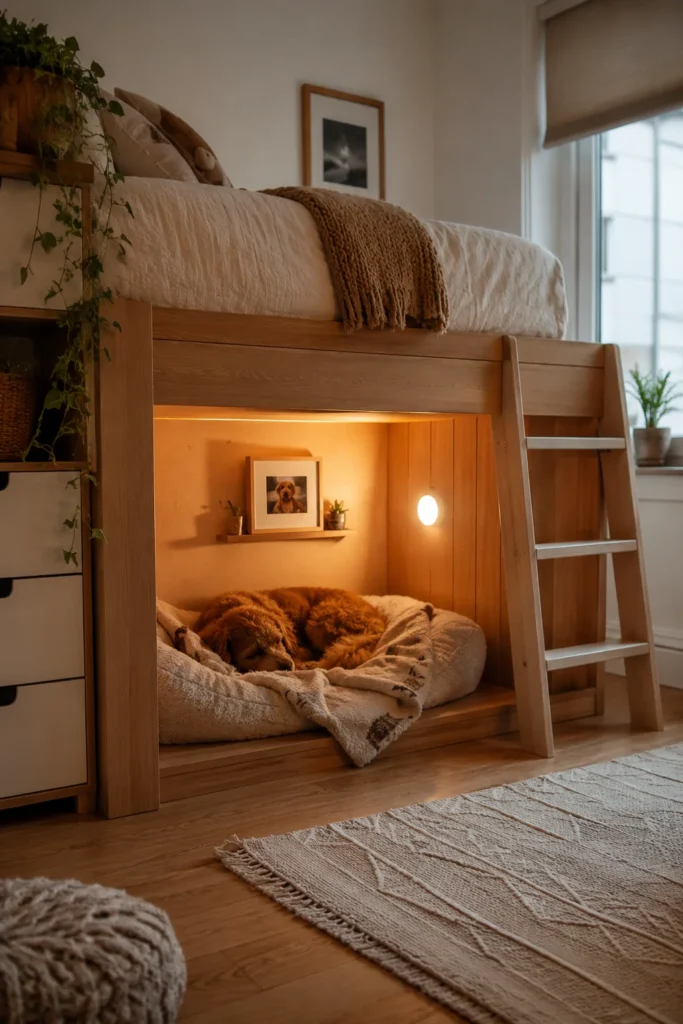
A loft bed raises your mattress up on a sturdy frame, leaving open floor space underneath. That space becomes the perfect spot for a padded dog bed, a soft blanket, and maybe a small nightlight.
This style works especially well in studio apartments or kids’ rooms where a dog shares the space. Because the frame is elevated, there’s usually enough headroom for medium and even some large dogs to stand up and turn around comfortably.
Loft beds also tend to be sturdy by design, since they need to safely support a mattress and a sleeping person well above the floor. That sturdiness is a bonus for the dog space underneath too, since there’s less chance of the frame shifting or creaking every time your dog gets up.
Best for: Small bedrooms and studio apartments.
2. Bunk Bed Style with a Dog Den Underneath
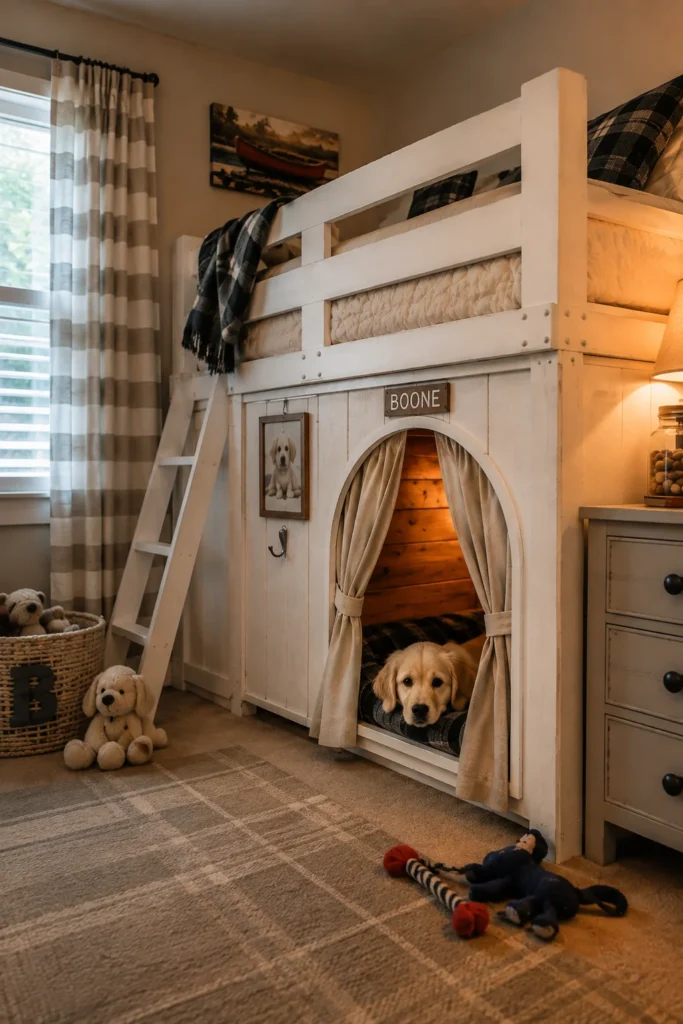
Instead of a second bunk on top, imagine a solid dog den built into the base of a bunk bed frame. It usually includes a small entrance, a soft interior, and sometimes a curtain or door for extra privacy.
This idea works great for multi-pet or multi-kid households, since the den keeps the dog’s space clearly separated from the rest of the room. It also tends to feel more “enclosed,” which some dogs prefer over an open nook.
If your family already has bunk beds for kids, this version simply repurposes the lower section instead of adding a second sleeping bunk. It’s an easy way to give your dog their own labeled “room” within a shared kids’ bedroom, without taking up any extra square footage.
Best for: Dogs who like a fully enclosed, den-like space.
3. Storage Bed with a Pull-Out Dog Bed
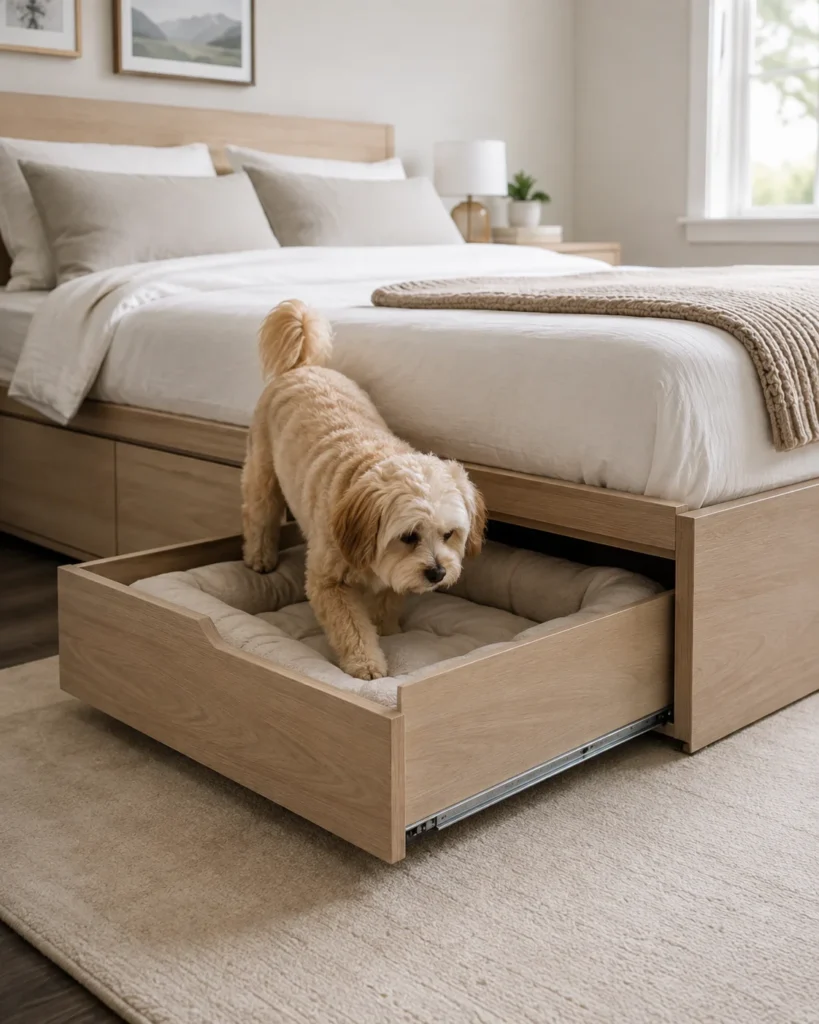
Storage beds already have drawers built into the base for extra linens or clothes. Swap one of those drawers for a padded, pull-out dog bed instead.
Your dog gets easy access whenever the drawer is open, and you can slide it shut during the day if you want a cleaner look. It’s an easy upgrade if you already own a storage bed frame.
One nice bonus with this option is how tidy it keeps your room. Instead of a permanent dog bed sitting out all the time, the whole space disappears the moment you close the drawer. That makes it a great pick for anyone who likes a clean, minimal bedroom look but still wants their dog nearby at night.
Best for: People who want a hidden dog bed that tucks away completely.
4. Platform Bed with Dog Crate Access
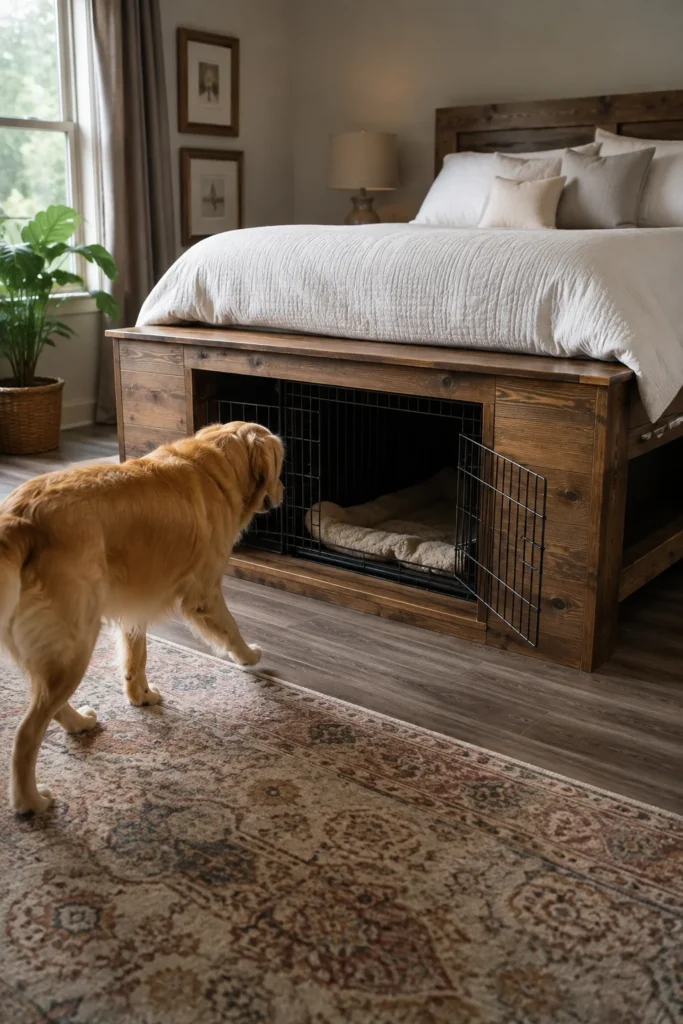
A platform bed frame with an open base can double as a spot for your dog’s crate. Instead of a crate sitting awkwardly in the corner of your room, it slides right underneath your bed frame.
This works especially well if your dog is already crate-trained, since it keeps their familiar sleeping spot but frees up a big chunk of floor space.
Because the crate stays exactly where it always has, your dog doesn’t need to relearn anything about their routine. The only real difference is where the crate physically sits in the room. This makes it one of the easiest transitions on this entire list, especially for dogs who are used to a wire or plastic crate at bedtime.
Best for: Crate-trained dogs who already have a favorite crate.
5. Daybed with a Built-In Canine Sleeping Area
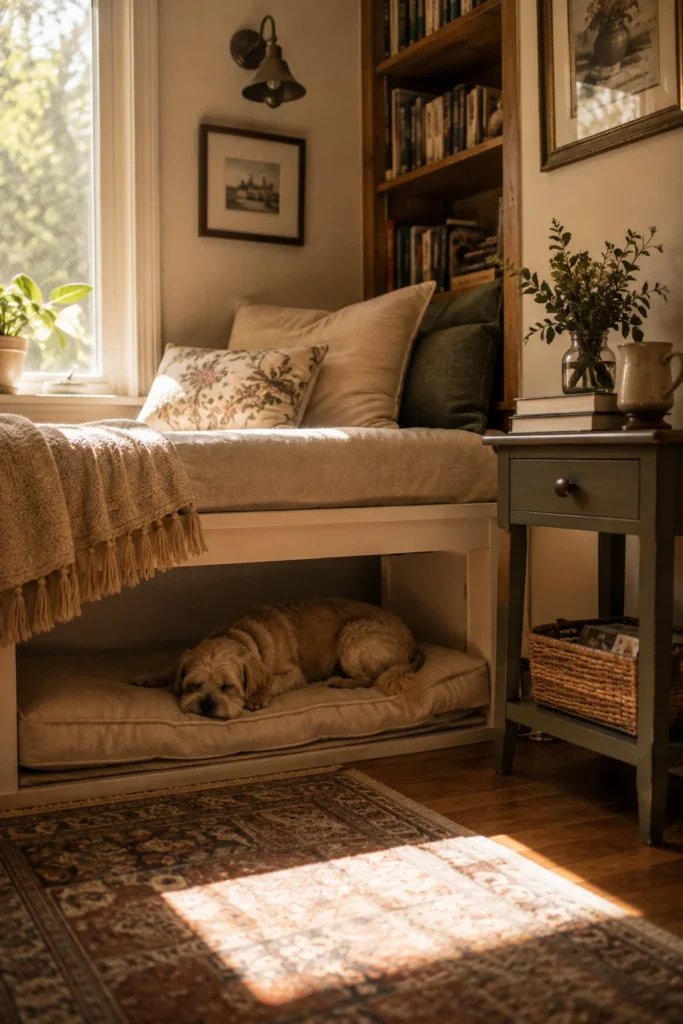
Daybeds sit lower to the ground and often have a slightly raised frame with open space below. That gap is just the right size for a small dog bed, especially for smaller or older dogs who don’t want to climb.
Because daybeds tend to look more like furniture than a typical bed frame, this option blends in nicely in a shared living room or guest room setup.
This is also a good option for senior dogs with joint pain, since the lower height of a daybed means less climbing and less pressure on their legs when they head to their spot for a nap. If your dog has mobility issues, a daybed setup can be gentler on their body than a taller loft-style frame.
Best for: Small dogs, older dogs, or shared guest spaces.
6. Canopy Bed with a Pet Hideaway Below
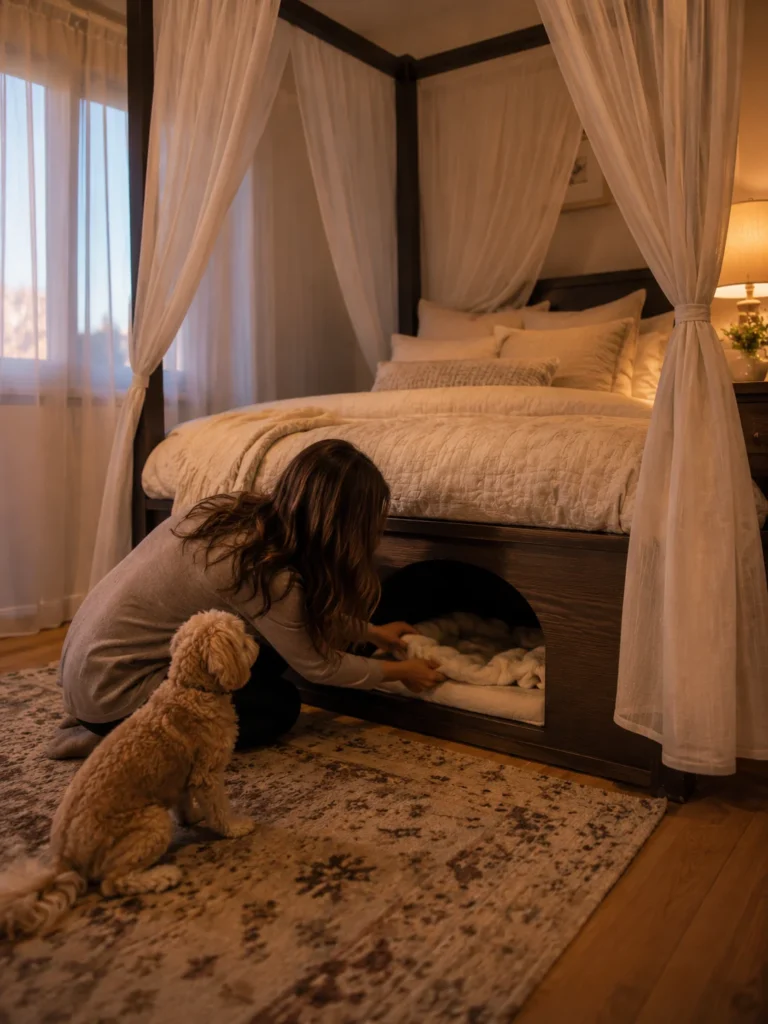
A canopy bed already has a dramatic, elegant look, and adding a hidden dog bed underneath keeps that style intact. The canopy draws the eye upward, so the dog space below stays out of sight unless you’re looking for it.
This is a great pick if you want a bed with dog bed underneath that still feels like a stylish, adult bedroom rather than a “pet space.”
You can dress up the hidden nook with fabric that matches your canopy curtains, which helps it blend seamlessly into the overall room design. It’s a good option for anyone who wants their bedroom to look polished and put-together, without giving up the practical benefits of a dog bed close by.
Best for: Anyone who wants the dog bed to stay visually hidden.
7. Murphy Bed with a Dog Nook
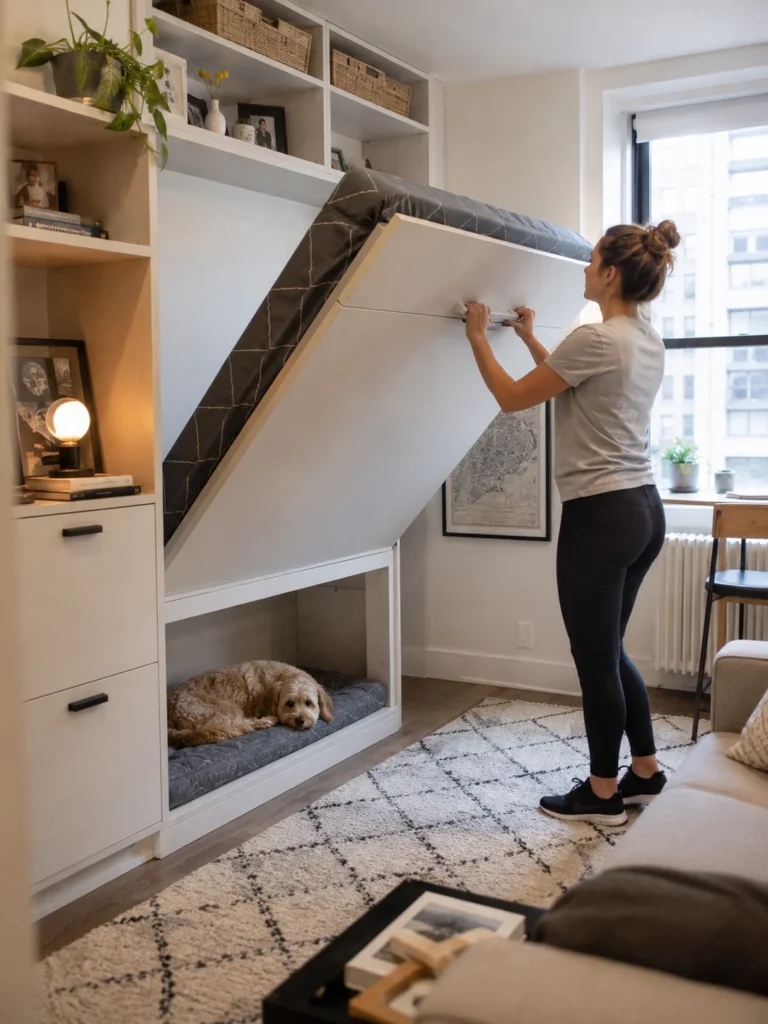
Murphy beds fold up against the wall during the day, which frees up your entire floor. Some designs include a small, fixed dog nook at the base that stays in place even when the bed is folded up.
This is one of the smartest space saving beds with built-in dog beds underneath, since your dog keeps their spot all day, not just at night.
That constant availability matters more than it might seem. Dogs like consistency, and having a nook that never moves — whether the bed is up or down — means your dog always has a predictable, reliable place to retreat to, even while you’re using the rest of the room for something else during the day.
Best for: Tiny apartments or multi-purpose rooms.
8. Modern Metal Bed Frame with a Dog Drawer
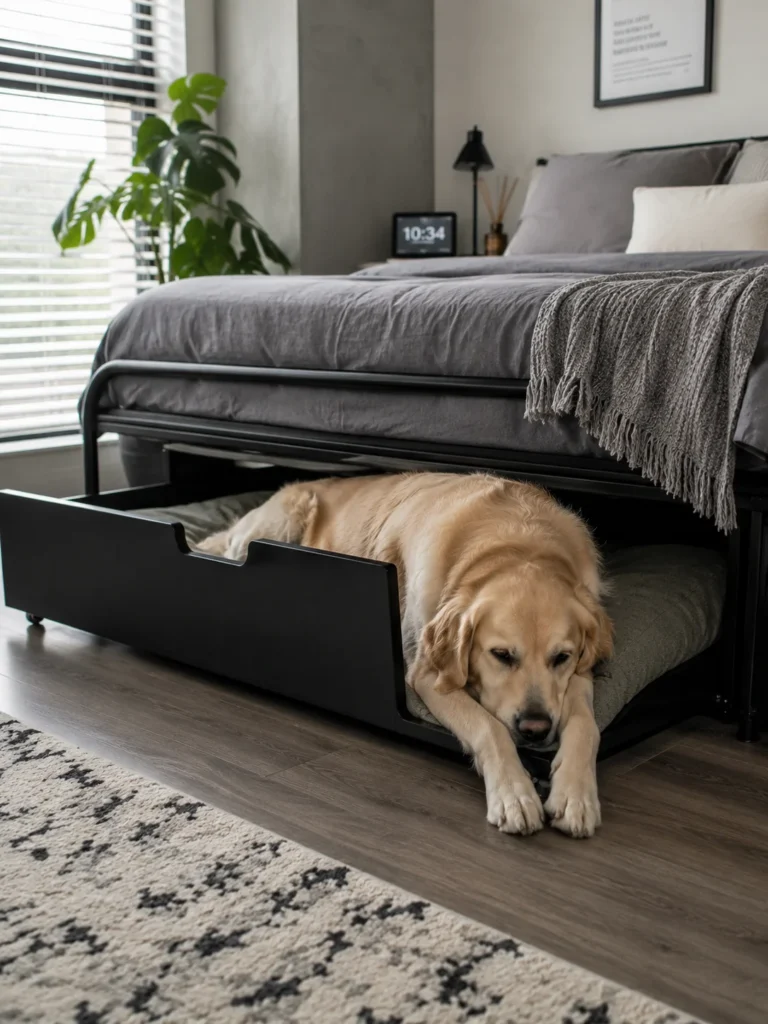
Metal bed frames are usually simple and sturdy, which makes them easy to modify. A shallow, slide-out drawer along the base can be lined with a washable pad to create a comfortable dog spot.
Because metal frames tend to sit a bit higher off the ground, there’s often enough room for a medium-sized dog to lie down comfortably.
Metal frames also tend to be more affordable than solid wood options, which makes this a good middle-ground choice if you like the drawer-style setup but don’t want to spend a lot on a custom storage bed. Look for a frame with slats spaced closely enough that the drawer slides smoothly without catching.
Best for: Medium-sized dogs and modern bedroom styles.
9. Futon Bed with a Removable Dog Sleeping Space
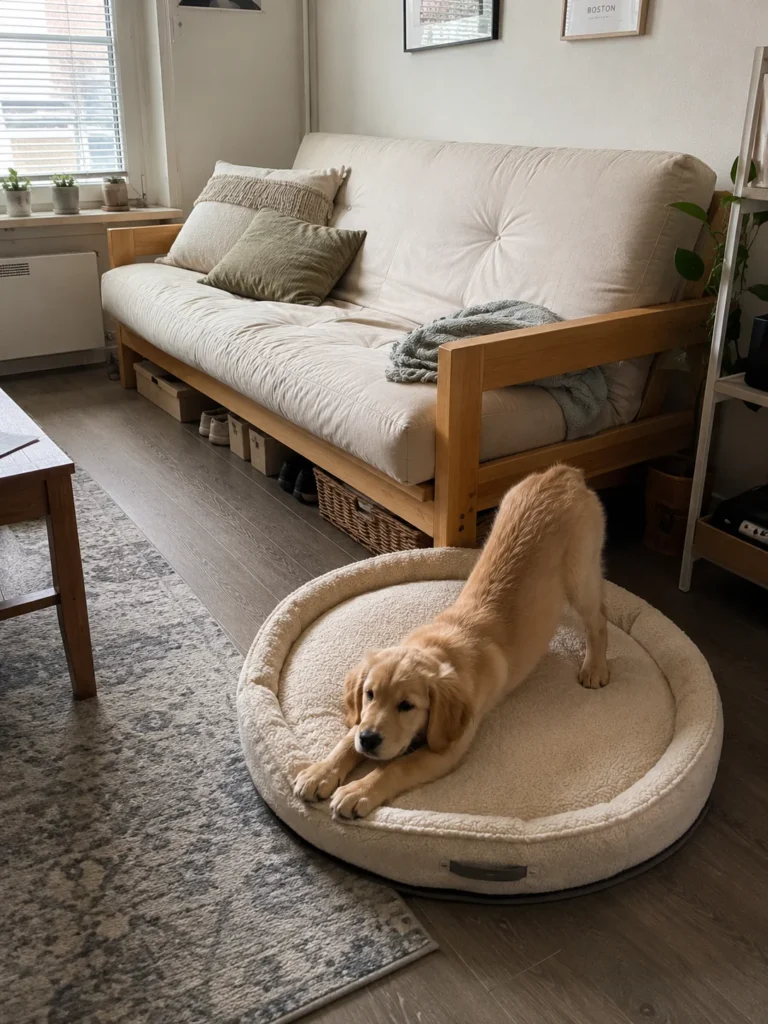
A futon frame with an open base works well for a simple, removable dog bed setup. Because futons fold flat during the day, the dog bed can be pulled out and used separately whenever needed.
This is a flexible, budget-friendly option if you’re not ready to commit to a custom-built bed frame.
It’s also a smart choice for renters, since nothing about this setup involves permanent changes to the bed frame or the apartment itself. You can pack up the whole thing and move it with you whenever you relocate, without leaving anything behind.
Best for: Renters or anyone who wants a temporary, low-cost setup.
10. Repurposed Dresser as a Dog Bed Base
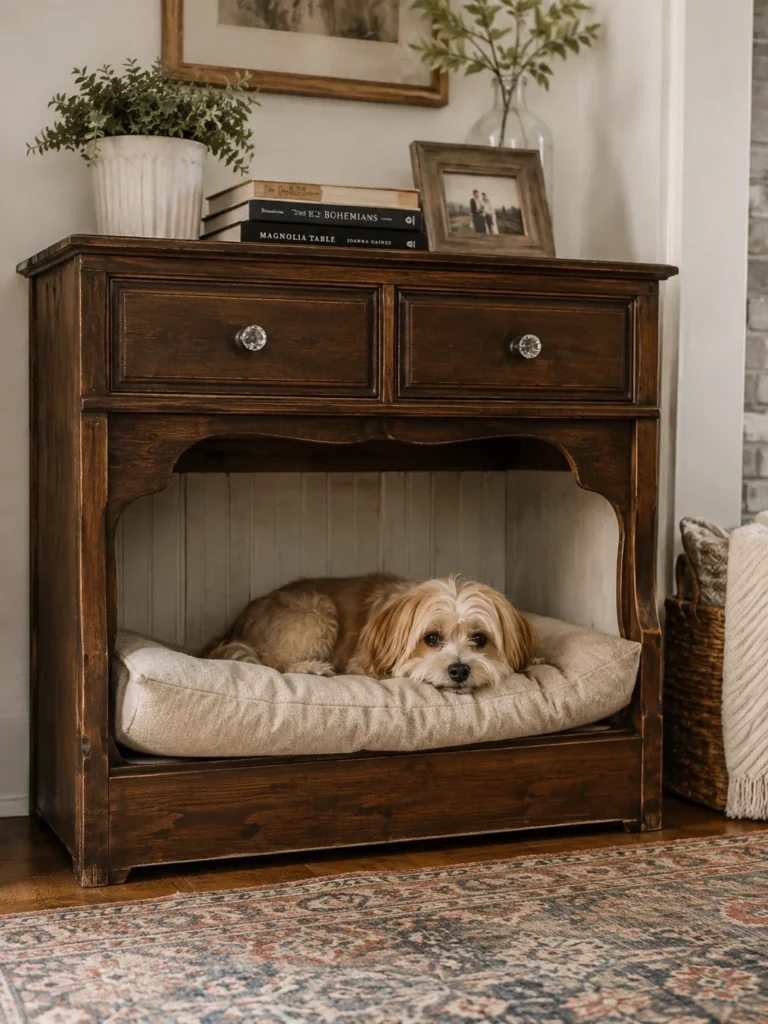
An old dresser with the drawers removed can become a simple, low platform for your dog’s bed. Push it under your bed frame, add a cushion inside, and you’ve got a cozy, enclosed nook made from furniture you already own.
This is one of the more affordable ideas on this list since it doesn’t require buying anything new — just a bit of rearranging.
If you’re handy with a saw, you can also cut a rounded entrance into the front panel for easier access, then sand and paint it to match your room. Even without any modifications, though, simply removing the drawers and adding a cushion is enough to create a cozy hideaway.
Best for: DIY lovers on a budget.
11. Rolling Cart Bed with an Attached Canine Cradle
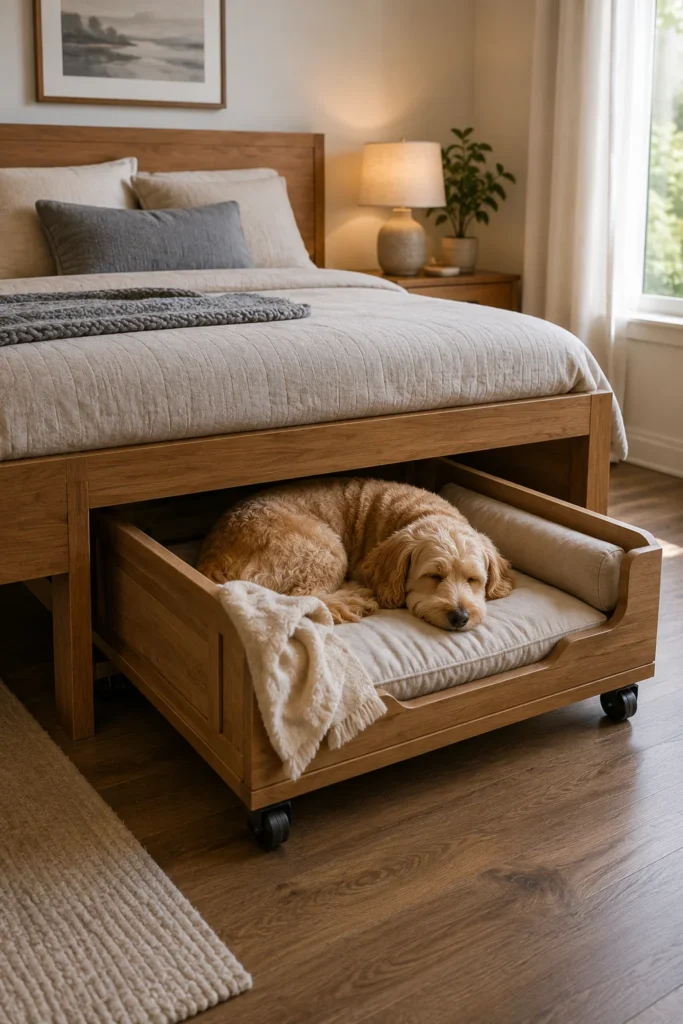
If you like flexibility, a rolling cart-style bed base with a built-in dog cushion lets you move your dog’s spot from room to room. Slide it under your bed at night, then roll it into the living room during the day.
This idea works well for dogs who like to stay close to their owner throughout the house, not just at bedtime.
Locking caster wheels are worth looking for here, since they keep the cart steady once it’s positioned where you want it. This setup is especially handy for households where the dog’s favorite spot changes depending on the time of day, whether that’s a sunny corner of the living room in the afternoon or your bedroom at night.
Best for: Dogs who follow you from room to room.
12. Raised Bed Frame with an Open Dog Space
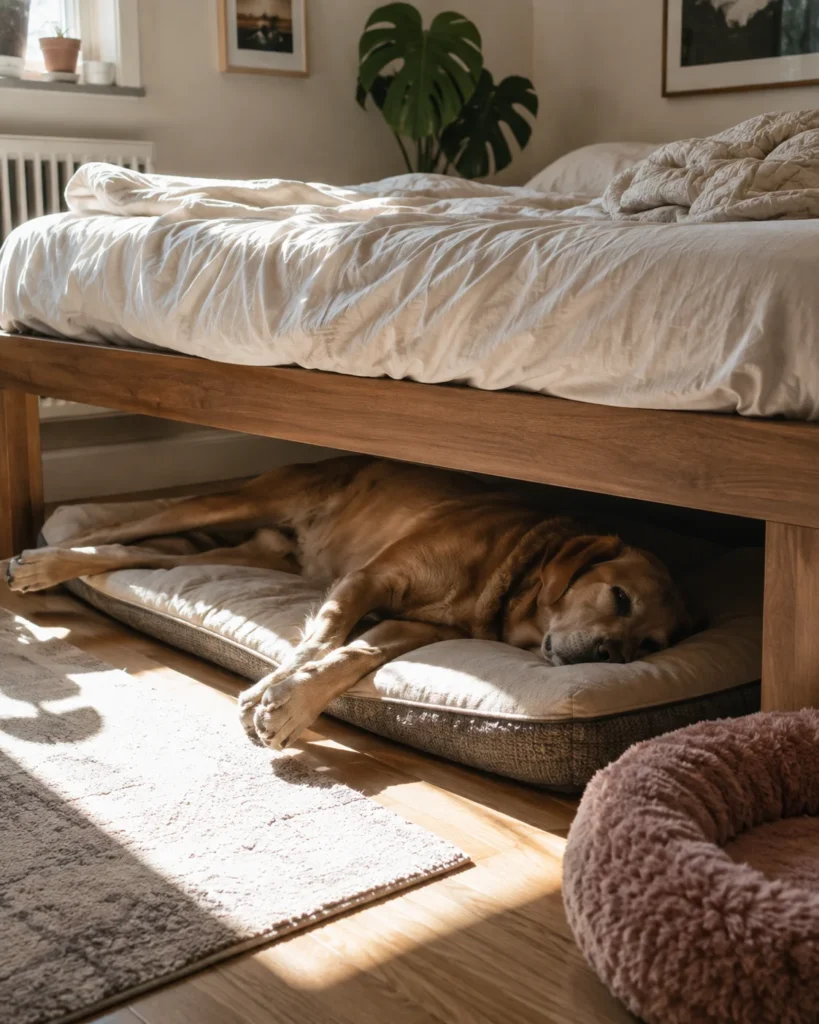
A basic raised bed frame — one with simple legs and open space below — is often all you need. Add a supportive dog mattress underneath, and you’ve got a comfortable, no-fuss setup.
This is the simplest version of a bed with dog bed underneath, and it works with almost any bed frame you already own.
Because there’s no building or modifying involved, this is usually the fastest way to try out the whole concept before committing to something more elaborate. If your dog takes to it right away, you can always upgrade to a more custom option later. If not, you’ve lost very little time or money finding that out.
Best for: Anyone who wants an easy, low-cost starting point.
13. Wooden Bed with Two Side-by-Side Dog Beds
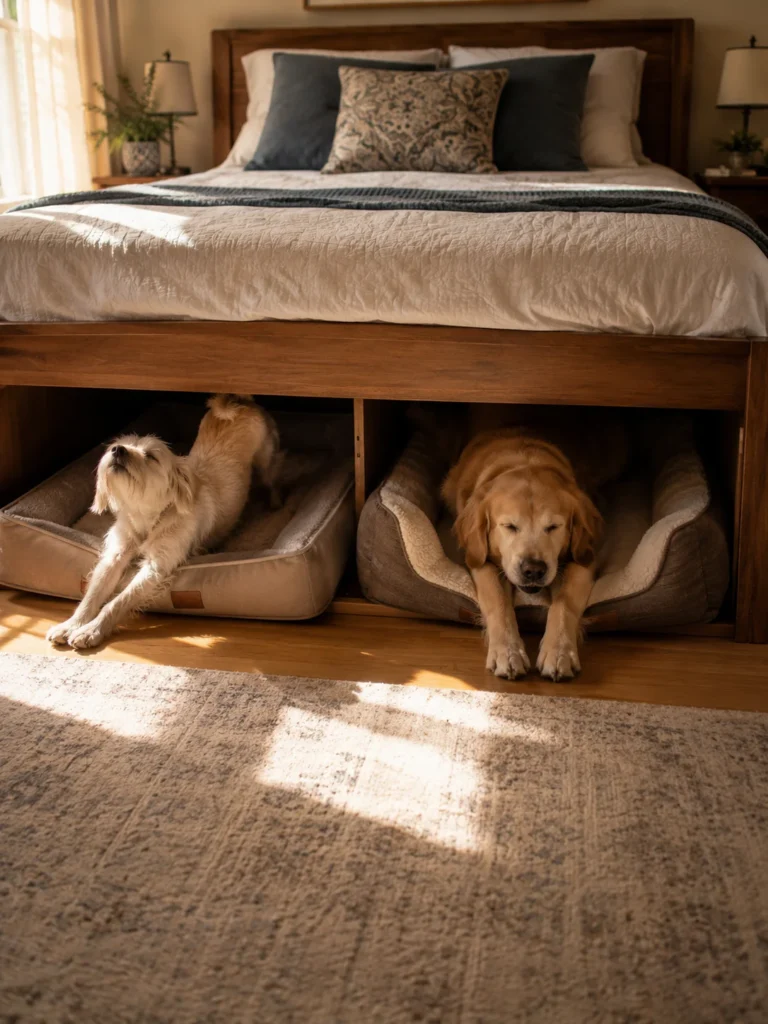
Multi-dog households need a little extra planning. A wider wooden bed frame can fit two separate dog beds side by side underneath, each with its own entrance.
Giving each dog a clearly defined spot helps avoid squabbles over space, especially if your dogs don’t always share well.
A queen or king-sized frame usually offers enough width for this setup, though it’s worth measuring your dogs’ typical sleeping positions first. Some dogs stretch out fully, while others curl into a tight ball, and that difference affects how much space each bed actually needs.
Best for: Homes with two or more dogs.
14. Compact Bed with a Small-Space Dog Nook
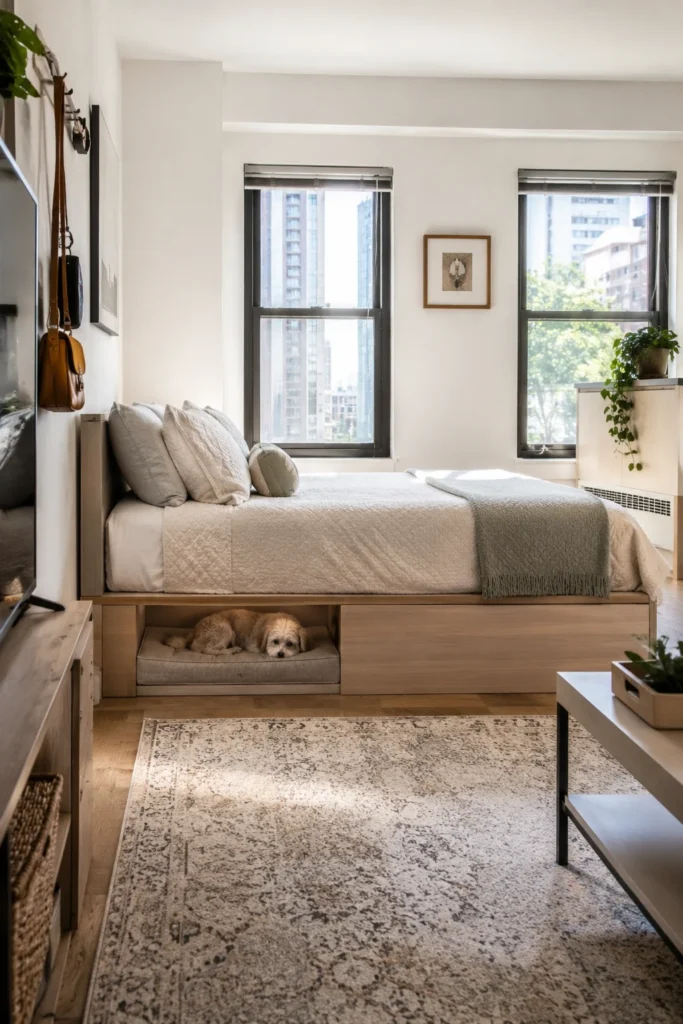
Not every home has room for a full-sized dog den. A compact bed frame with a narrow but cozy dog nook works well for smaller apartments where every inch counts. This setup pairs especially well with apartment-friendly dogs, who tend to be smaller and more comfortable in tighter spaces.
Even a narrow nook, lined with a soft pad, can feel like a perfect little den for a small dog.
You don’t need much depth for this option to work — sometimes just 20 to 24 inches of clearance is plenty, as long as the width comfortably fits your dog when curled up. This makes it one of the few ideas on this list that works even in the smallest studio apartments.
Best for: Small apartments and compact bedrooms.
15. Custom-Built Bed Frame with a Dog Kennel Underneath
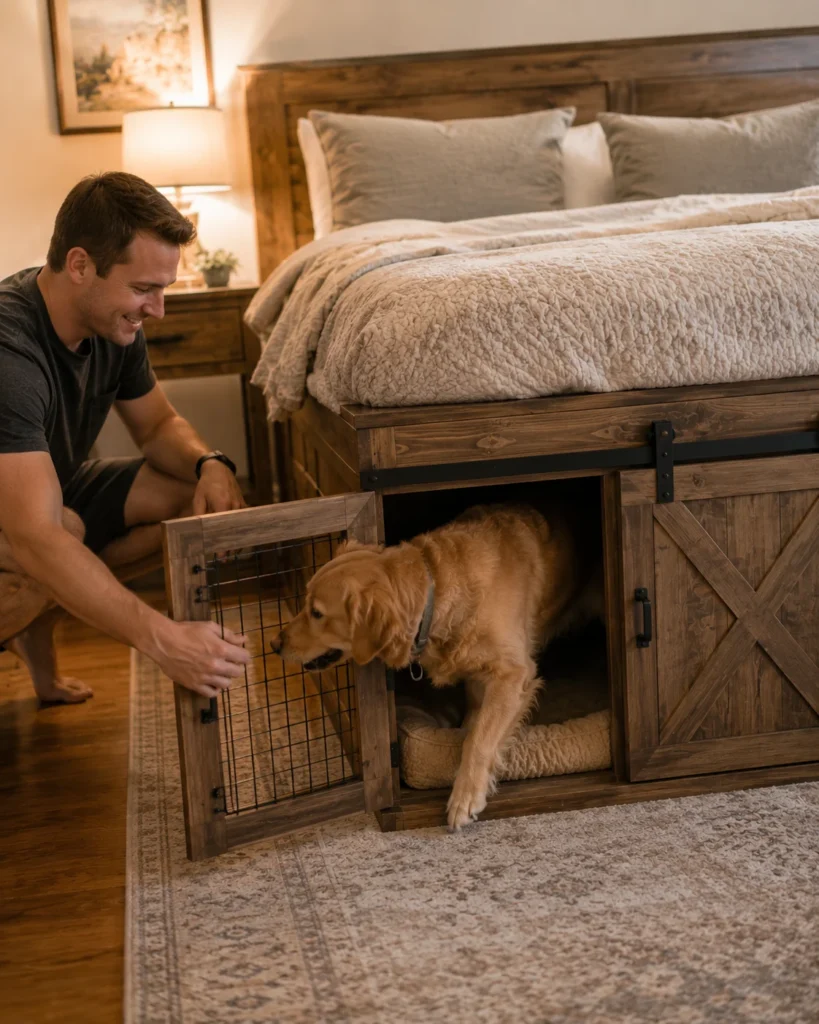
For a fully custom option, some pet owners build a bed frame specifically designed around a dog kennel. The kennel becomes a permanent part of the frame, with a proper door, ventilation, and a comfortable mattress inside.
While this takes more planning than the other ideas, it results in a setup built exactly around your dog’s size and needs.
This route usually involves working with a carpenter or following a detailed build plan, since the frame needs to safely support both the mattress above and the kennel structure below. It’s a bigger investment of time and money, but it also gives you the most control over the final size, ventilation, and overall look.
Best for: Anyone ready for a long-term, custom project.
Why Choose a Bed with a Dog Bed Underneath?
Now that you’ve seen the ideas, it helps to understand why this setup works so well in the first place. It isn’t just a cute trend — there are real, practical reasons pet owners are switching to it, and understanding them can help you decide whether it’s actually right for your dog.
It Saves Space in Small Bedrooms
A standalone dog bed takes up floor space you could otherwise use for a rug, a chair, or just room to walk. Tucking the dog bed underneath your own bed solves that problem instantly.
This matters even more in small bedrooms, studio apartments, or shared kids’ rooms, where every square foot counts. Pairing this idea with other dog bedroom ideas can help you design a room that works for both of you, without either of you feeling cramped.
Over time, this kind of space efficiency adds up. A dog bed that used to sit in the middle of the walkway, or block a closet door, simply disappears from view. That extra breathing room can make even a small bedroom feel noticeably more open.
It Keeps Your Dog Close Without Sharing Your Mattress
A lot of dog owners want their pet nearby at night but don’t want fur, drool, or 60 pounds of dog taking over the bed. This setup gives you the best of both worlds — your dog stays close enough to hear you breathing and feel your presence, without actually sharing your mattress.
That closeness also works both ways. Many owners say they sleep better knowing their dog is right there, and many dogs settle down faster when they can sense their person nearby.
This middle-ground solution is especially helpful for couples where one partner wants the dog in bed and the other doesn’t. A bed with dog bed underneath gives everyone what they actually want: closeness for the dog, a clean mattress for the humans, and a lot less negotiating at bedtime.
It Matches Your Dog’s Natural Den Instinct
Dogs are descended from den animals, and that instinct hasn’t fully disappeared. Wild canines sought out small, enclosed spaces to feel safe from predators and to rest without being exposed. Understanding why dogs do what they do helps explain why so many dogs naturally gravitate toward tight, covered spaces — including the area under your bed.
A dog bed underneath your own bed taps directly into that instinct. It’s enclosed on three sides, a little dark, and close to your scent — all things that can help a dog feel calm and secure.
This is part of why so many dogs already choose to squeeze themselves under furniture on their own, even without any encouragement. Rather than fighting that instinct, a bed with dog bed underneath works with it, turning a random hiding spot into a proper, comfortable place to rest.
How to Pick the Right Size for Your Dog
Not every bed with dog bed underneath works for every dog. Before you commit to an idea, it’s worth thinking through the size of the space your dog actually needs. Getting this part right makes a bigger difference than almost anything else on this list.
Small Dogs (Under 20 Pounds)
Small dogs need the least amount of clearance, which makes almost any bed frame with open space underneath a good fit. A gap of around 10 to 14 inches high is usually plenty for breeds that like to curl up rather than stretch out.
If you’re choosing a breed with this kind of setup in mind, some small dog breeds are especially well-suited to compact, enclosed spaces. Their smaller bodies mean they can comfortably use nooks that would feel far too tight for a bigger dog.
Medium Dogs (20 to 50 Pounds)
Medium-sized dogs need a bit more room to stretch out fully, so aim for a clearance of about 14 to 18 inches. A loft bed, platform bed, or raised bed frame usually provides enough height for this range comfortably.
Make sure there’s also enough width — around 30 to 36 inches — so your dog isn’t squeezed into a space that feels cramped. It’s a good idea to measure your dog while they’re lying down fully stretched out, then add a few extra inches on every side for comfort.
Large Dogs (Over 50 Pounds)
Large dogs need the most generous space, both in height and width. Look for a clearance of at least 18 to 24 inches, with a width of 40 inches or more so they can fully stretch out.
Loft beds and taller platform frames tend to work best here. If you’re planning ahead for a bigger dog, it also helps to research large dog breeds and their typical adult size before building or buying a frame, since some large breeds continue growing well past their first year.
Keeping Dog Beds Under Your Bed Clean and Safe
A bed with dog bed underneath only stays a good idea if it stays clean and comfortable over time. This last section covers what to keep in mind once your setup is in place, so it continues working well months and years down the road.
Cleaning and Fur Control
Enclosed spaces collect fur, dust, and dander faster than open areas, simply because there’s less airflow. Vacuum the space under your bed at least once a week, and wash your dog’s bedding every one to two weeks in hot water.
If your bed frame has a removable panel or drawer, wipe it down monthly to prevent buildup. A washable, non-slip dog bed cover makes this whole process much easier, since you can simply toss it in the laundry instead of trying to spot-clean the whole cushion by hand.
It also helps to brush your dog regularly, especially during shedding season. Less loose fur on your dog means less fur ending up in their under-bed nook, which keeps the whole space fresher for longer between deep cleans.
Making the Space Feel Safe, Not Confining
There’s an important difference between a cozy den and a space that feels like confinement. Your dog should always be able to walk in and out freely — never trapped, blocked, or closed in against their will.
If your dog seems hesitant at first, introduce the space slowly with treats and short, positive visits rather than forcing them inside. Some basic puppy training tips can also help you teach a new dog to see the space as a reward, not a punishment.
Also pay attention to airflow and light. A totally dark, sealed-off space can feel more like a box than a den, so a small gap, mesh panel, or nightlight nearby can make a big difference in how comfortable your dog feels. Watch your dog’s body language during the first few weeks — a relaxed dog will usually start choosing the space on their own, without any coaxing needed.
Final Thoughts
A bed with dog bed underneath is one of the simplest ways to save space while keeping your dog close at night. Whether you go with a simple raised frame, a full custom-built kennel bed, or something in between, the same basics apply: pick the right size, keep the space clean, and make sure your dog always feels free to come and go.
Start with whichever idea fits your current bed frame and budget. You can always upgrade to a more custom setup later, once you know exactly what your dog prefers.

Izzy is an experienced ranch worker who has a passion for exploring nature and getting up close to wildlife. With her connections to various animal organizations, Izzy is well-versed in animal care and rehabilitation.