Dog Bed Sewing Pattern Ideas to Sew Your Own Pet Bed at Home
If you love sewing and you love your dog, there’s a good chance you’ve already thought about making your own dog bed. A dog bed sewing pattern doesn’t have to be complicated. With a few basic shapes, some soft fabric, and stuffing, you can build a bed that fits your dog’s exact size, favorite colors, and sleeping habits.
Store-bought beds are often expensive, and they don’t always last. Dogs chew, scratch, and drool on their beds every single day. When you sew your own bed, you control the fabric, the fill, and the shape. You can also make it match your home decor, which is a nice bonus if the bed is going to sit in your living room.
This article breaks down 12 dog bed sewing pattern ideas, based on real handmade beds. Each one comes with a simple explanation of the shape, the fabric choices, and tips for sewing it yourself. Whether you’re a beginner with a sewing machine or someone who has made a few pillows before, there’s an idea here for you.
If you’re also thinking about where this bed will go in your home, check out these dog bedroom ideas for inspiration on setting up a cozy corner for your pup.
What to Know Before You Start Sewing a Dog Bed
Before jumping into patterns, it helps to understand a few basics. Every diy dog bed pattern usually needs three main parts:
- The outer fabric – This is what people see. Cotton, canvas, boucle, faux fur, and corduroy are all popular choices.
- The inner lining – Some beds use a waterproof or water-resistant inner layer. This protects the stuffing from spills, drool, and accidents.
- The filling – Polyester fiberfill is the most common. Some sewers also use foam scraps, old pillows, or shredded memory foam for extra support.
You’ll also want a sturdy sewing machine that can handle thicker fabric, strong thread, and fabric scissors. A walking foot attachment makes sewing through bulky layers much easier.
Now let’s get into the ideas.
12 Dog Bed Sewing Pattern Ideas
Each of these ideas is based on a real dog bed style. They’re organized from simple to more advanced, so you can pick a pattern that matches your comfort level with a sewing machine.
1. Classic Round Donut Bolster Bed
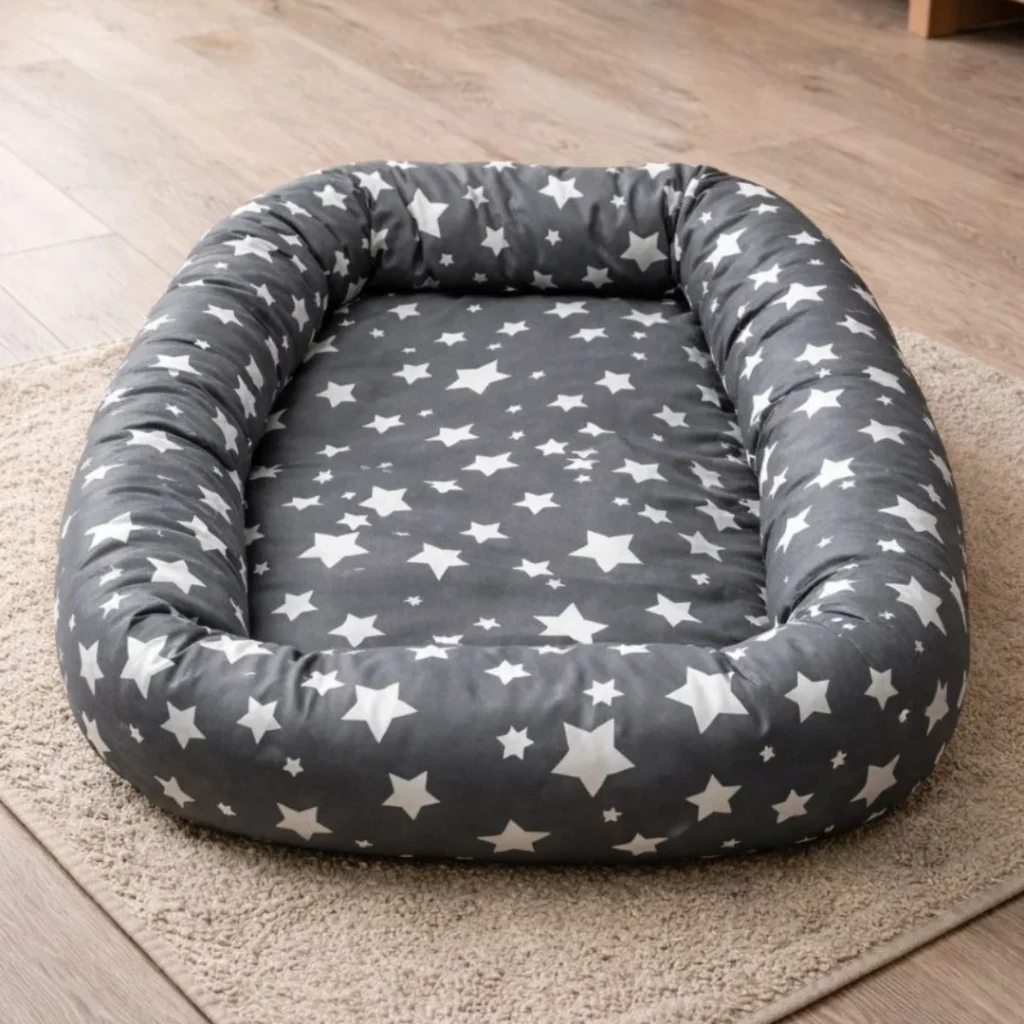
This is the most popular dog bed sewing pattern out there, and for good reason. It’s simple, it looks great, and dogs love curling up inside the raised rim.
The pattern has two main pieces: a flat circular or oval base cushion, and a long stuffed tube that gets sewn into a ring around the edge. The tube is what gives the bed its “donut” shape. Dogs can rest their head on the rim while their body stays on the soft base.
For beginners, this is a great first project. You only need to sew straight seams and one curved seam to close the ring. A fun star-print fabric, like the gray-and-white version shown in our inspiration photo, gives the bed a playful look while keeping the sewing simple.
To make the rim look extra plush, stuff it firmly. A loosely stuffed rim will flatten out fast and lose its shape.
📸 Photo credit: Instagram @shop.tviy.zatyshok
2. Bold Graphic Print Donut Bed
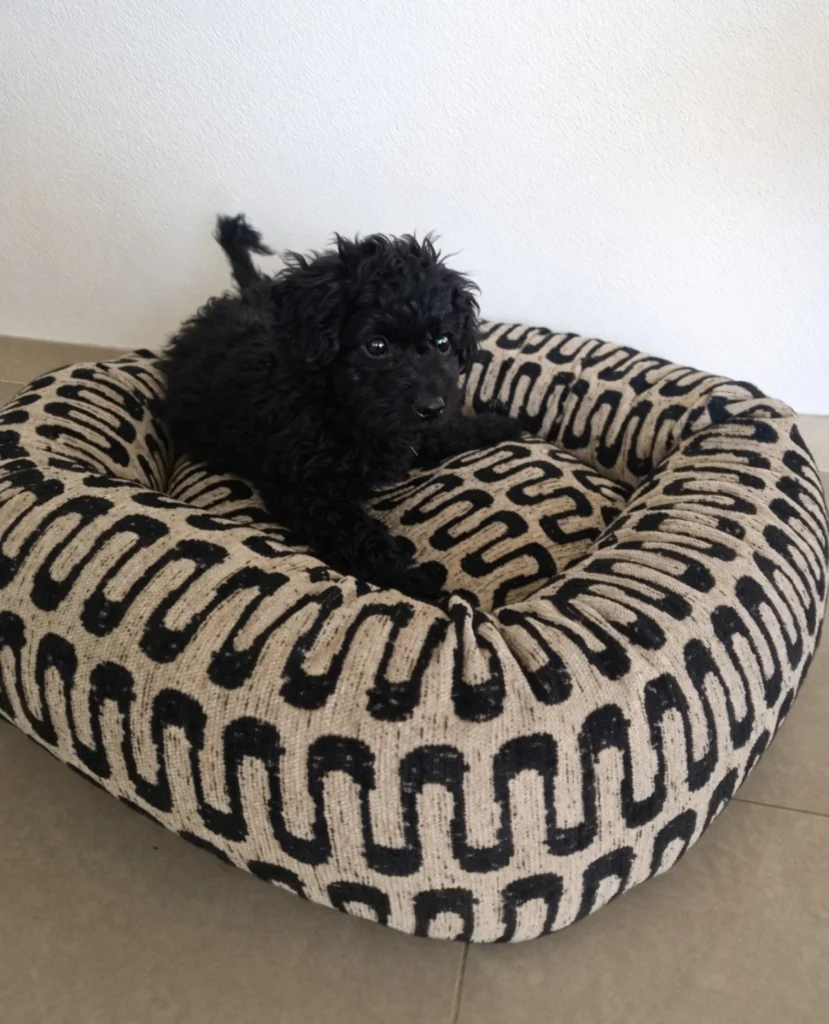
This idea uses the exact same construction as the classic donut bed, but it shows how much a fabric choice can change the entire look of the project.
Instead of a soft, muted print, this version uses a bold black-and-tan geometric pattern. The result feels modern and stylish, almost like a piece of furniture rather than a pet accessory.
If you want your homemade bed to fit into a modern living room or a minimalist space, this is the pattern style to copy. Choose a fabric with strong contrast, like black lines on a cream background, and keep the shape simple so the print stands out.
This is also a good pattern to try if you’re sewing a bed for a small or medium dog, since a bold pattern on a smaller bed still reads clearly instead of getting lost.
📸 Photo credit: Instagram @odin_doodle2025
3. Deep-Pile Faux Fur Donut Bed
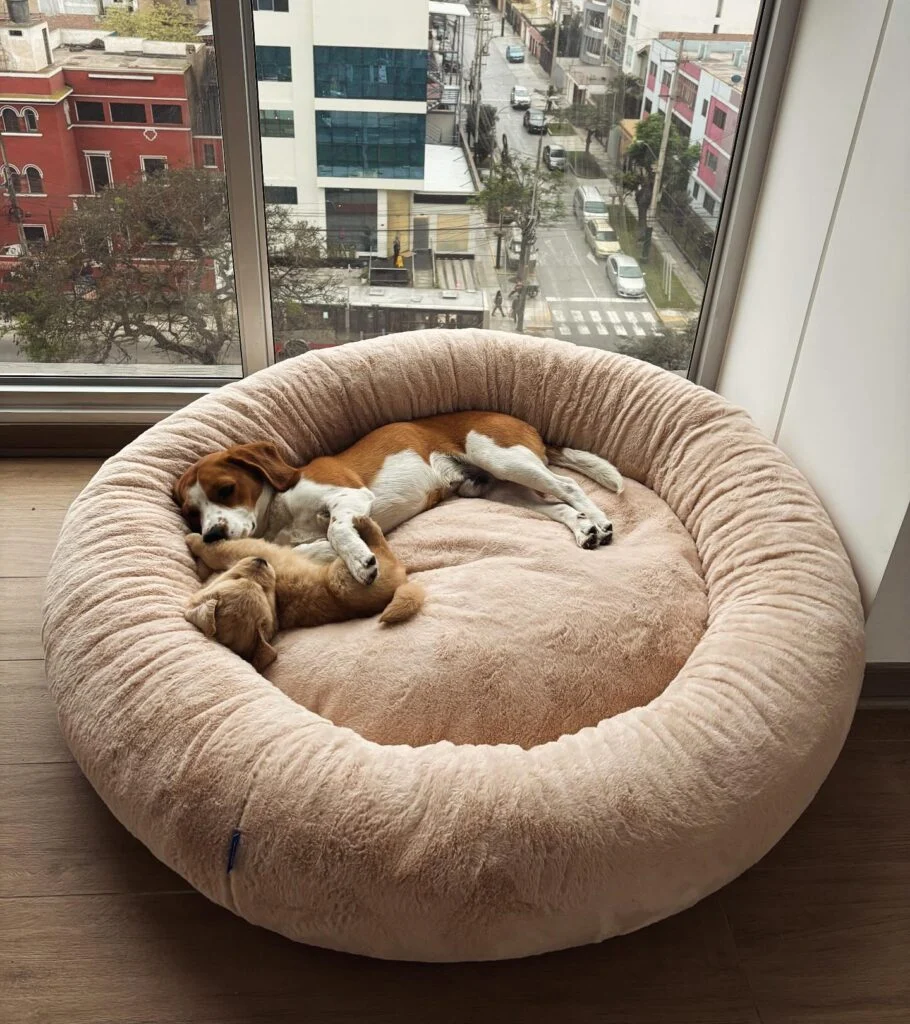
If your dog loves burrowing into blankets, a deep-pile faux fur bed might be the perfect diy dog bed pattern for you. This version uses the same donut shape as the first two ideas, but the fabric itself does all the extra work.
Faux fur with long, soft pile creates a bed that feels more like a cloud than a cushion. It’s especially popular for bigger dogs or multi-dog households, since a wide, soft rim gives more than one dog room to snuggle together comfortably.
When sewing with faux fur, always cut the fabric with the pile facing down, and use a pin brush or seam ripper afterward to fluff the fur along the seams. This hides the stitching and makes the finished bed look more polished.
Faux fur is also warm, so this pattern works especially well in colder climates or for older dogs who need extra comfort for their joints.
📸 Photo credit: Instagram @woofbed.pe
4. Waterproof-Lined Donut Bed
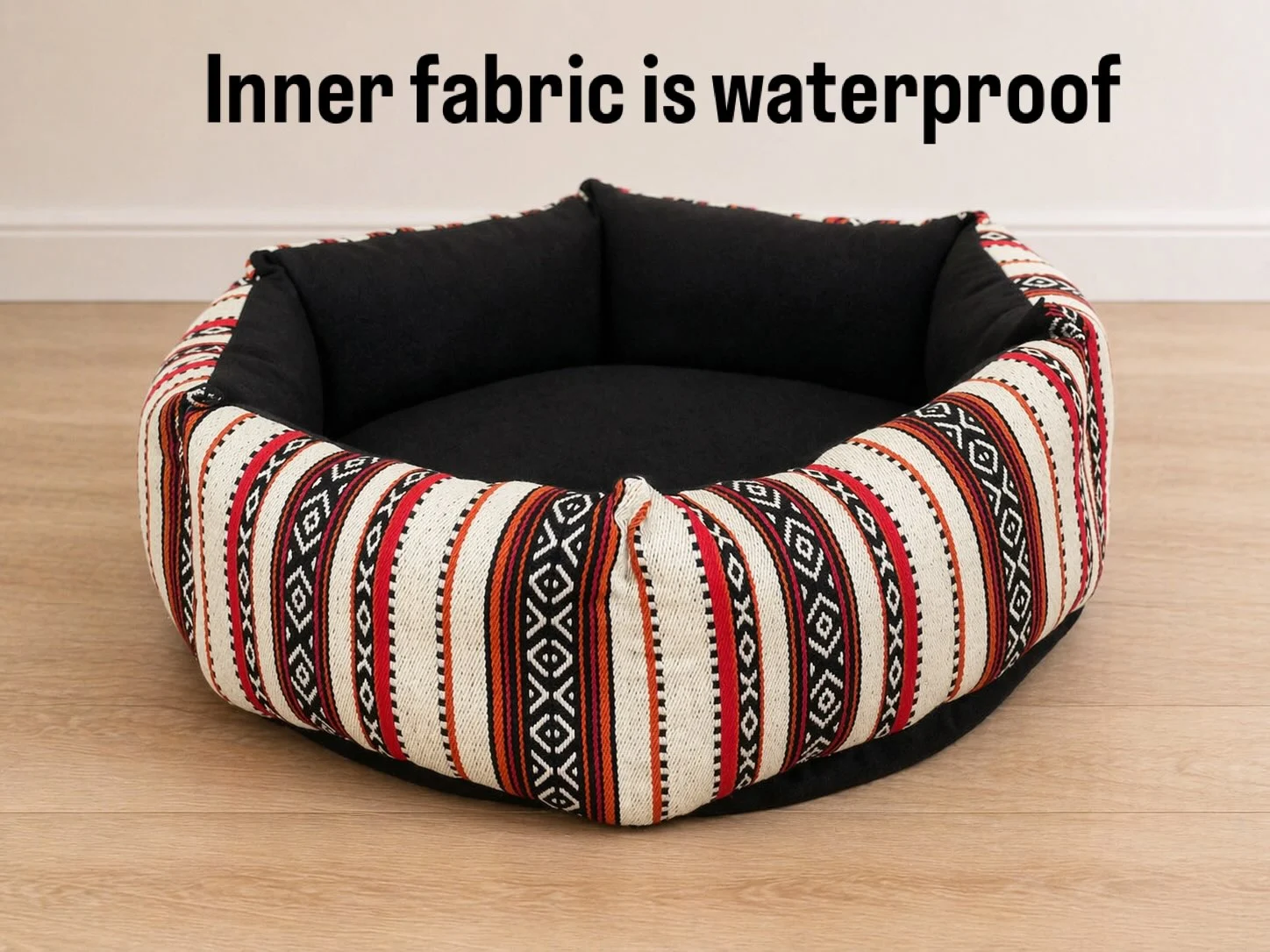
This idea solves a very real problem: accidents happen. Puppies have accidents, senior dogs sometimes lose bladder control, and water bowls get knocked over. A waterproof-lined bed protects your work and keeps the bed smelling fresh longer.
The pattern stays the same as the classic donut bed, but you add one extra step: sew a waterproof fabric layer, like PUL (polyurethane laminate) fabric or a treated canvas, between the outer fabric and the stuffing.
This particular bed uses a striped, southwestern-style print on the outside and a solid black waterproof fabric on the inside base. The tag on the bed even says “inner fabric is waterproof,” which is a great detail to add to your own homemade beds if you plan to sell them or gift them.
If you’re sewing this bed for a puppy who’s still learning routines, it pairs well with tips from this guide on puppy veterinary needs, especially when it comes to house training and health basics.
📸 Photo credit: Instagram @bonjojocomfort
5. Donut Bed with Contrast Velvet Interior
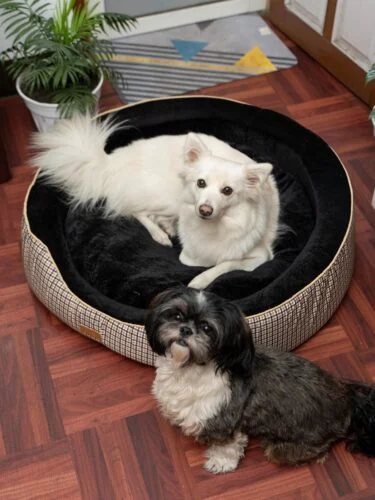
This pattern idea takes the classic donut shape and adds a design trick: using two different fabrics for the inside and outside of the bed.
In this example, the outer rim uses a warm plaid pattern, while the inside base is made from soft black velvet. The contrast makes the bed look more high-end, almost like a piece of upholstered furniture.
To sew this version, you’ll cut your base cushion piece from the velvet fabric and your rim tube from the plaid fabric. Adding contrast piping along the seam where the two fabrics meet gives it an even more finished, professional look.
This pattern works well if you want a dog bed that matches a specific room’s color scheme, since you can mix and match fabrics more freely than with a single-fabric bed.
If you’re setting this bed up near your dog’s food and water area, take a look at these dog feeding station ideas to design a coordinated space.
📸 Photo credit: Instagram @khicha.np
6. Ruched or Pleated Fur Donut Bed
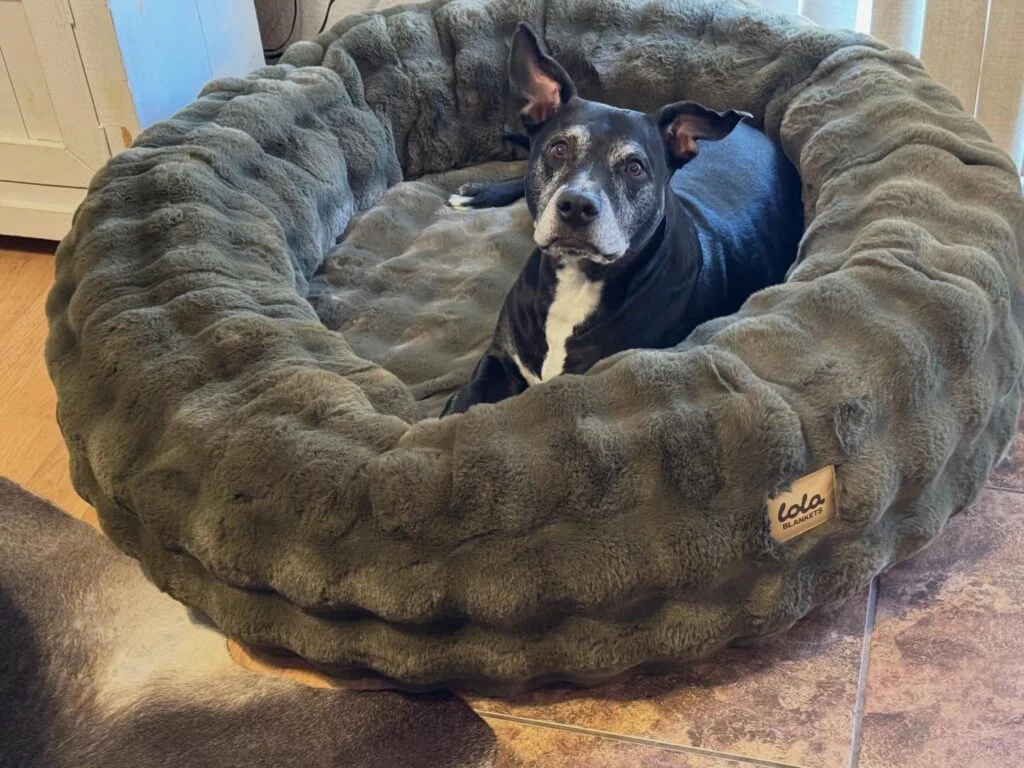
This idea uses a sewing technique called channel quilting or ruching to add texture to a plush, fur-like fabric. Instead of a smooth stuffed rim, the fabric is sewn in vertical channels, creating a ruffled, cloud-like texture around the entire bed.
This pattern takes more effort than a basic donut bed since you’ll need to sew multiple parallel lines through both the fabric and stuffing before assembling the rim. But the payoff is a bed that looks incredibly soft and dimensional, almost like a giant fabric sculpture.
This style works especially well for larger dog breeds, since the size of the bed makes the ruched texture even more noticeable. A deep olive-green color, like the one shown here, also hides dirt and fur better than lighter shades, which is worth considering if you have a dog that sheds a lot.
If you’re building a whole dog-friendly space at home, this bed style fits nicely into ideas from this article on smart dog room ideas.
📸 Photo credit: Instagram @happy_kappi1
7. Boucle “Teddy Fabric” Donut Bed
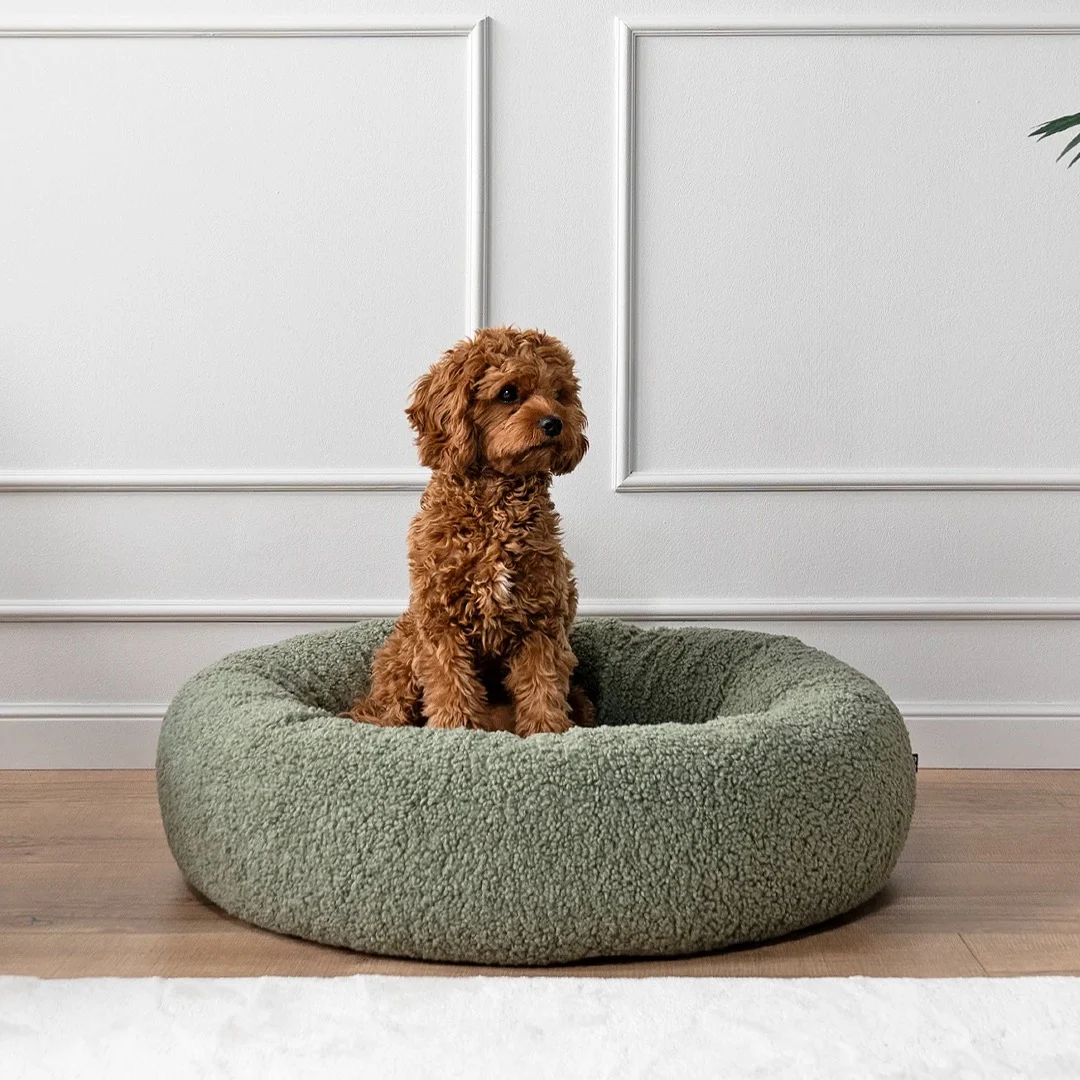
Boucle, sometimes called “teddy fabric,” has become extremely popular in home decor, and it works beautifully for dog beds too. This pattern uses the same simple donut shape from idea #1, but the boucle texture gives it a cozy, textured look without any extra sewing steps.
Boucle fabric has small, looped fibers that create a bumpy, nubby texture. It’s soft, but sturdier than faux fur, which makes it a good choice if your dog tends to scratch at their bed before lying down.
Sage green, as shown in this inspiration photo, is a popular color choice because it works with almost any home decor style, from modern to farmhouse. Since boucle doesn’t fray as easily as other fabrics, it’s also more beginner-friendly than fabrics like velvet or faux fur.
This is one of the simplest patterns on this list if you already know how to sew a basic donut bed, since the only real change is the fabric itself.
📸 Photo credit: Instagram @mypado.official.site
8. Hooded Bed with Channel-Quilted Top
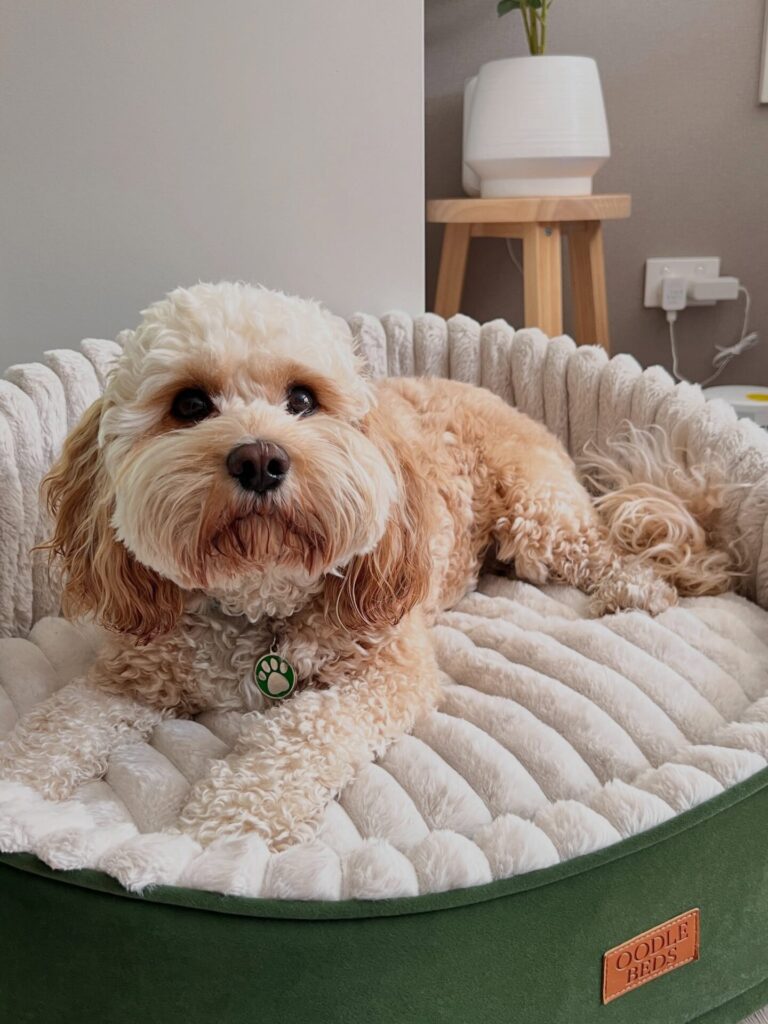
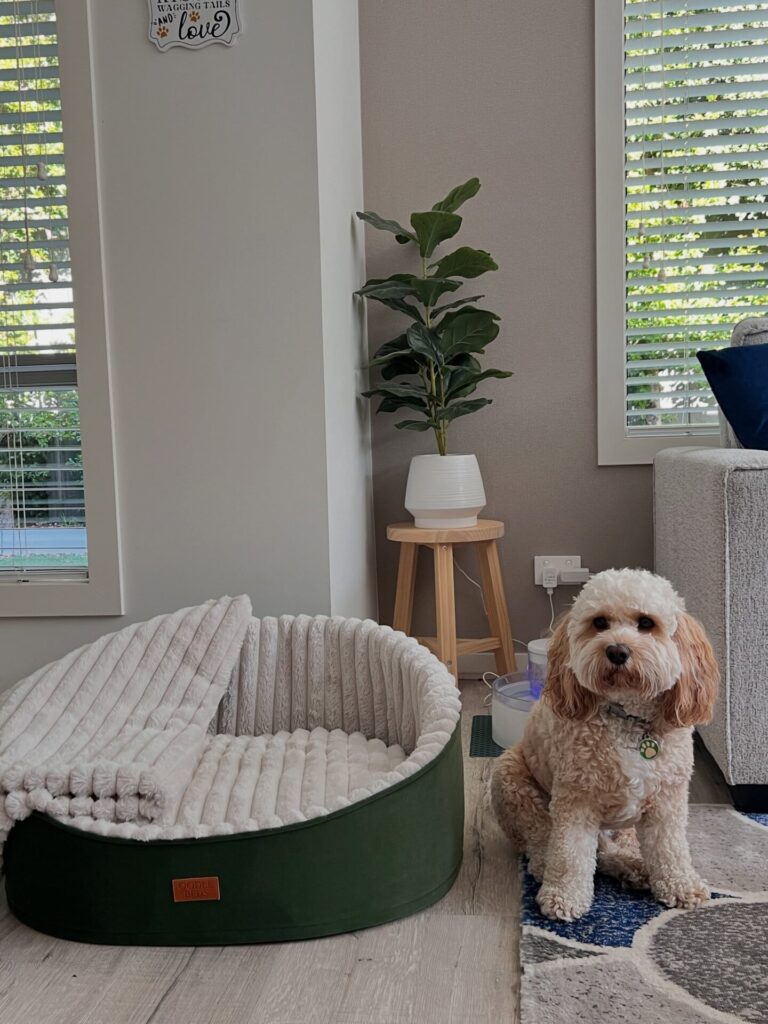
This pattern is a step up in difficulty, but it creates one of the coziest bed styles on this list. Instead of a simple donut ring, this bed has a rounded base with high, plush sides and a soft, quilted flap that can fold down like a small hood or blanket over the dog.
The channel-quilted fabric (sewn in vertical padded lines) gives the whole bed a soft, ridged texture. The hood piece is usually cut separately and attached along the back seam, so it can flop forward and create a cave-like space, or fold back for open lounging.
This is a great pattern for small dogs and puppies who like to feel enclosed and secure, similar to how a crate or den feels. Cream and neutral tones, like the one shown here, also photograph beautifully if you plan to share pictures of your finished project.
Because this pattern includes an extra hood or blanket piece, it takes more fabric and more sewing time than a basic donut bed, so it’s best attempted after you’ve made at least one simpler bed first.
📸 Photo credit: Instagram @chikuthecavoodle
9. Rectangular Sofa-Style Bolster Bed
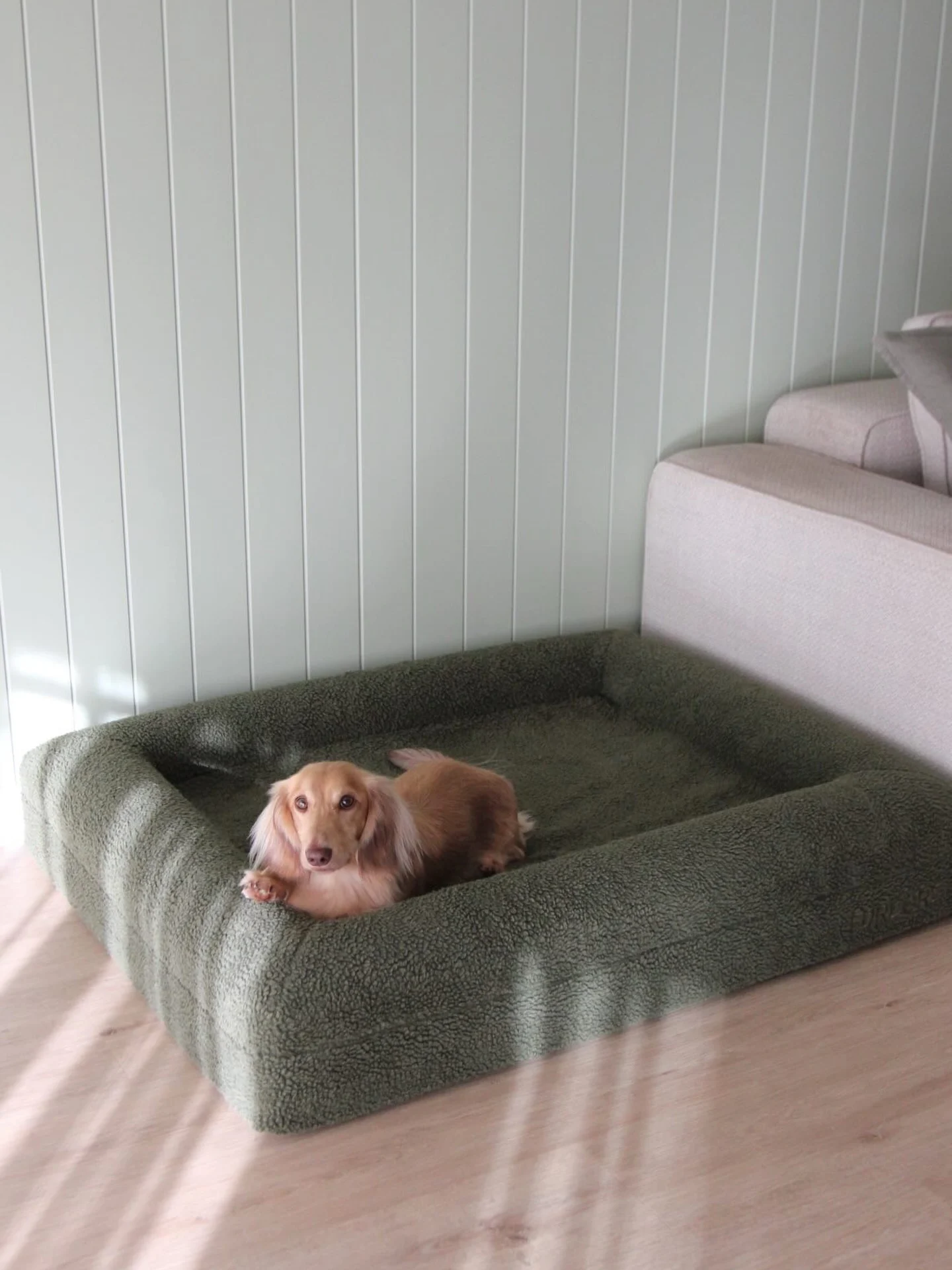
Not every dog bed needs to be round. This pattern uses a rectangular base with one raised, padded back panel, similar to the arm of a small sofa. It gives the bed a more furniture-like appearance, which many dog owners love for their living rooms.
The construction is a little different from the donut-style beds. Instead of one continuous rim, you’ll sew a flat rectangular base, then attach a separate padded panel along one edge to create the raised “back.” This panel is usually cut tall and gently curved along the top for a soft silhouette.
This pattern works especially well for small to medium dogs like dachshunds, since the raised back gives them something to lean against while resting. A deep green boucle fabric, like the one shown here, gives this bed a designer look without needing to sew anything overly complicated.
This is a good next-step pattern for sewers who feel confident with basic seams and want to try shaping fabric around a slightly more structured design.
📸 Photo credit: Instagram @furloreofficial
10. Rectangular Bed with Sewn-In Hood or Blanket Flap
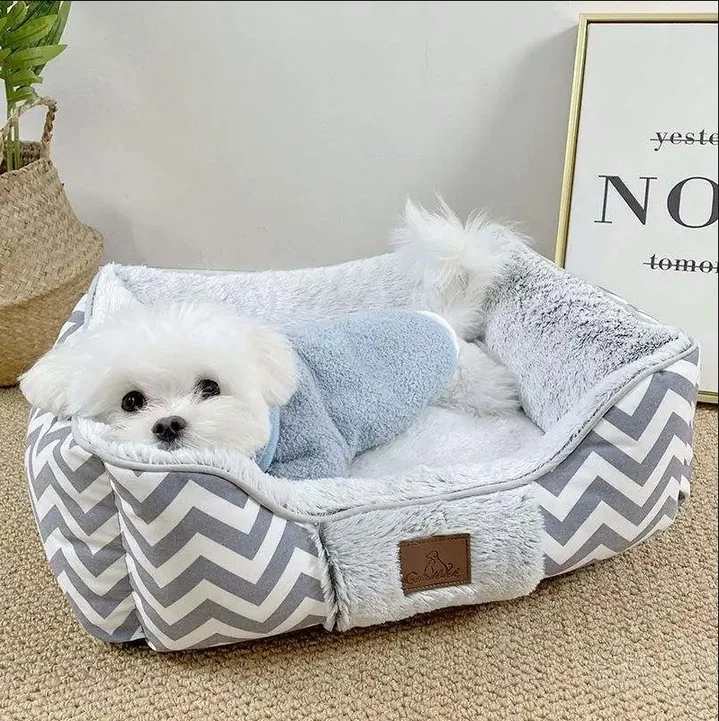
This idea takes a standard rectangular bed and adds a soft fleece flap sewn directly onto one side. Unlike the hooded bed in idea #8, this version has a more relaxed, casual blanket-like flap rather than a fully shaped hood.
The pattern starts with a simple rectangular bolster bed: a padded base with low, padded sides around three or four edges. Then, a soft fleece piece is attached along the back seam so it can be pulled up and over a sleeping dog like a blanket, or left folded down.
This style works particularly well for small dogs and toy breeds, since the flap gives them the option to burrow if they want warmth, without forcing them into a fully enclosed space. A chevron-print fabric on the base, paired with a solid fleece flap, adds a nice visual contrast.
If you’re outfitting your home with matching pet accessories, this pairs nicely with ideas from this guide on dog accessories tips.
📸 Photo credit: Instagram @petsasa.kenya
11. Braided Knot-Tube Bolster Bed
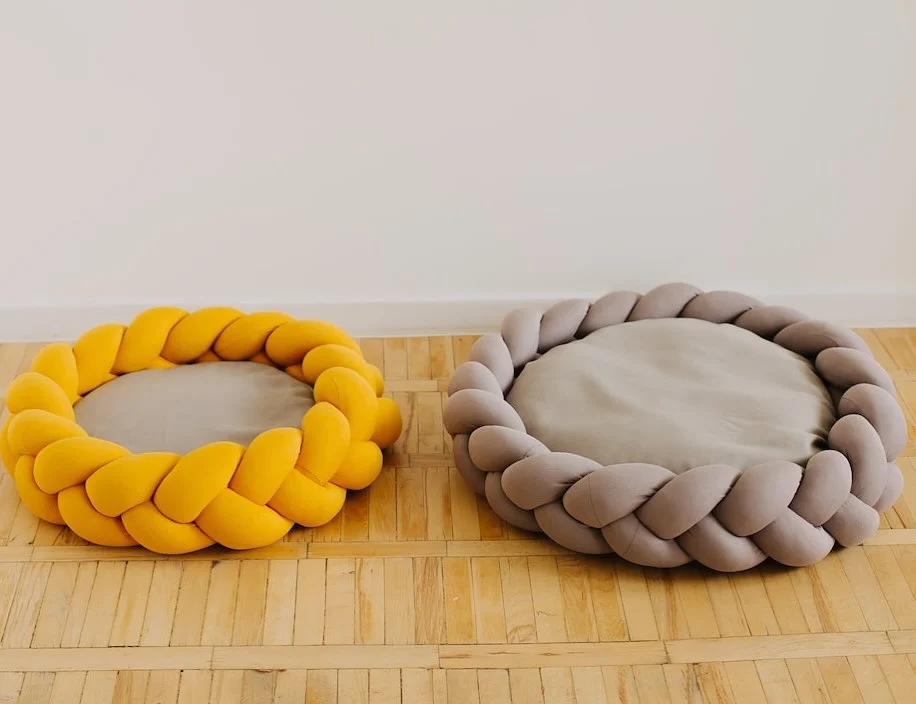
This is one of the more advanced patterns on this list, but it’s also one of the most eye-catching. Instead of a single stuffed tube sewn into a ring, this bed is made from three long stuffed fabric tubes that are braided together, just like braiding hair, before being shaped into a circle.
To make this pattern, you’ll sew three separate long tubes, stuff each one individually, then braid them together and stitch the ends closed to form a continuous loop. The braid gives the bed a chunky, textured look that’s very different from a smooth donut rim.
Because each tube needs to be sewn and stuffed on its own before braiding, this pattern takes more time and more fabric than the basic donut bed. It’s a great project once you’ve mastered a few simpler patterns and want to challenge yourself with something more sculptural.
Bright colors like yellow, or neutral tones like taupe, both work well with this pattern since the braid texture itself becomes the main visual feature of the bed.
📸 Photo credit: Instagram @lelik_mesto
12. Paw-Shaped Novelty Bolster Bed
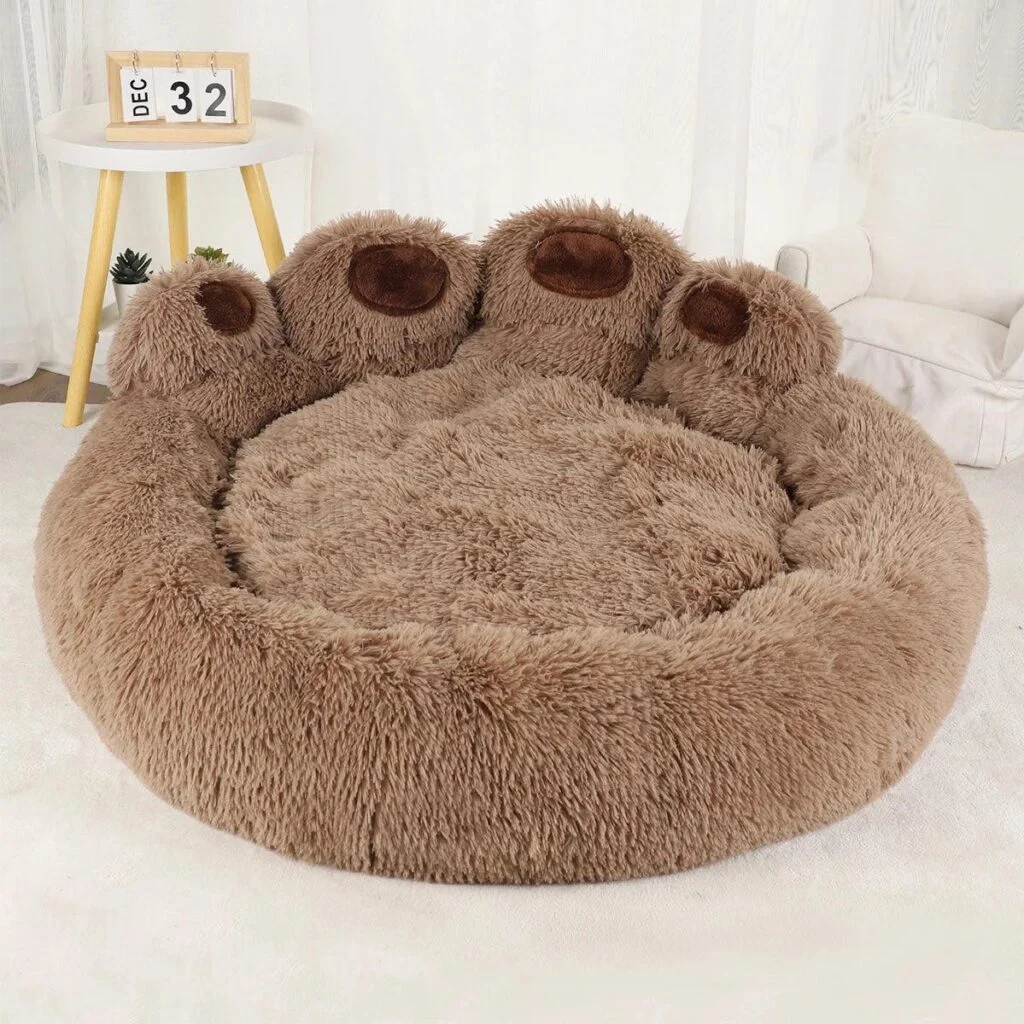
This is a fun, playful pattern for anyone who wants their dog’s bed to double as a conversation piece. Instead of a plain circular rim, the stuffed rim is shaped and sewn into four separate rounded lobes, making the whole bed look like a giant paw print.
To achieve this shape, you’ll need to sew individual “toe” sections, each stuffed and shaped separately, then attach them around the edge of a round base cushion. Each toe section usually includes a smaller inner circle of contrasting fabric to mimic paw pads.
This pattern takes more planning than a simple donut bed because you’re working with multiple curved sections instead of one continuous ring. But it’s a fun way to practice shaping techniques, and the finished result is genuinely adorable.
A soft brown plush fabric, like the one shown in this inspiration photo, makes the paw shape look extra cuddly and bear-like.
📸 Photo credit: Instagram @saveandshops_
How to Choose the Right Pattern for Your Dog
With 12 different ideas to choose from, it helps to think about your dog’s specific needs before picking a pattern.
Consider your dog’s size. Small dogs and puppies often prefer beds with raised sides or hoods, since they feel safer when they can burrow or lean against something. Larger dogs usually do better with wider, flatter beds that give their whole body room to stretch out.
Think about your dog’s sleeping style. Dogs that curl into a tight ball do well with round donut-style beds. Dogs that like to sprawl out flat often prefer rectangular bolster beds without a raised rim in the middle.
Factor in shedding and mess. If your dog sheds a lot or has accidents, a waterproof-lined pattern or a darker fabric color will save you a lot of extra cleaning.
Match your home style. Since these beds often end up as a visible piece of your living space, picking a fabric and pattern that fits your existing decor makes the bed feel like a natural part of the room rather than an obvious pet item.
If you’re picking a pattern based on breed-specific comfort needs, this guide on best small dog breeds can help you understand common size and comfort preferences across different small breeds.
Tips for a Long-Lasting Handmade Dog Bed
A few small choices during construction can make a big difference in how long your bed lasts.
Use a removable cover. Adding a zipper to the outer fabric layer means you can take the cover off and wash it separately from the stuffing. This keeps the bed clean without wearing down the padding from repeated washing.
Double-stitch high-stress seams. Dogs put a lot of pressure on beds daily, especially rims and edges where they lean or scratch before lying down. A second row of stitching along major seams adds extra strength.
Choose durable outer fabrics for heavy chewers. Canvas and thick cotton blends hold up better than delicate fabrics if your dog tends to nibble on their bed.
Add extra stuffing to the rim. A firmly stuffed rim holds its shape much longer than a loosely filled one, especially in donut-style beds where the rim takes the most daily pressure.
Test the bed size before finishing. Before sewing your final seams, lay your dog down on the flat pieces to check the size. It’s much easier to adjust measurements before assembly than after the bed is fully stuffed and sewn shut.
Final Thoughts
A handmade dog bed sewing pattern doesn’t need to be complicated to look amazing and last a long time. Whether you start with a simple round donut bed or work your way up to a braided or paw-shaped design, each of these 12 ideas gives you a clear starting point for your next sewing project.
The best part about a diy dog bed pattern is that you can adjust every detail, from the fabric to the size to the shape, until it fits your dog and your home perfectly. Start with one of the easier patterns, like the classic donut bed or the boucle teddy fabric version, and work your way toward more advanced projects like the braided or hooded designs as your confidence grows.
Once you finish your first bed, you’ll likely find yourself wanting to make more, one for every room, every dog, and every season.
Izzy is an experienced ranch worker who has a passion for exploring nature and getting up close to wildlife. With her connections to various animal organizations, Izzy is well-versed in animal care and rehabilitation.