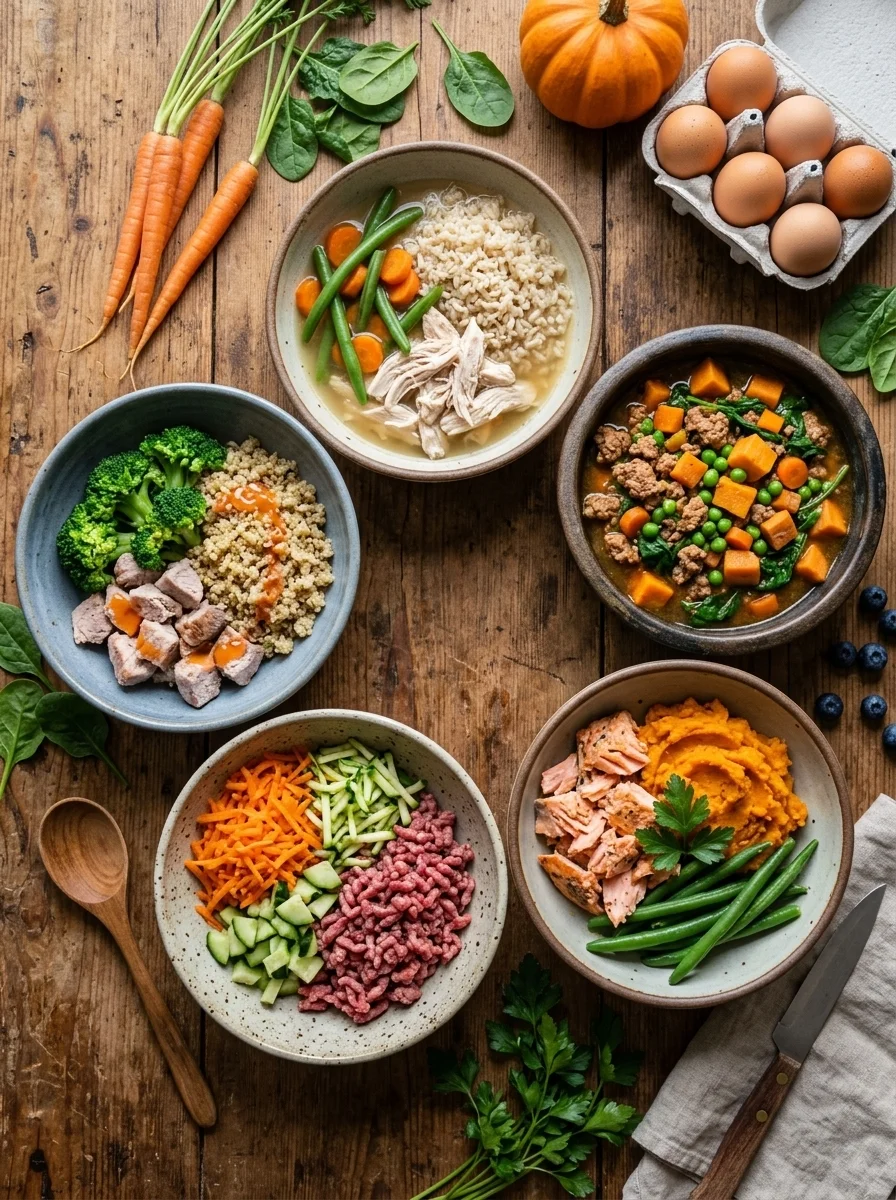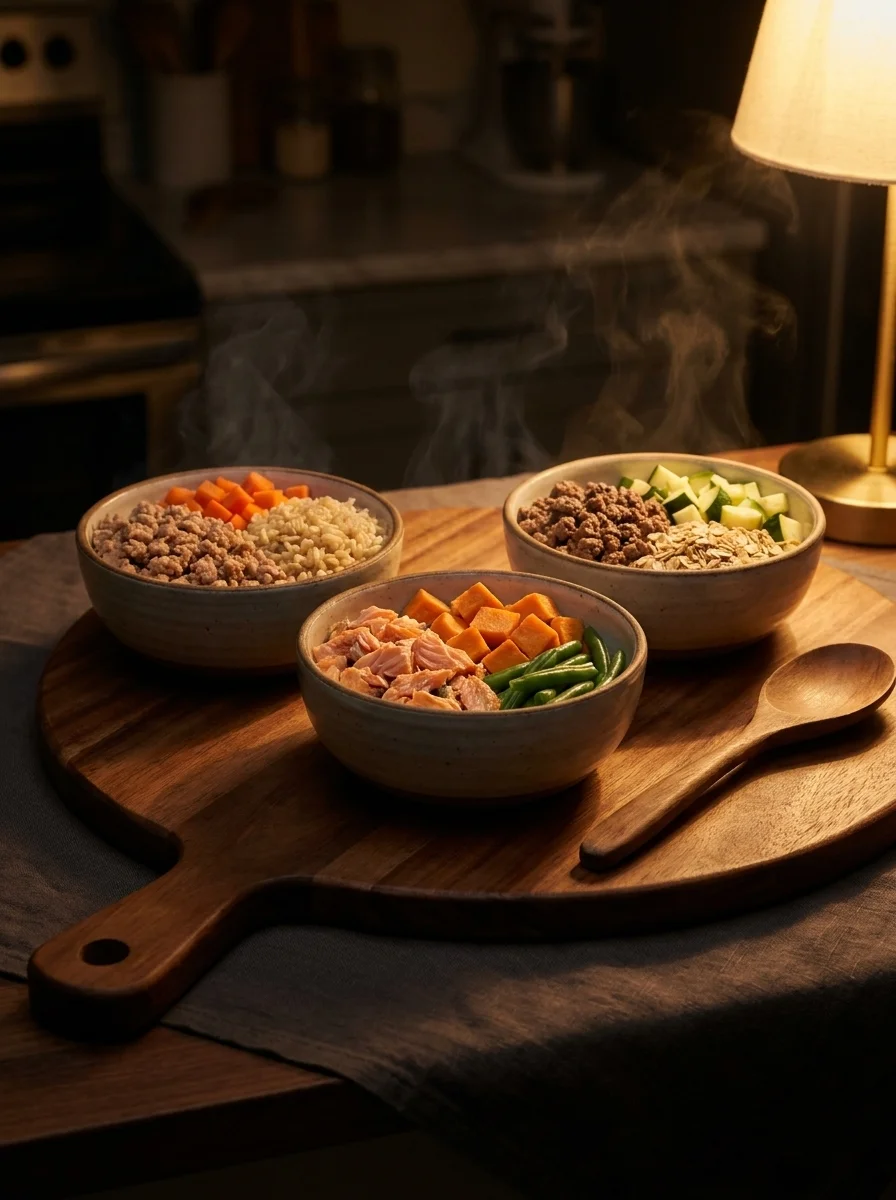
Low-Fat Dog Food Recipes for Healthy Weight
Sometimes, a dog’s body asks for a change. Maybe your pet has gained a few pounds, or perhaps they are simply an older companion who no longer moves with the same youthful spring. When a veterinarian recommends a lighter, less energy-dense diet, the challenge of meal preparation often feels overwhelming. Many commercial options lack the freshness or specific nutritional balance your dog might need, or they contain ingredients that are hard to track. You can create satisfying, nutritious meals right in your own kitchen.
This article explores six simple, lean homemade meals designed to keep your dog full and happy while keeping fat content in check. Please remember that this guide is for general information. If your dog is on a specific weight-loss plan, or suffers from pancreatitis or other medical conditions, you must follow your veterinarian’s guidance. This article is not a prescription.
What Makes a Dog Meal Low-Fat
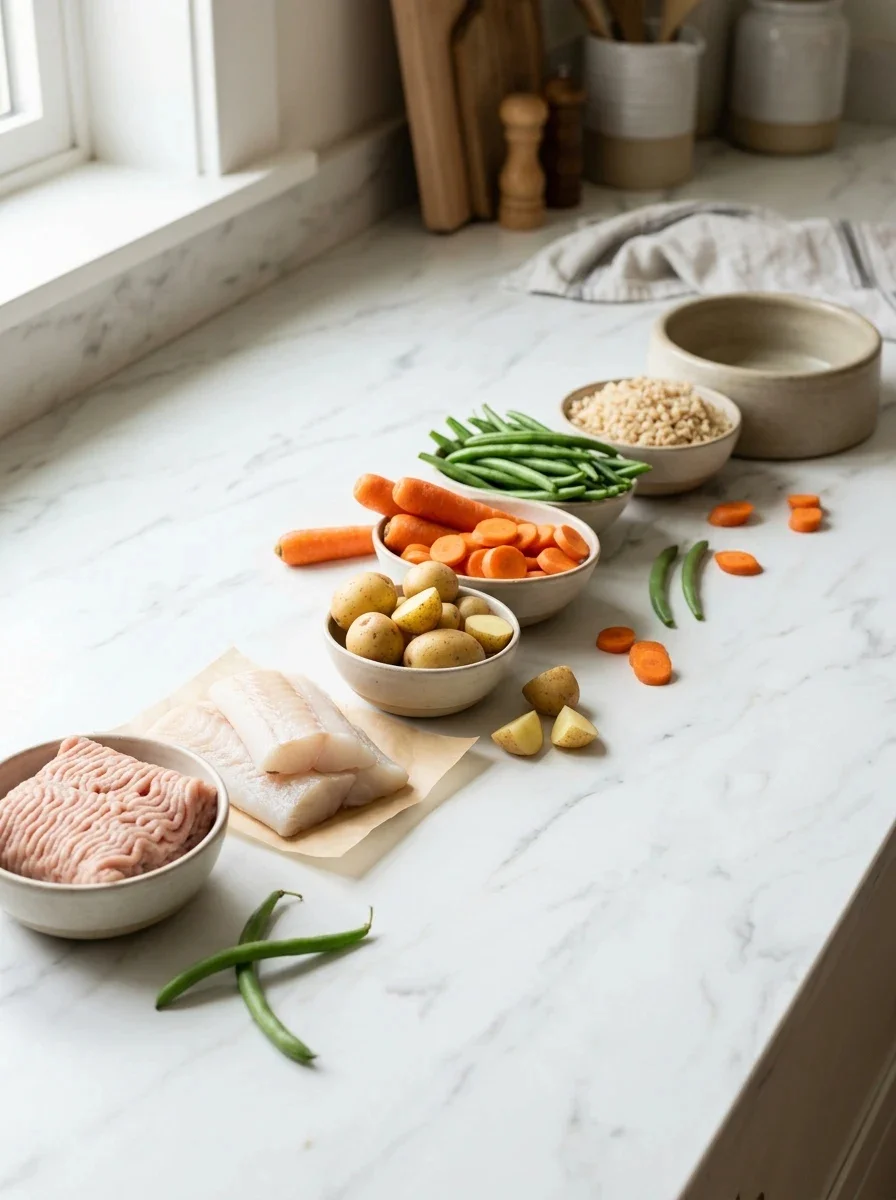
Understanding the principles behind a low-fat meal is the first step toward feeding your dog better. It is not just about removing the grease you can see. A true low-fat meal focuses on selecting protein sources that are naturally lean, such as skinless poultry or white fish, while avoiding any added cooking fats, oils, or butter. The goal is to provide energy through protein and complex carbohydrates rather than through dense, calorie-heavy fats.
The ingredient selection is critical. You must choose cuts of meat that have had visible fat trimmed away. For dogs, the difference between a standard cut and a lean cut can be significant when fed daily. Similarly, vegetables like green beans, carrots, and potatoes provide fiber and volume, which helps your dog feel satiated on fewer calories. This is a key concept in nutritional management: satiety without excess energy. You can explore more about balancing volume and nutrition by looking at homemade apple pie for dogs, which uses fruit to add sweetness and bulk without heavy fats.
Texture and digestibility are also part of the equation. This is especially important for dogs with sensitive digestive systems. The gradual switch from old food to these new meals should always be monitored. Checking out recipes for sweet potato dog waffles can inspire you to think about how carbohydrates can be integrated into a dog’s diet in interesting ways, even if those are treats rather than full meals. For full bowls, the focus is on consistent, moderate portions. Remember, the definition of “low-fat” in a dog’s diet is relative to their total caloric needs, not just the absence of visible grease.
Recipe 1: Lean Turkey & Brown Rice Bowl
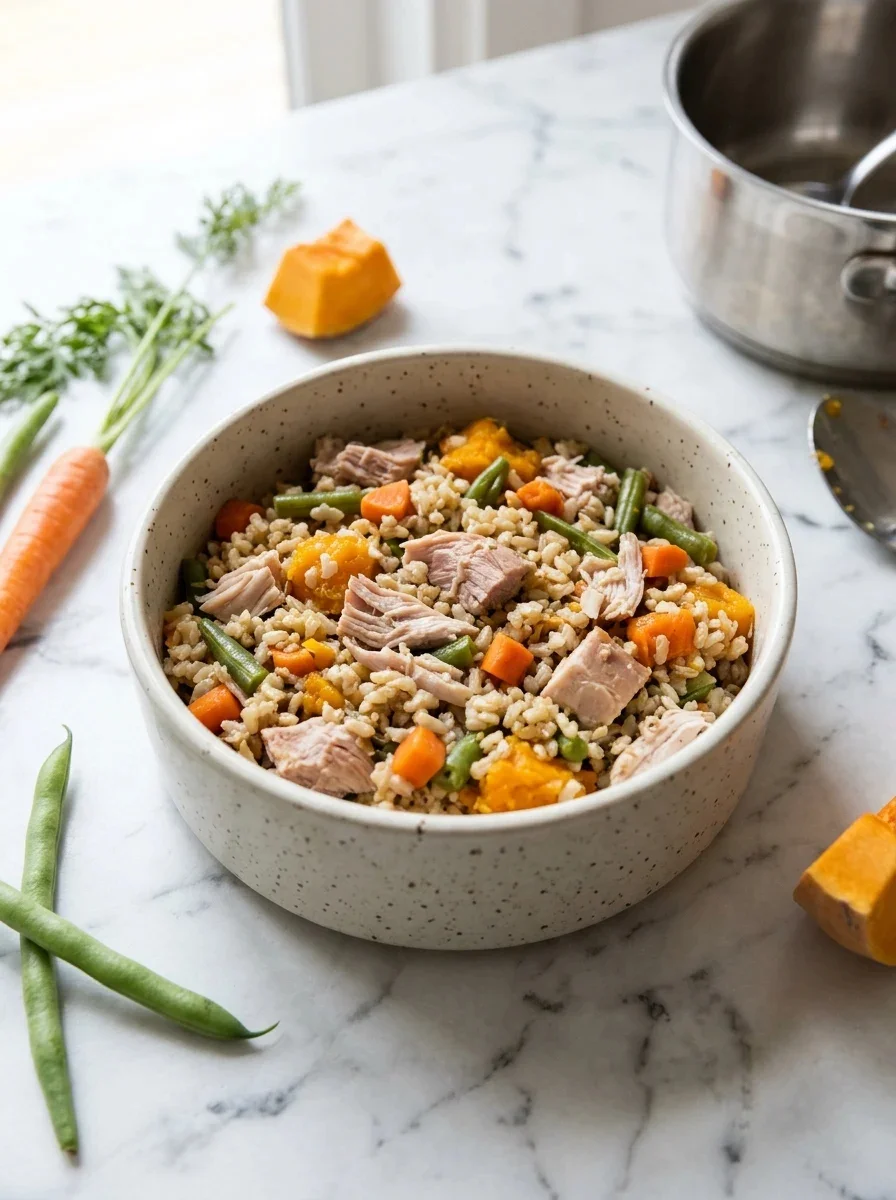
This bowl is a staple for many dog owners who want a simple, high-protein meal that is easy to prepare. Lean ground turkey is one of the most accessible low-fat proteins available, and when paired with brown rice, it creates a complete, filling meal.
Ingredients
- 1 lb lean ground turkey (99% lean)
- 2 cups cooked brown rice
- 1 cup green beans, chopped
- 1/2 cup carrots, diced
- 1/2 cup plain pumpkin puree
Step-by-Step Instructions
- Place the lean ground turkey in a large pot over medium heat, breaking it up with a wooden spoon as it cooks.
- Continue cooking the turkey until it is fully browned and no longer pink, ensuring it is cooked through completely.
- Add the chopped green beans and diced carrots to the pot with the cooked turkey and stir to combine.
- Allow the vegetables to soften for about two minutes, then stir in the cooked brown rice and the plain pumpkin puree.
- Simmer the mixture for five minutes to let the flavors meld, checking that the vegetables are tender enough for your dog to chew.
- Remove from heat, let the bowl cool to room temperature, and divide into four equal portions.
This meal is particularly good for dogs who need a consistent source of high-quality protein. The brown rice provides slow-releasing energy, which helps stabilize blood sugar levels, and the pumpkin puree supports healthy bowel movements.
Recipe 2: Cod & Potato Bowl
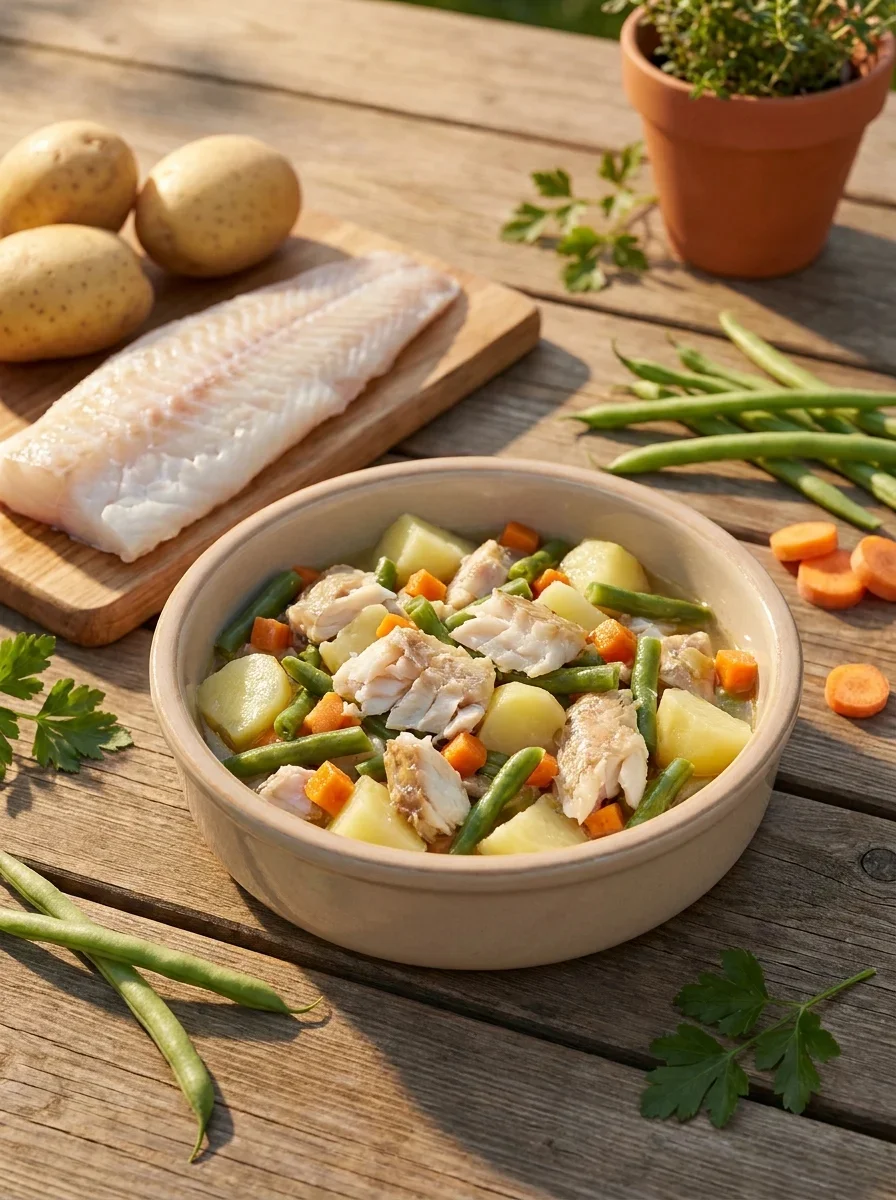
White fish is an excellent alternative to poultry for dogs who may have sensitivities to chicken or beef. Cod is naturally very low in fat and is easily digestible, making it a top choice for senior dogs or those with picky palates.
Ingredients
- 1 lb cod fillets, bones removed
- 2 cups potatoes, diced
- 1 cup green beans, chopped
- 1/2 cup carrots, diced
- 1 tablespoon fresh parsley, chopped
Step-by-Step Instructions
- Place the diced potatoes and chopped green beans in a pot of water and bring to a boil.
- Simmer the vegetables until they are fork-tender, which should take about ten minutes.
- Add the diced carrots to the pot and cook for another five minutes until they are soft.
- Gently place the boneless cod fillets into the simmering vegetable broth, being careful not to break them apart too much.
- Cook the cod for five to seven minutes, or until the fish is opaque and flakes easily with a fork, ensuring all bones are removed.
- Stir in the fresh parsley and let the mixture cool slightly before serving in individual bowls.
This bowl is hydrating and light. The broth from the potatoes and vegetables adds moisture without adding fat, which is perfect for dogs who need to increase their water intake. Cod is rich in omega-3 fatty acids, which are beneficial for joint health and skin, even in a low-fat context. If you are looking for other ways to incorporate fresh vegetables into your dog’s routine, you can try homemade cheese dog treats as a reward for good behavior during the transition to this new meal. However, keep in mind that cheese is not a low-fat ingredient, so use those treats sparingly.
Recipe 3: Chicken & Green Bean Bowl
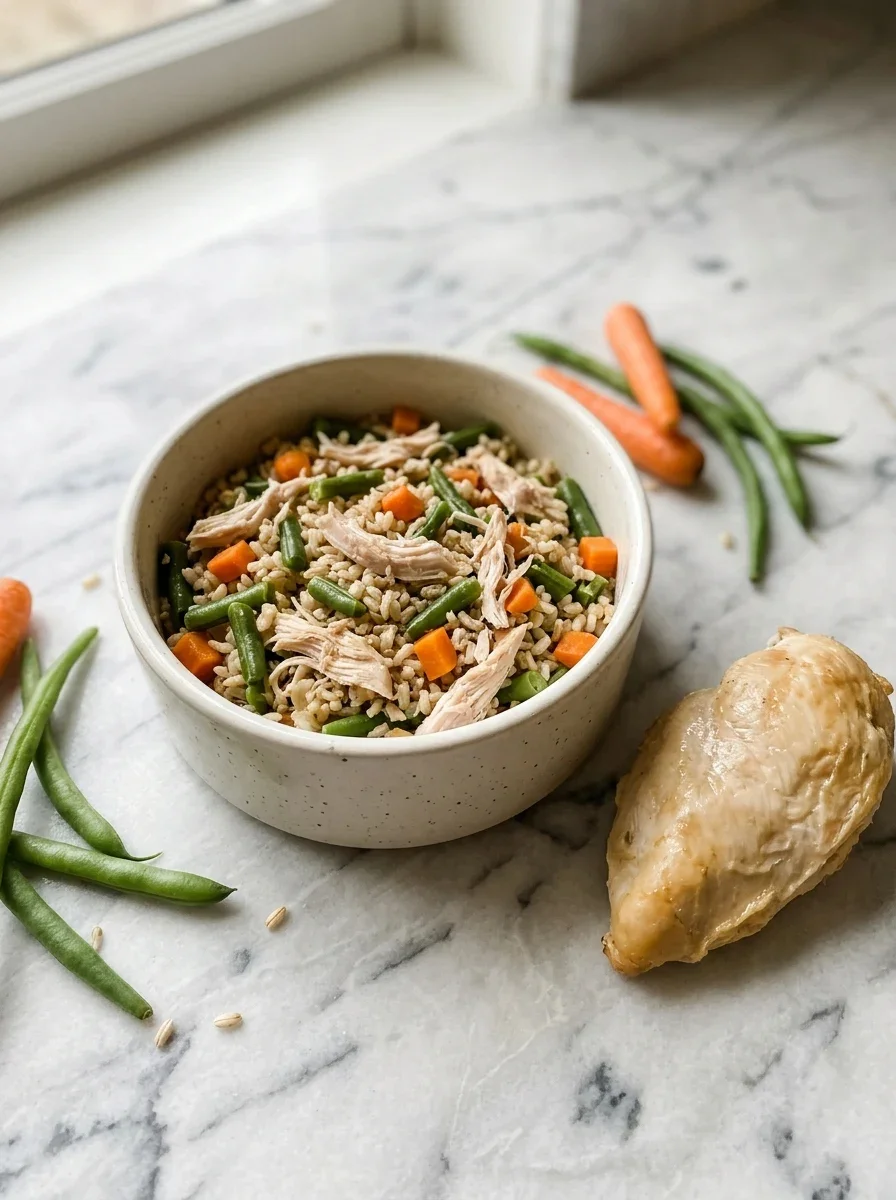
For many dog owners, chicken is the gold standard for a healthy meal. This recipe uses boneless, skinless chicken breast, which is naturally low in fat and high in protein. The green beans and brown rice provide a balanced carbohydrate and fiber base, while the pumpkin puree adds a creamy texture that makes the meal more palatable.
Ingredients
- 1 lb boneless skinless chicken breast
- 2 cups green beans, chopped
- 1 cup cooked brown rice
- 1/2 cup carrots, diced
- 1/2 cup plain pumpkin puree
Step-by-Step Instructions
- Place the chicken breast, green beans, and carrots in a slow cooker or a large pot.
- Add just enough water to moisten the ingredients without submerging them completely.
- Cook on low for four hours, or on high for two hours, until the chicken is fully cooked and tender.
- Shred the chicken into small, bite-sized pieces using two forks, discarding any skin or fat that may remain.
- Stir in the cooked brown rice and the plain pumpkin puree until the mixture is uniform.
- Let the bowl cool to room temperature before dividing into four equal portions.
The slow-cooked method breaks down the proteins in the chicken, making it easier for your dog to digest. This recipe is great for dogs who need a consistent, unflavored protein source. Ensure that the chicken is completely cooked through, as raw or undercooked meat can carry risks.
Recipe 4: Lean Beef & Carrot Stew
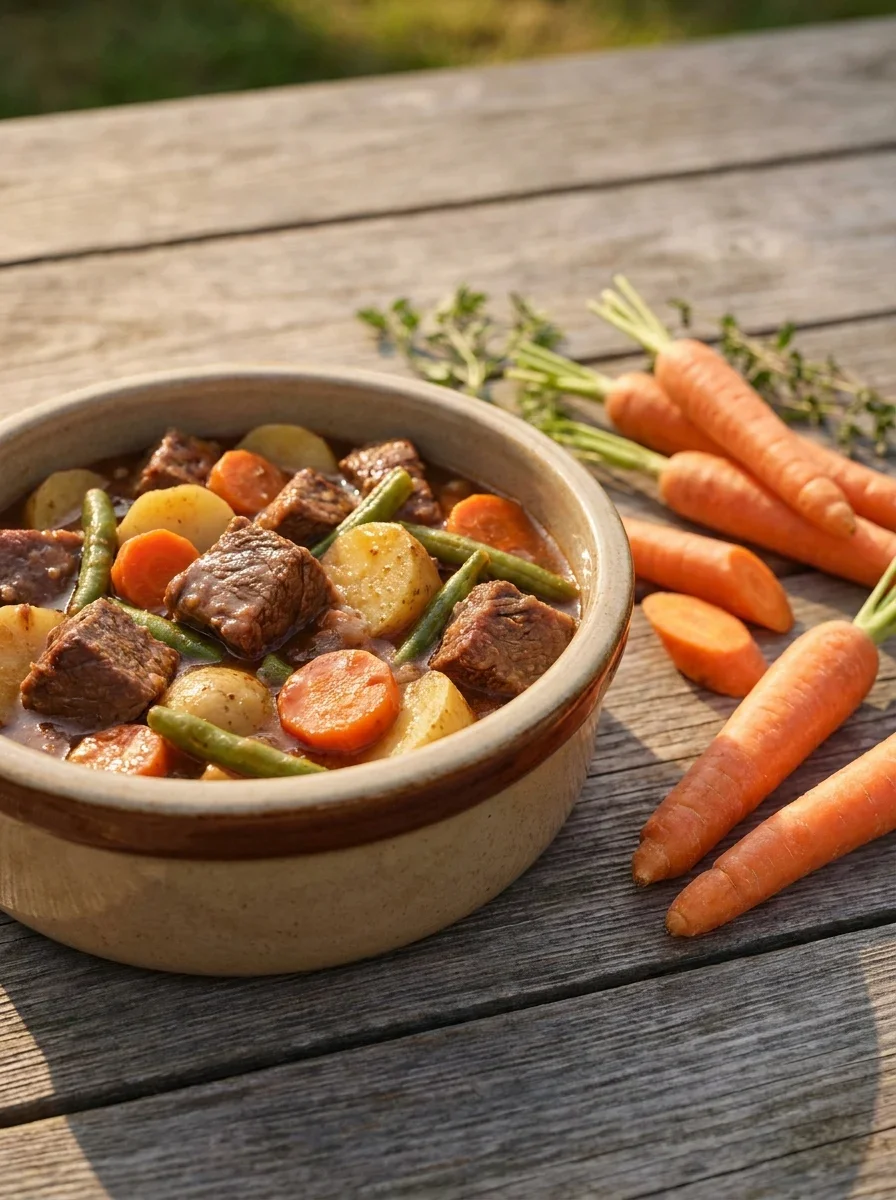
Beef is a popular protein for dogs, but it is important to choose lean cuts to keep the fat content manageable. This stew uses lean beef stew meat, trimmed of visible fat, and combines it with heart-healthy vegetables. The carrots and potatoes add natural sweetness and essential vitamins, while the green beans provide fiber.
Ingredients
- 1 lb lean beef stew meat, trimmed of visible fat
- 2 cups carrots, diced
- 2 cups potatoes, diced
- 1 cup green beans, chopped
- 4 cups water
Step-by-Step Instructions
- Place the beef stew meat in a large pot and cover it with the water.
- Bring the pot to a boil, then reduce the heat to a simmer.
- Skim off any foam or fat that rises to the surface to keep the broth lean.
- Add the diced carrots and potatoes and simmer for about one hour, until the vegetables are tender.
- Add the green beans and continue simmering for another thirty minutes until the meat is fall-apart tender.
- Adjust the consistency by adding more water if the stew is too thick, then cool before serving.
This stew is rich in iron and zinc, which are essential for a dog’s immune system and energy levels. If you want to add a touch of variety to your dog’s vegetable intake, consider pairing this meal with a side of carrot and apple waffles for dogs as a special treat, but remember that the main bowl should remain the focus for nutrition.
Recipe 5: Turkey & Oat Porridge
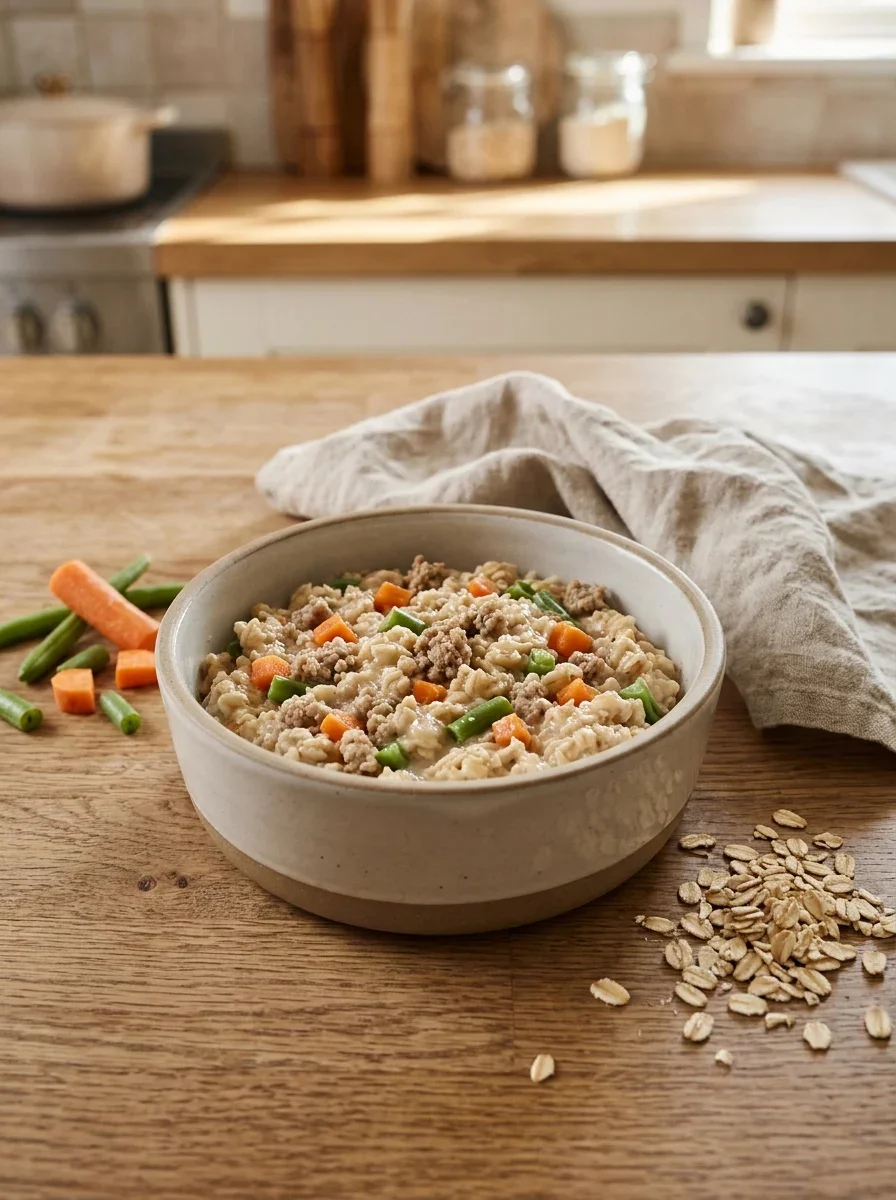
Oats are a superfood for dogs, providing soluble fiber that helps regulate blood sugar and supports heart health. This recipe combines the lean protein of ground turkey with the soothing texture of rolled oats. The porridge format makes it easy for older dogs or smaller breeds to eat without struggling to chew.
Ingredients
- 1 lb lean ground turkey (99% lean)
- 1 cup rolled oats
- 1 cup carrots, diced
- 1 cup green beans, chopped
- 1/2 cup plain pumpkin puree
Step-by-Step Instructions
- Cook the rolled oats according to the package instructions, using water instead of milk, until they are soft and creamy.
- In a separate pan, brown the lean ground turkey over medium heat until fully cooked and crumbled.
- Add the diced carrots and chopped green beans to the turkey pan and cook until the vegetables are tender.
- Stir the cooked turkey and vegetables into the bowl of cooked oats.
- Mix in the plain pumpkin puree until the porridge is smooth and uniform.
- Let the porridge cool slightly, as it will thicken as it cools, then divide into four portions.
This meal is high in fiber, which is beneficial for dogs who need to manage their weight or have digestive irregularities. The turkey adds the necessary protein to keep muscle mass healthy.
Recipe 6: White Fish & Rice Soup
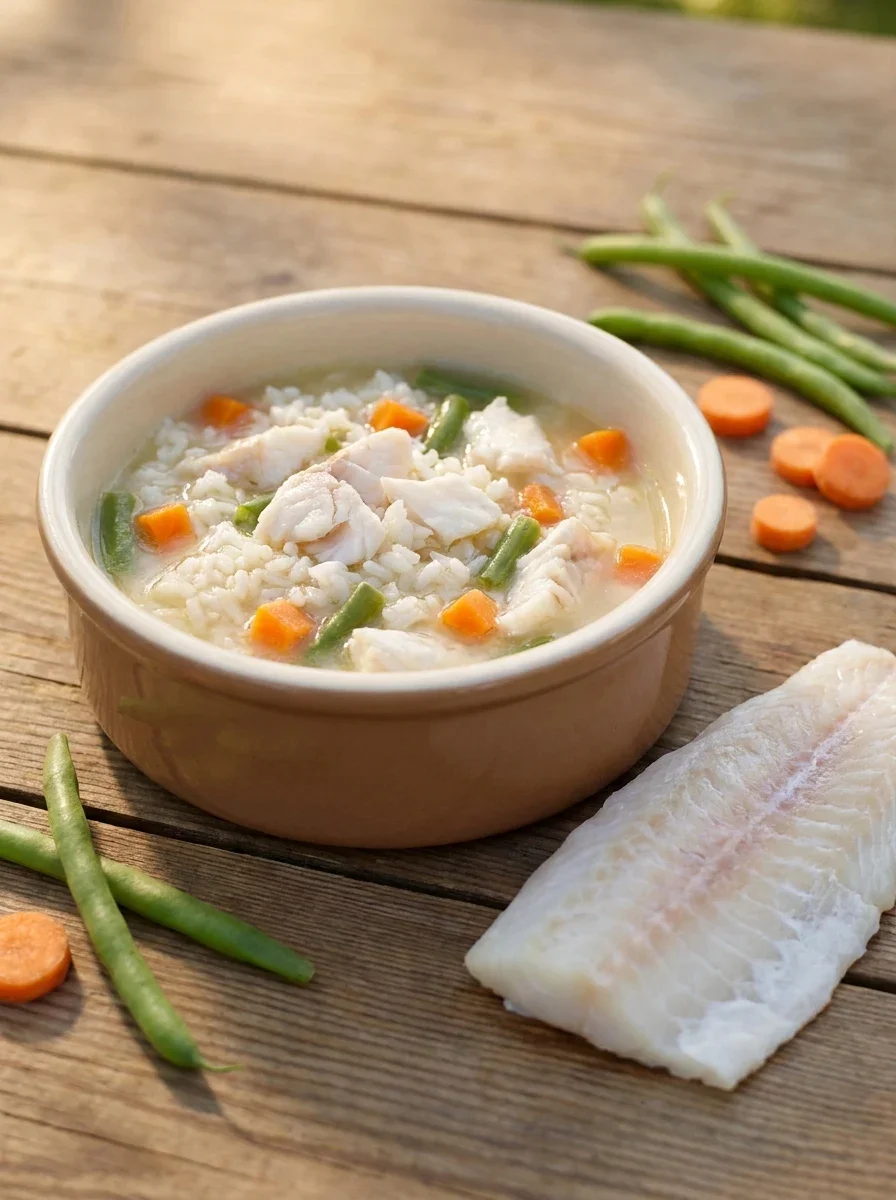
Soup is a great way to add hydration to a dog’s diet, which is especially important during the summer months or for dogs who drink very little water. This recipe uses white fish, which is lean and mild, combined with rice and vegetables.
Ingredients
- 1 lb white fish fillets (cod or tilapia), bones removed
- 2 cups cooked white rice
- 1 cup carrots, diced
- 1 cup green beans, chopped
- 4 cups water
Step-by-Step Instructions
- Bring the water to a boil in a large pot.
- Add the diced carrots and green beans and simmer for ten minutes until they are tender.
- Gently add the white fish fillets, ensuring they are boneless, and cook for five to seven minutes until flaky.
- Add the cooked white rice to the pot and stir gently to combine with the broth.
- Simmer for two more minutes to let the rice absorb the flavor of the broth.
- Remove from heat, let the soup cool, and serve in bowls with the fish placed on top of the rice and vegetables.
This soup is low in fat and high in moisture, making it ideal for dogs who need to stay hydrated. The white fish is a source of high-quality protein that is easy to digest. This recipe is particularly good for dogs recovering from illness or for those with very sensitive digestive systems.
Troubleshooting
Even with careful planning, feeding a new diet to your dog can present some challenges. The most common issue is that your dog refuses to eat the new meal. This is normal, especially if you are making a significant change in texture or flavor. If they still refuse to eat, try serving the food at room temperature, as some dogs prefer their food not to be hot.
Another potential issue is digestive upset, such as loose stools. This can happen when switching to a new diet, even if it is low-fat. Ensure that you are not switching too quickly. If your dog has a sensitive stomach, the oats in the porridge recipe or the pumpkin puree in the turkey and chicken recipes can help soothe the digestive tract. If the diarrhea persists for more than 24 hours, consult your veterinarian.
Picky eaters are also a common challenge. Some dogs are very particular about the appearance of their food. If they refuse a stew because it looks too messy, try blending the ingredients together to create a uniform consistency. If you are struggling to make the food appealing, look for inspiration in other areas of dog cooking. For example, the process of making 2-ingredient pumpkin dog treats can help you understand how pumpkin interacts with other ingredients in terms of texture and taste, which can be applied to the main bowl.
Storage and Freezing
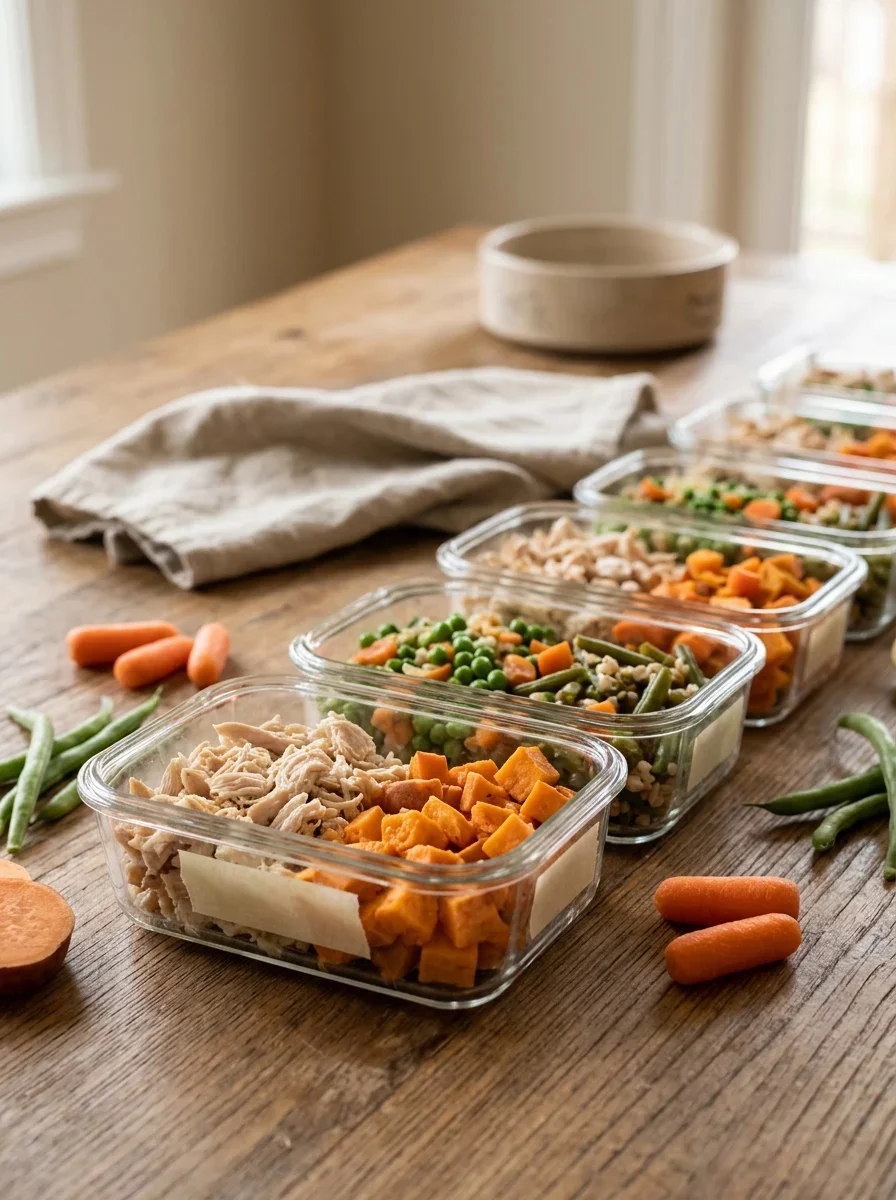
One of the biggest advantages of homemade dog food is the ability to cook in bulk and store it for later. Most of these recipes can be stored in the refrigerator for up to three to four days. Always make sure the food is cooled to room temperature before putting it in the fridge to prevent bacterial growth.
Freezing is the best option for long-term storage. These meals freeze very well. Divide the cooked food into individual servings, using the one-cup guideline, and place them in freezer-safe containers or heavy-duty freezer bags. When you are ready to serve a meal, move the portion to the refrigerator the night before to thaw slowly. Thawed food should be consumed within two days and not refrozen.
It is important to note that the texture of vegetables can change when frozen and thawed. Carrots and potatoes may become softer, which is usually fine for most dogs, but if your dog prefers a crunchier texture, you might serve the thawed food fresh or add a small amount of fresh, raw vegetables at serving time.
Frequently Asked Questions
Final Thoughts
Feeding your dog a low-fat diet at home is a thoughtful way to support their health and weight management. By using simple, whole ingredients, you create meals that are not only nutritious but also enjoyable for your pet. Remember that consistency is key. A gradual transition over seven days helps your dog adjust to the new diet without digestive upset.
The beauty of homemade meals is the control you have over what goes into the bowl. You know exactly what your dog is eating, and you can avoid the hidden fats and additives that are common in commercial foods.
Always keep the health of your specific dog in mind. These recipes are general guidelines, and your veterinarian is the best resource for personalized advice. If your dog has a medical condition, such as pancreatitis, follow their strict guidance. With patience and attention, you can help your dog maintain a healthy weight and enjoy a life full of vitality.

Izzy is an experienced ranch worker who has a passion for exploring nature and getting up close to wildlife. With her connections to various animal organizations, Izzy is well-versed in animal care and rehabilitation.