10 Homemade Dog Cone Ideas: DIY Comfort for Your Recovering Pup
If your dog has ever needed a cone after surgery, a spay, a neuter, or just to stop them from licking a wound, you already know the struggle. Store-bought cones bump into walls, scare your dog, and make eating and sleeping harder than they need to be. Your dog backs into furniture, refuses to walk through doorways, and gives you the saddest eyes you’ve ever seen. That’s exactly why so many pet parents are turning to Homemade Dog Cone Ideas instead.
A homemade cone can be softer, cuter, and just as effective as the plastic kind your vet hands you. Many dog owners are now trying Dog Cone DIY projects using fabric, foam, pillows, and even old towels to make recovery time less stressful for their pets. These homemade versions often solve the exact problems dogs hate most about traditional cones: the noise they make bumping into things, the way they block peripheral vision, and how uncomfortable they are to sleep in.
In this article, we’re sharing 10 real homemade dog cone ideas, each one inspired by an actual dog who wore it. You’ll see soft mesh cones, fun food-shaped cones, flower-themed cones, and even a full cone alternative. Every idea includes what makes it work, which type of dog it suits best, and simple guidance if you want to build a similar version yourself. By the end, you’ll know exactly which style might work best for your own dog’s size, coat, and recovery needs.
Let’s jump straight into the ideas.
10 Homemade Dog Cone Ideas to Try
1. Donut-Shaped Plush Cone
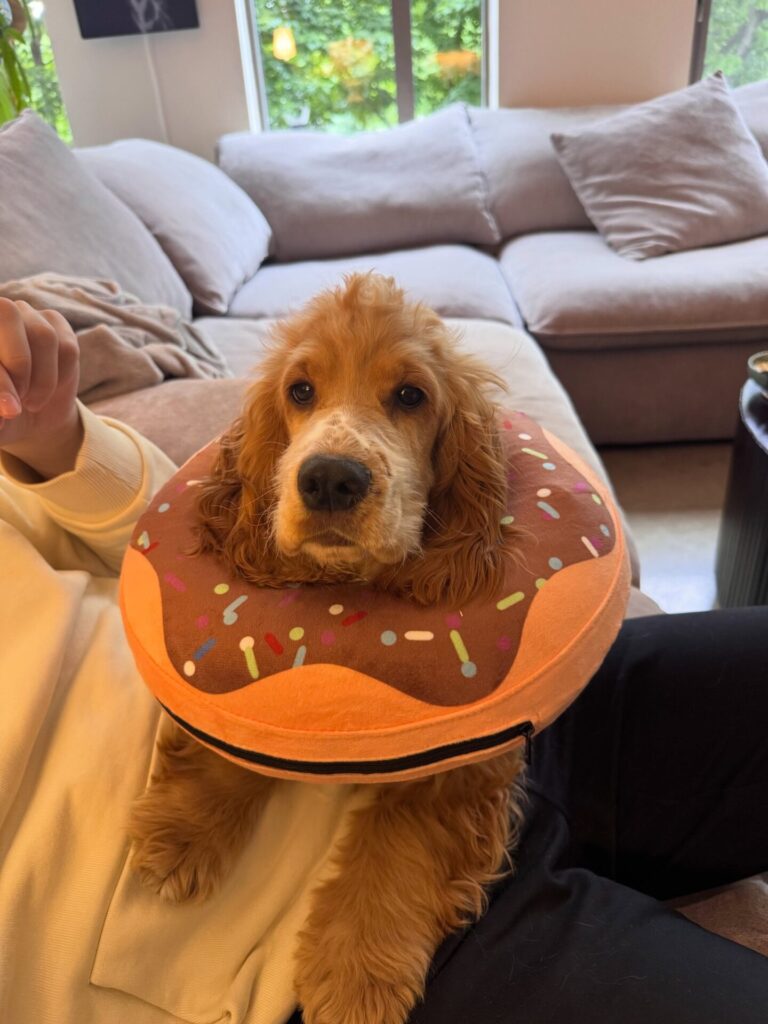
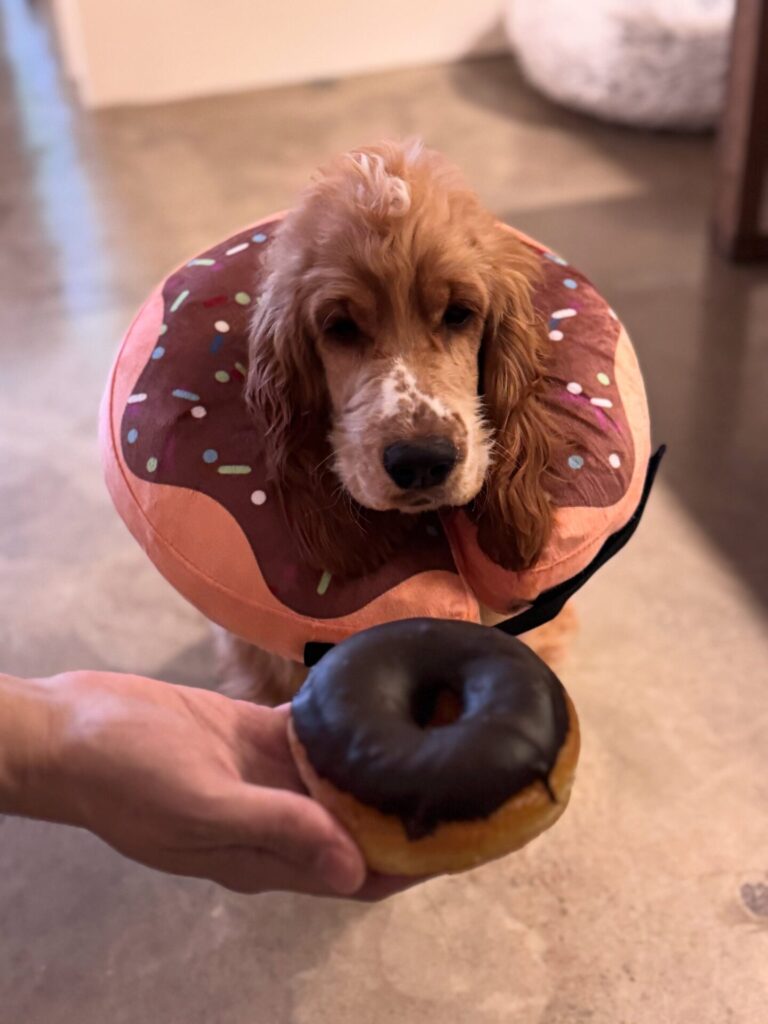
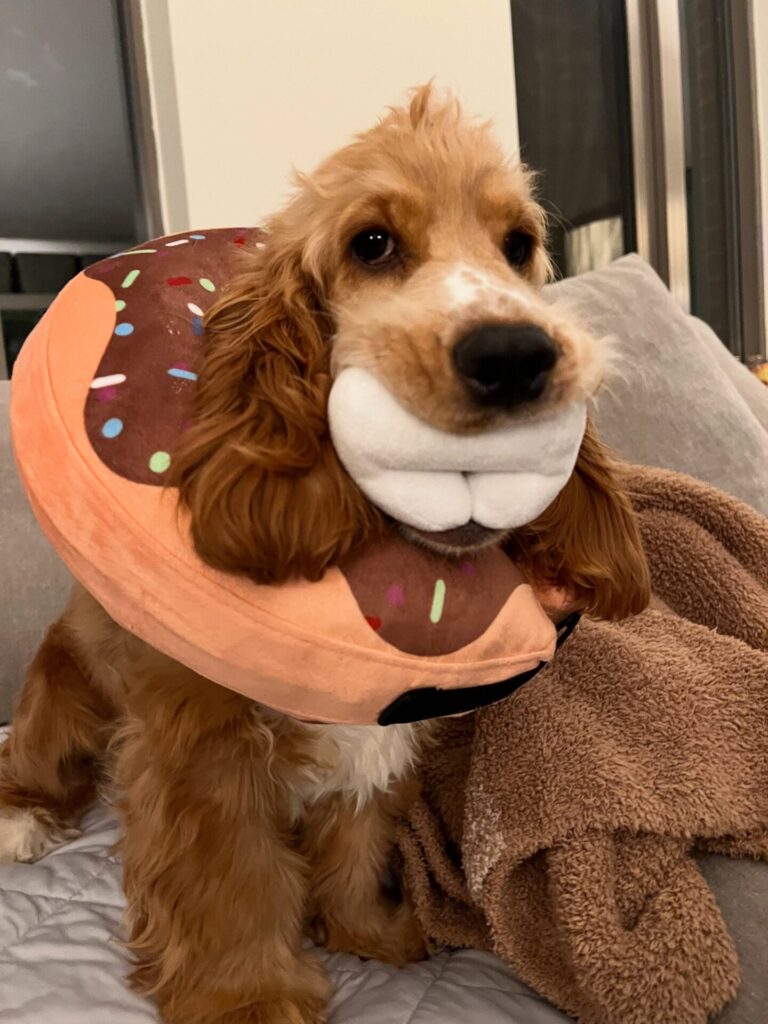
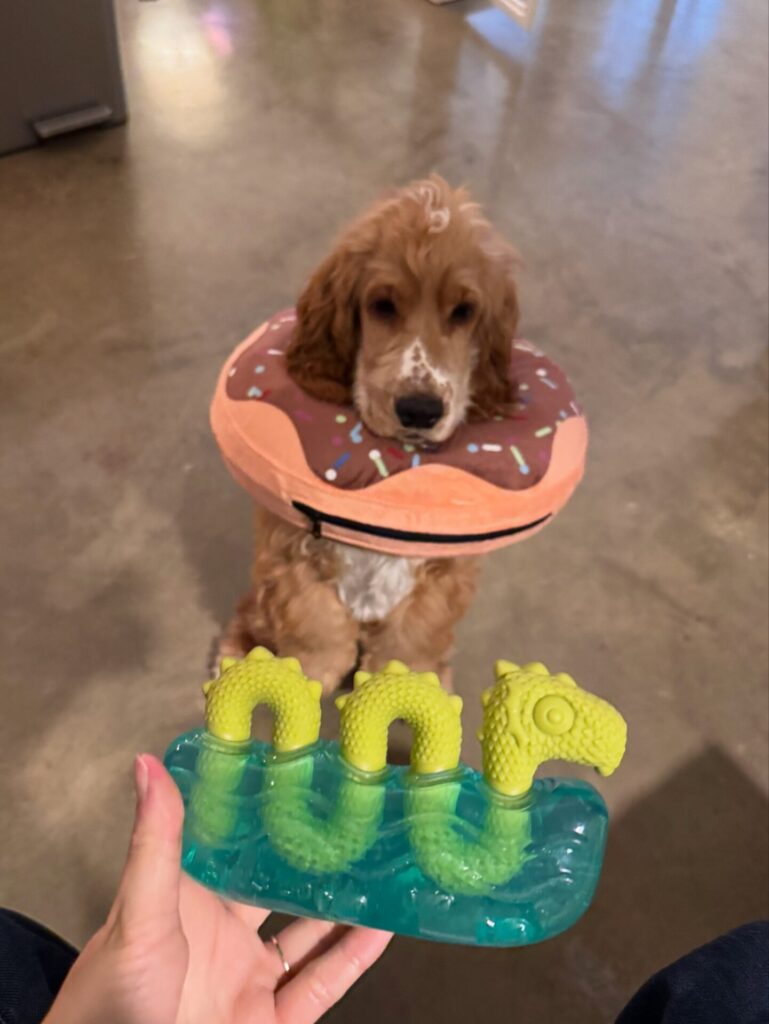
This might be the cutest idea on this entire list. Instead of a plain plastic cone, this design turns the recovery collar into a giant plush donut, complete with chocolate frosting and colorful sprinkles printed right on the fabric. It looks less like a medical device and more like a costume piece, which can genuinely change how your dog feels about wearing it.
The donut cone works because it uses a soft, padded material instead of stiff plastic. That means fewer bumps into furniture and doorways, and far less of that jarring “clunk” sound that startles so many dogs when their cone hits a wall or table leg. The rounded shape also doesn’t block your dog’s side vision as much as a traditional plastic cone does, which can help reduce stress and make your dog feel less trapped.
This style zips or velcros closed around the neck, just like a standard cone, but the plush exterior makes it feel more like a costume than a medical device. It’s a great pick if your dog already tolerates a soft collar and you just want something more fun for photos and daily life. Many dogs also seem calmer in a rounded, cushioned collar compared to a hard-edged one, likely because it doesn’t press uncomfortably against their neck or shoulders when they turn their head.
If you’re planning a DIY version, look for a fleece or plush fabric, a firm foam insert for shape, and a zipper or velcro closure. You can sew a simple padded ring and shape it with wire or flexible plastic boning inside so it holds its form. Adding a printed fabric panel, like a donut glaze design, is optional but adds a lot of personality without much extra effort. This idea works particularly well for medium to large dogs who need moderate protection but don’t do well with rigid plastic.
📸 Photo credit: Instagram @nessie.cocker.spaniel
2. Cherry-Print Corduroy Fabric Cone
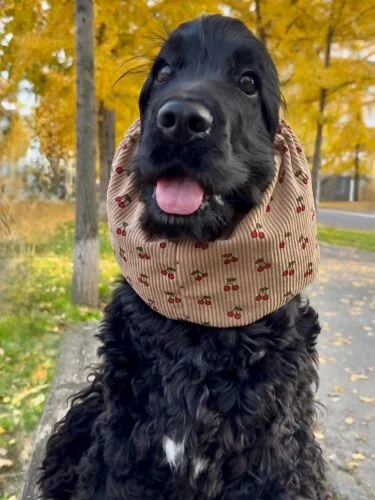
For a softer, more low-key homemade option, a corduroy fabric cone works beautifully. This particular design uses a warm tan corduroy fabric covered in a cherry print, giving it a cozy, almost vintage feel that suits dogs with darker coats especially well.
Unlike hard plastic cones, this style is entirely soft. It wraps around the dog’s neck and head like a padded hood, which makes it much easier for the dog to rest their head or lie down without the collar digging into the floor or furniture. Dogs who spend most of their recovery time napping on the couch or in bed tend to do much better in a soft, flexible cone like this one, since there’s no hard edge catching on cushions or blankets.
This is a great Dog Cone DIY project for beginners because it doesn’t require a rigid shape. You can use a simple pattern: a wide fabric cone shape, sewn closed on one side, with a soft elastic or velcro neckband. Adding a print like cherries, stars, or plaid makes it feel more like an accessory than a medical device, and corduroy in particular holds its shape reasonably well without needing extra stiffening material inside.
Keep in mind that soft fabric cones like this work best for mild cases, like light licking prevention, rather than serious post-surgery restriction, since they can flex more than plastic. A determined dog may be able to push a soft cone out of the way with enough effort, so this style is best reserved for dogs who are naturally calm or for lower-risk healing situations. It’s also a nice option for cooler months, since corduroy adds a small layer of warmth around the neck.
📸 Photo credit: Instagram @leoscockerboutique
3. Yellow Flower Petal Cone

This idea takes inspiration from nature. Shaped like a blooming yellow flower, this cone has scalloped petal edges instead of a plain circular rim. It instantly makes the cone look less clinical and more like a costume piece, which many owners say helps them feel less guilty about putting their dog through recovery.
The scalloped edge design isn’t just for looks. Rounded, petal-like edges can be gentler on furniture and walls compared to a sharp, straight-edged cone. Instead of one continuous hard rim, the petal shape breaks up the edge into smaller curved sections, which tends to bump softly rather than scrape or catch on corners. The snap closures along the top also make it easy to put on and take off without wrestling with velcro or fabric ties, which matters a lot if your dog needs the cone removed several times a day for meals or bathroom breaks.
If you want to recreate this at home, you’ll need a semi-rigid material like craft foam or thin plastic sheeting so the petal shape holds up. Cut the petal pattern first, then attach snaps or velcro strips before assembling the full circle. Using a bright color like yellow, orange, or pink also makes the cone easier to spot if your dog loses it in the yard or under furniture, which is a small but genuinely useful bonus.
This is a wonderful option for small dogs who don’t need heavy-duty protection but still need a barrier around their face and neck. Because the material is lightweight, it won’t weigh down a smaller dog’s neck the way a bulkier fabric or plastic option might, making it easier for them to move around normally during the day.
📸 Photo credit: Instagram @chipa_kiichi
4. Sunflower Petal Fabric Cone
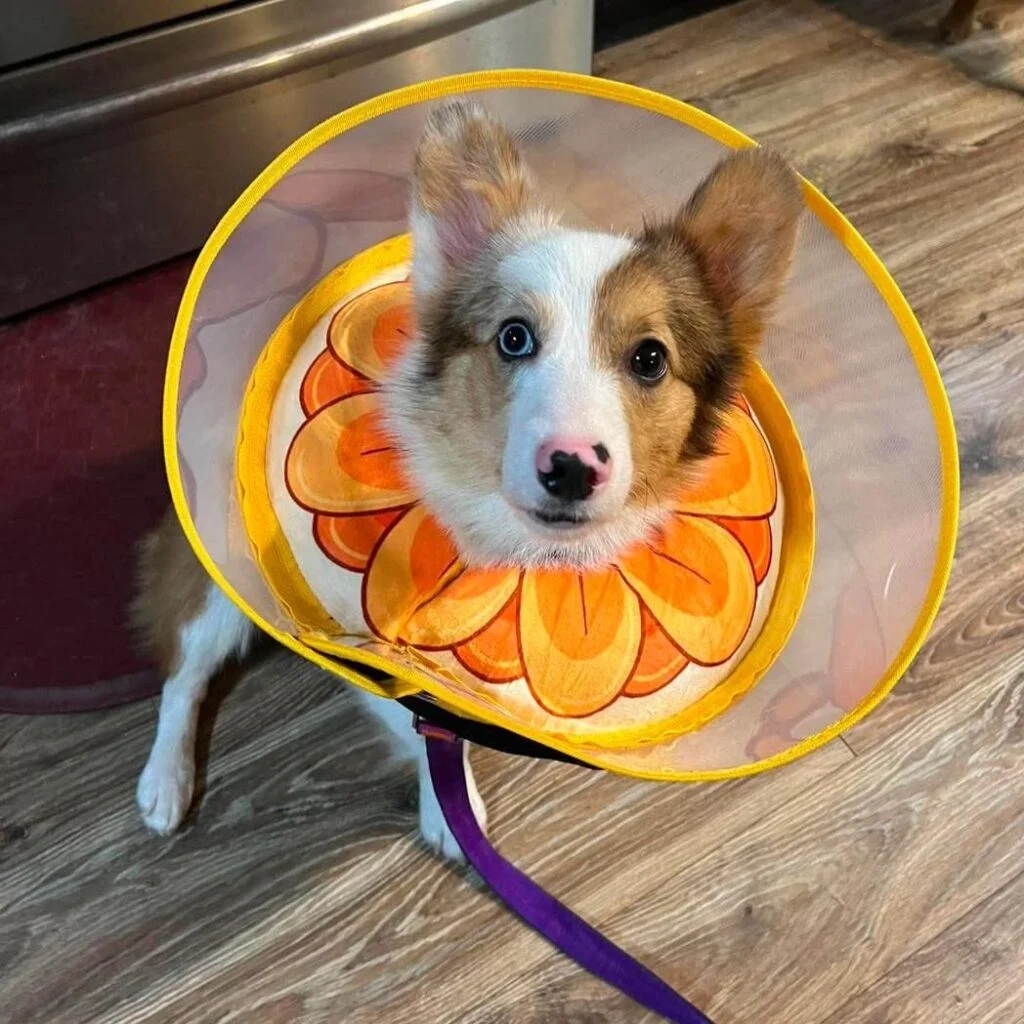
Similar in spirit to the flower cone above, this version uses soft fabric instead of foam, creating a sunflower-inspired cone with a plush orange and brown petal design. It softens the entire look of a recovery collar while still doing its job.
Because it’s made from fabric rather than rigid material, this cone moves more naturally with the dog’s head. It’s less likely to catch on furniture edges compared to a stiff cone, and the soft petals cushion any bumps that do happen. This matters especially for playful or energetic dogs who forget they’re wearing a cone at all and try to run or jump the way they normally would.
This design also includes a clear plastic panel on part of the cone, which is a smart touch. It gives the dog a small window of forward vision while still blocking access to the body and tail area. Vision matters more than people often realize when it comes to how a dog handles wearing a cone; a dog who can see clearly in front of them is usually calmer and less likely to walk into things, which reduces both stress and the risk of minor injury. If you’re building your own version, consider sewing in one clear vinyl panel at the front so your dog can still see where they’re walking.
A sunflower or daisy pattern is easy to sew using leftover fabric scraps, making this a budget-friendly Dog Cone DIY project. You don’t need much fabric to complete one, and mismatched or leftover scraps from other sewing projects work perfectly well here, since the petal shapes don’t need to be uniform to look charming.
📸 Photo credit: Instagram @sjcrescue
5. Soft Gray Mesh Recovery Cone
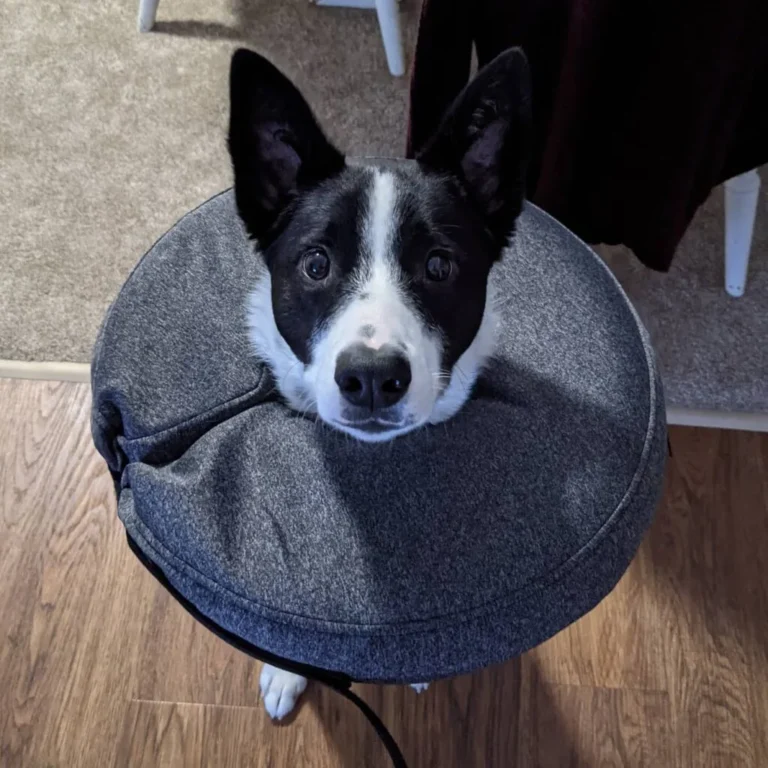
Not every homemade cone needs a bold pattern. This simple gray mesh cone proves that a clean, comfortable design works just as well, and sometimes simplicity is exactly what a stressed dog needs during recovery.
This cone is made from a soft, breathable fabric with mesh-like texture, similar to jacket material. It sits comfortably around the neck without digging in, and the muted gray color means it blends into everyday life rather than standing out. For dogs who already feel a little self-conscious or anxious in a cone, a low-key design like this can feel less overwhelming than a brightly patterned option.
The biggest benefit of a soft mesh cone like this is comfort during long recovery periods. Dogs often need to wear a cone for one to two weeks, and a soft material is much easier to sleep in compared to hard plastic. Many dogs struggle to find a comfortable sleeping position in a rigid cone, ending up exhausted simply because they can’t rest properly. A breathable, flexible material solves a large part of that problem, letting the dog curl up more naturally.
To make this at home, use a medium-weight fabric with some structure, like canvas or twill, paired with a soft inner lining. A drawstring or velcro closure at the neck keeps it secure without being too tight. This style also tends to work well for dogs with pointed ears, since the softer material won’t fold or crush their ears the way a stiffer cone sometimes can.
📸 Photo credit: Instagram @lilcoopthecollie
6. Inflatable Donut Neck Pillow
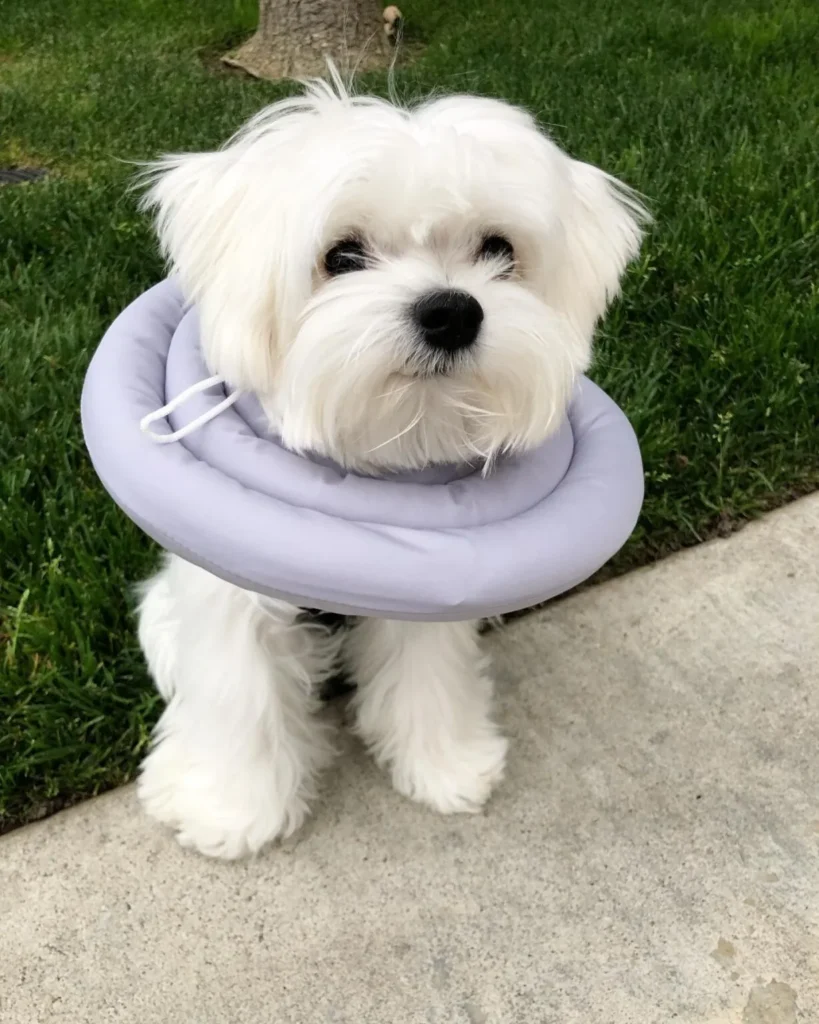
This idea skips the traditional cone shape entirely. Instead, it uses an inflatable, pillow-like collar that wraps around the neck like a travel pillow. It’s one of the most different approaches on this list, and for many dogs, it’s also one of the most comfortable.
This style works differently than a cone. Rather than blocking the dog’s view or reach with a wide barrier, it simply makes it physically difficult for the dog to bend their neck far enough to lick or bite at their body. For many dogs, this is far less stressful than a traditional cone because it doesn’t restrict their vision at all. They can see everything around them normally, eat and drink without any obstruction, and move through the house without bumping into doorframes or furniture legs.
This is one of the easiest Homemade Dog Cone Ideas to recreate without sewing. You can find inflatable pet collars, or even repurpose a soft travel neck pillow, sized appropriately for your dog’s neck. Simply choose a pillow with a secure closure, inflate it to a firm but comfortable level, and fasten it snugly enough that it can’t slip off over the head.
Keep in mind this style works best for dogs who need to be stopped from reaching their neck or upper back, rather than dogs who need their entire body or legs protected. Because there’s no wide barrier extending past the nose, a determined dog with flexible hips might still be able to reach a wound on their lower body or tail. It’s best used for surgical sites near the head, neck, or shoulders, and always with some supervision until you know how well it works for your specific dog.
📸 Photo credit: Instagram @mochifloof
7. Blue Mesh Comfort Cone
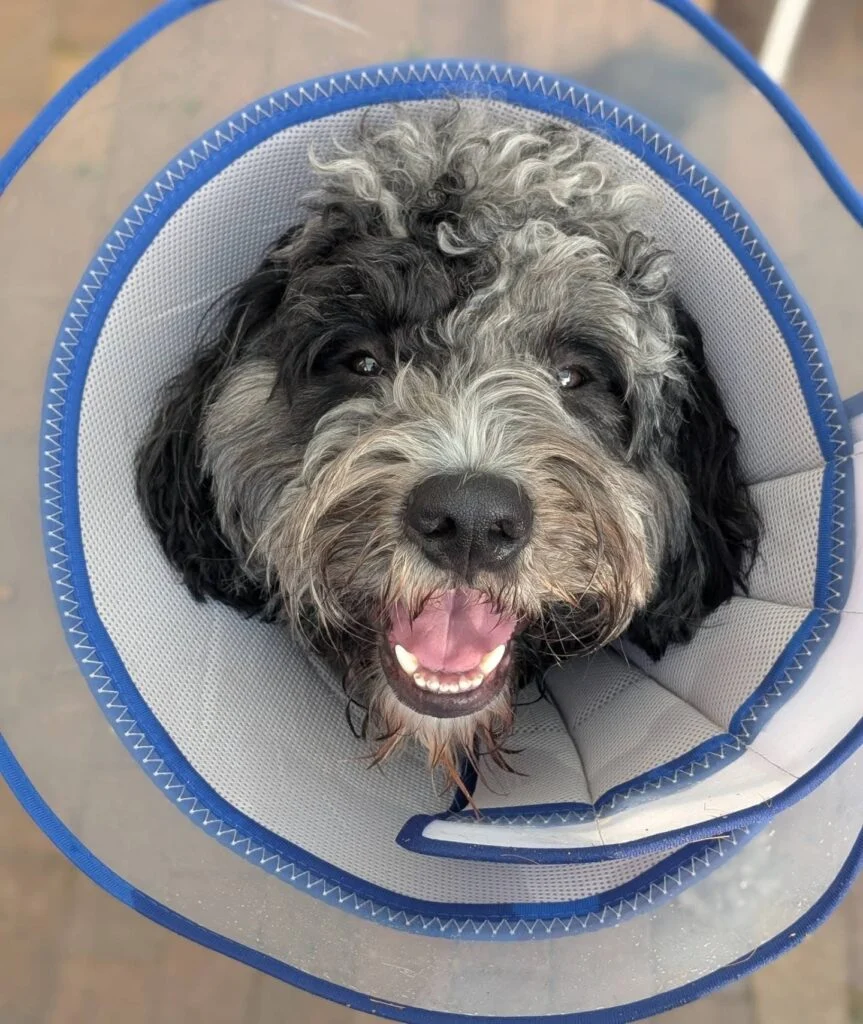
This design is a slightly larger, more structured version of the soft mesh cone. Made with a breathable mesh interior and a sturdy blue trim, it’s built for dogs who need a bit more coverage without sacrificing comfort.
What makes this cone stand out is the balance between structure and softness. The outer edge holds its shape well enough to act as a real barrier, while the inner mesh lining keeps things comfortable against the dog’s neck and face, especially for dogs with thick or curly fur. Doodle breeds and other dogs with dense coats often overheat easily in solid plastic cones, and the mesh lining here allows air to circulate, which can make a noticeable difference in comfort during warmer months or longer recovery periods.
This style is a great pick for larger or more active dogs, since the sturdier build holds up better than a fully soft fabric cone. If you’re making your own, use a firmer outer fabric like canvas, paired with a soft mesh lining, and finish the edge with bias tape or trim for durability. Reinforcing the neck opening with an extra layer of fabric is also worth doing, since that area gets the most wear from regular tightening and adjusting.
Dogs with beards or facial hair, like many doodle and terrier mixes, also tend to do better in this style, since the wider mesh opening gives their fur more room to move without getting pinned uncomfortably against their face the way a tighter cone might.
📸 Photo credit: Instagram @the.bernedoodlebros
8. Pink Scalloped Pom-Trim Cone
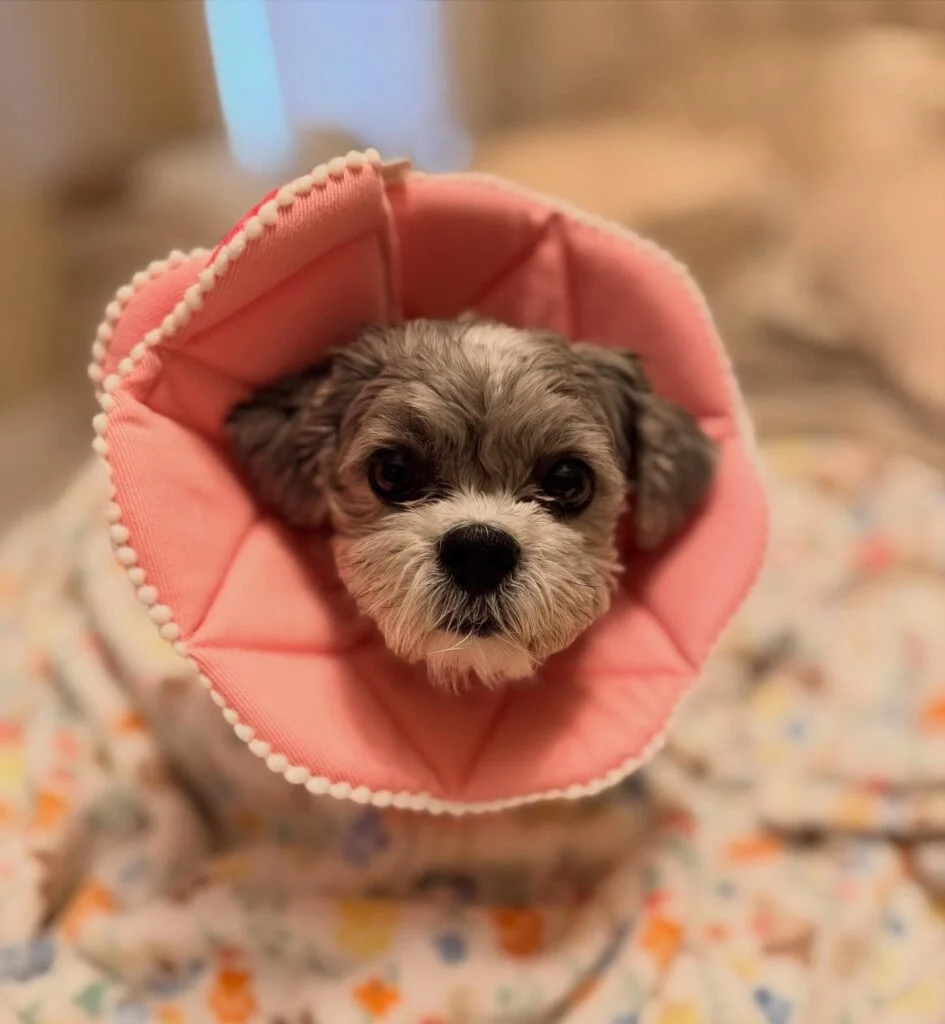
For small dogs, a cone doesn’t have to look purely medical. This soft pink cone uses a scalloped edge and a delicate pom-pom trim, giving it a decorative, almost boutique look that turns a stressful recovery period into something a little more charming.
This design proves that a homemade cone can still be gentle and functional while looking adorable. The soft pink fabric is lightweight, which matters a lot for small breeds who can get tired or stressed wearing something heavy around their neck. A cone that’s too heavy relative to a dog’s size can actually cause more discomfort than the wound itself, so weight is worth paying close attention to when building a cone for a toy or small breed dog.
The scalloped, trimmed edge also softens any accidental bumps, which is especially helpful for small dogs who spend a lot of time close to furniture legs and low surfaces. Because small dogs are closer to the ground and often navigate tighter spaces, a soft trimmed edge reduces the chance of the cone catching or scraping against baseboards, table legs, and other obstacles they encounter throughout the day.
If you want to recreate this look, use a lightweight cotton or satin fabric, add pom-pom trim or ric-rac along the edge, and keep the overall cone size proportional to a small breed’s neck and head. A drawstring closure tends to work particularly well here, since it allows for small, precise adjustments that matter more on a small dog than a larger one.
📸 Photo credit: Instagram @beazleeintheburbs
9. Flat Folding Satellite-Style Cone
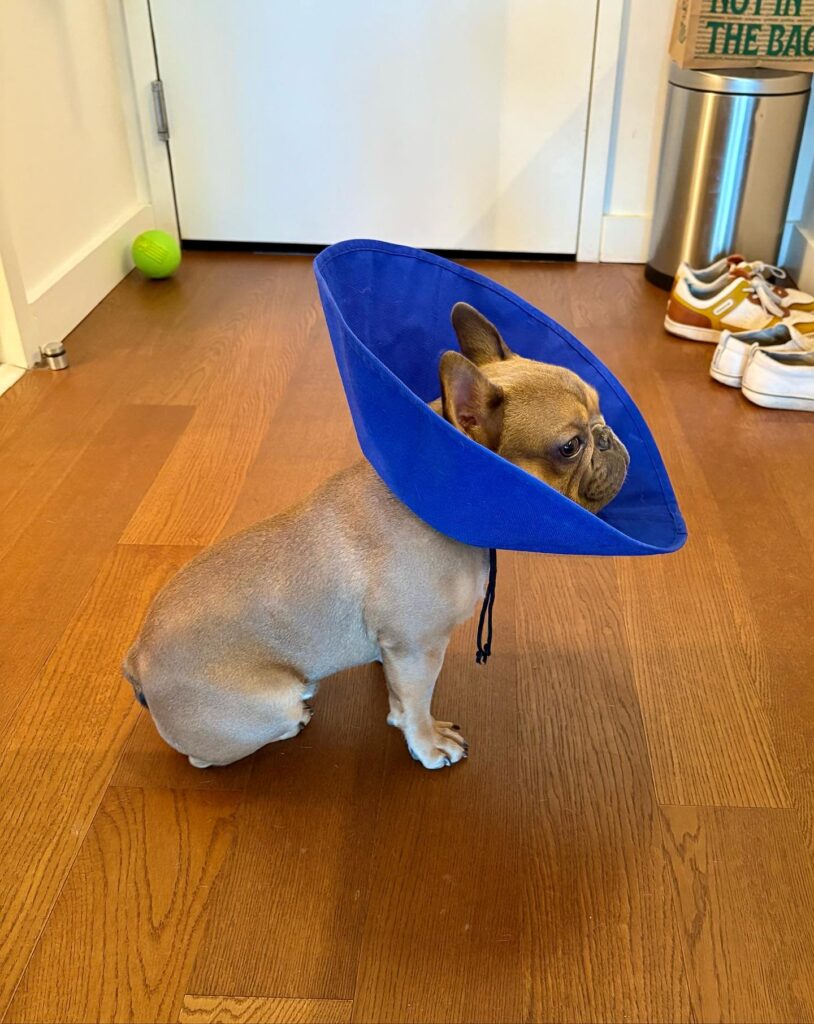
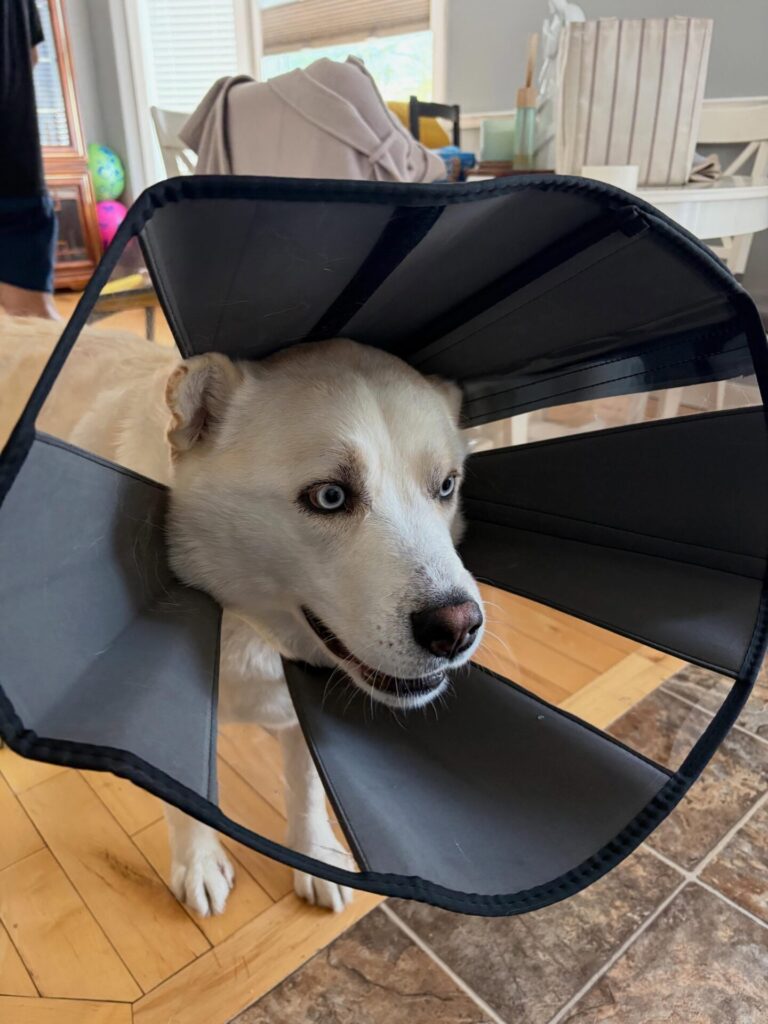
This style looks a little different from a traditional cone. Instead of a deep, bowl-like shape, it folds flatter and wider, almost like a satellite dish or a wide-brimmed hat around the dog’s head. It’s an unusual shape, but it solves a real everyday problem many dogs face while wearing a cone.
This shape works well for dogs who need protection but also need to be able to eat and drink easily. Because the cone is flatter, the dog can lower their head closer to a bowl without the cone edge hitting the ground first. Traditional deep cones often force a dog’s food and water bowls to be raised on a stand just so they can reach their food, but a flatter design like this one removes that extra step entirely.
Two examples of this style show how versatile it can be. One version uses a bold blue fabric with a drawstring closure, while another uses a black and gray folding fabric design with a similar flat shape. Both prove that this style works across different breeds and sizes, from a compact French Bulldog to a larger mixed-breed dog. The folding design also means the cone can be flattened for storage or travel, which is a small but genuinely helpful bonus if you’re taking your dog to follow-up vet visits.
To build a version like this at home, use a semi-stiff fabric or thin plastic sheet cut into a wide circle, then attach a drawstring or velcro band at the center opening. Reinforcing the folding creases with an extra layer of fabric or stitching helps the cone hold its shape over repeated use, since this style relies on the fold points to keep its structure.
📸 Photo credit: Instagram @hugothatfrenchie @kickinitwith.kuma
10. Knit Bonnet and Hood Alternative
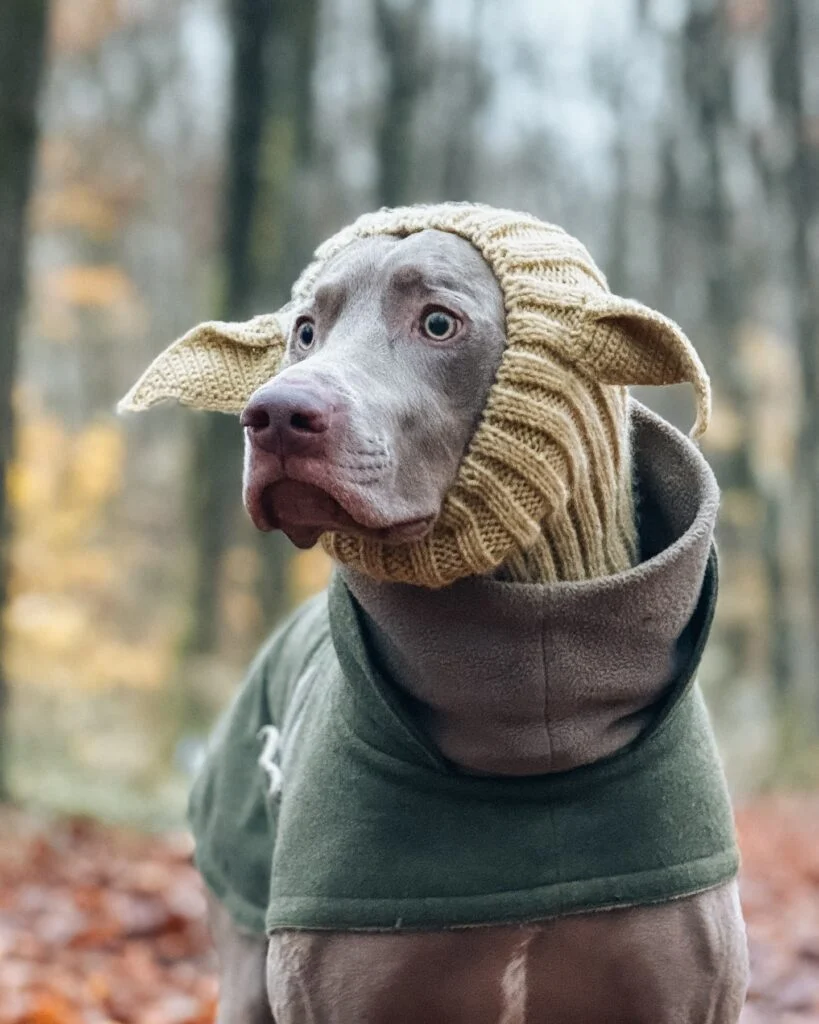
Our final idea isn’t a cone at all, but it deserves a spot on this list because it solves the same problem in a completely different way. Instead of a wide collar, this design uses a knitted bonnet-style hood combined with a warm coat, covering the ears and part of the head while leaving the rest of the body completely free.
This alternative works well for dogs who need their ears or head protected from scratching, rather than their body or tail. The knit material is soft, warm, and much less intimidating than a plastic cone, which can help nervous dogs feel calmer during recovery. Dogs recovering from ear infections, ear surgeries, or minor head scratches often benefit far more from this kind of targeted coverage than from a full cone that restricts their entire range of motion for an area that doesn’t actually need protecting.
This is more of a comfort accessory than a strict medical barrier, so it works best for minor itching or ear-related healing rather than surgical recovery. If you like the idea of a full Dog Cone DIY wardrobe, pairing a soft knit hood with a cozy coat is a simple project using basic knitting or crochet skills. Even beginner-level knitters can manage a simple hood pattern, since it doesn’t require complex shaping, just a snug fit around the ears and a wider opening for the face.
This idea is a great reminder that homemade solutions don’t always have to copy the traditional cone shape to be effective. Sometimes protecting a smaller, specific area works just as well as blocking the entire body, and it’s often far more comfortable for the dog in the process.
📸 Photo credit: Instagram @boston.the.weimaraner
How to Make a Dog Cone DIY at Home
Now that you’ve seen 10 real examples, here’s a simple approach to making your own version, no matter which style inspired you most.
Materials you’ll need:
- A base fabric (fleece, canvas, or foam sheets depending on your chosen style)
- A soft inner lining for comfort, such as mesh or fleece
- Velcro, snaps, or a drawstring for closure
- Scissors, fabric glue, or a sewing machine
- A flexible material like craft foam or thin plastic for structure, if needed
- Optional trim, like pom-poms or bias tape, for a decorative finish
Basic steps:
First, measure your dog’s neck circumference and the length from their neck to just past their nose. This tells you how wide and how deep your cone needs to be. It’s worth taking these measurements while your dog is standing normally, rather than sitting, since posture can slightly change the numbers.
Second, cut your fabric into a large circle or petal shape, depending on which idea inspired you. Leave extra fabric at the neck opening for your closure method, and don’t cut too close to your final measurements the first time, since it’s easier to trim excess fabric than to add more later.
Third, attach your lining fabric to the inside of your cone piece. This step matters most for comfort, especially if your dog will wear the cone for more than a few days. A mesh lining works well for warmer climates or thick-coated breeds, while a soft fleece lining works better for smaller or short-haired dogs who benefit from a little extra warmth.
Fourth, sew or glue the two side edges together, forming the cone or hood shape. Add your closure method at the neck opening, making sure it’s adjustable enough to accommodate slight swelling or coat growth during the healing period.
Finally, test the fit on your dog. It should be snug enough to stay in place but never tight enough to restrict breathing or cause discomfort. You should be able to fit two fingers comfortably between the cone and your dog’s neck. If you want extra guidance on general dog accessories and fit, our guide on dog accessory tips covers helpful basics that apply to homemade cones as well as everyday collars and harnesses.
Tips for Choosing the Right Homemade Cone for Your Dog
Not every idea on this list will work for every dog, and that’s okay. Here are a few quick tips to help you choose the right style for your specific situation.
Match the size to the breed. Small dogs, like the ones in the pink scalloped cone or the yellow flower cone, do best with lightweight materials that won’t weigh down their neck or tire them out during the day. Larger or more active dogs need sturdier builds, like the blue mesh comfort cone, which can hold up to more movement and won’t collapse or lose shape as easily.
Think about coat type. Dogs with thick or curly fur, like doodles, often do better with mesh linings that don’t trap heat, similar to what’s used in several of these homemade designs. Short-haired breeds, on the other hand, may appreciate a bit of extra padding since they have less natural insulation between their skin and the cone material.
Consider what area needs protection. If your dog only needs to avoid scratching their ears or head, a hood-style alternative may work better than a full cone. If they need to avoid reaching their whole body, a wider traditional cone shape is safer, since it creates a bigger barrier between their mouth and the rest of their body.
Think about your dog’s temperament. Anxious or nervous dogs sometimes do better with softer, quieter materials that don’t make noise when they bump into things, while calmer dogs may tolerate a slightly stiffer design without much issue.
If you’re still narrowing down what fits your dog’s personality and size best, our list of small dog breeds can help you understand general size and comfort needs, and our grooming styles guide is useful if your homemade cone needs to work around a specific haircut or coat length, since some styles fit more comfortably over longer or shorter fur.
When to Use a Vet-Approved Cone Instead
Homemade cones are wonderful for comfort and style, but they aren’t always the right choice. If your dog just had major surgery, has stitches, or has a wound that needs strict protection, a vet-recommended cone is usually safer, since it’s specifically designed to prevent access no matter how determined your dog is.
Soft, homemade designs work best for mild licking prevention, minor scratches, or general comfort during a healing period. For anything more serious, it’s always smart to check with your vet first, since they can tell you exactly how much protection your dog’s specific situation requires. Our article on puppy veterinary needs is a helpful starting point if you’re unsure what level of protection your dog actually needs during different life stages.
It’s also worth remembering that even homemade cones need supervision. Check on your dog regularly to make sure the material isn’t causing irritation, especially around the neck, and watch closely during the first few hours of wearing any new cone to make sure your dog can still eat, drink, and move around safely. If you notice redness, chafing, or your dog managing to slip the cone off entirely, it’s a sign you may need a sturdier design or a traditional vet-approved option instead.
Final Thoughts
Homemade Dog Cone Ideas prove that recovery time doesn’t have to be uncomfortable or boring for your dog. From plush donut cones to soft mesh designs and even knit hood alternatives, there’s a Dog Cone DIY option for almost every dog’s personality, size, and healing needs.
The most important thing is comfort and safety. Choose a design that fits your dog’s size, coat, and the specific area that needs protection, and don’t be afraid to adjust or rebuild your homemade cone if the first version doesn’t work quite right. And if you’re ever unsure, a quick check with your vet can help you decide between a fun homemade option and a more traditional cone, especially for more serious injuries or surgical recovery.
Whichever idea you choose from this list, your dog will likely appreciate the extra comfort, and you’ll have some pretty adorable photos to remember their recovery journey by.

Izzy is an experienced ranch worker who has a passion for exploring nature and getting up close to wildlife. With her connections to various animal organizations, Izzy is well-versed in animal care and rehabilitation.


