13 Black German Shepherd Facts Most People Don’t Know
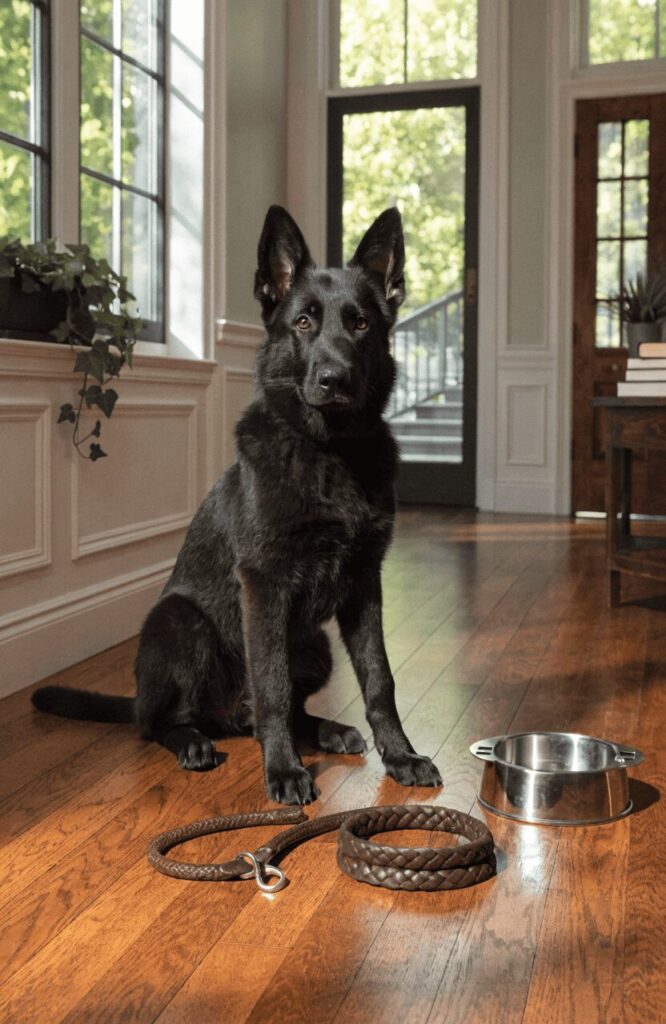
If you’ve ever seen a solid black German Shepherd in person, you know exactly how striking they are. That deep, jet-black coat. Those sharp, intelligent eyes. There’s something almost magnetic about them.
But beyond the good looks, the black German shepherd is one of the most misunderstood dogs out there. People assume they’re a different breed, that they’re more aggressive, or that they’re simply a standard German Shepherd dyed a different color. None of that is true.
In this article, we’re breaking down 13 black German shepherd facts that most people don’t know — covering everything from their rare genetics and working abilities to their health, cost, and what it’s really like to own one. Whether you’re thinking about getting one or just curious, you’re in the right place.
Let’s get into it.
Fact 1: The Black German Shepherd Is a Purebred — Not a Mixed Breed
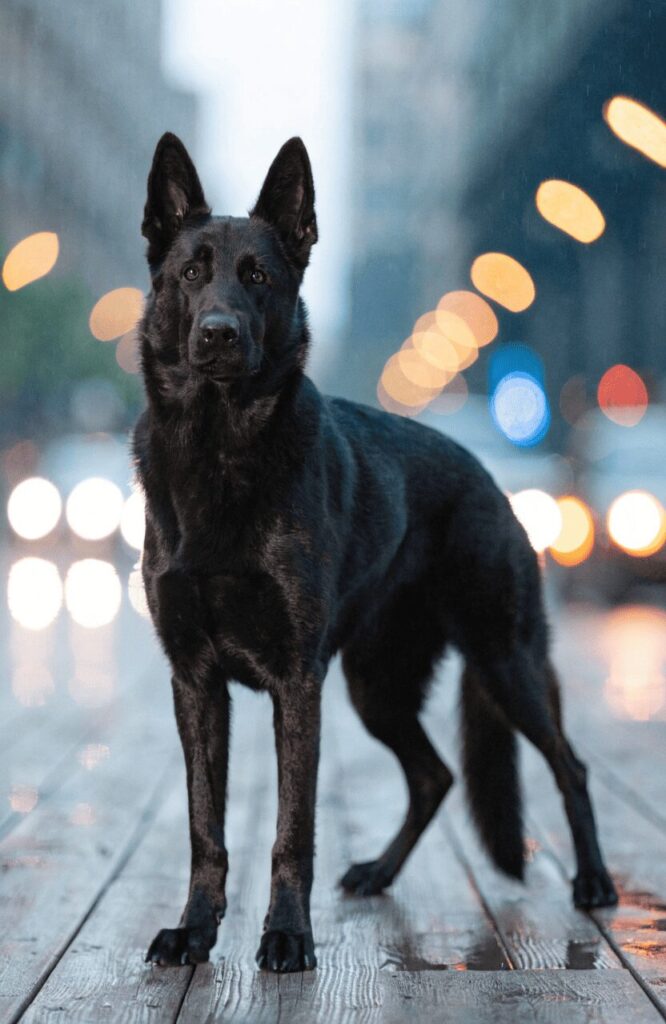
This is the biggest misconception people have. When they see a fully black German Shepherd, they assume it must be mixed with a Labrador, a Belgian Malinois, or some other breed.
That’s not the case.
The black German Shepherd is a purebred German Shepherd Dog (GSD) — just with a rare coat color. The American Kennel Club (AKC) fully recognizes solid black as a standard color within the German Shepherd breed. They can compete in shows, earn titles, and be registered just like any other GSD.
Their temperament, intelligence, physical build, and care needs are all identical to any other German Shepherd. The difference is purely in their coat color, and it comes down to genetics — which brings us to the next fact.
Fact 2: Their All-Black Coat Comes From a Recessive Gene
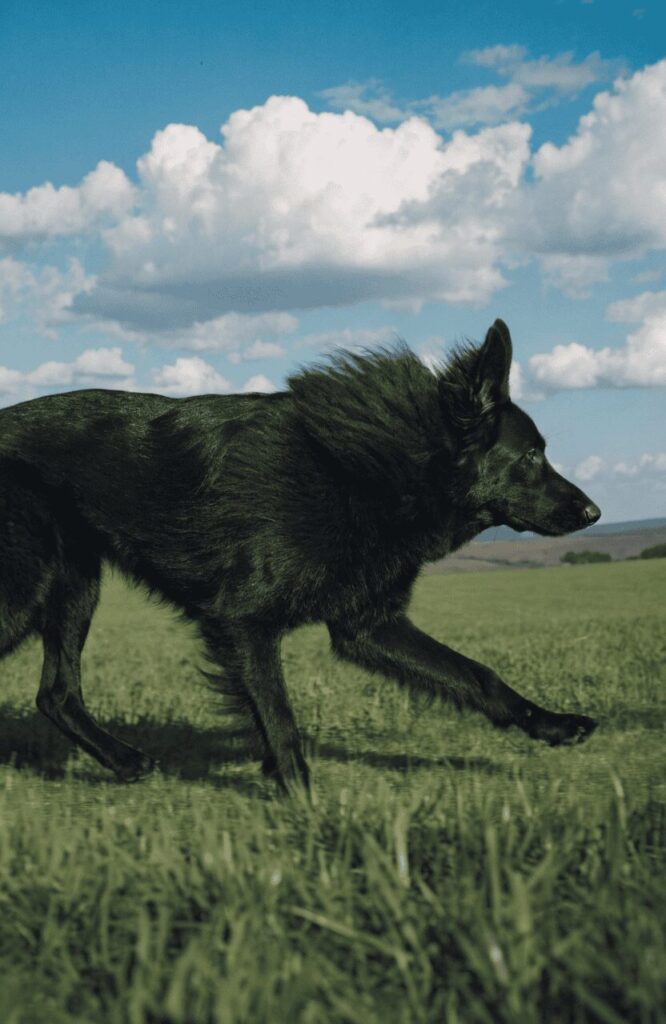
Here’s where it gets interesting. The black coat in German Shepherds is controlled by a recessive gene. To understand why that matters, you need a quick genetics refresher.
Every dog inherits two copies of each gene — one from mom, one from dad. Some genes are “dominant,” meaning even one copy is enough to show up. Others are “recessive,” meaning both copies need to be present for the trait to appear.
Black coat color in German Shepherds is recessive. That means a puppy must inherit the black gene from both parents to be born solid black. If even one parent passes along a dominant color gene (like sable), the puppy won’t be black.
This is exactly why black German Shepherds are so rare. Both parents need to either be black themselves or carry the hidden recessive gene without showing it. Breeders often have to plan multiple generations of pairings just to consistently produce black puppies.
Fact 3: Black German Shepherds May Not Actually Be Born Black

This surprises a lot of people. You’d think a black dog would be born black — but that’s often not the case.
Many black GSD puppies are born with a dark grey or even slightly brownish coat. It can take up to 8 to 10 weeks for their true coat color to fully develop. Some breeders sell puppies at 7 to 8 weeks, which means you could bring home a puppy that doesn’t look fully black yet.
And it doesn’t stop there. A German Shepherd’s coat continues changing throughout its first two years of life. Even a puppy born looking solid black might develop subtle color shifts in that time. The coat usually stabilizes by around age two, though very minor changes can continue into their senior years.
The takeaway? If you’re buying a black GSD puppy, work with a reputable breeder who can track the parents’ genetics. Don’t rely on what the puppy looks like at pickup.
Fact 4: A Black German Shepherd Mother Doesn’t Guarantee Black Puppies

Let’s say you find a black German Shepherd female and you’re hoping to breed or buy from a black litter. Here’s the thing — her puppies may not be black at all.
Because black is a recessive gene, a black GSD mother paired with a non-black male who doesn’t carry the gene will likely produce sable puppies — the most common GSD color — rather than black ones.
The best breeding combinations for producing black puppies are:
- Two black German Shepherds — highest chance of a fully black litter
- A black GSD paired with a black-and-tan GSD that carries the recessive black gene — still a decent chance of some black puppies
- Two black-and-tan GSDs that both carry the recessive gene — some puppies may be black, though it’s less predictable
This is why finding a black GSD puppy can take real patience. A good breeder will know the genetics behind their breeding pairs and can give you an honest answer about what to expect.
Fact 5: They Are Incredibly Rare — Only About 6.8% Are Born Black

To put the rarity in perspective: estimates suggest that only around 6.8% of German Shepherds are born with a fully solid black coat. That’s fewer than 1 in 10.
This rarity is almost entirely due to the genetics we just covered. When you factor in how many breeding pairs need to align just right to produce a black puppy, and then how many of those puppies might shift color slightly as they age, it becomes clear why you don’t see many of them around.
Because they’re hard to find through breeders, many people don’t realize that black German Shepherds sometimes end up in shelters and rescues. If you’re open to adopting, this is worth exploring — especially given what we’ll cover in the next fact.
Fact 6: Black German Shepherds Suffer From “Black Dog Syndrome” Unfairly
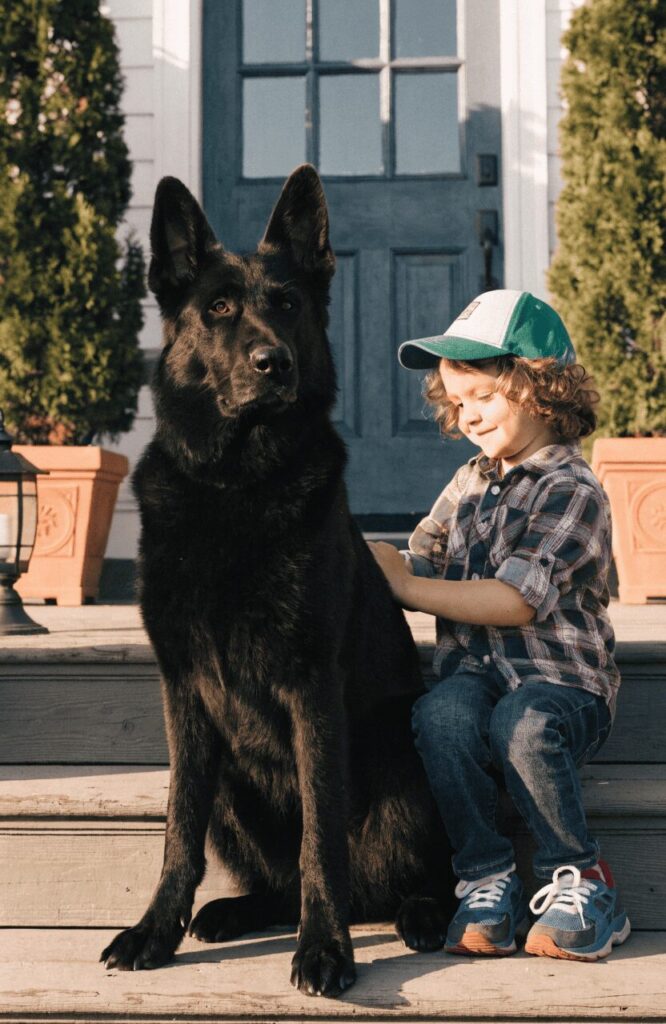
Black Dog Syndrome is a real phenomenon documented in animal shelters across the country. It refers to the tendency for black dogs — of any breed — to be overlooked, adopted less frequently, and even perceived as more aggressive or threatening than lighter-colored dogs.
There’s no scientific basis for this fear. Researchers believe it stems from a mix of cultural associations (black animals have historically been linked to bad omens in some cultures), difficulty reading facial expressions on dark-coated dogs in photos, and unconscious bias.
The result is that black dogs — including black German Shepherds — often wait longer in shelters than their tan or sable counterparts.
The truth is simple: a black German Shepherd is no more aggressive, dangerous, or unpredictable than any other German Shepherd. Their coat color has zero effect on their personality. If anything, the unfair stigma makes them one of the most underappreciated dogs you could give a home to.
If you’re looking for name inspiration for a black dog, check out these black dog names — there are some really great ones.
Fact 7: They Can Be Slightly Larger Than Standard German Shepherds
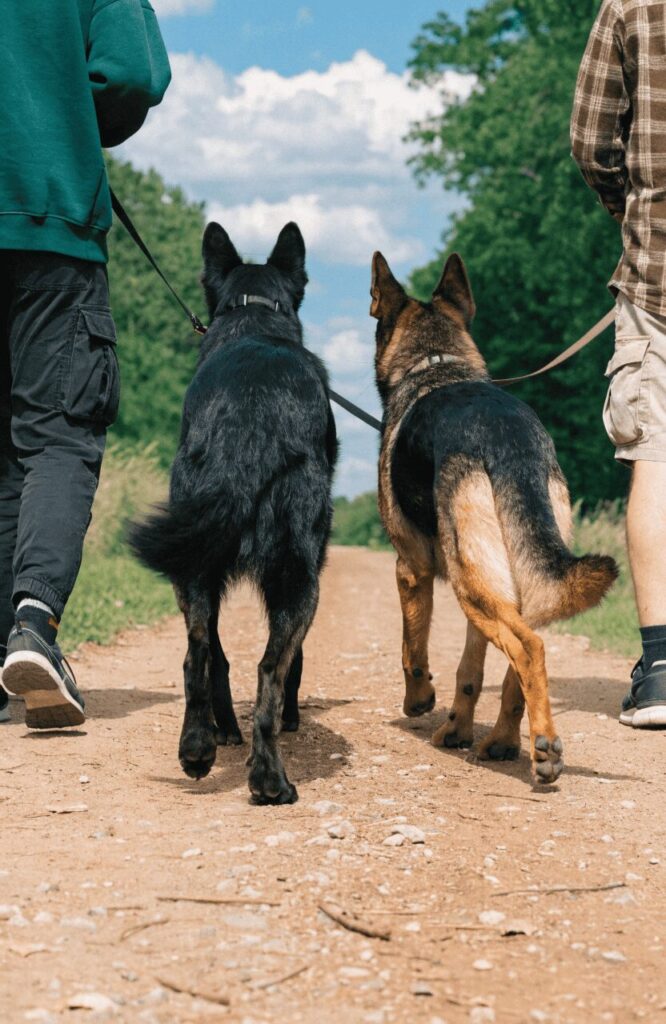
Here’s a physical difference that often catches people off guard. Black German Shepherds tend to run slightly larger than the typical GSD, and they often have a straighter back and longer coat as well.
Most German Shepherds have a noticeable slope from their shoulders down to their hindquarters. Black GSDs are less likely to have this slope, giving them a more upright, even appearance. This, combined with their all-black coat and sometimes longer fur, can make them look almost like a different dog entirely.
Here’s a quick side-by-side comparison:
| Feature | Black German Shepherd | Standard German Shepherd |
|---|---|---|
| Coat color | Solid black | Black & tan, sable, bi-color |
| Size | Slightly larger (sometimes) | 22–26 in / 50–90 lbs |
| Coat length | Often longer | Short to medium |
| Back posture | Straighter back | Slight slope common |
| Rarity | ~6.8% of GSDs | Very common |
| Puppy price | $1,500–$3,000+ | $700–$1,500 |
These differences don’t affect their health or temperament. They’re largely cosmetic, but they do make the black GSD one of the most visually impressive versions of the breed.
Fact 8: They Are Among the Most Loyal and Intelligent Dog Breeds on the Planet

German Shepherds as a whole rank third in overall canine intelligence, according to Dr. Stanley Coren’s widely referenced work on dog cognition. Black German Shepherds share that same intelligence in full.
These dogs don’t just learn commands — they learn context. They can read your body language, anticipate your routines, and make independent decisions when working. This is exactly why they’re trusted in roles that demand split-second judgment.
But that intelligence comes with a responsibility. A bored black GSD is not a happy one. Without enough mental and physical stimulation, they can become anxious, destructive, and difficult to manage. They need a job to do — whether that’s formal training, learning tricks, helping with household tasks, or participating in dog sports.
They also bond deeply with their owners. This is one of the most loyal dog breeds you’ll ever encounter. Once a black GSD chooses you, they’re with you completely.
Fact 9: Black German Shepherds Are Elite Working and Service Dogs

The German Shepherd breed has been a cornerstone of working dog programs for over a century. Black German Shepherds are no exception — in fact, their striking appearance has made them particularly popular in certain working roles.
They serve as:
- Police and military dogs — tracking suspects, detecting explosives and narcotics, apprehending threats
- Search and rescue dogs — locating missing persons in disaster zones or wilderness areas
- Guide dogs and mobility assistance dogs — supporting people with visual or physical disabilities
- Emotional support and therapy dogs — their calm, attentive nature makes them effective in clinical settings
Interestingly, some handlers prefer black GSDs for night operations and protection work, where a dark coat provides a tactical visual advantage.
Their combination of intelligence, physical strength, trainability, and loyalty makes them naturally suited for these demanding roles. For the right handler, a black GSD is an unmatched working partner.
Fact 10: They Are Heavy, Year-Round Shedders
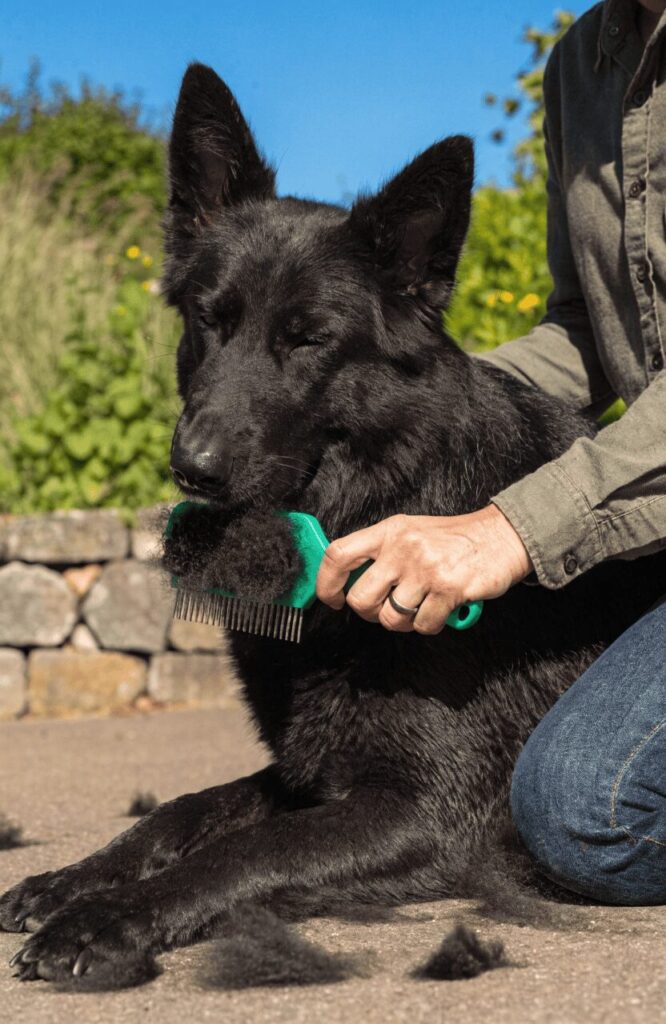
Let’s be honest about this one — if you don’t like dog hair, the black German Shepherd is not for you.
Like all German Shepherds, they have a double coat: a dense, protective undercoat beneath a coarser outer layer. This coat sheds year-round and goes into overdrive during the spring and fall seasonal “blowout,” when they shed their undercoat in large amounts.
Black GSDs tend to have longer coats than their standard-colored counterparts, which means more grooming time and a higher chance of tangles and matting if you don’t stay on top of it.
To keep the coat healthy, you’ll want to:
- Brush at least 3–4 times per week (daily during shedding season)
- Use both a slicker brush and an undercoat rake
- Bathe every 6–8 weeks or as needed
- Check for skin irritation, especially under the coat where heat and moisture can build up
Learning how to groom a dog at home properly can save you significant money and keep your black GSD’s coat looking its best year-round.
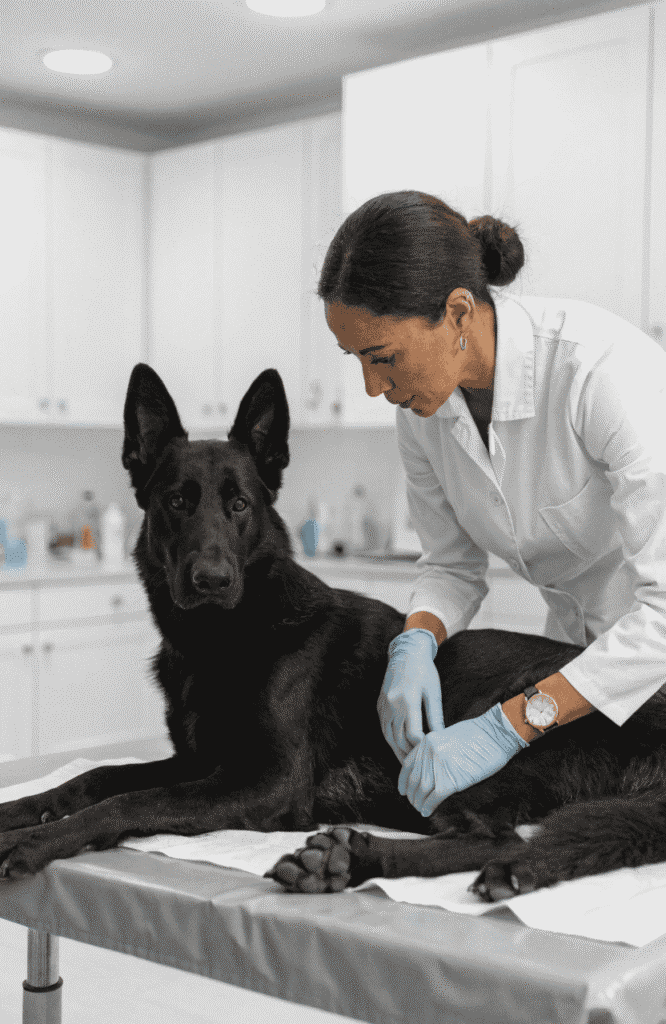
Good news first: the black coat itself does not cause any additional health problems. Unlike white or merle-coated dogs — which carry a higher risk of deafness and other pigmentation-linked issues — black GSDs don’t have any color-specific health concerns.
They do, however, share the same genetic health vulnerabilities as the rest of the breed. The most important ones to know about are:
Hip and Elbow Dysplasia — A malformation of the hip or elbow joint that causes pain and mobility issues. One of the most common conditions in large breeds. Getting a puppy from health-tested parents significantly reduces the risk.
Degenerative Myelopathy — A progressive neurological disease that affects the spinal cord, causing gradual hind-leg weakness. There is a genetic test available for this.
Bloat (Gastric Dilatation-Volvulus or GDV) — A life-threatening emergency where the stomach fills with gas and twists. It can come on suddenly. Watch for symptoms like a distended abdomen, unproductive retching, restlessness, and obvious pain. If you see these signs, get to a vet immediately.
Other health conditions that can appear in the breed include epilepsy, elbow dysplasia, allergies, and thyroid issues.
With proper care, a healthy black German Shepherd typically lives 12 to 14 years. Understanding puppy veterinary needs from day one sets your dog up for a healthier life long-term.
Fact 12: Training and Socialization Must Start Early

Here’s something both competitor articles mention but never actually help you with: black German Shepherds need early, consistent training and socialization. Without it, their natural protectiveness can turn into over-guarding, fear-based reactions, and behavioral problems.
The good news is that they are one of the easiest breeds to train when you do it right.
Socialization means exposing your puppy to a wide variety of people, dogs, environments, sounds, and situations before 16 weeks of age. The more positive experiences they have early, the more well-adjusted and confident they become as adults.
Training should start as soon as you bring your puppy home. Basic commands like sit, stay, come, and leave it build the foundation. From there, you can work toward more advanced obedience, agility, or task-based training.
The most effective approach for this breed is positive reinforcement training, which means rewarding behaviors you want rather than punishing behaviors you don’t. Harsh corrections can backfire badly with a sensitive, intelligent dog like the black GSD — they shut down, become anxious, or lose trust in their handler.
Consistency is everything. Short, regular training sessions work far better than occasional marathon sessions.
Fact 13: Black German Shepherds Cost More — Here’s the Full Picture
The rarity of black German Shepherds directly affects their price. Here’s what to expect:
Puppy purchase price: A standard German Shepherd from a reputable breeder typically costs between $700 and $1,500. A black German Shepherd puppy from a breeder who specializes in this color can cost anywhere from $1,500 to $3,000 or more — sometimes significantly more depending on the bloodline and health certifications.
Avoid breeders offering black GSD puppies at suspiciously low prices. Cutting corners on a breeder almost always means cutting corners on health testing, socialization, and genetic quality.
Ongoing monthly costs to budget for:
- Food (high-quality large-breed food): $60–$100/month
- Routine vet care and preventatives: $50–$100/month averaged annually
- Grooming (professional or supplies): $30–$60/month
- Training classes: $50–$150/month during early training
Is a black German Shepherd right for you?
This is a dog that thrives with:
- Experienced dog owners who understand working breeds
- Active households with time for daily exercise (1–2 hours minimum)
- Homes with space — ideally a yard
- Owners who are home frequently and can provide consistent attention
It’s not the ideal choice for:
- First-time dog owners without a training plan
- People in small apartments with no outdoor space
- Owners who travel frequently and can’t bring their dog
If you match the first profile, a black German Shepherd can be one of the most rewarding dogs you’ll ever have. If you match the second, it’s worth reconsidering for everyone’s sake — including the dog’s.
Frequently Asked Questions About Black German Shepherds
Final Thoughts
The black German Shepherd is one of the most stunning, intelligent, and loyal dogs in the world. But they’re more than just a striking appearance. Behind that rare black coat is a dog built for deep bonds, hard work, and devoted companionship.
Now that you know the real black german shepherd facts — from their recessive genetics and rare birth statistics to their health needs, training requirements, and true temperament — you’re in a much better position to decide if this is the right dog for you.
If you’re ready to take the next step, do your research, find a reputable breeder or check a rescue near you, and prepare your home for one of the most remarkable dogs you’ll ever meet.

Izzy is an experienced ranch worker who has a passion for exploring nature and getting up close to wildlife. With her connections to various animal organizations, Izzy is well-versed in animal care and rehabilitation.