Homemade Beef & Sweet Potato Dog Chews for Strong Chewers
For a dog that works through chews quickly and wants something that lasts, beef and sweet potato strips are a dependable option. You can make these at home with simple ingredients, control the thickness, and bake them low so they stay tough instead of crumbly. This is the kind of chew a strong chewer can hold and gnaw on for a while, and it is not a soft treat you toss in the bowl. If you are looking for another long-lasting option to keep in rotation, this recipe is a solid starting point for a lighter homemade diet. A strong chewer needs a chew that fights back a little, and these strips do exactly that, holding their shape through a long gnawing session instead of shattering into crumbs.
The goal is texture: the strips should be firm, dense, and a little leathery when they cool. That texture is what keeps the dog chewing without the chew falling apart in minutes. In this article, you will find one main beef & sweet potato dog chews recipe, two variations, serving guidance, storage, and troubleshooting notes. When a chew is too soft, a strong chewer finishes it in seconds and looks for the next one, but a properly dried strip keeps the dog occupied and satisfied for much longer.
Why Beef and Sweet Potato Make Great Chews
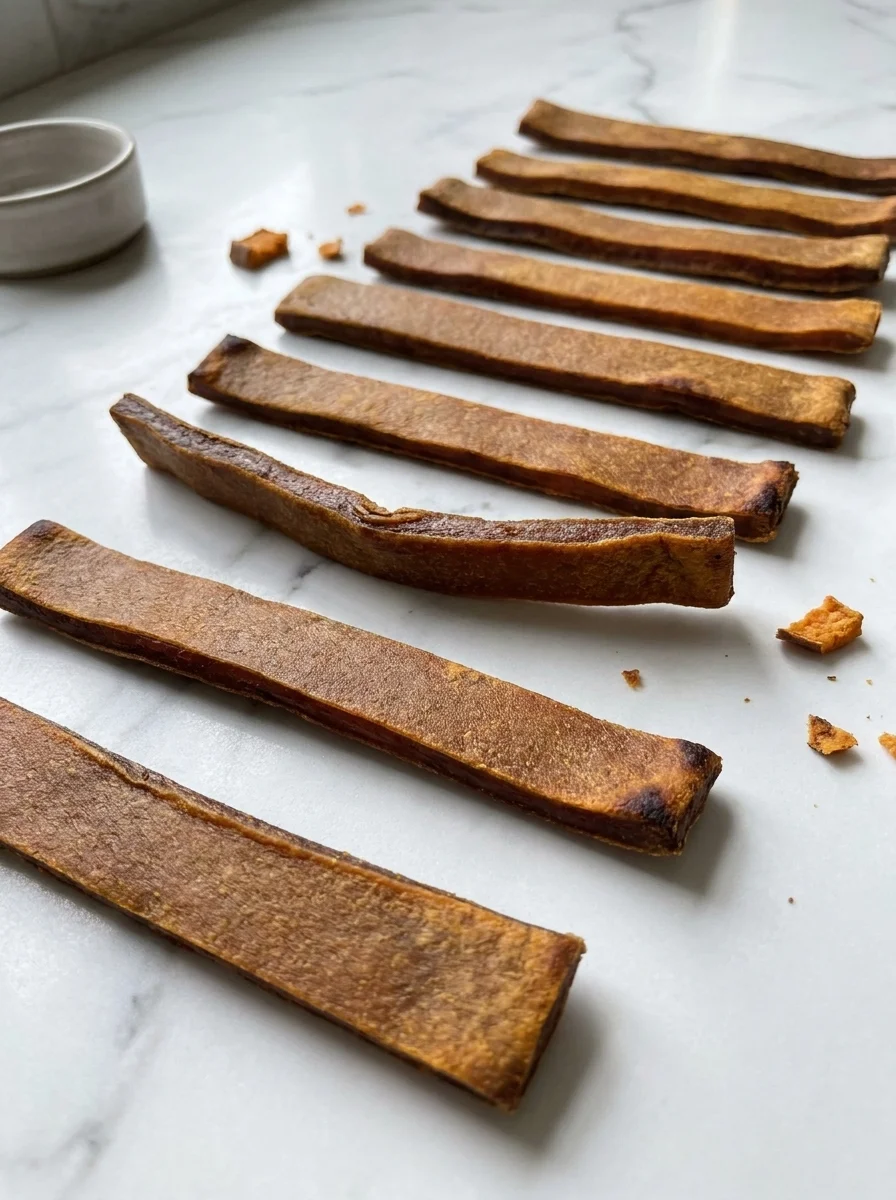
Beef is a straightforward protein that holds up in a chew. It is familiar to most dogs, and lean cuts work well because you are not aiming for a high-fat snack. Sweet potato brings something else to the strip: natural starches that bind the beef into a cohesive layer. Without that structure, you get small bits that are easy to eat and move on from. With it, you get a strip a dog can hold. The sweet potato also adds a gentle sweetness dogs notice right away, which helps a plain beef strip hold a strong chewer’s attention through the whole session.
For picky dogs, the combination is usually more appealing than plain beef alone. Many owners look for the best dog foods for picky eaters, and the same principle applies here: a flavor that is recognizable plus a mild vegetable component often keeps interest longer than a single-note treat. Sweet potato also bakes down in a way that keeps the chew dense as it dries.
One practical note: sweet potato is dog-safe in the amounts you use for chews. It is not a replacement for a balanced diet, but as part of a chew, it is a reasonable ingredient. You are building a long-lasting dental and enrichment chew, not a meal. Keep the chew as a supplement to a complete diet. Never add onion or garlic to the chew mix — both are toxic to dogs, and they hide in many seasoning blends and stocks.
Recipe 1: Classic Beef & Sweet Potato Chews
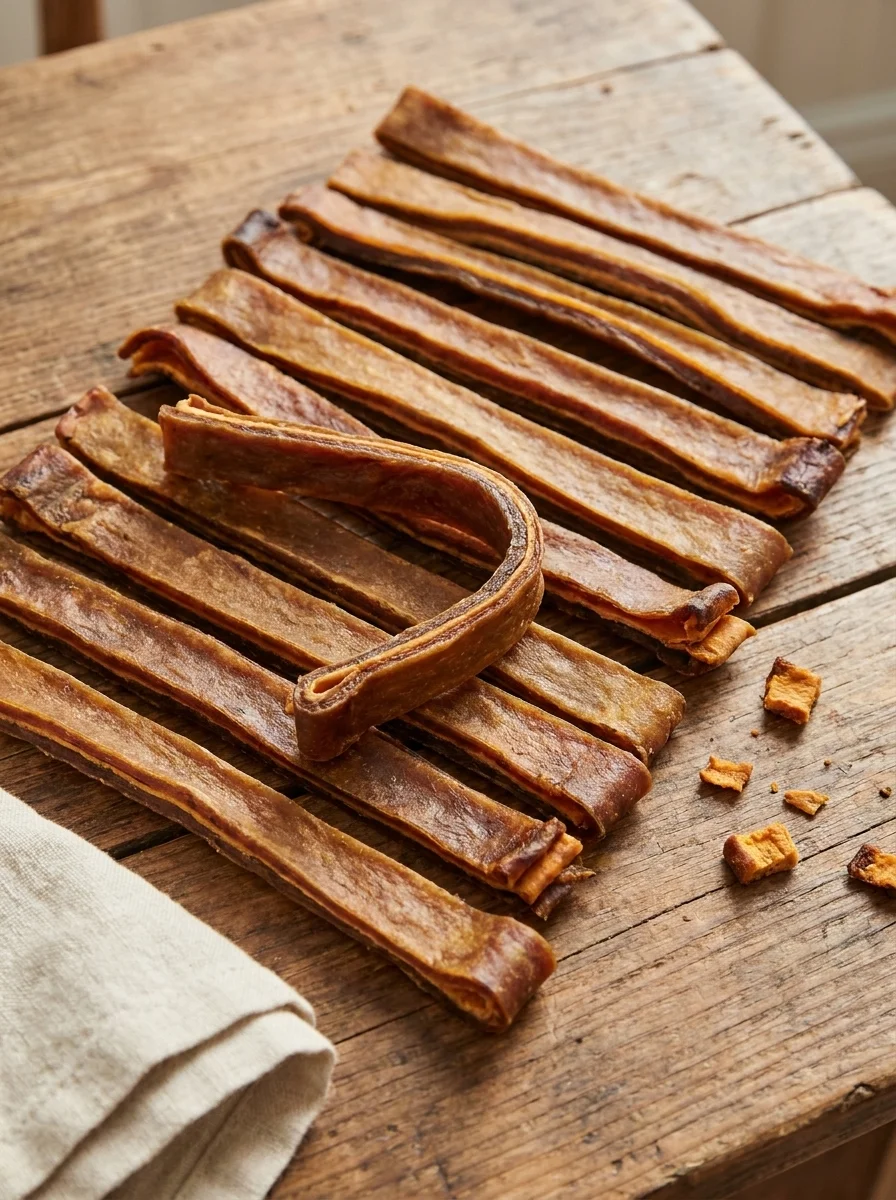
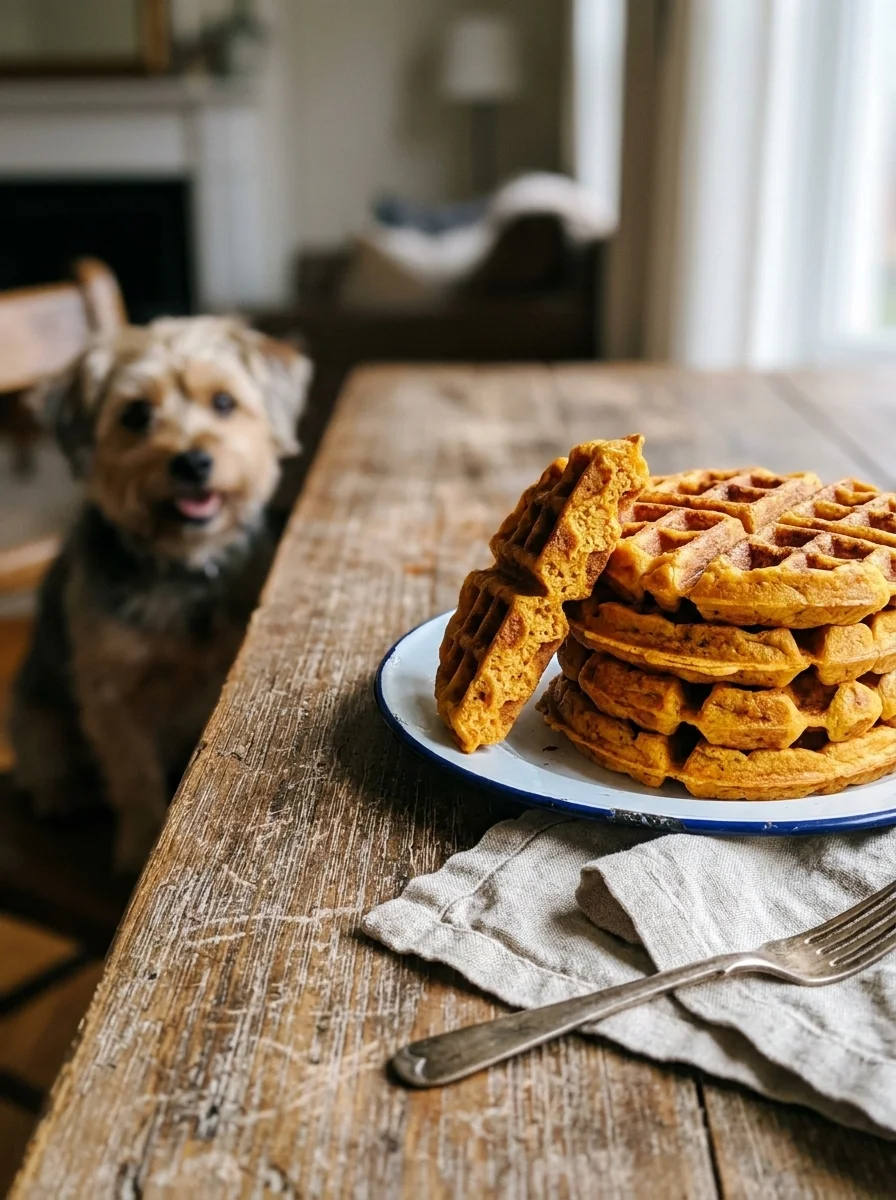
This is the base recipe. It is sized for strong chewers and medium to large dogs, but you can scale the thickness down for smaller dogs. The key is to slice the beef and sweet potato thin and to keep the strip size consistent so it bakes evenly. If you are looking for another sweet potato option, you can try sweet potato dog waffles for a softer treat, but for chews, the dense strip is the point.
Ingredients
- lean beef, thinly sliced
- sweet potato, thinly sliced
- olive oil
- water
- plain oat flour
Step-by-Step Instructions
- Preheat your oven to 225°F and line two baking sheets with parchment paper.
- Mix the sweet potato and beef in a large bowl until the slices are evenly layered.
- Drizzle a small amount of olive oil over the mixture and toss gently to coat.
- Lay the mixture into an even layer on the baking sheets, pressing it down lightly.
- Bake for 90 minutes at 225°F, then turn off the heat and leave the door slightly ajar.
- Continue drying in the warm oven for another 60 to 90 minutes, flipping the strips halfway.
- When the strips are firm and leathery to the touch, remove them and let them cool completely.
The final chew should bend without snapping and should feel dense, not soft. If it is too bendy, dry it longer. A chew that bends easily is usually not ready for a strong chewer. Once cooled, cut each sheet into strips that match your dog’s size. Thicker strips last longer. Keep the water ingredient minimal; it is there to help the layers bond, not to make a wet batter. If the mixture feels too loose, add a little more oat flour until it holds shape. Let the strips cool completely on the tray before you cut them, because a warm strip tears instead of cutting cleanly and the edges fray.
Beef & Sweet Potato Chew Variations
The base recipe is the foundation, and the two variations below swap in one extra ingredient while keeping the same baking method. The point of a variation is not to make a more complicated chew. It is to change the flavor and texture a little so your dog does not get bored. If you are already making other treats, you can look at homemade apple pie for dogs for another baked option, but for chews, you want something tough and slow to work on. A small change in flavor is enough — the chew itself stays the same tough, slow-baked strip your dog already knows how to work on.
Variation 1: Carrot Chews
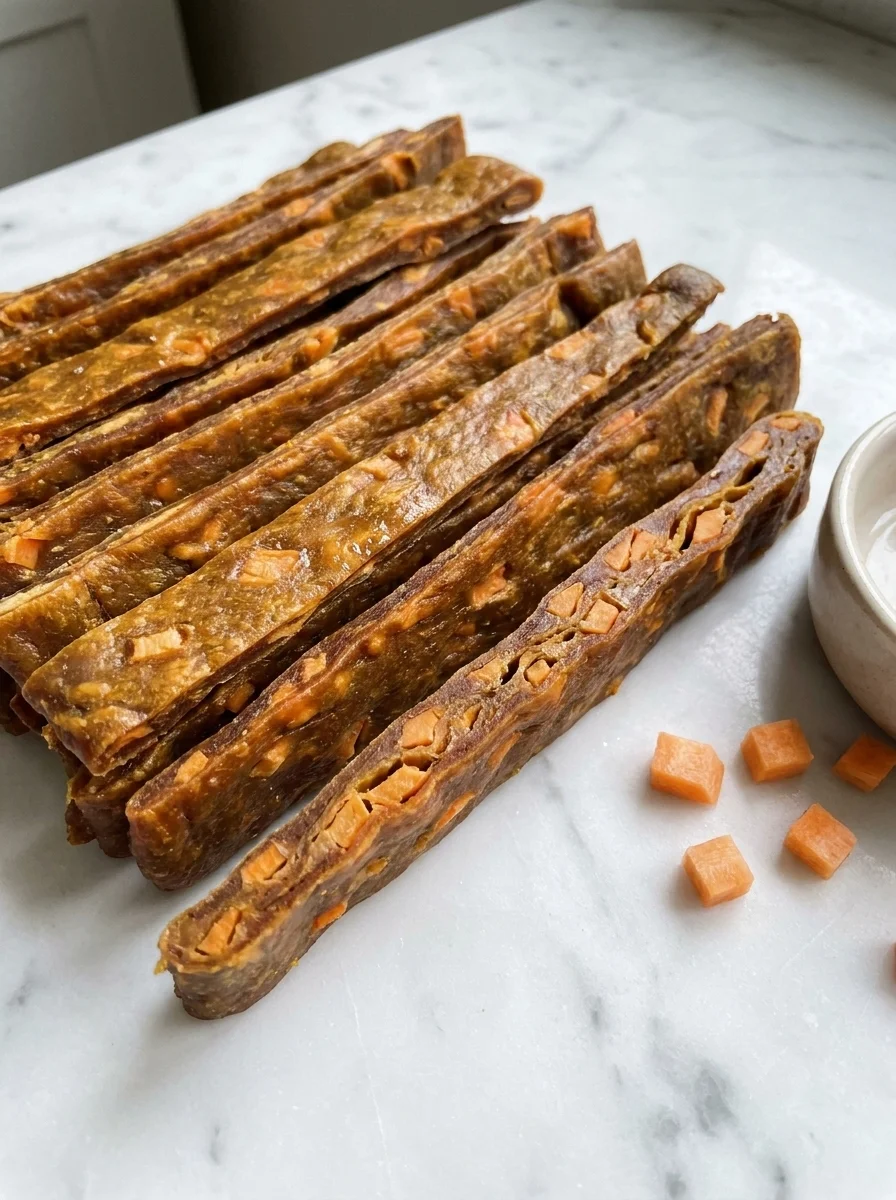
Carrot adds a subtle sweetness and a slightly different density. It also makes the chew a little more colorful, which some dogs seem to notice. The preparation is almost the same as the base recipe, with one extra ingredient.
Ingredients
- lean beef, thinly sliced
- sweet potato, thinly sliced
- carrot, thinly sliced
- olive oil
- plain oat flour
Step-by-Step Instructions
- Preheat your oven to 225°F and line two baking sheets with parchment paper.
- Combine the beef, sweet potato, and carrot in a large bowl.
- Add a small amount of olive oil and toss gently.
- Layer the mixture evenly on the sheets and press down lightly.
- Bake for 90 minutes at 225°F.
- Turn off the heat, leave the oven door slightly ajar, and dry for 60 to 90 minutes.
- Cool completely before cutting into strips.
The carrot layer makes the chew a touch denser because the slices are slightly firmer than sweet potato. For strong chewers, that is a plus. If you find the chew is too tough for your dog, reduce the drying time by about 15 minutes and check the texture. It should still be firm, just not rock hard.
Variation 2: Parsley Chews
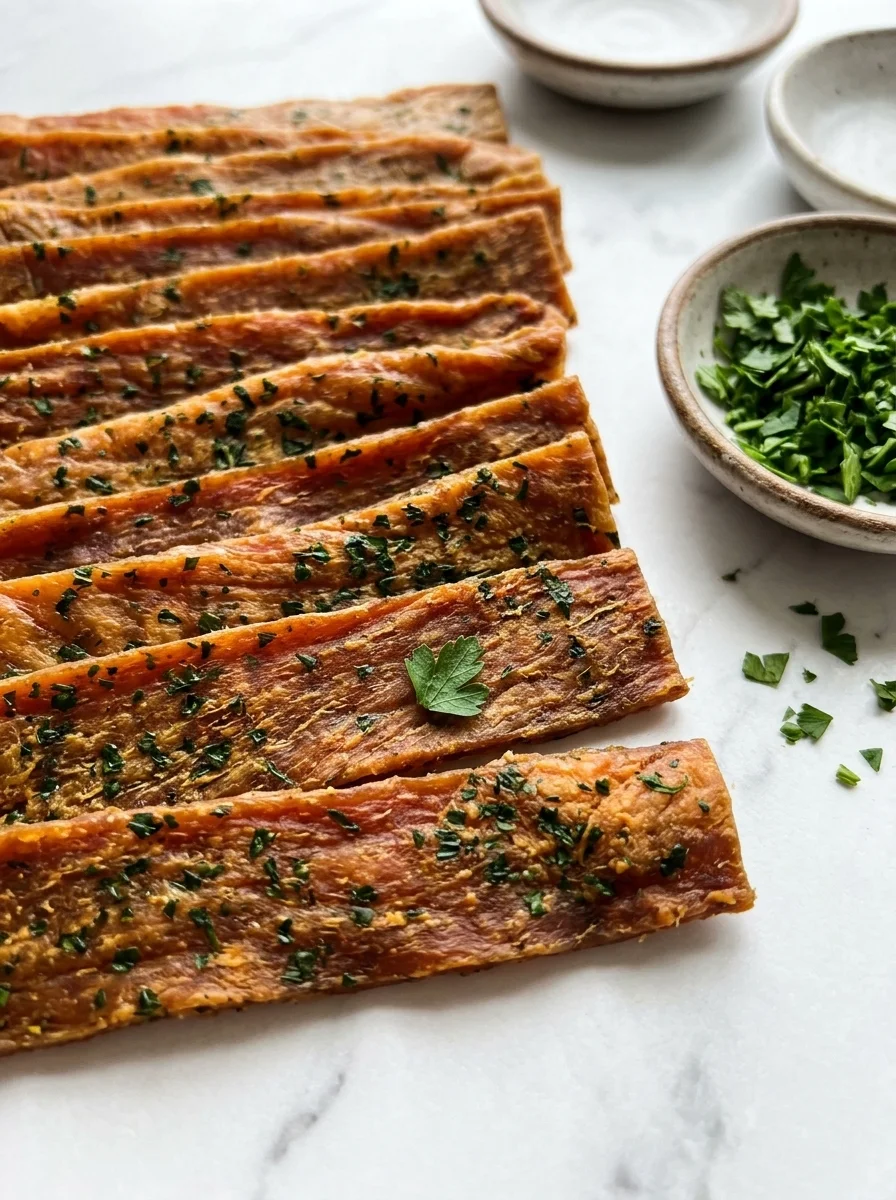
Parsley is a mild herb that adds a fresh note without changing the structure of the chew. Use fresh chopped parsley and keep the amount modest. Too much can make the chew taste bitter, which is not ideal.
Ingredients
- lean beef, thinly sliced
- sweet potato, thinly sliced
- fresh chopped parsley
- olive oil
- plain oat flour
Step-by-Step Instructions
- Preheat your oven to 225°F and line two baking sheets with parchment paper.
- Mix the beef, sweet potato, and parsley in a large bowl.
- Add olive oil and toss until the parsley is distributed evenly.
- Lay the mixture on the sheets and press into an even layer.
- Bake for 90 minutes at 225°F.
- Turn off the heat and dry in the warm oven for 60 to 90 minutes with the door slightly ajar.
- Cool completely before cutting.
The parsley is not the focus of this chew. It is a subtle addition. If your dog is sensitive to herbs, skip this variation and stick with the carrot or classic version. The texture goal is the same: firm, leathery, and slow to work through.
Serving
A beef & sweet potato dog chews strip is not a treat you break into pieces and hand over. It is given whole, in a size appropriate for the dog’s mouth and strength. For a strong chewer, that usually means a longer, thicker strip. For a small dog, shorten the strip and make it thinner so it is easier to hold and less likely to become a hazard. A chew that is too short for a strong chewer gets swallowed whole, so err on the longer side when you are unsure.
Place the chew on a non-slip mat or in the dog’s own space, away from high traffic. Supervise the dog while it chews. If the dog pulls on the chew and it breaks into very small pieces, the chew is not sized correctly for that dog. Stop serving it and switch to a shorter, thicker strip for the next batch.
Some owners rotate chews with softer options. If you are doing that, 2-ingredient pumpkin dog treats are a good contrast because they are much softer and meant for quick consumption. Do not serve a soft chew as a substitute for a long-lasting chew on a strong chewer’s routine. The chew should outlast the chewing session.
Storage
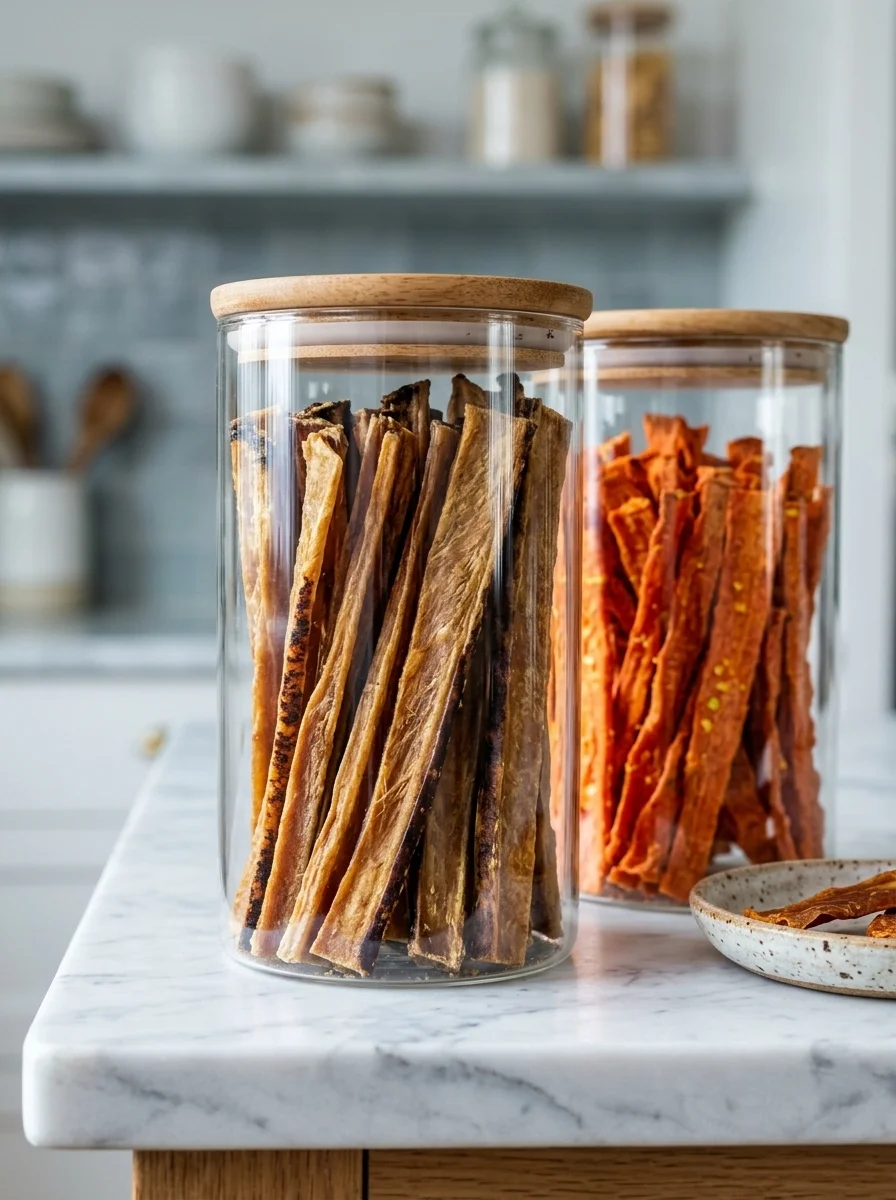
Once the chews are fully cooled, store them in an airtight container in a cool, dry place. They keep well for up to two weeks at room temperature. For longer storage, put them in the freezer for up to three months. Wrap the strips in parchment paper or place them in a freezer-safe bag, then seal the bag.
When you take a chew out of the freezer, let it come to room temperature before serving. A frozen chew is hard and can be a tooth risk for some dogs. If you notice any soft spots, off smell, or visible mold, discard the chew. Do not serve a chew that has been sitting out for a long time, even if it looks fine.
Troubleshooting
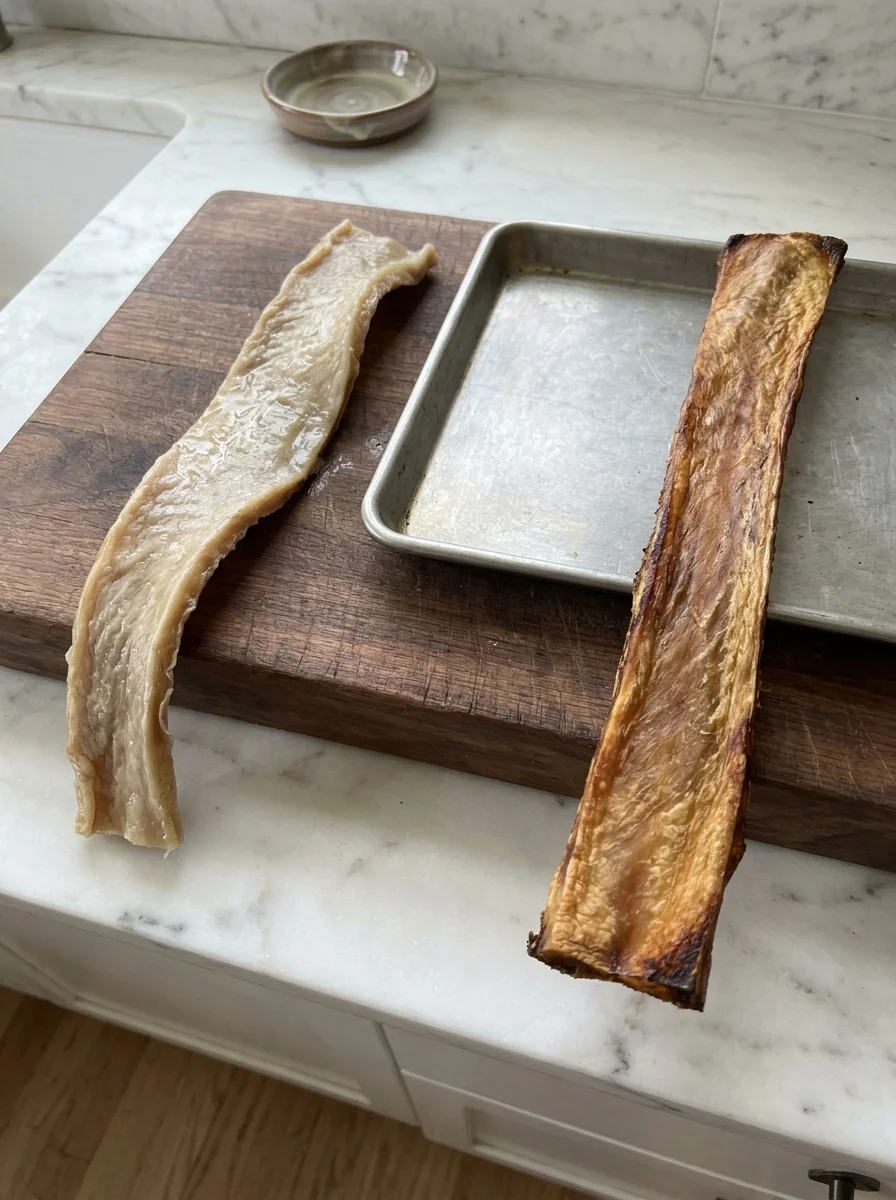
Chew too soft. The most common issue. The strip did not dry long enough. Return it to the oven at 225°F for another 20 to 30 minutes, with the door slightly ajar. Check the texture by pressing the edge of the strip. It should resist and not bend easily.
Chew crumbles. The layers were not bonded well. Next time, use a slightly more even layer and press it down more firmly before baking. You can also add a thin layer of oat flour between layers if the mixture feels loose.
Chew too hard for the dog. It is not broken; it is just not the right size for that dog. Cut the strips shorter and thinner for small dogs, and longer and thicker for strong chewers. The hard texture is the point for a strong chewer, but it is not appropriate for every dog.
Beef slices cook unevenly. Make sure the beef is thinly sliced and the sweet potato is the same thickness. Uneven thickness means some parts dry out and others stay moist. A consistent slice size is the easiest fix.
Oven runs hot. Some ovens are not accurate. If your chews are drying too fast or burning at the edges, turn the oven down to 200°F and extend the drying time. Use the door-open method to control the heat. The goal is slow drying, not fast cooking.
Frequently Asked Questions
Final Thoughts
Beef & Sweet Potato Dog Chews are a practical option for dogs that need a chew they can work on for a while. The slow bake and drying step are what make the chew hold together, so do not rush that part. Adjust the strip size to the dog in front of you, supervise the chewing session, and store the extras properly. If you make a batch, keep the classic version in rotation and try the variations when your dog seems bored with the flavor. The chew is not a meal. It is a long-lasting thing to do with teeth and attention, and that is its main job. Make a double batch when you have the oven on anyway, because the chews keep well and a strong chewer goes through them fast. The best chew is the one your dog reaches for again tomorrow.

Izzy is an experienced ranch worker who has a passion for exploring nature and getting up close to wildlife. With her connections to various animal organizations, Izzy is well-versed in animal care and rehabilitation.