
How To Travel Long Distance With A Dog: The Complete Guide
There is something truly special about pulling onto an open highway with your dog riding shotgun. The tail wags, the nose pressed against the glass, the excitement of a new adventure shared with your best friend — it is one of the best feelings a dog owner can have.
But learning how to travel long distance with a dog takes more than just tossing a leash in the back seat and hitting the road. Without the right preparation, what should be an amazing trip can quickly turn stressful for both of you.
This guide covers everything — from deciding whether your dog is ready for the journey, to what to pack, how to handle the drive itself, and how to help your dog settle in when you arrive. By the end, you will have a clear, confident plan for traveling long distances with your dog.
1. Should Your Dog Even Come? Making the Right Call First
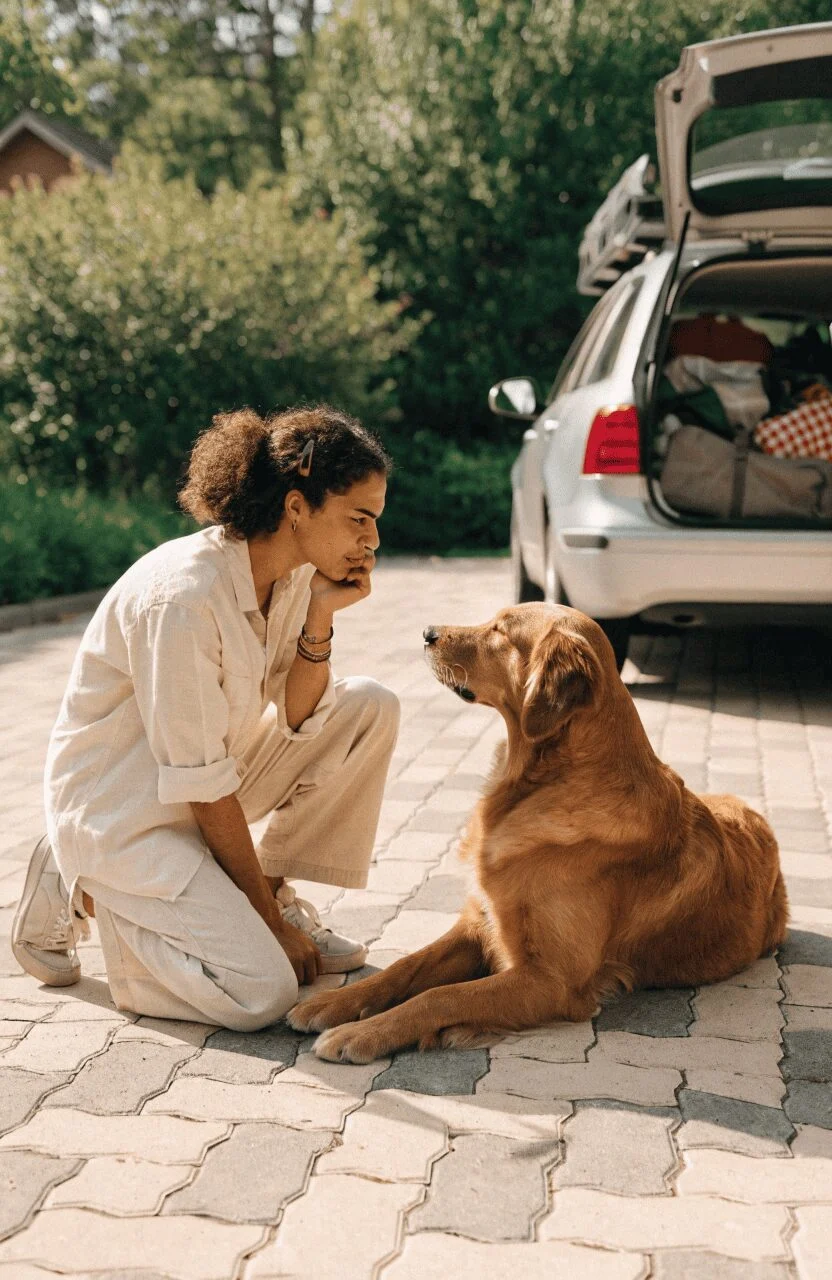
Before you book anything or pack a single bag, ask yourself one honest question: is this trip actually right for my dog?
Not every dog is suited to long-distance travel. Forcing an anxious, elderly, or unwell dog onto a 10-hour road trip is not a kindness — even if you will miss them terribly.
1.1 Signs Your Dog Is Ready for Long-Distance Travel
A dog that is likely to handle a long trip well will usually show these traits:
- They are calm or relaxed in the car during short trips
- They do not get sick or tremble on car rides
- They are comfortable being in new places and meeting new smells
- They are up to date on vaccinations and in good general health
- They are fully house-trained
If your dog ticks most of these boxes, they are probably a good travel companion. If they struggle with even short car rides, it does not mean travel is off the table — it just means you need to do some preparation work first (more on that in Section 2).
1.2 When Leaving Them Home Is the Kinder Choice
Sometimes the kindest thing you can do is leave your dog behind with someone they trust.
This is especially worth considering if your dog is very old, recovering from surgery or illness, has severe car anxiety, or if the trip involves extreme temperatures your dog cannot safely handle.
A good pet sitter who keeps your dog in their normal environment and routine is often far less stressful for the dog than a long journey. If you are unsure about your options, choosing the right pet sitter can make all the difference for your dog’s wellbeing while you are away.
2. Before You Leave: The Pre-Trip Checklist
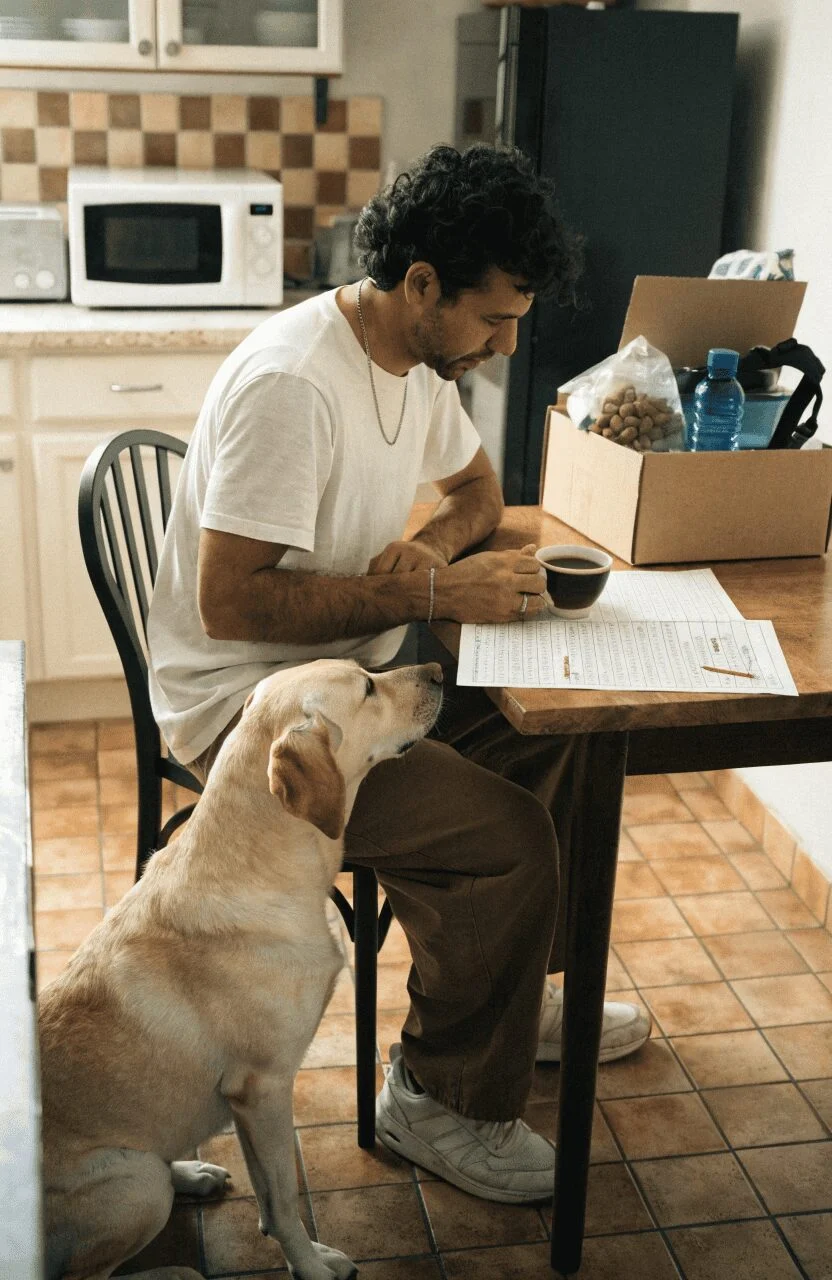
Once you have decided your dog is coming, the preparation phase begins. This is where most people make mistakes — they skip steps that seem optional but turn out to be critical on the road.
2.1 Book a Vet Visit (Not Just for Vaccines)
A vet visit before a long trip is not optional — it is essential.
Book an appointment at least two to three weeks before you leave. This gives your vet enough time to run any necessary checks and gives you time to act on their advice before departure day.
At the visit, your vet can:
- Confirm vaccinations and parasite prevention are current
- Check for any underlying health issues that could flare up during travel
- Prescribe medication for motion sickness or anxiety if needed
- Give region-specific advice if you are traveling somewhere with tick or heartworm risks
One thing many owners do not think to discuss is motion sickness. Dogs can suffer from it just like humans. There are very effective prescription treatments available — but you need to trial them at home first, not on a winding mountain road three hours from the nearest town.
If you have a puppy, understanding their veterinary needs early will help you build good habits before any long journey.
2.2 Microchip, ID Tags & GPS Trackers
Before you pack anything else, check your dog’s microchip details are current.
If you have recently moved or changed your phone number, update the registry now. A microchip is only useful if the contact details attached to it are correct.
Beyond microchipping, your dog should wear a physical ID tag on their collar with your current mobile number. If your dog bolts at a highway rest stop in an unfamiliar area, that tag is the fastest way to get them back.
Consider adding a GPS tracker to your dog’s collar as well. Products like Tractive or the Fi collar give you real-time location tracking from your phone. For a long-distance trip, this is one of the best investments you can make.
2.3 Build Up to the Big Trip With Short Practice Drives
If your dog is not used to being in the car for long periods, do not make their first long journey a 10-hour marathon.
Start one to two months before your departure with short drives — even just 15 to 20 minutes. Make these trips enjoyable. Drive to a park, give treats, use a happy voice. You want your dog to associate the car with good things.
Gradually increase the length of the drives over the weeks leading up to your trip. By the time you leave, your dog should be comfortable settling down and relaxing in the moving car.
3. What to Pack When You Travel Long Distance With a Dog
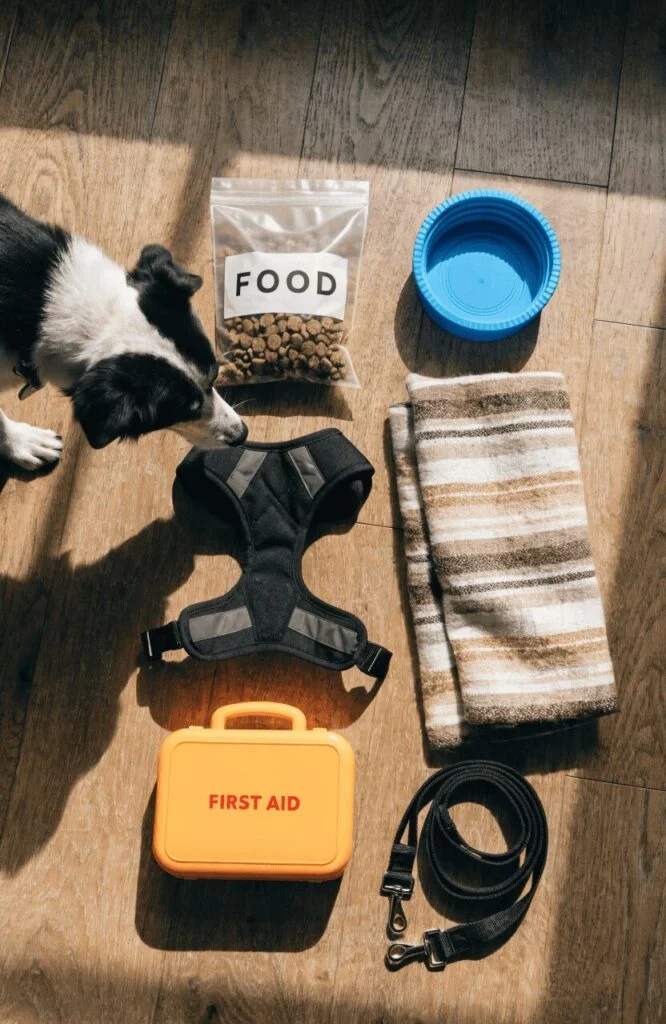
Packing for your dog deserves its own dedicated bag or box — completely separate from your own luggage. Forgetting your dog’s essentials can ruin a trip in ways that forgetting your own toiletries never would.
3.1 Food, Water & Feeding Schedule
Stick to your dog’s regular food during travel. Switching to a different brand or formula on the road is one of the most common causes of upset stomachs in traveling dogs.
Pack enough food for the full trip plus a few extra days in case of delays.
For water, carry supplies from home if possible. Some dogs have sensitive stomachs that react badly to changes in water sources. Collapsible bowls are ideal for rest stops — they take up almost no space and are easy to rinse and dry.
The feeding rule most people ignore: do not feed your dog a large meal right before you get in the car. A light meal two to four hours before departure is the right call. A full stomach combined with a moving vehicle is a recipe for car sickness — and nobody wants that.
3.2 Safety Gear: Restraints, Harnesses & Hammocks
An unrestrained dog in a moving vehicle is a serious safety risk — to themselves, to you, and to every other person on the road.
In a collision, an unrestrained dog can become a projectile. Even at relatively low speeds, this can be fatal for the dog and dangerous for passengers.
Your options include:
- Dog seat belts — a clip that attaches to your car’s seat belt buckle and to a dog harness. Good for shorter trips.
- Full crash-tested harness — look for harnesses that have been independently crash-tested, not just marketed as safe.
- Car hammocks — these cover the back seat and boot area, keeping your dog contained while allowing them to move around comfortably on longer journeys. A great option for bigger dogs.
Whatever you choose, make sure your dog is wearing it before the car moves — not once you are already on the highway.
3.3 Comfort Items That Reduce Anxiety
A familiar blanket or bed can be surprisingly powerful on a long trip. Your dog’s own scent on their bedding signals safety, even in a completely unfamiliar environment.
Place their bed, blanket or favourite toy in their travel space before you set off. This simple step can dramatically reduce restlessness and anxiety during the drive.
3.4 Pet First Aid Kit — What Should Actually Be In It
A basic first aid kit for your dog should include:
- Pet-safe antiseptic wipes and cream
- Bandages and gauze
- Tweezers (for ticks and splinters)
- A digital thermometer
- Any prescription medications your dog takes, along with copies of the prescriptions
- Vaccination records (needed for many pet-friendly accommodations)
- The number of an emergency vet along your route, saved in your phone
For a more detailed breakdown of what to bring for the journey, this guide on travel essentials for your dog is a useful starting point.
4. Keeping Your Dog Safe During the Journey
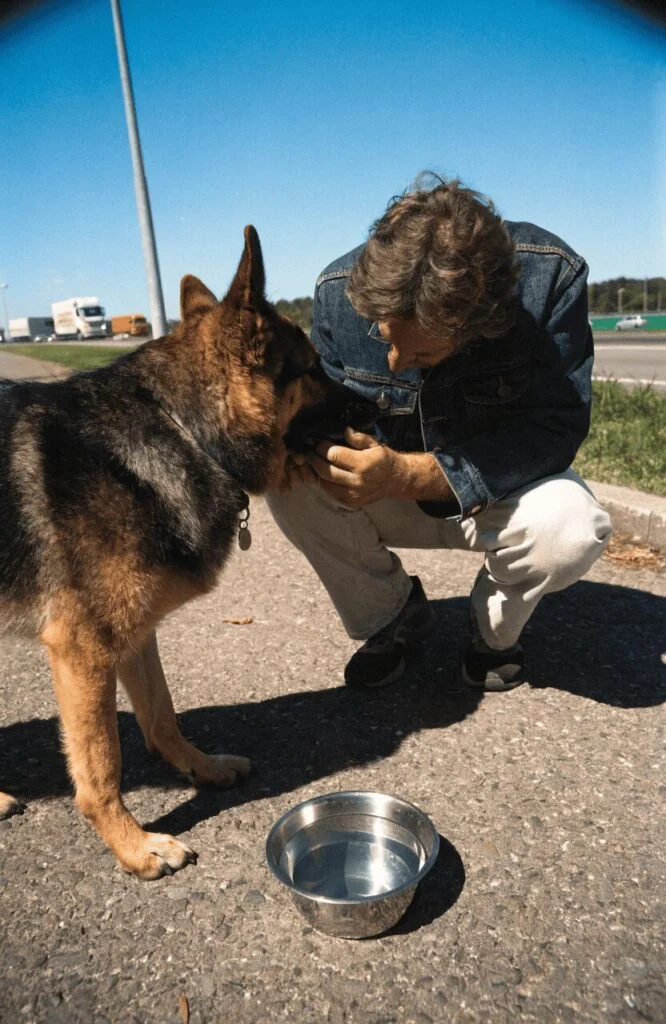
This is the section that matters most on the day. Even the best preparation can fall apart if you do not manage the actual journey carefully.
4.1 How Often to Stop (And What to Do at Each Break)
Plan a rest stop every 90 minutes to two hours. For puppies, senior dogs, or anxious dogs, every hour is safer.
At each stop:
- Let your dog out on a leash before doing anything else
- Give them time to go to the bathroom — do not rush this
- Offer water
- Let them stretch, walk around, and sniff — sniffing is mentally tiring for dogs and helps them calm down
- Check for signs of discomfort or overheating before getting back in the car
Before you leave, use a mapping app or dog-friendly travel website to plan stops that have green space, shade and somewhere safe for your dog to move around. A concrete parking lot at a petrol station is not a rest stop — it is just a pause.
4.2 Never Leave Your Dog in a Parked Car
This point cannot be overstated.
Even on a mild day, the temperature inside a parked car can reach dangerous levels within minutes. On a 22°C (72°F) day, the interior of a car can exceed 47°C (117°F) within an hour. Dogs cannot cool themselves the way humans do. Heatstroke can become fatal very quickly.
If you need to stop somewhere you cannot bring your dog, one person should stay with the car and keep the air conditioning running. There is no exception to this rule.
4.3 Recognizing Stress, Overheating & Motion Sickness
Learn to read what your dog is telling you during the drive.
Signs of stress or anxiety:
- Panting when it is not hot
- Excessive drooling
- Whining or restlessness
- Yawning repeatedly
- Trying to hide or escape
Signs of overheating:
- Heavy, rapid panting
- Bright red gums
- Glazed or unfocused eyes
- Stumbling or weakness
Signs of motion sickness:
- Drooling suddenly and heavily
- Looking pale or lethargic
- Vomiting
If you see any of these, stop as soon as it is safe to do so. Get your dog out of the car, into shade, and offer water. If overheating is suspected, contact an emergency vet immediately.
4.4 Managing Anxiety — From Calming Aids to Vet Options
Some dogs need more than a familiar blanket to feel calm in the car.
Calming options include:
- Pheromone products such as Adaptil sprays or collars, which mimic the calming signals mother dogs produce
- Calming chews with ingredients like L-theanine or valerian — available from most pet stores
- White noise or music — some dogs respond well to calm music or even audiobooks playing softly in the car
- Prescription medication from your vet — options like Cerenia (for nausea) or trazodone (for anxiety) can be genuinely life-changing for dogs with severe travel stress. These must be trialled at home first, never for the first time on a long trip.
Never use sedation without veterinary guidance. Sedation can mask signs of distress and affect a dog’s ability to regulate breathing and temperature.
5. Breed & Size Matters More Than You Think
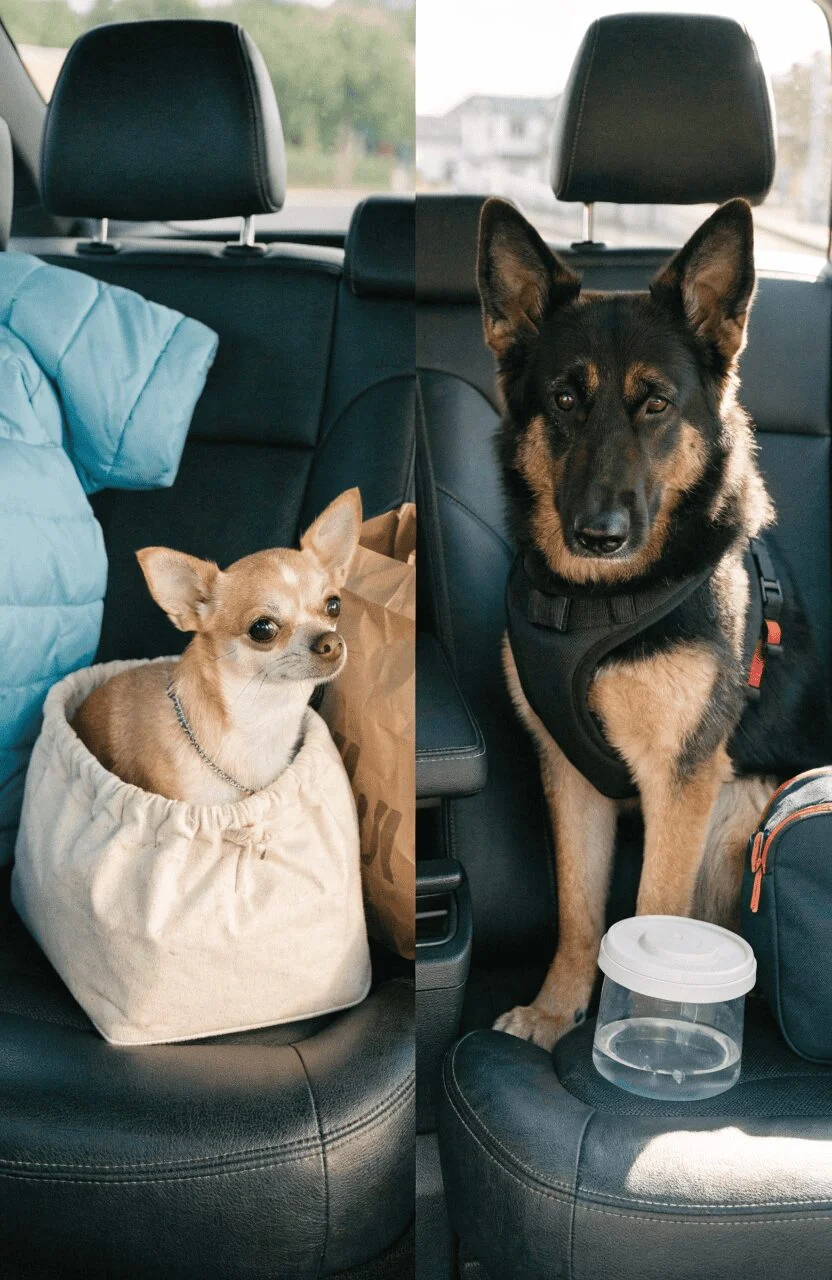
There is no one-size-fits-all approach to traveling with dogs. A Labrador and a French Bulldog have very different needs on a long journey, and treating them the same way is a mistake.
5.1 Small Dogs vs. Large Dogs: Different Needs on the Road
Small dogs often need more frequent bathroom breaks and can get cold easily when air conditioning is running on full blast.
Large dogs need more physical space to be comfortable and may need longer rest stops to properly stretch. Deep-chested breeds like Great Danes and German Shepherds are also at higher risk for bloat — which is why the feeding timing rule (light meal, well before travel) is especially important for them.
5.2 Brachycephalic Breeds (Pugs, Bulldogs, Frenchies) — Extra Care Required
Flat-faced breeds struggle to breathe efficiently at the best of times. Heat makes this much worse.
If you are traveling with a Pug, Bulldog, French Bulldog, Boxer or similar breed, take these extra steps:
- Keep the car noticeably cooler than you would for yourself
- Avoid traveling in the hottest part of the day — early morning or evening is safer
- Take more frequent rest stops
- Watch for laboured breathing, which can escalate quickly in these breeds
5.3 Senior Dogs and Dogs With Health Conditions
Older dogs can absolutely travel — but they need more consideration.
Arthritis makes long periods of stillness painful. Stop more frequently and let senior dogs stretch properly. Orthopedic bedding in the car can help significantly.
If your dog takes regular medication, build a schedule around their dosage times and make sure you have enough medication for the full trip plus extra.
6. Multi-Day Trips: Keeping Routines Stable Across Days
A single long day of driving is one challenge. A multi-day road trip introduces a new layer of complexity — your dog needs to sleep, eat and feel safe in a different place every night.
6.1 Booking Dog-Friendly Accommodation
Book pet-friendly accommodation well in advance, especially during school holidays or peak travel seasons. Pet-friendly rooms fill up fast.
When searching, look for places that offer a secure outdoor area, tiled or easy-clean floors, and ideally a ground-floor room so your dog is not navigating unfamiliar stairs or elevators.
If you are planning to stay somewhere like Nashville, there are some excellent dog-friendly hotel options worth knowing about. Be aware that most pet-friendly accommodations charge an additional fee per night — factor this into your budget early.
6.2 Sticking to Their Daily Schedule Far From Home
Dogs are creatures of routine. When everything around them is unfamiliar, consistency in their daily schedule is what keeps them grounded.
Try to feed them at the same times as at home. Keep walk times as close to normal as possible. Use the same bedding they sleep on at home to make the new space feel familiar.
If you want broader inspiration for traveling with pets across different destinations, this overview of exploring the globe with pets covers some useful planning considerations.
7. When You Arrive: Settling Your Dog In
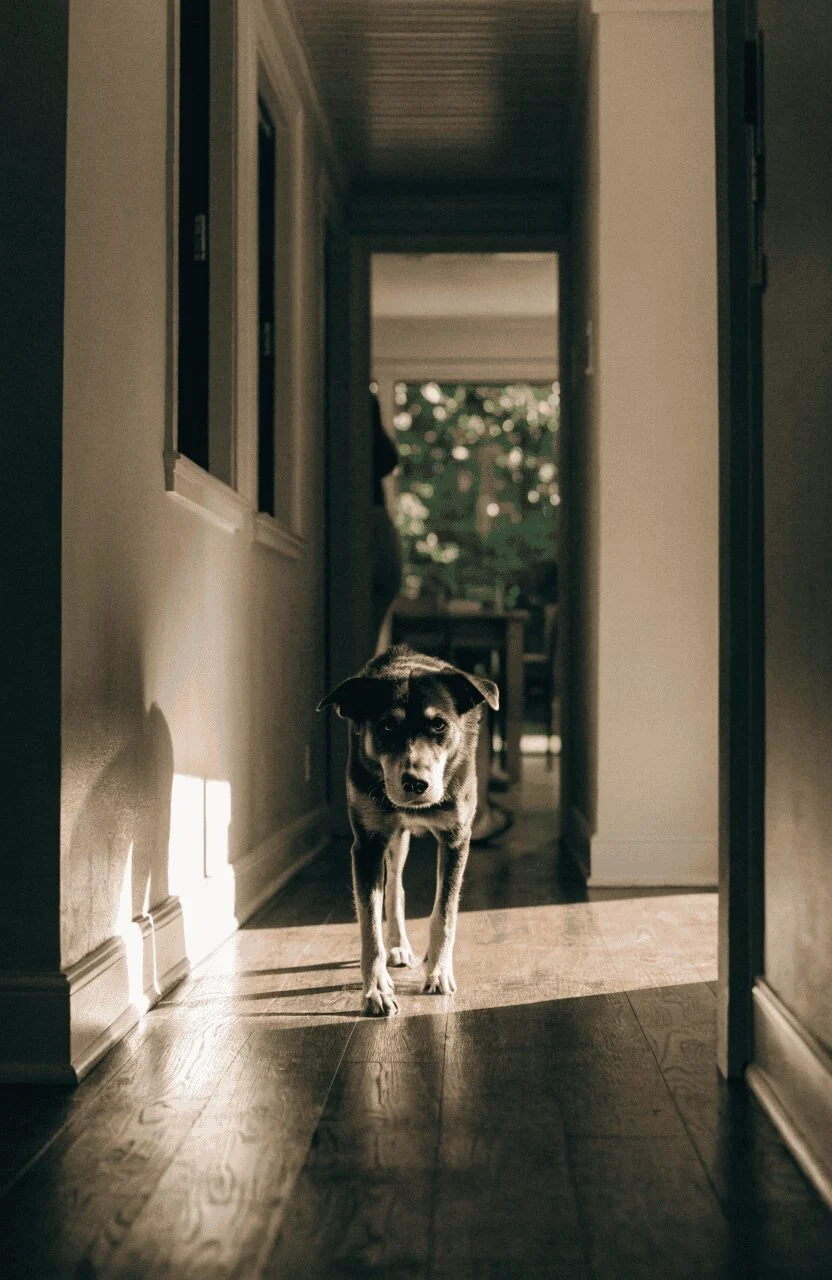
You have made it. Now give your dog the time they need to adjust before you do anything else.
7.1 Let Them Explore Before You Unpack
Before you carry a single bag inside, take your dog on a slow walk around the new space.
Let them sniff the garden, the entrance, the hallway. Sniffing is how dogs process new environments — it is genuinely calming for them, not just entertaining. Give them 10 to 15 minutes to do this before you bring them inside.
Once inside, put their bedding down first. Having something that smells like home in the new space tells them this place is safe.
7.2 What to Watch For in the First 24 Hours
Some dogs settle immediately. Others take a day or two to fully relax in a new environment.
Keep an eye out for:
- Refusing to eat or drink — normal for up to 24 hours, concerning beyond that
- Diarrhea or vomiting from travel stress or a water change
- Excessive pacing, whining, or inability to settle
- Any physical signs of illness that may have been masked during the drive
If your dog is not eating and not showing interest in their surroundings after 24 hours, or if you see any physical symptoms that concern you, contact a local vet. Look up the nearest emergency veterinary clinic as soon as you arrive — before you need it.
Final Thoughts
Knowing how to travel long distance with a dog is really about one thing: planning ahead so your dog never has to just cope.
When you give your dog the preparation they deserve — the vet visit, the practice trips, the right safety gear, the routine stops, the familiar scent of their bed in an unfamiliar room — you take the stress out of the equation for both of you.
The reward is a travel companion who is genuinely happy to be there. And there are very few things better than that.

Izzy is an experienced ranch worker who has a passion for exploring nature and getting up close to wildlife. With her connections to various animal organizations, Izzy is well-versed in animal care and rehabilitation.