Black German Shepherd vs Normal German Shepherd: Key Differences Explained
If you’ve ever seen a solid black German Shepherd, you know how striking they look. That deep, jet-black coat turns heads everywhere. But it also raises a question almost every dog lover asks: is a Black German Shepherd vs Normal German Shepherd actually a different dog — or just a different color?
The answer is more interesting than a simple yes or no. They share the same breed, the same intelligence, and the same loyal heart. But there are real differences worth knowing before you bring one home — from genetics and grooming to price and heat tolerance.
This guide covers everything: what makes them genetically different, how they compare side-by-side, what the myths get wrong, and which one is the right fit for your lifestyle.
Let’s break it all down.
1. Are They the Same Breed?
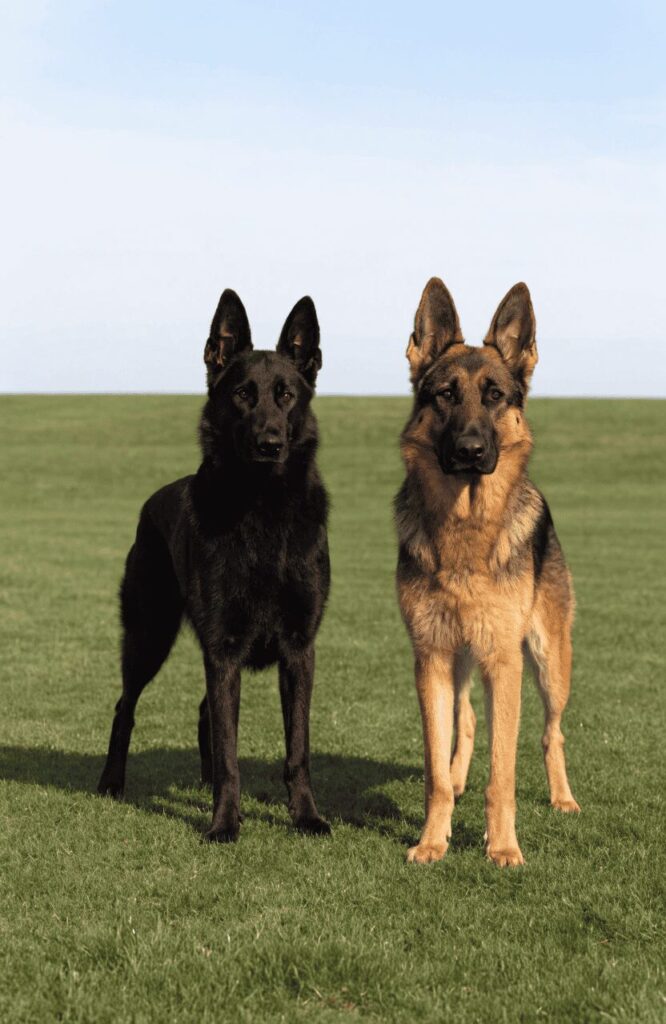
Yes — both the black German Shepherd and the standard black-and-tan German Shepherd belong to the exact same breed. The American Kennel Club (AKC) and the Verein für Deutsche Schäferhunde (SV) — the original German breed association — both recognize solid black as a fully accepted coat color within the GSD standard.
This means a solid black GSD is not a mixed breed. It is not a separate variety. It is a purebred German Shepherd with a different coat color expression.
The black coat has existed in the breed since its earliest days. Captain Max von Stephanitz, who developed the German Shepherd breed in the late 1800s, focused on working ability and temperament — not coat color. Black has always been part of the natural genetic range.
So why do so many people think they’re different dogs? Mostly because solid black GSDs are rare, and their dramatic appearance makes them look more intense or exotic than the classic tan-and-black dog most people recognize.
2. The Genetics Behind the Black Coat

Here’s where it gets really interesting — and simpler than it sounds.
German Shepherd coat color is controlled by specific genes. The black coat in a GSD comes from a recessive variant at what geneticists call the A-locus (also called the agouti locus). In simple terms, this gene controls whether a dog expresses color patterns (like the saddle markings on a standard GSD) or goes completely solid black.
For a puppy to be solid black, it must inherit two copies of the recessive black gene — one from each parent. This is why two black-and-tan parents can produce a black puppy. If both parents carry one hidden copy of the recessive gene, there’s a chance some puppies in the litter will inherit both copies and be born solid black.
This also explains the rarity. Most GSDs carry the dominant gene for patterned coloring, so solid black litters — or even one solid black puppy in a litter — are uncommon.
2.1 Bicolor vs Solid Black GSD — Know the Difference
This is one of the most common points of confusion, and neither competitor article addresses it properly.
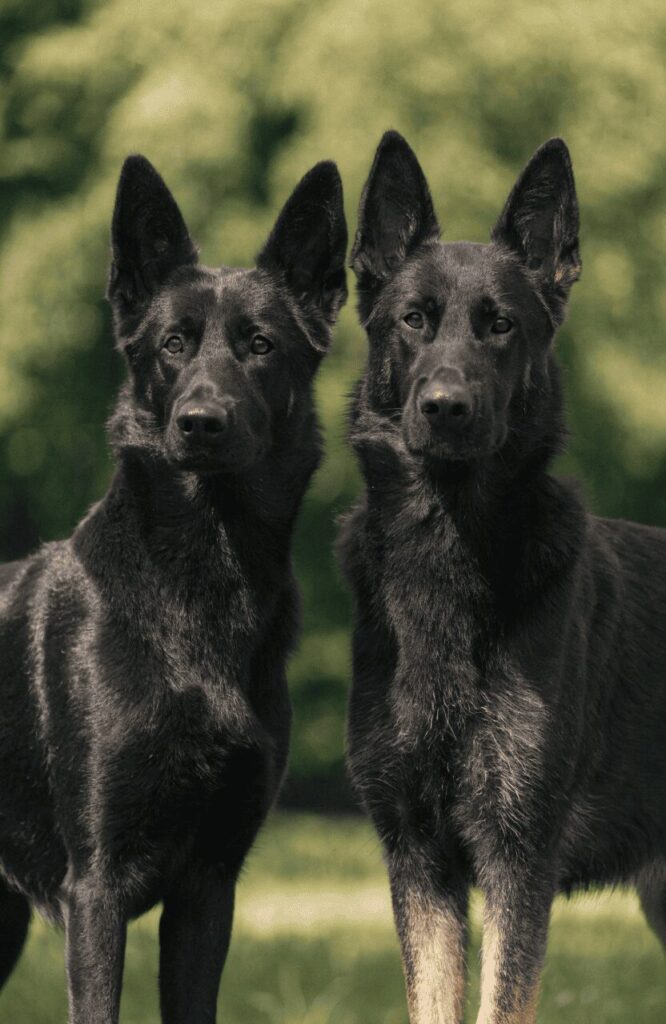
A solid black GSD is entirely black from nose to tail — no markings, no tan, no variation.
A bicolor GSD looks almost entirely black but has small tan points on the feet, legs, and sometimes under the tail. From a distance, they can look solid black. Up close, the difference is visible.
Both are purebred GSDs. Both are accepted under breed standards. But they are genetically distinct, and breeders treat them as separate color categories.
If you’re shopping for a black GSD, ask the breeder to confirm whether the dog is solid black or bicolor — they’re not the same thing.
3. Black GSD vs Normal GSD — Side-by-Side Comparison
Here’s everything in one place. This table gives you a clear picture of Black GSD vs Normal GSD across all the factors that matter.
| Feature | Black German Shepherd | Normal (Black & Tan) GSD |
|---|---|---|
| Coat Color | Solid black, no markings | Black saddle with tan/red markings |
| Coat Length | Often longer and fuller | Typically medium length |
| Size & Weight | Same: 50–90 lbs, 22–26 inches | Same: 50–90 lbs, 22–26 inches |
| Rarity | Rare (~6–8% of litters) | Common |
| Average Price | $1,500–$3,000+ | $800–$2,000 |
| Grooming Needs | Moderate to high | Moderate |
| Shedding | Heavy | Heavy |
| AKC Recognition | Yes — fully recognized | Yes — fully recognized |
| Temperament | Same as standard GSD | Same as standard GSD |
| Lifespan | 9–13 years | 9–13 years |
| Health Risks | Same as standard GSD | Same as standard GSD |
| Heat Sensitivity | Slightly higher due to dark coat | Standard |
| Working Line Frequency | More common | Less common |
4. Appearance Differences You Can Actually See
4.1 Coat Color and Markings
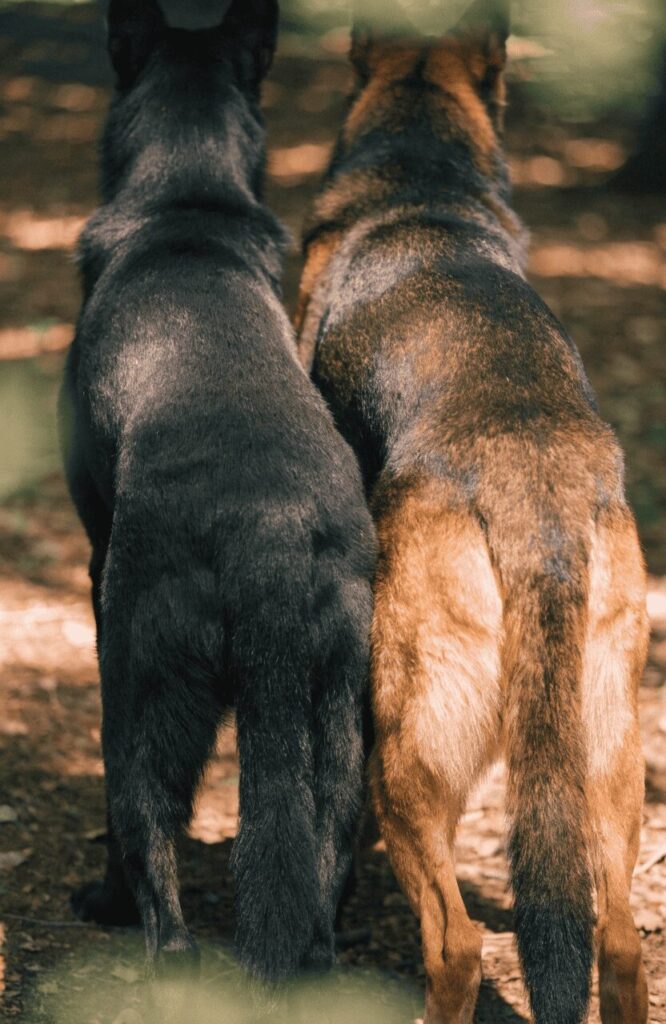
The most obvious difference is the coat. A normal GSD has the classic black saddle pattern layered over a tan, red, or cream base. The saddle darkens as the dog matures, but markings are always visible.
A black GSD has none of this. The coat is a uniform, deep black from the tip of the nose to the end of the tail. No saddle, no tan points, no variation. It gives them a sleek, powerful, almost wolf-like look that many people find striking.
4.2 Coat Length — Why Black GSDs Trend Longer
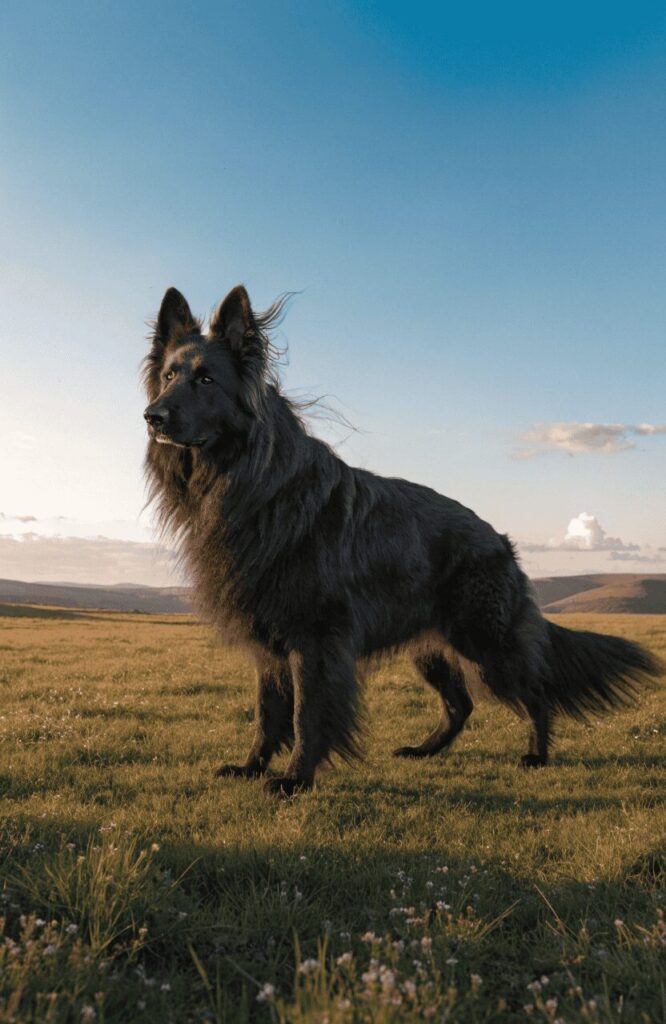
Black German Shepherds appear more frequently with longer coats than standard-colored GSDs. This isn’t guaranteed, but it’s a consistent trend breeders and owners notice.
A long-coated black GSD has a fuller mane around the chest and neck, feathering on the legs, and a fuller tail. This makes them look larger and more dramatic than they actually are.
4.3 How to Tell a Black GSD Puppy Apart
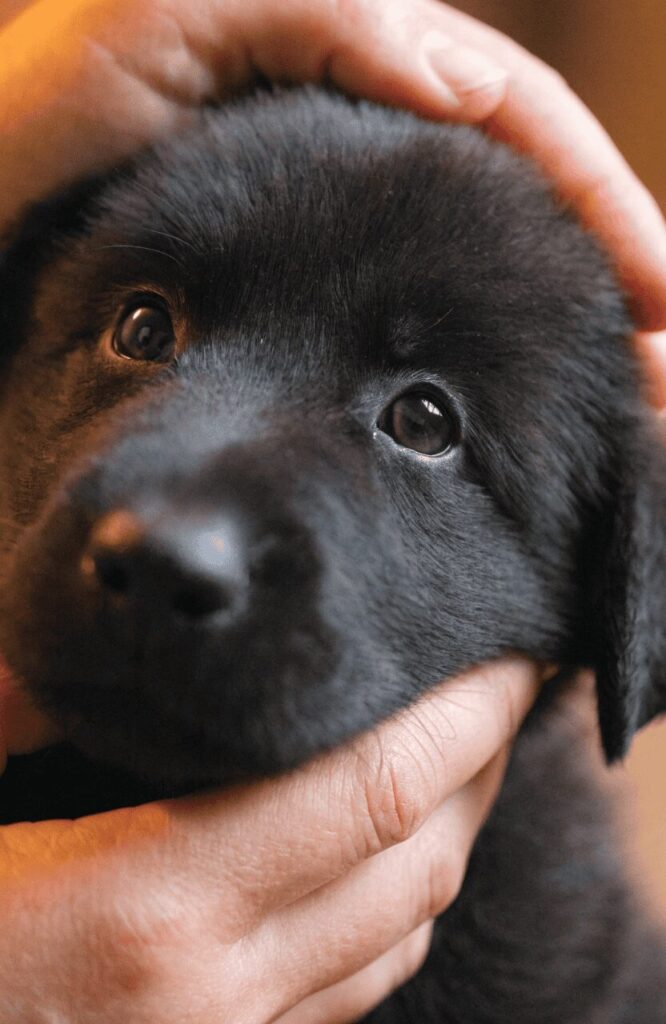
Here’s something most articles don’t mention: standard black-and-tan GSD puppies are born very dark — sometimes almost black — and only develop their full markings over several weeks.
If you’re buying a puppy and want a solid black dog, look for puppies that show no hint of tan or reddish coloring around the muzzle, eyebrows, feet, or chest by 6–8 weeks. Solid black puppies will remain black. Bicolor puppies will show faint tan points that become more visible over time.
Always ask the breeder about the genetic history of the parents to confirm solid black offspring are likely.
4.4 Heat Absorption — A Practical Concern
Black absorbs more solar radiation than lighter colors. This is basic physics, and it applies to dogs too.
In hot, sunny climates, a solid black GSD will absorb more heat than a tan-and-black dog under the same conditions. This doesn’t mean black GSDs can’t thrive in warm areas — millions do. But it does mean owners in hot climates need to be more mindful about exercise timing (early mornings and evenings), shade access, fresh water, and avoiding overexertion in peak afternoon heat.
This is a practical, real difference that no other article on this topic addresses clearly.
5. Temperament: Does Coat Color Change Personality?

No. Coat color has zero influence on a dog’s personality, drive, or temperament. The research and breeder consensus on this is clear.
What shapes a GSD’s temperament is a combination of:
- Genetics and bloodlines — the temperament of the parents matters enormously
- Early socialization — exposure to people, environments, and other animals in the first 16 weeks
- Training consistency — how the dog is handled as it grows
- Living environment — structure, stimulation, and attachment to its handler
A well-bred, well-socialized black GSD will be just as calm, loyal, and confident as any other German Shepherd — because it is any other German Shepherd.
Why do black GSDs seem more intense? There’s a visual effect at play. A black muzzle against a black face creates a bolder, more serious-looking expression. The lack of tan markings around the eyes removes what many people read as softness or approachability in a dog’s face. The dog isn’t more serious — it just looks that way.
5.1 Working Line vs Show Line — Why Black Appears More There
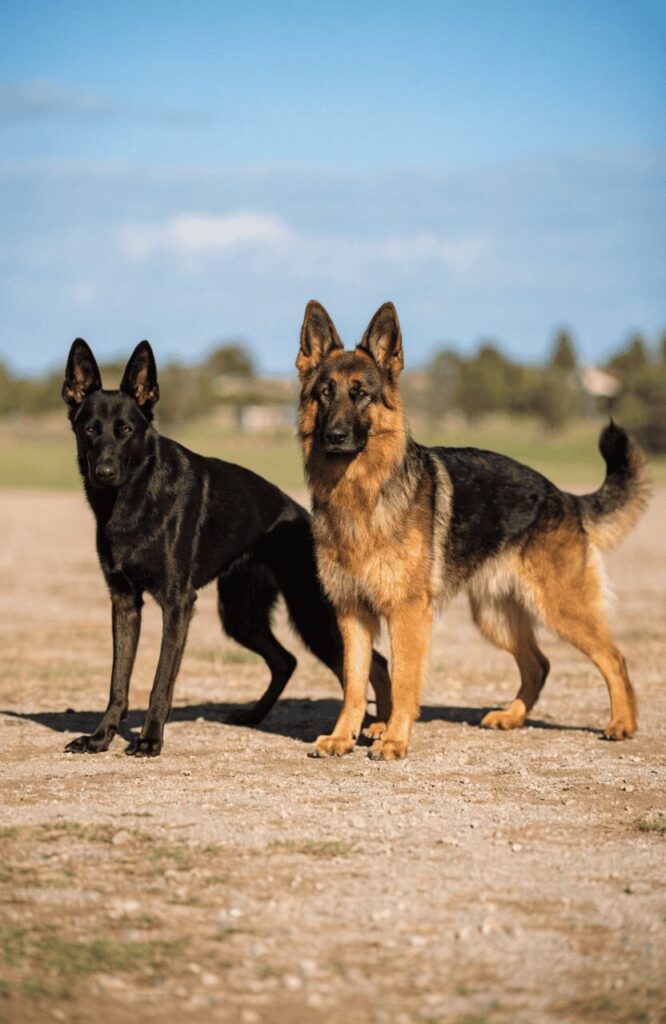
You’ll notice that black GSDs appear more often in working lines (Czech, East German DDR, and West German working lines) than in show lines.
This isn’t because black coat dogs are inherently better workers. It’s because breeders selecting for police, military, and sport (Schutzhund/IPO) work tend to prioritize drive, structure, and nerves — and the dogs they select happen to carry the black gene more often in those bloodlines. The color and the drive exist in the same gene pool by history, not by direct connection.
6. Training and Intelligence
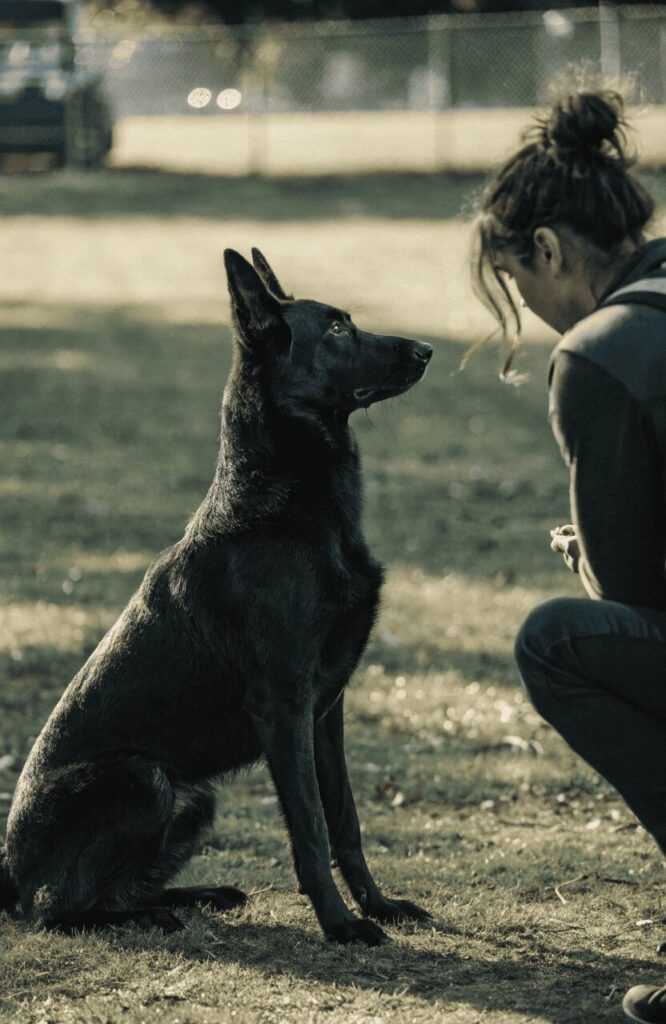
Both the black GSD and the standard GSD are among the most trainable dogs on the planet. The German Shepherd consistently ranks in the top tier of working dog intelligence. This applies equally to black-coated dogs.
Both varieties excel in:
- Obedience training
- Agility and sport work
- Service and therapy roles
- Police and military work
- Family protection
The key to success with either type isn’t the color — it’s starting early, staying consistent, and using methods that work with the dog’s instincts. If you’re new to training a GSD, reviewing solid essential puppy training tips before your puppy arrives will give you a major head start.
One important note: GSDs respond exceptionally well to positive reinforcement training. Harsh correction-based methods can damage trust with this breed — particularly with sensitive bloodlines. Reward-based consistency is the gold standard with both varieties.
7. Grooming and Shedding — What’s Really Different?
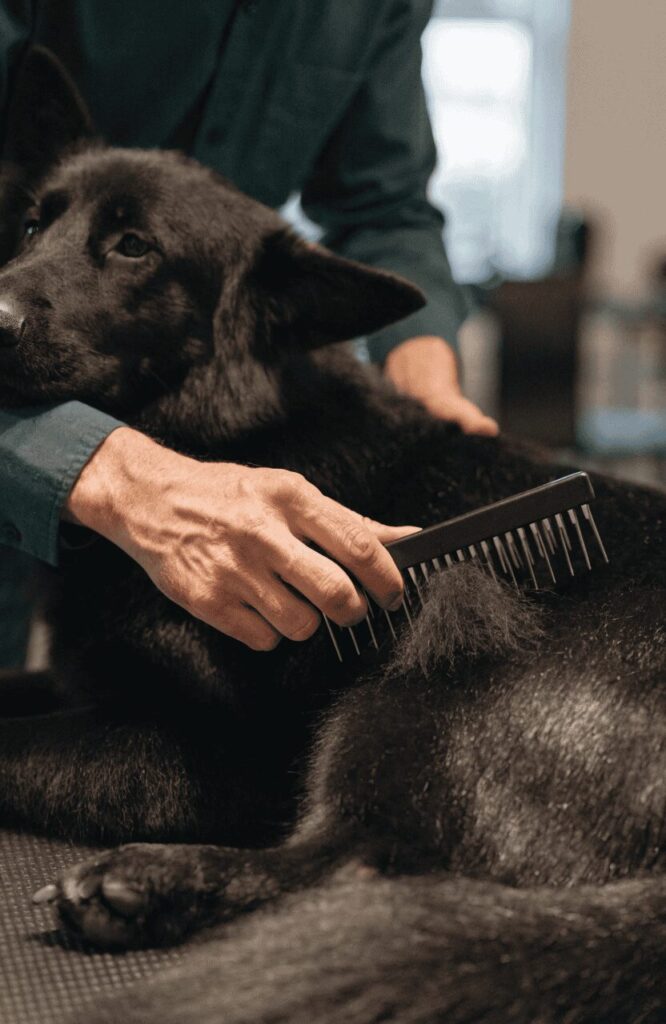
Let’s be direct: both black and standard GSDs are heavy shedders. If you want a low-shedding dog, neither variety is the right choice.
German Shepherds go through two major seasonal “coat blows” per year — typically spring and fall — where they shed their undercoat in large quantities. During these periods, daily brushing is necessary for both varieties.
So what’s actually different between the two?
The difference isn’t how much they shed — it’s how visible the hair is. Black dog hair is strikingly obvious on light-colored furniture, clothing, and floors. If your home has light-colored sofas or carpets, you’ll notice your black GSD’s shed hair much more than you would with a tan-colored dog.
Standard GSD hair, being a mix of black and tan, blends more with a wider range of surfaces — but make no mistake, it’s equally present.
For managing either dog’s coat, a slicker brush and an undercoat rake are your best tools. Long-coated black GSDs will need more frequent brushing to prevent matting, especially around the ears, collar area, and hindquarters.
If you’re not sure where to start with coat maintenance, a practical guide on how to groom a dog at home will walk you through the right tools and techniques for thick double coats.
8. Health — Any Real Differences?
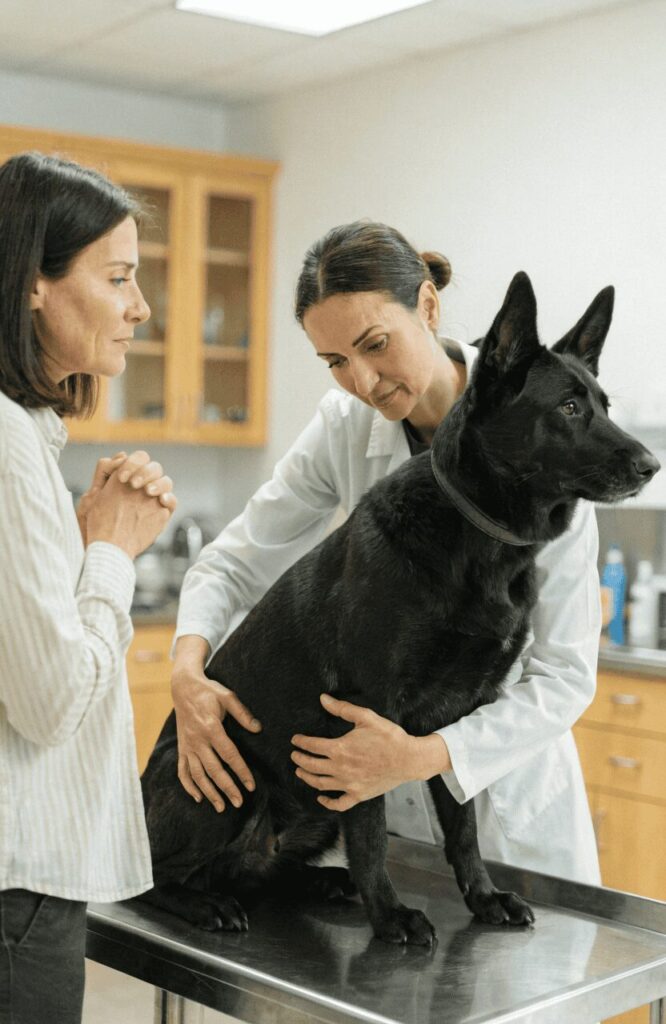
When it comes to health, the black coat carries no unique risks or advantages. Both black and standard GSDs share the same genetic health profile.
Common conditions to watch for in both:
- Hip and elbow dysplasia — the most significant breed-wide concern
- Degenerative Myelopathy (DM) — a progressive neurological condition
- Bloat (GDV) — a life-threatening stomach condition common in large, deep-chested breeds
- Exocrine Pancreatic Insufficiency (EPI) — a digestive disorder seen in GSDs
The single most important thing you can do regardless of coat color is choose a breeder who performs genetic health testing on both parents. Hip scores, DM carrier status, and elbow evaluations should be standard practice.
Understanding your puppy’s veterinary needs from day one — including vaccination schedules, parasite prevention, and early health screening — is just as important for a black GSD puppy as any other.
Lifespan for both varieties is typically 9 to 13 years, with working-line dogs sometimes slightly shorter due to physical demands.
9. Price and Availability

This is where a meaningful practical difference exists between Black German Shepherd vs Normal German Shepherd ownership.
Standard black-and-tan GSD: Average price from a reputable breeder typically ranges from $800 to $2,000, depending on bloodlines, location, and breeder reputation.
Solid black GSD: Expect to pay $1,500 to $3,000 or more. Long-coated solid black GSDs from titled working lines can push even higher.
The price premium is driven by two factors: rarity and demand. Solid black GSDs make up roughly 6–8% of litters when they occur at all. Many litters from non-black parents will never produce a black puppy. Breeders who specialize in producing solid black GSD puppies have refined their breeding programs specifically for this and charge accordingly.
What to look for in a reputable breeder:
- Genetic health testing on both parents (hips, elbows, DM)
- Willingness to show you parent dogs and health documentation
- AKC, USCA, or SV registration available for puppies
- No willingness to sell puppies under 8 weeks
- References and transparency about their program
Avoid breeders who charge high prices only because of coat color with no health testing behind their dogs. Color is not a substitute for quality breeding.
10. Myths vs Facts — Setting the Record Straight
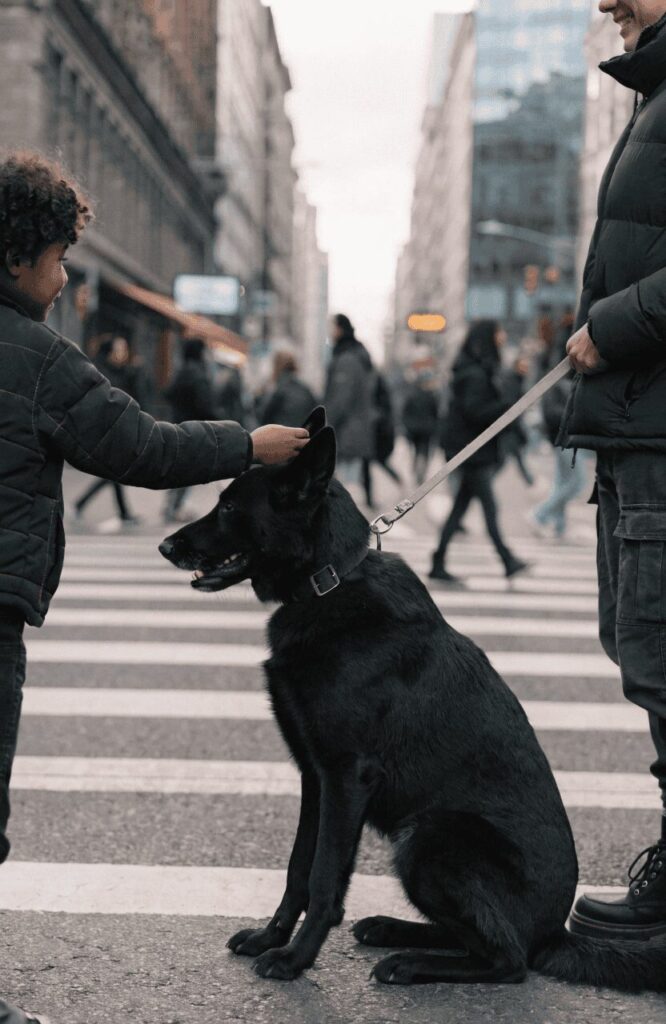
Myth: Black German Shepherds are more aggressive. Fact: False. Aggression is shaped by temperament genetics, socialization, and handling — not coat color. A poorly socialized black GSD may be reactive. So will a poorly socialized tan-and-black GSD.
Myth: They’re not purebred — they must be mixed with something. Fact: False. Solid black is a fully accepted, naturally occurring color within the German Shepherd breed standard. No outside breed is required to produce it.
Myth: Black GSDs are harder to train. Fact: False. Both varieties share the same working intelligence and trainability. Training outcomes depend on the handler and the method, not the coat.
Myth: They have more health problems. Fact: False. There are no coat-color-linked health conditions unique to black GSDs. Both share identical health profiles.
Myth: The black coat makes them dangerously prone to overheating. Fact: Partly true, but manageable. Black coats absorb more solar heat. This is a real consideration in hot climates, but with sensible scheduling of outdoor activity and access to shade and water, black GSDs live healthy, active lives in warm regions worldwide.
Myth: Black German Shepherds are a separate breed. Fact: False — definitively. One breed. One standard. Different coat.
11. Which One Is Right for You?

Both dogs are exceptional. But your lifestyle, climate, and experience level should guide your choice.
Choose a Black German Shepherd if:
- You love a dramatic, striking appearance and don’t mind the higher price
- You’re in a moderate to cool climate, or can manage outdoor activity timing in heat
- You’re interested in working sport (Schutzhund, IPO) where black GSDs appear more frequently
- You have prior experience with large, high-drive working breeds
- You’re patient with a potentially longer wait time to find a quality breeder
Choose a Standard (Black & Tan) GSD if:
- Budget is a priority and you want the same dog at a lower entry cost
- You live in a very hot climate and want fewer heat-management considerations
- You’re a first-time GSD owner and want wider breeder availability
- You prefer the classic, recognizable GSD look
Either way, both varieties rank among the most loyal dog breeds in the world. The decision really comes down to aesthetics, budget, and availability — not capability, temperament, or health.
Conclusion
The Black German Shepherd vs Normal German Shepherd debate really comes down to this: same dog, same intelligence, same loyalty — different coat.
The black coat is rarer, often longer, slightly more heat-absorbent, and typically commands a higher price. Beyond that, everything that makes a German Shepherd great — the trainability, the protective instincts, the deep bond with family — is identical in both.
Choose based on your lifestyle, climate, and budget. Whichever coat you prefer, you’re getting one of the finest working and family dogs ever developed. The color is just the wrapping.

Izzy is an experienced ranch worker who has a passion for exploring nature and getting up close to wildlife. With her connections to various animal organizations, Izzy is well-versed in animal care and rehabilitation.