14 Dog Sensory Garden Ideas to Keep Your Pup Calm, Curious, and Happy
If your dog spends the day digging holes, chewing the fence, or barking at every leaf that moves, your backyard might be sending the wrong message. Dogs don’t just need exercise — they need things to smell, touch, hear, and explore. That’s exactly what these dog sensory garden ideas are built for.
A sensory garden gives your dog a safe outdoor space designed around their senses instead of yours. It’s not about fancy landscaping or perfectly trimmed hedges. It’s about giving your dog a reason to slow down, sniff around, and actually feel calm in their own backyard instead of treating it like an empty lot to patrol.
Most dogs who seem “hyper” or “destructive” aren’t badly behaved. They’re under-stimulated. A sensory garden solves that problem at the root instead of just managing the symptoms.
In this guide, you’ll find 14 simple, practical dog sensory garden ideas you can try — whether you have a huge yard, a tiny patio, or just one corner of grass to work with. We’ll also cover plants to avoid, long-term safety tips, and answers to the most common questions owners ask before getting started.
What Is a Dog Sensory Garden, and Why Does Your Dog Need One?
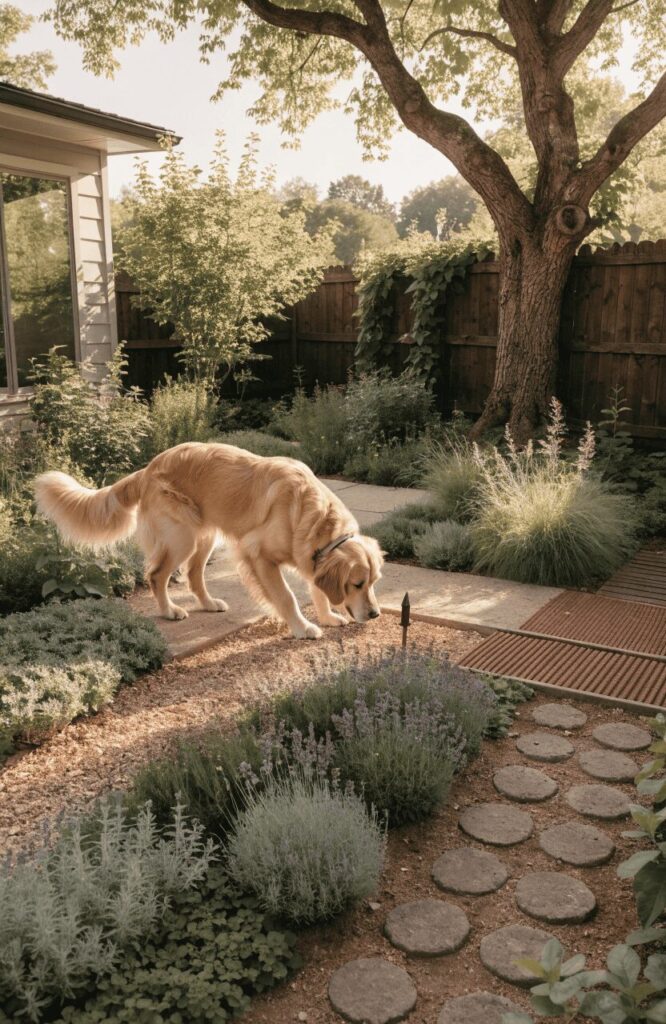
A dog sensory garden is an outdoor space designed to stimulate your dog’s senses — smell, touch, sound, sight, and even taste — in safe, controlled ways. Think of it as an enrichment zone, not just a pretty garden you happen to share with your pet.
Dogs experience the world mostly through their noses. Their sense of smell is estimated to be tens of thousands of times stronger than ours, and a huge part of their brain is dedicated to processing scent. When a dog doesn’t get enough sniffing, digging, or exploring, that pent-up energy usually turns into something you don’t want: chewing, barking, escaping, or pacing the fence line for hours.
A well-planned sensory garden helps with:
- Reducing boredom and destructive habits like digging up the lawn or shredding plants
- Lowering stress and anxiety, especially in nervous, reactive, or rescue dogs
- Supporting senior dogs with gentle, low-impact stimulation that doesn’t strain joints
- Strengthening your bond through shared outdoor time and calm exploration
- Giving working or high-energy breeds a healthy outlet for natural instincts like digging, sniffing, and tracking
It also helps to understand the instincts you’re working with. Looking into why dogs do what they do — like sniffing every blade of grass or circling before lying down — makes it much easier to design a garden that matches those instincts instead of fighting them.
Now let’s get into the ideas, broken down so you can pick what fits your dog and your space.
14 Dog Sensory Garden Ideas for Every Sense and Space
These dog sensory garden ideas are organized so you can choose based on your space, budget, and your dog’s personality. You don’t need all 14 to see a difference — even three or four well-placed features can noticeably change how your dog behaves outside.
As you go through this list, pay attention to which ideas your dog naturally gravitates toward. That’s usually the best sign of where to invest more time and money later.
1. Build a Snuffle Patch
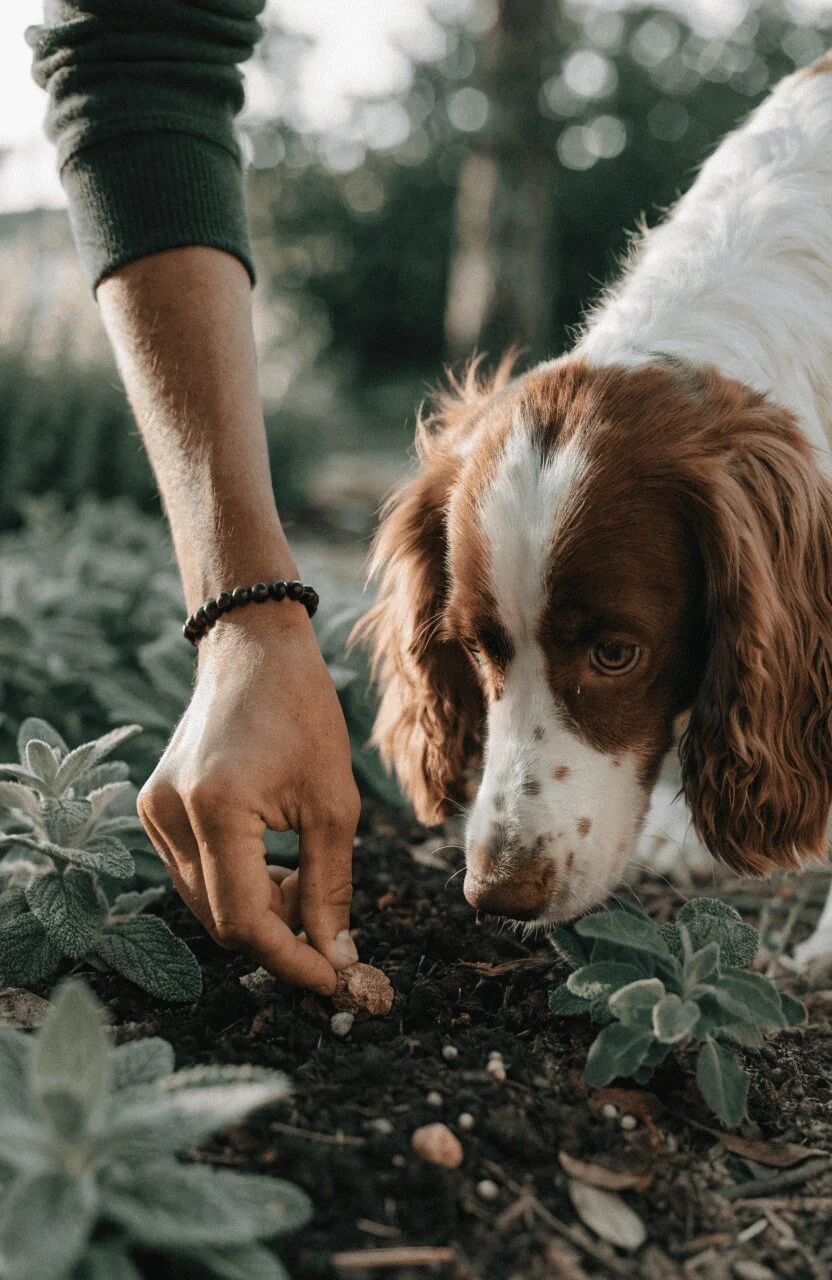
A snuffle patch is a small section of garden filled with safe herbs, mulch, or loose soil where you hide treats or toys for your dog to find using only their nose.
This taps directly into your dog’s strongest sense — smell — and it’s one of the easiest, cheapest dog sensory garden ideas to set up in an afternoon. Sniffing is also genuinely tiring for dogs in a good way; a few focused minutes of sniffing can be as mentally draining as a longer walk.
- How to do it: Use an old planter box or mark off a 2×2-foot area with bricks or border edging. Fill it with pet-safe herbs and loose substrate, then rotate hidden treats every few days so the scent stays interesting.
- Best for: Any dog, especially scent hounds, beagles, and dogs who are constantly nose-down on walks.
2. Create a Multi-Texture Walking Path
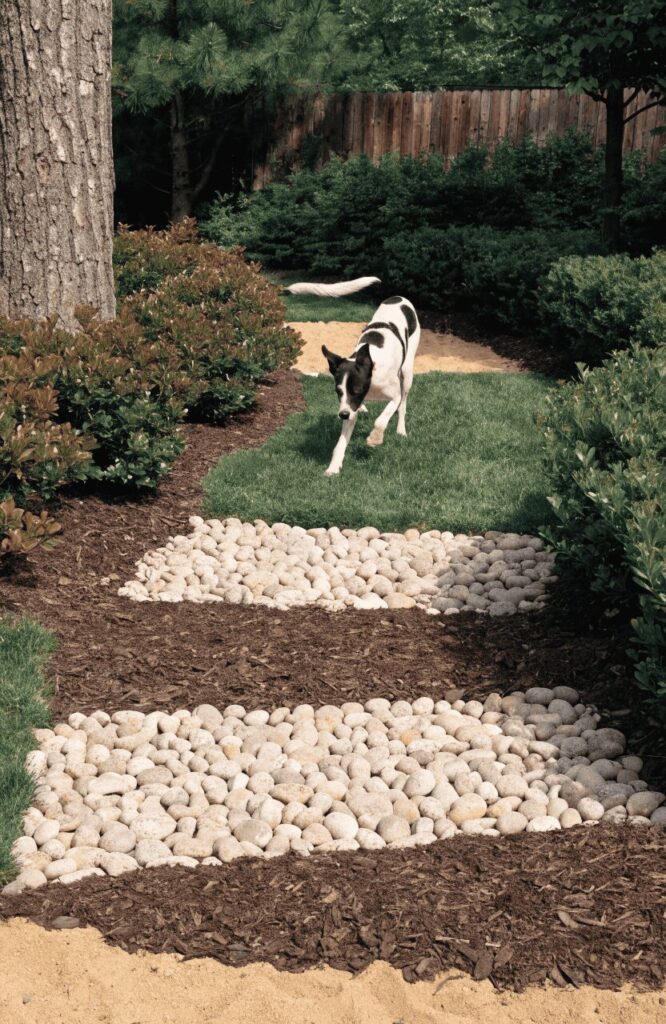
Dogs feel the world through their paws just as much as their nose. A path made of different materials gives them new sensations with every single step instead of the same flat lawn day after day.
Mix smooth stones, wood chips, soft grass, and sand into short connected sections. Your dog will naturally slow down and explore each texture as they walk, which is a simple but effective way to keep them engaged outdoors.
- How to do it: Lay out 3–4 short sections using different ground materials placed side by side, ideally along a route your dog already uses to get around the yard.
- Best for: Dogs who are curious but cautious, and especially helpful for building confidence in nervous or under-socialized dogs.
3. Add a Dedicated Digging Pit
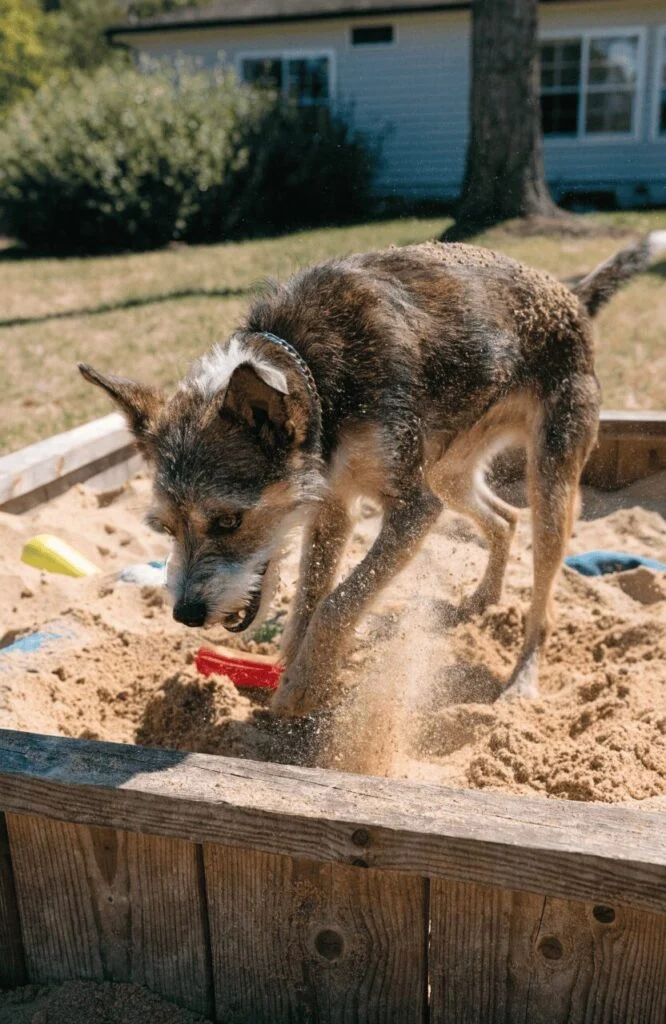
If your dog already digs up your flowerbeds, give them a spot where digging is allowed and even encouraged. Fighting a digging habit head-on rarely works, but redirecting it almost always does.
A digging pit channels a completely natural behavior into a place that won’t ruin your landscaping or annoy your neighbors.
- How to do it: Use a kiddie pool, raised wooden frame, or sandbox filled with sand or pet-safe soil. Bury toys or treats near the surface at first so your dog associates the spot with rewards.
- Best for: Terriers, working breeds, and any dog with strong digging instincts that show up elsewhere in the yard.
4. Plant a Dog-Safe Herb Border
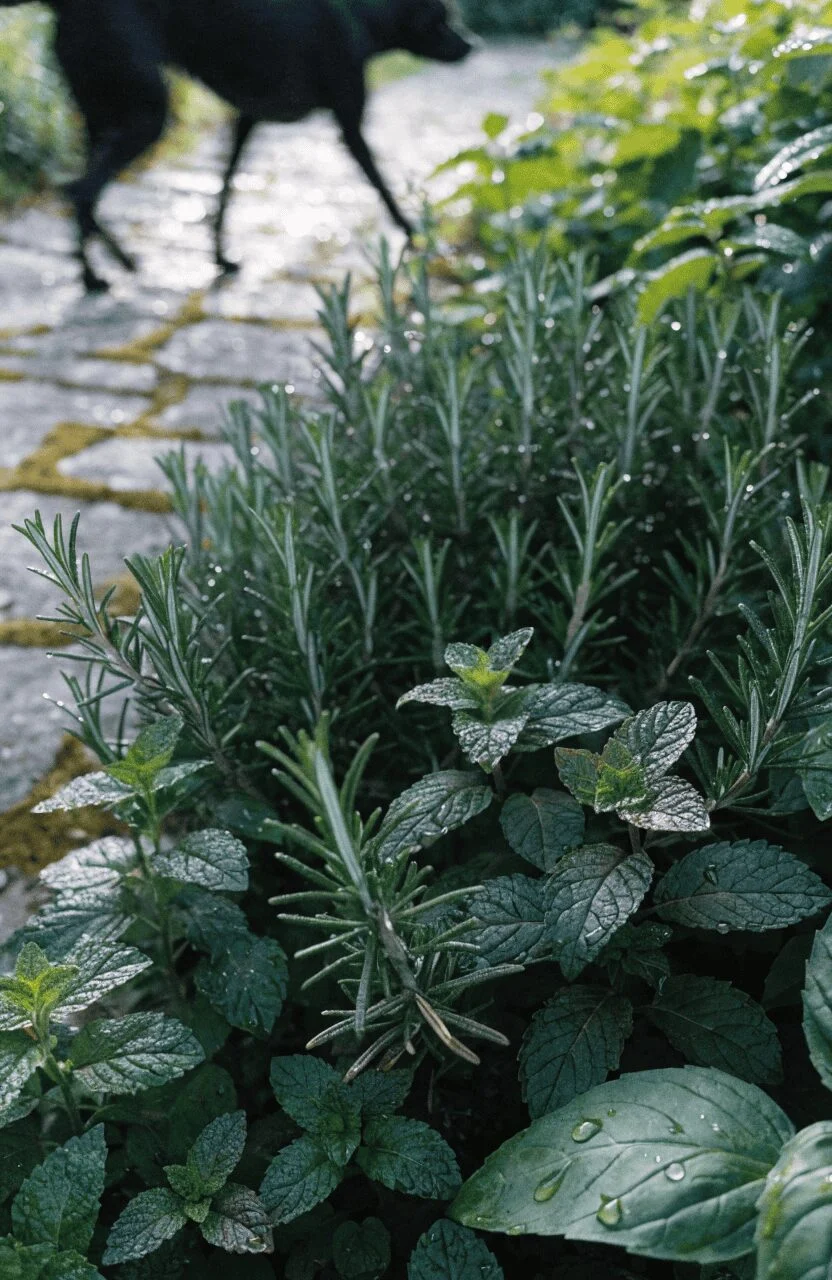
Herbs are one of the simplest ways to add scent enrichment without much ongoing maintenance, and most are inexpensive and hardy.
Rosemary, basil, mint, and chamomile are safe, low-fuss, and smell strong enough that your dog will notice them every time they walk past. Some owners even report a noticeably calmer dog after regular exposure to scents like chamomile and lavender.
- How to do it: Plant herbs along a fence line, path edge, or near a gate so your dog naturally brushes past them while walking through the yard.
- Best for: Calm dogs and anxious dogs who benefit from gentle, repeated scent exposure rather than sudden bursts of stimulation.
5. Install a Small Splash or Water Feature
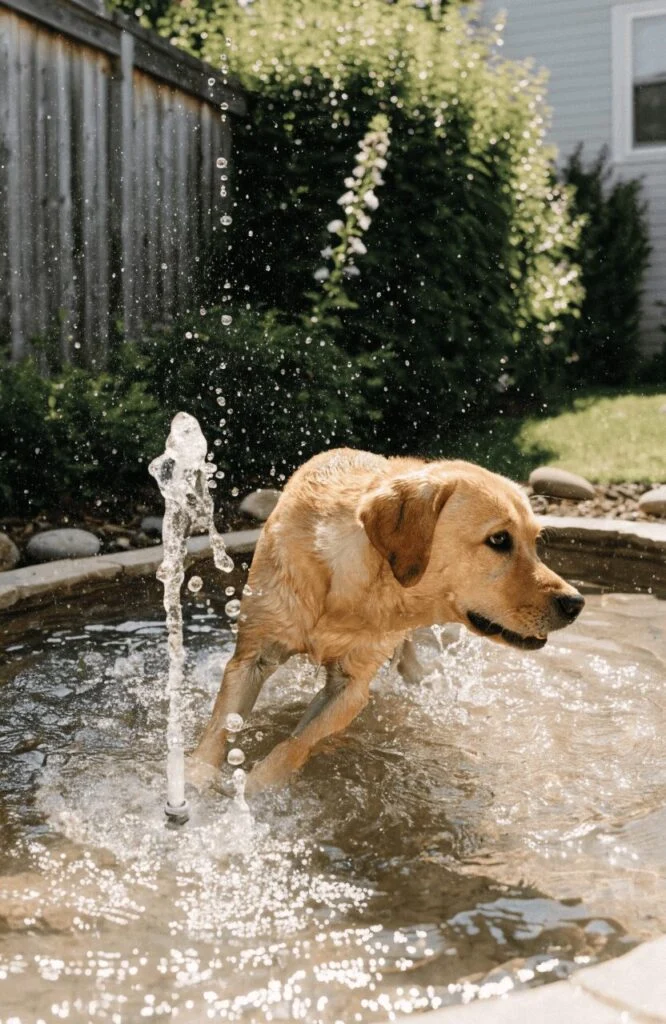
Water features add sound and play value at the same time, especially during warmer months when your dog needs a way to cool off.
Even a shallow basin or a small recirculating fountain can give your dog a place to drink, splash, or simply listen to running water, which many dogs find soothing.
- How to do it: Use a small fountain or shallow plastic basin with non-slip footing nearby so your dog doesn’t slip when stepping in or out.
- Best for: Water-loving breeds like Labradors, spaniels, and other retrievers who naturally seek out water.
6. Hang Soft Wind Chimes
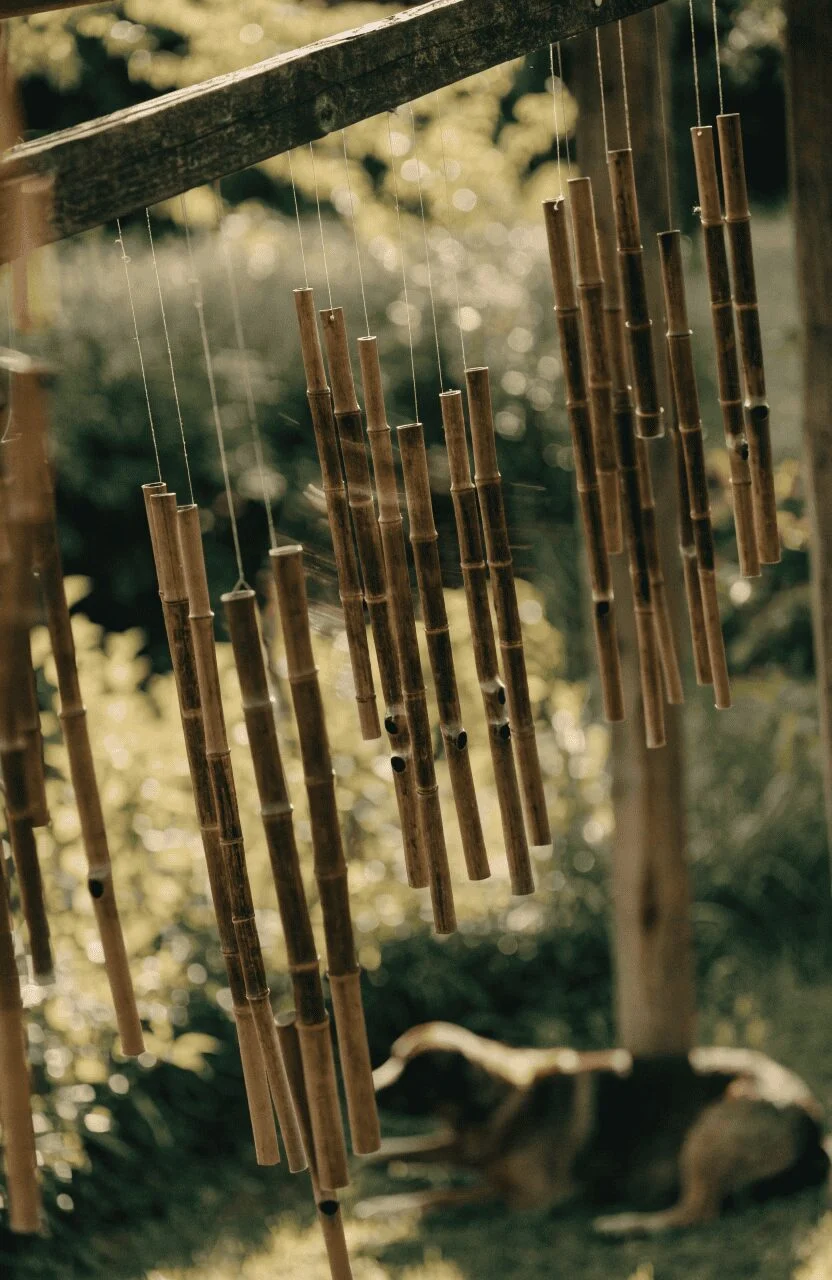
Sound matters more to dogs than most owners realize, since their hearing range is far more sensitive than ours. Gentle, low-pitched wind chimes can add calming background noise without being overwhelming.
Avoid anything loud, sharp, or metallic-sounding, since high-pitched or jarring noises can actually increase stress instead of reducing it.
- How to do it: Choose wooden or bamboo chimes with a soft, low tone and hang them away from resting areas so they’re heard faintly rather than constantly.
- Best for: Dogs who enjoy a calm, predictable environment and tend to settle quickly once they feel secure.
7. Set Up a Sensory-Rich Dog Run
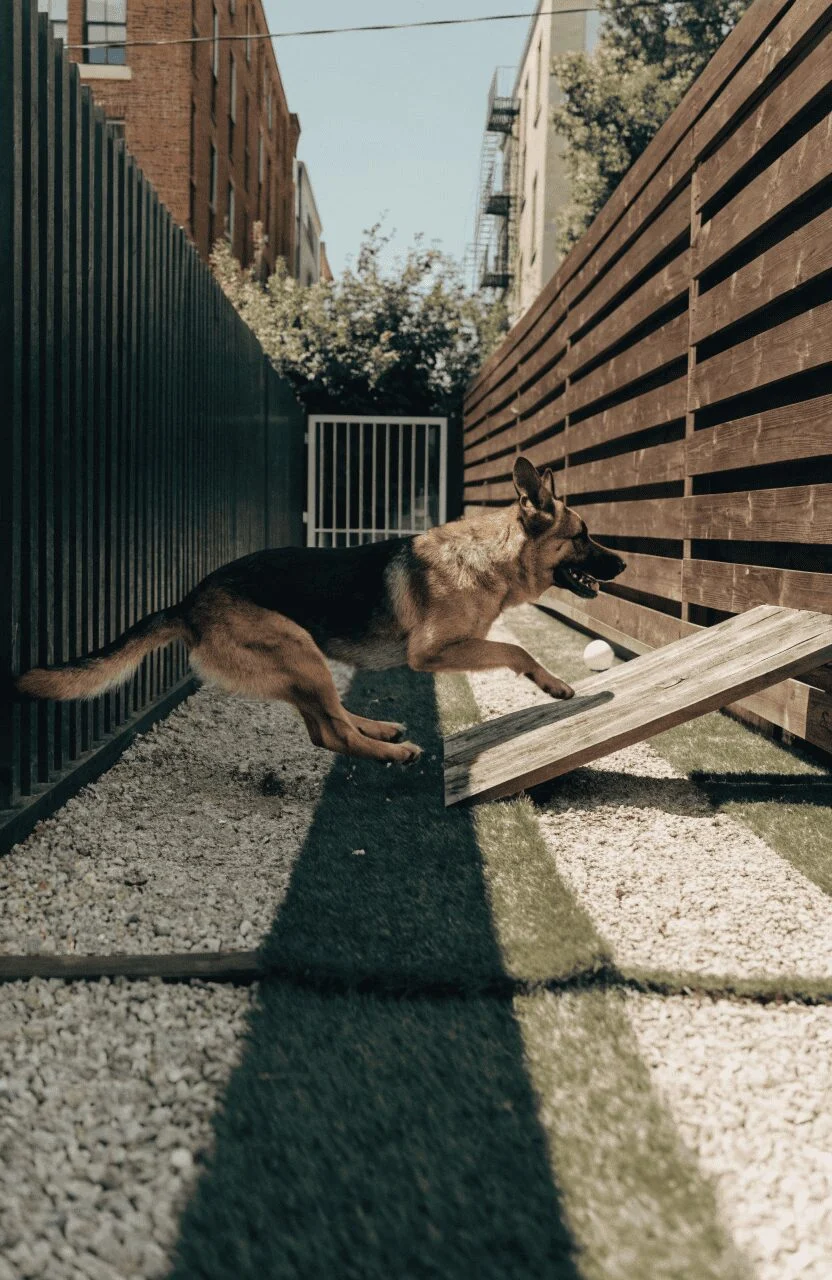
If you have a side yard or a narrow strip of unused space, turning it into a sensory-rich dog run is one of the best dog sensory garden ideas for active dogs who need room to move but don’t have a full backyard.
Unlike a basic dog run that’s just a fenced strip of grass or concrete, a sensory-rich version includes texture changes, sniffing stations, and a few low obstacles along the path, turning a simple pacing lane into an actual enrichment zone.
- How to do it: Line the run with mixed surfaces such as gravel, turf, and mulch sections, then add a low log or short ramp for your dog to step over as they move along it.
- Best for: High-energy dogs and homes without a full backyard. Pairing this with a proper outdoor kennel setup gives the space more structure and shelter.
8. Add a Tunnel or Hideaway Spot
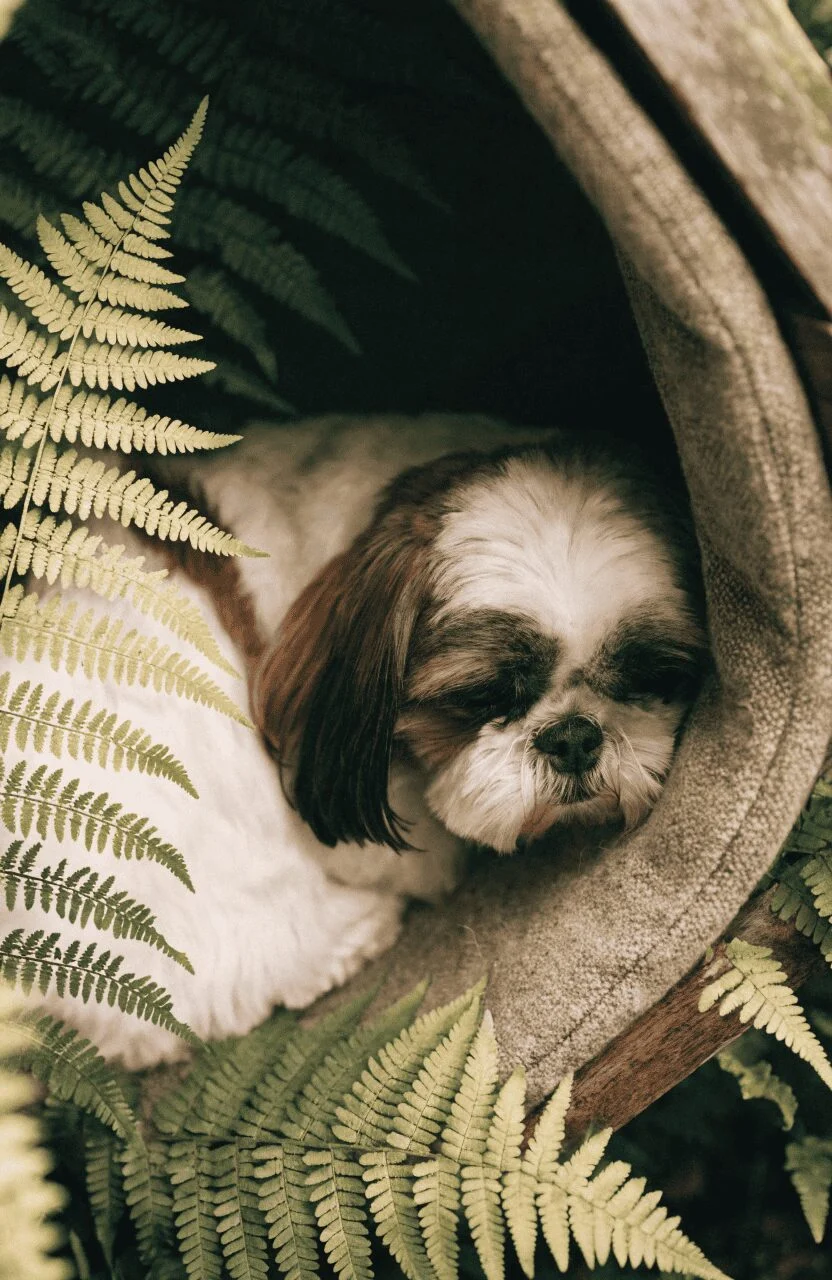
Dogs love having a den-like space to retreat to, especially when the outdoors starts to feel overwhelming. A simple tunnel or covered nook gives them a sense of security they can return to on their own terms.
This works especially well for shy or easily overstimulated dogs who need a place to “reset” during outdoor time instead of constantly being out in the open.
- How to do it: Use a fabric agility tunnel, or build a hideaway using tall shrubs, a wooden frame, or an old crate covered loosely in fabric.
- Best for: Shy, anxious, or easily overstimulated dogs who benefit from having an exit option.
9. Create a Shaded Rest Zone
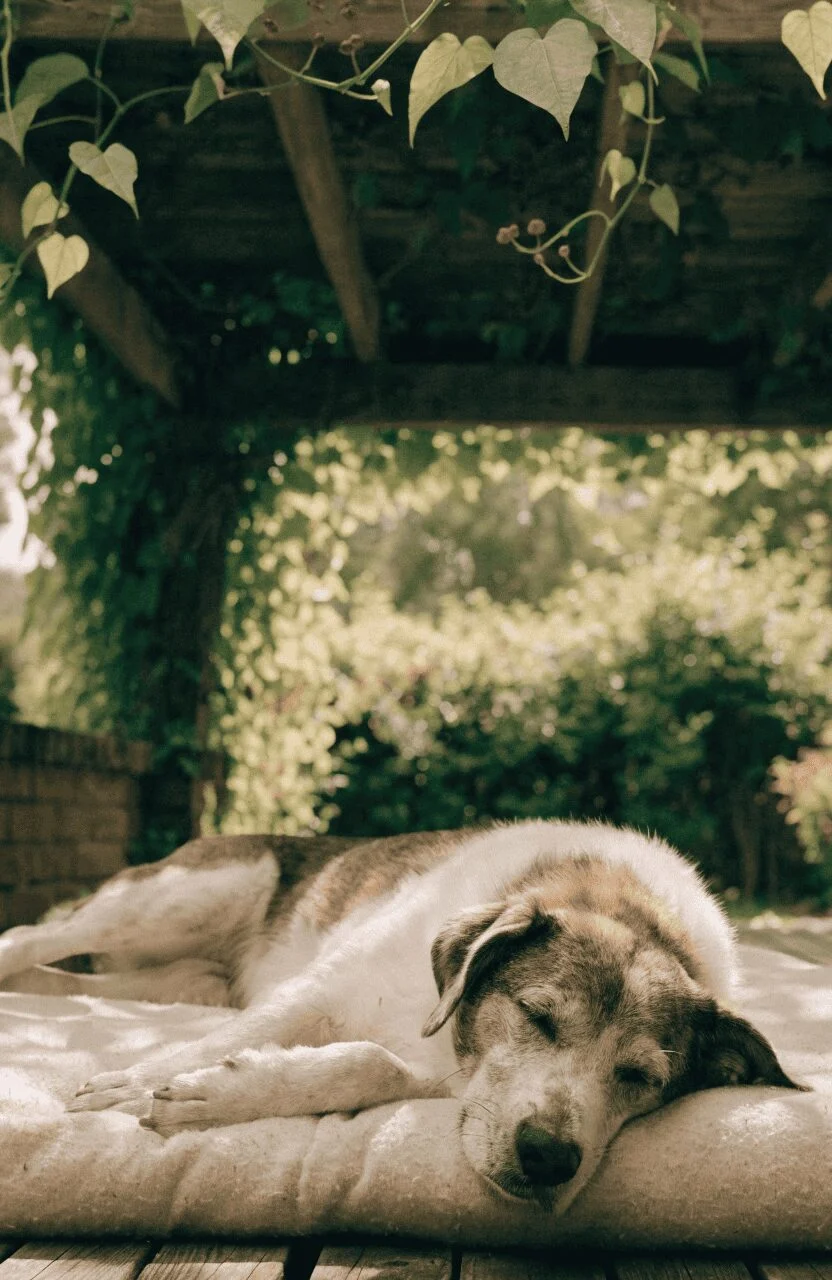
Sensory gardens shouldn’t be all stimulation all the time. A shaded, comfortable resting spot lets your dog decompress between activities instead of staying keyed up the entire time they’re outside.
This is one of the most overlooked dog sensory garden ideas, but it’s genuinely essential for balance — without a place to rest, even a well-designed garden can become exhausting rather than relaxing.
- How to do it: Place a dog bed or raised cot under a tree, pergola, or shade sail, ideally somewhere your dog can still see part of the yard.
- Best for: Senior dogs, short-nosed breeds that overheat easily, and homes in hot climates.
10. Use Logs and Low Platforms for Climbing
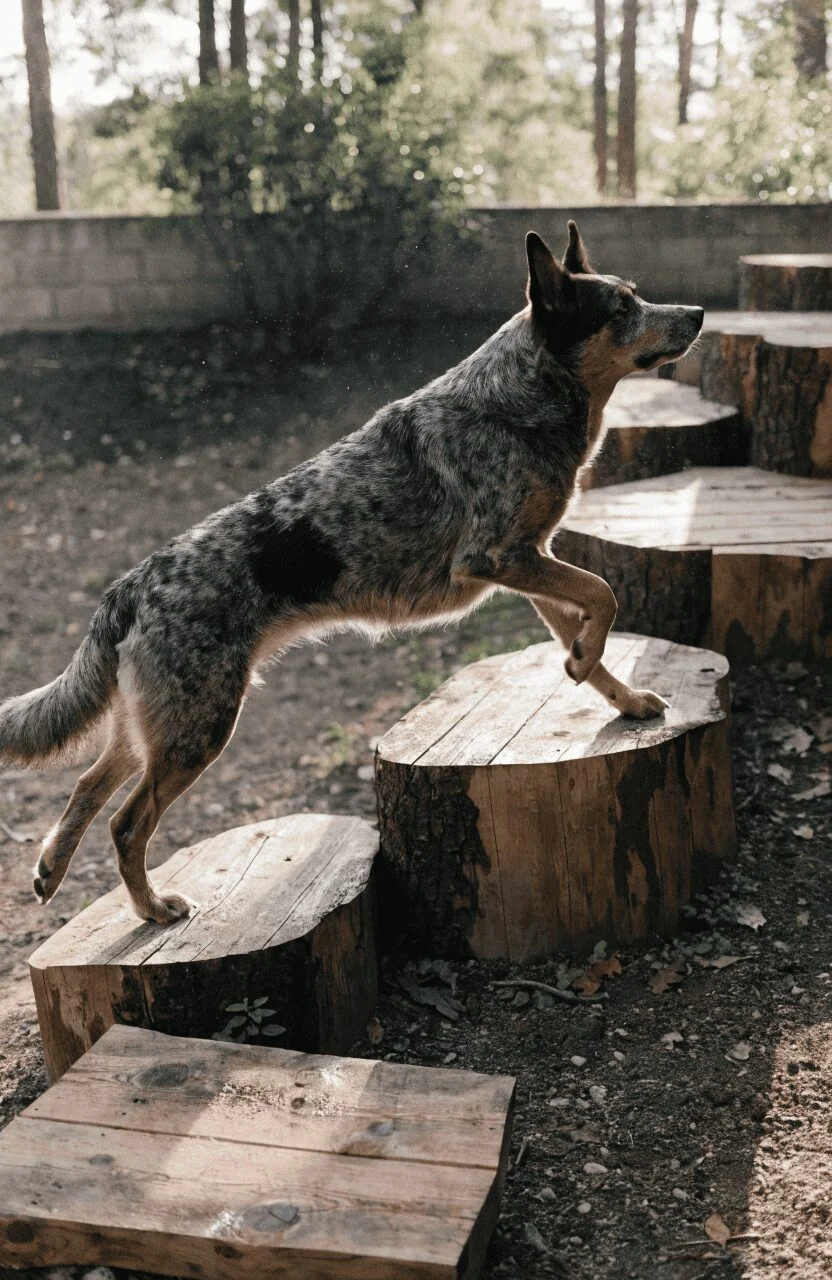
Natural logs, stumps, and low wooden platforms add both texture and a light physical challenge that goes beyond regular walking.
Climbing and balancing engage muscles, joints, and focus all at once, which makes this one of the better mental-and-physical combo ideas on this list.
- How to do it: Place sturdy, sanded logs at varying heights in a small cluster your dog can step on, around, and between without sharp edges or unstable footing.
- Best for: Agile breeds and dogs that already enjoy light obstacle play or agility-style activities.
11. Try a Rotating Snuffle Mat Corner
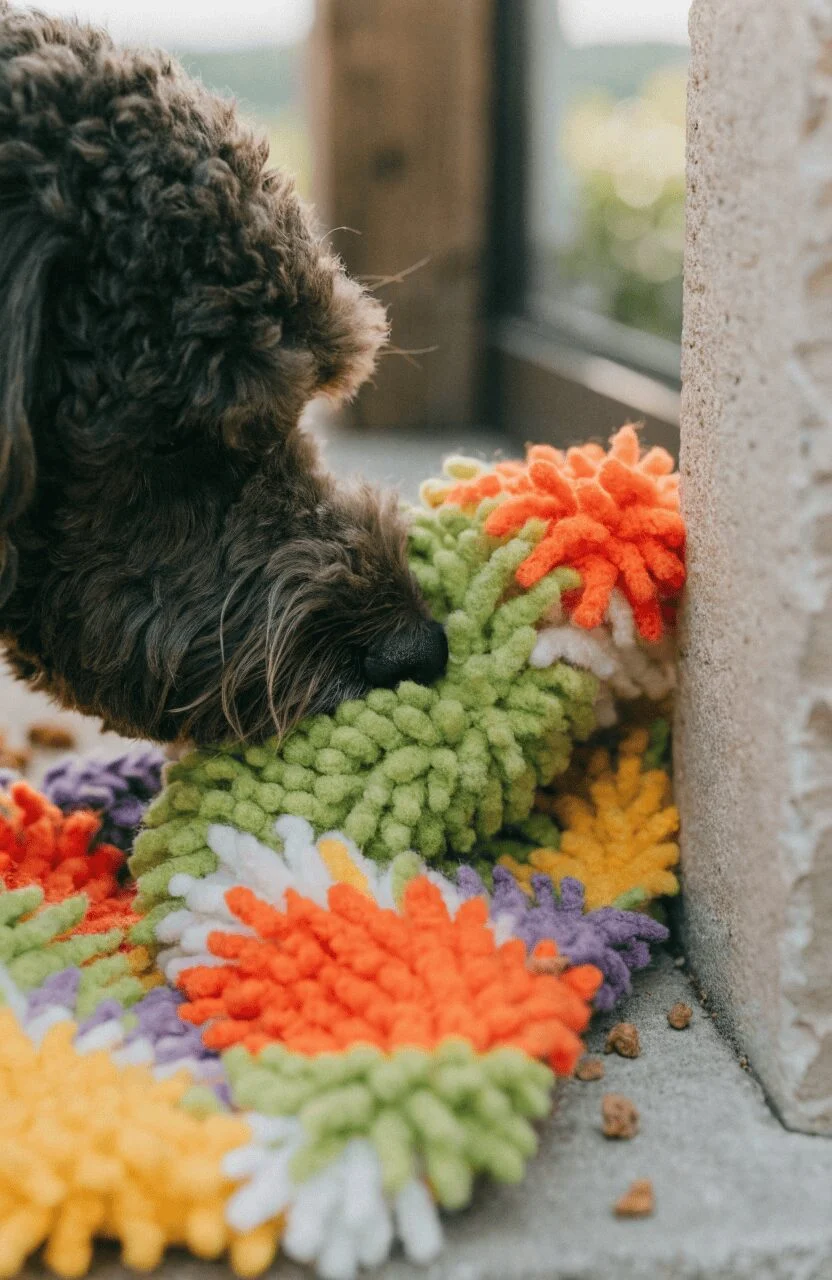
A snuffle mat corner is a designated outdoor spot where you place fabric snuffle mats filled with small treats for your dog to work through.
Rotating the mats keeps the experience fresh, since dogs notice and respond to changes in scent and arrangement, not just the presence of treats.
- How to do it: Keep two or three snuffle mats on hand and swap them in and out of the same garden corner on a weekly basis.
- Best for: Food-motivated dogs and dogs who benefit from calming, low-energy activities rather than high-arousal play.
12. Grow Edible, Dog-Safe Flowers
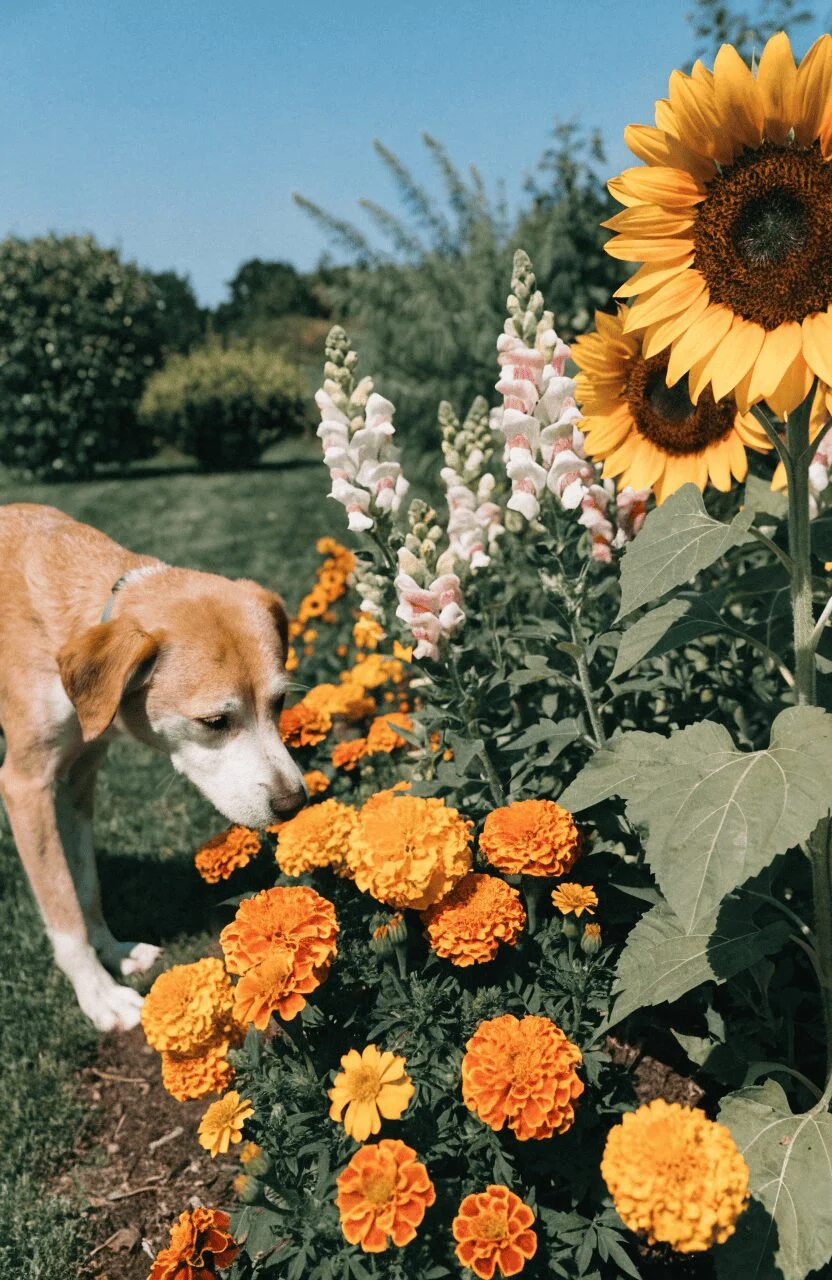
Some flowers aren’t just safe for dogs to be around — they’re genuinely fine for dogs to nibble in small amounts, which satisfies a natural curiosity many dogs already have.
Marigolds, sunflowers, and snapdragons add color and visual interest for you, while offering safe taste exploration for your dog.
- How to do it: Plant in a border your dog can easily access, away from any treated soil, pesticides, or fertilizer.
- Best for: Dogs who like to graze on plants occasionally and would otherwise be tempted by unsafe options nearby.
13. Build a Mini Sensory Garden for Small Yards or Apartments
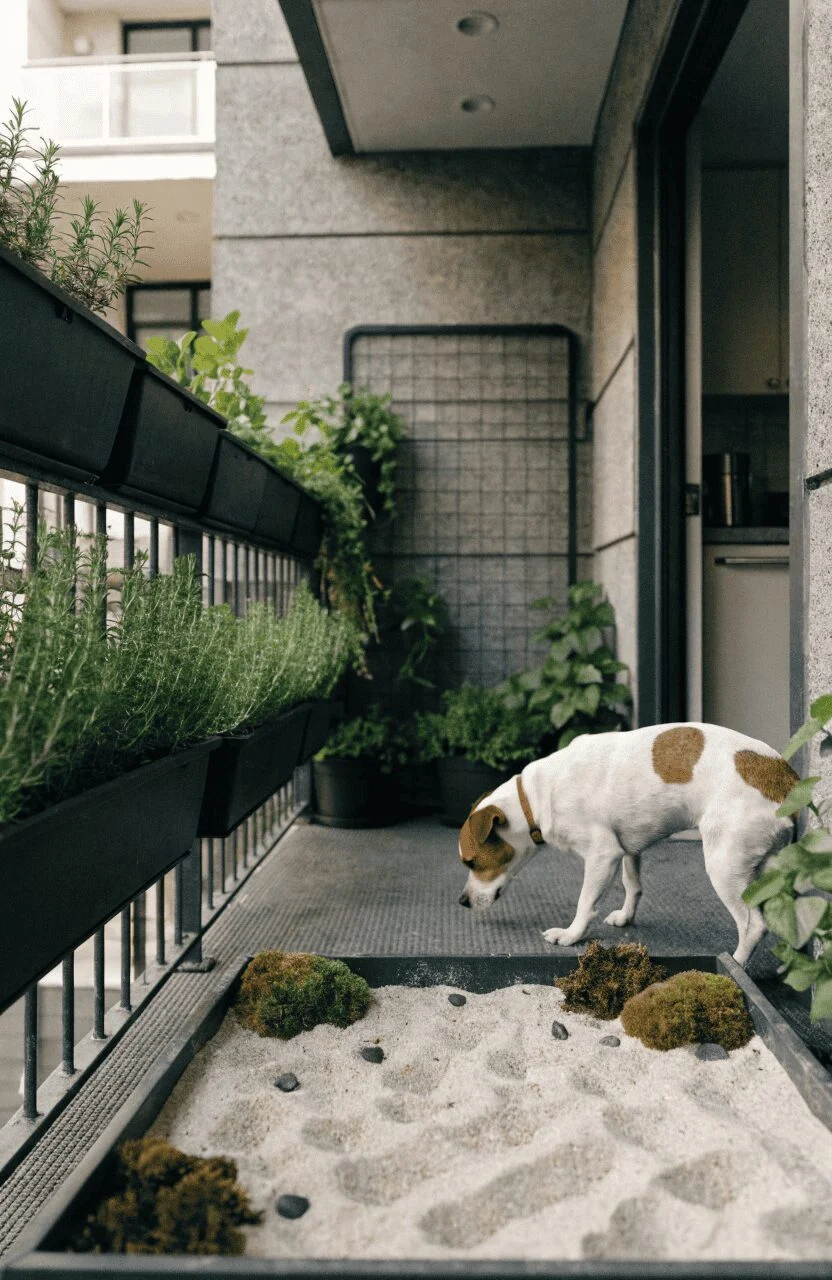
You don’t need a big backyard to use these dog sensory garden ideas. A balcony, patio, or even a single corner of a small yard can still offer real enrichment with the right setup.
Vertical planters, a small snuffle box, and a textured mat can recreate most of the same benefits in a fraction of the space, which matters a lot for city dwellers.
- How to do it: Use wall-mounted planters for herbs and a shallow tray filled with sand or artificial turf for texture, placed somewhere your dog visits often.
- Best for: Apartment dwellers and owners of small dog breeds suited for apartments who still want their dog to get real sensory variety.
14. Add a Hidden Treat-Hunt Zone
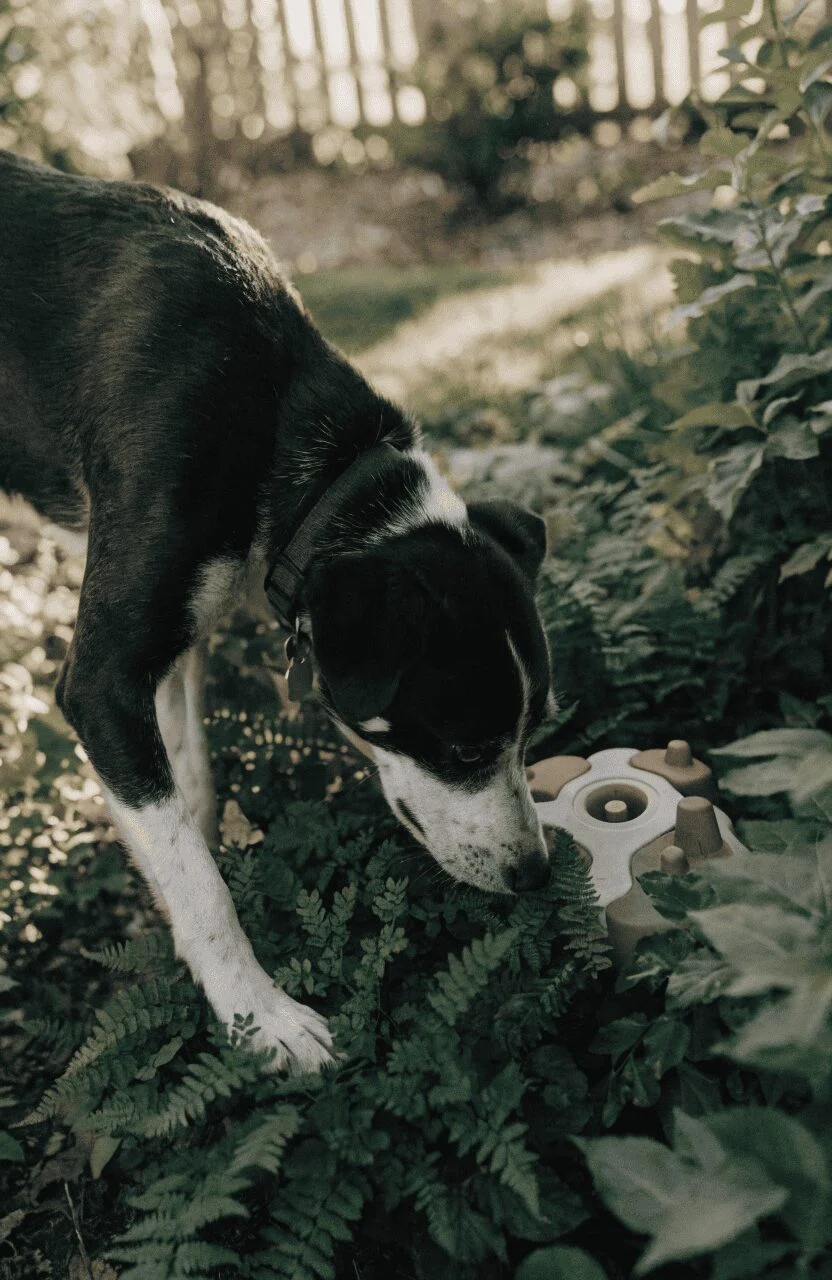
A treat-hunt zone turns mealtime or snack time into an enrichment activity instead of a five-second event that’s over before it starts.
Hide small portions of food throughout a designated area and let your dog “hunt” for them using their nose, which slows down fast eaters and gives the brain something to do.
- How to do it: Scatter treats in safe foliage or use weatherproof puzzle feeders outdoors. If you want a similar setup indoors too, these feeding station ideas work well alongside an outdoor version.
- Best for: Dogs who eat too fast, get bored easily, or need extra mental stimulation between walks.
Plants to Avoid in a Dog Sensory Garden
Before you start planting any of the ideas above, it’s worth knowing what to leave out entirely. Some common garden plants are toxic to dogs, even in small amounts, and many owners don’t realize it until something goes wrong.
Avoid these in particular:
- Tulips and daffodils
- Lilies and lily of the valley
- Azaleas and rhododendrons
- Foxgloves
- Autumn crocus
- Yew
It’s also worth checking anything already growing in your yard before you let your dog have free access, since older plantings are easy to forget about once a new sensory area is built around them.
Also skip cocoa shell mulch. It looks attractive and smells appealing, but it contains the same toxic compound found in chocolate, and dogs are often drawn to chew it.
If you’re ever unsure about a specific plant, a quick search or a conversation during your dog’s regular veterinary check-ins can save you a stressful emergency vet visit later. It only takes a minute to confirm a plant is safe before it goes in the ground.
How to Keep Your Sensory Garden Safe Long-Term
A sensory garden only works if it stays safe over time, not just on the day you finish building it. A few simple habits make a big difference.
Check your fencing regularly. Dogs that are encouraged to dig and explore may also start testing boundaries more than before. Walk the fence line every so often and check for gaps, loose boards, or low spots near gates.
Avoid chemical pesticides and fertilizers. These products can be harmful if your dog licks their paws or noses through treated soil, even hours after application.
Watch for fleas and ticks. More time outdoors naturally means more exposure to pests, so pairing your garden routine with a safe flea collar is a smart, low-effort precaution.
Rotate features occasionally. Dogs get used to the same smells, textures, and layouts over time. Moving a snuffle mat, swapping an herb, or rearranging logs keeps the space feeling new without any major rebuilding.
Supervise new plants and materials. Introduce one new element at a time so you can watch how your dog reacts before adding the next idea on this list.
Refresh substrate as needed. Sand, mulch, and soil in digging pits or snuffle patches can compact or get messy over time. Turning or replacing it every few weeks keeps the texture and scent appealing.
Frequently Asked Questions
Final Thoughts
You don’t need to overhaul your entire backyard to give your dog a better outdoor experience. Even one or two of these dog sensory garden ideas — a snuffle patch here, a textured path there — can noticeably calm a bored or anxious dog within a short amount of time.
Start small, watch how your dog actually responds to each feature, and build from there based on what they genuinely enjoy rather than what looks best from the kitchen window. The goal isn’t a perfect, magazine-style garden. It’s a space where your dog feels safe, curious, and genuinely happy to spend time outside every single day.

Izzy is an experienced ranch worker who has a passion for exploring nature and getting up close to wildlife. With her connections to various animal organizations, Izzy is well-versed in animal care and rehabilitation.